Warning: Creating default object from empty value in /home/sites/30b/a/a8be13db6d/public_html/wp-content/plugins/zanmb/reduxframework/ReduxCore/inc/class.redux_filesystem.php on line 29

Warning: Cannot modify header information - headers already sent by (output started at /home/sites/30b/a/a8be13db6d/public_html/wp-content/plugins/zanmb/reduxframework/ReduxCore/inc/class.redux_filesystem.php:29) in /usr/share/php/wp-stack-cache.php on line 1971

Warning: Cannot modify header information - headers already sent by (output started at /home/sites/30b/a/a8be13db6d/public_html/wp-content/plugins/zanmb/reduxframework/ReduxCore/inc/class.redux_filesystem.php:29) in /usr/share/php/wp-stack-cache.php on line 1972

Warning: Cannot modify header information - headers already sent by (output started at /home/sites/30b/a/a8be13db6d/public_html/wp-content/plugins/zanmb/reduxframework/ReduxCore/inc/class.redux_filesystem.php:29) in /usr/share/php/wp-stack-cache.php on line 1973

Warning: Cannot modify header information - headers already sent by (output started at /home/sites/30b/a/a8be13db6d/public_html/wp-content/plugins/zanmb/reduxframework/ReduxCore/inc/class.redux_filesystem.php:29) in /usr/share/php/wp-stack-cache.php on line 1971

Warning: Cannot modify header information - headers already sent by (output started at /home/sites/30b/a/a8be13db6d/public_html/wp-content/plugins/zanmb/reduxframework/ReduxCore/inc/class.redux_filesystem.php:29) in /usr/share/php/wp-stack-cache.php on line 1972

Warning: Cannot modify header information - headers already sent by (output started at /home/sites/30b/a/a8be13db6d/public_html/wp-content/plugins/zanmb/reduxframework/ReduxCore/inc/class.redux_filesystem.php:29) in /usr/share/php/wp-stack-cache.php on line 1973

Warning: Cannot modify header information - headers already sent by (output started at /home/sites/30b/a/a8be13db6d/public_html/wp-content/plugins/zanmb/reduxframework/ReduxCore/inc/class.redux_filesystem.php:29) in /home/sites/30b/a/a8be13db6d/public_html/wp-includes/feed-rss2.php on line 8
Anglo-Saxons – Easymalc's Wanderings https://www.easymalc.co.uk I’d be unstoppable if only I could get started Wed, 01 Apr 2026 13:04:03 +0000 en-GB hourly 1 https://wordpress.org/?v=7.0.5 https://www.easymalc.co.uk/wp-content/uploads/2019/09/cropped-easy-malc-logo-32x32.jpg Anglo-Saxons – Easymalc's Wanderings https://www.easymalc.co.uk 32 32 140253175 Cardiff Castle – Pt 1 Britons, Romans and Normans https://www.easymalc.co.uk/cardiff-castle-pt-1-britons-romans-and-normans/ https://www.easymalc.co.uk/cardiff-castle-pt-1-britons-romans-and-normans/#comments Wed, 01 Apr 2026 13:04:03 +0000 https://www.easymalc.co.uk/?p=20375 Originally posted 2024-03-14 14:00:30.

The post Cardiff Castle – Pt 1 Britons, Romans and Normans appeared first on Easymalc's Wanderings.

]]>

Cardiff Castle - Pt 1 Britons, Romans and Normans

Wales is blessed with so many wonderful castles that it’s easy to see why Cardiff Castle sometimes slips under the radar. Some sources tell us that Wales has had more than 600 castles, and even Cadw (the Welsh equivalent of English Heritage) say that the country had 427. Obviously it depends on what you think constitutes a castle, and Wikipedia puts it into a more realistic context by saying that there are over a hundred still standing, but whichever way you look at it, it’s still an awful lot of castles for such a small country.

You don’t need to be a budding Geoffrey of Monmouth to work out that the reason Wales had so many was because the land was always under attack for one reason or another, and the first outsiders to make their presence felt were the Romans. About five years after their invasion of Britain in 43 AD, they reached what we now consider as the Welsh border. Wales wasn’t a country as such back then, but a land made up of different independent Brythonic (Celtic) tribes, one of which was the Silures who occupied an area in the south.

If the Romans thought they could just walk in and tell the Silures what to do then they were sadly mistaken because this tribe weren’t in the habit of taking things lying down. The Romans were a formidable fighting force themselves, but they also had brains as well as brawn, and in an early example of the carrot and big stick, they allowed the Silures to retain some of their cultural customs providing they towed the Roman line.

The arrangement seemed to be amicable enough but the area still needed some form of control, and so a fort was built in the south-east corner of the territory at the lowest crossing point of the River Taff – at a point where Cardiff (and the current castle) now stands.
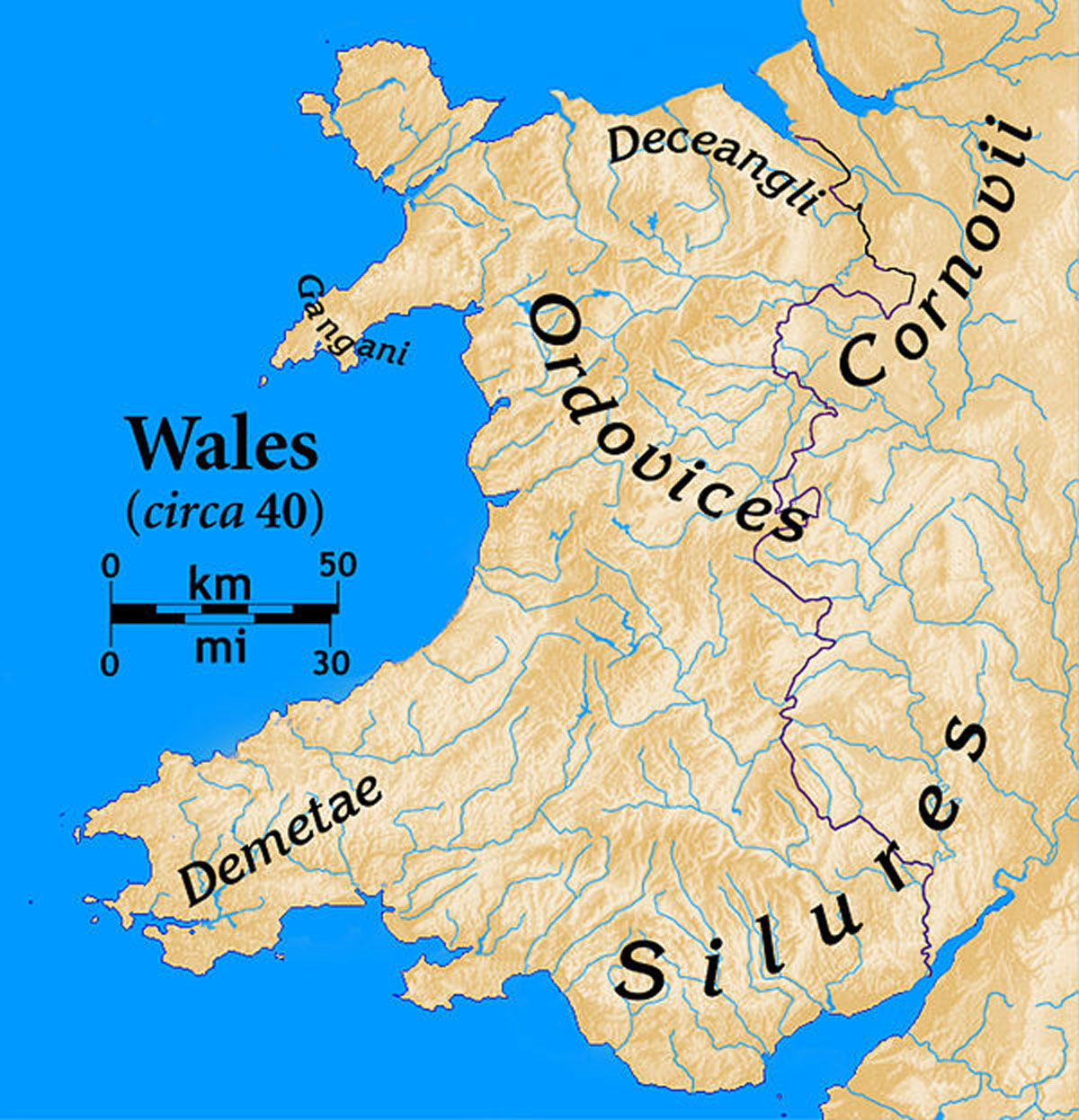
Celtic Welsh Tribes at the time of the Roman Invasion

The first Roman fort was built here around 55 AD: I say first, because another three were to follow. Rectangular in shape, it covered an area much larger than the current site and would have also been much closer to the river (and therefore the sea). No doubt the location would have offered not only a good defensive position, but also good transport communications as well.

As the Silures became more Romanized, there wasn’t the same need for such strong defences, and around 80 AD, the fort was replaced by the first of two much smaller garrison forts, which presumably would have been used to help the invaders expand their territory further into Wales.

All good things come to an end as they say, and by the 4th century the Romans saw their own empire coming under attack, necessitating the site to revert back to being a defensive one again. The fourth and final fort was probably occupied until the end of the 4th century, although it’s not clear exactly when it was finally abandoned.

Apart from some stonework that the 3rd Marquess of Bute stumbled upon in the 19th century, there isn’t much left to see from the time of the Roman occupation, and if that has left you feeling a bit cheated, then you might want to consider taking a half-hour’s drive to Caerleon. This small town, situated just outside of Newport, is a delight for the Roman history enthusiast and was home to the legionary fortress of Isca, one of only three in Britannia – the other two being Deva (Chester) and Eboracum (York).

Remains of the Legionary Fortress at Caerleon
The Roman Amphitheatre at Caerleon
The Roman Fortress Baths

So now that I’ve told you what you can’t see at Cardiff Castle, I think it’s about time I told you what you can, but first, I need to explain what William the Conqueror was confronted with when he set foot on British soil, and to help make sense of it all, I want to just step back in time for a moment.

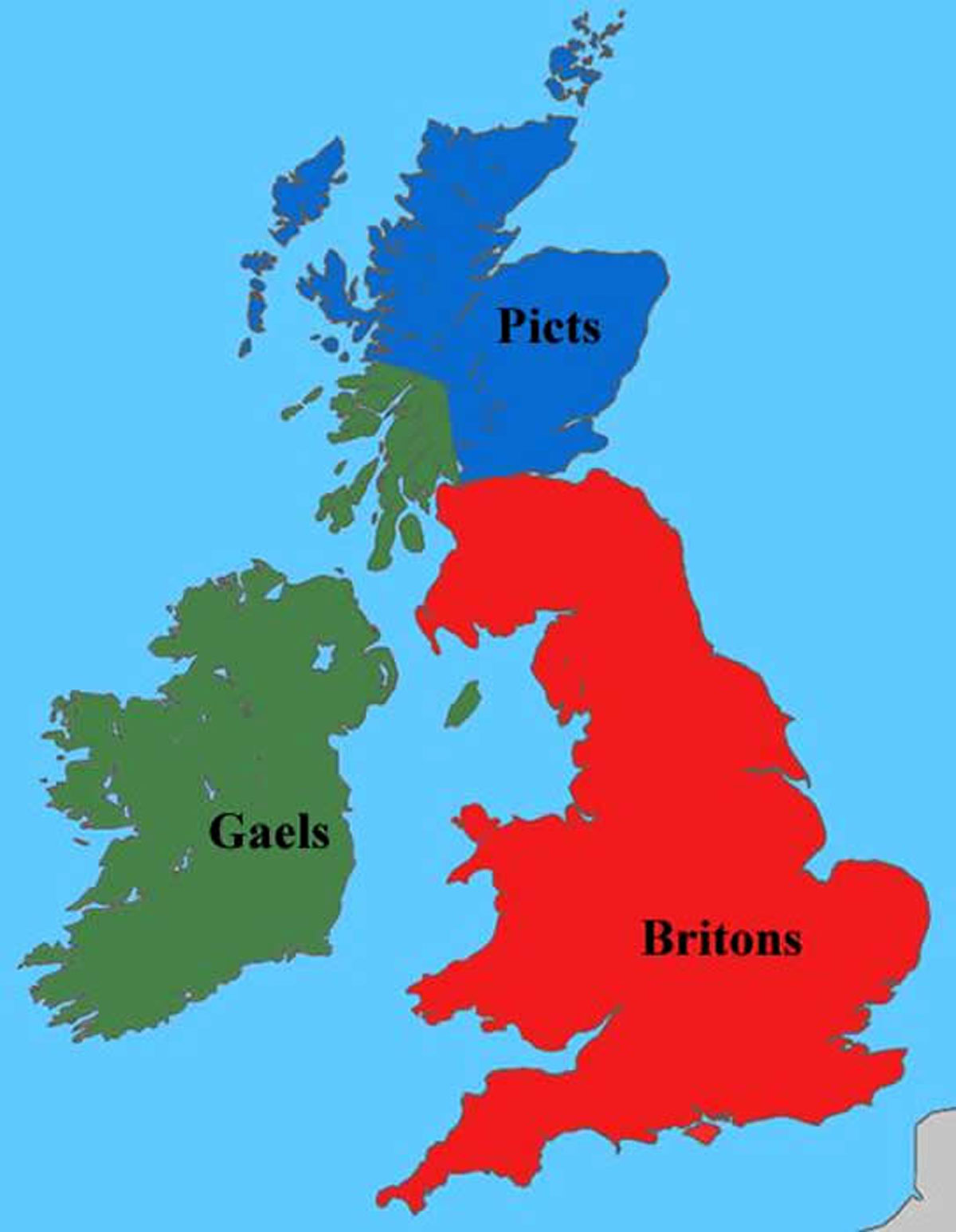
Firstly, the map below shows how the British Isles consisted of different Celtic tribes prior to the Roman invasion, and why they referred to the land covered by today’s England and Wales as Britannia.

The Celtic Tribes of the British Isles before the Roman Invasion

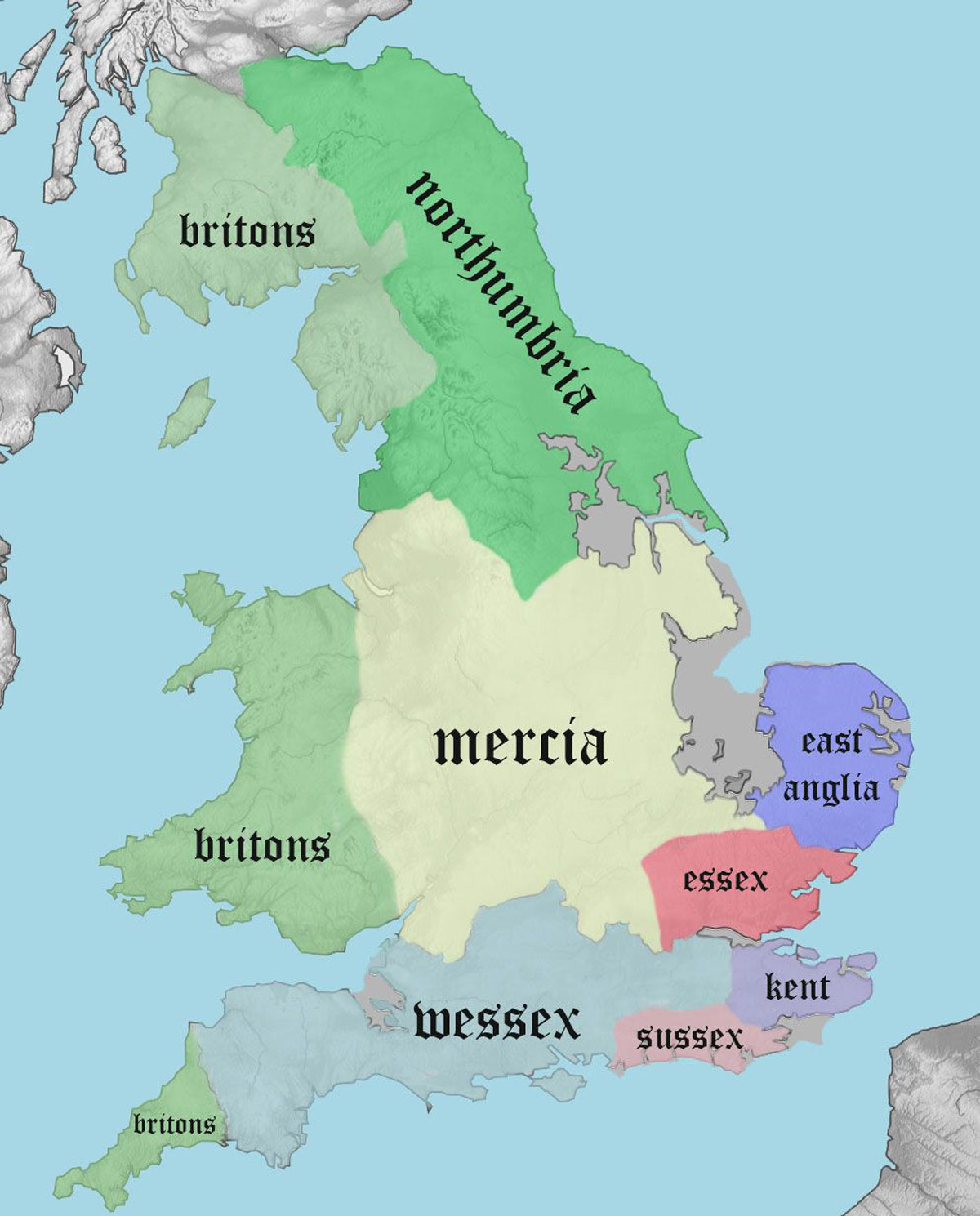
The void left by the Romans was gradually filled by raiders from the European mainland. The Anglo-Saxons, as they collectively became known, pushed further and further westwards, but stopped short of spreading into present-day Wales, which at the time was made up of a number of independent kingdoms.

Strangely enough, it wasn’t a Welsh king that put up a barrier between the Britons and Anglo-Saxons, but Offa, the King of Mercia, and the Dyke that he constructed formed the unofficial boundary between Angle Land and Wales – and still largely does. Incidentally, it was the Anglo-Saxons who referred to the land occupied by the Britons as Wales, but the Britons themselves called it Cymry – or Cymru in Welsh – but whichever way it’s spelt, it means ‘fellow countrymen’.

Anglo-Saxon England and the areas that remained Brythonic
The Welsh Kingdoms around the time of the Norman Conquest

The Norman Conquest was all about William of Normandy believing that he was the rightful heir to the English crown, and even after he became King of England, spent most of his time at home in Normandy. It appears that he never really intended to invade Wales, and installed Marcher Lords to govern on his behalf instead. The Welsh Marches was the land that was located on either side of the English/Welsh border and an area that is still referred to as the Welsh Marches today.

The set-up seemed to work, or at least it did while William I was king, but after he died in 1087, his son William Rufus became William II, and things began to change. In 1088, a rebellion against him was repelled, and as a reward for his support, Rufus honoured Robert Fitzhamon with the feudal barony of Gloucester. It wasn’t long though before he found his services back in demand again, this time by lestyn ap Gwrgant, the King of Morgannwg. It’s not possible to verify the truth of the story, but legend has it that the Welsh king asked for Fitzhamon’s help in settling a quarrel with an adversary of his called Einion ap Collwyn. Fitzhamon duly obliged, but after his mission was accomplished he decided to follow it up by relieving Gwrgant of his own territory, and the next thing you know, he was also Lord of Glamorgan with a base at Cardiff – or Caerdydd, if you prefer the Welsh spelling.

You’ve probably already guessed what happened next: The new Lord of Glamorgan consolidated his position by taking over the former Roman fort at Cardiff. Some accounts suggest that William I founded the Norman castle on the way back from his pilgrimage to St David’s in 1081, but whether he did or not, it was Fitzhamon who built the first keep here around 1091.

The castle was created by building a motte (or artificial mound) which offered a high vantage point from which to survey the surrounding area, and in all probability the keep would have been constructed of wood, as stone would have made the mound unstable. After his death in 1107, Fitzhamon’s daughter, Mabel, married one of Henry I’s illegitimate sons, Robert Fitzroy (also known as Robert the Consul), and it was he who replaced the original wooden structure with a stone one.

The Stone Keep

The origins of Cardiff Castle are not much different to many of the other castles in this part of the world, but it didn’t end up that way, so why not join me in Pt 2 to find out why.

POSTED – MARCH 2024

Originally posted 2024-03-14 14:00:30.

The post Cardiff Castle – Pt 1 Britons, Romans and Normans appeared first on Easymalc's Wanderings.

]]>
https://www.easymalc.co.uk/cardiff-castle-pt-1-britons-romans-and-normans/feed/ 25 20375