Warning: Creating default object from empty value in /home/sites/30b/a/a8be13db6d/public_html/wp-content/plugins/zanmb/reduxframework/ReduxCore/inc/class.redux_filesystem.php on line 29

Warning: Cannot modify header information - headers already sent by (output started at /home/sites/30b/a/a8be13db6d/public_html/wp-content/plugins/zanmb/reduxframework/ReduxCore/inc/class.redux_filesystem.php:29) in /usr/share/php/wp-stack-cache.php on line 1971

Warning: Cannot modify header information - headers already sent by (output started at /home/sites/30b/a/a8be13db6d/public_html/wp-content/plugins/zanmb/reduxframework/ReduxCore/inc/class.redux_filesystem.php:29) in /usr/share/php/wp-stack-cache.php on line 1972

Warning: Cannot modify header information - headers already sent by (output started at /home/sites/30b/a/a8be13db6d/public_html/wp-content/plugins/zanmb/reduxframework/ReduxCore/inc/class.redux_filesystem.php:29) in /usr/share/php/wp-stack-cache.php on line 1973

Warning: Cannot modify header information - headers already sent by (output started at /home/sites/30b/a/a8be13db6d/public_html/wp-content/plugins/zanmb/reduxframework/ReduxCore/inc/class.redux_filesystem.php:29) in /usr/share/php/wp-stack-cache.php on line 1971

Warning: Cannot modify header information - headers already sent by (output started at /home/sites/30b/a/a8be13db6d/public_html/wp-content/plugins/zanmb/reduxframework/ReduxCore/inc/class.redux_filesystem.php:29) in /usr/share/php/wp-stack-cache.php on line 1972

Warning: Cannot modify header information - headers already sent by (output started at /home/sites/30b/a/a8be13db6d/public_html/wp-content/plugins/zanmb/reduxframework/ReduxCore/inc/class.redux_filesystem.php:29) in /usr/share/php/wp-stack-cache.php on line 1973

Warning: Cannot modify header information - headers already sent by (output started at /home/sites/30b/a/a8be13db6d/public_html/wp-content/plugins/zanmb/reduxframework/ReduxCore/inc/class.redux_filesystem.php:29) in /home/sites/30b/a/a8be13db6d/public_html/wp-includes/feed-rss2.php on line 8
Bishops – Easymalc's Wanderings https://www.easymalc.co.uk I’d be unstoppable if only I could get started Sat, 24 Jan 2026 16:14:41 +0000 en-GB hourly 1 https://wordpress.org/?v=7.0.4 https://www.easymalc.co.uk/wp-content/uploads/2019/09/cropped-easy-malc-logo-32x32.jpg Bishops – Easymalc's Wanderings https://www.easymalc.co.uk 32 32 140253175 Brothers in Alms – The Hospital of St Cross, Winchester https://www.easymalc.co.uk/brothers-in-alms-the-hospital-of-st-cross-winchester/ https://www.easymalc.co.uk/brothers-in-alms-the-hospital-of-st-cross-winchester/#comments Sat, 24 Jan 2026 16:14:41 +0000 https://www.easymalc.co.uk/?p=20295 Originally posted 2024-02-22 09:24:53.

The post Brothers in Alms – The Hospital of St Cross, Winchester appeared first on Easymalc's Wanderings.

]]>

Brothers in Alms - The Hospital of St Cross, Winchester

With so many places of historical interest to see in Winchester, it would be easy to miss this gem, especially as it’s a little way out of the city centre – and the name Hospital of St. Cross wouldn’t encourage too many people to find their way here either, but don’t go looking for the bus stop that will take you to the local A&E because the name is used in the medieval context of ‘hospitality’. You can get a bus to The Hospital of St Cross and Almshouse of Noble Poverty if you wish, but a nicer way, if time permits, is to take the mile long footpath alongside the River Itchen known as Keats Walk.

John Keats lived in Winchester during the summer and autumn of 1819, and his daily walk through the water meadows to St Cross inspired the romantic poet to write the ode To Autumn, where he describes my favourite month in a way that only he could. If you want to follow the same path (and I don’t mean as a poet) then you can take the Weirs Walk alongside the river from the City Mill to Wolvesey Palace, and then follow the signs from there up College Walk to St Cross, and you can always catch the bus back into town if time’s running short.
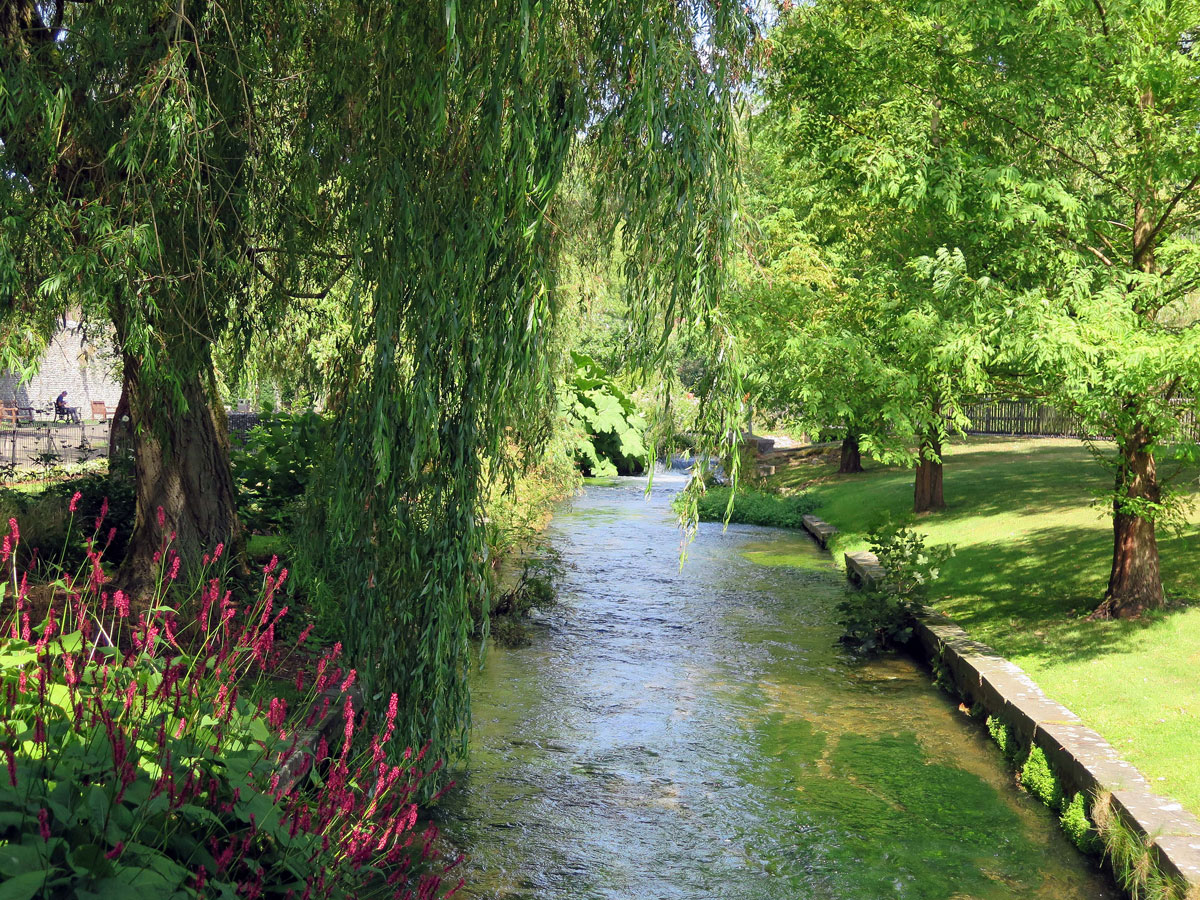
The River Itchen and the Weirs Walk

Bishop Henri de Blois was another fan of the riverside walk, and it’s thanks to him that the Hospital of ‘Santa Crux’ exists. Grandson of William the Conqueror and half-brother of the incumbent King Stephen, he was Bishop of Winchester for more than forty years (1129-1171), and there’s a legend about how the hospital was founded.

True or not, it’s certainly plausible that while the young, wealthy and powerful man of the cloth was walking through the water meadows, he was stopped by a young girl with a pail of milk on her head and a baby in her arms. No doubt, like the rest of her community, life was an uphill struggle, and so she seized the opportunity to plead for the Bishop’s help in providing food for those that needed it the most. She may not have realised it at the time (if the story’s true of course), but she must have had a profound effect on Henri because it is said that she reminded him of the Virgin Mary.

William Cowper wrote that “God moves in a mysterious way” and that must have been the case when, after leaving the girl behind, the bishop happened upon the ruins of a religious house destroyed by the Danes – and it was there and then that he decided to set up a community to help the poor of Winchester.

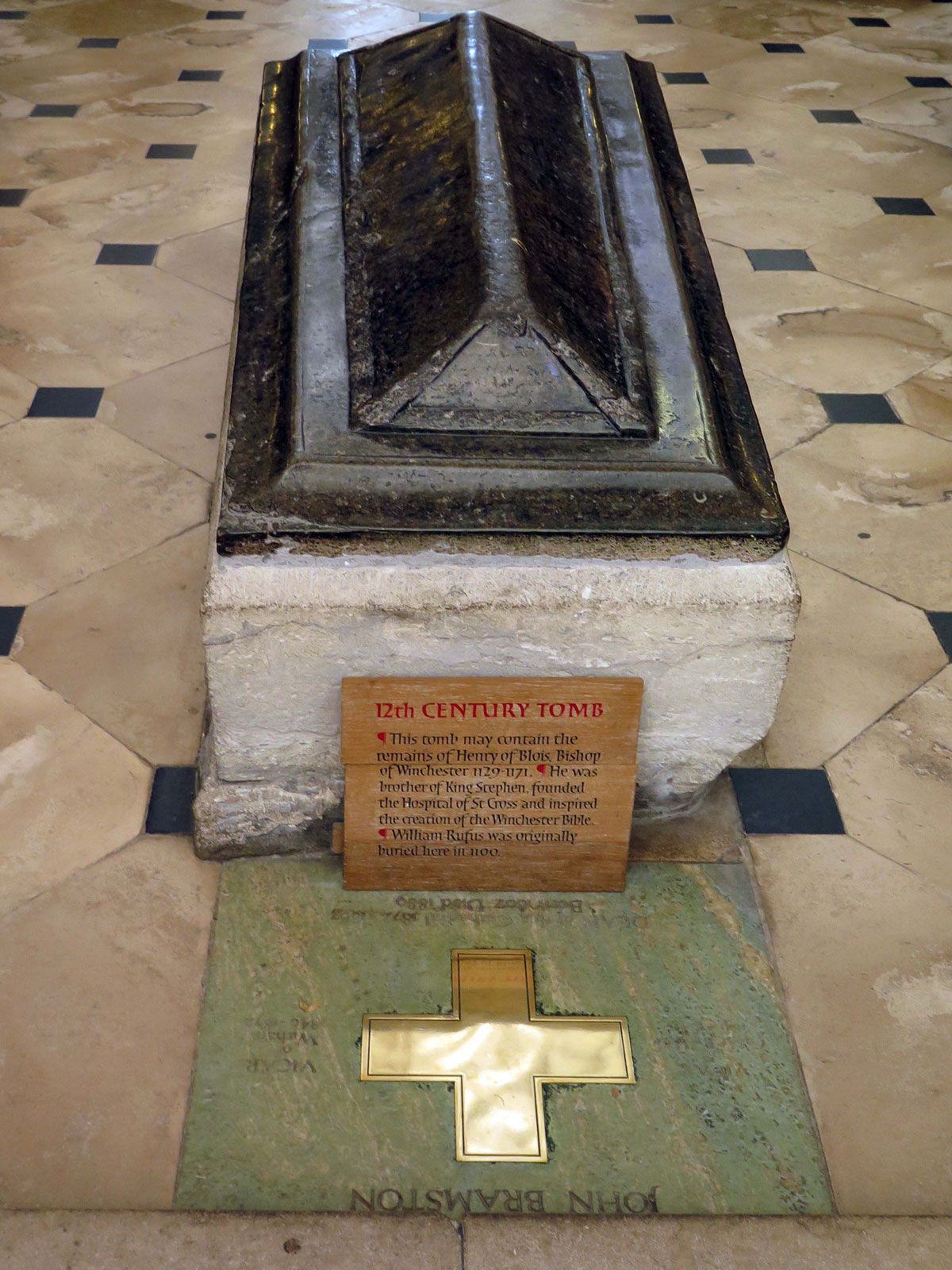
Work started on building the hospital in 1132 and was completed four years later, making it the oldest continuously running charitable institution in Britain. Henri de Blois died on the 8th August 1171 and his body lies in Winchester Cathedral. I say his body, because some people believe his heart is in the benedictine abbey at Cluny where he was educated. The simple stone tomb in the choir of Winchester Cathedral was at first thought to be the final resting place of William II, but it’s now believed to be that of the man responsible for making the most impact on Wolvesey Palace and the founder of the Hospital of St Cross.

Tomb believed to be that of Bishop Henri de Blois

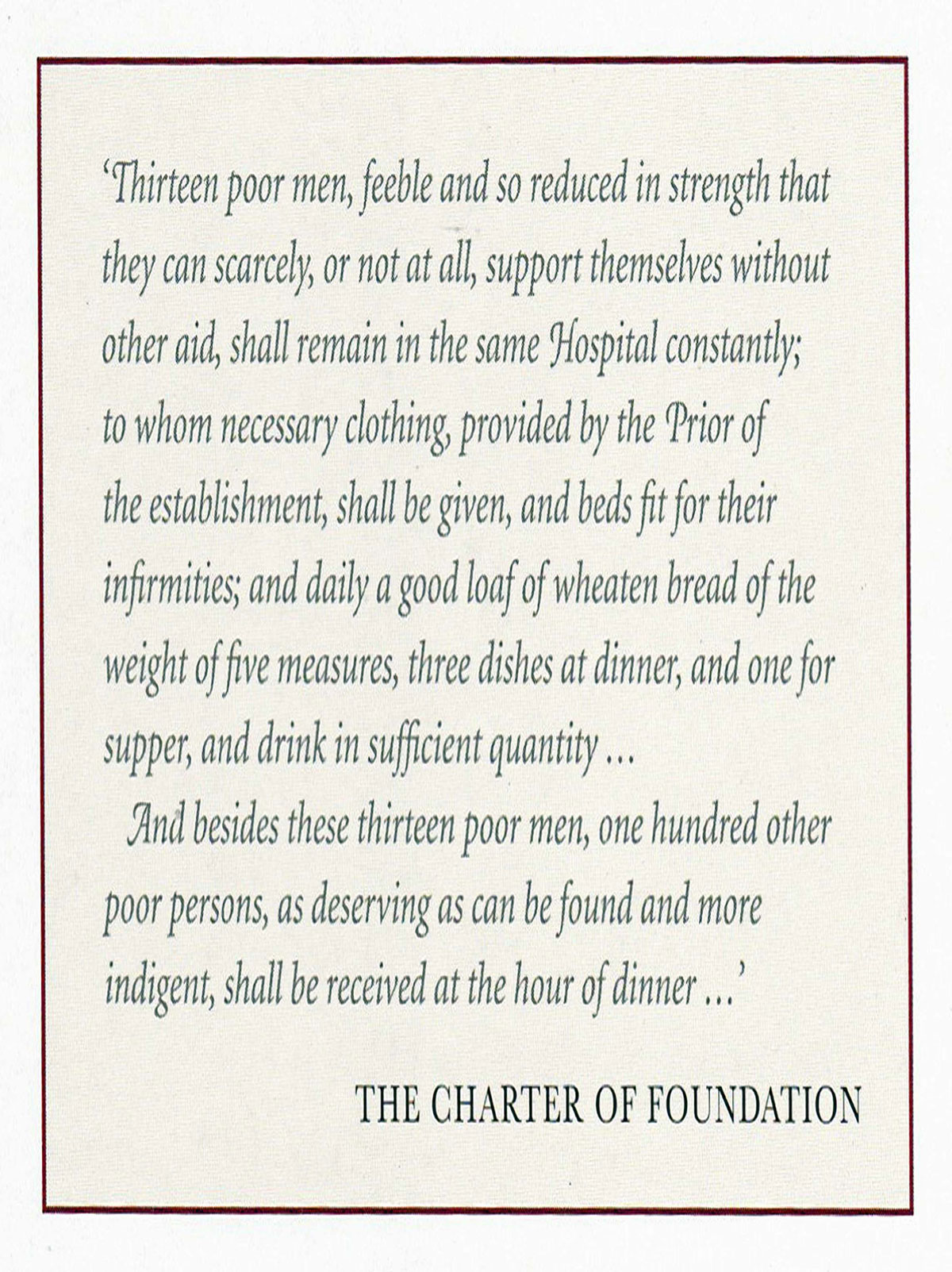
The aim of St Cross was to provide practical help for those in the most need: Initially, thirteen destitute men were chosen and given free food, clothing and accommodation, while at the same time, food was handed out to another hundred deserving souls.

The St Cross Charter of Foundation

Just because Henri de Blois was a man of integrity, it doesn’t mean to say that everyone followed in his honourable footsteps. Tithes were the main source of revenue to finance the project, and the hospital’s growing wealth started to attract the wrong sort of people, and that even included people Henri thought he could trust. In 1151, in an attempt to guarantee the hospital’s future financial security, he put St Cross into the hands of the Knights Hospitaller of St John of Jerusalem. It wasn’t that they were completely dishonest, it’s just that they thought their cause protecting pilgrim routes to the Holy Land were more worthy of the funds than the residents of St Cross. Others were even less discreet. There was more than one bishop who installed close relatives as Masters of the hospital, who shall we say, were not against the idea of misappropriating the funds, but not all bishops and masters were untrustworthy, and one such person who was happy to put his hand in his cassock was Bishop Henry Beaufort.

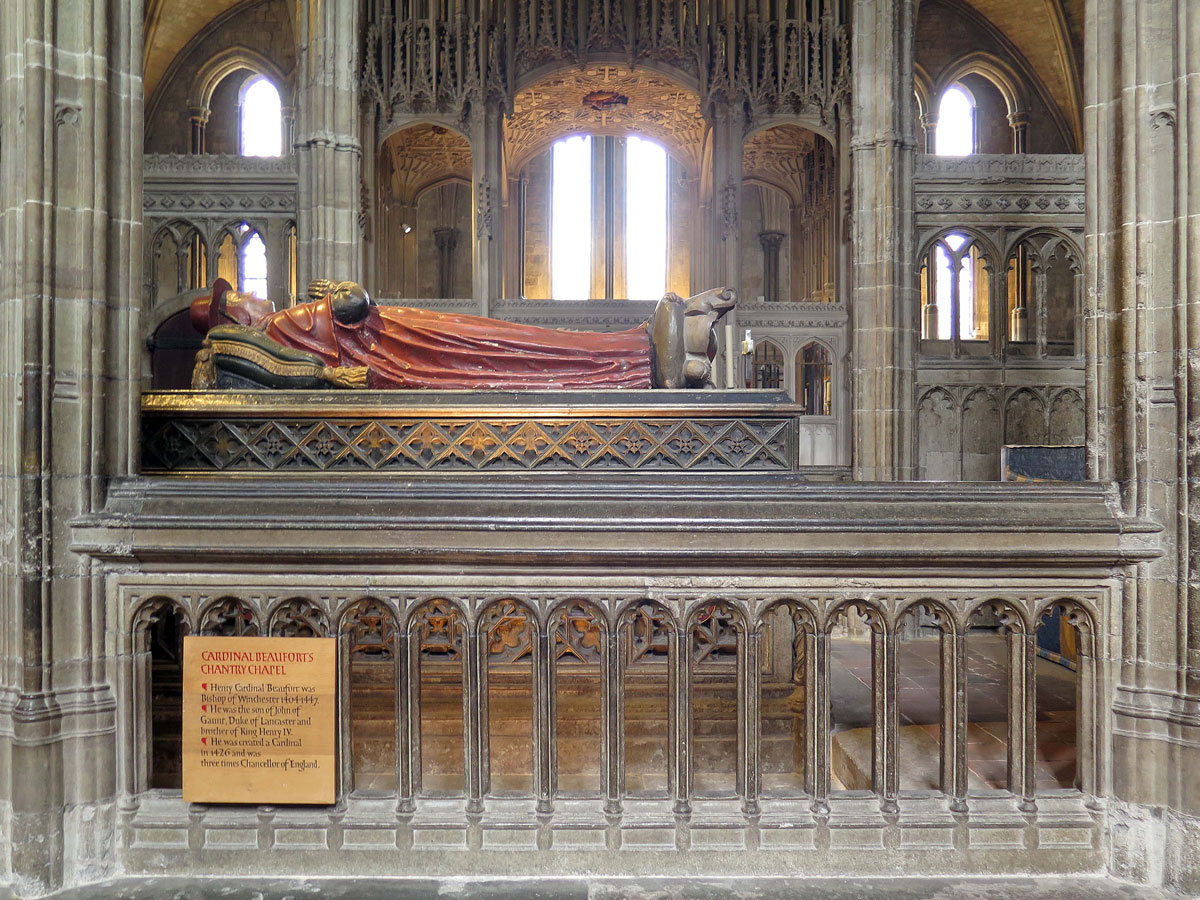
Henry Beaufort was a member of the Plantagenet family and Lord Chancellor of England three times. In 1398 he became Bishop of Lincoln, and then in 1404, Bishop of Winchester, a position he held for 43 years. In 1426 he was elevated to Cardinal by Pope Martin V and was the pontiff’s representative in Germany, Hungary and Bohemia. What all this meant was that Cardinal Beaufort was a rich and powerful man in the world of both politics and religion.

His interest in St Cross came about later in life, when in 1443 he founded the Almshouse of Noble Poverty ‘for servants of the state of noble birth but now living in poverty’. Unfortunately, the funds for financing his addition to St Cross were curtailed by the Wars of the Roses and it wasn’t until 40 years after his death that his ambition was fully realised. He died in Wolvesey Palace in 1447 and is also buried in Winchester Cathedral.

Cardinal Beaufort's Tomb

From then on, the hospital’s fortunes wavered. It survived unscathed during the Dissolution of the Monasteries, but some Masters were more charitable to themselves than the inmates that they were supposed to be looking after. Thankfully, everything at St Cross seems to be straight up and above board these days.

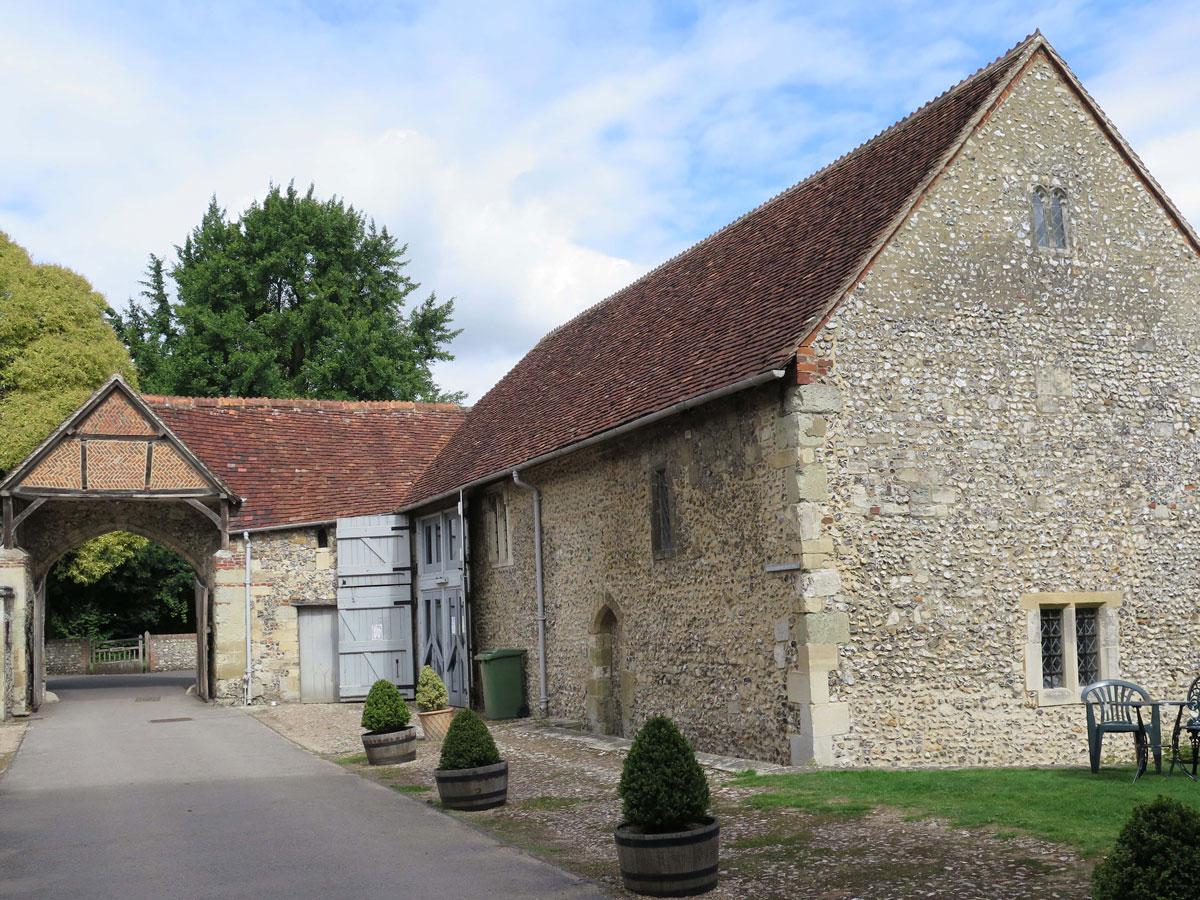
Now that you know you don’t need an appointment to visit the Hospital of St Cross, you probably want to know what you can expect to find here. Entry is through the Outer Gate into the Outer Quadrangle, where on your left hand side, you’ll see the Old Brewhouse, site of the Hundred Men’s Hall (now used as a tearoom). This was where a hundred poor men of Winchester came for their dinner which consisted of ‘three quarts of small beer, a loaf of bread and two messes’. In modern parlance it equates to 6 pints of weak beer, a loaf of bread and two stews. The amount might seem quite considerable, but what they didn’t consume they were expected to take home to the family. Beer of course was safer to drink than water, and cheaper than milk.

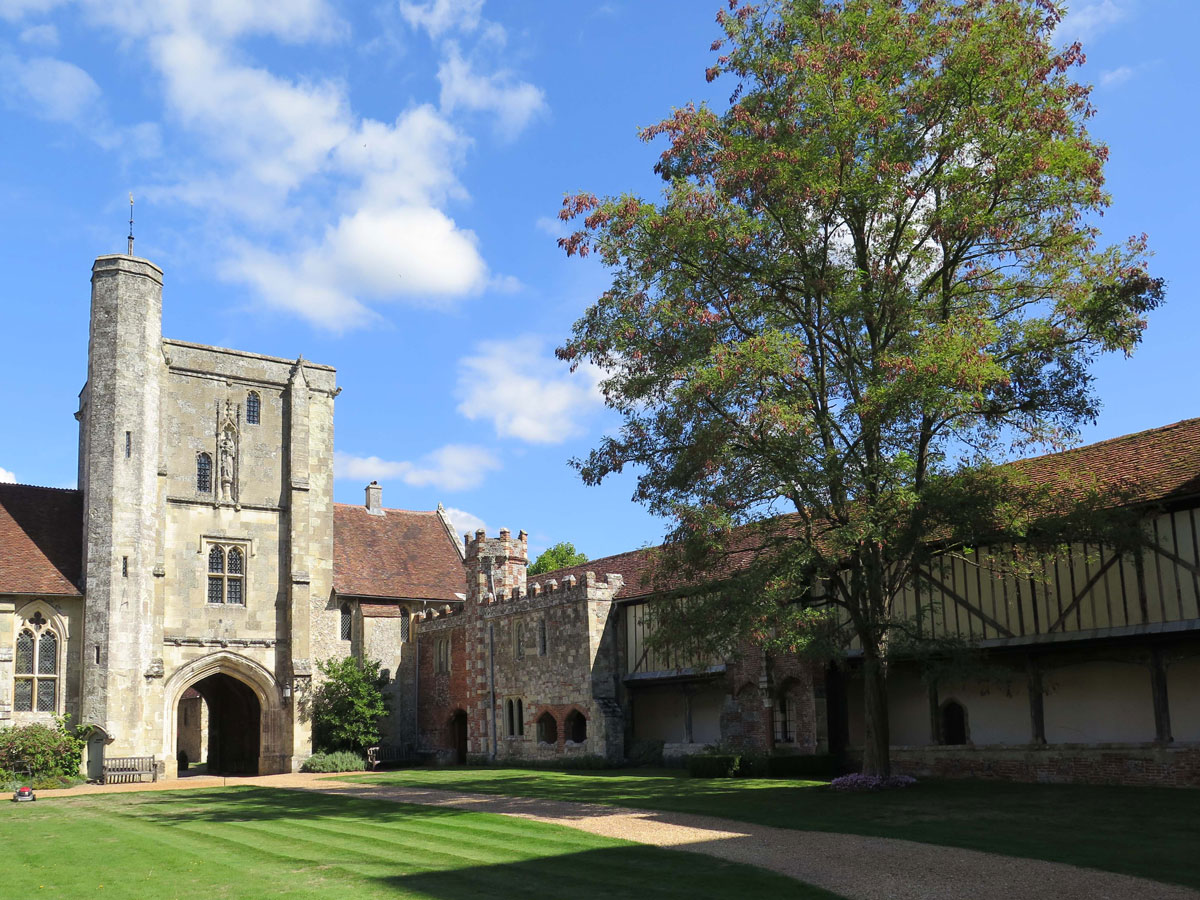
The Outer Gate and Hundred Men's Hall

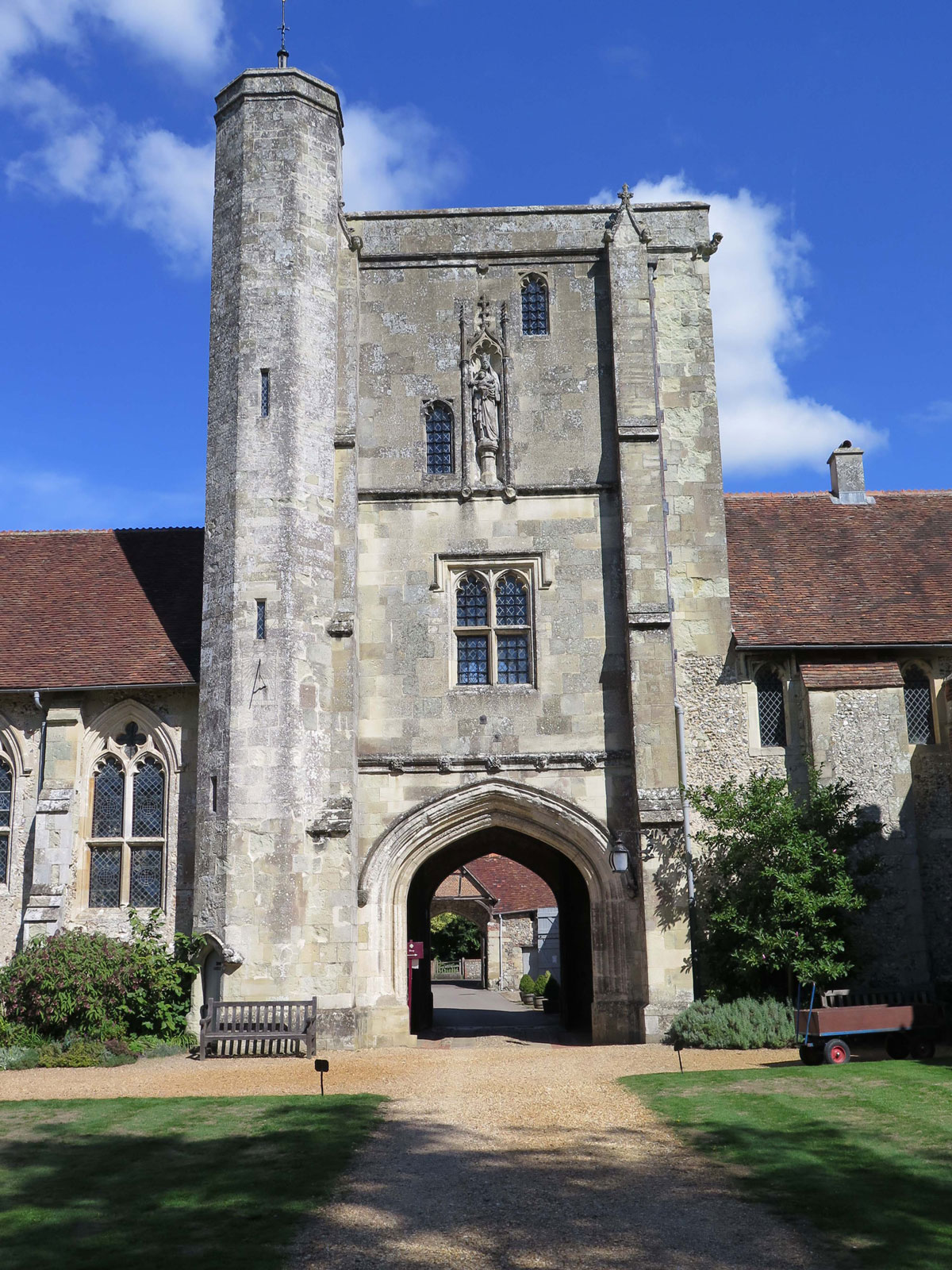
Straight ahead is the 15th century Beaufort Tower where the Porter’s Lodge leads into the Inner Quadrangle. Access is gained by contributing an admission fee to help provide for the upkeep of the hospital and daily requirements of the 25 elderly Brothers that live here (current admission charge in Feb 2024 is £7.50 but there are concessions).

The Beaufort Tower

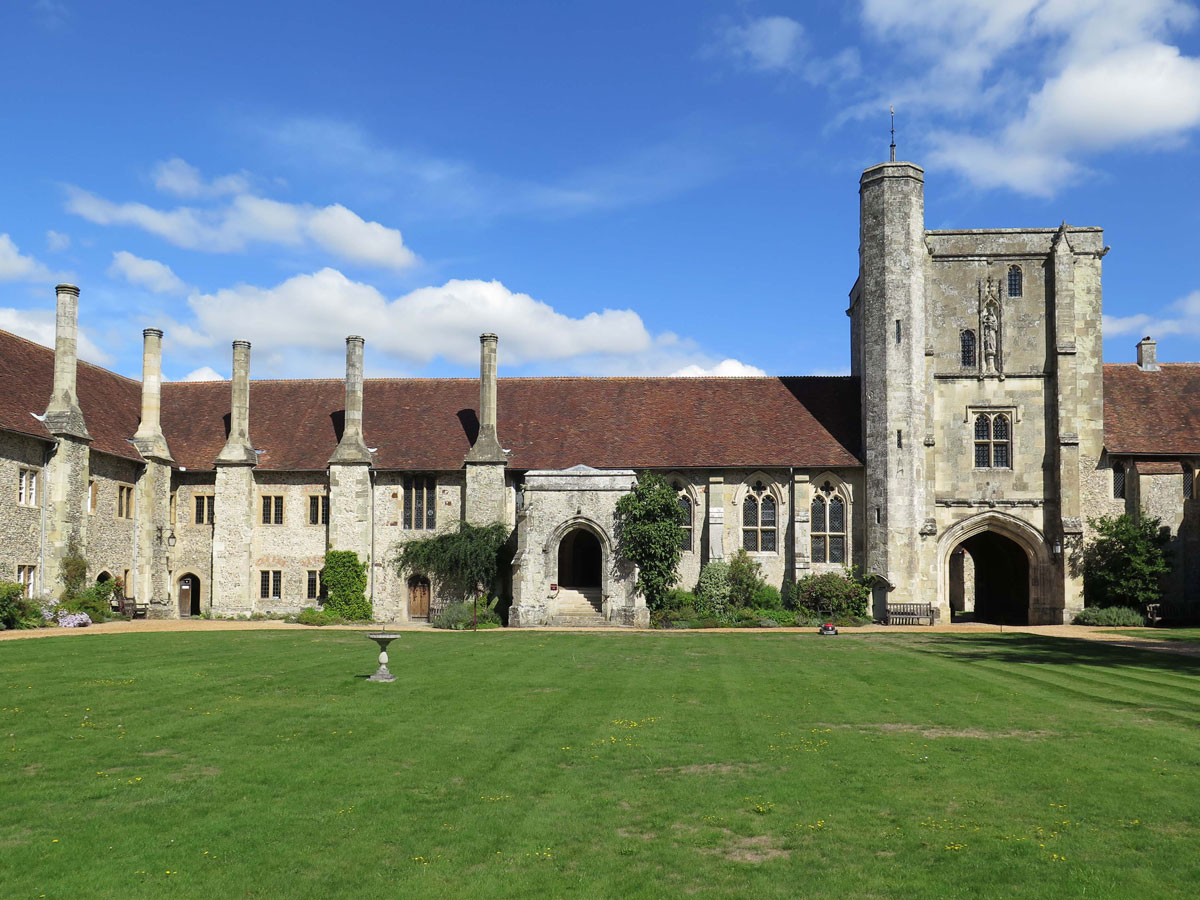
When you enter the Inner Quadrangle your eyes will be drawn towards the church and Brothers’ Quarters, but immediately to the right of the Beaufort Tower is the Brethren’s Hall which is accessed via a short flight of steps and stone porch.

The Beaufort Tower and Brethren's Hall

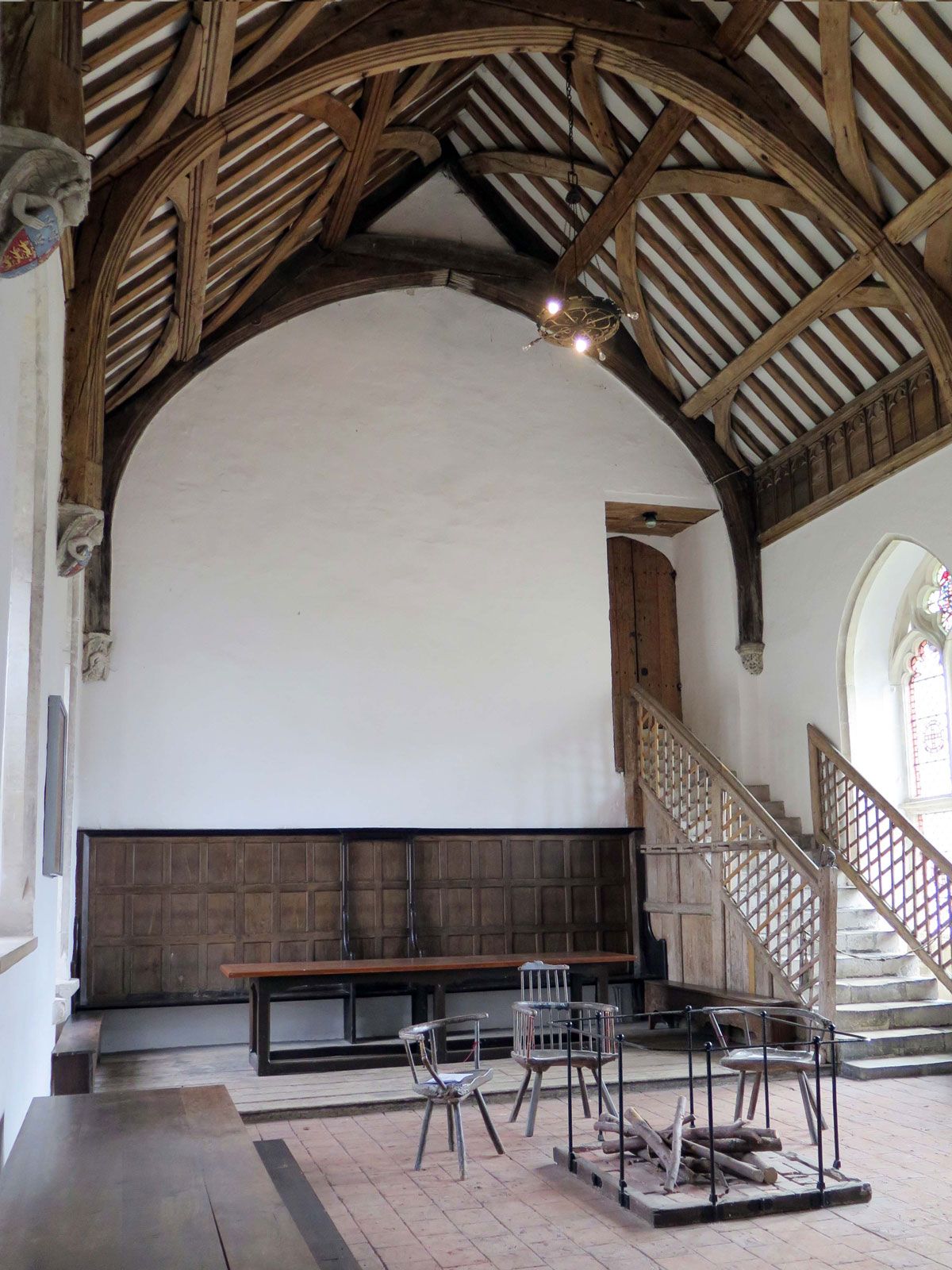
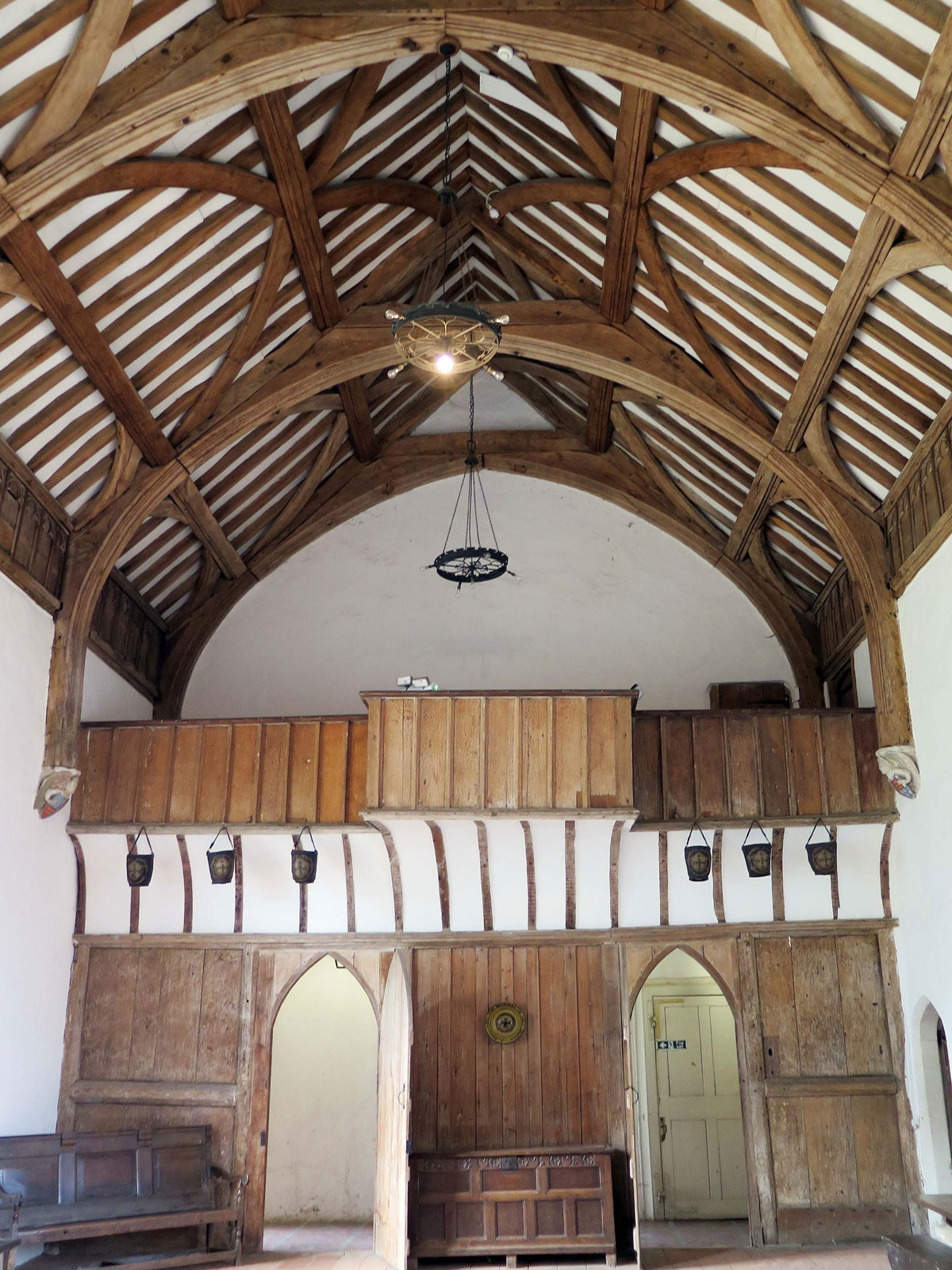
The Brethren’s Hall was originally built as part of the Master’s lodging around 1340, and still looks practically the same as it did back then. Virtually all the original features are still here including the impressive roof timbers and the Musicians Gallery. The Master dined at his high table on a raised platform at one end of the hall, and in the centre is an open hearth where a charcoal fire was burnt to keep the place warm.

In the 16th century the Master moved out and the Brothers continued to use it as their refectory. These days, the meal arrangements are less formal, but three times a year a Gaudy lunch takes place which brings all the Brothers together for what can best be described as a convivial feast.

Inside the Brethren's Hall

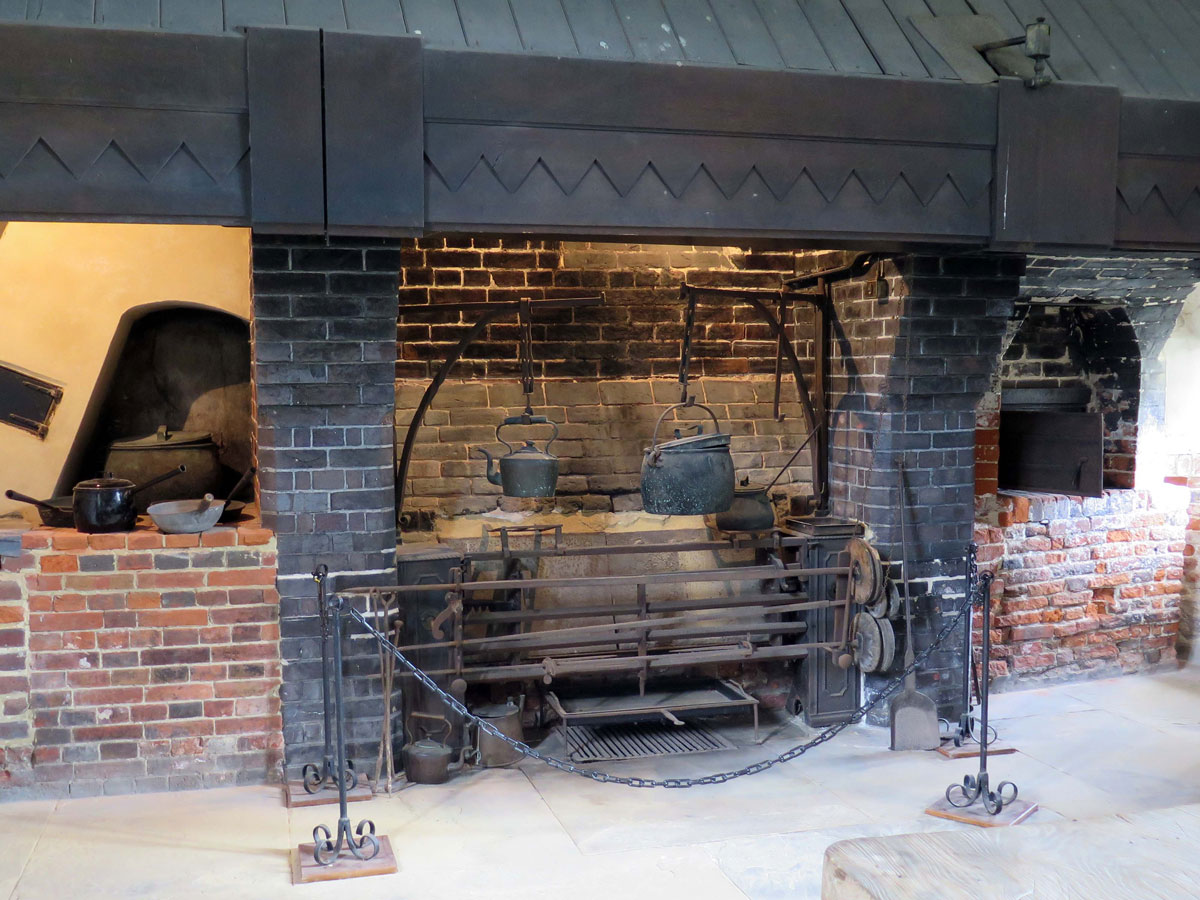
Beyond the hall is the kitchen which was in continuous use until the late 19th century. The 15th fireplace must have been well used over the years providing sustenance to the Brothers and the needy of Winchester, and I can’t help thinking that the Brethren’s Hall would make a good venue for holding medieval banquets.

The Kitchen above the Brethren's Hall

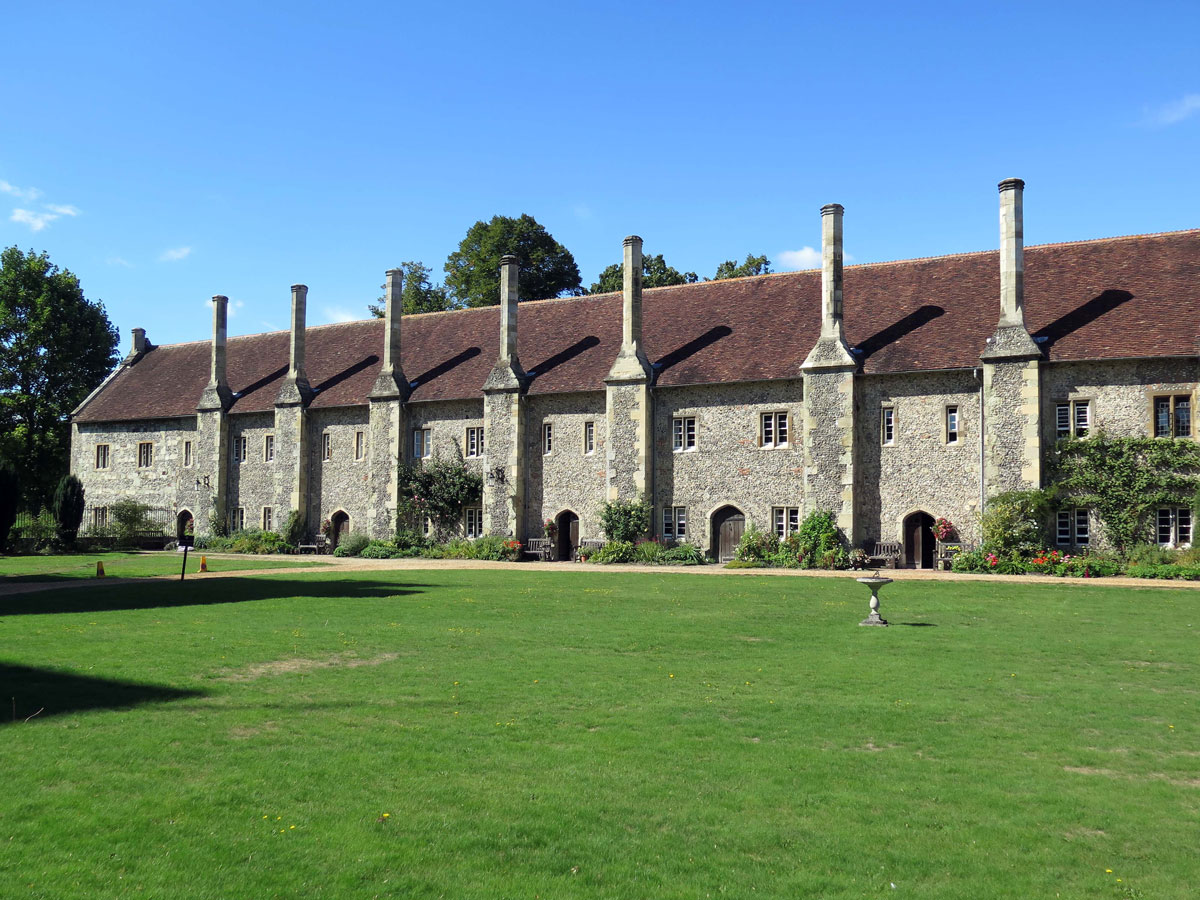
Back outside, the Master’s Hall is located next door, but for obvious reasons, isn’t available for all and sundry to go poking their noses around – and neither for that matter are the Brothers’ Quarters which are in the building that stretches along the whole length of the western side of the Inner Quadrangle.

The Brothers' Quarters in the Inner Quadrangle

When the Brothers’ Quarters were constructed in the 15th century, the accommodation must have seemed quite luxurious to anyone lucky enough (or unlucky depending on which way you look at it) to be granted a home here. It might not seem quite like that nowadays, but the accommodation still includes a bedroom, kitchen, bathroom and sitting room, and they also have a small communal dining room and common room where they can watch TV.

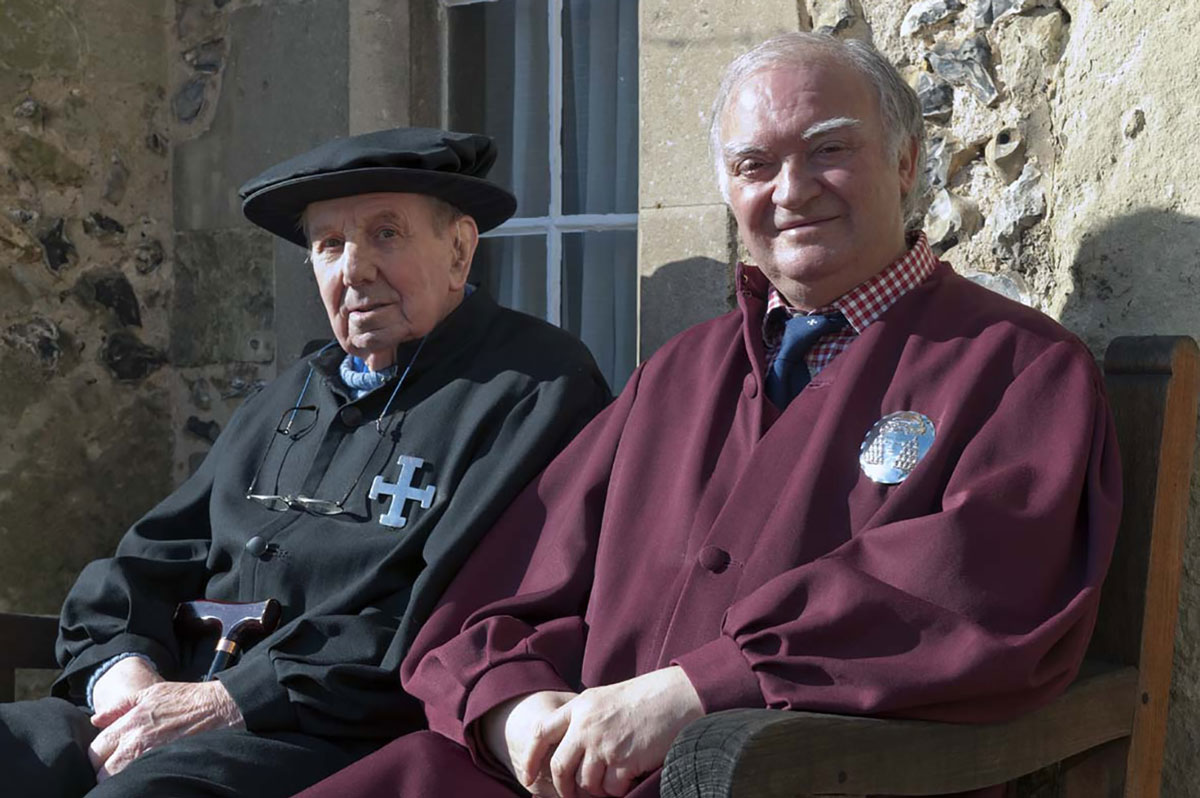
The accommodation caters for twenty five Brothers, seventeen of whom are from the original foundation and eight from the Order of Noble Poverty. If you see any of them wandering around, you can tell them apart by their gowns: The original foundation’s Brothers wear a black gown associated with the Knights Hospitaller and has a silver cross attatched to it, and those from the Order of Noble Poverty wear a red gown with a cardinal’s badge.

Brothers of the Hospital (Photo courtesy of the Hospital of St Cross)

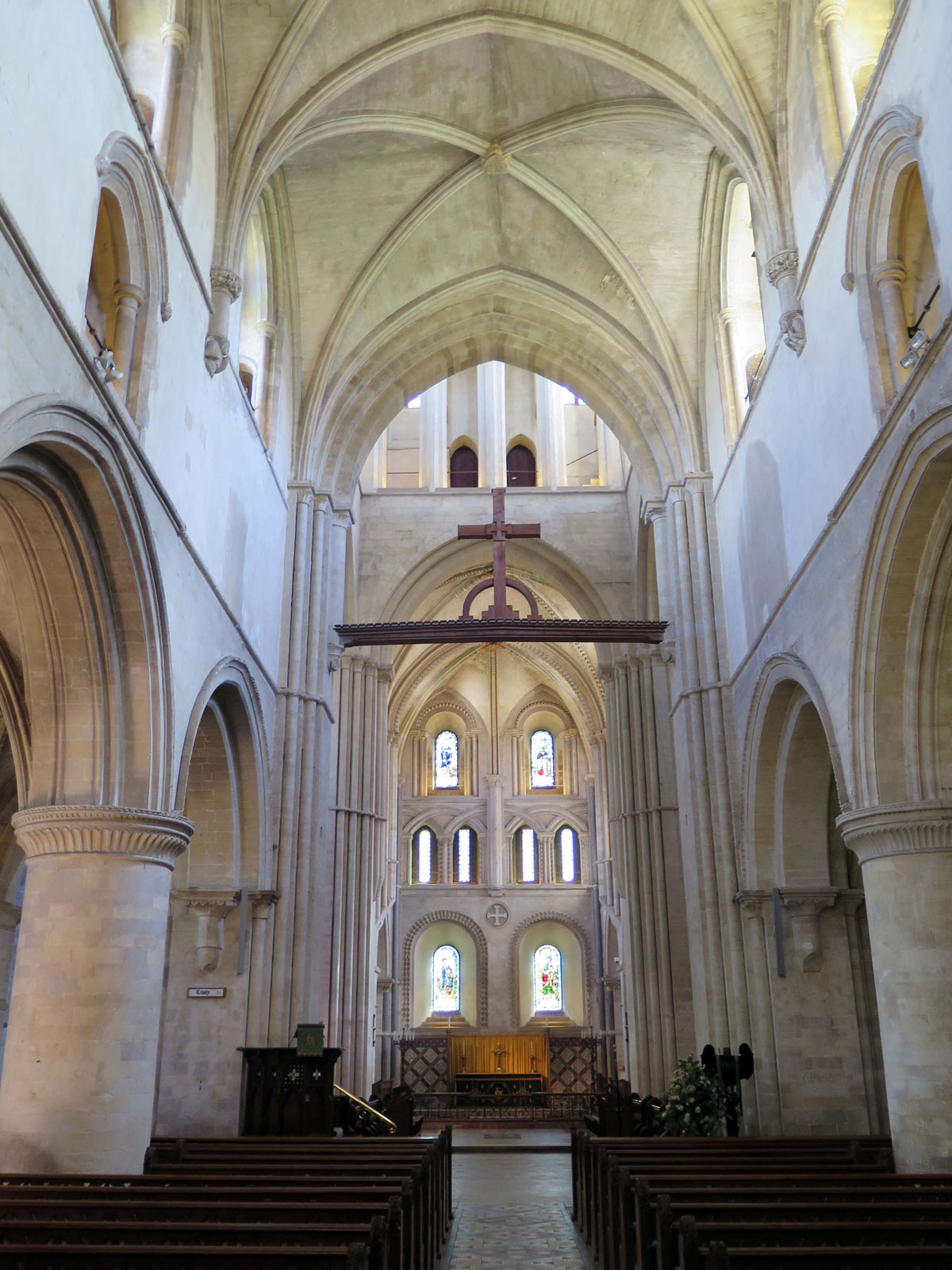
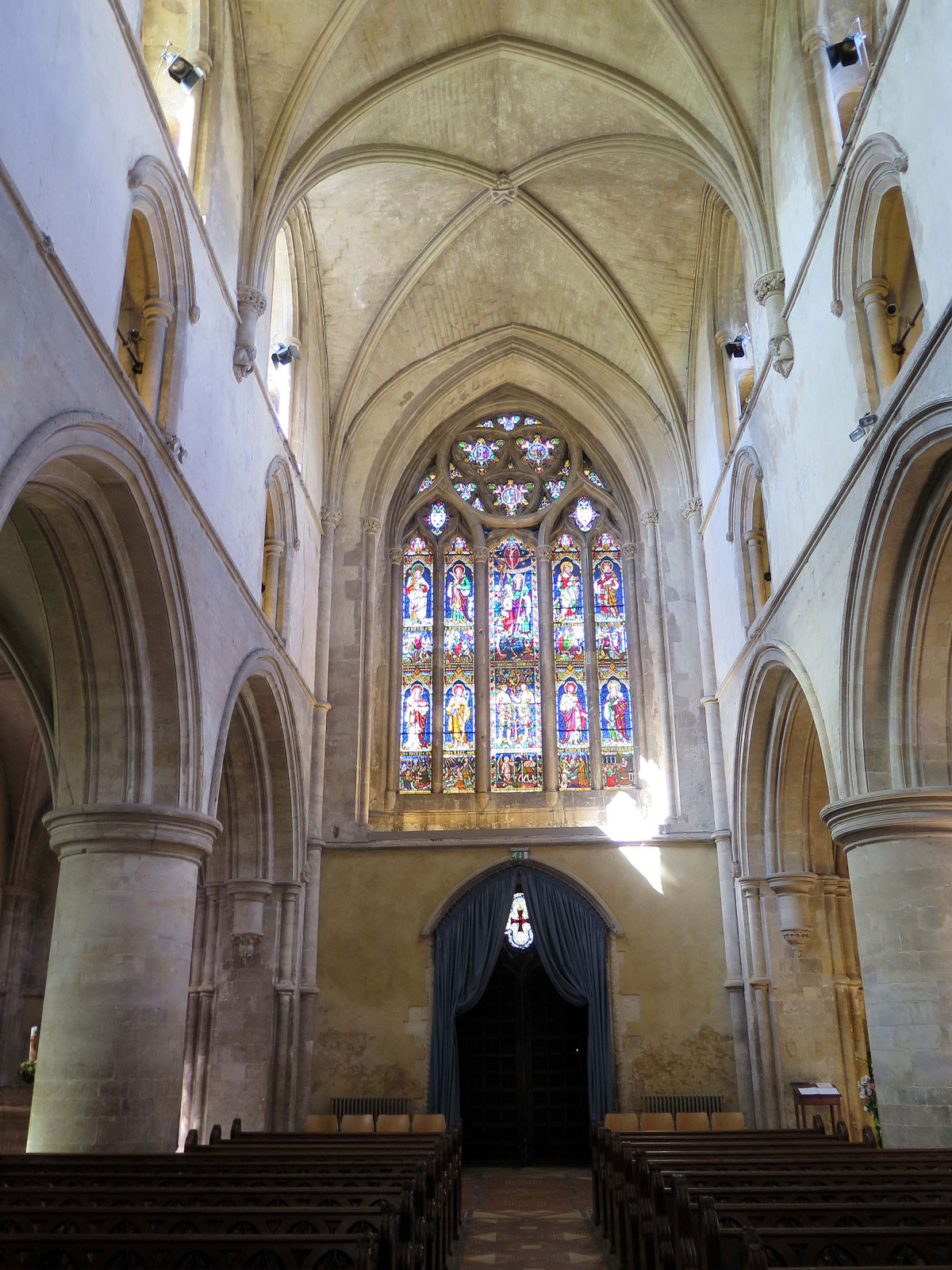
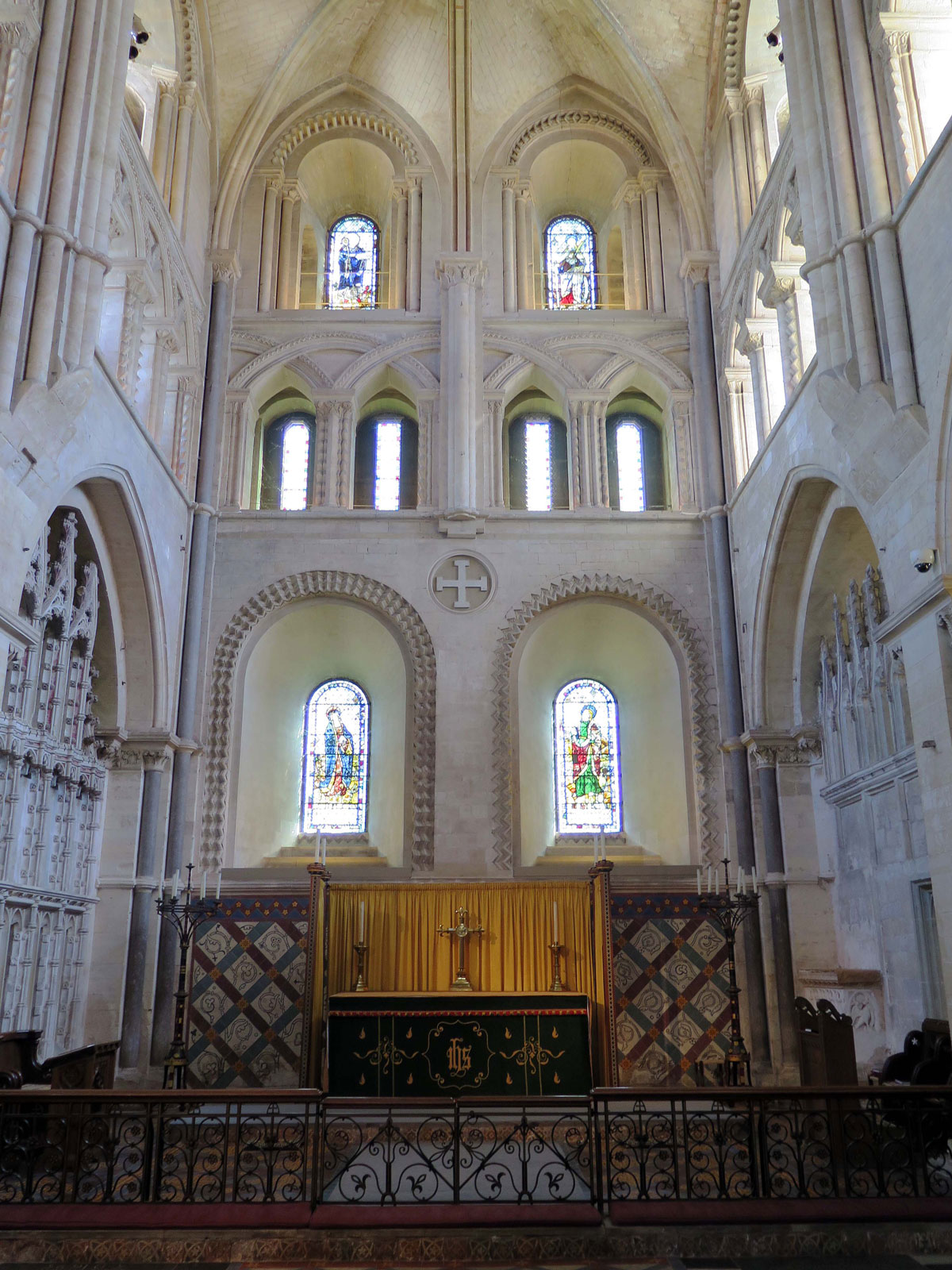
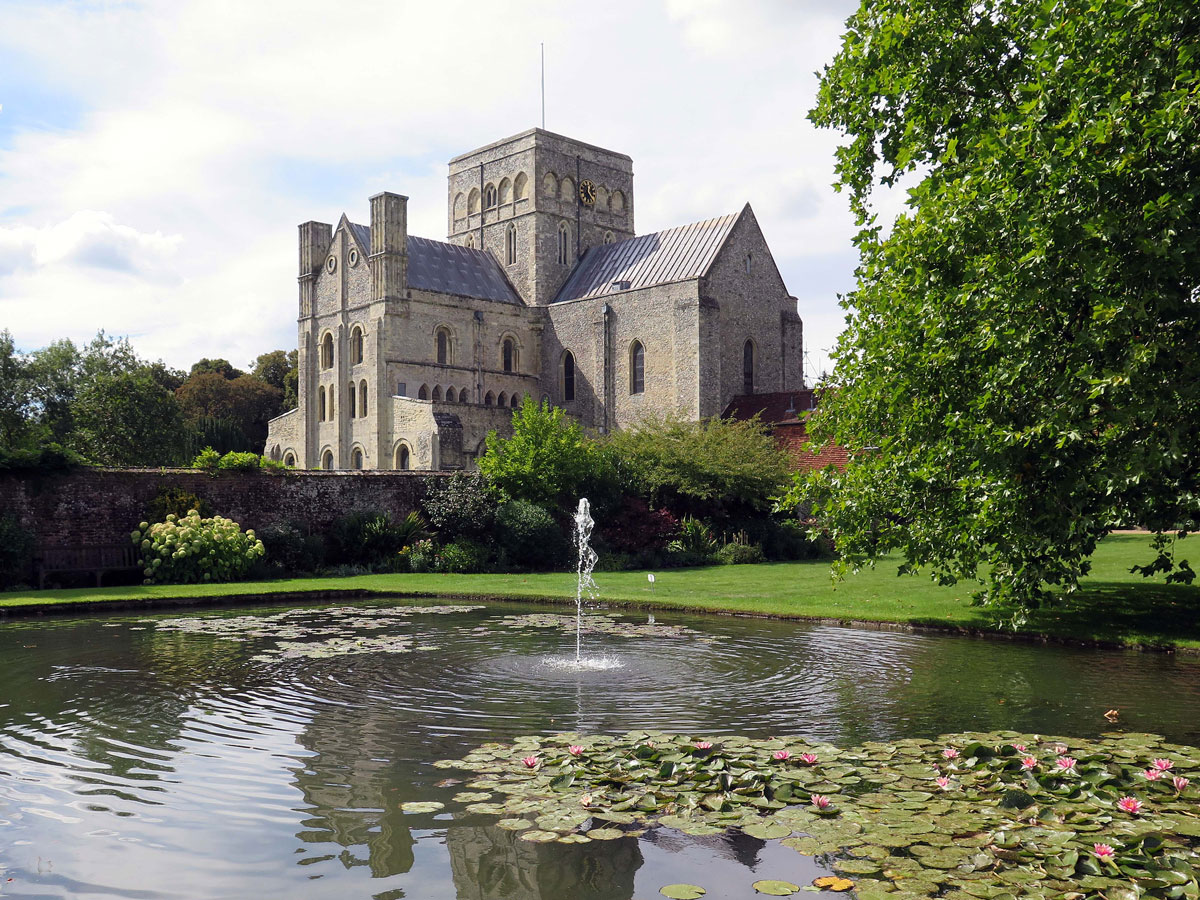
You would think that a place like this would have its own place of worship – and it has: Simon Jenkins, author of England’s Thousand Best Churches, describes it as a Norman Cathedral in miniature. I think that could be slightly misleading in a way because it’s quite a simple church really, but I can understand where he’s coming from. The church was built in the 12th/13th centuries and the style of architecture transitions from Norman to Gothic. This is the period when many of the great English cathedrals started to be built, and I have to confess that there’s something about Norman architecture that I really like.

The church has been in constant use ever since it was completed: The Knights of St John would have spent their last night praying here prior to their departure for the Holy Land, and it would have also been where pilgrims arrived on their way to Canterbury. Today the church is used by the Brothers as well as local parishioners for daily services.

The Nave Looking East
The Nave Looking West
The Norman Chancel

Linking the church to the former Master’s lodging is the Ambulatory. Built for Master Robert Sherborne around 1500, it’s the hospital’s youngest building (!), and although it’s not quite certain what the top level was used for, there’s no doubt that it acted as a cloister at ground level.

The Ambulatory

The Ambulatory also separates the Inner Quadrangle from the delightful Master’s Garden, part of which is known as the Compton Garden.

Henry Compton was Master of St Cross from 1667-1675 before moving on to become Bishop of London. It might sound a bit strange to us now, but the Bishop’s diocese included America, and being a keen botanist, he imported plants from the New World into his garden at Fulham Palace, which incidentally, was the home of the Bishops of London right up until 1973.

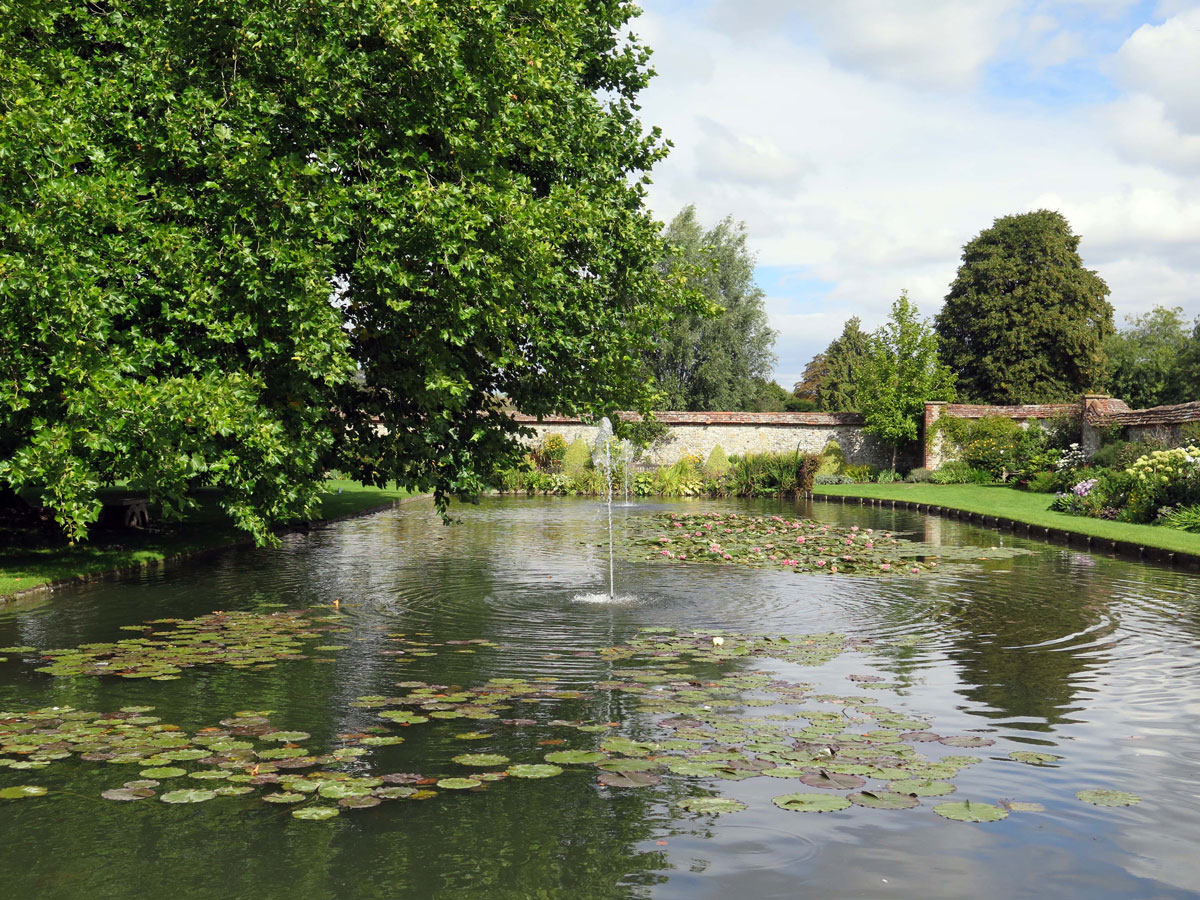
The Compton Garden at St Cross remembers Henry Compton by carefully researching and sourcing plants that he introduced during his lifetime, but for most of us this is just an oasis of peace and tranquility – and the perfect place to end a tour of St Cross.

The Master's Garden

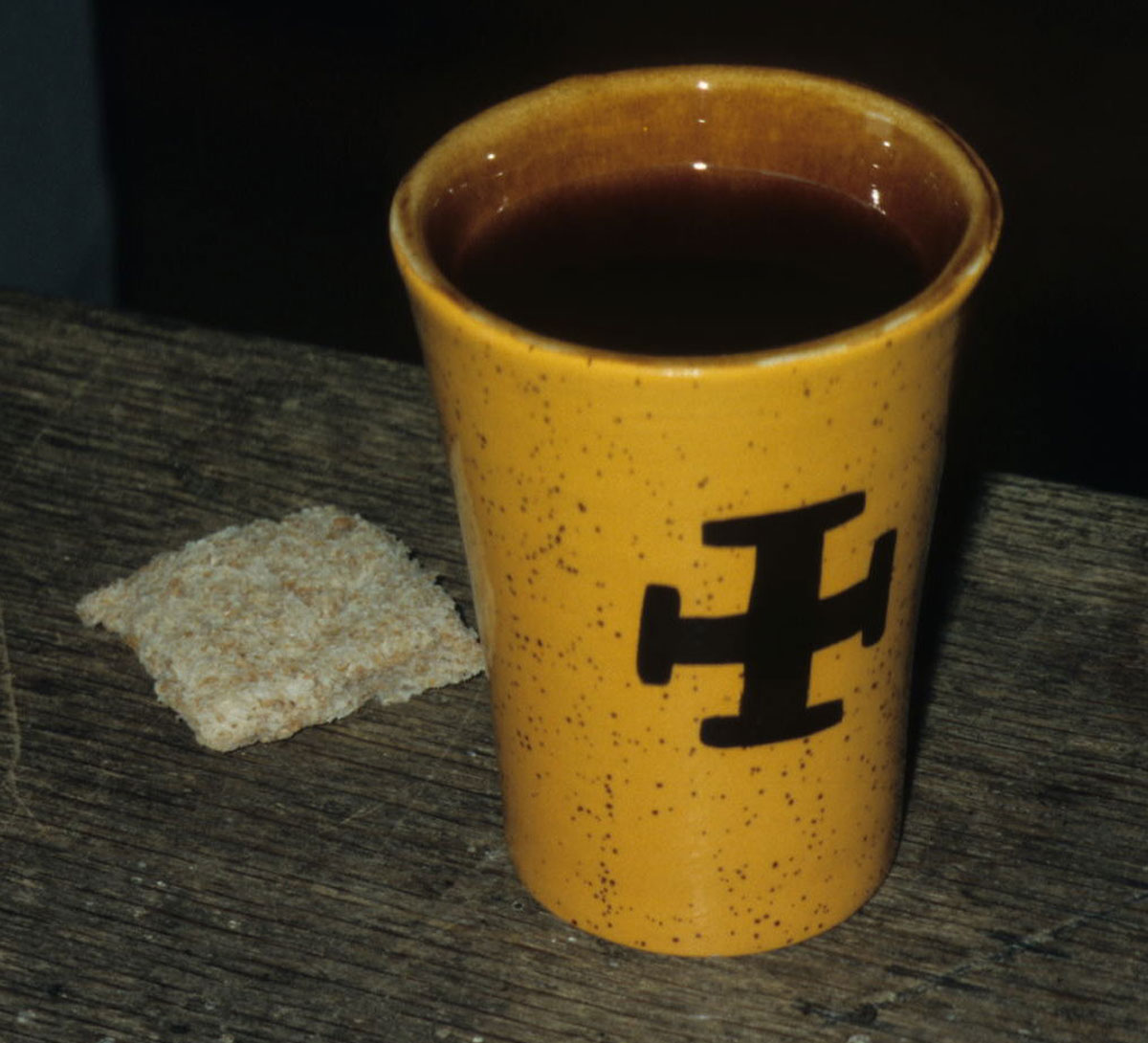
I can’t leave before mentioning the Wayfarer’s Dole. Henri de Blois was originally a monk from the Benedictine abbey of Cluny in Eastern France where it was traditional to hand out bread and wine to travellers, and so it’s not really surprising that he offered a similar gesture to pilgrims on their way to Canterbury and others who found their way to St Cross.

The Wayfarer’s Dole comprised of ‘a morsel of bread and a deer hors of beer’ – and the tradition still continues to this day. I suppose you should ask for it when you arrive but I didn’t, so I thought about trying my luck on the way out. The dole is dished out at the Porter’s Lodge if you have the nerve to ask for it, but whether the porter was busy or knew that I could survive without it I don’t know, but he seemed to have made himself scarce. After hanging around for what seemed like an age I thought discretion was the better part of valour and so I sloped off towards the Wykeham Arms instead where I knew I could get some real sustenance with a proper sandwich and a proper pint of beer.

Wayfarer's Dole (Wikipedia)

POSTED – FEBRUARY 2024

Originally posted 2024-02-22 09:24:53.

The post Brothers in Alms – The Hospital of St Cross, Winchester appeared first on Easymalc's Wanderings.

]]>
https://www.easymalc.co.uk/brothers-in-alms-the-hospital-of-st-cross-winchester/feed/ 37 20295