Warning: Creating default object from empty value in /home/sites/30b/a/a8be13db6d/public_html/wp-content/plugins/zanmb/reduxframework/ReduxCore/inc/class.redux_filesystem.php on line 29

Warning: Cannot modify header information - headers already sent by (output started at /home/sites/30b/a/a8be13db6d/public_html/wp-content/plugins/zanmb/reduxframework/ReduxCore/inc/class.redux_filesystem.php:29) in /usr/share/php/wp-stack-cache.php on line 1971

Warning: Cannot modify header information - headers already sent by (output started at /home/sites/30b/a/a8be13db6d/public_html/wp-content/plugins/zanmb/reduxframework/ReduxCore/inc/class.redux_filesystem.php:29) in /usr/share/php/wp-stack-cache.php on line 1972

Warning: Cannot modify header information - headers already sent by (output started at /home/sites/30b/a/a8be13db6d/public_html/wp-content/plugins/zanmb/reduxframework/ReduxCore/inc/class.redux_filesystem.php:29) in /usr/share/php/wp-stack-cache.php on line 1973

Warning: Cannot modify header information - headers already sent by (output started at /home/sites/30b/a/a8be13db6d/public_html/wp-content/plugins/zanmb/reduxframework/ReduxCore/inc/class.redux_filesystem.php:29) in /usr/share/php/wp-stack-cache.php on line 1971

Warning: Cannot modify header information - headers already sent by (output started at /home/sites/30b/a/a8be13db6d/public_html/wp-content/plugins/zanmb/reduxframework/ReduxCore/inc/class.redux_filesystem.php:29) in /usr/share/php/wp-stack-cache.php on line 1972

Warning: Cannot modify header information - headers already sent by (output started at /home/sites/30b/a/a8be13db6d/public_html/wp-content/plugins/zanmb/reduxframework/ReduxCore/inc/class.redux_filesystem.php:29) in /usr/share/php/wp-stack-cache.php on line 1973

Warning: Cannot modify header information - headers already sent by (output started at /home/sites/30b/a/a8be13db6d/public_html/wp-content/plugins/zanmb/reduxframework/ReduxCore/inc/class.redux_filesystem.php:29) in /home/sites/30b/a/a8be13db6d/public_html/wp-includes/feed-rss2.php on line 8
Cafe – Easymalc's Wanderings https://www.easymalc.co.uk I’d be unstoppable if only I could get started Sat, 12 Sep 2026 13:50:02 +0000 en-GB hourly 1 https://wordpress.org/?v=7.0.5 https://www.easymalc.co.uk/wp-content/uploads/2019/09/cropped-easy-malc-logo-32x32.jpg Cafe – Easymalc's Wanderings https://www.easymalc.co.uk 32 32 140253175 D-Day – Operation Deadstick and the Capture of Pegasus Bridge https://www.easymalc.co.uk/d-day-operation-deadstick-and-the-capture-of-pegasus-bridge/ https://www.easymalc.co.uk/d-day-operation-deadstick-and-the-capture-of-pegasus-bridge/#comments Thu, 04 Jun 2026 13:15:21 +0000 https://www.easymalc.co.uk/?p=23831 The post D-Day – Operation Deadstick and the Capture of Pegasus Bridge appeared first on Easymalc's Wanderings.

]]>

D-Day - Operation Deadstick and the Capture of Pegasus Bridge

On June 6th 1944, Allied forces stormed the beaches of Normandy in the first action to liberate Western Europe from German occupation. Operation Neptune, as it was codenamed, is considered to be one of the most difficult amphibious invasions ever launched: Almost 160,000 troops crossed the channel that day, but the preparations were unbelievably complex involving many different separate secret operations.

For those who don’t know, or have perhaps forgotten, the liberation of Europe was going to begin with an attack on the northern coast of France in the Baie de Seine by Allied forces: American troops were given the task of landing on two beaches at the western end of the bay (codenamed Utah and Omaha), and on the eastern flank, Canadian troops were to disembark onto Juno, with the British coming ashore at Gold and Sword, but I’m going to start, not on the Normandy beaches, but slightly inland because this was where the first landings actually took place.

For the seaborne attack to have any chance of success it was imperative that the Atlantic Wall (the German defences that stretched around the European coastline) was made as ineffective as possible, and part of the plan was to drop airborne troops behind enemy lines in advance of the beach landings to minimise German counter-attacks.

Two American airborne divisions were flown in to pave the way for the assault on Utah and Omaha, and one British airborne division was used to support Gold, Juno and Sword.

Scenes in films such as The Longest Day and Saving Private Ryan show how the American Airborne divisions went about helping to secure the right flank, but this post centres around the British Airborne’s mission to secure the left flank.
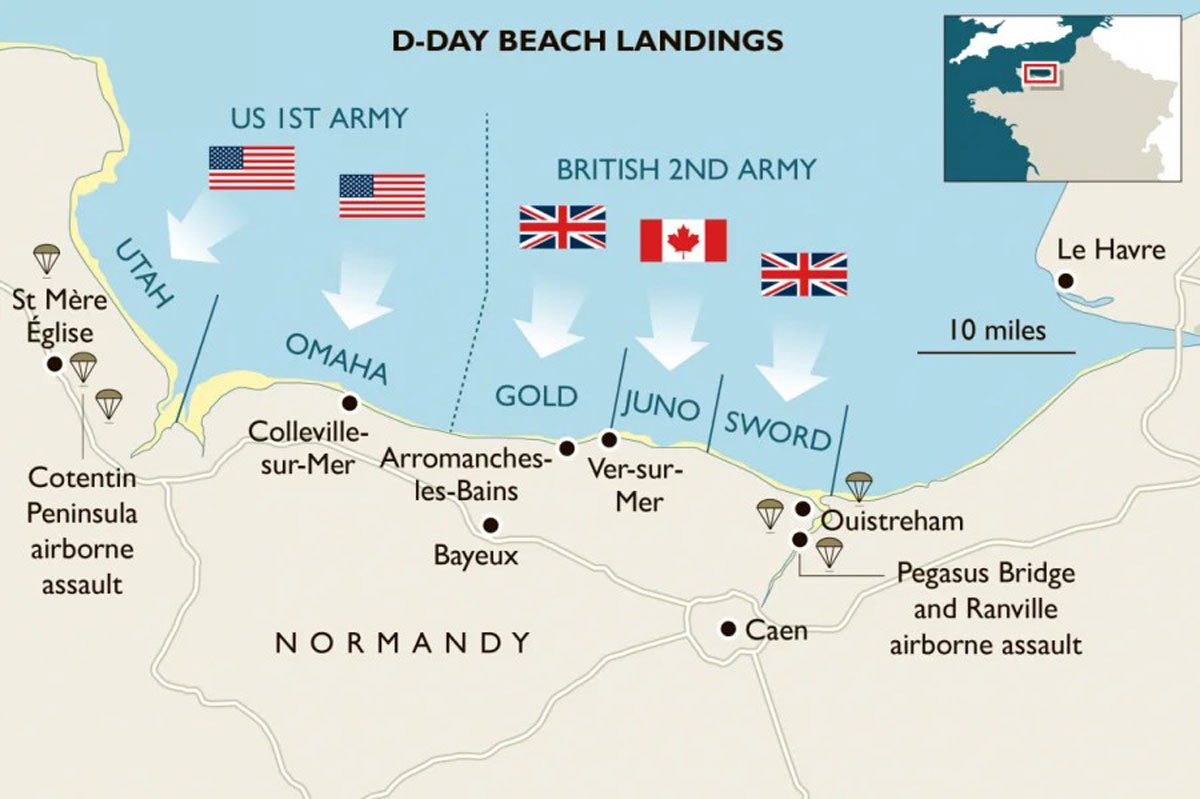
Map of the D-Day Landing Beaches and Airborne Drops

Operation Tonga was the codename given to the British 6th Airborne’s mission of securing the area between the Caen Canal and the River Dives, and to achieve it there were three main objectives.

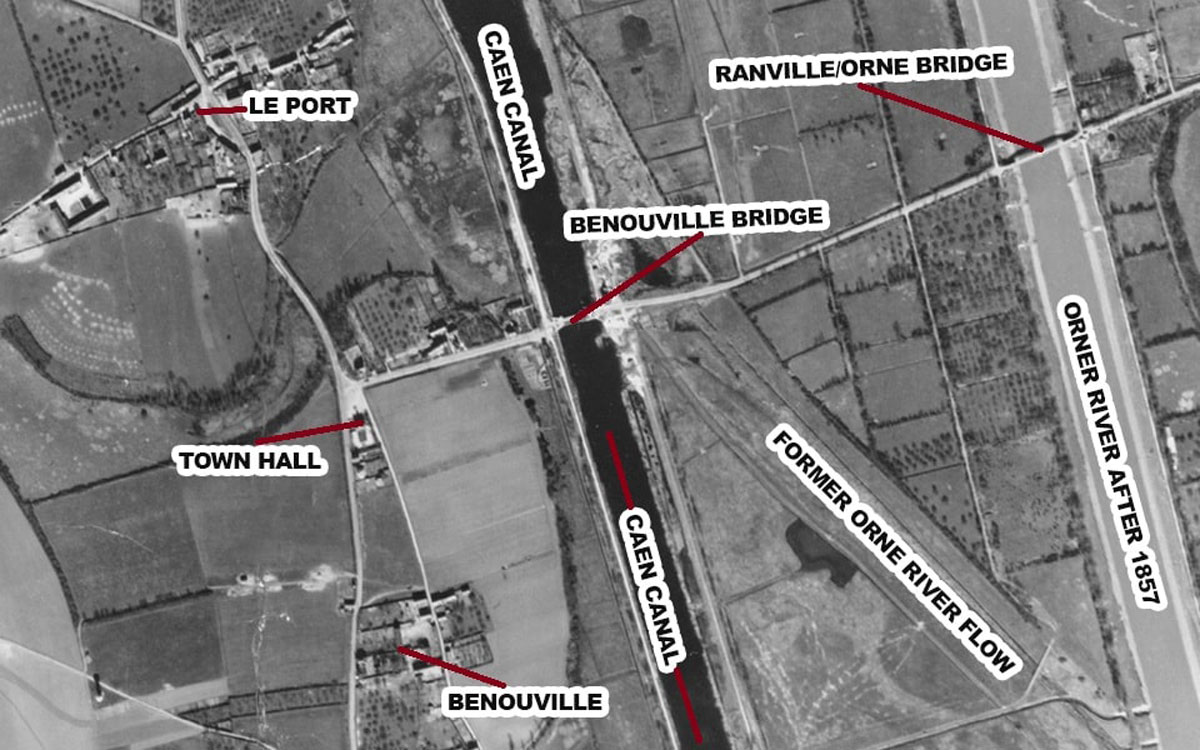
The first was to capture two strategically important bridges over the Caen Canal and Orne River which had to be held until reinforcements arrived: Objective number 2 was to destroy the Merville Gun Battery at Franceville Plage which intelligence believed was a threat to troops landing on Sword Beach, and the third aim was to destroy five bridges which spanned the River Dives to prevent their use by German forces.

Of the three objectives, the capture of the bridges over the Caen Canal and Orne River was the most critical for two reasons; the first was to protect the British landings at Sword Beach, and the second was to prevent the 6th Airborne division from being isolated behind enemy lines, and such was the significance of the task, that it was given its own codename – Operation Deadstick, a coup de main (surprise) mission that was designed to catch the German defences off-guard.

Decoy missions aided the surprise attack, but the Normandy operation began at precisely 22.56 on the evening of the 5th of June when six Halifax bombers took off one at a time from RAF Tarrant Rushton in Dorset, each one towing a Horsa Glider. The first three of these were destined for the Canal bridge at Bénouville (later named Pegasus Bridge) and the other three for the bridge over the Orne at Ranville (later named Horsa Bridge).

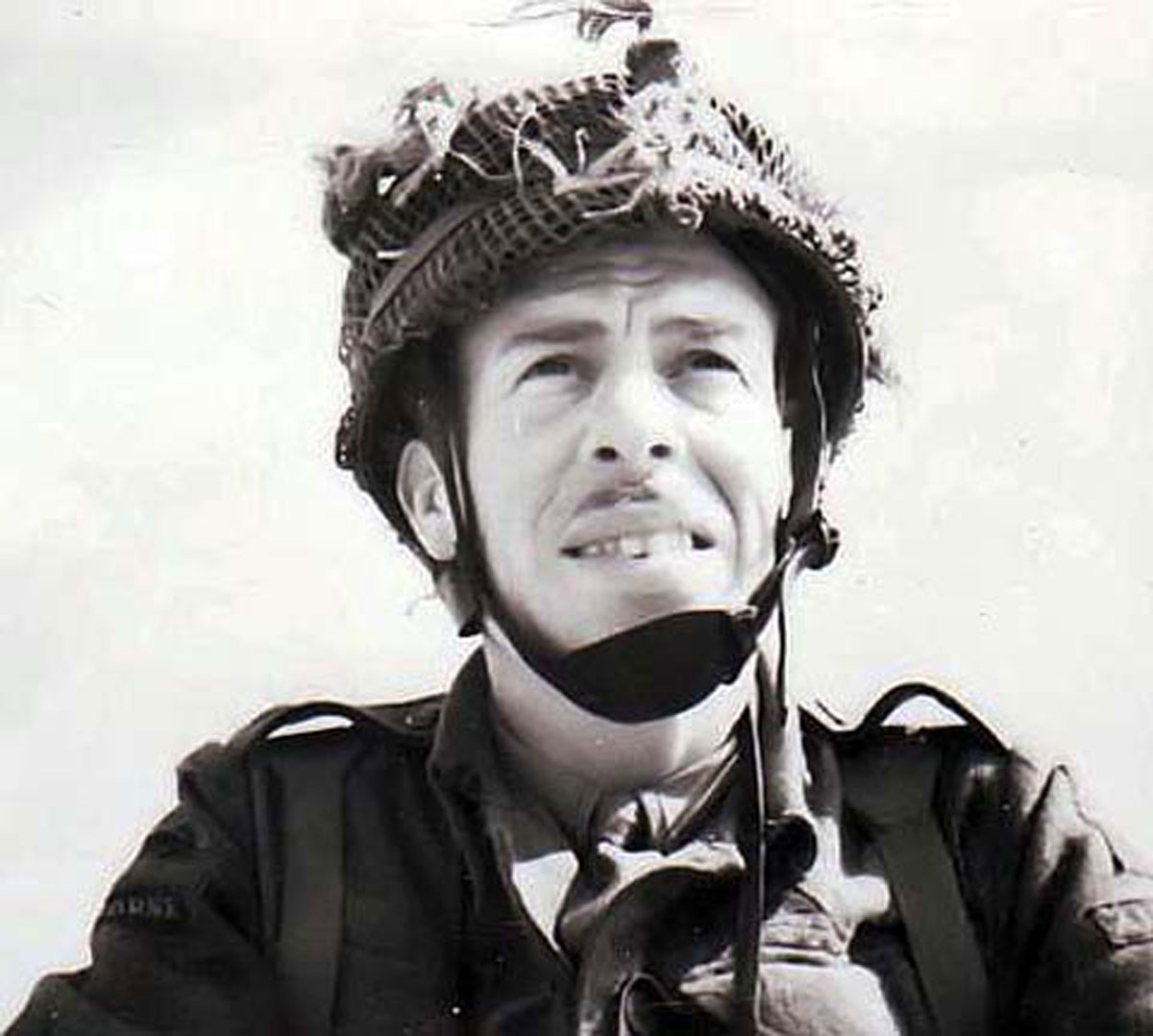
Led by Major John Howard, the bulk of the attack force came from all 4 platoons of D Company the Ox and Bucks Light Infantry. They were reinforced by 2 platoons of B Company, and joining them were 30 Royal Engineers from the 249 (Airborne) Field Company whose job was to make the bridges safe from German explosives. The total contingent of 181 men was finally made up by 12 men from the Glider Pilot Regiment who had the unenviable task of landing the gliders safely as close to the bridges as possible.

Flying over the channel at 7,000 ft, the bombers crossed the Normandy coast at 00.07 and released the towed gliders one by one. Horsa No 1 (carrying Major John Howard) was the first to be released and headed towards Bénouville Bridge: It was quickly followed by Horsas 2 and 3. Gliders 4,5, and 6 were released in the second wave and headed for Ranville Bridge.

The Benouville and Ranville Bridges (From the Battle for Pegasus Bridge by Maxim Chornyi)
Major John Howard (Wikipedia)

Believe it or not, these gliders were largely made of plywood, and it doesn’t take much imagination to think about what was going through these soldiers’ minds as they came hurtling towards the ground with no undercarriage at 90 mph – and with German soldiers waiting to greet them.

At 00.16, Glider No 1 was the first to land, and although the pilots had accurately pinpointed the correct location, it had got tangled up in the defensive barbed wire fence protecting the bridge. Moments later, glider No 2 arrived relatively unscathed, but the same couldn’t be said for Glider No 3 whose rough landing forced it over the top of No 2 and crash in front of it. The impact caused it to break in half and throw the unconscious Lance-Corporal Fred Greenhalgh into a pond next to it. His drowning made him the first British fatality on D-Day.

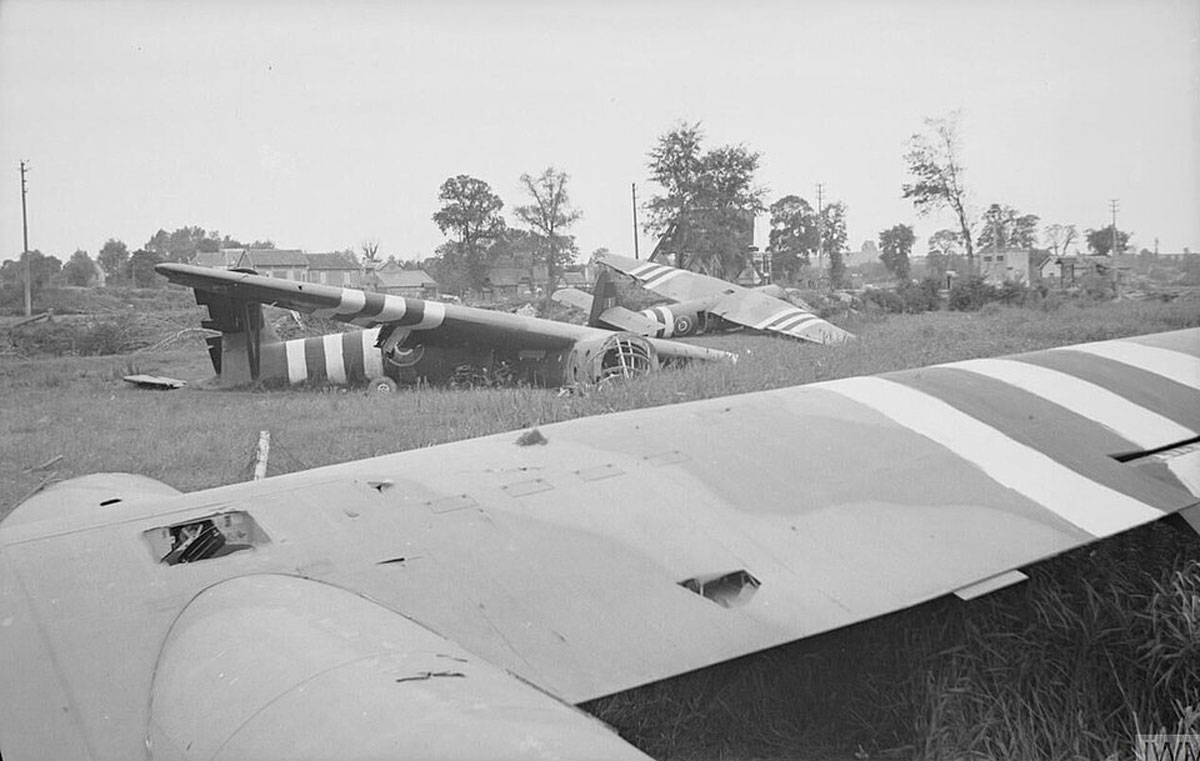
Although I had an outline understanding of Operation Deadstick before coming to Bénouville, nothing quite prepared me for what actually happened. The incredible precision of the glider pilots was truly amazing under the circumstances as can be seen in the image below (if you look closely enough, Bénouville Bridge can just be made out behind the glider furthest away), and don’t forget, this operation was carried out in the dead of night with no sophisticated equipment to guide them. Although the landings at Ranville Bridge didn’t quite match the same accuracy, the operation was still firmly on course.

The 3 Horsa Gliders after Crash-Landing at Pegasus Bridge
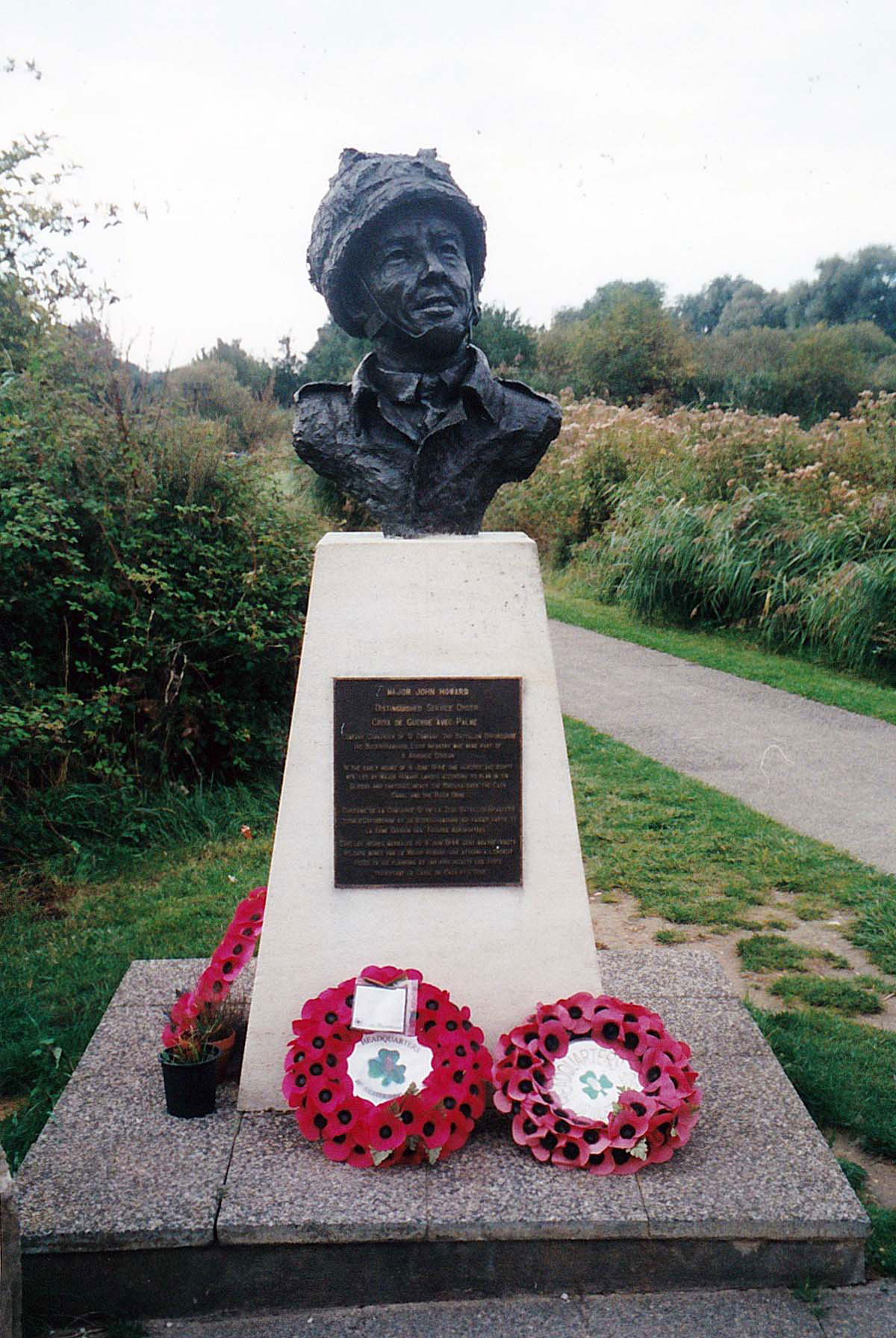
A Bronze Bust of Major John Howard at the spot where Glider No 1 Landed

From a German perspective, Bénouville Bridge was defended by a garrison of 200 men, but thanks to the Gondrée family who owned the Café next to the bridge, Major Howard was given up to date information on what sort of welcome he could expect, and armed with this information as well as their weapons, the men immediately jumped out of their wrecked planes and began to attack the bridge.

One of the German sentries was only 16 years old and armed with just a rifle for protection. When he was suddenly confronted by a group of camouflaged, black-faced troops dashing towards him he did what I would have done. He turned and scarpered yelling “Fallshirmjager” (Paratroopers) – and when you listen to what Corporal Walley Parr had to say you can understand why. “l stopped and looked across the bridge just for a brief second and looked at the Very Light (alarm pistol) being shot up. Then I turned and one of the dug-out doors half-opened and closed again. I shot across (the roadway). By this time, I had a No. 36 grenade, the pin out, into the dug-out, opened and shut the door. The explosion went off. Charlie Gardner came in. I opened the door again and he just machined-gunned inside. On the second dug-out – the same. ln with the grenade, bang the door shut, explosion, smash it wide open again and Charlie finished them off”. Feldwebel Heinz Hickman, who was in the German 6th (Independent) German Parachute Regiment saw things from a different angle. “l’m not a coward but at that moment I got frightened. If you see a Para platoon in full cry, they frighten the daylights out of you – the way they charge, the way they fire, the way they ran across the bridge. Then I gave the order to go back. What can I do with four men who had never been in action?”

Within 10 minutes of the gliders landing, the bridge was in British hands. When news came through that the bridge over the Orne at Ranville had also been captured, Major Howard contacted his superiors by transmitting the code names of the bridges – ‘Ham’ (Canal Bridge) and ‘Jam’ (Orne Bridge) to signal that the operation had been successfully completed.

The number of British casualties involved in this first operation was lighter than it might have been and restricted to 2 deaths and 14 injuries. Fred Greenhalgh’s drowning was followed by the fatality of Lt Den Brotheridge who was shot in the neck while racing across the canal bridge. Exactly how many German soldiers were killed is unknown, but estimates suggest that around a dozen to 20 defenders lost their lives.

Below is a clip that will bring the operation more to life with an account by David Wood, the 21-year-old commander of 24 Platoon in Glider No 2.

The success of holding the bridges was reliant on prompt back-up support because the troops that had captured them were now under attack themselves. This was foreseen of course, and not long after the gliders had left Blighty, a contingent of elite paratroopers, known as Pathfinders, were also on their way across the channel: Their mission was to mark out drop zones for the arrival of three battalions of the 5th Parachute Brigade, and within half an hour of the gliders landing they were there in support of both bridges.

On a personal level, I often wondered what my dad did during the war but he never mentioned anything about it. Suffice it to say, that after a bit of digging, I’ve since found out that he was a private in the 5th Parachute Brigade at the time, but I’ve never been able to find out any more than that where Normandy was concerned unfortunately.

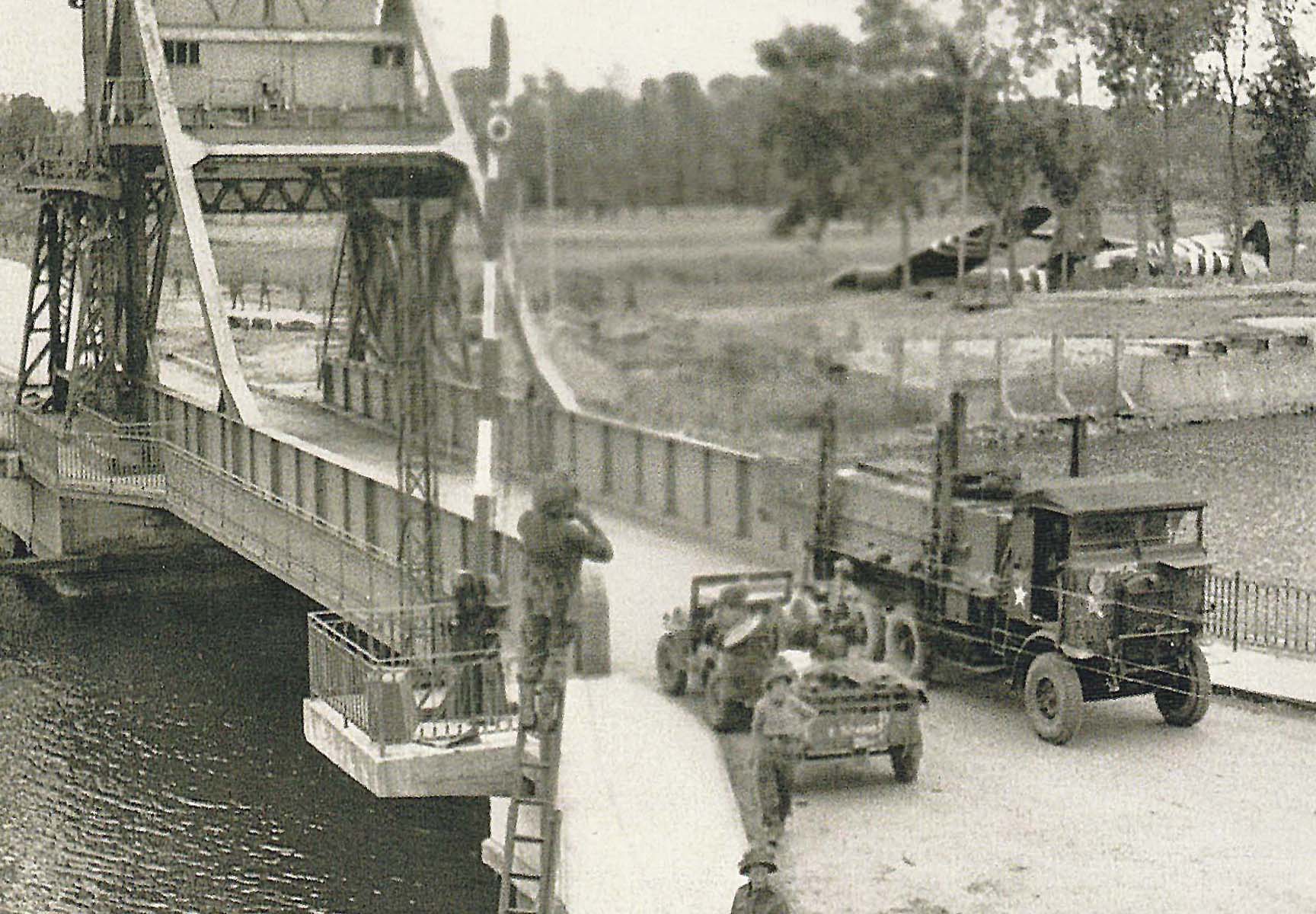
Pegasus Bridge after capture (Scanned from a postcard. The original photo is in the private collection of Arlette Gondree)

The arrival of support from the 5th Parachute Brigade meant that, if everything went according to plan, the bridges could soon be used as a bridgehead by British and Canadian troops after landing on the beaches – and for now at least, there was cause for some celebration.

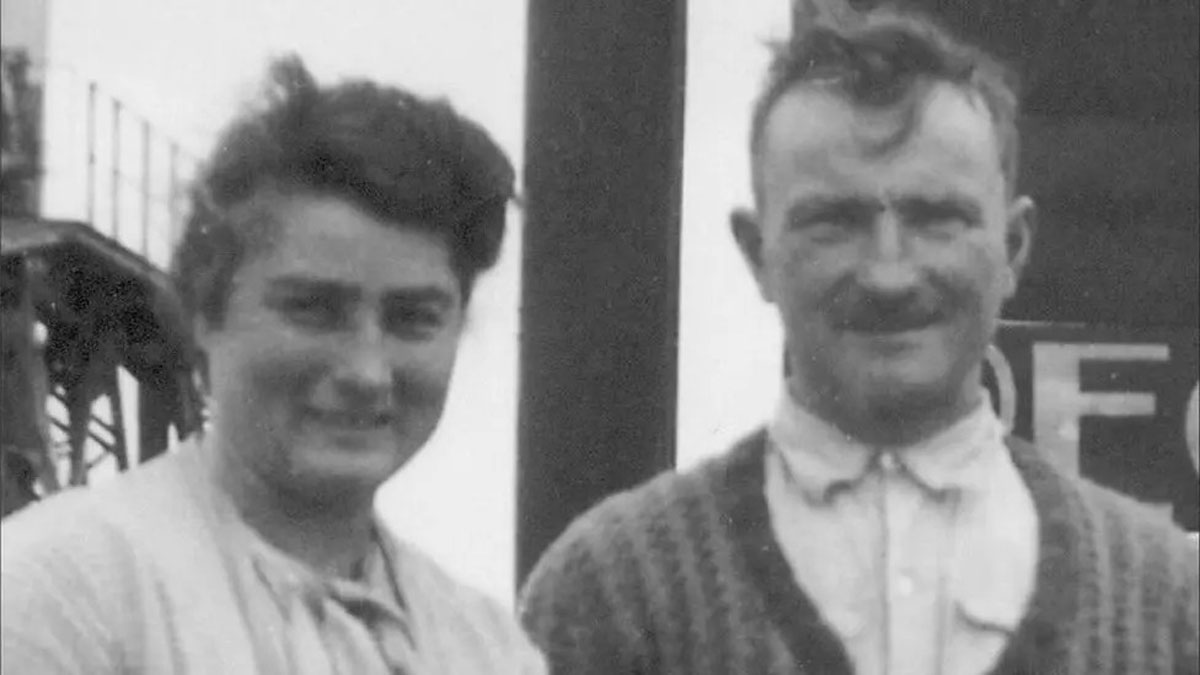
At Café Gondrée, the proprietors, Georges and Thérèse Gondrée, were secret members of the French Resistance and a big help to the Allies, but while the battle for the canal bridge was raging, the family took refuge in the cellar, and Arlette who was just 4 years old at the time, remembers how British soldiers gave them chocolate and biscuits when they arrived. In return, Georges dug up some of the 99 bottles of Champagne he had hidden in his garden and promptly popped the corks.

It was believed at the time that Café Gondrée was the first house in France to be liberated, but that’s been contested since. Either way, Major Howard used it as his temporary headquarters, and Thérèse used her nursing skills to help out in the make-do first aid station.

Georges and Therese Gondree (Original in Arlette's private collection)
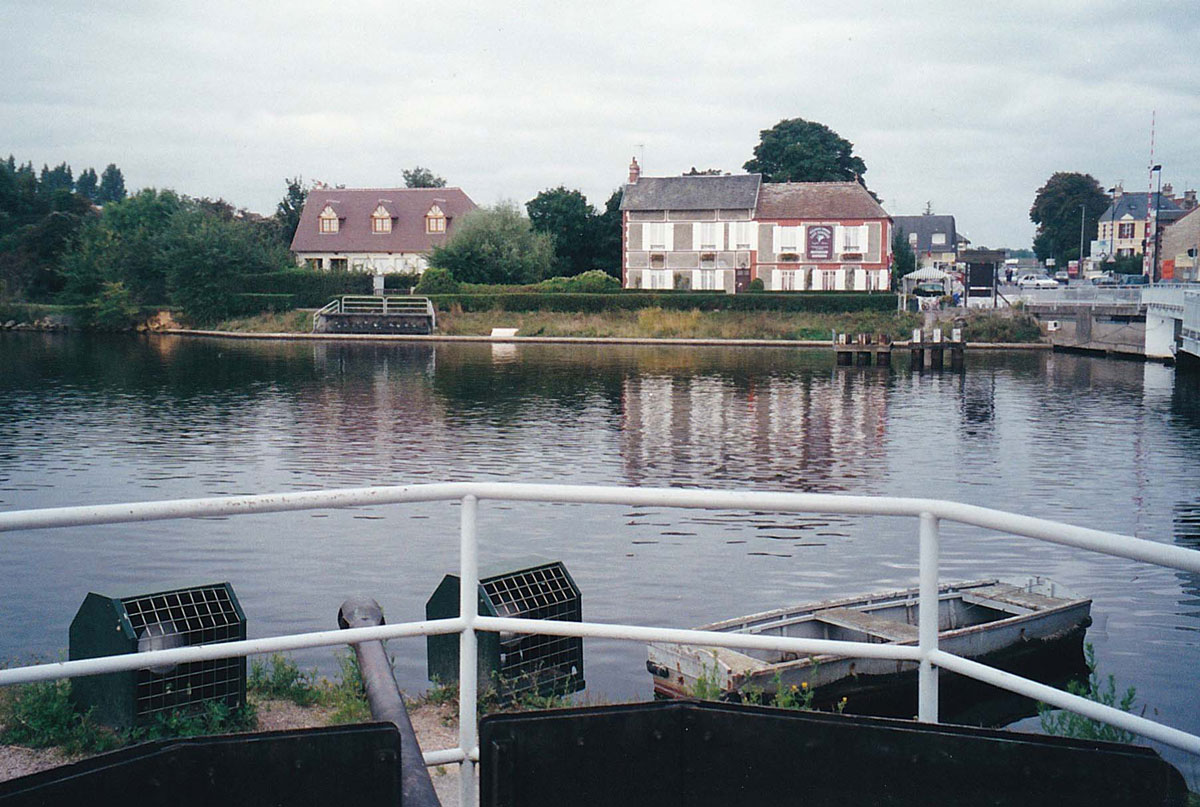
Cafe Gondree from across the Caen Canal (Note the German gun emplacement in the foreground)

As regards the other two missions on Operation Tonga, the outcome was somewhat mixed. There weren’t too many Allied casualties with the successful destruction of the bridges over the River Dives, but the assault on Merville Battery, primarily by the 9th Parachute Battalion, involved serious hand-to-hand fighting, and although successful from a military perspective, came at the cost of at least 50 British lives.

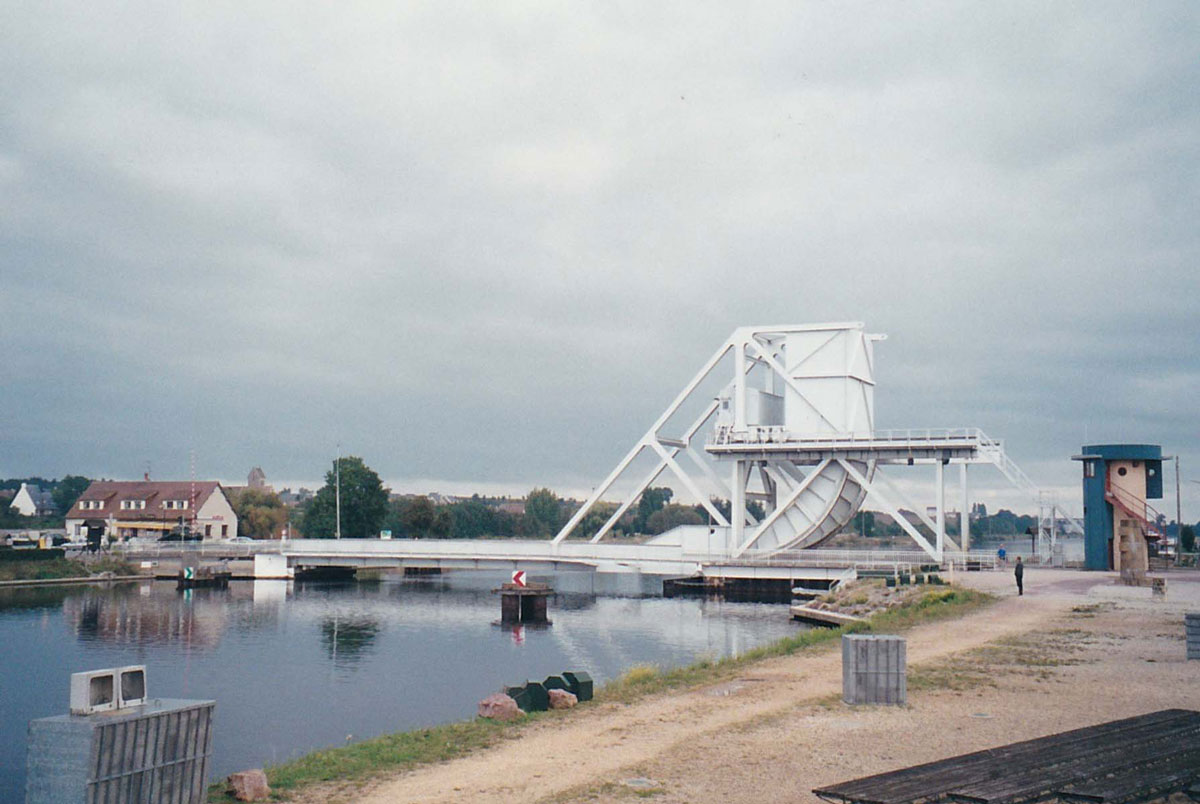
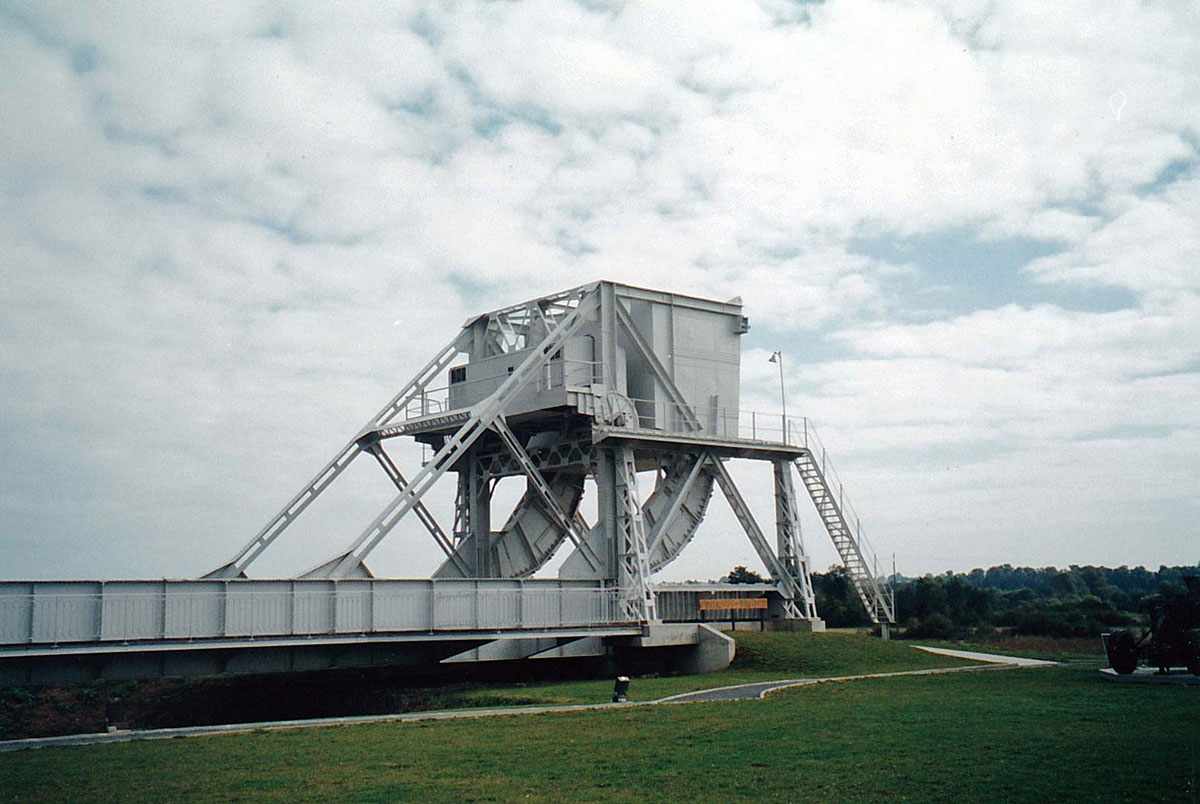
Many more people would die before Europe was finally liberated, but without the military successes of Operations Deadstick and Tonga, it doesn’t bear thinking about what the outcome could have been. Since then, Ranville Bridge has been re-named Horsa Bridge, and Bénouville Bridge re-named Pegasus Bridge, in memory of the airborne troops whose emblem is a Pegasus. In 1994, Pegasus Bridge was replaced with a more practical one for modern day needs, but the rolling bascule design still has a similar appearance to the original.

The Modern-Day Pegasus Bridge over the Caen Canal

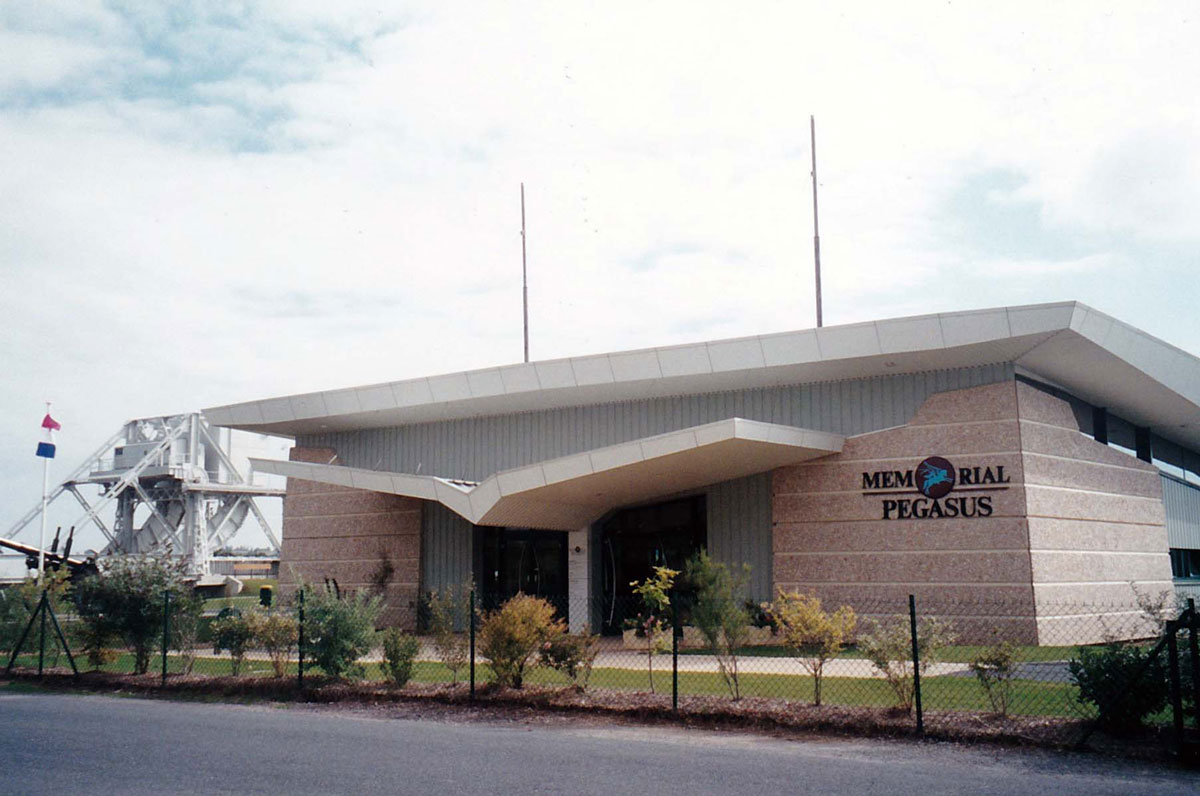
In 1997 a Memorial Pegasus Museum was built nearby in the shape of a Horsa Glider, and the original bridge can be seen in the grounds. A replica glider was also installed in 2004 but that was three years after our visit.

The Pegasus Memorial Museum
The Original Pegasus Bridge

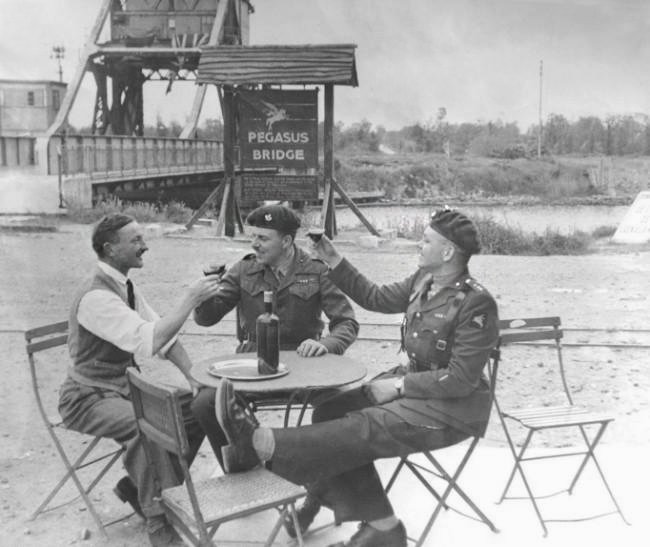
Café Gondrée has also become a place of pilgrimage, particularly for paratroopers who are offered a glass of champagne on each anniversary of the bridge’s capture.

Georges Gondree, Major John Howard and Lt David Wood enjoying a glass of Champagne in 1946 (Arlette's private collection)

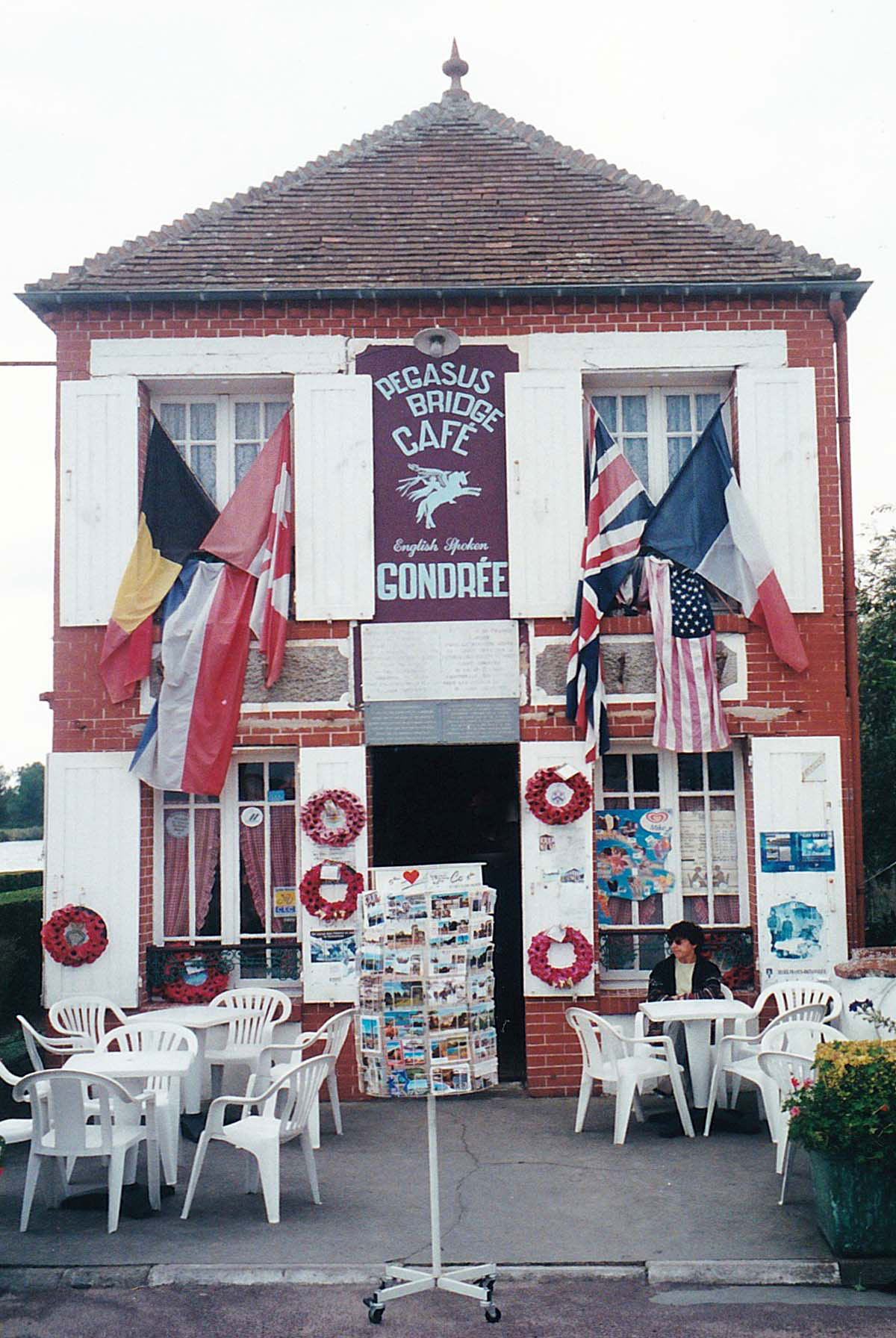
Georges and Thérèse are no longer with us but the café is still run by their daughter Arlette, and is now known as the Pegasus Bridge Café. Appropriately, the walls of the café are decorated with shoulder patch badges, regimental insignia, old uniforms, helmets and photos of the leaders of the operation.

The Pegasus Cafe in 2001

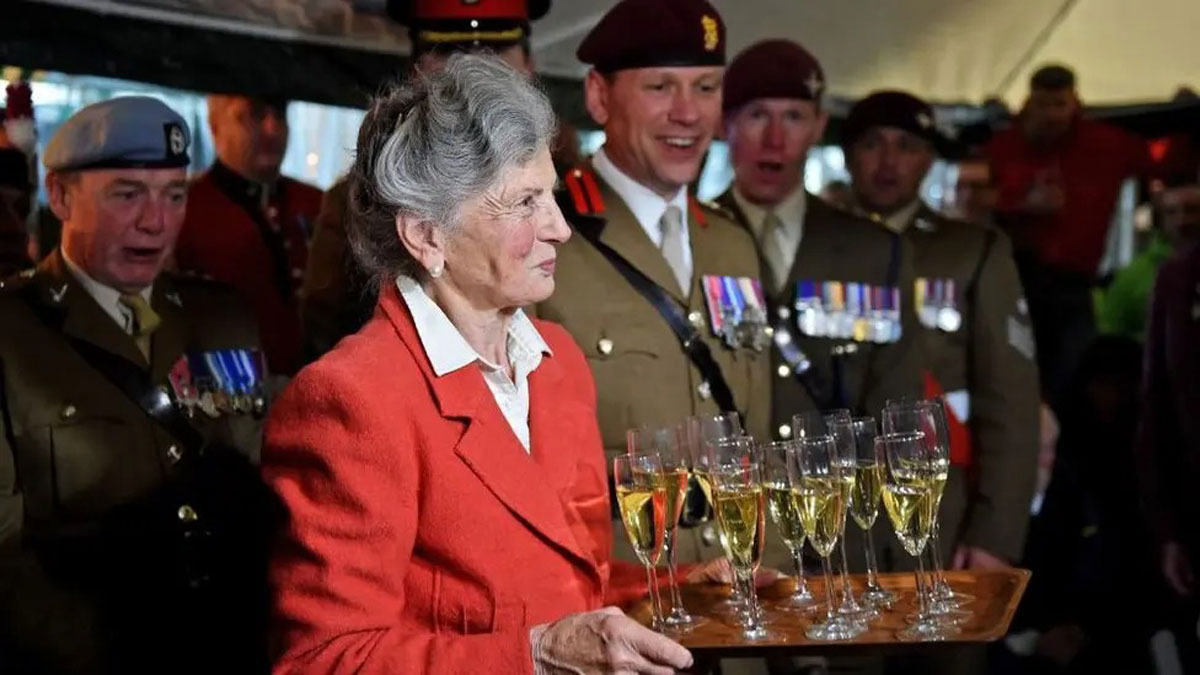
It doesn’t matter whether you need a coffee or not, you just have to pay a visit to the café, and to my surprise we were served by the lovely Arlette herself. It wasn’t busy, and even though she talked to us for a while, I don’t have any pictures of her, but below is a more appropriate one.

Arlette handing out Champagne to Veterans (BBC)

POSTED – JUNE 2026

The post D-Day – Operation Deadstick and the Capture of Pegasus Bridge appeared first on Easymalc's Wanderings.

]]>
https://www.easymalc.co.uk/d-day-operation-deadstick-and-the-capture-of-pegasus-bridge/feed/ 18 23831