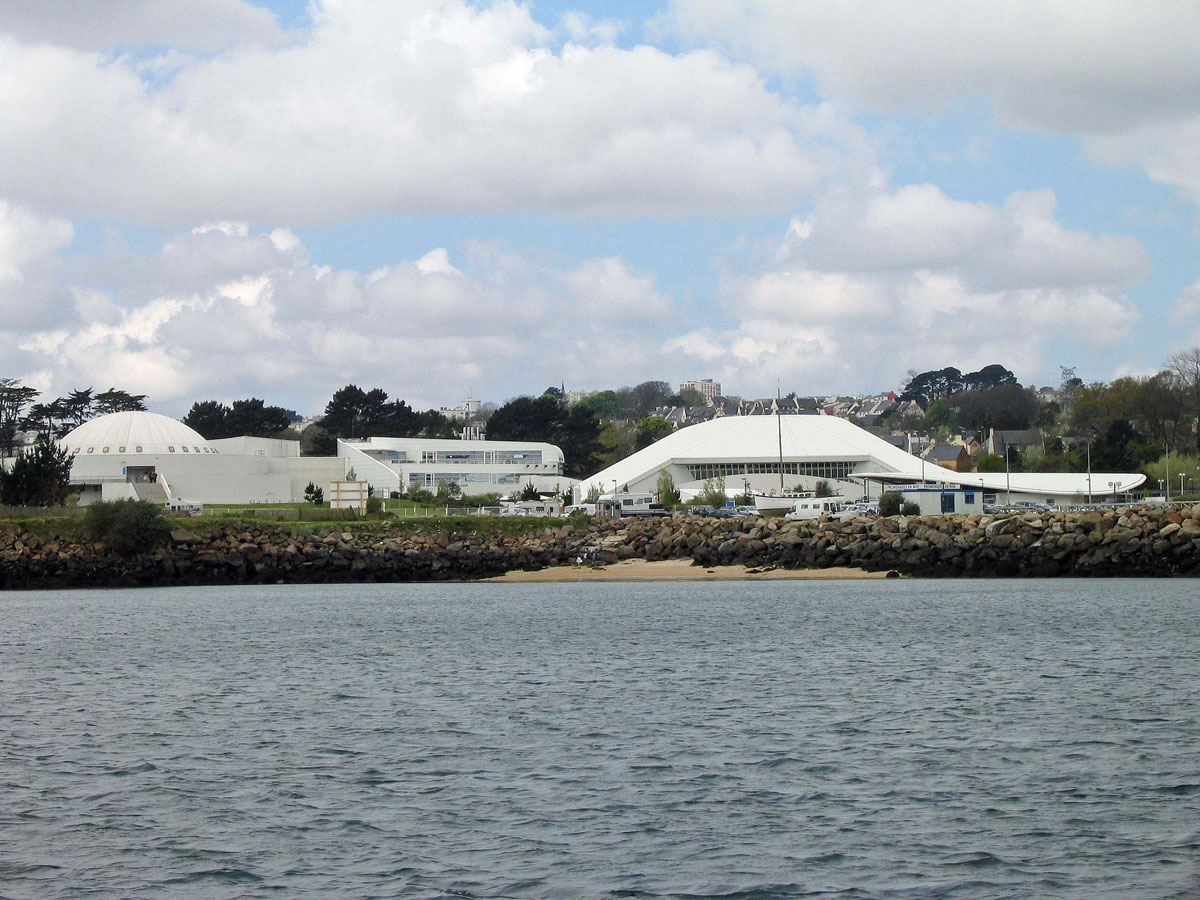
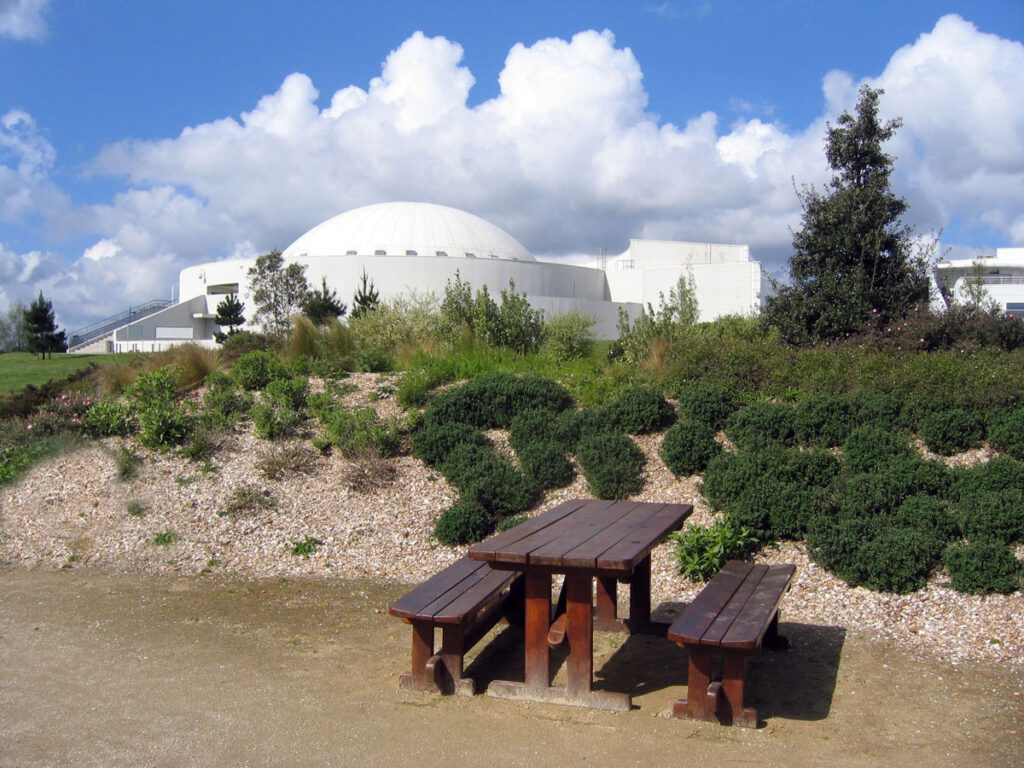
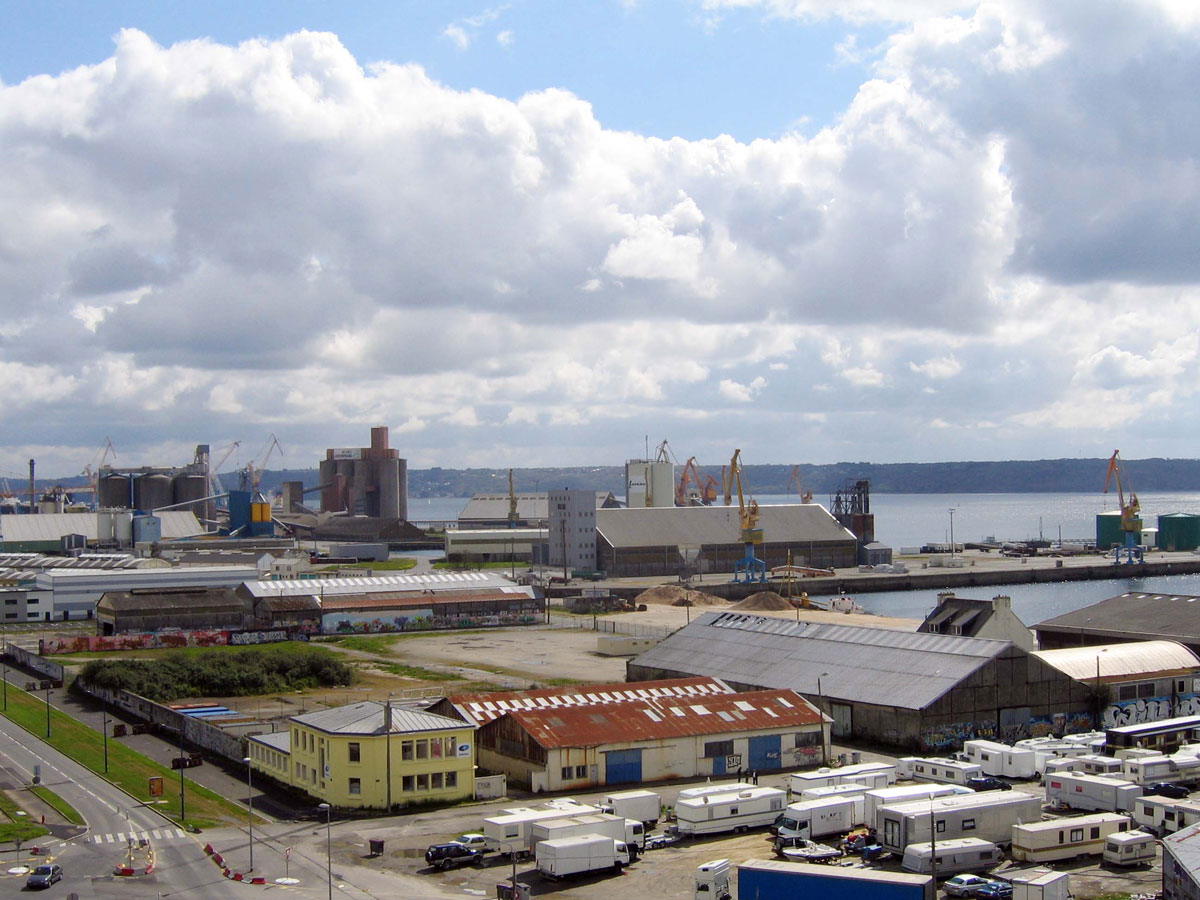
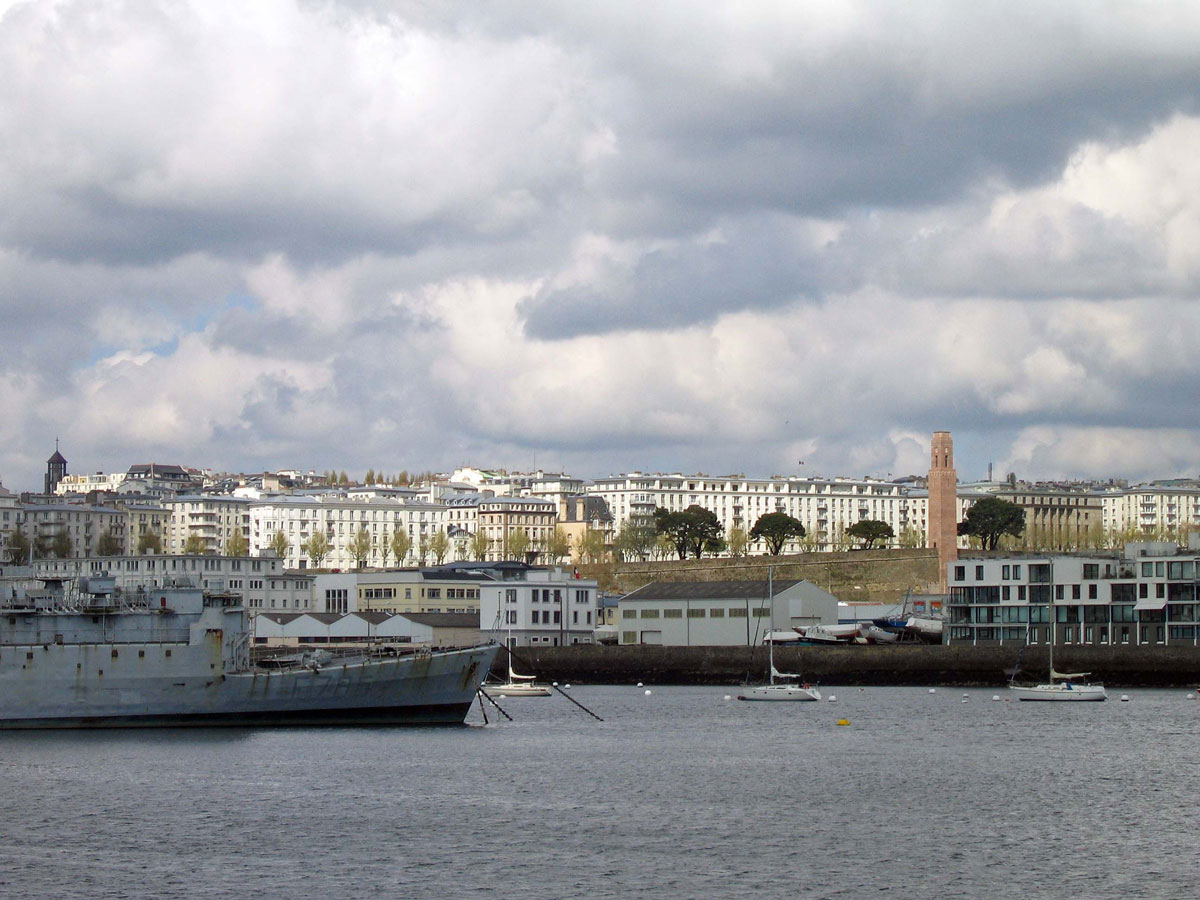
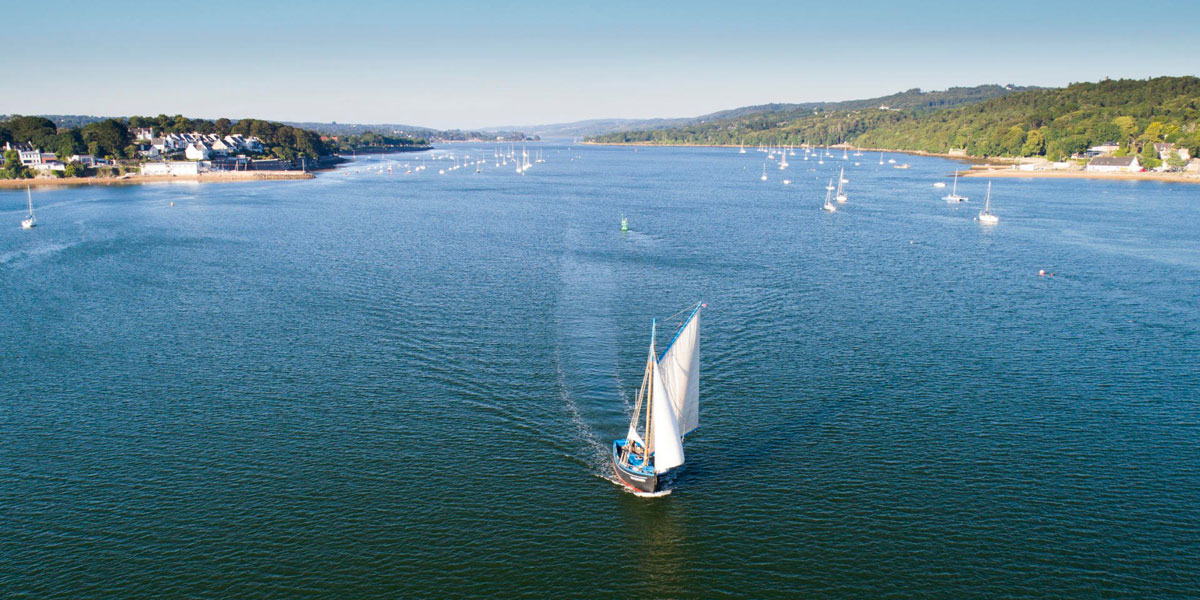
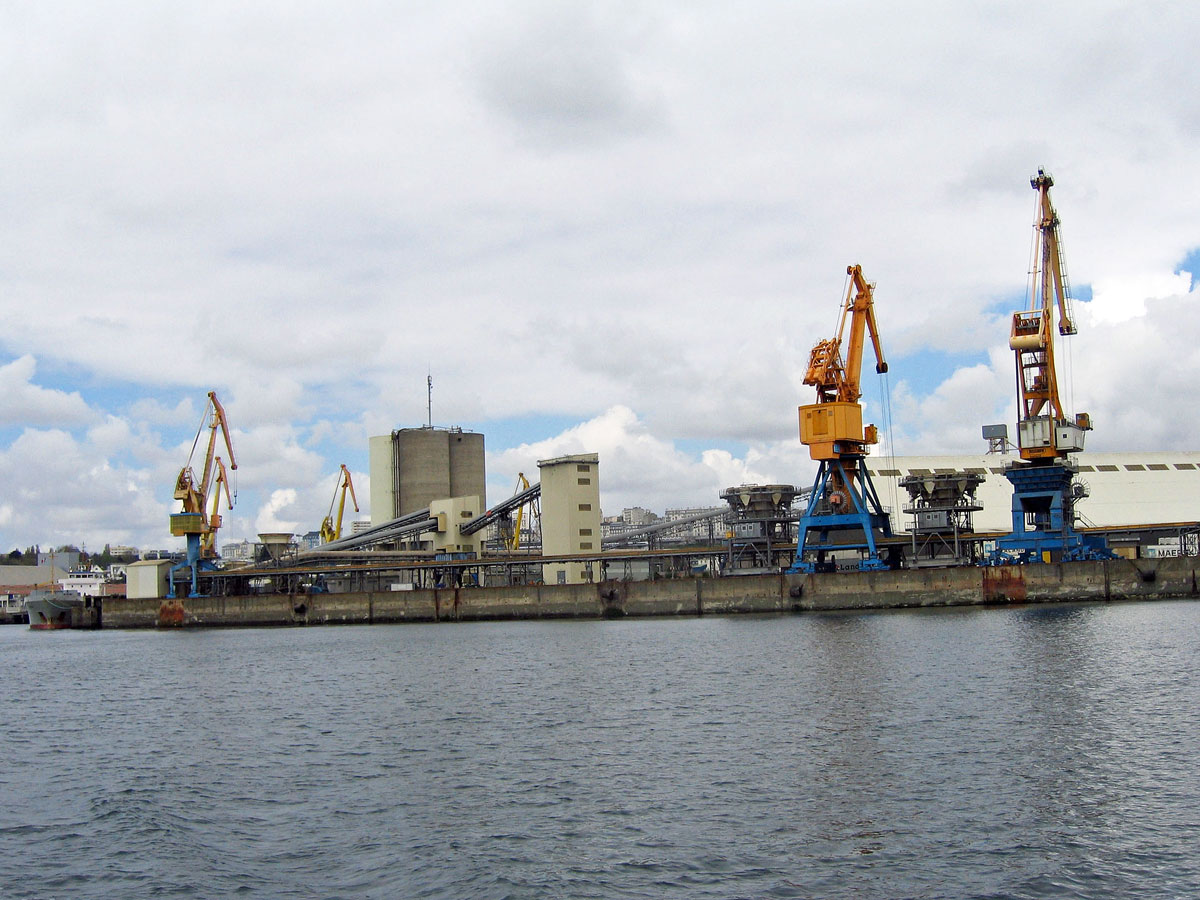
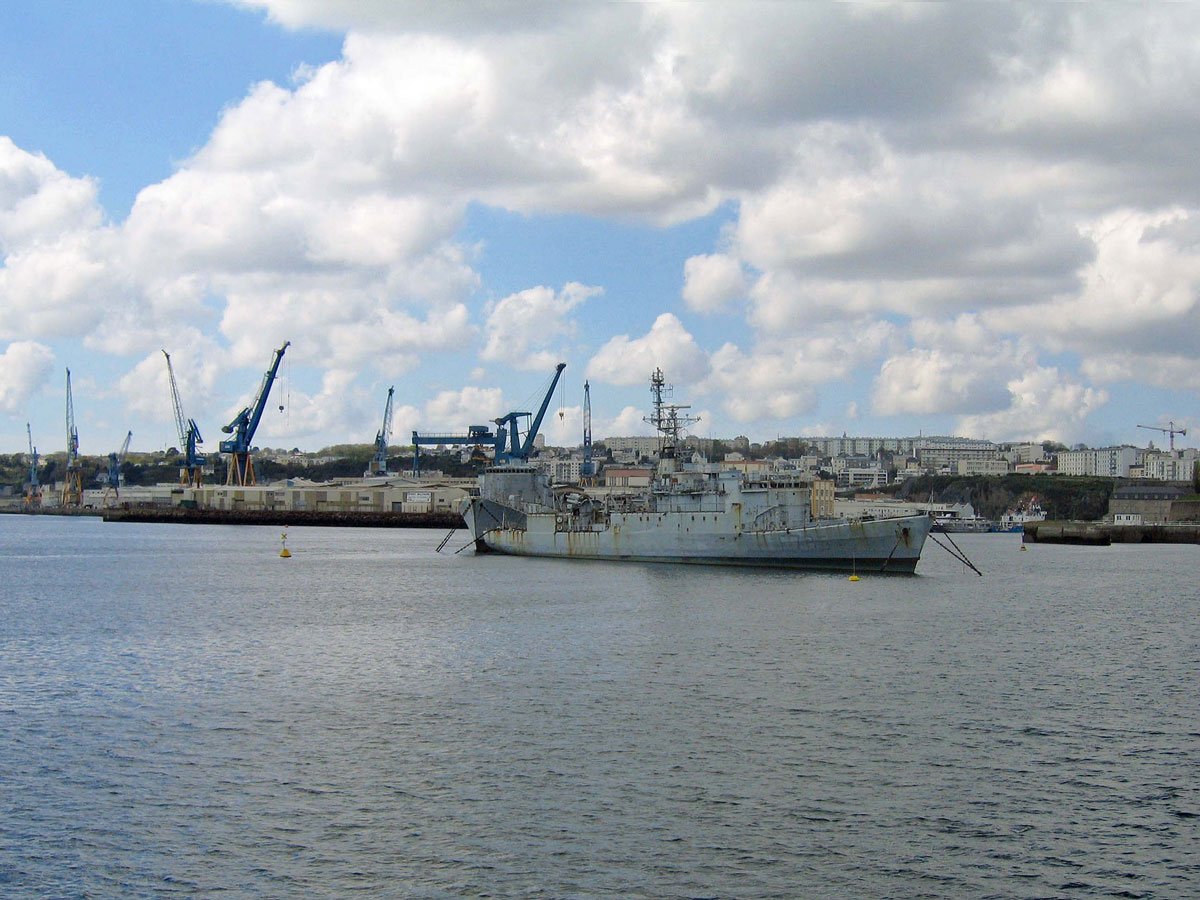
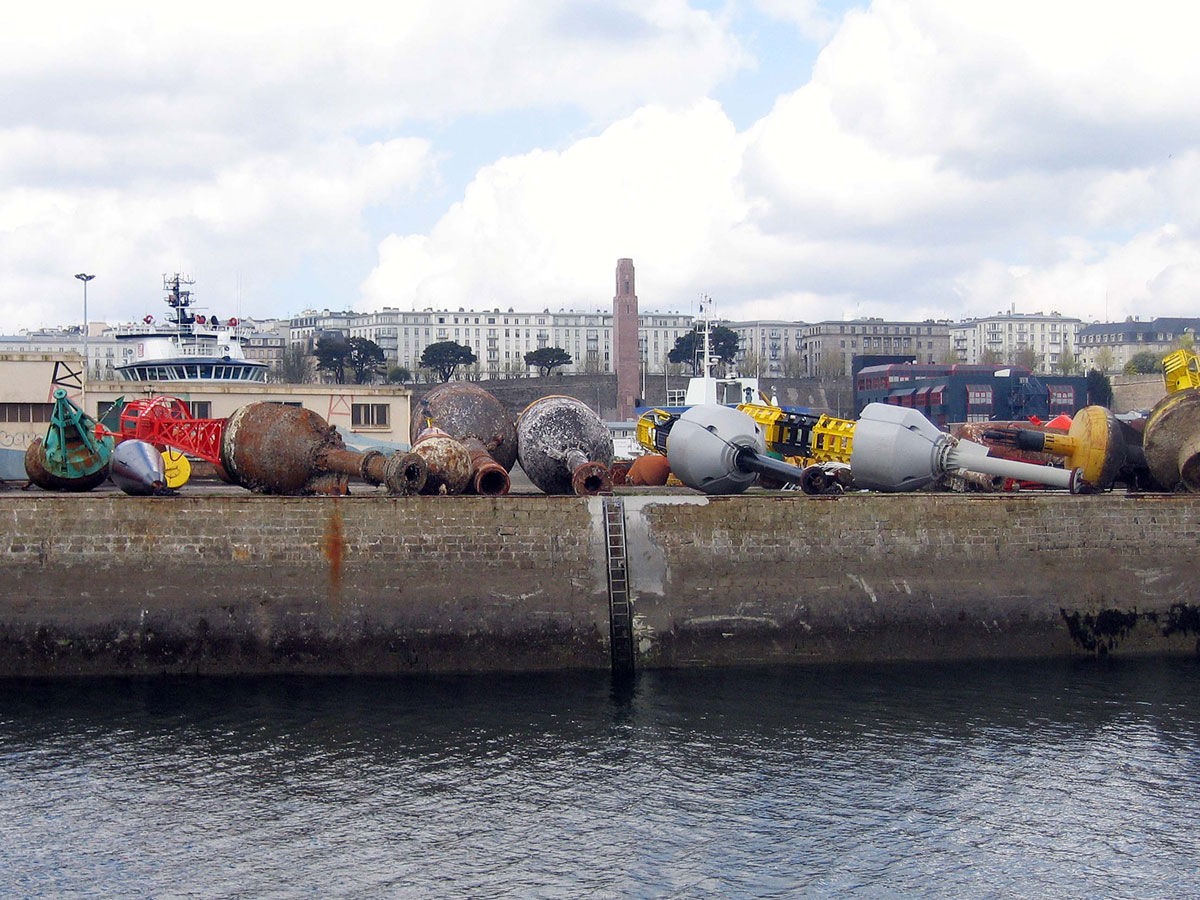
The journey so far was quite relaxing, but as soon as we left the Repair Dock the captain opened up the throttle and shot off at some rate of knots towards Oceanopolis where we picked up a few more passengers. We had a good view of the Albert Louppe and Iroise Bridges (but not a good photographic one) and then crossed over to the Plougastel-Daoulas Peninsula, famous for its cultivation of strawberries – and somewhat more pleasing on the eye than the port opposite.
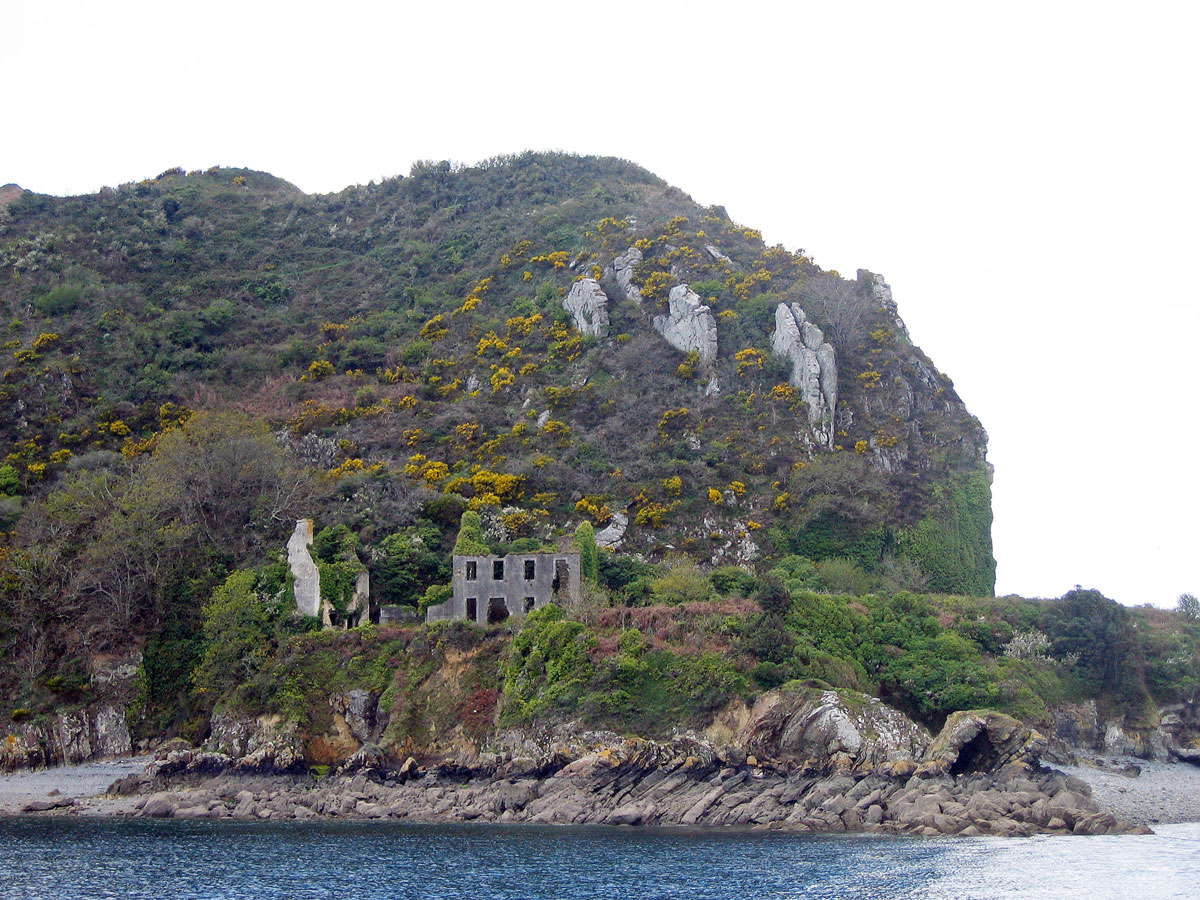
From the tip of the Plougastel-Daoulas Peninsula we then cut across the estuary to Long Island, home to a submarine base, and then up to La Pointe des Espagnola. Situated in a strategic position at the extreme north-east tip of the Crozon Peninsula, La Pointe des Espagnola is named after a Spanish fort that put up strong resistance against a siege by French and English troops in 1594.
It was built earlier in the year during the Brittany Campaign which had two purposes: The first was to support the Catholic League’s aim to eradicate Protestantism from France and the second was to use it as a base to attack England in retaliation for the defeat of the Armada in 1588.
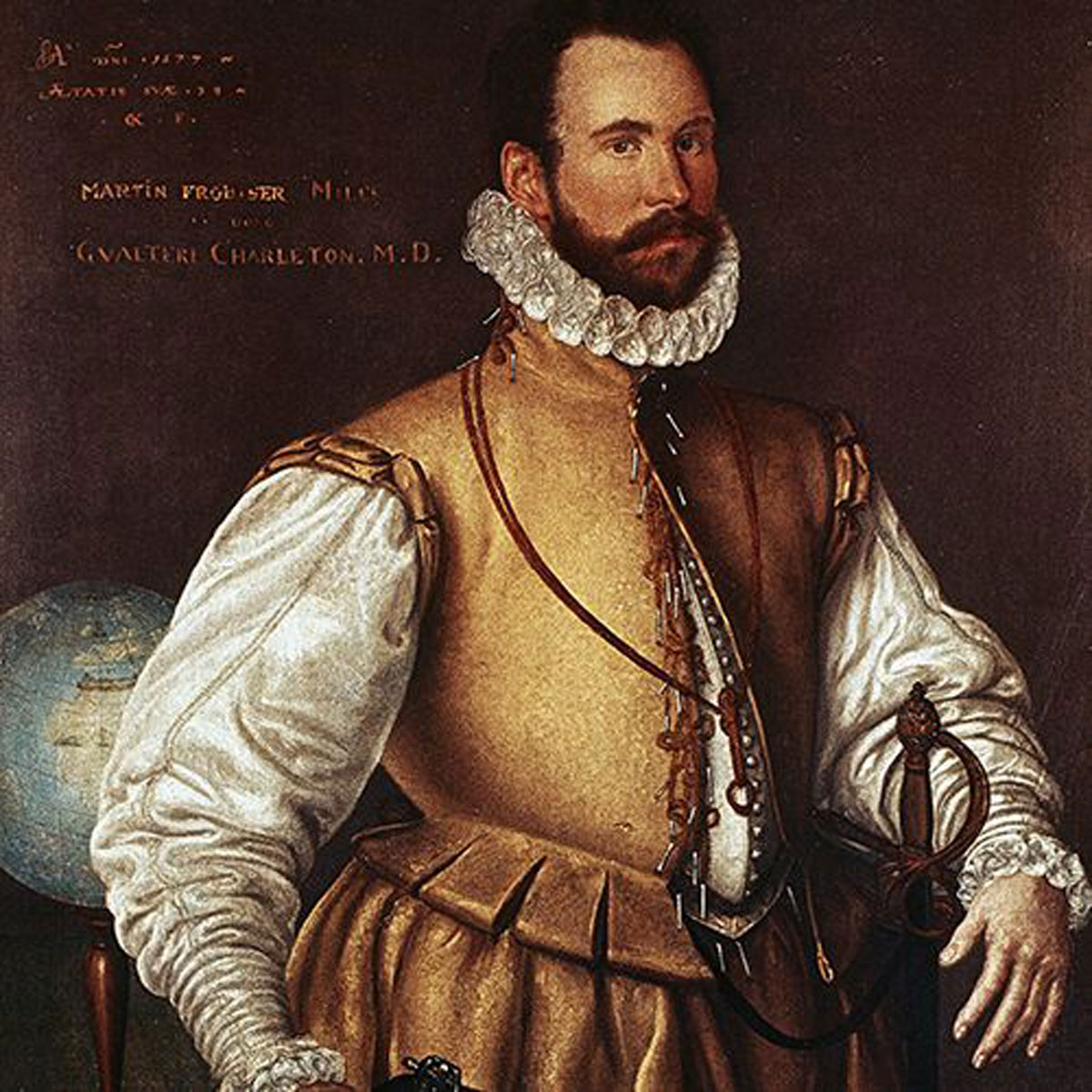
On hearing about the Spanish intentions, Queen Elizabeth sent a task force to remind them who was still in charge, and on 1st October 1594 the Siege of Crozon began. The siege ended on 19th November with heavy casualties on both sides, including one of the queen’s favourite sea-dogs, Martin Frobisher.
Frobisher was a renowned sailor and privateer with a chequered career. As a sailor, he is remembered by the name of the bay where he landed on Baffin Island in Canada while attempting to find a North-West Passage to Asia, but he also played a part in defeating the Spanish Armada, so who better to send to Crozon? He survived the siege but received a gunshot wound in the thigh during the battle. On his return to Plymouth he was left with an infection after surgery and died a few days later. His body was laid to rest at St Giles-without-Cripplegate in London, and his heart was buried at St Andrew’s Church in Plymouth.
The Spanish fort is no longer here but the remains of several successors are, and are best viewed from the clifftop.