Warning: Creating default object from empty value in /home/sites/30b/a/a8be13db6d/public_html/wp-content/plugins/zanmb/reduxframework/ReduxCore/inc/class.redux_filesystem.php on line 29

Warning: Cannot modify header information - headers already sent by (output started at /home/sites/30b/a/a8be13db6d/public_html/wp-content/plugins/zanmb/reduxframework/ReduxCore/inc/class.redux_filesystem.php:29) in /usr/share/php/wp-stack-cache.php on line 1971

Warning: Cannot modify header information - headers already sent by (output started at /home/sites/30b/a/a8be13db6d/public_html/wp-content/plugins/zanmb/reduxframework/ReduxCore/inc/class.redux_filesystem.php:29) in /usr/share/php/wp-stack-cache.php on line 1972

Warning: Cannot modify header information - headers already sent by (output started at /home/sites/30b/a/a8be13db6d/public_html/wp-content/plugins/zanmb/reduxframework/ReduxCore/inc/class.redux_filesystem.php:29) in /usr/share/php/wp-stack-cache.php on line 1973

Warning: Cannot modify header information - headers already sent by (output started at /home/sites/30b/a/a8be13db6d/public_html/wp-content/plugins/zanmb/reduxframework/ReduxCore/inc/class.redux_filesystem.php:29) in /usr/share/php/wp-stack-cache.php on line 1971

Warning: Cannot modify header information - headers already sent by (output started at /home/sites/30b/a/a8be13db6d/public_html/wp-content/plugins/zanmb/reduxframework/ReduxCore/inc/class.redux_filesystem.php:29) in /usr/share/php/wp-stack-cache.php on line 1972

Warning: Cannot modify header information - headers already sent by (output started at /home/sites/30b/a/a8be13db6d/public_html/wp-content/plugins/zanmb/reduxframework/ReduxCore/inc/class.redux_filesystem.php:29) in /usr/share/php/wp-stack-cache.php on line 1973

Warning: Cannot modify header information - headers already sent by (output started at /home/sites/30b/a/a8be13db6d/public_html/wp-content/plugins/zanmb/reduxframework/ReduxCore/inc/class.redux_filesystem.php:29) in /home/sites/30b/a/a8be13db6d/public_html/wp-includes/feed-rss2.php on line 8
Glorious Revolution – Easymalc's Wanderings https://www.easymalc.co.uk I’d be unstoppable if only I could get started Tue, 10 Feb 2026 08:00:37 +0000 en-GB hourly 1 https://wordpress.org/?v=7.0.4 https://www.easymalc.co.uk/wp-content/uploads/2019/09/cropped-easy-malc-logo-32x32.jpg Glorious Revolution – Easymalc's Wanderings https://www.easymalc.co.uk 32 32 140253175 Londonderry – The Walled City – Pt 2 The Siege and the Events that led up to it https://www.easymalc.co.uk/londonderry-the-walled-city-pt-2-the-siege-and-the-events-that-led-up-to-it/ https://www.easymalc.co.uk/londonderry-the-walled-city-pt-2-the-siege-and-the-events-that-led-up-to-it/#comments Tue, 10 Feb 2026 08:00:37 +0000 https://www.easymalc.co.uk/?p=21137 Originally posted 2024-09-11 16:40:24.

The post Londonderry – The Walled City – Pt 2 The Siege and the Events that led up to it appeared first on Easymalc's Wanderings.

]]>

Londonderry - The Walled City - Pt 2 The Siege and the Events that led up to it

It’s been an age since I wrote Part 1 of this period of Northern Ireland’s history, but it’s now time to pick up where I left off. Before I continue though, I think it’s worth mentioning that, for this article at least, I intend using the name Londonderry rather than Derry, and the reason is that in the Encyclopaedia Britannica, they give this explanation –  “The British government officially refers to the city as Londonderry City. In 1984 the nationalist-controlled Londonderry City Council renamed itself the Derry City Council. In 2007 a British High Court judge ruled that the city’s name could be changed to Derry only through legislation or by Royal prerogative”. That’s that sorted then.

Now, if you’ve got a good memory you may be able to cast your mind back to how England, Scotland and Ireland came to have a new ruler in Oliver Cromwell, a controversial figure if ever there was one. His tactics in helping Thomas Fairfax overthrow King Charles I left his commander-in-chief less than happy and he resigned leaving Cromwell in control. If your memory needs jogging, you can return to the first part of my description of the Walled City here.

After overcoming Irish Catholic and Royalist resistance, Cromwell completed the colonisation of Ireland, which now became part of the Commonwealth of England, Scotland and Ireland. (Wales had already been part of the kingdom when the Tudors became monarchs of both England and Wales). To say that Cromwell wasn’t universally popular with the Catholic Irish would be an understatement, but Protestant Londonderry had supported the Parliamentarians.
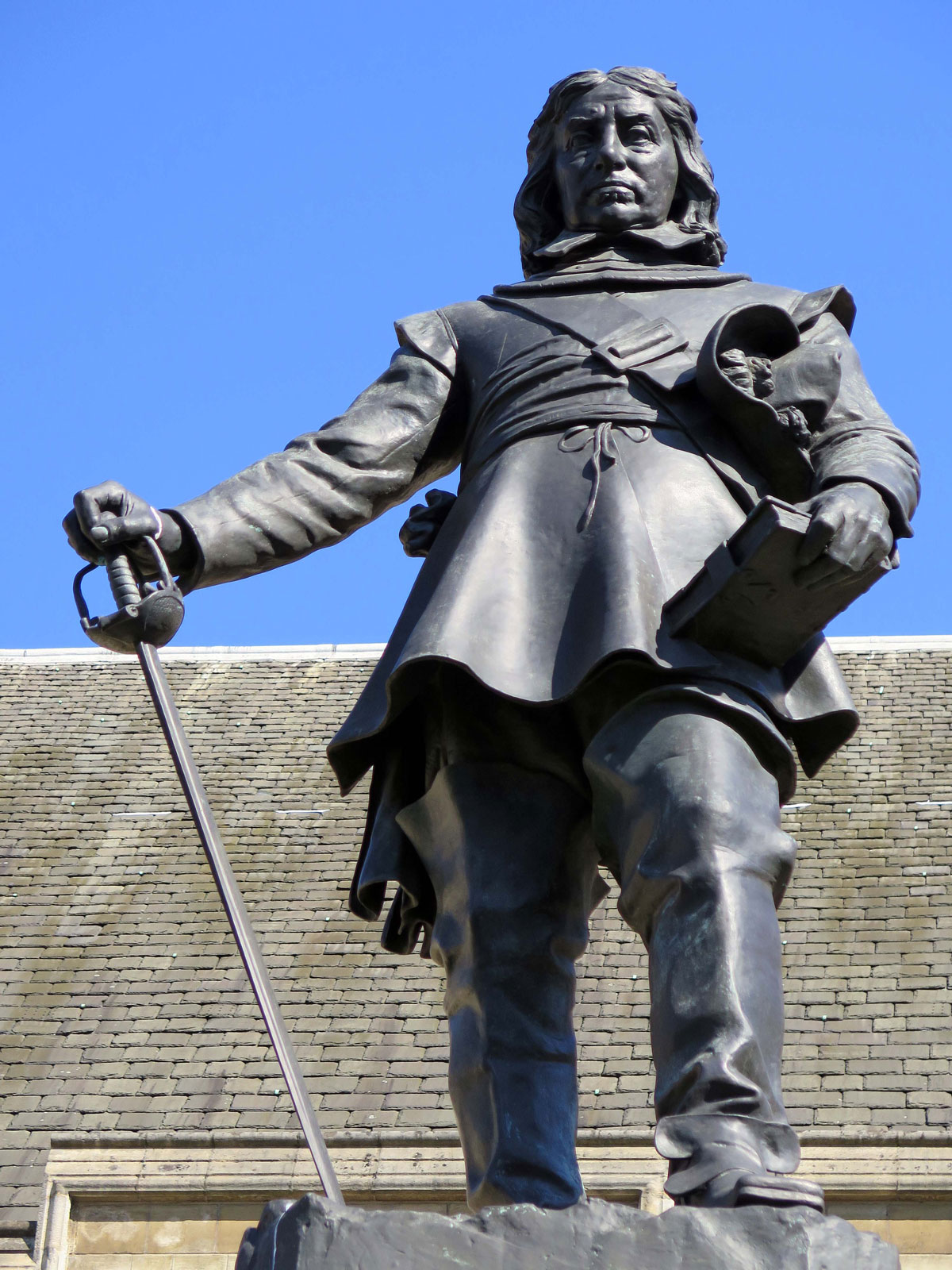
Oliver Cromwell

For such a divisive character, Oliver Cromwell didn’t die in battle or at the hands of one of his many adversaries, but peacefully in his bed. The reins of the Commonwealth were then thrust into the hands of his son Thomas, who wasn’t able to command anywhere near the same amount of authority as his father could, and by May 1660, the interregnum was over, and the Monarchy restored.

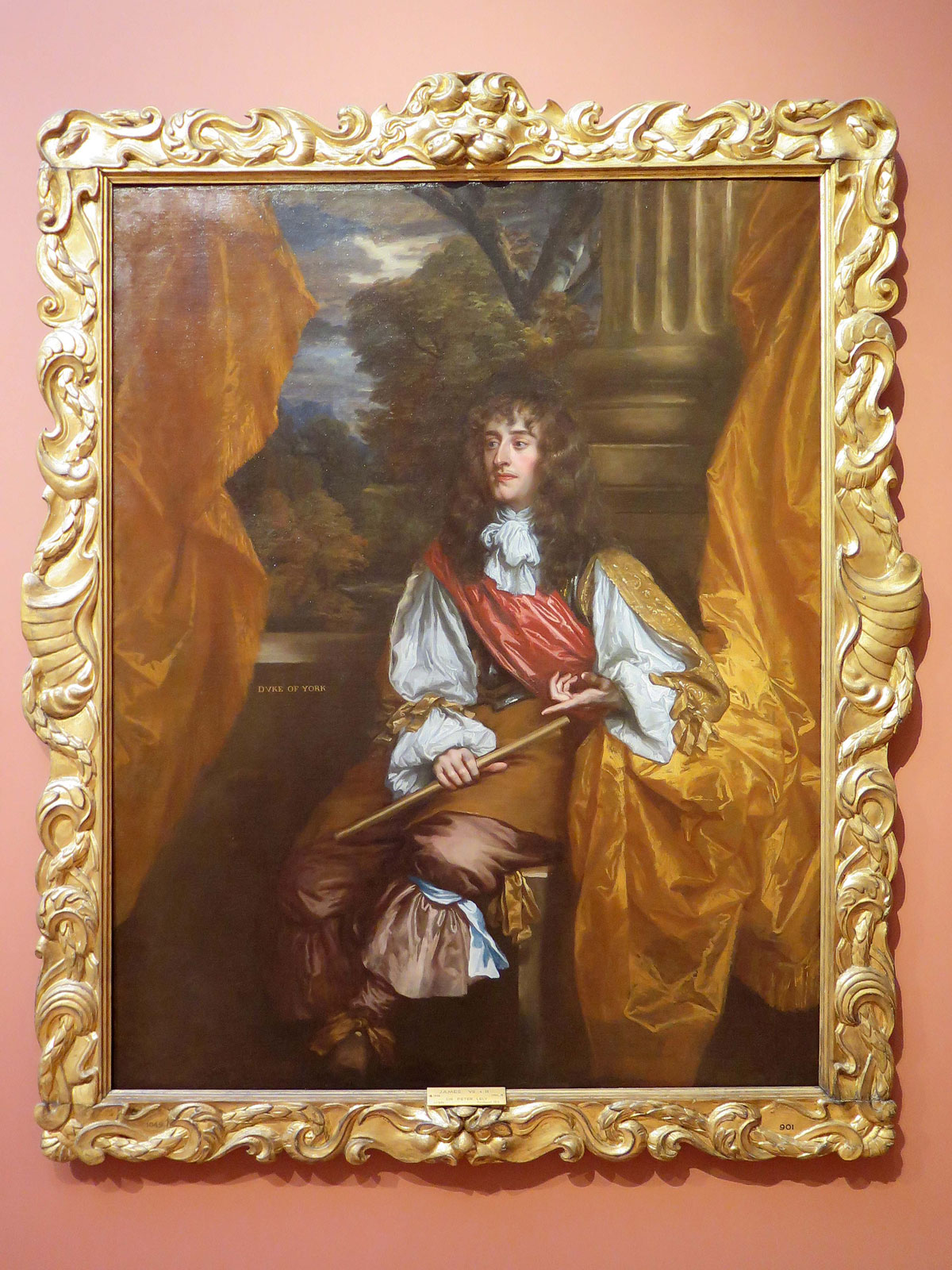
During the time the country was being run as a republic, the heir to the throne was living in exile, but now, the son of Charles I was being invited back home to become king. However, there were strings attached to the transition: Ever since Henry VIII had fallen out with the Pope over his divorce from Anne Boleyn, the country had become embroiled in religious turmoil. The new king’s father had been a Catholic, but before he could become Charles II, his son had to agree to uphold the country’s Protestant religion – which he did right up until he was taking his final breath – and then converted to Catholicism. The majority of people in Ireland must have been pleased to hear that, and no doubt they would have been even more pleased to learn that his brother, a staunch Catholic, was to succeed him as James II.

James II/VII as Duke of York

James became King of England on 6th February 1685, and it soon became clear that the country was in danger of becoming a Catholic nation again if something wasn’t done about it. The answer was to enlist the help of William of Orange, husband of James’s daughter, Mary.

At the time, Europe was also embroiled in the Nine Years War, a conflict between France (ruled by the Catholic Louis XIV) and the Grand Alliance (led by the Protestant William of Orange). Although the war was not necessarily fought over religion, there was concern that James would give his support to the French, and so an invitation was sent to William asking for Dutch support to remove the current Stuart king.

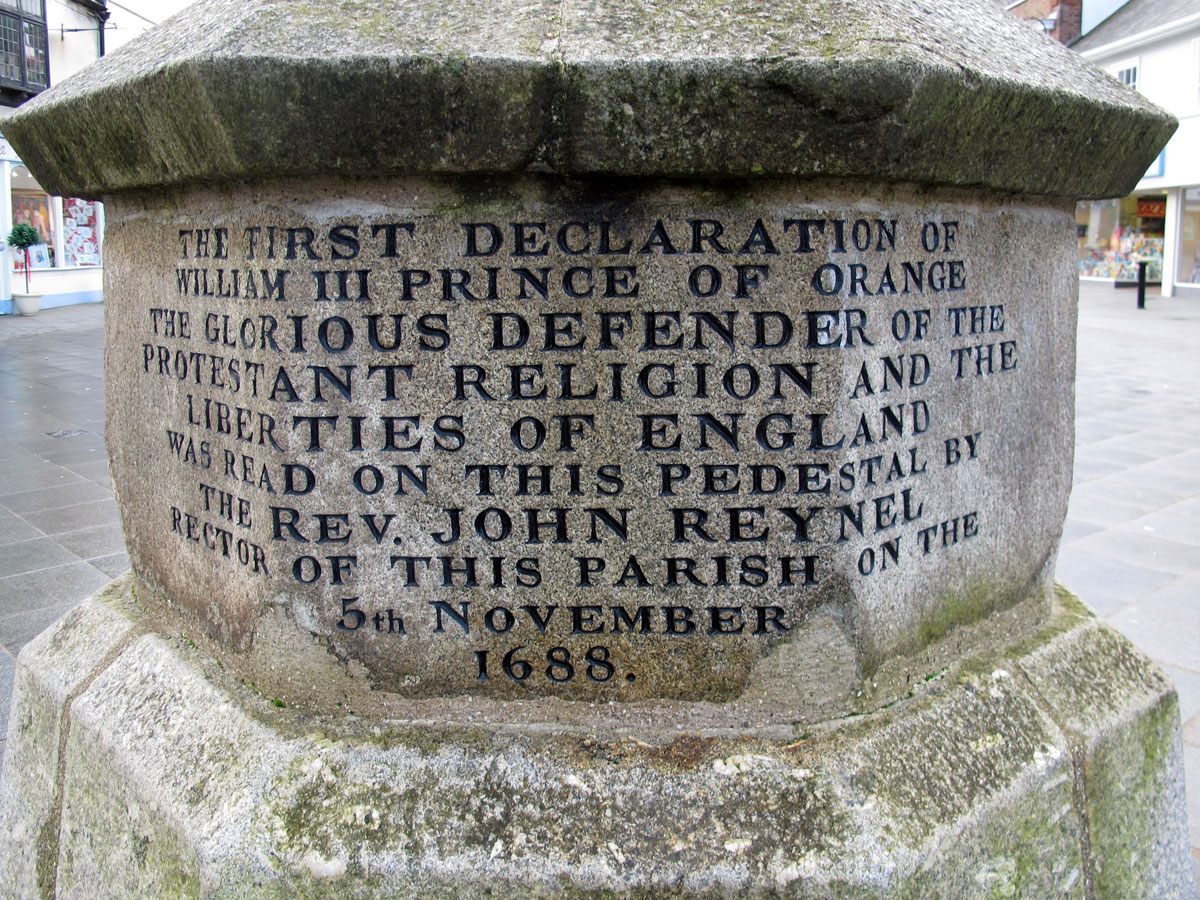
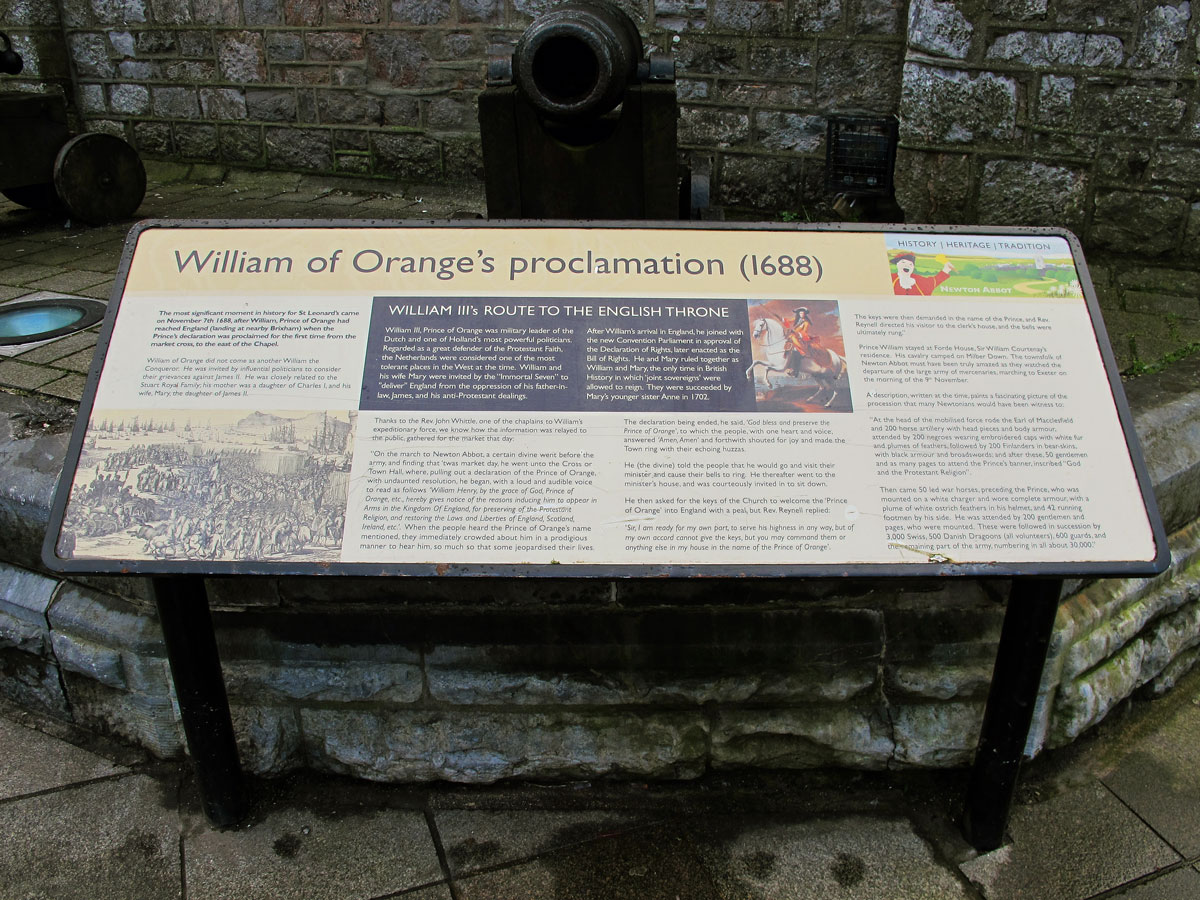
It didn’t just suit the opponents of James, it also suited the Dutchman, and on 1st November 1688, William and 15,000 men set sail for England. After arriving at Brixham on 5th November, he reached Newton Abbot two days later where he declared his intentions to become King of England at St Leonard’s Tower.

St Leonard's Tower in Newton Abbot
05
06

William wasn’t looking for any trouble and if James went quietly there would be no bloodshed, and that’s exactly what happened – or at least it did to start with. The Glorious Revolution, as it was called, left William and Mary as joint monarchs of England, Scotland and Ireland, with James keeping out of their way in France.

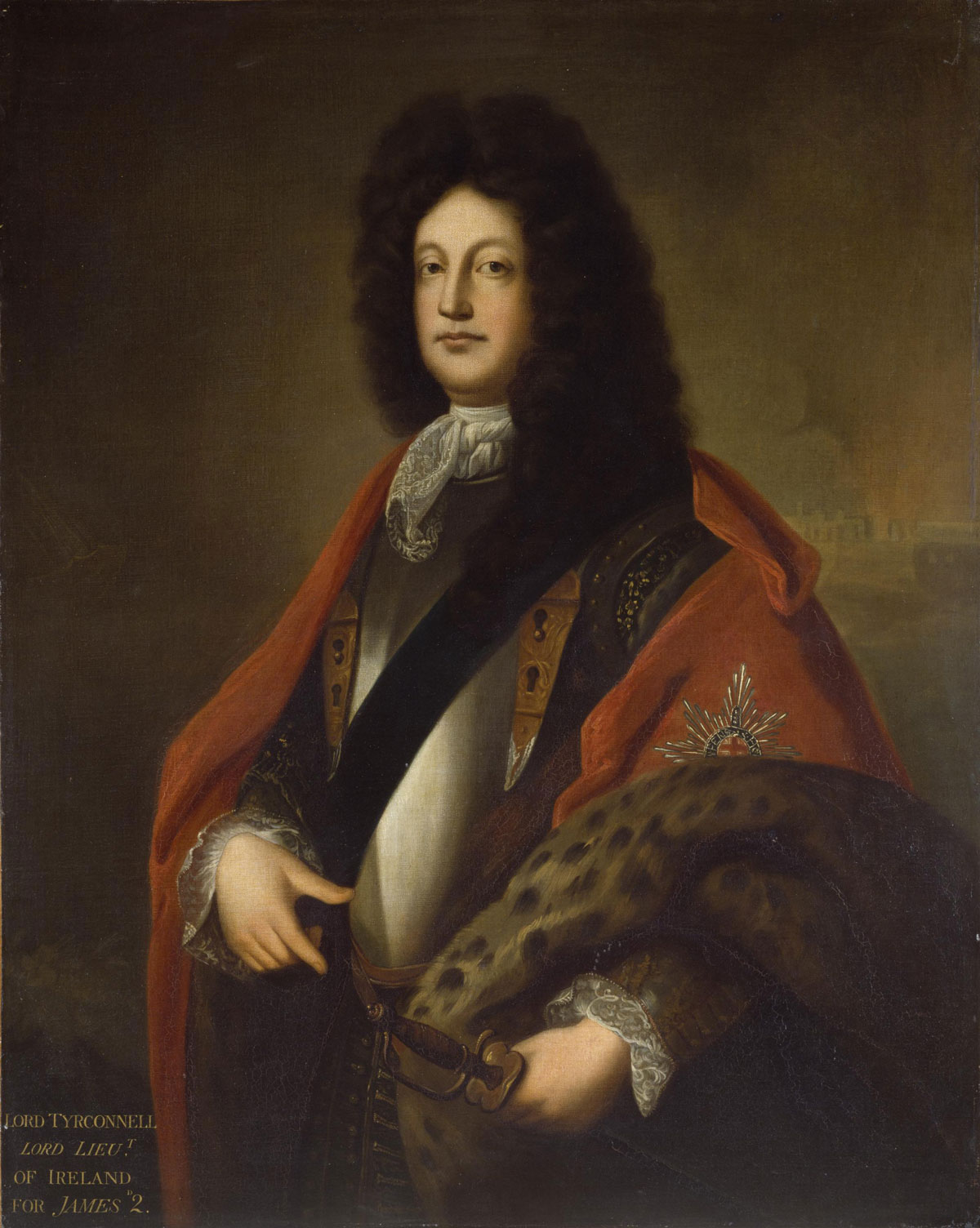
For those involved in the larger and more problematic Nine Years War, Ireland was just a sideshow, and William had more important issues to deal with. With James not causing any trouble, he left Ireland to look after itself, at least for the time being, but in James’s absence the country was being run by one of the ex-king’s trusty servants – the Earl of Tyrconnell, which was good news for the majority of the Irish people, but not for everyone.

The population of Ireland was 75% Catholic, and those who were Protestant lived mostly in Ulster where they made up 50% of the province. Those Protestants who were scattered elsewhere around the country were subjected to a similar sort of treatment that the Catholics had suffered in the past, and so unsurprisingly many of them fled north. The walled city of Londonderry was already the largest city in Ulster at the time of William’s takeover, but thanks to the staunch Catholic Jacobite Tyrconnell, the population increased dramatically within just a few short months.

Richard Talbot - 1st Earl of Tyconnell (Public Domain)

Even before James had fled the country, Tyrconnell had been gradually building up an army of Catholic supporters loyal to the king, and by the time of William’s takeover, Ulster  was the only one of the four Irish provinces not to be have a Catholic regiment in control. Londonderry was still occupied by a Protestant garrison under Viscount Mountjoy who, as it happened, was loyal to James, but Tyrconnell was taking no chances and packed him off down to Dublin: He then arranged for a Catholic regiment under Alexander MacDonnell, the Earl of Antrim, to take over.

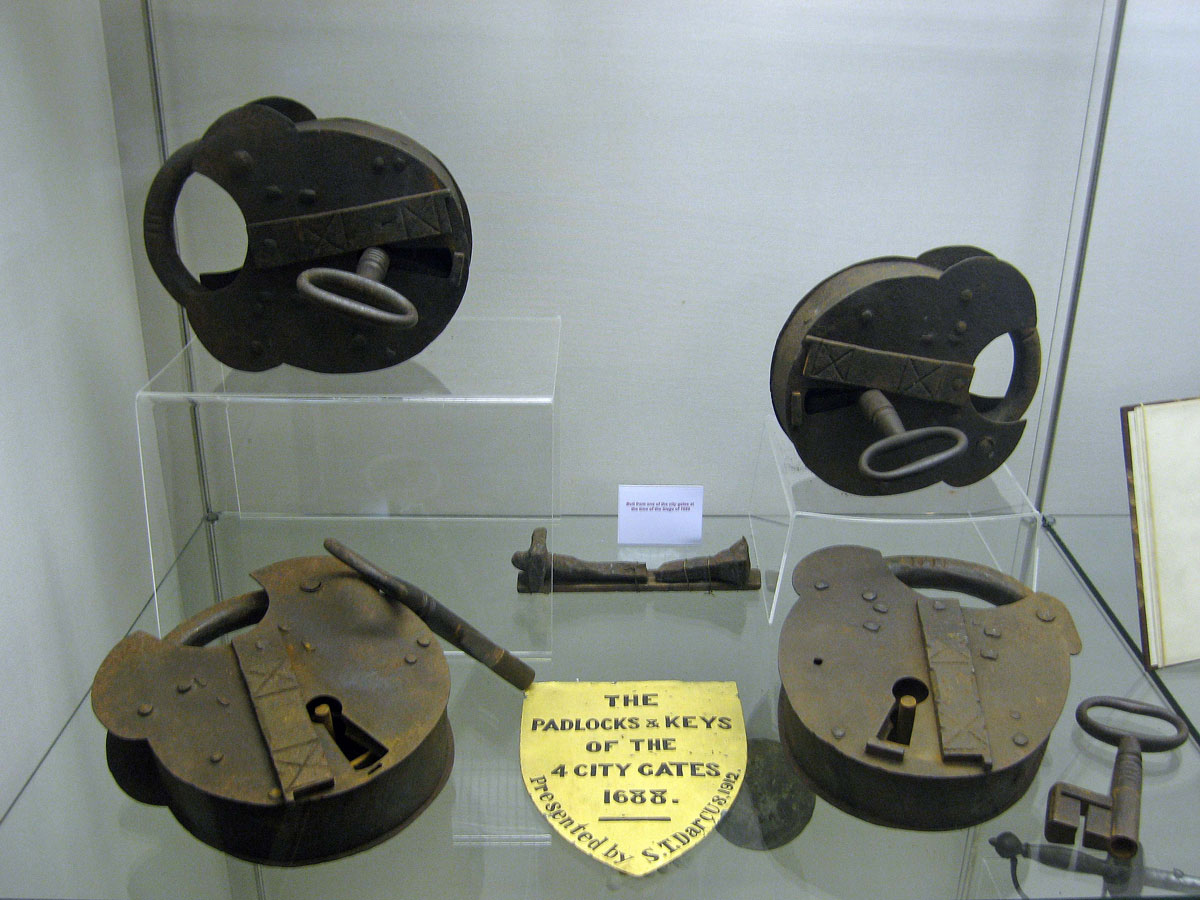
There was a delay in the arrival of MacDonnell’s regiment which meant for a short while Londonderry was left without a garrison, but as they marched towards the city, word got through that the Redshanks (as the Scottish mercenary regiment was called) were on their way, but as they approached Ferryquay Gate, thirteen apprentices grabbed hold of the city’s keys and locked the gates.

The Padlocks and Keys of the Four City Gates in St Columb's Cathedral

As you can imagine, this didn’t go down well with Tyrconnell, and to address the problem he sent Mountjoy back up to Londonderry to deal with the situation. When he arrived, he found Colonel George Philips, a well-respected Protestant acting as governor, and to entice him to hand over the keys, he promised that only two of his companies, consisting entirely of Protestants, would be allowed back into the town – one commanded by Captain William Stewart, and the other by Lieutenant-Colonel Robert Lundy. An agreement was reached, but instead of appointing Philips as the official governor, he chose Lundy instead. Even so, after the city proclaimed William as King of England on 20th February, Lundy bolstered up the city’s defences ready for any attack, which Tyrconnell wasted no time in planning.

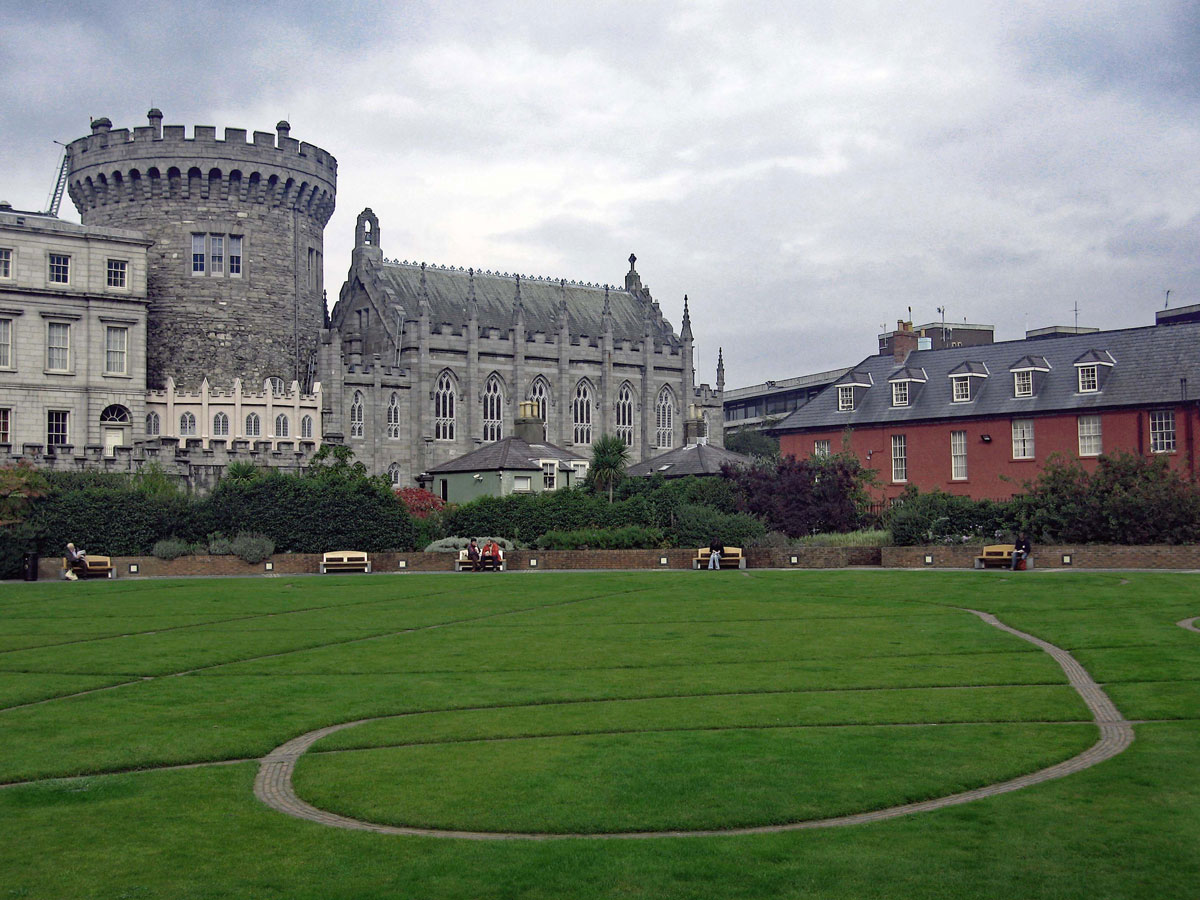
In the meantime, James was also planning his next move. He may have hopped over the Channel out of harm’s way, but he hadn’t disappeared altogether. With the help of a French fleet, he landed at Kinsale on 12th March with the intention of reclaiming Ireland for the Catholics, and the Crown for himself. He met Tyrconnell at Cork before moving on to Dublin Castle where they established a council to oversee the operation.  On hearing that James had arrived back on Irish soil, Londonderry began preparations for defending itself.

Dublin Castle

Although William and Mary were more concerned with what Louis was up to, they couldn’t ignore what James was up to either, and sent provisions over to help the Ulstermen out. By early April, around 12,000 Jacobite troops had amassed in the north ready to attack Londonderry, and as they advanced towards the city, Governor Lundy called a council of war where it was decided to defend a line along the River Finn, south-west of the city near Strabane: The plan failed to stop the advancing troops and the Jacobites marched on towards Londonderry.

Meanwhile, under instructions to take orders from Lundy, more reinforcements were sent from England. The governor however seemed to be more interested in saving his own skin rather than those of the citizens of Londonderry, and convinced the rescue party that trying to save the city had become a lost cause. The locals found out was going on and the ships returned to England before Lundy could join them. Instead he waited for an opportunity to slip away in disguise unnoticed.

Each December the Apprentice Boys hold parades to mark the shutting of the city gates, and the video clip below shows what the Protestant Loyalists still think of Robert Lundy.

Jacobite troops reached Londonderry on 18th April and summoned the city to surrender. Even James himself made a personal appeal, but the answer was still the same – “No Surrender” – and the Siege of Londonderry began.

The following day, Henry Baker was appointed the city’s new governor, and he in turn appointed George Walker for the all-important job of looking after the stores. For the next 105 days cannon balls and mortars rained down upon the city with the aim of starving the citizens into submission. In June, Baker fell ill and died, but he wasn’t the only one, as starvation and disease started to claim many more lives.

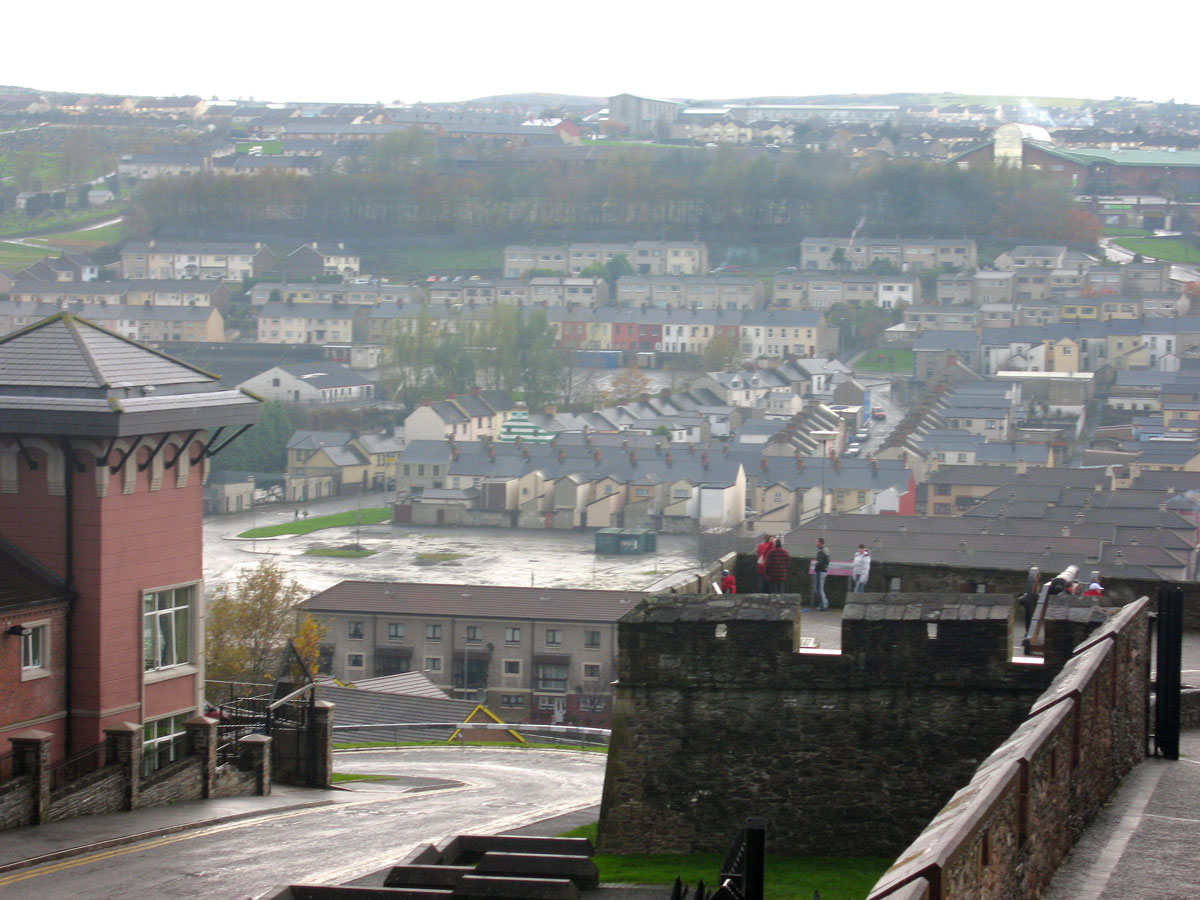
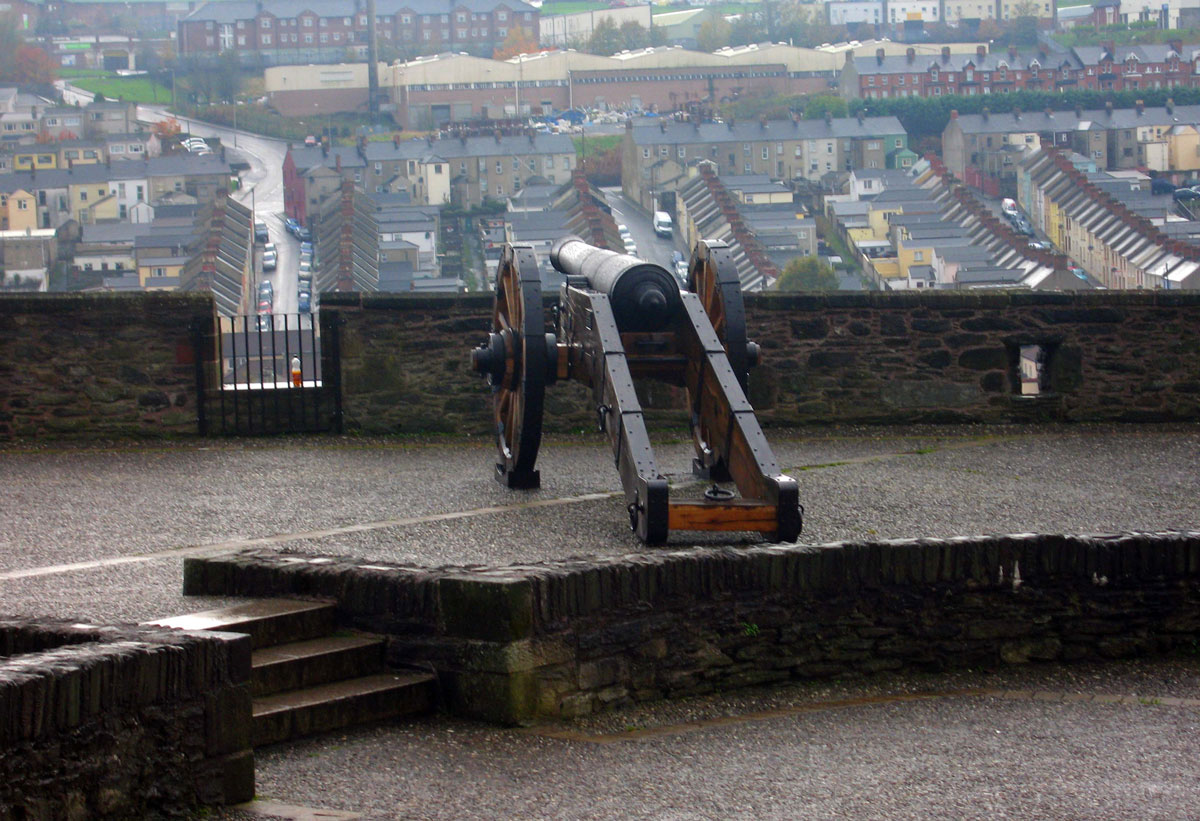
The defenders weren’t taking all this lying down and had 22 cannons of their own bombarding the besiegers down below. Some of these cannon are still here including the largest, ‘Roaring Meg’ located on the Double Bastion near Bishop’s Gate.

The Double Bastion
The Double Bastion
Cannon on the City Walls

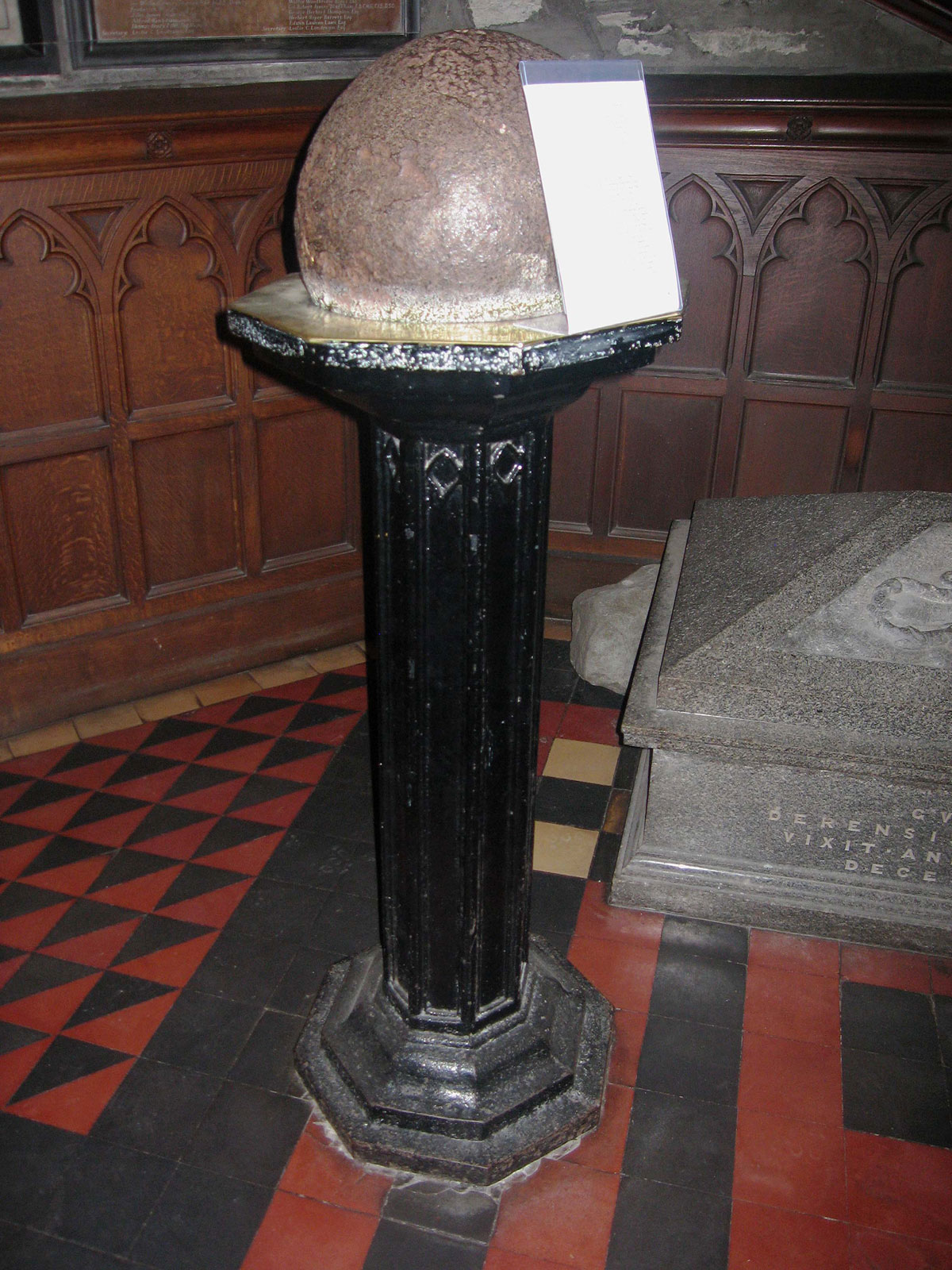
At the end of July a relief ship broke through the barricading boom that the attackers had placed across the River Foyle and on 1st August British forces arrived with arms and provisions. The Jacobites realised that Londonderry wasn’t going to be beaten into submission and James retreated. The siege was finally over, but it’s estimated that 8,000 Derry residents died in the process.

A Cannon Ball from the Siege in St Columb's Cathedral

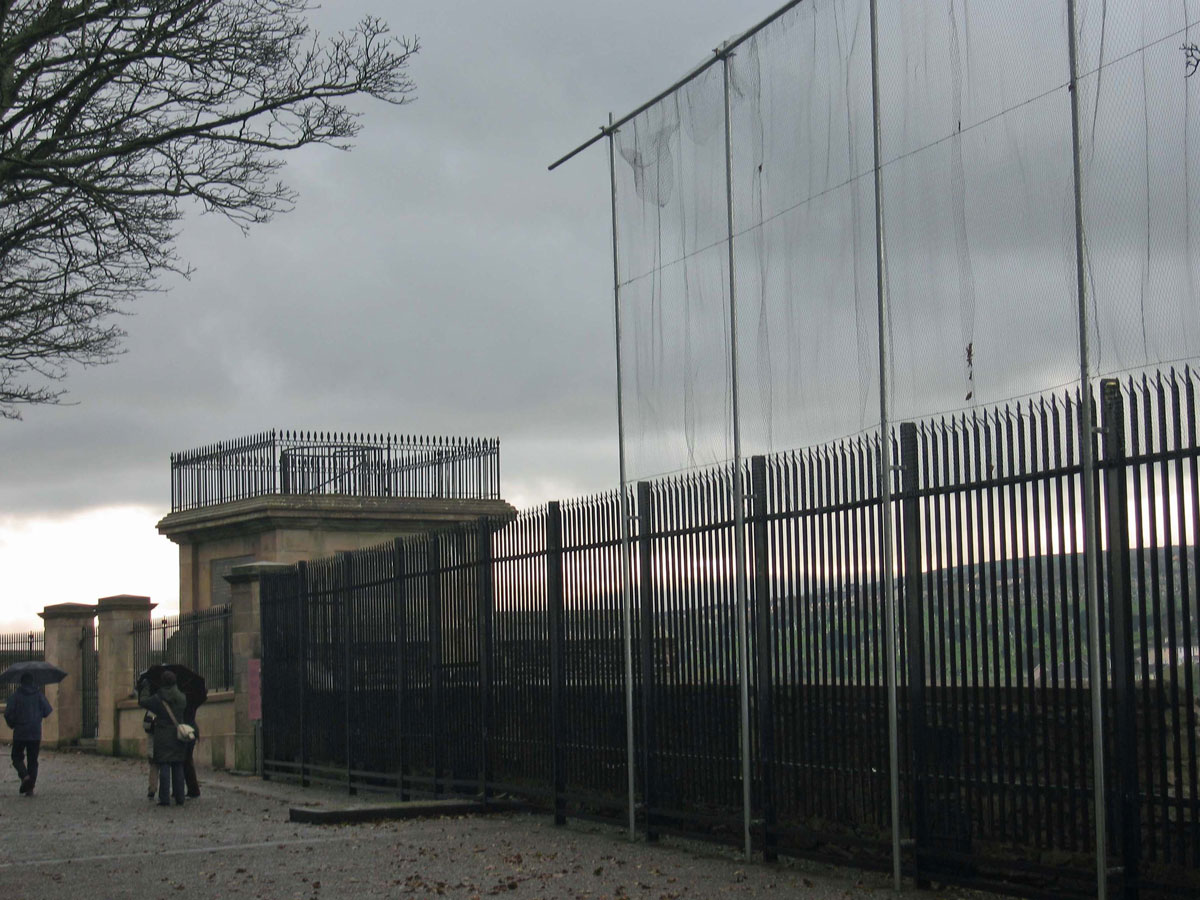
Eleven months later, William went on to defeat James at the Battle of the Boyne and James fled to France again, this time never to return. During the battle, George Walker was killed, and in 1828 a monument was erected in his honour on the City Walls near the Apprentices Hall. Only the plinth remains after the column was blown up by the IRA in 1973. Londonderry may have survived the siege and the Protestants may have regained control, but the struggles between the Catholic Irish and British Protestants were far from over.

The Walker Memorial Plinth

POSTED – SEPTEMBER 2024

Originally posted 2024-09-11 16:40:24.

The post Londonderry – The Walled City – Pt 2 The Siege and the Events that led up to it appeared first on Easymalc's Wanderings.

]]>
https://www.easymalc.co.uk/londonderry-the-walled-city-pt-2-the-siege-and-the-events-that-led-up-to-it/feed/ 27 21137