Warning: Creating default object from empty value in /home/sites/30b/a/a8be13db6d/public_html/wp-content/plugins/zanmb/reduxframework/ReduxCore/inc/class.redux_filesystem.php on line 29

Warning: Cannot modify header information - headers already sent by (output started at /home/sites/30b/a/a8be13db6d/public_html/wp-content/plugins/zanmb/reduxframework/ReduxCore/inc/class.redux_filesystem.php:29) in /usr/share/php/wp-stack-cache.php on line 1971

Warning: Cannot modify header information - headers already sent by (output started at /home/sites/30b/a/a8be13db6d/public_html/wp-content/plugins/zanmb/reduxframework/ReduxCore/inc/class.redux_filesystem.php:29) in /usr/share/php/wp-stack-cache.php on line 1972

Warning: Cannot modify header information - headers already sent by (output started at /home/sites/30b/a/a8be13db6d/public_html/wp-content/plugins/zanmb/reduxframework/ReduxCore/inc/class.redux_filesystem.php:29) in /usr/share/php/wp-stack-cache.php on line 1973

Warning: Cannot modify header information - headers already sent by (output started at /home/sites/30b/a/a8be13db6d/public_html/wp-content/plugins/zanmb/reduxframework/ReduxCore/inc/class.redux_filesystem.php:29) in /usr/share/php/wp-stack-cache.php on line 1971

Warning: Cannot modify header information - headers already sent by (output started at /home/sites/30b/a/a8be13db6d/public_html/wp-content/plugins/zanmb/reduxframework/ReduxCore/inc/class.redux_filesystem.php:29) in /usr/share/php/wp-stack-cache.php on line 1972

Warning: Cannot modify header information - headers already sent by (output started at /home/sites/30b/a/a8be13db6d/public_html/wp-content/plugins/zanmb/reduxframework/ReduxCore/inc/class.redux_filesystem.php:29) in /usr/share/php/wp-stack-cache.php on line 1973

Warning: Cannot modify header information - headers already sent by (output started at /home/sites/30b/a/a8be13db6d/public_html/wp-content/plugins/zanmb/reduxframework/ReduxCore/inc/class.redux_filesystem.php:29) in /home/sites/30b/a/a8be13db6d/public_html/wp-includes/feed-rss2.php on line 8
Habsburgs – Easymalc's Wanderings https://www.easymalc.co.uk I’d be unstoppable if only I could get started Sun, 07 Dec 2025 10:32:39 +0000 en-GB hourly 1 https://wordpress.org/?v=7.0.4 https://www.easymalc.co.uk/wp-content/uploads/2019/09/cropped-easy-malc-logo-32x32.jpg Habsburgs – Easymalc's Wanderings https://www.easymalc.co.uk 32 32 140253175 Schonbrunn – The Habsburgs’ Summer Retreat https://www.easymalc.co.uk/schonbrunn-the-habsburgs-summer-retreat/ https://www.easymalc.co.uk/schonbrunn-the-habsburgs-summer-retreat/#comments Sun, 07 Dec 2025 10:32:39 +0000 https://www.easymalc.co.uk/?p=17471 Originally posted 2022-10-07 17:03:45.

The post Schonbrunn – The Habsburgs’ Summer Retreat appeared first on Easymalc's Wanderings.

]]>

Schonbrunn - The Habsburgs' Summer Retreat

Each summer, the Habsburg royal family would leave the hotchpotch Hofburg behind and escape to their sumptuous palace on the edge of the Vienna Woods; and no trip to Vienna would be complete without visiting Schonbrunn, the city’s answer to Versailles.

Over a 350 year period, the estate was transformed from a relatively simple hunting ground to a magnificent palace with landscaped gardens that would require any self-respecting visitor at least a couple of days of their time to do it real justice. I’ve been here twice and still haven’t seen it all.

As regards this post, I’ve decided to split it into two sections: The first describes some of Schonbrunn’s history and how it evolved, and in the second part I’m going to take you on a tour around the gardens and estate. The main reason for doing it this way is because, not unexpectedly, photography isn’t allowed inside the palace, and so picture taking was restricted to the outdoors. That said, the Schonbrunn Group (who manage the estate on behalf of the Austrian Republic) have provided a few short videos of some of the rooms which I’m able to share with you.

Entrance to the Schonbrunn Palace

HOW SCHONBRUNN EVOLVED

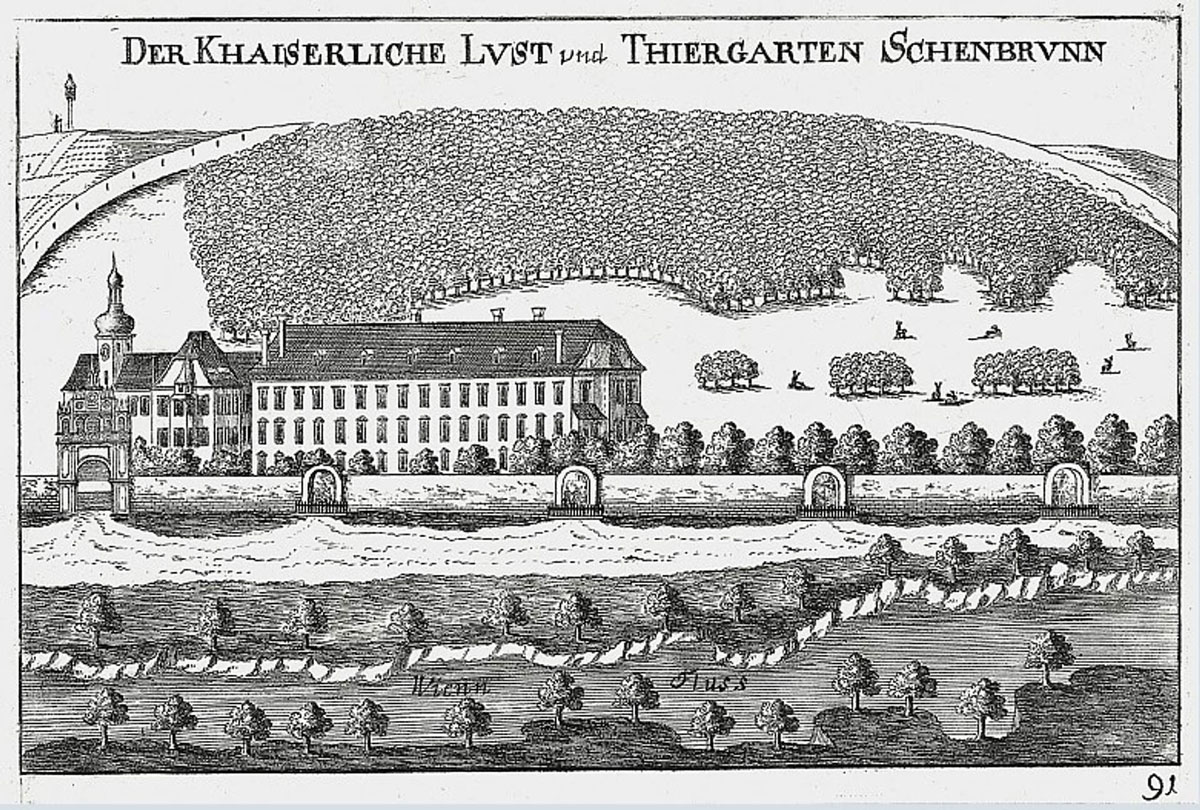
The Habsburgs’ interest in Schonbrunn began in 1569 when Emperor Maximilian II purchased what was then the Katterburg Estate for use as a game reserve; and it was when one of his successors, Emperor Matthias, was out hunting that the Schoner Brunnen (meaning ‘Fair Spring’) was first stumbled upon.

Hunting seems to be ingrained in the blue blood of royal families and the genes were passed on to the next emperor, Ferdinand II, who along with his wife, Eleonora von Gonzaga, held hunting parties on a regular basis. Even after Ferdinand’s death in 1637, the parties continued, and it was the art-loving widow who added the Chateau de Pleasance to the Katterburg Estate – and it was also around this time that its name was changed to Schonbrunn.

The Pleasure Palace in 1672 (©-Schloss Schonbrunn Kultur)

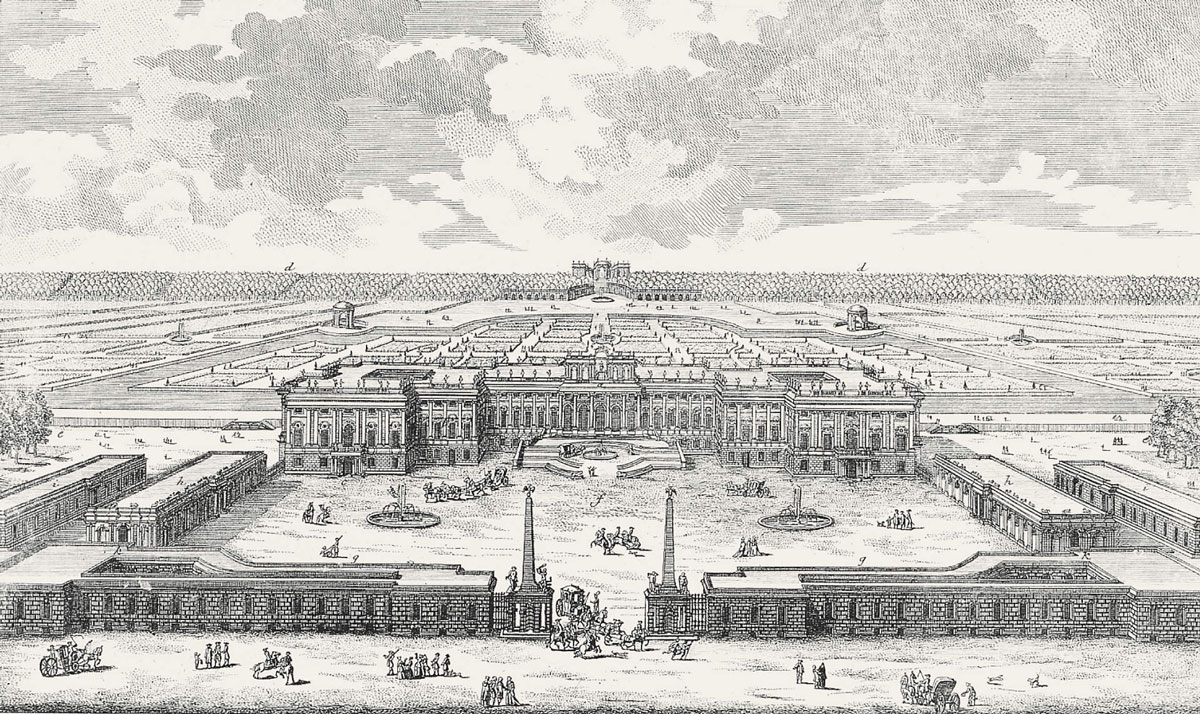
In 1683, Schonbrunn fell victim to the Turks during the siege of Vienna, but when normal service was resumed three years later, Leopold I decided to replace the badly damaged chateau with a grand hunting lodge for his son and heir, Joseph I. His choice of architect was Johann Bernhard Fischer von Erlach (who was involved with the designs of the Hofburg’s Michaelertrakt and Prunksaal if you remember).

After submitting designs which included locating the proposed lodge at the top of the hill (roughly where the Gloriette is now), and an elaborate landscape leading up to it, Leopold sent Fischer back to the drawing board to think again. His second plan was less Utopian and placed the new country retreat at the bottom of the hill where the Chateau de Pleasance once stood – and where the palace now stands.

The revised design was accepted and work started in 1696. The central section was ready for occupation by 1700, but the wings were never completed, firstly due to the financial restraints of the War of the Spanish Succession and then by the unexpected death of Joseph I in 1705.

Johann Bernhard Fischer von Erlach's-accepted design (© Schloss Schonbrunn Kultur)

Now I might be wrong, but I’m guessing that most people reading this wouldn’t know who half of these emperors were, and what’s more, probably don’t care, but now that you know why there’s a palace here, I’m going to take it one stage further before taking you on a tour around the estate.

The person who had the most impact on Schonbrunn was somebody you may well have heard of – Empress Maria Theresa. With the help of architect Nikolaus Pacassi, she changed the hunting lodge into an extravagant palace with over 1400 rooms, up to 40 of which are open to the public (depending on which tour you take), with some being more opulent than others. The one that cost her the most was the Millions Room, which says it all really, and rather than describe it, I’ll let the short video below do it for me.

The Millions Room may have been the most costly, but the Great Gallery is the most impressive, and was the location in 1961 for a summit meeting between President John F. Kennedy of the United States and the Soviet Union’s First Secretary, Nikita Khrushchev.

The Great Gallery was made for state occasions, but the Hall of Ceremonies was used for important family events – and it certainly wasn’t a small family either. The Empress gave birth to 16 children, the most famous of which was Marie Antionette.

When Maria Theresa died in 1780, Schonbrunn began to lose its sparkle, and apart from being used by Napoleon twice (in 1805 and 1809), the palace was left unoccupied until ‘improvements’ were made by Francis II. Austria’s defeat at Austerlitz in 1806 meant that Francis was to be the last Holy Roman Emperor, but he remained Emperor of Austria as Francis I until 1835, during which time he changed the appearance of Pacassi’s elaborate rococo façade to the much plainer one that we see now.

In 1830, the future Franz Joseph I was born in the east wing of the palace, and when he succeeded to the throne in 1848, moved into the west wing where he and his wife, Sissi, had their apartments. Unlike many of his predecessors, Franz Joseph led a frugal lifestyle, and his apartments aren’t the most visually stimulating you’ll see on the palace tour.

His 68 year rule as Emperor of Austria was fraught with difficulties, and his family life didn’t fare much better either. When he died at Schonbrunn on 21st November 1916, at the age of 86, he left behind a legacy from which the Austro-Hungarian Empire never recovered. In 1918, defeat to the Allied Powers in WWI led to the end of the Habsburg monarchy – and Austria becoming a republic.

SCHONBRUNN GARDENS

Maria Theresa’s attraction to opulent surroundings weren’t just confined to the palace – they continued outside the back door as well. The existing garden had been created in 1695 by the French designer, Jean Trehet, and was very much in keeping with the principles of Andre le Notre, the architect of the gardens at Versailles. However, the empress wanted something befitting an imperial power, and Trehet’s design just wasn’t grand enough, and so she enlisted the expertise of Johann Ferdinand Hetzendorf von Hohenberg and Johann Wilhelm Beyer to provide her with something more suitable.

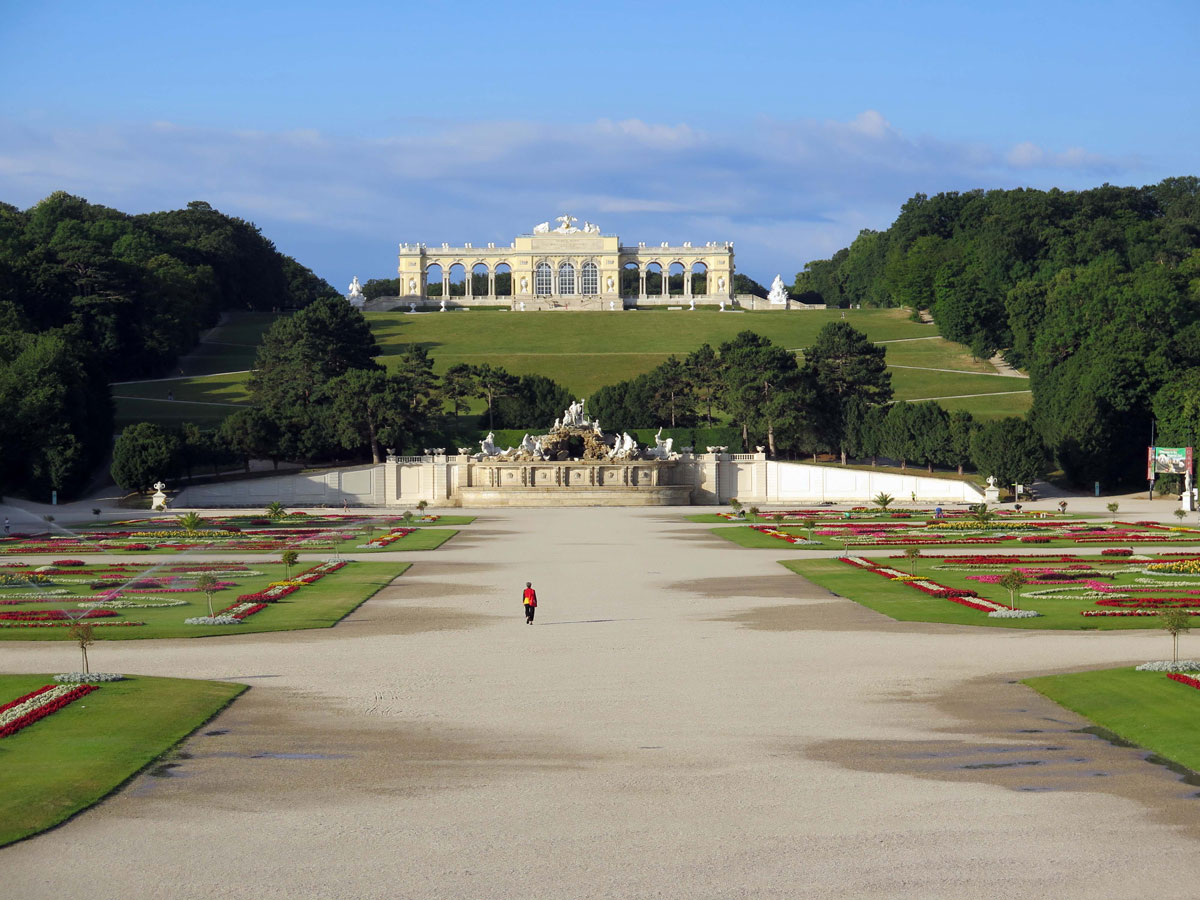
Throughout the 1770s the gardens were improved and extended with a network of symmetrical avenues and paths that converged at the Great Parterre. Classical sculptures, statues and fountains were added, and the whole thing was topped off by a vista that led from the palace right up to the top of the hill where the Gloriette was literally the crowning glory.

A Lone Figure walks up through the Great Parterre towards the Neptune Statue and Gloriette

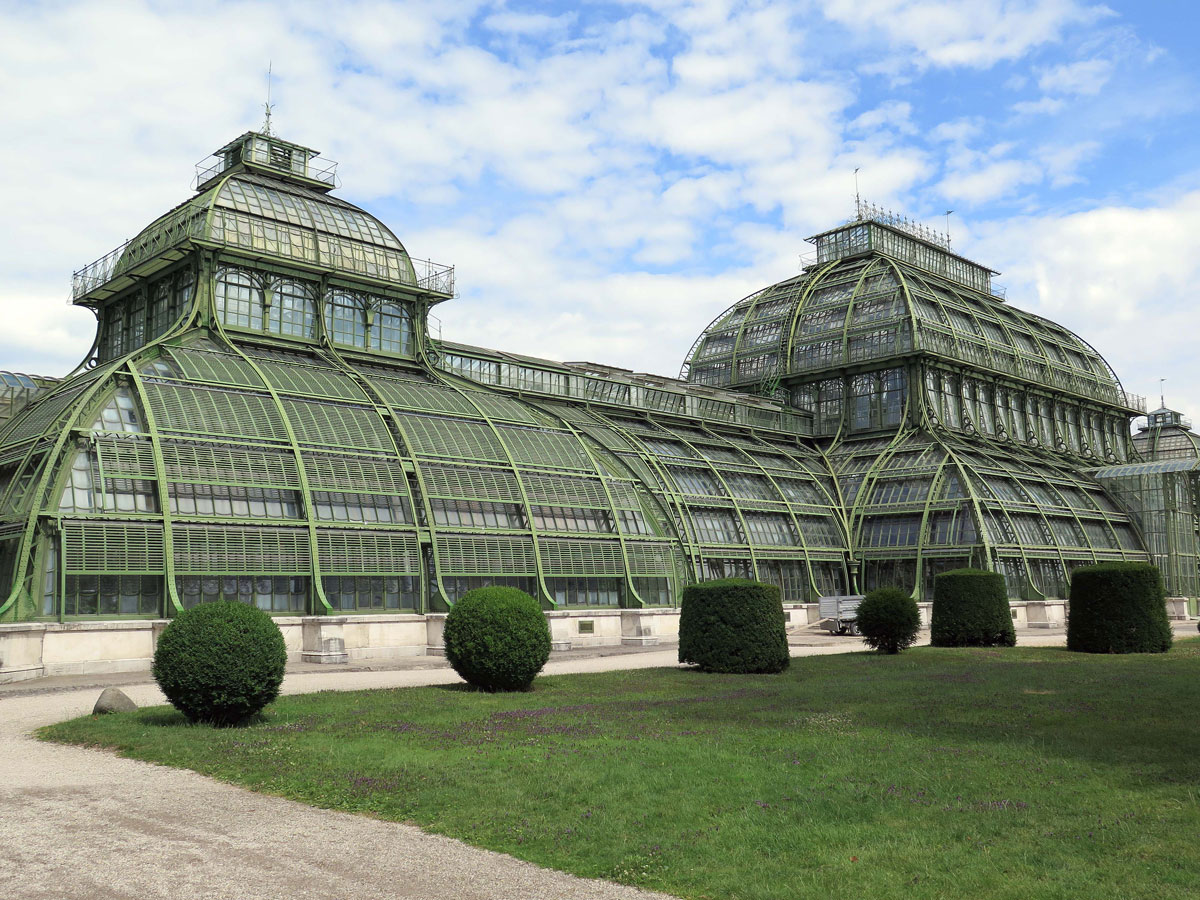
The gardens opened to the public in 1779 and were completed just before Maria Theresa’s death the following year. How much time and money you want to spend here will obviously be down to your own personal choice, but you don’t need to spend a penny if you don’t want to, as the Schlosspark (as it’s also called) is completely free to walk around. That said, there are a number of attractions that require an entrance fee. They include the Zoo, Gloriette and Palm House amongst others.

The Palm House

There’s not a lot of point of going through the permutations of all the separate attractions, charges and opening times here as it’s best to take a look at the Schonbrunn website. Instead, I’m just going to point out a few observations from my own experiences. https://www.schoenbrunn.at/en/tickets-and-prices/all-tickets-tours

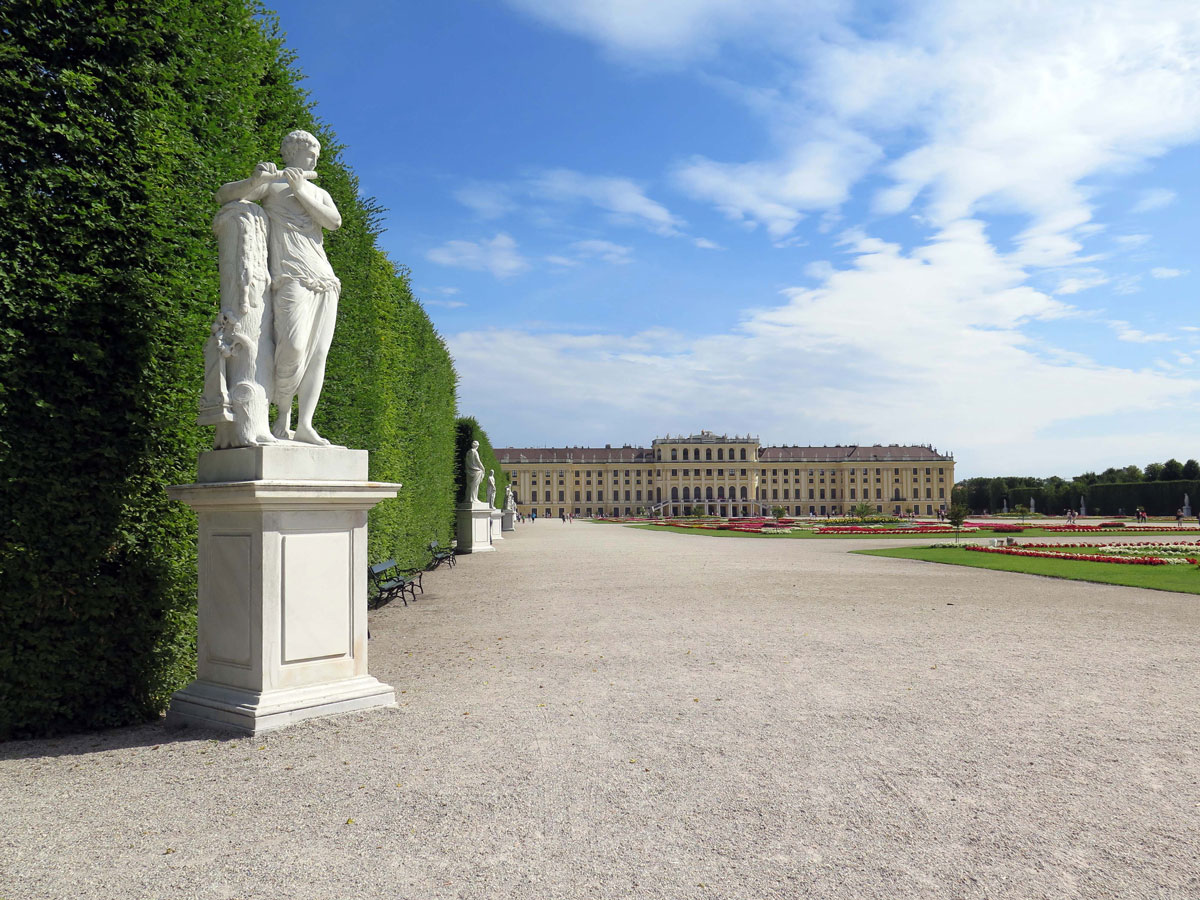
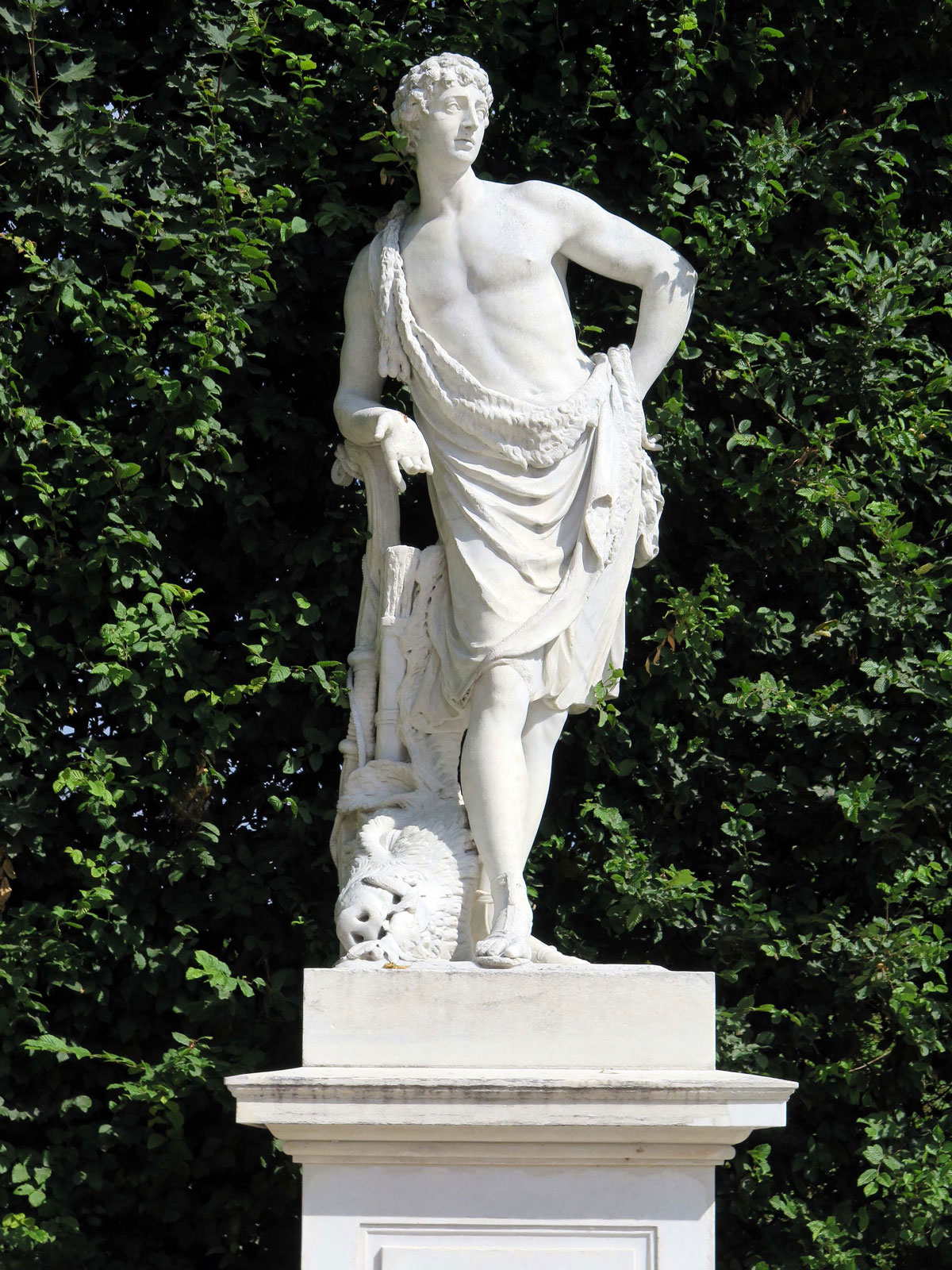
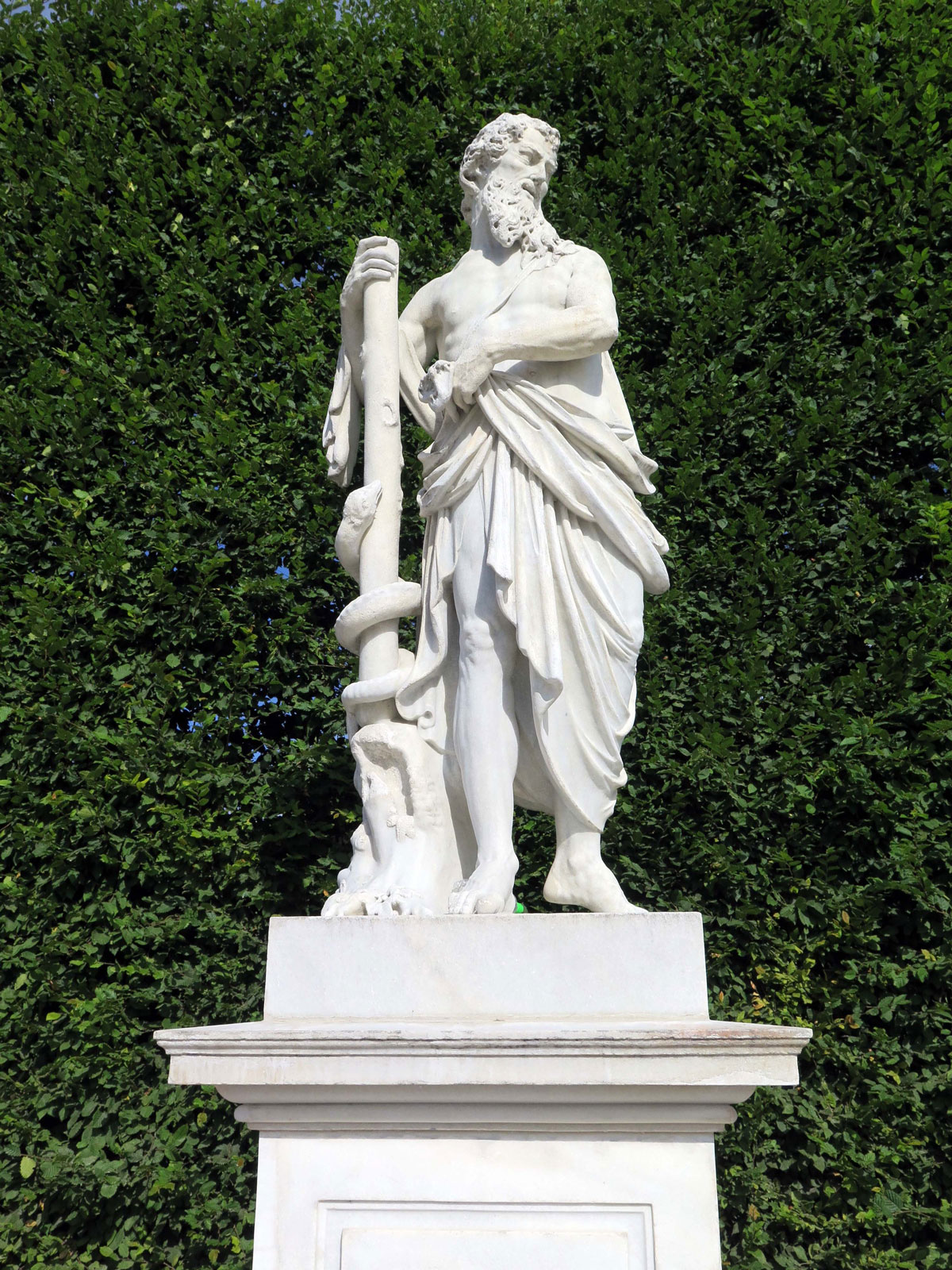
As you can imagine, with 2.7 million visitors annually, it might help to know that the park opens at 06.30 each day throughout the year, and so one fine summer’s morning I arrived just as they were opening up the gates. Other than a few joggers building up a sweat around the palace, I hardly saw a soul for the first hour or so, which is just how I like it. I wandered up through the Great Parterre where the sprinklers were giving everything a good soaking – including me. On each side of the immaculately laid out garden are thirty two mythological statues carved by Johann Wilhelm Beyer and his team.

Statues in the Great Parterre
Meleager
Aesculapius

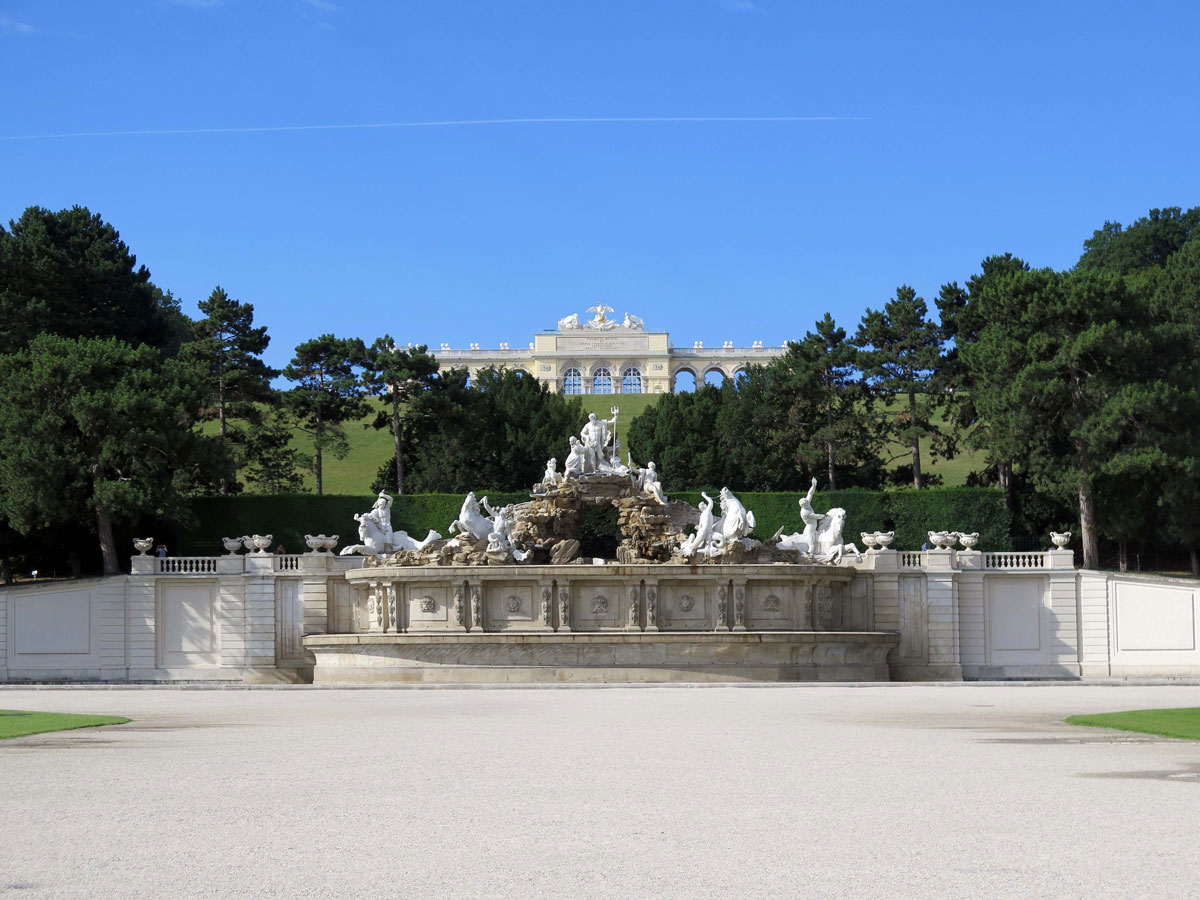
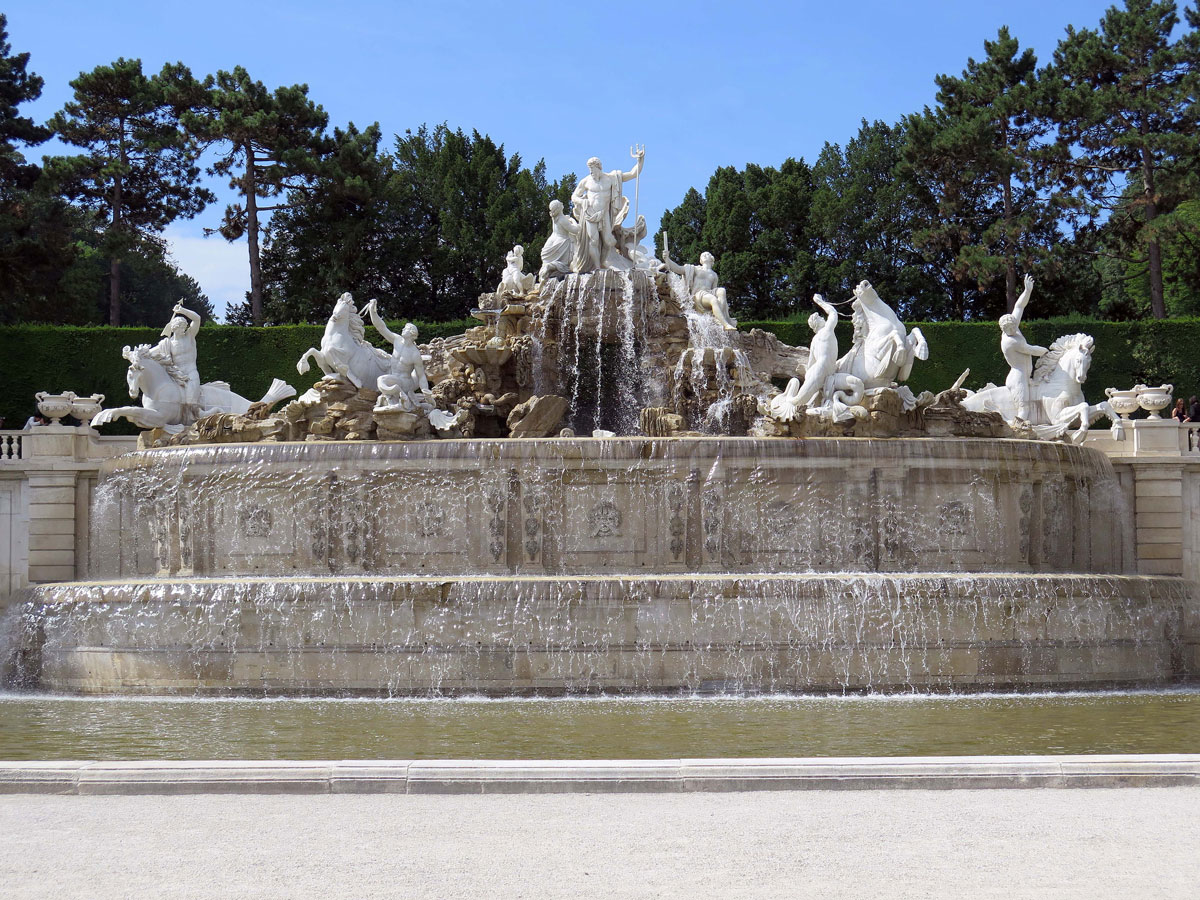
The obvious place to head for is the Neptune Fountain which lies directly ahead. It was too early in the morning for the fountain to be operating, but at least I was able to study it without people just hanging around with no obvious purpose in life, except to annoy me by standing for ages in the way of a decent photograph; and while I’m on the subject, have you ever noticed how as soon as they clear off, somebody else turns up? – and then just when you think it’s all clear, the sun goes in.

The Neptune Fountain with the Gloriette behind

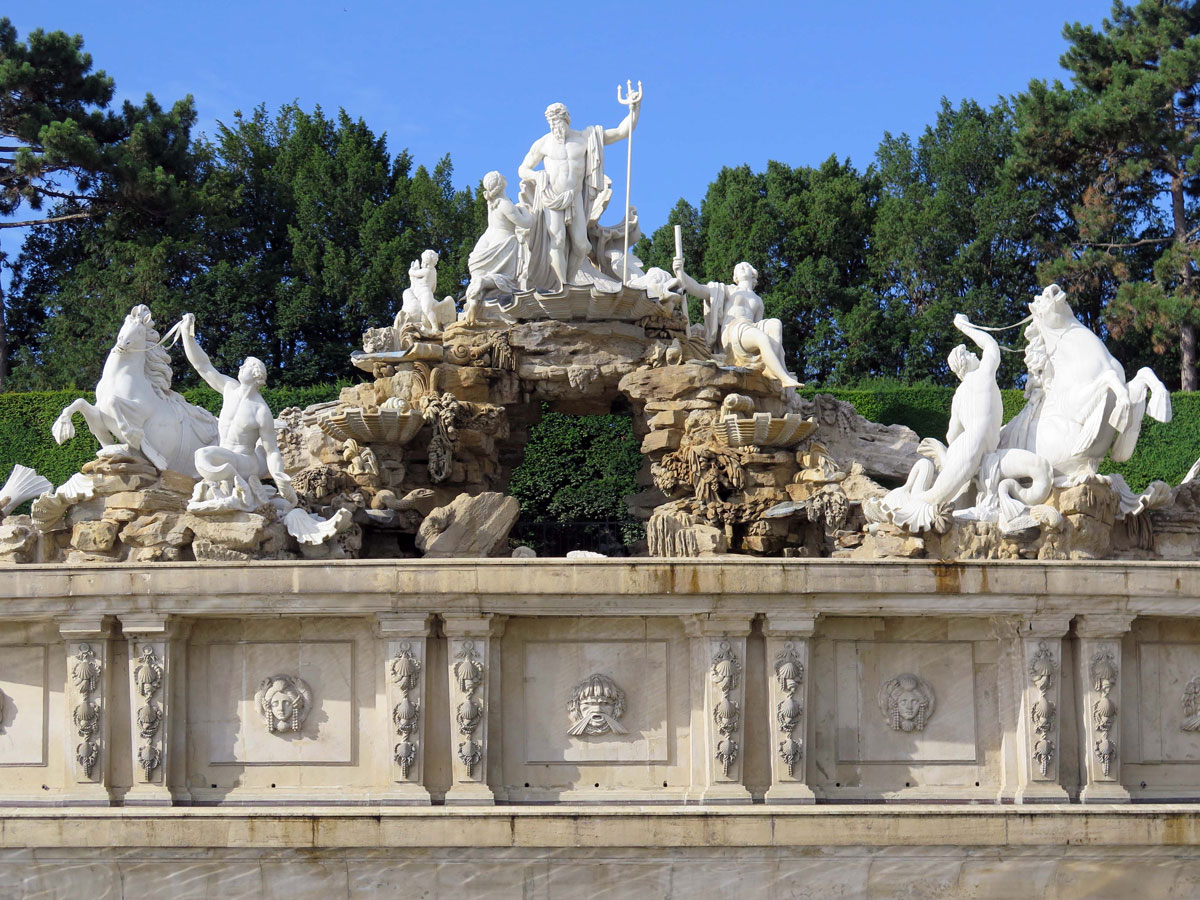
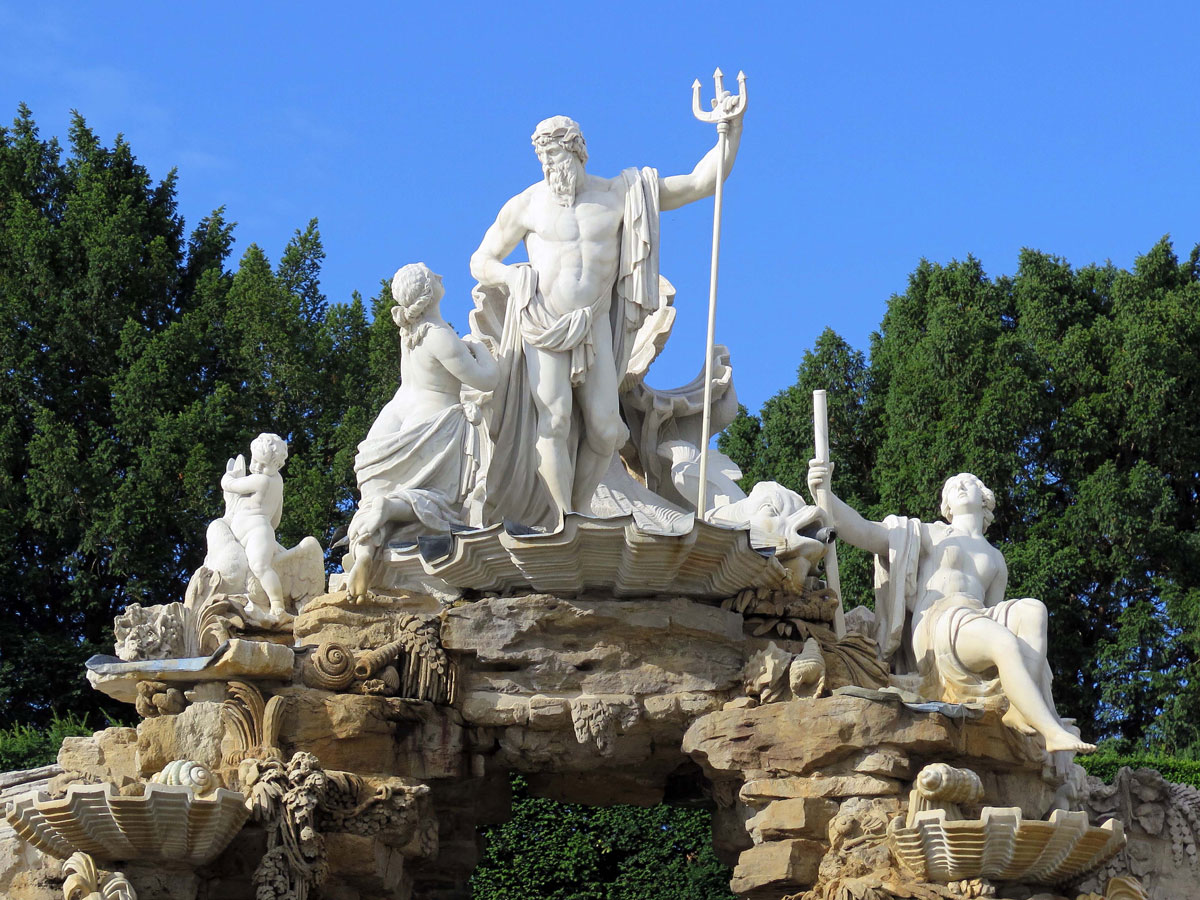
Anyway, I digress. This beautiful fountain was most likely designed by the court architect, Johann Ferdinand Hetzendorf von Hohenberg, with the marble sculptures made by Wilhelm Beyer. Standing in the centre on top of the grotto with his trident in hand is the sea-god Neptune, and kneeling next to him is the sea-goddess, Thetis. At the foot of the fountain are two tritons (creatures that are half-man and half-fish) restraining hippocampi (sea-horses) who draw Neptune’s chariot across the seas.

Apparently, Neptune riding his chariots across the sea was common at this time for monarchs who saw it as a symbol for controlling the destination of their nations.

On a practical note, different fountains operate at different times of the day and only in the summer: The Neptune Fountain can be found working between 11am and 3pm.

The Neptune Fountain in operation

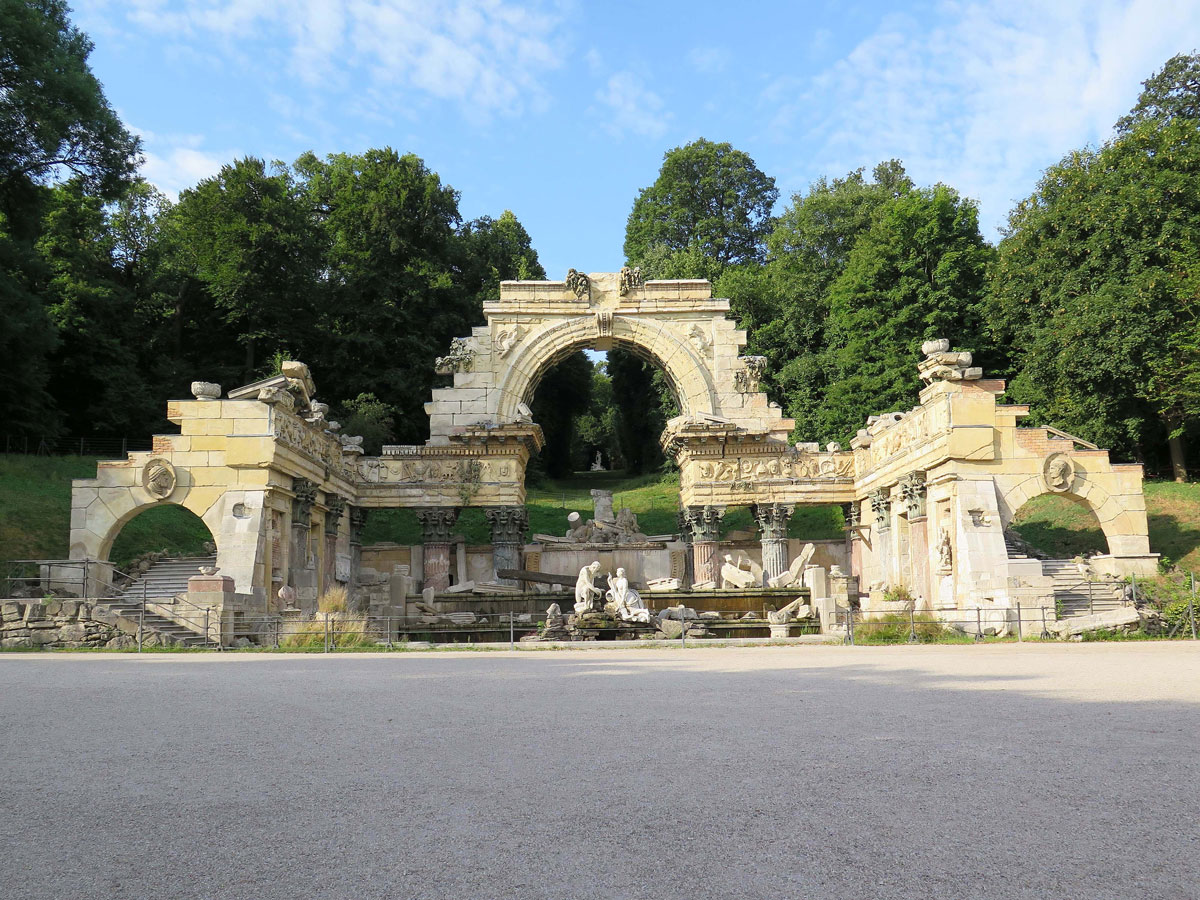
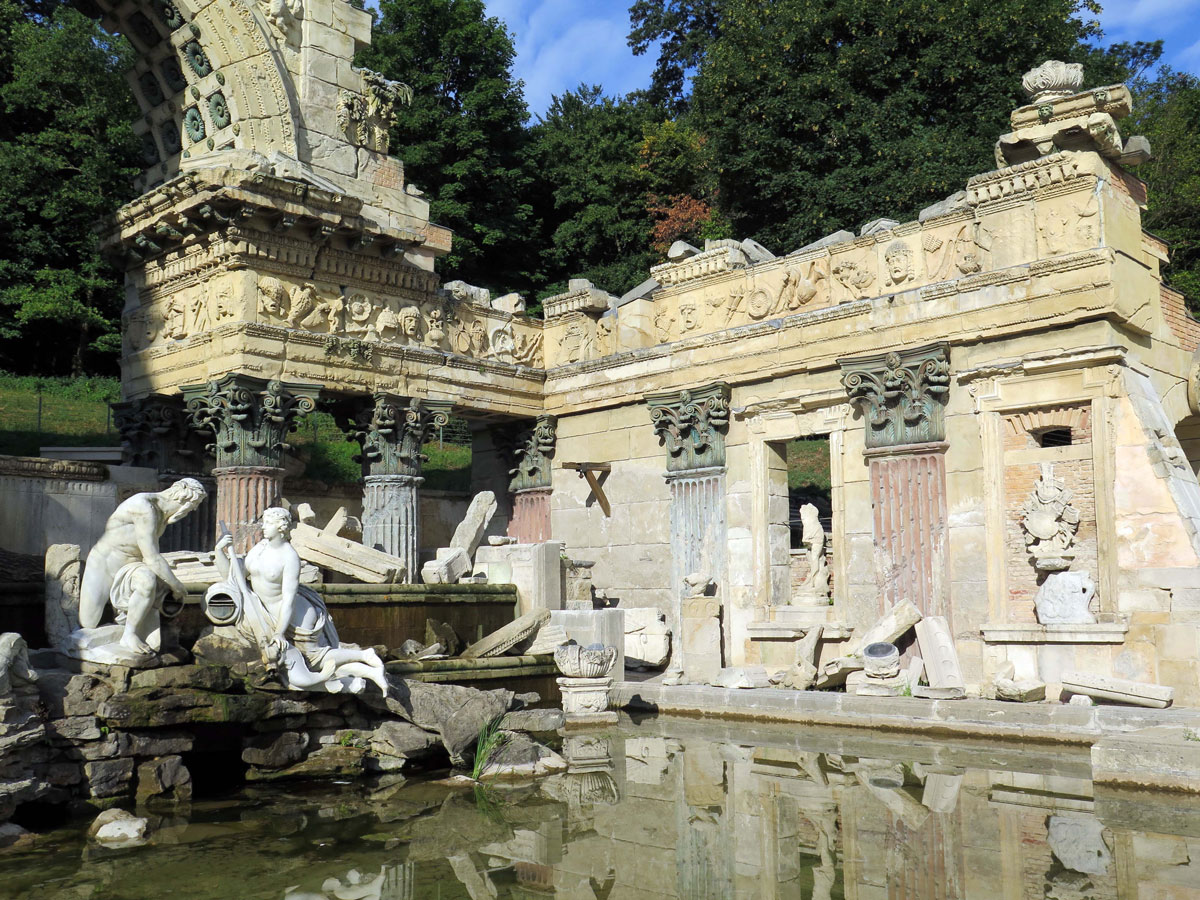
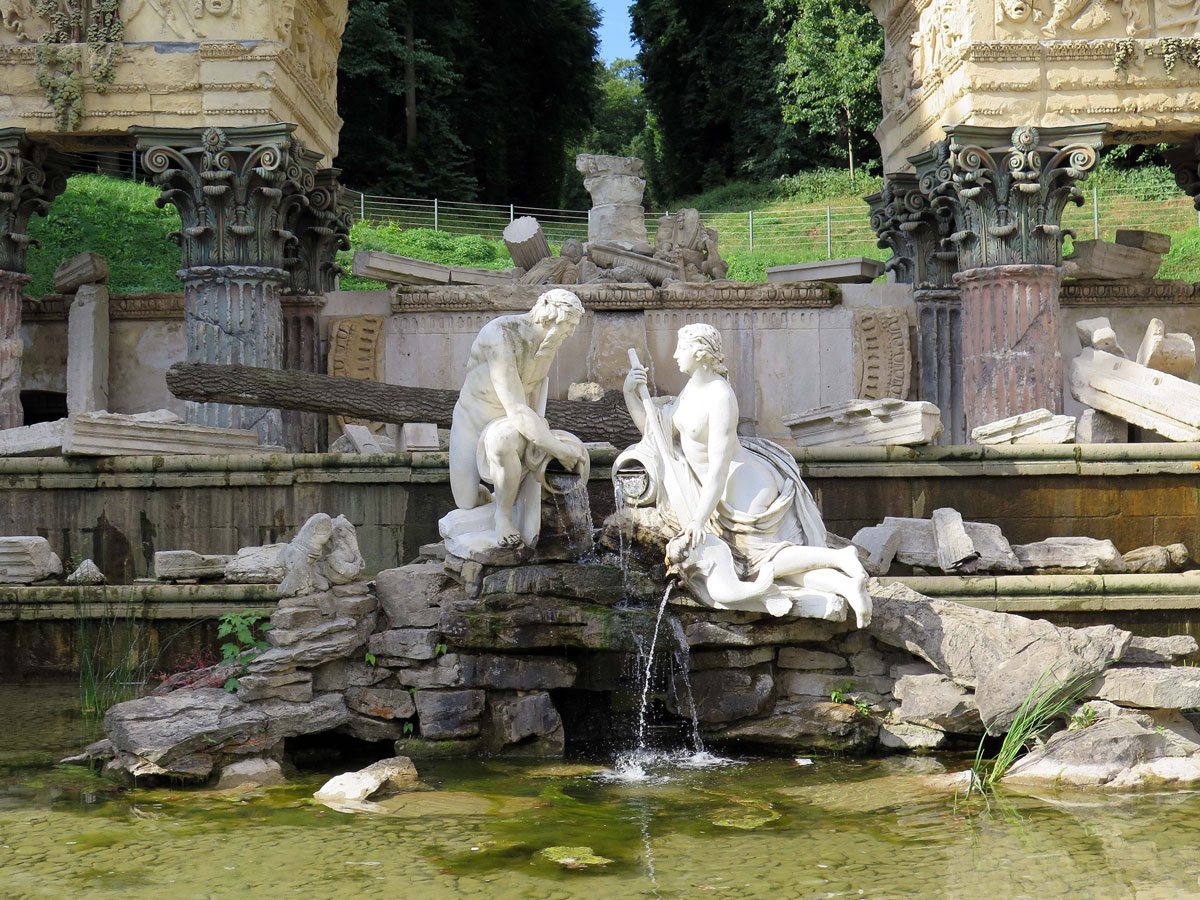
Before heading uphill towards the Gloriette, I walked the short distance along the path to the so-called Roman Ruin. It’s not a real Roman ruin, but another whimsical creation by Johann Ferdinand Hetzendorf von Hohenberg: Before I go any further, I think I’m going to call him JFH from now on as I’m getting a bit fed up of writing his name out in full all the time. Anyway, this artificial ancient ruin really appealed to me, and is apparently based on the Ancient Roman temple of Vespasian and Titus.

The Roman Ruin

In the pool are two figures representing the gods of the River Danube and Enns executed by Wilhelm Beyer (who else?).What I particularly found interesting though, apart from the romantic appeal of the ruin, was that it was originally called the Ruin of Carthage which was no doubt alluding to Rome’s victory over Carthage in the Punic Wars.

If you were wondering why I found this snippet interesting, it’s because from AD 800 to 1806 the Holy Roman Empire was the most powerful monarchy in Europe, and in their eyes at least, the legitimate successor to the Ancient Roman Empire. It’s not beyond the realms of possibility therefore to imagine that the Habsburgs had this folly constructed to remind people that they were rulers of this empire for over 300 years.

The River Gods of the Danube and Enns

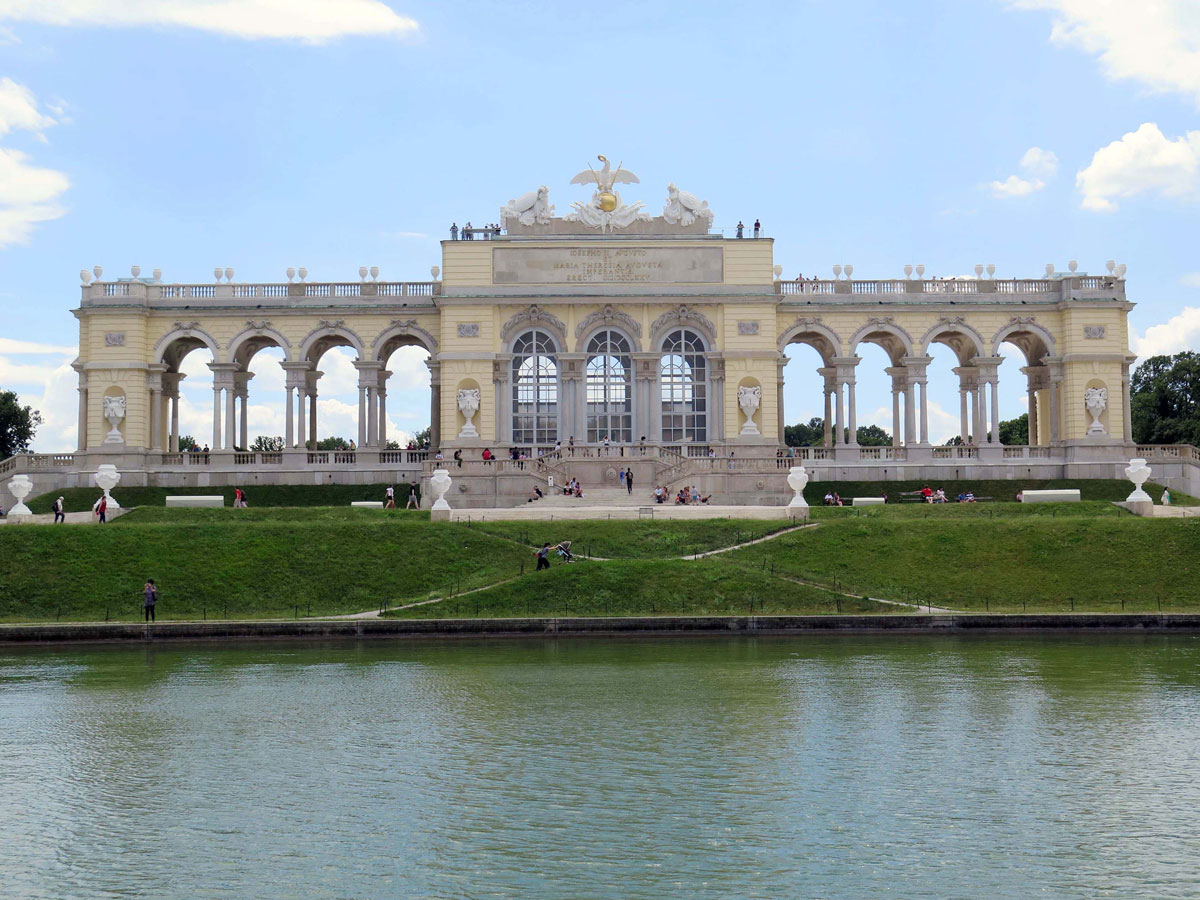
The focal point of the park is undoubtedly the Gloriette. The Original plans drawn up by JFH were in the form of elaborate terracing leading up to it, but after Maria Theresa’s husband, Emperor Franz Stephan died in 1765, she toned down the design and implemented the simpler zig-zag path that leads to the top.

The Gloriette

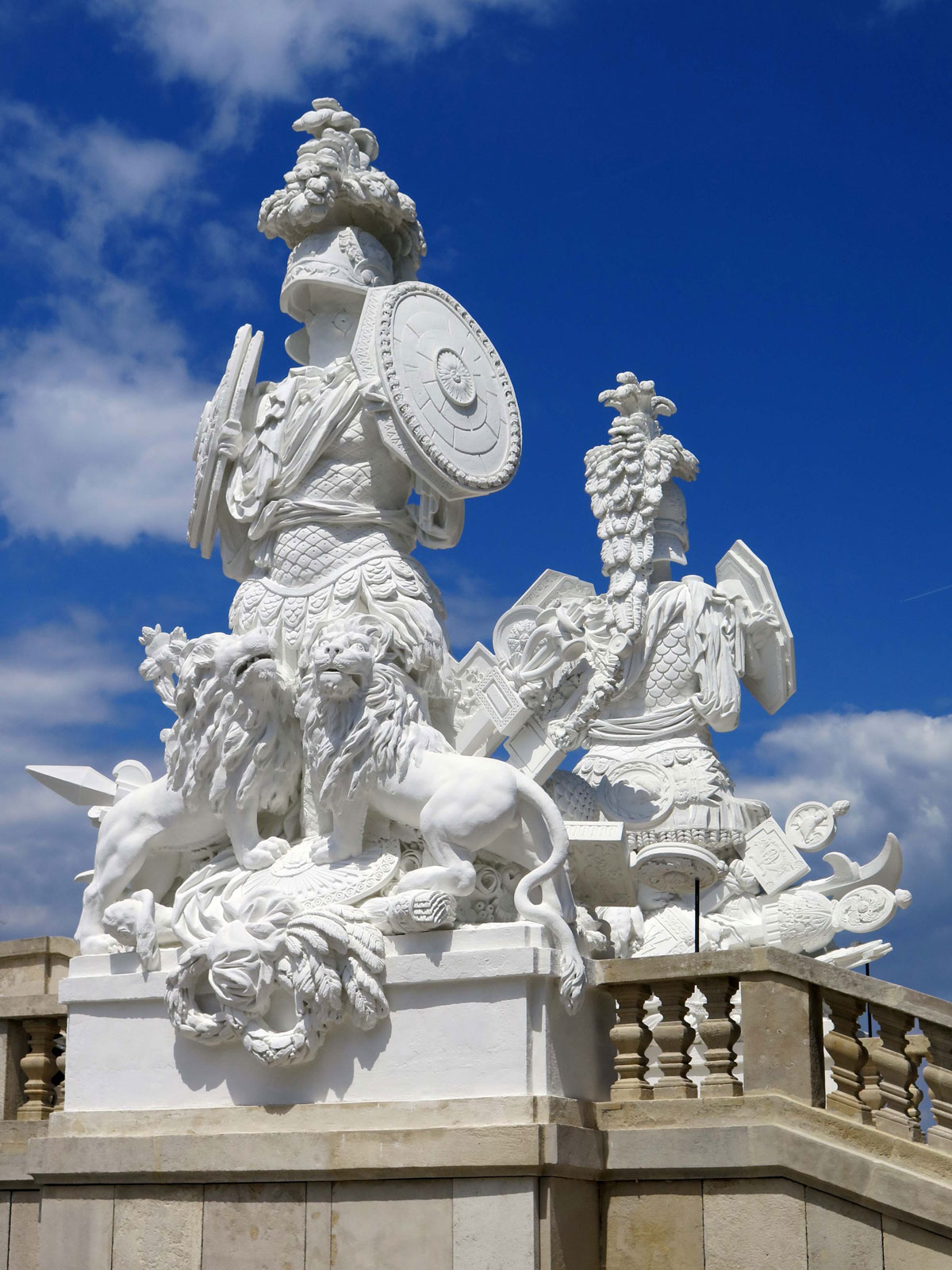
If you think that the Gloriette looks a bit like a triumphal arch then you could be right, because I’ve read that it was built to celebrate the Habsburgs’ victory over the Prussians at the 1757 Battle of Kolin (don’t worry, I hadn’t heard of it either). I haven’t been able to substantiate this useless bit of information, but I don’t think most people come up here to celebrate any Austro-Hungarian battle victory anyway, although there are some impressive warrior statues guarding it – and this time they weren’t created by Herr Beyer, but by Salzburg sculptor Johann Baptist Hagenauer.

Guardian Statues at the Gloriette

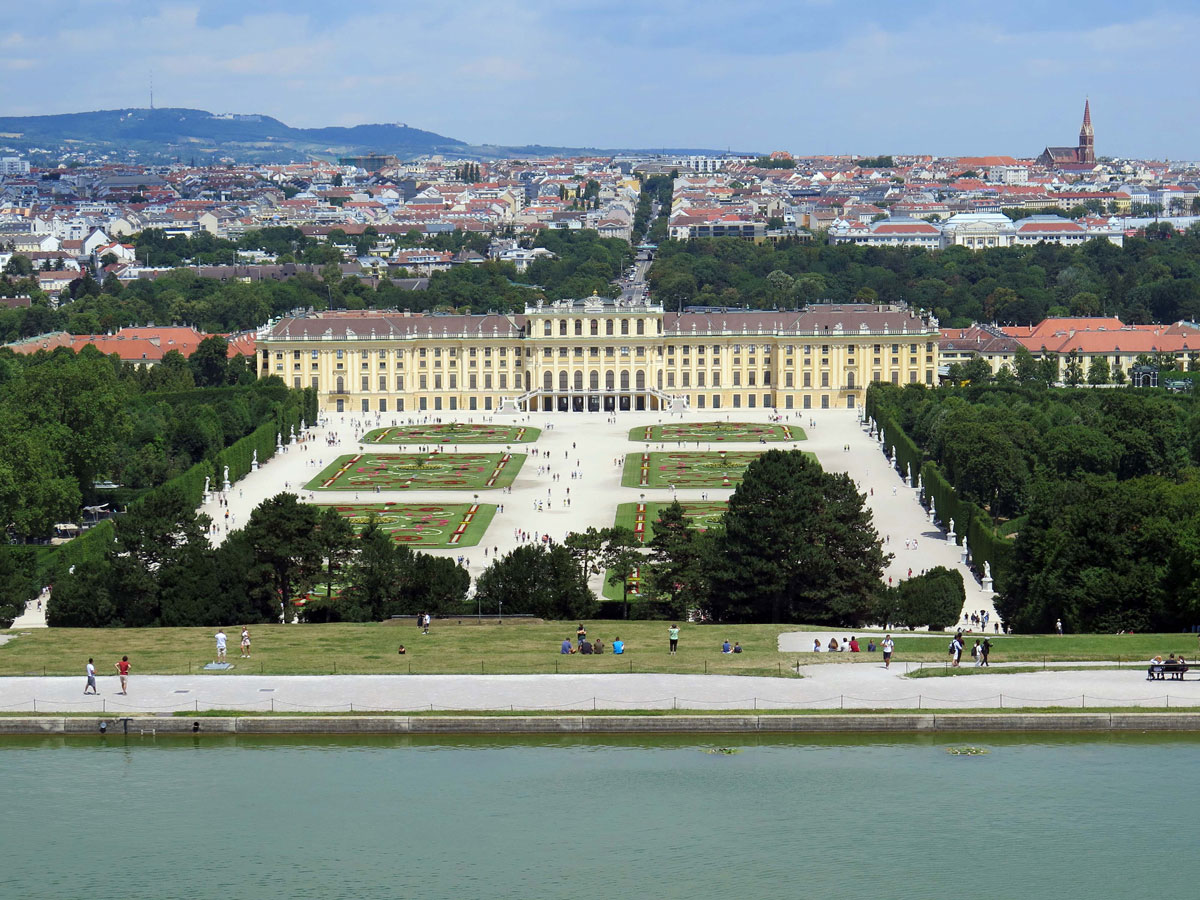
What people really come up here for are the views, but if you want to go inside and up to the viewing platform, then there’s a small charge for the privilege. Most people it would seem are reluctant to put their hands in their pockets to get the best view possible, but at the same time quite happy to fork out a small fortune for food and drink at the Café Gloriette below instead.

View from the Balcony of the Gloriette

The few places that I’ve described here are some of the park’s main features, but there are plenty of others to discover for yourself, and as I’ve already mentioned, there are parts of the estate that require an admission fee, so it will depend on the time you have available and what your interests are.

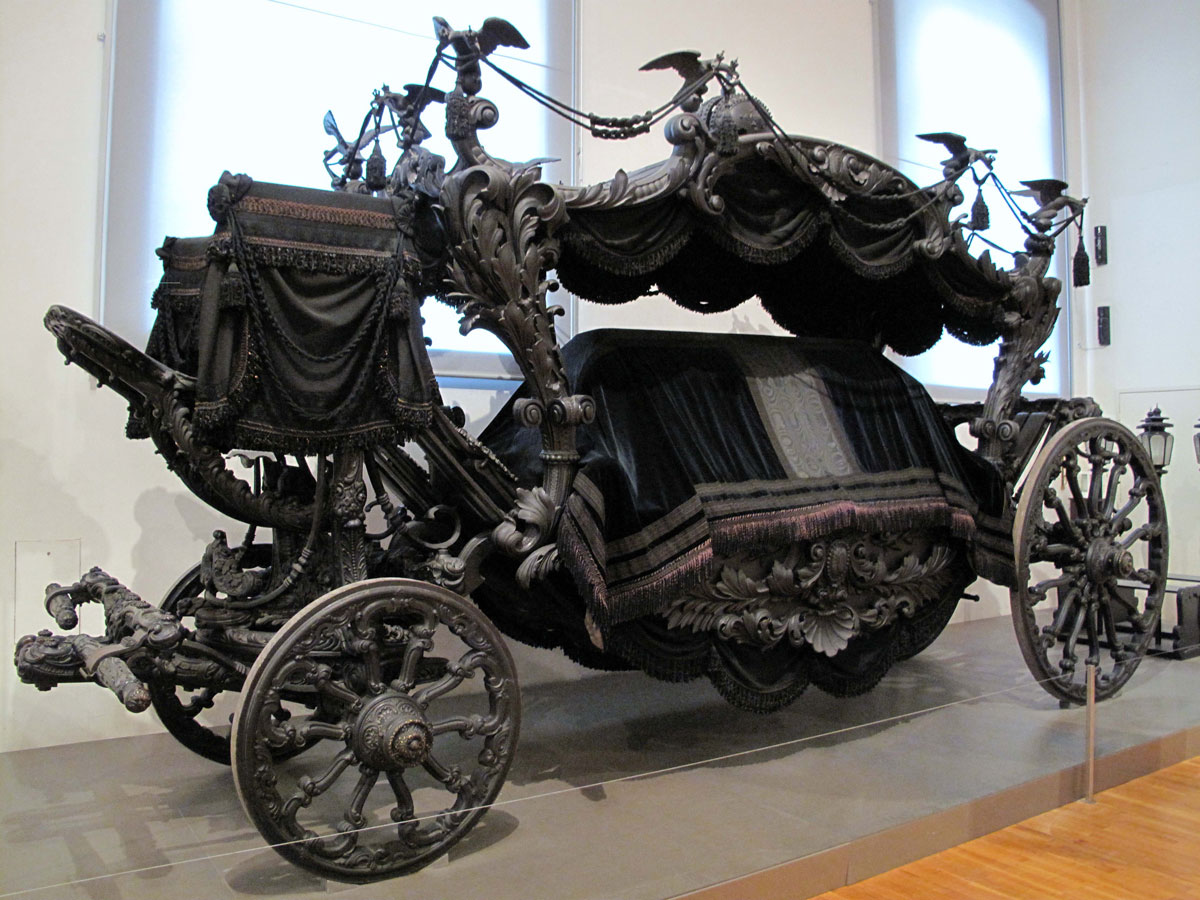
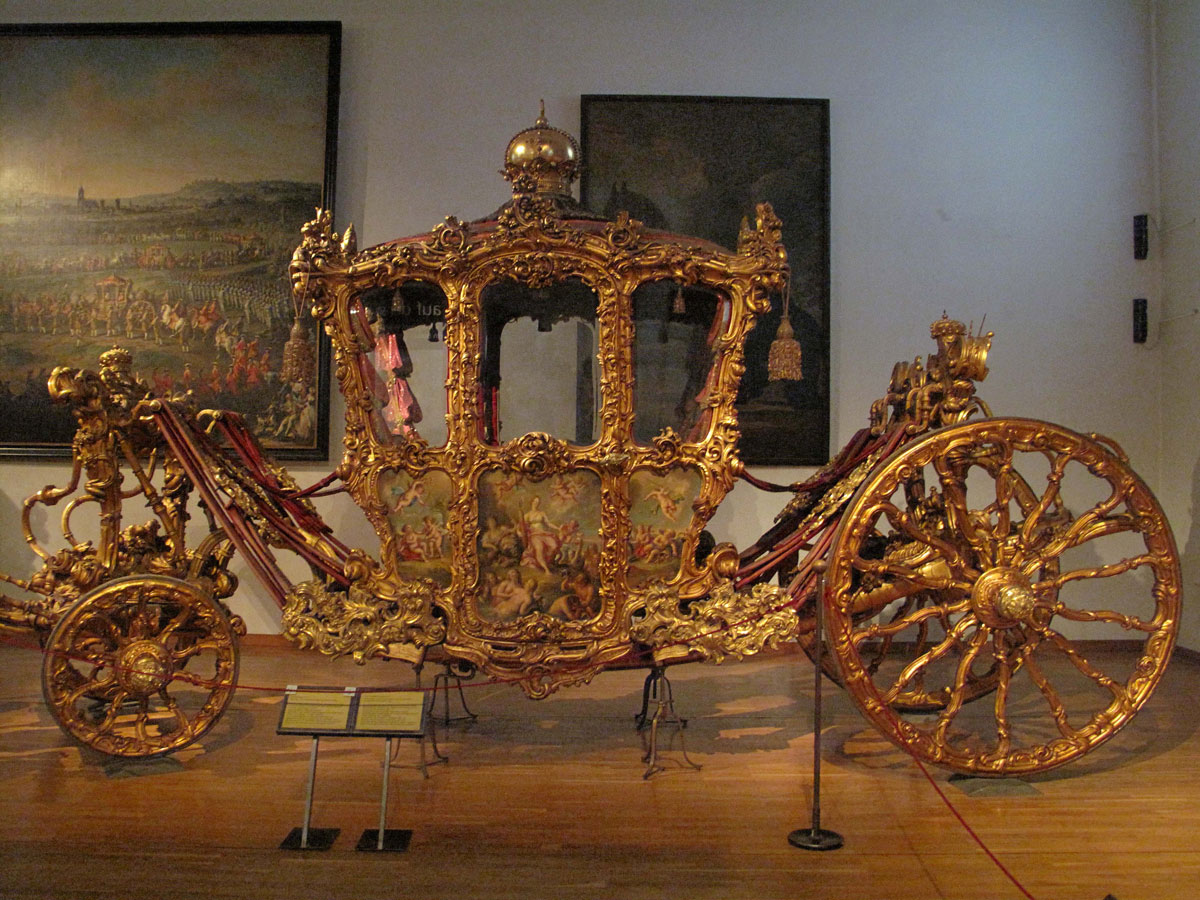
One place I did opt to pay to see was the Carriage Museum (Wagenburg) which lies just outside the park gates. The museum holds a fantastic collection of carriages of all descriptions, but it was the state coaches that attracted my attention the most, as I guess it would most people’s: The highlight though has to be the magnificent Imperial Carriage, or Coronation Coach.

Hearse of the Viennese Court
The Imperial Carriage

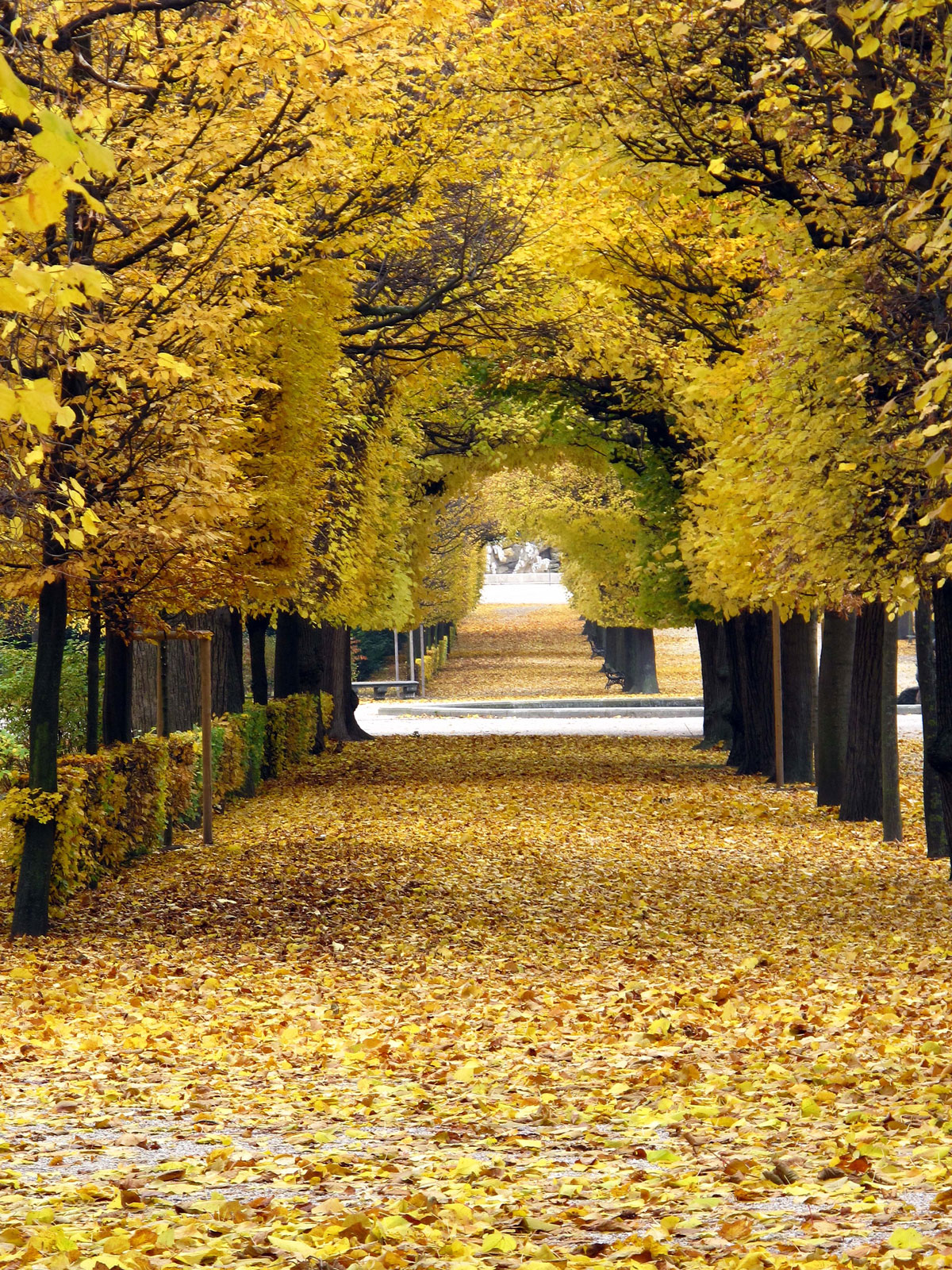
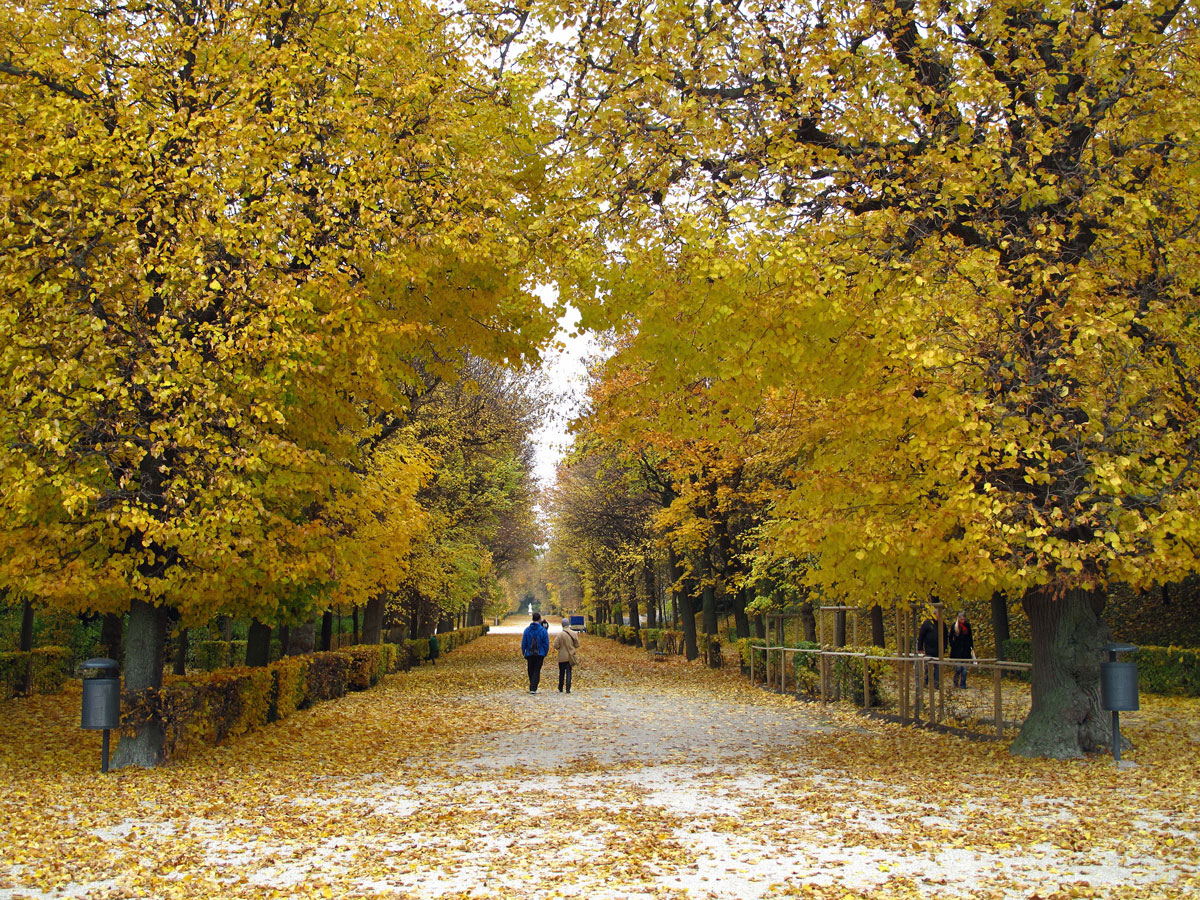
Schonbrunn, it has to be said, is an extravagant display of wealth and power (although perhaps not quite as much as Versailles), but seen from a historic and artistic perspective, it’s an assault on the mind as to how the Habsburgs lived. Whether you agree or not with all these ostentatious surroundings, it’s difficult not to be impressed, but for all its flamboyant attention to detail, the thing I liked most of all was the chance to enjoy wandering through the avenues of trees during Autumn time watching the black squirrels scampering around – and as far as I’m concerned, you just can’t put a price on that.

POSTED – OCTOBER 2022

Originally posted 2022-10-07 17:03:45.

The post Schonbrunn – The Habsburgs’ Summer Retreat appeared first on Easymalc's Wanderings.

]]>
https://www.easymalc.co.uk/schonbrunn-the-habsburgs-summer-retreat/feed/ 32 17471