Warning: Creating default object from empty value in /home/sites/30b/a/a8be13db6d/public_html/wp-content/plugins/zanmb/reduxframework/ReduxCore/inc/class.redux_filesystem.php on line 29

Warning: Cannot modify header information - headers already sent by (output started at /home/sites/30b/a/a8be13db6d/public_html/wp-content/plugins/zanmb/reduxframework/ReduxCore/inc/class.redux_filesystem.php:29) in /usr/share/php/wp-stack-cache.php on line 1971

Warning: Cannot modify header information - headers already sent by (output started at /home/sites/30b/a/a8be13db6d/public_html/wp-content/plugins/zanmb/reduxframework/ReduxCore/inc/class.redux_filesystem.php:29) in /usr/share/php/wp-stack-cache.php on line 1972

Warning: Cannot modify header information - headers already sent by (output started at /home/sites/30b/a/a8be13db6d/public_html/wp-content/plugins/zanmb/reduxframework/ReduxCore/inc/class.redux_filesystem.php:29) in /usr/share/php/wp-stack-cache.php on line 1973

Warning: Cannot modify header information - headers already sent by (output started at /home/sites/30b/a/a8be13db6d/public_html/wp-content/plugins/zanmb/reduxframework/ReduxCore/inc/class.redux_filesystem.php:29) in /usr/share/php/wp-stack-cache.php on line 1971

Warning: Cannot modify header information - headers already sent by (output started at /home/sites/30b/a/a8be13db6d/public_html/wp-content/plugins/zanmb/reduxframework/ReduxCore/inc/class.redux_filesystem.php:29) in /usr/share/php/wp-stack-cache.php on line 1972

Warning: Cannot modify header information - headers already sent by (output started at /home/sites/30b/a/a8be13db6d/public_html/wp-content/plugins/zanmb/reduxframework/ReduxCore/inc/class.redux_filesystem.php:29) in /usr/share/php/wp-stack-cache.php on line 1973

Warning: Cannot modify header information - headers already sent by (output started at /home/sites/30b/a/a8be13db6d/public_html/wp-content/plugins/zanmb/reduxframework/ReduxCore/inc/class.redux_filesystem.php:29) in /home/sites/30b/a/a8be13db6d/public_html/wp-includes/feed-rss2.php on line 8
The Mendip Hills – Easymalc's Wanderings https://www.easymalc.co.uk I’d be unstoppable if only I could get started Sun, 24 May 2026 13:59:20 +0000 en-GB hourly 1 https://wordpress.org/?v=7.0.4 https://www.easymalc.co.uk/wp-content/uploads/2019/09/cropped-easy-malc-logo-32x32.jpg The Mendip Hills – Easymalc's Wanderings https://www.easymalc.co.uk 32 32 140253175 Wells – England’s ‘Smallest’ City – The Bishop’s Palace https://www.easymalc.co.uk/wells-englands-smallest-city-pt-1-the-bishops-palace/ https://www.easymalc.co.uk/wells-englands-smallest-city-pt-1-the-bishops-palace/#comments Sun, 24 May 2026 13:59:20 +0000 https://www.easymalc.co.uk/?p=22853 Originally posted 2025-09-16 16:32:35.

The post Wells – England’s ‘Smallest’ City – The Bishop’s Palace appeared first on Easymalc's Wanderings.

]]>

Wells - England's 'Smallest' City - The Bishop's Palace

The title of this post is a bit misleading because it all depends on how you define a city. In actual fact, the City of London is smaller, both in size and population, but as it’s surrounded by another 9 million people and 600 square miles of urbanization, it hardly registers in people’s minds the same way as this small town in Somerset does.

Now that’s cleared that up, the next question is what constitutes somewhere being called a city? In Britain at least, it was traditionally a place that had a cathedral. I’ll refrain from delving deeper into why that’s no longer the case but keep to the script instead and try to explain why Wells has such a magnificent cathedral for such a small place.

For that I really need to go back to 705 AD when Ine, the King of Wessex, founded a minster church here dedicated to St Andrew. A couple of hundred years later it became the seat of the newly formed bishopric of Wells, but when the episcopal headquarters moved to Bath, the canons of Wells and the monks of Bath fell out, and it was only when it was agreed to rename the bishopric the Diocese of Bath and Wells that ecclesiastical order was restored: That was back in 1245, but today’s bishop is still known as the Bishop of Bath and Wells.

It may have come under joint administration, but when the cathedral was built during the first half of the 13th century, Wells not only became a city, it also became the principle seat of the diocese, and so it remains.
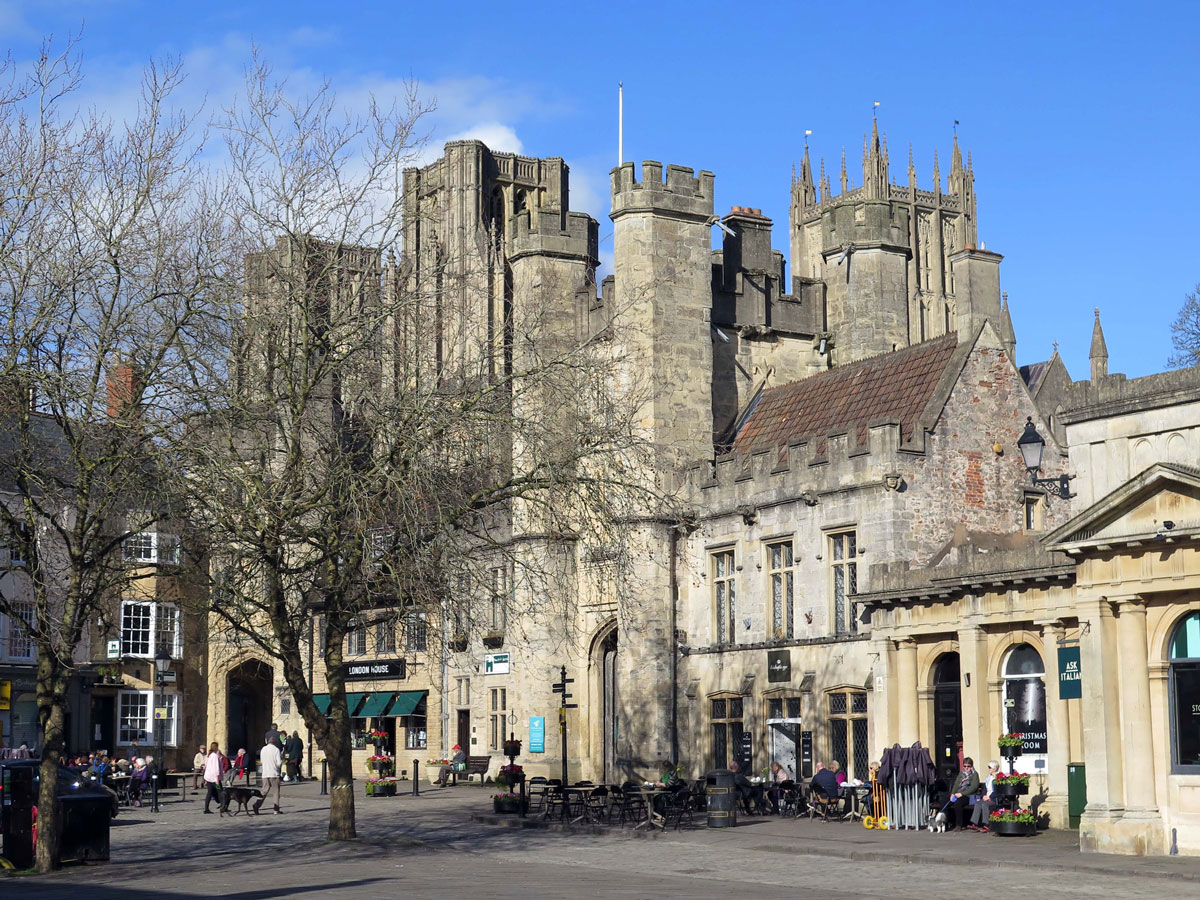
Market Place

After all what I’ve just said, you may be wondering why I’m starting at the Bishop’s Palace rather than the Cathedral, and that’s because the city’s name comes from the wells that are located within the palace grounds.

The source of the water that feeds these wells is just a few miles north of the palace on the Mendip Hills, and I can personally vouch for how much heavenly water falls on this limestone landscape. I lived not too far away at one time and regularly went for country walks up there: In fact, the area appealed to me so much that we went to look at a house in Priddy, the highest village on Mendip. The cottage was lovely and just about affordable, but at the time of our visit, the rain was bucketing down so much that it was touch and go whether I would be able to drive out of the village. Needless to say we didn’t buy it.

The carboniferous limestone that make up the geological terrain has a tendency to allow rainwater to permeate through the soft rock into swallets and caves such as those at nearby Wookey Hole and Cheddar. Caving is a popular pastime on the Mendips and I even dabbled in it myself for a while: My favourite cave was Swildon’s Hole near Priddy, but after one descent in particular, I decided caving wasn’t for me. Don’t ask! More to the point, the area conceals the largest underground river system in Britain – and some of these streams and rivers find their way down to the area around the Cathedral and Bishop’s Palace.

The point where underground water naturally re-surfaces is technically called a spring, but as you can imagine, all this water that came seeping out of the ground had a mind of its own and got wasted in a quagmire of marshy ground; but in 1451 the incumbent Bishop Beckynton saw the opportunity to harness it and provide a constant clean water supply to the city by digging wells where these springs emerged.

There are three main wells, one in the Market Place and two in the grounds of the palace, the most significant being the appropriately named Holy Well of St Andrew. Apparently, in drier months it’s possible to see the springs bubbling up into the bottom of these wells, but according to statistics, the water, on average, emerges at a rate of 180 litres a second and 3½ million gallons a day. Whether those numbers are correct I wouldn’t know, but whichever way you look at it, the city has a plentiful supply of the stuff, and according to records, has never dried up.

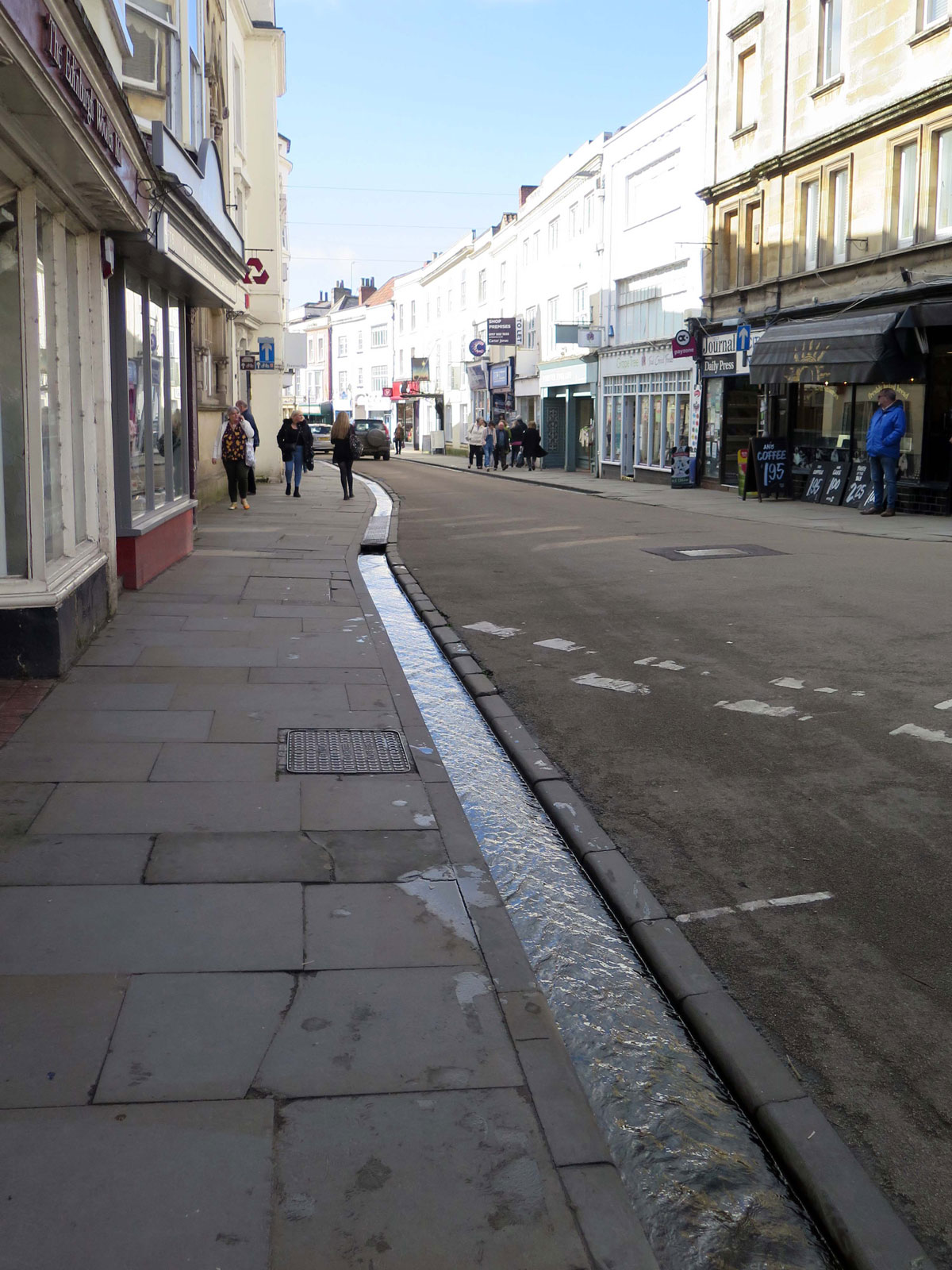
The city relies on a more modern way of providing water for its inhabitants these days, but the water from St Andrew’s Well still gets channeled underground and out into the Market Square where it can be seen gurgling away down gutters and into the High Street.

St Andrew's Well
Water from the Wells running down through Market Place and High Street

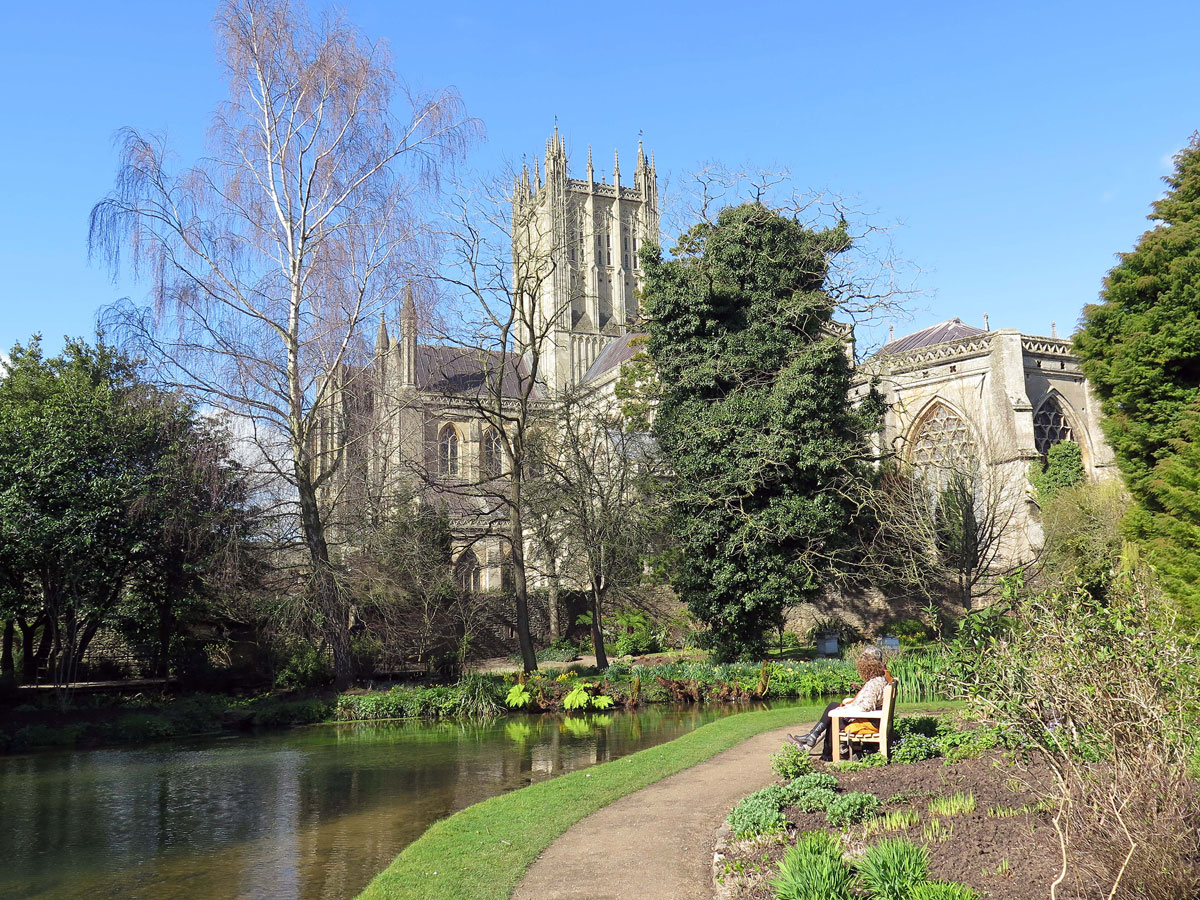
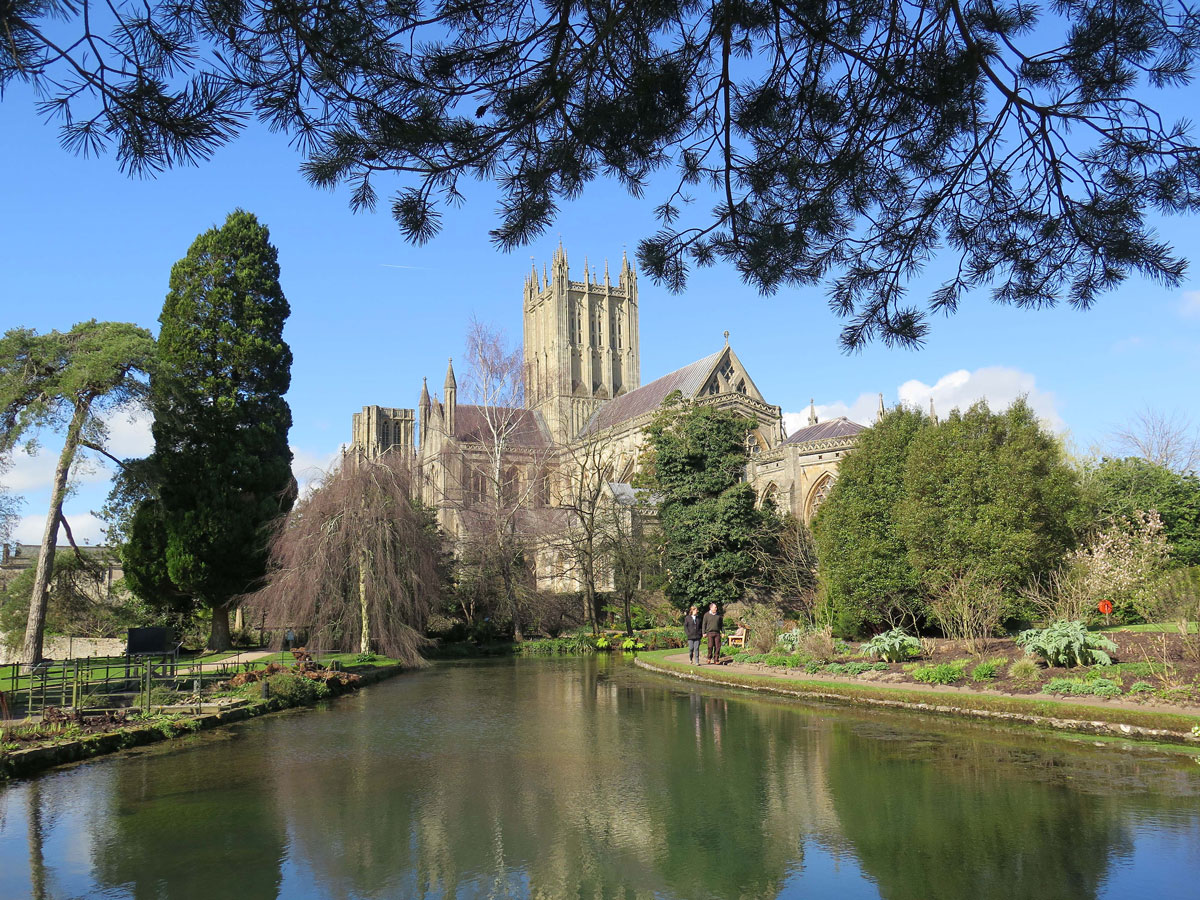
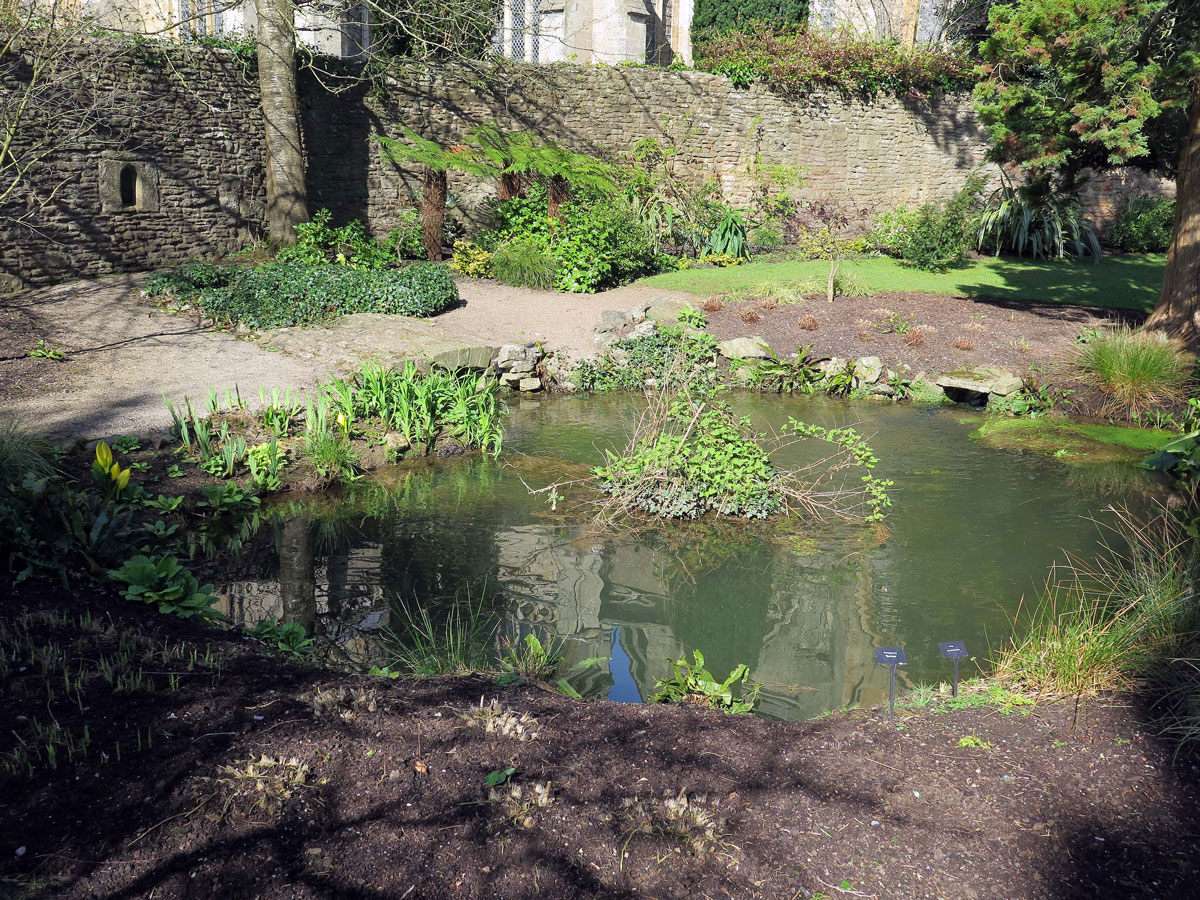
Not all the water from St Andrew’s Well runs away down through the Market Place, because thanks to Bishop George Henry Law, there is also a pool that makes an attractive feature of the Palace Gardens.

The Well Pool

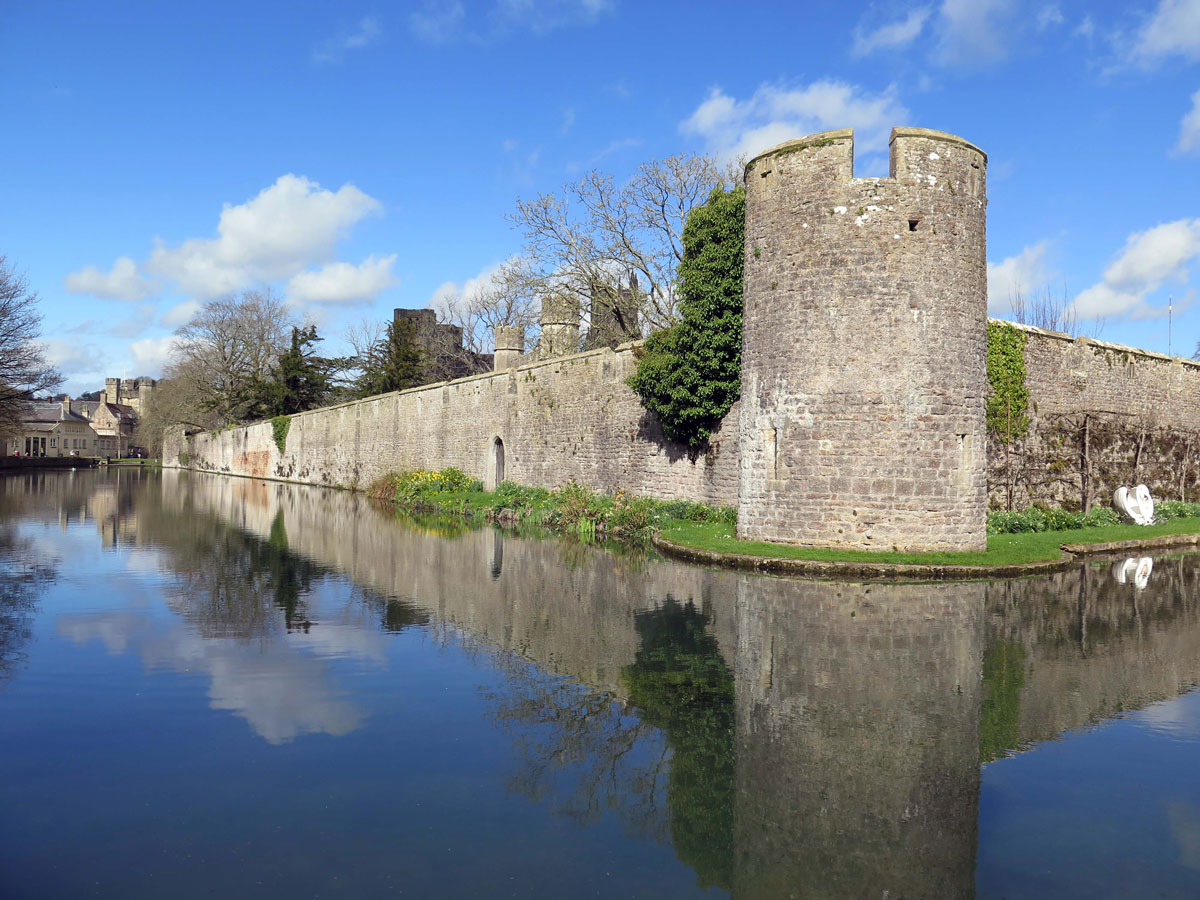
Building of the palace started around 1210 by Bishop Jocelin, but the 14th century saw a protective wall and gatehouse being added by Bishop Ralph of Shrewsbury who diverted some of the excess water into a moat around the palace.

Today, the water that feeds the moat is controlled by sluice gates and a small waterfall, but before I go any further, it’s worth reminding people that St Andrew’s Well, the Well Pool, and this part of the moat lie within the Palace Grounds and therefore requires an entrance fee, but in my opinion, a fee worth paying.

Where the Well Pool empties into the Moat

Having said that, the major part of the palace wall and moat lies outside of the palace grounds and so it’s not essential to visit the palace to see the moat.

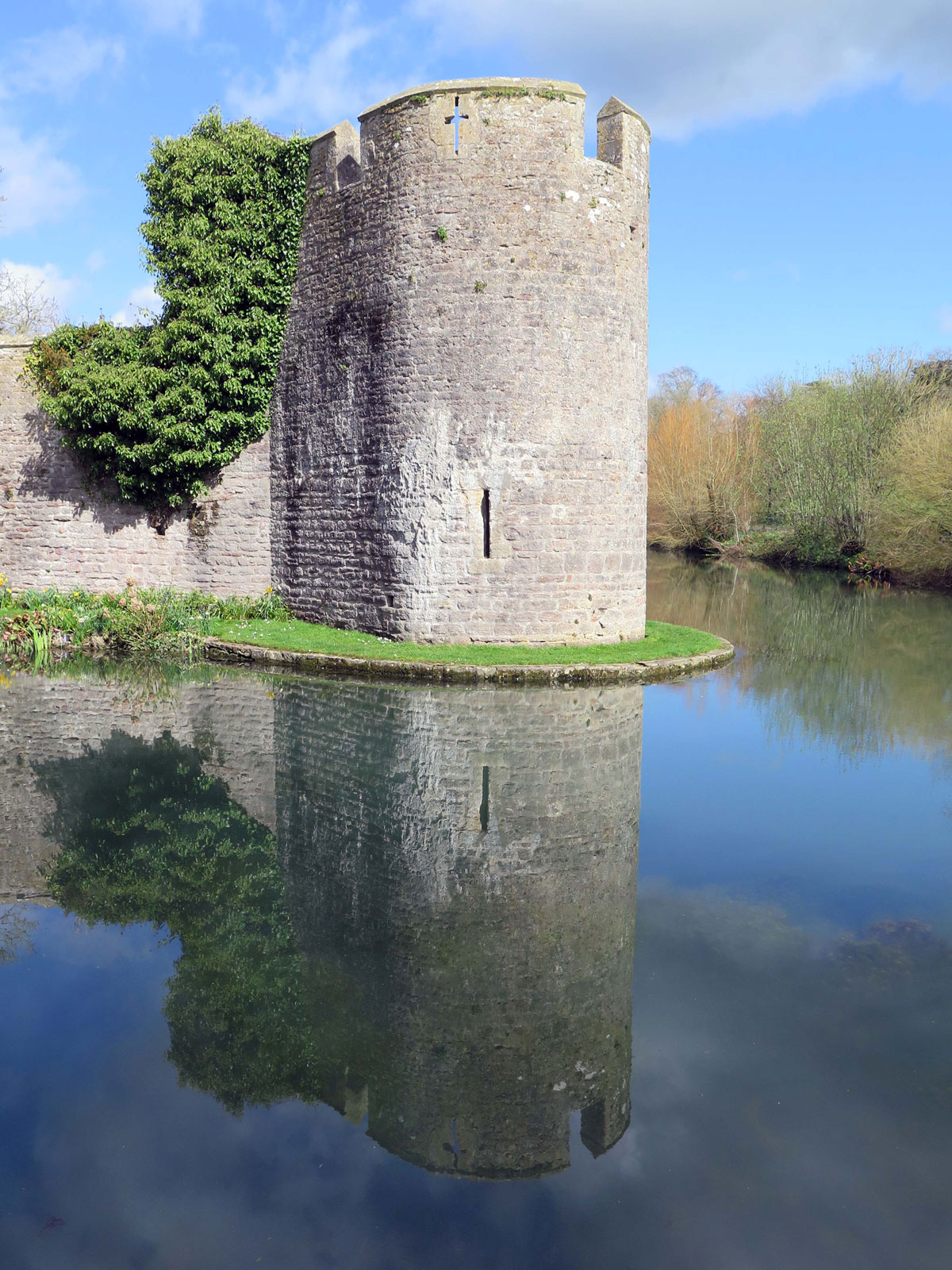
The Palace Moat and Protective Wall
The Southern Bastion
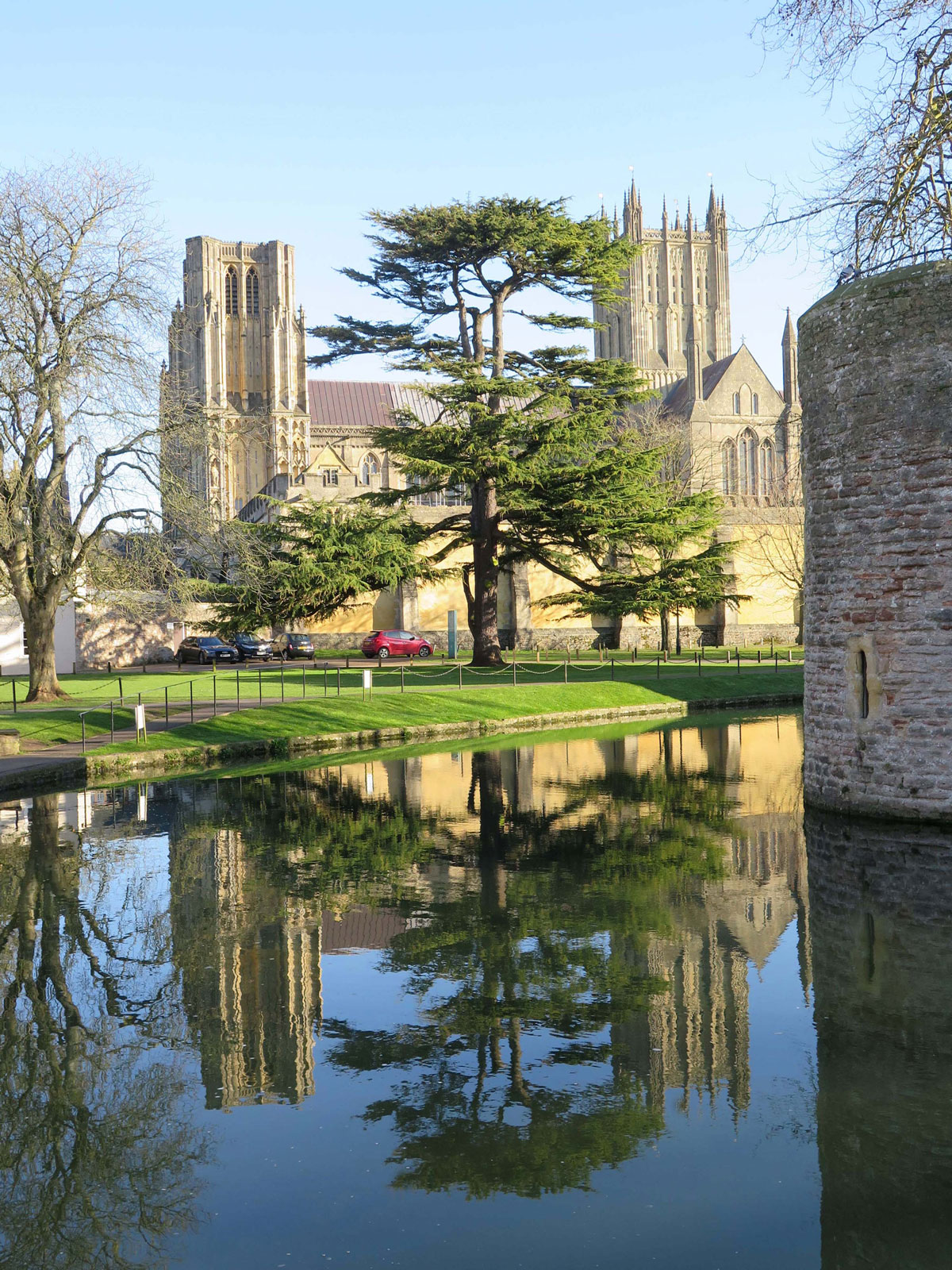
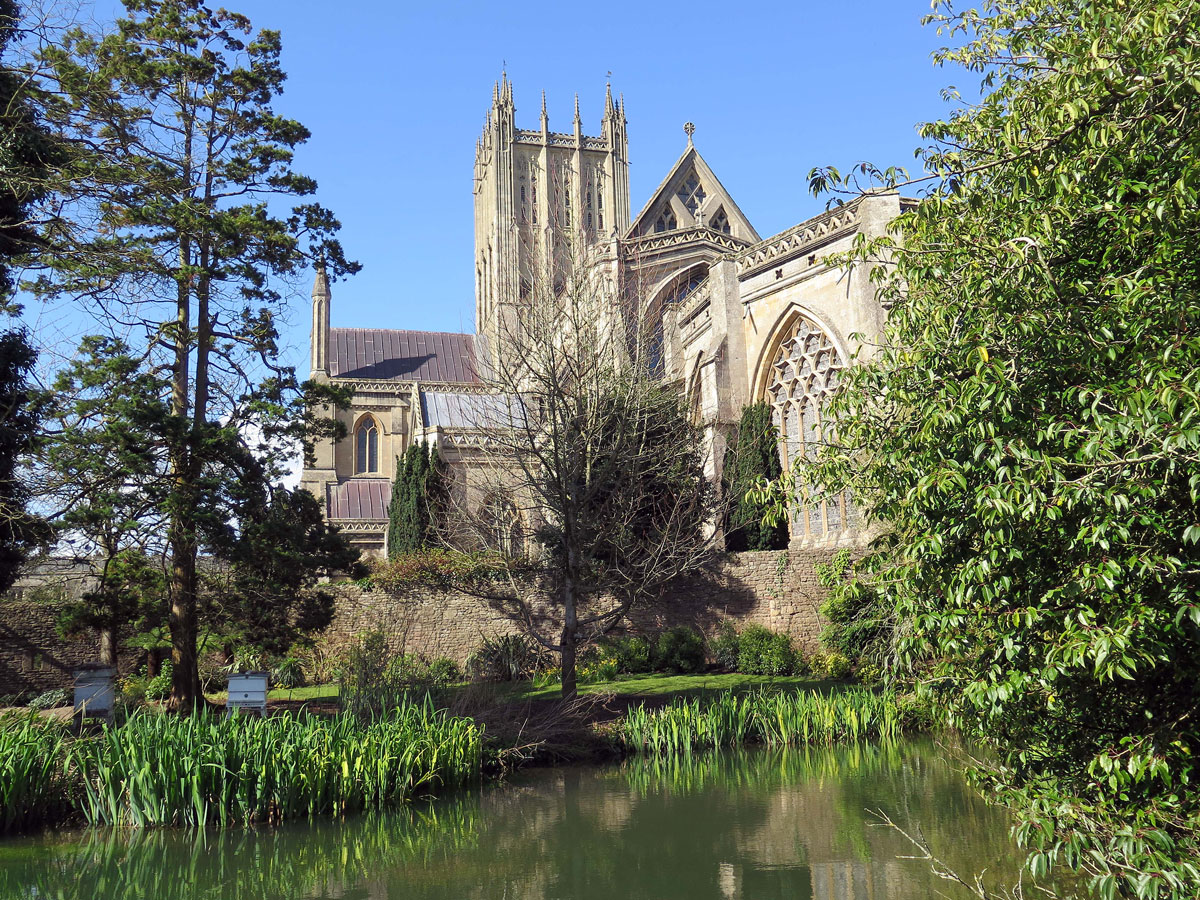
The Cathedral reflected in the Moat

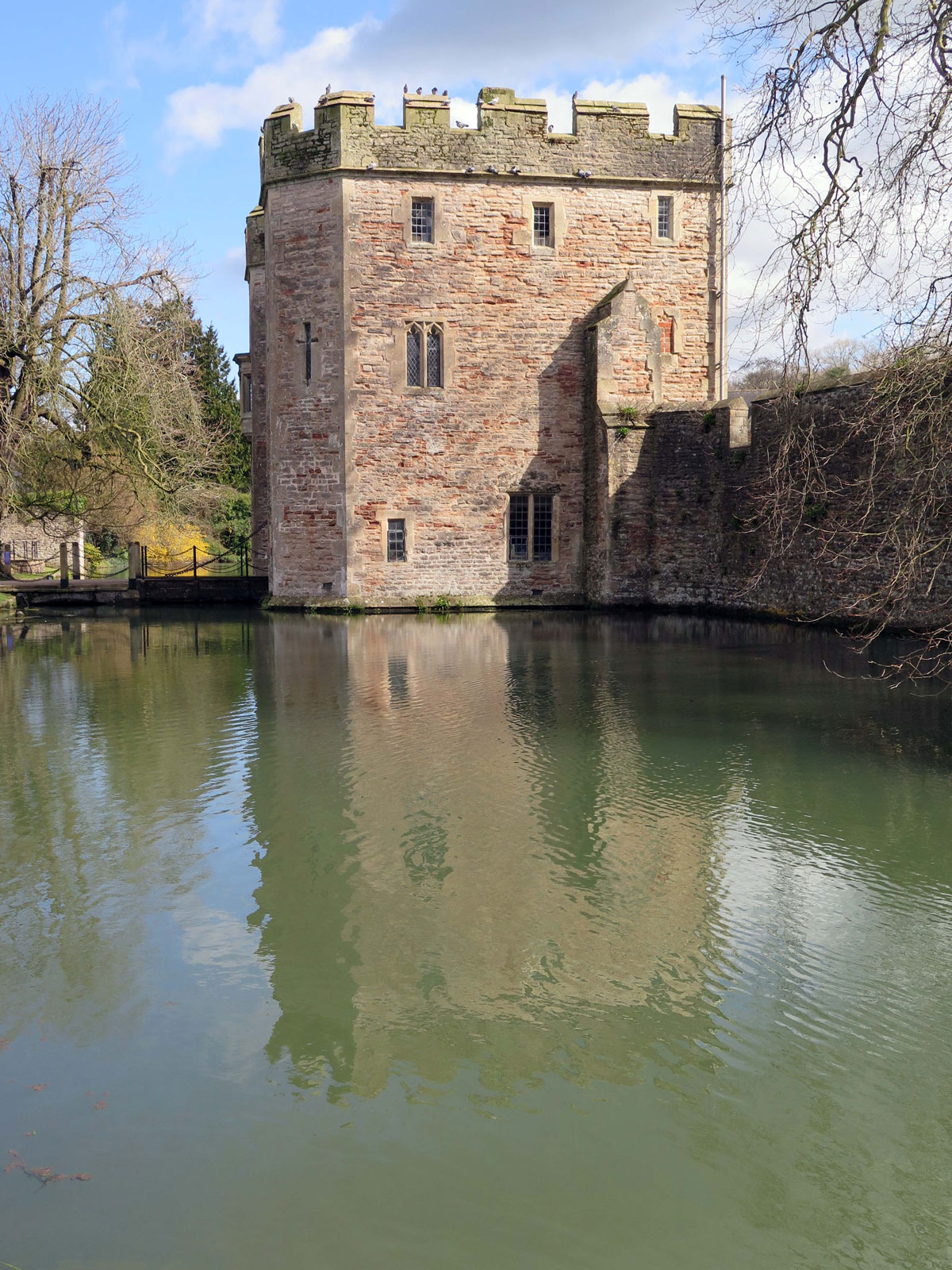
Entry to the palace is through Bishop Ralph’s 14th century gatehouse which was originally accessed over a drawbridge and through a portcullis, but make sure you check out the bell on the right hand wall first.

This bell has been in use since the 1850s when a Bishop’s daughter taught swans to ring the bell for food. She must have been a good teacher because they’re still doing it today. They’re not the same swans of course, but they’re a popular attraction and are sometimes seen wandering down through the market place to the fudge shop.

The Gatehouse
The Swan's Bell

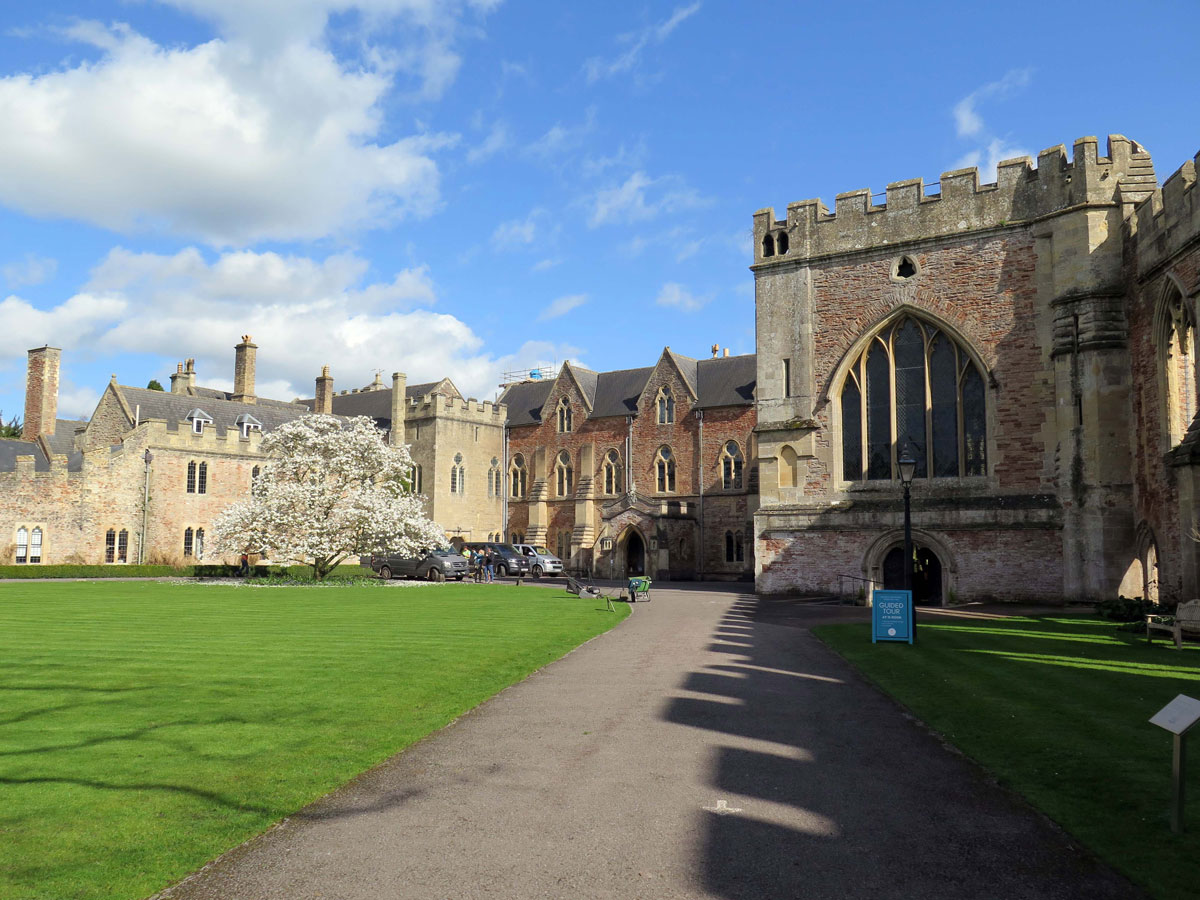
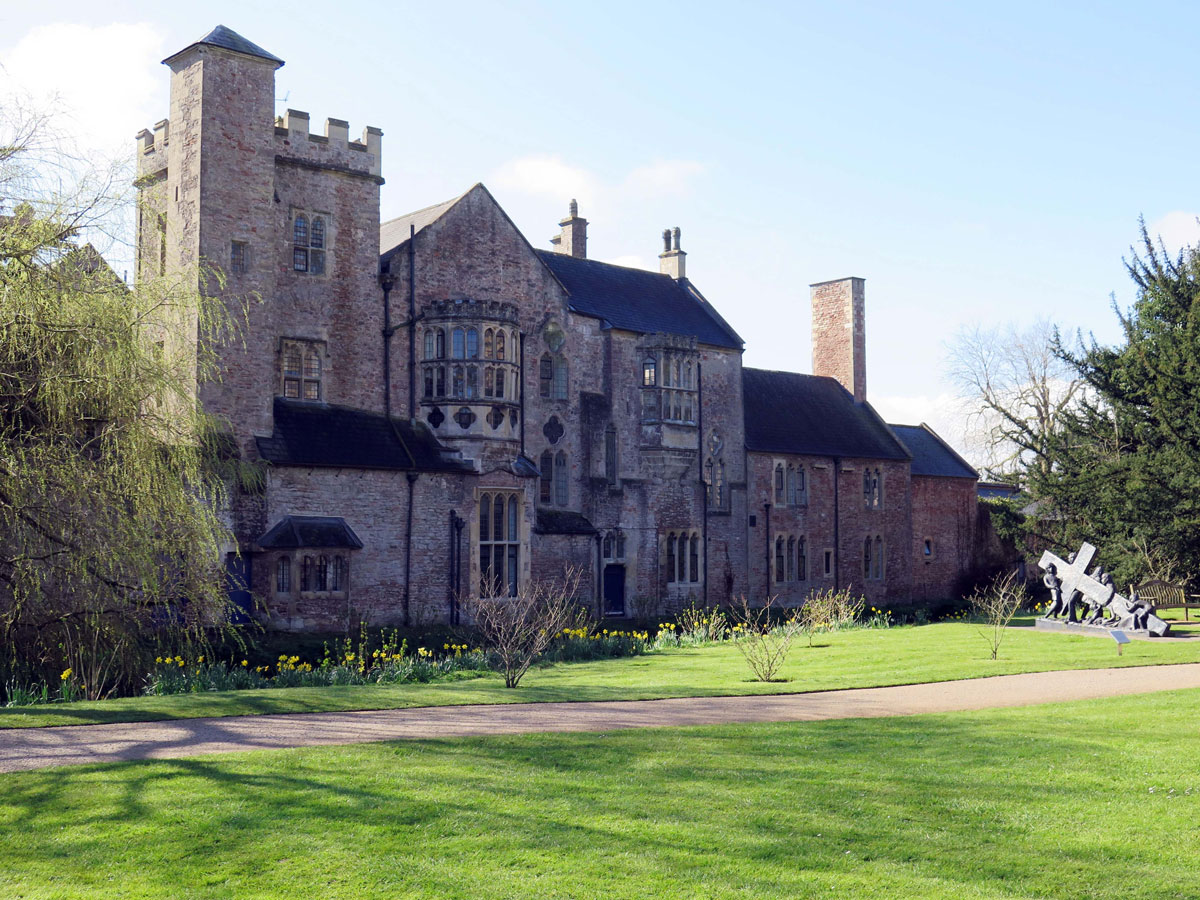
Inside the gatehouse, the Croquet Lawn occupies the large open space in front of the palace which is essentially in three parts. On the left is the Beckynton Range, built in the 15th century by Bishop Beckynton, and still the living quarters and offices of the current Bishop. Needless to say, this part of the palace is out of bounds to visitors, but the Jocelin Range at the far end isn’t.

From Left to Right - The Beckynton Range, Jocelin Range and Chapel

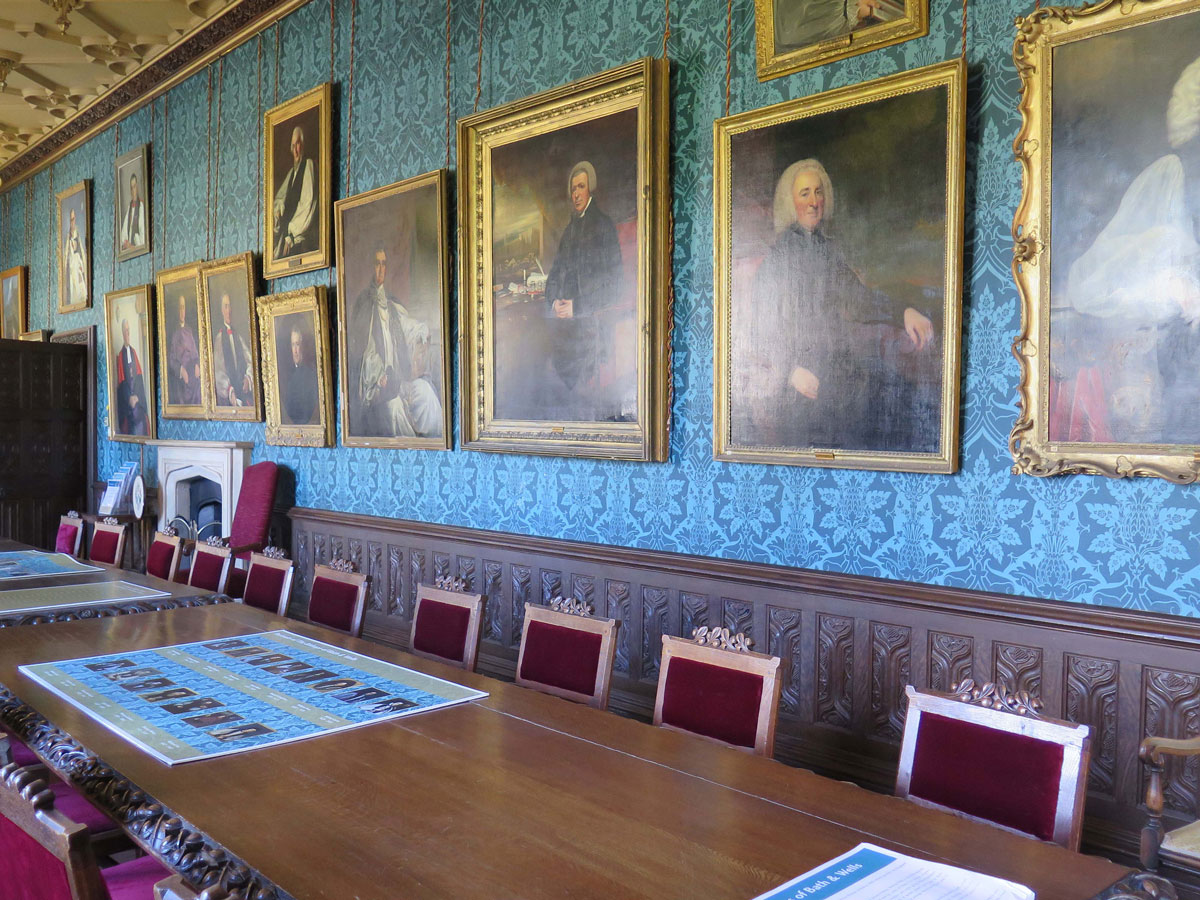
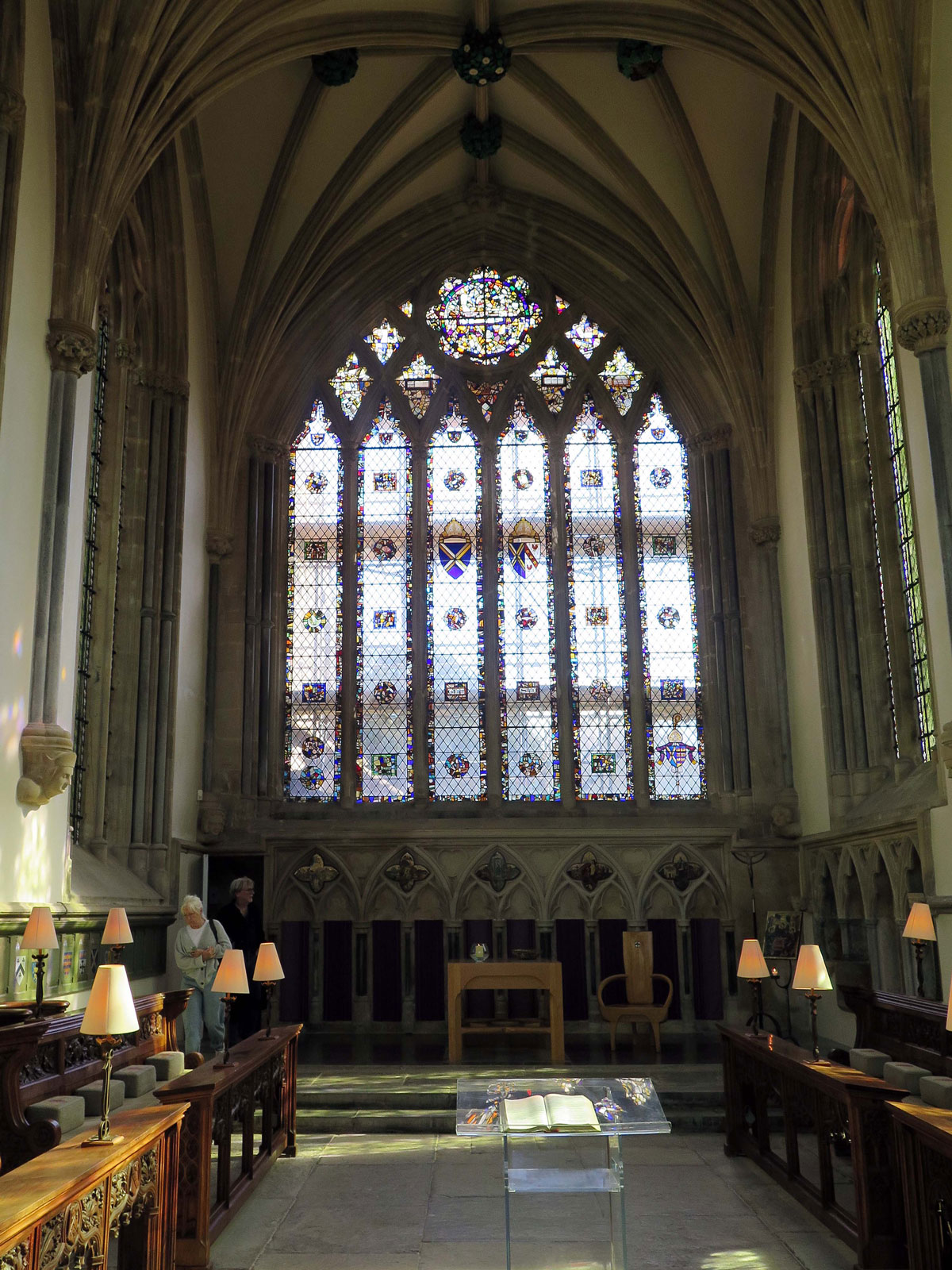
As the name implies, this is the oldest part of the palace where Bishop Jocelin began his building in 1210. There’s an undercroft, and rooms where Jocelin would have lived, as well as a Long Gallery with paintings of past Bishops and such like. To the right of the Jocelin Range is the 13th century chapel added by Bishop Robert Burnell, but I think it’s only fair to point out that for anyone used to visiting grand stately homes, I doubt that what you can see inside the palace will set your pulse racing.

The Long Gallery in the Jocelin Range
The Chapel

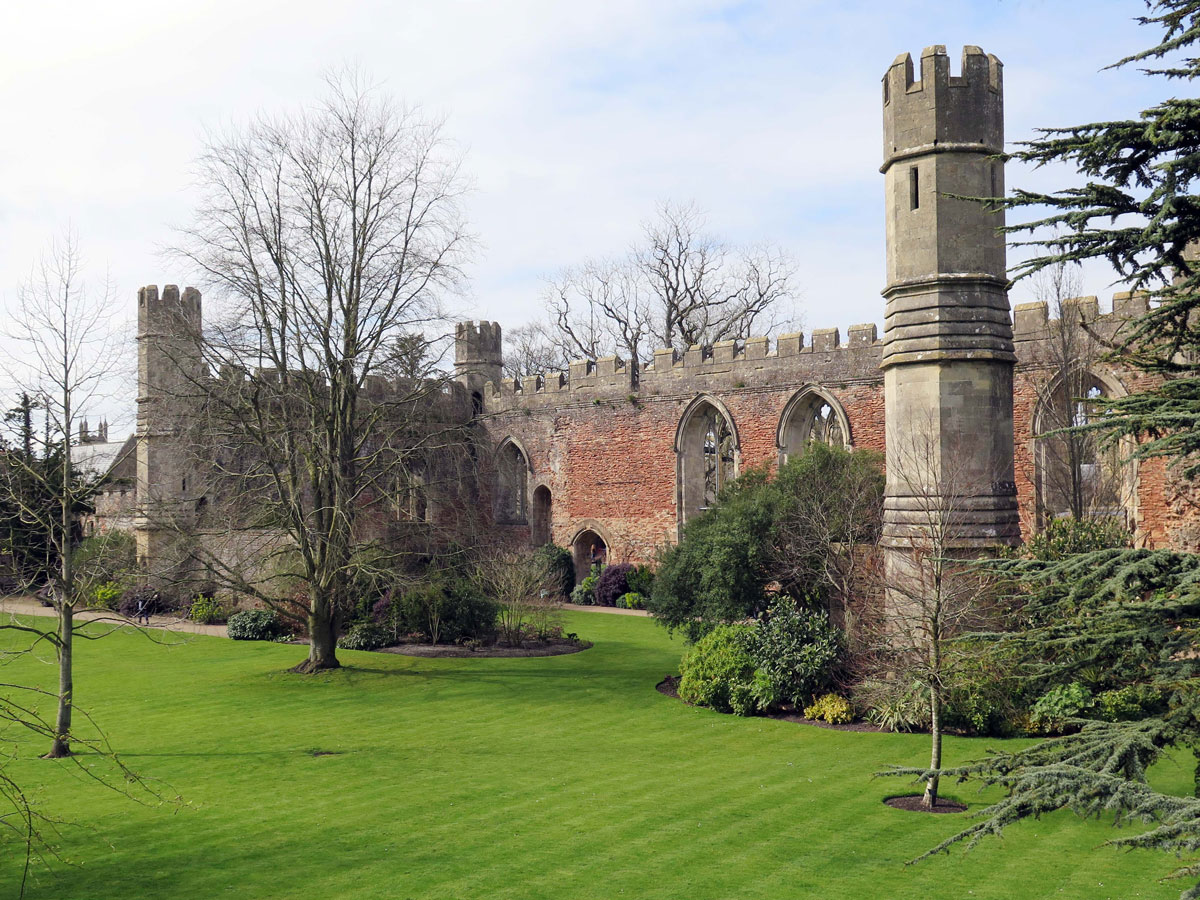
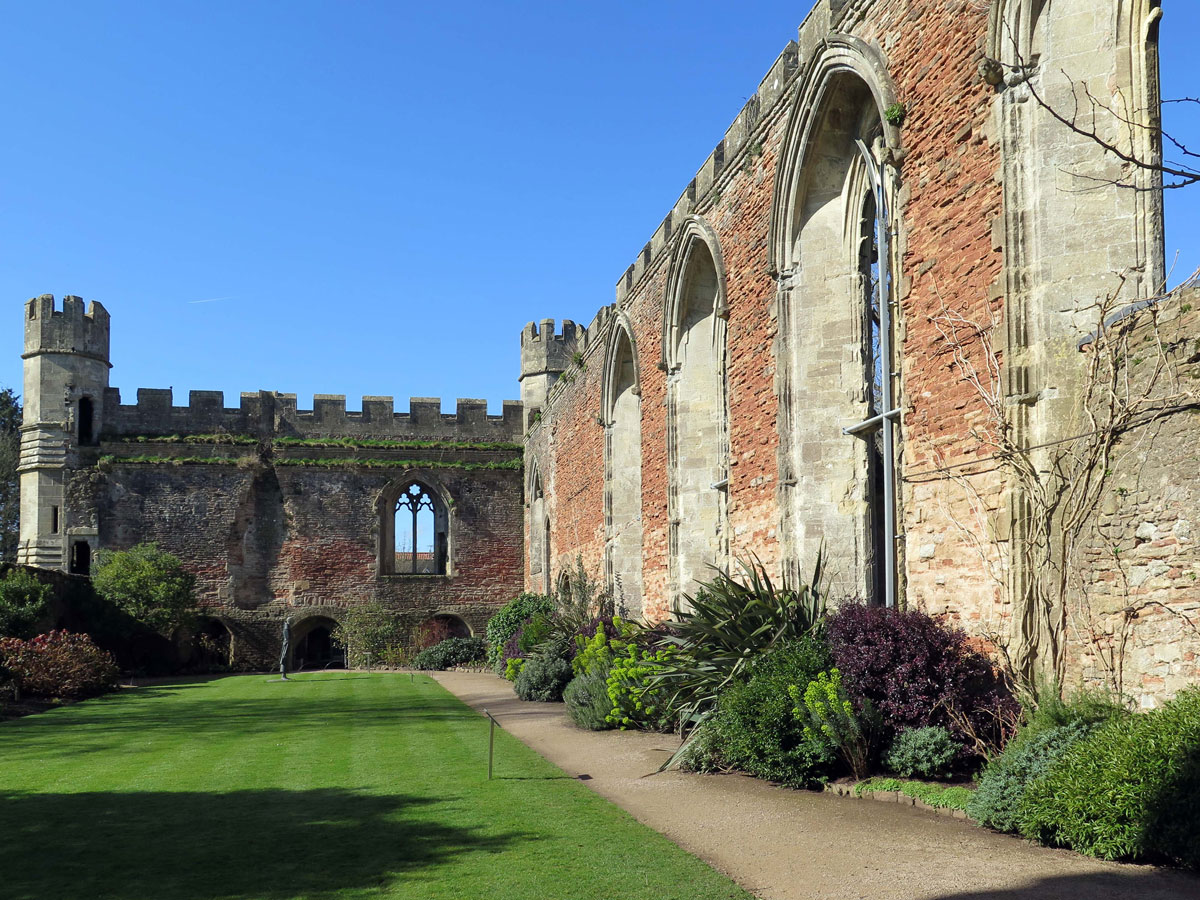
That said, the ruins and gardens of Bishop Burnell’s adjacent 13th Great Hall will go some way towards making up for any disappointment. I can imagine that the Great Hall would have fulfilled its official role admirably, but strangely enough, its part demolition around 1830, like many ruins do, has given it a more picturesque appearance than if it had remained intact.

The Remains of the Great Hall from the South Lawn
The Great Hall Gardens

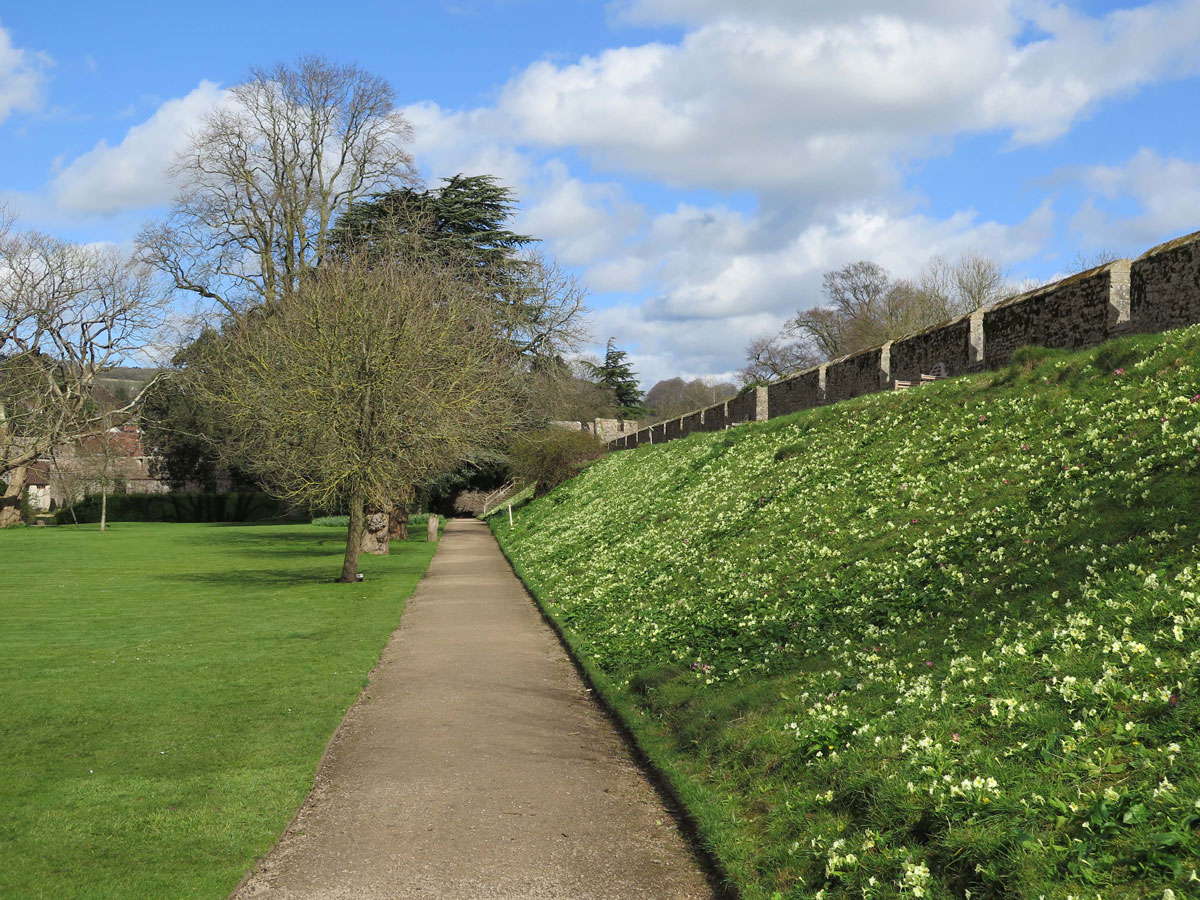
We can thank Bishop George Henry Law for how the gardens and lawns look today, and after a walk around the ramparts, you may want to take a look at the arboretum and perhaps stop for a picnic.

The Ramparts and South Lawn

Although I started this post by talking about the wells, they’re quite likely going to be the last part of your tour of the Bishop’s Palace, and to access them you need to walk around the back of the palace and cross the bridge over the moat near the Beckynton Range.

The Beckynton Range across the Moat from the Well Pool

How long you spend wandering around the Bishop’s Palace is entirely up to you, but if your time is limited, then bear in mind that although Wells is England’s smallest city, there’s plenty more to see, and that includes the magnificent cathedral – which I’ll be exploring in the next post.

POSTED – SEPTEMBER 2025

Originally posted 2025-09-16 16:32:35.

The post Wells – England’s ‘Smallest’ City – The Bishop’s Palace appeared first on Easymalc's Wanderings.

]]>
https://www.easymalc.co.uk/wells-englands-smallest-city-pt-1-the-bishops-palace/feed/ 19 22853