Warning: Creating default object from empty value in /home/sites/30b/a/a8be13db6d/public_html/wp-content/plugins/zanmb/reduxframework/ReduxCore/inc/class.redux_filesystem.php on line 29

Warning: Cannot modify header information - headers already sent by (output started at /home/sites/30b/a/a8be13db6d/public_html/wp-content/plugins/zanmb/reduxframework/ReduxCore/inc/class.redux_filesystem.php:29) in /usr/share/php/wp-stack-cache.php on line 1971

Warning: Cannot modify header information - headers already sent by (output started at /home/sites/30b/a/a8be13db6d/public_html/wp-content/plugins/zanmb/reduxframework/ReduxCore/inc/class.redux_filesystem.php:29) in /usr/share/php/wp-stack-cache.php on line 1972

Warning: Cannot modify header information - headers already sent by (output started at /home/sites/30b/a/a8be13db6d/public_html/wp-content/plugins/zanmb/reduxframework/ReduxCore/inc/class.redux_filesystem.php:29) in /usr/share/php/wp-stack-cache.php on line 1973

Warning: Cannot modify header information - headers already sent by (output started at /home/sites/30b/a/a8be13db6d/public_html/wp-content/plugins/zanmb/reduxframework/ReduxCore/inc/class.redux_filesystem.php:29) in /usr/share/php/wp-stack-cache.php on line 1971

Warning: Cannot modify header information - headers already sent by (output started at /home/sites/30b/a/a8be13db6d/public_html/wp-content/plugins/zanmb/reduxframework/ReduxCore/inc/class.redux_filesystem.php:29) in /usr/share/php/wp-stack-cache.php on line 1972

Warning: Cannot modify header information - headers already sent by (output started at /home/sites/30b/a/a8be13db6d/public_html/wp-content/plugins/zanmb/reduxframework/ReduxCore/inc/class.redux_filesystem.php:29) in /usr/share/php/wp-stack-cache.php on line 1973

Warning: Cannot modify header information - headers already sent by (output started at /home/sites/30b/a/a8be13db6d/public_html/wp-content/plugins/zanmb/reduxframework/ReduxCore/inc/class.redux_filesystem.php:29) in /home/sites/30b/a/a8be13db6d/public_html/wp-includes/feed-rss2.php on line 8
Lisbon – Easymalc's Wanderings https://www.easymalc.co.uk I’d be unstoppable if only I could get started Sun, 07 Dec 2025 10:32:39 +0000 en-GB hourly 1 https://wordpress.org/?v=7.0.4 https://www.easymalc.co.uk/wp-content/uploads/2019/09/cropped-easy-malc-logo-32x32.jpg Lisbon – Easymalc's Wanderings https://www.easymalc.co.uk 32 32 140253175 Sintra’s Pena Palace https://www.easymalc.co.uk/sintras-pena-palace/ https://www.easymalc.co.uk/sintras-pena-palace/#comments Sun, 07 Dec 2025 10:32:39 +0000 https://www.easymalc.co.uk/?p=20861 Originally posted 2024-07-31 12:58:45.

The post Sintra’s Pena Palace appeared first on Easymalc's Wanderings.

]]>

Sintra's Pena Palace

Sintra is around a 45 minute train journey north of Lisbon and is a popular destination for many tourists – too many it would seem these days, but when we came here back in March 2008 it wasn’t quite like that. In actual fact, we weren’t staying in Portugal’s capital, but in Cascais, a town along the coast also around a 45 minute train ride from Lisbon. Consequently, it didn’t make any sense to go into the city and travel to Sintra from there, so we opted for a white knuckle bus ride from Cascais instead.

Being on UNESCO’s list of World Heritage Sites, Sintra has a good number of interesting cultural attractions to occupy your time, but as there were only a handful of buses that ran between the two towns each day, we needed to be conscious of the time factor, especially as the last bus left at 4.30 in the afternoon. Under the circumstances, it was fairly obvious that we should concentrate on the most obvious landmark – the Pena Palace, one of the Seven Wonders of Portugal.

After just managing to survive the journey without having to look for a sick bag, we were dropped off at Sintra railway station where the #434 bus begins a circular tour of the town via the Pena Palace. It’s a really useful way of getting around and far more useful than the woman in the bus station office. In actual fact, we didn’t get off to a very good start at all because no sooner had the bus left it turned around and went back to the railway station. Just as we thought, the bus was playing up, but the driver eventually carried on anyway – or at least as far as a hairpin bend on the hill climbing up towards the palace. To cut a long story short, we were told to get off and walk the rest of the way. Some did – but we didn’t, which was just as well because another bus turned up not long afterwards and we squeezed on there.
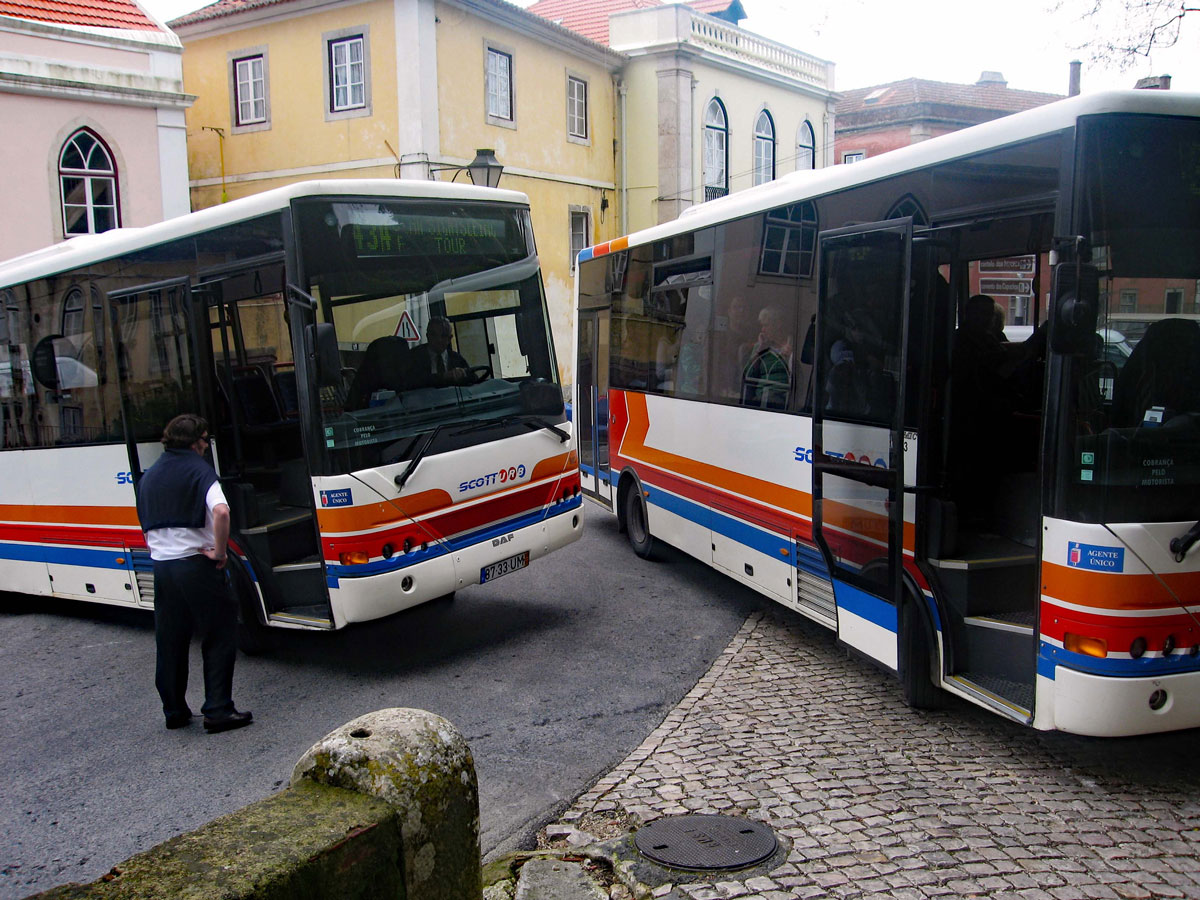
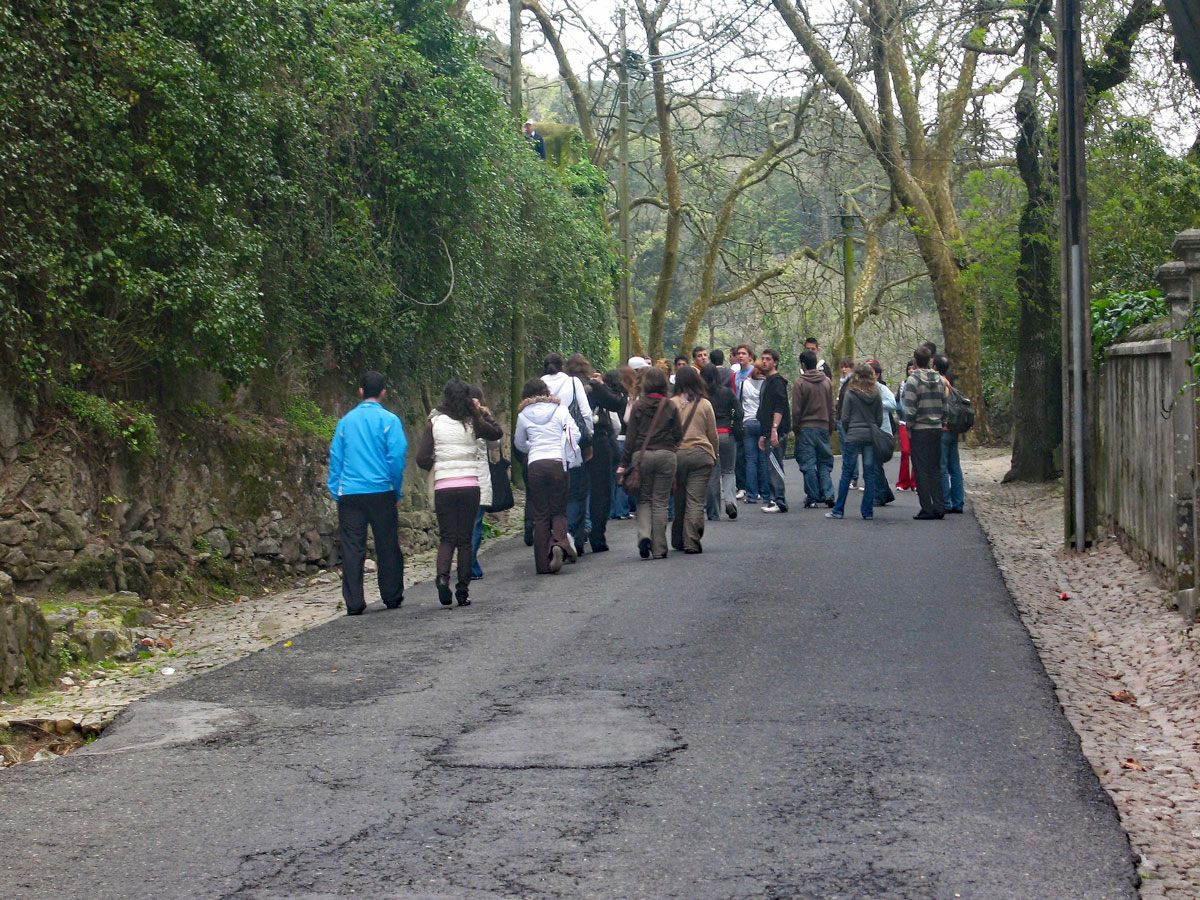
Our Broken-down Bus and the Replacement

As we passed the walkers struggling for breath as they walked up the hill I felt vindicated for bottling out, especially as they still had a long way to go. When the bus did eventually get us to the top I could immediately see that it had been worth all the effort. Whether the walkers felt the same I wouldn’t like to say.

Some got off and Walked
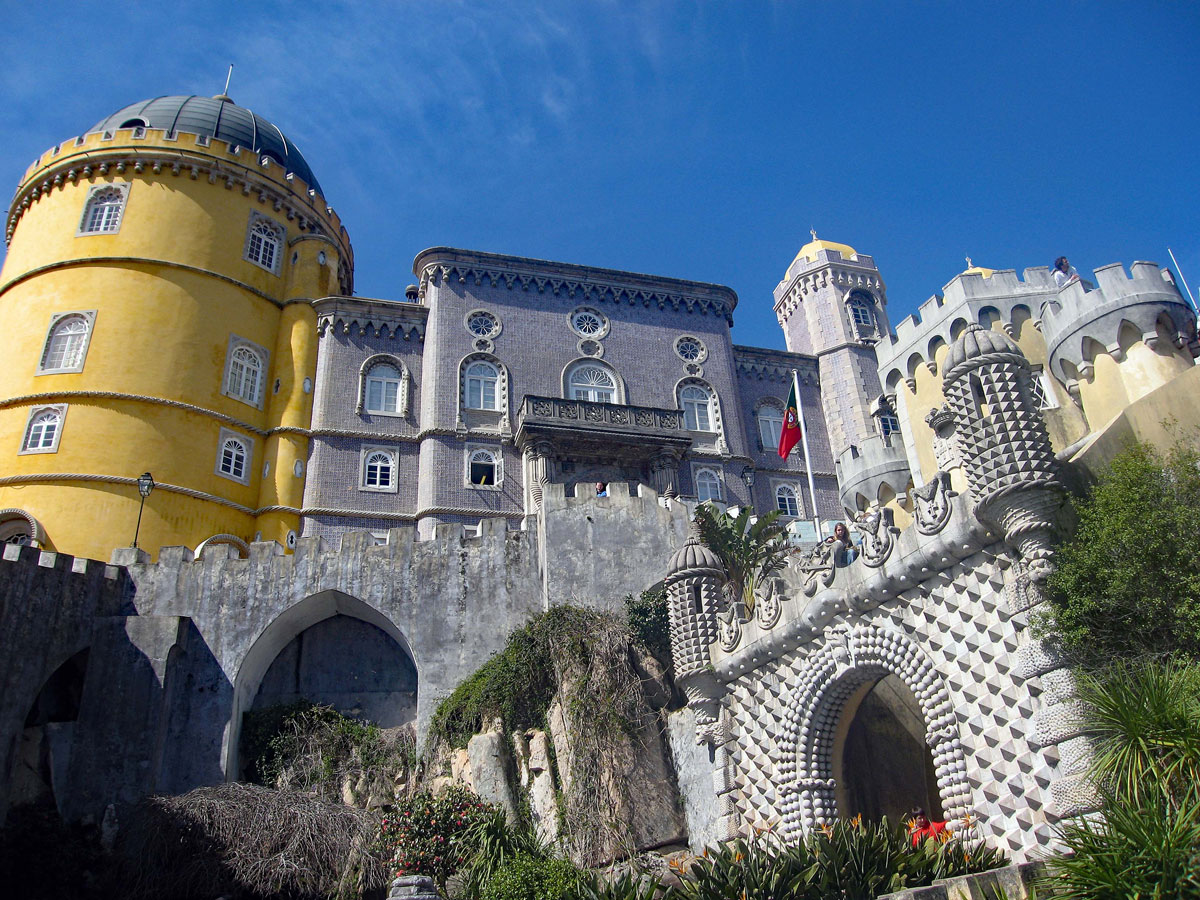
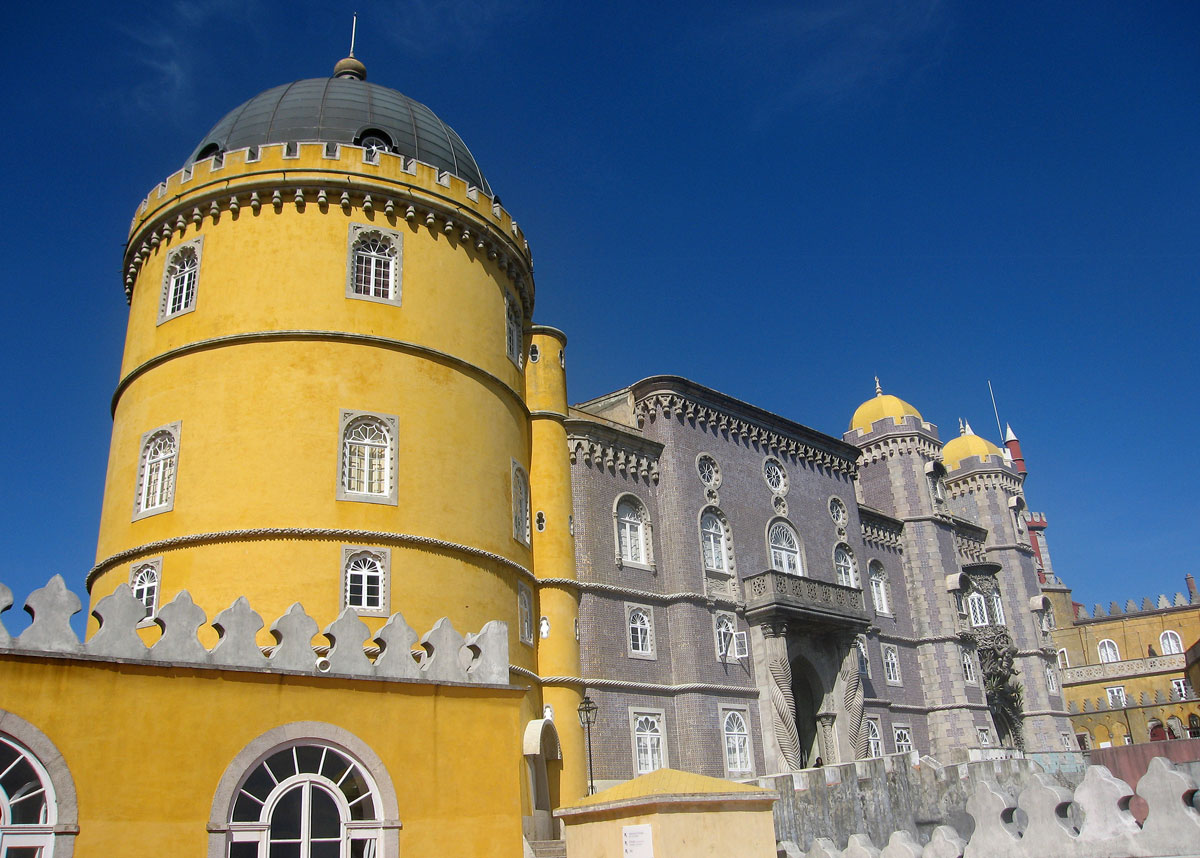
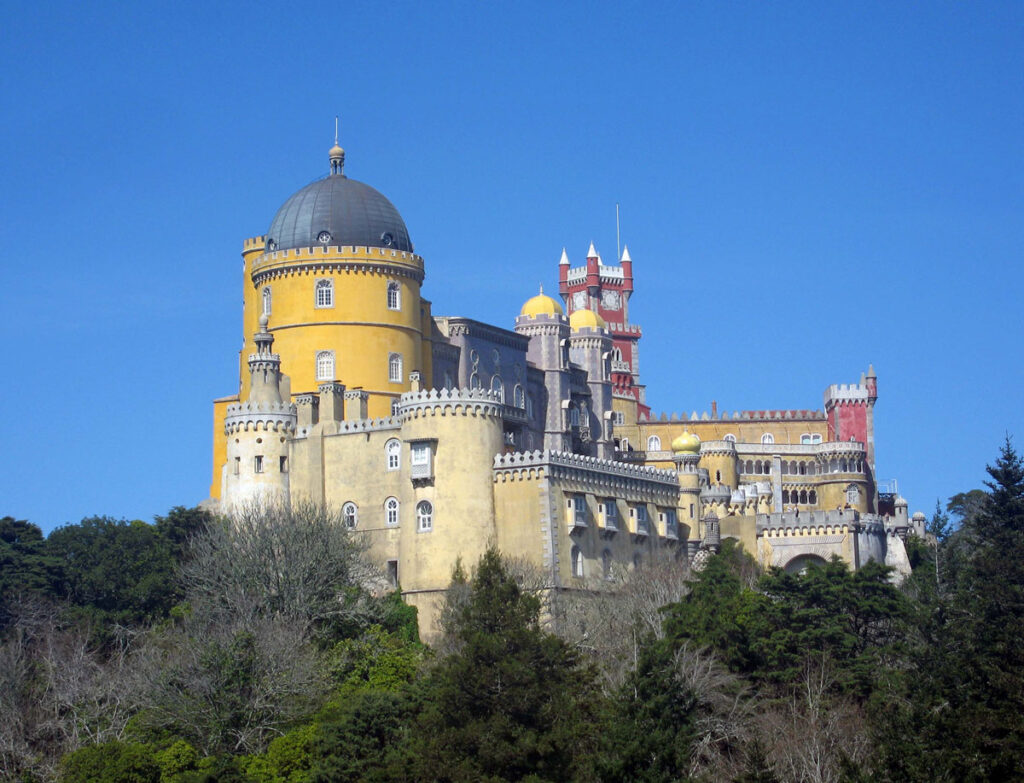
Approaching the Palace

Those who have an interest in Portuguese royal family history will probably get more from a visit here than those of us who just want to marvel at the architecture, but that said, it still helps to have at least a basic understanding of how the palace came about.

The story begins in the Middle Ages when according to legend, a simple chapel was built on this spot during the reign of King John I after a visit by the Virgin Mary – not a personal visit of course, but as an apparition. Dedicated to Our Lady of Pena, the chapel was given more reverence by John II who, in 1493, fulfilled a vow to visit the site. The religious significance of the site was enhanced even further during the reign of Manuel I (r.1495-1521) when the chapel was replaced by a monastery that became a place of peaceful meditation until it was reduced to rubble during the devastating earthquake of 1755.

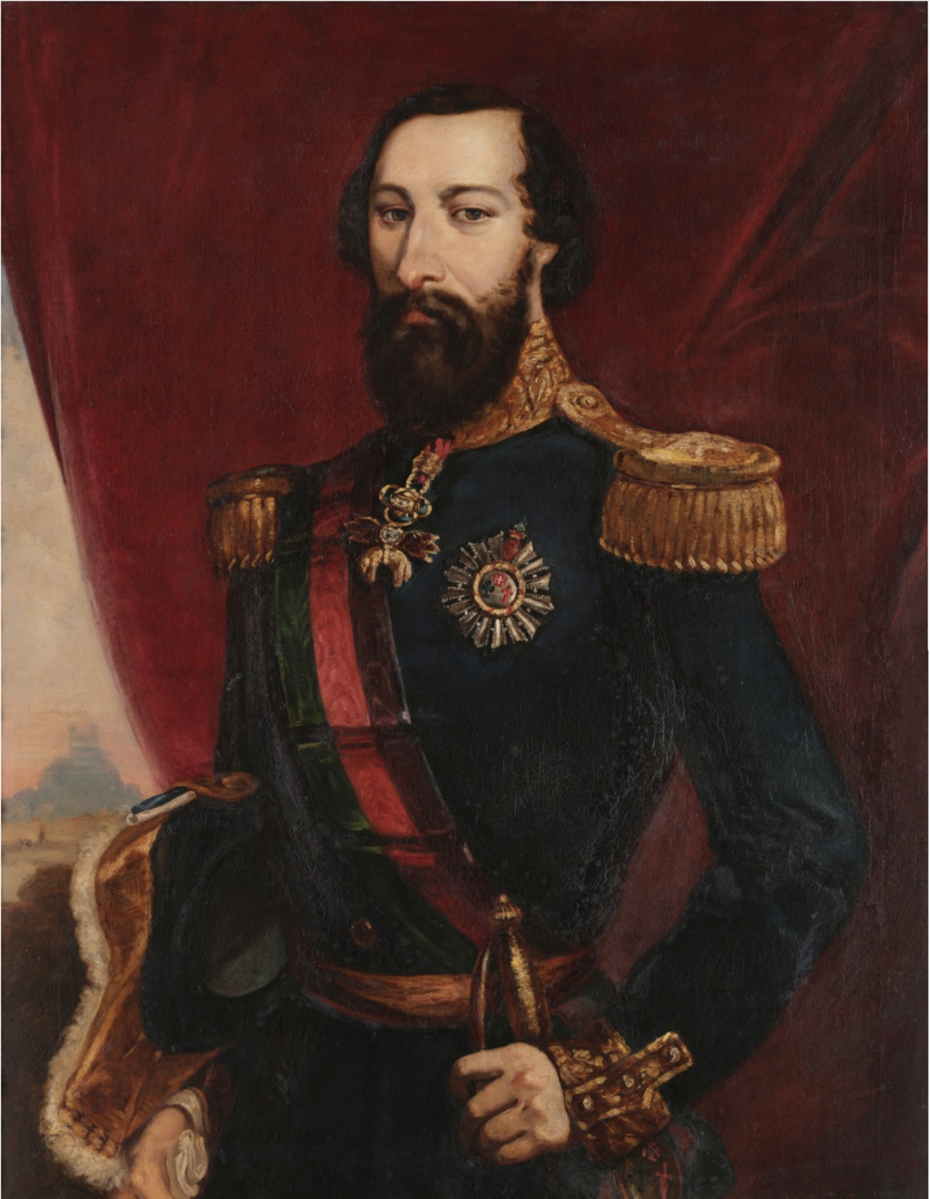
The monastery, although not completely abandoned, lay in ruins until Portugal’s Queen Maria II married Prince Ferdinand of Saxe-Coburg-Gotha in 1836. The artistically minded King consort became extremely fond of the landscape around Sintra, especially the spot where the ruins of the former monastery and nearby Castle of the Moors looked down from the hills above. In fact, he was so enchanted with the location, that two years later he decided to buy the estate with a view to restoring the monastery that would provide a palace fit for a queen – or at least, a King consort.

King Ferdinand II (Wikimedia Commons)

The person given the job of creating Ferdinand’s dream palace was a German mining engineer/amateur architect called Wilhelm Ludwig von Eschwege. Starting work in 1842, he wasn’t completely left to run amok with his pencil and set square as the king and queen were keen to implement some of their own ideas, and that included using some of the remains from the old monastery.

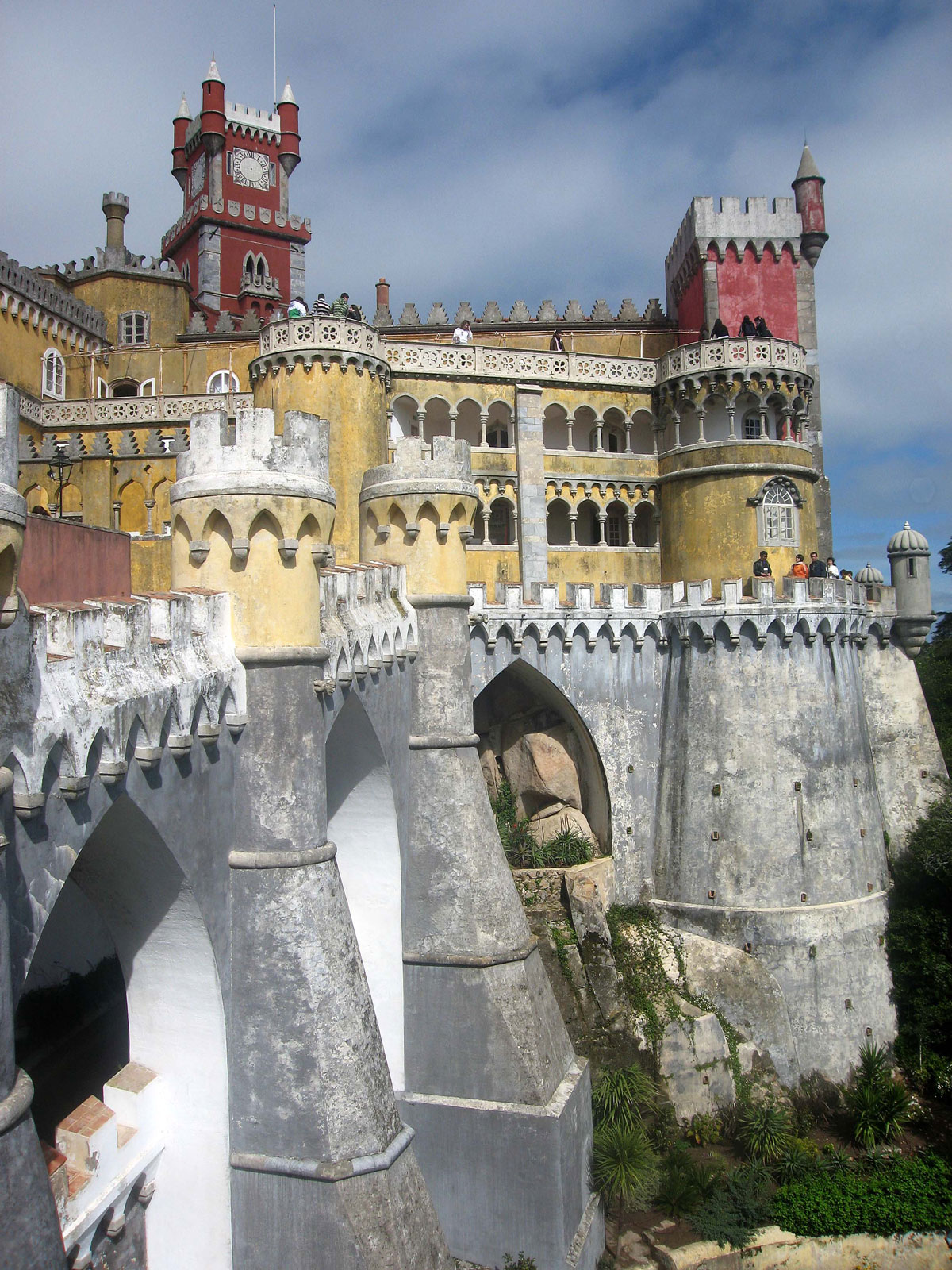
The Monastery after the 19th Century Conversion

Although Maria II was the rightful queen of Portugal, the royal household was run practically as a joint monarchy, especially during Maria’s numerous pregnancies when Ferdinand took over the royal duties, and it was due to complications during the birth of her eleventh child that Maria’s life came to an end – and so therefore did the reign of King Ferdinand II.

In 1869 Ferdinand morganatically married a singer called Elisa Hensler (who later took the title of Countess of Edla). Don’t worry, I had to look that word up too. It’s used largely in German-speaking countries and basically means a socially unequal relationship, which in the case of royalty like Ferdinand, meant that none of his privileges could be passed on to his wife or any of their children. Consequently, they lived  discreetly together at the palace until the ex-king died in 1885. They didn’t have any children anyway, and when the palace passed into Elisa’s possession she sold it to King Luis I who was keen to see the palace back in the family’s hands – but it wasn’t to stay in their hands for too much longer.

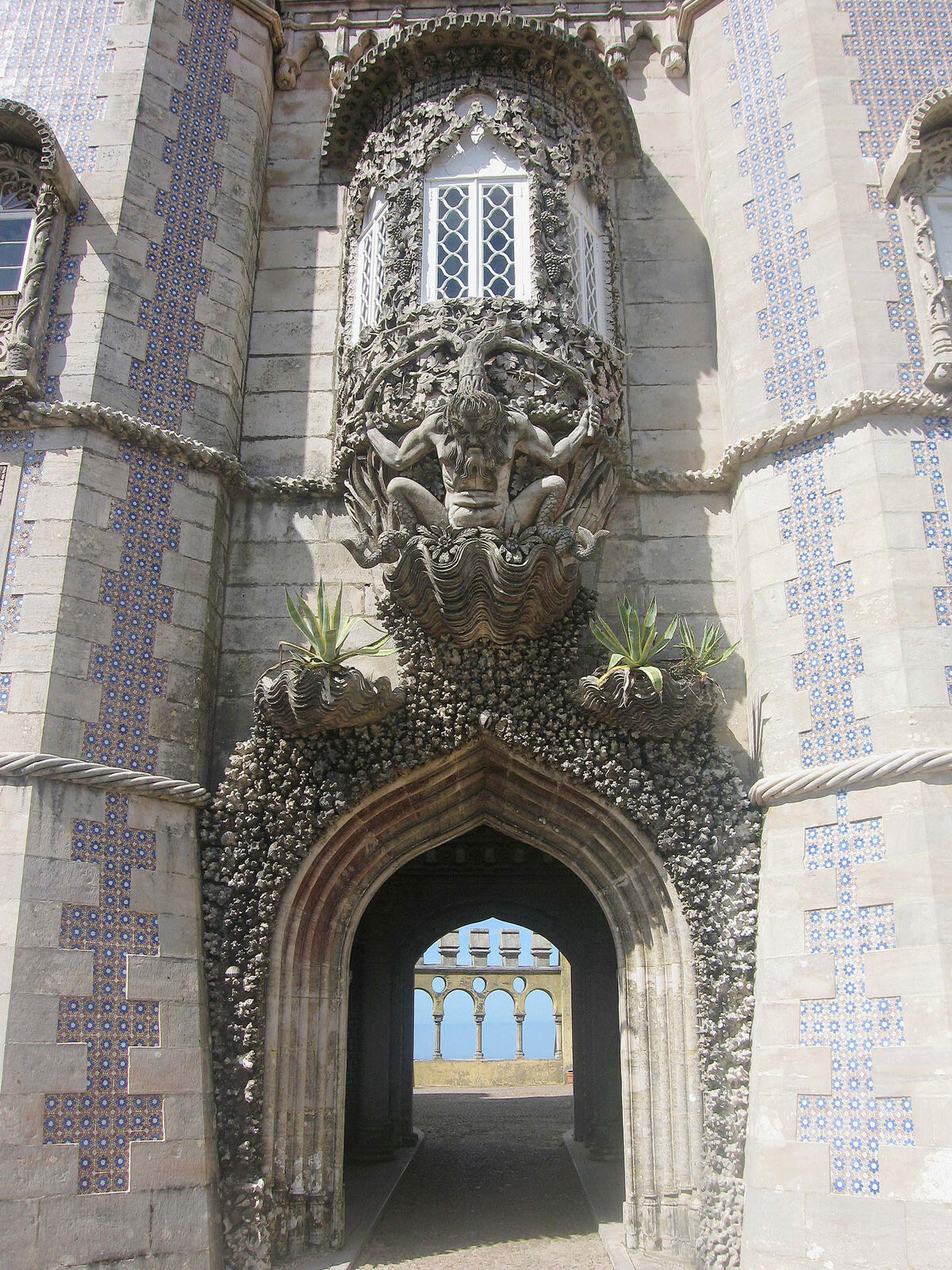
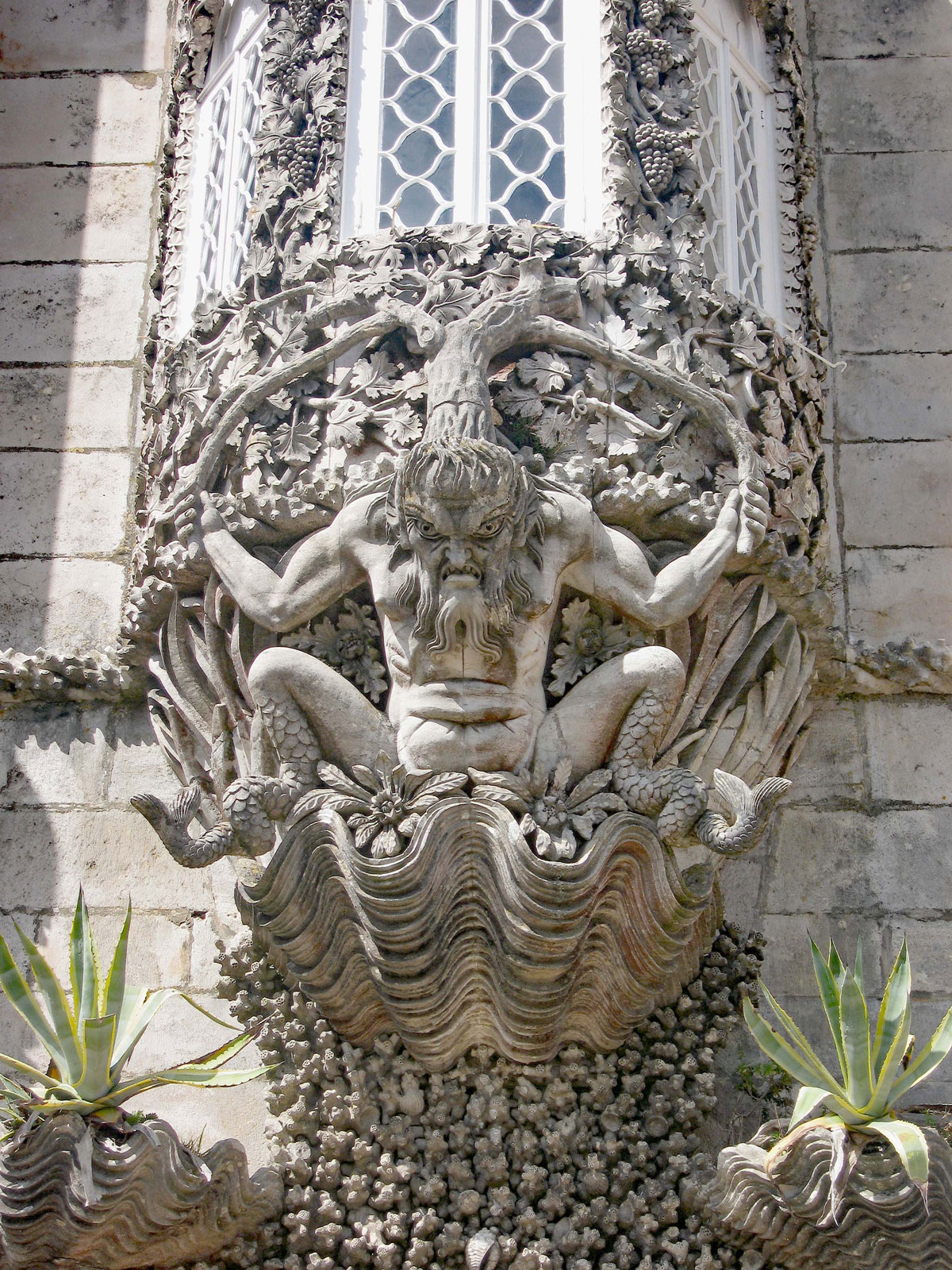
The Triton Gateway
The Triton Gateway
08
The Great Hall

The beginning of the 20th century saw Portugal facing a mountain of problems, and it was the monarchy that took the blame. On 1st February 1908, while arriving back in Lisbon from Alentejo, King Carlos I and his heir were assassinated by two republican activists and the country was thrown into chaos. The king’s second son Manuel II, took over at the helm but was young and inexperienced, and on 5th October 1910 the monarchy was overthrown and the country became a republic – which it still is today.

After the revolution, the palace was classified as a national monument and opened up to the general public. Ironically, the state is now responsible for looking after this former royal palace and has become one of the country’s top major attractions.

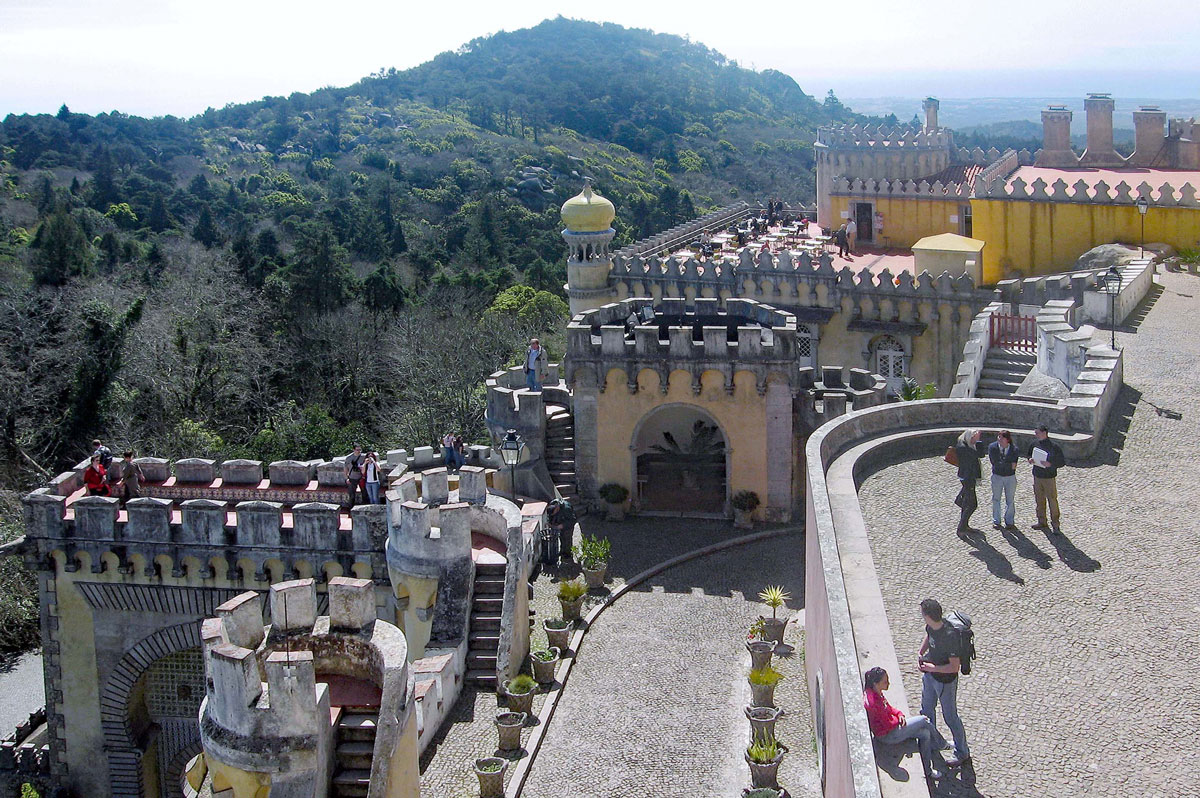
View from the Queen's Terrace

Now that I’ve explained some of the background history, you’ll want to know what there is to see, but to answer that question there are some practicalities to consider. Since we were here, the number of visitors has increased dramatically, and so a different ticketing system has been introduced.

To visit the outside terraces and inside of the castle requires a combined timed ticket (€10 as of July 2024), and you will also need a separate ticket if you want to visit the park (non-timed and also €10), but apparently even this has only had a limited amount of success, so based on my own experience back in 2008 and what people are saying about their experience now, I think I would recommend coughing up €20 for the full monty, but just visit the outside terraces and park. In other words, skip “shuffling in a human traffic jam” around the inside, which it has to be said, is only moderately interesting anyway, and photography isn’t allowed either. Also bear in mind that the time spent inside the palace is time you can’t spend elsewhere. Just my opinion of course.

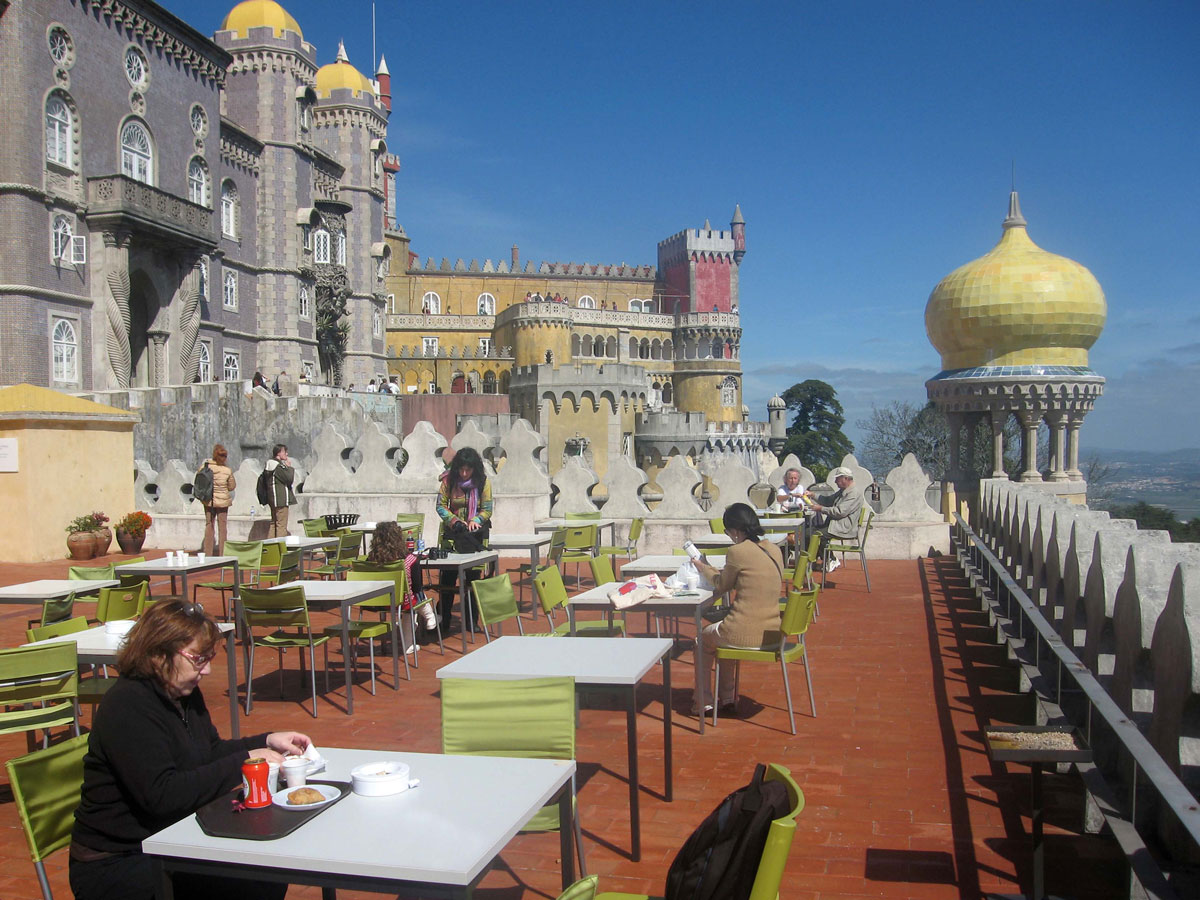
Great Place for a Pit Stop
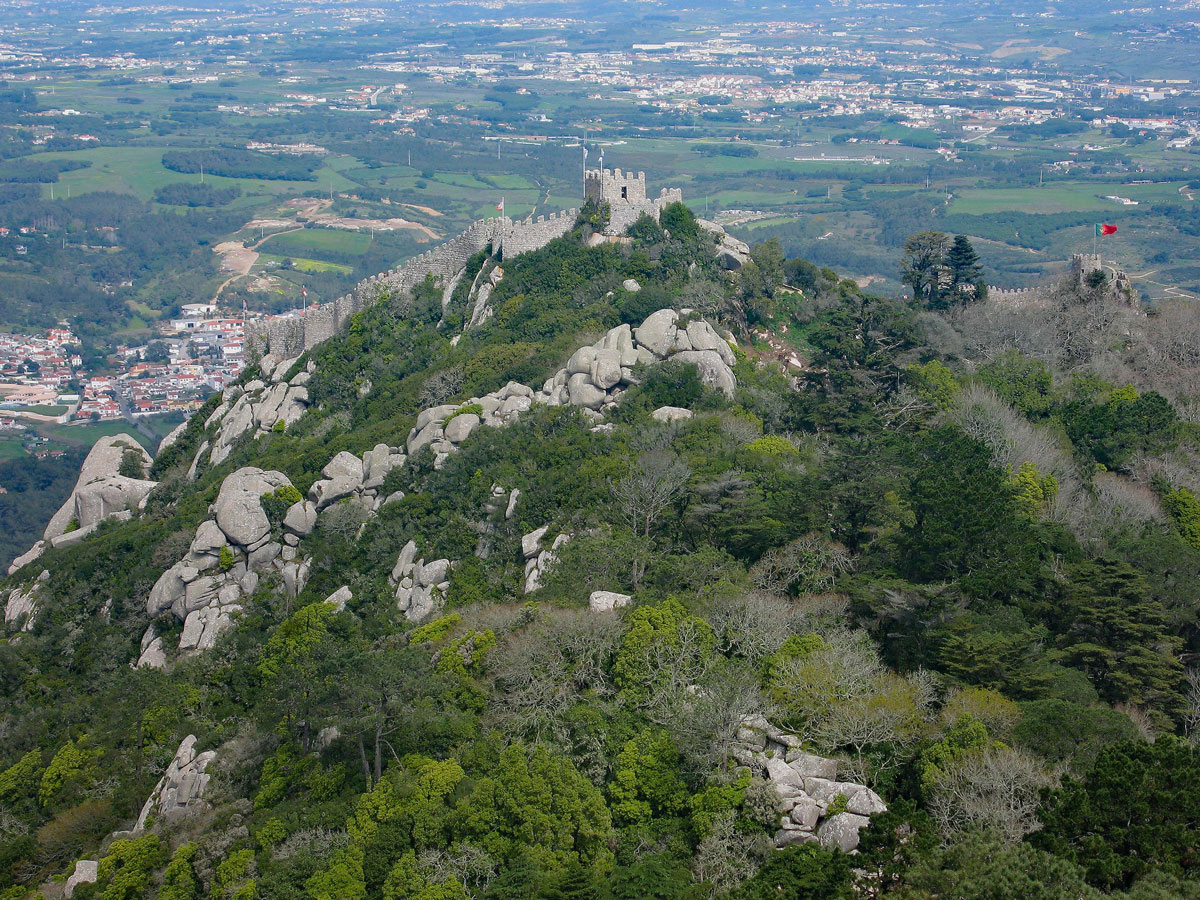
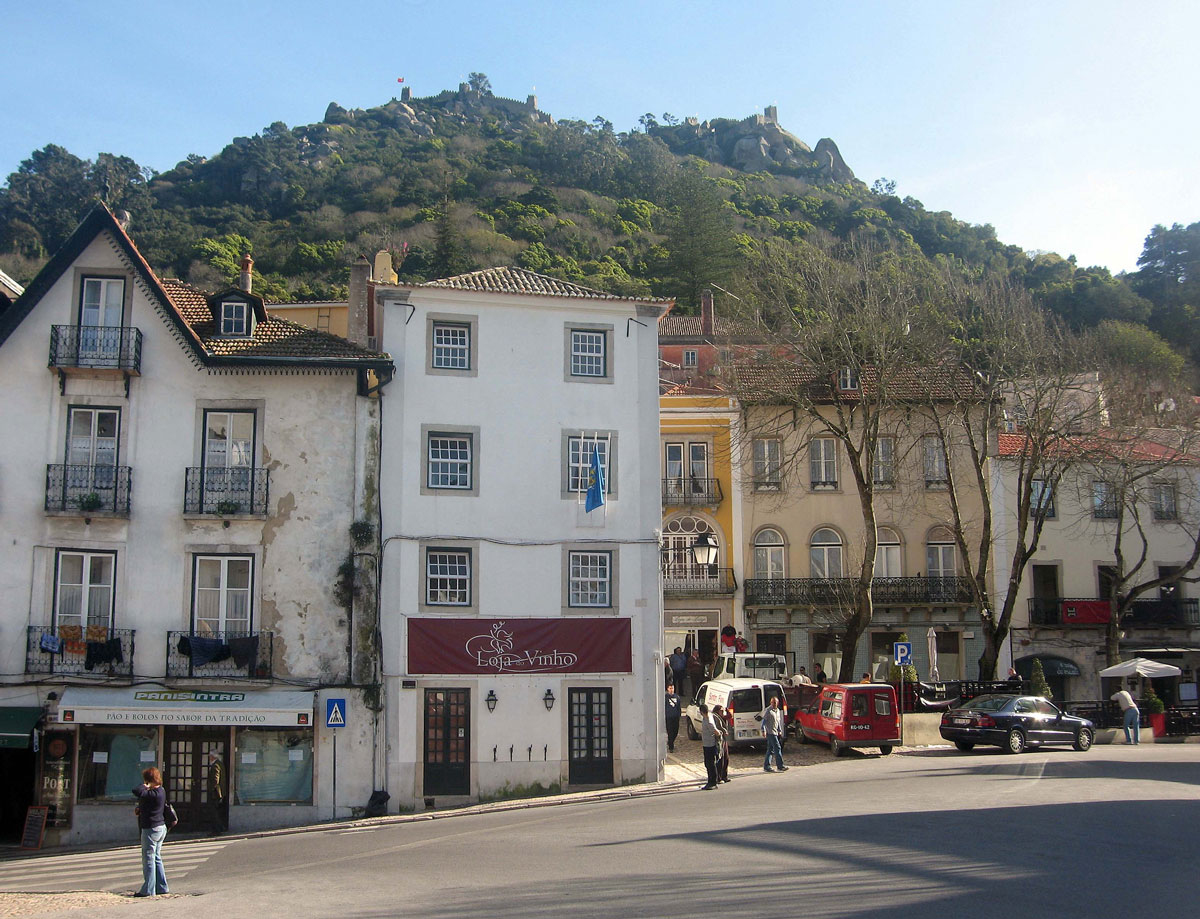
View of the Moorish Castle from the Pena Palace

You may think that visiting the park isn’t essential either, but I think that would be a mistake, partly because it’s worthy of a visit in its own right and partly because it fits in nicely with the return bus journey back into town without retracing your steps.

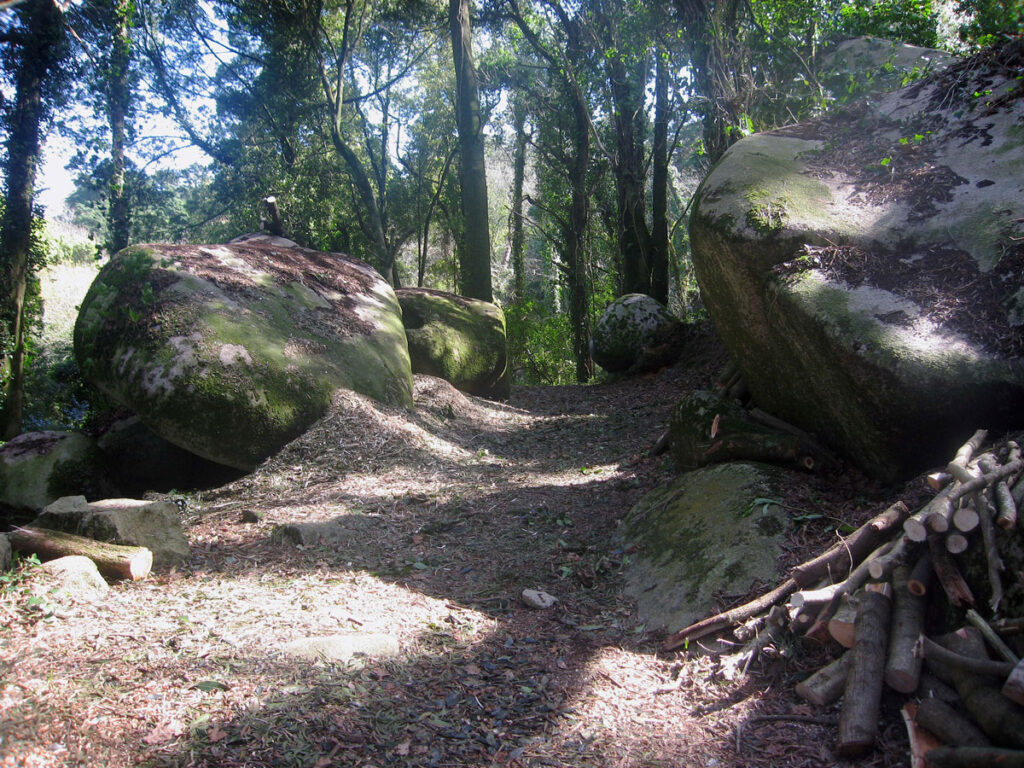
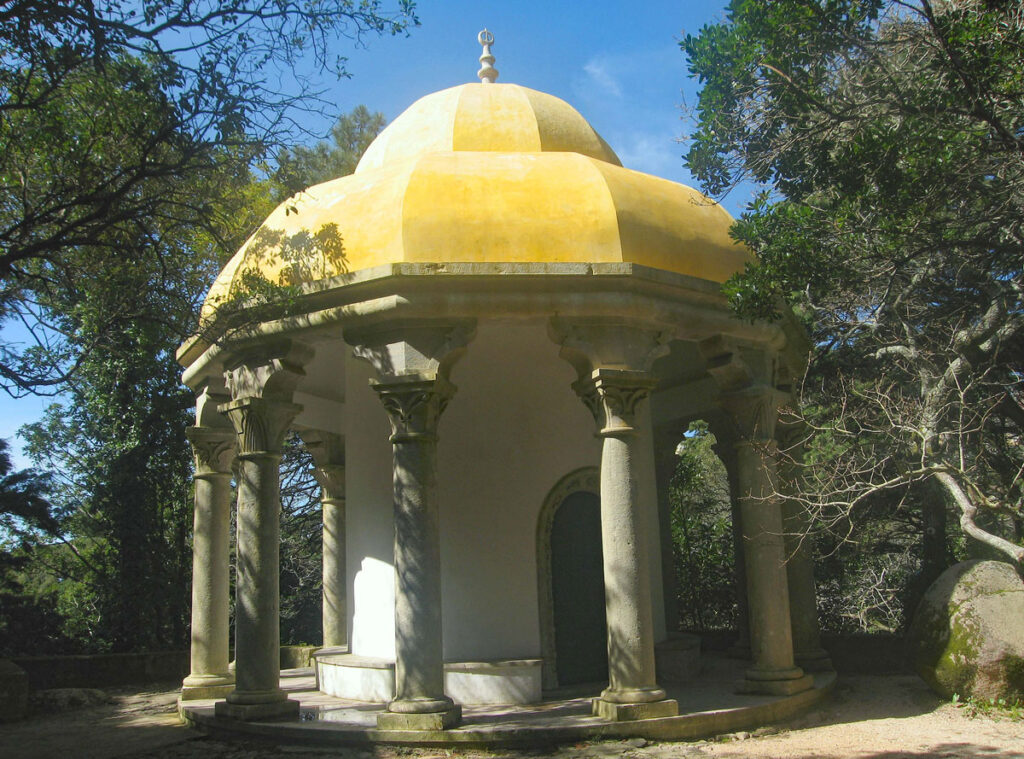
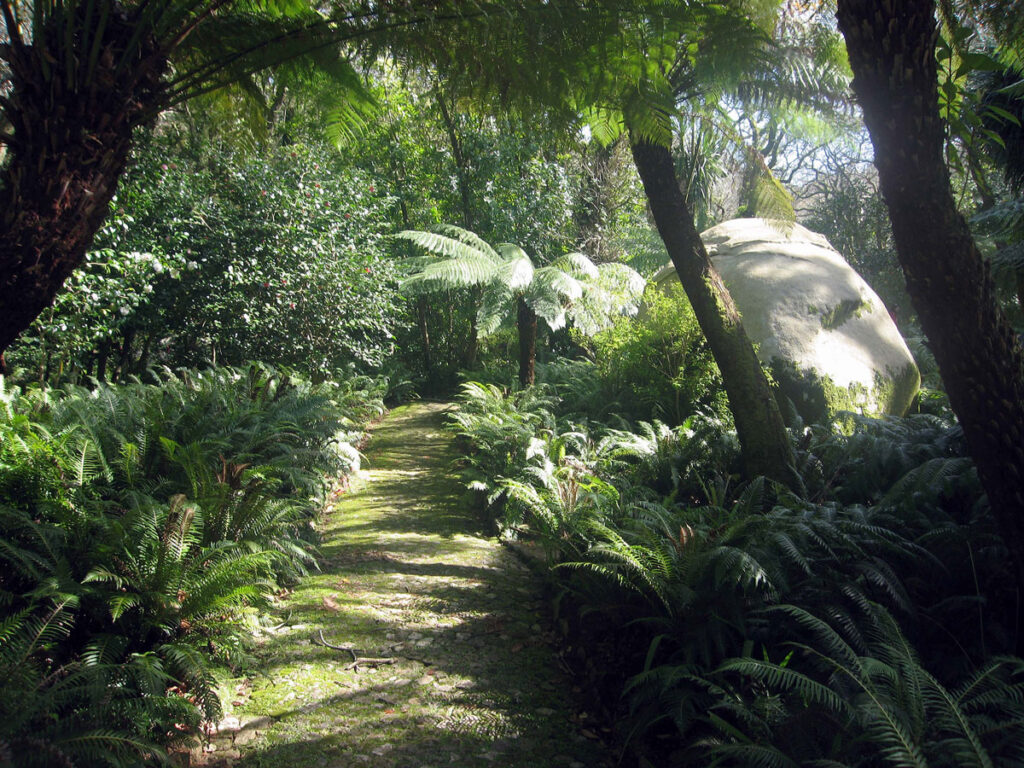
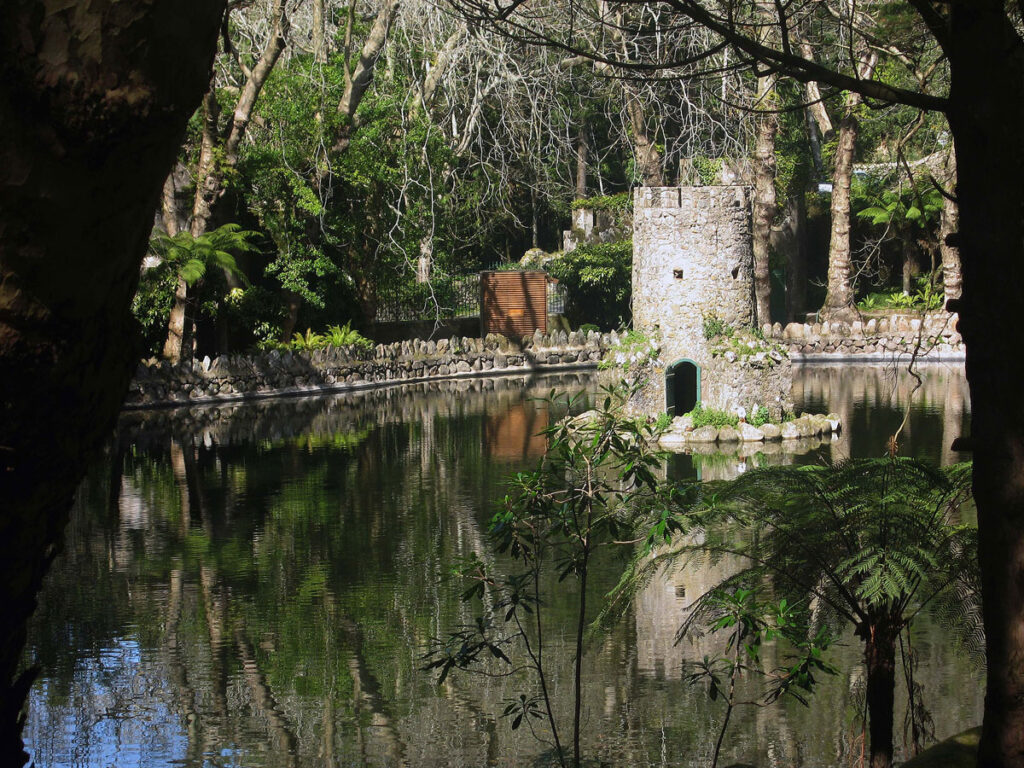
Set in a natural rocky wooded environment, the park was the brainchild of King Ferdinand II and his second wife the Countess of Edla. They employed the designer of the palace, Baron von Eschwege and an engineer called Baron von Kesler for the construction, and between them they transformed the area surrounding the palace into a semi-wild landscape of trees and plants from around the world with lakes, waterfalls and statuary to complement the Romantic Style of the palace itself. Successive owners, such as Queen Dona Amelia, also added their own individual style into the landscape and it would be easy to spend an awful lot of time wandering around here, but we decided to just follow an obvious set of paths that went past the lakes down to the park exit and close to the bus stop where we waited for the next bus to take us back into town.

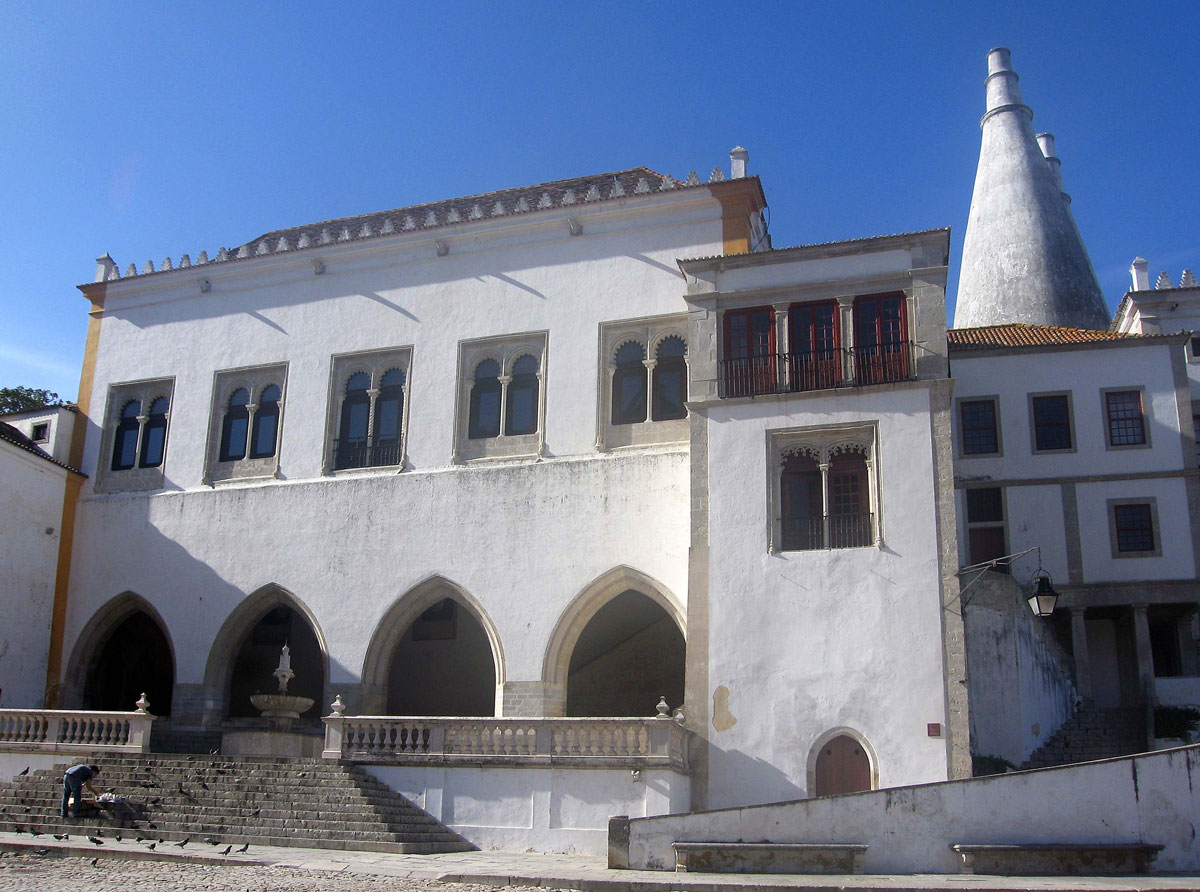
We had hoped to squeeze in a bit more sightseeing, but for several reasons it wasn’t to be, and so we just chilled out at a café near to the Royal Palace in the centre of town. Including the Pena Palace, there are around half a dozen places of interest worth visiting in and around Sintra, and if possible, I would have to recommend a couple of days here to really do the place justice – and hopefully avoid some of the crowds that flock here during the day.

The Royal Palace

Mass tourism has become a big problem nowadays. It affects the way of life for local people, it destroys the enjoyment that visitors were hoping for and it hardly helps the environment either, so what can be done about it? I wish I knew, but I do believe there are some things that can help.

Controlling numbers, like they’re trying to do at the Pena Palace (without the excuse to over-charge) is a start, improving transport infrastructure to alleviate excessive road traffic is another and maybe more flexible opening hours to reduce overcrowding during the busiest times of the day. All these suggestions will need to involve close co-operation between the tourist industry, local councils and the attractions themselves but we can do our own bit too by respecting the places we visit – and why not try going to places that aren’t necessarily obvious tourist destinations? I’ve often found that places which don’t get too many visitors are often the friendliest.

I’ve really only scratched the surface here, and I would really like to know what other people think and what suggestions you have. In the meantime, I’ve got a bus to catch and a makeshift sick-bag to find – just in case.

POSTED – JULY 2024

Originally posted 2024-07-31 12:58:45.

The post Sintra’s Pena Palace appeared first on Easymalc's Wanderings.

]]>
https://www.easymalc.co.uk/sintras-pena-palace/feed/ 47 20861