
Sintra's Pena Palace
Sintra is around a 45 minute train journey north of Lisbon and is a popular destination for many tourists – too many it would seem these days, but when we came here back in March 2008 it wasn’t quite like that. In actual fact, we weren’t staying in Portugal’s capital, but in Cascais, a town along the coast also around a 45 minute train ride from Lisbon. Consequently, it didn’t make any sense to go into the city and travel to Sintra from there, so we opted for a white knuckle bus ride from Cascais instead.
Being on UNESCO’s list of World Heritage Sites, Sintra has a good number of interesting cultural attractions to occupy your time, but as there were only a handful of buses that ran between the two towns each day, we needed to be conscious of the time factor, especially as the last bus left at 4.30 in the afternoon. Under the circumstances, it was fairly obvious that we should concentrate on the most obvious landmark – the Pena Palace, one of the Seven Wonders of Portugal.
After just managing to survive the journey without having to look for a sick bag, we were dropped off at Sintra railway station where the #434 bus begins a circular tour of the town via the Pena Palace. It’s a really useful way of getting around and far more useful than the woman in the bus station office. In actual fact, we didn’t get off to a very good start at all because no sooner had the bus left it turned around and went back to the railway station. Just as we thought, the bus was playing up, but the driver eventually carried on anyway – or at least as far as a hairpin bend on the hill climbing up towards the palace. To cut a long story short, we were told to get off and walk the rest of the way. Some did – but we didn’t, which was just as well because another bus turned up not long afterwards and we squeezed on there.
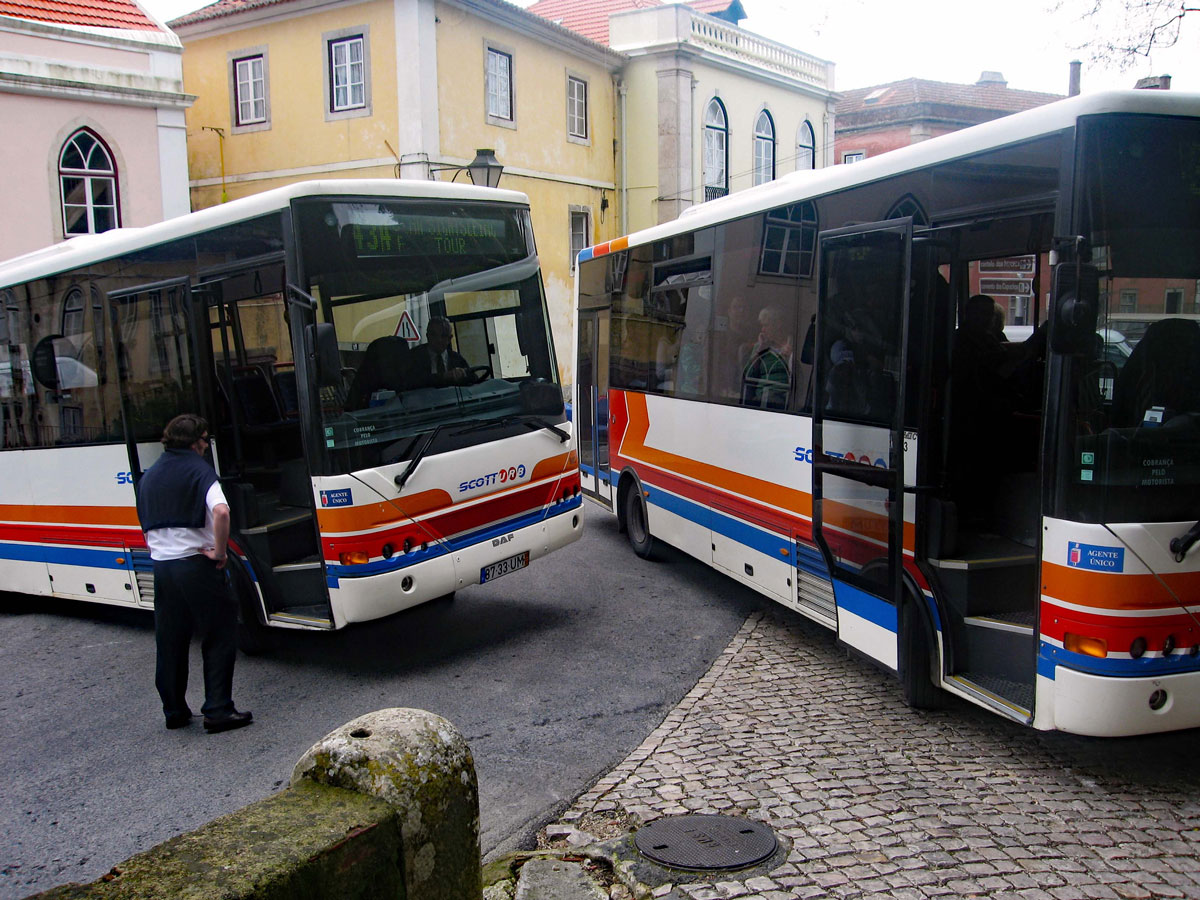
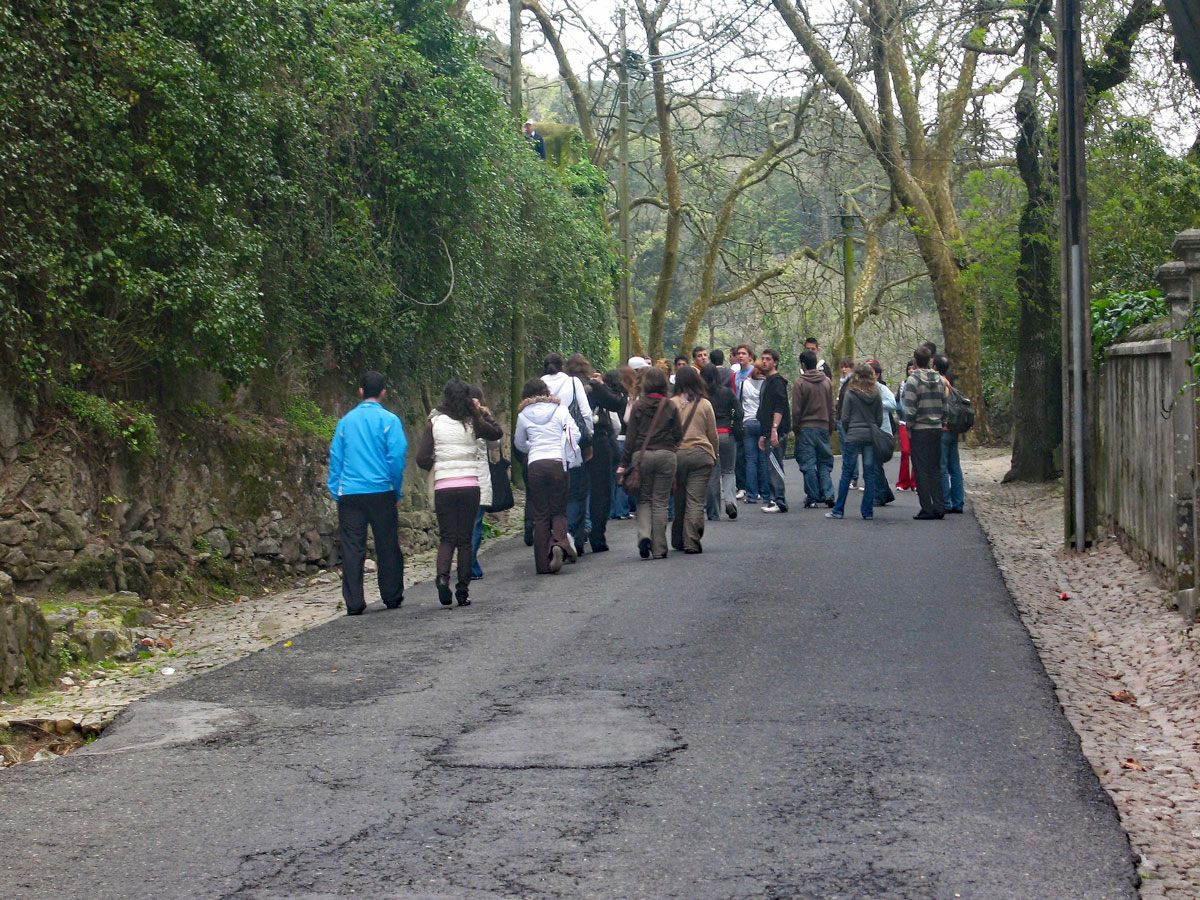
As we passed the walkers struggling for breath as they walked up the hill I felt vindicated for bottling out, especially as they still had a long way to go. When the bus did eventually get us to the top I could immediately see that it had been worth all the effort. Whether the walkers felt the same I wouldn’t like to say.
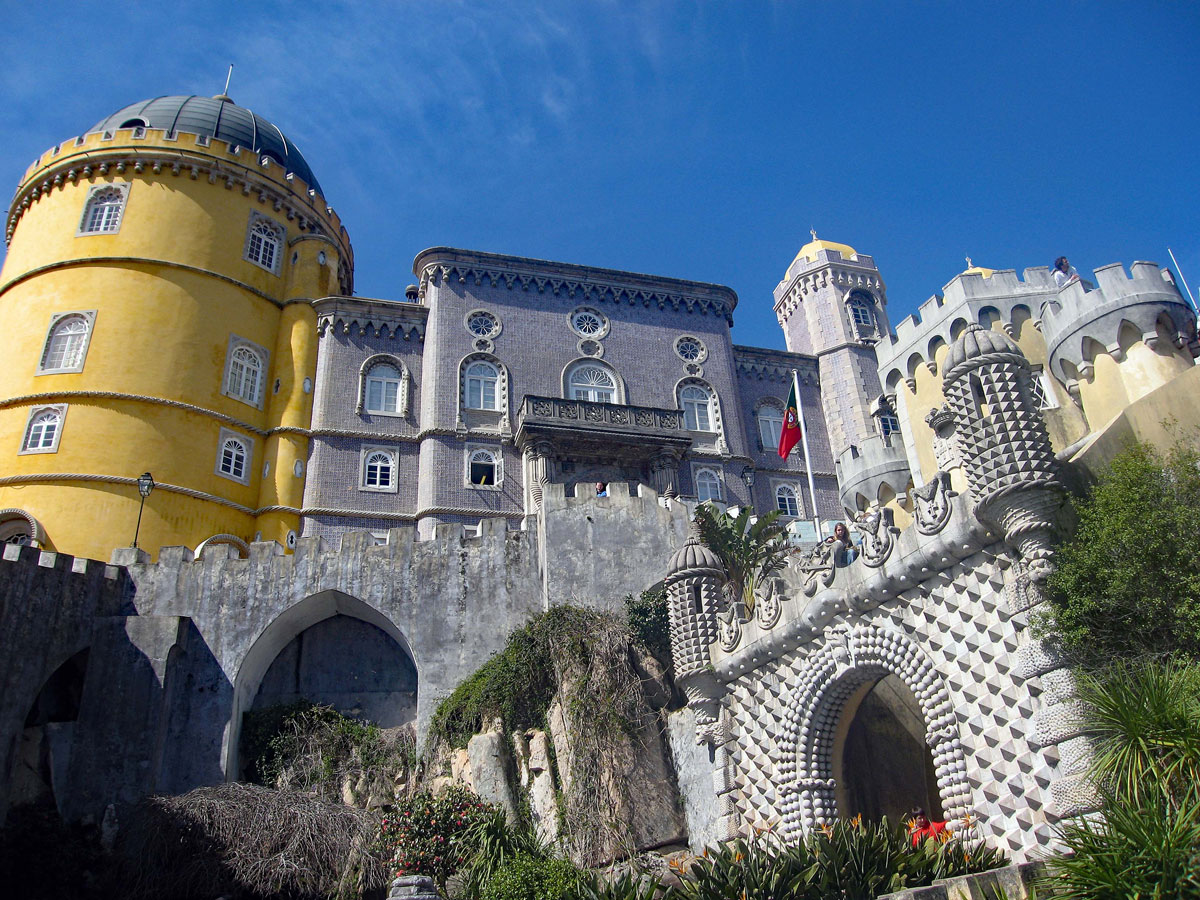
Those who have an interest in Portuguese royal family history will probably get more from a visit here than those of us who just want to marvel at the architecture, but that said, it still helps to have at least a basic understanding of how the palace came about.
The story begins in the Middle Ages when according to legend, a simple chapel was built on this spot during the reign of King John I after a visit by the Virgin Mary – not a personal visit of course, but as an apparition. Dedicated to Our Lady of Pena, the chapel was given more reverence by John II who, in 1493, fulfilled a vow to visit the site. The religious significance of the site was enhanced even further during the reign of Manuel I (r.1495-1521) when the chapel was replaced by a monastery that became a place of peaceful meditation until it was reduced to rubble during the devastating earthquake of 1755.
The monastery, although not completely abandoned, lay in ruins until Portugal’s Queen Maria II married Prince Ferdinand of Saxe-Coburg-Gotha in 1836. The artistically minded King consort became extremely fond of the landscape around Sintra, especially the spot where the ruins of the former monastery and nearby Castle of the Moors looked down from the hills above. In fact, he was so enchanted with the location, that two years later he decided to buy the estate with a view to restoring the monastery that would provide a palace fit for a queen – or at least, a King consort.
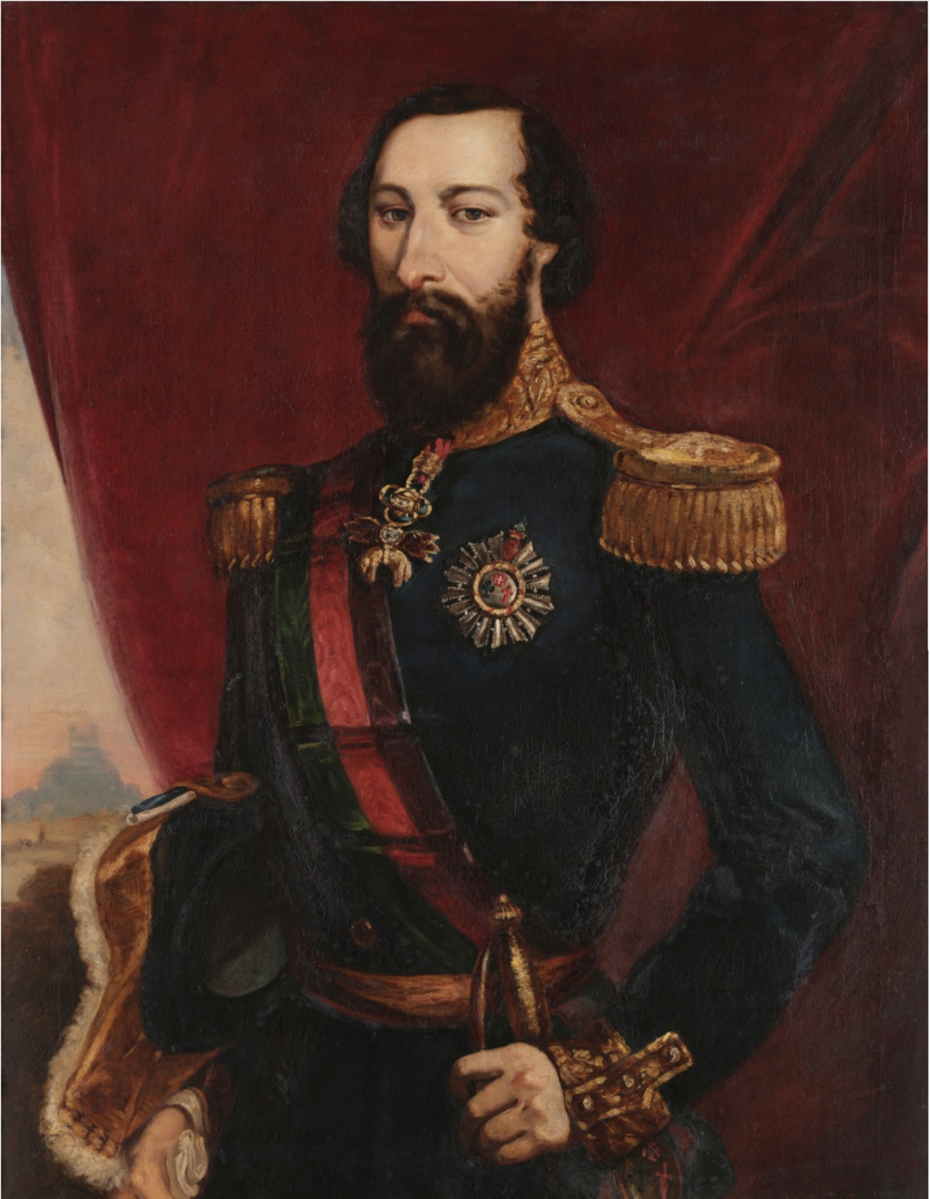
The person given the job of creating Ferdinand’s dream palace was a German mining engineer/amateur architect called Wilhelm Ludwig von Eschwege. Starting work in 1842, he wasn’t completely left to run amok with his pencil and set square as the king and queen were keen to implement some of their own ideas, and that included using some of the remains from the old monastery.
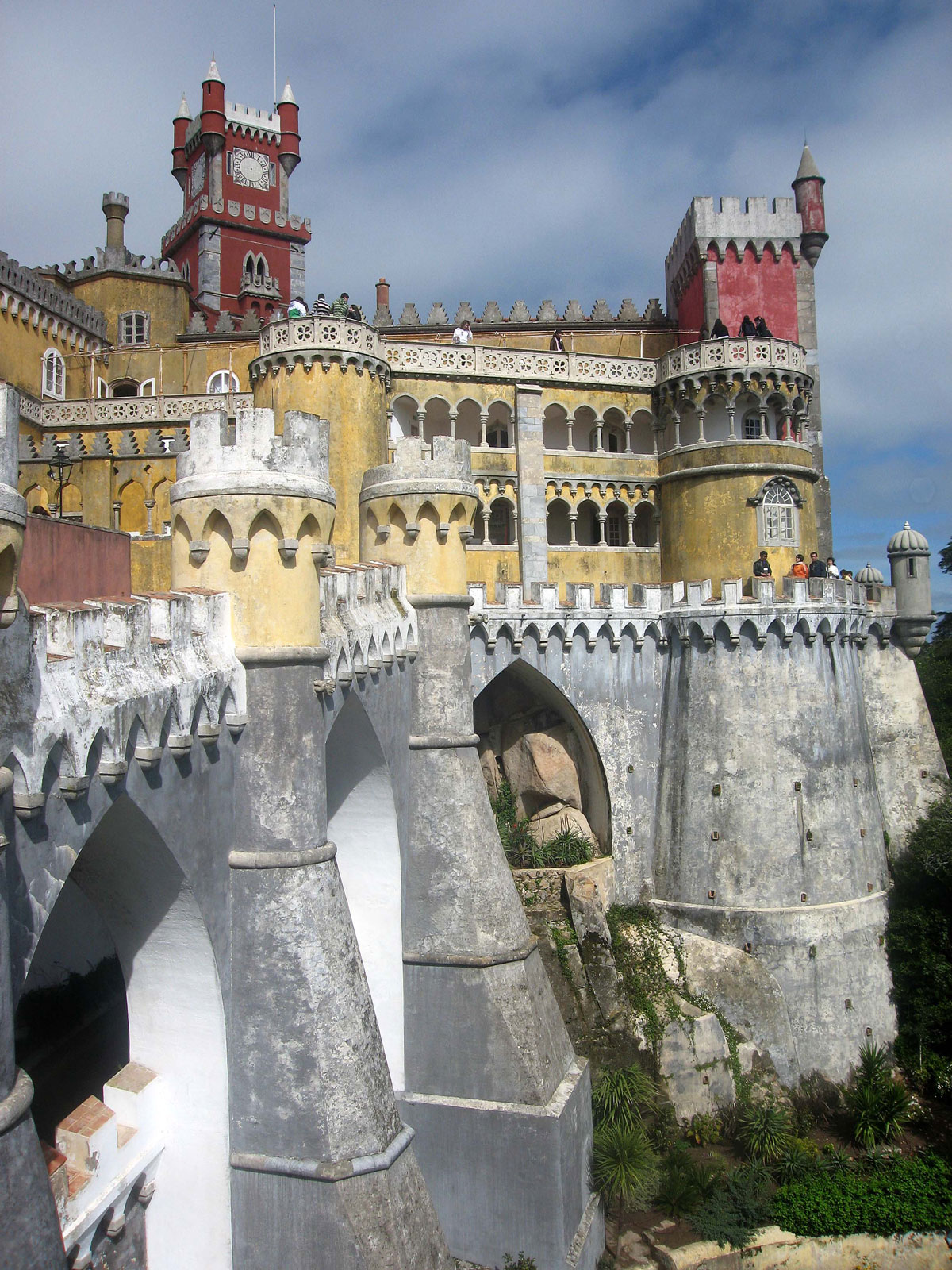
Although Maria II was the rightful queen of Portugal, the royal household was run practically as a joint monarchy, especially during Maria’s numerous pregnancies when Ferdinand took over the royal duties, and it was due to complications during the birth of her eleventh child that Maria’s life came to an end – and so therefore did the reign of King Ferdinand II.
In 1869 Ferdinand morganatically married a singer called Elisa Hensler (who later took the title of Countess of Edla). Don’t worry, I had to look that word up too. It’s used largely in German-speaking countries and basically means a socially unequal relationship, which in the case of royalty like Ferdinand, meant that none of his privileges could be passed on to his wife or any of their children. Consequently, they lived discreetly together at the palace until the ex-king died in 1885. They didn’t have any children anyway, and when the palace passed into Elisa’s possession she sold it to King Luis I who was keen to see the palace back in the family’s hands – but it wasn’t to stay in their hands for too much longer.
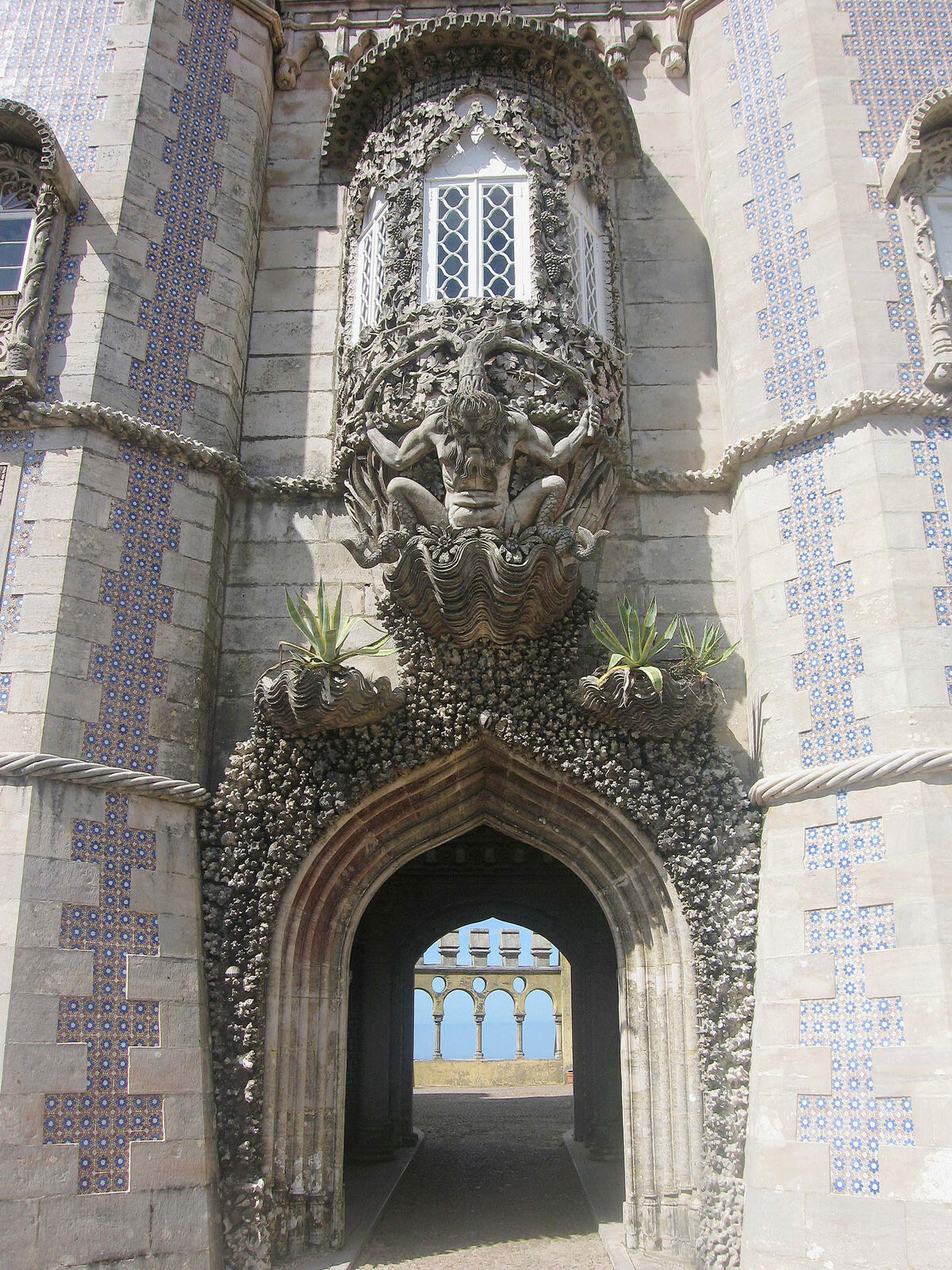
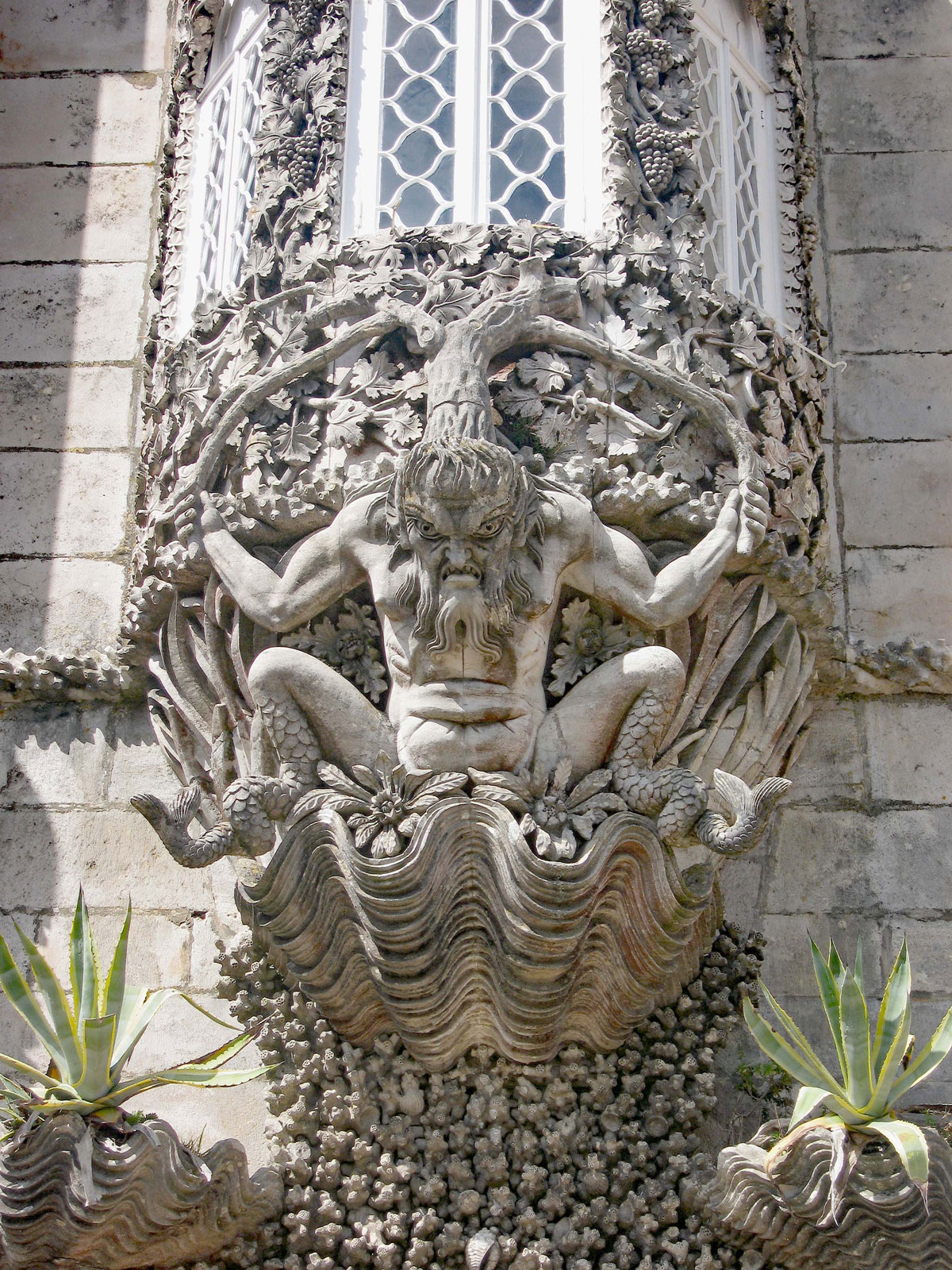
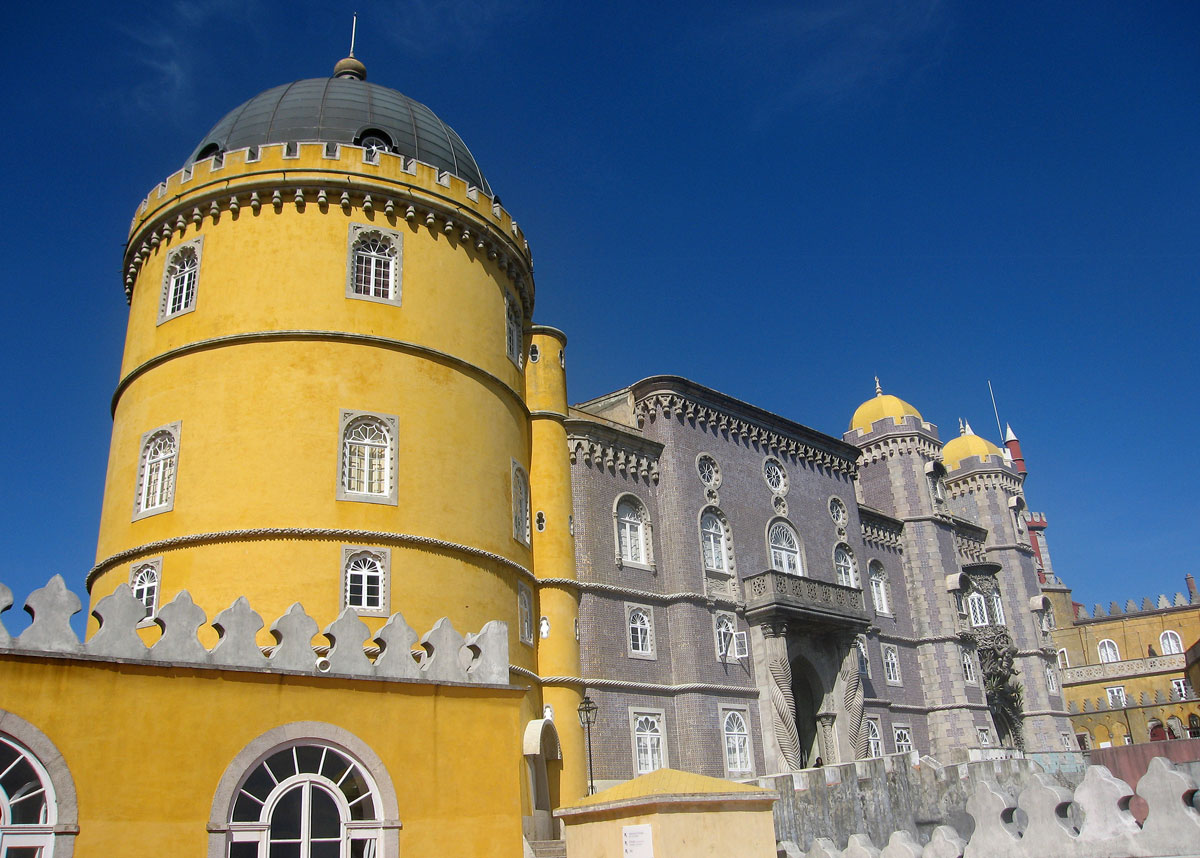
The beginning of the 20th century saw Portugal facing a mountain of problems, and it was the monarchy that took the blame. On 1st February 1908, while arriving back in Lisbon from Alentejo, King Carlos I and his heir were assassinated by two republican activists and the country was thrown into chaos. The king’s second son Manuel II, took over at the helm but was young and inexperienced, and on 5th October 1910 the monarchy was overthrown and the country became a republic – which it still is today.
After the revolution, the palace was classified as a national monument and opened up to the general public. Ironically, the state is now responsible for looking after this former royal palace and has become one of the country’s top major attractions.
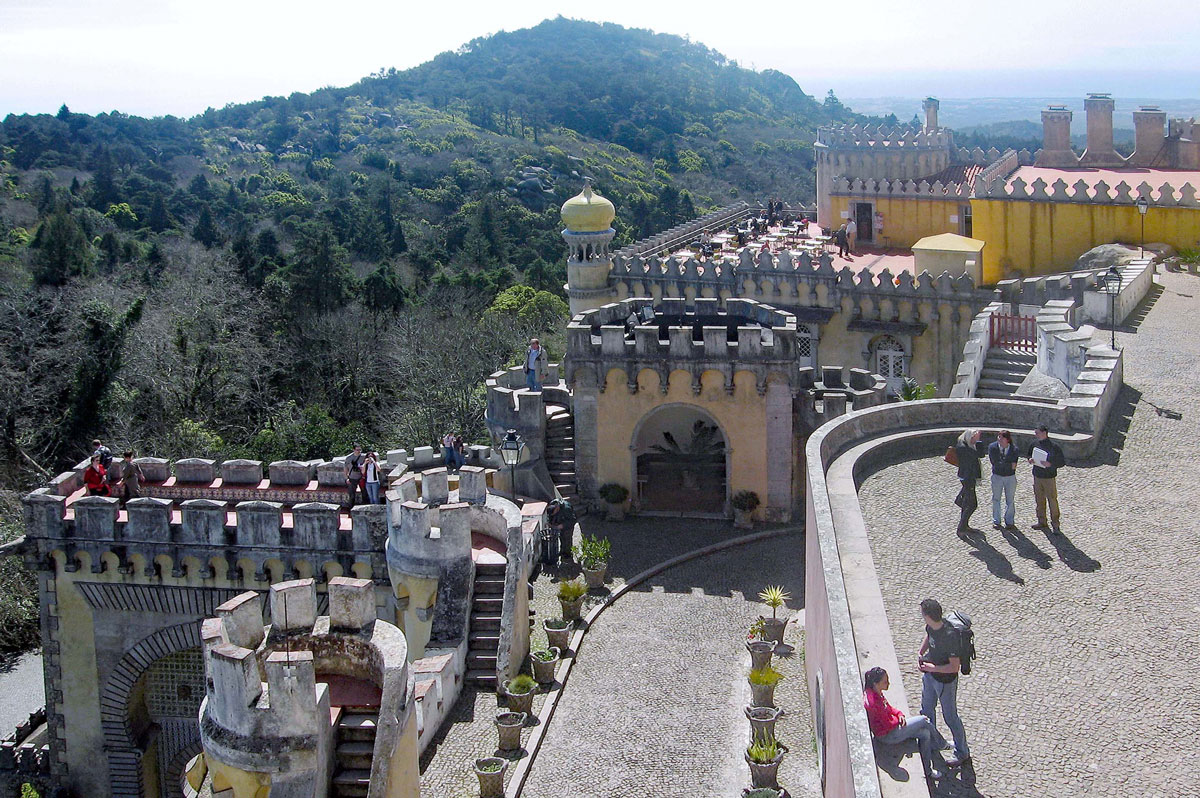
Now that I’ve explained some of the background history, you’ll want to know what there is to see, but to answer that question there are some practicalities to consider. Since we were here, the number of visitors has increased dramatically, and so a different ticketing system has been introduced.
To visit the outside terraces and inside of the castle requires a combined timed ticket (€10 as of July 2024), and you will also need a separate ticket if you want to visit the park (non-timed and also €10), but apparently even this has only had a limited amount of success, so based on my own experience back in 2008 and what people are saying about their experience now, I think I would recommend coughing up €20 for the full monty, but just visit the outside terraces and park. In other words, skip “shuffling in a human traffic jam” around the inside, which it has to be said, is only moderately interesting anyway, and photography isn’t allowed either. Also bear in mind that the time spent inside the palace is time you can’t spend elsewhere. Just my opinion of course.
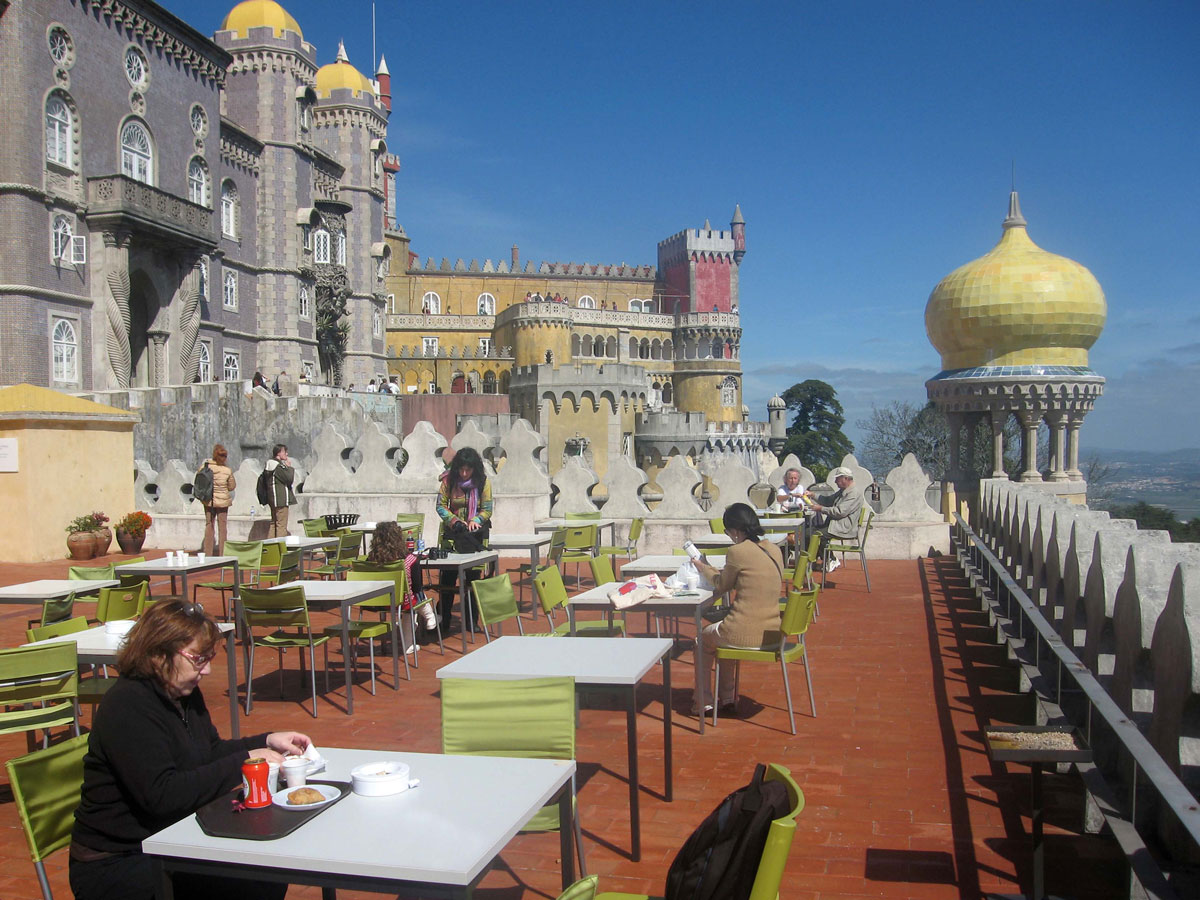
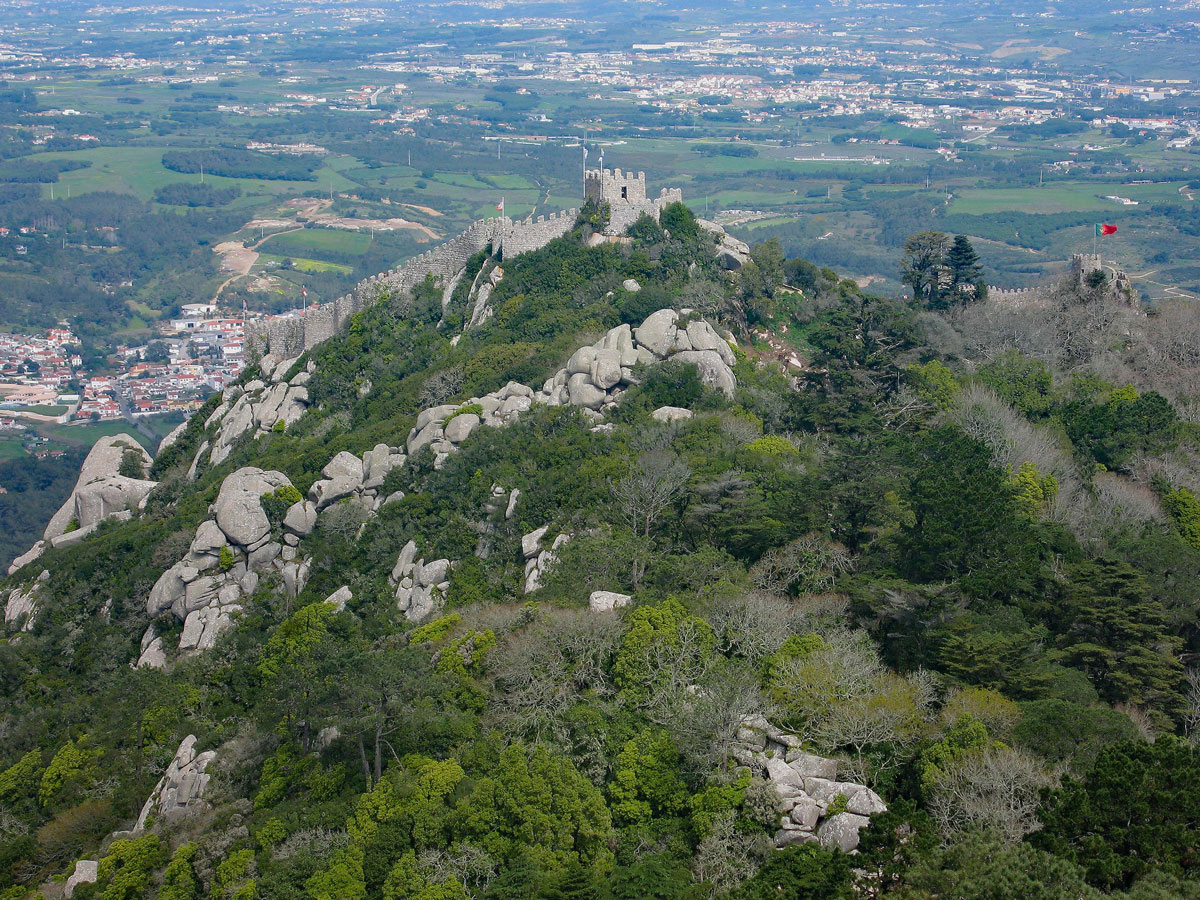
You may think that visiting the park isn’t essential either, but I think that would be a mistake, partly because it’s worthy of a visit in its own right and partly because it fits in nicely with the return bus journey back into town without retracing your steps.
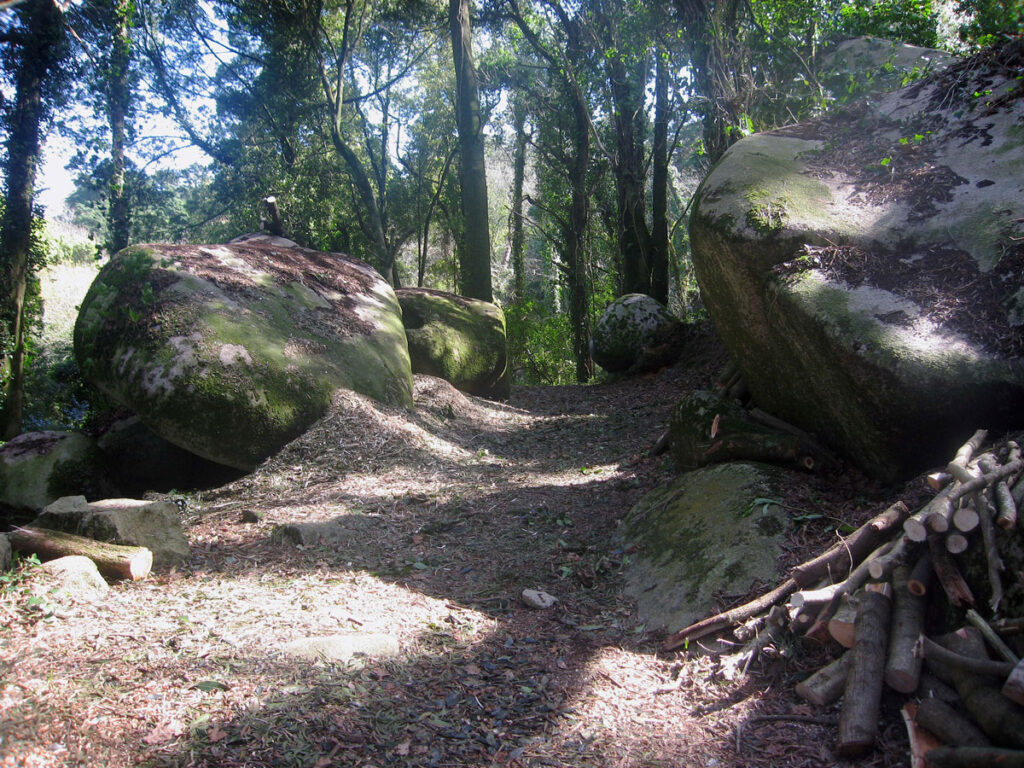
Set in a natural rocky wooded environment, the park was the brainchild of King Ferdinand II and his second wife the Countess of Edla. They employed the designer of the palace, Baron von Eschwege and an engineer called Baron von Kesler for the construction, and between them they transformed the area surrounding the palace into a semi-wild landscape of trees and plants from around the world with lakes, waterfalls and statuary to complement the Romantic Style of the palace itself. Successive owners, such as Queen Dona Amelia, also added their own individual style into the landscape and it would be easy to spend an awful lot of time wandering around here, but we decided to just follow an obvious set of paths that went past the lakes down to the park exit and close to the bus stop where we waited for the next bus to take us back into town.
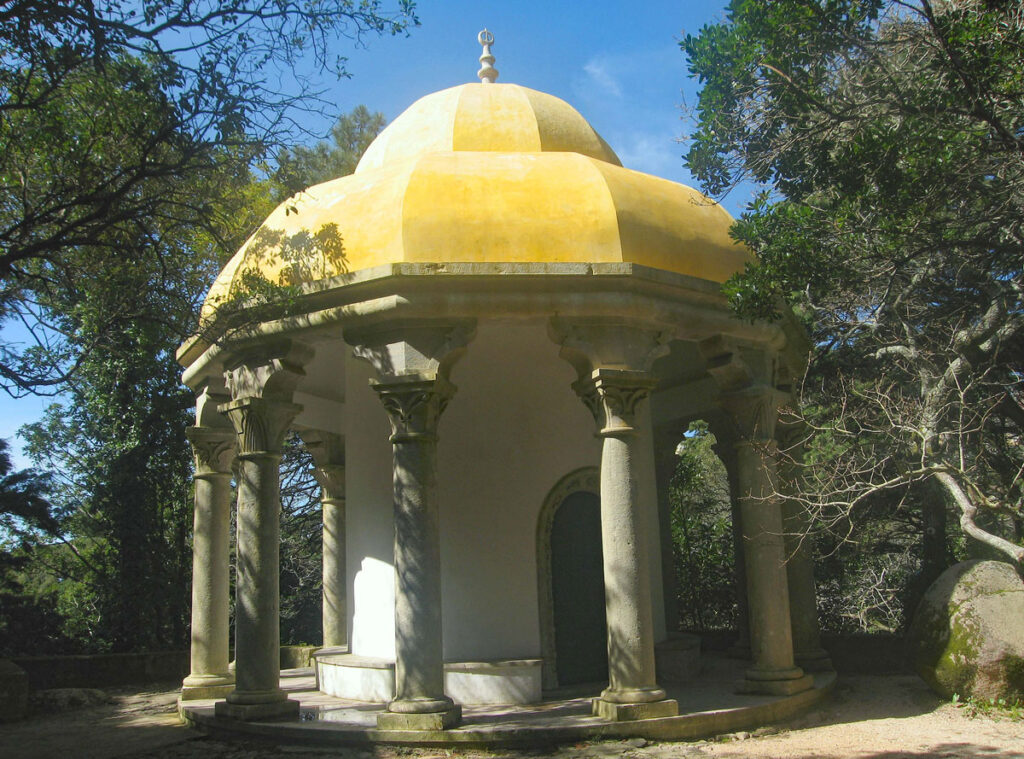
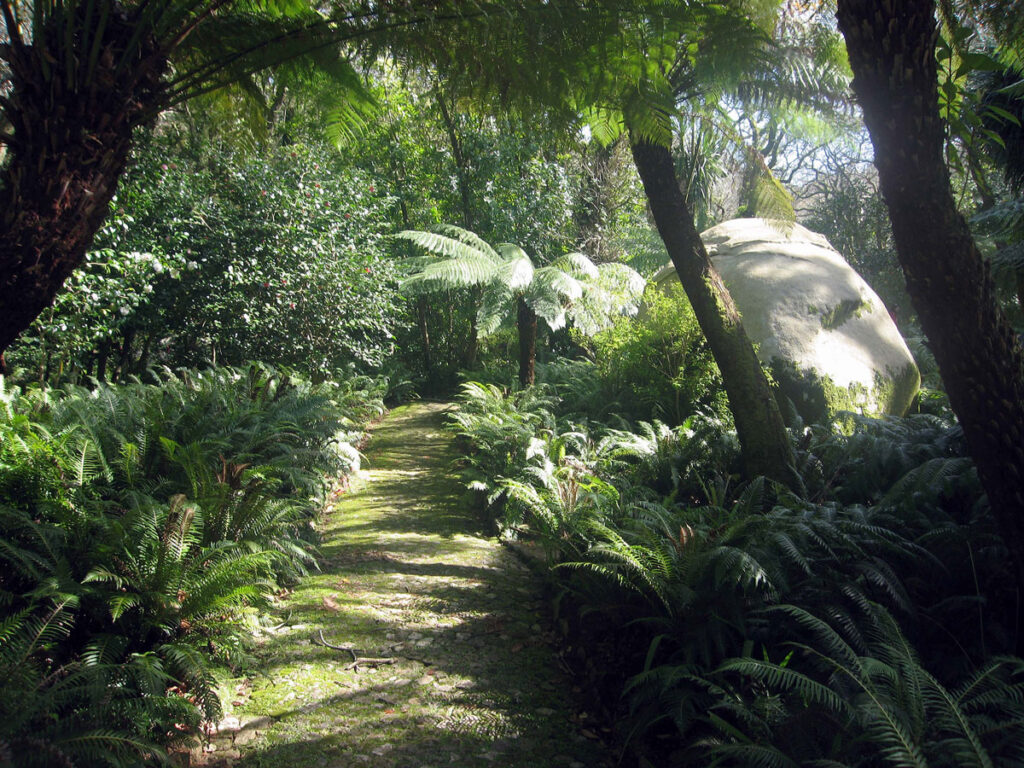
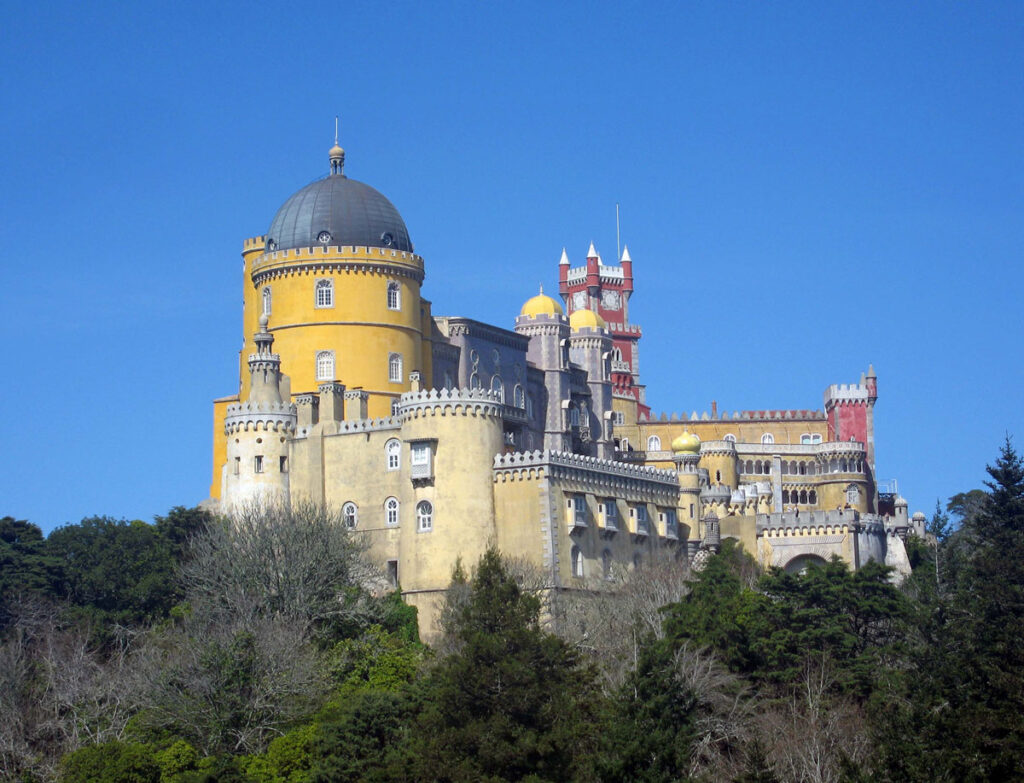
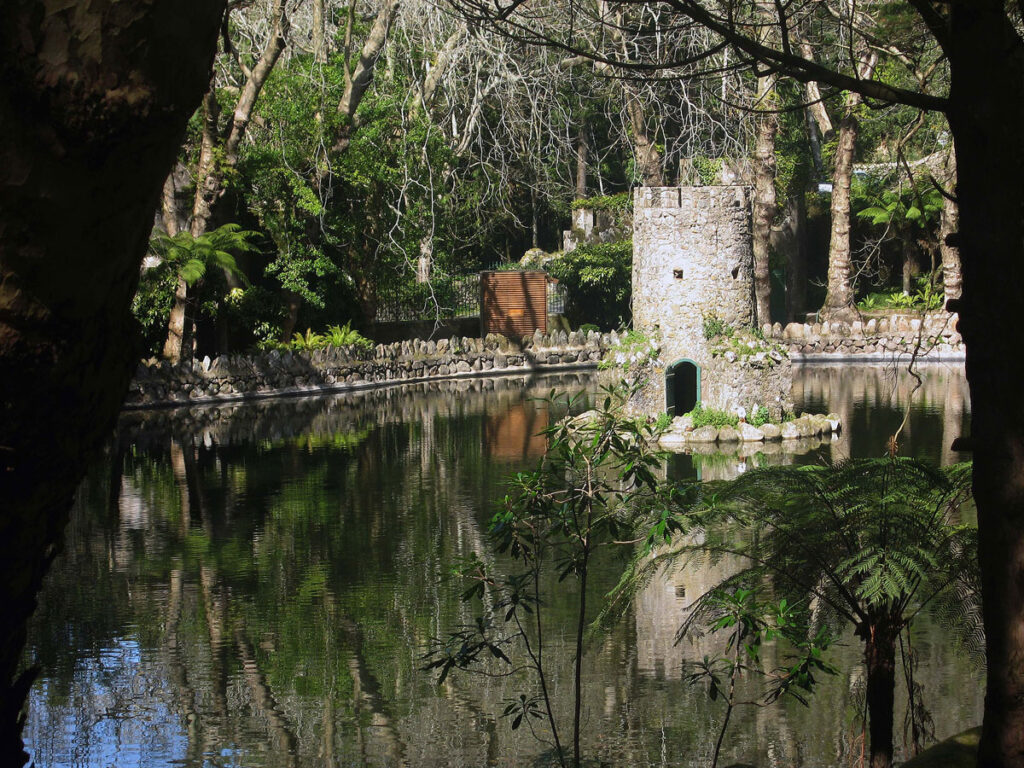
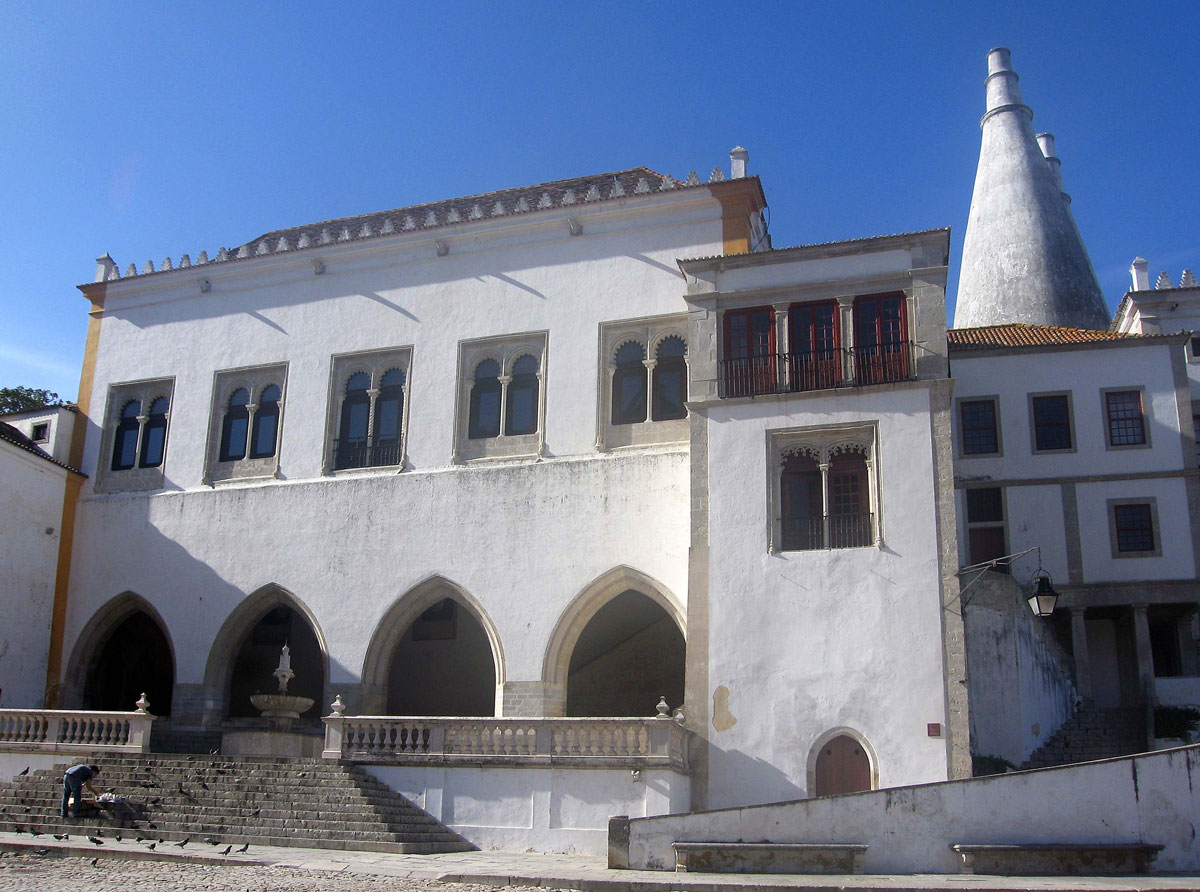
We had hoped to squeeze in a bit more sightseeing, but for several reasons it wasn’t to be, and so we just chilled out at a café near to the Royal Palace in the centre of town. Including the Pena Palace, there are around half a dozen places of interest worth visiting in and around Sintra, and if possible, I would have to recommend a couple of days here to really do the place justice – and hopefully avoid some of the crowds that flock here during the day.
Mass tourism has become a big problem nowadays. It affects the way of life for local people, it destroys the enjoyment that visitors were hoping for and it hardly helps the environment either, so what can be done about it? I wish I knew, but I do believe there are some things that can help.
Controlling numbers, like they’re trying to do at the Pena Palace (without the excuse to over-charge) is a start, improving transport infrastructure to alleviate excessive road traffic is another and maybe more flexible opening hours to reduce overcrowding during the busiest times of the day. All these suggestions will need to involve close co-operation between the tourist industry, local councils and the attractions themselves but we can do our own bit too by respecting the places we visit – and why not try going to places that aren’t necessarily obvious tourist destinations? I’ve often found that places which don’t get too many visitors are often the friendliest.
I’ve really only scratched the surface here, and I would really like to know what other people think and what suggestions you have. In the meantime, I’ve got a bus to catch and a makeshift sick-bag to find – just in case.
POSTED – JULY 2024
Originally posted 2024-07-31 12:58:45.
There’s something about you and travel disasters, isn’t there Malc? 😉 You seem to be prone to things going wrong on your journeys, but I have to admit the way you tell your stories of mishaps and mayhem, always makes me smile! 😀 Still, this really was worth the effort of travelling to – however you get there. I’d do it on foot if I had to. Little wonder it’s one of Portugal’s top main attractions. The palace is incredibly ornate, the architecture is a marvel in itself, it has a great history with roots in the Middle Ages, and the location is sublime. No wonder Prince Ferdinand was so taken with it, anyone would be. And that’s got to be one of the most scenic and dramatically-sited cafes ever – what a place to have a cuppa! A great read, and another one for the to-do list. 😀
Getting into trouble is the easy bit Alli, getting out of it is where experience kicks in. I once set a caravan on fire and blamed the campsite for not providing a fire extinguisher. As far as the Pena Palace is concerned it’s definitely worth the effort and you would also like the nearby Castle of the Moors I’m sure. 😊
Whoa, how on earth did you set a caravan on fire? Your holiday mishaps know no bounds, Malc! I reckon you could write a great little book on your travel misadventures alone! I always enjoy reading about them (that’s meant in the nicest way possible, of course 🙂 )
Anyway, Pena Palace and the Castle of the Moors sound like the perfect day out. Will there be a post on the castle? 🙂
I managed to get the calor gas cooker to flare up. It didn’t set the whole van ablaze fortunately, but there was quite a bit of damage in and around the kitchen area. We managed to put it out ourselves with some blankets.
I would have loved to have visited the Castle of the Moors, but after walking down a footpath for at least half a mile, some groundwork was taking place preventing us from entering, only they never bothered to tell anybody. 🙁
Thank you so much for this article, which as always is interesting and so well documented.
I was fascinated by your words and your images, which brought back so many beautiful memories 💖
Somehow I guessed they might luisa. Thank you as always for your lovely comment
It is truly my pleasure , dearest Malc
Thank you for always being so kind
That’s not difficullt Luisa 💙
💞🌷💞
🥰
Goodness, Malc, what a story you tell! As usual, your history lesson is fascinating and erudite regarding how many childbirths killed the poor queen! Then, your off-the-cuff humor made me laugh at the mention of the apparition!
The park seems a better place to spend time than the palace, although it is arrestingly beautiful from the outside. Your usual attention to detail and excellent photography made me feel like I have been with you on this tour Thank you!
Joanna
It’s always good to see your comments appear Joanna. With so many people travelling around these days I hope that posts like these will at least show people like your good self what it’s like in hotspots like Sintra. It’s popular for a good reason and I enjoyed it here but I wish that I could have stayed longer. Your comments, as always, are flattering but so welcome. Thank you my lovely.
Thank you, Malc, and you are more than welcome! I meant every worth as you deserve every praise!
Joanna x
Ah! thank you. x
Again my laptop is going mad! It should be “every word”!
Joanna x
LOL. I guessed that x
I have just had a look in a old diary and found that I arrived in Sintra on a bicycle tour on Sunday, March 17, 1963, and left the next morning. I don’t remember much about Sintra, except that I thought it was important enough to make a slight detour to get there.
(Someone I spoke to in Portugal, on learning I was American, asked me why the American Secretary of State had said such and such about Portugal. At the time, I had no idea who the American Secretary of State was, much less what he — of course ‘he’ in those days — might have said about Portugal.)
Goodness me Don. That’s going back a bit. This post has obviously brought back some memories for you 😊
That was fascinating. From the history of the palace and the monarchy to the tips on visiting. And I did smile re the bus ride. Benn lucky to surivive some of those.
Glad you enjoyed the ride with us Shey 🚌🤪
I did indeed. You fair brought your day there to life. A big reason I enjoy your posts.
You’re so kind Shey. Thank you ⭐
Calling it as I see it. It is all the wee details you have in this post, the facts, the tips but also the wee personal bits and asides that really hook a reader in.
⭐⭐
I bottled the climb up to this palace when in Sintra with the VT crowd back in 2009, opting instead for the Royal Palace and the Quinta da Regaleira. The latter is a walk away from the centre but largely flat, and fascinating. It could make a good alternative to the Pena Palace if you wanted to avoid the worst of the crowds??? But I have to say this looks lovely. The Triton Gateway carving is amazing and the park looks very pretty.
My next choice after Pena was the Castle of the Moors which is close to the palace but there was some grounwork going on which prevented us from visiting. We were also thinking about having a quick shufty around the Royal Palace but they were closed 😒
I really enjoyed reading this as the manageress of the community centre where I work has a second home about 45 minutes north of Lisbon – she’s mentioned this palace more than once so your photos and backstory have brought it to life. What a fabulous building – I love the header photo and the third one down.
There’s nothing worse than paying to see inside somewhere then not being allowed to take photos – I much prefer to see what’s outside anyway. I think I would enjoy the white knuckle bus ride – the Amalfi coast on a bus from Sorrento to Amalfi was quite an experience 😊
Thanks Eunice. photography has become more relaxed these days I’ve noticed because people use their phones as cameras all the time. Just for the record, I’ve done that bus trip from Sorrento to Amalfi too 😊
We went to Sorrento by boat but there was no boat to come back – to quote the man at the boarding point ”No boat – boat broke”! So we got the bus back to Amalfi and if we had known what a good ride it was we would have done it both ways 😀 A few days later we went from Amalfi to Ravello up in the hills, that was another white knuckle ride, especially coming back down 😊
We also made it up there too. It’s a fabulous coastline isn’t it? Strangely enough, it was only last week that I was scanning pictures from that trip. I’m doing more scanning than blogging at the moment. The scariest bit of all though was not the hairpin bends but getting lost in the back streets of Naples 😧
”The back streets of Naples” reminds me of a line from the Peter Sarstedt song. We only touched on Napoli briefly on our way to and from Vesuvius, which, by the way, I wasn’t impressed with. We stayed in Minori and you could see our hotel balcony from Ravello. It’s a gorgeous coastline, we had five holidays there and I’d love to go back.
Lucky you! We didn’t go up Vesuvius but were hit by a thunderstorm as we wandered around Pompeii which made it seem even more authentic. I got hooked on Limoncello so much I bought a bottle home, but it never tasted the same somehow. I loved that Peter Sarstedt song by the way. I did then and still do now. Five visits there sounds like heaven to me.
Don’t mention Limoncello – I don’t drink but got quite a liking for the stuff on our many Italian holidays and would always bring back as much as I possibly could. I prefer the cream one though, the yellow one is like rocket fuel. I haven’t had any for years but recently discovered some in my local Asda – I might just have to treat myself 😀
Go on! Be a devil and have one for me while you’re at it 🥂
My daughter loves it, and now makes her own and distributes it as Christmas presents. (limoncello) Just had to butt in here because I’ve done both the bus rides you describe, and I was fool enough to do the walk up to Pena Palace. We’d just missed a bus and it seemed like a good idea at the time…not! Can’t remember when I’ve last felt to tired (and hot!) It really is a spectacular location though and not a sight you’ll see every day. This was about 15 years ago. I might have more sense now, and I’d try for an overnight stay so some of the tourists had gone home. Great post, Malc.
Thanks Jo. I said that I thought you would have been there, and I agree that it deserves an overnight stop.
Great post with an interesting history and your pics are phenomenal. Beautiful palace…
Thanks Francesc. Have you been there then?
No, actually I’ve never been to Portugal, so close but not visited it yet, perhaps later this year. And you know, just like Pat, I, at first sight, thought you were going to talk about Sinatra… 😊
LOL. Perhaps ‘the best is yet to come’ 😊
I do have a pre-arranged trip to Faro this November… Ever been?
No I haven’t, but it’s always appealed to me.
I’ll tell you all about it.
I look forward to it
Coming next autumn Malc, God willing
Frankly, Malc, when I first read Sintra, I thought it was Sinatra. I soon realized my mistake and enjoyed both the backstory and the tour. You were in full Malc-style in this post and I thoroughly enjoyed it.
Glad you enjoyed it Pat and quite ‘frankly’ I can see how you thought it might have read ‘Sinatra’ 🤪