It may have taken longer to get between Madrid and Segovia, but I saved a lot of time getting to Atocha from my hotel, and from Segovia Estacion to the city centre, or more precisely, the Roman Aqueduct.
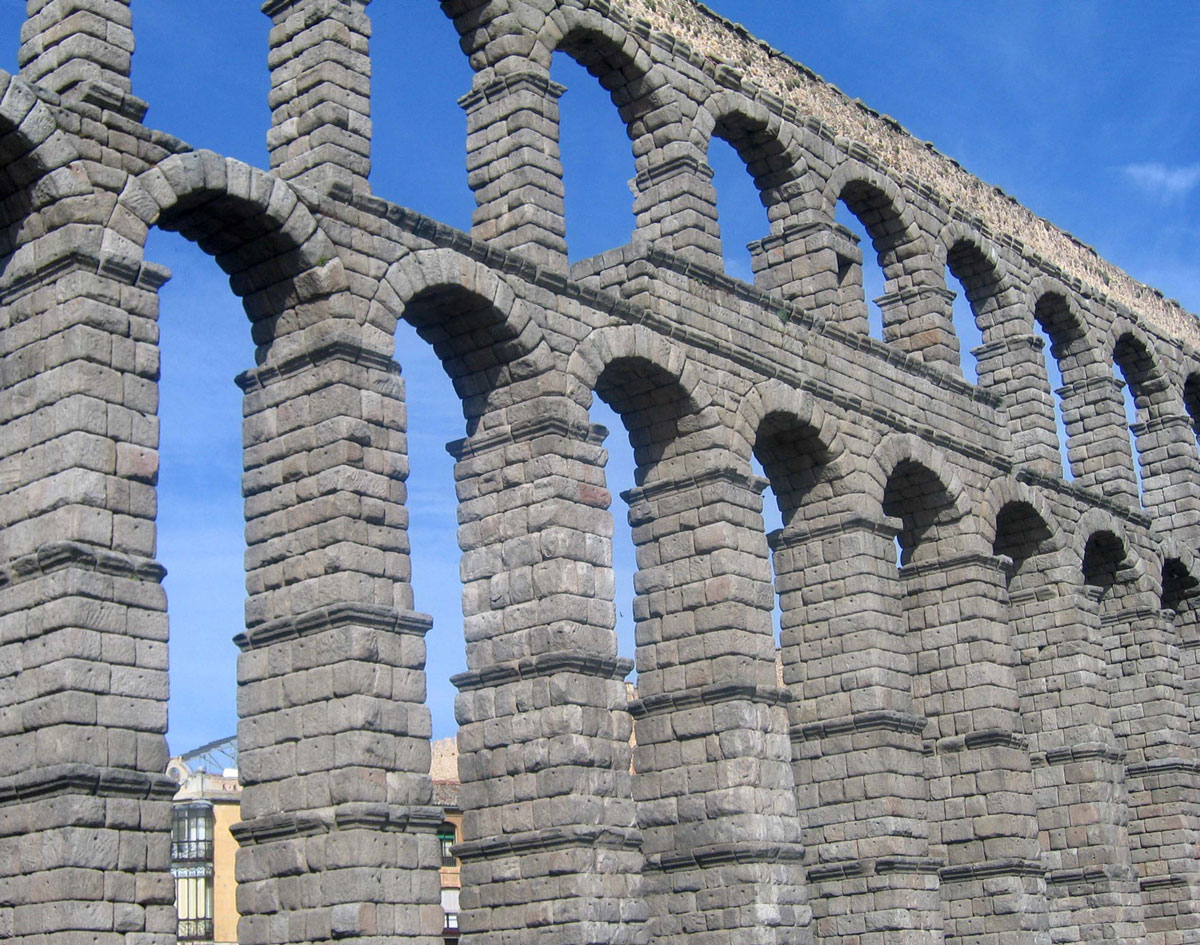
If there’s one thing you shouldn’t miss in Segovia – in fact it would be impossible to – is the Roman Aqueduct, and from Segovia Estacion, the No 8 bus left for the short journey to this magnificent structure that towers above the Plaza de Azogusjo (see featured pic above).
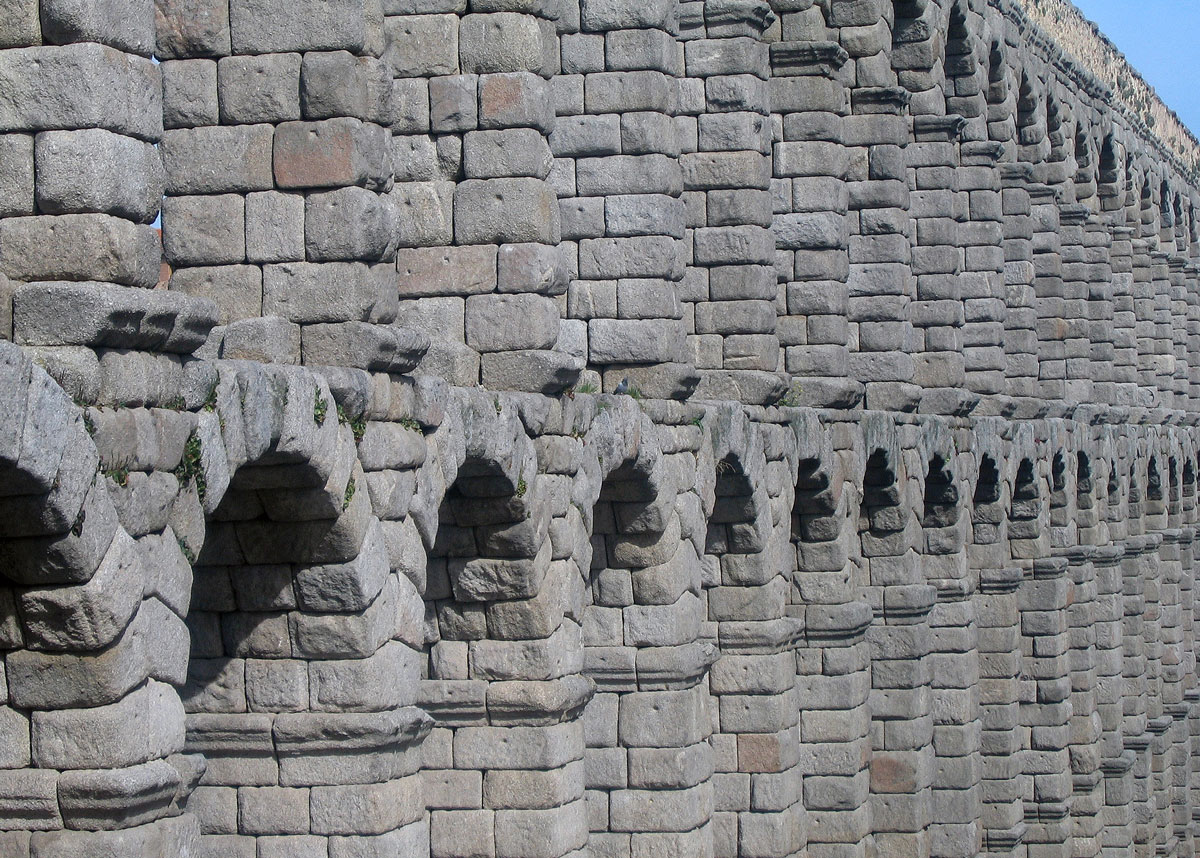
Nobody knows exactly when it was built, but it was around the middle of the 1st century AD, and carried water to Segovia from the Frio River, some 15 kilometres (9.3 miles) away. For those of you who are having difficulty sleeping at night, here are some facts that might help. The bridge is 683 metres (747 yards) long, with 166 arches more than 9 metres (30 feet) high supported on 120 pillars. At its highest point it is 29 metres (95 ft) above ground level and is built using around 20,400 granite blocks without mortar. Now, I’m sure someone is going to try and trip me up on some of these statistics because there are many different figures from many different sources, but I think you’ll find that generally speaking, they’re not far out – and if you’re bothered by the authenticity of these stats then you can always go back to counting sheep instead.
As far as its history after the fall of the Roman Empire is concerned, the Aqueduct continued to supply the city with water until the Moors tried to demolish it during the 11th century. Thirty six arches were destroyed, but after being restored by the 15th century Catholic Monarchs, Queen Isabella and King Ferdinand, water started to flow into Segovia again, and did so for another 500 years. In 1985, it was added, along with Segovia’s Old Town, to UNESCO’s World Heritage list, and is without doubt one of the most impressive Roman structures in Spain.