Warning: Creating default object from empty value in /home/sites/30b/a/a8be13db6d/public_html/wp-content/plugins/zanmb/reduxframework/ReduxCore/inc/class.redux_filesystem.php on line 29

Warning: Cannot modify header information - headers already sent by (output started at /home/sites/30b/a/a8be13db6d/public_html/wp-content/plugins/zanmb/reduxframework/ReduxCore/inc/class.redux_filesystem.php:29) in /usr/share/php/wp-stack-cache.php on line 1971

Warning: Cannot modify header information - headers already sent by (output started at /home/sites/30b/a/a8be13db6d/public_html/wp-content/plugins/zanmb/reduxframework/ReduxCore/inc/class.redux_filesystem.php:29) in /usr/share/php/wp-stack-cache.php on line 1972

Warning: Cannot modify header information - headers already sent by (output started at /home/sites/30b/a/a8be13db6d/public_html/wp-content/plugins/zanmb/reduxframework/ReduxCore/inc/class.redux_filesystem.php:29) in /usr/share/php/wp-stack-cache.php on line 1973

Warning: Cannot modify header information - headers already sent by (output started at /home/sites/30b/a/a8be13db6d/public_html/wp-content/plugins/zanmb/reduxframework/ReduxCore/inc/class.redux_filesystem.php:29) in /usr/share/php/wp-stack-cache.php on line 1971

Warning: Cannot modify header information - headers already sent by (output started at /home/sites/30b/a/a8be13db6d/public_html/wp-content/plugins/zanmb/reduxframework/ReduxCore/inc/class.redux_filesystem.php:29) in /usr/share/php/wp-stack-cache.php on line 1972

Warning: Cannot modify header information - headers already sent by (output started at /home/sites/30b/a/a8be13db6d/public_html/wp-content/plugins/zanmb/reduxframework/ReduxCore/inc/class.redux_filesystem.php:29) in /usr/share/php/wp-stack-cache.php on line 1973

Warning: Cannot modify header information - headers already sent by (output started at /home/sites/30b/a/a8be13db6d/public_html/wp-content/plugins/zanmb/reduxframework/ReduxCore/inc/class.redux_filesystem.php:29) in /home/sites/30b/a/a8be13db6d/public_html/wp-includes/feed-rss2.php on line 8
Dumfries & Galloway – Easymalc's Wanderings https://www.easymalc.co.uk I’d be unstoppable if only I could get started Sun, 24 May 2026 13:59:20 +0000 en-GB hourly 1 https://wordpress.org/?v=7.0.4 https://www.easymalc.co.uk/wp-content/uploads/2019/09/cropped-easy-malc-logo-32x32.jpg Dumfries & Galloway – Easymalc's Wanderings https://www.easymalc.co.uk 32 32 140253175 Rabbie Burns – Pt 5 A Legend in his Own Lifetime https://www.easymalc.co.uk/rabbie-burns-pt-5-a-legend-in-his-own-lifetime/ https://www.easymalc.co.uk/rabbie-burns-pt-5-a-legend-in-his-own-lifetime/#comments Sun, 24 May 2026 13:59:20 +0000 https://www.easymalc.co.uk/?p=19407 Originally posted 2023-08-18 14:52:49.

The post Rabbie Burns – Pt 5 A Legend in his Own Lifetime appeared first on Easymalc's Wanderings.

]]>

Rabbie Burns - Pt 5 A Legend in his Own Lifetime

Having left his socially superior friends in Edinburgh behind, Rabbie had now retuned to country life back in his native south-west Scotland and settled down with Jean Armour and the family  for a peaceful life in the sticks – or at least that was what he was probably hoping for.

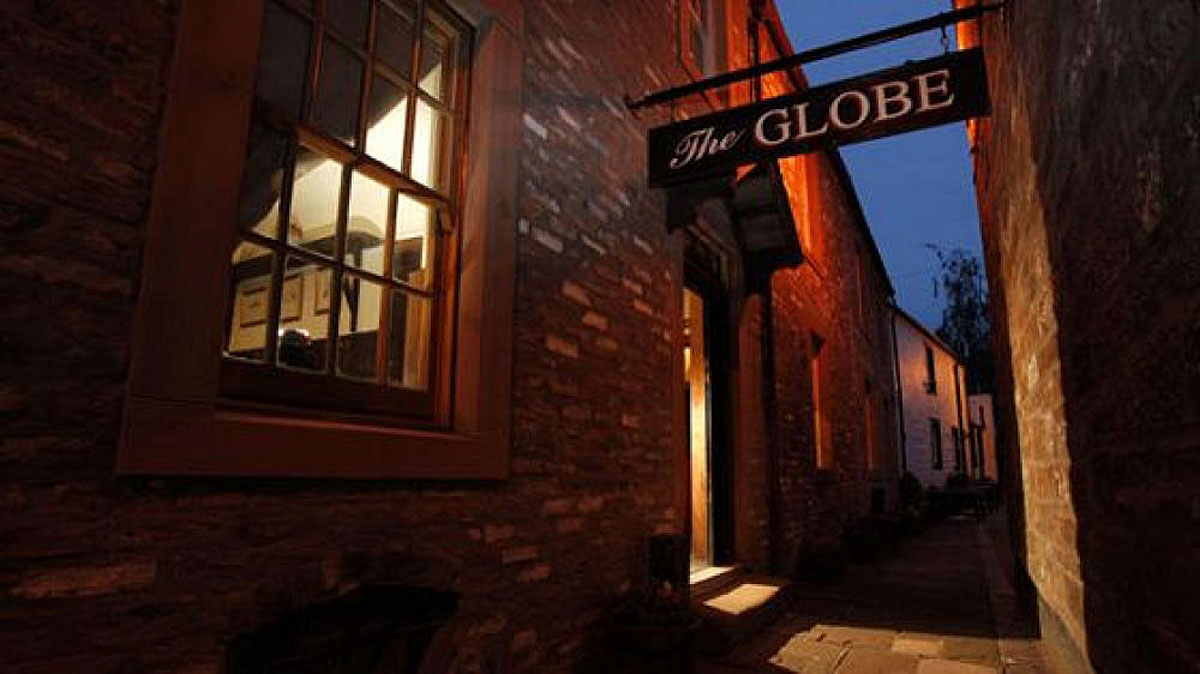
Success in this latest chapter of his life was mixed. On the one hand, his burgeoning reputation in literary circles showed no signs of abating after the publication of Tam o’ Shanter, but life on the farm wasn’t getting any easier, and then there was the added complication of leaving behind a human souvenir every time he bumped into one of the local lassies – the latest victim being Anna Park, a barmaid at the Globe Inn in Dumfries.

One of the reasons that he was frequently seen propping up the bar in the Globe was because he had taken a job as an exciseman in the town as a way to diminish his financial problems back on the farm, but spending the extra cash on a wee dram or two and encouraging the barmaid to provide another mouth to feed doesn’t seem to be the best way of using those extra resources I wouldn’t have thought.

The Globe (Love Dumfries)

In the end, Rabbie was forced to give up farming altogether, and by using his influential contacts, became a full time exciseman in Dumfries. Exerting his authority to make sure that people were paying their taxes probably didn’t endear himself to some elements of the local community, but at least it was a steady job with a good income, and in November 1791, the family moved into a house at 11 Bank Street, which Burns called The Sanghoose of Scotland – and with good reason.

Rabbie’s contribution to James Johnson’s ‘Scots Musical Museum’ had already earned him national recognition as an expert on Scottish songs, and now another collector, George Thomson, was asking him to write “twenty or twenty-five songs” for A Select Collection of Original Scottish Airs. Now that the ex-farmer wasn’t getting bogged down in the fields, he was able to spend more time at his desk and duly obliged, providing no money changed hands.

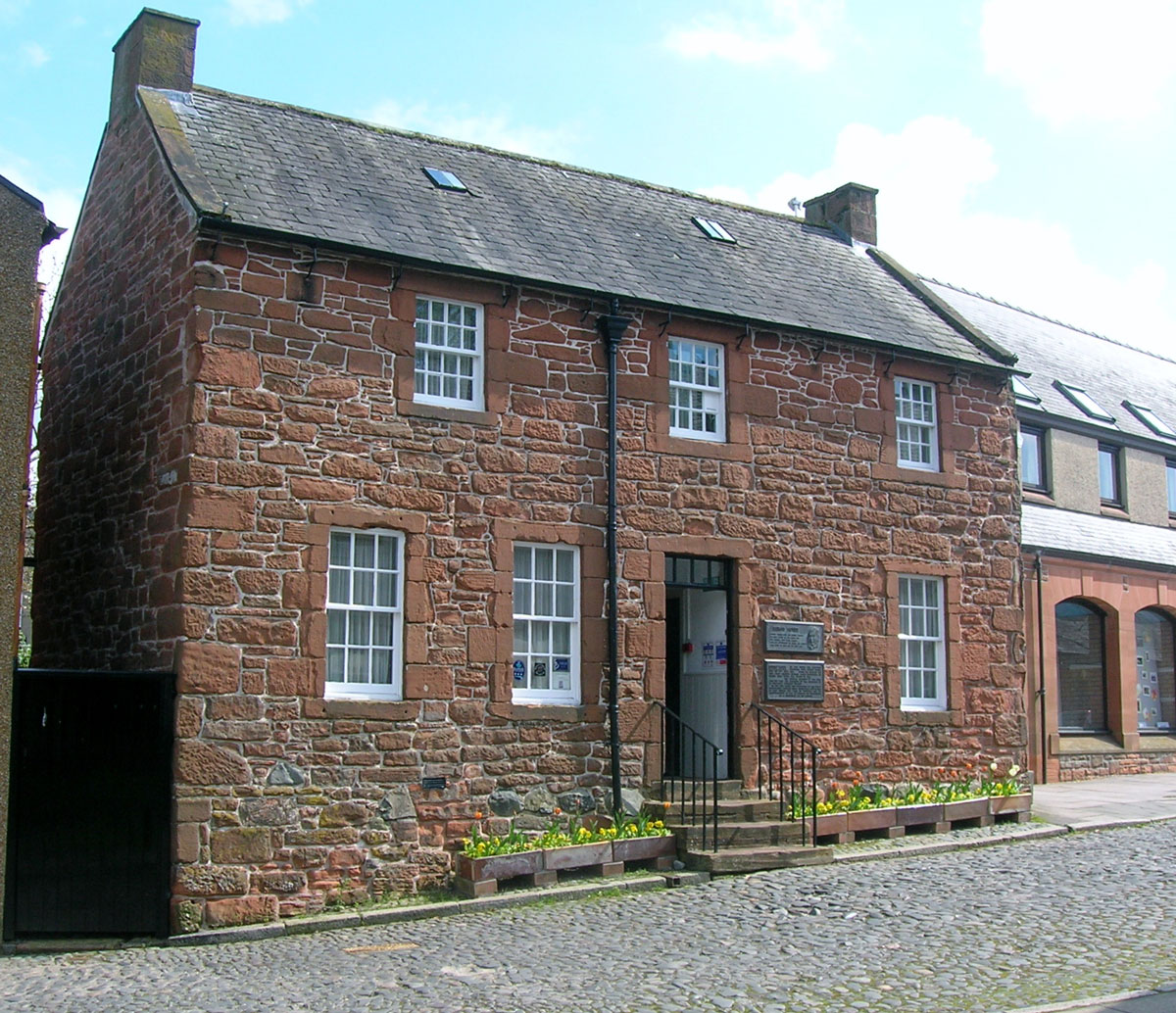
His appetite for providing Thomson with material didn’t waver even after moving house; in fact, if anything, it gathered momentum. In May 1793, they moved the short distance to Mill Brae Street on the other side of The Globe. The house is still here today and is called the Robert Burns House and is now located in, wait for it, Burns Street. I’m a bit annoyed with myself here, because if I’d known at the time when I was driving through Dumfries, I would have gone to take a look because it sounds an interesting museum to visit.

Robert Burns House (Wikimedia Commons)

The first of Thomson’s five volumes was published in 1793, and for the next couple of years, Rabbie was at his most prolific, producing over 160 songs for the collection, including some of his most famous compositions. Many of them were new words to old tunes, but others were his own arrangements.

Rabbie by now had almost become part of the establishment, or that’s how it might have appeared, but there could be nothing further from the truth. His upbringing had taught him to be proud of his country’s heritage and he often read historical novels about the likes of William Wallace and others. He had been a supporter of the American Revolution, and his support of the ongoing French Revolution almost cost him his job as an exciseman. I’ve no doubt that if he was alive today Burns would have been a fervent supporter of the Scottish National Party. One of his most famous poems, A man’s a man for a’ that shows his real egalitarian feelings.

As if to prove the point, in August he submitted Scots Wha Hae for inclusion in Thomson’s collection: The music was based on Hey Tuttie Tatie, a traditional air reputedly played at the Battle of Bannockburn in 1314, and the lyrics were written by Rabbie himself in the form of a speech given by Robert the Bruce before the battle. Many regarded it as a covert message about his radical and republican sympathies which could have carried a sentence of ‘Transportation’ if openly acknowledged. Until recent times, when Scotland the Brave and Flower of Scotland became more popular, Scots Wha Hae was regarded as Scotland’s unofficial national anthem. Below is a version sung by Dougie MacLean, a talented Scottish singer/songwriter, whose song Caledonia should also be a contender for the national anthem in my opinion.

There’s no doubt that Rabbie Burns was sailing close to the wind where the authorities were concerned, but he was already becoming a legend with the ordinary man in the street. He advocated democratic reform and intensely disliked the disparity between rich and poor. Some people might say that he mistreated women by using them for his own gratification, but at the same time, he wrote a poem called The Rights of Woman in which he argues that “the ruling class would benefit from turning their attention to the female sex to generate humanity, as opposed to crippling civilisation with war”. He was definitely a lover and not a fighter, and says that “War I deprecate: misery and ruin to thousands are in the last that announces the destructive demon. I am better pleased to make one more than be the death of twenty”.

Between 1793 and 1795, Burns was not only producing more offspring, but also some of his most memorable compositions, including My Love is Like a Red Red Rose, a song which Bob Dylan regarded as his “greatest inspiration”. The version below is by one of my favourite female Scottish/Gaelic singers, Karen Matheson.

It wouldn’t be difficult to go on listing the poems and songs that Rabbie contributed to the ‘Scots Musical Museum’ and ‘A Select Collection of Original Scottish Airs’ including of course, Auld Lang Syne, but by now Rabbie’s complex lifestyle was beginning to catch up with him.

He was still bringing new lives into the world, but at the same time, his own life was starting to ebb away. During their time in Dumfries, Jean had given birth to Elizabeth Riddell at their home in Bank Street, and there was another addition to the family when Anna Park offloaded  the illegitimate Betty onto Rabbie when she was applying for a job as a domestic servant. In 1794 James Glencairn became Jean and Rabbie’s fourth son when he was born on 12th August in the current Robert Burns House Museum, but in September 1795 Elizabeth Riddell, who up until now, had been the only daughter to survive infancy, was also taken from them, adding greatly to the poet’s already frequent bouts of depression.

On 21st July 1796, Maxwell became the final addition to the family, but at the time Jean was giving birth, Rabbie was being lowered into a simple grave in the corner of St Michael’s churchyard. He was just 37 years old.

There have been many suggestions as to the cause of his death, but as there was no post mortem, there’s no conclusive medical evidence. For a long time, the most common theory was that he died of chronic alcoholism and some even suggested it was from a sexually transmitted disease, but these days experts put it down to some form of heart disease. I’m no expert, but if there was a box for ‘lifestyle’ on the death certificate, I’d be tempted to put my tick in there.

For all his literary success, Rabbie’s bank balance was in the red when he died, and a charitable trust was set up for Jean and the children. Altogether Rabbie and Jean had nine children together, with the bard fathering at least another four outside of wedlock, and it’s reckoned that there are more than 900 living descendants worldwide including his great-great-great-nephew, fashion designer, Tommy Hilfiger.

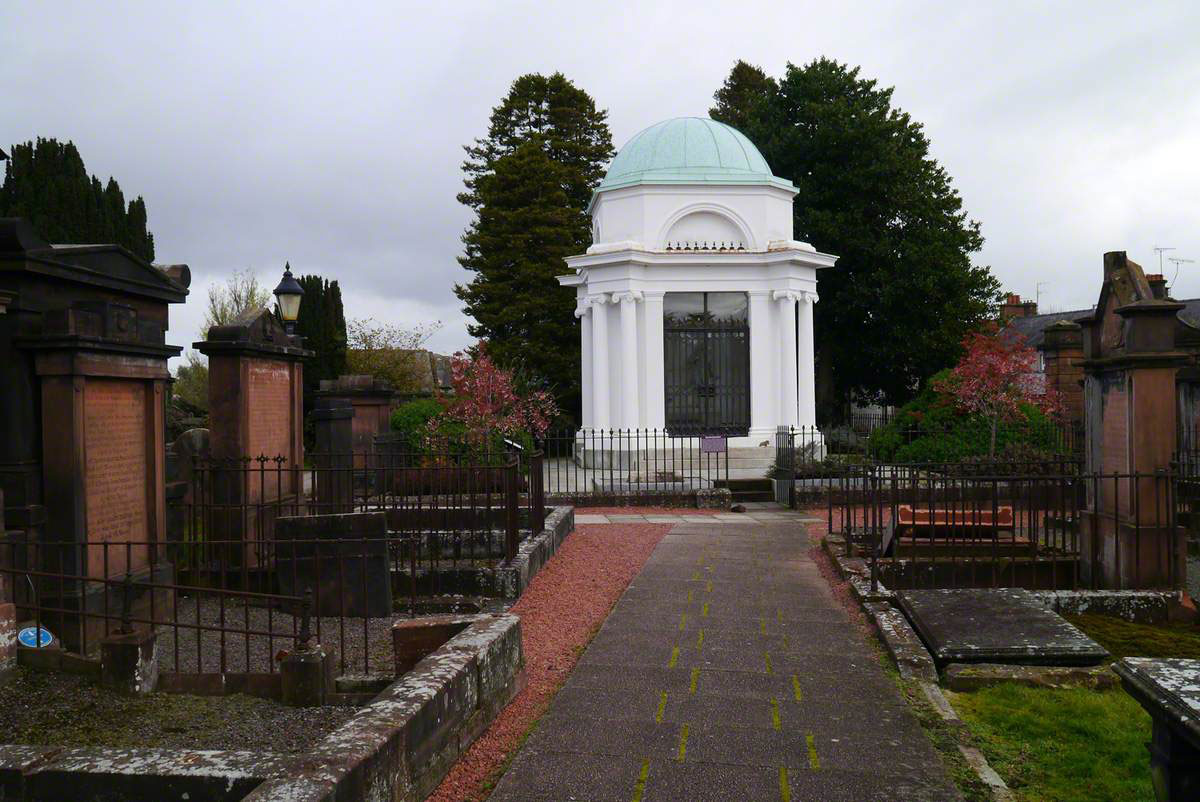
If he’d been around at the time, the millionaire’s money could have helped finance a more fitting resting place for the poet, but as it was, a public subscription was launched to build a mausoleum in a quieter part of the graveyard, and at midnight on 19th September 1817 his remains, along with two of his sons, Maxwell and Francis, were disinterred and reburied under the floor of the new mausoleum – presumably without any witches to bother him. His wife Jean joined him on her death in March 1834, as did his son Robert in May 1857.
The Burns Mausoleum, Dumfries (Art UK)

His legacy lives on in various ways, most notably each January 25th, when his birthday is celebrated on Burns Night. The event involves reciting Rabbie’s poem Address to the Haggis, and is not just a celebration of his birthday and haggis, but everything Scottish.

I started these posts when I intended writing about Alloway, but I quickly realised there was so much more to Robert Burns than I initially thought, and the more I’ve delved into the man and his life, the more I’ve come to understand why he is so revered in Scotland, and I hope you’ve gained something from this experience too.

In some ways I regret not spending time in and around Dumfries when I had the chance, but that was because I was on my way to Alloway. This is where Rabbie grew up and where there’s a modern museum alongside the Burns Memorial Gardens.

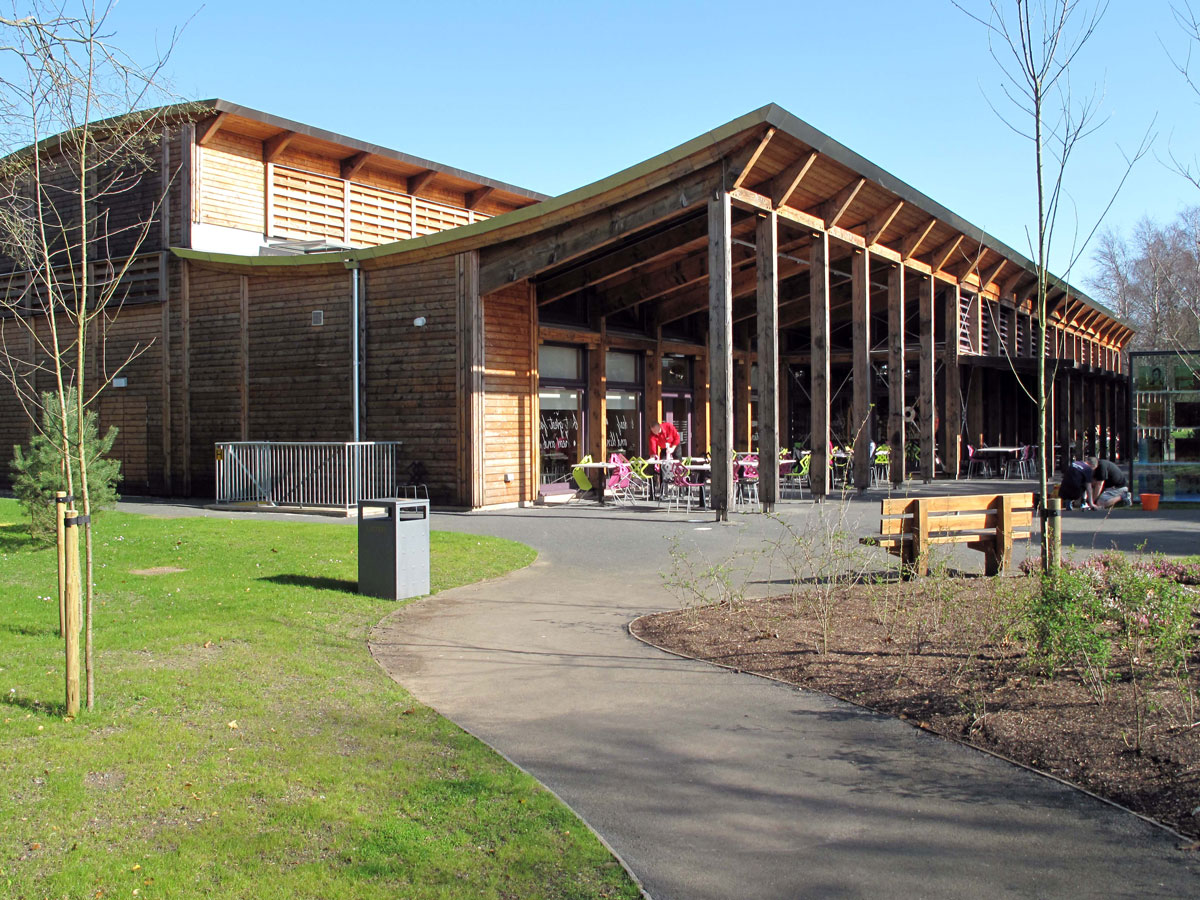
Robert Burns Birthplace Museum, Alloway
The Burns Memorial Gardens
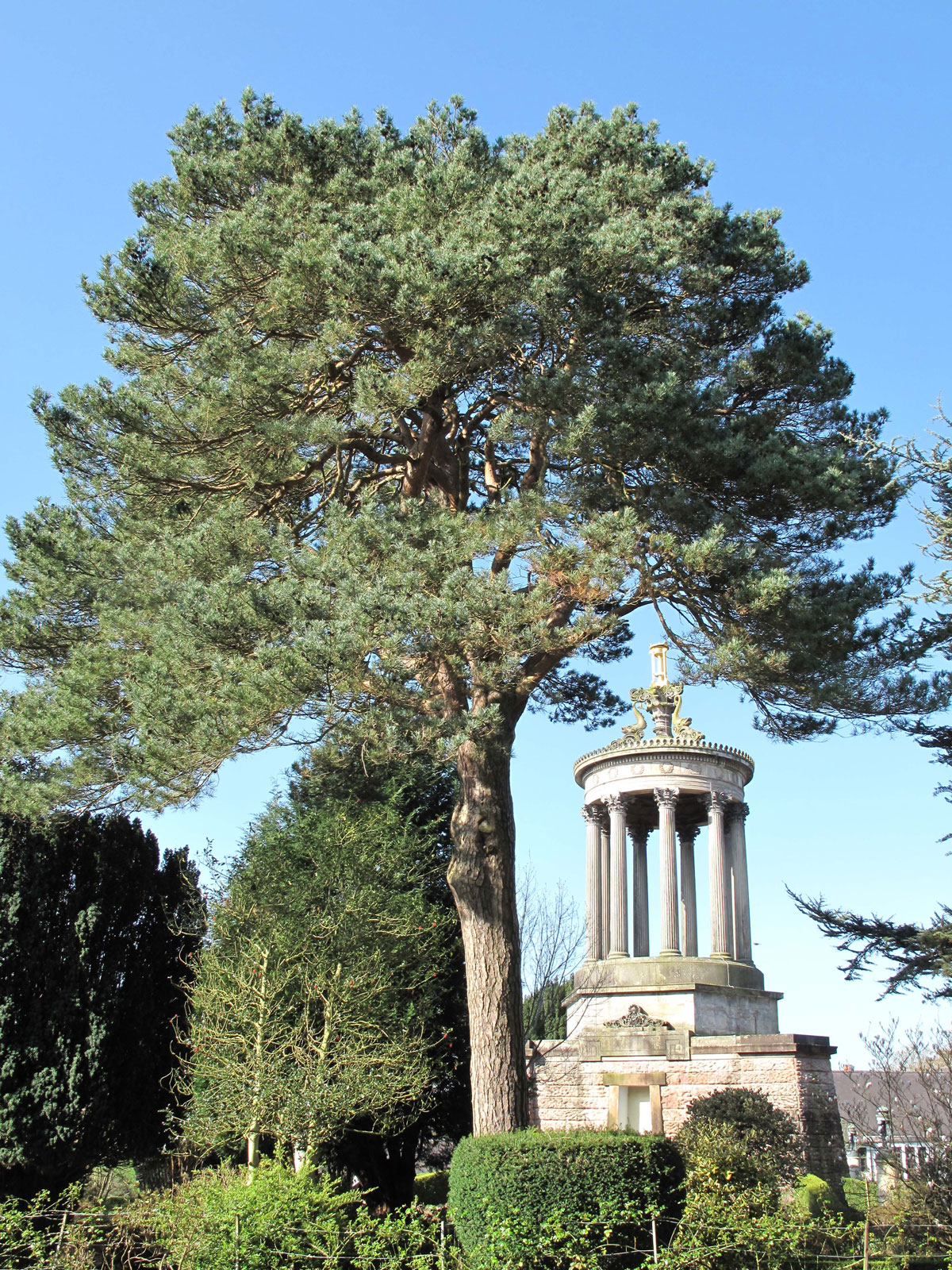
The Burns Monument
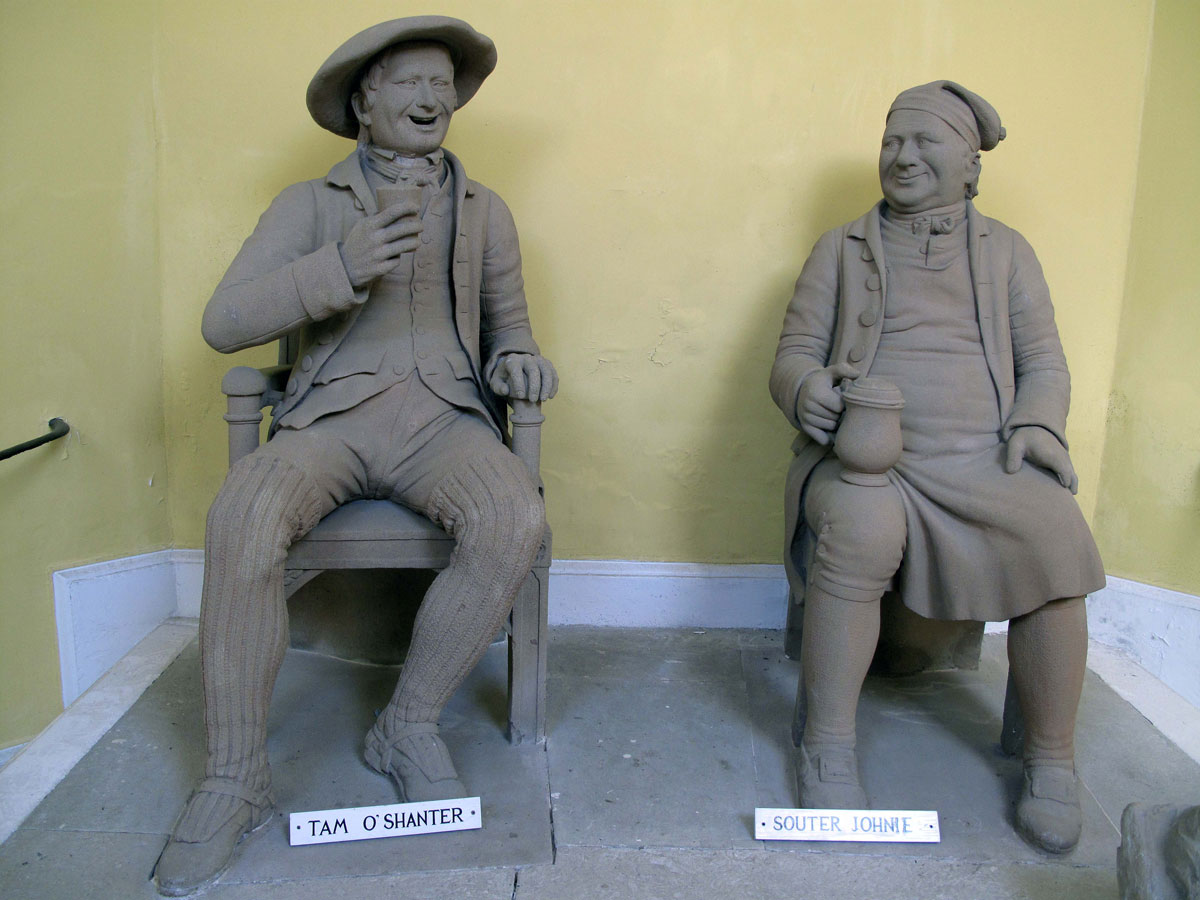
The Statue House in the Memorial Gardens

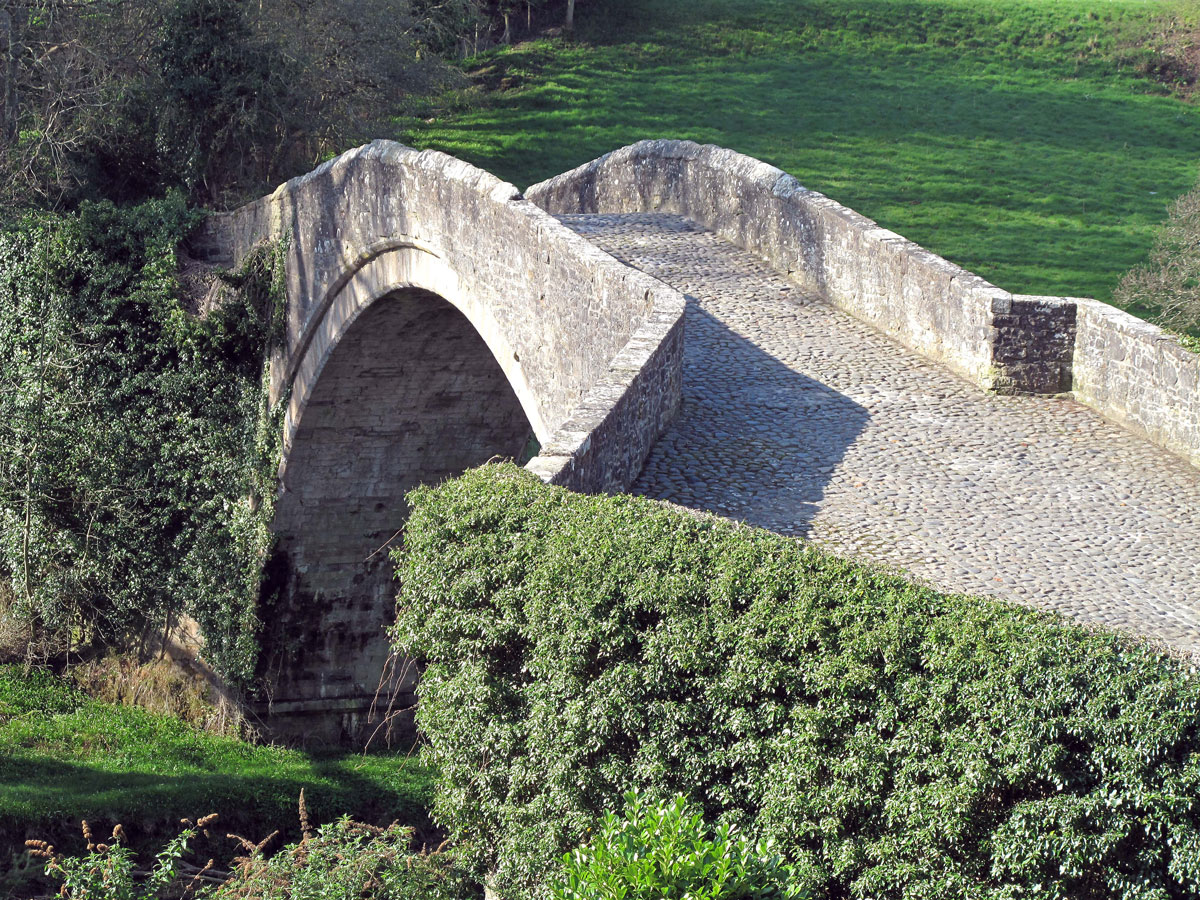
Opposite the Gardens is the Brig o’ Doon and Alloway Auld Kirk next to it, and if you follow the Poet’s Path it will lead you to the cottage where Rabbie Burns was born (featured pic at top of the page)

The Brig o' Doon
Alloway Auld Kirk
The Poet's Path

If you’ve managed to complete the course and read all five chapters of Robert Burns, then I’m sure you would have formed your own opinion about him – but if nothing else, you should at least know there was more to his repertoire than Auld Lang Syne.

His music has been covered by the likes of Haydn, Beethoven and a host of Scottish singers including Eddie Reader (of Fairground Attraction fame). In 2003 she made an album of his songs and described Rabbie as “the guy from Ayrshire that I would have drunk with, walked with and probably got into trouble with. I wanted to show him off to everyone, sit folk down and say ‘no! no! listen, listen, really listen to this”.

As tempting as it is to show you a clip from Eddie Reader, I’m going to leave you with a song by Fiona Kennedy and Paul Anderson called John Anderson, My Jo. In this instance ‘My Jo’ means my darling, or similar, and you can change the name of John Anderson to whoever you like.

Thank you for following.

POSTED – AUGUST 2023

Originally posted 2023-08-18 14:52:49.

The post Rabbie Burns – Pt 5 A Legend in his Own Lifetime appeared first on Easymalc's Wanderings.

]]>
https://www.easymalc.co.uk/rabbie-burns-pt-5-a-legend-in-his-own-lifetime/feed/ 24 19407
Rabbie Burns – Pt 4 Ellisland and Tam o’ Shanter https://www.easymalc.co.uk/rabbie-burns-pt-4-ellisland-and-tam-o-shanter/ https://www.easymalc.co.uk/rabbie-burns-pt-4-ellisland-and-tam-o-shanter/#comments Tue, 28 Apr 2026 12:59:14 +0000 https://www.easymalc.co.uk/?p=19354 Originally posted 2023-08-13 15:05:53.

The post Rabbie Burns – Pt 4 Ellisland and Tam o’ Shanter appeared first on Easymalc's Wanderings.

]]>

Rabbie Burns - Pt 4 Ellisland and Tam o' Shanter

For the two years Rabbie lived in Edinburgh, he mixed with high society, but deep down, the ‘Ploughman Poet’ was still a country boy at heart with views that often differed from those of the establishment, and on 23rd February 1788 he moved out of the capital for good.

As we know, while he was there, he popped back to Ayrshire every so often, if only to keep the population figures up. Jean Armour had given birth to twins in September 1786, and now she was expecting another set, which her father, James, wasn’t exactly ecstatic about. At least the first time around he packed her off to a relative in Greenock out of the way, but this time he kicked her out altogether.

When Rabbie found her destitute he made sure that she had somewhere to stay, and on 3rd March she gave birth to two girls, neither of whom survived to the end of the month. As for the first set of twins, Jean died in infancy while Rabbie was in Edinburgh, and Robert Burns Junior went to live with the poet’s family at Mossgiel Farm.

So how did James Armour react when Rabbie re-appeared back on the scene? If you remember, he wanted him slung in jail the first time he messed around with Jean, and now he’s been at it again, but strangely enough, the poet’s new-found celebrity status seemed to have had a calming effect on him, and the next thing we know he’s giving his blessing for the couple to get married – and on 5th August 1788 they tied the knot in Mauchline – this time officially.

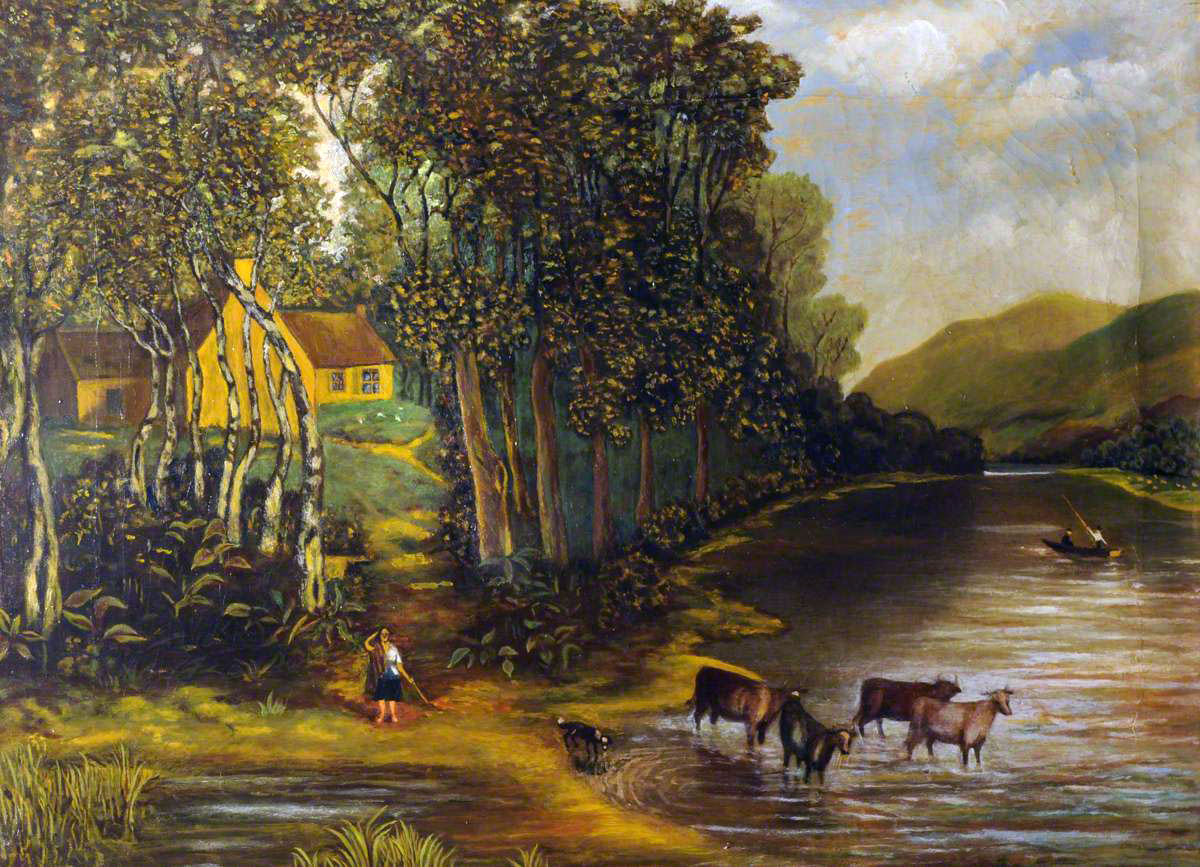
Burns had already decided to return to farming, and after consulting with a trusted friend, he took out a lease on the 170 acre Ellisland Farm, which was located on the banks of the River Nith, about 44 miles south-east of Mauchline and 7 miles north-west of Dumfries (in the adjacent historic county of Dumfriesshire, but now part of Dumfries and Galloway).

Ellisland Farm by an Unknown Artist (South Ayrshire Council)

Unfortunately, the farm didn’t come with anywhere to live, but the landlord, Patrick Millar, generously gave Burns £300 to build a cottage and set up the farm as a going concern. Choosing a farm with a decent landlord meant that things were looking up for Rabbie, but it also meant that he couldn’t move in with Jean until the following June. Three months later Jean gave birth to their second son, Francis Wallace, and Robert Junior joined them.

The pastoral Nith Valley was just the sort of place that Rabbie must have dreamt about, where he could grow crops, raise a family and write poetry, and in the three years that they were here, he wrote over 130 songs and poems, including his most famous poem of all – Tam o’ Shanter.

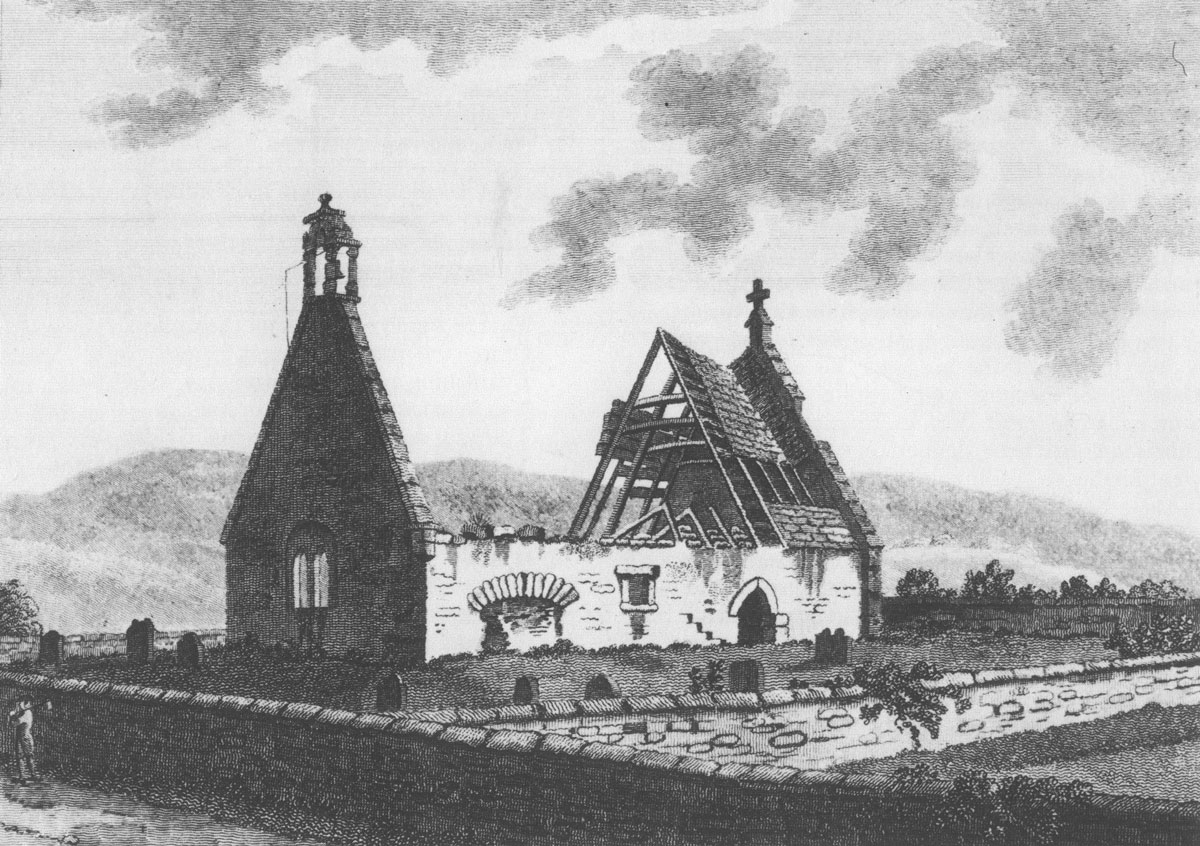
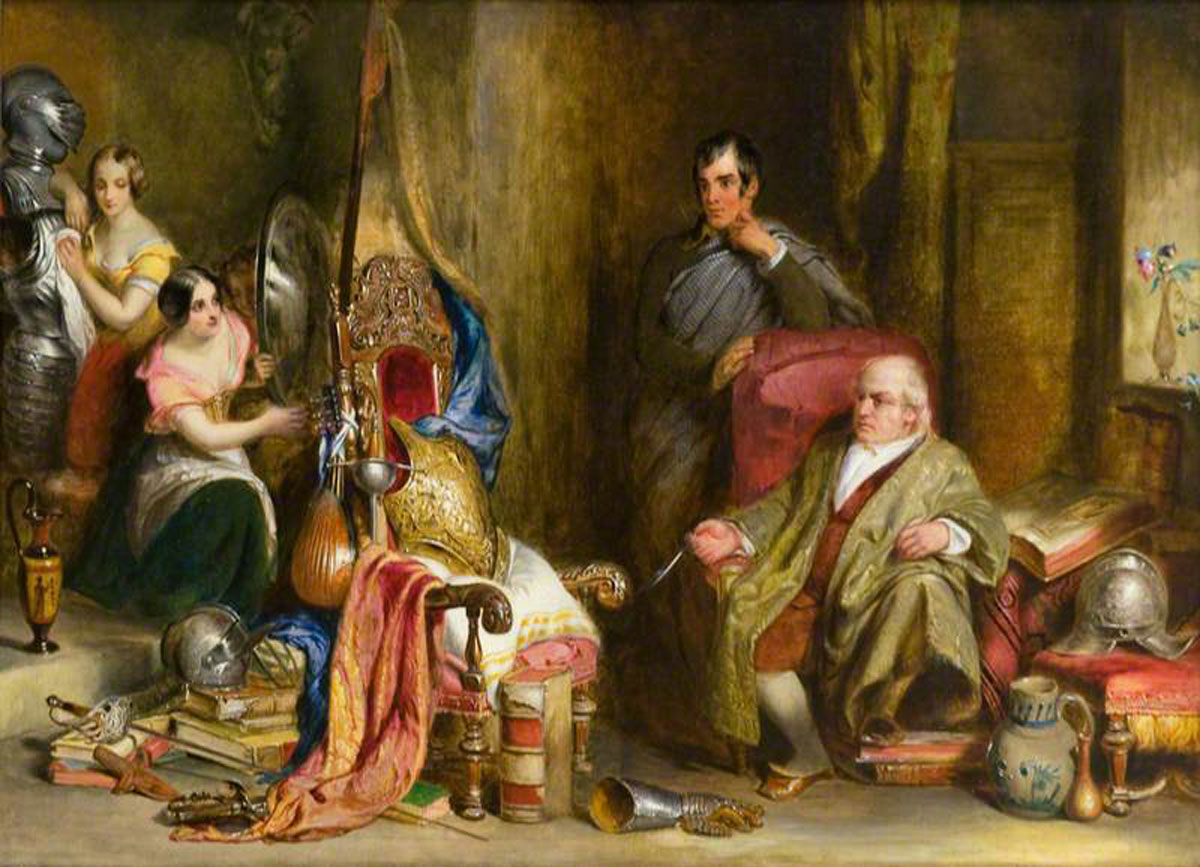
He began writing the narrative poem in 1790 for his friend and neighbour, Captain Francis Grose, an antiquarian who was in the process of publishing a second volume of his Antiquities of Scotland, which was essentially a collection of drawings of old buildings. The collaboration came about when Burns suggested to Grose that he should include the Auld Kirk in Alloway, which the Captain agreed to, providing that Rabbie supplied a tale to accompany the illustration.

Engraving of Alloway Auld Kirk by Captain Francis Grose

This must have been music to Rabbie’s ears, because remembering Betty Davidson’s ghostly tales around the Alloway fireside, he immediately set about putting pen to paper. Alloway Kirk was renowned for being haunted and to accompany the illustration, Grose wrote “This church is also famous for being the place wherein the witches and warlocks used to hold infernal meetings, or sabbaths, and prepare their magical unctions; here too they used to amuse themselves with dancing to the pipes of the muckle-horned Deel. Diverse stories of these horrid rites are still current: one of which my worthy friend Mr. Burns has here favoured me with in verse.”

"The Meeting of Burns and Francis" by Robert Scott Lauder (NTS)

Now, if you remember, I began this series of posts by explaining how Scotland had been losing its identity since the crowns of England and Scotland were joined together, especially as English was now the dominant language. Having lived in Edinburgh for a couple of years, Burns saw first-hand how Scotland had become Anglicized, and in Tam o’ Shanter, he wanted to restore some national pride.

Over the centuries, Scotland evolved with several different languages and dialects, including Gaelic, Pictish and Scots – the language that Rabbie Burns grew up with in Ayrshire – and in Tam o’ Shanter he was canny enough to write in both Scots and English, merging the two together. He obviously didn’t want to upset the people who sponsored his work, but in this poem he was able to write about local Ayrshire folktales and in a language that people in the area actually spoke. All he had to do now was produce a poem that would please, not only Captain Grose and his fellow Scots, but also the establishment as well. Fortunately, Rabbie produced a poem that, as he puts it, “I despair of ever excelling.”

For those of us who aren’t familiar with the Scots language, Tam o’ Shanter might be difficult to understand, so before I provide a link to the poem for those who want to read it, a summary of the tale might help.

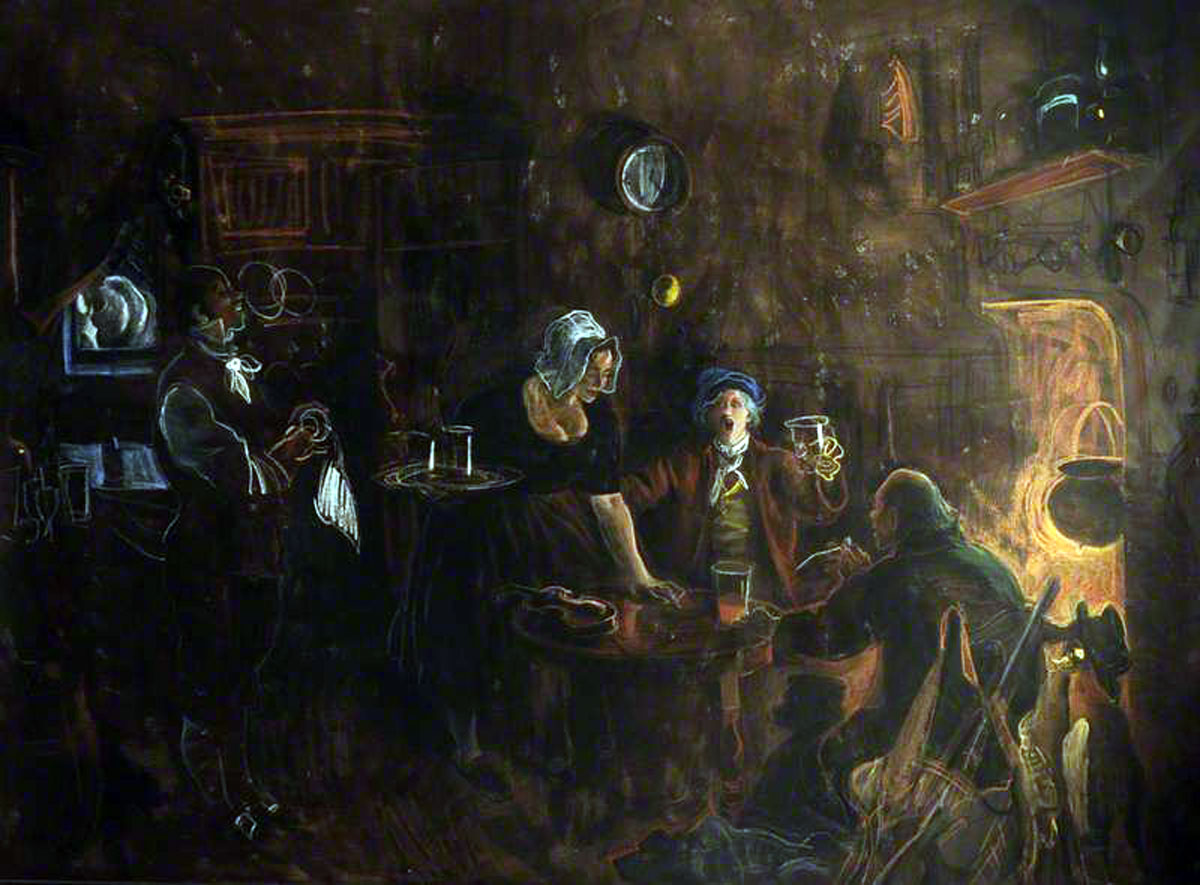
Basically, the story revolves around a farmer called Tam, who after visiting the market in Ayr, decides to spend the rest of the evening in the local pub with his “ancient trusty drouthy (thirsty) crony” Souter Johnie instead of going straight home to his wife, Kate, who was sitting at home “nursing her wrath to keep it warm”. I’m sure you get the gist.

"Ae Market Night" by Alexander Goudie - 1996 (South Ayrshire Council)

Anyway, when he decides to leave, he jumps on his horse Meg and heads off towards Alloway, where a storm is brewing. As he approaches Alloway Kirk he notices lights on inside the building, and being a naturally nosey person, he went to check it out. So far, the only difference between me and Tam is that I don’t ride a horse.

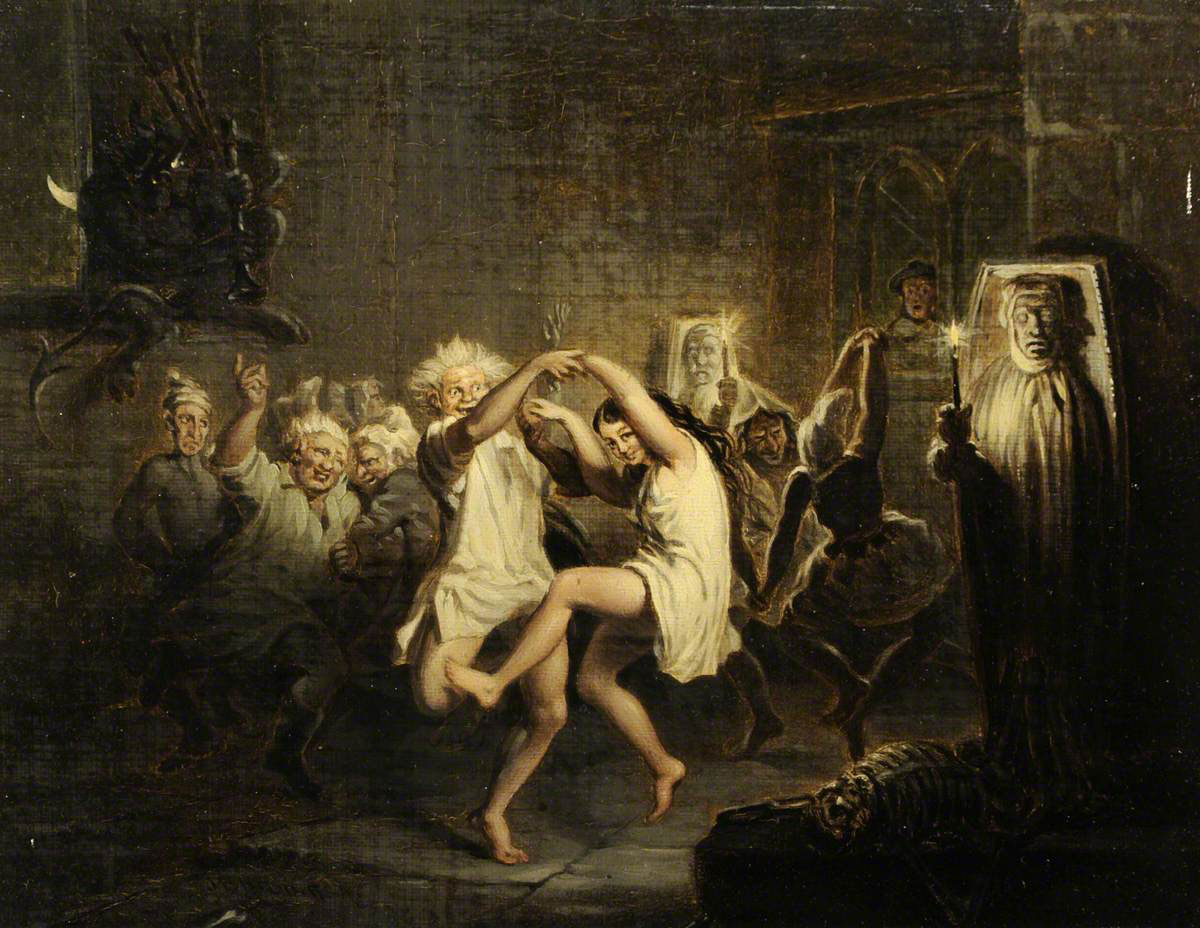
Of course, it’s not impossible that Tam could still have had some alcohol in his bloodstream, because when he looked through the window what did he see? All sorts of gruesome things and the Devil playing the bagpipes with witches and warlocks dancing a ceilidh. Now, I don’t know about you, but I’ve only ever seen witches on a broomstick that resemble every man’s nightmare of a mother-in-law, and although Tam recognised some of his neighbours, there was one whose ‘Cutty Sark’ (short skirt) didn’t leave much to the imagination: Instead of leaving it there and just act like any sensible peeping tom would do, he couldn’t help himself and shouted out “Weel done cutty sark” – and with that, all the lights suddenly went out.

"Witches Dancing in Alloway Auld Kirk" by Joseph Bartolomew Kidd (South Ayrshire Council)

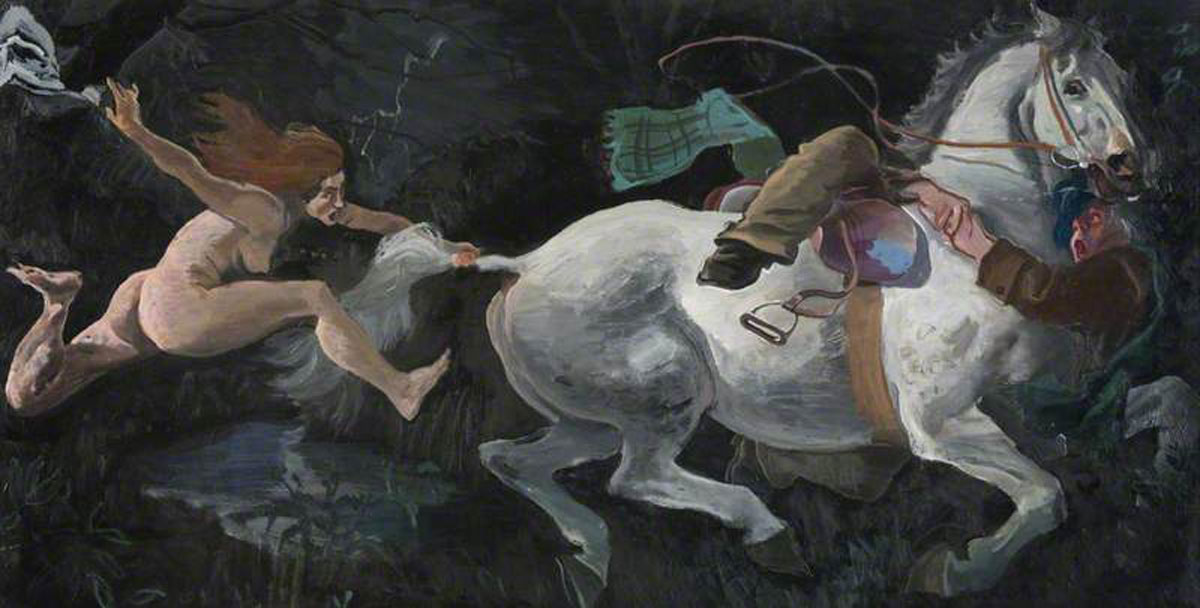
The next thing he knew they were after him, and Tam and Meg were off faster than ‘Red Rum’ at the Grand National. Knowing that witches can’t cross over water, they headed for the nearby Brig o’ Doon, with ‘Nannie’ (who was wearing the Cutty Sark) and the other witches just behind. Just as he reaches the bridge, Tam looks back and sees Nannie clinging on to Meg’s tail, but eventually they manage to get over the bridge, but poor Meg was missing her tail.

"When Out the Hellish Legion Sallied" by Alexander Goudie (South Ayrshire Council)
"Caught by Her Rump" by Alexander Goudie (South Ayrshire Council)
The Brig o' Doon in Alloway

Some of you may be wondering if there’s a connection between Nannie’s cutty sark and the clipper of the same name – and yes there is. I did a post about it a while ago and you can take a look at it here. Below is a photo of the current ship’s figurehead showing Nannie holding Meg’s tail.

Figurehead 'Nannie' on the Cutty Sark in London

Here is the poem with translation

Tam o’ Shanter with Translation (Glow Scotland)

You’ll need to go back to return to the main page after reading it

There are also a couple of video links you might want to take a look at: The first is a classical rendition of the poem by Karen Dunbar –

And this modern interpretation by Scotland History Tours filmed at Robert Burns’s Cottage in Alloway.

So, what is it that makes this poem a bit special? For me, the storytelling, down to earth Scottish humour and describing the Ayrshire countryside is just one part of the appeal. Even for those of us who aren’t adept in the art of writing poetry can see that Rabbie had a way with words.

But pleasures are like poppies spread,

You sieze the flower, its bloom is shed;

Or like the snow falls in the river,

A moment white – then melts forever;

When listening to the poem read in a Scottish dialect, it’s easy to see why he became a favourite with his fellow Scots, and his observation of local characters was integral to the storyline. Tam o’ Shanter was based on a man called Douglas Graham, a tenant of Shanter Farm at Maidens near Kirkoswald in South Ayrshire. His boat was called Tam o’ Shanter and his wife Helen was well known for her sharp tongue; and even Souter Johnie was a real shoemaker in Kirkoswald. In fact his cottage is still here and open to the public.

I can’t help but think that there was some of Rabbie in there as well. During the time he was at Ellisland achieving success as a writer, the same thing wasn’t happening out in the fields. In an attempt to make ends meet he changed from arable to dairy farming, but even that wasn’t enough, and so he took on a second job as an excise officer in Dumfries in order to stay afloat.

If you’ve read the poem, you might remember that while Tam was getting merry in the pub, “The Landlady and Tam grew gracious wi’ favors, secret, sweet & precious”, and it seems as though something similar was going on in the Globe Tavern in Dumfries: Anna Park wasn’t the landlady, but a barmaid who was another fool maiden who fell under Rabbie’s spell, and I wouldn’t be surprised if he wasn’t muttering the word ‘warlocks’ under his breath when he found out that he was to be a father again. Anna gave birth to Elizabeth Betty Burns on 31st March 1791, just 9 days before Jean gave birth to their third son, William Nichol. If only he could have been as productive on the farm!

The writing was on the wall for the Burns family as far as the farm was concerned, and on 11th November 1791 they upped sticks and left Ellisland for town life in Dumfries. Today, Ellisland has become a museum.

Ellisland Farm Museum (Wikimedia Commons)

To see if Rabbie had any ink left in his quill – and lead in his pencil –  I’m afraid you’ll need to join me for at least one more instalment.

POSTED – AUGUST 2023

Originally posted 2023-08-13 15:05:53.

The post Rabbie Burns – Pt 4 Ellisland and Tam o’ Shanter appeared first on Easymalc's Wanderings.

]]>
https://www.easymalc.co.uk/rabbie-burns-pt-4-ellisland-and-tam-o-shanter/feed/ 36 19354