
Rabbie Burns - Pt 4 Ellisland and Tam o' Shanter
For the two years Rabbie lived in Edinburgh, he mixed with high society, but deep down, the ‘Ploughman Poet’ was still a country boy at heart with views that often differed from those of the establishment, and on 23rd February 1788 he moved out of the capital for good.
As we know, while he was there, he popped back to Ayrshire every so often, if only to keep the population figures up. Jean Armour had given birth to twins in September 1786, and now she was expecting another set, which her father, James, wasn’t exactly ecstatic about. At least the first time around he packed her off to a relative in Greenock out of the way, but this time he kicked her out altogether.
When Rabbie found her destitute he made sure that she had somewhere to stay, and on 3rd March she gave birth to two girls, neither of whom survived to the end of the month. As for the first set of twins, Jean died in infancy while Rabbie was in Edinburgh, and Robert Burns Junior went to live with the poet’s family at Mossgiel Farm.
So how did James Armour react when Rabbie re-appeared back on the scene? If you remember, he wanted him slung in jail the first time he messed around with Jean, and now he’s been at it again, but strangely enough, the poet’s new-found celebrity status seemed to have had a calming effect on him, and the next thing we know he’s giving his blessing for the couple to get married – and on 5th August 1788 they tied the knot in Mauchline – this time officially.
Burns had already decided to return to farming, and after consulting with a trusted friend, he took out a lease on the 170 acre Ellisland Farm, which was located on the banks of the River Nith, about 44 miles south-east of Mauchline and 7 miles north-west of Dumfries (in the adjacent historic county of Dumfriesshire, but now part of Dumfries and Galloway).
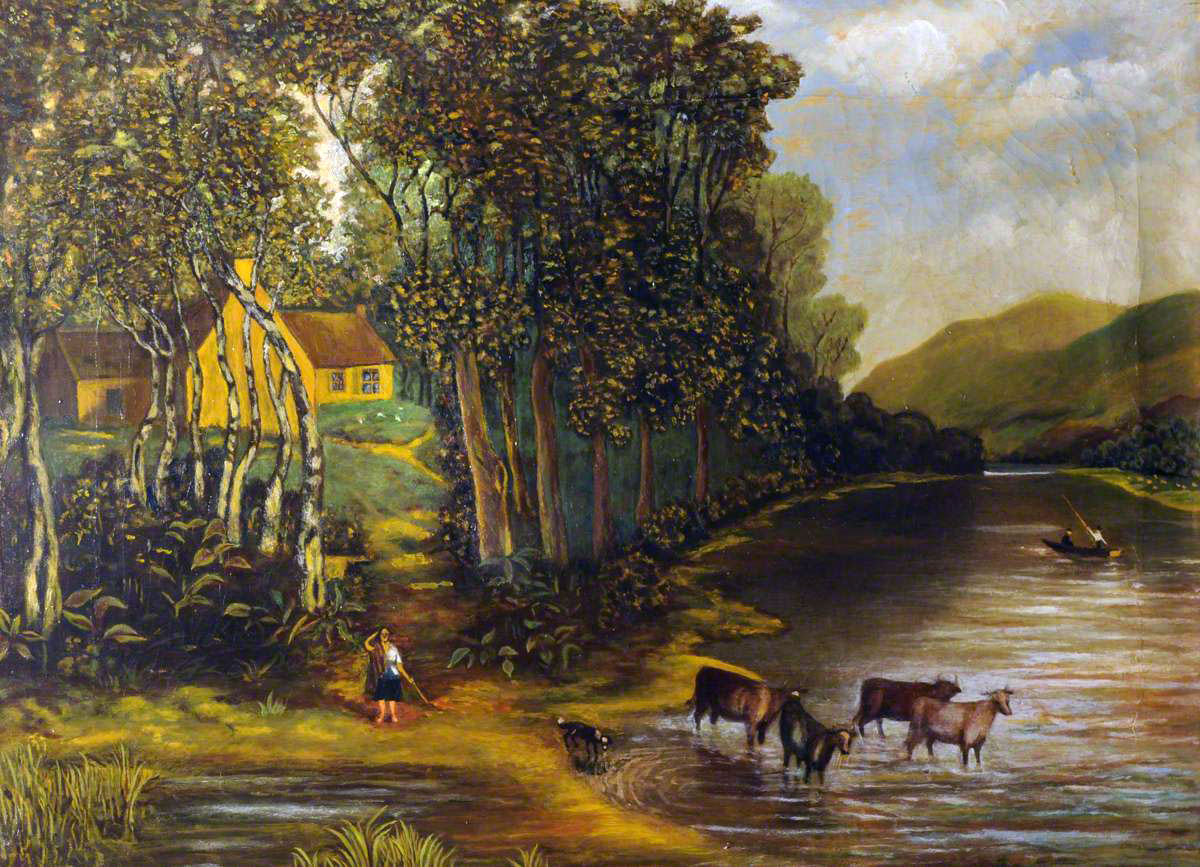
Unfortunately, the farm didn’t come with anywhere to live, but the landlord, Patrick Millar, generously gave Burns £300 to build a cottage and set up the farm as a going concern. Choosing a farm with a decent landlord meant that things were looking up for Rabbie, but it also meant that he couldn’t move in with Jean until the following June. Three months later Jean gave birth to their second son, Francis Wallace, and Robert Junior joined them.
The pastoral Nith Valley was just the sort of place that Rabbie must have dreamt about, where he could grow crops, raise a family and write poetry, and in the three years that they were here, he wrote over 130 songs and poems, including his most famous poem of all – Tam o’ Shanter.
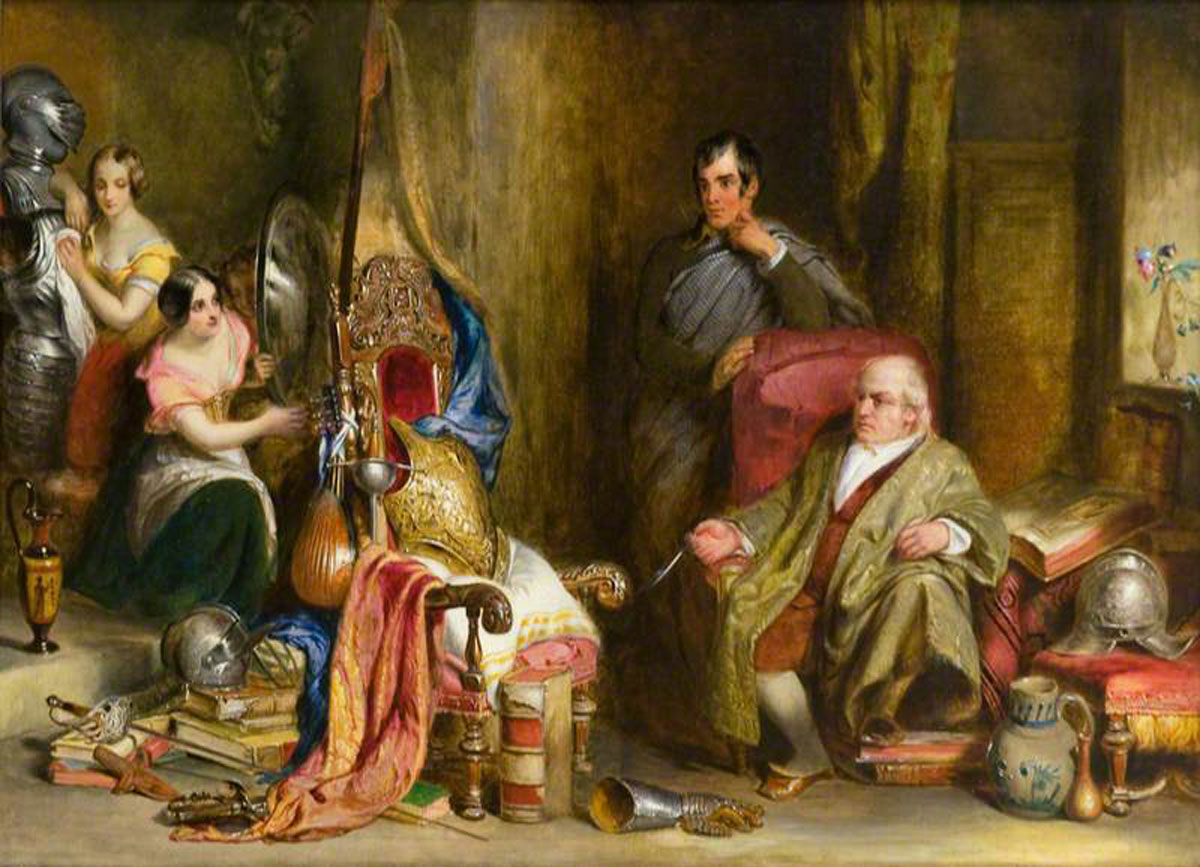
He began writing the narrative poem in 1790 for his friend and neighbour, Captain Francis Grose, an antiquarian who was in the process of publishing a second volume of his Antiquities of Scotland, which was essentially a collection of drawings of old buildings. The collaboration came about when Burns suggested to Grose that he should include the Auld Kirk in Alloway, which the Captain agreed to, providing that Rabbie supplied a tale to accompany the illustration.
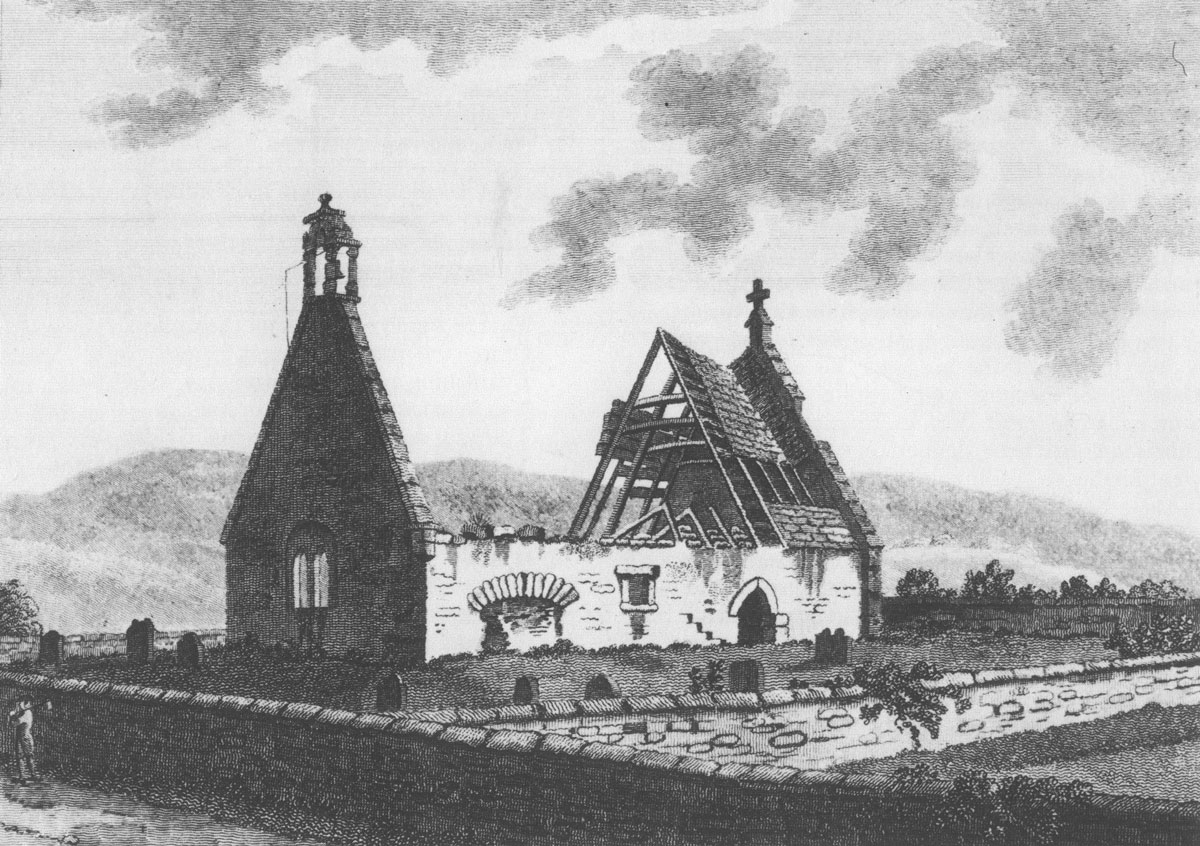
This must have been music to Rabbie’s ears, because remembering Betty Davidson’s ghostly tales around the Alloway fireside, he immediately set about putting pen to paper. Alloway Kirk was renowned for being haunted and to accompany the illustration, Grose wrote “This church is also famous for being the place wherein the witches and warlocks used to hold infernal meetings, or sabbaths, and prepare their magical unctions; here too they used to amuse themselves with dancing to the pipes of the muckle-horned Deel. Diverse stories of these horrid rites are still current: one of which my worthy friend Mr. Burns has here favoured me with in verse.”
Now, if you remember, I began this series of posts by explaining how Scotland had been losing its identity since the crowns of England and Scotland were joined together, especially as English was now the dominant language. Having lived in Edinburgh for a couple of years, Burns saw first-hand how Scotland had become Anglicized, and in Tam o’ Shanter, he wanted to restore some national pride.
Over the centuries, Scotland evolved with several different languages and dialects, including Gaelic, Pictish and Scots – the language that Rabbie Burns grew up with in Ayrshire – and in Tam o’ Shanter he was canny enough to write in both Scots and English, merging the two together. He obviously didn’t want to upset the people who sponsored his work, but in this poem he was able to write about local Ayrshire folktales and in a language that people in the area actually spoke. All he had to do now was produce a poem that would please, not only Captain Grose and his fellow Scots, but also the establishment as well. Fortunately, Rabbie produced a poem that, as he puts it, “I despair of ever excelling.”
For those of us who aren’t familiar with the Scots language, Tam o’ Shanter might be difficult to understand, so before I provide a link to the poem for those who want to read it, a summary of the tale might help.
Basically, the story revolves around a farmer called Tam, who after visiting the market in Ayr, decides to spend the rest of the evening in the local pub with his “ancient trusty drouthy (thirsty) crony” Souter Johnie instead of going straight home to his wife, Kate, who was sitting at home “nursing her wrath to keep it warm”. I’m sure you get the gist.
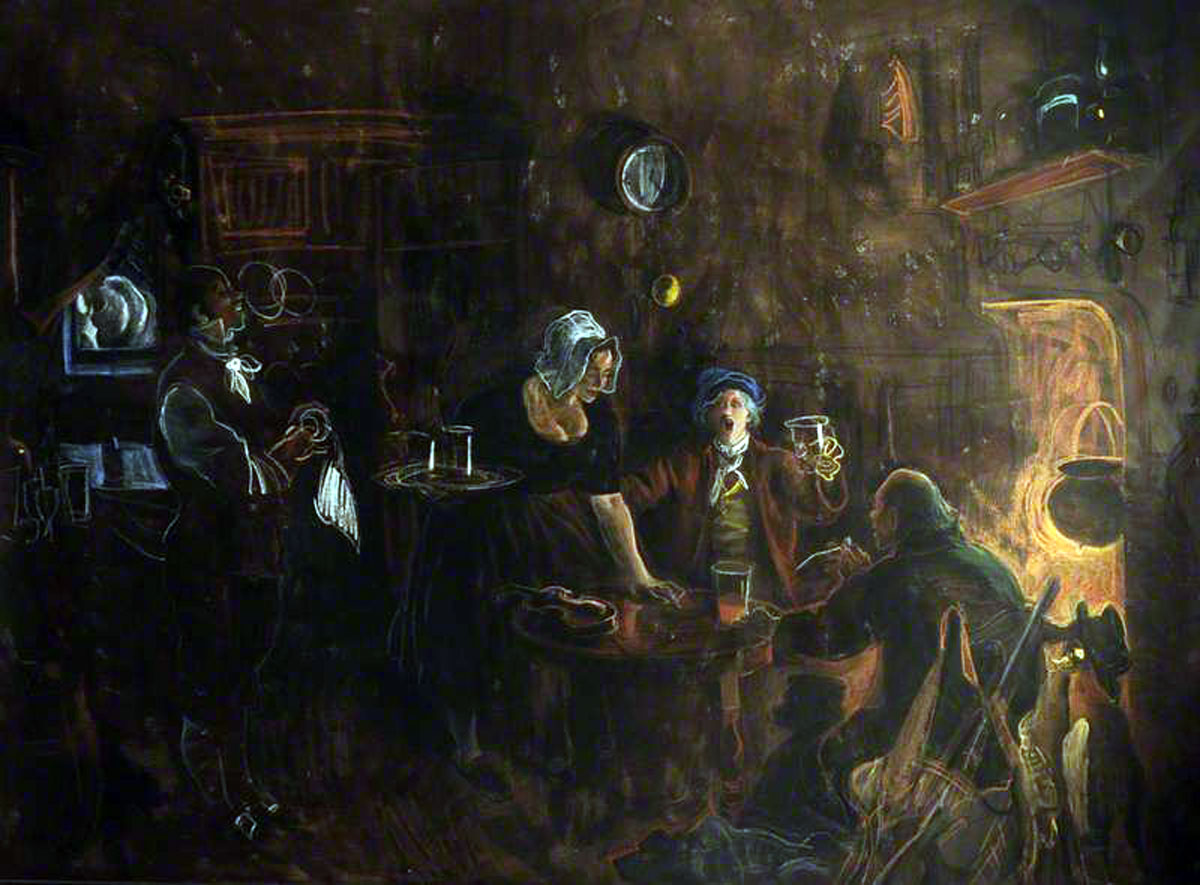
Anyway, when he decides to leave, he jumps on his horse Meg and heads off towards Alloway, where a storm is brewing. As he approaches Alloway Kirk he notices lights on inside the building, and being a naturally nosey person, he went to check it out. So far, the only difference between me and Tam is that I don’t ride a horse.
Of course, it’s not impossible that Tam could still have had some alcohol in his bloodstream, because when he looked through the window what did he see? All sorts of gruesome things and the Devil playing the bagpipes with witches and warlocks dancing a ceilidh. Now, I don’t know about you, but I’ve only ever seen witches on a broomstick that resemble every man’s nightmare of a mother-in-law, and although Tam recognised some of his neighbours, there was one whose ‘Cutty Sark’ (short skirt) didn’t leave much to the imagination: Instead of leaving it there and just act like any sensible peeping tom would do, he couldn’t help himself and shouted out “Weel done cutty sark” – and with that, all the lights suddenly went out.
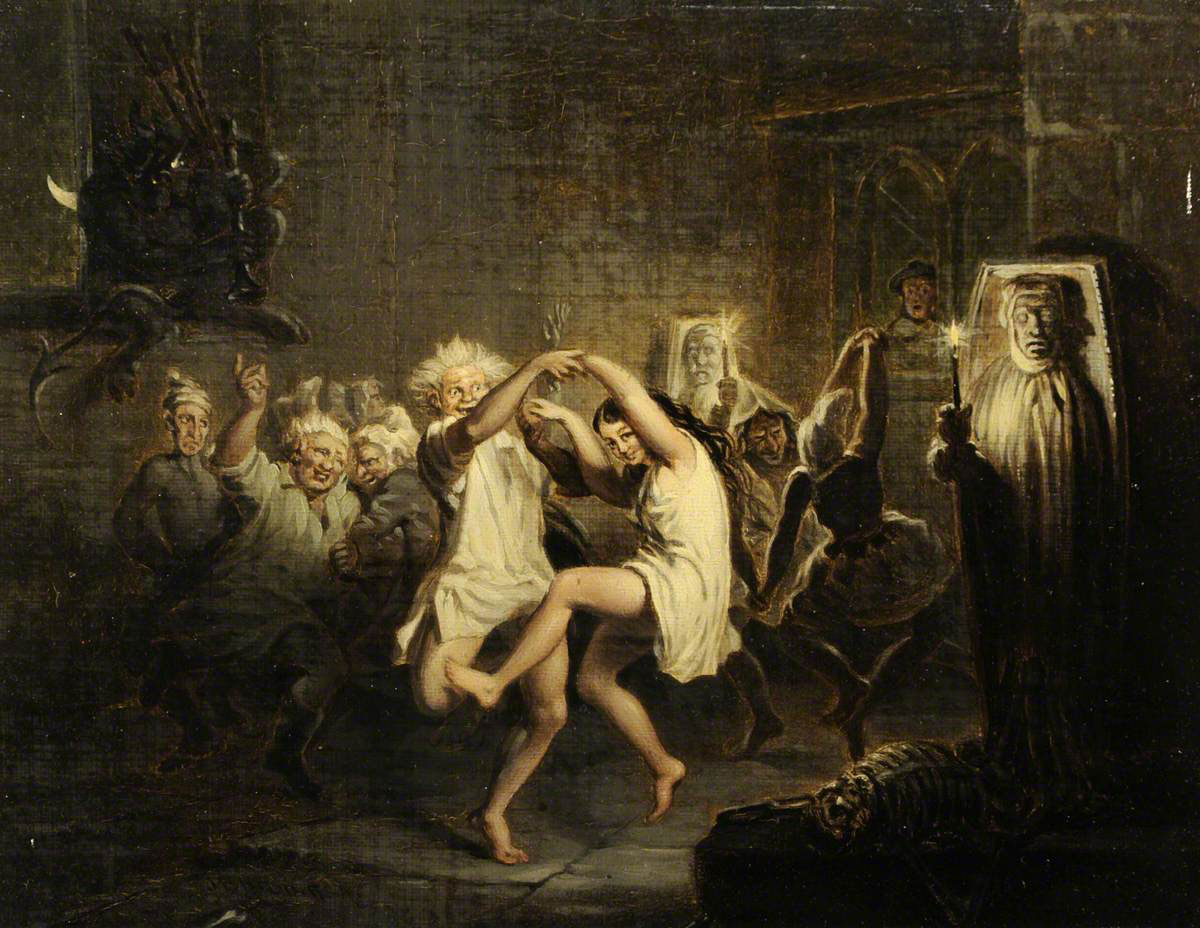
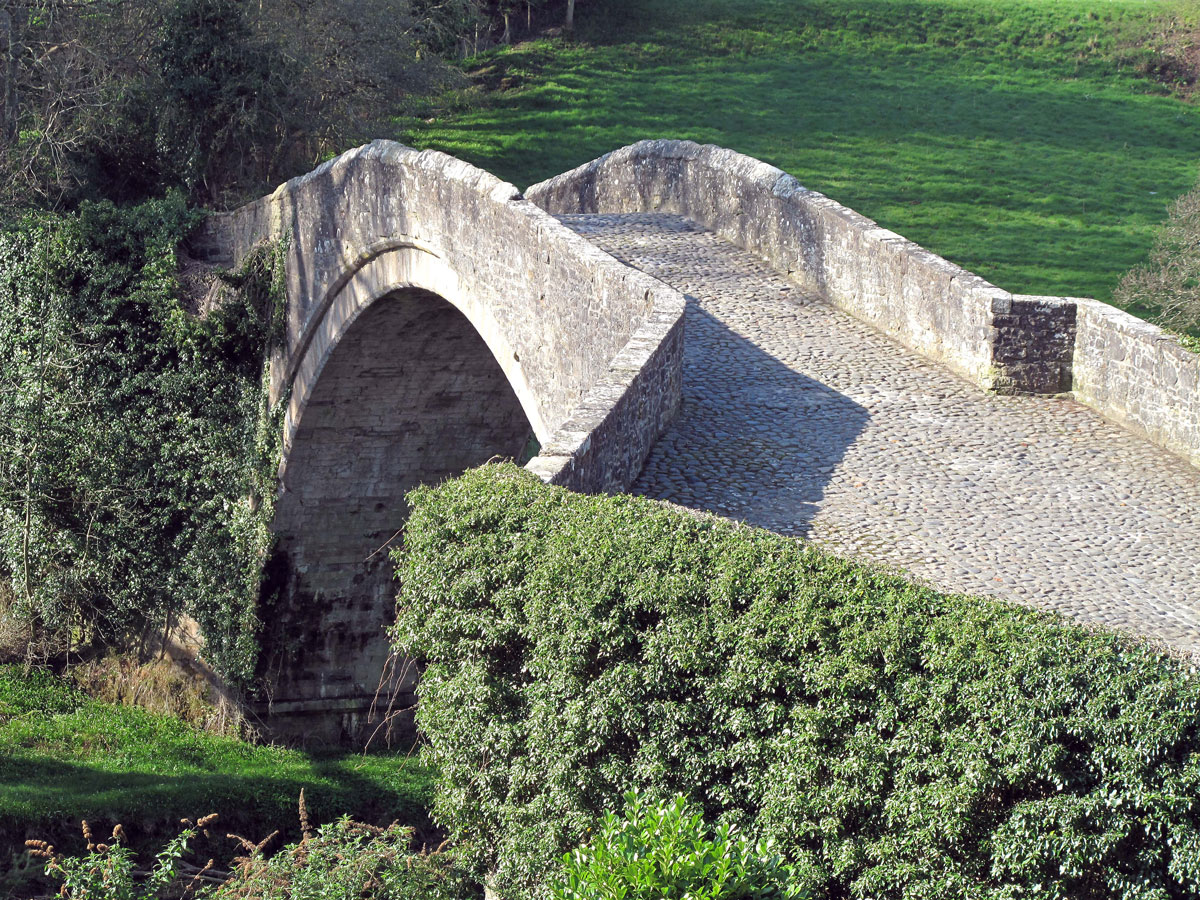
The next thing he knew they were after him, and Tam and Meg were off faster than ‘Red Rum’ at the Grand National. Knowing that witches can’t cross over water, they headed for the nearby Brig o’ Doon, with ‘Nannie’ (who was wearing the Cutty Sark) and the other witches just behind. Just as he reaches the bridge, Tam looks back and sees Nannie clinging on to Meg’s tail, but eventually they manage to get over the bridge, but poor Meg was missing her tail.

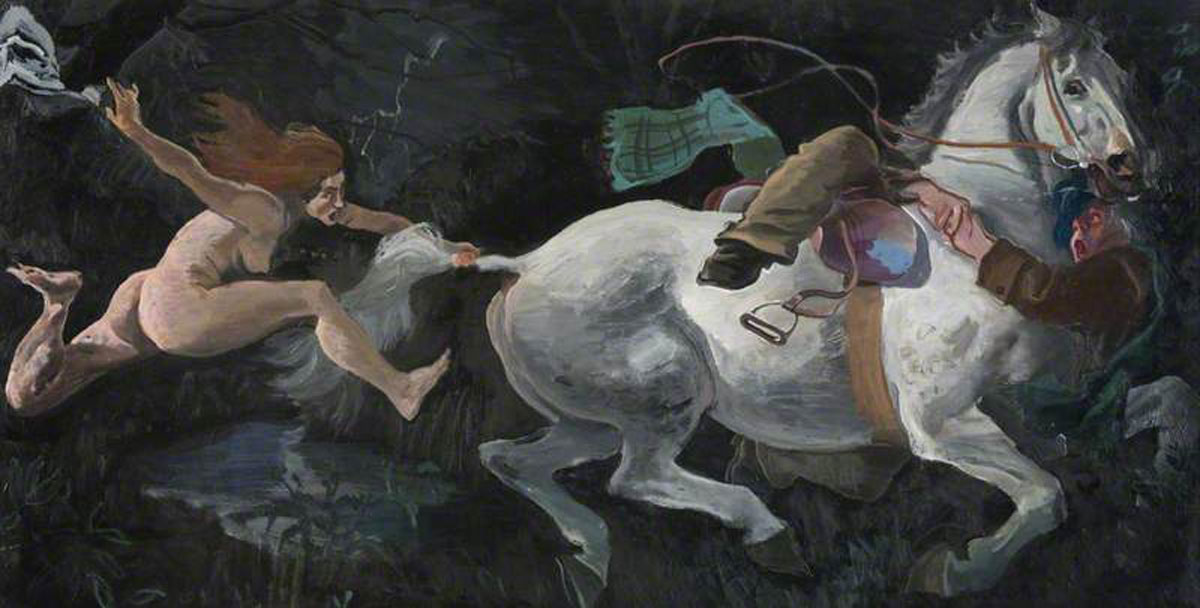
Some of you may be wondering if there’s a connection between Nannie’s cutty sark and the clipper of the same name – and yes there is. I did a post about it a while ago and you can take a look at it here. Below is a photo of the current ship’s figurehead showing Nannie holding Meg’s tail.

Here is the poem with translation
Tam o’ Shanter with Translation (Glow Scotland)
You’ll need to go back to return to the main page after reading it
There are also a couple of video links you might want to take a look at: The first is a classical rendition of the poem by Karen Dunbar –
And this modern interpretation by Scotland History Tours filmed at Robert Burns’s Cottage in Alloway.
So, what is it that makes this poem a bit special? For me, the storytelling, down to earth Scottish humour and describing the Ayrshire countryside is just one part of the appeal. Even for those of us who aren’t adept in the art of writing poetry can see that Rabbie had a way with words.
But pleasures are like poppies spread,
You sieze the flower, its bloom is shed;
Or like the snow falls in the river,
A moment white – then melts forever;
When listening to the poem read in a Scottish dialect, it’s easy to see why he became a favourite with his fellow Scots, and his observation of local characters was integral to the storyline. Tam o’ Shanter was based on a man called Douglas Graham, a tenant of Shanter Farm at Maidens near Kirkoswald in South Ayrshire. His boat was called Tam o’ Shanter and his wife Helen was well known for her sharp tongue; and even Souter Johnie was a real shoemaker in Kirkoswald. In fact his cottage is still here and open to the public.
I can’t help but think that there was some of Rabbie in there as well. During the time he was at Ellisland achieving success as a writer, the same thing wasn’t happening out in the fields. In an attempt to make ends meet he changed from arable to dairy farming, but even that wasn’t enough, and so he took on a second job as an excise officer in Dumfries in order to stay afloat.
If you’ve read the poem, you might remember that while Tam was getting merry in the pub, “The Landlady and Tam grew gracious wi’ favors, secret, sweet & precious”, and it seems as though something similar was going on in the Globe Tavern in Dumfries: Anna Park wasn’t the landlady, but a barmaid who was another fool maiden who fell under Rabbie’s spell, and I wouldn’t be surprised if he wasn’t muttering the word ‘warlocks’ under his breath when he found out that he was to be a father again. Anna gave birth to Elizabeth Betty Burns on 31st March 1791, just 9 days before Jean gave birth to their third son, William Nichol. If only he could have been as productive on the farm!
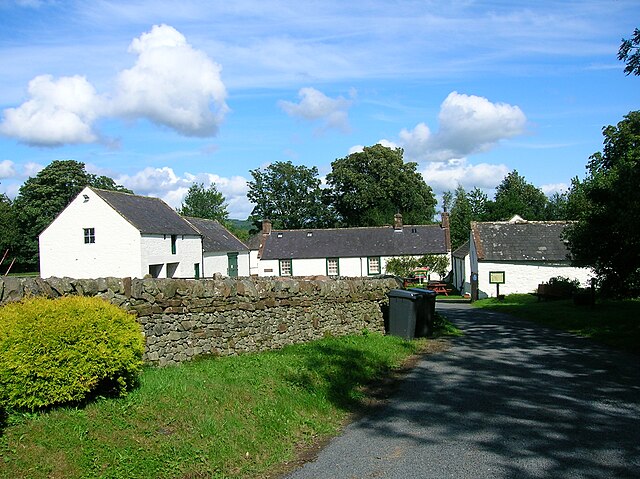
The writing was on the wall for the Burns family as far as the farm was concerned, and on 11th November 1791 they upped sticks and left Ellisland for town life in Dumfries. Today, Ellisland has become a museum.
To see if Rabbie had any ink left in his quill – and lead in his pencil – I’m afraid you’ll need to join me for at least one more instalment.
POSTED – AUGUST 2023
Originally posted 2023-08-13 15:05:53.
Had abraw chuckle at this. He was a very busy boy in more ways than one.
Probably regarded as a ‘Jack the Lad’ back then, but more like a ‘pest’ nowadays 🙂
Aye. I wonder if he’d write about that?
Not if he had any sense 🙂
LOL…Brill. Maybe we need a woman’s perspective on him…. from his day.
alas…. actually i am noo imagining a ‘wummin’ here parliamo-ing in his lingo…
The only thing I can say about the subject is that there didn’t seem to be any shortage of willing participants in his quest 🙂
I think he probably was good looking for his time. I love social history and I guess at that time, a lot of people might not have been, You think teeth, skin, cleanliness, might not have been of the best. also people aged well before their time becasue of the hardness of their lives. What I ahve noticed though having done my family history that the farming folks lived far longer than the town ones. and obvi again, the town ones who had some kind of trade as opposed to the mill working ones, lived longer. So Rabbie’s death when it was, wasn’t entirely of the time and occupation. He obvi had a way with words and I think I read somewhere that he was nice to women…quite charming actually. So that prob explained the queue at the door.
I totally agree with your observations Shey. I also believe that he was good looking for the time, and when you add his intellect into the mix, then I don’t think it’s surprising that his advances weren’t shunned, and as you also say, I believe there was an honourable side to him where his commitments were concerned.
Absolutely. In some ways re his feelings for ‘the common man’ he was before his time. I am sure in that way he was not alone. He was just one who gave voice to that.All right, so he fancied the lassies and put it about but he was also not alone in that throughout history.
You’re not wrong there.
I watched both videos, Malc, but I respond better to a written word rather than spoken, especially in Scottish twang! Great poet, Robert Burns but his inability to avoid distractions lessen the impact of his poetry on me.
Joanna
Thanks for checking out the videos Joanna. I included all the options so that people could make their own mind up about it all. As for his distractions, to some, that made him human, but to others he might have been regarded as a pest.
Of course, Malc, you have done and will continue extolling Burns’s talent in extraordinary skilled way, and if there was such a thing as heavens above, you will certainly have Burns blessing. It is difficult, admittedly for me, to wholly admire the greatness of the man openly immoral but also hurting others, because we don’t know the tears and unhappiness of the betrayed women.
Joanna
PS. I love the cottage interios!
I totally understand what you’re saying Joanna. I would like to add though, that in quite a few of the relationships he had, it was the females who dumped him. Jean was the most memorable exception, and seemed a quite remarkable woman in her own way.
Nice read. Thanks.
And thank you. Glad you enjoyed it.
I submitted a comment a while ago and it has not shown up. Very clever details embedded in this tale. The saga continues to get better. He is a lusty lad.
Your previous comment is showing for me Pat. In fact, you liked my reply to it 🙂 Anyway, I’m glad you’re enjoying it, and as you say, Rabbie didn’t mind playing away when the occasion presented itself did he?
A cracking read, Malc. 🙂 This just gets better and better, doesn’t it? What a guy! As for Tam o’ Shanter – ahhh, all becomes clear! I remember learning about the story of the shift and the horse’s tail when Maddie and I went to the Cutty Sark a few years ago, but I hadn’t realised (or remembered) the link with the Scottish bard. Now I far better appreciate how it all fits together. It’s characters like Rabbie that, for me, make history so engaging. Can’t wait for the next part… 😀
Thanks Alli. I hope I’ve brought Rabbie to life enough for you, but as we agreed the other day, people who are highly regarded in the world of arts often have a complex character, and Rabbie certainly fits into that category.
That’s what makes him so interesting. 🙂 I’m really enjoying getting to know him. 🙂
I think you know me well enough by now to know that I don’t very often say what I think so that people can make up their own minds, and when I’ve finished with Rabbie I’d like you to tell me what you think about him 😊
Will do, Malc. Looking forward to it. 😊
So much detail beautifully written and easy to read .. I loved all you little subtle and not so subtle jibes.
Thanks Albert. I appreciate your appreciation.
Love your sly remarks, Malc. You selected wonderful tidbits to illustrate this segment.
Glad you noticed them Pat 🙂
PS, I love the first painting too, it reminds me of Constable.
Joanna
It does somewhat doesn’t it?
Now, Malc, the Great, you are getting better and better! This part of your Robert’s story is as colorful as the wonderful paintings you used. Witches dancing, chasing the pour horse, and causing havoc generally seem like a interesting life to lead, unfortunately, I never met any. Robert’s desire for a peaceful life on his farm made me like him even more. I will listen to the videos when Felicity gets up but so far I love every word and every picture of today’s fascinating post! And you are certainly right, Malc, Robert had a way with words! Thank you for the link to Cutty Sark,
did not know about the tail!
Thank you, Malc, for the mastery with which you create your posts!
Joanna
You also have a way with words Joanna, and your posts about the great authors of the world prove that, so I’m blown away by your comments. In fact, I’m not sure what to say – except thank you so much and glad that you’ve enjoyed it 😊
You are worth it, Malc, and I will be back.
Joanna
I sincerely hope so 🙂
I’ve never read the poem before, I like the story but it’s a bit on the long side – a shame about poor Meg losing her tail though 🙂 The farm museum looks like an attractive group of cottages and I like the first painting, it’s a pity the artist is unknown.
Thanks for sticking with it Eunice as I know you’re not a big fan. It’s probably the longest poem he ever did, and I’m just reading your Lancaster Canal post as we speak by the way.