Warning: Creating default object from empty value in /home/sites/30b/a/a8be13db6d/public_html/wp-content/plugins/zanmb/reduxframework/ReduxCore/inc/class.redux_filesystem.php on line 29

Warning: Cannot modify header information - headers already sent by (output started at /home/sites/30b/a/a8be13db6d/public_html/wp-content/plugins/zanmb/reduxframework/ReduxCore/inc/class.redux_filesystem.php:29) in /usr/share/php/wp-stack-cache.php on line 1971

Warning: Cannot modify header information - headers already sent by (output started at /home/sites/30b/a/a8be13db6d/public_html/wp-content/plugins/zanmb/reduxframework/ReduxCore/inc/class.redux_filesystem.php:29) in /usr/share/php/wp-stack-cache.php on line 1972

Warning: Cannot modify header information - headers already sent by (output started at /home/sites/30b/a/a8be13db6d/public_html/wp-content/plugins/zanmb/reduxframework/ReduxCore/inc/class.redux_filesystem.php:29) in /usr/share/php/wp-stack-cache.php on line 1973

Warning: Cannot modify header information - headers already sent by (output started at /home/sites/30b/a/a8be13db6d/public_html/wp-content/plugins/zanmb/reduxframework/ReduxCore/inc/class.redux_filesystem.php:29) in /usr/share/php/wp-stack-cache.php on line 1971

Warning: Cannot modify header information - headers already sent by (output started at /home/sites/30b/a/a8be13db6d/public_html/wp-content/plugins/zanmb/reduxframework/ReduxCore/inc/class.redux_filesystem.php:29) in /usr/share/php/wp-stack-cache.php on line 1972

Warning: Cannot modify header information - headers already sent by (output started at /home/sites/30b/a/a8be13db6d/public_html/wp-content/plugins/zanmb/reduxframework/ReduxCore/inc/class.redux_filesystem.php:29) in /usr/share/php/wp-stack-cache.php on line 1973

Warning: Cannot modify header information - headers already sent by (output started at /home/sites/30b/a/a8be13db6d/public_html/wp-content/plugins/zanmb/reduxframework/ReduxCore/inc/class.redux_filesystem.php:29) in /home/sites/30b/a/a8be13db6d/public_html/wp-includes/feed-rss2.php on line 8
Spanish History – Easymalc's Wanderings https://www.easymalc.co.uk I’d be unstoppable if only I could get started Tue, 28 Apr 2026 12:59:14 +0000 en-GB hourly 1 https://wordpress.org/?v=7.0.4 https://www.easymalc.co.uk/wp-content/uploads/2019/09/cropped-easy-malc-logo-32x32.jpg Spanish History – Easymalc's Wanderings https://www.easymalc.co.uk 32 32 140253175 Citadel Park and the Quest for Catalonian Independence https://www.easymalc.co.uk/citadel-park-and-the-quest-for-catalonian-independence/ https://www.easymalc.co.uk/citadel-park-and-the-quest-for-catalonian-independence/#comments Tue, 28 Apr 2026 12:59:14 +0000 https://www.easymalc.co.uk/?p=22712 Originally posted 2025-08-05 05:59:21.

The post Citadel Park and the Quest for Catalonian Independence appeared first on Easymalc's Wanderings.

]]>

Citadel Park and the Quest for Catalonian Independence

As much as I like visiting cities for their history, architecture and art, I also like to find a quiet corner for some peace and quiet, and after visiting the Barri Gòtic I decided to head for the Parc de la Ciutadella which, as it turned out, included all three of the above as well.

After leaving the Basilica de Santa Maria del Mar, I negotiated my way through some of the old back streets towards the Passeig de Lluis Companys. This pedestrian boulevard is named after the former prominent Republican politician and Catalan President, who, after finding himself on the losing side in the Spanish Civil War, was executed at Barcelona’s Montjuic Castle in 1940.

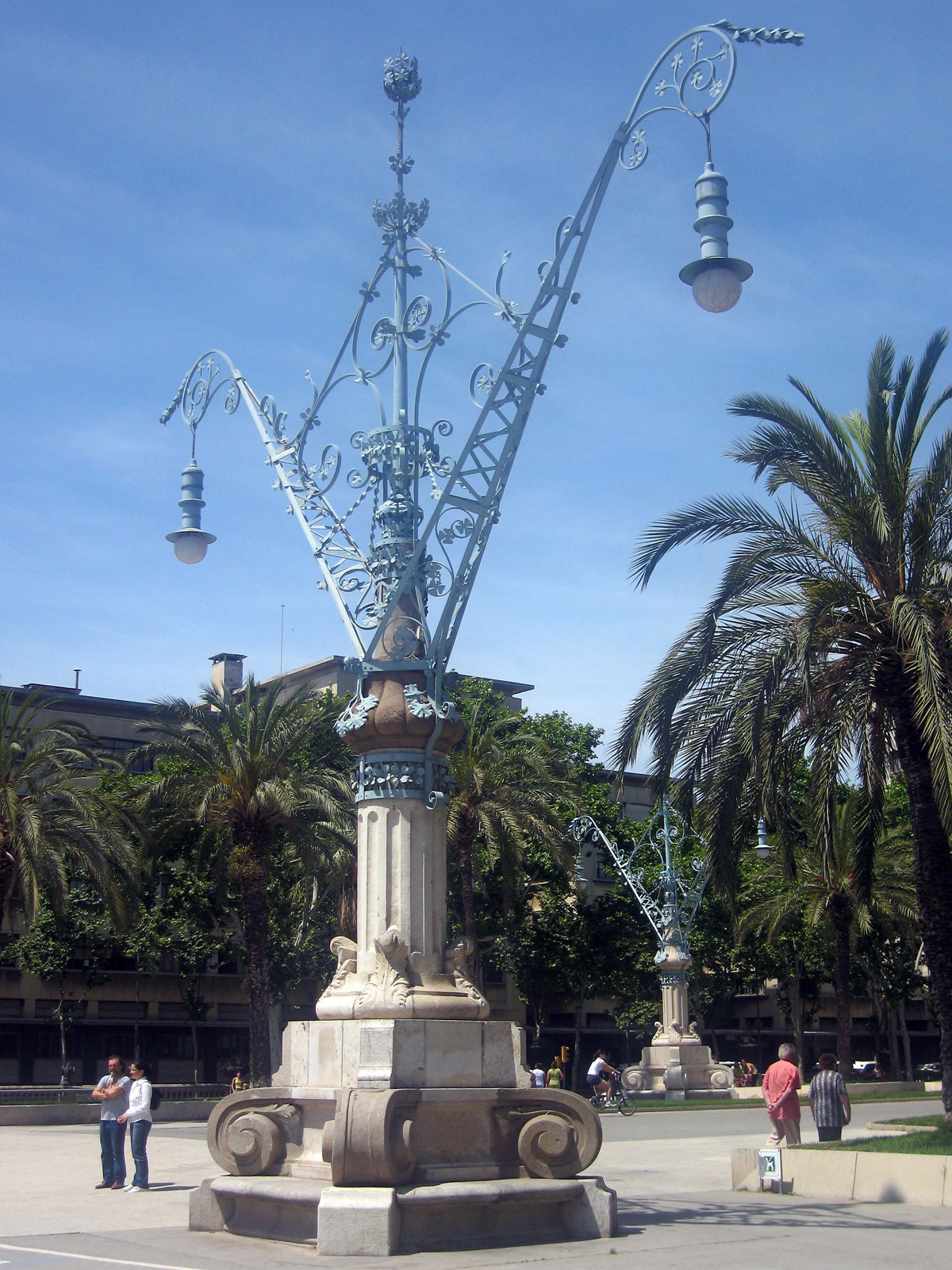
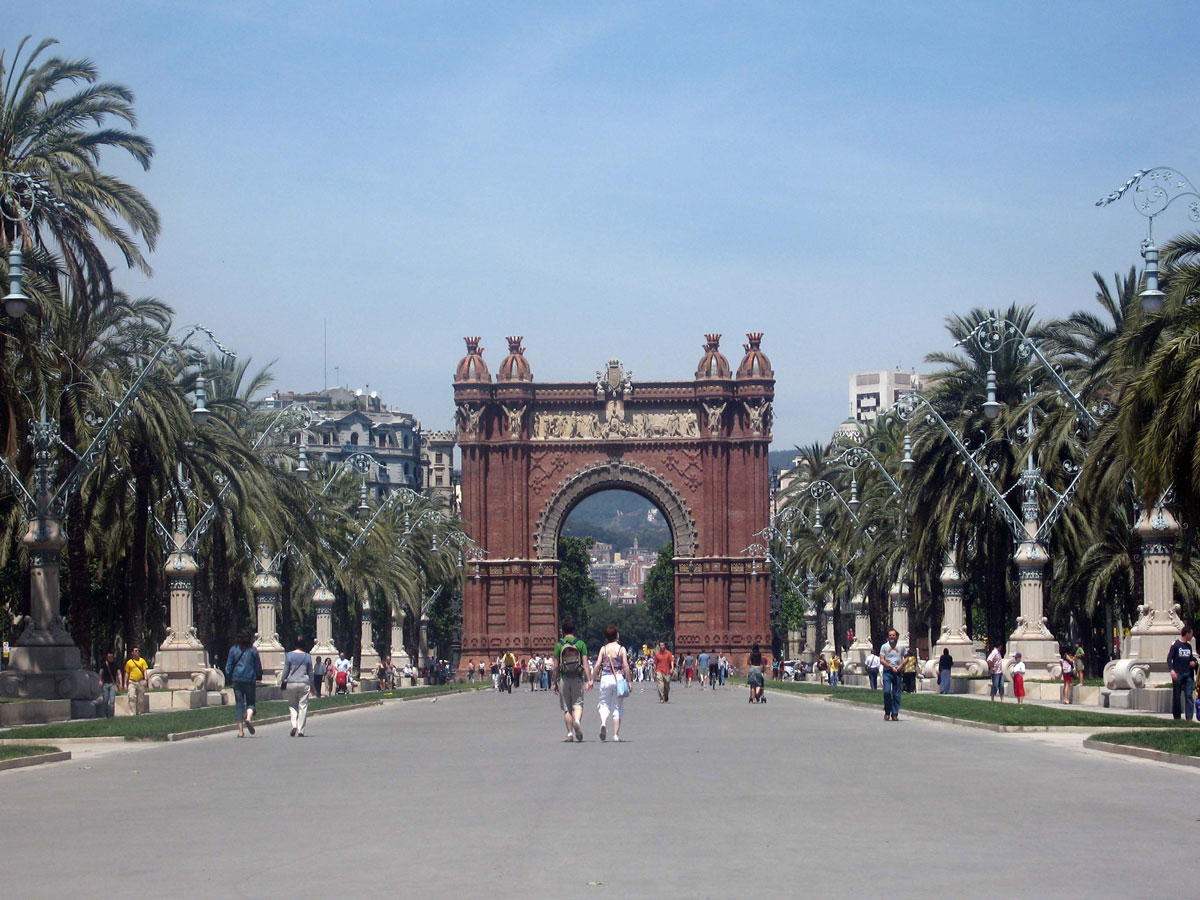
This popular avenue of palm trees where locals enjoy a paseo is embellished by some impressive decorative lampposts designed by Pedro Falquès – and at the far end is Barcelona’s very own Arc de Triomf.

Ornate Lampposts on the Passege de Lluis Companys
The Arc de Triomf

At the opposite end of the boulevard from the Arc de Triomf is one of the entrances to Citadel Park. As you might gather from its name, this was the location of the former citadel that was built after the Spanish War of Succession.

For those of you who enjoy a bit of history on your travels (and even for those who don’t), the Spanish War of Succession came about after the Spanish Habsburg king, Charles II, died in 1700 without issue, or in other words, without leaving a legitimate heir. Before his death, he named his replacement as Philip of Anjou who was the grandson of Louis XIV of France. The arrangement may have suited Charles and Louis, but it didn’t go down well with Archduke Charles of Austria who had the support, not just of the Habsburg monarchy, but also the Dutch Republic and England as well, all of whom were suspicious of the French king’s long-term ambitions.

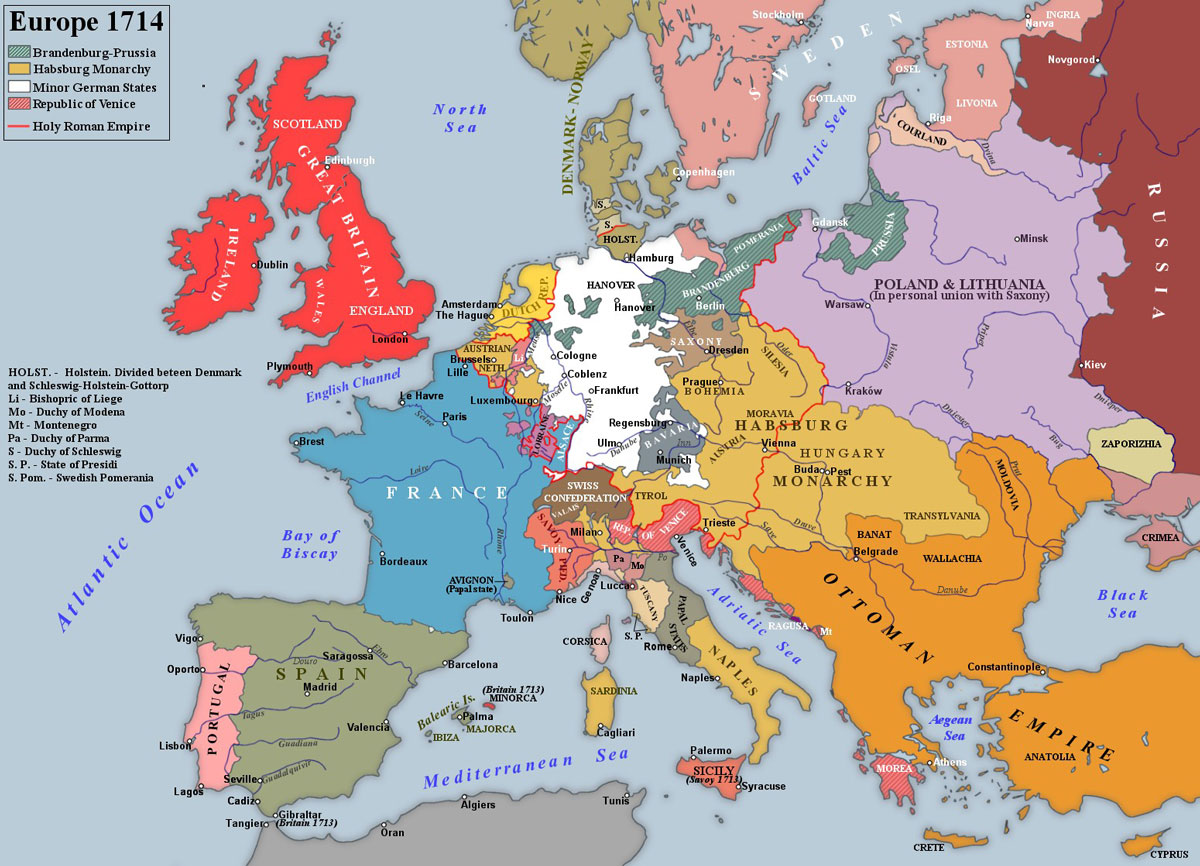
War began between the adversaries in 1701 and lasted until the Treaty of Utrecht was eventually signed in 1714. The result of the treaty allowed Philip to become the first Bourbon king of Spain as Philip V, but in return, he had to renounce his claim to the French throne along with a few other concessions – one of them being the ceding of Gibraltar to England who had captured it (along with the Dutch) in 1704.

Europe after the Treaty of Utrecht (Wikipedia)

During the war, Catalonia initially supported Philip, but then made the mistake of switching sides. After a siege lasting 13 months, Barcelona eventually came under Philip’s control, and the new king wasted no time in signing the Nueva Planta Decrees.

These new laws effectively put an end to the existence of the Crown of Aragon, which at the time was a composite monarchy consisting of Aragon, Valencia, Majorca and Catalonia, and by incorporating them into the Crown of Castille he had literally established the absolute monarchy of the Kingdom of Spain in one fell swoop.

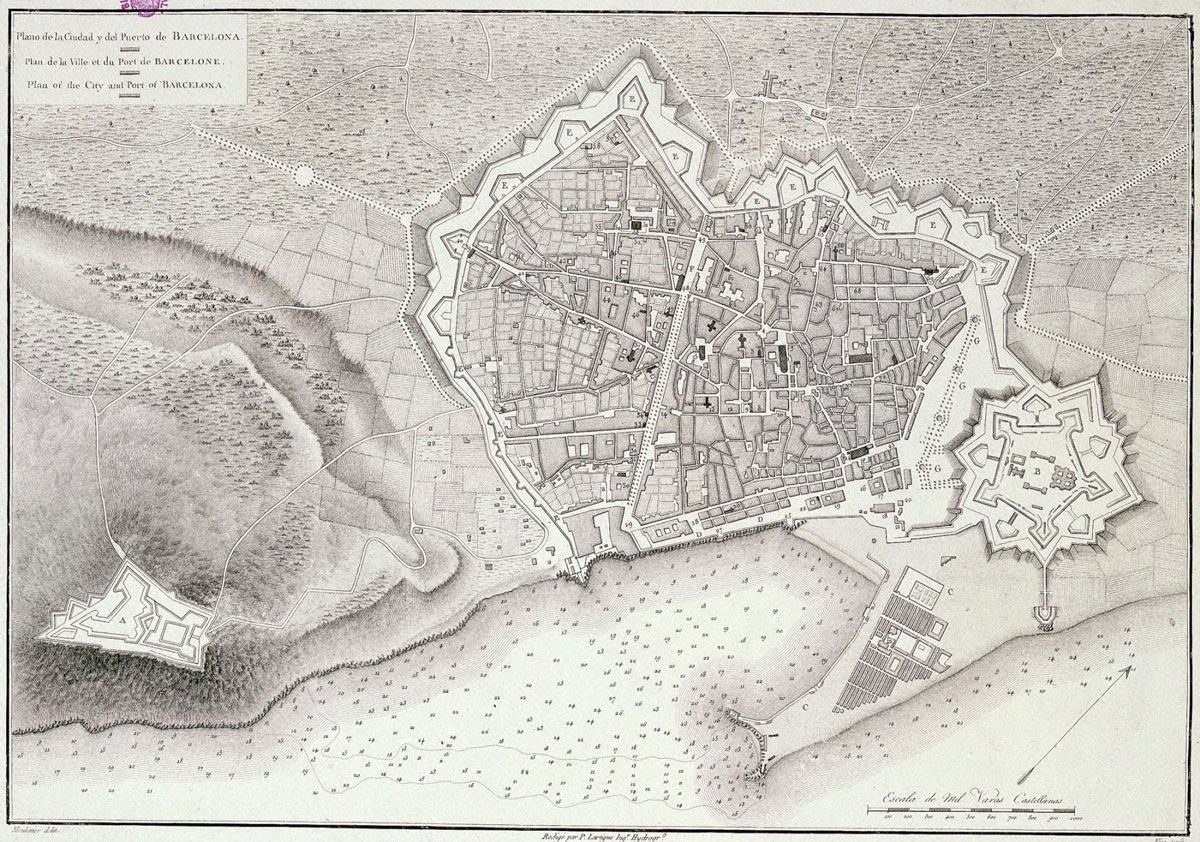
As far as Catalonia was concerned, Philip wanted to make doubly sure that the province wouldn’t cause him any more trouble by ordering a citadel to be built in Barcelona. A large part of the district of Ribera was subsequently demolished leaving many people homeless, and to rub salt in the wounds, the citadel had to be constructed with Catalan labour and paid for by the citizens of Barcelona. It was largely completed by 1719 and included barracks to provide accommodation for some 8,000 troops, making it the largest fortress in Europe at the time.

The Walled City of Barcelona with the star-shaped Citadel in the South-East Corner

As you can imagine, this symbol of Spanish government control was despised by the local Catalan population and was attacked on at least two occasions. For the most part, it managed to survive and continue to serve, on and off, its original purpose, but as the political climate began to change, then so did the citadel’s fortunes.

By 1872 the fortress had become just a shadow of its former self and what was left was turned into a park, but the big change really came when it was completely redesigned for the Universal Exhibition of 1888. A few original citadel buildings still survive, but just inside the park gates is one that was specifically built for the event.

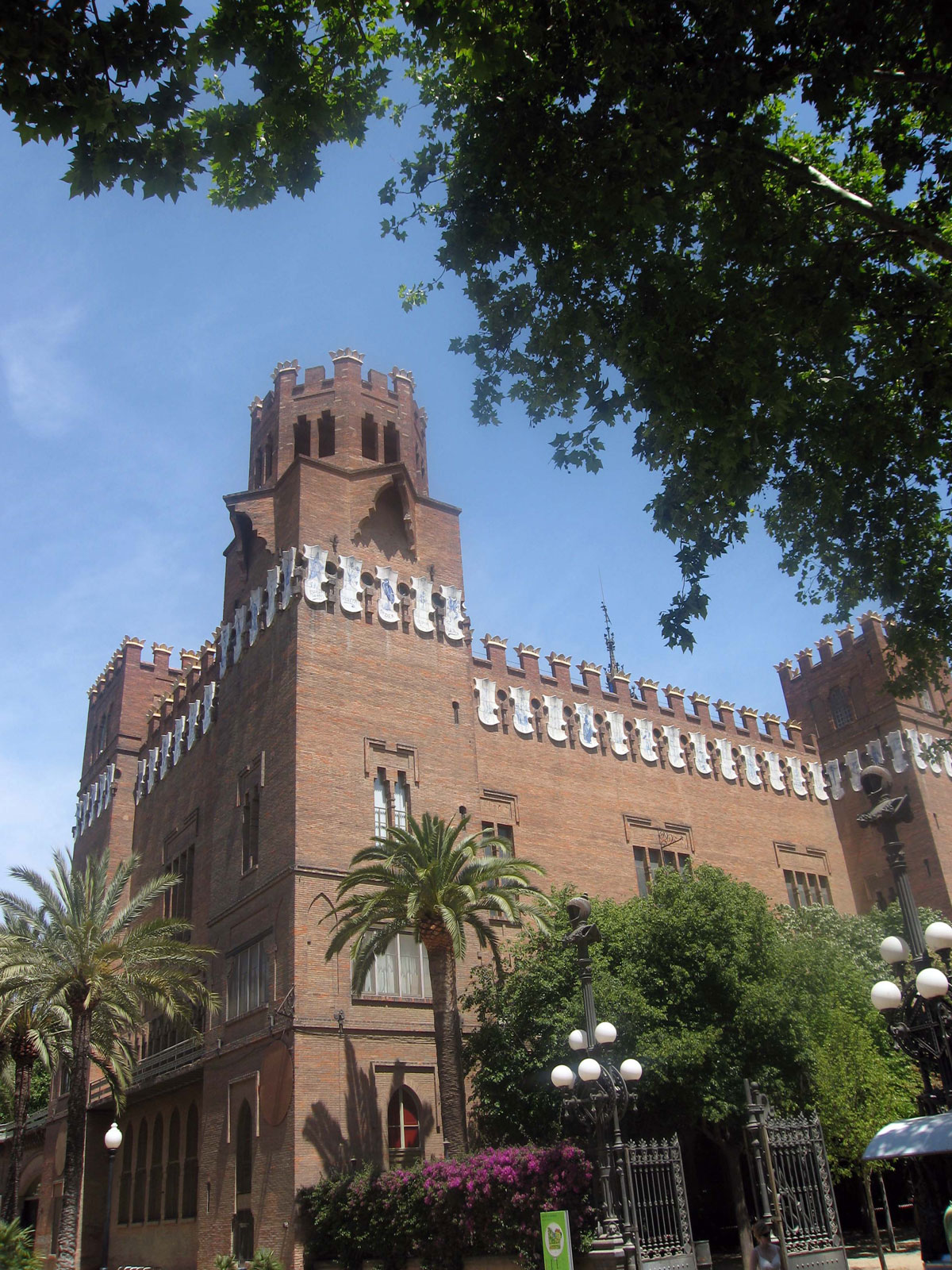
The Castle of the Three Dragons was constructed as a  café/restaurant and became one of the main attractions of the exhibition. Architecturally described as Modernista, the building became the Museum of Natural Sciences in 1917 and then three years later became the Zoology Museum of Barcelona until the collection was relocated to the new Museum of Natural Sciences in 2010. Today the iconic building is used as a research, documentation centre and library for the Museum of Natural Sciences.

Castle of the Three Dragons

Being home to the Zoology Museum, it shouldn’t come as any great surprise to find that Barcelona Zoo is also located in the park, which formally opened in 1892. I’m one of those people who loves animals but not so keen on zoos, and even though I know that most of them have come a long way since the early days, I’m still reluctant to find out if I’ve chosen to visit a good one or not, and as I had plenty of other places to visit today, I gave Barcelona’s a wide berth and wandered around the park instead.

The first place of interest I came across was the Citadel Military Church, and although I didn’t go in, this is one of three buildings that have survived from the original citadel, and the only one still being used for its original purpose.

The Citadel Military Church

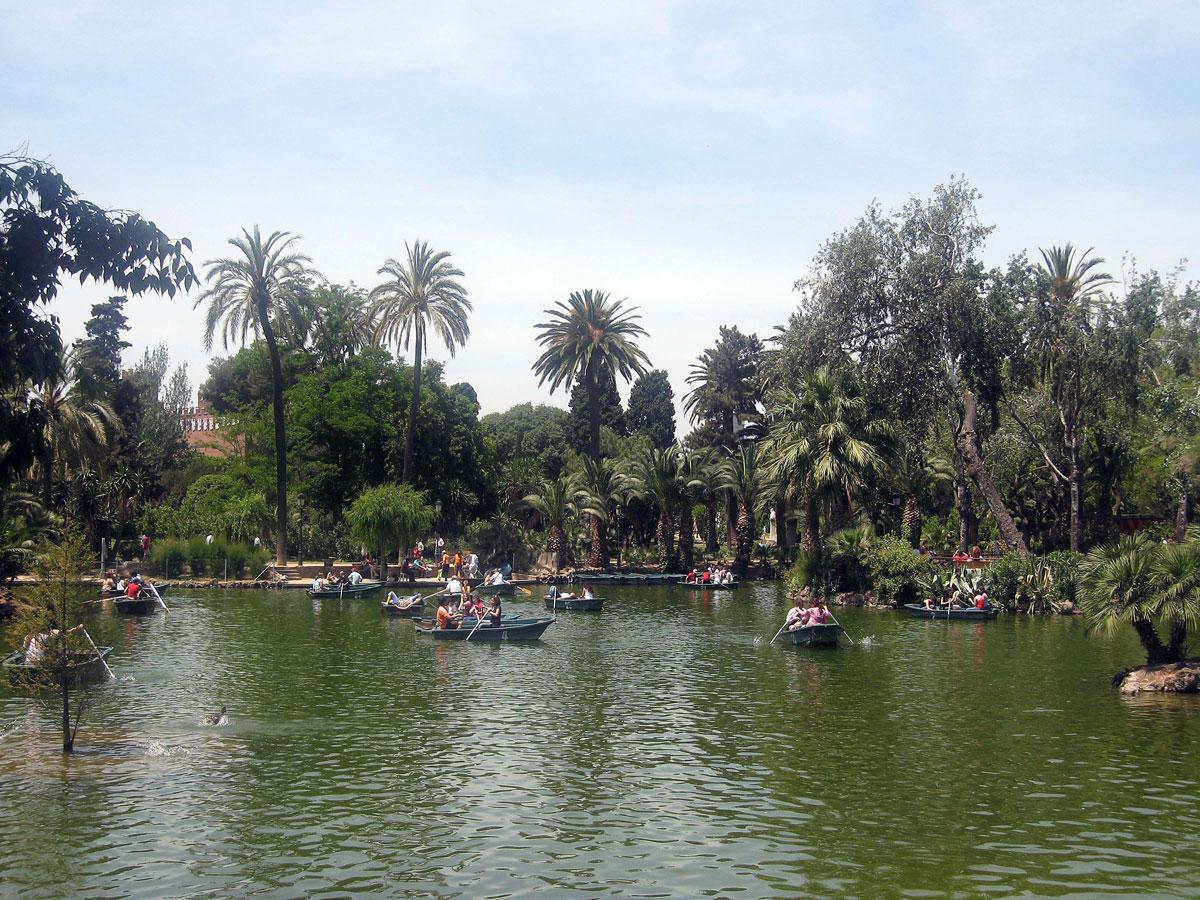
I’m not sure if many people went to the Citadel Church for a Sunday service or not, but there were plenty of people on the boating lake by the time I got there.

The Boating Lake

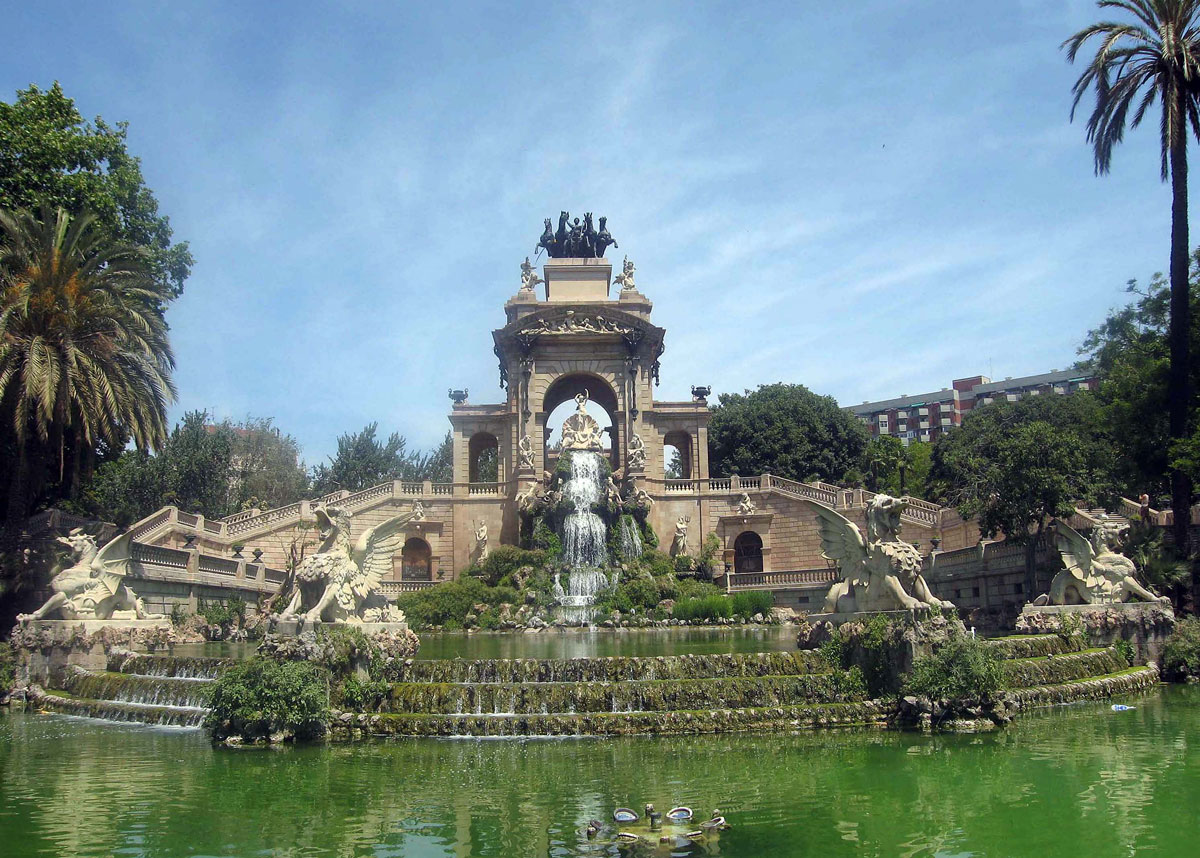
To my way of thinking (and I’m guessing many others’ as well), the prize for the park’s most alluring feature has to go to the Cascade Monument. This beautiful fountain was designed by Josep Fontserè, who some say, based it on Rome’s famous Trevi Fountain. Whether it was or not, its unveiling in 1881 was met with a fair bit of disappointment due to the lack of any real architectural flair for such a monument.

Statues and other decorative features were therefore added before the opening of the 1888 exhibition: They included the main centrepiece of a sculpture called the Birth of Venus which shows the Roman goddess of love emerging from her shell, and crowning the whole thing at the top was a (now golden) quadriga sculpture of Aurora, the Roman goddess of dawn, riding a chariot pulled by four horses. I don’t know how much it all cost, but it certainly doesn’t disappoint now.

An interesting sidenote to the monument’s construction is the fact that a young Antoni Gaudi was employed to design the water tank and hydraulics for the fountain, but I can’t imagine that many Gaudi fans come to Barcelona to seek out the work he did here.

The Cascade Monument

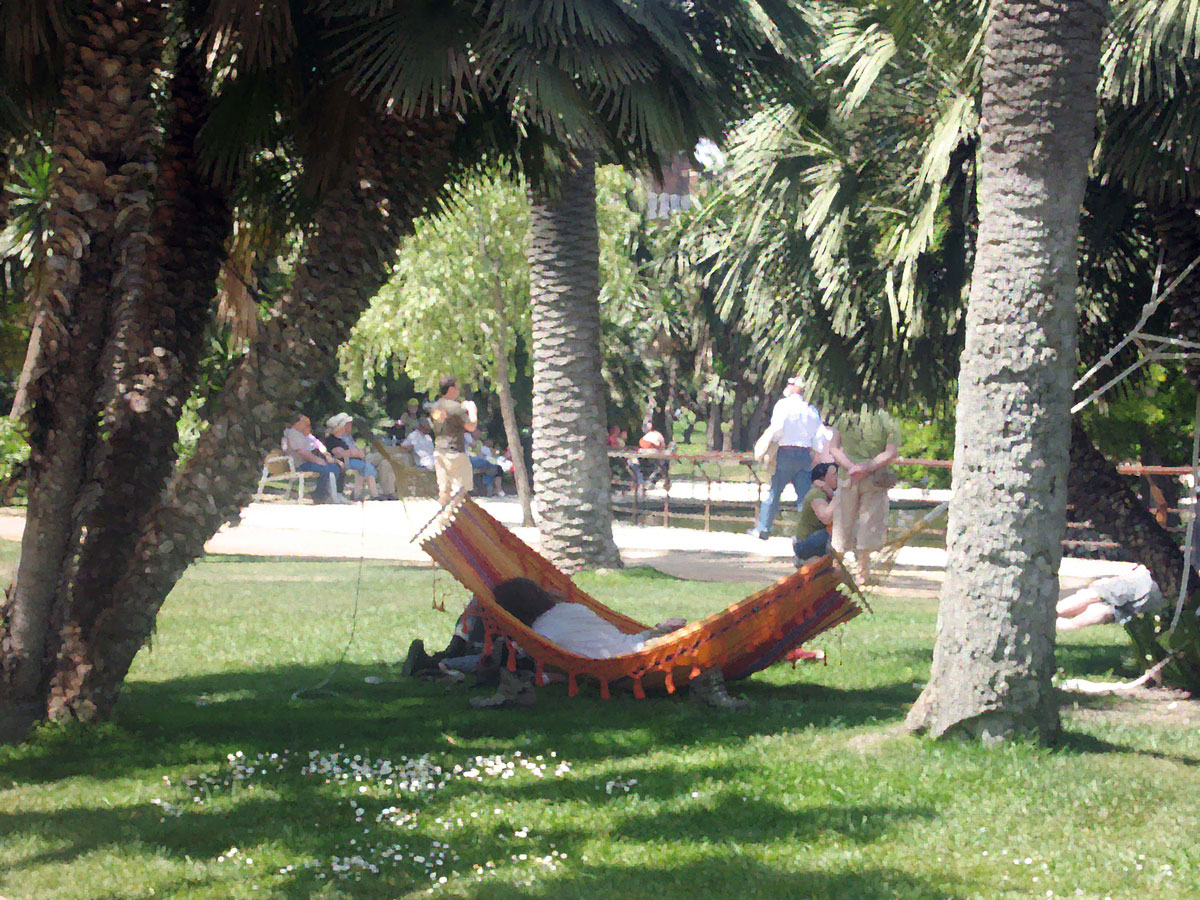
Public parks and sunny Sunday afternoons go together like strawberries and cream, and by now the park was a hive of inactivity. Yes, you read that right, it was full of people doing nothing – just as it should be.

Lounging around in the Park (I purposely used a filter on this one for a change)

It wouldn’t have taken much for me to join the locals in their Sunday afternoon siesta but there was a lot more I wanted to see before I could put my feet up for the day, and so after finding a bench where I could tuck into a warm curled-up sandwich, I continued my walk through the park to the home of the Catalan Parliament.

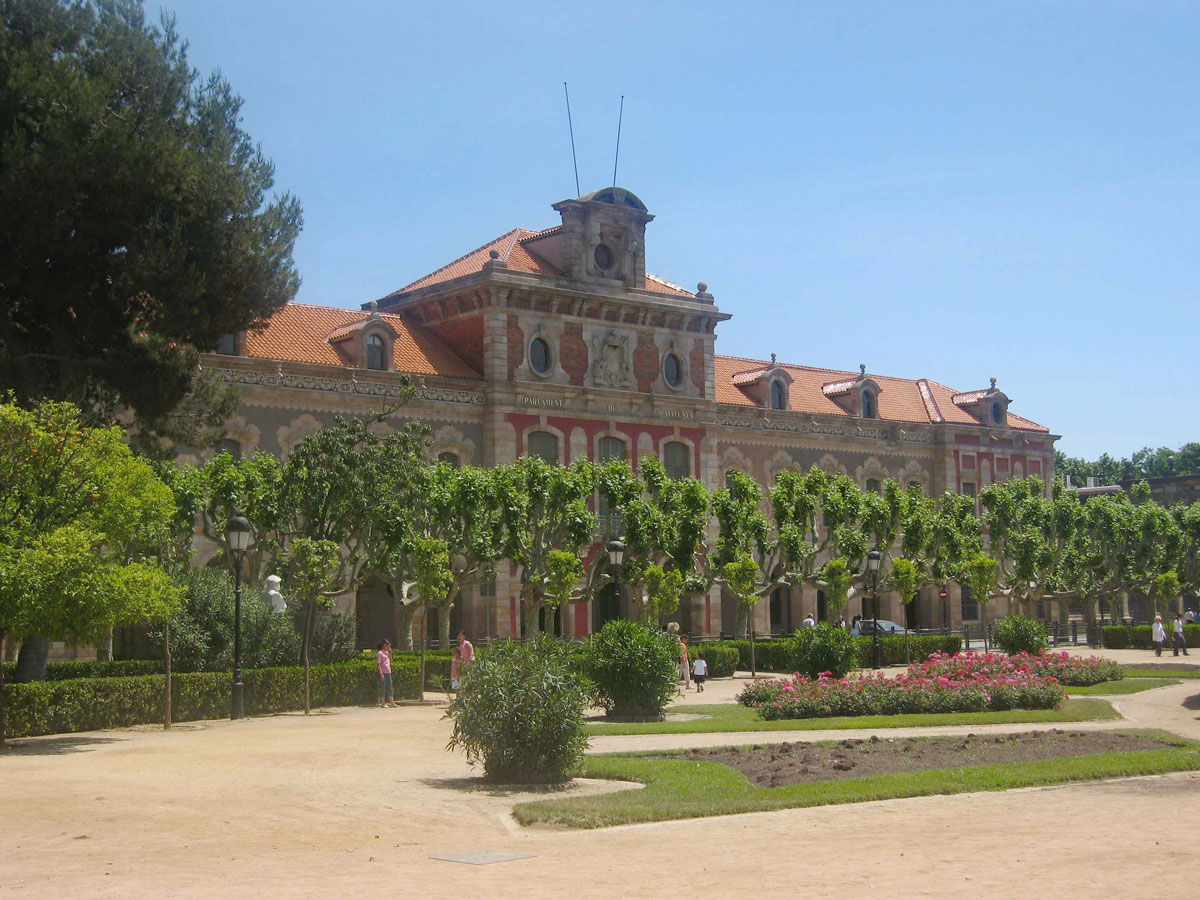
The building is another survivor from the early days when it was initially used as the citadel’s arsenal, but what was once used as a means of suppression against the Catalan people, is now where laws are made to support a self-governing community within the wider Spanish constitution.

I’m one of those anoraks that actually enjoys visiting places like this, but apart from the fact that it’s only possible to visit with an advance booking, I hadn’t intended for it to be on my itinerary today anyway. Having said that, I’ve always been interested to know why large numbers of the Catalonian population are still in favour of independence, and this is as good a place as any to understand why.

I’m certainly not going to delve too deeply into Catalonia’s history here, but hopefully some background knowledge will help put things into some sort of perspective, especially as I doubt the question of independence has completely gone away.

Spain is a relatively peaceful country nowadays, but it hasn’t always been like that. As we’ve seen, the Spanish War of Succession ended with a unified country constitutionally speaking, but there was still a lot of trouble ahead, due in no small part to Napoleon’s replacement of the Spanish monarchy in 1808 with his brother Joseph. Napoleon’s defeat at Waterloo in 1815 brought about the restoration of the Spanish monarchy, but there was still a lot of political and social upheaval throughout the country including a resurgence in Catalonian nationalism.

In 1870, Spain briefly became a republic, with the monarchy being re-instated again three years later, but after King Alfonso XIII was deposed in 1931, a Second Republic granted Catalonia self-governance. By now, the Citadel’s Arsenal had become a palace, and it became the natural choice for the elected representatives to use as their  Parliament Building: But it was all change again when Barcelona fell to the Nationalists under Francisco Franco during the Spanish Civil War of 1936-39.

The general immediately abolished self-governance, banned the Catalan language, and converted the Parliament Building into barracks. Franco’s leadership lasted until his death in 1975, at which point the country started to transition from a dictatorship into a democracy. For Catalonia, it meant self-governance again and the restoration of the barracks back into a parliament.

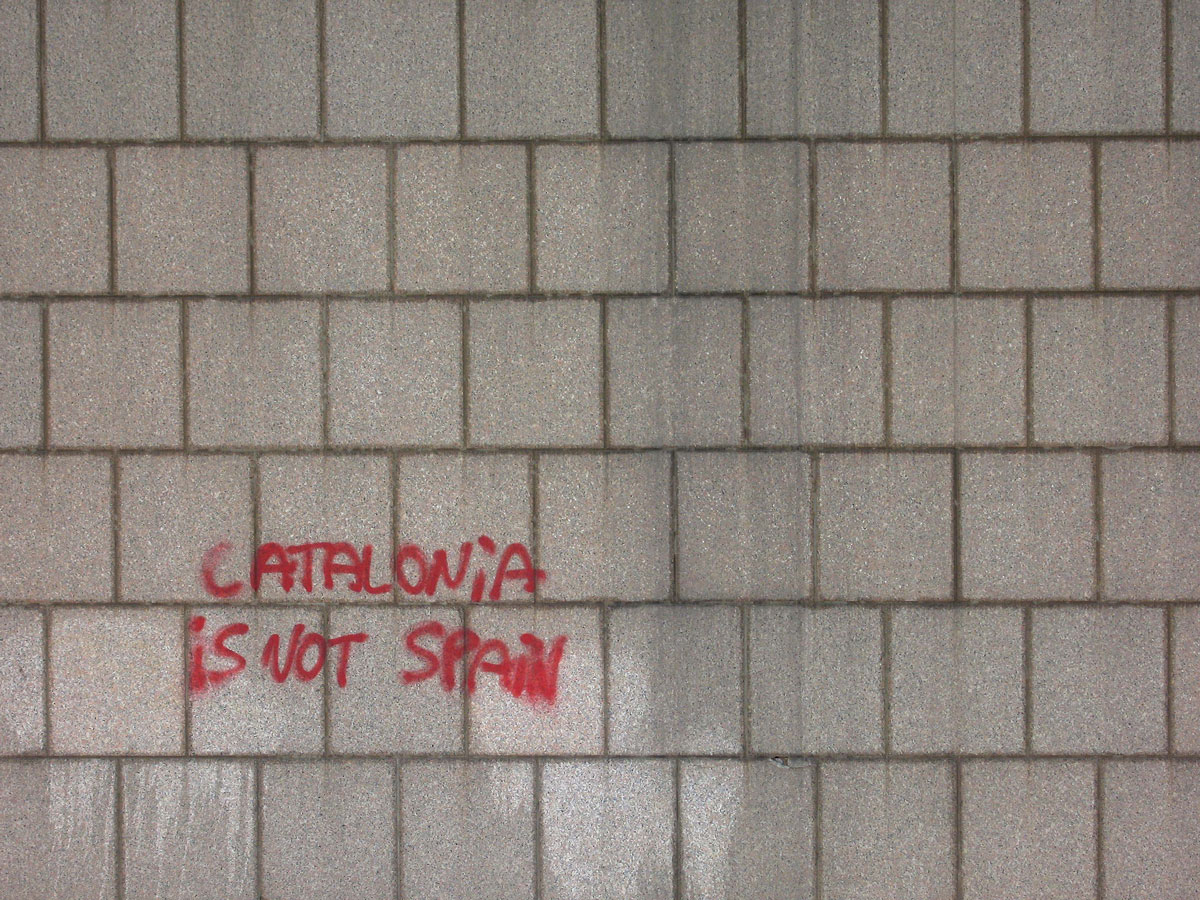
The freedom of expression in this new-found democracy gradually led to a rise in support for a return to a fully-fledged independent Catalonia, and on 27th October 2017 the Catalan Parliament unilaterally declared independence following a referendum that was deemed unconstitutional by the Spanish state. The response from the Spanish senate was to invoke direct rule from Madrid, remove the Catalan government, and call a snap regional election. The result of this election was a small majority of parliamentary seats being won by the pro-Catalan independence parties but they fell short of a majority in the popular vote (47.6%). In other words, they lost.

The quest for the freedom to vote for self-determination resulted in seven former ministers of the Catalan government losing their own freedom, while the then-president, Carles Puigdemont, fled the country. Those in prison were pardoned by the Spanish government in 2021 – and Catalonia still remains one of Spain’s 17 autonomous communities.
The Catalonian Parliament Building

POSTED – AUGUST 2025

Originally posted 2025-08-05 05:59:21.

The post Citadel Park and the Quest for Catalonian Independence appeared first on Easymalc's Wanderings.

]]>
https://www.easymalc.co.uk/citadel-park-and-the-quest-for-catalonian-independence/feed/ 13 22712