Warning: Creating default object from empty value in /home/sites/30b/a/a8be13db6d/public_html/wp-content/plugins/zanmb/reduxframework/ReduxCore/inc/class.redux_filesystem.php on line 29

Warning: Cannot modify header information - headers already sent by (output started at /home/sites/30b/a/a8be13db6d/public_html/wp-content/plugins/zanmb/reduxframework/ReduxCore/inc/class.redux_filesystem.php:29) in /usr/share/php/wp-stack-cache.php on line 1971

Warning: Cannot modify header information - headers already sent by (output started at /home/sites/30b/a/a8be13db6d/public_html/wp-content/plugins/zanmb/reduxframework/ReduxCore/inc/class.redux_filesystem.php:29) in /usr/share/php/wp-stack-cache.php on line 1972

Warning: Cannot modify header information - headers already sent by (output started at /home/sites/30b/a/a8be13db6d/public_html/wp-content/plugins/zanmb/reduxframework/ReduxCore/inc/class.redux_filesystem.php:29) in /usr/share/php/wp-stack-cache.php on line 1973

Warning: Cannot modify header information - headers already sent by (output started at /home/sites/30b/a/a8be13db6d/public_html/wp-content/plugins/zanmb/reduxframework/ReduxCore/inc/class.redux_filesystem.php:29) in /usr/share/php/wp-stack-cache.php on line 1971

Warning: Cannot modify header information - headers already sent by (output started at /home/sites/30b/a/a8be13db6d/public_html/wp-content/plugins/zanmb/reduxframework/ReduxCore/inc/class.redux_filesystem.php:29) in /usr/share/php/wp-stack-cache.php on line 1972

Warning: Cannot modify header information - headers already sent by (output started at /home/sites/30b/a/a8be13db6d/public_html/wp-content/plugins/zanmb/reduxframework/ReduxCore/inc/class.redux_filesystem.php:29) in /usr/share/php/wp-stack-cache.php on line 1973

Warning: Cannot modify header information - headers already sent by (output started at /home/sites/30b/a/a8be13db6d/public_html/wp-content/plugins/zanmb/reduxframework/ReduxCore/inc/class.redux_filesystem.php:29) in /home/sites/30b/a/a8be13db6d/public_html/wp-includes/feed-rss2.php on line 8
The Third Man – Easymalc's Wanderings https://www.easymalc.co.uk I’d be unstoppable if only I could get started Fri, 07 Nov 2025 16:42:51 +0000 en-GB hourly 1 https://wordpress.org/?v=7.0.4 https://www.easymalc.co.uk/wp-content/uploads/2019/09/cropped-easy-malc-logo-32x32.jpg The Third Man – Easymalc's Wanderings https://www.easymalc.co.uk 32 32 140253175 Vienna – The Last Waltz https://www.easymalc.co.uk/vienna-the-last-waltz/ https://www.easymalc.co.uk/vienna-the-last-waltz/#comments Fri, 07 Nov 2025 16:42:51 +0000 https://www.easymalc.co.uk/?p=19696 Originally posted 2023-11-02 15:28:46.

The post Vienna – The Last Waltz appeared first on Easymalc's Wanderings.

]]>

Vienna - The Last Waltz

If you’ve been following my posts about Vienna, I hope I’ve given you enough reasons to come and explore this wonderful city, but before we leave, I want to take you to some places that you might not have considered visiting.

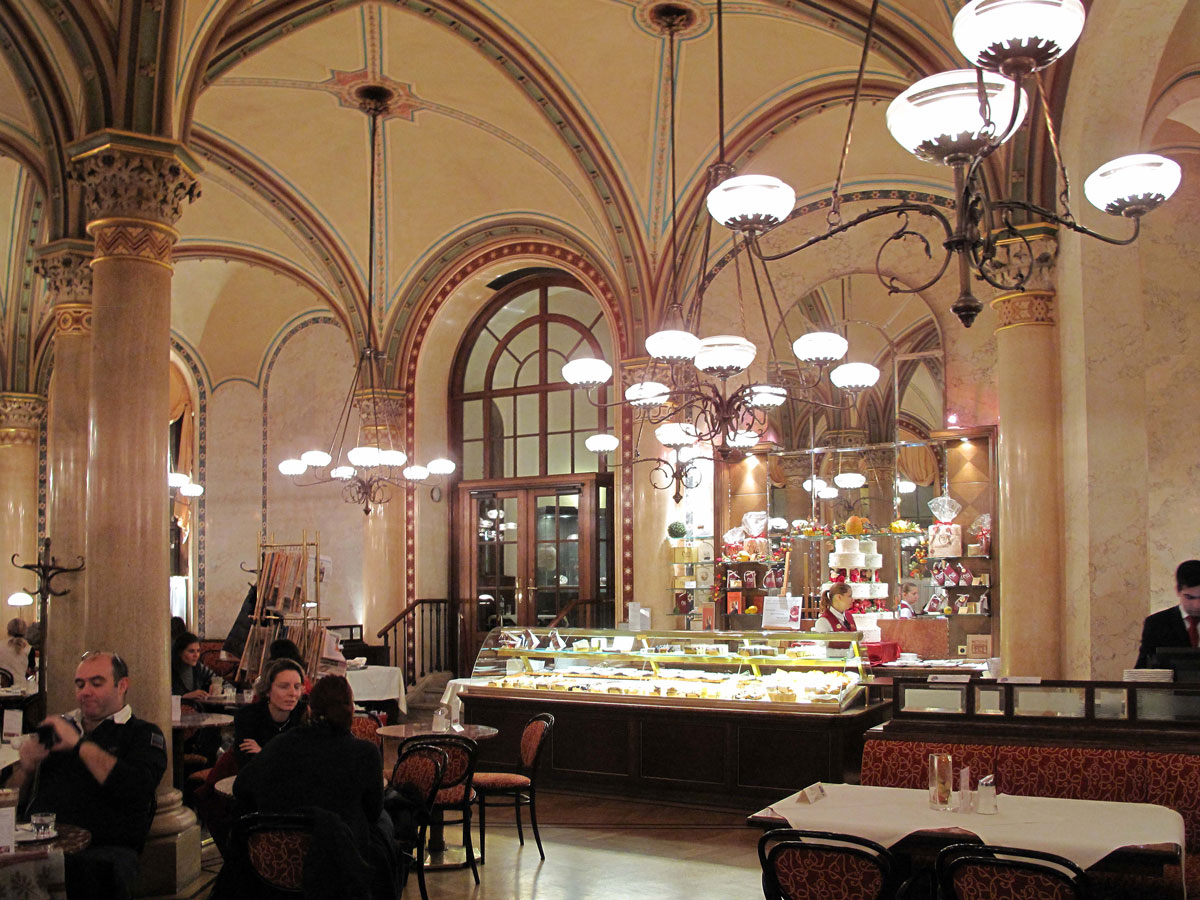
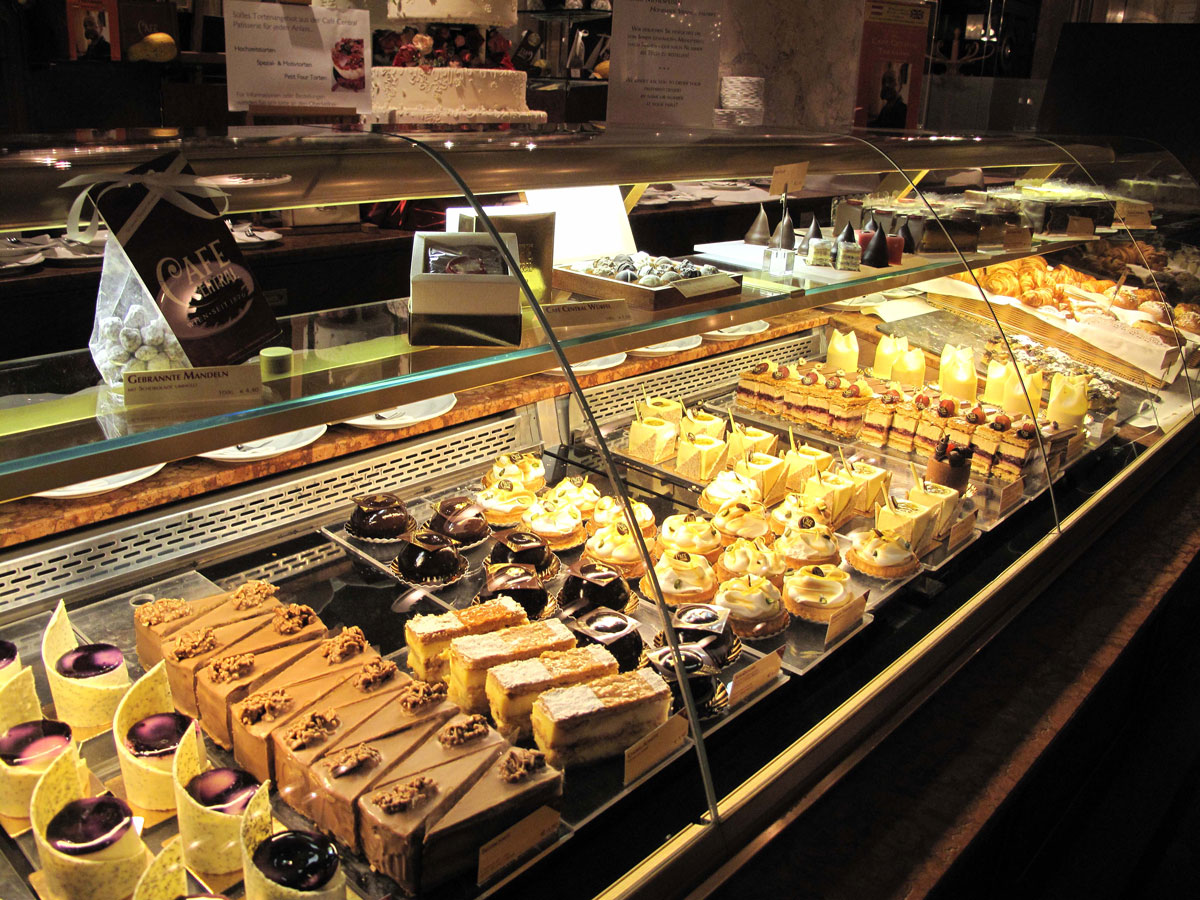
Sightseeing can be a tiring business, and every so often we need some respite from traipsing around city streets looking for the next must-see landmark, but in Vienna you can you can have the best of both worlds because the café culture here is part of the experience. Just have a coffee and soak up the ambience if you like, but it goes down much better with some cake, and I’m not talking about a Mr Kipling’s Viennese whirl now. My favourite is the Sachertorte which traditionally consists of three layers of chocolate sponge with apricot jam mixed in between them and topped with a chocolate glaze – Oh, and don’t forget the cream. By all means, try it at the Hotel Sacher if your pockets are deep enough, but a more intimate experience can be had in one of the famous cafés that can be found throughout the city centre – and they don’t come any more famous than Café Central.

Viennese Cakes in Cafe Central
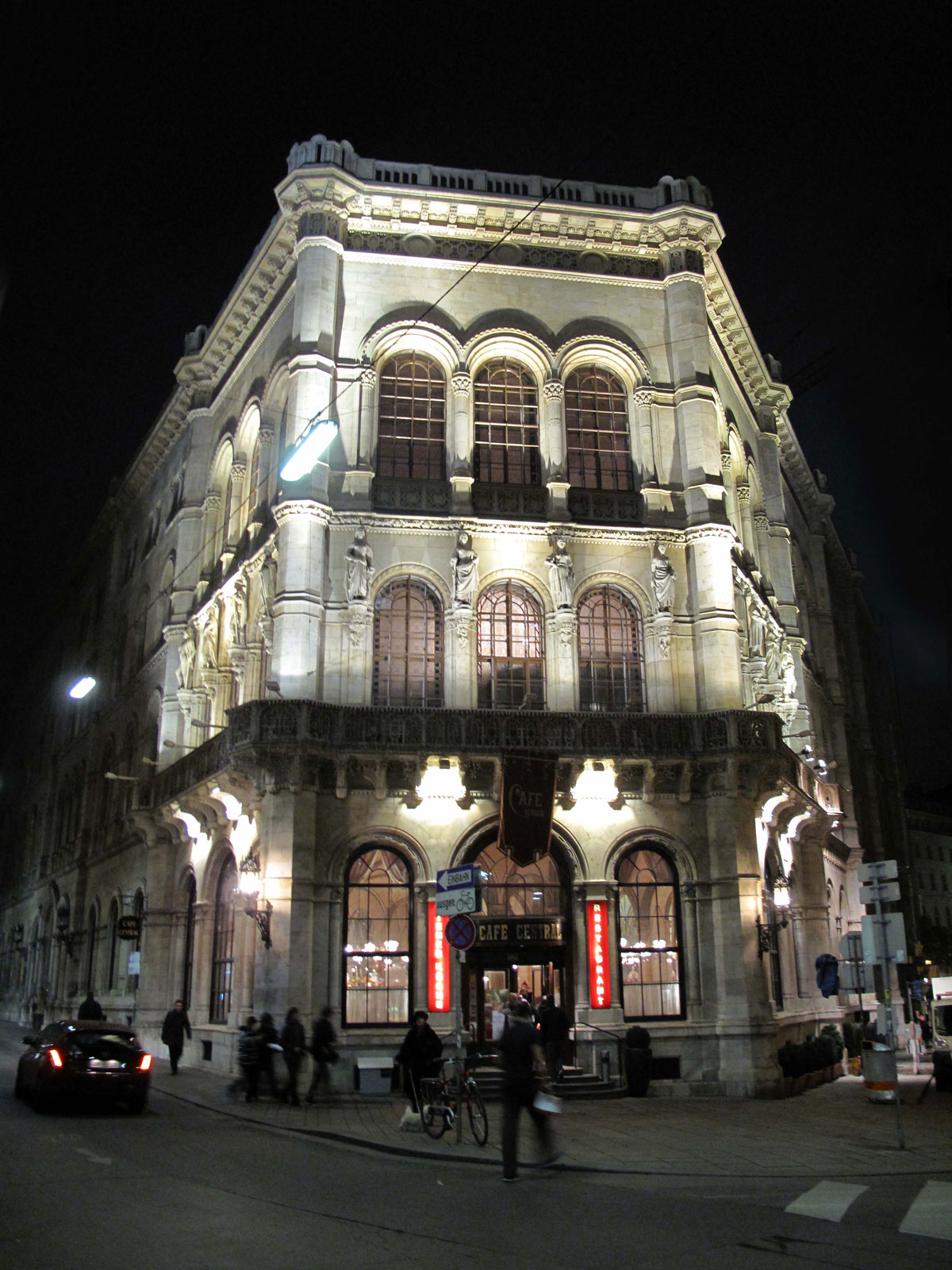
Cafe Central

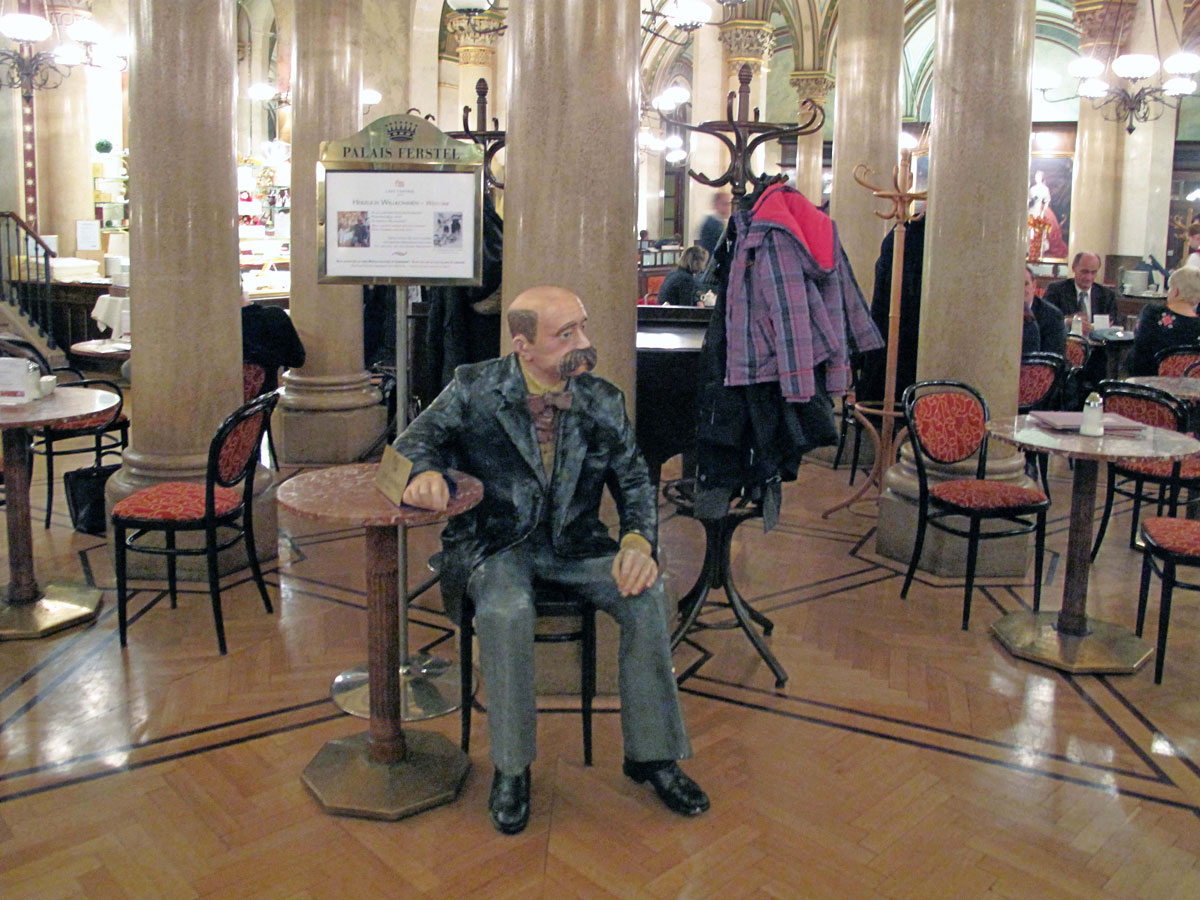
With a name like Café Central you wouldn’t think that it would be a secret hideaway, and you’d be right – it isn’t. Located just north of Michaelerplatz on the corner of Herrengasse and Strauchgasse, it was opened in 1867, and is as central as you can get. Its notoriety comes from the famous clientele that used to frequent the establishment during the 19th and 20th centuries, and apart from many Austrian intellectuals such as Sigmund Freud and the ‘Bohemian’ Peter Altenberg, it was also popular with the likes of  Theodor Herz (founder of Zionism), Adolf Hitler, Leon Trotsky, President Tito of Yugoslavia, and Joseph Stalin. Whether they all met each other here is extremely doubtful, but as there was also a well-respected chess club upstairs, I can’t help thinking that if only they had all sat down together and played a game of chess to sort out who was the ultimate master, then the world might have been spared some of the atrocities of the 20th century, but then again, what if Hitler or Stalin had won, and what if a final in this century had been between Kim Yong Un and Osama Bin Laden? Whatever, the café closed down at the end of WWII and re-opened again in 1975 and is once again a popular place to go, for both locals and tourists alike.

Inside Cafe Central
Peter Altenberg

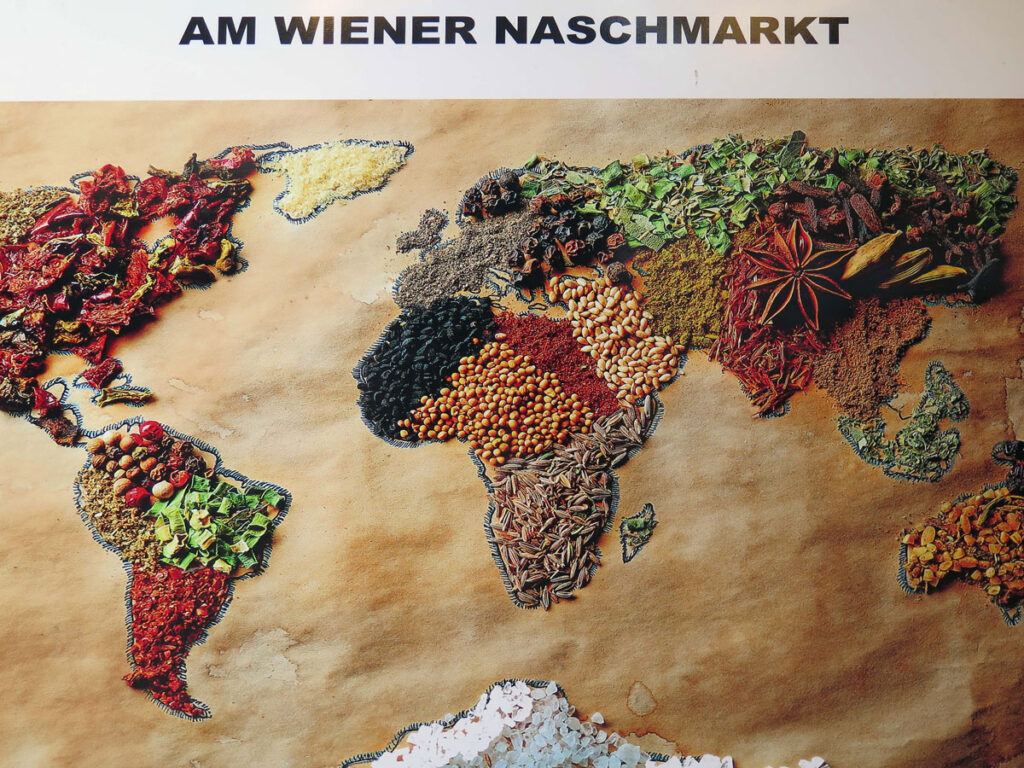
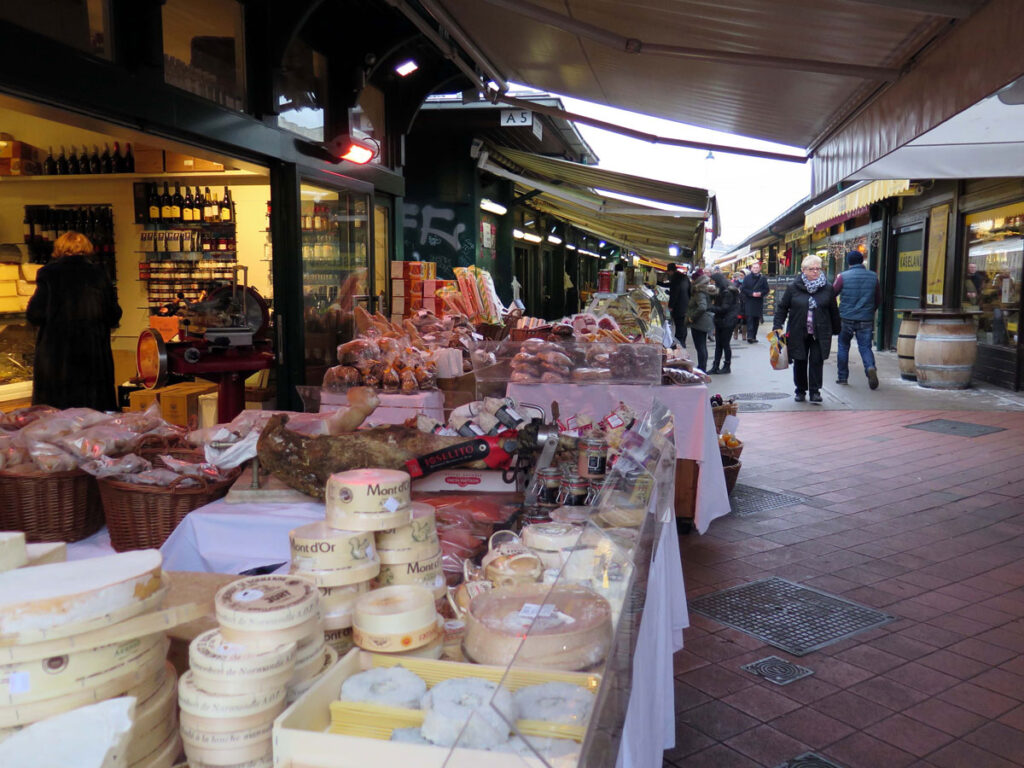
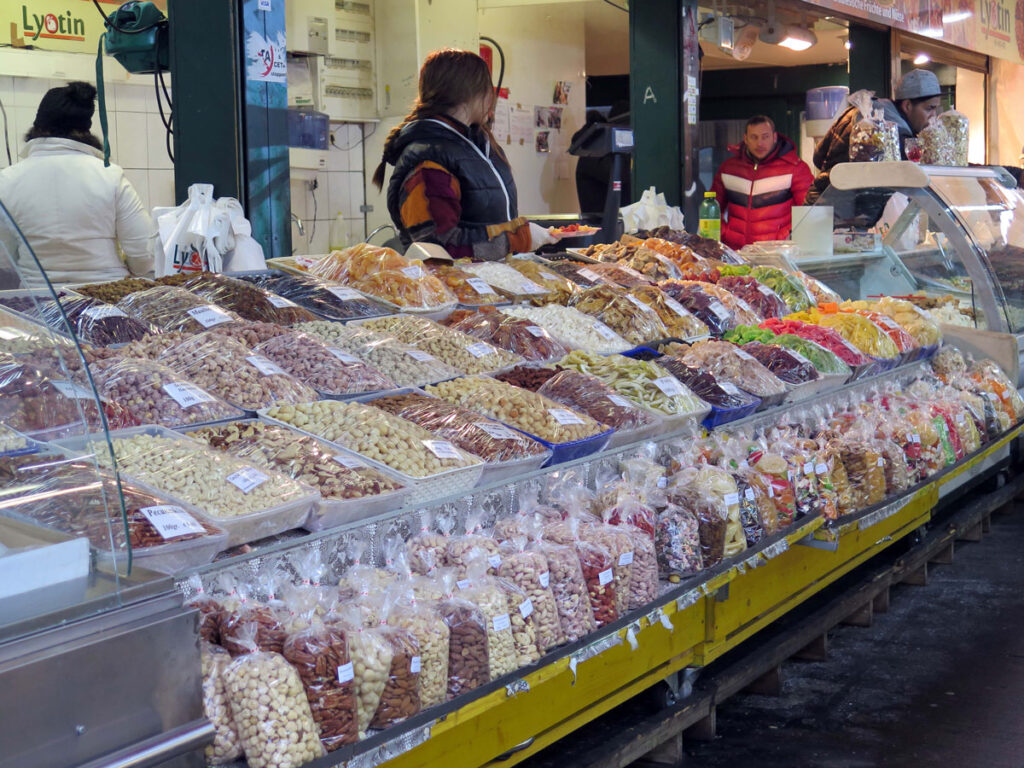
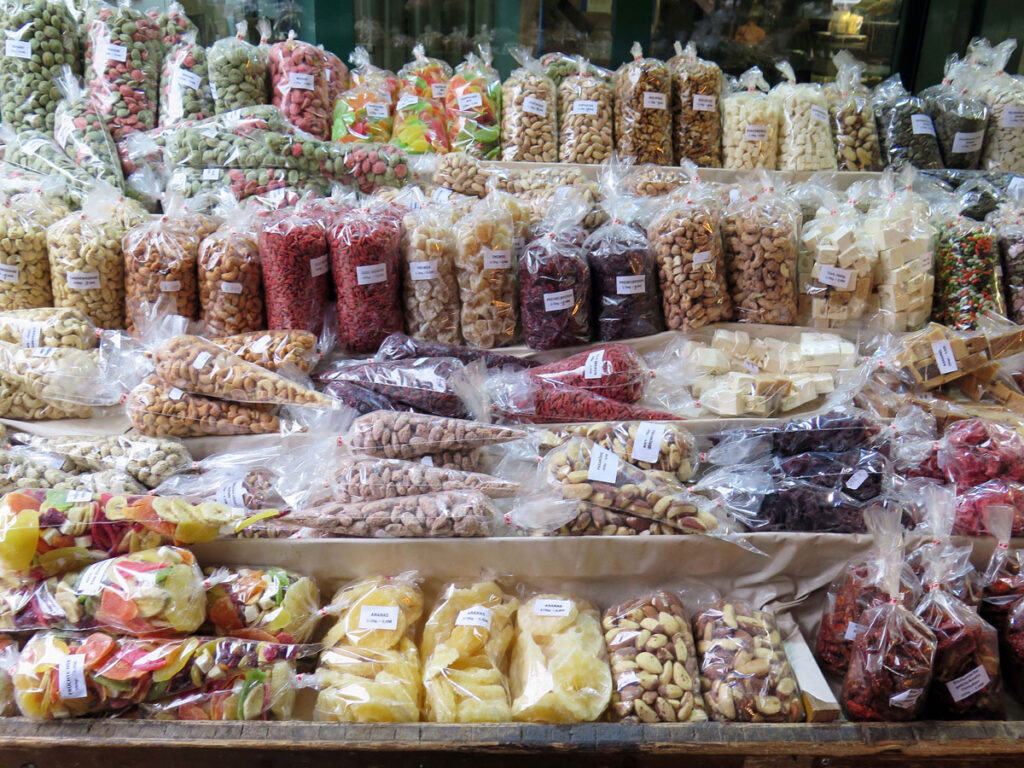
If you prefer your pit-stops to be less formal, then you could do worse than head for the Naschmarkt, Vienna’s premier food market. It runs for almost a mile over the top of the Wien River and can be found just outside the Ringstrasse near the Secession building. You’ll be spoilt for choice with exotic fruit, nuts and herbs from around the world as well as traditional Viennese bread, cheese and pastries. It makes me hungry just thinking about it.

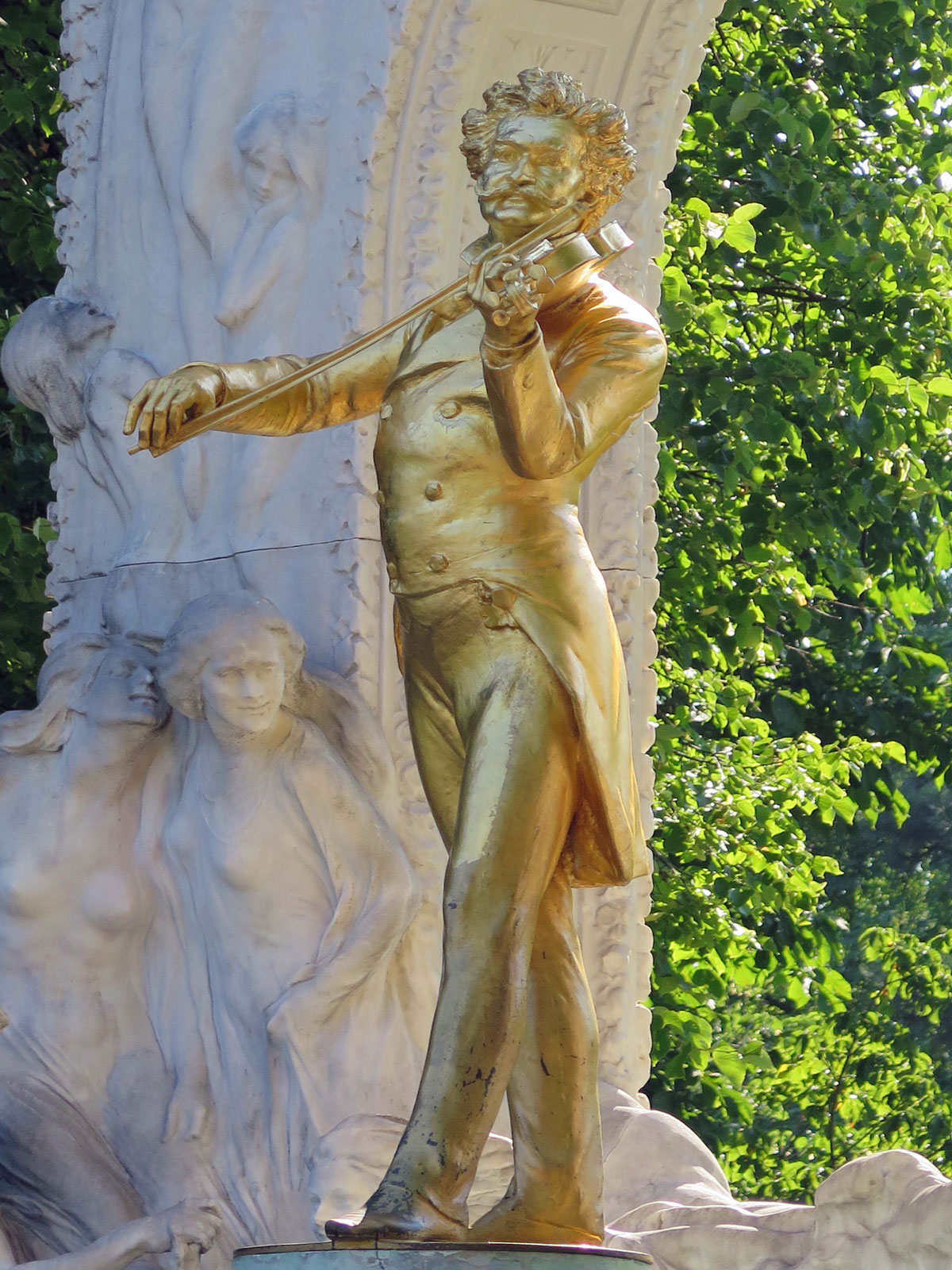
If you can’t wait to get stuck into your Kaiserschmarrn (sweet pancake) or whatever, then there are picnic tables in nearby Karlsplatz, but if you don’t mind walking across the square and down to the Stadtpark, then you may find it a more pleasant alfresco experience. The Wien River emerges out into the open air again here and there’s a lake with benches around it where you can start tucking into your picnic in peace. You’ve also got the added advantage of checking out some statues of famous Viennese people, the most significant one being that of  Johann Strauss the Younger.

Johann Strauss II Monument in the Stadtpark

A short distance from the Stadtpark, the minor Wien River joins the Donau Kanal (Danube Canal) which many people think is the River Danube (Donau in German), and it’s easy to see why: It’s not really a canal at all, but an arm of the Danube which leaves the main river in the north-west of the city and rejoins it in the south-east. At one time,  it was the Danube’s main artery, but after flooding several times, the river changed course, leaving the Donau Kanal a rather impressive water channel running through the city centre.

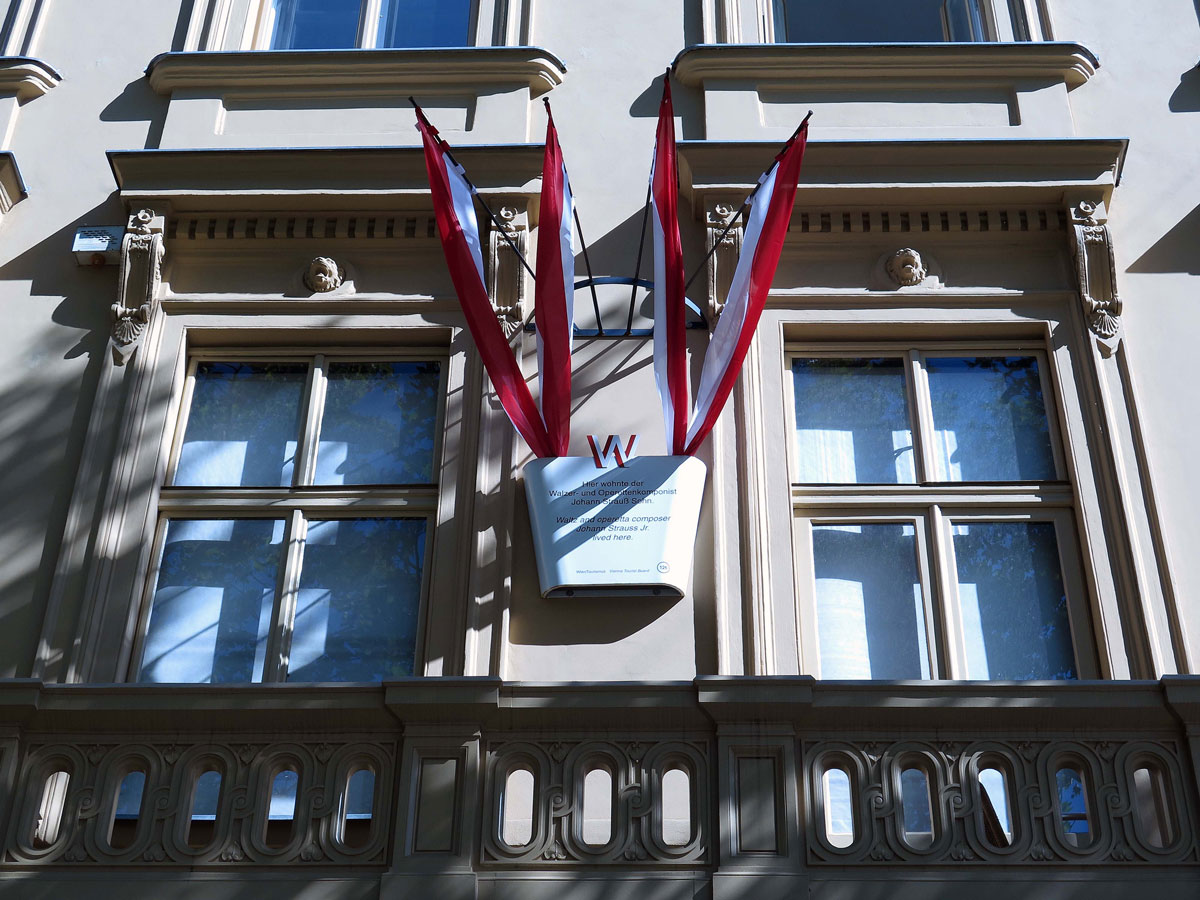
If you’re a fan of Johann Strauss, then on the opposite side of the canal in Praterstrasse is the Johann Strauss Apartment. I’m not a fan as such, but as it was very near the hotel where I was staying, it wouldn’t have made any sense not to go and take a look. At least I got to understand the difference between Johann Strauss I (the Elder) and Johann Strauss II (the Younger). They both wrote music for the waltz and polka dances, but it was the Elder’s son who became the most well-known. It was here at Praterstrasse 54 that Johann the Younger lived during the 1860s and where he wrote the Blue Danube, his most famous composition.

The Johann Strauss Apartment
Inside the Johann Strauss II Apartment
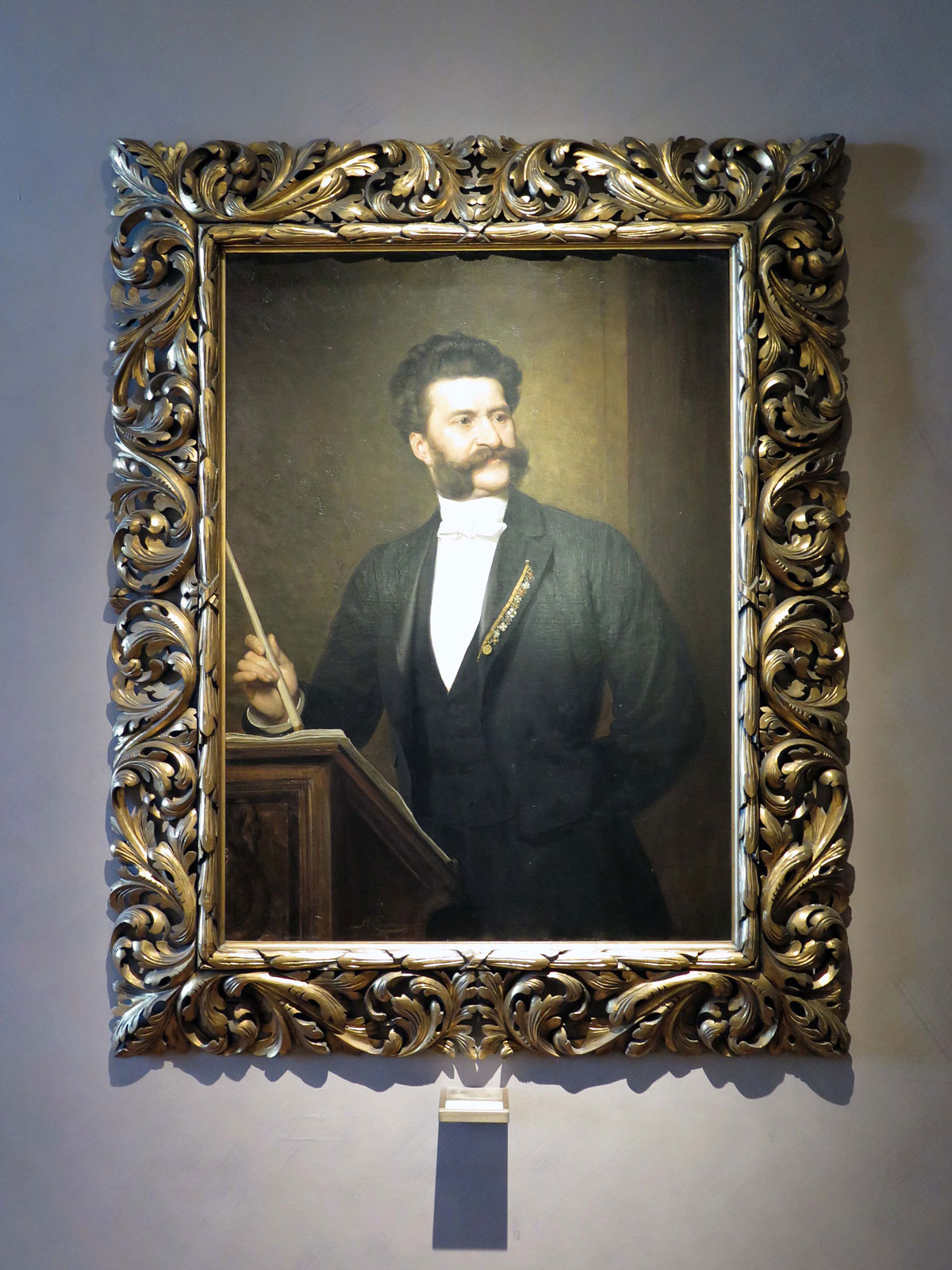
Portrait of Johan Strauss the Younger by August Eisenmenger (1888)

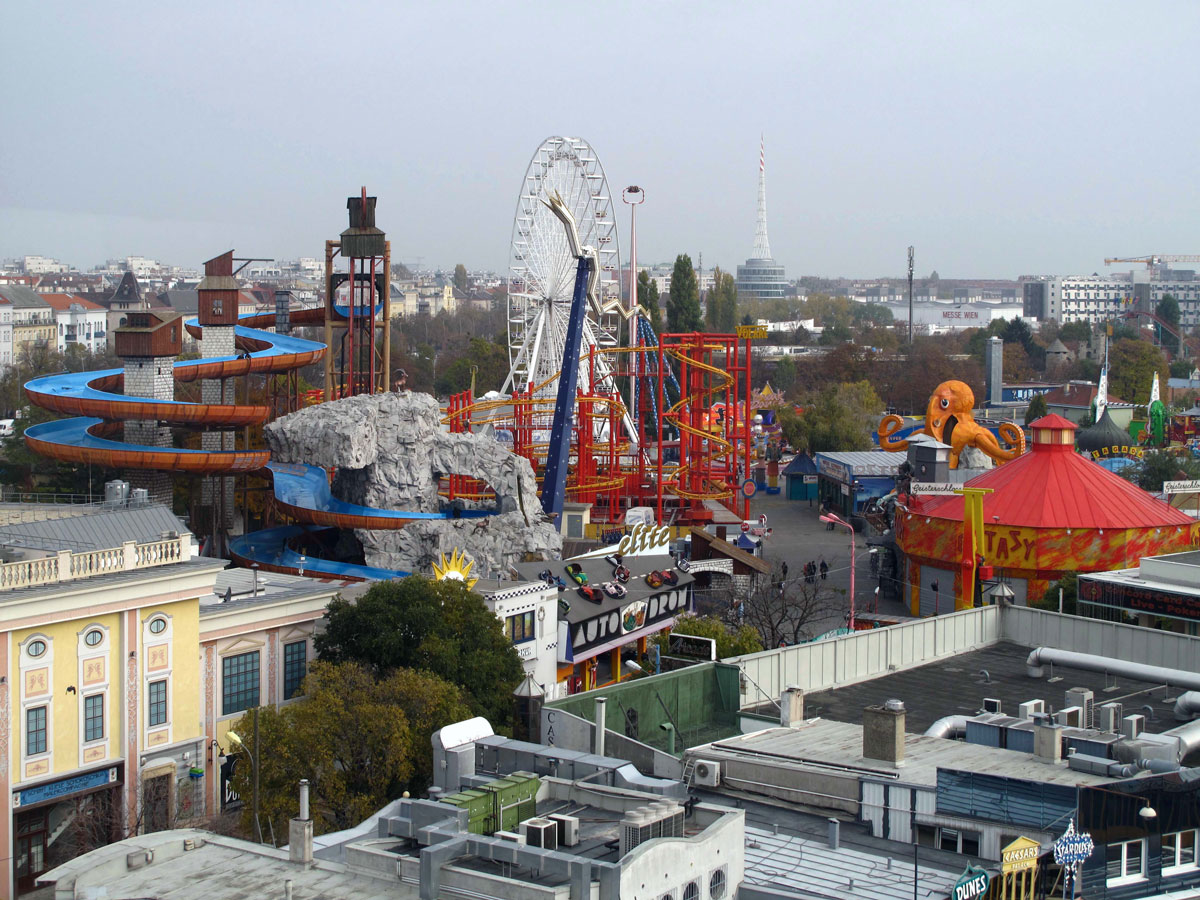
Praterstrasse leads to the large park known as Prater. It’s been a popular destination for the good people of Vienna ever since Emperor Joseph II granted public access of this former private hunting ground in 1766. It was at this time that the Wurstelprater amusement park was created, and it was one of the places I wanted to visit before I’d finished with Vienna.

Before you get any thoughts of me driving around like a maniac in a dodgem car, getting spooked in a ghost train or having to check my trousers after a ride on a roller coaster, then I can assure that was not the reason I wanted to come here.

The Prater Amusement Park

There was really only one reason that I wanted to come here, and that was because it was a major location for The Third Man, a classic film from 1949. I hate it when people start telling me all about a film they’ve seen, and so I’m not going to bore you with the synopsis here: Anyway, it was about a suspicious death in post-war Vienna…. Just joking.

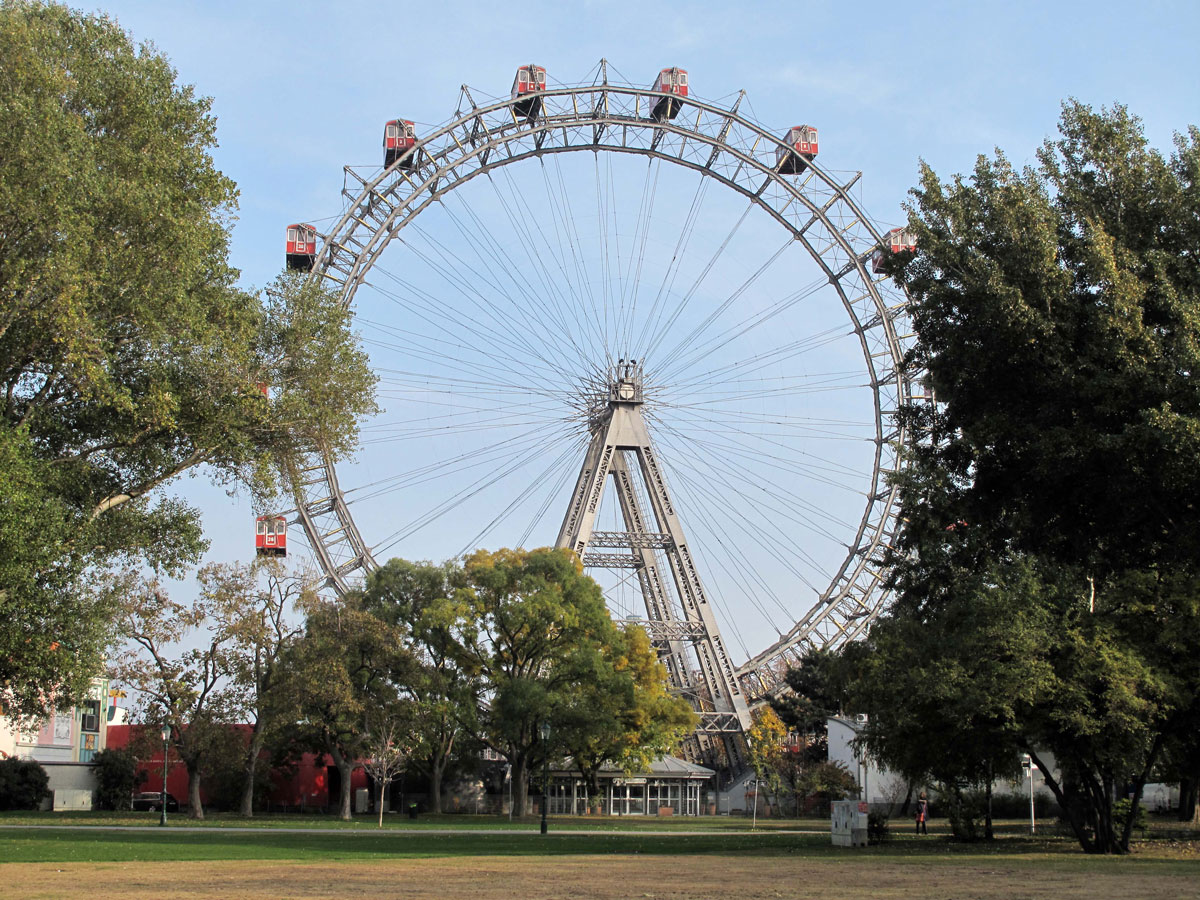
Those of you have watched it may remember the scenes in the sewers which were shot in the underground section of the Wien River, but the most memorable part of the film is set on the Riesenrad Ferris Wheel in the Prater amusement park.

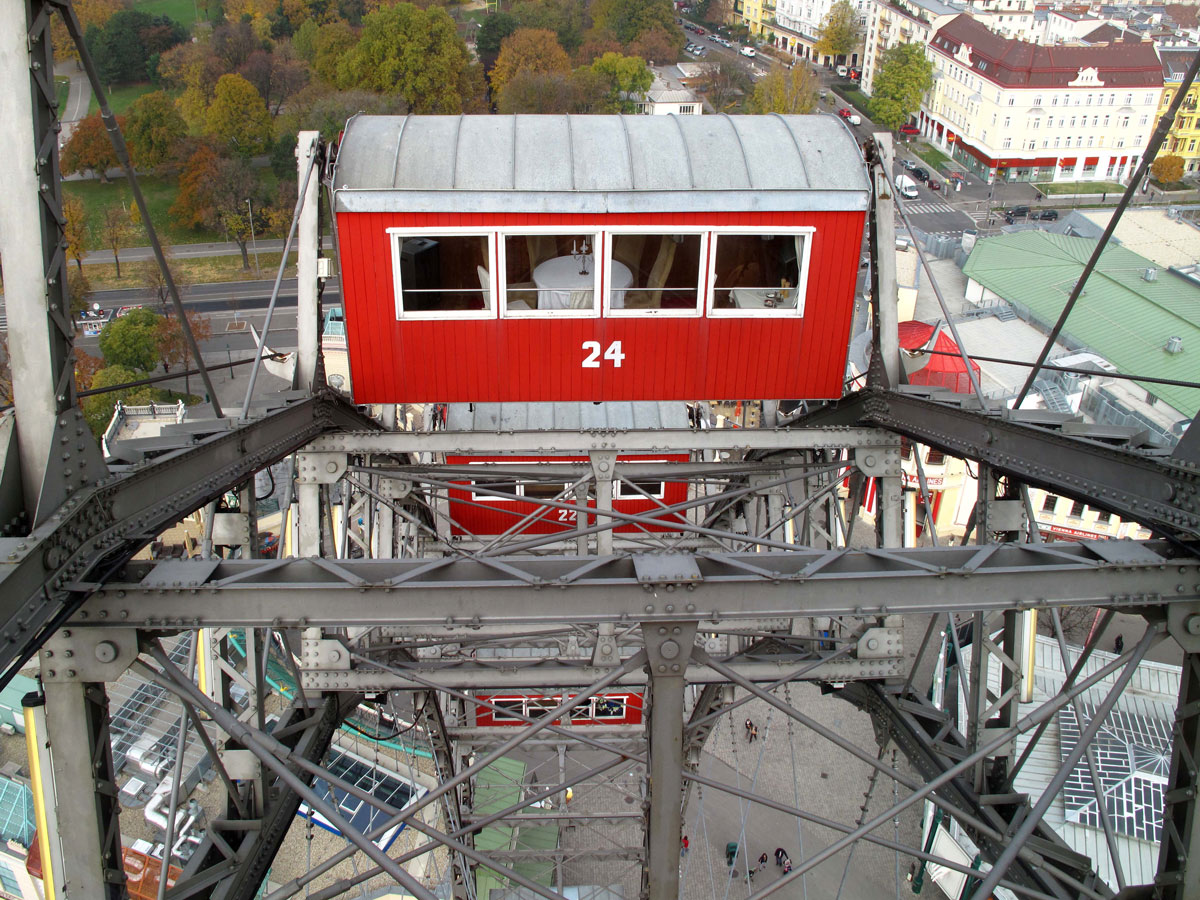
To really appreciate why I wanted to come here you would need to watch the film of course, but below are a couple of pictures of the Riesenrad.

The Giant Ferris Wheel or Riesenrad

Vienna is renowned for its classical traditions and architecture, but before I finish up, I want to take you from Prater across the Danube to show you that there’s a modern side to it as well. Before I do though, I need to explain why the River Danube is often a disappointment for visitors who expect to see this famous river flowing through the city centre like it does in Bratislava or Budapest, and why it’s been more of a liability to Vienna than an asset.

The reason, as you may well have guessed by now, was that for centuries, the river caused major flooding in this low-lying area, and as it wouldn’t have made any sense to build on the flood plain, the Danube effectively became isolated from the rest of the city. At the end of the 19th century, plans were put in place to rectify the situation, and a new straighter course was constructed, the result of which, meant that the original course, now called the Alte Donau (Old Danube), was cut off from the main river. This semi-circular ribbon of water is not really a river anymore, but a lake, and has been put to good use as a recreational area.

Straightening the river improved things but it didn’t cure the flooding completely, and in 1972 another scheme began which split the river into two parallel arms. For the next 16 years, a northern arm was dug out to take up any excess water, and the material that was removed was used to create an island that separated the two arms. The southern arm is still called the River Danube, but the northern arm is known as the Neue Donau (New Danube) – and just for the record, the island is called, as you might have guessed, Donauinsel (Danube Island). The island is 13 miles or so long and another recreational attraction, mainly focused on environmentally friendly pursuits.

If all these water courses in Vienna are a bit confusing, then take a look at the Google map Visiting Vienna has put together to explain it all. You can expand the map by double clicking the square in the top right hand corner.

The Reichsbrucke (Imperial Bridge) is the main crossing point between Prater and Donaustadt on the other side of the Danube, and is also featured in The Third Man. It’s a busy bridge with six lanes of traffic, two cycle paths, two footpaths and tracks for the U Bahn, which is what I used to get to Donaustadt, but it also has a station convenient for Donau Island along the way.

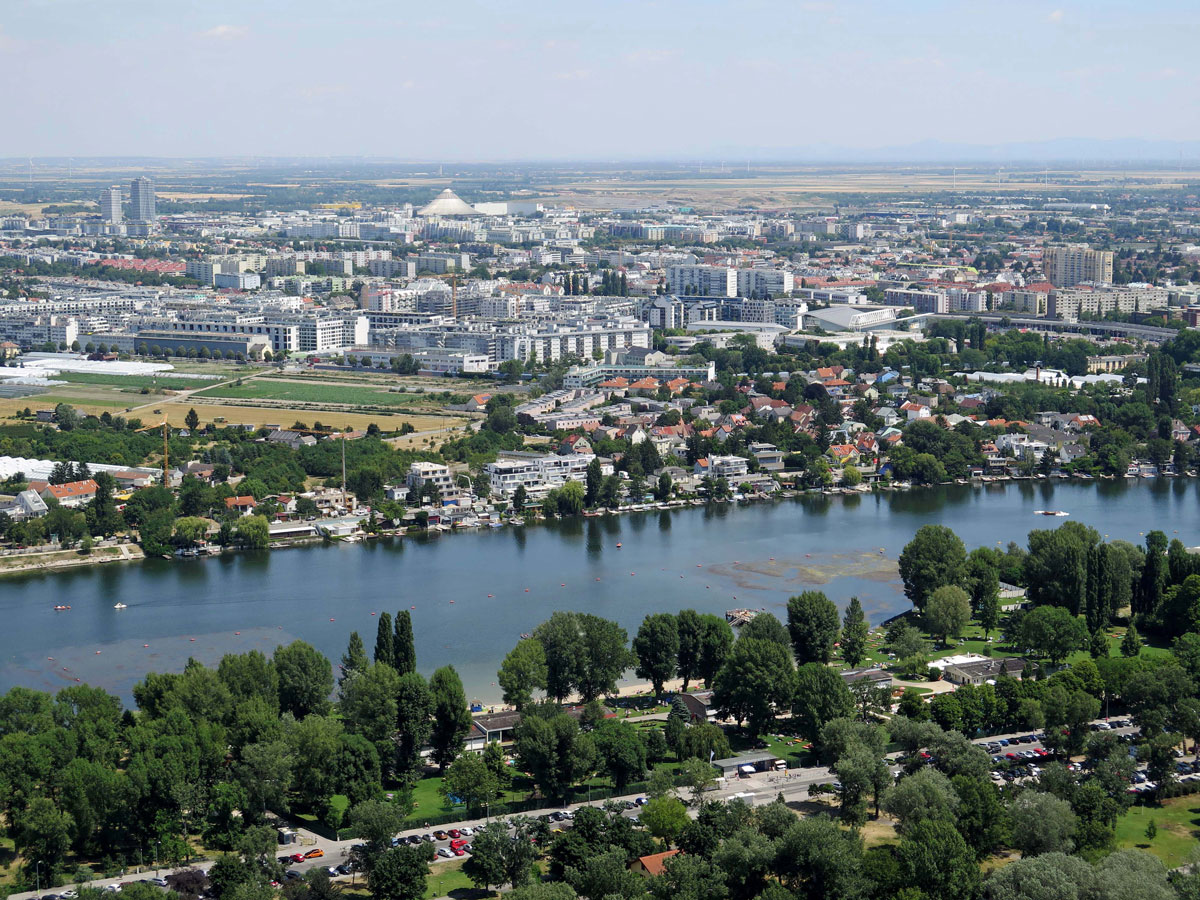
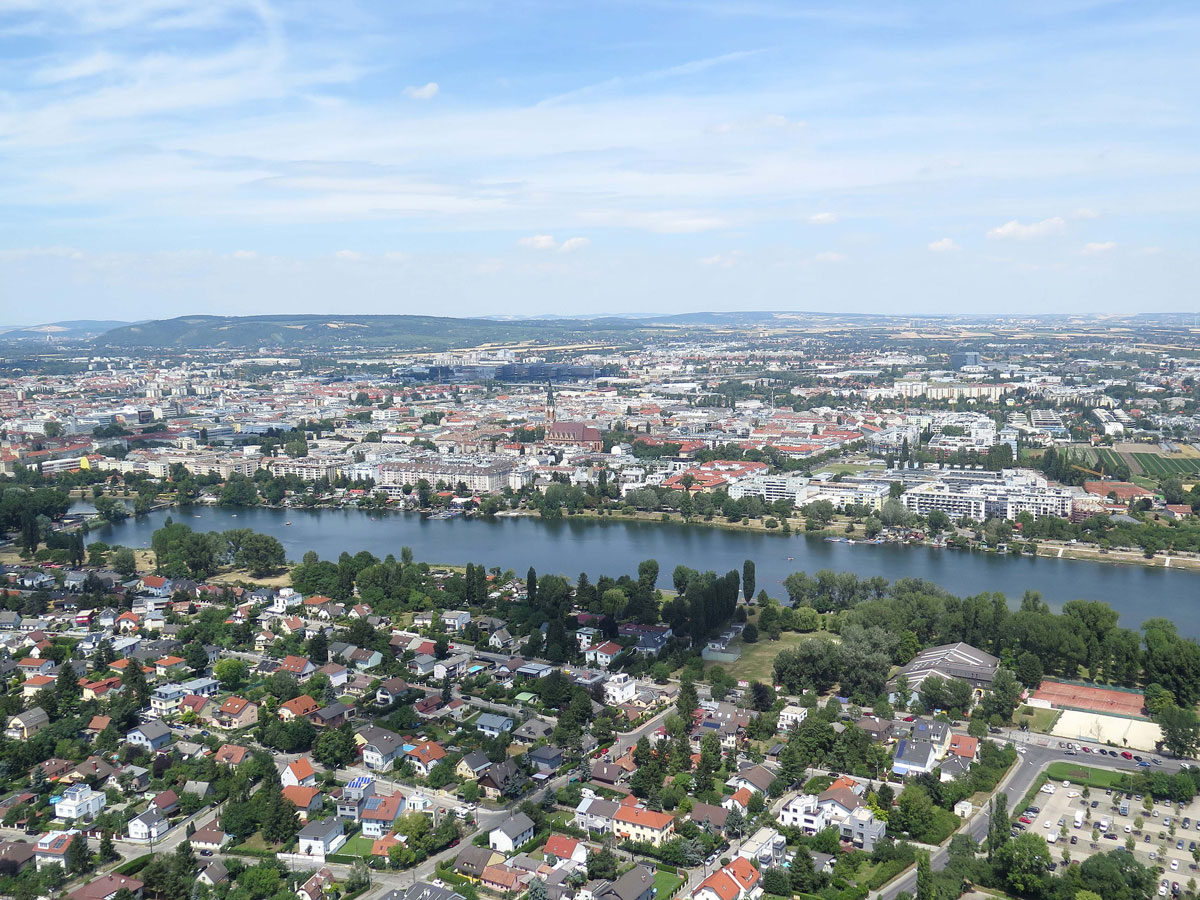
Donaustadt is the largest district by area in Vienna and was established by joining together 8 villages, which are now referred to as territories. Below are a couple of pics I took from the Donauturm: The first one is a view of Donaustadt across the Old Danube, and the second one is also across the Old Danube but towards the neighbouring district of Floridsdorf. (There is more info about the Donauturm below).

Looking across the Old Danube towards Donaustadt
Looking across the Old Danube towards Floridsdorf

My focus of attention in Donaustadt was the territory of Kaisermuhlen, and in particular, Donau City. Donau City is like a territory within a territory if you know what I mean, and started out on a former landfill site which was going to be the location for the Vienna International Garden Festival in 1964. This was a concept similar to the German Bundesgartenschau which was designed to reclaim derelict land in cities after the Second World War. We did it in the UK between 1984 and 1992 under the National Garden Festival scheme to rejuvenate post-industrial sites, but after it was held in Liverpool, Stoke-on-Trent, Glasgow, Gateshead and Ebbw Vale it was scrapped for some reason. In Germany it is still held in a different city every two years – and has done so since 1951.

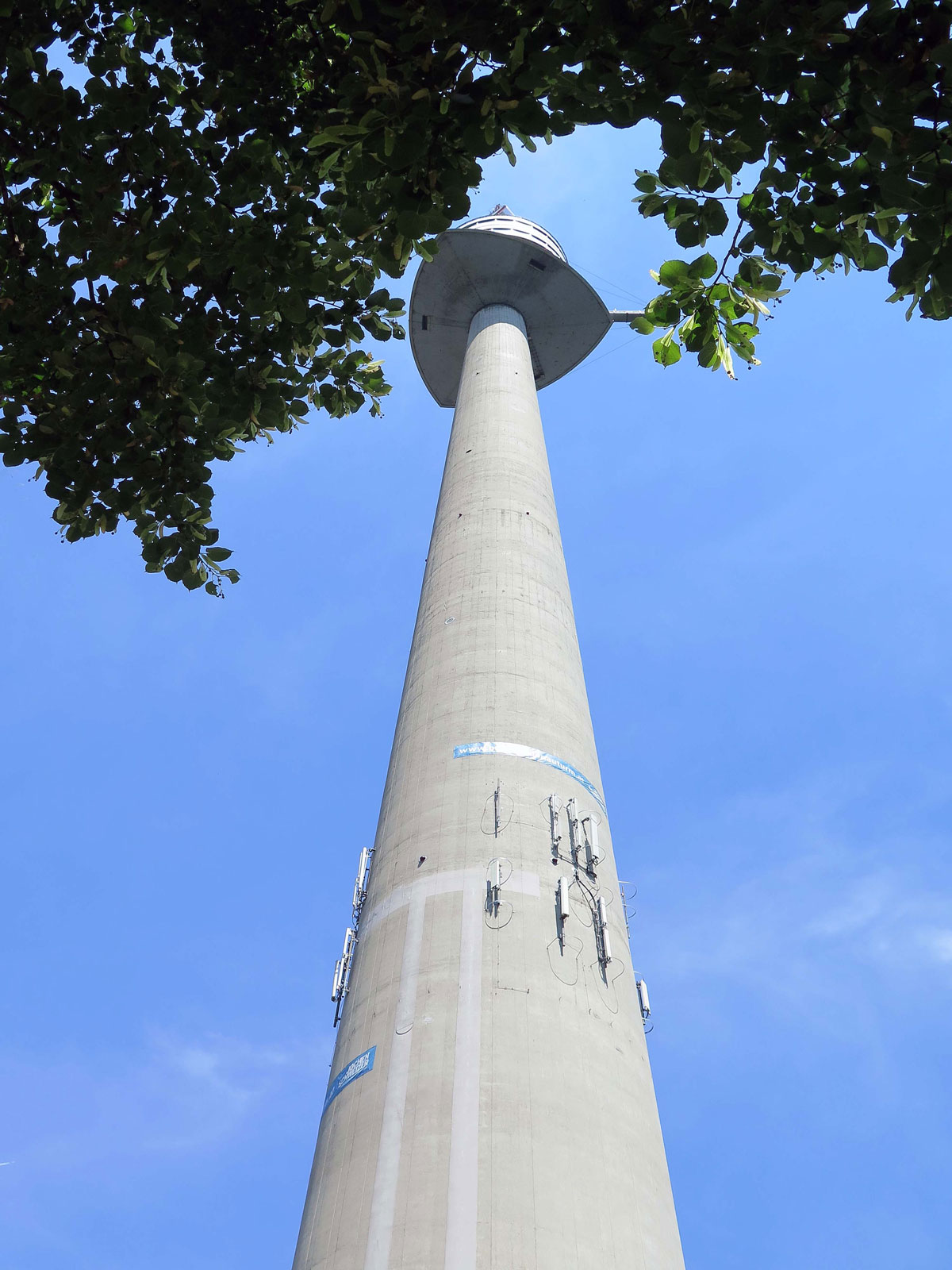
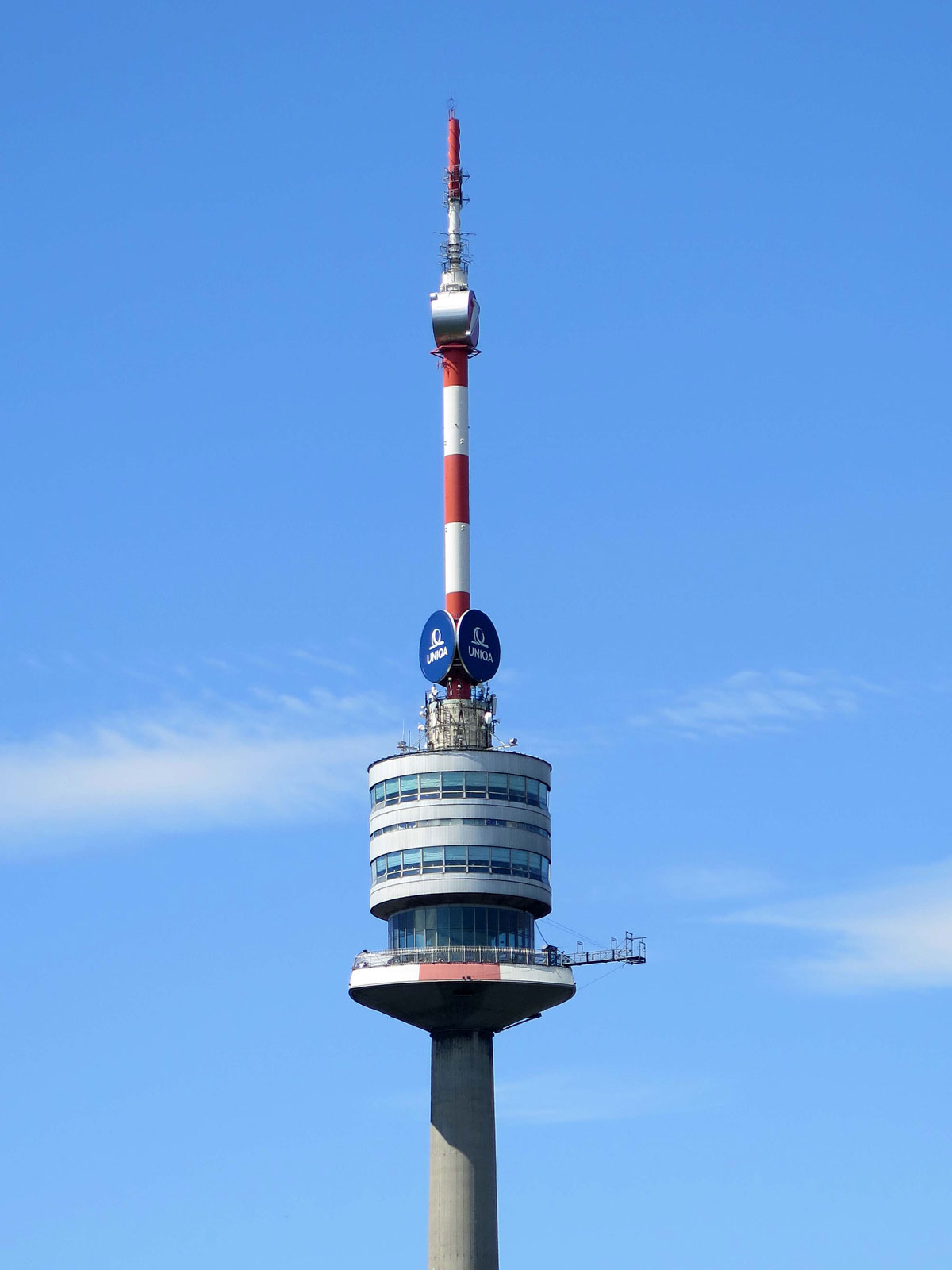
Preparing the site for the garden festival started with the construction of the Donauturm (Danube Tower) in 1962, which at 252 metres (827 ft) high is the tallest structure in Austria. It was completed in 1964, and after the garden festival was over the area became a large park called – wait for it – Donau Park, which is large enough for a mini-train to take people around it.

The Danube Tower

I don’t know if the people who organised the garden festival employed Mystic Meg or not, but the improvements to the flood prevention scheme in the 1970s opened the floodgates (sorry!) for a rapid expansion of Donau City and a new modern district of Vienna.

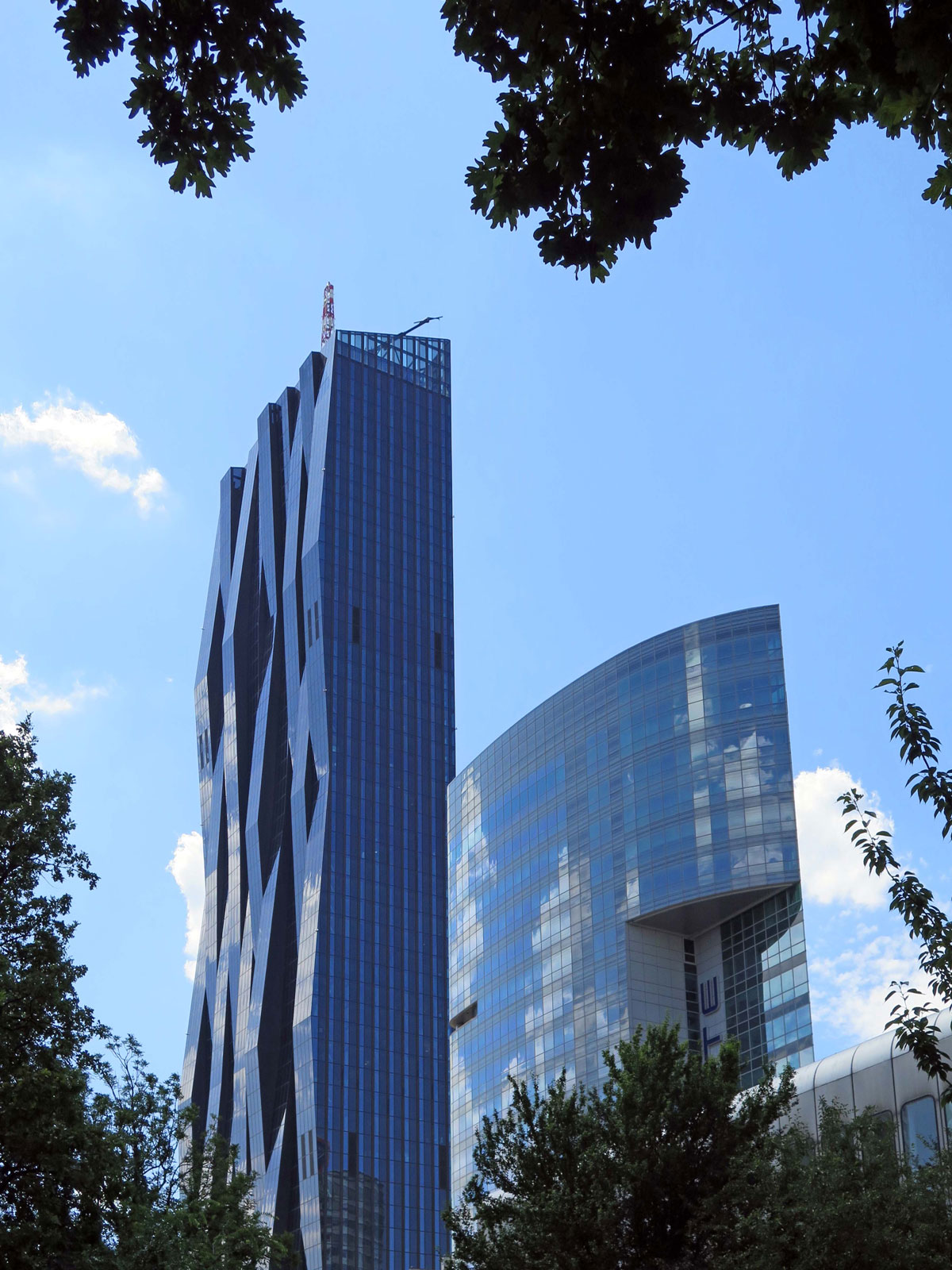
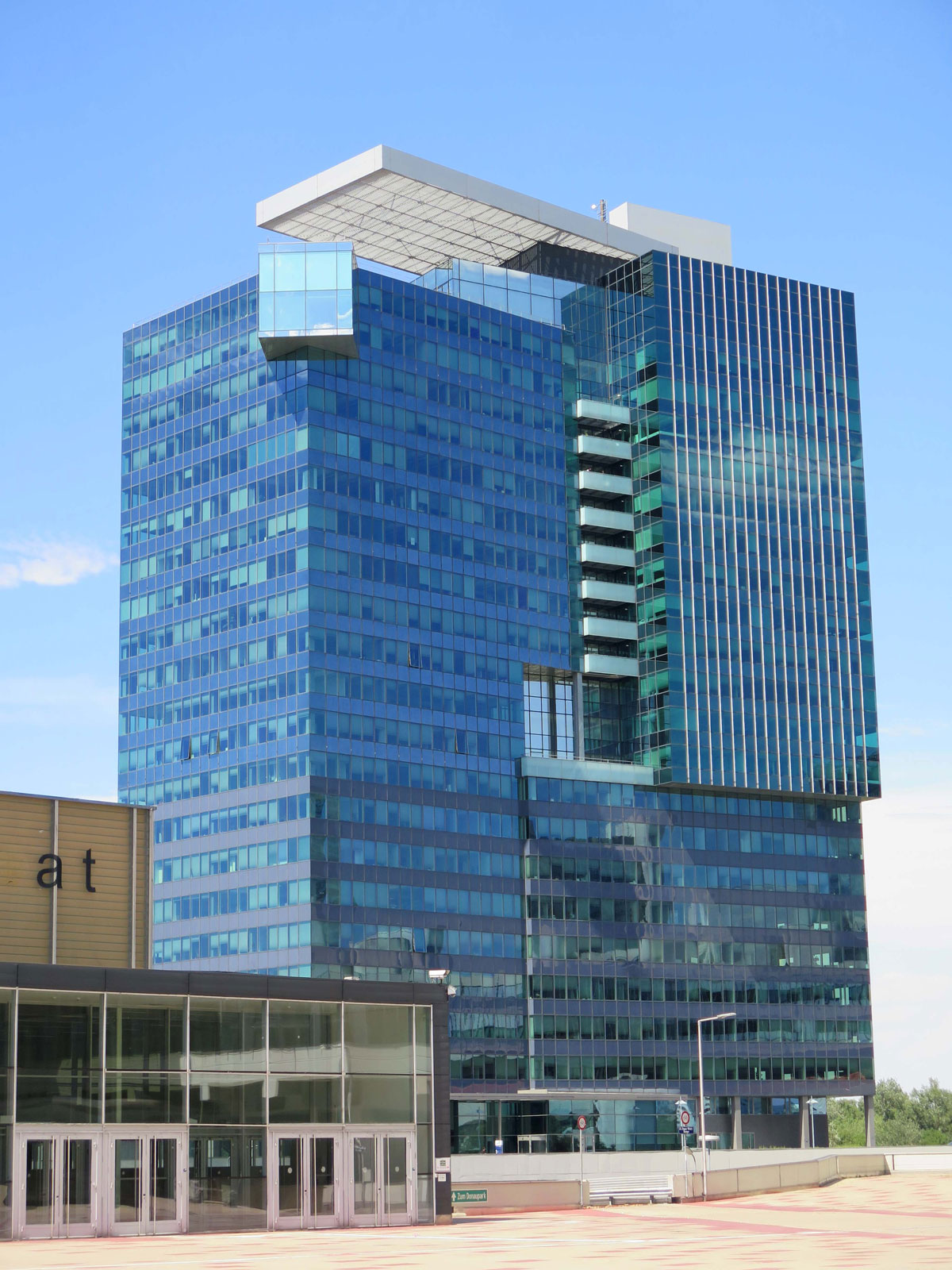
Donau City - The DC Tower 1 and the Tech Gate Building
Saturn Tower

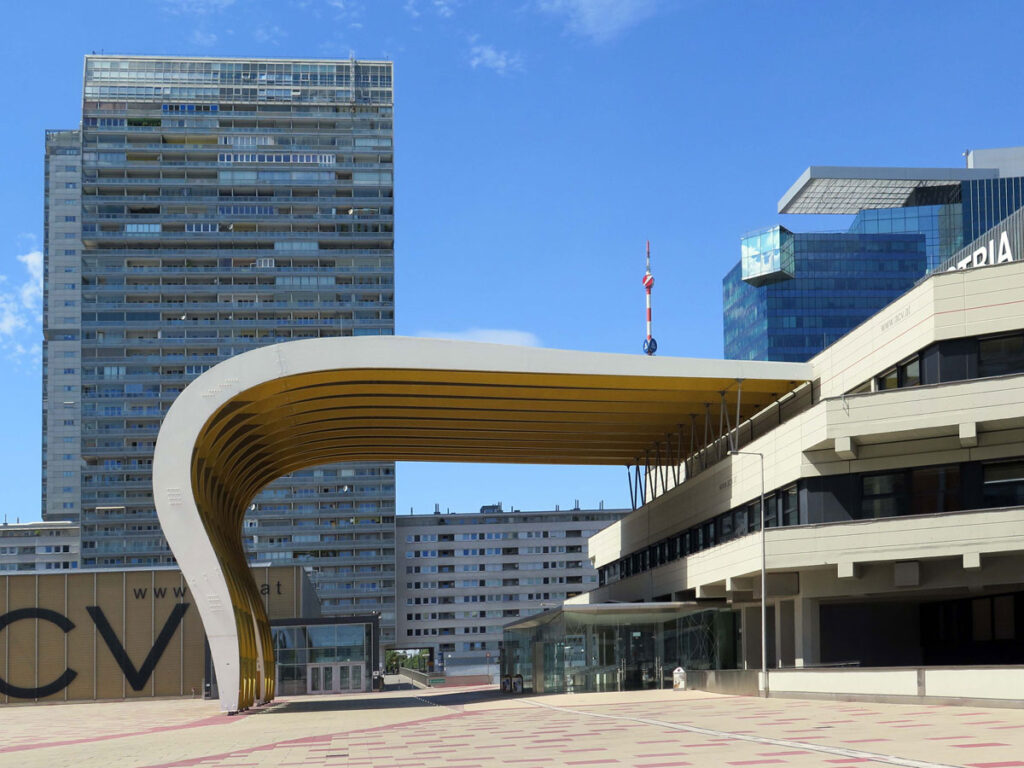
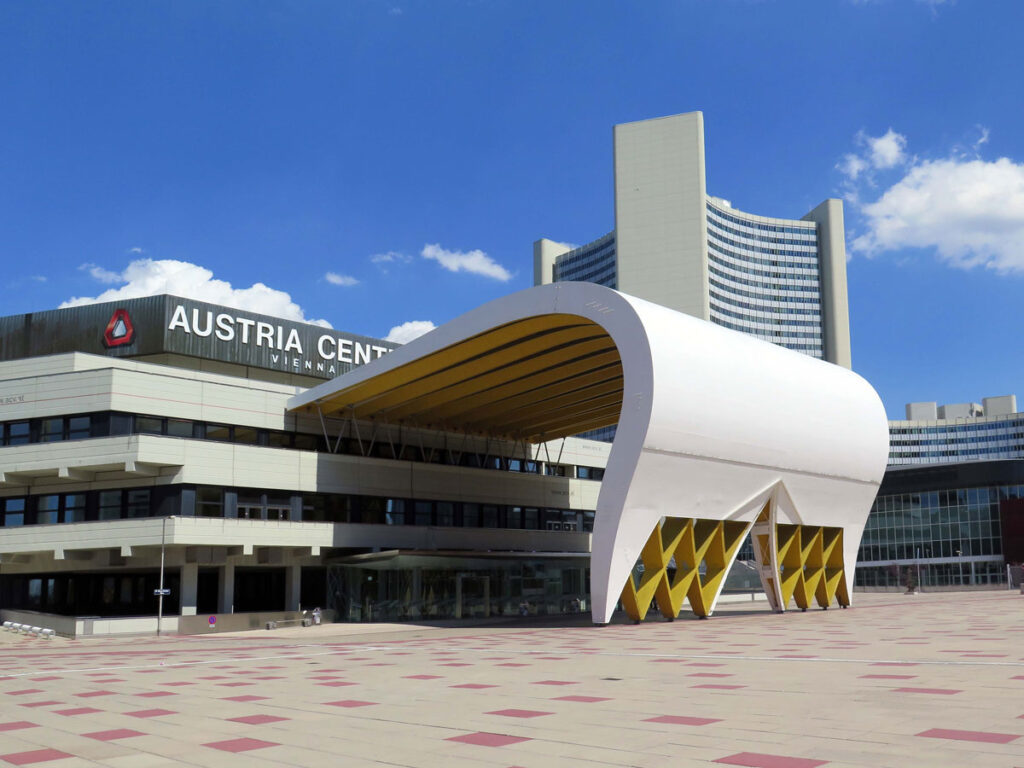
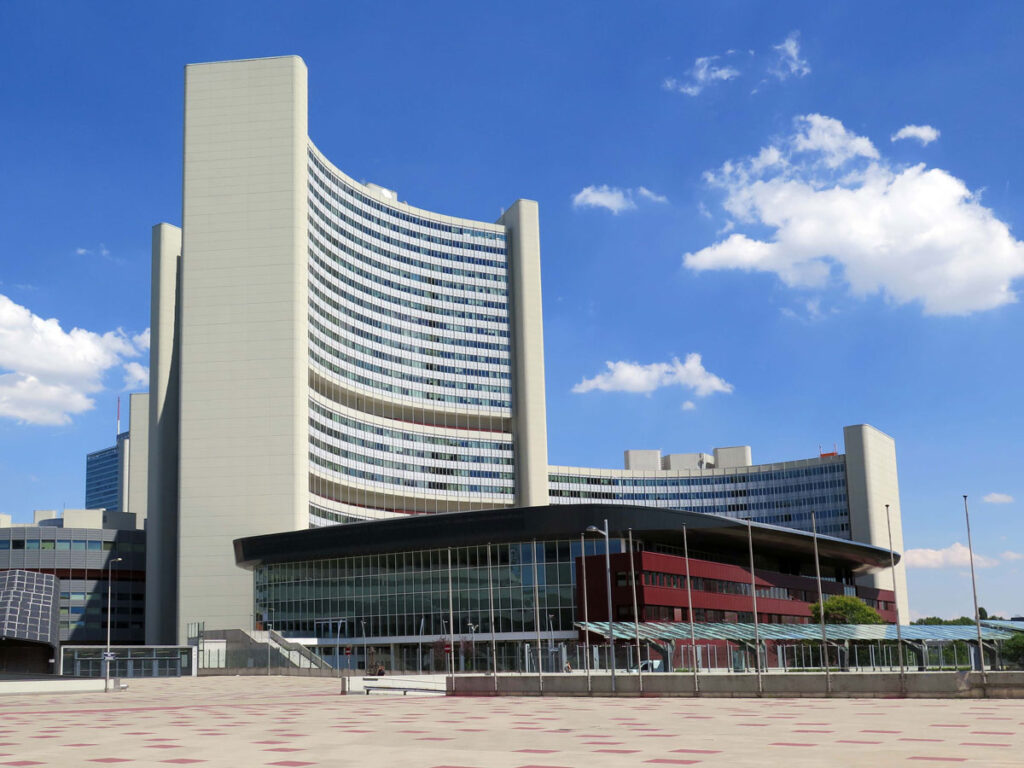
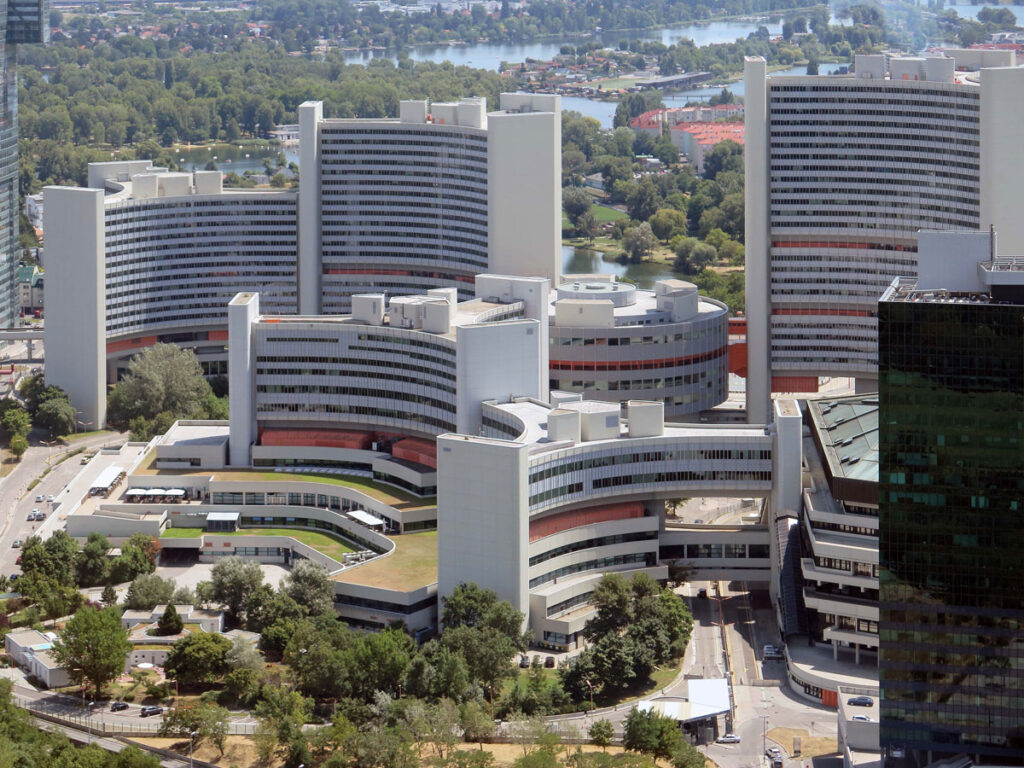
At the heart of this new development is the Vienna International Center (VIC), known locally as UNO City. Built between 1973 and 1979, this is one of four international headquarters of the United Nations – the others being New York, Geneva and Nairobi. I won’t go into everything they do here, but some of the more interesting aspects of its work is involved with international affairs in atomic energy, nuclear tests and outer space, not to mention narcotics and money laundering.

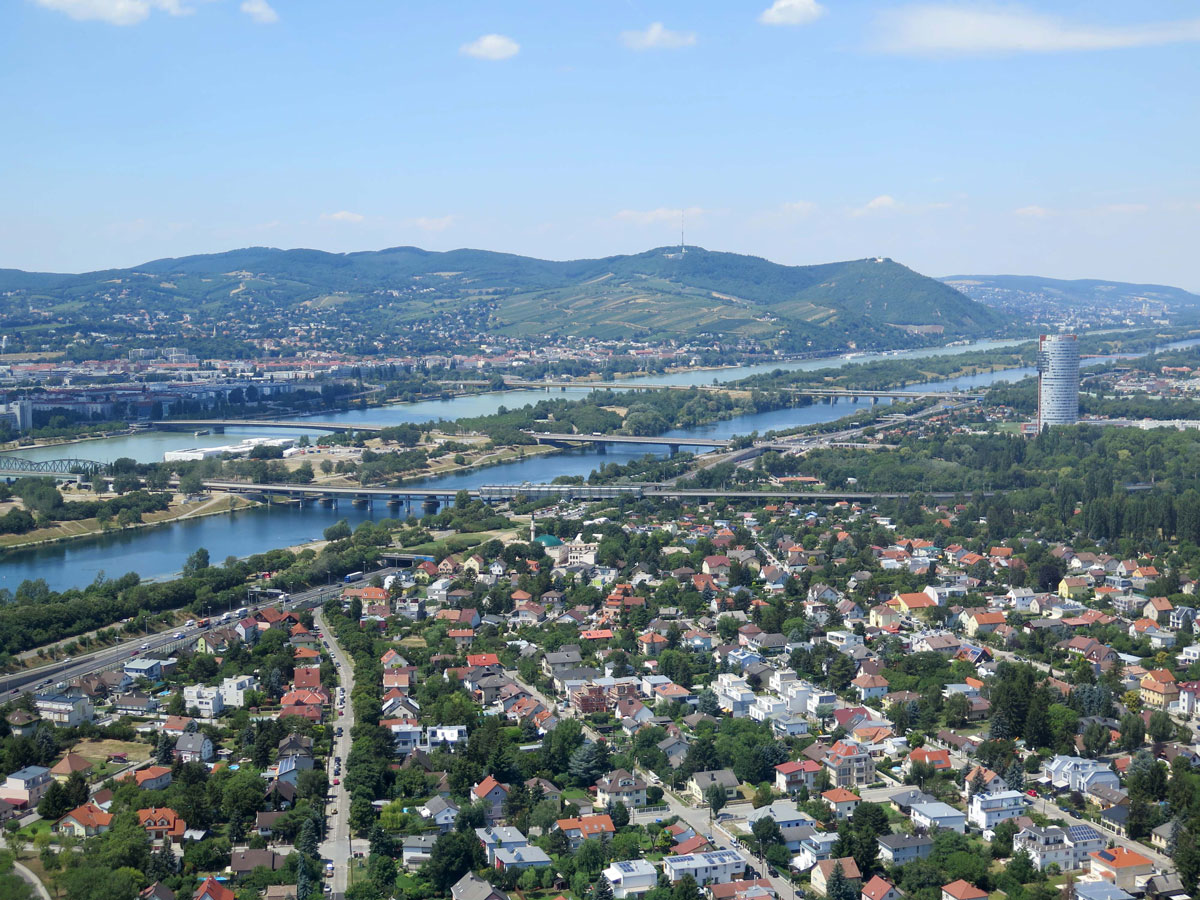
I’m well aware that modern architecture doesn’t excite everyone, but it’s worth coming to Donau City just to visit the Danube Tower alone, and in the picture below you can easily make out how the two straight arms of the Danube come into the city from the direction of Grinzing – my final destination.

The View across the Two Arms of the Danube

Grinzing is an outer suburb of Vienna lying in the north of the city underneath the hill-top ridges of the Vienna Woods, but apart from the natural environment, people like to come here to visit some of the Heurigen that the village is famous for. Allow me to explain.

While the slopes of Austria’s alpine region are idea for those who don’t mind risking life and limb skiing down mountainsides, the slopes of the Danube valley are more suitable for growing grapes, and although we don’t see much of it on British supermarket shelves, Austria has been making wine for centuries – and Grinzing is as good a place as any to taste a bottle of Grüner Veltliner.

A Heuriger can best be described as a wine tavern, and its name comes from the term Heurigen Wein, which translates as “This Year’s Wine”. In 1784 Emperor Joseph II decreed that vineyards could sell their own produce under certain strict conditions, and it was from this time that the Heurigen tradition began. To start with, they were open-air affairs where people would bring along some simple food to go with the new wine, and even though it’s not quite that simple anymore, a true Heurigen has unpretentious rustic surroundings with a limited range of food such as local cheese, ham and sausages.

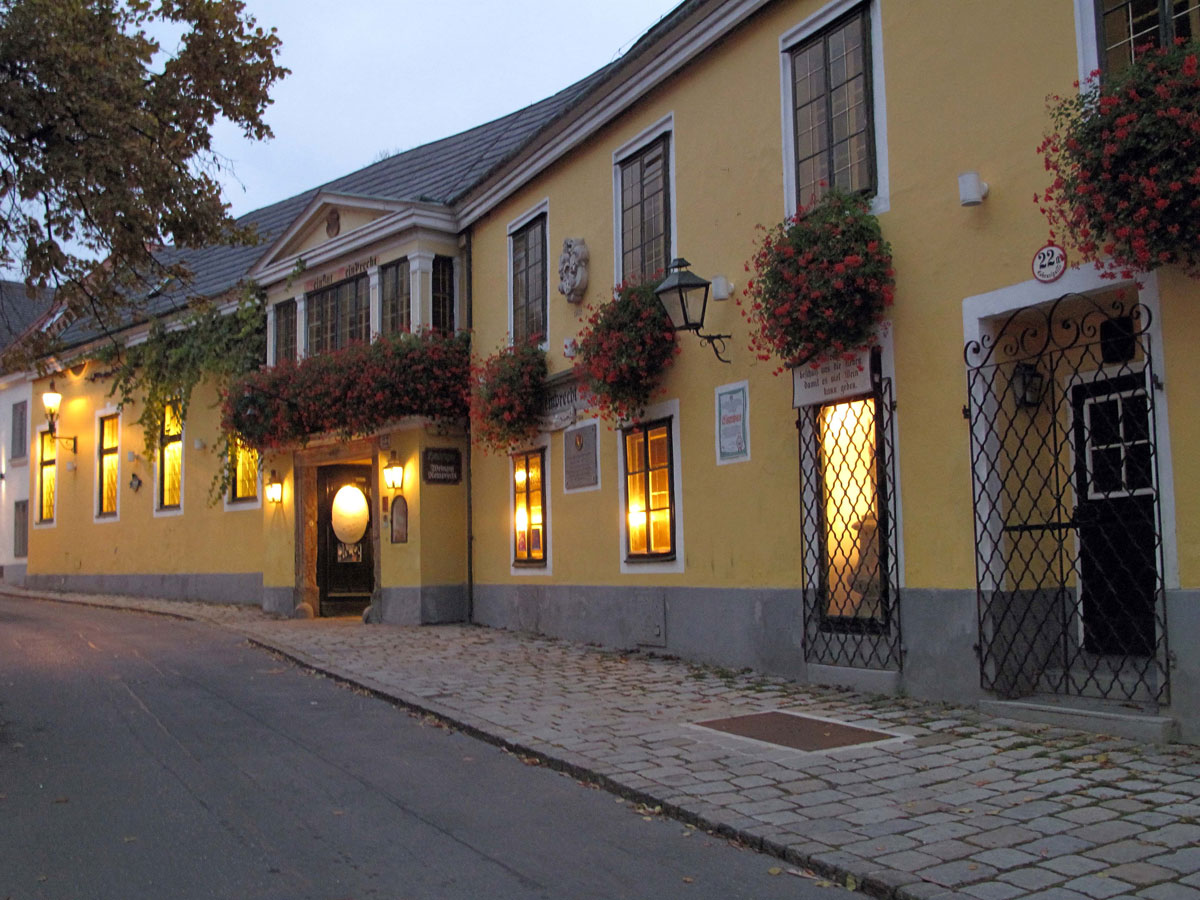
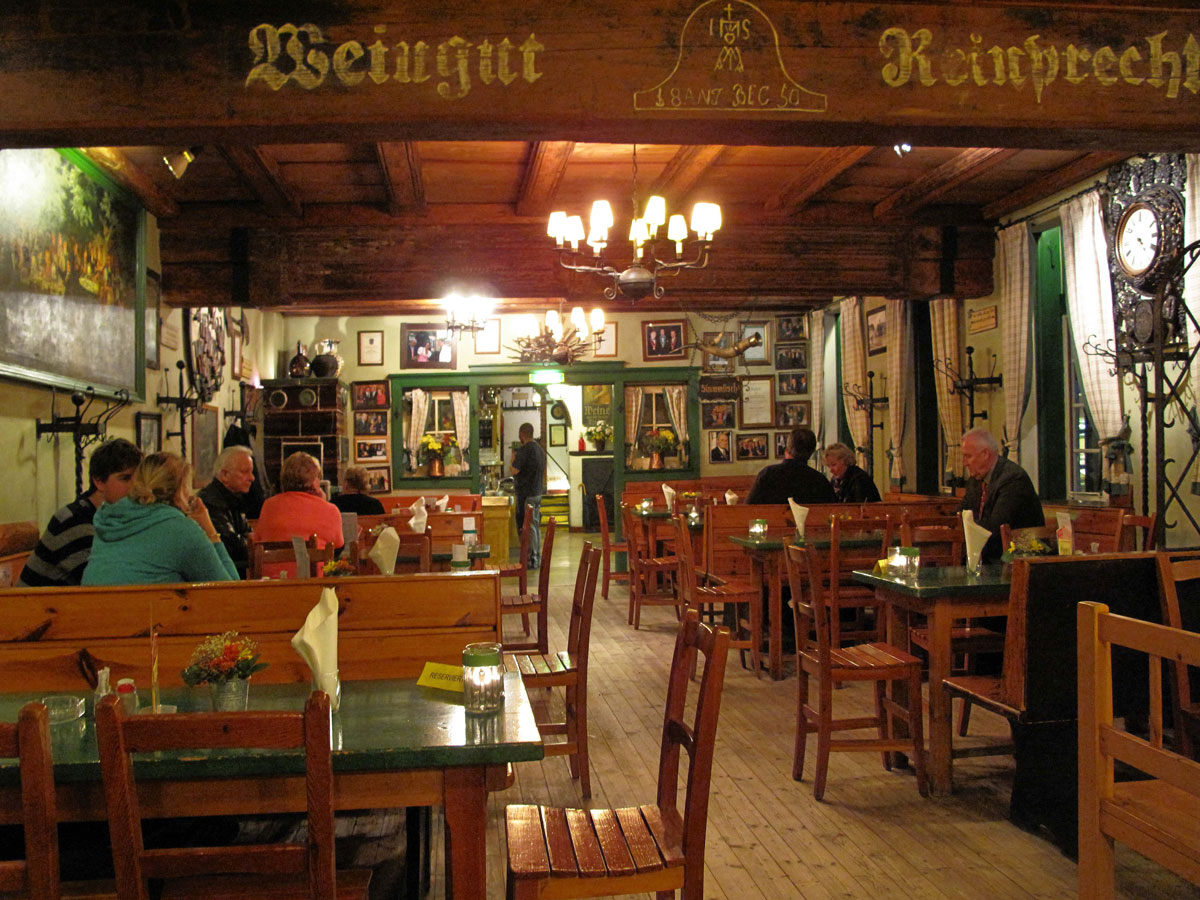
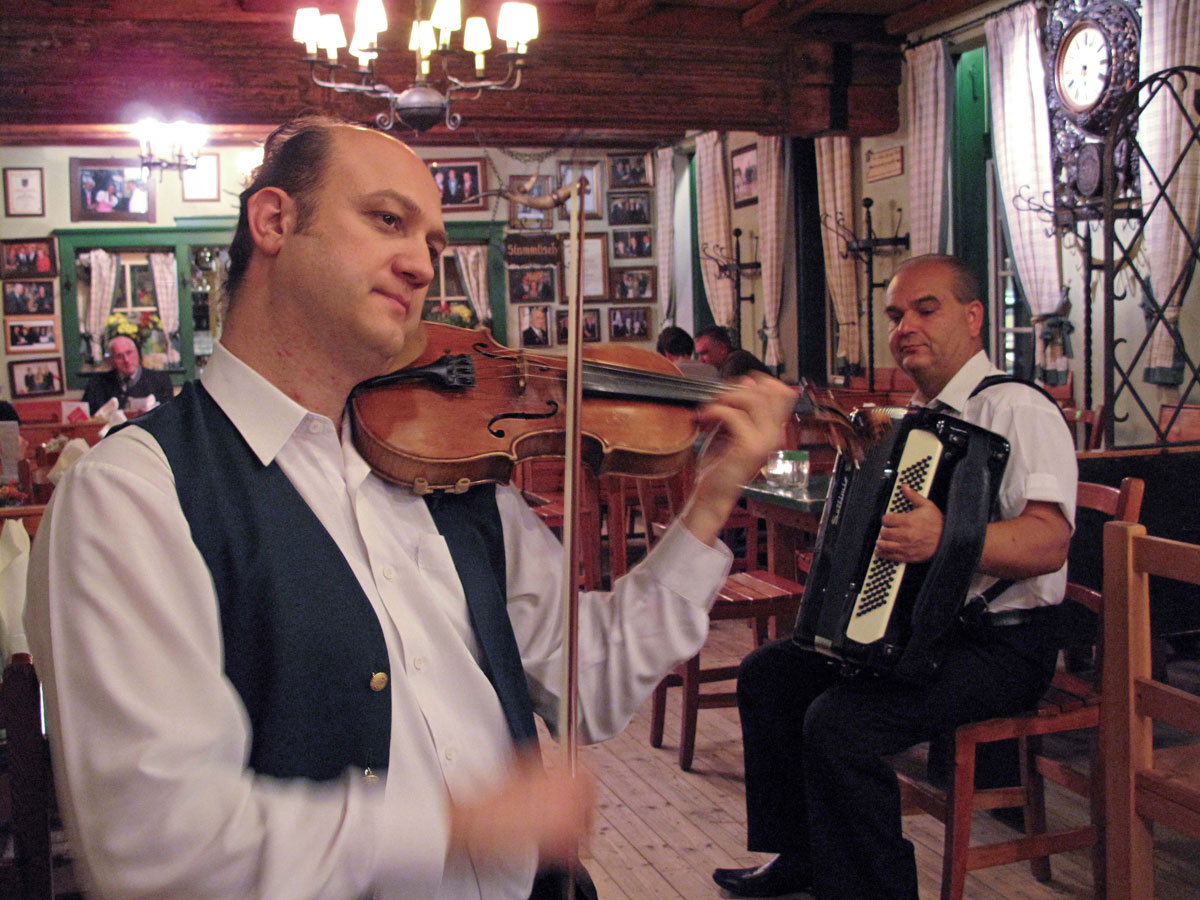
Opening hours of Heurigen are limited, but our choice of venue in Grinzing was a former monastery called Heuriger Reinprecht, and due to the amount of travelling time, we booked an early table. After ordering our wine and food, we sat down on a wooden bench, and it wasn’t long before we were being serenaded by a pair of Heurigensanger (folk musicians) whether we wanted to be or not, but it soon became clear that we wouldn’t be allowed to carry on enjoying our food unless we gave them a tip for their trouble. Being entertained by Schrammelmusik is all part of the ambience of course, and you may or may not be interested to know, that Anton Karas, who wrote and played on The Third Man’s Harry Lime theme, was discovered playing in a Grinzing Heurigen.

Having been to Vienna several times, this was to be my last evening here, and so I hope that this final post shows that there is more to the city than just Imperial palaces, Baroque churches and classic architecture. Coming to Heuriger Reinprecht also made me realise that music here isn’t confined to Mozart, Schubert and Strauss either, but whether anybody joined the Heurigensanger for the Last Waltz I couldn’t say, because all good things come to an end, and for one last time, it was a case of thank you, and  ‘Goodnight Vienna’.
Grinzing - The Heuriger Reinprecht

POSTED – NOVEMBER 2023

Originally posted 2023-11-02 15:28:46.

The post Vienna – The Last Waltz appeared first on Easymalc's Wanderings.

]]>
https://www.easymalc.co.uk/vienna-the-last-waltz/feed/ 35 19696