
Gustav Klimt and the Vienna Secession
Vienna is deservedly renowned for its majestic classical and neo-classical architecture, and can best be appreciated by taking a walk along the Ringstrasse where the Museum of Fine Arts is located. The museum is a good example of this type of architecture and everything about the building and its contents is impressive.
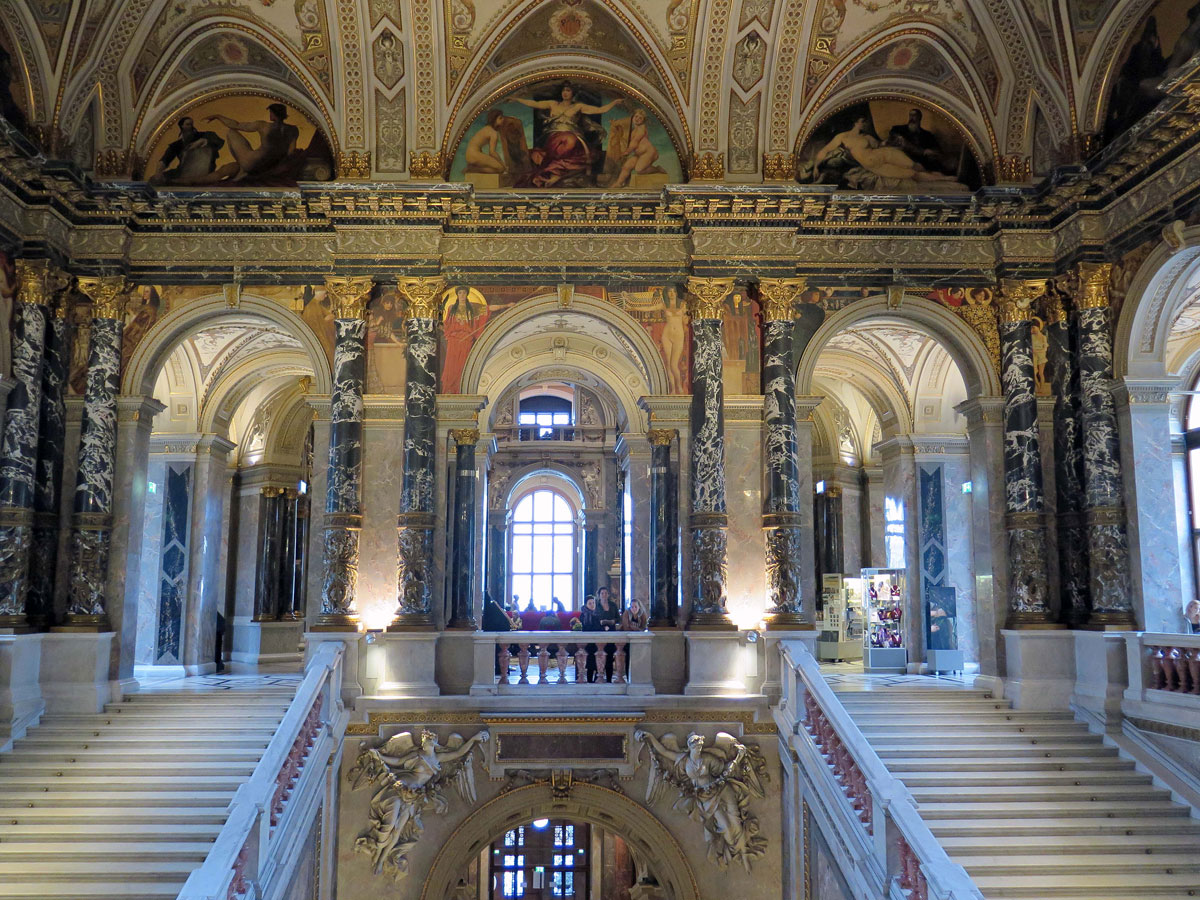
Those of you who read my previous post about the museum might remember the marble staircase that leads from the entrance lobby up to the cupola. The first thing you’ll see is Canova’s Theseus Slaying the Centaur, but your eyes will soon be drawn towards the Lunette pictures by Hans Makart at the top of the stairs. What might not be quite so obvious are forty spandrel paintings underneath them by Gustav Klimt, his brother Ernst, and Franz Matsch.
These paintings were created on the narrow sections of wall between the arches and columns: So what? I hear you ask. Well, these paintings are the exact opposite of classicism – and here they are in the most (neo)classical of buildings in the centre of Vienna. Gustav Klimt is the most famous exponent of this style of art which was part of the Secession movement, and is a term that you will constantly come across in Vienna.
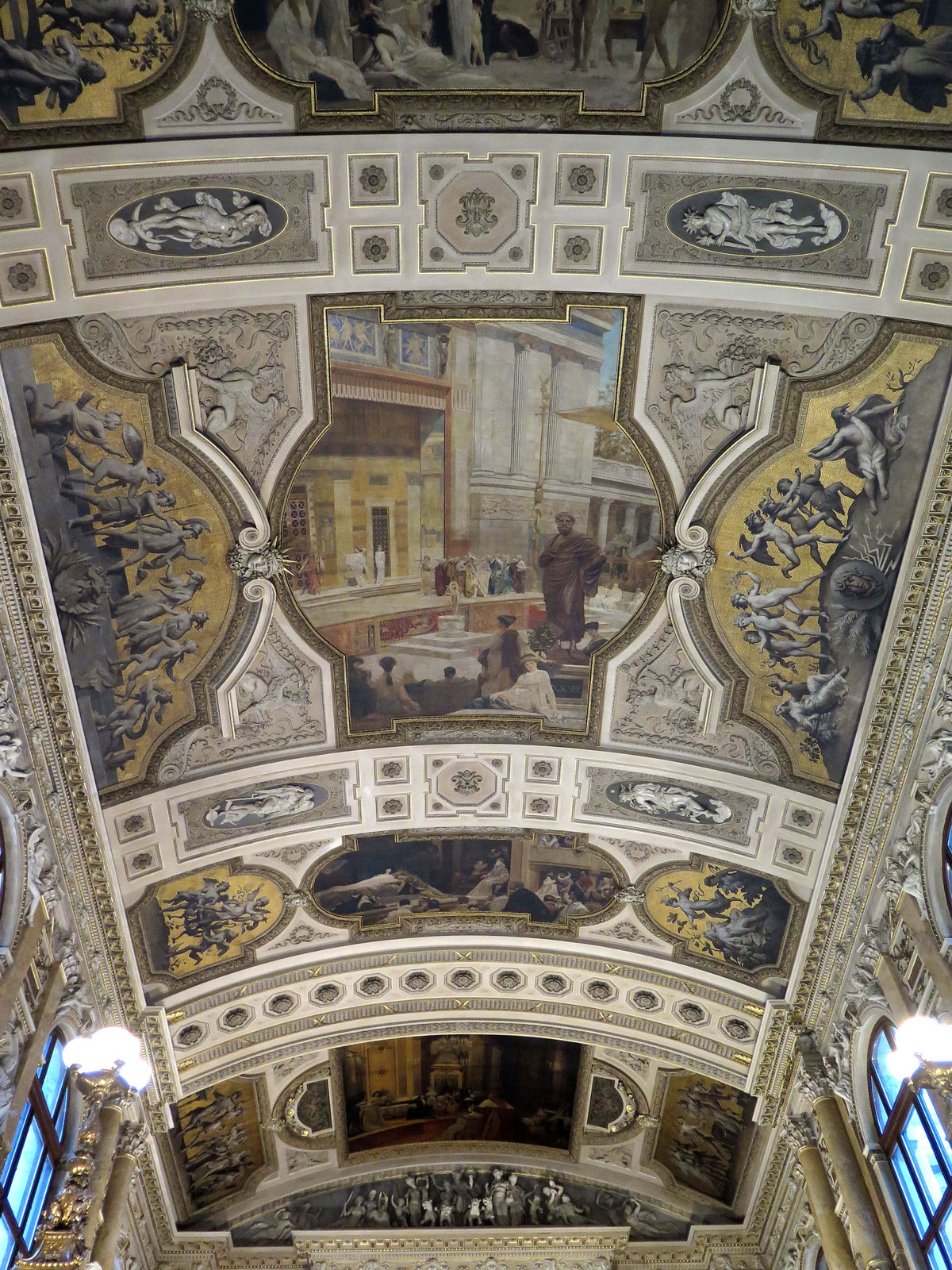
Some of you may also remember Klimt’s Ceiling Paintings in the Burgtheater on The Ringstrasse which are a better example of his style, but to find out what the Secession movement was all about we need to head over to Karlsplatz.
Karlsplatz is just a five minute walk from the Opera House on the Ringstrasse, but if you’re travelling by public transport, you’ll be pleased to hear that this is one of Vienna’s major transport hubs, and of the city’s five U Bahn lines, three of them come to Karlsplatz.
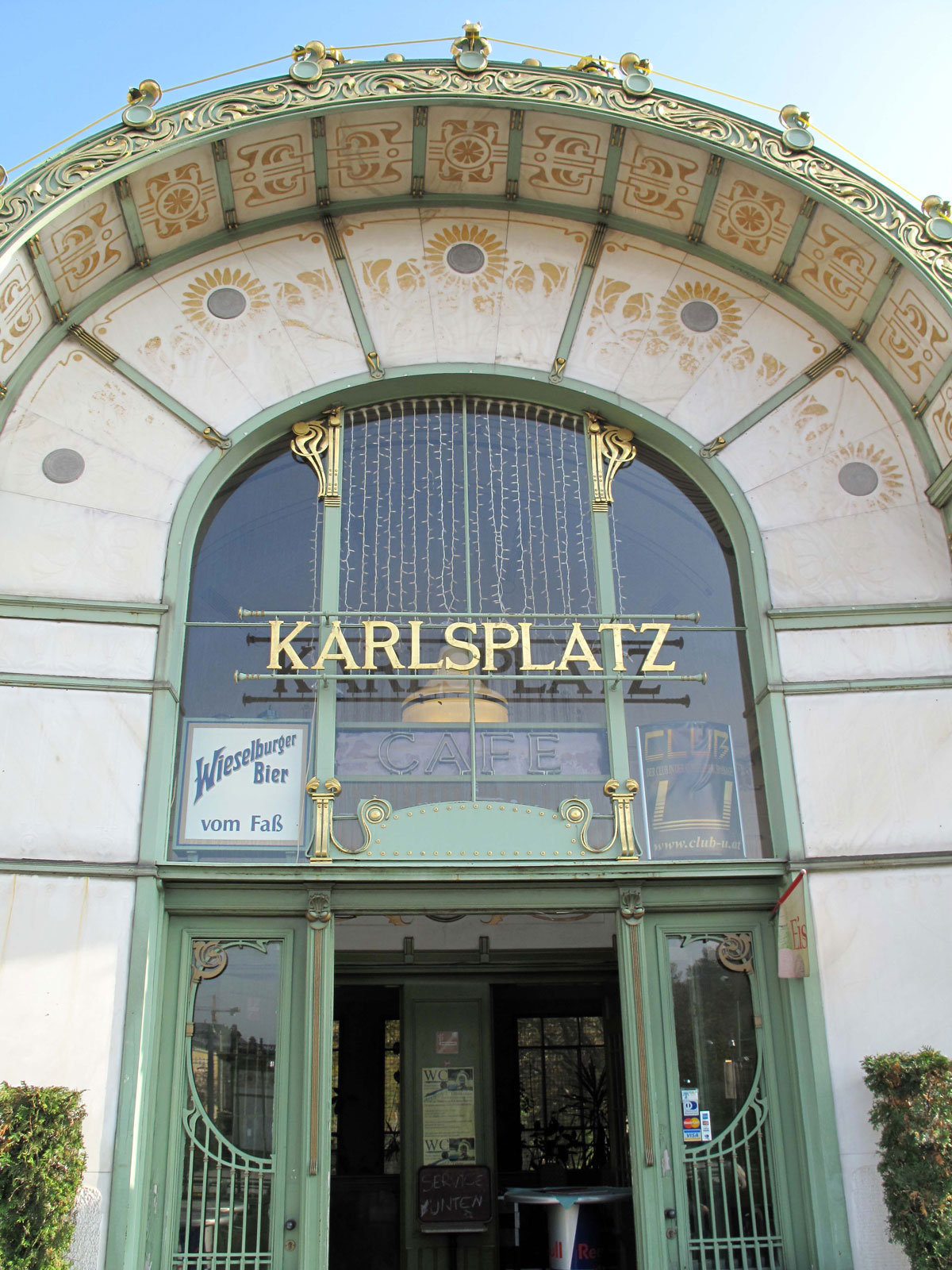
The modern U Bahn network opened on 25th Feb 1978 and superseded the Stadtbahn, which began transporting people around Vienna in 1898. Why I mention this is because the old Karlsplatz Stadtbahn station buildings which were due for demolition have been saved thanks to an outcry from people who appreciated its Jugendstil architecture.
For those of you unfamiliar with the name Jugendstil (which included me before I came here), it’s the German equivalent of Art Nouveau. Its literal translation means ‘Youth Style’ and was a movement that wanted to break away from the traditional classical style that existed in this part of Europe. In Vienna, this style became known as Secession.
The Karlsplatz Stadtbahn station was designed by Otto Wagner and opened in 1899, and although it’s been raised slightly to accommodate the new U Bahn, it’s still a great example of Jugendstil architecture. One of the buildings is used as an exhibition space by the Vienna Museum with a U Bahn entrance at the rear, and the other is used as a café.

The Vienna Secession was formed in 1897 when a group of painters, graphic artists, sculptors and architects seceded from the Austrian Artists Association whose work was exhibited in the Kunstlerhaus on the northern side of Karlsplatz. Otto Wagner wasn’t a founder member, but Gustav Klimt was the Secession’s first president.
Along with other founder members such as Josef Hoffman, Koloman Moser, and Joseph Maria Olbrich, Klimt help set up an organisation which literary critic, Hermann Bahr, described in the first issue of their journal Ver Sacrum (Sacred Spring) as, “Our art is not a combat of modern artists against those of the past, but the promotion of the arts against the peddlers who pose as artists and who have a commercial interest in not letting art bloom. The choice between commerce and art is the issue at stake in our Secession. It is not a debate over aesthetics, but a confrontation between two different spiritual states.” It wasn’t necessarily a case of ‘out with the old’, but it was definitely a case of ‘in with the new’.

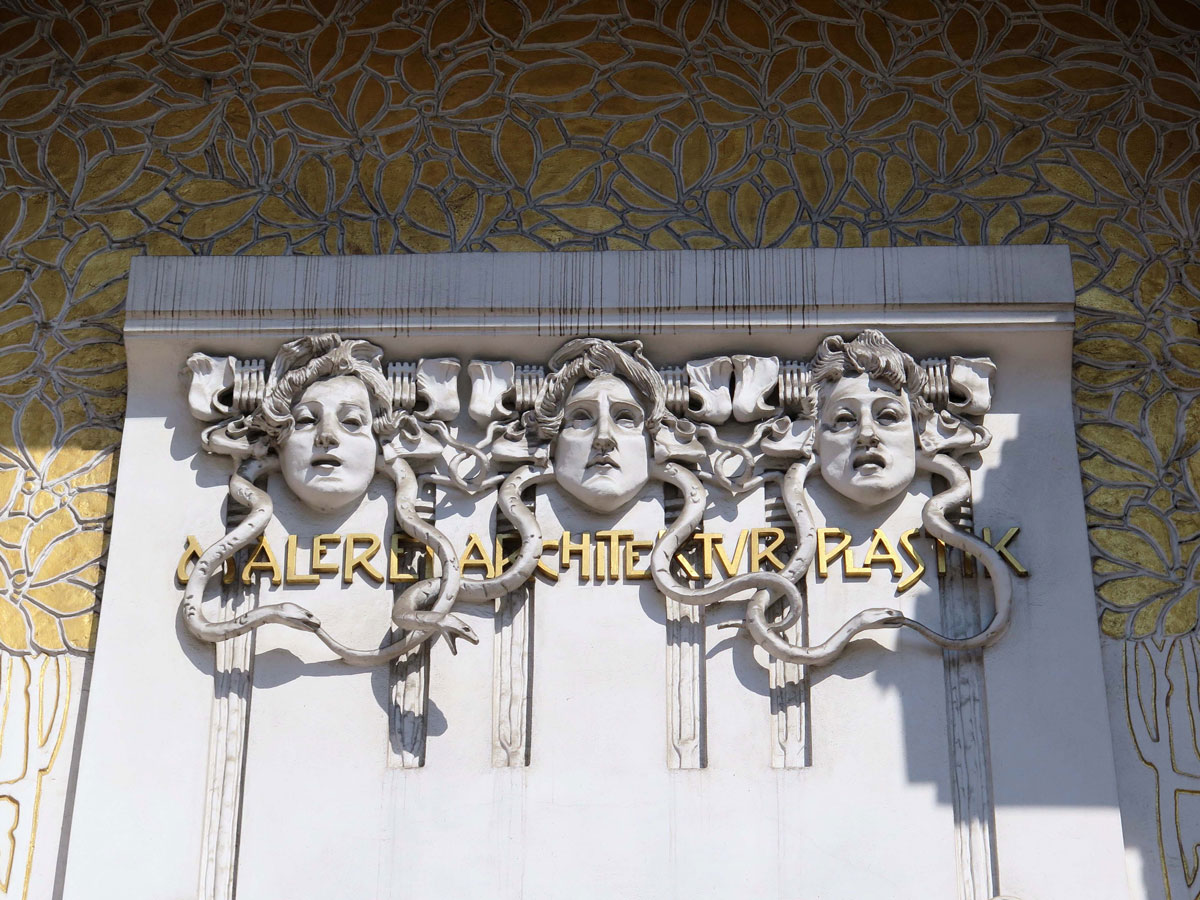
The organization’s first priority was to find a place to exhibit their work, and it was Joseph Maria Olbrich (a student of Otto Wagner) who came up with the design for the Secession Building, which stands at the western end of Karlsplatz in Friedrichstrasse.

The first exhibition was held in 1898, but with the Nazi Anschluss of 1938, the building was destroyed as it was seen as a symbol of degenerate art. Hitler’s reaction to Austrian modern art may, or may not, have been influenced by his rejection as an artist by the Academy of Fine Arts whose main building lies just behind the Secession Building. In his autobiography, Mein Kampf, he describes how his ambition was to become a recognised artist, but twice he was turned down by the institute. Prior to the outbreak of WWII, he apparently said to the British ambassador, Neville Henderson “I am an artist and not a politician. Once the Polish question is settled, I want to end my life as an artist.” After the war was over the Secession building was faithfully reconstructed.
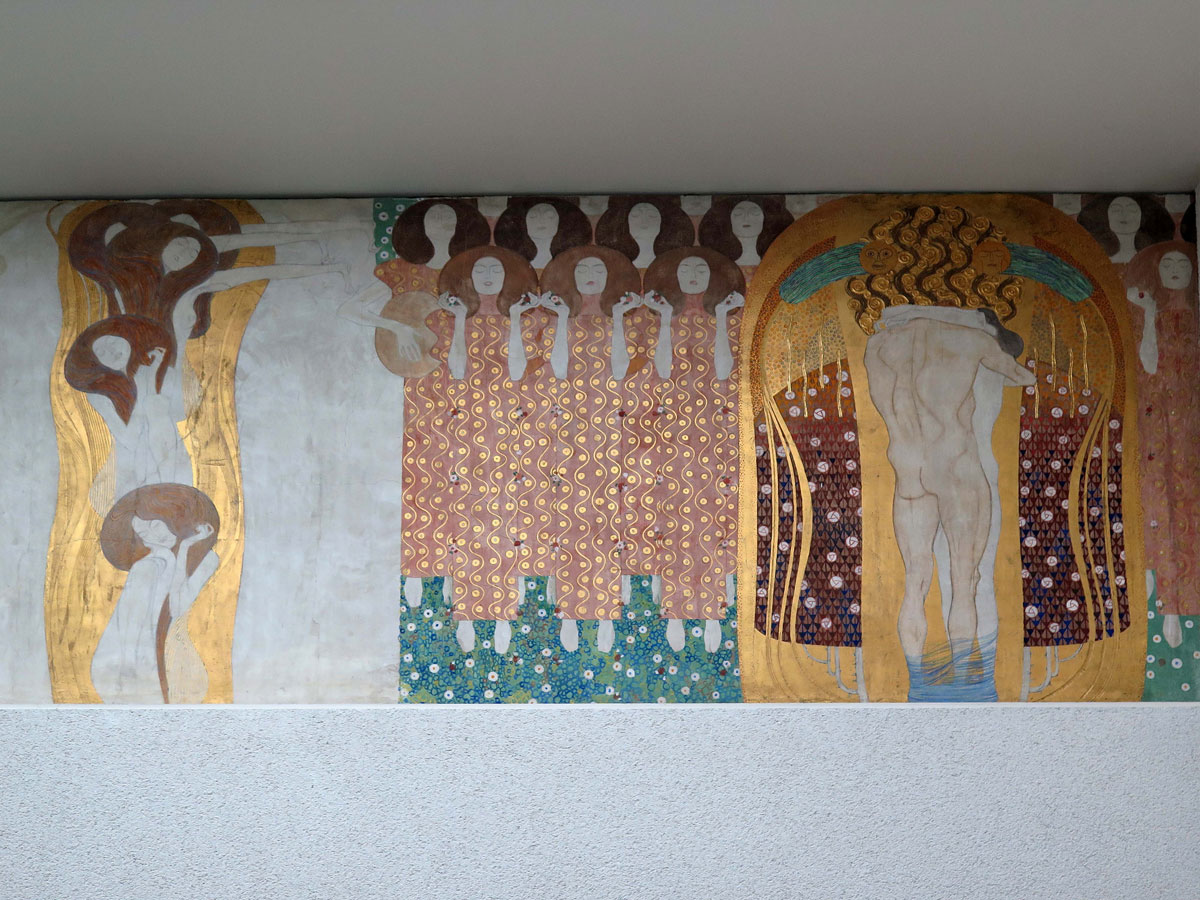
In a specially built climate controlled basement room in the Secession Building is a painting (if you can call it that) by Gustav Klimt known as the Beethoven Frieze. It was exhibited for the movement’s 14th exhibition in 1902 and was created as a celebration of the famous composer, and is an allegory of the composer’s 9th symphony. It was only meant to be on display for the duration of the exhibition, but thanks to some excellent restoration work, the frieze was available to see again in 1986 and is still here.

Painted directly onto three separate walls, the creation stands 7 feet high, is 112 feet wide and weighs 4 tons. It was made by using Charcoal, graphite, different coloured chalk, casein (milk protein) colours, gold, silver and gilt stucco applications, mother of pearl and brass buttons, fragments of mirror and ground glass, brass curtain rings, upholstery nails and semi-precious stones.
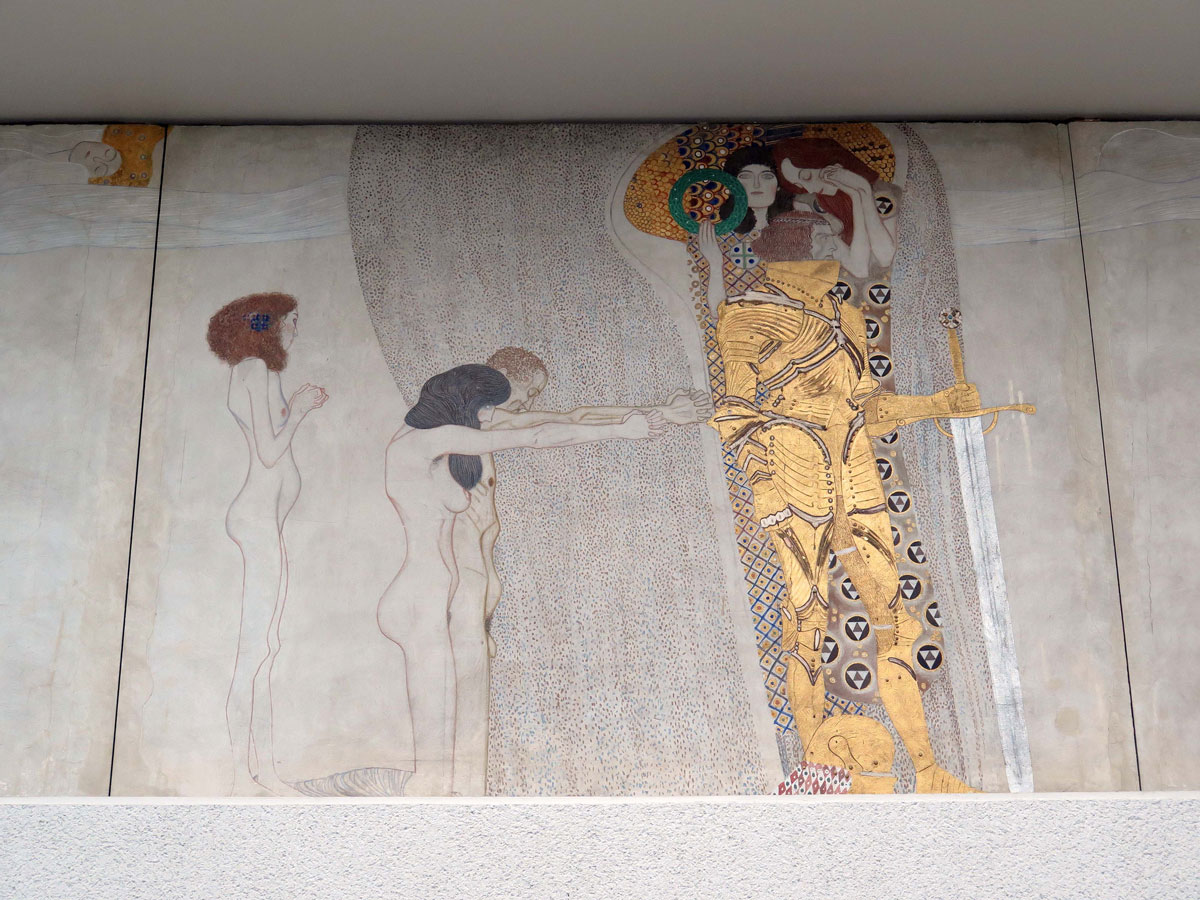
The left hand wall depicts a scene symbolizing a “Longing for Happiness” where three nude figures (illustrating “The Suffering of Weak Mankind”) turn towards a knight in shining armour who is gazing across to the middle wall where “hostile forces” are gathered.
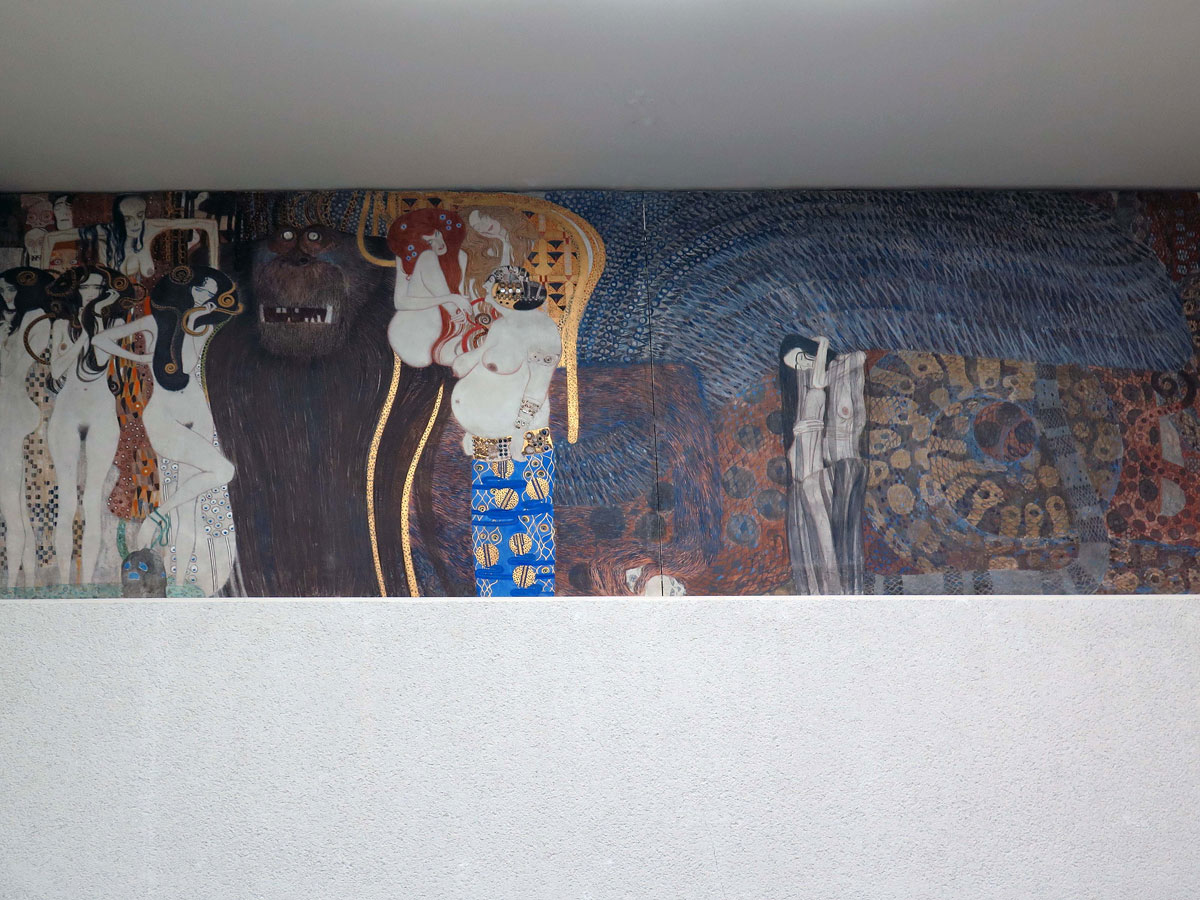
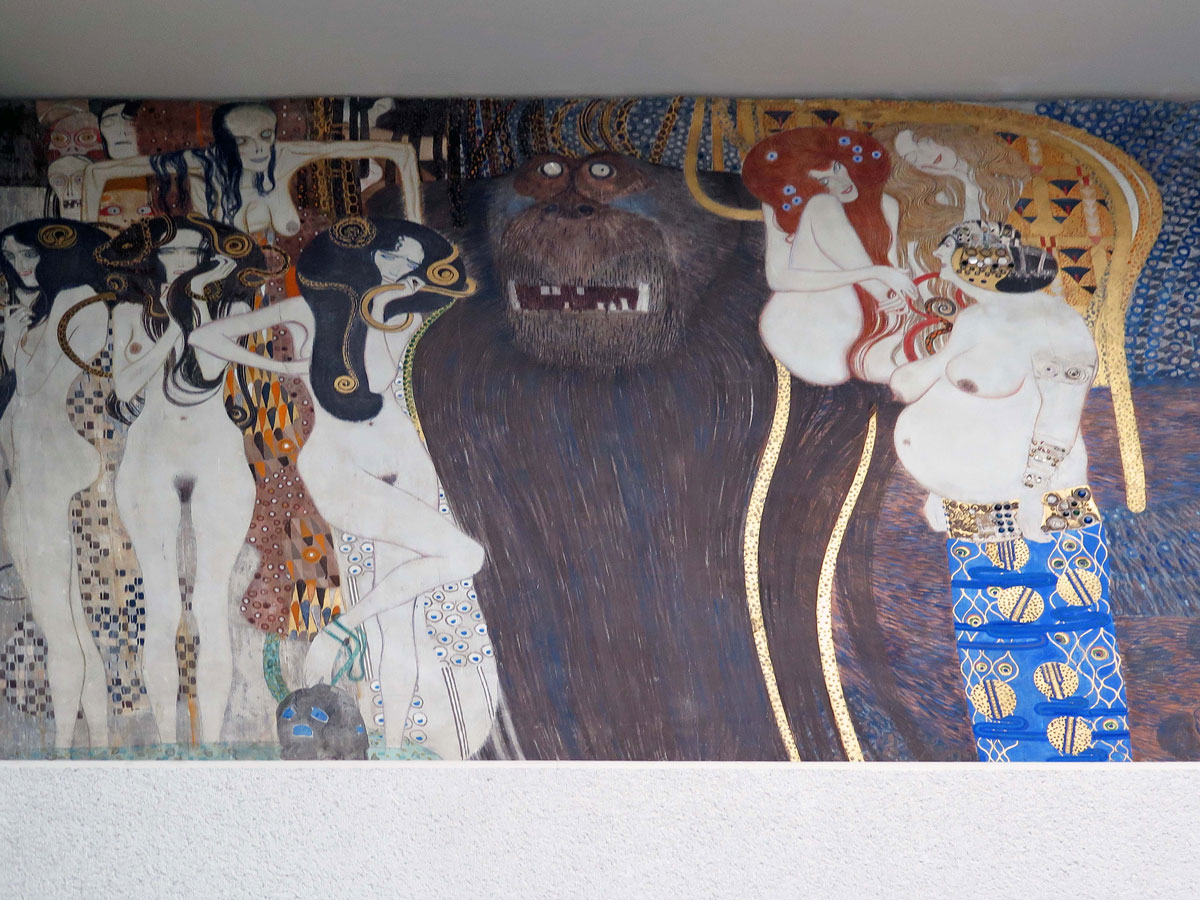
In the centre of the middle wall is a giant monkey-like monster called Typhoeus, who according to mythology, was born to the earth goddess, Gaia, and the god of the underworld, Tartaros. To his left are his three daughters, the three Gorgons; sickness, madness and death, and on his right are his other three daughters; lust, unchastity and intemperance. The lone figure on the right is the more demure Nagender Kummer (Gnawing Grief). Traditionalists at the time saw these images as obscene.
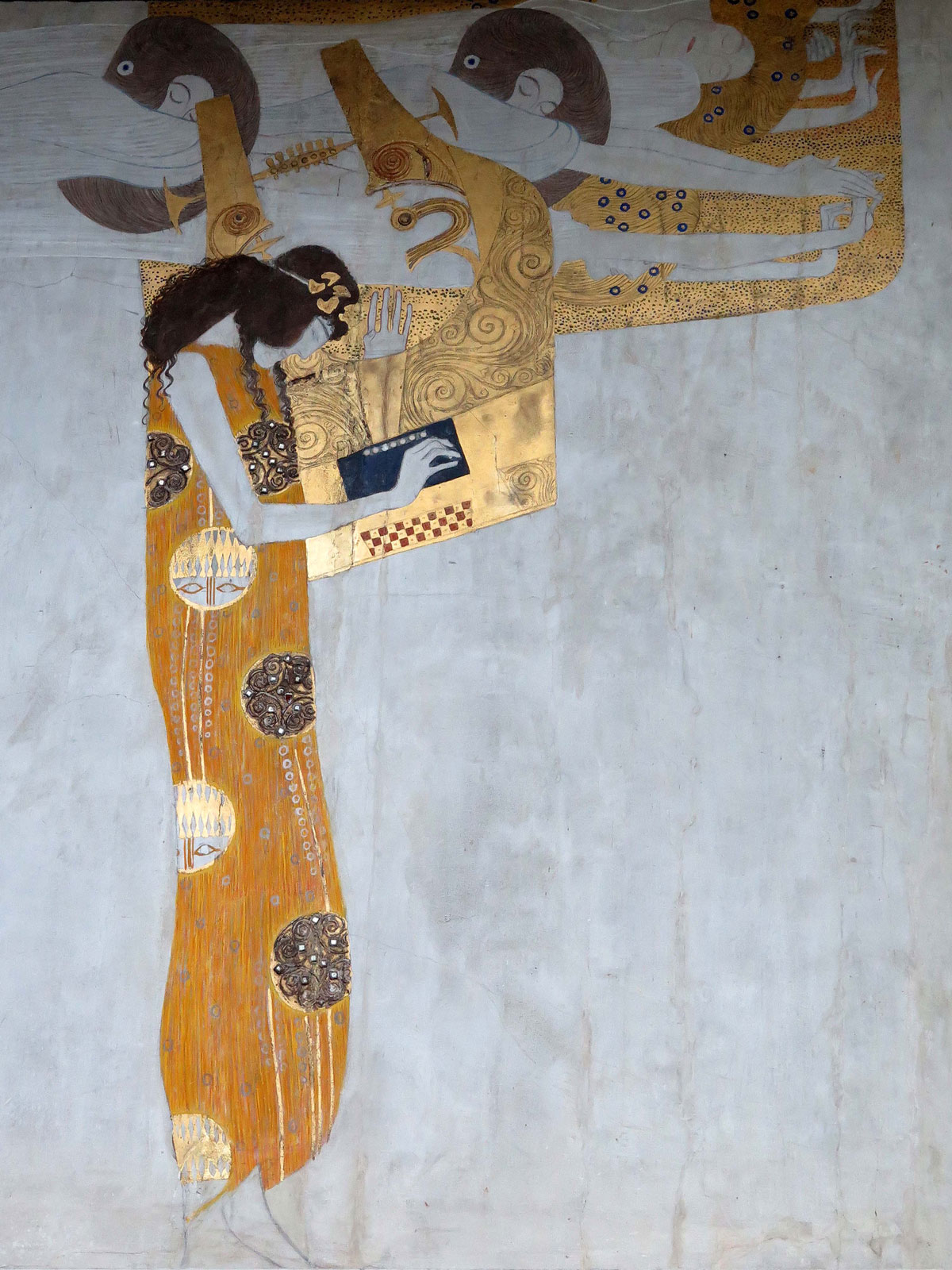
The desires for the happiness of mankind flew over the heads of Typhoeus and his daughters, but on the right hand wall hope is restored in the figure of ‘poetry’ in which Klimt is again influenced by ancient cultures. Further along the wall, a group of women representing ‘The Arts’ lead to a ‘Choir of Angels from Paradise’ which represents Beethoven’s ‘Ode to Joy’, and happiness is finally found. In Klimt’s exhibition catalogue he says that “the arts lead us into the ideal kingdom, which is the only place we can find pure joy, pure happiness and pure love” and the final part of the frieze shows a couple embracing.
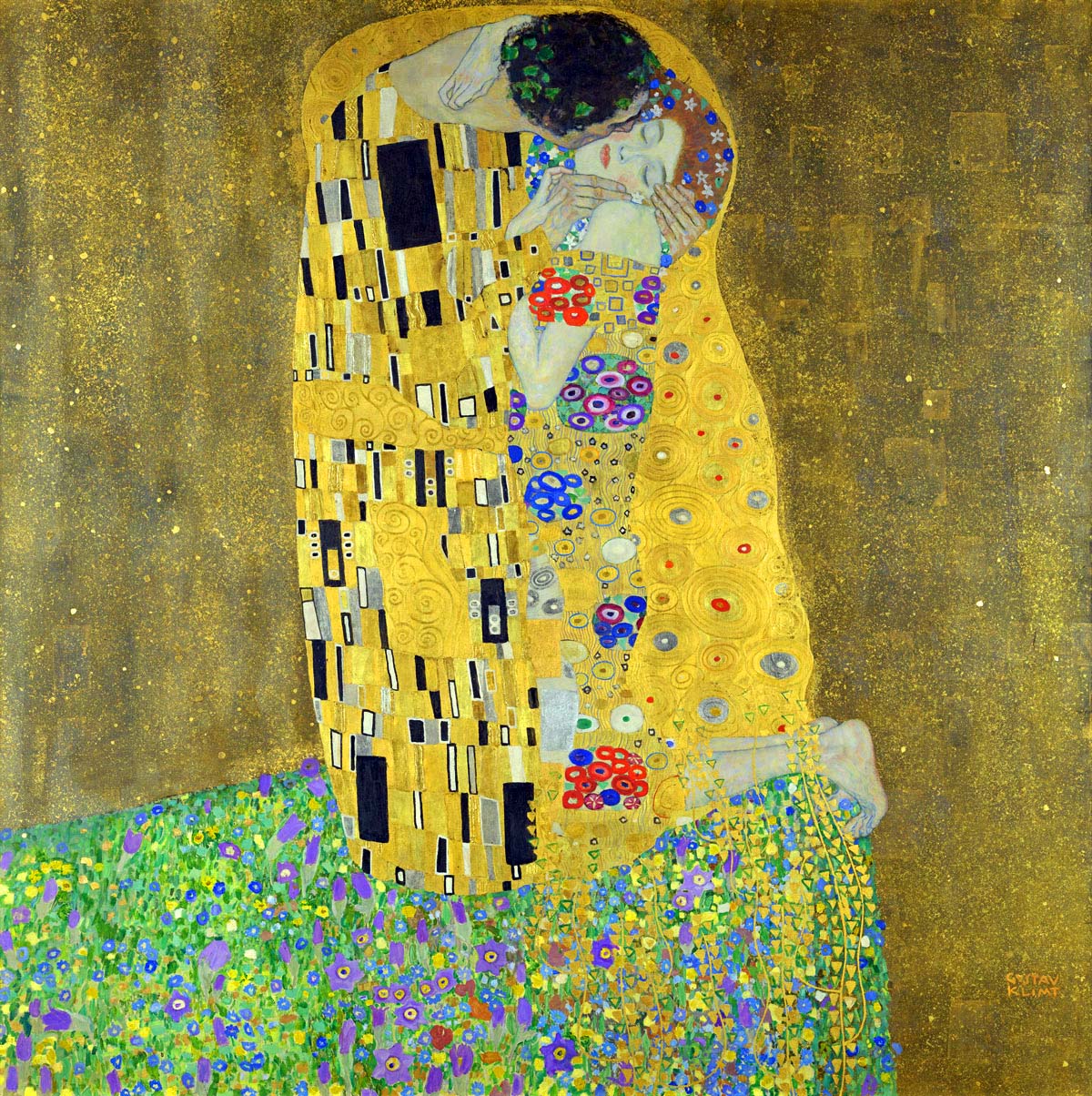
A couple embracing is the subject of Klimt’s most famous work – The Kiss. It can be seen in the gallery of the Upper Belvedere ( the topic for my next Vienna post) and was painted during his ‘Golden Period’ around 1907/08.
His use of gold leaf is symbolic of medieval illuminated manuscripts and early mosaics, and it was on a trip to Ravenna in 1903 where he found his inspiration. Klimt was particularly impressed by the mosaics in the Church of San Vitale, and having been there and seen them for myself I can see why.
The Kiss was enthusiastically welcomed when it first appeared at the Kunstschau exhibition in Vienna in 1908 and was immediately bought by the Austrian government and put on public display. Photography wasn’t allowed when I was there, but below is an image that comes from Wikimedia Commons. I’d be interested to know what you think.
Three years before Klimt painted The Kiss, a disagreement between two factions of the Vienna Secession led to a rift that resulted in a vote which Klimt and his supporters lost. It was only by a single vote, but it was enough for those who supported the traditional arts against the decorative arts, to resign. Although the organisation continued to operate after the resignations, much of its sparkle had gone: That said it is still going today and the headquarters are still at the Secession Building.
The movement had actually started in Germany, but the Vienna Secession was the most influential, probably because it was the most avant-garde. Before making any judgement about the style and what I thought of it, it has to be borne in mind the era in which it took place, and I think this applies to all thoughts about what happened in the past.
The departure from classical to decadent art (which is how some people saw it) was a big step to take at the time, but Secession was a reflection on how times were changing – and they’ve been changing ever since.
So, after taking everything into account, what did I think of an art style that I didn’t know too much about before coming to Vienna? I’ve got mixed feelings if I’m being honest. From a distance, it’s difficult to judge some of it, but when viewed up close, things became a bit clearer. The architecture of the Karlsplatz Stadtbahn Station is definitely something I was pleased to see retained, but it was the art that really captured my imagination. At times, Klimt’s work seemed a bit over the top and I have to say that The Kiss didn’t get me too excited – but then again, I’m a man.
The one thing that I did like was the Beethoven Frieze. The classical story was told using 20th century materials, and it was almost like a crossover from classical to modern Vienna. The people who decided to rebuild the Secession Building and restore the frieze after Hitler wanted it gone for good have given the city something to be proud of I reckon – but art is subjective and that’s just my point of view of course.

POSTED – JANUARY 2023
Originally posted 2023-01-14 12:07:16.
Very interesting, especially the bit about Hitler. I am a big fan of Klimt. I don’t now but I did used to have a lot of Klimt framed and on walls. So you brought the Secession building to me.
I wouldn’t have had you down as a Klimt lover somehow, but it’s good to have a wide variety of interests I reckon.
No, I did have a few pics at one point. The art was just very different.
The Anker Clock I know well, but I’ve never visited the Succession Building and it’s clear that I must. The building itself looks amazing and I’d love to see that frieze for myself. I ‘think’ I like it but I’d need to see it to be sure! This post got me wondering whether history would have been very different should the Academy of Fine Arts have granted Hitler a place? I’m guessing his art wasn’t up to scratch but surely it would have been preferable to his second choice of career? Or would his political ambitions have surfaced and taken over at some point anyway?
On first look at the Beethoven Frieze you might feel a bit underwhelmed Sarah, but the more I studied it, the more it grew on me. As for Hitler, he was bitterly disappointed at being overlooked by the academy, and I personally believe that his path would have taken a more positive route if he had been accepted into the art world – but who knows?
Apologies for not commenting sooner Malc but I’ve been rather embroiled in post boxes and bombs over the last few days 🙂
My friend would like this post as she loves Klimt’s work and has a few framed prints dotted around her house. Personally I’m not too keen on a lot of it but I do like those ceiling paintings in the Burgtheater. I like the Anker Clock too, it looks fascinating and I could stare at that photo for ages 🙂
Thanks Eunice. The Anker Clock is one of those clocks that keeps people amused when it reaches certain times. I’m sure you know what I mean 🙂
Thank you, Malc, for this spectacular wonder through the museum of neo-classical art ! As a young child of 10, I knew every detail of Mythology, build with a friend temples in the forest, and so I enjoyed your tour enormously.
Apologies for being so late but the gremlins of WordPress made me work all day to restore my post, still awaiting publishing..
Joanna
I’m sorry to hear that the WordPress gremlins have now come knocking on your door. It can be so frustrating, so a big thank you for still finding a way to comment. I don’t know enough about mythology, but I do find it fascinating, and I would love you to write some posts about what you know if ever you find the urge to do so 😊
Thank you, Malc, for your understanding!
Joanna
Absolutely no worries Joanna 🙂
Has anyone told you today, Malc, that you are a sweetheart?!
Joanna
Ah! No Joanna – or at least not up until now 😊
As always, Malc, your posts are a pleasure to read and there’s always something fascinating to learn from them.
As someone who doesn’t know an awful lot about art, this was another great read, and a different insight into the many wonders Vienna has to offer. Klimt’s art is very stylised, isn’t it? And I should think that once you’re familiar enough with his work you’d recognise a painting by him anywhere. Funnily enough, as I was reading through, I was thinking how the effect of the gilding reminded me of a medieval illuminated manuscript, so how interesting to then find out his work was inspired by these and by mosaics. Indeed, much of the Beethoven Frieze, together with Klimt’s use of storytelling through the images rather makes me think of medieval wall paintings.
Again, an intriguing insight into the artistic ambitions of Hitler. I knew he fancied himself as an artist, but I hadn’t realised it was quite so high on his personal agenda, so yes, it must have rankled him to the core to have been twice rejected by the Academy.
I really enjoyed this one, Malc, and thanks for enlightening me on another aspect of Vienna’s treasures. 🙂
Thank you Alli. I really value your comments because I can tell you don’t just gloss over my posts, but actually immerse yourself in them – and that means such a lot. I’m sure that many of the posts I write about don’t immediately appeal to you, but you always give it a go and often find that you’ve quite enjoyed them. You don’t know how much that means to me.
I like your connection with the medieval wall paintings and Klimt’s Beethoven Frieze because it goes to prove that history needs to be kept alive in whatever form it takes 😊
Thanks Malc. It doesn’t really matter whether the subject matter would immediately appeal to me or not, I’ll always be happy to read whatever you post about. You write in such an engaging way that I always find the subject interesting; then throw in your brilliant photos and you’ve got a winning formula. And by the way, this is something you should be very proud of, because it’s really not easy to draw me into anything I wouldn’t naturally have an interest in, so you truly have a rare talent! 🙂
Well, I’m lost for words now Alli. I don’t quite know what to say. Even though I’m not deserving of your lovely comments, I couldn’t help enjoy reading them (who wouldn’t?). I just had to let them sink in before replying.
I realise that I write about an eclectic mix of travel subjects, and I do jump about a bit with posting them, but like Forrest Gump said “Life is like a box of chocolates, you never know what you’re going to get.” 😊
Finally, you turned ‘Blue Monday’ into a bright sunny day for me Alli, and I really can’t thank you enough 🤗
Glad to have changed the colour of your Monday to a brighter one! It’s all true. 🙂
😊
Another really valuable article that brought back many memories for me❣️
The historical details and wonderful photography make it an unmissable treasure!
Thank you very much!
You’re so kind Luisa, so the thanks should really come from me. I’m always pleased to hear that posts like this bring back good memories for you 🙂
As ever, you are most welcome!
May you and your family have a lovely weekend 🙏
Thank you again Luisa. I hope you and yours do too 🙂
🙏🌹🙏🌹🙏
Excellent post, Malc. Does make me wish I knew about classical mythology. Good photos.
Thank you Pat. Mythology has always captivated me for some reason, but I don’t know anywhere near enough about it either.