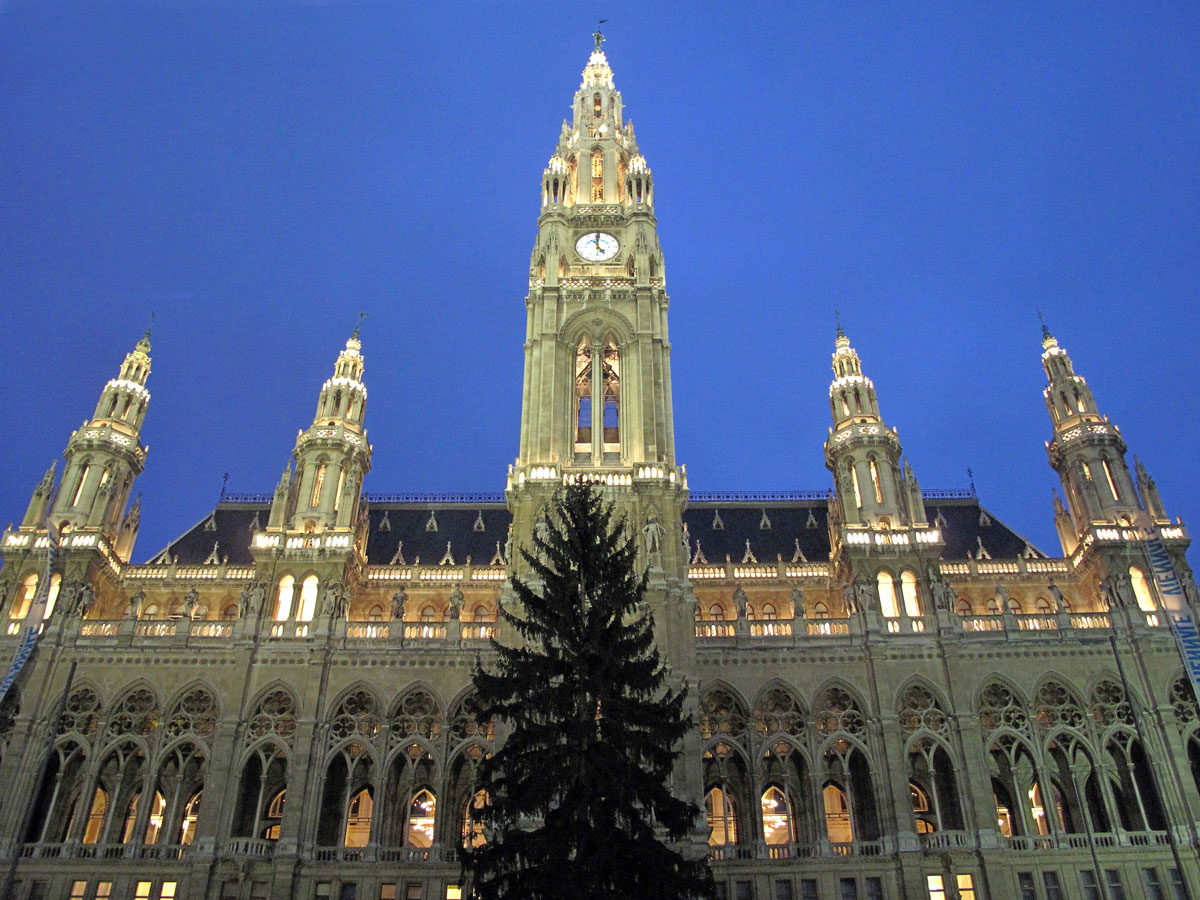
Vienna's Ringstrasse
The Ringstrasse is a grand boulevard that encircles Vienna’s Inner Stadt, and if you take a look at a city centre map, it doesn’t take a lot of imagination to work out that this ring-road is on the site of the old city walls.
The Austrians can thank Richard the Lionheart for the original 13th century protective wall. It wasn’t that he had anything physically to do with it, it was just that on his way back from the Third Crusade he was captured and incarcerated at Durnstein Castle, and it was the ransom money that the English had to cough up, that paid for it to be built.
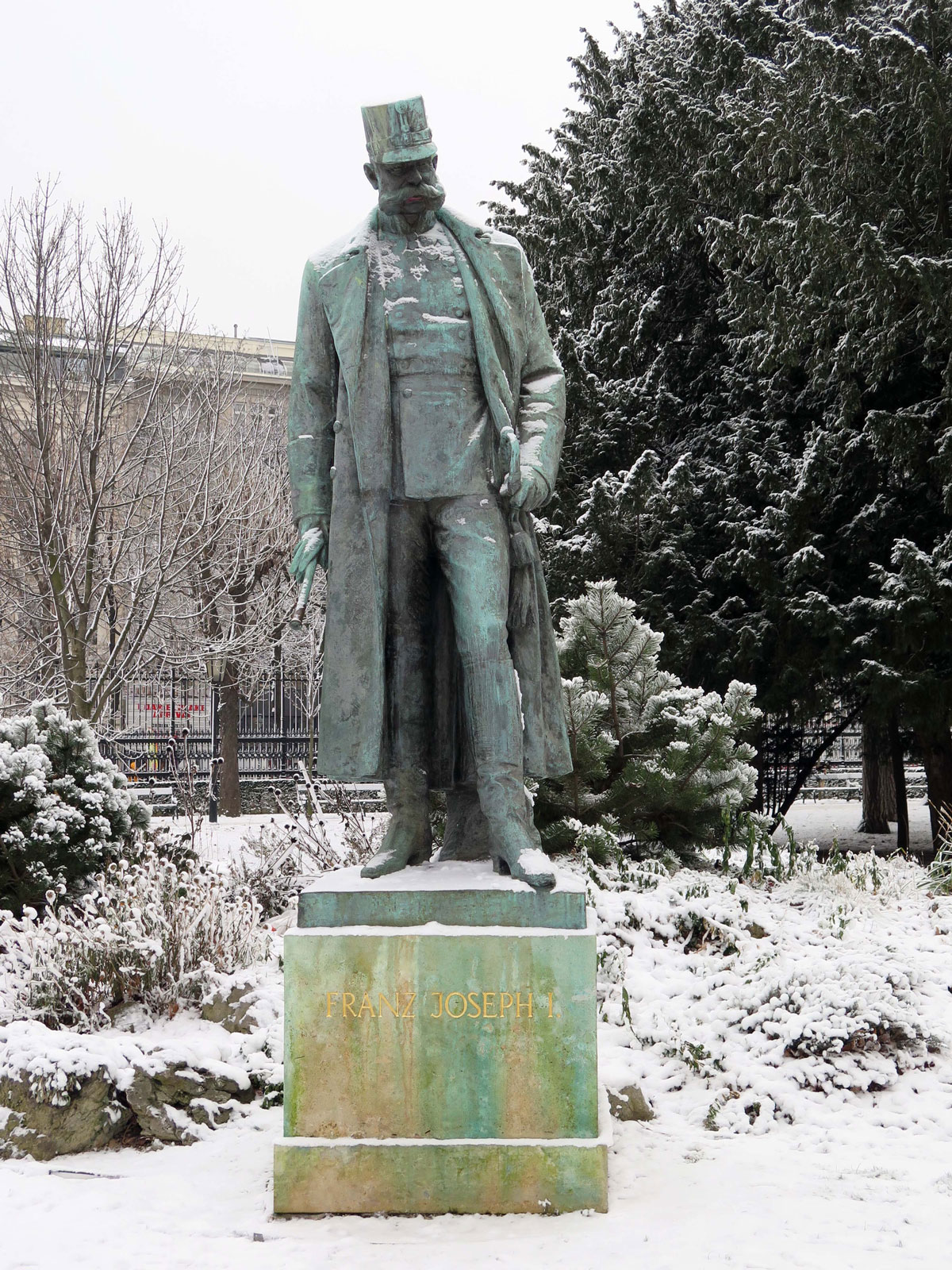
As well as the wall itself, there was a 500 metre wide glacis, which was an artificial slope devoid of any buildings and vegetation that helped to create an extra barrier against any attack. By the 18th century however, the glacis had become obsolete, and Emperor Joseph started to build streets and walkways lined with trees. As the city expanded and traffic increased, then the city walls themselves were in the way, and in 1857 Emperor Franz Joseph I ordered their demolition and embarked on creating a boulevard that would be a showpiece worthy of the Habsburg Empire.
The Ringstrasse was finally completed in 1913, and due to its rich architecture, has been dubbed ‘Lord of the Ring Roads’. Its total distance of 5.5 km (3.3 miles) is made up of nine sections plus the Franz Josephs Kai which runs alongside the Donaukanal (a branch of the Danube).
Some people might want to walk or cycle all the way around it, but if you’re anything like me you’ll prefer to find an easier way, especially as some sections are more interesting than others. There’s a dedicated yellow Tourist Tram that normally does a circuit of the Ringstrasse, but it’s not a hop on hop off service, and my suggestion would be to use the normal #1 and #2 services that between them cover the same journey. Okay, it means changing trams, but apart from being more flexible and cheaper, the tourist tram isn’t running at the moment anyway.

As far as I’m concerned, the most interesting part of the Ringstrasse is the bit between the Opera House and Schottentor which covers four of the nine sections – namely, Opernring, Burgring, Dr. Karl-Renner-Ring and Universitatsring. This is where it’s best to leave the tram behind and start walking – but I could have picked a better time to have done it. As I headed up the Opernring with just a pair of trainers on instead of snow shoes, it felt like I was practising for the world figure skating championships.
The Opernring takes its name from the Vienna State Opera, the most famous of Vienna’s four opera houses. Location-wise, if you’ve managed to read my third post about the Hofburg, you might remember that we finished up at the Albertina. If you can’t remember, you can find it here: Regardless, by turning right at the Albertina into Operngasse you will arrive at the Opera House and the Opernring.
A few involuntary free-skating double-axle moves away was the Burggarten. In the 15th century it was part of the glacis protecting the Augustinian Bastion, but after Napoleon’s forces blew it up in 1809, the bastion was rebuilt and the Imperial Garden laid out in front of it. When the Habsburg Empire collapsed at the end of the First World War, the garden was made public and renamed the Burggarten.


One part of the Burggarten I didn’t visit was the Art Nouveau Palm House. It includes a butterfly house and a restaurant and it all sounds very nice, but there were more important places on my list to see. Before I left though, I made sure that I didn’t miss the monument to Wolfgang Amadeus Mozart.


Part of the Burggarten was used to build the New Burg in Heldenplatz, and to get there you walk out of the gates at the far end of the garden and enter the Burgring section of the Ringstrasse.
The Burgring obviously gets its name from the Hofburg, which can be reached from Heldenplatz through an archway in the Leopold Wing of the Hofburg. Heldenplatz (Heroes’ Square) is a large square used for events, and given its proximity to the Austrian parliament, also demonstrations. It was originally intended to be an extension of the Hofburg after the fortifications were demolished, and the vision was to build a new set of buildings known as the Kaiserforum. It was an ambitious project, but like so many great ideas, the funds didn’t quite match the imagination.

One building that did come to fruition though was the New Burg. If the Old Burg (Hofburg ) was a mish-mash of buildings, then the New Burg was going to be an Imperial Palace on a grand scale. Work started in 1881, but the Habsburgs never enjoyed the use of the new imperial apartments because the work was still progressing when the royal family’s power evaporated after being on the losing side in WWI.
The building was eventually completed and is used for a variety of museums which may, or may not be to your taste. With so many museums available to the culture vulture in Vienna, I had to be selective, and there were a couple across the road that were more appealing.
The pictures of the New Burg below were taken on a previous visit and show the balcony from where Adolf Hitler announced the Anschluss, or annexation of Austria, to a crowd of 200,000 on 15th March 1938.


Across the Burgring from Heldenplatz is Maria-Theresien-Platz which was a part of the Kaiserforum that was completed. Two landmark museums compete for attention – the Museum of Natural History and the Museum of Fine Arts. Both are housed in large neo-Renaissance buildings that mirror each other across the square, and in the centre is a ginormous monument to the Empress herself. It’s impossible to photograph the whole of Maria-Theresien-Platz from the ground, but what was built here shows what the intentions were for Heldenplatz, which would have seen a building across the square to mirror the New Burg.
To see both museums and do them justice would take a good deal of time and a fair bit of stamina, and so I opted to restrict myself to the Fine Arts Museum. This is one of the world’s great museums and the magnificent collections are all housed in a wonderful building. It just has to have a separate post.


Where the Burgring ends, the Dr.-Karl-Renner-Ring begins – but who was Dr Karl Renner? I’m not sure anybody cares that much, but I thought I’d check him out, after all his name isn’t on this stretch of the Ringstrasse for nothing.
Herr Doktor was in fact an Austrian politician who is accredited with being the “Father of the Republic”. He was the leader of the First Austrian Republic after the collapse of the Austro-Hungarian Empire in 1918, and again when he became Chancellor of the Second Republic after the end of the second World War in 1945.
Under the circumstances, it therefore seems quite appropriate for this part of the Ringstrasse to be named after him because the building that dominates along here is the Austrian Parliament. It doesn’t dominate as much as the Museum of Fine Arts though because Emperor Franz Joseph was more interested in works of art than he was in democracy.


Call me an anorak if you like, but I like visiting parliaments and courts: They are places where you can see democracy in action, and it seems that I’m not the only anorak around, because there were a few others like me who took the opportunity to have a guided tour around the Austrian Parliament building. I’m not going to describe it in detail, but the pictures below will show you what it’s like inside.


As for Dr Karl, he might have gone down in Austrian history, but he was a Social democrat bordering on being a Marxist: He also supported Hitler’s Anschluss, and was antisemitic himself. In a world where people are queuing up to be offended, I wonder how long it’ll be before the Dr-Karl-Renner-Ring has its name changed.
One of the good things about the Ringstrasse is that there are plenty of open spaces, and opposite the Parliament Building is the Volksgarten. It’s a lovely place to come in the summer, but as it isn’t summer, I’m off next door to the Burgtheater on the Universitatsring.

The Burgtheater was built, like many of the buildings around the Ringstrasse, during the second half of the 19th century, and is the world’s premier German language theatre. It was badly damaged by an Allied bombing raid in 1945, but rebuilt ten years later. As luck would have it, I was there at the same time as a short guided tour of the theatre was about to start, and so I didn’t hesitate to take advantage of it. If nothing else, I was in out of the cold again.
The auditorium wasn’t the most glamorous I’ve ever seen, but it was worth taking a look around, if only for the grand Imperial Staircase and its superb ceiling paintings by Gustav Klimt and his associates.


The final stop on my tour of the Ringstrasse was at the Town Hall, or Rathaus, as they say in German. This time, I didn’t go in because I was here for another reason – the Christmas Market that takes place each year in the Rathaus Park.
As Christmas is now rapidly approaching, it seems like the perfect place to end this post about the Ringstrasse, and below are a few pictures that will hopefully get you into the Christmas spirit while I seek out a nice glass of hot gluhwein before attempting my next Torville and Dean routine back down the Ringstrasse to the tram stop.


POSTED – DECEMBER 2022
Originally posted 2022-12-06 07:40:11.
I’ve an author pal who goes every year. She just loves it there. I can see why.
There’s plenty to see on the Ringstrasse, but I’m assuming she comes here at Christmastime when it’s magical.
They go different times And have been doing that for years. I think they already booked for next year and that is nice cos I know they both have health issues. Thye used to come north a fair bit too and we met up with them once. But they’ve not down these trips for a good few years now so it is great that they still manage to Vienna.
Impressive architect a nicely attributed overview. Best wishes always and for the new year.🔔☕️☕️
Thanks AOC. Best wishes for Christmas and New Year to you as well ☕️ 🙂
My goodness, Malc, this place just keeps on giving doesn’t it? It really is grand with a capital ‘G’! 🙂 It looks truly amazing, even if some of the magnificent buildings didn’t quite reach their full intended grandeur. I love the story about the ransom for Richard I being responsible for the original defensive wall. 🙂 The Burggarten looks wonderful, and that’s an impressive monument to Mozart, although I couldn’t help but think it a bit incongruous considering the fact that somewhere in the same city the poor chap lies buried with a load of other anonymous companions in a paupers’ grave. I wonder if he knows about his fitting memorial now…
I love your festive photos, all absolutely beautiful, and they make me want to reach for a glass of gluhwein too. But mind how you go on the treacherous icy paths covering the UK at the moment – no practicing figure skating routines! I vote we stay inside and raise a glass to the festive season by a nice warm fire. Cheers! 🙂
What a smashing response Alli. I can see how much Vienna appeals to you. It often comes out as the best city in the world to live in, so it’s not just about the sights and history. As for Mozart, at least he’s not forgotten now.
It’s looking a bit like Vienna down here now with the frost and ice. Yesterday was picturesque, but decidedly dodgy. We haven’t had any snow in Torbay, but where my daughter lives in Mid-Devon, there was quite a bit. Snowdonia must be looking very enticing, but as you say, there’s not a lot of point in taking risks, and staying indoors with a glass of something seems an altogether better option 😊
Lovely pictures with excellent narration. A spectacular tour indeed.
Thanks agaain for your smashing comments. I’m glad you enjoyed it 🙂
My pleasure 😊
Another great post full of interesting information and lovely photos. I like the architecture of the Parliament Building, it’s amazing, though I think I need to go to Specsavers – for Volksgarten I read Volkswagen! 🙂
I would love to see the Burgtheater, that staircase and ceiling look fabulous. I like the illuminated trees too, they look so pretty.
Should I be looking out for you on the next series of Dancing On Ice in the New Year? 🙂 🙂
What lovely comments Eunice. Thank you so much. I agree with you about the architecture along the Ringstrasse. I regard it as neo-classicism and generally speaking, although each building is different in its own way, they all gel together to make the road visually appealing, especially as the parks and gardens break up the urban feel to it.
You needn’t worry about me appearing in Dancing on Ice. I can’t even dance on a normal dance floor 🙂
Thank you, dear Malc, for this wonderful tour of Vienna. As always, your posts are very beautiful and well articulated, the descriptions are fascinating and contain many interesting details that I din’t know,
Not to mention these photos of Vienna covered in snow, which are truly spectacular ❄️❄️❄️
Thank you for your fabulous comments Luisa. You’re always so kind. I’m also pleased to hear that you picked up a couple of snippets that you never knew about, and I hope it also put you in the Christmas spirit 🎄 ✨
Yes, it did 🙏
Have a lovely evening ❣️❣️❣️
You too my lovely 🙂
Wonderful write-up and photos, Malc. As a sequin head (ice skating fan) I enjoyed your skating references. You know it’s a mandatory one point deduction for any fall and beginning with your fourth fall, it rises to a two point deduction.
That’s assuming you’ve gained any points in the first place. I tried ice skating once – just the once.
I’ve never been to Vienna in the winter. It looks beautiful in the snow but as I’m no fan of ice skating (planned or involuntary) maybe I should stick to the other seasons! I never knew that Richard the Lionheart’s ransom money paid for the city walls there, and that’s just one of the new and interesting facts I picked up here 🙂
If it’s useless information you’re looking for Sarah, then you’ve come to the right place 🙂
Great photos and a lovely commentary, Thank you!
And thanks for your smashing comments Nick. Glad you enjoyed it
Thank you, Malc, for the wonderful tour and the spectacular photos. The icing on the cake was the statue of my beloved Mozart.
You have provided so much information that I am now fully awake, thank you. I just wish I could book the reservation
right now! Your fascinating way, Malc, of telling about historical events makes me regret that you couldn’t be my history teacher! At east, I am catching up now. More, please!
Joanna
. ,
Ah! Thank you Joanna for your lovely comments. You’re far too generous, but I’m always pleased to hear that you enjoy reading about these things – and that they don’t send you back to sleep 🙂
No chance! You will never get rid of this teacher’s pet!
Joanna
LOL 🙂
Great that you were able to tour the National Assembly and the Burgtheater. I’ll put both of these on my list for my next visit.
Glad you enjoyed the virtual visit Don. No doubt you’ve been to the Staatsoper
Yes, I’ve been to all three opera houses in Vienna, plus the New Opera, which does not have its own building.
First, loved the photos especially the statues in the snow. A very interesting narrative about a very interesting city. Brilliant Malc! Another great post that I will save for my trip to Vienna. Cheers and all the best.
Thanks for your smashing comments again Francesc. They’re always greatly appreciated
And they are always well deserved as your posts are brilliant Malc. Thank you!
You’re too kind Francesc. Enjoy the rest of your day
You too my friend. We’ll see if we make it through today against Morocco in the match…
I think you will