Category Archives: Vienna

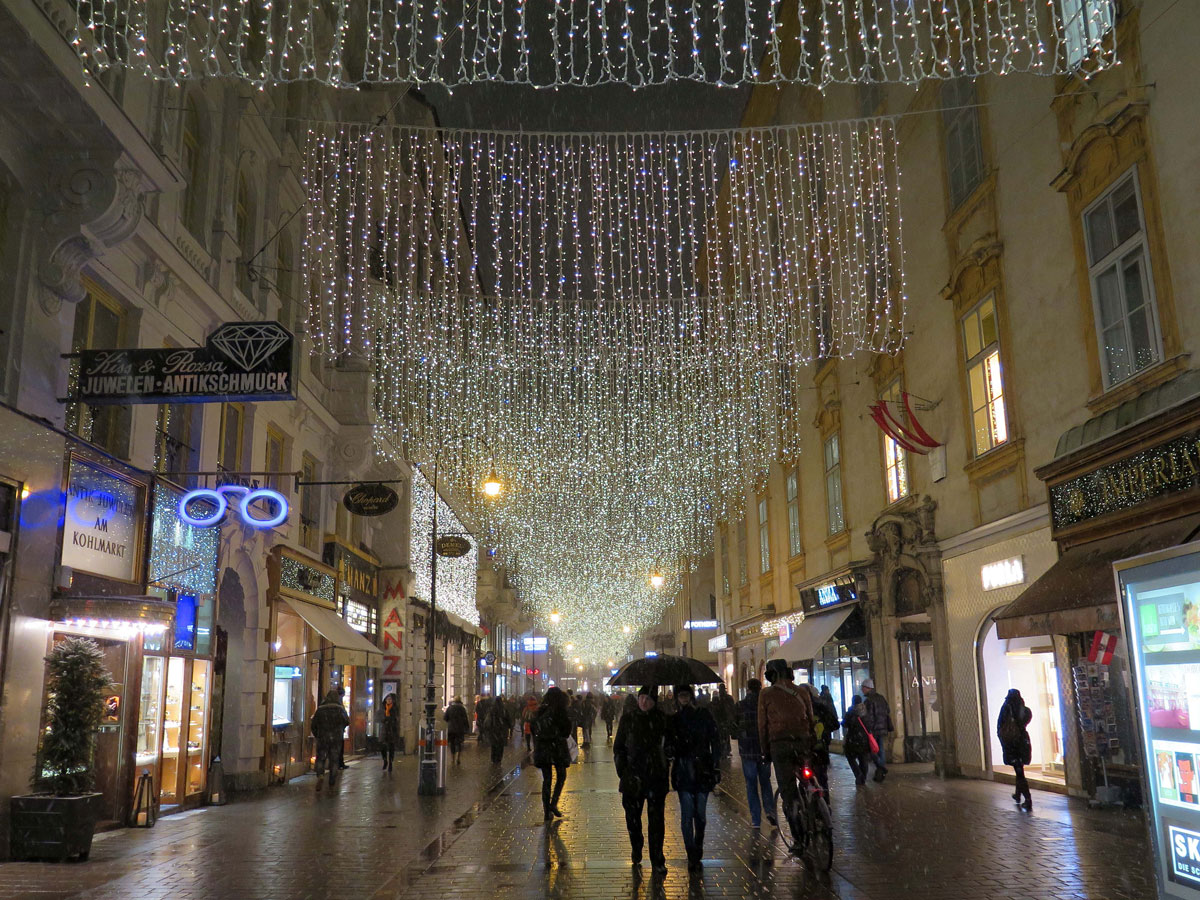
Christmastime in Vienna

Christmastime in Vienna

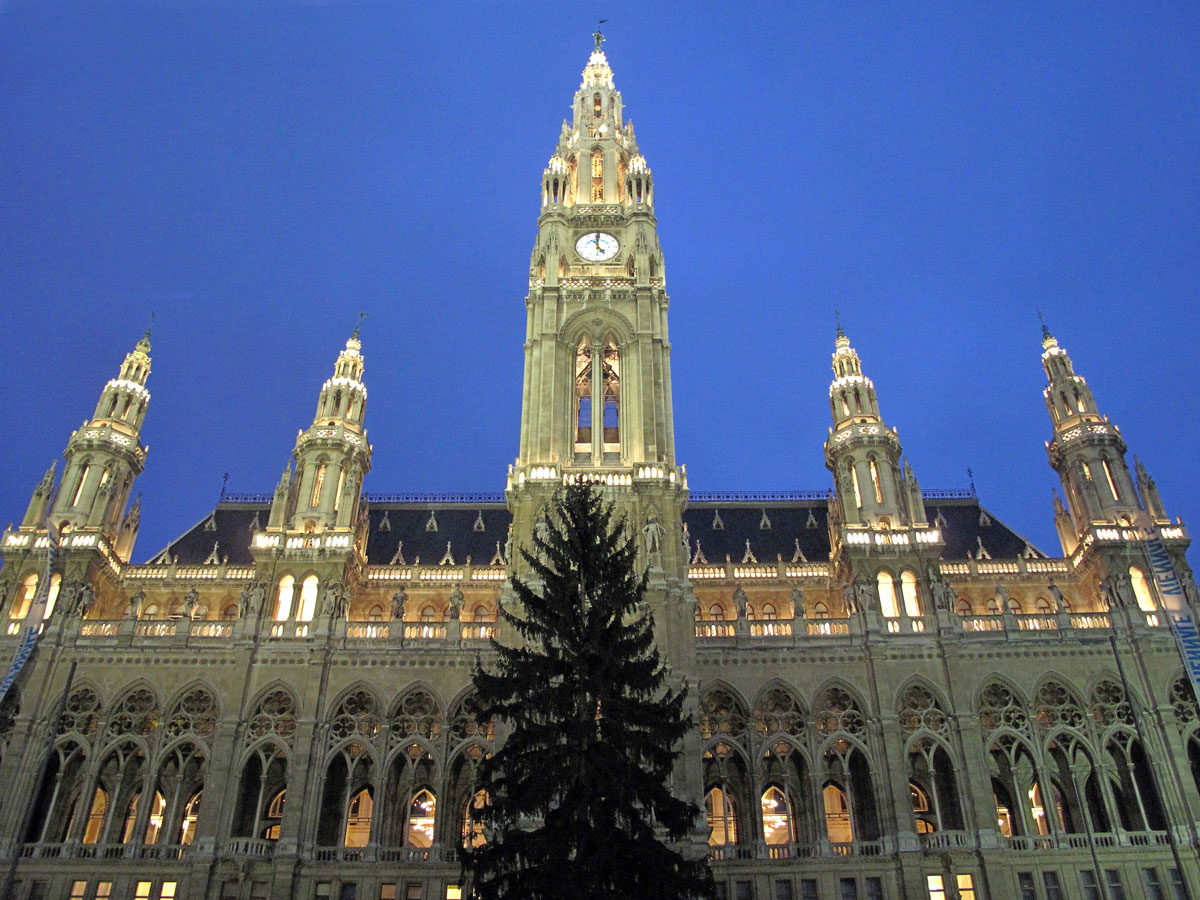
Is there a better build-up to Christmas than visiting a European Christmas Market? If so, I’d like to know what it is. Maybe it’s all that Glühwein and Orange Punch that I can’t pass by that helps, but even as a devout atheist I can’t help but respect the Austrians for adhering to the meaning of Christmas more than I do.

I absolutely love Austria at Christmastime, especially in places like the Tyrol, but if you like to add some culture to your bratwurst and beer, then Vienna is hard to beat.

When we were here the week before Christmas in 2016, it even snowed to give it the magical icing on the Christmas cake.

There’s no point in waffling on about what market is where, I’ll just let the pictures do the talking. As for the culture, I’ll be dealing with all that later – hopefully.

Continue reading →

Originally posted 2019-11-27 15:12:00.

Vienna – The Last Waltz

Vienna - The Last Waltz

If you’ve been following my posts about Vienna, I hope I’ve given you enough reasons to come and explore this wonderful city, but before we leave, I want to take you to some places that you might not have considered visiting.

Sightseeing can be a tiring business, and every so often we need some respite from traipsing around city streets looking for the next must-see landmark, but in Vienna you can you can have the best of both worlds because the café culture here is part of the experience. Just have a coffee and soak up the ambience if you like, but it goes down much better with some cake, and I’m not talking about a Mr Kipling’s Viennese whirl now. My favourite is the Sachertorte which traditionally consists of three layers of chocolate sponge with apricot jam mixed in between them and topped with a chocolate glaze – Oh, and don’t forget the cream. By all means, try it at the Hotel Sacher if your pockets are deep enough, but a more intimate experience can be had in one of the famous cafés that can be found throughout the city centre – and they don’t come any more famous than Café Central.

Continue reading →

Originally posted 2023-11-02 15:28:46.

Schonbrunn – The Habsburgs’ Summer Retreat

Schonbrunn - The Habsburgs' Summer Retreat

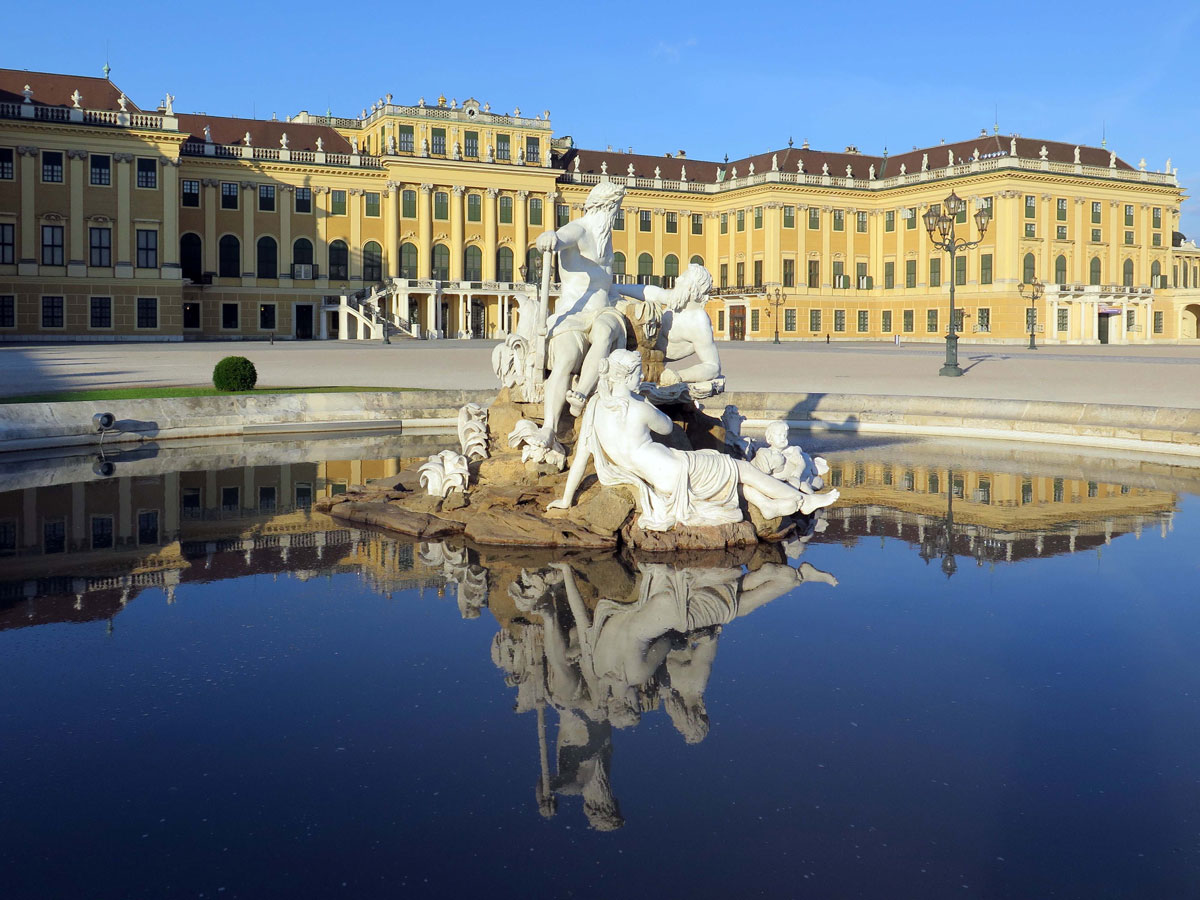
Each summer, the Habsburg royal family would leave the hotchpotch Hofburg behind and escape to their sumptuous palace on the edge of the Vienna Woods; and no trip to Vienna would be complete without visiting Schonbrunn, the city’s answer to Versailles.

Over a 350 year period, the estate was transformed from a relatively simple hunting ground to a magnificent palace with landscaped gardens that would require any self-respecting visitor at least a couple of days of their time to do it real justice. I’ve been here twice and still haven’t seen it all.

As regards this post, I’ve decided to split it into two sections: The first describes some of Schonbrunn’s history and how it evolved, and in the second part I’m going to take you on a tour around the gardens and estate. The main reason for doing it this way is because, not unexpectedly, photography isn’t allowed inside the palace, and so picture taking was restricted to the outdoors. That said, the Schonbrunn Group (who manage the estate on behalf of the Austrian Republic) have provided a few short videos of some of the rooms which I’m able to share with you.

Continue reading →

Originally posted 2022-10-07 17:03:45.

Hundertwasser in Vienna

Hundertwasser in Vienna

Vienna is renowned for its classical architecture, but there’s more to the city than palaces, theatres and churches – and there’s no better exponent of a completely different type of architecture than Friedensreich Hundertwasser.

Born Friedrich Stowasser in Vienna in 1928, he changed his name (for reasons best known to himself) to Friedensreich Regentag Dunkelbunt Hundertwasser which translated into English means ‘Peace Realm Rainy Day Darkly Multi-Coloured Hundred Water’ – so now you know. From now on though I’m just going to refer to him as Hundertwasser which sounds more appropriate somehow.

Hundertwasser was an artist and keen environmentalist who used the natural forms of nature as a basis for his art. He was inspired by the likes of Antoni Gaudi and Gustav Klimt, and really disliked the use of straight lines.

Continue reading →

Originally posted 2023-05-18 15:48:19.

Karlskirche

Karlskirche

My previous two posts in Vienna were about Gustav Klimt and the Secession period, and lying between the Secession Building and the Belvedere is Karlskirche. Vienna has no shortage of beautiful churches, but this has to be one of the city’s finest.

Baroque architecture may not be to everyone’s taste, but I defy anybody not to be impressed with Fischer von Erlach the Elder’s  creation. This magnificent building is influenced by a mixture of Greek, Roman, Italian and Austrian classical design, and it all blends together perfectly.

Karlskirche was the brainchild of the Holy Roman Emperor Charles VI who dedicated the church to Charles Borromeo, the Archbishop of Milan from 1564 until his death in 1584. In 1602 he was beatified by Pope Clement VIII and then canonized in 1610 by Pope Paul V for his stance against the Reformation and his help to the poor and needy, especially during the Plague. He is the Patron Saint of Bishops and his Feast Day is on November 4th.

Continue reading →

Originally posted 2023-04-29 16:37:52.

Vienna’s Belvedere

Vienna's Belvedere

In my previous Vienna post on Gustav Klimt and the Vienna Secession, I promised that the next post was going to be at the Belvedere where Klimt’s The Kiss is on display, and as I’m a man of my word, here we are.

The Belvedere might conjure up somewhere with fabulous views, but think of it more as a palace fit for a prince. The views aren’t bad mind you, but the Belvedere was actually built as a summer residence for Prince Eugene of Savoy who was a highly successful military figure in the army of the Holy Roman Empire. His successes on the battlefield during the hostilities with the Ottoman Empire earned him a lot of respect from the Habsburg rulers, as well as a lot of wealth to go with it – and much of that wealth was spent on The Belvedere.

Continue reading →

Originally posted 2023-02-03 13:34:40.

Gustav Klimt and the Vienna Secession

Gustav Klimt and the Vienna Secession

Vienna is deservedly renowned for its majestic classical and neo-classical architecture, and can best be appreciated by taking a walk along the Ringstrasse where the Museum of Fine Arts is located. The museum is a good example of this type of architecture and everything about the building and its contents is impressive.

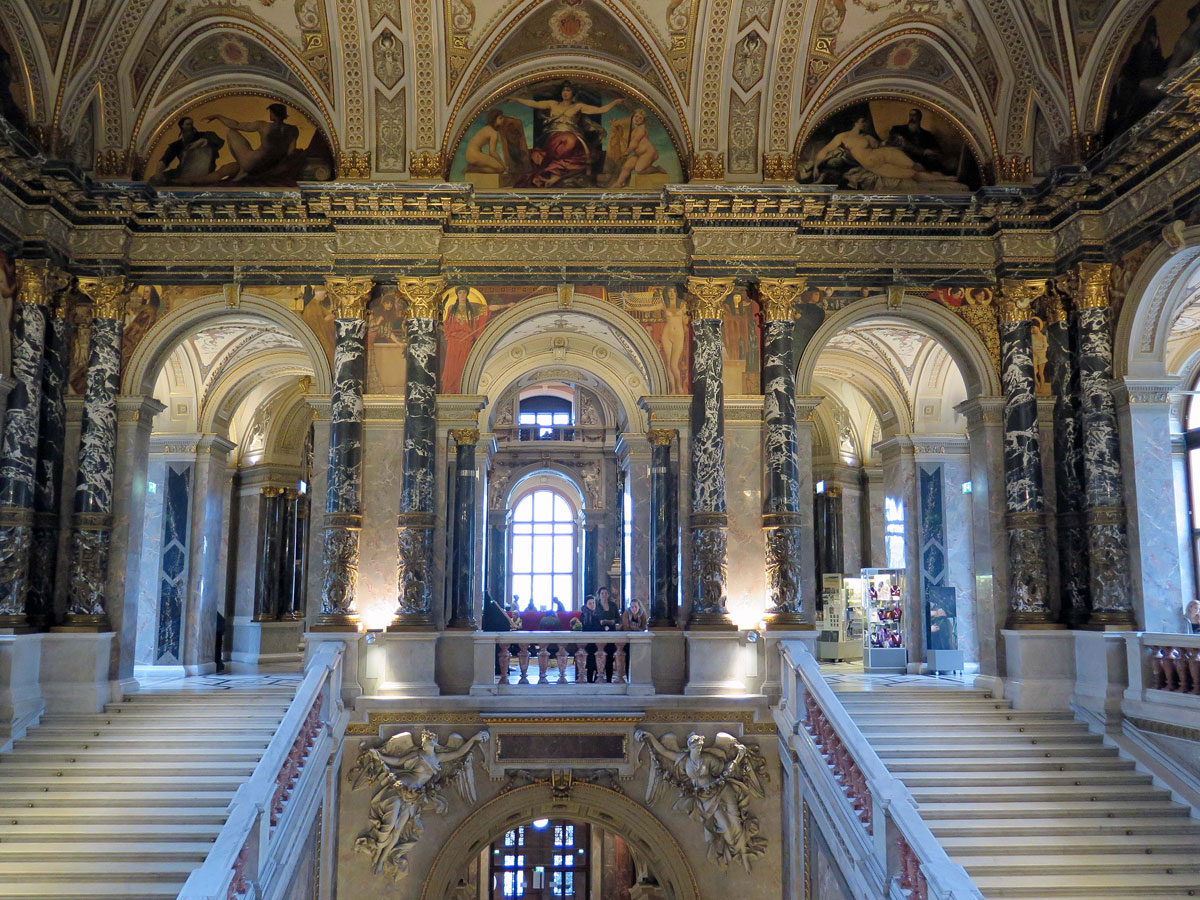
Those of you who read my previous post about the museum might remember the marble staircase that leads from the entrance lobby up to the cupola. The first thing you’ll see is Canova’s Theseus Slaying the Centaur, but your eyes will soon be drawn towards the Lunette pictures by Hans Makart at the top of the stairs. What might not be quite so obvious are forty spandrel paintings underneath them by Gustav Klimt, his brother Ernst, and Franz Matsch.

These paintings were created on the narrow sections of wall between the arches and columns: So what? I hear you ask. Well, these paintings are the exact opposite of classicism – and here they are in the most (neo)classical of buildings in the centre of Vienna. Gustav Klimt is the most famous exponent of this style of art which was part of the Secession movement, and is a term that you will constantly come across in Vienna.

Continue reading →

Originally posted 2023-01-14 12:07:16.

Vienna’s Museum of Fine Arts

Vienna's Museum of Fine Arts


I know that the title of this post doesn’t sound very exciting, but its official name of the Kunsthistorisches Museum wouldn’t have sounded any better would it? Apart from that, in my recent blog about The Ringstrasse I promised to give you a separate post about this magnificent museum, and so not one to let anyone down, here it is.

People’s interest in museums are bound to be subjective, but if there’s one museum in Vienna I really think you shouldn’t miss, then it has to be this one. By their very nature, museums are not necessarily the most exciting things to talk about, but before you walk away, you might be pleased to learn that I’ll be giving you more pictures than text, and you can always find out more on the ‘interweb’ if you want to know about anything specific.

Continue reading →

Originally posted 2022-12-14 16:15:50.

Vienna’s Ringstrasse

Vienna's Ringstrasse

The Ringstrasse is a grand boulevard that encircles Vienna’s Inner Stadt, and if you take a look at a city centre map, it doesn’t take a lot of imagination to work out that this ring-road is on the site of the old city walls.

The Austrians can thank Richard the Lionheart for the original 13th century protective wall. It wasn’t that he had anything physically to do with it, it was just that on his way back from the Third Crusade he was captured and incarcerated at Durnstein Castle, and it was the ransom money that the English had to cough up, that paid for it to be built.

As well as the wall itself, there was a 500 metre wide glacis, which was an artificial slope devoid of any buildings and vegetation that helped to create an extra barrier against any attack. By the 18th century however, the glacis had become obsolete, and Emperor Joseph started to build streets and walkways lined with trees. As the city expanded and traffic increased, then the city walls themselves were in the way, and in 1857 Emperor Franz Joseph I ordered their demolition and embarked on creating a boulevard that would be a showpiece worthy of the Habsburg Empire.

Continue reading →

Originally posted 2022-12-06 07:40:11.

The Hofburg – Pt 3 What Else to See

The Hofburg - Pt 3 What Else to See

The State Apartments and Treasury may be the logical place to start a tour of the Hofburg, but with so many places to visit in Vienna, you’ll probably want to be economical with both your money and your time looking around the rest of the complex. The Hofburg, as I’ve mentioned before, has grown organically over the centuries, and so I’m going to mention a few other places around the palace that I think you should know about which won’t leave you going around in circles and ‘Hofburg’d out’.

After leaving the Treasury, you should  cross over the Swiss Courtyard and pop into the Court Chapel, not because it’s anything special to look at, but because you may be interested to see where the Vienna Boys Choir perform. It’s seen a fair number of changes since Albert I founded it in 1287, and the latest version was created for Maria Theresa during the 18th century. The world famous choir perform here every Sunday morning, but I warn you, they come at a price.

Continue reading →

Originally posted 2022-07-26 12:28:31.

The Hofburg – Pt 2 The State Apartments and Treasury

The Hofburg - Pt 2 The State Apartments and Treasury

I’m assuming that those of you who are reading this post will realise that following the Hapsburg family isn’t quite the same as following the Borgias. Why I’m mentioning this is because the State Apartments could be a bit underwhelming if you were expecting a lavish opulent palace fit for an emperor, and the reason for this is because the last incumbent, Emperor Franz Joseph, for all his adherence to official pomp and circumstance, lived a rather frugal, not to say mundane lifestyle when he was at home. That doesn’t necessarily mean that you shouldn’t bother to pay his Apartments a visit, as I’ll explain.

If you read my previous post, you will already know that by walking through St. Michael’s Gate in Michaelerplatz we arrive at the spot where the original 13th century castle stood. There’s no medieval castle to be seen in the Old Palace Courtyard today though, because as the Hapsburg dynasty grew in importance, then the castle gradually morphed into a series of buildings that reflected the family’s power.

From those early days as rulers of Austria, the Hapsburgs extended their influence to become Emperors of the Holy Roman Empire which lasted from 1452 until 1806 when they became Emperors of Austria. After ending up on the losing side in World War I the monarchy was abolished altogether and the country became a republic.

The legacy they left behind was a sprawling complex of buildings containing 19 courtyards, 18 wings and 2,600 rooms where almost 5,000 people still work today.

The Old Palace Courtyard (or Burgplatz) is still at the heart of the Hofburg, and its rectangular shape is surrounded by the long Leopold and Chancellery Wings and the Amalienburg and Swiss Wings at either end. It was from here that the Hapsburgs ruled their empires, and although Austria is no longer ruled by a monarchy, the Austrian Federal President still uses the Leopold Wing, and has done since 1946.

Continue reading →

Originally posted 2022-04-10 11:09:49.

The Hofburg – Pt 1 Michaelerplatz

The Hofburg - Pt 1 Michaelerplatz

It’s impossible to come to Vienna and not get caught up in the history of the Hapsburg dynasty, and it’s not difficult to see why. For hundreds of years, right up until the end of World War I, the family ruled over large swathes of Europe, and for the vast majority of that time it was from here in Vienna – mostly at the Hofburg, or Imperial Winter Palace.

As the Hapsburg’s influence around Europe expanded, then so did the Hofburg, and just as the history of their ‘Empire’ isn’t easy to get to grips with, then neither is the layout of the Hofburg, as it’s taken as long to evolve as the dynasty itself.

There are any number of buildings connected to the complex, but Michaelerplatz is as good a place as any to start, because one side of it is dominated by the Hofburg’s Michaelertrakt (St Michael’s Wing), and by walking through Michaelertor (St Michael’s Gate) you arrive in the heart of it all at the Old Palace Courtyard.

Continue reading →

Originally posted 2022-01-21 19:06:43.

From St Stephen’s Cathedral to Vienna’s Imperial Palace

From St Stephen's Cathedral to Vienna's Imperial Palace

This short post gives a brief description about Graben and Kohlmarkt, two streets that connect the Stephansdom (Cathedral) to the Hofburg (Imperial Palace).

Graben is the more interesting of the two, both architecturally and historically. Up until the 12th century it was just a ditch (graben) that marked the city’s western limit, but today this grand pedestrianised street has some lovely buildings of different styles harbouring a selection of fine cafes and upmarket shops.

Continue reading →

Originally posted 2021-12-05 16:45:38.

Stephansplatz and the Stephansdom

Stephansplatz and the Stephansdom

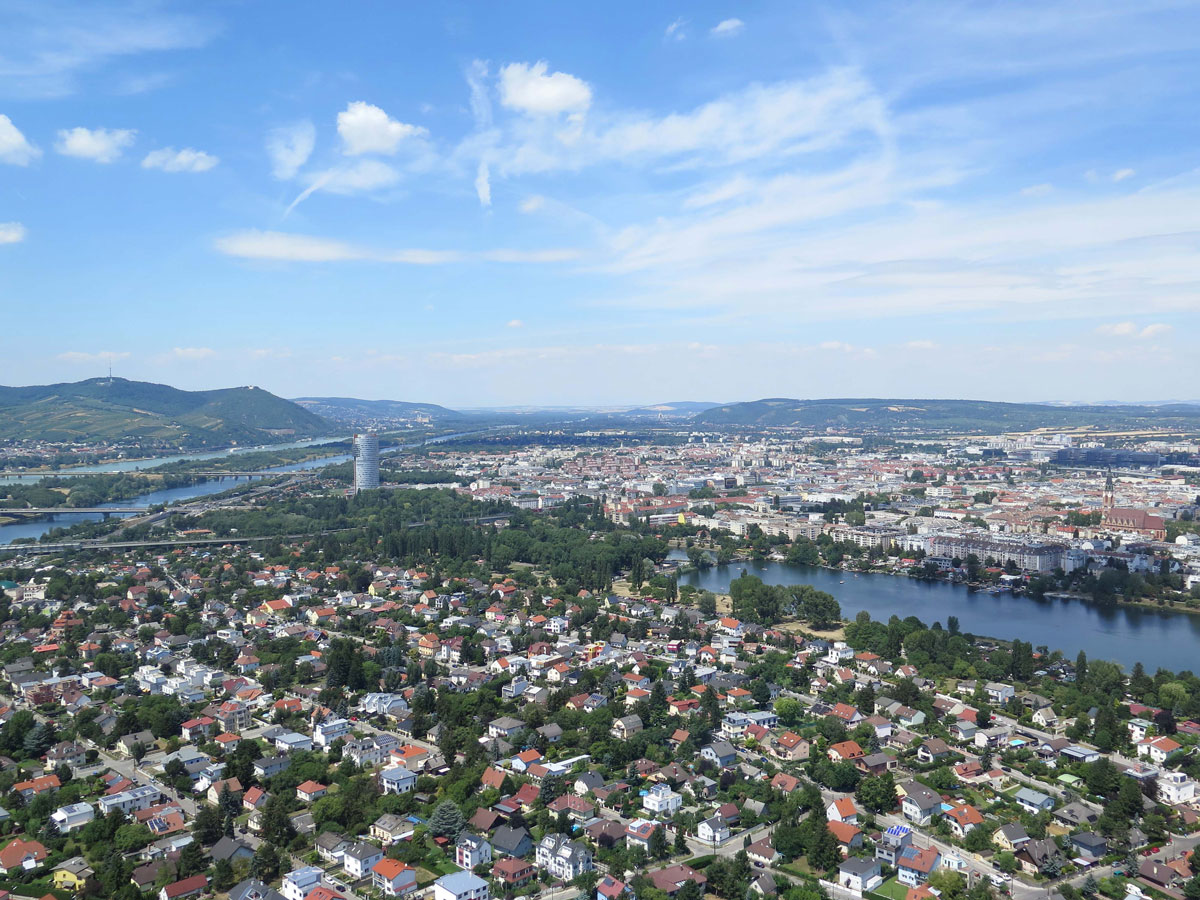
Vienna is a city of around 1.9 million people, famous for its imperial palaces, museums and coffee houses, and although some of its attractions will require a metro or tram ride to one of the city’s other districts, the Inner Stadt has so many things to keep you occupied, that you may well think there’s no need to venture any further, but even though I think that would be a mistake, this is still the best place to start.

The boundary of the Inner Stadt (or Old Town) is more or less the same as the famous Ringstrasse: This Ring Road was constructed during the 19th century over the top of the city’s medieval fortifications, and in 2001 the whole area inside the Ringstrasse was added to UNESCO’s list of World Heritage sites.

At the heart of the Inner Stadt, and therefore the whole city, stands the Stephansdom, so where better to start a tour of this fabulous city than at its most famous landmark?

The Stephansdom (St Stephen’s Cathedral) stands in the centre of Stephansplatz, and due to heavy bombing during WWII, the square has few buildings left of any real merit. Apart from the church of course, there is one building that you can’t fail to miss – the Haas-Haus, a controversial glass and polished stone building completed in 1990. I don’t think people objected to the building as such, more the location. In my opinion (and some of you may disagree) there are examples of where modern architecture sits comfortably alongside the traditional: The glass dome on top of the Reichstag in Berlin and the glass pyramid at the Louvre in Paris are two that immediately spring to mind, but the Haas-Haus doesn’t fall into that category for me I’m afraid.

Continue reading →

Originally posted 2020-10-29 13:08:18.