Tag Archives: Cathedral

Stephansplatz and the Stephansdom

Stephansplatz and the Stephansdom

Vienna is a city of around 1.9 million people, famous for its imperial palaces, museums and coffee houses, and although some of its attractions will require a metro or tram ride to one of the city’s other districts, the Inner Stadt has so many things to keep you occupied, that you may well think there’s no need to venture any further, but even though I think that would be a mistake, this is still the best place to start.

The boundary of the Inner Stadt (or Old Town) is more or less the same as the famous Ringstrasse: This Ring Road was constructed during the 19th century over the top of the city’s medieval fortifications, and in 2001 the whole area inside the Ringstrasse was added to UNESCO’s list of World Heritage sites.

At the heart of the Inner Stadt, and therefore the whole city, stands the Stephansdom, so where better to start a tour of this fabulous city than at its most famous landmark?

The Stephansdom (St Stephen’s Cathedral) stands in the centre of Stephansplatz, and due to heavy bombing during WWII, the square has few buildings left of any real merit. Apart from the church of course, there is one building that you can’t fail to miss – the Haas-Haus, a controversial glass and polished stone building completed in 1990. I don’t think people objected to the building as such, more the location. In my opinion (and some of you may disagree) there are examples of where modern architecture sits comfortably alongside the traditional: The glass dome on top of the Reichstag in Berlin and the glass pyramid at the Louvre in Paris are two that immediately spring to mind, but the Haas-Haus doesn’t fall into that category for me I’m afraid.

Continue reading →

Originally posted 2020-10-29 13:08:18.
Antwerp – From the Railway Station to the Grote Markt

Antwerp - From the Railway Station to the Grote Markt

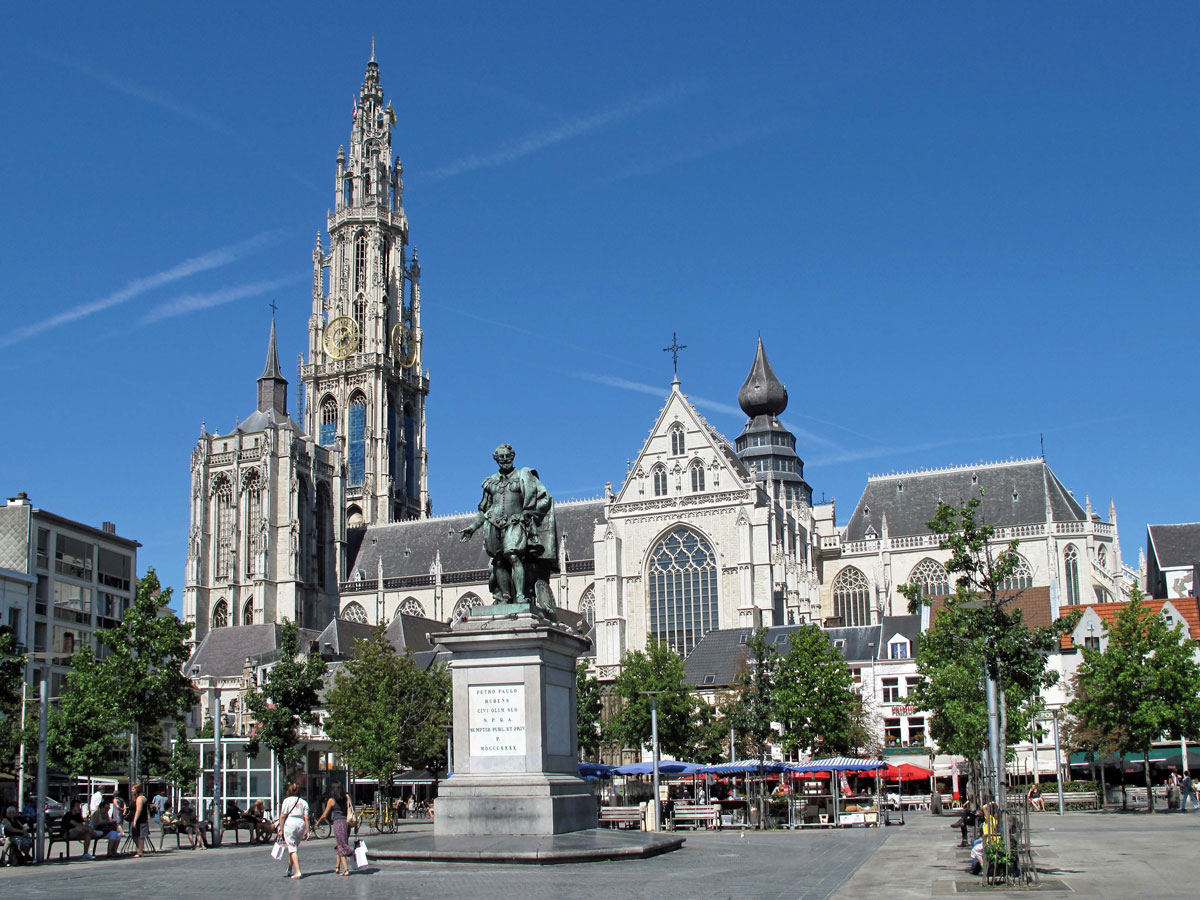
In my previous post about Fawlty Towers and the Gleneagles Hotel I mentioned that I met a couple of friends from Belgium at the Fawlty Towers evening. Kirsty lived, and still does, in Tongeren, and although we had often communicated through the Virtual Tourist (VT) website that we both belonged to, we had never met in real life, not until, that is, we both went to a VT meeting in Belgium’s second city, Antwerp.

As much as I would love to describe this fabulous weekend in detail, this post is about Antwerp, rather than the people I hung out with, many of whom are still very good friends, I’m pleased to say.

I flew from Bristol to Amsterdam and then caught a train across the border into Belgium and arrived at the impressive Antwerp Centraal railway station, which annoyingly, from the point of view of taking pictures, had a Big Wheel stuck right in front of it.

Continue reading →

Originally posted 2020-07-09 16:41:14.

Dunkeld at Autumn Time

Dunkeld at Autumn Time

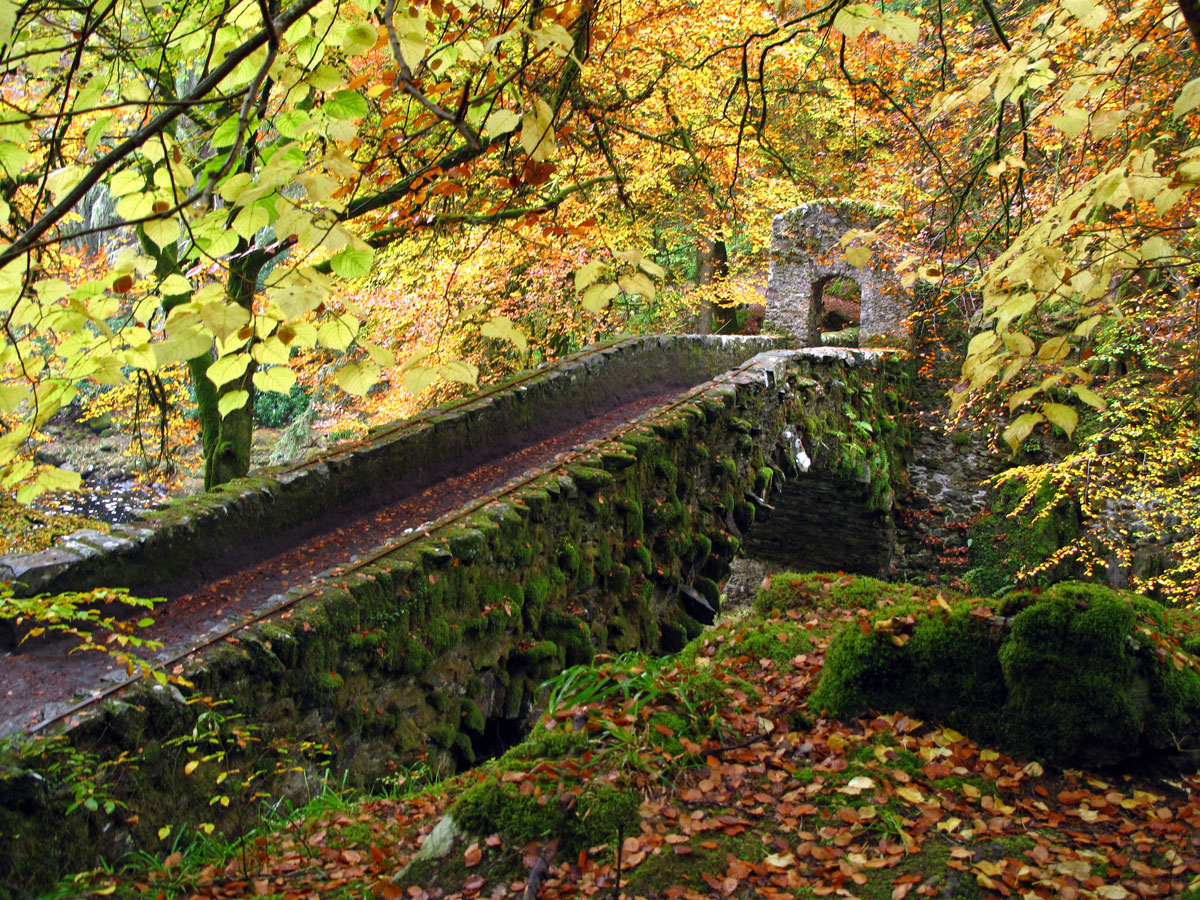
Anybody driving north on the A9 trunk road from Scotland’s Central Belt to the Highlands will find themselves driving past Dunkeld, but, in my view, to drive past this small town on the banks of the River Tay between Perth and Pitlochry would be a mistake. Not only will it give you a break from driving along Scotland’s longest road, Dunkeld has a number interesting things to make your stop worthwhile – even at Autumn time.

Continue reading →

Originally posted 2025-11-17 11:11:40.

St Mungo and Glasgow Cathedral

St. Mungo and Glasgow Cathedral

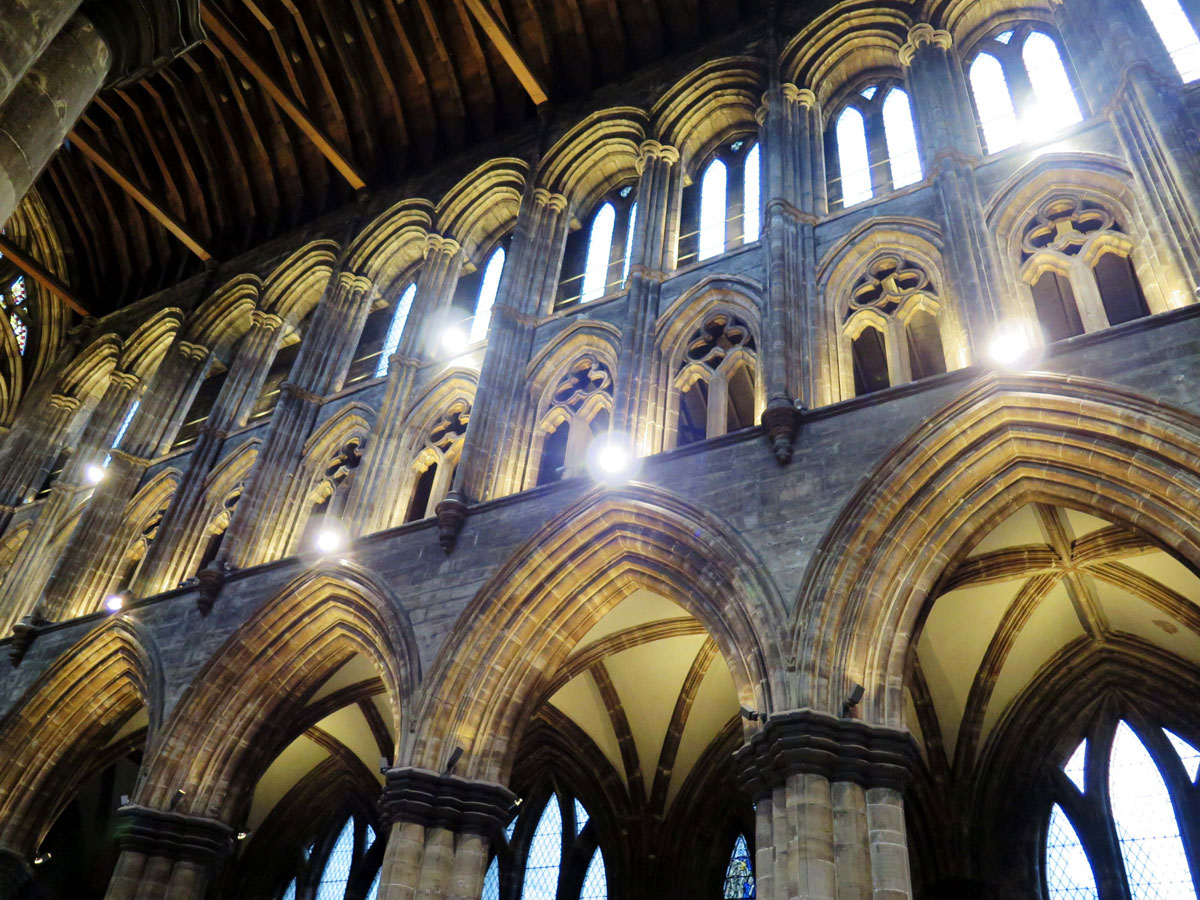
Glasgow didn’t have any history before the Industrial Revolution – or at least I wouldn’t be surprised if that’s what many people thought. It’s true of course that it developed into a major city during the Victorian era, but it might surprise some people to learn that it was founded way back in the 6th century when a missionary called St. Mungo built a church at a place called Glas Gu (meaning ‘Green Place’).

If you haven’t heard of St. Mungo then perhaps you’ve heard of St. Kentigern, who just happens to be the same man. The difference in name is down to which branch of the Celtic language you believe the name originates from, but as we’re in Scotland I think we should call him Mungo. It seems that he was born in Culross, Fife, but the date of his birth isn’t quite so clear.

Talking about dates from this period is notoriously unreliable, but most accounts suggest that Mungo was around 25 years of age when he established his mission at the spot where Glasgow Cathedral now stands.

Continue reading →

Originally posted 2021-07-28 15:27:20.

Lincoln Cathedral

Lincoln Cathedral

At the time of William the Conqueror’s arrival in England, Lincoln was one of the largest towns in the country, and so it was understandable why he would want to subjugate it as quickly as possible. Within two years, Lincoln Castle was built on the same site as the old Roman fortress, but the success of his conquest didn’t just depend on military might, he also needed the support of the all-powerful church as well.

To help him consolidate his position, William called upon one of his supporters, Bishop Remigius de Fécamp, to take over the vacant See of Dorchester, which at the time was the largest diocese in England – and one that also included Lincoln.

Continue reading →

Originally posted 2022-12-30 15:44:22.

Wandering Around Canterbury Cathedral

Wandering Around Canterbury Cathedral

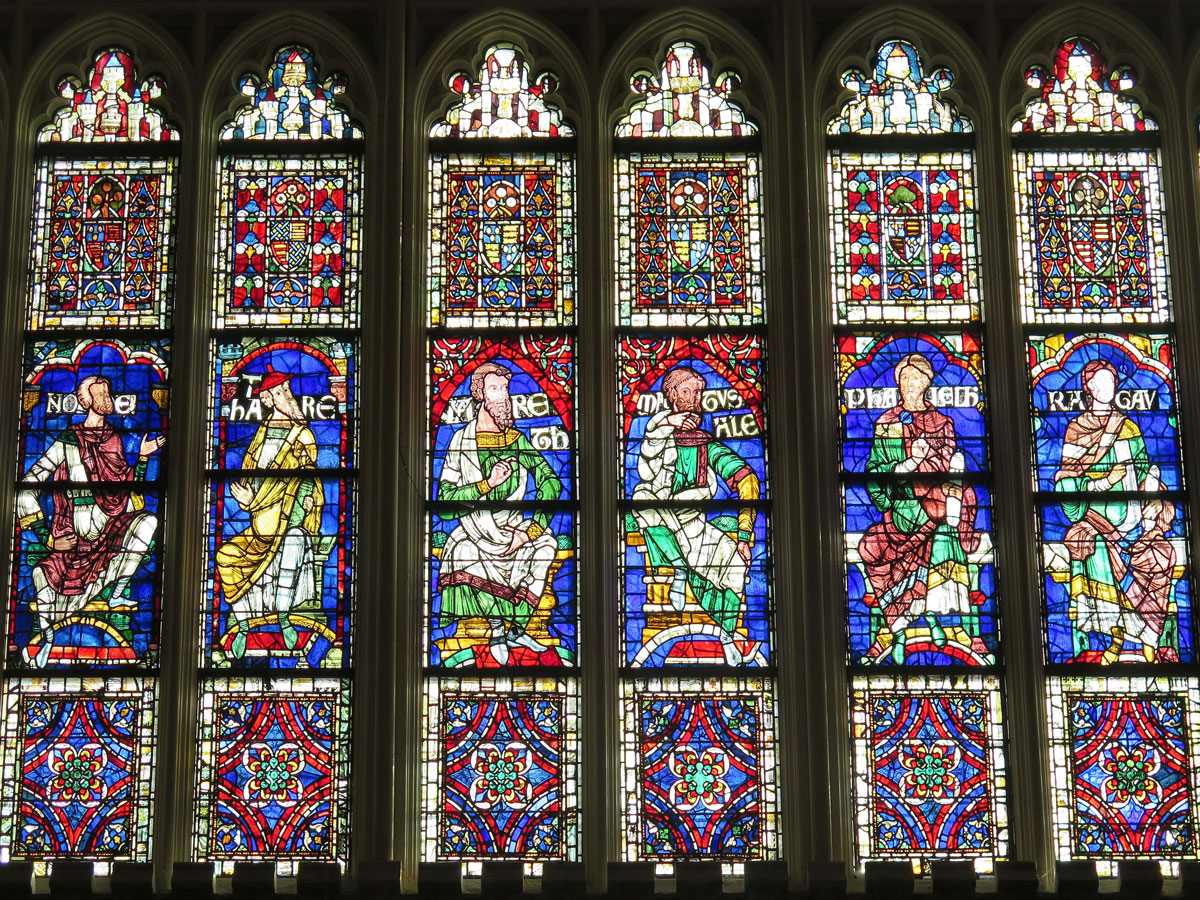
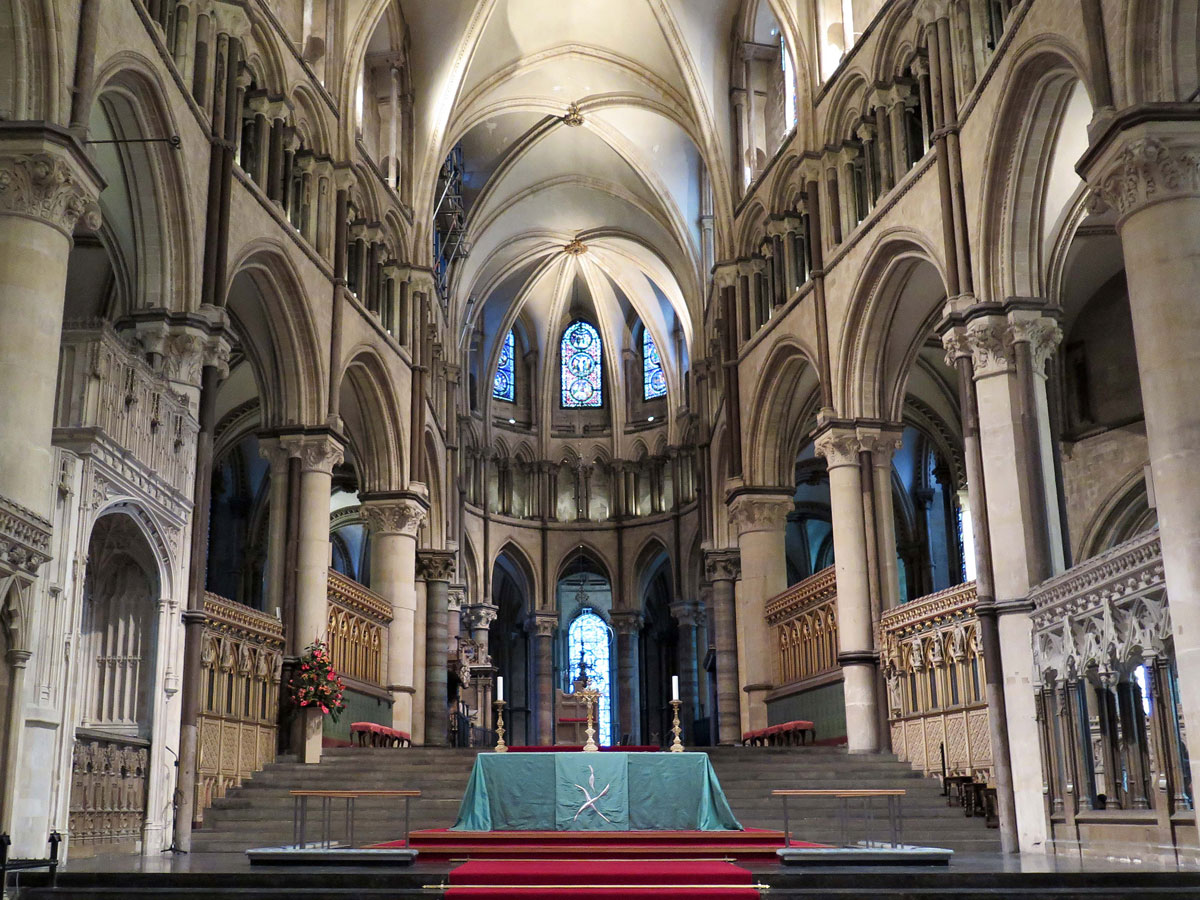
In my previous blog Canterbury Cathedral – A Shortish History, I promised that I would show you around some of the cathedral’s highlights, but before I start, I have to say right from the outset that trying to cover all aspects of a building like this in one visit is nigh on impossible, and not only that, ongoing restoration work always restricts access to somewhere or another, so bearing that in mind, here is a selection of what I saw and worthy of special mention, which of course, is subjective – so here goes.

The main entrance into the cathedral precincts is through Christ Church Gate in the Buttermarket. This Tudor gateway was probably built as a memorial to Arthur Prince of Wales, and according to cathedral records was constructed between 1504 and 1521.

Prince Arthur was Henry VII’s eldest son and destined to become king. In 1501 at the age of fifteen he married Catherine of Aragon but a year later died of an unknown illness. When Henry VIII became king after his father’s death in 1509 he took his brother’s widow as his wife and queen.

Note the Tudor Coats of Arms as you walk under the archway and through the 17th century wooden doors. The original doors and the statue of Christ were destroyed by the Puritans in 1643. The present bronze sculpture of Christ was installed in 1990.

Continue reading →

Originally posted 2020-03-19 14:42:40.

Canterbury Cathedral – A Shortish History

Canterbury Cathedral - A Shortish History

Ever since St. Augustine set foot on English soil in 597 A.D, Canterbury Cathedral has been at the forefront of Christianity in England: First and foremost, it is the seat of the Archbishop of Canterbury, who is both head of the Church of England, and the worldwide Anglican Communion.

Over the last 1400 years the cathedral has not only been transformed into one of the country’s most celebrated ecclesiastical buildings, but has also played a significant part in its turbulent history.

St. Augustine’s first church for the people was built, (or possibly re-built over a previous Roman one), within the old city wall on the same site as today’s cathedral.

The early successors to St Augustine were largely members of the missions that Pope Gregory I sent over from Italy, and the first home-grown Archbishop of note was St Cuthbert who added a second building during his time in office in the mid-8th century.

Continue reading →

Originally posted 2020-03-08 16:53:39.

St. Augustine of Canterbury

St. Augustine of Canterbury

I’ve got a confession to make. I’ve never made a confession in my life – well, not in a church at least, and that’s because I’m not a religious person; but I do have to confess that some time ago I converted from a devout atheist to an agnostic, and by that I mean that I can understand why other people are religious even if I’m not.

One of my passions in life is to try and piece together how life on our planet has evolved. Notice that I didn’t say how life began. I’ll leave that to scientists and theologians to fight over: I would rather concentrate on what we know to have happened in the past, rather than what we think may have happened: I have enough trouble finding out where the pieces fit into this jigsaw as it is without delving any further.

The good news though is that I don’t need a degree in theology or quantum physics to be able to admire buildings like Canterbury Cathedral: It’s not just the magnificent architecture that grabs my attention, it’s the history behind it too, and the reason why I’ve chosen to start my blogs on Canterbury with St. Augustine – the ‘Apostle to the English’.

Continue reading →

Originally posted 2020-02-22 13:15:18.

A Tour of Gloucester Cathedral in Pictures

A Tour of Gloucester Cathedral in Pictures

Mention Gloucester Cathedral to anyone and they often think of it as the final resting place of Edward II who was murdered in Berkeley Castle, but there are other reasons to come here, and in this post I’d like to show you what they are.

There has been a House of God on or near this spot since the 7th century when King Osric founded an abbey dedicated to St Peter, but after a major fire in 1088, the present abbey was established by Abbot Serlo. The Dissolution of the Monasteries by Henry VIII (1536-41) saw Gloucester Abbey become a Cathedral, but instead of rambling on about the rest of its history, I’m going to take you on a tour of the Cathedral with a brief explanation of what there is to see along the way.

Looking at the Cathedral from the outside, the Gothic appearance belies its Norman Nave, and that’s because a fire in 1222 damaged the roof, prompting a rebuilding programme that included the Central Tower. The picture gallery below shows the cathedral from the south and includes captions explaining the time-line of the building’s construction.

Continue reading →

Originally posted 2023-05-29 16:02:20.

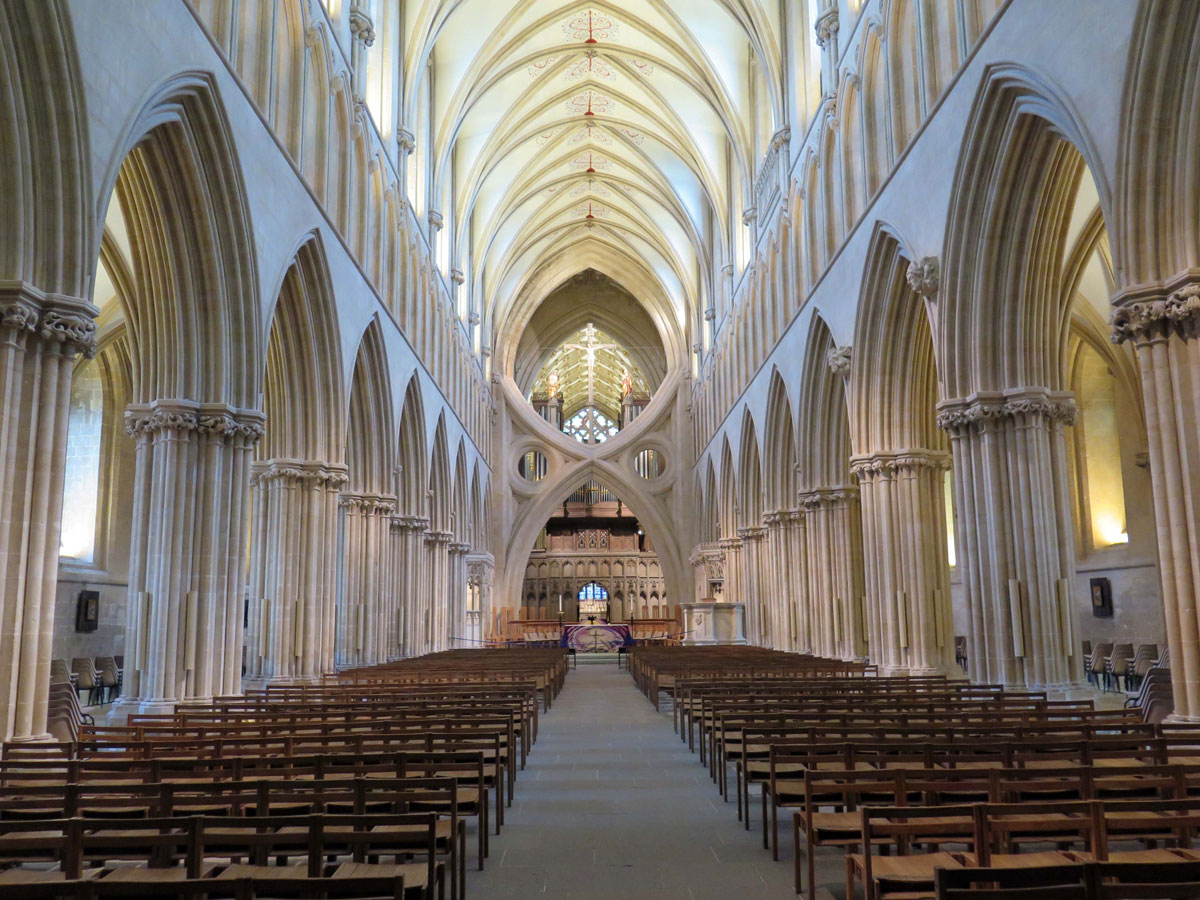
A Look Around Wells Cathedral and why such a Grand Cathedral was built in such a Small City

A Look Around Wells Cathedral and why such a Grand Cathedral was built in such a Small City

People often wonder why such a small city has such a large cathedral and that’s because we’re looking at the situation through modern day eyes. Back in medieval England the country was administered by two separate entities of equal importance. We tend to think of the King of England as being the most powerful man in the realm, but that was in the secular world. However, the most powerful man in the English spiritual world (other than the Pope) was the Archbishop of Canterbury. That may be a rather simplistic view of things, but the church held much of the country’s land and was extremely wealthy as well as powerful – and the Diocese of (Bath and) Wells was both.

The size of the cathedral at Wells was built, I believe, not just to make a statement of spiritual influence and authority over its worshippers, but also to win the struggle with Bath over where the bishop’s seat should be. In other words the size of the local community really had nothing to do with the stature of the cathedral, and for those who are interested, the population of Wells today is still only around 11,000.

Continue reading →

Originally posted 2025-10-21 09:34:09.

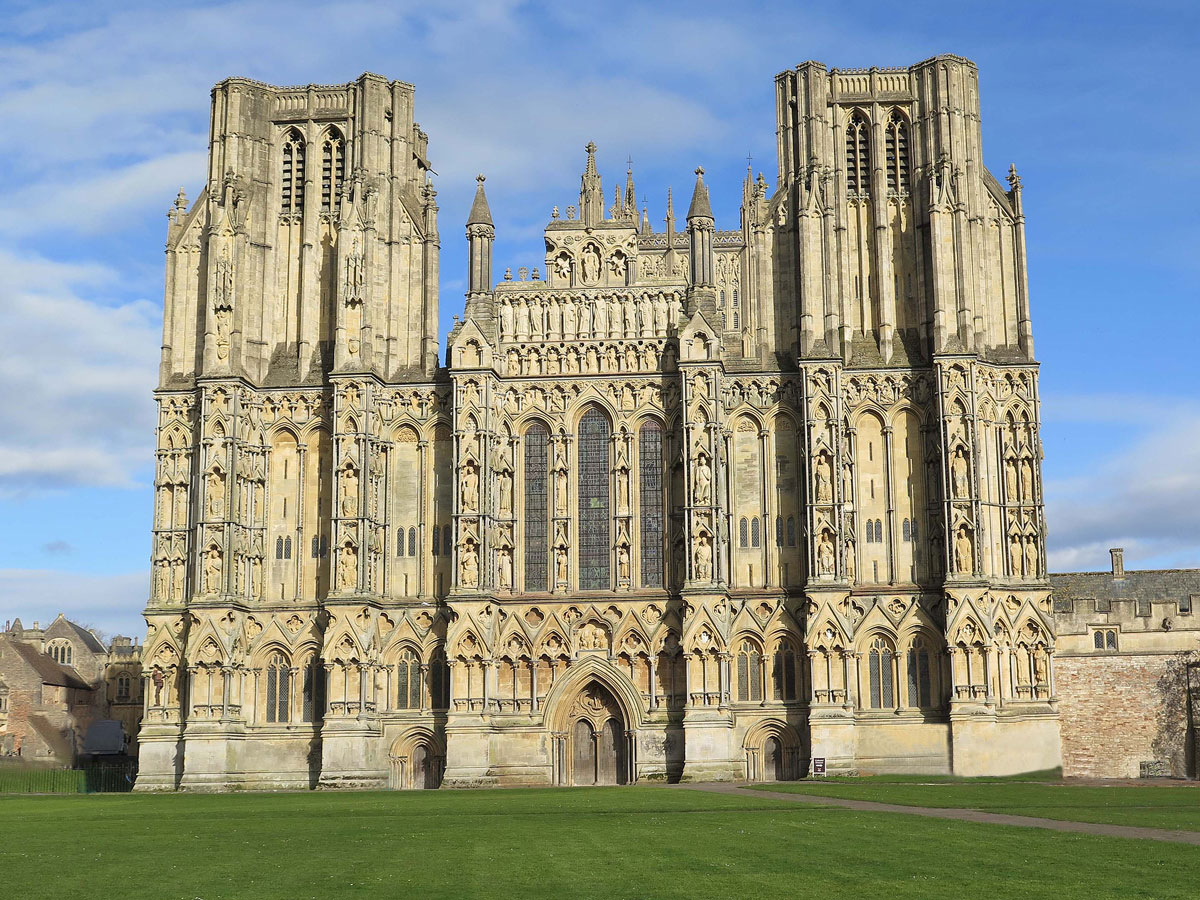
Wells Cathedral – Why it’s here and a look at the magnificent West Front

Wells Cathedral - Why it's here and a look at the magnificent West Front

I had originally intended to do just two posts about Wells, one about the palace and one about the cathedral, but I’ve had a change of heart and decided to increase the number of posts but reduce their length, and if you stick with me, hopefully you’ll see why.

In the previous post I explained how the name of England’s ‘smallest’ city originated from the springs that surface in the grounds of the Bishop’s Palace. I also briefly touched on how it achieved its city status, but to put things in perspective I’m now going to delve a little deeper to explain how the cathedral came into being, and then follow it up with some information about its most prominent feature – the magnificent West Front.

Continue reading →

Originally posted 2025-10-05 07:24:39.

Bristol Cathedral

Bristol Cathedral

Those of you who follow my blogs are probably thinking “Oh no, not another cathedral”, and even though it doesn’t quite match the grandeur of some of England’s other great religious houses, it’s the one that made my home town a city, and there’s no way I’m not including it in my historical chronology of Bristol.

On the plus side, it means that this won’t be a long post, and it’s just possible that I might be able to reveal a fact or two that you weren’t aware of, including perhaps, the fact that you didn’t even realise Bristol had a cathedral at all.

When it was founded in 1140 it wasn’t even a cathedral, but a monastery dedicated to St. Augustine of Canterbury, the missionary who brought Christianity to England. One of his companions was a man called St. Jordan who, legend has it, was buried in a chapel on what is now College Green. There has never been any evidence to substantiate this claim, but experts believe that there was a church here during Saxon times thanks to the discovery of a stone carving beneath the Chapter House in 1831. It now hangs on a wall in the South Transept.

Continue reading →

Originally posted 2021-06-14 14:05:58.

Truro Cathedral

Truro Cathedral


It may seem hard to believe, but when the foundation stones were laid for Truro Cathedral on 20th May 1880 by the future King Edward VII, they were the beginnings of the first Cathedral to be built in England since Salisbury in 1220.

Designed by John Loughborough Pearson, it is built mainly of Cornish granite in the medieval Gothic style with the more decorative features made out of the softer Bath stone. One of its more unusual features is that it includes part of the original Tudor St. Mary’s Parish Church and is a church within a church with the Dean of the Cathedral also being Rector of St Mary’s.

Continue reading →

Originally posted 2021-10-09 16:40:56.

Cathedral Green

Cathedral Green


The area around the Cathedral has been at the heart of Exeter ever since Roman times, and although German bombers tried their level best to destroy the core of this historic city during World War II, Cathedral Green managed to retain much of its charm – or at least it did until a devastating fire destroyed the famous Royal Clarence Hotel in October 2016.

Built in 1769, the Royal Clarence, which stands (stood) opposite the cathedral in Cathedral Yard, was reputed to be England’s first hotel and attracted many famous guests over the years from Lord Nelson to Thomas Hardy and Clark Gable. Franz Liszt, the famous Hungarian pianist and composer, gave two recitals here in 1840, an event that was commemorated by a blue plaque erected by the Exeter Civic Society. Between 2000 and 2015 the hotel was co-owned by Andrew Brownsword and the celebrity chef Michael Caines.

Continue reading →

Originally posted 2021-09-19 08:47:06.

Exeter Cathedral

Exeter Cathedral


Built on the hill where the original Roman camp was established, the Cathedral Church of St. Peter is without doubt Exeter’s crowning glory.

The church in its present form was conceived in 1114, but a Benedictine monastery and Minster was set up here in Saxon times around 670 AD. One of its pupils was Winfrith who was born in Crediton (c675), some 8 miles north-west of Exeter and where the See of Devon and Cornwall was based.

Winfrith later became known as St. Boniface, and his missionary work took him from Exeter across to Frisia and Germania, where he became venerated to such an extent that he eventually became the patron saint of Germany.

In 1050 Bishop Leofric transferred the See to the Minster at Exeter.

Continue reading →

Originally posted 2017-09-07 08:34:34.