Dunkeld at Autumn Time
Anybody driving north on the A9 trunk road from Scotland’s Central Belt to the Highlands will find themselves driving past Dunkeld, but, in my view, to drive past this small town on the banks of the River Tay between Perth and Pitlochry would be a mistake. Not only will it give you a break from driving along Scotland’s longest road, Dunkeld has a number interesting things to make your stop worthwhile – even at Autumn time.
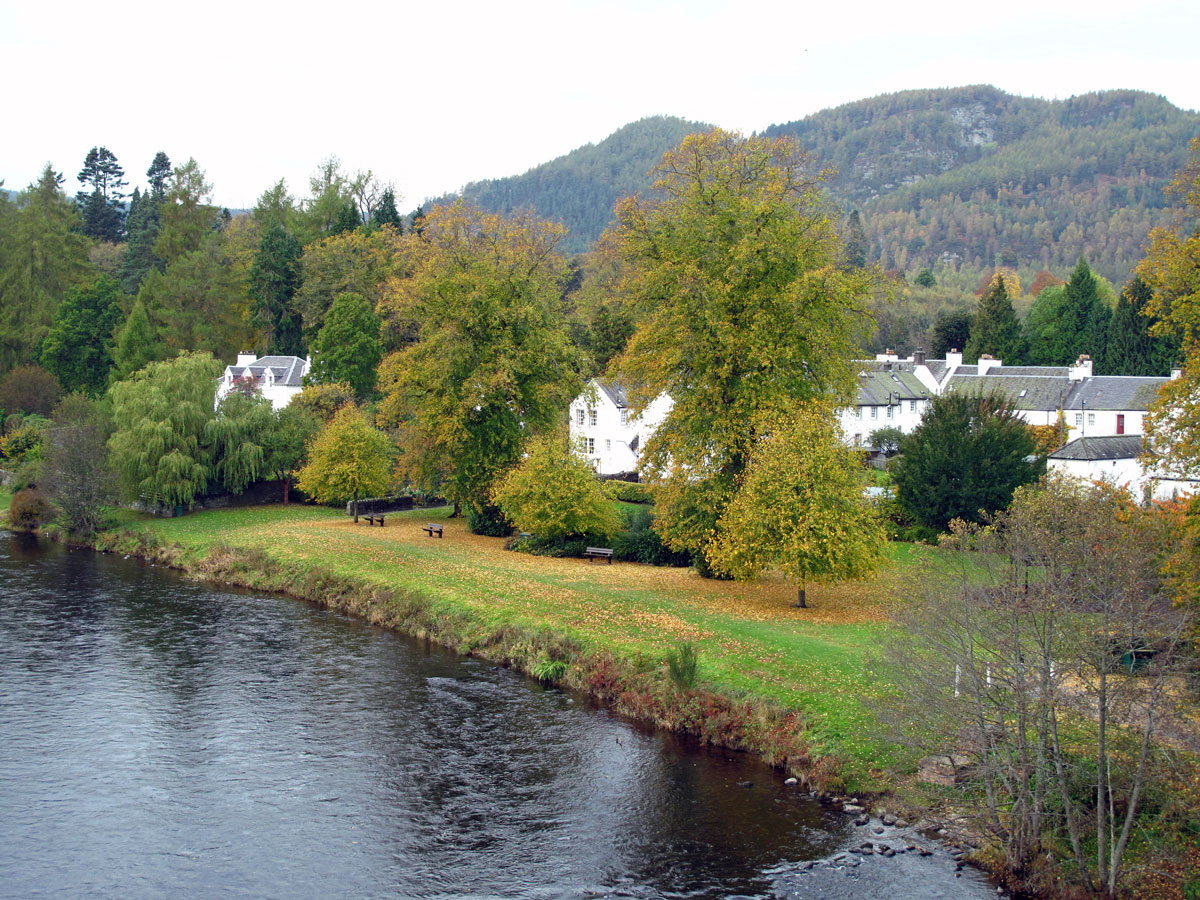
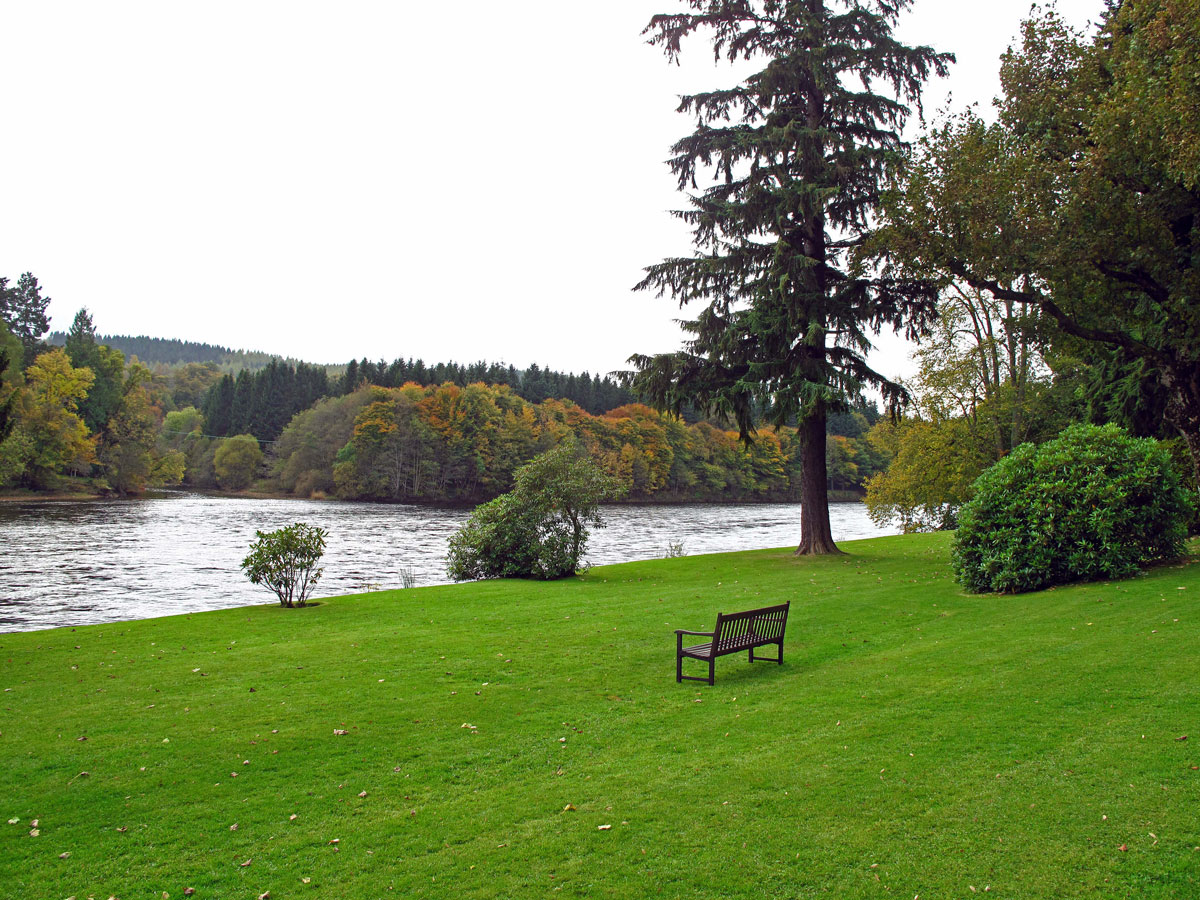
To understand why Dunkeld is here at all, the best place to start is at the cathedral. It may not be the most magnificent cathedral you’ll ever come across, but what this half church/half ruin lacks in splendour, is compensated for by some unique history, particularly its association with St Columba.
Some of you may already be aware of St Columba through my posts about Derry, but if not, I can tell you that he was a Christian missionary from County Donegal in Ireland. Without going into too much of his background, his missionary work brought him across the Irish Sea to the small Hebridean island of Iona, and it was from there that he spread the word of Christianity across the land we now call Scotland.
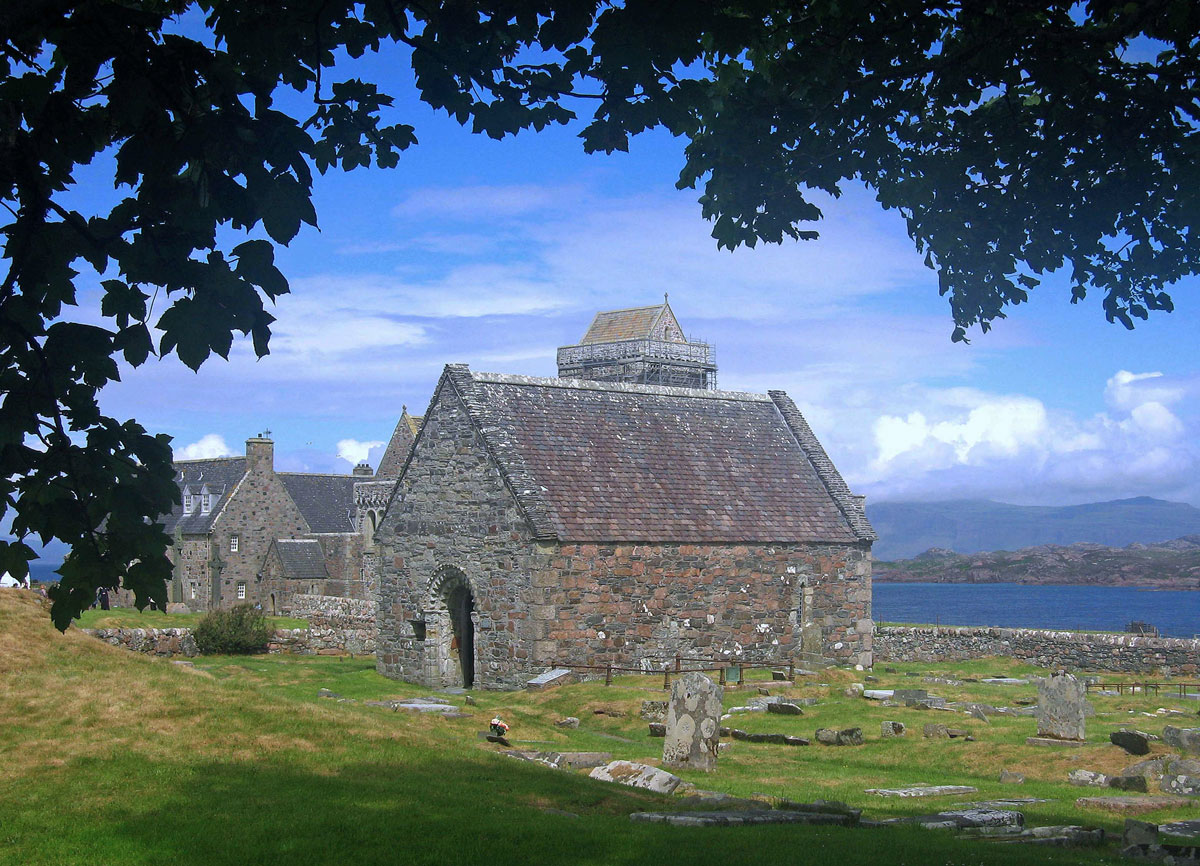
Along with a dozen of his followers, it’s believed that Columba set up his monastery on Iona in 563 AD, and although it’s not clear whether Columba himself visited Dunkeld, his disciples most certainly did, as they were the first to establish a monastery here around the late 6th or early 7th centuries.
Scotland at this time wasn’t a single country but made up of different kingdoms, and in the north, Pictland and Dál Riata held most of the territory. However, it was the Vikings who threatened what stability there was, and during the late 8th and early 9th century, they were attracted to Iona’s religious treasures, attacking the monastery on several occasions.
Columba’s teachings must have made quite an impression on the previously pagan Picts because King Caustantin mac Fergusa, moved the centre of Scottish religious power away from Iona to the safer monastery at Dunkeld, and around 815 AD replaced the previous simple affair with a more substantial stone-built one, declaring it the ‘Primacy of the faith in Alba’. In 849 AD, King Kenneth mac Alpin of Dál Riata went a stage further by bringing St Columba’s relics from Iona to Dunkeld for safekeeping.
Kenneth I is often quoted as being the first king of the Scots, and if you find early Scottish history interesting, you can read more about Kenneth mac Alpin and the kingdom of Dál Riata in my post about Kilmartin Glen.

Dunkeld hadn’t escaped the attention of the marauding Norsemen either, and so the centre of religious power was moved further east again – this time to Kilrymont, a place which later changed its name to St Andrews. Dunkeld’s importance obviously declined with the shift of power, but the Diocese was revived by Alexander I during his reforms of the Scottish church, and with it came a new cathedral.
Building began in 1260, and it’s from this point in time that Dunkeld is said to have been founded, but it took almost another 250 years for the cathedral to be completed. I’ve no doubt that it would have been a fine-looking building, but that was before the 16th century Scottish Reformation, when anything connected to the Catholic church was either pillaged or destroyed. At Dunkeld that included removing the Nave roof – and that’s exactly how it still remains to this day.
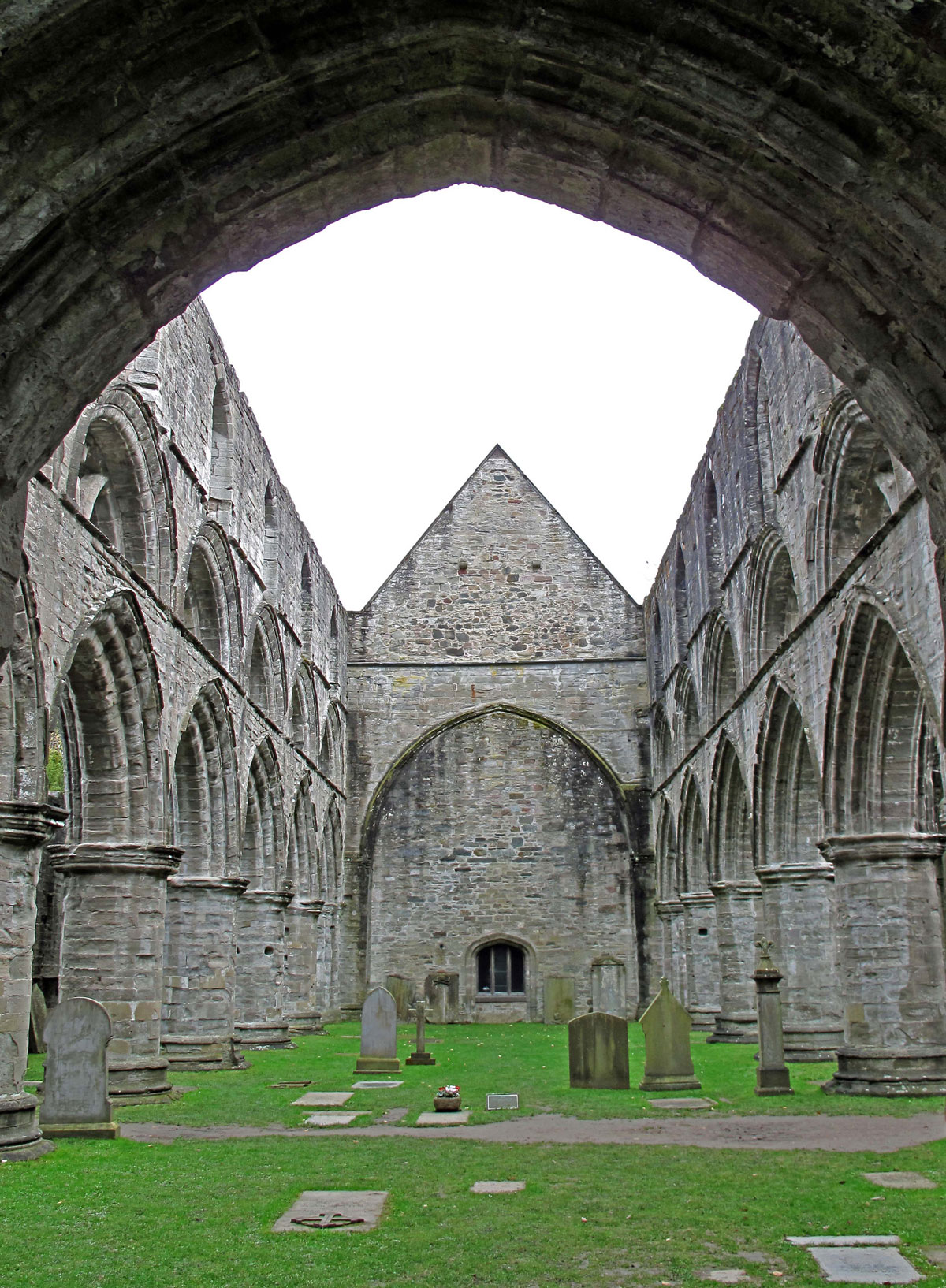
The rest of the cathedral didn’t go unscathed either, but to keep it functioning as a place of worship, the choir and chancel was repaired, re-roofed, and restored; and today this area serves as the parish church dedicated to St Columba.
Even if the nave still had a roof it wouldn’t really be considered a cathedral in the true sense of the word because nowadays the Church of Scotland has neither cathedrals nor bishops. Not that it makes any difference because everyone still calls it Dunkeld Cathedral.
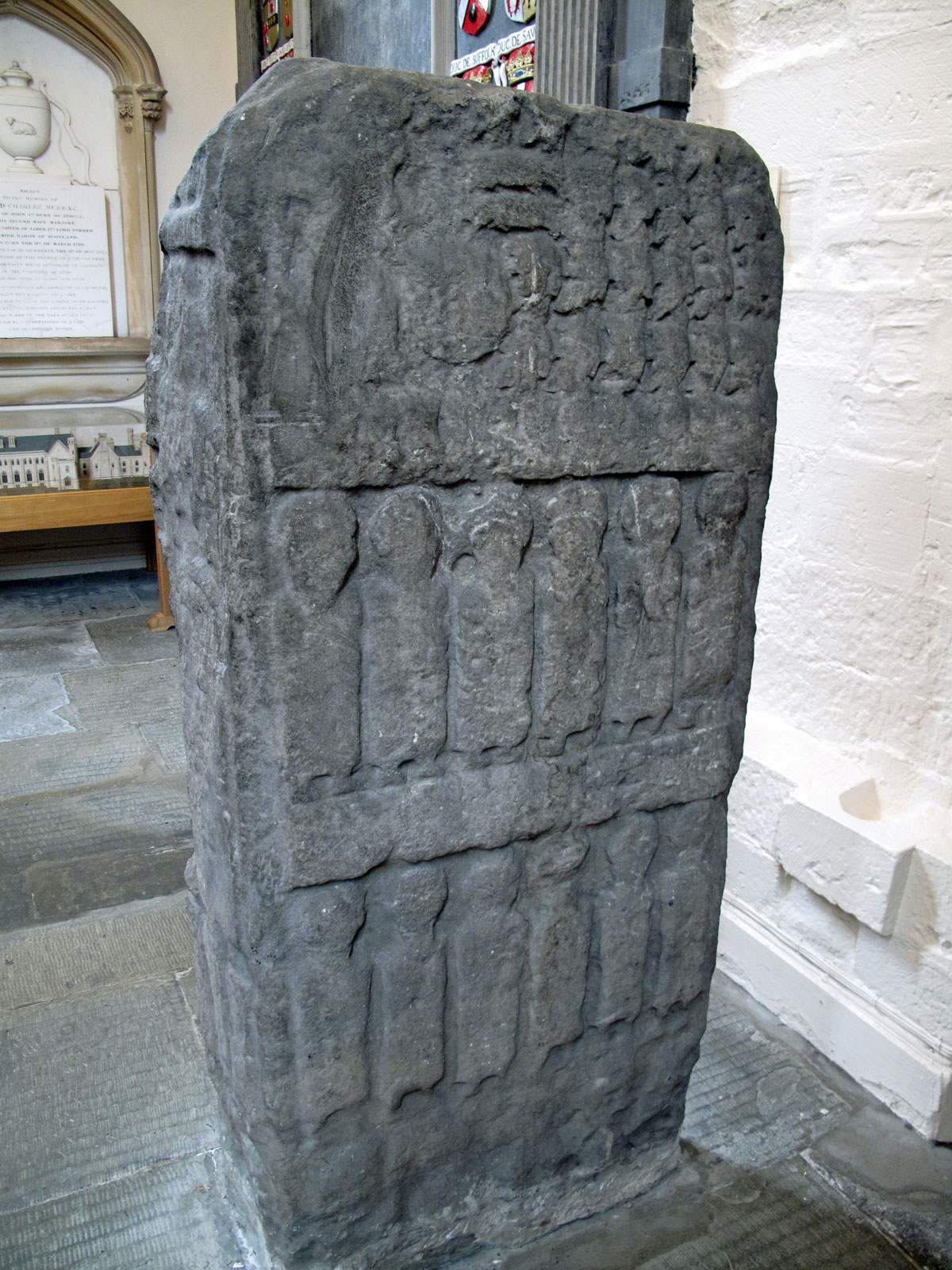
One thing that has survived is a 9th century stone slab that was previously used as a gatepost at the entrance to the churchyard. Mistakenly called the Apostle’s Stone, it can be seen in the small Chapter House which has been adapted as a museum. Unsurprisingly, none of St Columba’s relics are here as they were shipped off to Ireland, but there are a few who believe that there could still be some lying undiscovered within the cathedral grounds, and when you think about it, if they can use a twelve hundred year old religious stone as a gatepost for I don’t know how long without realizing it, then I suppose it’s always possible that they could be right.
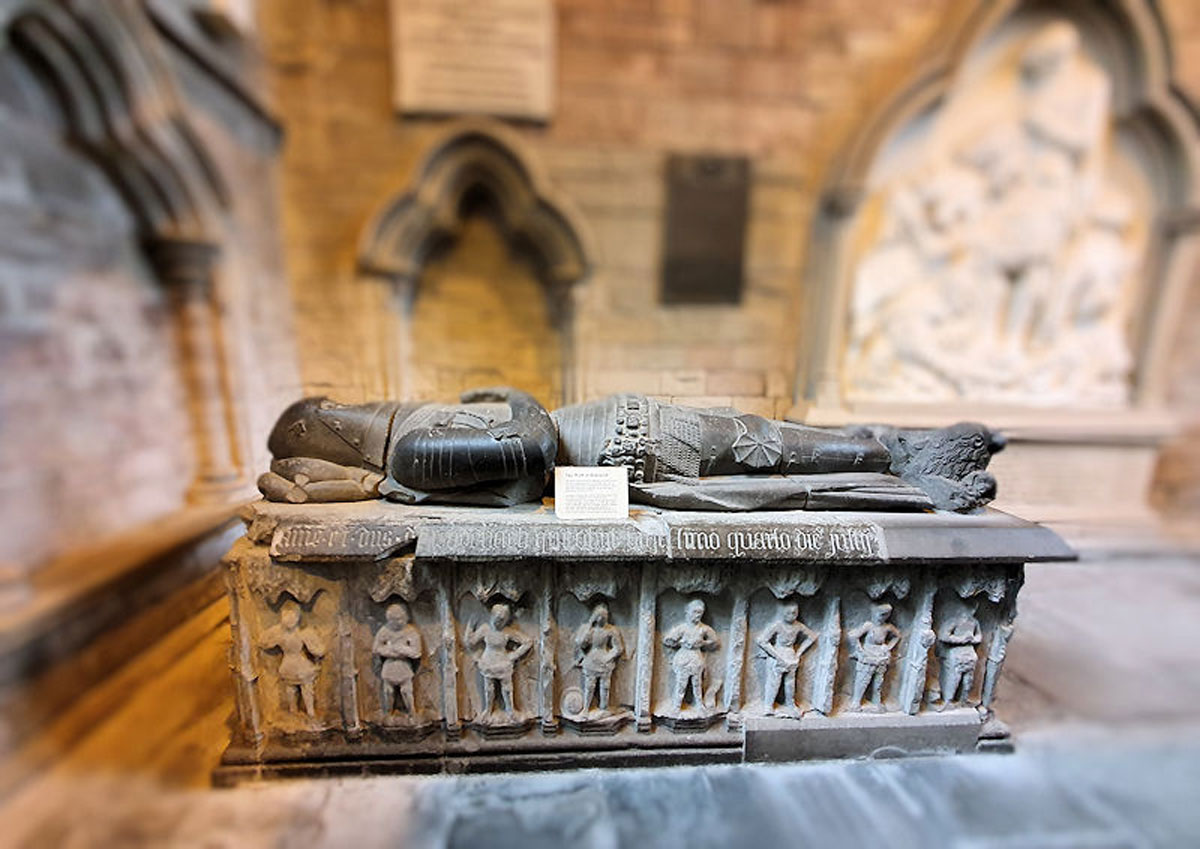
Before leaving the cathedral make sure you don’t miss the tomb of the Wolf of Badenoch. That wasn’t his real name. Officially, he was Alexander Stewart, the Earl of Buchan, but this son of King Robert II was given the epithet thanks to his cruel and violent tendencies, most notably the burning down of Elgin Cathedral. It’s unclear when he died, some say in 1394, others in 1404. Either way, his tomb is one of the few Scottish royal monuments to have survived the Middle Ages, but it does make me wonder who decided that this deeply unpleasant character should be laid to rest in a fine tomb behind the choir screen at Dunkeld.
The cathedral was in the thick of it again when Jacobites and British government forces faced each other during the Battle of Dunkeld in August 1689. A year earlier, the incumbent Catholic King James II (VII of Scotland) was deposed in the Glorious Revolution, a largely peaceful transition of power to the Protestant William of Orange and his wife Mary.
The Jacobites (supporters of James) weren’t going to take this lying down of course, and in July 1689 under John Graham, 1st Viscount Dundee (‘Bonnie Dundee’), the Highlanders won a resounding battle against government troops at Killiecrankie. Although Dundee was killed during the engagement, the Jacobites, boosted by their victory, moved on down to strategically important Dunkeld where government troops were based.
Government troops at Dunkeld were soldiers of a regiment of Cameronians, a band of Covenanters who had their own axe to grind with the Jacobites. Under the command of Lieutenant-Colonel William Cleland, and heavily outnumbered, the Cameronians believed that God was on their side – and it seems as though they were right because the Jacobites were routed. About 300 Highlanders were killed, but so was William Cleland.
The town suffered badly too and all that was left behind after the battle were a couple of houses and a badly damaged cathedral.
Fortunately, the town wasn’t abandoned but rebuilt. Atholl Street is the main route through the town, but the area around the High Street and The Cross is for me the most enticing. The traditional Mercat Cross that once stood here is now home to the Neo-Gothic Atholl Memorial Fountain built in 1866 as a monument to George Murray, the 6th Duke of Atholl. What appeals to me the most though are the rough-cast vernacular buildings surrounding it, many of which have been restored by the National Trust for Scotland (NTS) including one known as the Ell Shop. Built in 1757, the building has a weaver’s measure (known as an ell) fixed against one of the corners, and it’s not every day that you see something like that hanging around. The town may have once been razed to the ground, but these days Dunkeld is regarded as one of the best preserved examples of an 18th century Scottish burgh.
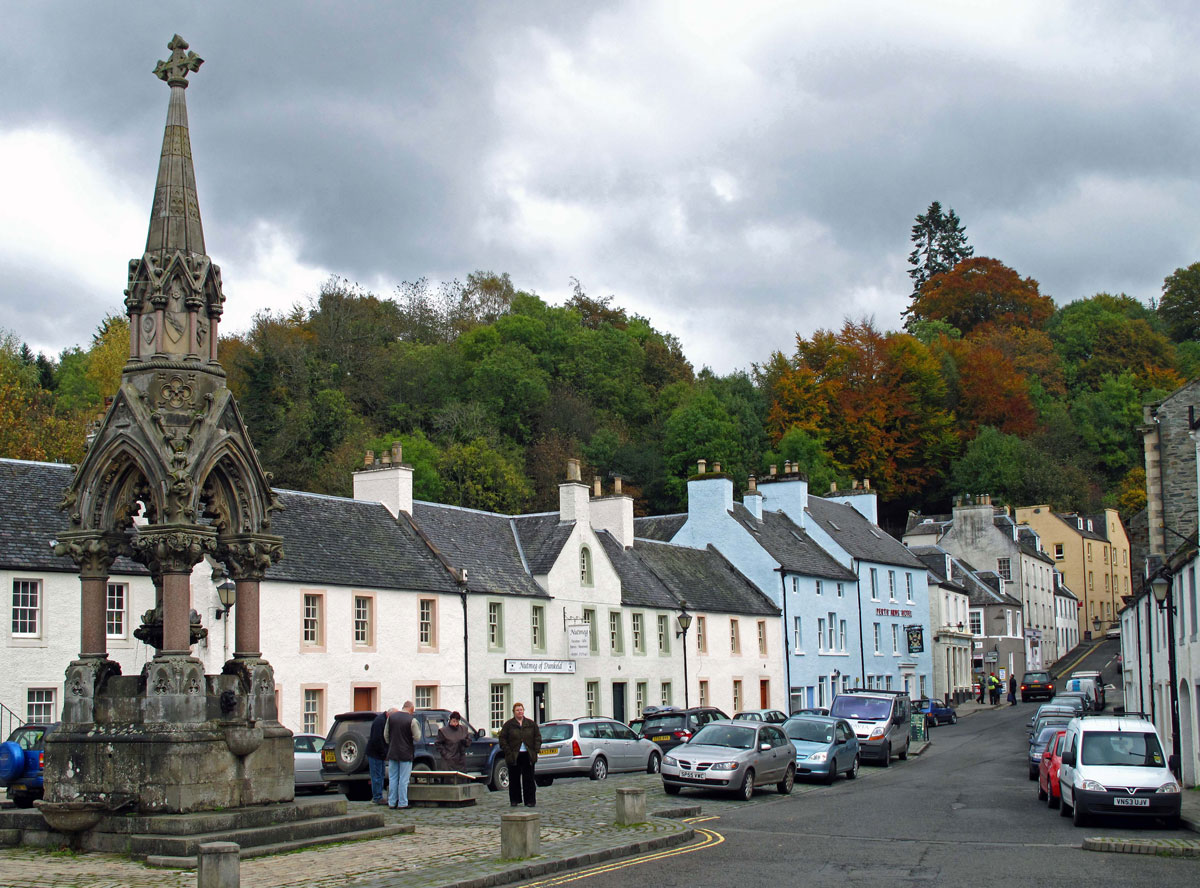

There’s no doubt that Dunkeld is an interesting place to stop for a while – or even overnight, but to tell you the truth, I hadn’t really come here to delve too much into the local history, but for the local natural environment instead.
Perthshire is known as Big Tree Country, and we guessed that the best time to visit somewhere like this would be in the Autumn when the trees should be at their most colourful. Anybody remember my post about the Enchanted Forest ?
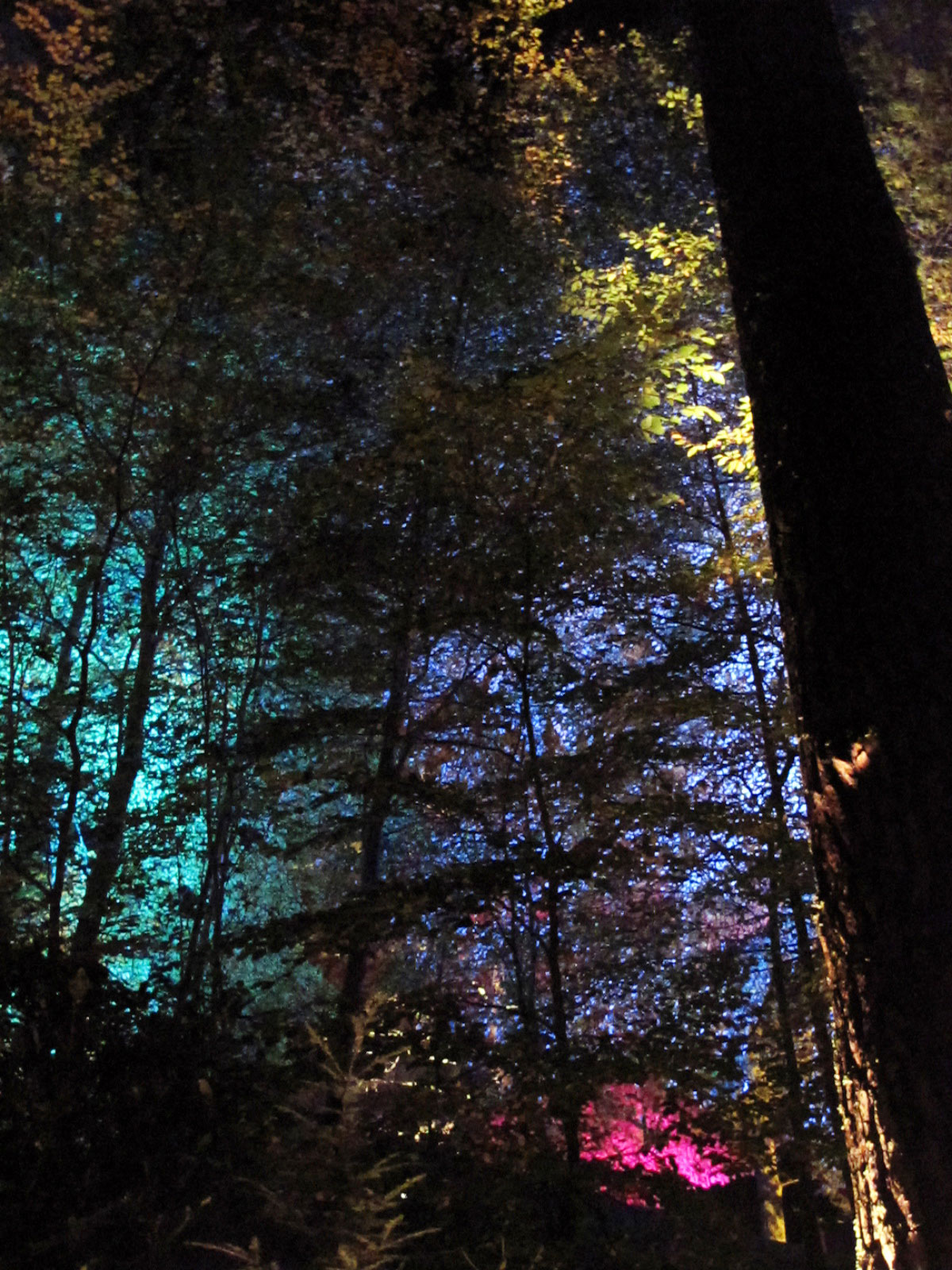
One of these wooded areas is called The Hermitage and is looked after by the NTS. I was given the heads up about it back home by a Scotsman I knew called Blair – a good old Scottish name if ever there was one. Blair was a burly Glaswegian, and even though he was partial to a wee dram occasionally, he preferred the natural wild landscapes of Scotland to the pubs of Sauchiehall Street.
Blair was also a keen fisherman, and what he didn’t know about lochs and the fish in them wasn’t worth knowing and he would often return back up to his native Scotland to spend a week or more just fishing. One day I happened to mention to him that I’d never seen a leaping salmon, and in a jiff, he gave me a list of places in Scotland where he could guarantee I would see some – and The Hermitage near Dunkeld was one of them.
I know I’m digressing, but I’m going to digress a bit more and come back to The Hermitage in a moment because there’s somewhere else I want to mention before I cross over the Tay – the Loch of the Lowes.

Blair isn’t the only one who likes fishing in these parts – ospreys do too, and that’s why they return to the Loch of the Lowes each spring from West Africa to breed.
Driving up Atholl Street towards Blairgowrie for a couple of miles brings us to the loch where the Scottish Wildlife Trust provides a perfect habitat for ospreys and an excellent information centre for visitors.
We already knew that Ospreys weren’t around in the Autumn, but we wanted to check it out anyway, but when we arrived, so did quite a few suits. There was a big-wig meeting about to take place and I wasn’t expecting that, but I needn’t have worried because instead of closing the doors on us, they invited us in free of charge.
There may not have been any ospreys around at this time of the year, but there was plenty of other wildlife and we could watch it all from the big glass window in the visitor centre. The staff provide a feeding station for the many different birds and I could see why they needed to charge to go in there. The bird seed must cost a fortune alone. There were large numbers of Blue Tits and Chaffinches as well as Siskins, Tree Creepers and a Great Spotted Woodpecker that kept coming back for more. Red Squirrels, which we don’t see down south, were also having a field day.
To be honest, with all this activity going on and a great bunch of people from the SWT to talk to, it was somewhere that Kay has never forgotten – and neither will I.
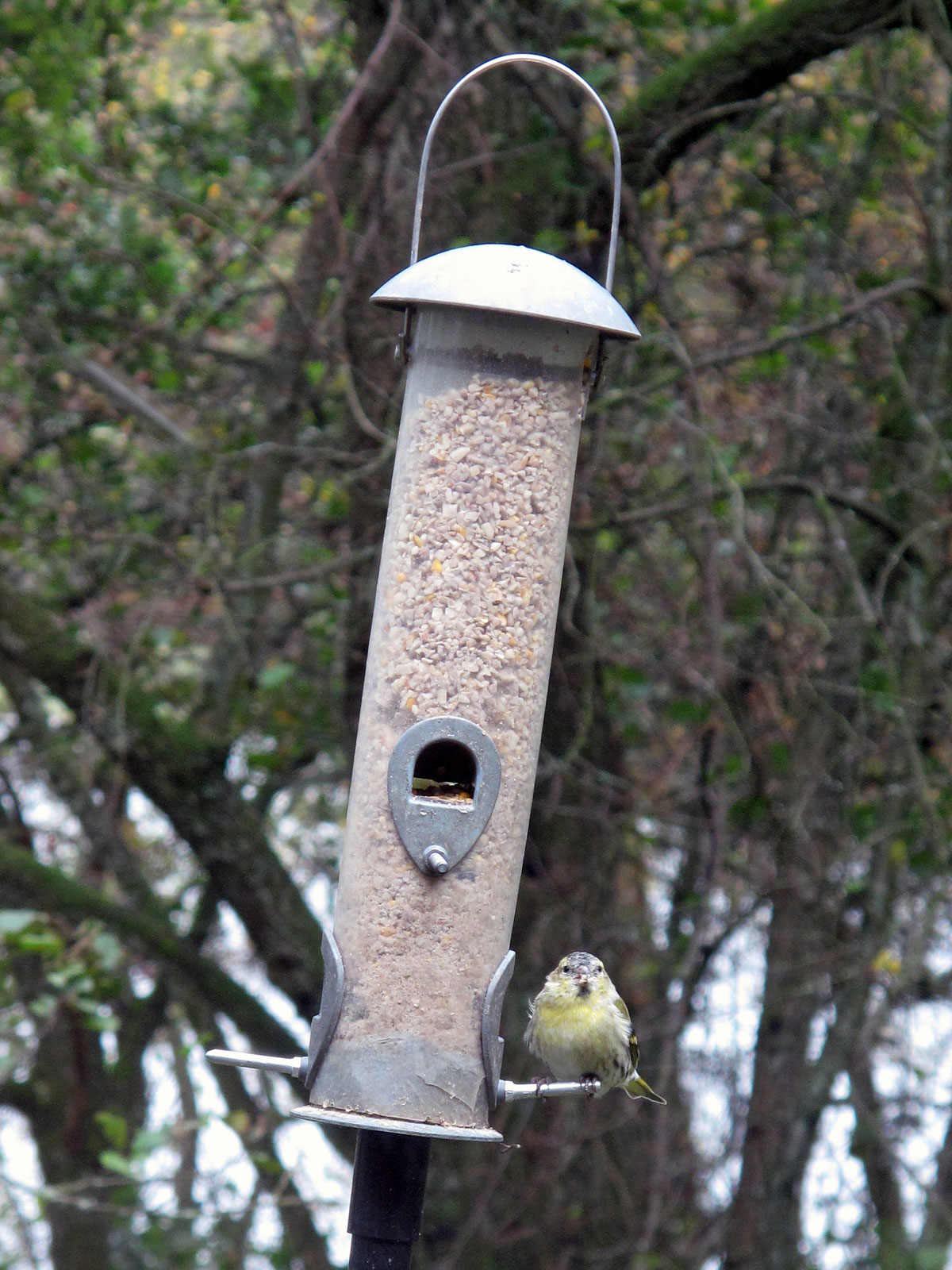
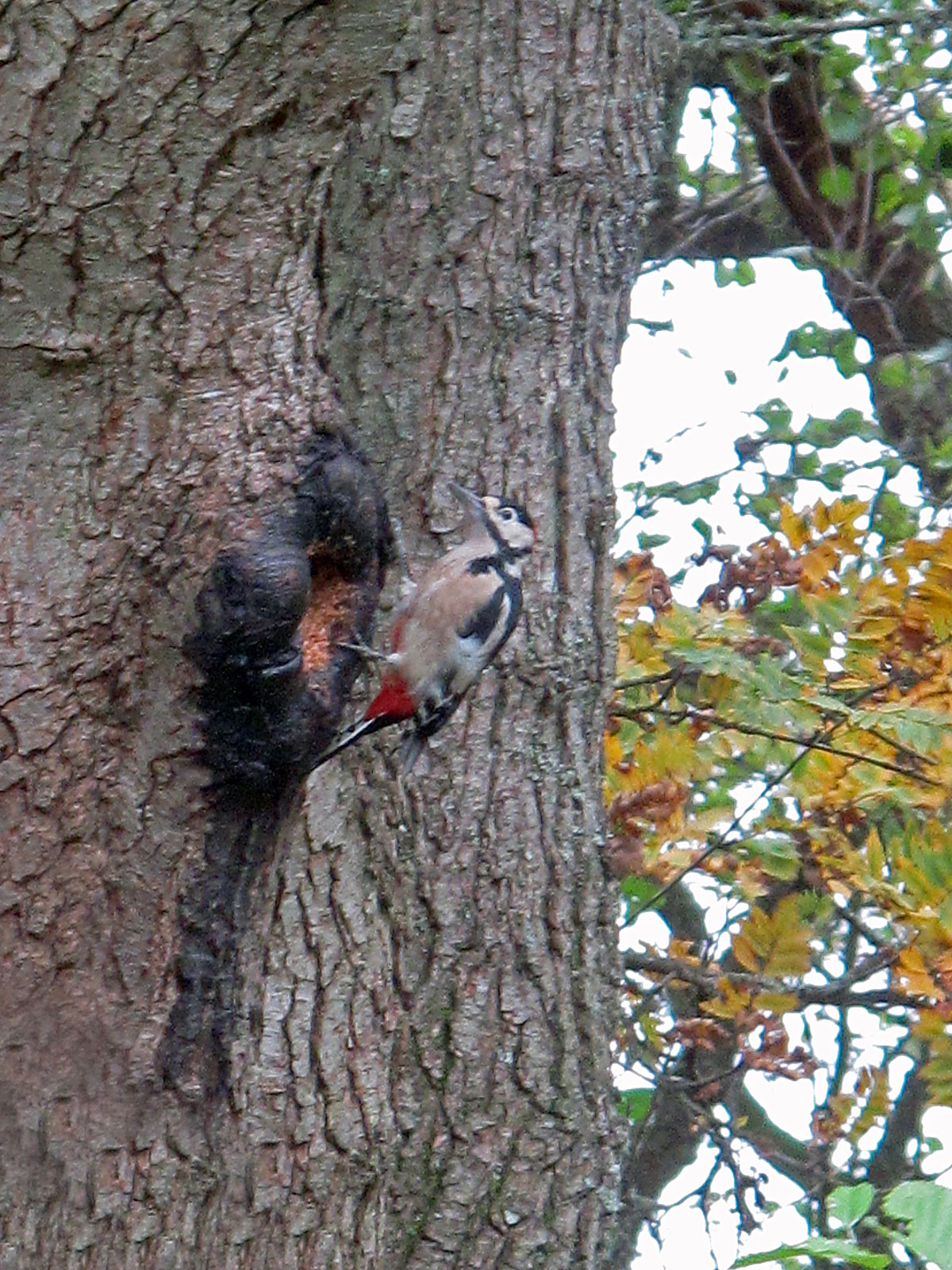
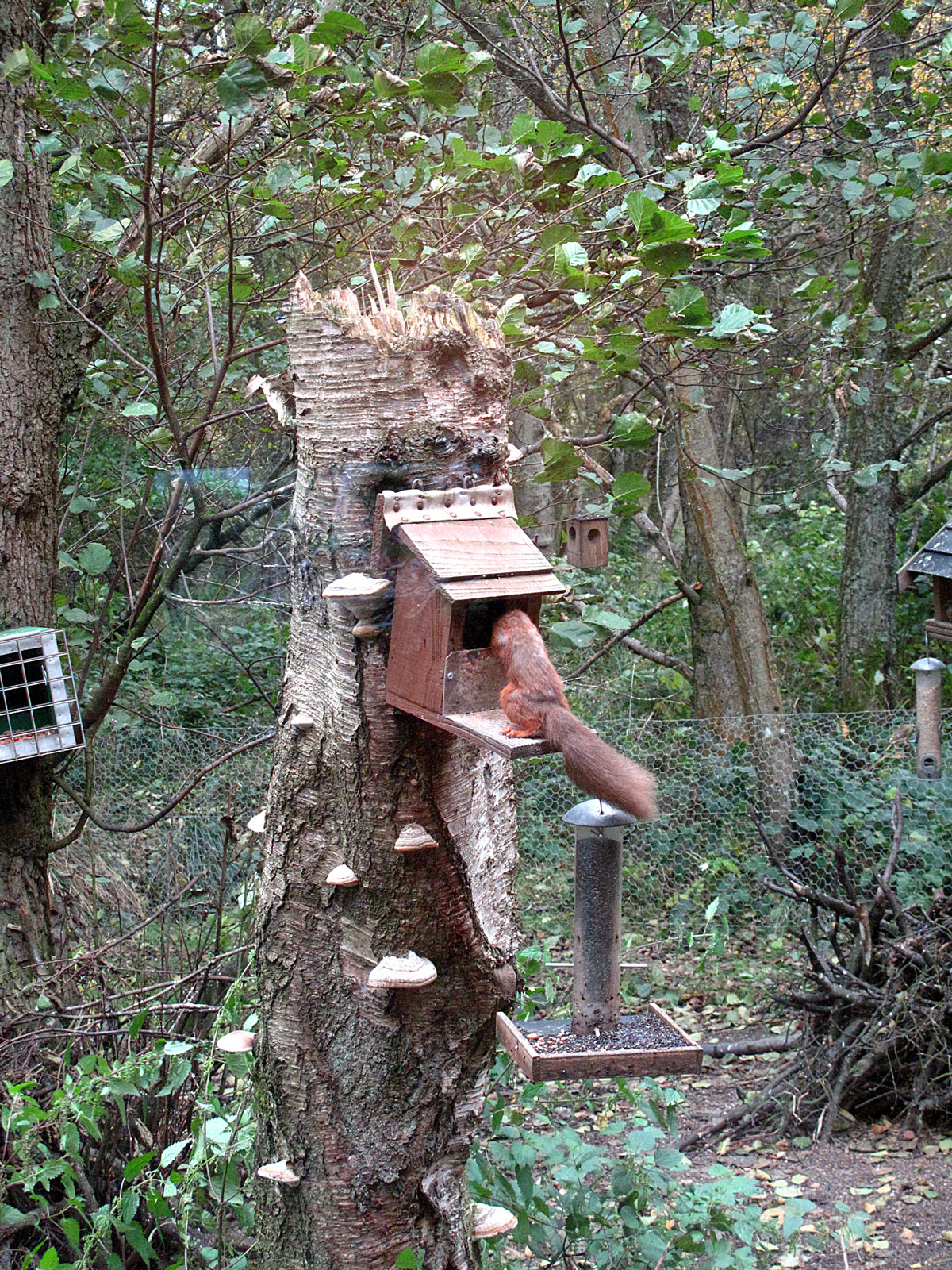
Although we knew Ospreys wouldn’t be around during the Autumn, we’ve been assured that leaping salmon would be, and so it was time to make tracks for The Hermitage.
To get there we had to transport ourselves over the River Tay: Many bridges have been built across the river over the centuries but the one that stands here now is one designed by that great civil engineer Thomas Telford. It wasn’t just bridges he designed, but all manner of stuff and I think it was the poet Robert Southey who coined him the nickname the Colossus of Roads.
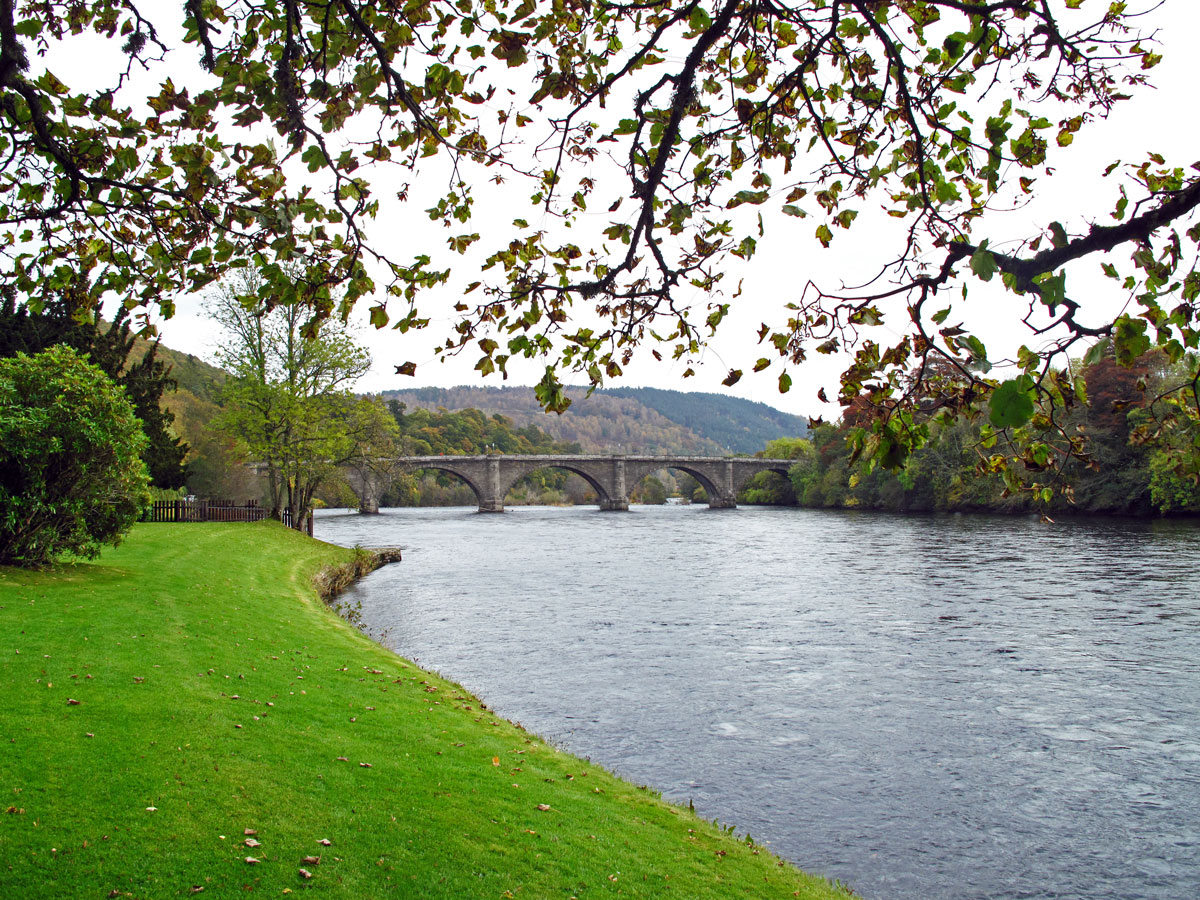
The bridge opened in 1809 and leads to the village of Birnam. Overshadowed by its neighbour across the river, people still come here to visit the Birnam Oak. This tree is believed to be the only one remaining from the Birnam Wood named in Shakespeare’s ‘Macbeth’. We did try to locate it, but didn’t succeed, and so carried on towards our destination.
A short distance along the A9 brought us to Inver and our turning for The Hermitage. This is the area where Niel Gow did a lot of fiddling – especially for several Dukes of Atholl, but before you take this the wrong way, Niel Gow was a famous composer of traditional Scottish music and was known to play his fiddle under an oak tree next to the River Tay. The 300 year old tree is still here but wasn’t on our agenda today as there are so many trees around these parts with stories attatched to them that we wouldn’t get very far if we tried to seek them all out. Instead, we parked up and started our walk through the wood’s canopy of trees alongside the River Braan.
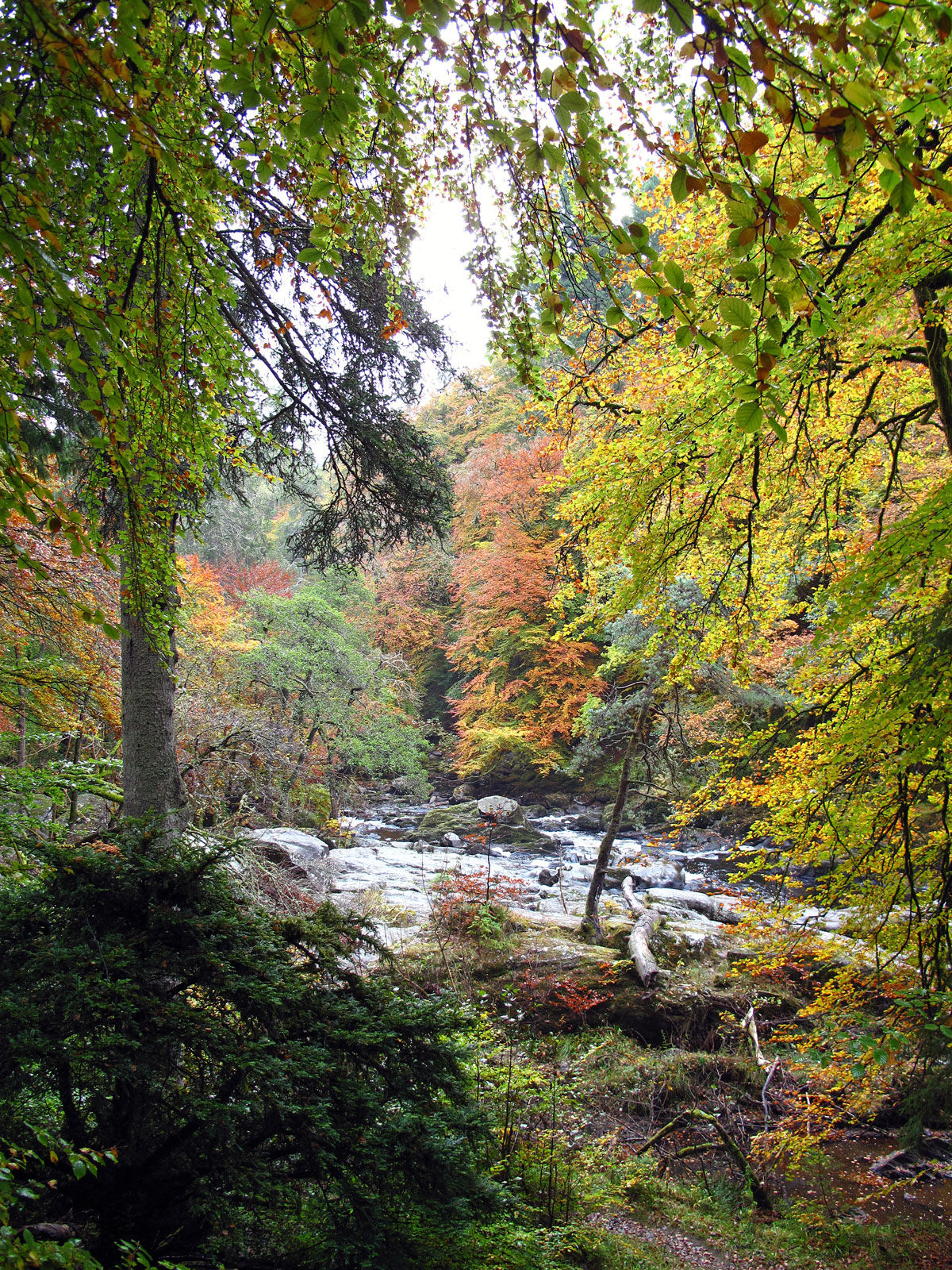
The name Hermitage conjures up a remote place where someone like St Columba might have eked out a frugal existence, but in reality it wasn’t anything like that, but a folly built in 1757 as a retreat for the Duke(s) of Atholl.
It wasn’t unusual for 18th century aristocratic owners to have an ornamental house built in a secluded setting and they were often called a hermitage, but this folly actually later changed its name to Ossian’s Hall after the blind mythological Celtic bard Ossian, but for some reason, the area has retained its original name.
I hope this bit of background explanation hasn’t dampened your enthusiasm for coming here because it’s still a wonderful place to visit. It may not be a wild wood as such but it still has a sense of magic about it. On reaching the Black Linn Pool you’ll find some of the tallest trees in Britain, and one of these Giant Douglas Firs, at over 200 ft, was the 4th tallest tree in the UK when we were here – I say was because high winds brought it crashing down in January 2017.
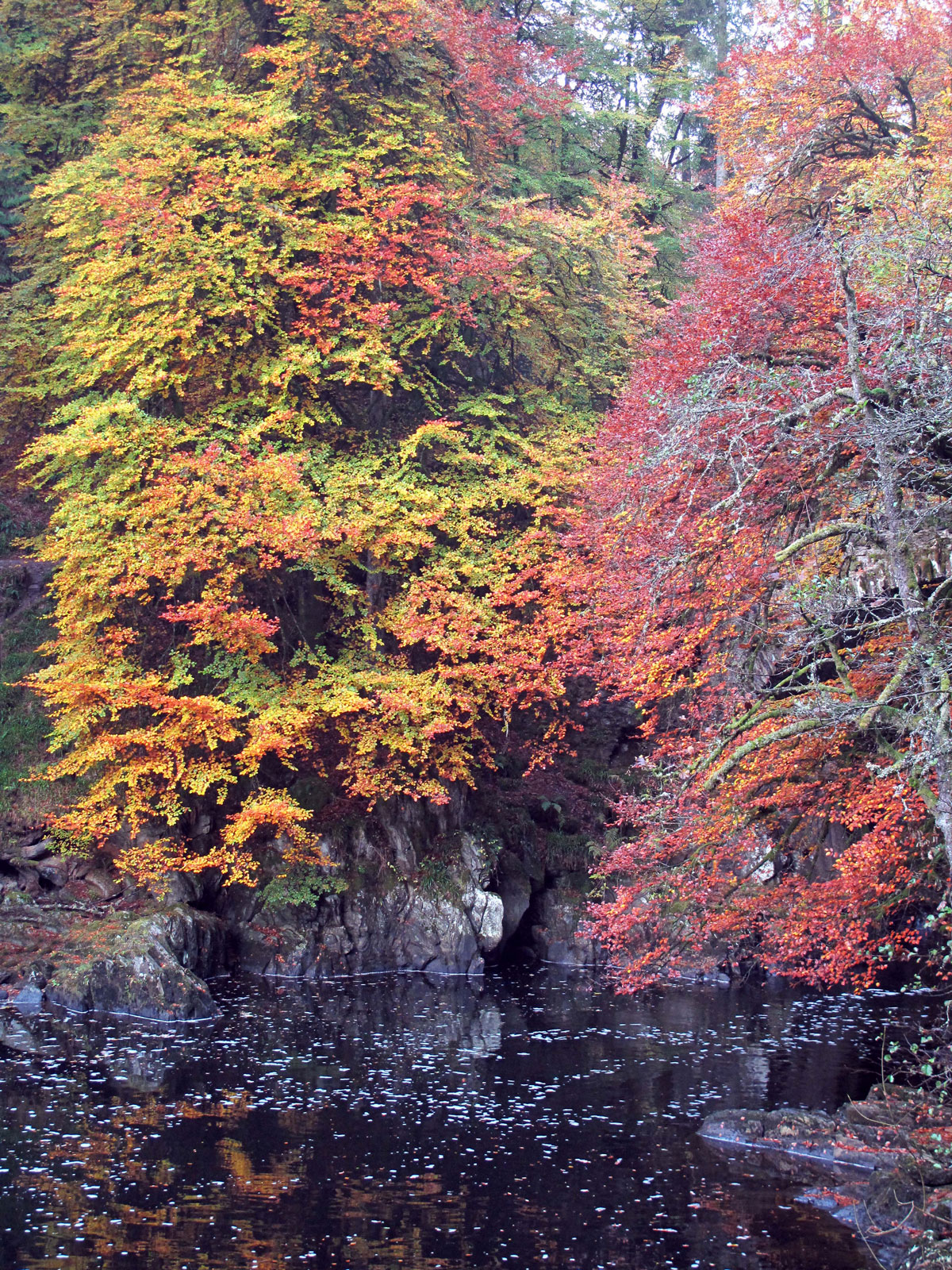
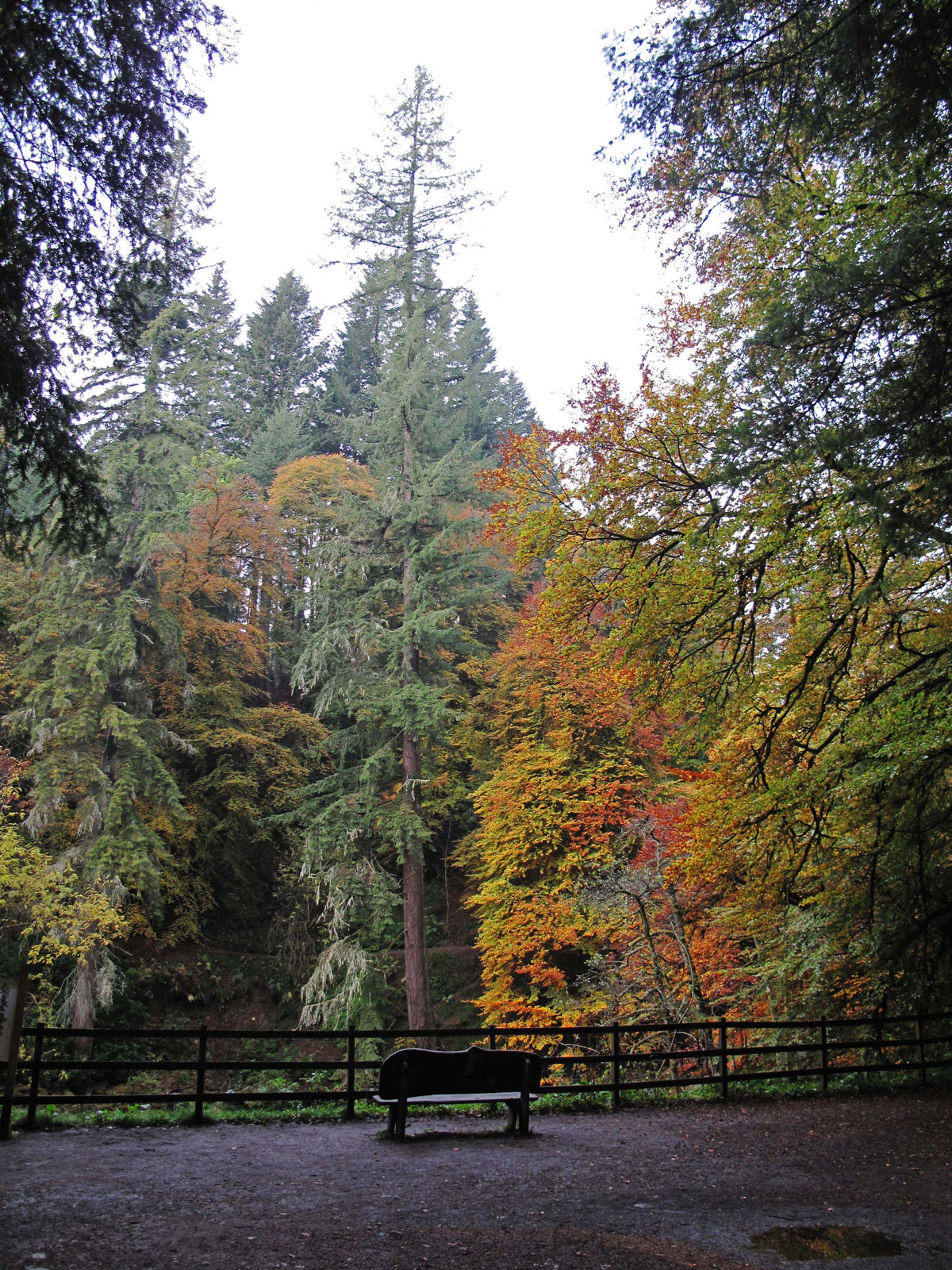
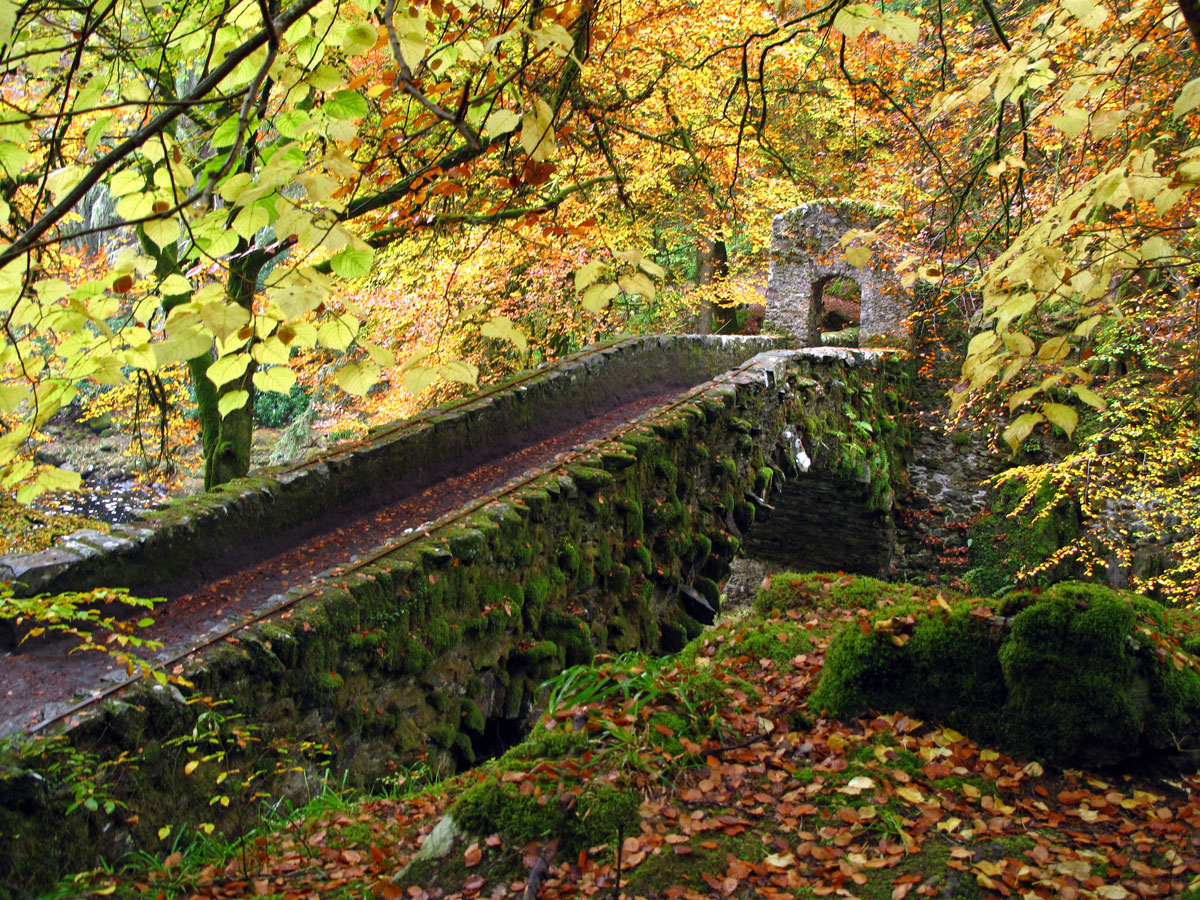
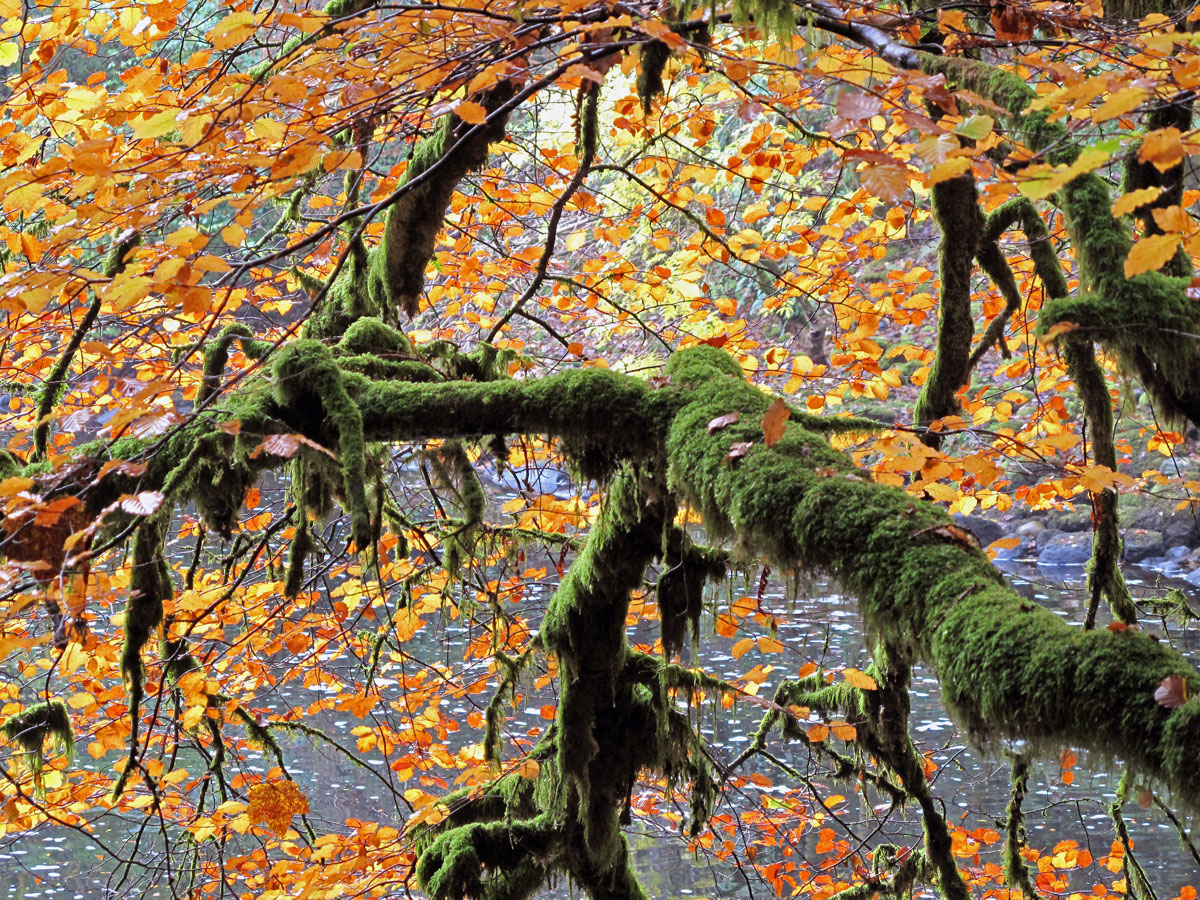
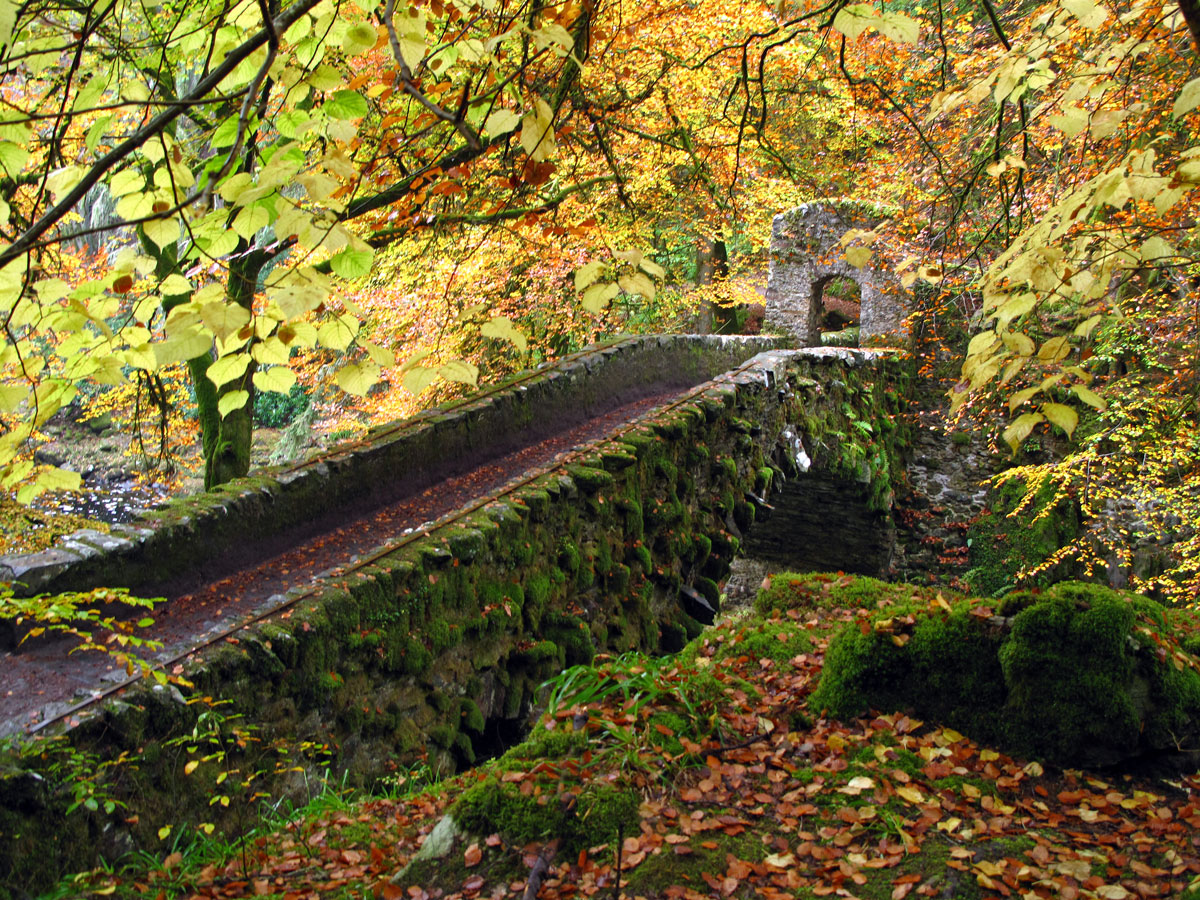
The trail alongside the River Braan and through the woods to the Ossian Hall is about ¾ mile long and a haven for red squirrels, and I’m sure other wildlife too, but it’s the trees that really steal the show with their colourful display of autumn leaves that range from russet through to golden yellow and fiery red. It’s no wonder that creative people like William Wordsworth, J.M.W Turner and Felix Mendelssohn found inspiration here.
I wasn’t here to draw inspiration or seek refuge though, but to hopefully catch a glimpse of leaping salmon struggling to get back upriver to their spawning grounds. It’s not just the spectacle that fascinates me but their lifecycle in general. For some reason, I’ve always felt sorry for salmon who leave the North Atlantic where they spend their adult life, to swim all the way back to the rivers where they were born to provide life for the next generation – if they get there that is: They have to overcome pollution, fishermen, dams and other obstacles along the way, and then have to fight their way upstream over rocks, boulders and waterfalls on the final leg; and then after they’ve done their duty and a new batch of young are born, they just curl over and die.
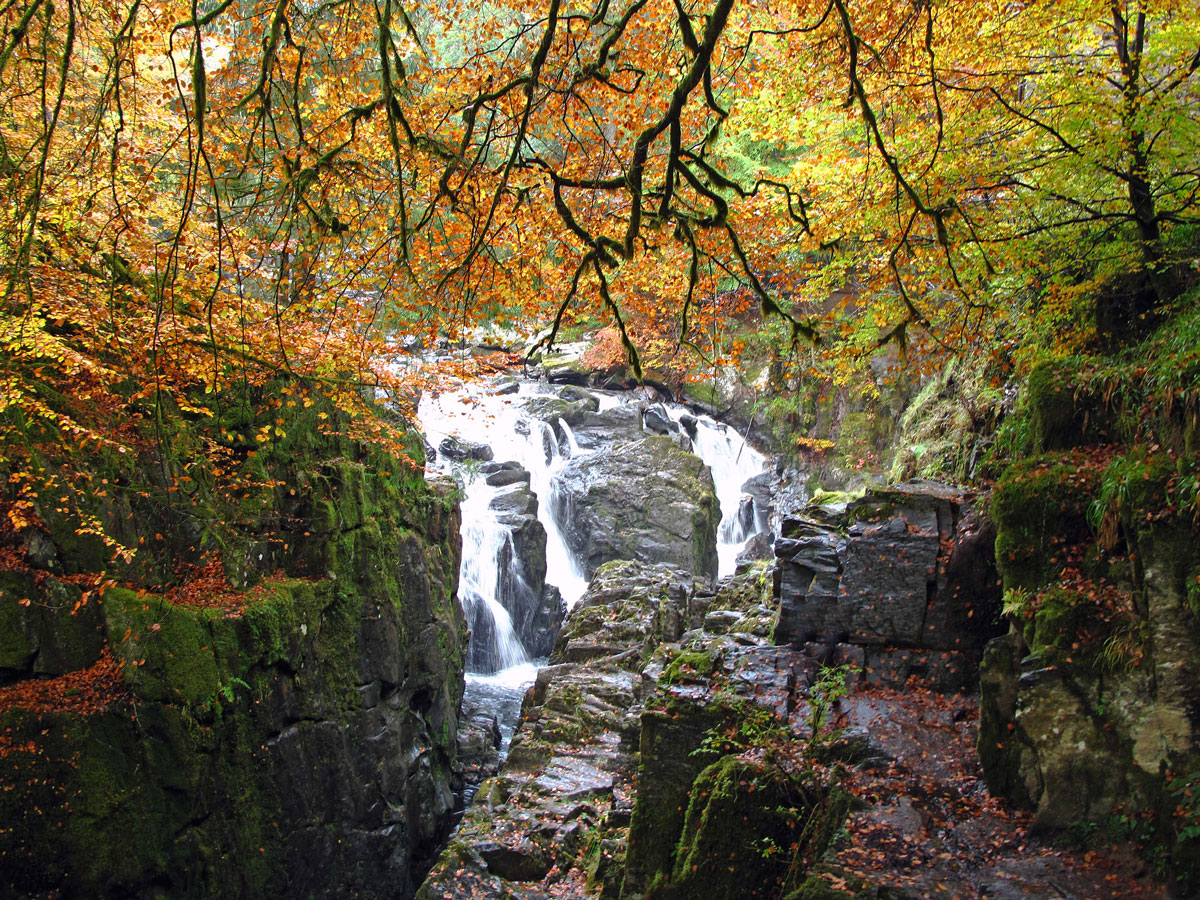
If I’m ever to witness this traumatic last leg of their journey, then the balcony at the Ossian Hall is about as a good chance as I’m likely to get, because below are the Black Linn Falls where they can often be seen. We’re here at the right time of the year, there’s been plenty of rain to keep the river flowing, and there’s every chance one or two would make an appearance – so did they? I’m afraid the answer is no – but that’s nature for you.
POSTED – NOVEMBER 2025
Originally posted 2025-11-17 11:11:40.
Interesting history tied in with something more up-to-date and some lovely autumn photos, especially the Hermitage Bridge and the one above it. Love the squirrel and the woodpecker – I’ve heard them on occasions but never seen one. As for the salmon, I honestly didn’t know that they die after spawning – I feel really sad for the poor things now 🙁
Nature can be wonderful and cruel in equal measures can’t it Eunice? I thnk you would like this part of the country at any time of the year, but I think Autumn’s the best.
Lovely post about a lovely place. Been there a lot in my time. Done a lot of walking from there too. Nice work Malc
I guessed you had Shey. Big Tree country is brilliant in the Autumn isn’t it?
Oh indeed. The big trees are gorgeous. So much beauty in Dunkeld in such a wee place, from the streets to the river o the cathedral to the hermitage and the walk there , the big one that goes away past lthe other focal points of interest. Aye I’ve had some good times there.
Consider it my birthday present to you then 🎇😊
Well,, thank you Malc. And a nice present too.
I can claim to have seen salmon leaping, on the Tweed at Berwick. I suddenly feel very guilty because I had salmon for lunch, Malc. Saying it was a birthday celebration doesn’t make it any better, I’m afraid. Irrespective of the history (so much is about battles!) this is a beautiful area and I’d be happy to stroll there in the autumn xx
A belated happy birthday then Jo and hope you enjoyed your salmon lunch. Nature is so unpredictable which is what makes it all the more rewarding when you see something you weren’t expecting. I don’t know if that was the case with your leaping salmon experience though.
I know you’re someone who likes the sunshine, but Autumn is my favourite time of the year and Big Tree country is a great place to enjoy it.
A magic place for a walk. Thanks so much for the Autumn stroll. Mel
Not quite the same as walking in the Himalayas, but as you say, a lovely stroll all the same.
A shame about the salmon but this area obviously delivers in a number of other ways. I like a ruined church/abbey/cathedral for photography, for a start! I also like the look of the High Street, the birds (especially the woodpecker) and the beautiful autumn colours 🙂
I’m glad you liked the look of the area around Dunkeld Sarah because I think Perthshire is somewnat underrated.
What a fabulous place! Stored away for future Scottish travels. A shame you didn’t get the salmon spot, the red squirrel is a great capture though. We are over run with greys here. Very cheeky and charming to see, but a red is something special.
Still waiting to see a leaping salmon believe it or not, but there are plenty of red squirrels among the Perthshire trees, so if you do ever get there I guarantee you’ll see some.