
Kilmartin Glen - Land of History and Mystery
Lying just to the north of Knapdale in Argyll is Kilmartin Glen, one of the most enigmatic areas of Scotland. The valley contains a rich collection of historic and prehistoric monuments that include ancient burial grounds, standing stones and even rock carvings. Individually, these monuments may not have the same visual impact as the Callanish Standing Stones on Lewis or the Ring of Brodgar on Orkney perhaps, but collectively, they make up the most important concentration of Neolithic and Bronze Age remains in mainland Scotland.
There are at least 350 ancient monuments within a six mile radius of Kilmartin village, and some sources claim that there are as many as 800. As I have no intention of traipsing through the valley with a clipboard checking out what the true figure is, I’ll just say that there are lots of them.
Not all of these ancient monuments are prehistoric by any means, and in amongst the cairns and carvings is Dunadd. Rising from the morass of the Moine Mhòr, this hillfort was one of the most important sites in the Gaelic kingdom of Dál Riata, so come on a journey back in time to a place that I hope will intrigue you as much as it does me.
Song – Oran Leanne Sithe by Anne Martin
The natural place to start is in the village of Kilmartin, or more precisely, the Kilmartin Museum. Don’t rush off there just yet though because some major redevelopment is currently taking place. No doubt, that when it reopens in 2023, the museum will be offering an even better experience than it did before.
Whether you visit the museum or not, all the sites are freely accessible, and even if I could, you wouldn’t thank me for listing them all. Assuming that there aren’t any dedicated archaeologists reading this, I’m going to begin by trying to explain in simple terms why the area is blessed with so many ancient remains in the first place, and to fully understand this we really need to go back to the time of the last Ice Age.
Scotland’s covering of ice finally receded about 10,000 years ago, and as the ice melted, two things occurred in Kilmartin Glen. Firstly, the rise in sea levels flooded the valley, and secondly, a phenomenon known as post-glacial rebound allowed the land (which had been compressed by the weight of the ice) to spring back up at a faster rate than the sea could rise. Now I know what you’re probably thinking – “what’s this got to do with the price of fish?”, but what it meant was that two different environments were created in the same place – saltmarsh and a raised peat bog – and this is the area we know as the Moine Mhòr (or in English ‘Great Moss’).
The featured pic at the top of the page and the two below show different aspects of the Moine Mhòr as it looks today.
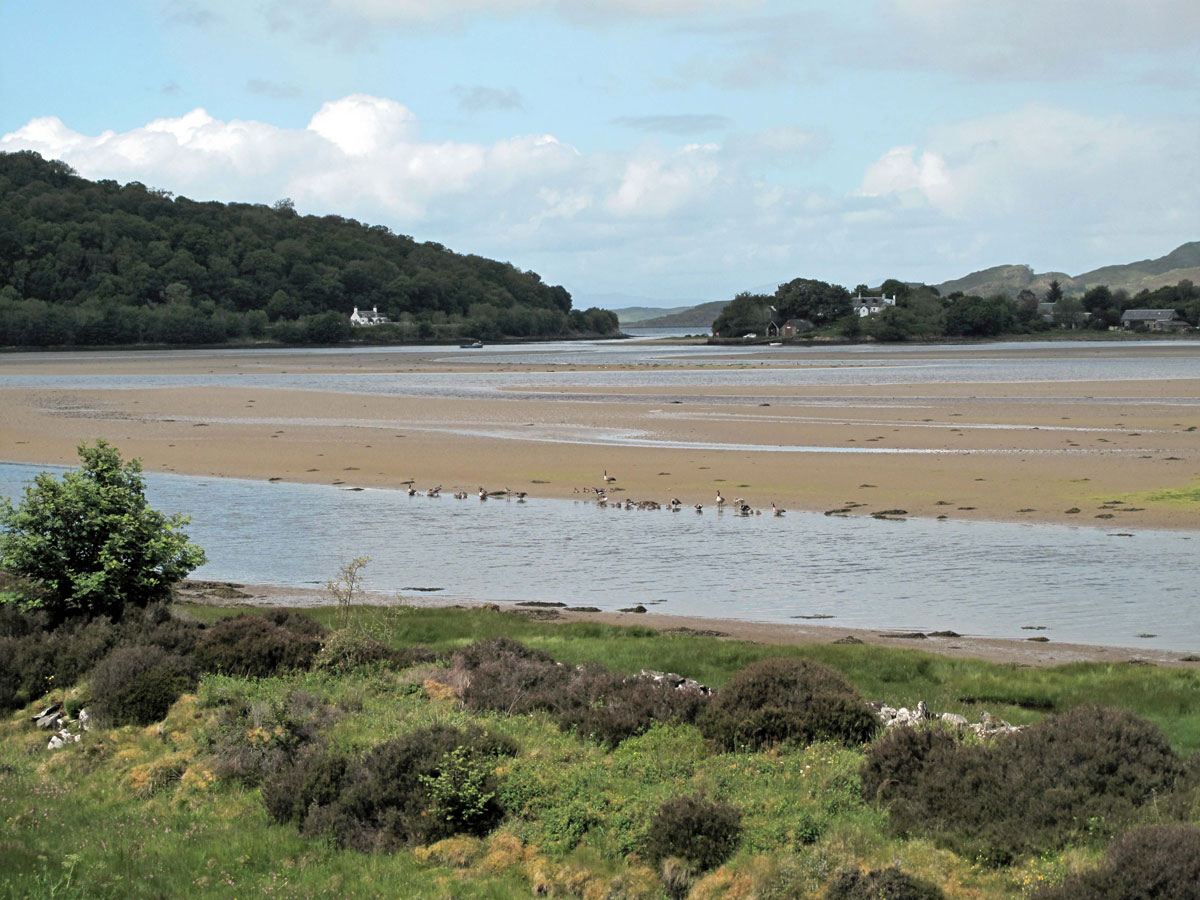
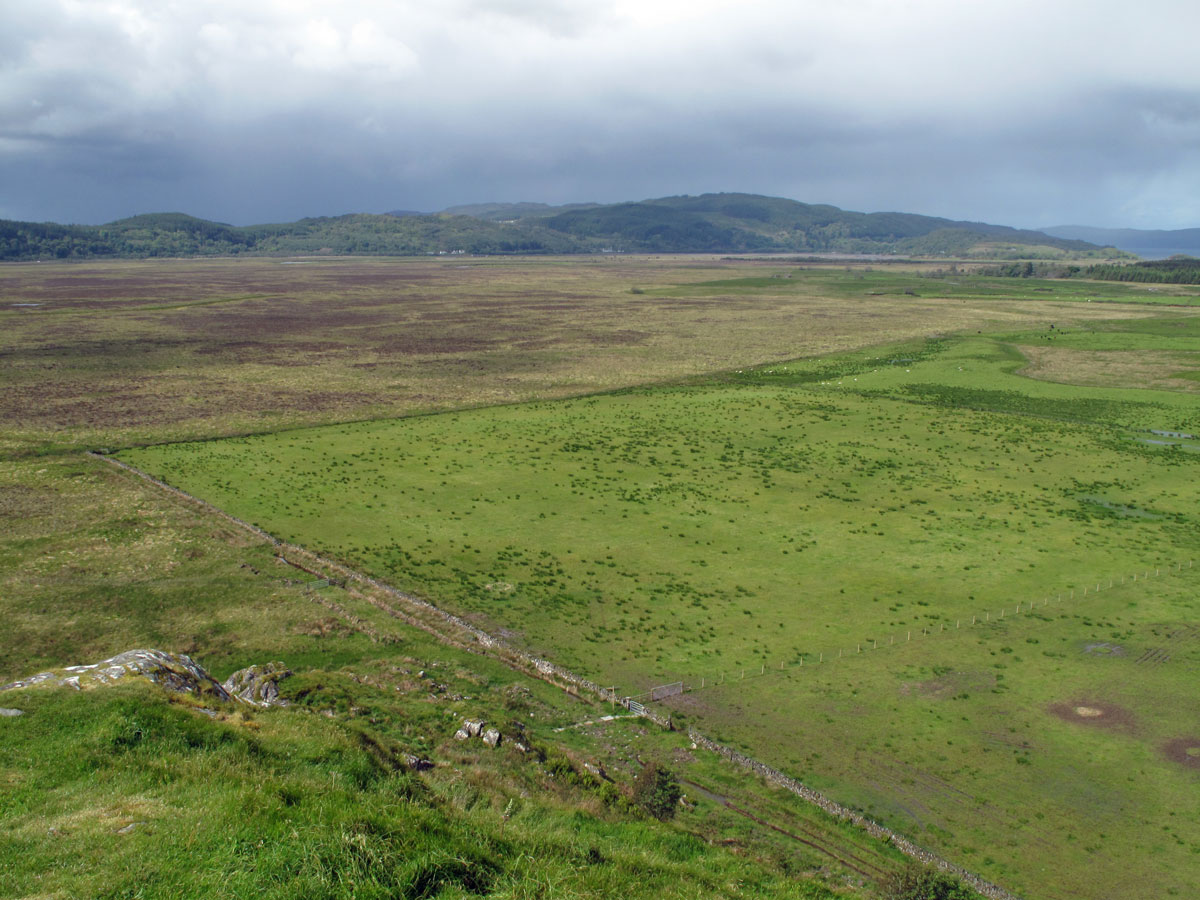
It was into this environment that humans first set foot in Kilmartin. I don’t think anybody knows for certain where they came from or when it was exactly, but evidence suggests that humans were here around 7000 BC.
For food there would have been an abundant supply of fish from both the sea and the rivers, and the inland wooded areas would have been home to red deer, wild boar, wolves and even brown bears for anyone hungry enough to take them on. Birch, hazel, oak and elm not only provided cover for these animals, but also wood for making fires, axe handles and spear shafts. There was no shortage of rock and stone either for making arrowheads and other tools, but although there seems to have been all the ingredients necessary for Neolithic and Bronze Age man to live here, there’s no evidence that they actually ever did. Perhaps they were just nomadic tribes rather than settlers, but whether they lived here or not, they still left their mark behind in other ways.
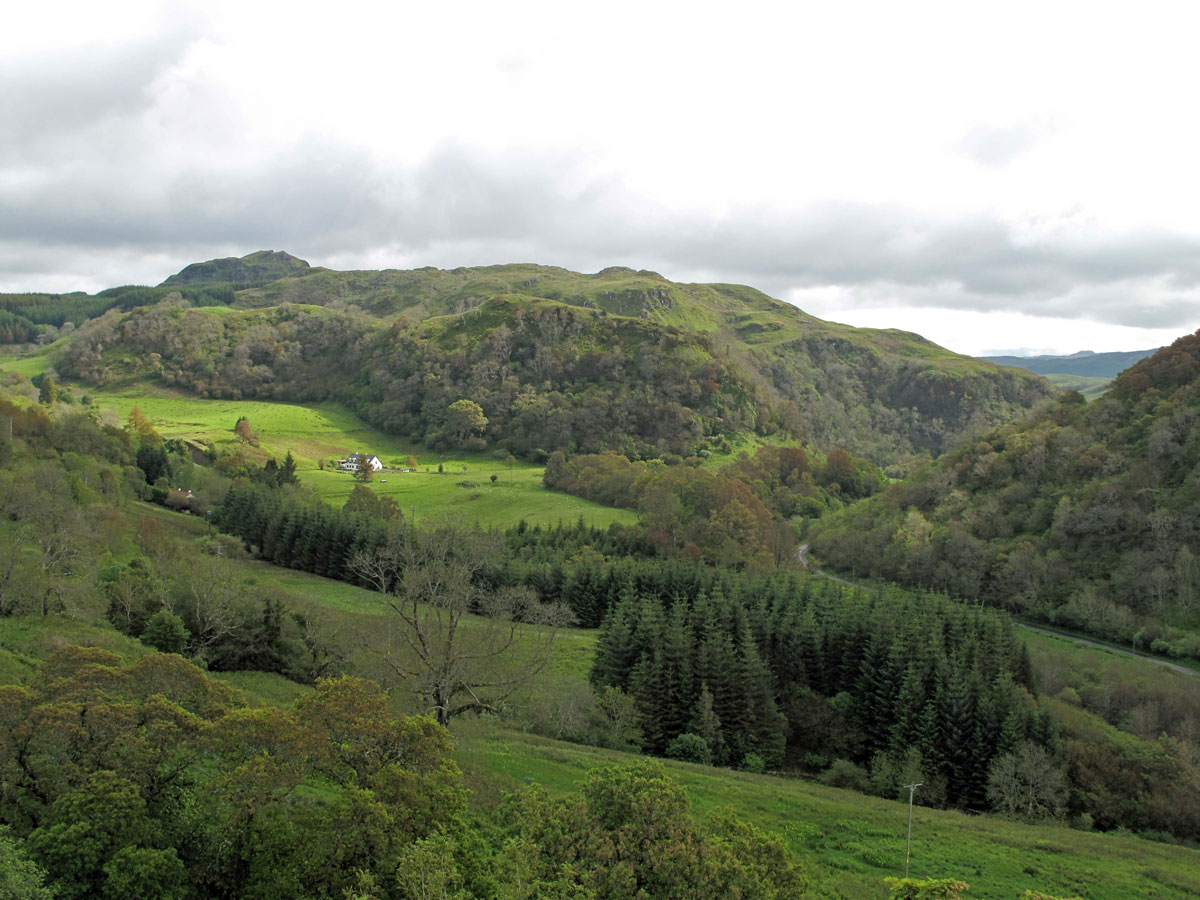
The most obvious signs of man’s prehistoric footprint in the glen is the linear cemetery which comprises of five cairns that run in a straight line for about 1½ miles down through the valley. These five cairns – Glebe, Nether Largie North, Nether Largie Mid, Nether Largie South and Ri Cruin – all seem just like a pile of stones from a distance, but on closer inspection will reveal that they are actually burial chambers. Four of them date from between 2000-1500 BC, the exception being Nether Largie South which goes back further to around 3000 BC.
The northernmost of these is Glebe Cairn which lies just a stone’s throw from the museum, which as it happened was just as well. The weather forecast warned us that it wasn’t going to be a great day and they were right. It’s funny isn’t it how the forecasters get it wrong when they say it’s going to be fine, and right when they say it isn’t. Anyway, call me a wuss if you like, but when the heavens opened up we beat a hasty retreat from the cairn back to the museum’s café for a hot drink and oat cake. Well! What would you do?
In all honesty, with so many different things I wanted to take in today we couldn’t really spend too much time just looking at burial sites anyway, and so when the rain eased off we headed for the Temple Wood Circles.
Song – Circle of Stone by Laura Powers
If you’ve been to Stonehenge and found yourself somewhat underwhelmed, then you won’t feel any better by coming to the Temple Wood Circles (Google coordinates – 56.12369, -5.498689), but size isn’t everything is it? Kilmartin (Cille Mhàrtainn) has a very different feel to it than Salisbury Plain, and that’s because the people and culture are different.
The Temple Wood Circles are two small stone circles that go back to around 3500 BC and were in use for more than 2,000 years. It’s one of the few sites that have been thoroughly excavated here using modern techniques, and the findings have led experts to believe that the Northern Circle was built first, possibly as a solar observatory. Initially it was built out of wood, and then later replaced by a stone circle which was never finished.
The Southern Circle, which was erected around 500 years later, still has thirteen of the estimated twenty two stones still standing. In the centre of the circle is a burial cist which seems to have been added several hundred years later. A Beaker and flint arrowheads found here are on display in Glasgow and a copy of the beaker is in the Kilmartin Museum.
Temple Wood might not be as impressive as Stonehenge, but the Circles are older and not overrun by coach loads of tourists either.

Not far away are the Nether Largie Standing Stones, a set of five stones arranged in an ‘X’ pattern. Some of the stones have Cup Marks, but it’s the layout that intrigues people the most. There are different theories as to what it all means and my favourite is the one that suggests it was a lunar observatory. Bearing in mind that the nearby Temple Wood Northern Circle was possibly a solar observatory, it’s not difficult to let your mind run away with the idea that this was some sort of prehistoric Jodrell Bank, but some bright spark from Melbourne University has done his level best to shatter my illusions about that theory. There always seems to be somebody somewhere who wants to destroy my Walter Mitty world.
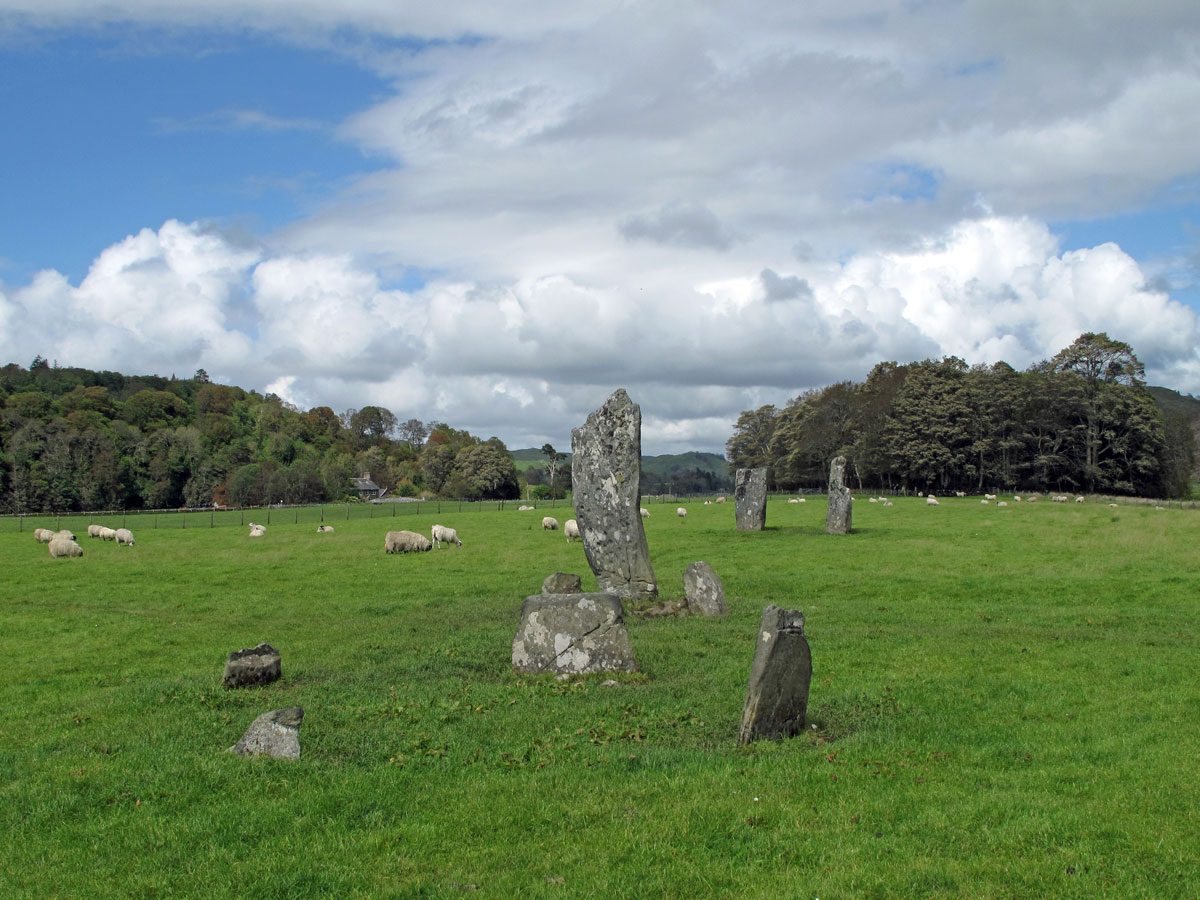
Whoever these ancient peoples’ gods were, they were looking down on us where the weather was concerned at the Circles and Stones, but that was about to change as we made our way towards Achnabreac ( 56.06074, -5.44353).
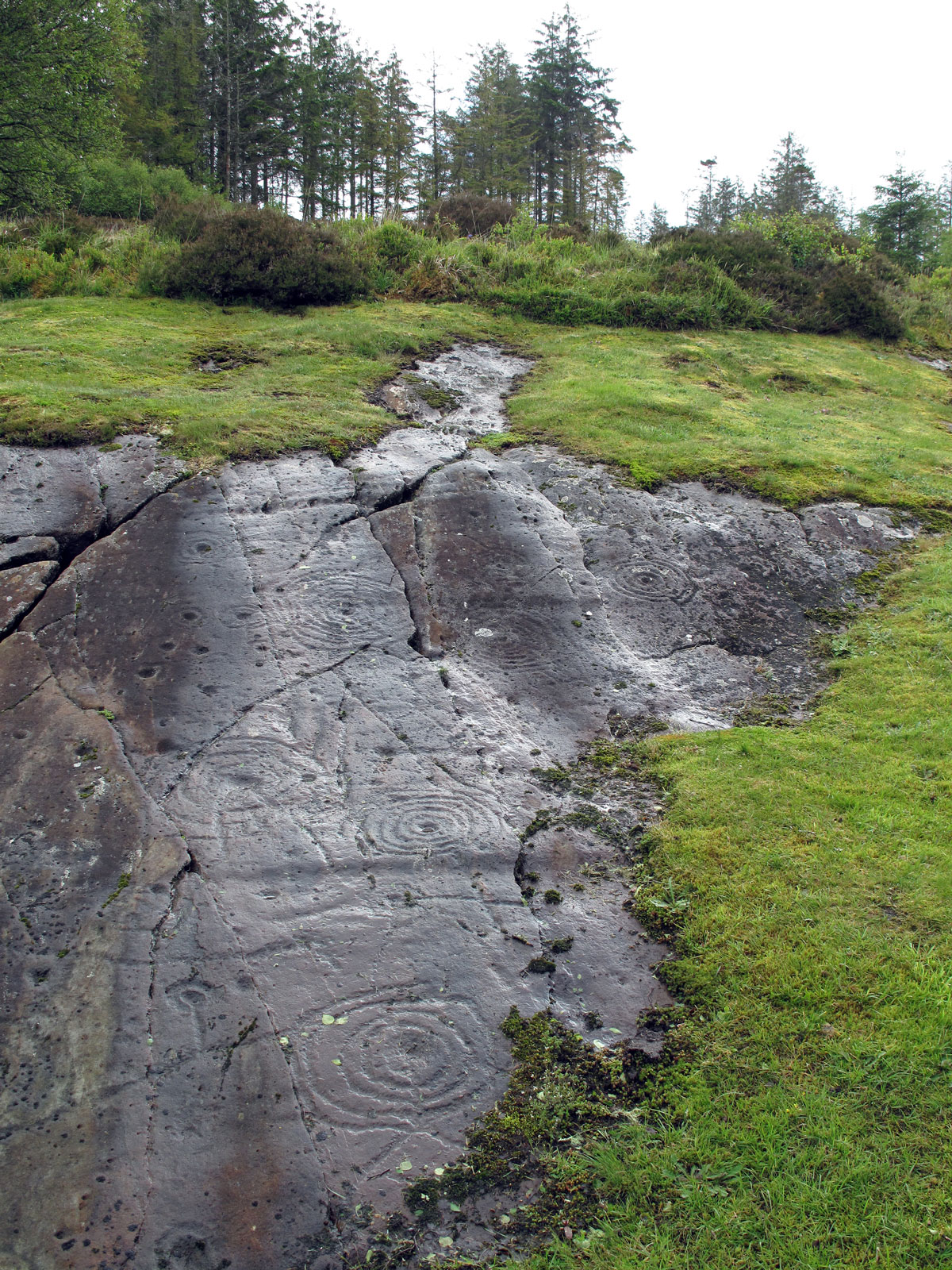
Achnabreac lies at the bottom of the valley to the east of the Oban road, but it’s a good place to see some of the rock carvings that the area is famous for. There are over a hundred sites that you can choose from to see these carvings, and although getting to Achnabreac involves a drive up a forestry road and then a walk through the woodland, it’s worth the effort in my opinion.
There are two outcrops of rock here, which between them have the most extensive collection of prehistoric carvings in Scotland – and some say, in Britain: The carvings are around 5,000 years old, and the first rock you reach is the best of the two.
The most common of these carvings are the Cup and Ring marks which are just a hollow (or cup) set in the rock with up to seven rings around it, but there are other markings such as spirals and ringed stars. Hundreds of suggestions have been put forward as to what they mean, from religious symbols to mapping stars (here we go again) but nobody really knows for sure.
As strange as it may sound, the site that captivates me the most in Kilmartin Glen also happens to be, in historical terms at least, the youngest.
Before sea levels receded after the last ice age, the rocky crag of Dunadd could well have been an island, and even after the sea was replaced by the Moine Mhòr, it must have still been a good defensive position.
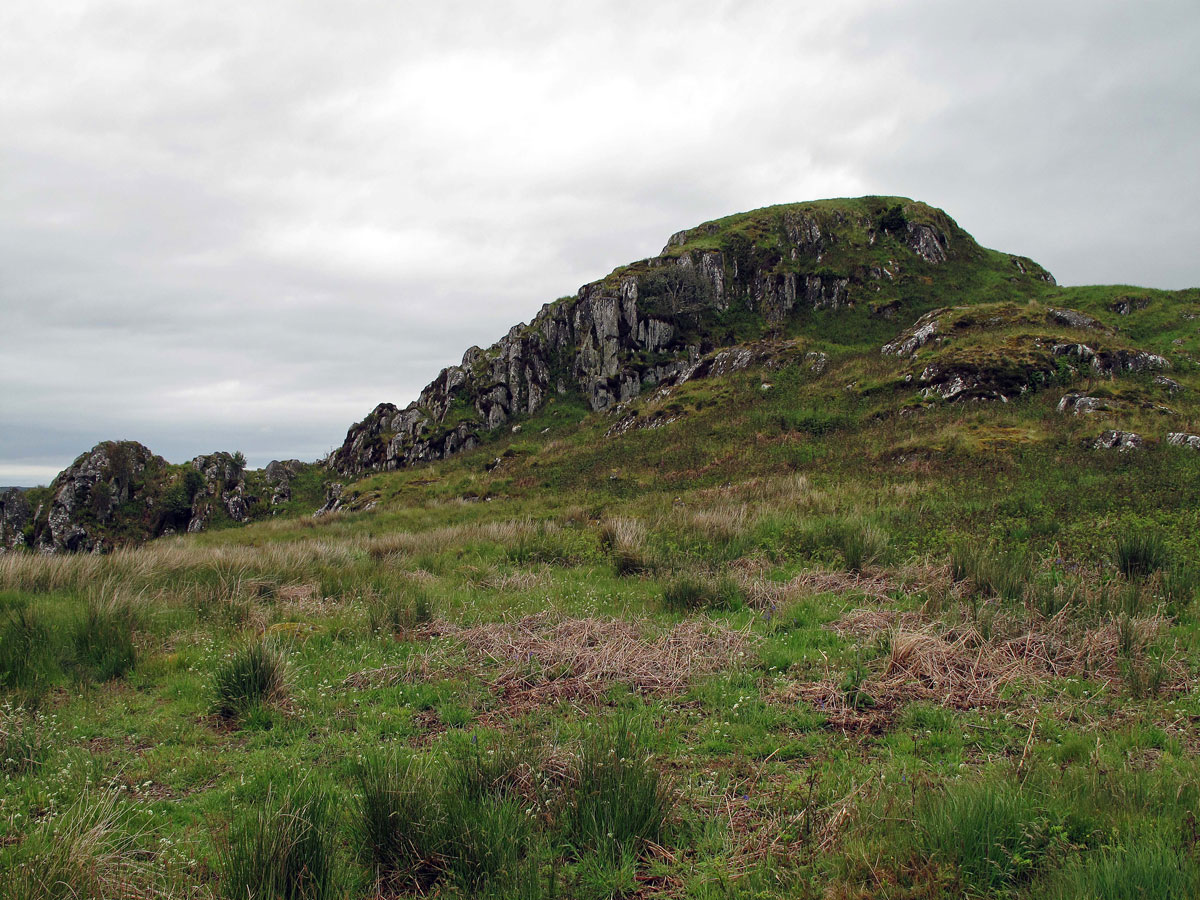
When archaeologists excavated the site they found evidence to prove that it was, unsurprisingly, an Iron Age hill fort, but its real significance comes from the knowledge that it was the centre of power for the Kingdom of Dál Riata.
What intrigues me the most about Dál Riata is that, for the first time, we could put a name to people and places in this part of Scotland, but it’s just as mysterious as prehistoric times in many ways because, tantalisingly, we know some of its history, but by no means all of it.
The early details are obviously sketchy, but the founder was said to have been Fergus Mór, the ruler of a Kingdom called Dál Riata in Northern Ireland. Legend tells us that sometime during the 5th century AD he brought some of his people (who were referred to by the Latin name of Scoti) over from County Antrim to Argyll (Coast of the Gaels) where they settled, probably in Kintyre. Apart from bringing the Gaelic language with him, Fergus is also regarded by some as the first King of the Scots (but not Scotland, as you’ll find out later).
Most experts believe that he died in 501, and was then succeeded by his son Domangart Réti. From these early days, the Gaels of Dál Riata expanded their territory along the Western coastline to become one of the four main Kingdoms of what we now call Scotland – the other three being the land of the Picts in Eastern and Northern Scotland (including the Western Isles), the land of the Britons in Strathclyde, and the Anglo-Saxon kingdom of Bernicia (which later became part of Northumbria in England).
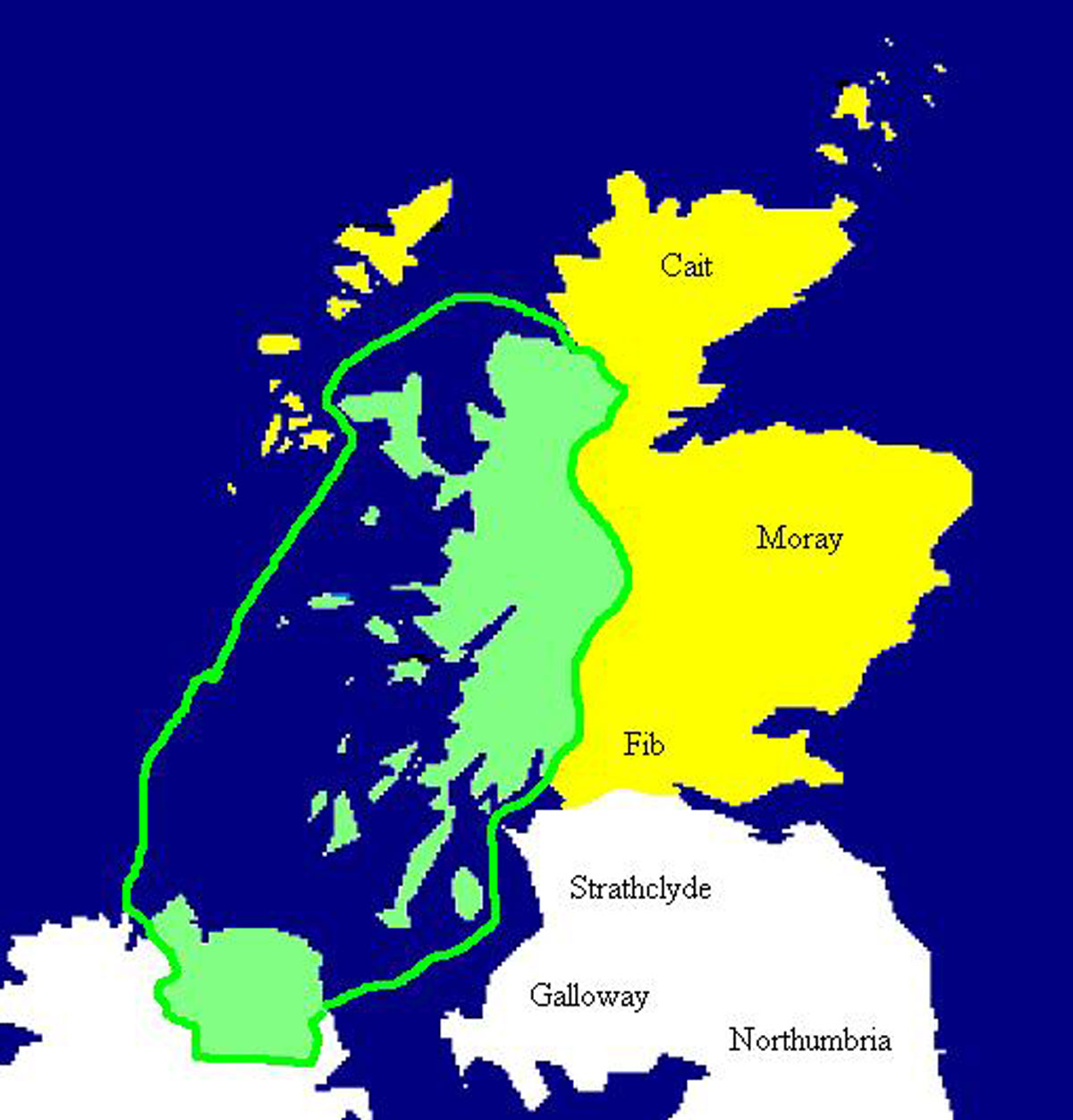
From the time of Fergus Mór mac Eirc (to give him his proper name) to Alpín mac Echdach, there were something like forty Kings of Dál Riata that we know of, and others that we don’t. Alpín mac Echdach, better known as Kenneth MacAlpin, was King of Dál Riata from 841-850, King of the Picts from 843-850 and King of Alba from 843-858. Whether all the information I’m giving you here is 100% correct is open to debate because I don’t think anybody can be totally sure of what really happened back then, but from what I can gather, King Kenneth inherited the throne of Dál Riata from his father, then conquered the Picts to become King of Pictland, and then finally in 843, by joining the two kingdoms together, became the King of a new kingdom called Alba.
Alba was a Gaelic name that is still sometimes used today, but over the centuries English-speaking peoples began to refer to it as the land of the Scots, and most historians regard Kenneth I as the founder and first King of Scotland.
Understanding some of the background history of Dál Riata will hopefully show you how important Dunadd was. I don’t think anybody knows how many kings were crowned here, but records indicate that St. Columba was involved in the investiture of King Áedán in 574, which is a significant event in itself, as it shows that there must have been a close connection between royalty and religion.
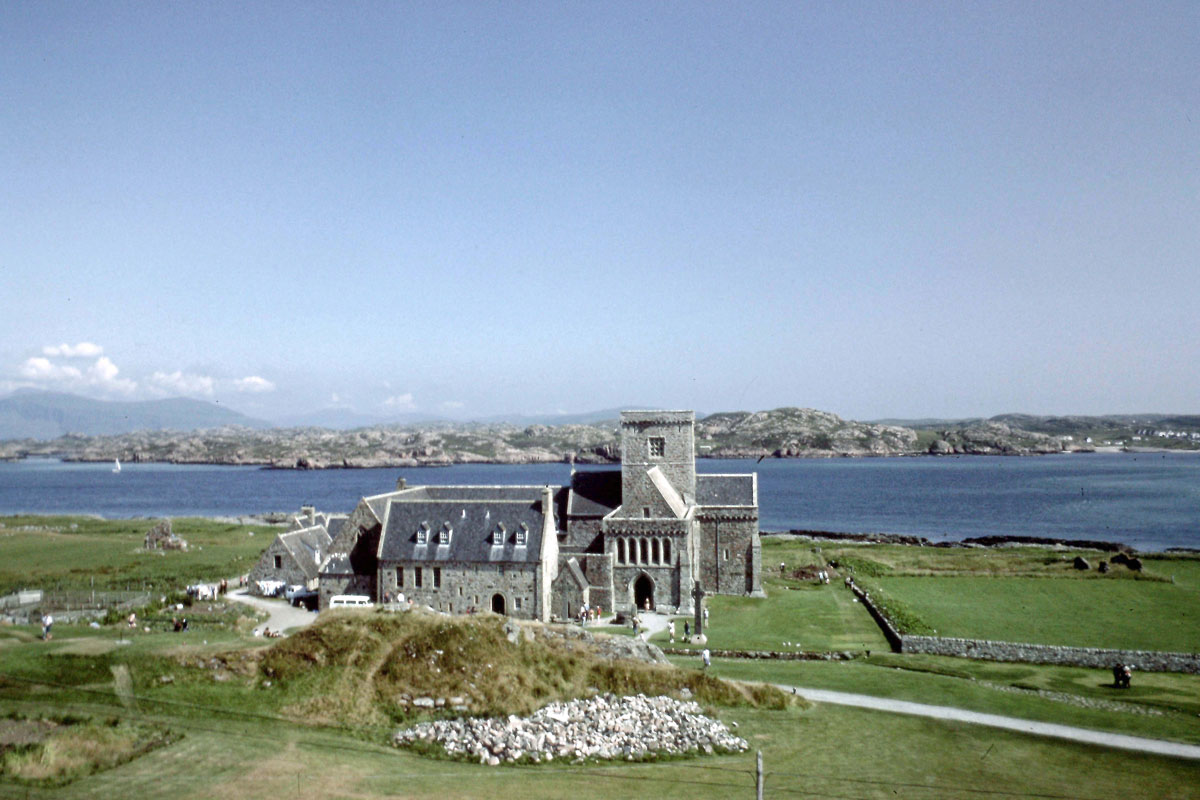
St. Columba is an important figure in Celtic Christianity and was another immigrant from Ireland. He founded his abbey on the island of Iona, and if I ever get around to it, should be the subject of another post, even though it’s been quite a while since I’ve been there.
There have been several archaeological digs at Dunadd indicating that it was in use between the 6th and 10th centuries. Items found, include fine metal-working and luxury goods imported from the continent, which show that it must have been a place of some importance, but perhaps the most intriguing discovery of all is that of two footprints in the rock. According to Samuel Wilson of Historic Environment Scotland “They may well have been used during real-life inauguration ceremonies for new kings, symbolising the new ruler’s dominion over the land,”.

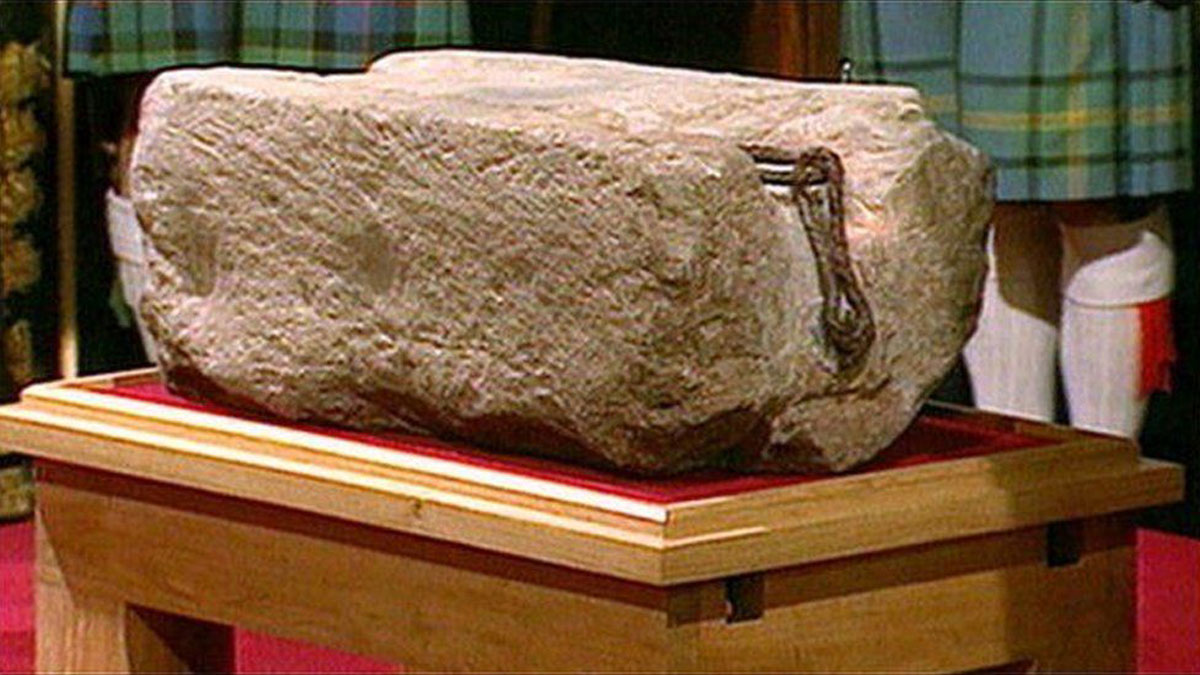
I don’t suppose we’ll ever know for sure about this hypothesis, but the mysteries aren’t over yet. The famous Stone of Destiny has connections with Dunadd too. This stone is the one that has been used for the inauguration of Scottish kings for centuries, and its early history, although not proven, suggests that it was brought over from Ireland by Fergus Mor and was used at Dunadd. It was definitely used at Iona, because when the Vikings arrived, Kenneth MacAlpin retrieved it from the ruined abbey and carted it off to Scone.
Song – Stone of Destiny by Steve MccDonald
I suppose it’s fitting in a way that this post ends with the Stone of Destiny. It joins together those ancient stones that our prehistoric ancestors used, to the Scotland of today. As we know, Edward I nicked it and took it down to London where it sat under the Coronation Chair in Westminster Abbey for the next 700 years. Queen Elizabeth II will be the last British monarch to use it as it’s now safely back in Scotland, but the stone has a story of its own to tell – and the story includes the biggest mystery of all.
Is this precious stone of the Scoti that now sits in Edinburgh Castle the very same one that Fergus Mor brought over from Ireland? Some say that the Scots hoodwinked King Edward into taking a replica down to England, and when it was stolen by Scottish Nationalists in 1950, did they return the same stone? If any of these tales have some truth in them, then perhaps the Scots haven’t got their Stone of Destiny after all.
POSTED – JUNE 2022
Originally posted 2022-06-05 13:36:42.
I was wondering if anyone has used LIDAR on these wonderful ancient landscapes in order to detect more extensive habitats that are not easily distinguished from the air? They used LIDAR on the pyramid site at Tikal in Guatemala and discovered evidence of extensive sites previously unknown. Has this happened in Kilmartin Glen?
Thanks for your excellent question but I’m not really the person to ask. That said, I would also like to know the answer, so if you ever do find out then I would appreciate your findings.
My knowledge of early Scottish history could have been written on a postage stamp prior to reading this post – having never lived there and not travelled there much, it’s not something I’ve bothered to read up. But your account certainly fills in a lot of gaps and has me intrigued about Dál Riata in particular. Your description of these standing stones seems to chime with my recent posts on Avebury and Stonehenge, while those cup and ring markings are among the most impressive I’ve seen. I’ve thoroughly enjoyed my visit to Kilmartin with you – thank you 🙂
The Scots are fiercely proud of their history which has rubbed off on me somewhat, especially the Gaelic culture side of things. If you get the chance, go to the West Coast, and the islands in particular (where Gaelic culture is at its strongest), and if you don’t feel differently afterwards I’d be very surprised. Thanks for reading about it.
A thoroughly enjoyable and engaging journey into Scotland’s prehistory, Malc, all accompanied by some beautiful and atmospheric music. In my medieval and early modern Scottish module that I did in 2019-20 we covered the early kings and kingdoms, and I found it all fascinating to study, along with the story of the stone of destiny. Wonderful pictures too, as always, and I have to agree entirely with you about the stone circles vs Stonehenge, or ‘Stonehenge World’ as Stuart dubbed it after we visited the site and were also rather underwhelmed in terms of how it’s presented these days. Kilmartin Glen looks to be a beautiful and very atmospheric place – I’d go there any day! 🙂
Thanks for your lovely comments Alli. I’ve no doubt that you know more about the history of early Scottish kings than I do, but I do have a genuine interest in it, and I can fully understand why the people of the UK’s Celtic countries have a strong and deep love of their history and culture. Unfortunately, being a patriotic Englishman/woman doesn’t seem to be regarded in the same way for some reason.
First, let me tell you Malc, I fully agree with Pat! Oh yes, what a way to spend an evening! Listening to you tell a hell of a story and putting down some pints at the pub! Well, I have always loved Scotland, it was a Scottish tutor that taught me to speak English and I have always wanted to know more and more about that beautiful country. Your photographs really do it, they bring me there quite easily and majestically. Cheers my friend for a lovely, lovely post! And may we one day raise a pint together and enjoy your beautiful country (England) as well. All the best!
Francesc
Thank you for your kind comments as usual Francesc – and yes, I think a pint or two over a story or two would be perfecto 🙂
No doubt my friend! And you are very welcome! 😊
Another gorgeous post with great information, history, music and images💙💙💙
Thank you so much Luisa. You’ve certainly brightened up my Sunday 🙂 💙
You’re highly welcome, dear Malc 🙏❤️🙏
🙂
You’re a heck of story teller, Malc. The only way to have made it better would have been to hear it down at the local, while sharing a pint.
LOL Now there’s a thought. Thanks for your smashing comment though Pat 🙂
You, Francisco, and me. Anyone else?
Anybody who could put up with us will do 🙂