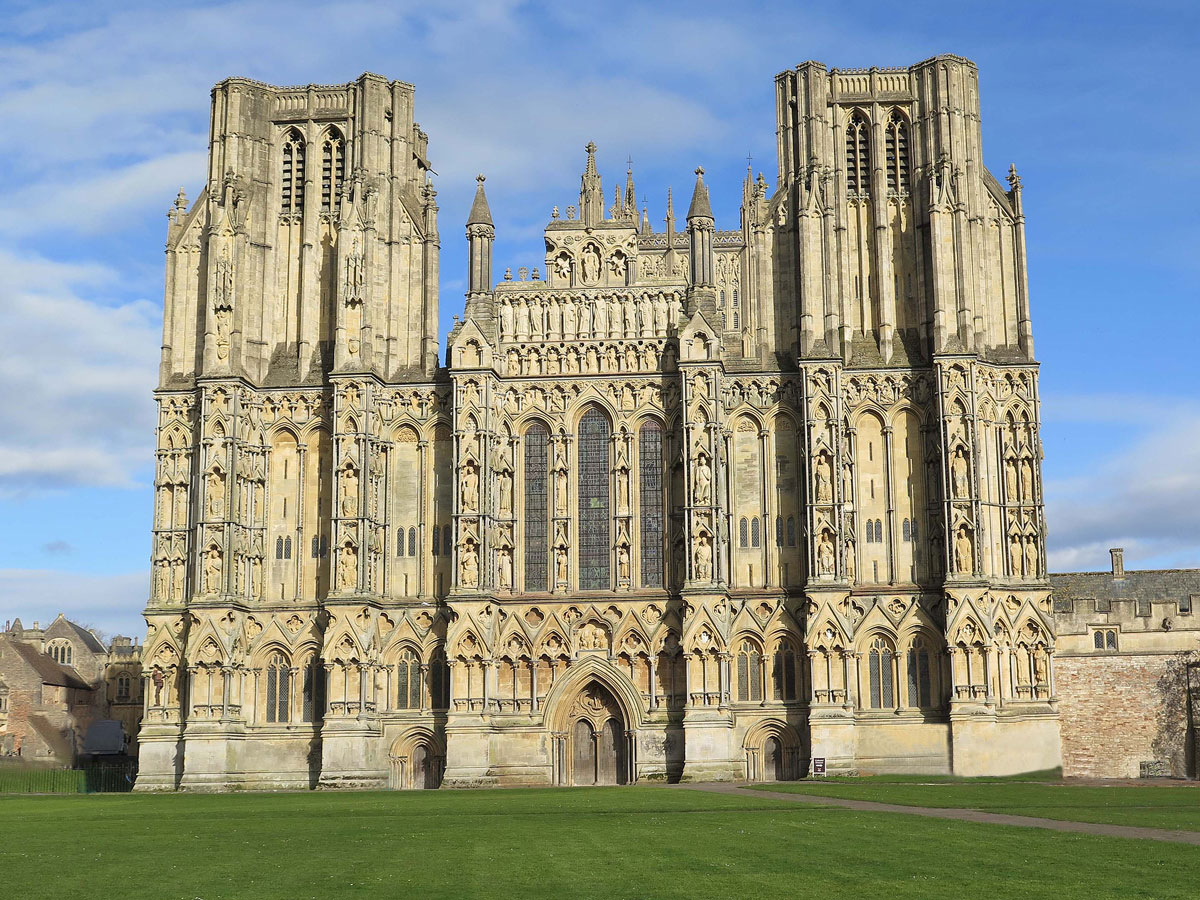
Wells Cathedral - Why it's here and a look at the magnificent West Front
I had originally intended to do just two posts about Wells, one about the palace and one about the cathedral, but I’ve had a change of heart and decided to increase the number of posts but reduce their length, and if you stick with me, hopefully you’ll see why.
In the previous post I explained how the name of England’s ‘smallest’ city originated from the springs that surface in the grounds of the Bishop’s Palace. I also briefly touched on how it achieved its city status, but to put things in perspective I’m now going to delve a little deeper to explain how the cathedral came into being, and then follow it up with some information about its most prominent feature – the magnificent West Front.

As I mentioned in the previous post, the first church to be built in Wells was back in Anglo-Saxon times when King Ine of Wessex offered Aldhelm, the first bishop of the newly established diocese of Sherborne, land to build a church here in 705 AD.
However, by the early 10th century, the diocese had become too large to administer from its Dorset location and so it was decided to break it up and create a separate see in Somerset. Wells was probably chosen because of its central position, and in 909 Athelm became the first Bishop of Wells when the status of the church was raised from minster to cathedral.
After the Norman Conquest, John of Tours (William the Conqueror’s physician) became its new bishop and in 1090 decided to relocate his seat to Bath. The reason was probably no doubt due to the fact that after his consecration he came into the ownership of the wealthy Bath Abbey which he decided to replace with a new cathedral. The change in location now meant that John of Tours was no longer the Bishop of Wells but the Bishop of Bath – with the church at Wells losing its cathedral status. Ultimately, the cathedral at Bath didn’t survive and was itself replaced by the current abbey church in the first half of the 16th century.
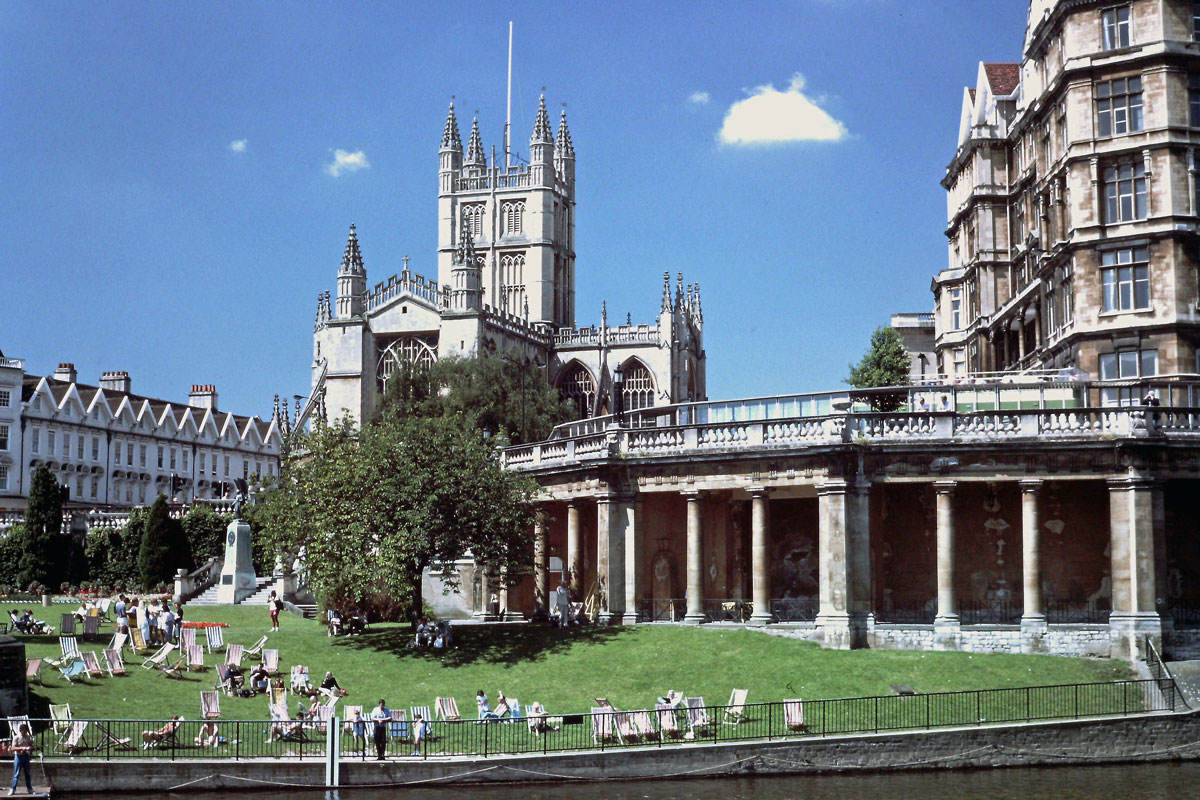
A complex set of circumstances meant that the headquarters of the diocese was then constantly moved around, not just between Bath and Wells, but Glastonbury as well. When Reginald Fitz Jocelin became Bishop of Bath in 1174 he started work on a new church at Wells with the obvious intentions of bringing the Cathedra (bishop’s seat) back to its original location, but it wasn’t until 1245, when all the differences had been finally resolved, that Pope Innocent IV renamed the region’s administrative religious centre as the diocese of Bath and Wells.
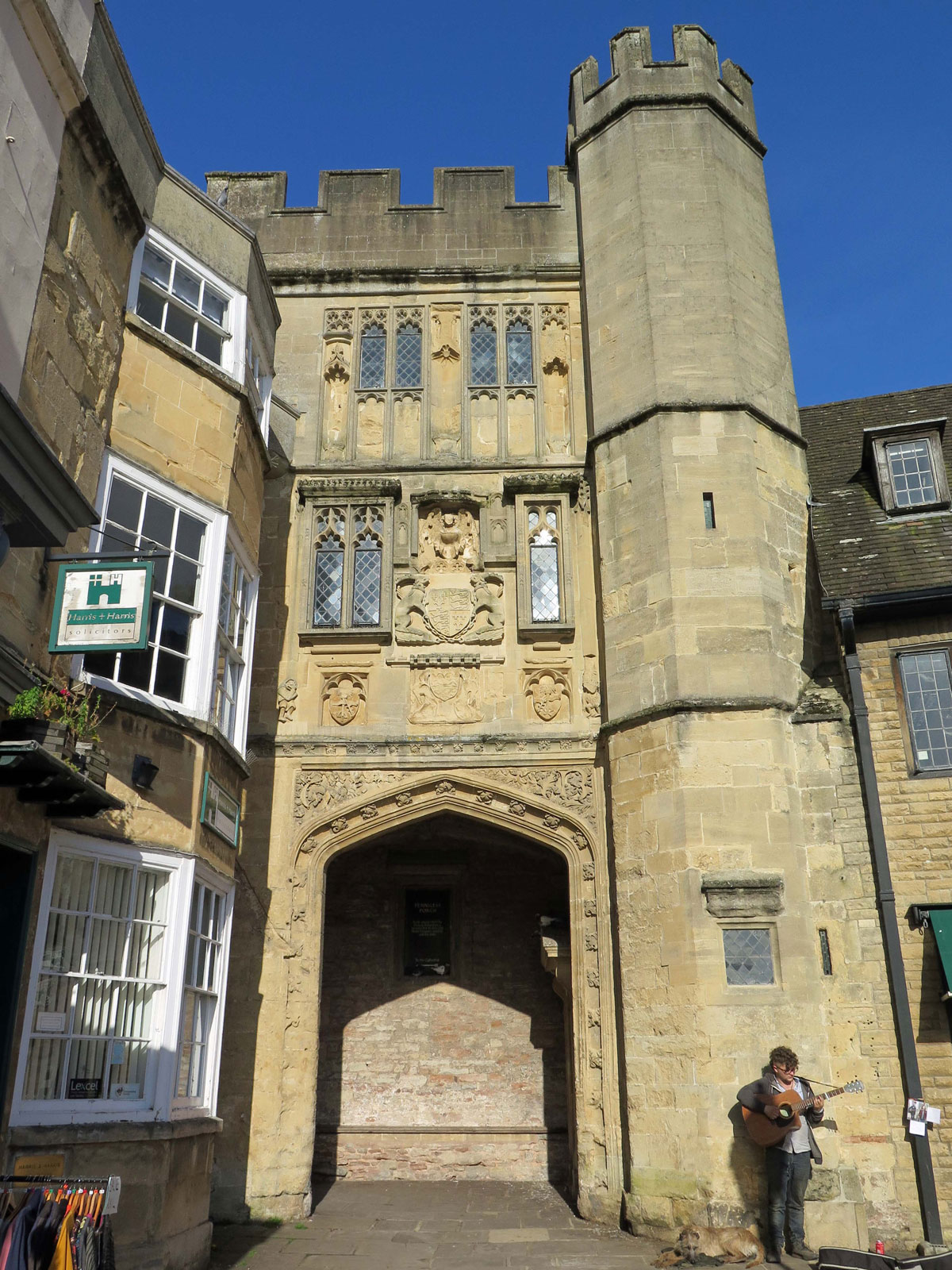
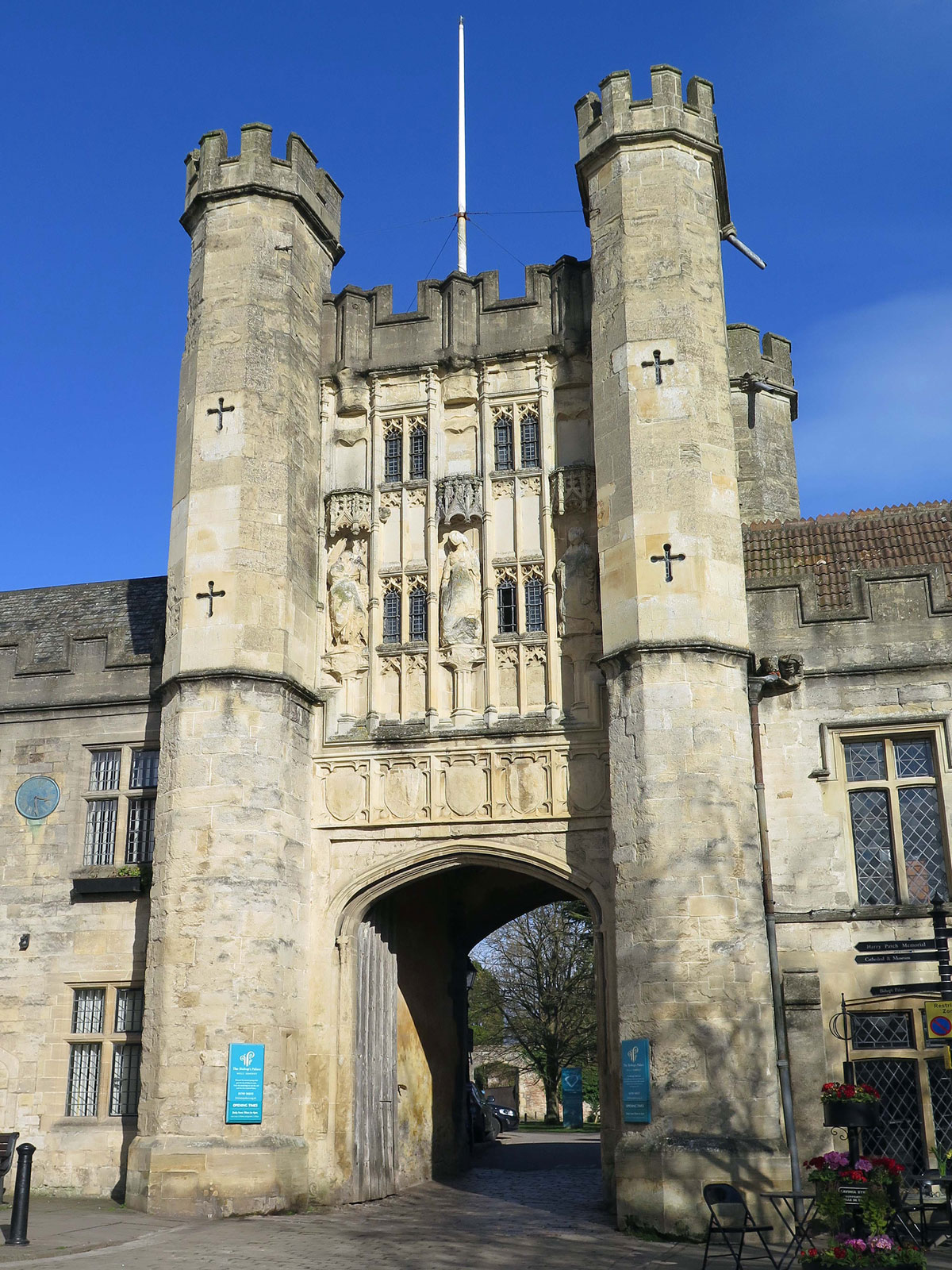
While all this was going on, another Jocelin – Jocelin of Wells – started work on the spectacular West Front, and as this isn’t a sermon and I don’t want you nodding off just yet, I’m going to leave describing the building’s construction and what you can see inside for the next post and bring you through the Penniless Porch and onto Cathedral Green instead.
The Penniless Porch and Bishop’s Eye by the way are a pair of gateways that lead to the Cathedral and Bishop’s Palace respectively. Both were built around 1450 by Bishop Beckynton, and as its name suggests, the Penniless Porch was where beggars used to hang around holding their hands out for a few groats, but what may have been acceptable back then, doesn’t appear to be the case now because in 2016 a man was successfully prosecuted for doing the very same thing (not for groats though I hasten to add).
When I lived in that part of the world I often visited Wells and always admired the cathedral’s majestic West Front, but never looked closely enough to fully understand what it was all about. Compiling blogs though has made me change my view of things and, although it might not interest everyone, I’ve decided to do some research into it.
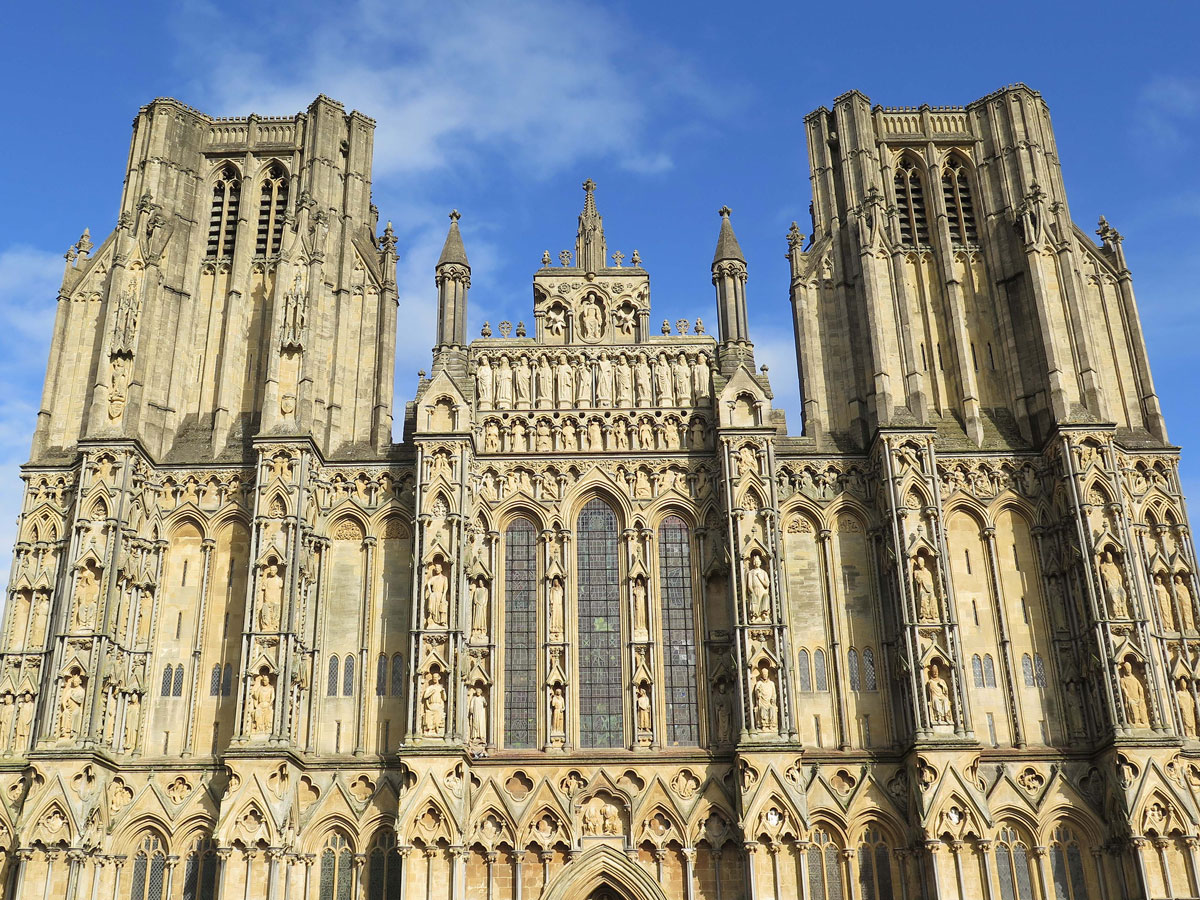
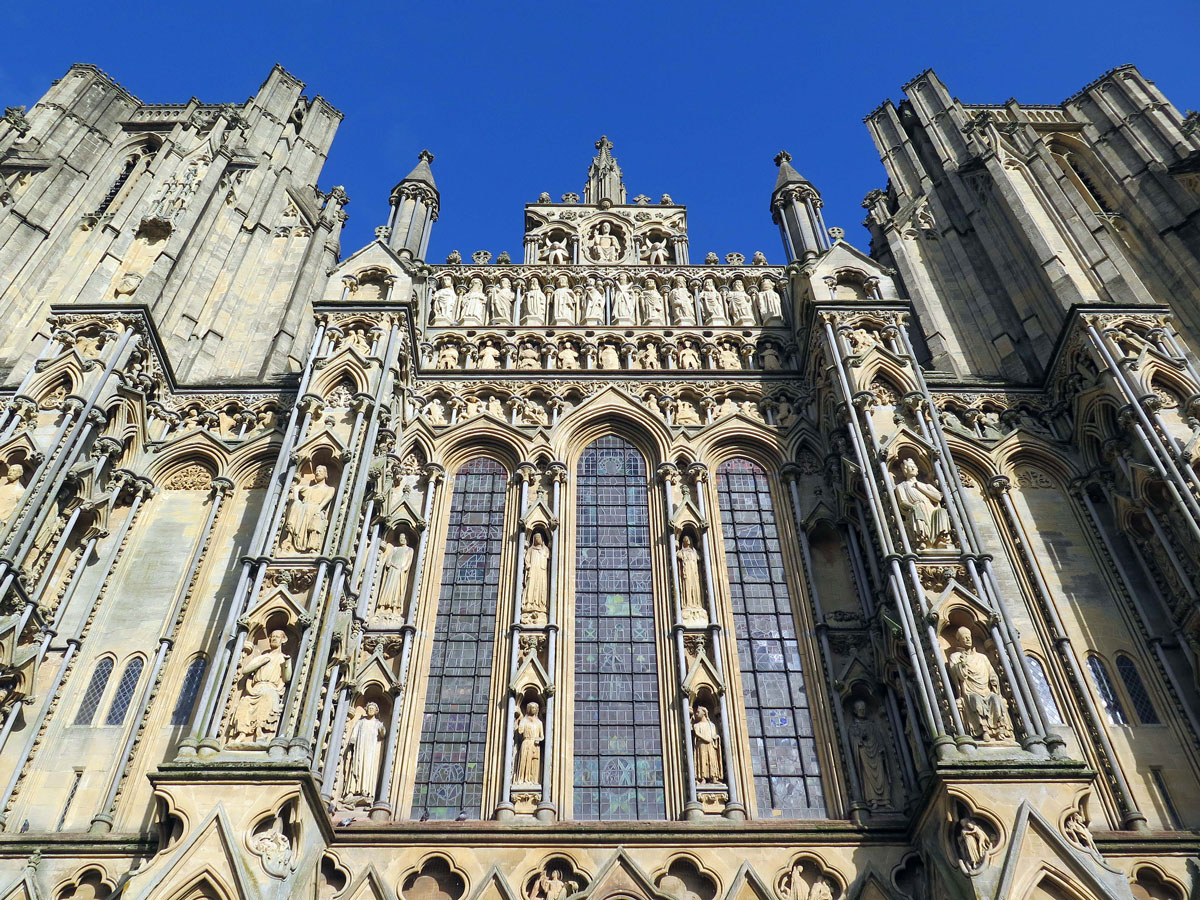
Work started on this spectacular facade in 1230, and although the two towers weren’t added until later, it doesn’t detract from the fact that it has one of the largest collections of medieval statues in Europe, with around 300 of the original 400 statues still remaining. Of course, they’re not all in their original mint condition because weathering of the soft sandstone that they were made from has taken its toll, but even so, it must have been a remarkable sight back then as they would have been painted in bright red, blue and green pigments.
So what about the statues themselves? Starting at the bottom, the lowest tier suffered the most losses as most of them were destroyed in the civil war, but interestingly, in 2021 one of the niches was temporarily filled with Anthony Gormley’s controversial metal statue ‘Doubt’ which you can just about make out in the extreme bottom left hand corner of the picture below: The statue was returned to the artist in 2024.

Above the bottom tier and West Door are two rows of quatrefoils (four-leafed decorations) containing carvings of biblical scenes, with Old Testament scenes on the right and New Testament scenes on the left. It’s not easy to make out the scenes from either the photo or real-life to be honest, but I suppose somebody knows what they represent. More discernable are the middle tiers which feature a collection of life-sized statues of knights and ladies, kings and queens, and bishops and saints, but please don’t ask me who they all are.
The wide tier above and across the main section of the façade depicts scenes from the Day of Judgement but I think I’ll refrain from talking too much about that subject if you don’t mind. On a lighter note the third row from the top on the central main façade shows the Nine Orders of Angels, but as they’re in a straight line, I’m not sure if they’re shown in any particular order.
Above them are the twelve disciples with St Andrew (who the cathedral is dedicated to) holding his diagonal cross in the middle. That leaves us with just Christ in Majesty at the very top. The badly worn original was replaced in 1985 and carved by David Wynne. The main restoration of these sculptures was done between 1974 and 1986 and I was fortunate enough to see some of the work being undertaken. There’s no doubt that the original craftsmen were extremely skilled masons but in my opinion so were the men that were asked to faithfully replace the originals.
If you’re still with us and haven’t dozed off yet I’ll be back to describe what else this beautiful building in the Somerset countryside has to offer in my next reading. Here endeth the second lesson.
POSTED – OCTOBER 2025
Originally posted 2025-10-05 07:24:39.
Always with a touch of humour, Malc. I managed to stay awake through the sermon, and had a close up peak at the Gormley sculpture. Thanks, hon xx
LOL Thanks Jo
The cathedral frontage is amazing, it’s hard to believe there are so many statues up there. I can’t imagine them being painted in bright colours, it must have been quite a sight to see – I think they look better in their natural stone though.
I agree. To us today it would look garish but it was quite normal back then
What always astonishes me is the stone work. Great post as ever. I am trying to repost it on X but… well, today has not been the best online.
I saw it. Thanks Shey! ⭐
You are welcome.
This has to be one of our most impressive cathedrals, from the front at least, and yet I think it’s relatively less visited than some others, so I’m glad you’re showcasing it here. It’s hard to imagine the statues being painted bright red, blue and green, and to be honest I suspect they look better like this, at least to modern eyes.
It wasn’t unusual and even Westminster Abbey was the same
💖💖💖
💙💙💙