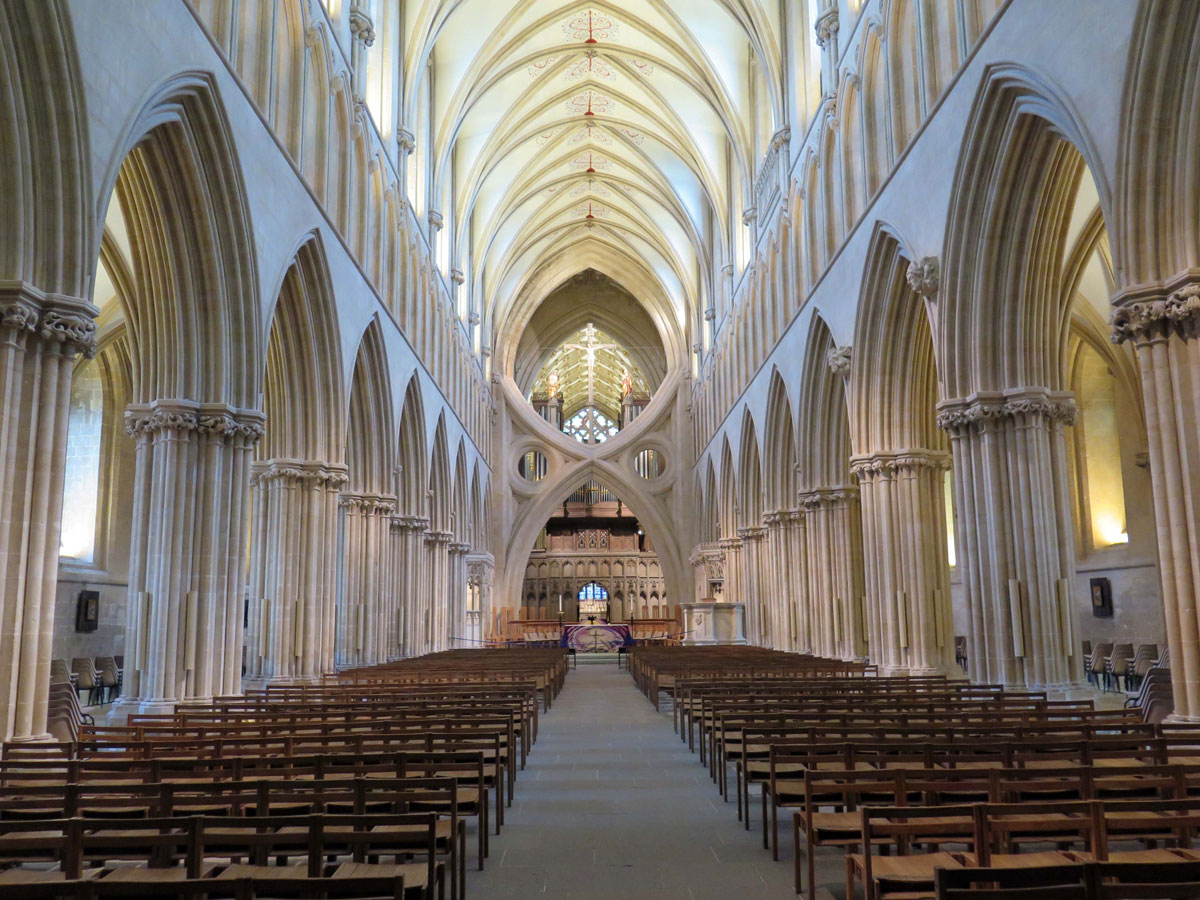
A Look Around Wells Cathedral and why such a Grand Cathedral was built in such a Small City
People often wonder why such a small city has such a large cathedral and that’s because we’re looking at the situation through modern day eyes. Back in medieval England the country was administered by two separate entities of equal importance. We tend to think of the King of England as being the most powerful man in the realm, but that was in the secular world. However, the most powerful man in the English spiritual world (other than the Pope) was the Archbishop of Canterbury. That may be a rather simplistic view of things, but the church held much of the country’s land and was extremely wealthy as well as powerful – and the Diocese of (Bath and) Wells was both.
The size of the cathedral at Wells was built, I believe, not just to make a statement of spiritual influence and authority over its worshippers, but also to win the struggle with Bath over where the bishop’s seat should be. In other words the size of the local community really had nothing to do with the stature of the cathedral, and for those who are interested, the population of Wells today is still only around 11,000.
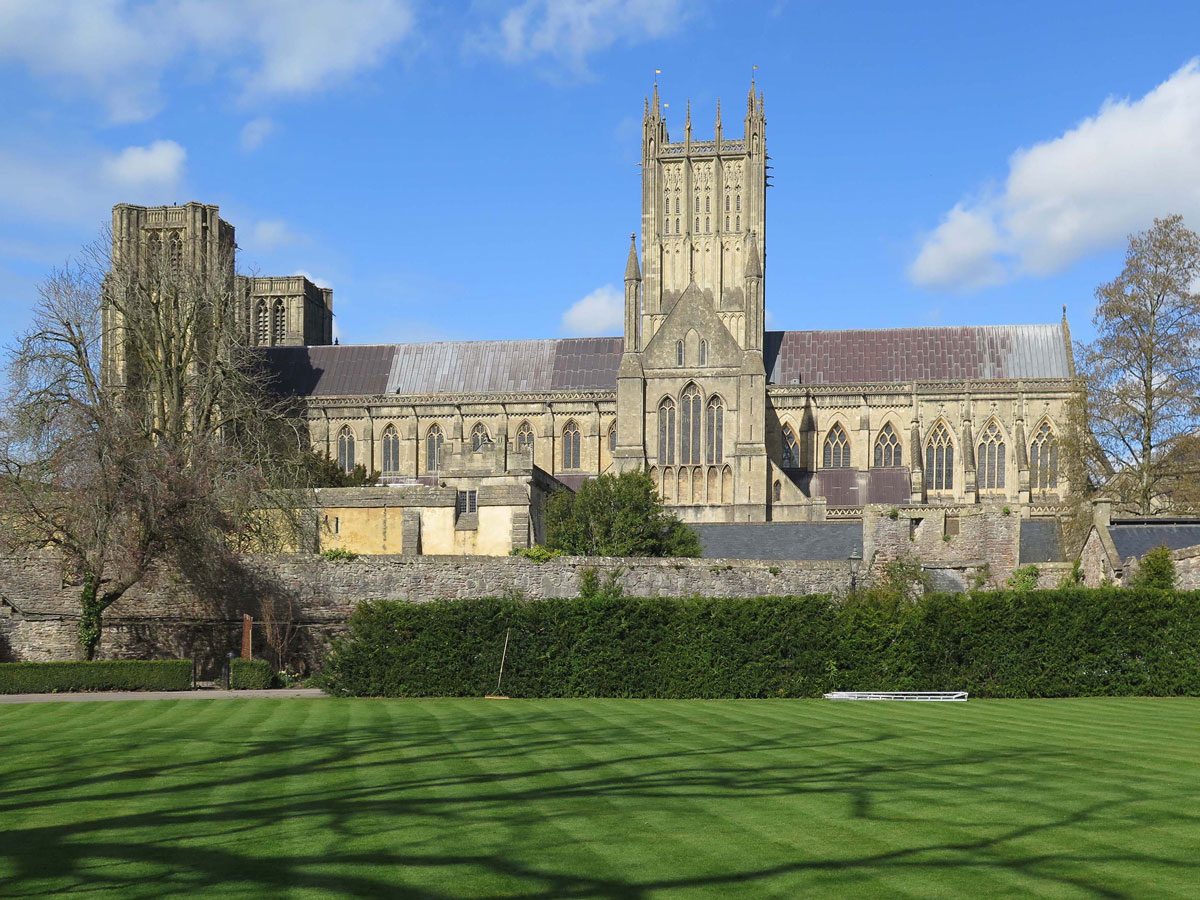
As I mentioned in the previous post, Bishop Fitz Jocelin began work on building the new cathedral at Wells in 1174, but it wasn’t until 1490 that construction was fully complete. That said, apart from the two towers on the West Front, most of the work was completed well before that.
In the previous post I also said that the West Front is the first thing you’ll see, but of course it wasn’t the first part of the church to be built. Work started in the Quire and continued down the Nave towards the West Front, but by now a new Gothic style of architecture (known as Early English) was replacing the traditional Norman Romanesque style and John Harvey, the well-respected architectural historian, thought that Wells Cathedral was “Europe’s first truly Gothic structure”.
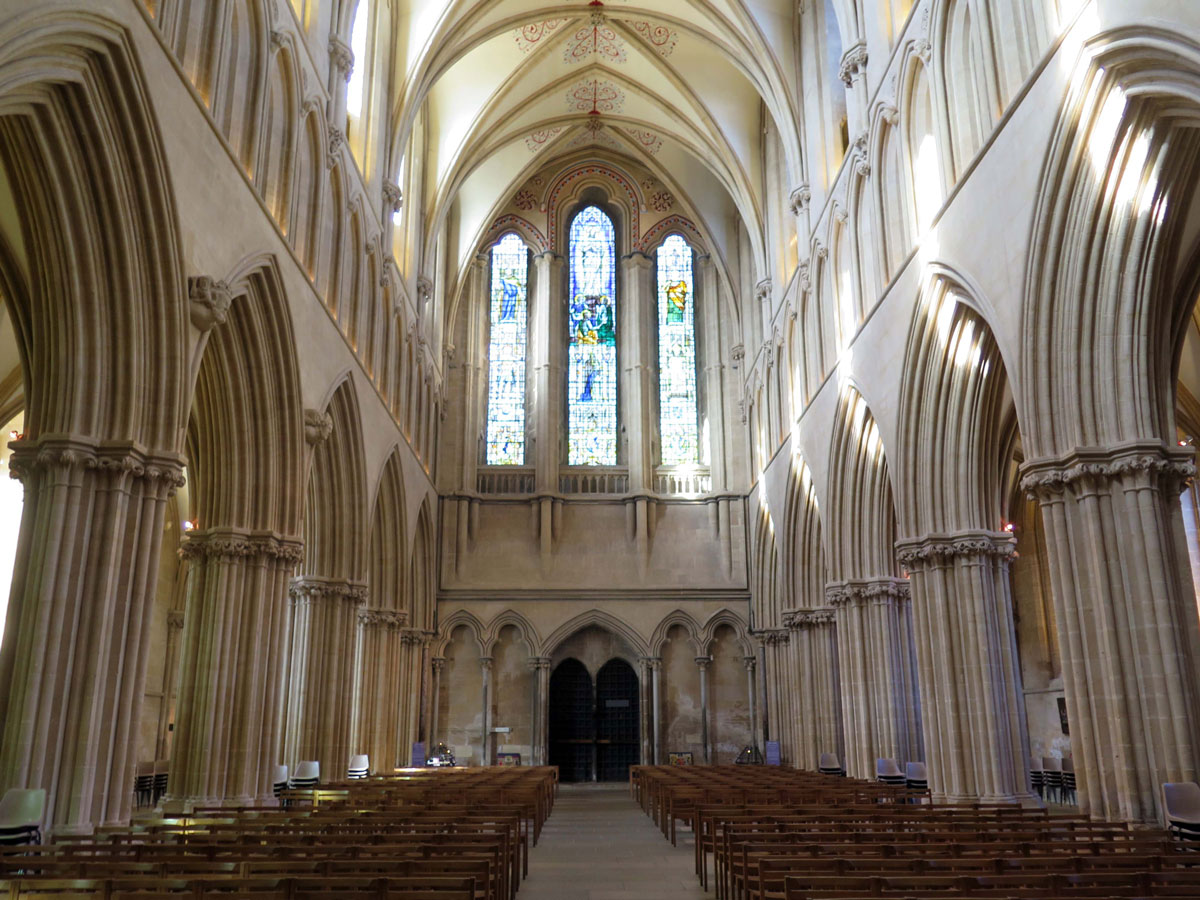
This first phase of construction took about 80 years to complete and later features were added at various intervals. One of those features was the Central Tower that was started in 1313 and took around 9 years to build.
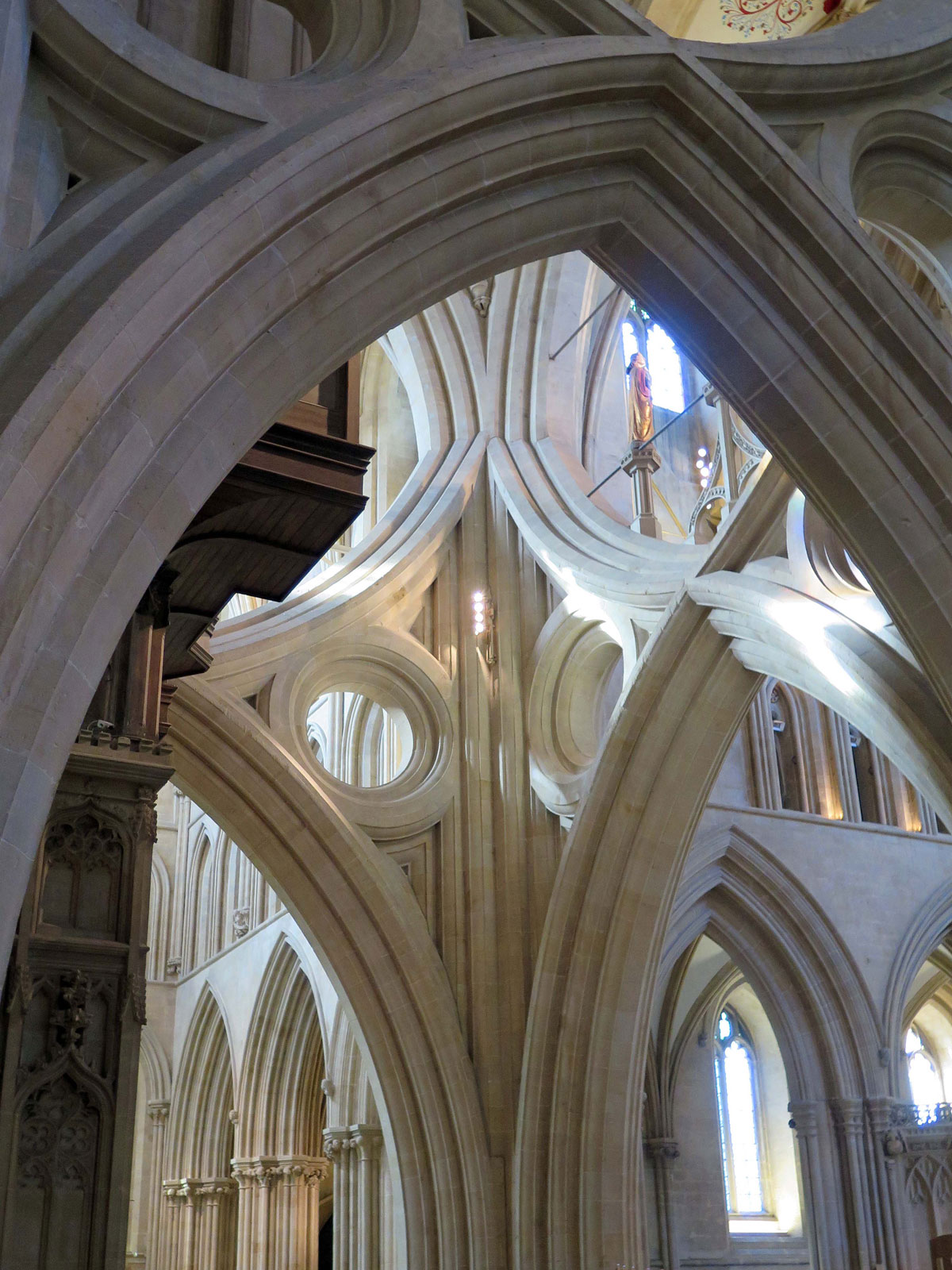
Unfortunately, the piers supporting the tower started to sink under its weight and urgent repairs were needed. In 1338, master mason William Joy came up with a solution that was not only practical, but also remarkable in its beauty. By 1348 the piers had been stabilized and the tower saved from collapse by using the concept of scissor arches which have become almost as famous as the West Front, and as far as I know, are unique to Wells Cathedral.
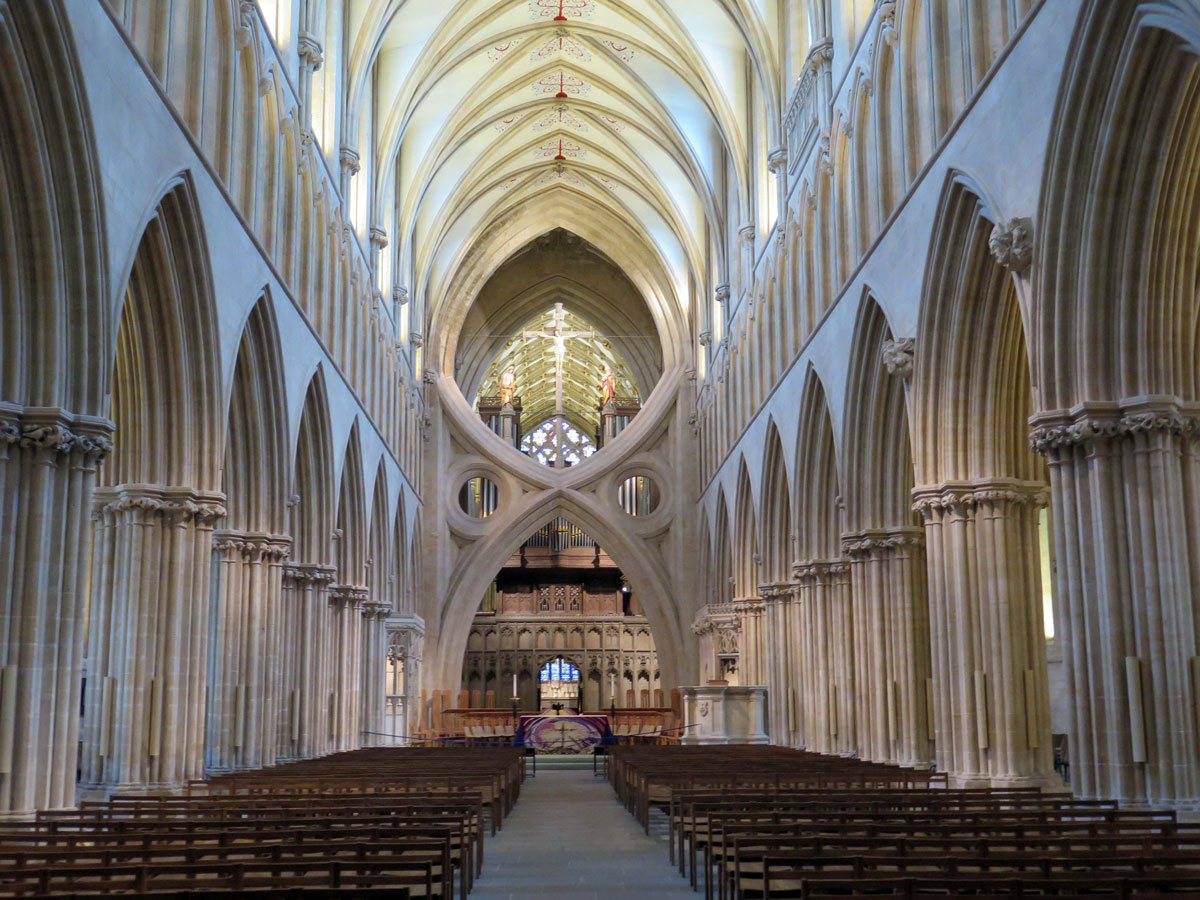
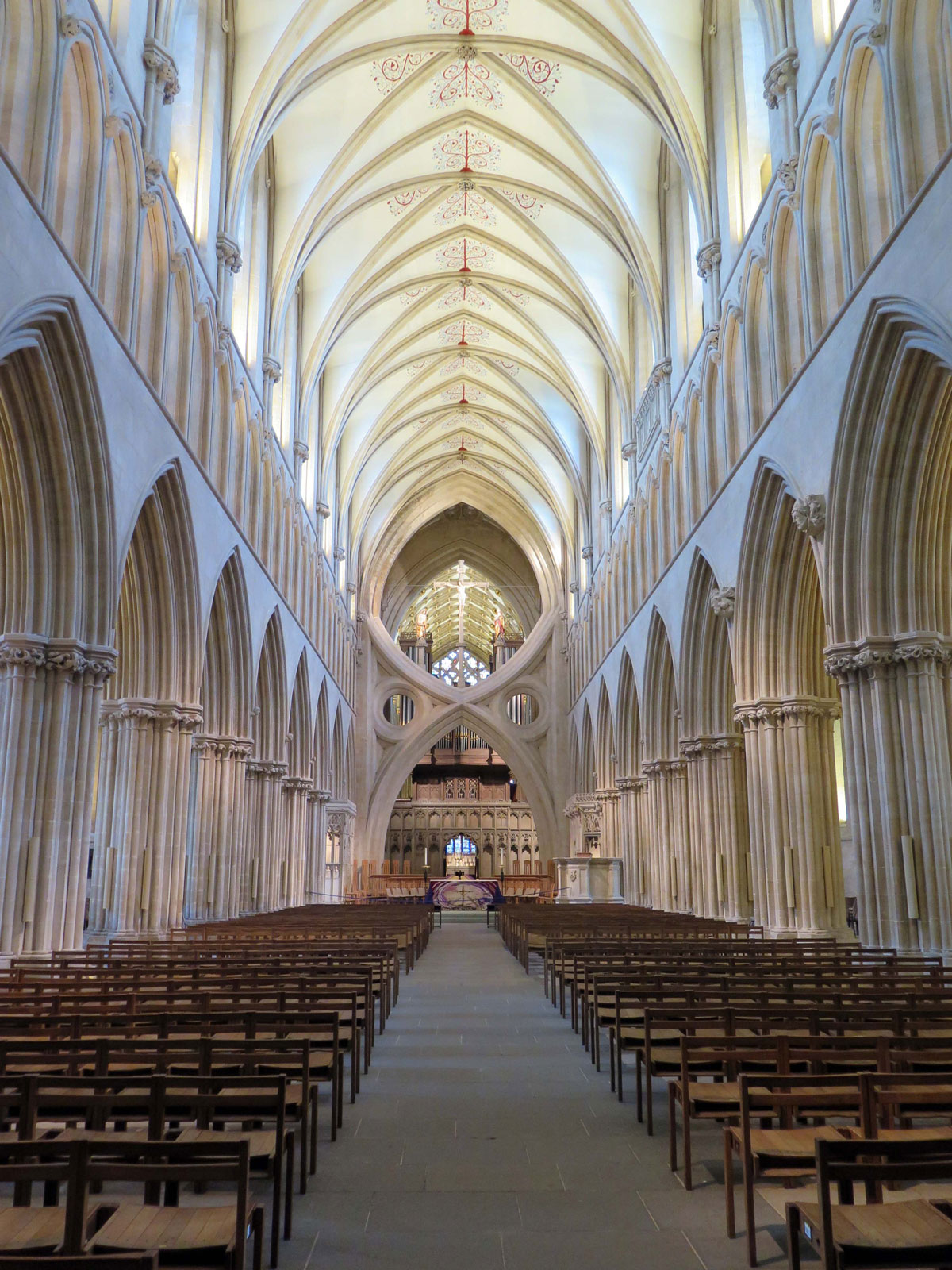
As tempting as it might be to walk under the scissor arches and into the choir next, I suggest that you veer off left into the North Transept first where you’ll find the medieval astronomical clock. By the end of the 14th century there were so may services being held that a form of precise time-keeping became essential, and what you see was the result.
Anybody who is well travelled would no doubt have come across clocks like this before, but not every clock has maintained its original appearance for so long. Except for the odd bit of restoration here and there, everything you see, both inside and outside the cathedral is medieval.
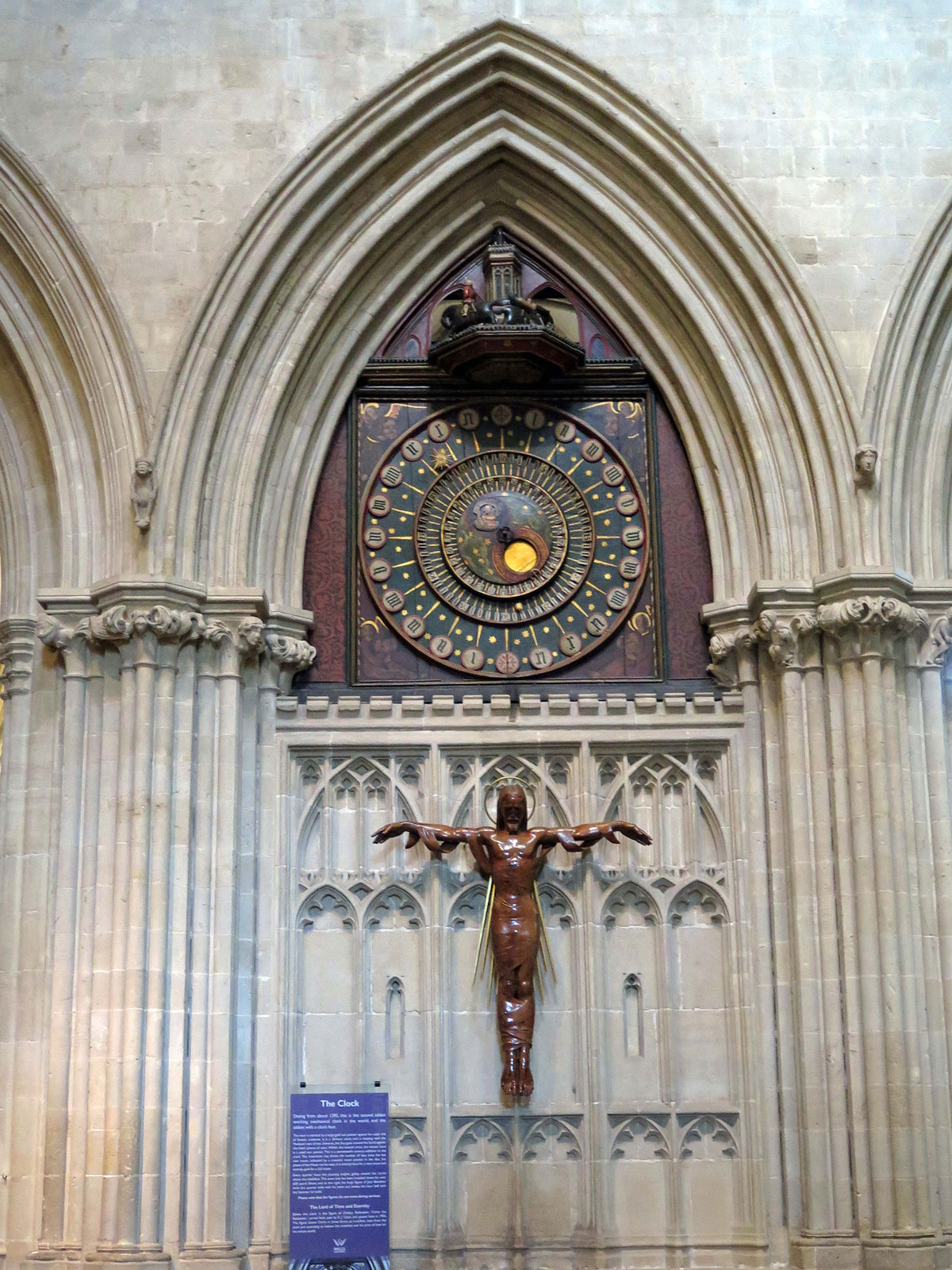
You can waste quite a bit of your own time studying it if you like, but if you’ve got some time to spare now I’ll briefly describe how it works. The outer circle shows a 24 hour clock with 12 noon at the top and 12 midnight at the bottom while the second circle shows the minutes and marks the exact time with a small gold star. A third inner dial marks the days of the month with a pointer showing the number of days since the new moon.
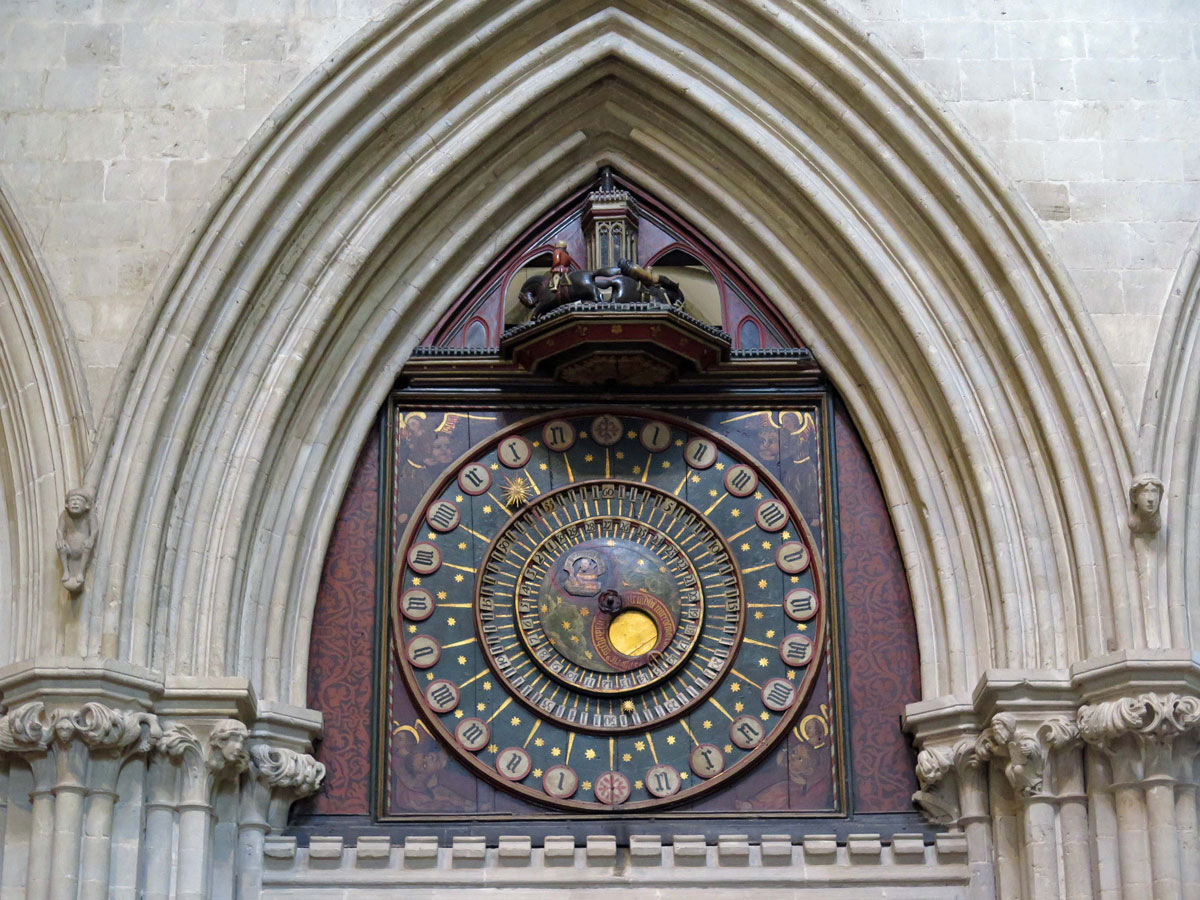
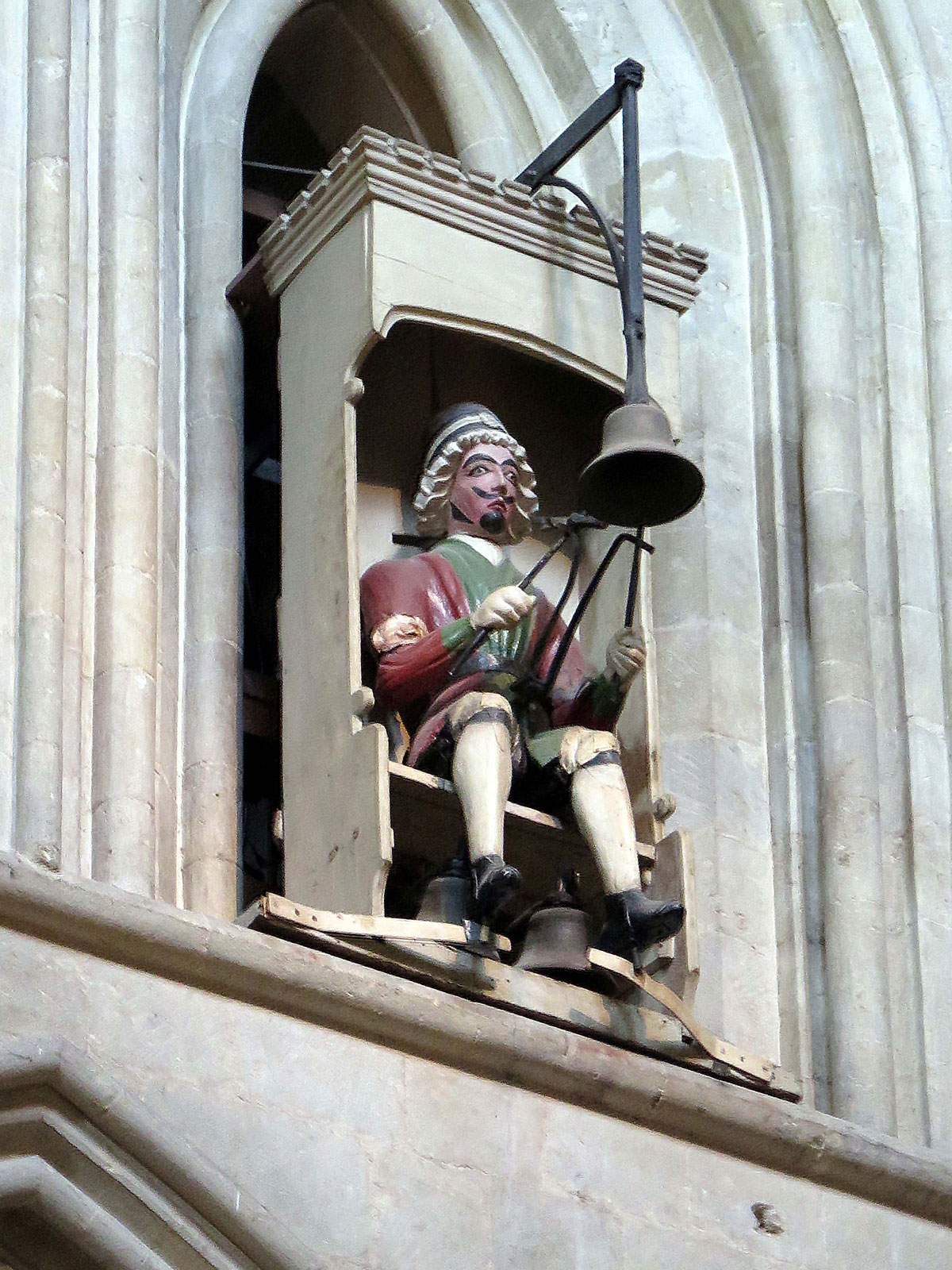
If you’re one of those people who enjoy seeing these things operate like a fairground attraction you won’t be disappointed either because every quarter of an hour four horsemen participate in what appears to be a jousting event, and if that doesn’t entice you to put some money in the offertory box, then perhaps Jack Blandifer will. Jack who sits on a bench higher up on the right-hand side of the clock completes the performance by marking the time by kicking his heels against a couple of bells every quarter of an hour and banging another bell on the hour every hour.
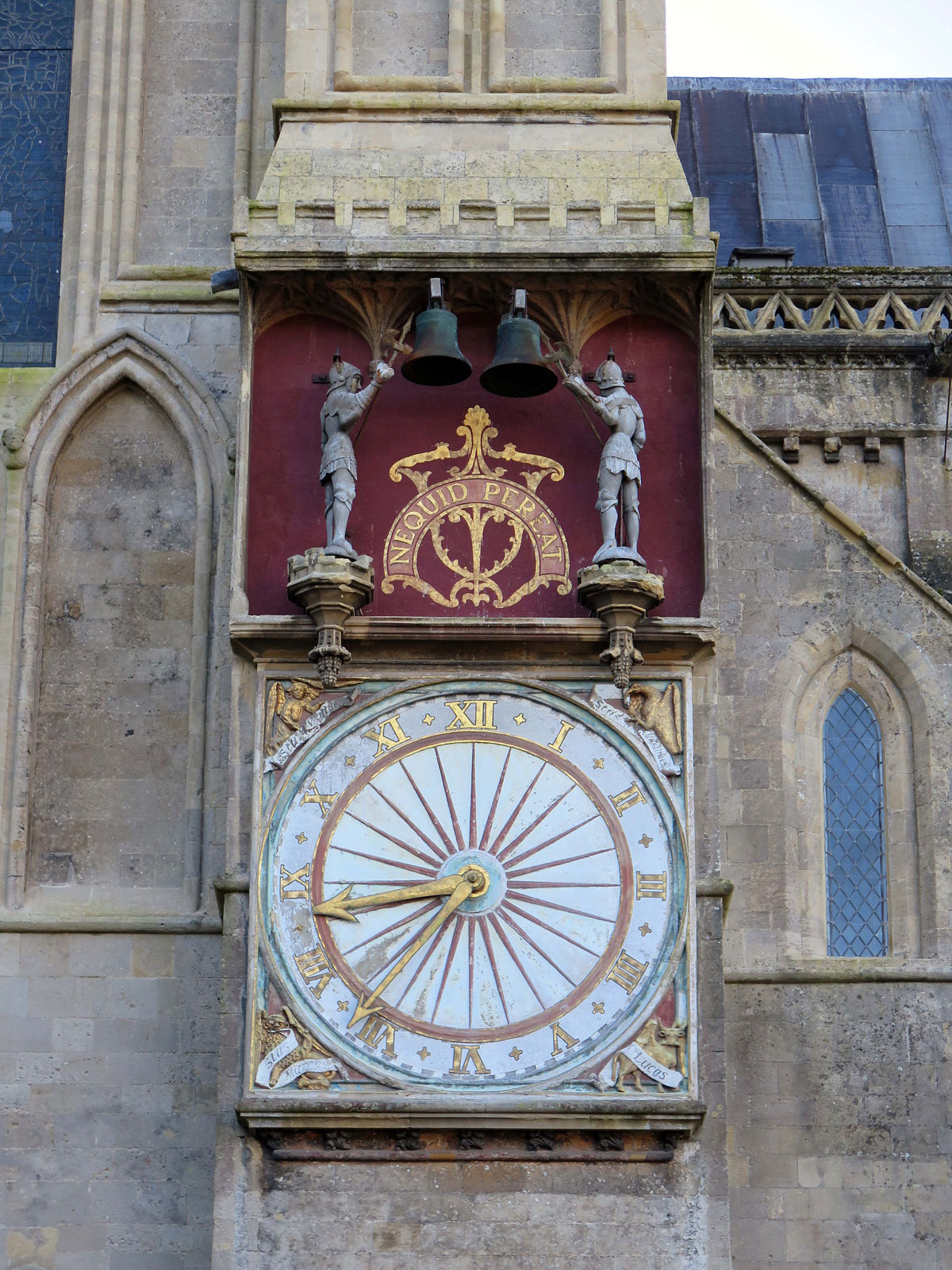
On the wall outside the North Transept the clock dial shows two knights working off the same mechanism and are dated to sometime during the 15th century. Rather than head outside to see it now, you might find it more convenient to take a look when you’re checking out Vicar’s Close. As regards what makes this amazing timepiece work, the original medieval mechanism was replaced in 1837 and is now kept safely out of harm’s way at the science Museum in London, and while I’m at it, the centuries-old custom of winding the clock by hand also came to an end in 2010 when the task was automated, and is hardly surprising because as we all know, time doesn’t stand still for anyone.
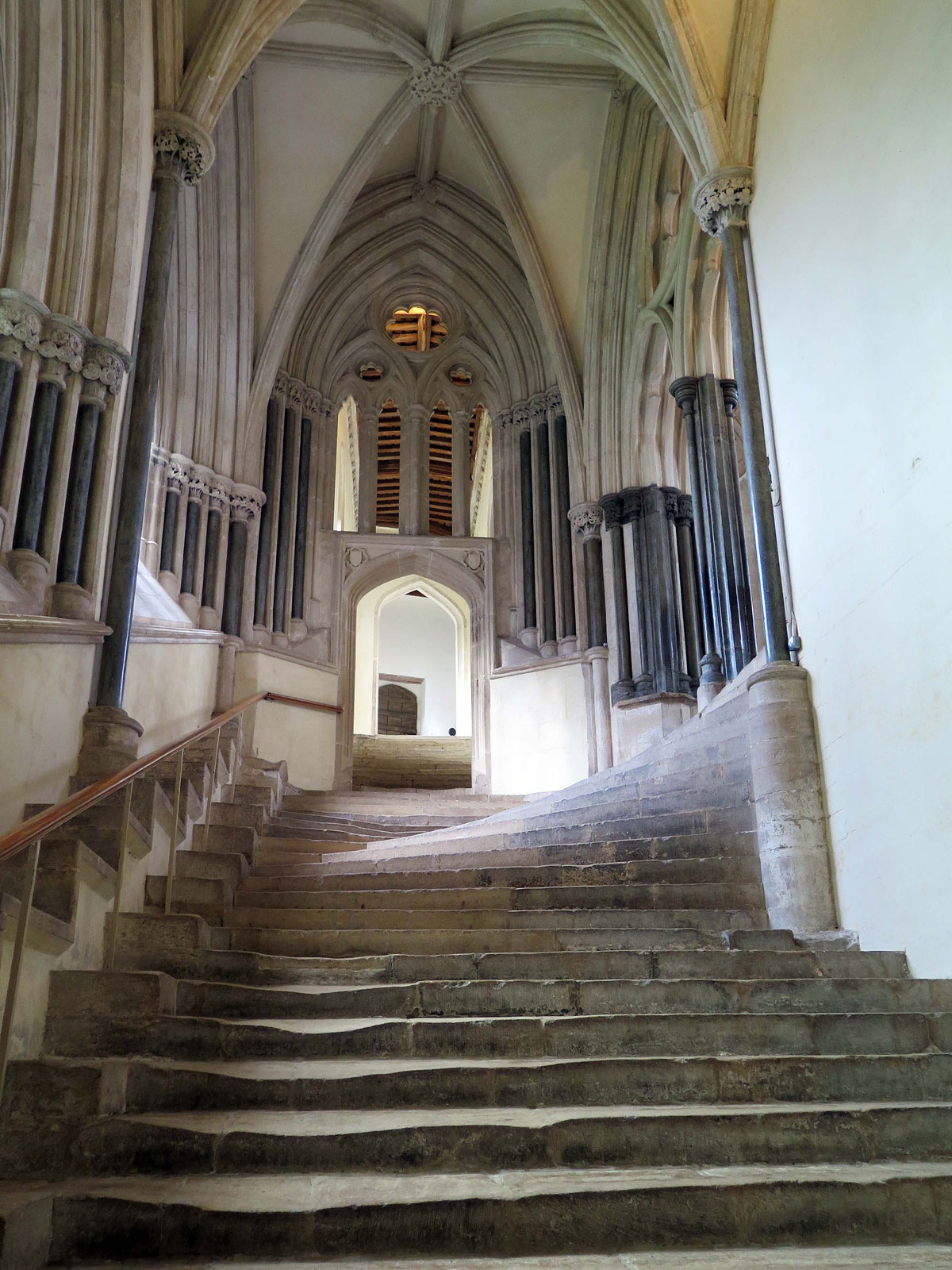
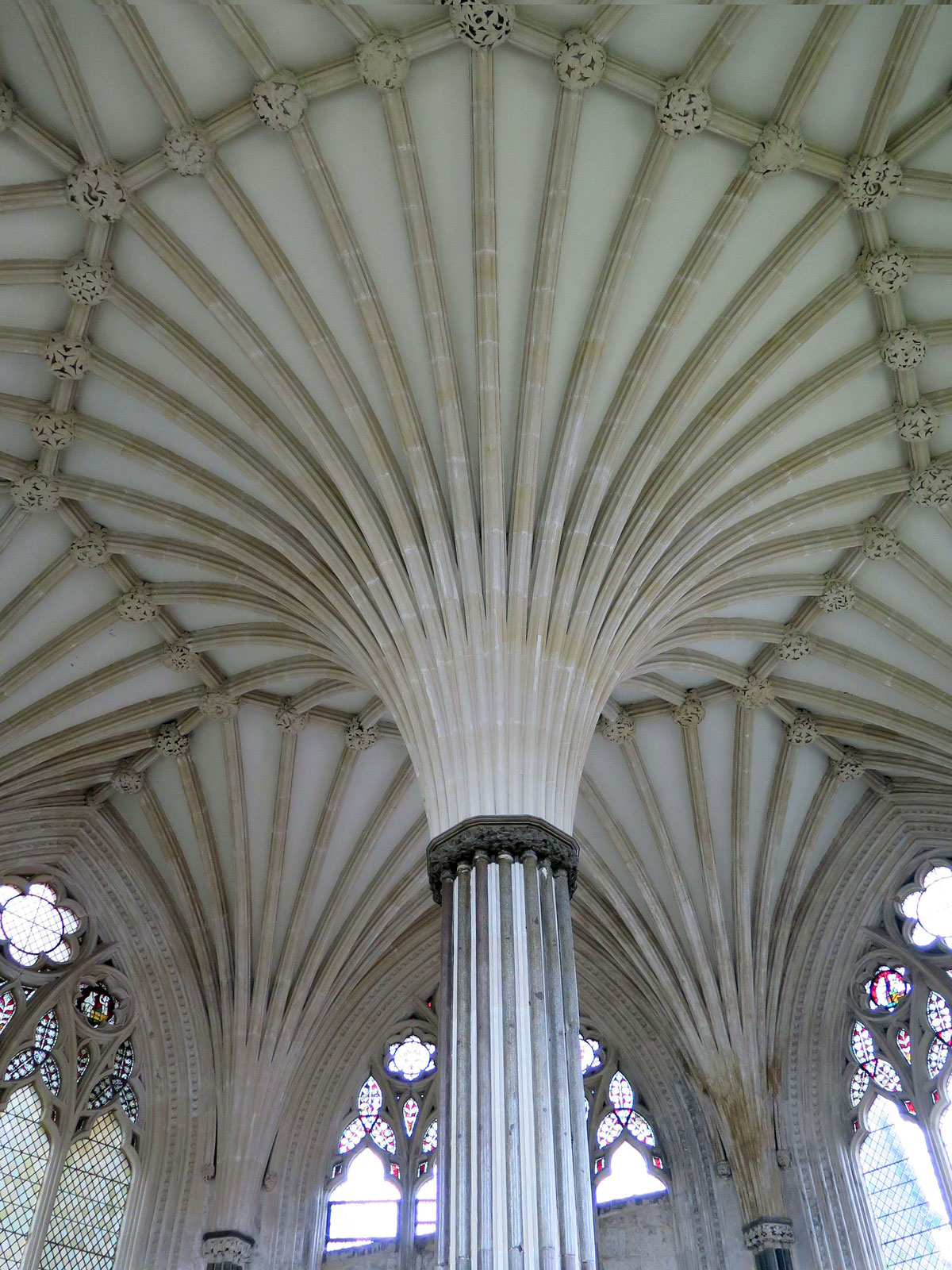
A narrow door next to the North Transept will take you to a curving flight of steps that lead up to the Chapter House. Completed in 1306, the building was the place of business for the Dean and Canons, or the Chapter as they were collectively known. Similar in appearance to other chapter houses, this octagonal building with its ceiling supported by a central column and intricate fan vaulting is to my mind one of the finest in the country – and I’ve seen a few.
Another further flight of steps lead up to the Chain Gate which connects the cathedral to Vicar’s Hall and Vicar’s Close across the road. I don’t think it’s normally accessible to the general public – and it certainly wasn’t the last time I was here.
For anyone interested in learning more about the cathedral you may want to head down to the Undercroft below the Chapter House where the Interpretation Centre has displays about the cathedral’s history and everyday life, but I’m going back into the Nave now to take a look around the Quire.
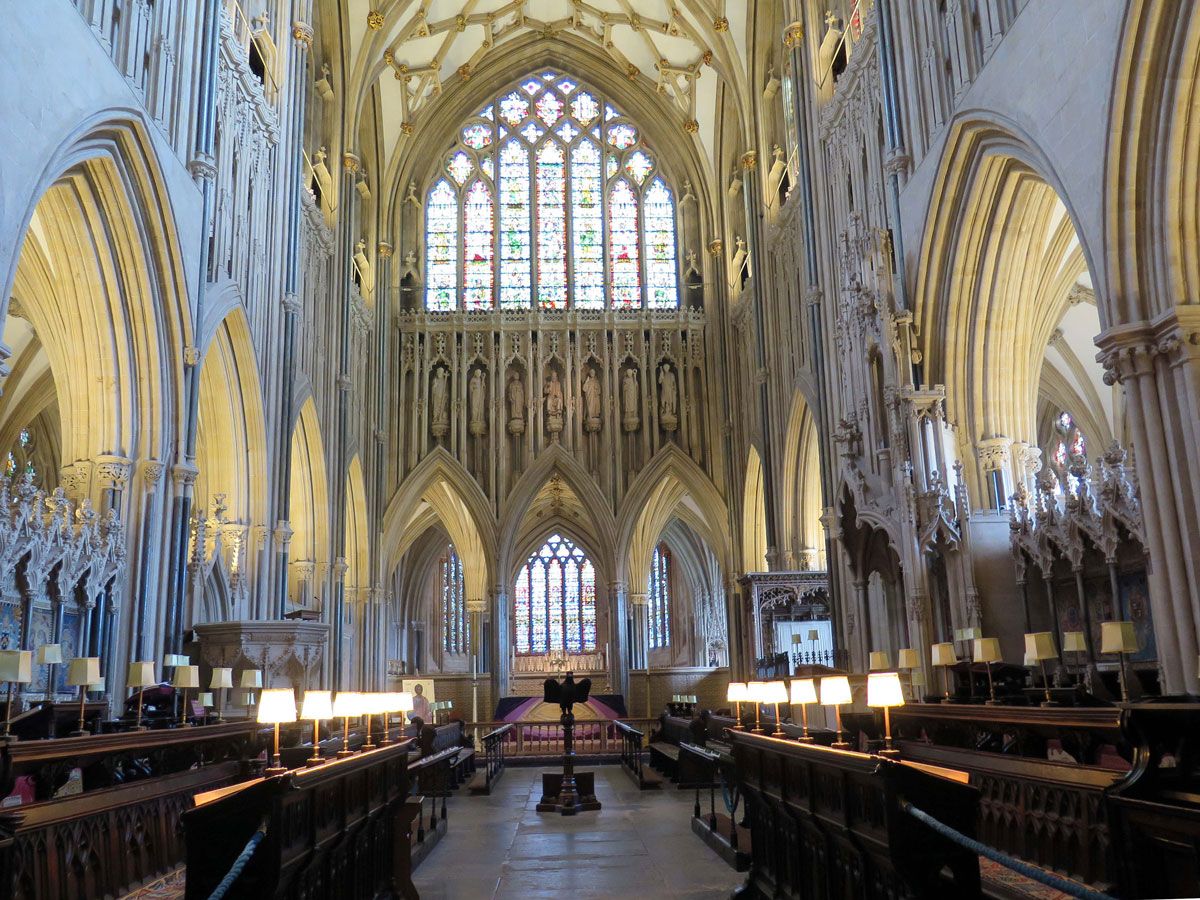
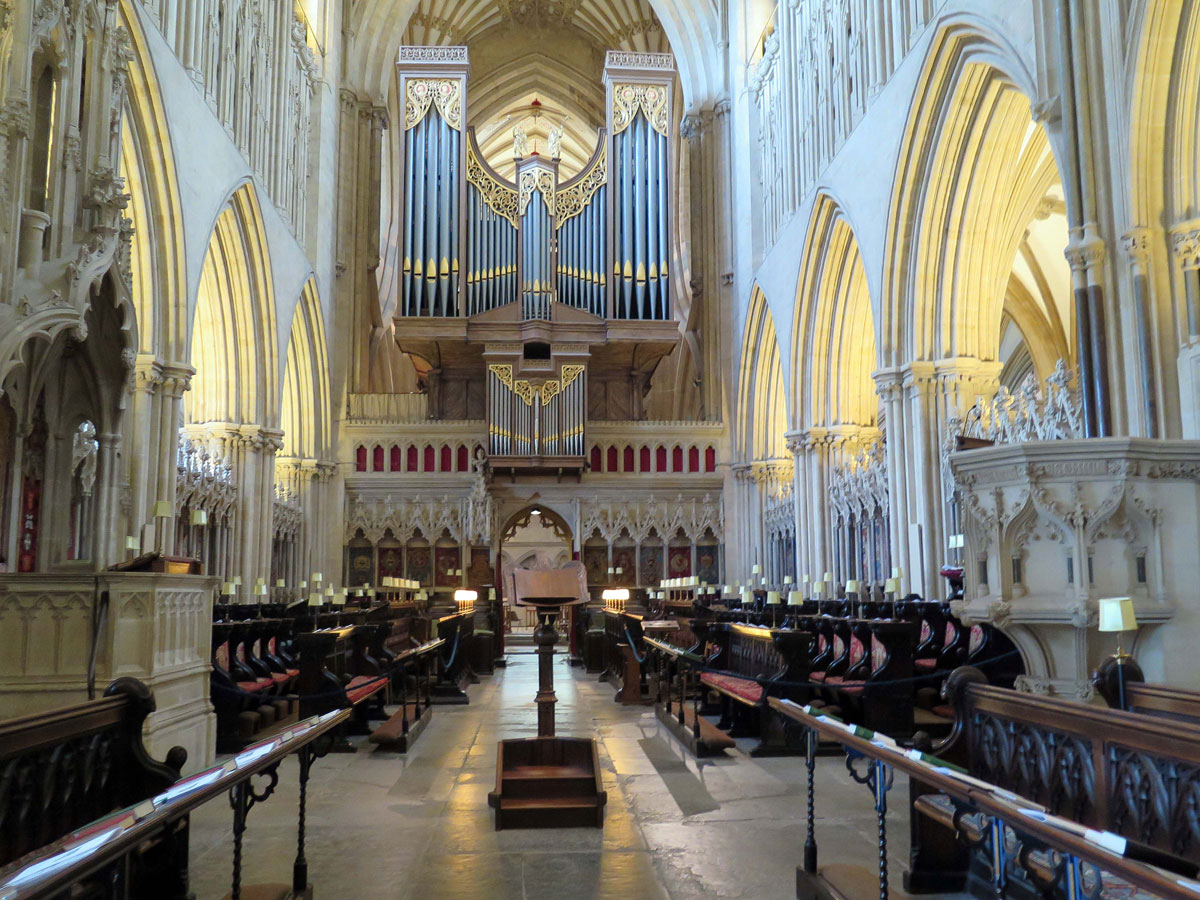
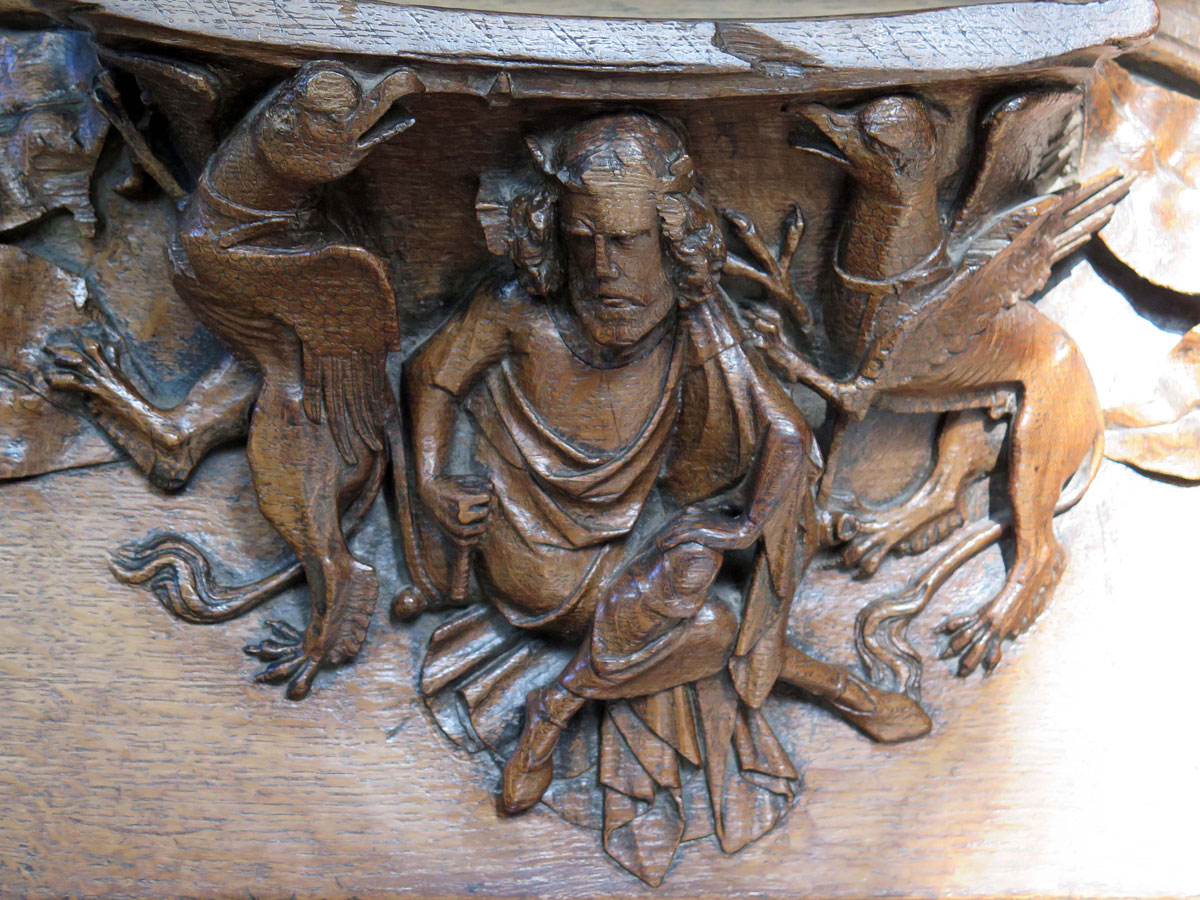
As I’ve mentioned before, the Quire was the first part of the new church to be built, but between 1320 and 1340 it was extended eastwards to join the existing Lady Chapel. The wooden choir stalls were added at the same time and anyone who has a fascination for misericords are in for a treat here. There are 65 carvings that still survive under the wooden seats and are recognised as one of the finest collections in the country.
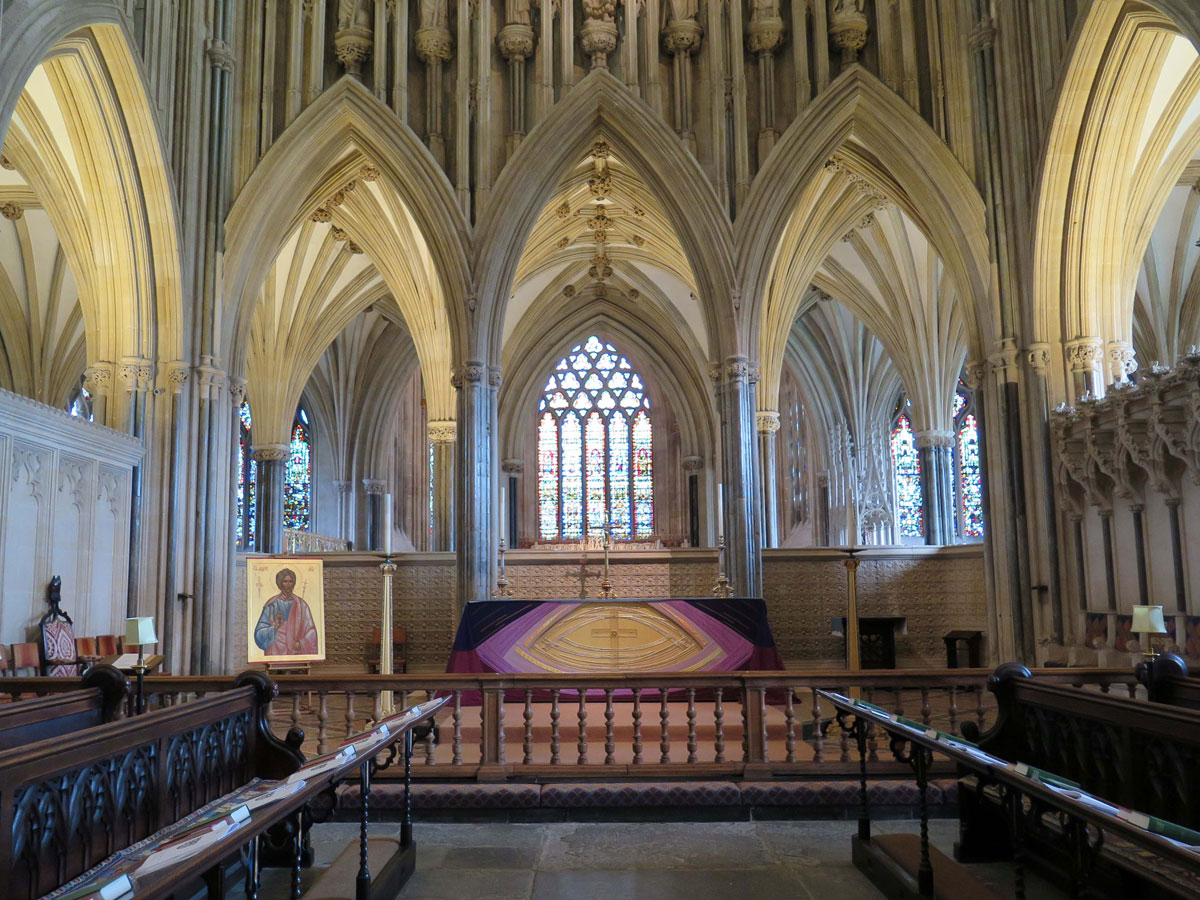
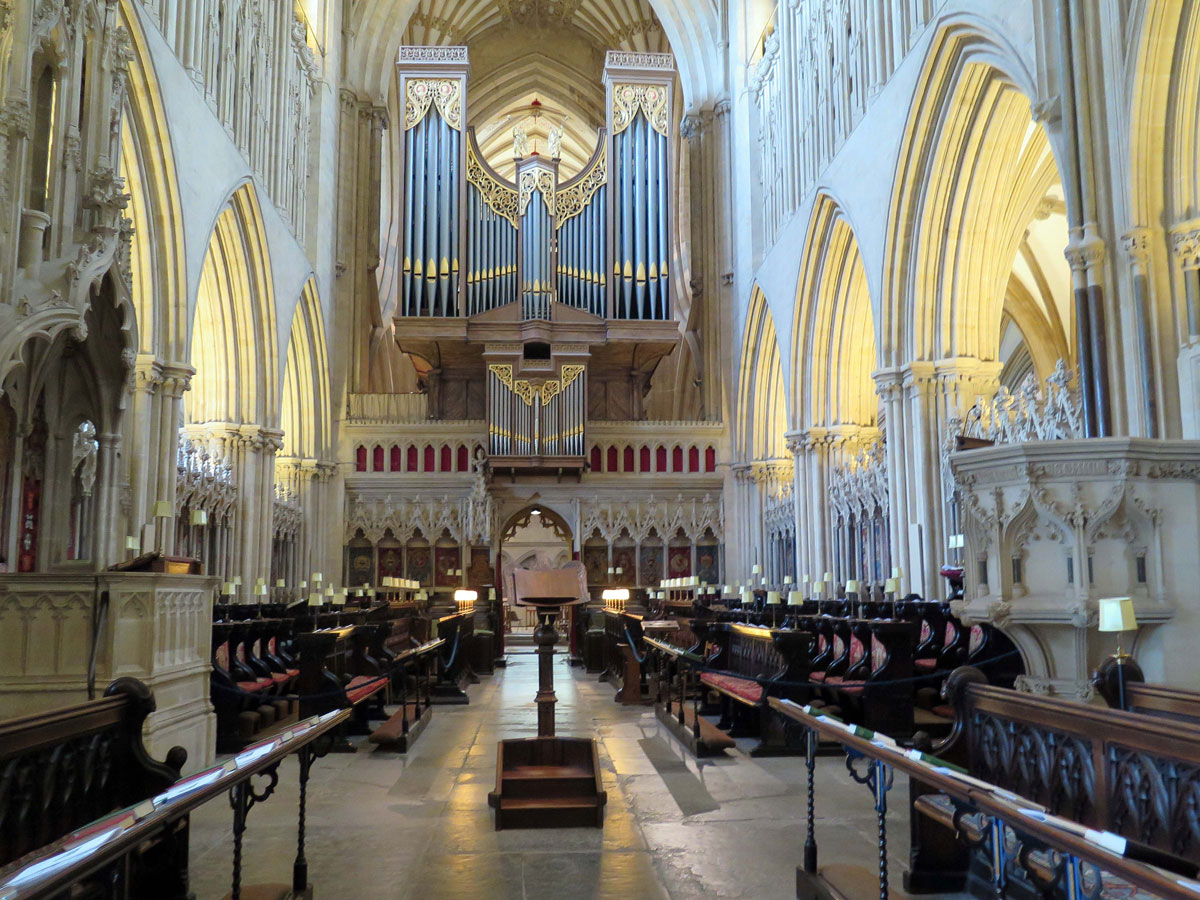
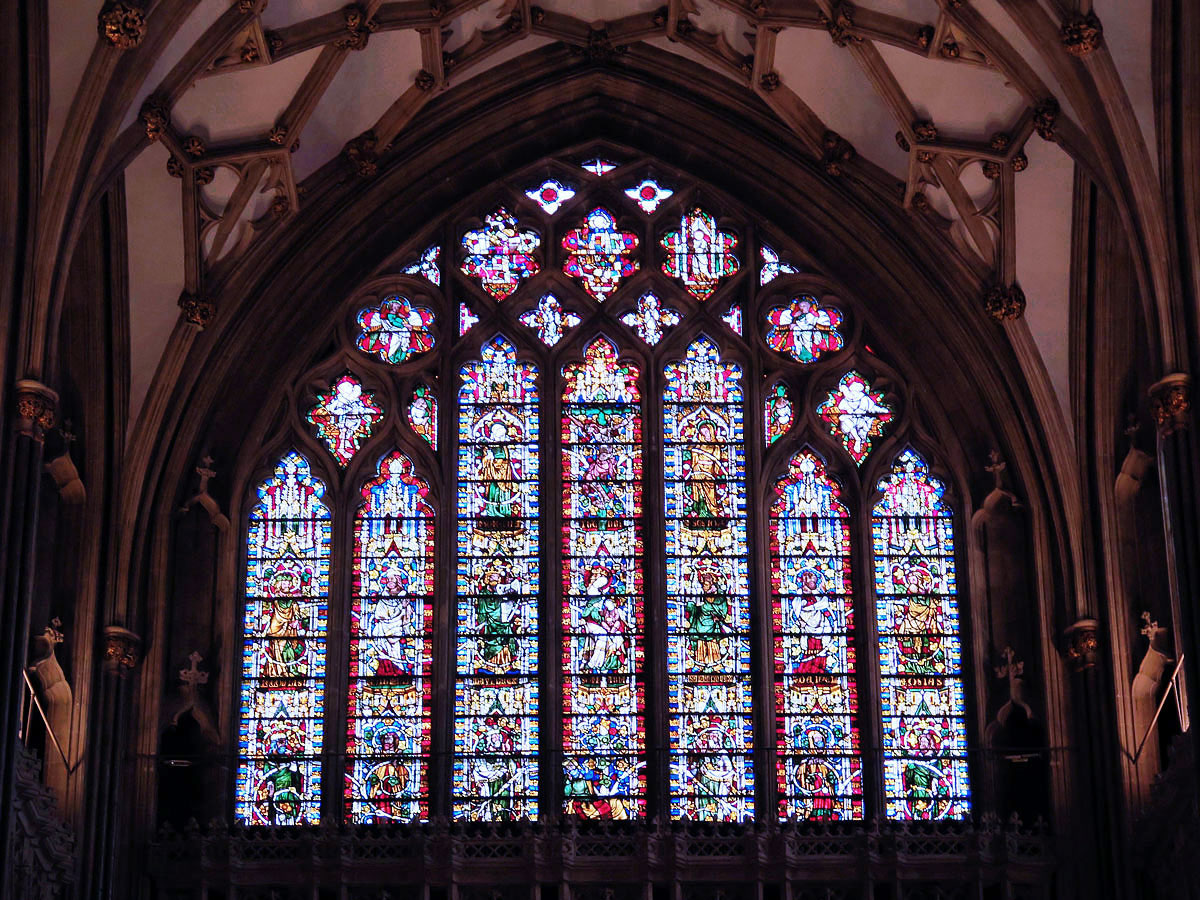
At one end of the Quire above the Quire Screen sits the majestic organ, and at the other end in the extension, and above the altar, is another of the cathedral’s treasures – the Jesse Window.
There are other Jesse Windows around but this one is regarded as one of the finest to be seen anywhere. It’s been here since around 1340 and for it to survive this long in such good condition has to be a miracle.
Like most medieval stained-glass windows, it graphically explains events in the Bible to a largely uneducated public, and in this case it tells the story of the birth, death and resurrection of Jesus Christ who is surrounded by his ancestors. In the centre of the bottom row you may just be able to make out Jesse who is the father of King David (he’s asleep with a vine branch growing out of his side), and as the branch continues up and around the Madonna and Child (in the middle of the window above Jesse) there are a number of panels representing different people and events connected to the family tree. Even if you can’t make it all out or even if it doesn’t interest you at all, you can’t help but admire the window itself.
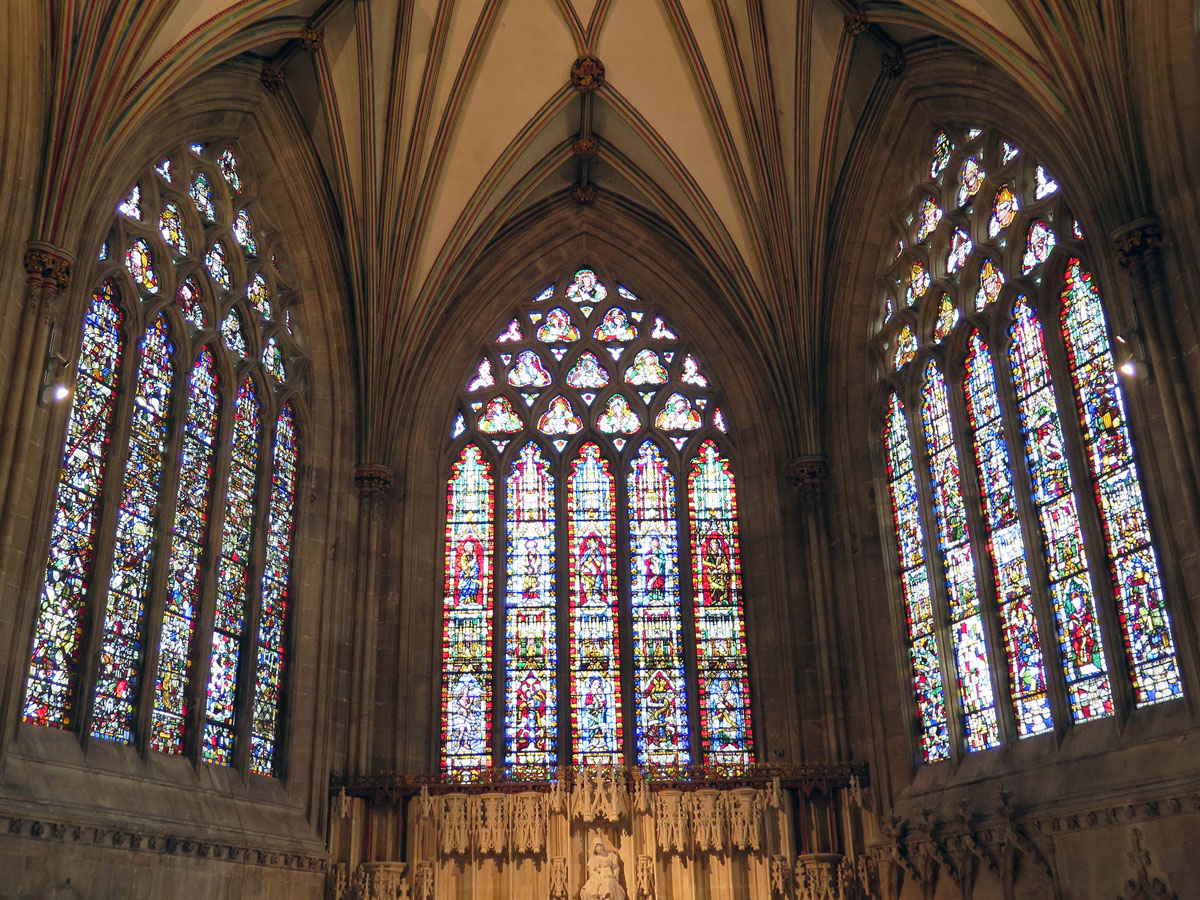
Some more fine glass appears in the Lady Chapel which was built, as all medieval cathedrals were, in honour of the Mother of Jesus. This eight-sided chapel was built in 1326 and was originally separate from the Quire until the Retroquire was added later in the 14th century. The upper part of the windows still contain the original stained-glass, but much of the rest is a creative jumble of fragments saved after being largely destroyed in the 17th century during the Civil War and Monmouth Rebellion.
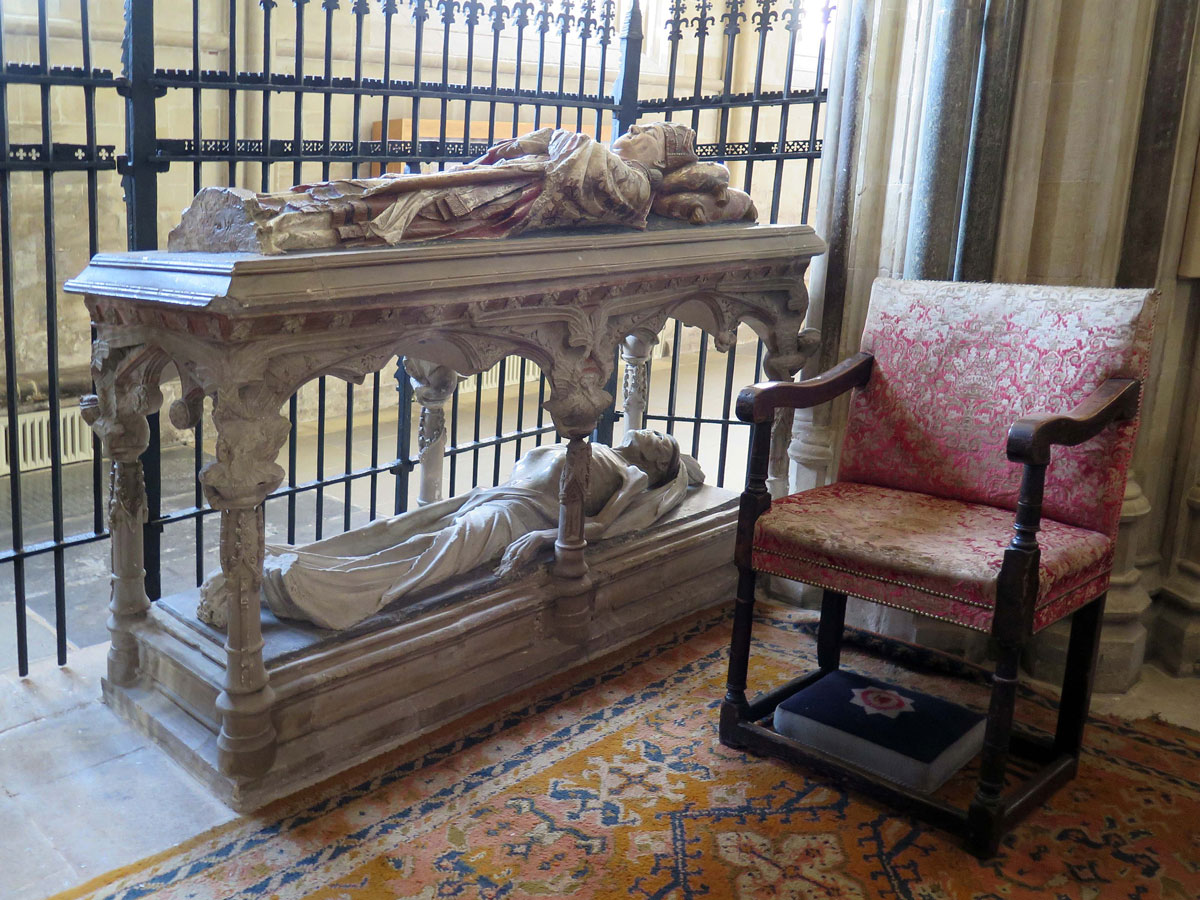
The Retroquire not only connects the Quire with the Lady Chapel, but also the North and South Quire Aisles, and in the South Quire Aisle, amongst other Bishops’ tombs, is the Chantry Chapel of Bishop Thomas Beckynton. He was one of the cathedral’s great benefactors, and if you remember, was also the one who utilized the water seeping out of the ‘wells’ in the palace grounds to provide fresh water for the local townsfolk. If you’ve been having a bad day, you might not want to look too closely at his double-decker tomb because it’s what’s known as a memento mori tomb which means ‘Remember you must die’.

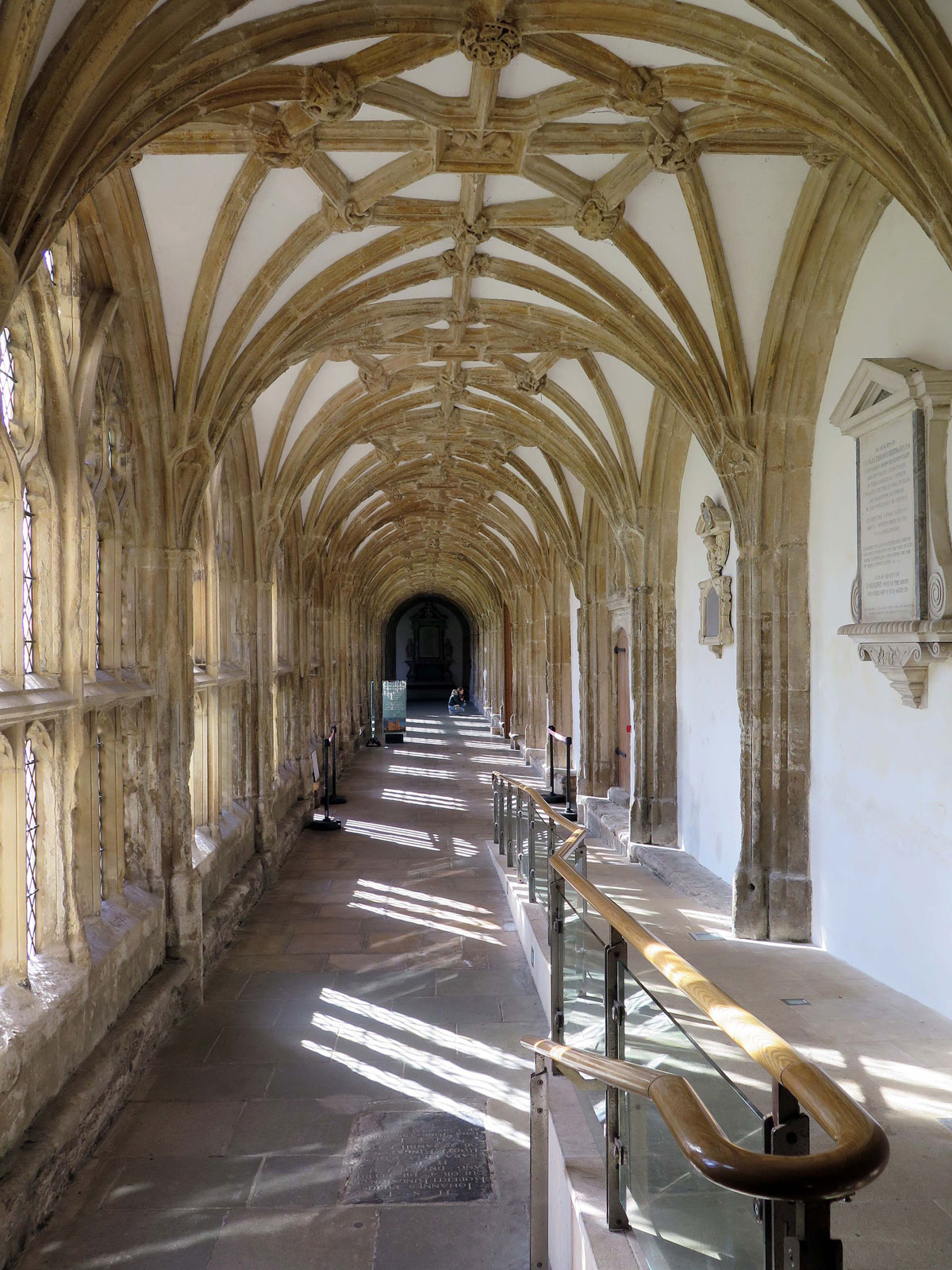
The South Quire Aisle leads to the South Transept with its Saxon Font, and from here steps give access to the Cloisters and the Chained Library. Cloisters are usually associated with monasteries where monks carried out their everyday activities, but the cathedral at Wells was never a monastery, and I have to confess I’m not quite sure why they were required here. The 15th century library, one of the few chained libraries in England, can be visited if you’ve pre-booked a guided tour – which I didn’t, so unfortunately I can’t show you what it looks like, and for someone like me who has an interest in ancient books and libraries, perhaps I should have done some more homework beforehand.
This almost brings me to the end of my posts on Wells – almost, but not quite, so if you can manage to stay awake a bit longer, why not join me for one final chapter in the Gospel according to St Malc to find out what heavenly treat I still have left in store for you.
POSTED – OCTOBER 2025
Originally posted 2025-10-21 09:34:09.
It’s a beautiful cathedral and Wells is lovely. I didn’t know about the library, I’d quite fancy a look. A reason for a return visit if I’m ever back over that side of the country.
I agree. It has a lot of charm without being twee if you know what I mean.
Amazing! An architectural gem. Thanks for a dose of beauty today. Mel
Glad it brightened up your day ⛪
Malc
Good question regarding a huge cathedral in a small city. Though my question was Wells more populated back in the day. We loved visiting that area. Interesting detailed writeup which I enjoyed reading. Thanks, Malc.
Glad it sparked some good memories Suzanne. As far as I’m aware, the population has always been small in comparison to its importance as an ecclesiastical centre.
A stunningly beautiful cathedral Malc, the architecture is amazing – it’s hard to believe it was all done so long ago. I love those scissor arches, and I could stand all day and watch that fascinating clock.
I agree Eunice. It may not have the importance of cathedrals such as Canterbury, York or Durham but in my opinion it ranks up there with the best architecturally.
Excellent photos and descriptions of one of our loveliest cathedrals. The misericords are indeed exceptional!
Thank you Sarah, and you’re right about both the cathedral and the misericords.
It’s a truly stunning architectural masterpiece.
Thank you for discussing it in such detail.
And thank you for your lovely comment Luisa.
You’re more than welcome!
Reading your beautiful article was a real pleasure
Thank you so much Luisa!
A wonderful post about a beautiful place. It always astonishes me he workmanship and craftsmanship of these cathedrals when you consider the time they were built in. I had to smile at the stone steps. We had a set like that leading up from our backyard to the street in our last house…. Great post. Loved it
Thanks Shey. I bet you’re glad you don’t have to negotiate those steps anymore, but you’re right about the skills people had back in those days 🌟
I was fed up cementing these steps. I watched this series on netflix, it was dubbed, but okay, the Cathedral of the Sea and like that it had a few scenes involving the building of the cathedral in the story and like that mah jaw was on the ground.
I can imagine. I’ve always admired people who designed great buildings, but I also have admiration for those who built them, voluntarily or otherwise.
Absolutely. The journey they made with these stones was something.