Tag Archives: Cornwall

Don’t Burn in Hayle

Don't Burn in Hayle

Summer’s arrived at last, and although I’m not usually too keen on getting sand stuck between my toes – or any other crevice for that matter – there are plenty of people who it seems are quite happy to. Mind you, when the sun’s beating down from a clear blue sky there are far worse places to be than a nice quiet beach: To lie there with a good book as the waves gently lap the shore can seem like heaven on earth, especially as there’s not likely to be a lawnmower around to shatter the peace – so today I thought I’d take you down to Hayle, but make sure you take some sun cream with you as I wouldn’t want you to burn.

Hayle comes from the Cornish word heyl meaning estuary, which is appropriate, as the town is located at the mouth of the Hayle River, a 12 mile long water course that ends its short journey in St Ives Bay. The name of this bay, as you might have guessed, gets its name from the holiday town of the same name, and if you’re travelling down to West Cornwall by train, you’ll be able to see ‘Hayle below’ as it crosses over a viaduct before it reaches St Erth, the station from which a branch line offers the easiest and most picturesque way of reaching St Ives.

Continue reading →

Originally posted 2024-07-02 16:04:58.

Mousehole

Mousehole

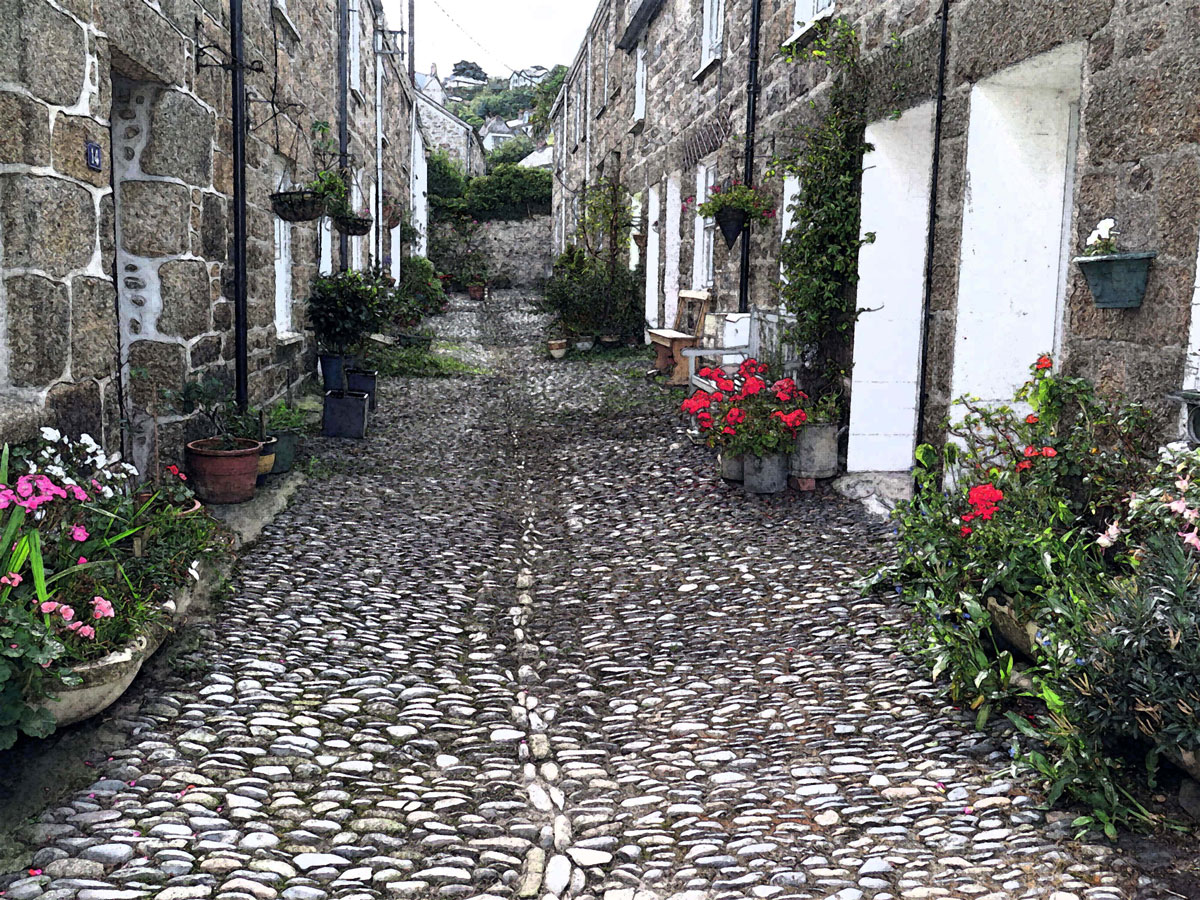
Lying at the far end of Mount’s Bay just three miles or so from Penzance, Mousehole (pronounced Mouzel) has always been one of my favourite villages in Cornwall. The narrow streets and alleyways converge at the picturesque harbour that was once full of fishing boats, but now, in the summer at least, is full of tourists instead.

Come out of season at a time when southerly gales can do their worst, and you’ll see a totally different Mousehole. The harbour and tiny cottages are built out of local granite which is so characteristic of this part of Cornwall, and so necessary to keep out the elements. Mousehole is where the protection of Mounts Bay gives way to the rugged West Penwith peninsula, and for me, Mousehole in wintertime is the best time of all.

Continue reading →

Originally posted 2021-10-18 13:15:33.

The Penlee Lifeboat Disaster

The Penlee Lifeboat Disaster

About half a mile or so outside of Mousehole on the road towards Newlyn is Penlee Point, a small promontory, which to me marks the westernmost point of Mounts Bay. Until 1983 it was the home of the Penlee lifeboat, but today the lifeboat station remains as a memorial to a tragic event that happened on the evening of the 19th December 1981.

Mousehole always celebrates Christmas in a big way, and on the Saturday before Christmas, the bar in the Ship Inn was doing a brisk business as usual. The weather outside wasn’t great and although the sea was a bit rough, it wasn’t anything unusual, as pictures on the pub walls will verify.

Continue reading →

Originally posted 2021-11-25 10:52:20.

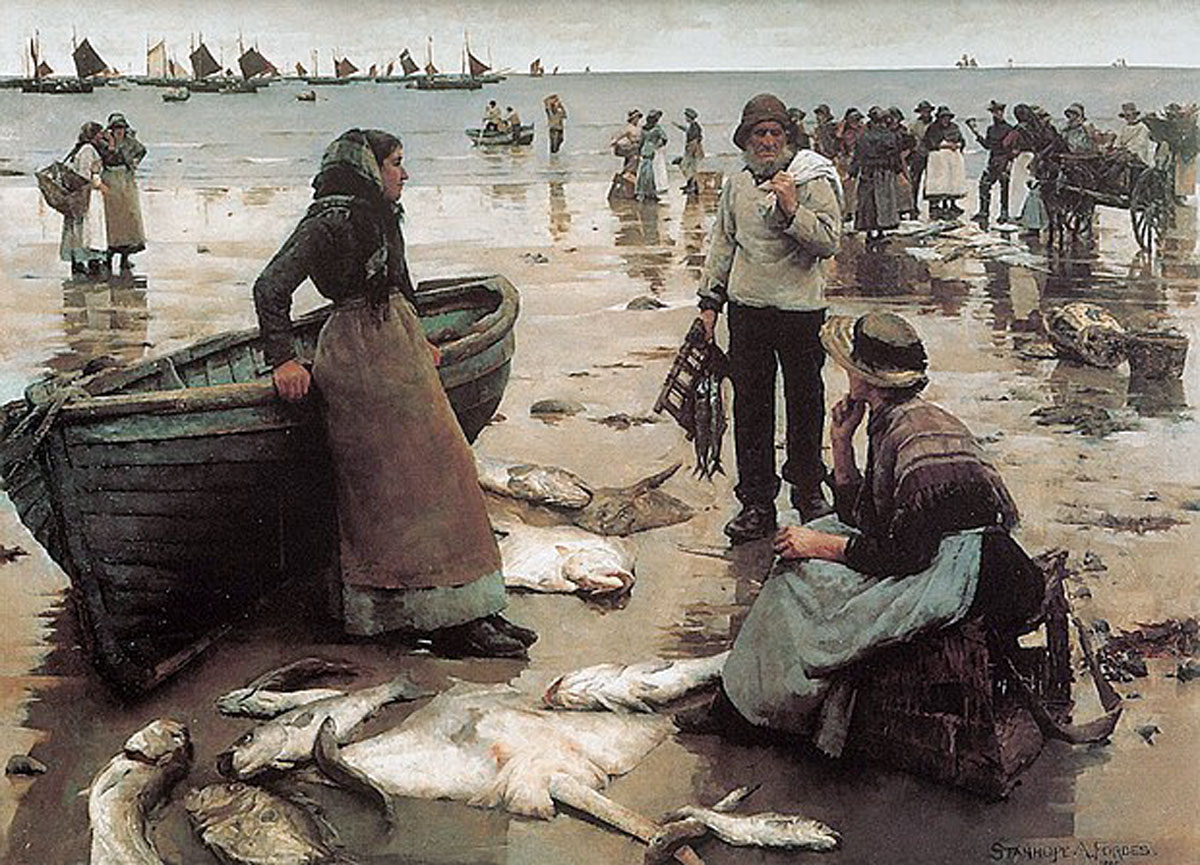
The Newlyn Artists – Pt 3 Stanhope and Elizabeth Forbes and Other Artists

The Newlyn Artists - Pt 3 Stanhope and Elizabeth Forbes and Other Artists

My previous two posts about Walter Langley and Edwin Harris show how the Newlyn art colony began, but from little acorns mighty oak trees grow as they say, and today’s final post on Newlyn is about how a small group of artists blossomed into a highly acclaimed school.

Both artists were influenced by the French en plein air style, and it was on Harris’s second trip to Brittany in 1882 that he first met the Canadian artist, Elizabeth Armstrong in Pont-Aven.

Born in Ontario in 1859, Elizabeth, accompanied by her mother, moved to London to study at the South Kensington Art School, and after completing further studies in New York and Munich, sought inspiration for her work in Brittany and Holland. After returning to England, mother and daughter headed down to Newlyn where Langley and Harris had been joined by Stanhope Forbes, Frank Bramley and others, and it was Edwin Harris who introduced Elizabeth to Stanhope Forbes at Cliff Castle Cottage.

Continue reading →

Originally posted 2025-03-02 16:02:03.

The Newlyn Artists – Pt 2 Edwin Harris and the Birmingham Boys

The Newlyn Artists - Pt 2 Edwin Harris and the Birmingham Boys

In Part 1, I described how Birmingham artist Walter Langley adopted Newlyn as his home with the objective of creating everyday scenes similar to the French artists who painted en plein air. Being the first notable artist to settle in the port, he is generally regarded as founder of the art colony known as the Newlyn School – but there was another contender.

Langley’s artistic career began at the Royal Birmingham Society of Artists (RBSA) where he became a close friend of Edwin Harris, who also decided to take his palettes down to Newlyn. Harris was born at Ladywood in 1855 and entered Birmingham School of Art at the age of 14, and apart from Walter Langley, his fellow colleagues included William John Wainright and William Breakspeare: All four of them were involved in forming the Birmingham Art Circle whose objective was to give encouragement to younger artists, but their close association also meant that the ‘Birmingham Boys’ would all end up down at Newlyn.

Continue reading →

Originally posted 2025-02-17 15:49:11.

The Newlyn Artists – Pt 1 Walter Langley And The Founding Of The Newlyn School

The Newlyn Artists - Pt 1 Walter Langley And The Founding Of The Newlyn School

Cornish fishing harbours are a magnet for tourists, but Newlyn has never really been one of them. While St Ives on the opposite side of the Penwith Peninsula attracts plenty of visitors (some say too many at times), Newlyn may just get a handful drop in on their way from Penzance to Mousehole.

I don’t think it bothers the good people of Newlyn too much though because they’re more interested in trying to earn a living from the main business of fishing, and which is why you’re more likely to find a down to earth pub full of raucous fishermen drinking copious amounts of ‘Proper Job’ rather than a sophisticated wine bar occupied by ‘ladies who lunch’ sipping the odd glass of Chardonnay.

Newlyn may not have attracted as many tourists as St Ives, but it has attracted as many artists (and I’m not talking about the drinking variety now): In actual fact, artists arrived here to paint en plein air quite a while before the St Ives school was established, and if you’re interested in reading more about the art scene in St Ives you can find it in my post Have you Seen the Light?

Continue reading →

Originally posted 2025-02-09 09:37:31.

Newlyn – Pt 2 The Port Survives Stormy Times And They Weren’t All At Sea

Newlyn - Pt 2 The Port Survives Stormy Times And They Weren't All At Sea

In Pt 1, we saw how Newlyn Harbour developed from a small quay in Gwavas Lake during the Middle Ages to how it roughly appears today, but other improvements had been taking place as well. Before the North and South Piers had been completed, a road was built along the Strand that separated the communities of Newlyn Town and Street-an-Towan, and then a timber Trawl Pier was constructed next to the Strand road where fishermen could land their catch directly onto shore.

To assist the fishermen and those organizing the running of the harbour, several buildings were constructed including a covered fish market, ice works, harbour commissioner’s office and fishermen’s mission. Below are some images of the Strand today, but it’s worth noting that the road is primarily taken up with the everyday workings of the fishing business.

Continue reading →

Originally posted 2025-01-31 08:10:50.

Newlyn – Pt 1 Pilchards and Piers

Newlyn - Pt 1 Pilchards and Piers

Newlyn lies in Mounts Bay just a thirty minute walk along the Promenade from Penzance Harbour. It belongs to the parish of Penzance and the two towns are often officially referred to as Penzance and Newlyn, but they’re really quite different in character. Whereas Penzance can be regarded as a fairly quiet holiday town, Newlyn is one of the largest fishing ports in England, if not the largest.

Continue reading →

Originally posted 2025-01-26 09:21:51.

Penzance – The End of the Line

Penzance - The End of the Line

More often than not, I travel to Penzance by train, and every time I arrive, I always feel that I’ve reached the end of the line – and that’s because I have. It’s the final stop on Brunel’s Great Western Railway and the most southerly railway station in the country. Land’s End is less than ten miles away and when you come out of the station and see a sign that says Pensans A ‘Gas Dynergh (Welcome to Penzance) you know that you’ve arrived somewhere different to where you started out from.

Continue reading →

Originally posted 2018-04-10 15:01:44.

Porthleven – A Harbour Built for Protection

Porthleven - A Harbour Built for Protection

I’ve been taking a short break from blogging recently so that I can take stock of where I want to go with it – if at all. To be honest I still haven’t made my mind up, but for now I thought that I would just tread water by showing you a few photos of a weekend away, pre-lockdown, in the small Cornish fishing port of Porthleven.

The pictures I’ve included show what it can be like here on a lovely day. As you can see, our day started off well and finished even better, with a beautiful sunset and a drink (or two) in the Ship – but the weather’s not always like that in Mounts Bay.

Continue reading →

Originally posted 2021-03-21 06:25:15.

Lazing About on the Helford River

Lazing About on the Helford River

Nowhere epitomizes the gentle southern coast of Cornwall more than the Helford River does. Streams trickle slowly down into peaceful, secluded creeks, which join the river as it heads out to sea.

Being tidal, the river and its inlets offer the perfect habitat for marine and bird life, and the whole catchment area is protected by various environmental groups and organizations. The river is also the perfect habitat for the yachting enthusiast, and the overall scene is one of peace and tranquility – but it hasn’t always been that way.

The source of the river lies just above Gweek, which due to its proximity to the former mines at Wendron, allowed the village and the river’s upper reaches to be involved in the export of tin and copper and the importing of coal and timber for operating the mines. These days, even though there’s a thriving boatyard, it’s hard to imagine that this was once a bustling port, because apart from people coming to visit the Cornish Seal Sanctuary, Gweek has reverted back to being a sleepy little village.

Continue reading →

Originally posted 2021-09-05 16:39:34.

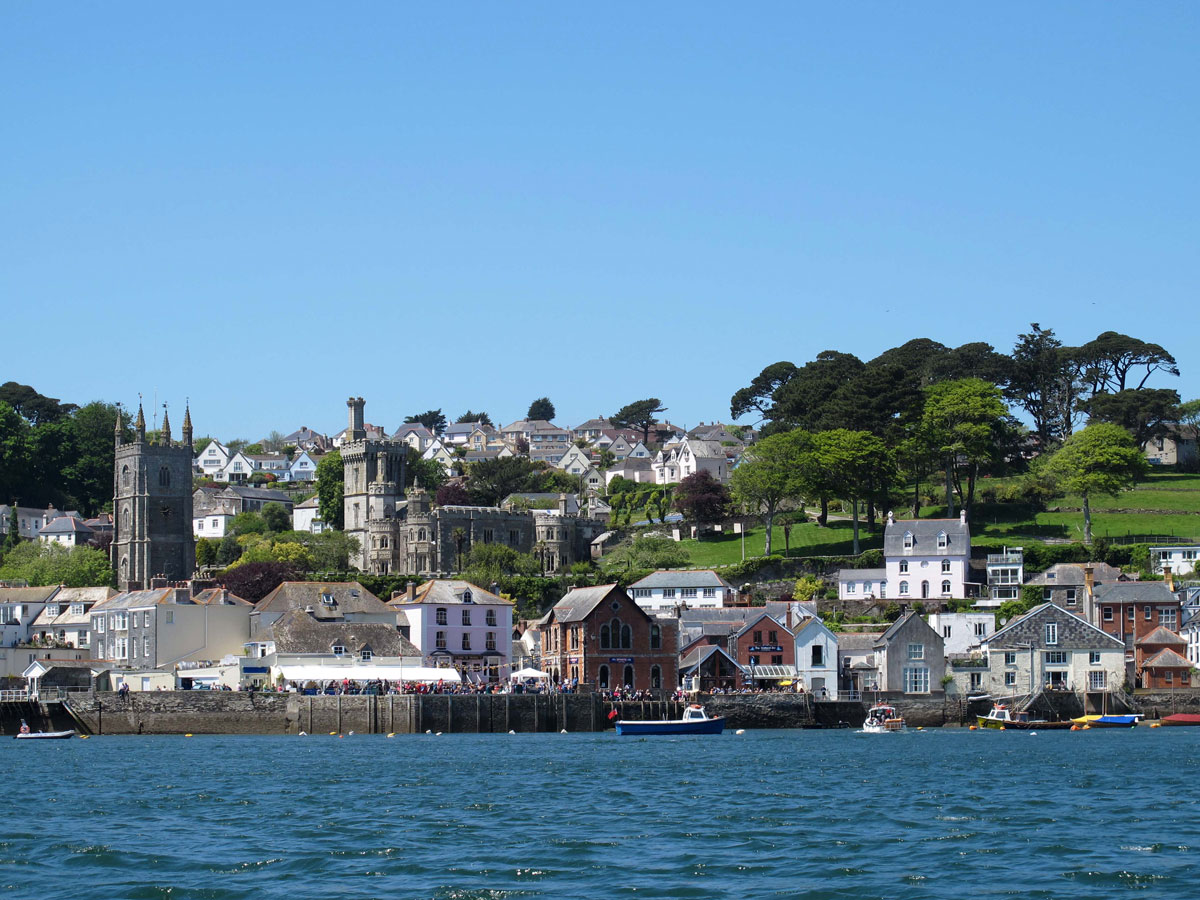
Pendennis and St. Mawes – Twin Castles on the Fal Estuary

Pendennis and St. Mawes - Twin Castles on the Fal Estuary

THE NEED FOR PROTECTION

Falmouth Harbour is a deep natural expanse of water that has provided anchorage for centuries, and traditionally, like other coastal communities around the country, protection against any threat of foreign invasion was left in the hands of local lords, but the 16th century saw these simple defences become inadequate when the threat of invasion became more serious after King Henry VIII upset the Pope and his Roman Catholic friends.

The failure of Henry’s wife, Catherine of Aragon, to provide a male heir prompted Henry to do something about it, and under normal circumstances, it would have been easy enough for the king to do what he wanted, and that was to divorce Catherine and marry the new love of his life, Anne Boleyn – but these weren’t normal circumstances. When Henry asked Pope Clement VII to annul the marriage he refused, due in no small part to the fact that he was under the thumb of Charles V, the Holy Roman Emperor who had taken control of Rome – and Charles was Catherine’s nephew.

In 1533, Henry secretly married Anne Boleyn, and left the Pope with no option but to excommunicate him from the Catholic Church. The following year Henry forced through the Act of Supremacy which made him the Supreme Head of the Church of England thus leaving the Pope with no religious authority at all in England. Henry then wasted no time in divorcing Catherine – but he must have known that there would be trouble ahead.

The Pope was eventually compelled to act, and in 1538 issued an order to depose the King of England. Francis I of France, and Charles V, (who was also king of Spain as well as Holy Roman Emperor) posed the main threats, and to deal with them Henry needed to improve his vulnerable defences along the south coast – and the entrance to the Fal Estuary was one of them.

Continue reading →

Originally posted 2021-07-22 19:49:55.

Truro Cathedral

Truro Cathedral


It may seem hard to believe, but when the foundation stones were laid for Truro Cathedral on 20th May 1880 by the future King Edward VII, they were the beginnings of the first Cathedral to be built in England since Salisbury in 1220.

Designed by John Loughborough Pearson, it is built mainly of Cornish granite in the medieval Gothic style with the more decorative features made out of the softer Bath stone. One of its more unusual features is that it includes part of the original Tudor St. Mary’s Parish Church and is a church within a church with the Dean of the Cathedral also being Rector of St Mary’s.

Continue reading →

Originally posted 2021-10-09 16:40:56.

Mevagissey

Mevagissey

According to the Mevagissey Harbour website, the village is the second biggest fishing port in Cornwall with around 60 vessels being registered here. The number and size of the boats are not on the same scale as Newlyn though, and there are probably just as many pleasure boats in the harbour as there are fishing boats.

The time when it was possible to catch thousands of tons of pilchards a year is just a distant memory now, and tourism is now more important to Mevagissey than fishing. Even so, tourists come here to enjoy the harbour life as much as anything, so it’s still important whichever way you look at it.

Meva hag Ysi is named after St. Mevan (a Welshman) and St. Issey (an Irish woman) and has two harbours: The Inner Harbour was constructed in 1774, and the Outer Harbour in 1888. It might not come as any great surprise therefore, to learn that boatbuilding was also another source of income, but the boats built in Mevagissey were used for smuggling rather than fishing, and the best place to find out more is at the museum which is housed in a former boatbuilding yard that dates back to 1745.

This is one of my short posts where pictures are probably better than words, and the gallery below shows a selection of images from around Mevagissey.

Continue reading →

Originally posted 2021-02-26 16:25:38.

The Cornish Alps

The Cornish Alps

Before you start getting the wrong idea about Cornwall having some majestic inland mountain scenery, I’d better warn you straight away that the landscape I’m talking about here is anything but picturesque, but don’t walk away just yet because the China Clay industry is an integral part of Cornish life. This is a part of Cornwall that tourists avoid and locals earn just about enough money from to keep their heads above water.

In this short post I want to give you an introduction to the area around St. Austell which for many years looked more like a lunar landscape than a part of the Cornish countryside.

Continue reading →

Originally posted 2021-05-23 14:24:58.

Take the Ferry to Fowey and Daphne Du Maurier Country

Take the Ferry to Fowey and Daphne Du Maurier Country

Like so many Cornish coastal towns and villages, Fowey (pronounced Foy) wasn’t built with the internal combustion engine in mind, and having been here several times, using different modes of transport, I reckon the best way to get here is by using the Mevagissey to Fowey Ferry.

By using the ferry, you get to see two harbours for the price of one, and a trip across St. Austell Bay thrown in for good measure. If you haven’t been to Mevagissey before and want  to see what it’s like you can view some more pictures here.

Continue reading →

Originally posted 2022-08-17 11:24:10.

Isambard Kingdom Brunel and the Royal Albert Bridge

Isambard Kingdom Brunel and the Royal Albert Bridge

The source of the River Tamar lies less than 4 miles from the North Cornish coast, but instead of flowing the short distance into the Celtic Sea it makes a sixty mile journey in the opposite direction across the south-west peninsula towards Plymouth Sound where it enters the English Channel. The river forms most of the Devon/Cornwall border almost making Cornwall an island, and along with its Celtic background, makes the county feel very different from the rest of England.

Travellers to Cornwall still regard it as a long way from anywhere even though communications have improved over the years, but being cut off from the rest of the country may have had some advantages, but there were disadvantages as well. If you look at a topographical map of the region you’ll also notice that Dartmoor is another obstacle that gets in the way of a direct route into Cornwall, and how to get to the other side of Dartmoor and over the Tamar was the dilemma that faced those in the 19th century who needed to improve transport connections to London and the rest of the country.

For years, Falmouth had handled most of the international mail from the colonies by using packet ships, but its poor road connections were leaving it vulnerable to other ports which were able to take advantage of an expanding rail network with better access to the capital – and when the government announced proposals to transfer the bulk of the packet service to Southampton, it was time to do something about it, and so plans were put forward to build a railway line that would connect Falmouth to London.

Continue reading →

Originally posted 2024-10-29 10:14:02.