Tag Archives: Isambard Kingdom Brunel

Isambard Kingdom Brunel and the Royal Albert Bridge

Isambard Kingdom Brunel and the Royal Albert Bridge

The source of the River Tamar lies less than 4 miles from the North Cornish coast, but instead of flowing the short distance into the Celtic Sea it makes a sixty mile journey in the opposite direction across the south-west peninsula towards Plymouth Sound where it enters the English Channel. The river forms most of the Devon/Cornwall border almost making Cornwall an island, and along with its Celtic background, makes the county feel very different from the rest of England.

Travellers to Cornwall still regard it as a long way from anywhere even though communications have improved over the years, but being cut off from the rest of the country may have had some advantages, but there were disadvantages as well. If you look at a topographical map of the region you’ll also notice that Dartmoor is another obstacle that gets in the way of a direct route into Cornwall, and how to get to the other side of Dartmoor and over the Tamar was the dilemma that faced those in the 19th century who needed to improve transport connections to London and the rest of the country.

For years, Falmouth had handled most of the international mail from the colonies by using packet ships, but its poor road connections were leaving it vulnerable to other ports which were able to take advantage of an expanding rail network with better access to the capital – and when the government announced proposals to transfer the bulk of the packet service to Southampton, it was time to do something about it, and so plans were put forward to build a railway line that would connect Falmouth to London.

Continue reading

Originally posted 2024-10-29 10:14:02.
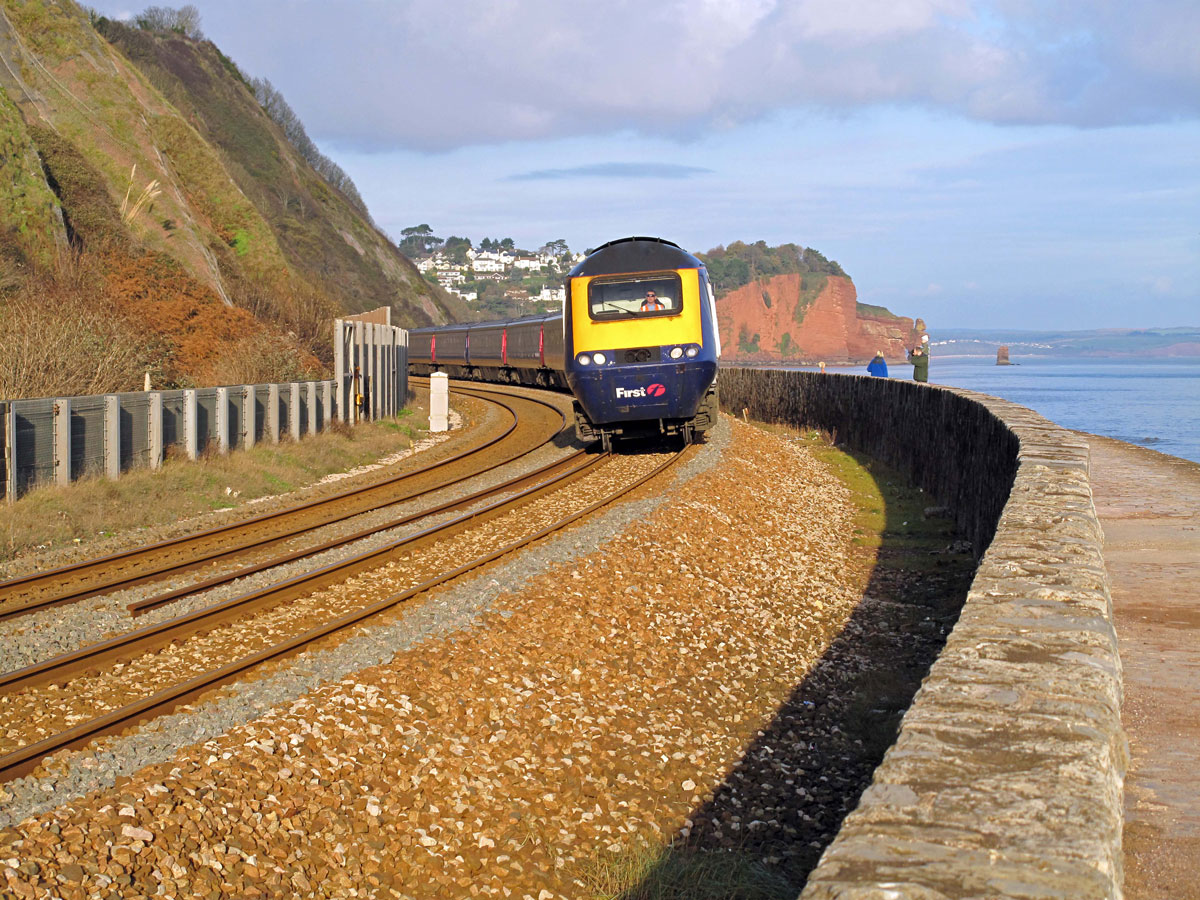
Isambard Kingdom Brunel’s Atmospheric Caper and the Teignbridge Coast

Isambard Kingdom Brunel's Atmospheric Caper and the Teignbridge Coast

The railway line between Exeter and Newton Abbot is regarded as one of the most scenic journeys on the National Rail network, and as a frequent traveller on the route, I thought it was about time that I wrote something about it.

Most people who aren’t familiar with the line are probably only interested in the scenery, and I’ll be discussing what there is to see a bit later on, but I want to put my anorak on for a minute and start by explaining why and how it was built.

To explain why it was built I need to briefly go back to the days of the Industrial Revolution. From the 1830s onwards, there was a massive expansion of Britain’s rail network involving many private companies, one of which was the Great Western Railway (GWR). The company was formed by Bristol merchants, who in order to retain its status as the country’s second port, employed Isambard Kingdom Brunel to build a railway, firstly to London, and then to Exeter.

As the tentacles of the railway network grew, it was only a matter of time before the idea was put forward of extending it down into Cornwall – but it was going to have to be built in stages, and by different rail companies. The logical first stage was an extension of the line from Exeter to the naval port of Plymouth; and when the South Devon Railway Company was formed to finance and oversee its construction, it was only natural that they would want to use Brunel’s talents, especially as the task wasn’t likely to be easy.

In 2002 the BBC made a TV programme called The 100 Greatest Britons which was based on a poll involving the general public. Isambard Kingdom Brunel came second behind Sir Winston Churchill, which just goes to show how important the engineer was still seen in the context of history. He was a genius at overcoming problems, but constructing the railway line from Exeter to Plymouth was to cause him more problems than he could have imagined.


Continue reading

Originally posted 2022-05-01 22:44:15.