Isambard Kingdom Brunel's Atmospheric Caper and the Teignbridge Coast
The railway line between Exeter and Newton Abbot is regarded as one of the most scenic journeys on the National Rail network, and as a frequent traveller on the route, I thought it was about time that I wrote something about it.
Most people who aren’t familiar with the line are probably only interested in the scenery, and I’ll be discussing what there is to see a bit later on, but I want to put my anorak on for a minute and start by explaining why and how it was built.
To explain why it was built I need to briefly go back to the days of the Industrial Revolution. From the 1830s onwards, there was a massive expansion of Britain’s rail network involving many private companies, one of which was the Great Western Railway (GWR). The company was formed by Bristol merchants, who in order to retain its status as the country’s second port, employed Isambard Kingdom Brunel to build a railway, firstly to London, and then to Exeter.
As the tentacles of the railway network grew, it was only a matter of time before the idea was put forward of extending it down into Cornwall – but it was going to have to be built in stages, and by different rail companies. The logical first stage was an extension of the line from Exeter to the naval port of Plymouth; and when the South Devon Railway Company was formed to finance and oversee its construction, it was only natural that they would want to use Brunel’s talents, especially as the task wasn’t likely to be easy.
In 2002 the BBC made a TV programme called The 100 Greatest Britons which was based on a poll involving the general public. Isambard Kingdom Brunel came second behind Sir Winston Churchill, which just goes to show how important the engineer was still seen in the context of history. He was a genius at overcoming problems, but constructing the railway line from Exeter to Plymouth was to cause him more problems than he could have imagined.

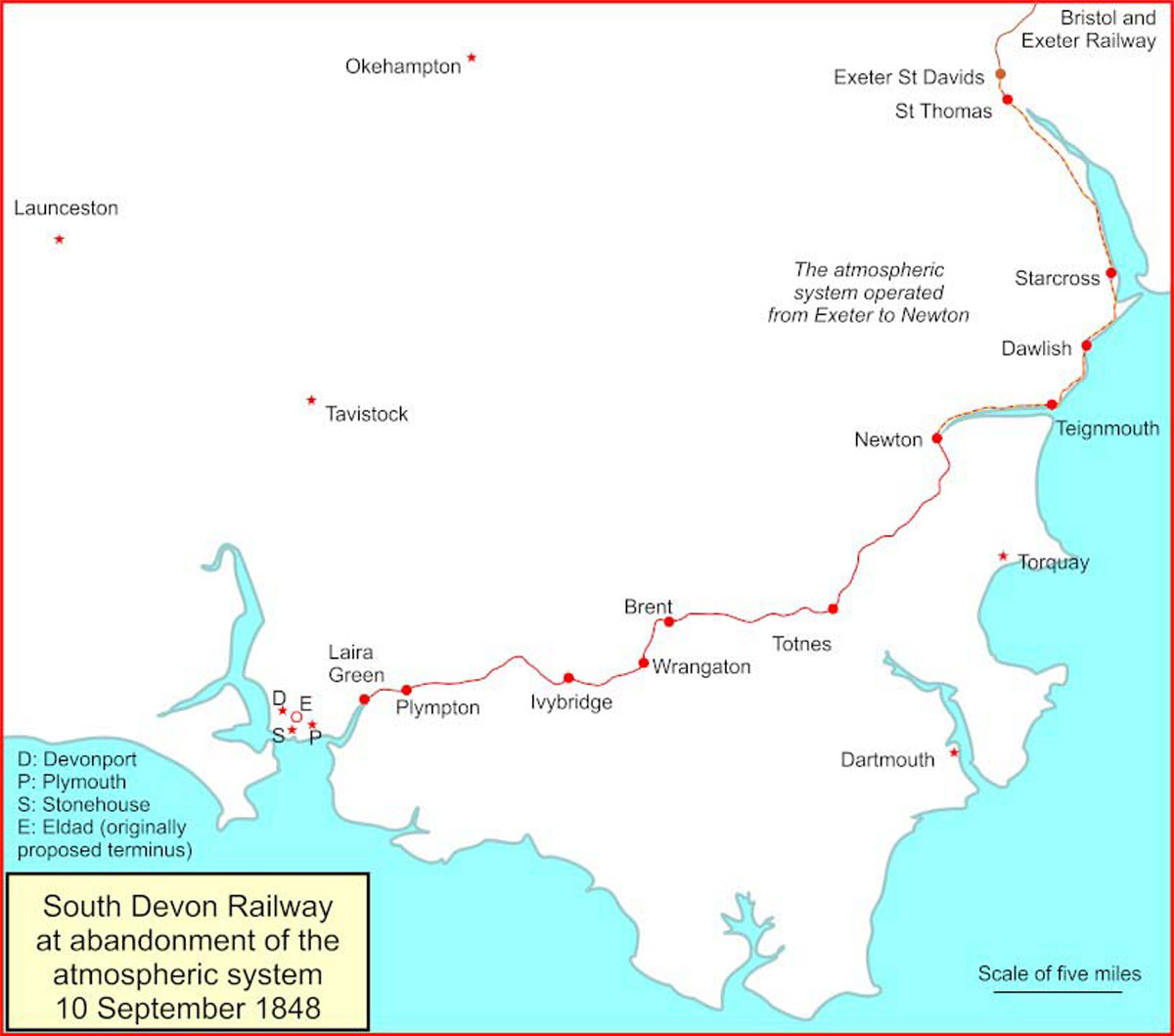
Several proposals were put forward as to which way the line should go, all of which had practical difficulties to overcome, but in 1844 an agreement was reached that would allow it to follow the coast to Newton Abbot and then travel inland through Totnes to Plymouth. In other words, the same route as it follows today.
The main cause for concern using this option however, was how steam trains would manage to overcome the difficult terrain between Newton Abbot and Plymouth, and this was the reason why Brunel adopted the idea of using an Atmospheric Railway. The system had already been tried and tested elsewhere and Brunel was convinced that this was what was needed here, but due to the perceived difficulties of the inland route, it was decided to build it in two separate stages, starting with the Exeter to Newton Abbot stretch first.
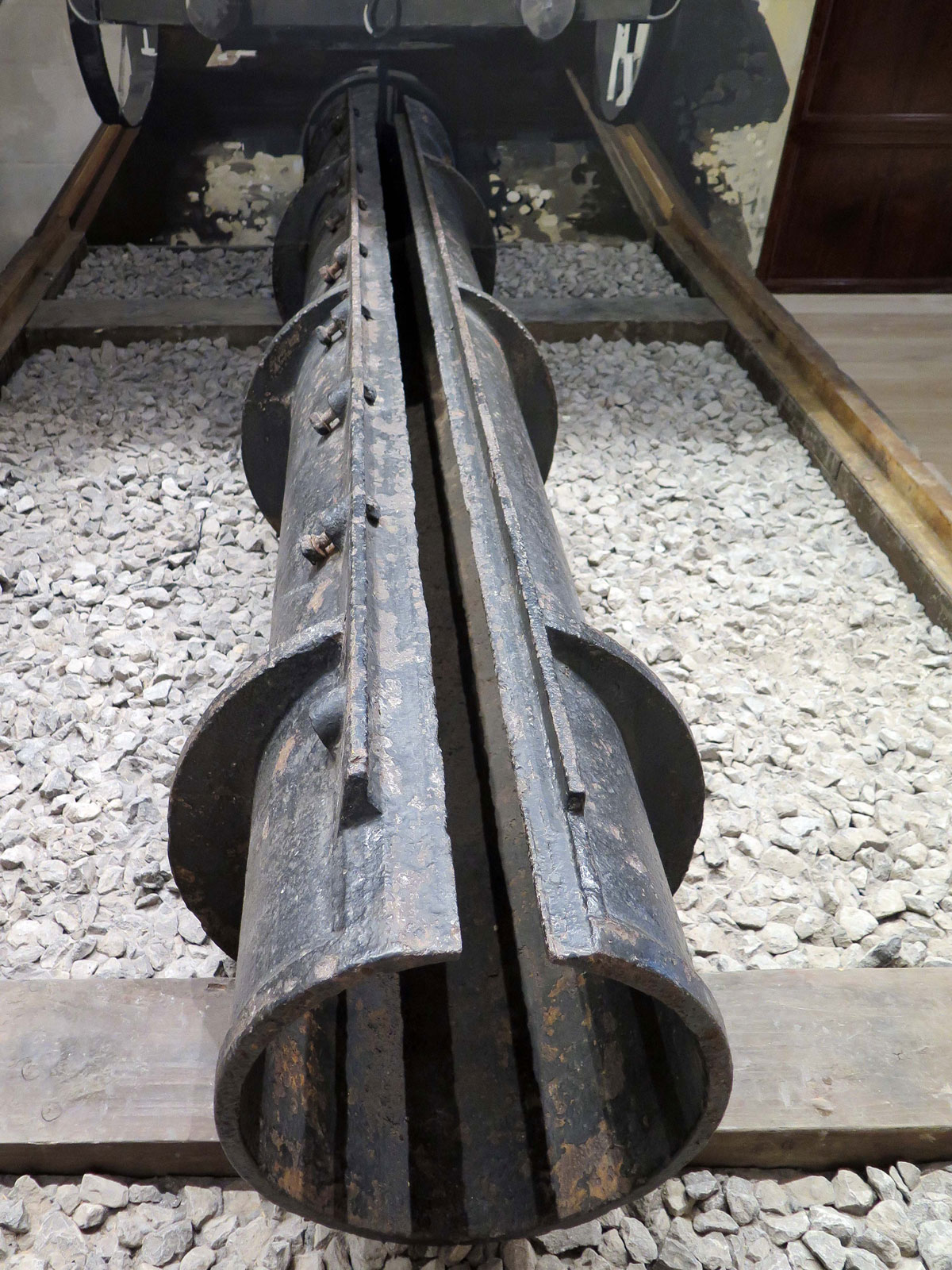
I’m certainly no engineer, but the Atmospheric Railway, explained simply, was a vacuum powered system that used cast iron pipes laid between the tracks: A piston located underneath the first carriage ran inside and the pipe and was pushed along by atmospheric pressure generated from steam powered pumping stations that were positioned every three miles or so along the route.
There were still plenty of challenges to overcome on this first stage as you’ll find out when I discuss the route in more detail, but at least it was flat, and within two years the track was ready for use between Exeter and Teignmouth. Although the track may have been ready, the atmospheric railway wasn’t, and so the first journey on 30th May 1846 used a steam train instead. It wasn’t until September the following year that the atmospheric system was used, and it didn’t reach Newton Abbot until March 1848.
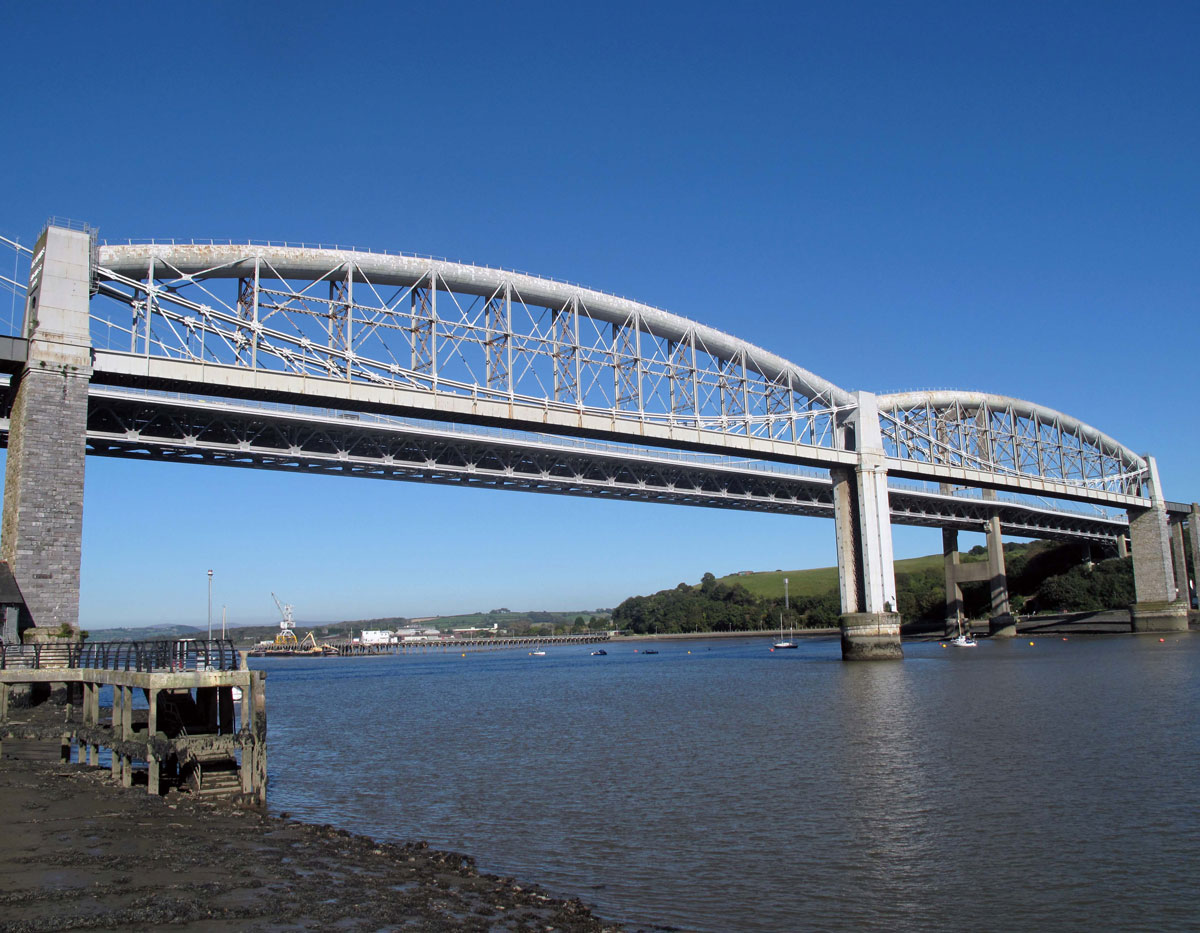
Ultimately, the system never succeeded. Technical difficulties led to an increase in costs making it a bad investment for the shareholders, and on 9th September 1848 the idea of using the Atmospheric system was abandoned. The Atmospheric Caper, as it’s been called, wasn’t one of Brunel’s greatest achievements, but even so, his aim of building a railway to Plymouth was achieved the following year, and in 1859 it was extended into Cornwall when he built the Royal Albert Bridge across the River Tamar between Plymouth and Saltash.
If all this information has made you doze off, I want you to wake up now because we’re coming to the bit where I’m going to describe the journey itself – and if you take my advice, it’s best if you can find a window seat on the left hand side of the train.
Leaving Exeter St. Davids (which Brunel also designed) a bridge carries us over the River Exe and flood relief channel before reaching a viaduct that supports the station at Exeter St. Thomas. As we go through the city’s suburbs and the industrial estates of Marsh Barton and Matford, you could be forgiven for starting to wonder how this line could be called scenic, but soon after we’ve gone under the M5, the scenery starts to change.
As the river leaves the city behind, it starts to become a flood plain, and at Exminster and Powderham Marshes the Royal Society for the Protection of Birds has created a natural habitat that attracts a significant number of wading birds, geese and swans. Over to your left, you should be able to make out the Exeter Canal which meets up with the river at the Turf Hotel. If you want to read my article about the Exeter Canal you can find it here.
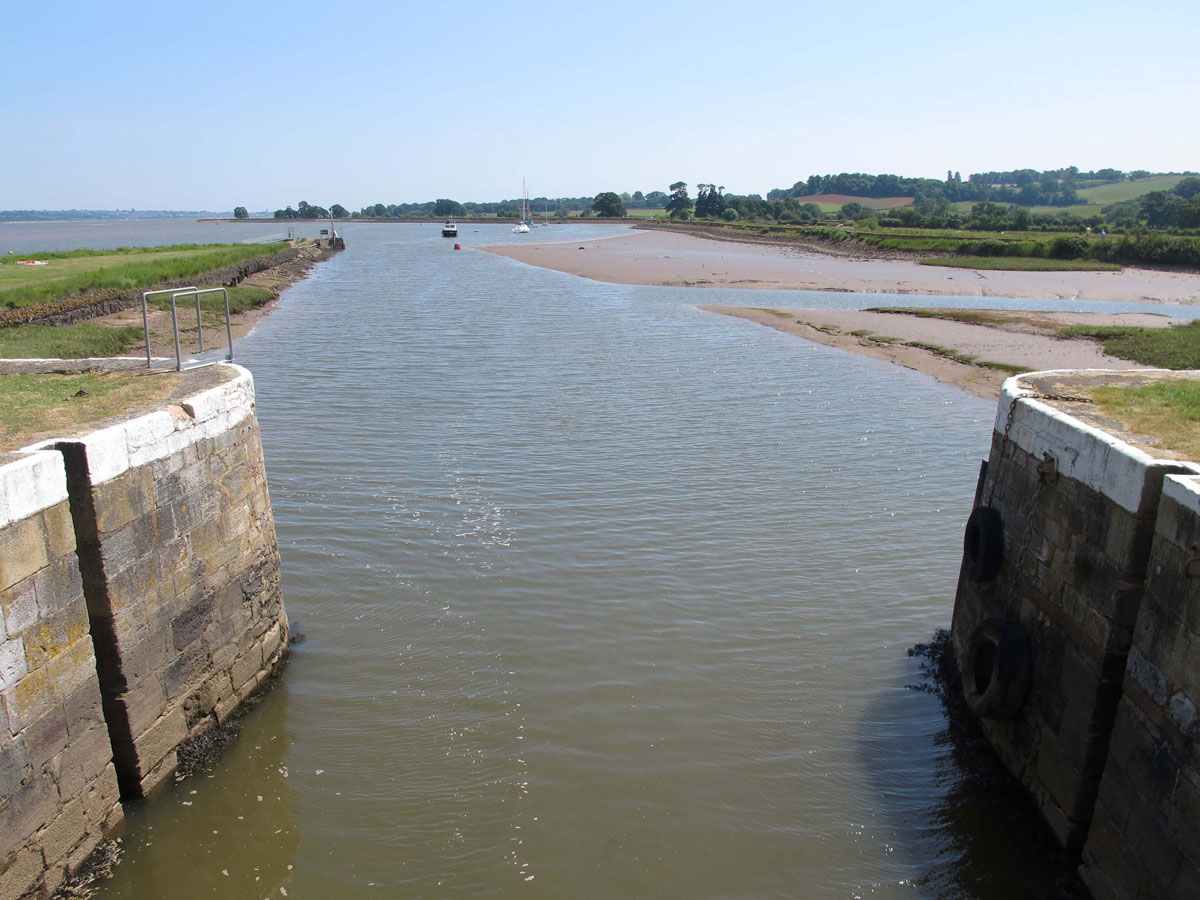
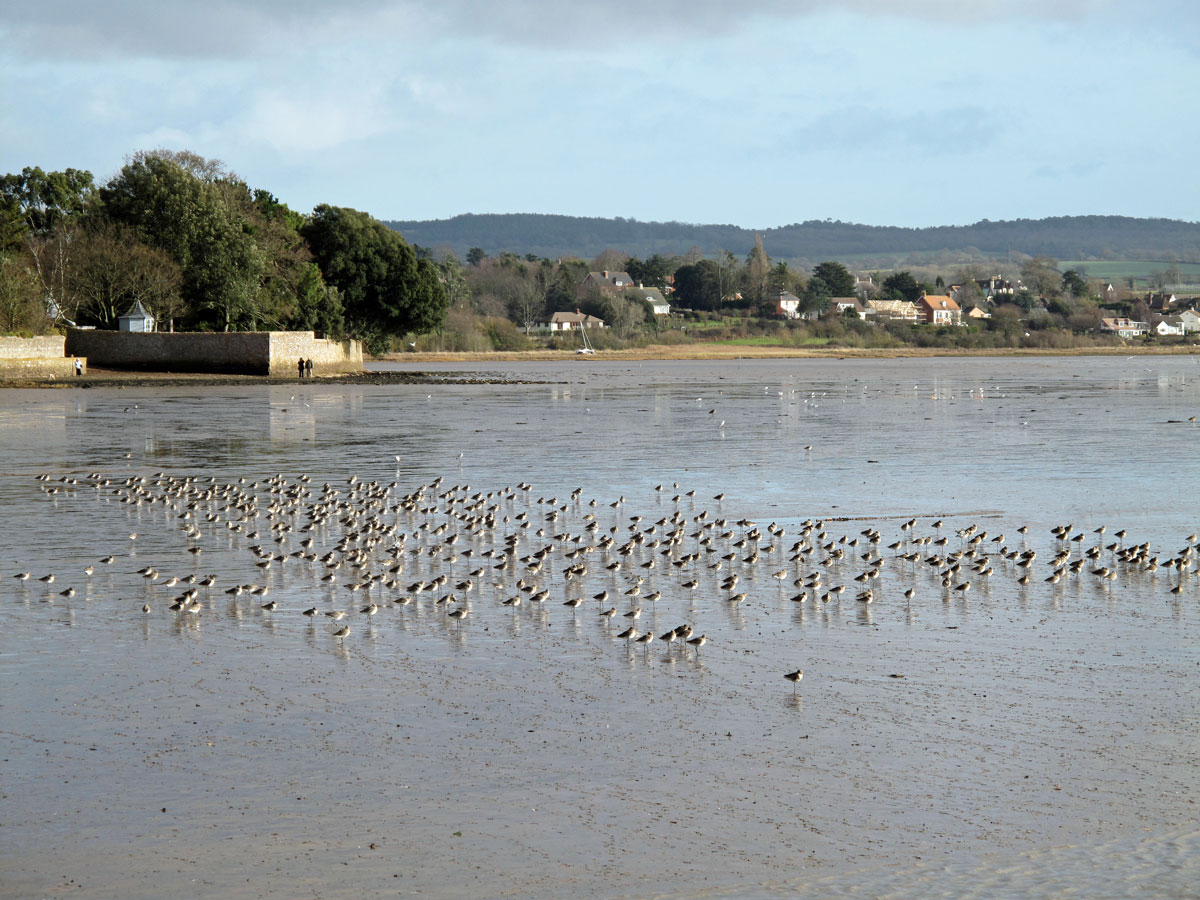
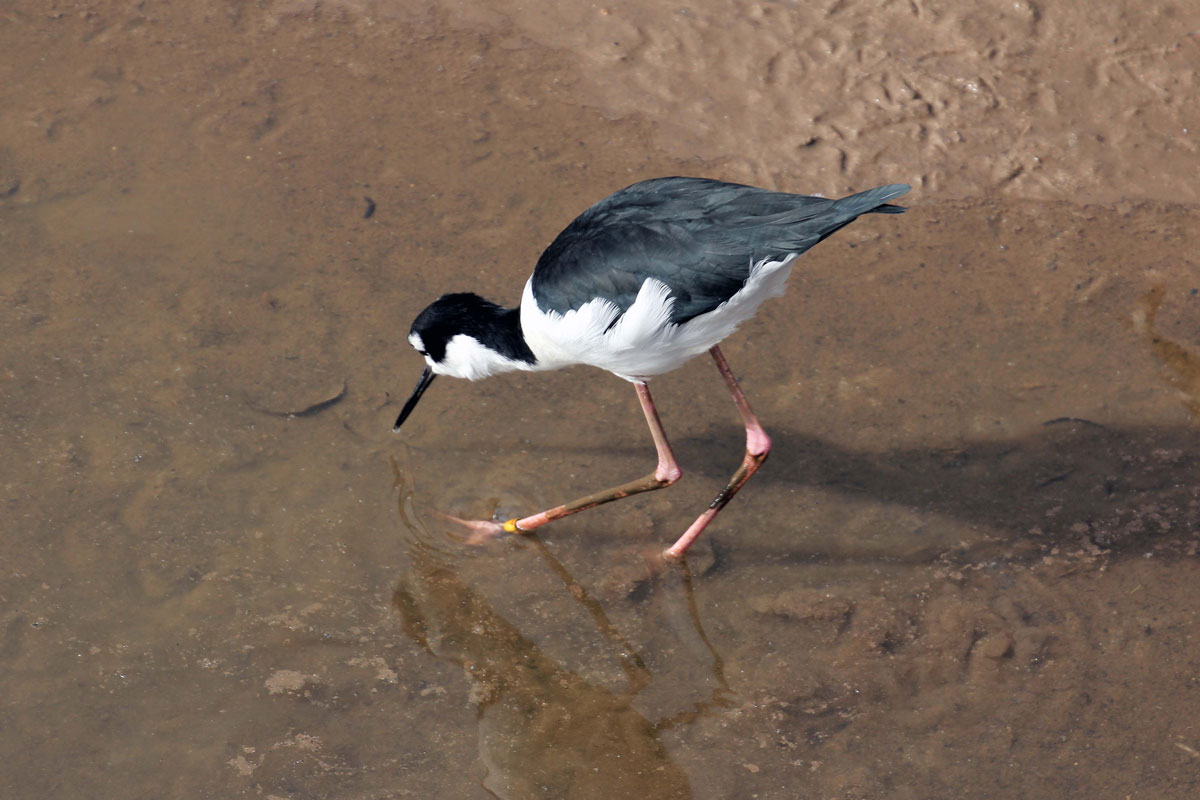
The railway now starts to run alongside the river where you should see, depending on the state of the tide, an amazing amount of birdlife for which the Exe Estuary is famous for. Thousands of birds make it their home, and it’s particularly rewarding for those who like waders: Dunlin, oystercatchers, lapwing, black-tailed godwit, curlew, grey plover and redshank are all here, but perhaps the favourite of all is the avocet – so much so, that the train line that runs from Exeter St. Davids down to Exmouth on the opposite side of the river is called the Avocet Line.
Although my advice was to sit on the left hand side of the train, it means that you will miss Powderham Castle and its deer park on the right. It’s a long time since I’ve been to the Earl of Devon’s home, so I’ll leave you to tell me what it’s like now. What I do know is that it holds frequent outdoor concerts featuring acts like Westlife, Status Quo, Tom Jones – and local boy, Coldplay’s Chris Martin.
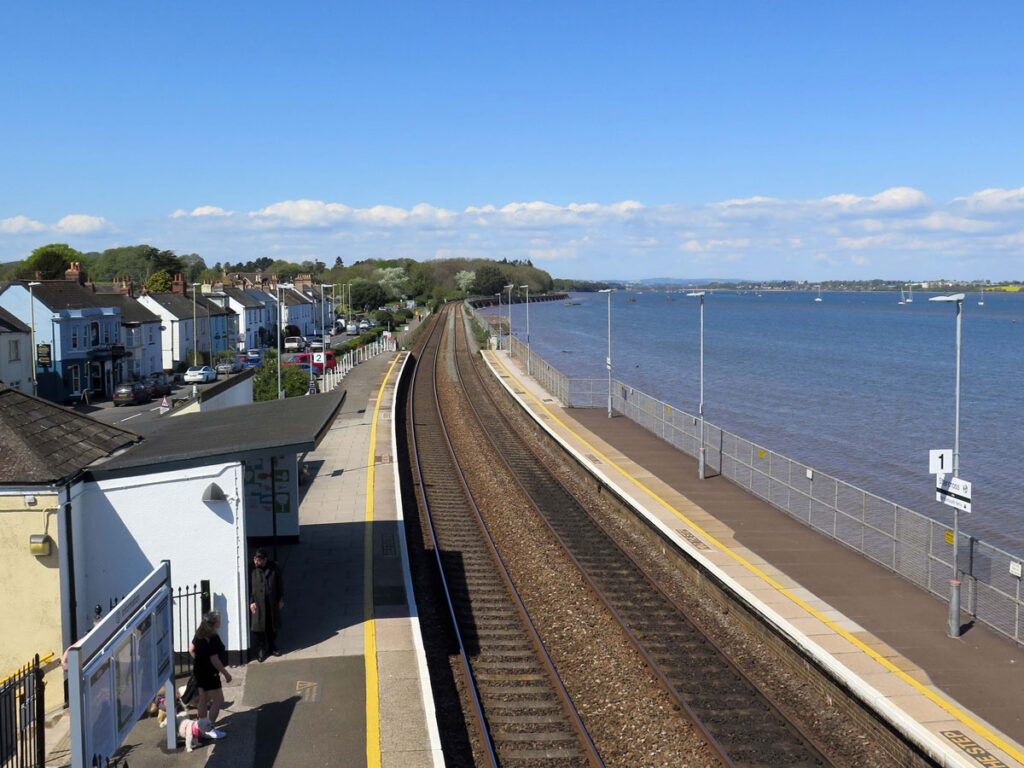
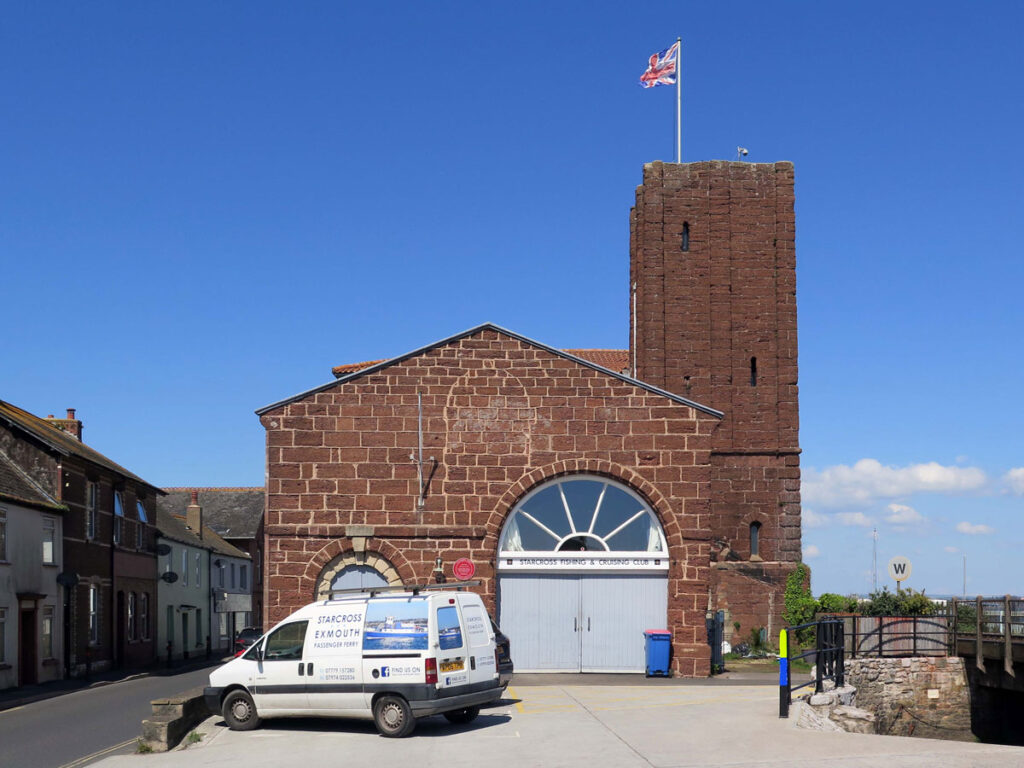
In no time at all we come to Starcross where you can still see one of Brunel’s original pumping houses. It used to hold a museum about the Atmospheric Railway, but that was many years ago and is now used by the Starcross Fishing and Cruising Club. Even if taking a closer look at it isn’t worth jumping off the train for, then taking the ferry across to Exmouth might be – and the departure point is only just along the end of the platform.
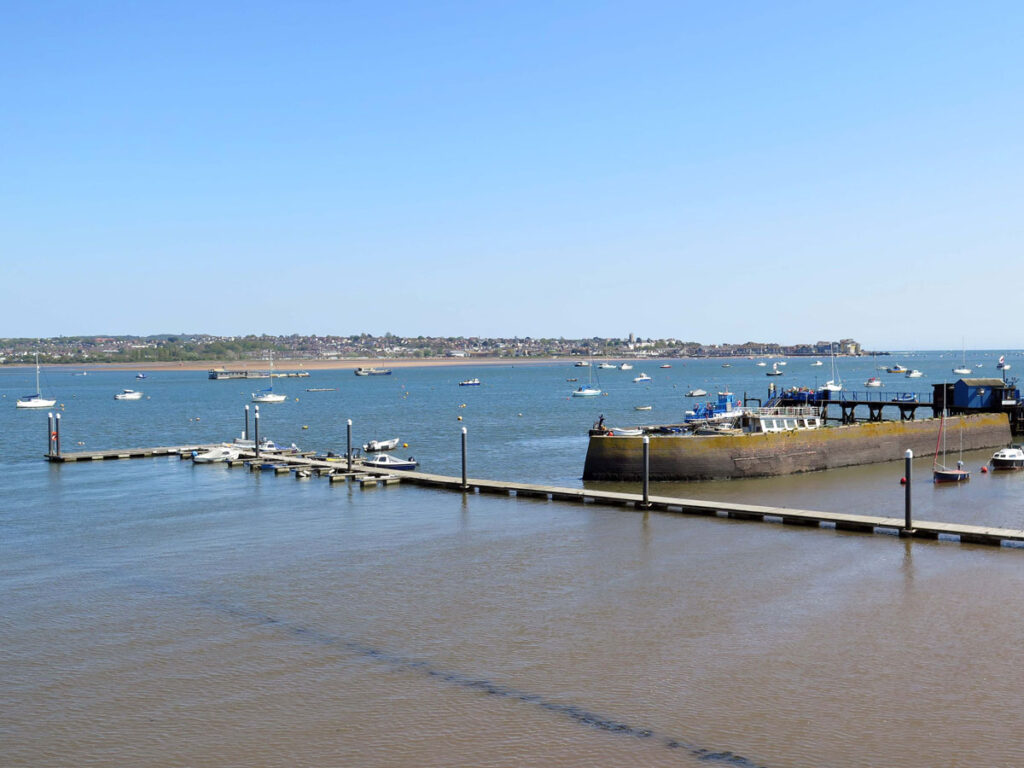
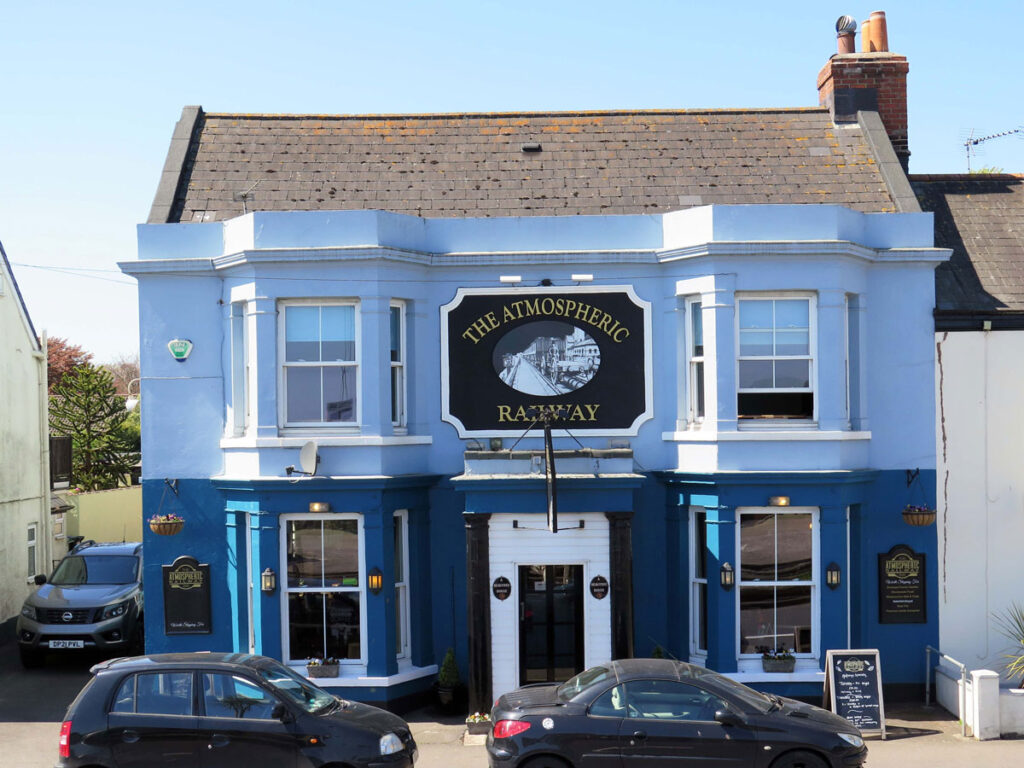
Below are some photos taken at Starcross showing the Riviera Line looking back upstream towards Exeter, the Exmouth Ferry Departure Point, Brunel’s Atmospheric Pump House, and of course the local pub.
I hope the clickety clack of the train or my storytelling hasn’t made you fall asleep again, because the journey gets even better as views of the river give way to views of the sea.
I think it’s worth mentioning at this point that not all trains stop at all stations, including Starcross and the next one at Dawlish Warren.
Dawlish Warren is a natural sand spit that stretches out across the mouth of the estuary towards Exmouth. The sands around the mouth of the river are always shifting and even the boatmen don’t always know precisely what to expect. In fact twice I’ve been on a boat which has beached itself, and then had to wait for the tide to rise in order to refloat.
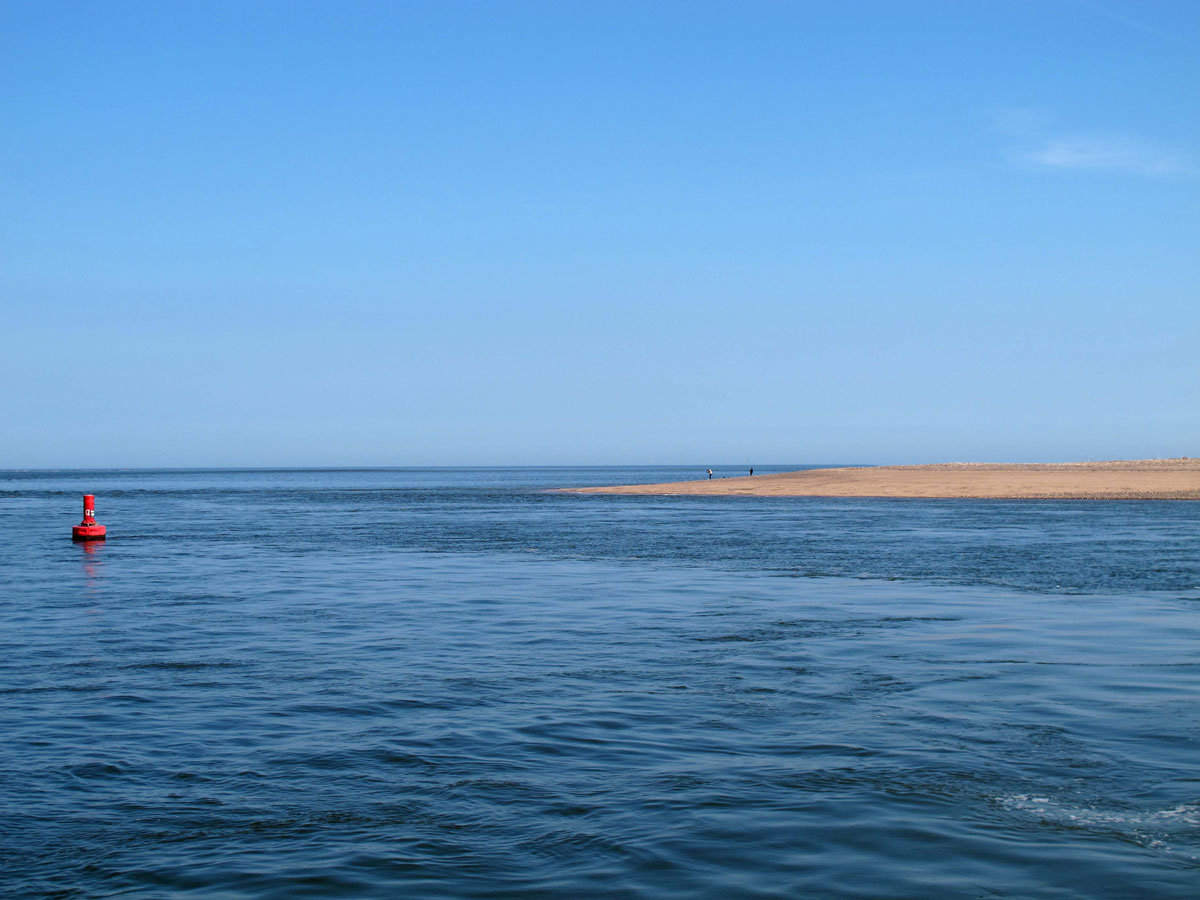
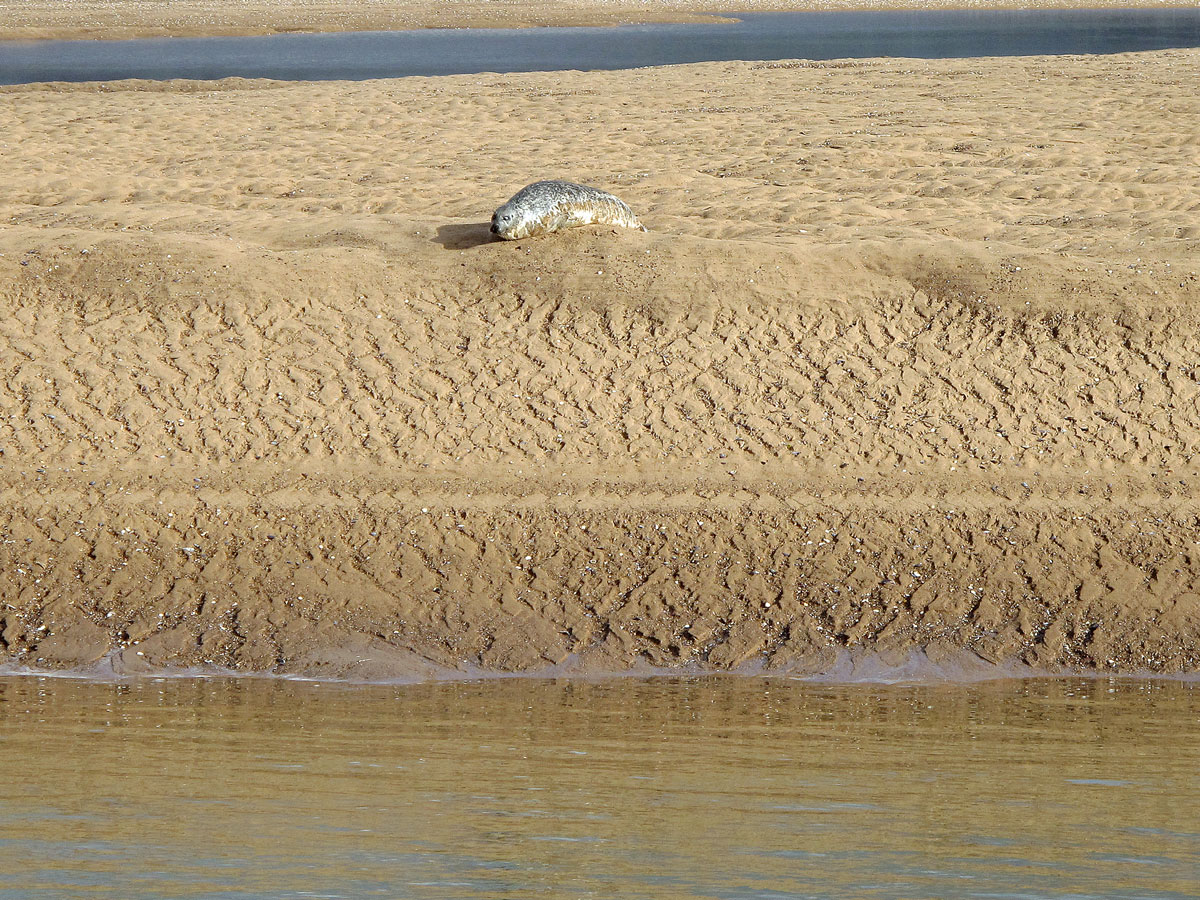
The Warren has been designated a National Nature Reserve (NNR) and Site of Special Scientific Interest (SSI), partly for its plant life, but primarily for its birdlife whose population is increased in wintertime by migratory birds who stop over to get their breath back and have a mollusc or two before continuing their journey.
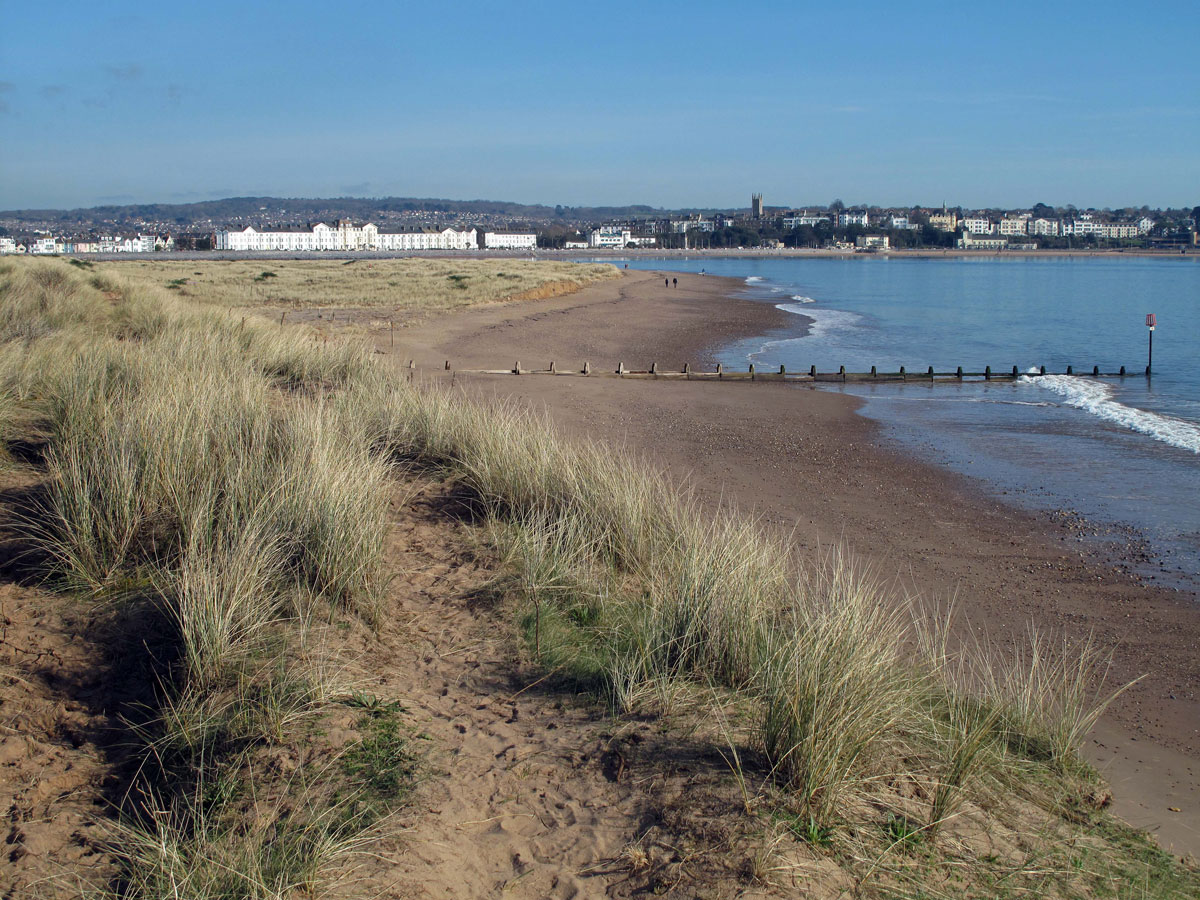
Dawlish Warren is also a popular migratory destination in summertime too – not for birds, but for parents who bring the kids away for a family holiday. The caravan sites they come to have been here for years, and I think it’s fair to say that not everybody is a fan of them. That said, I’ve lost count of the number of people who have told me what wonderful holidays they remember having here, and who can argue with that?
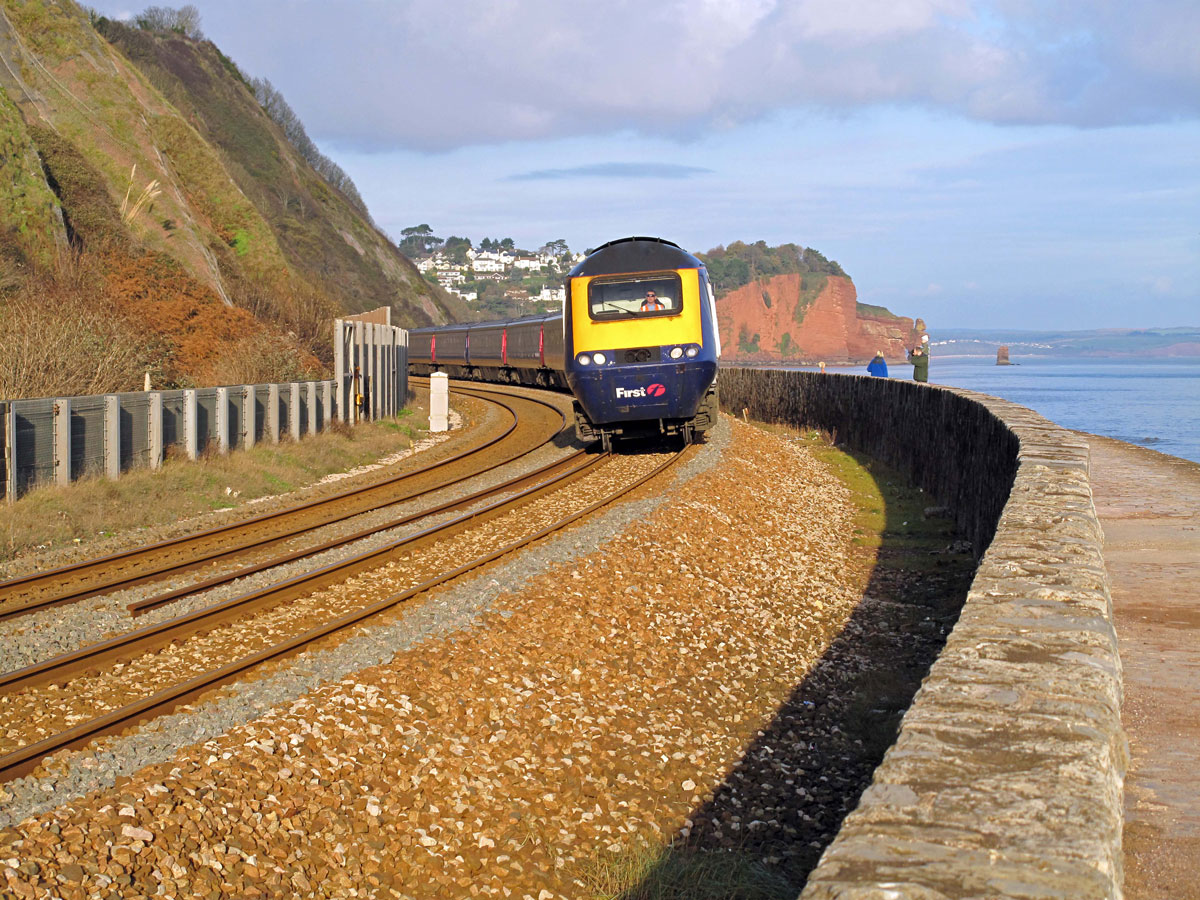
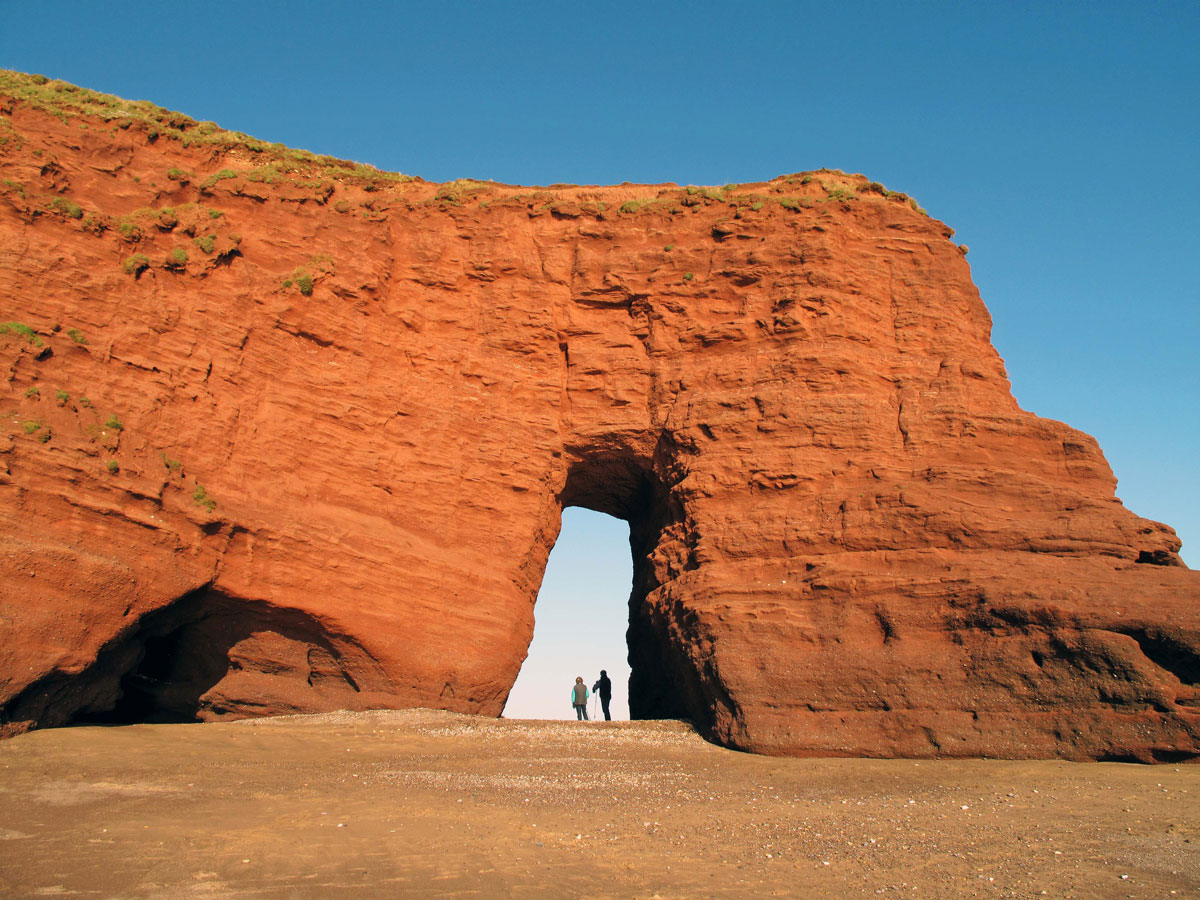
Leaving Dawlish Warren means leaving the River Exe behind as well, and the railway line now travels along the coastline right next to the sea. For most people, the route between Dawlish Warren and Teignmouth is the highlight of the journey, but it must have given Brunel a headache or two working out how he was going to fit his railway in between the red sandstone cliffs.
A footpath that runs along the sea wall next to the railway line allows people to walk between Dawlish Warren and Dawlish – or at least it did.
Being so close to the sea means that every so often unsuspecting passengers jump out of their skins – and their seats – when waves start crashing against the window. Sometimes though, when an Easterly storm coincides with a spring tide, then it’s downright scary, and if you think I’m exaggerating just check out the Apexnewspix clip below.
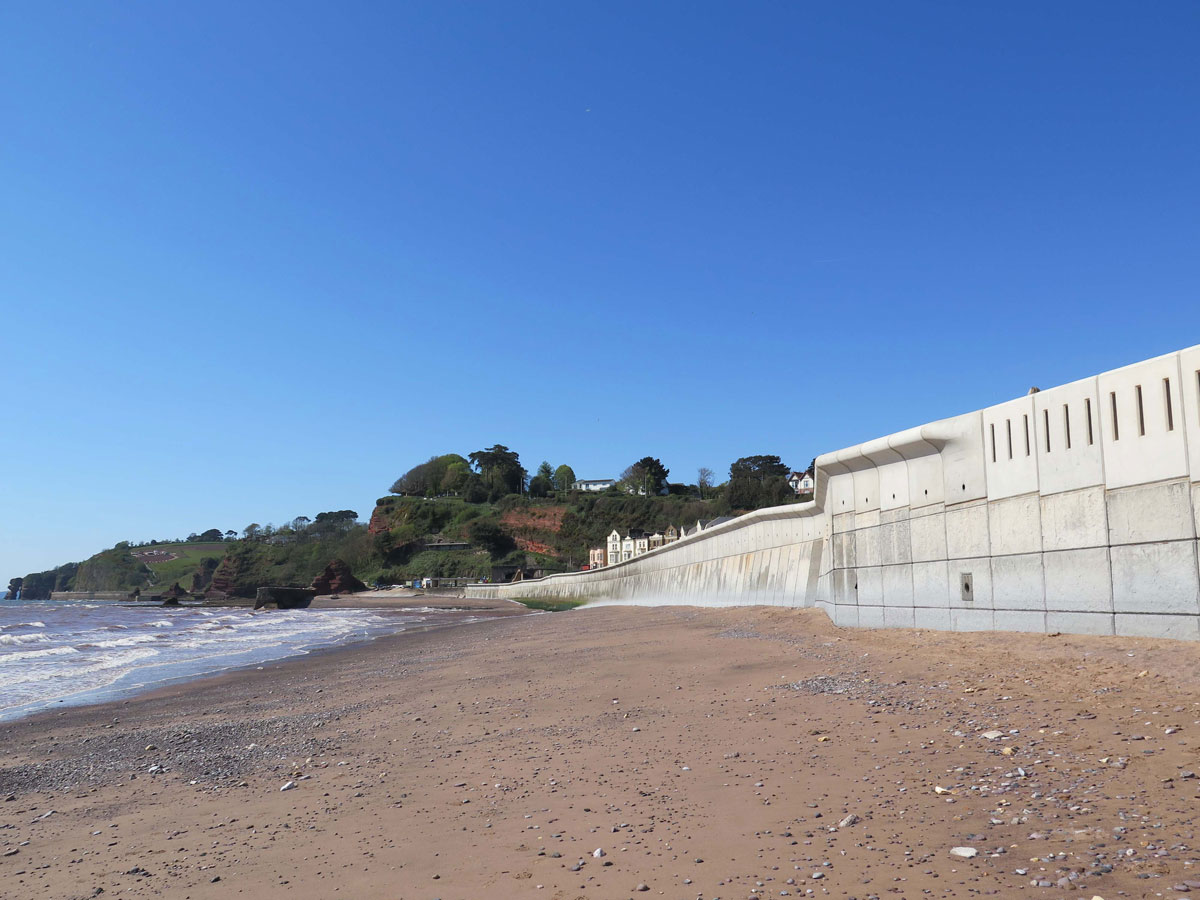
In February 2014 the inevitable happened, and the line took such a battering that it was left dangling in mid-air, resulting in much of Devon and the whole of Cornwall being cut off by rail from the rest of the country for the next six weeks.
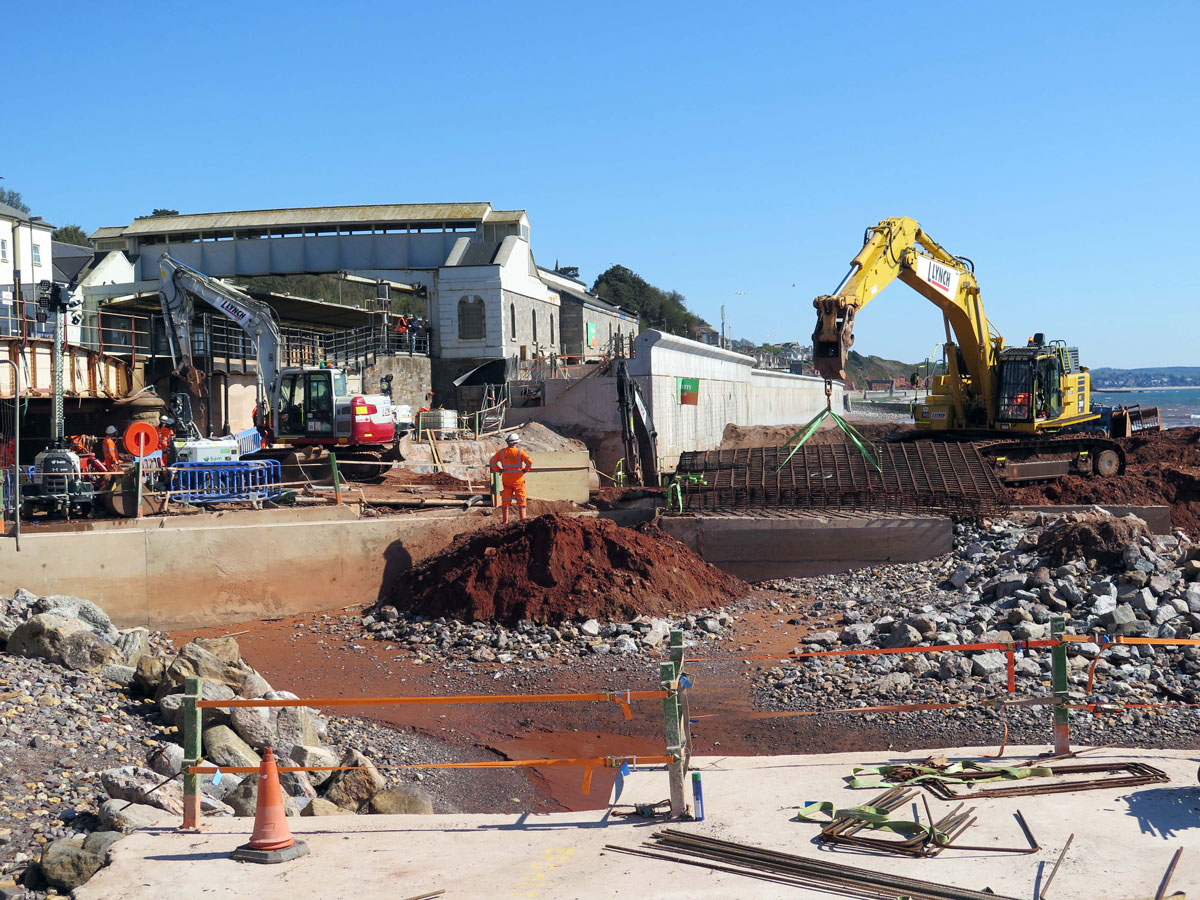
The staff of Network Rail, nicknamed the ‘Orange Army’, became instant heroes with the local population as they did everything humanly possible to repair the breached sea walls and stop the cliffs from falling onto the track. After the line and station were re-opened, the sea wall was patched up, but there was still the thorny question of what to do in the long term. I’m not sure that this has been fully addressed yet, but in the medium term, the sea wall has been re-built and moved back further away from the railway line. Below are some pictures of work in progress that I took this week.
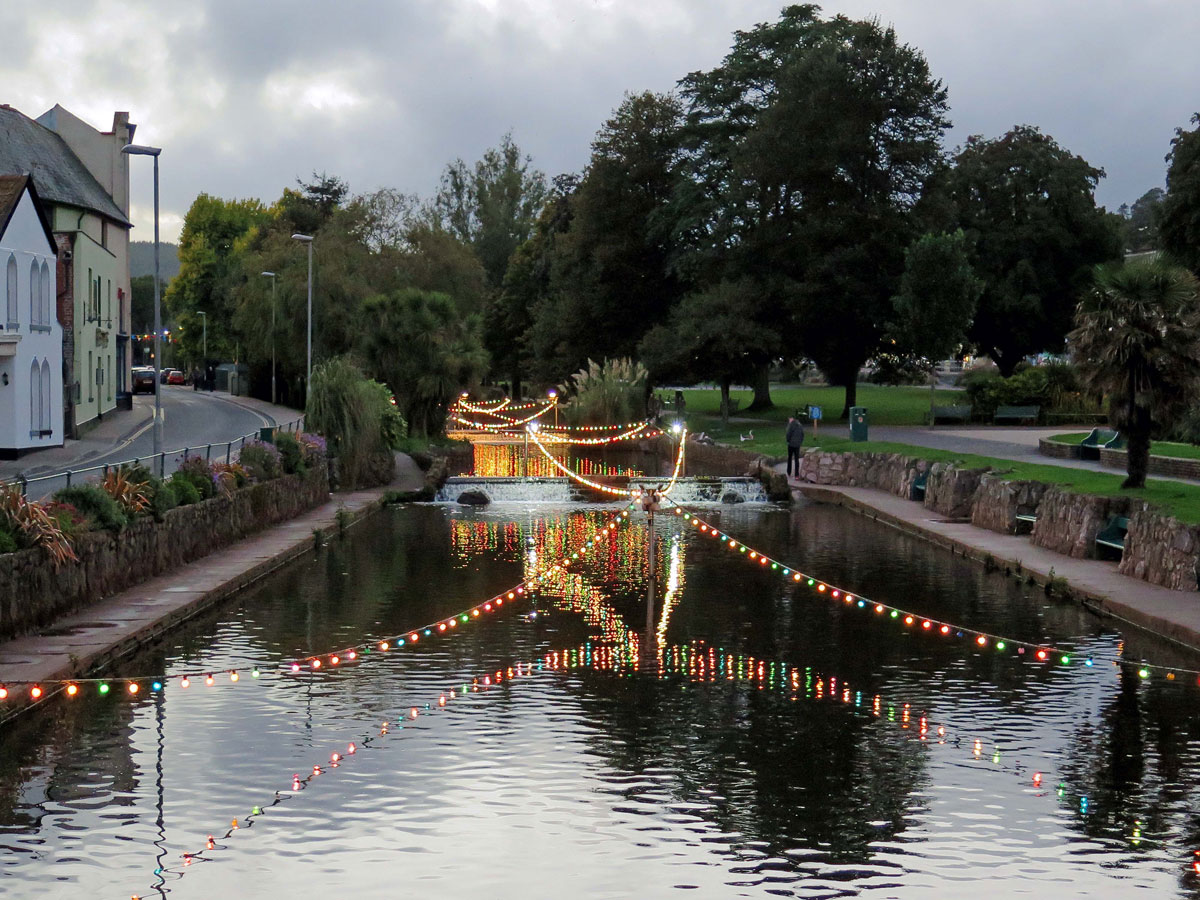
If you do decide to pay a visit to this part of South Devon, and assuming that the railway is still here, Dawlish is definitely worth alighting for. There’s an old fashioned charm about the place with a stream running down through the middle of the town.
Dawlish Water, as it’s called, attracts all sorts of wildfowl, ducks and geese. Where they originally come from I’m not sure, as some are obviously natural to the area, and some obviously aren’t. Those that are incapable of fending for themselves are looked after inside a sanctuary by a warden at the Wildfowl centre.
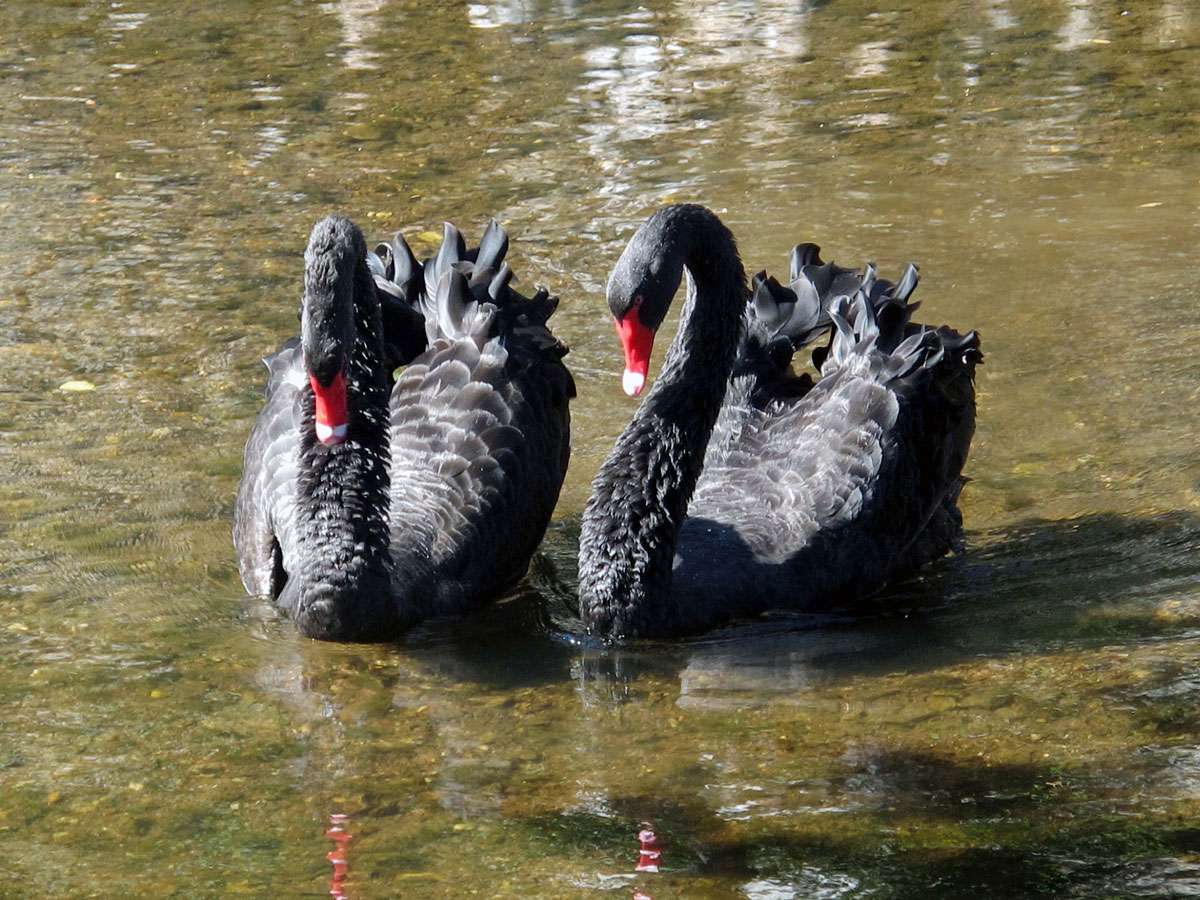
Undoubtedly, the stars of Dawlish Water are the Black Swans, who have become the town’s emblem. I believe that the native home of the Black Swan is Australia, and it was a Dawlish born New Zealander by the name of John Nash who seems to have been the person responsible for introducing them here, probably sometime in the early 20th century.
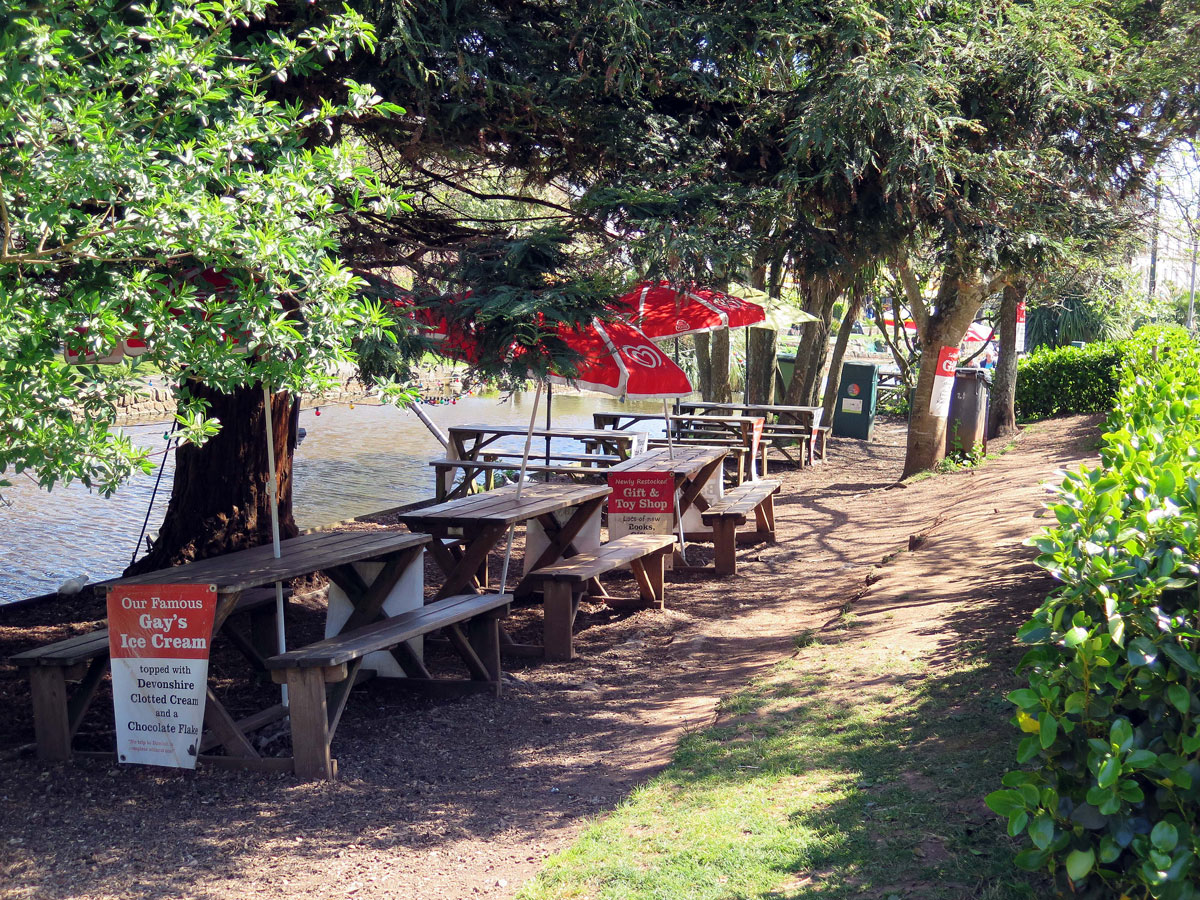
Before getting back on the train, you should allow time to treat yourself to an ice cream, cream tea or even a pasty from Gay’s Creamery. Sitting in their garden next to the stream watching the birds watching you is one of life’s simple, but enjoyable, pleasures.
-
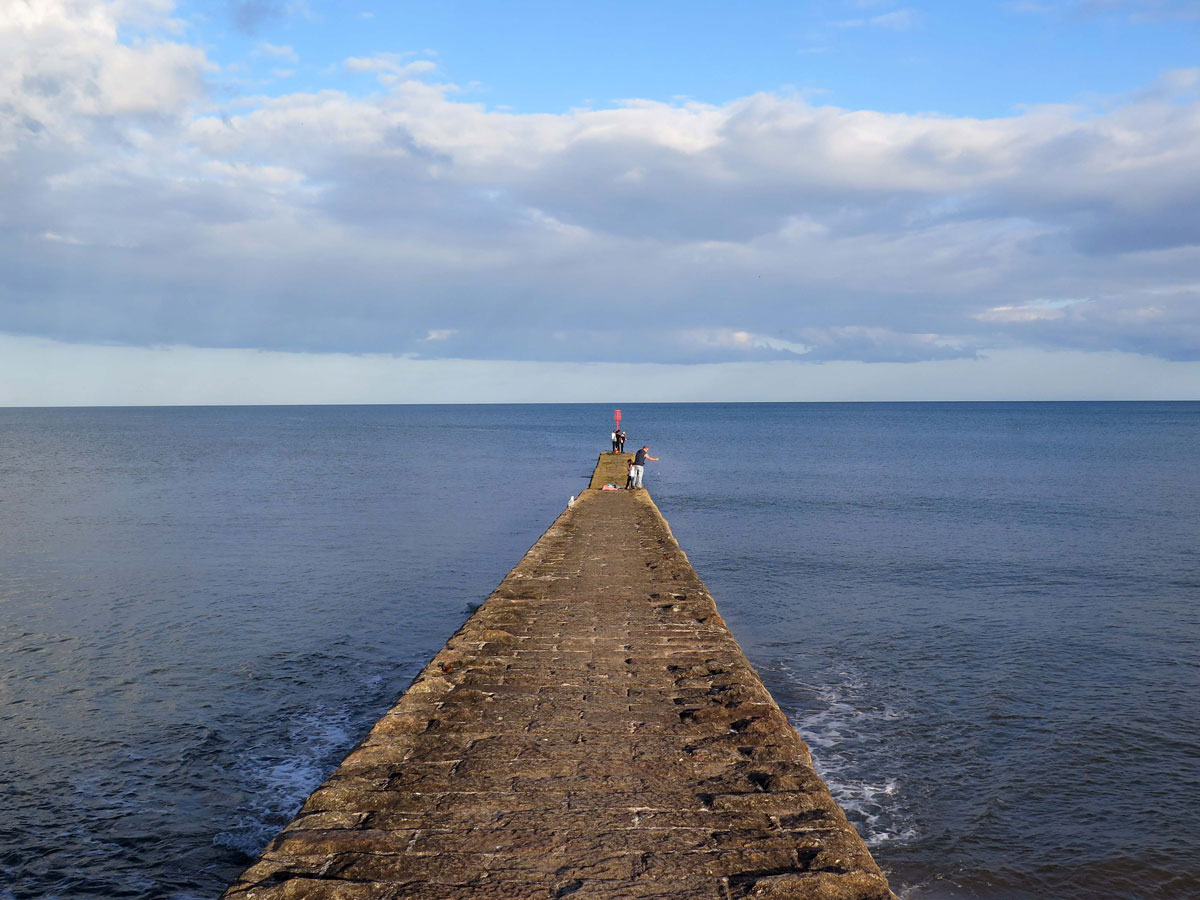
- Dawlish Breakwater
-
- Dawlish Water
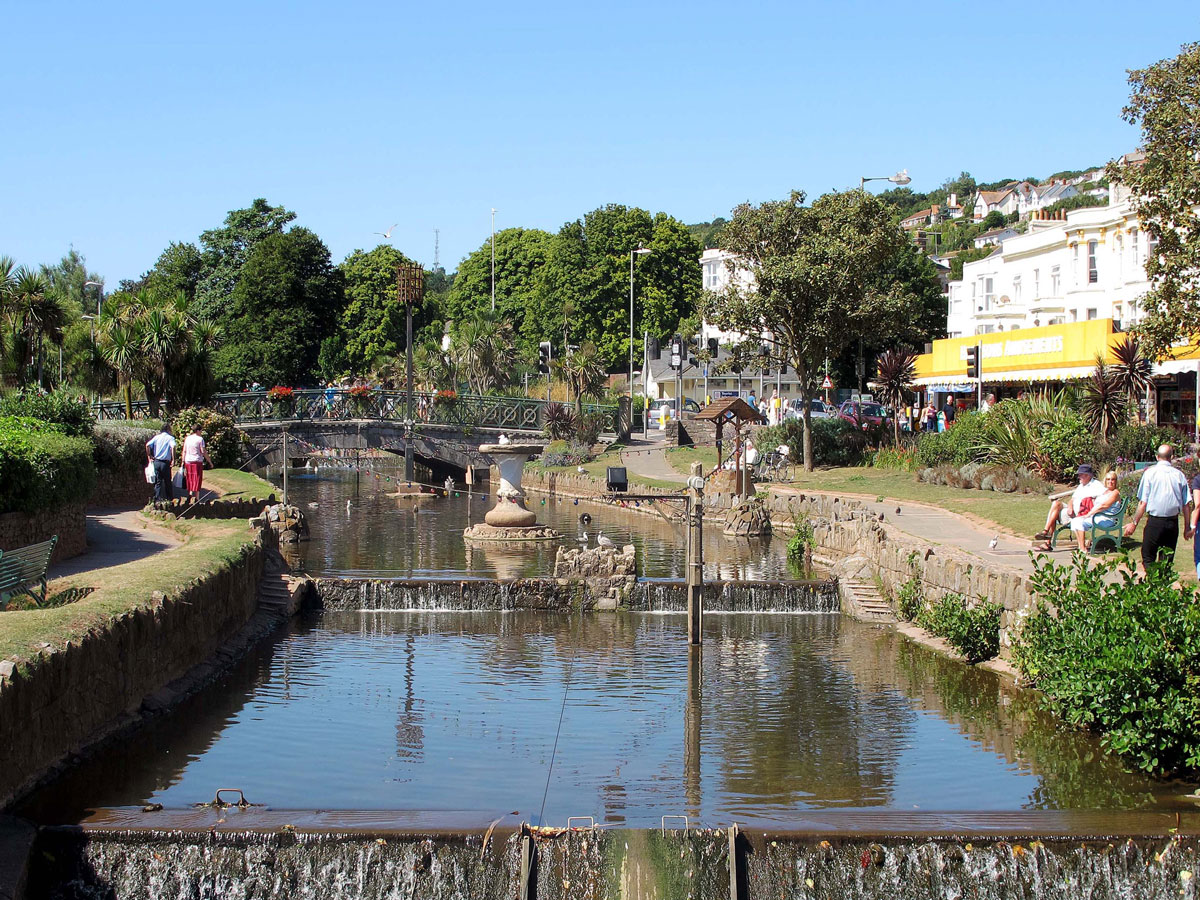
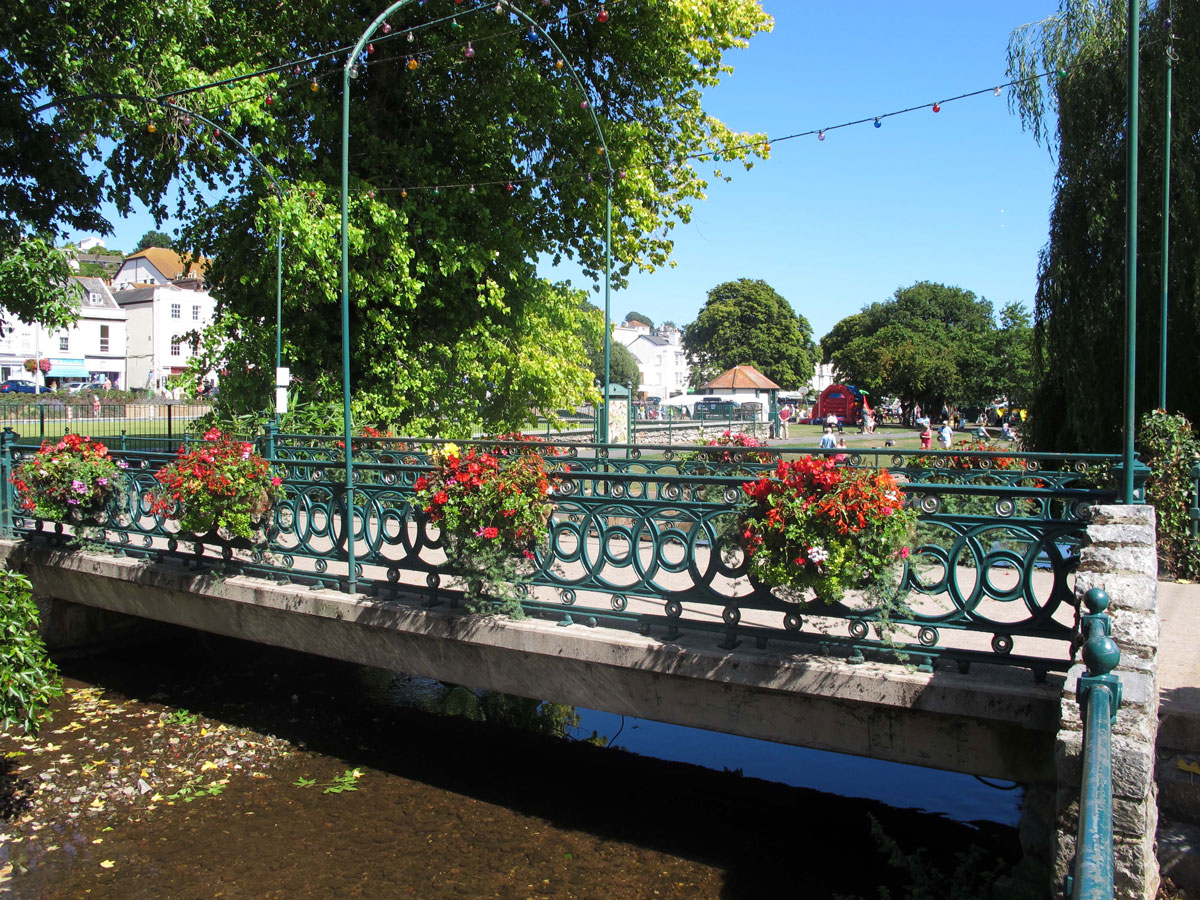
-
- Local Birdlife
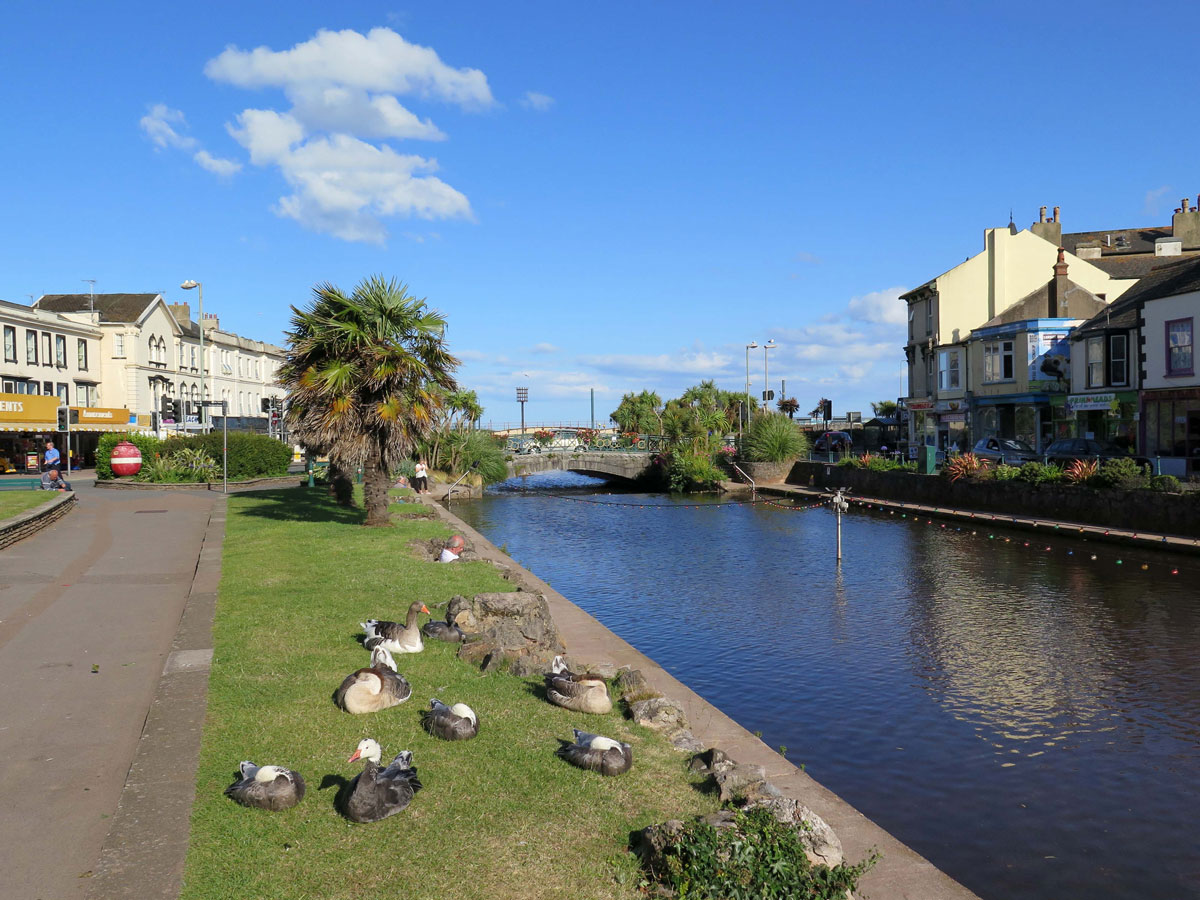
-

- The Famous Black Swans
-
- Gay’s Creamery Garden
Back onboard, the train travels through a series of tunnels that go through the cliffs rather than around them – and this was supposed to be Brunel’s easy bit. You can always tell when you’ve reached the tunnels because everything goes quiet in the carriage when all the constant mundane chattering on mobile phones comes to an abrupt stop. For people like me who have a warped sense of humour, it adds even more pleasure to the journey when the train goes in and out of the tunnels, and the phone signals keep going on and off. The perplexed look on people’s faces always gives me a wry smile.
The last two tunnels are named after some sea stacks called the Parson and Clerks, but the line eventually emerges back alongside the sea wall again and then heads towards the River Teign and the town of Teignmouth.
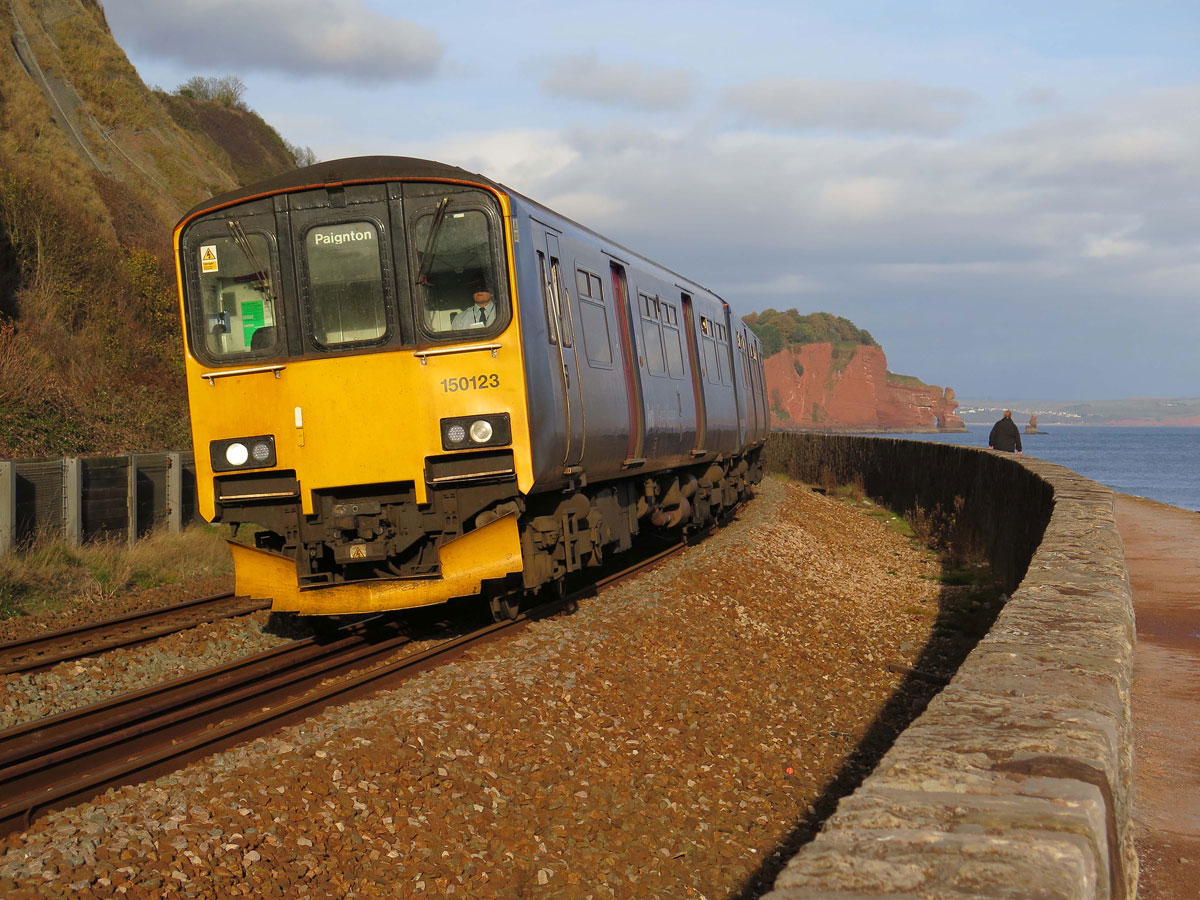
Before the railway arrived, the sea was the main source of income for the local population, even if it meant the fishermen travelling all the way to the Newfoundland Cod Banks for their catch.
Brunel’s railway changed all that. Instead of having to look elsewhere for the money, the money came to Teignmouth. Like other resorts along the coast, it was the wealthy who arrived first, but when a law was passed in 1939 allowing everyone a week’s paid holiday, trains packed with holidaymakers from around the country arrived.
This changed again when Mediterranean resorts were able to offer affordable holidays in a sunnier climate during the 1960s, and although Teignmouth’s salad days may be over, it’s still a pleasant place to while away an hour or two. It has two beaches – the Town Beach, with its promenade and pier, and my favourite, the Back Beach which backs onto the Teign with views upriver towards Dartmoor.

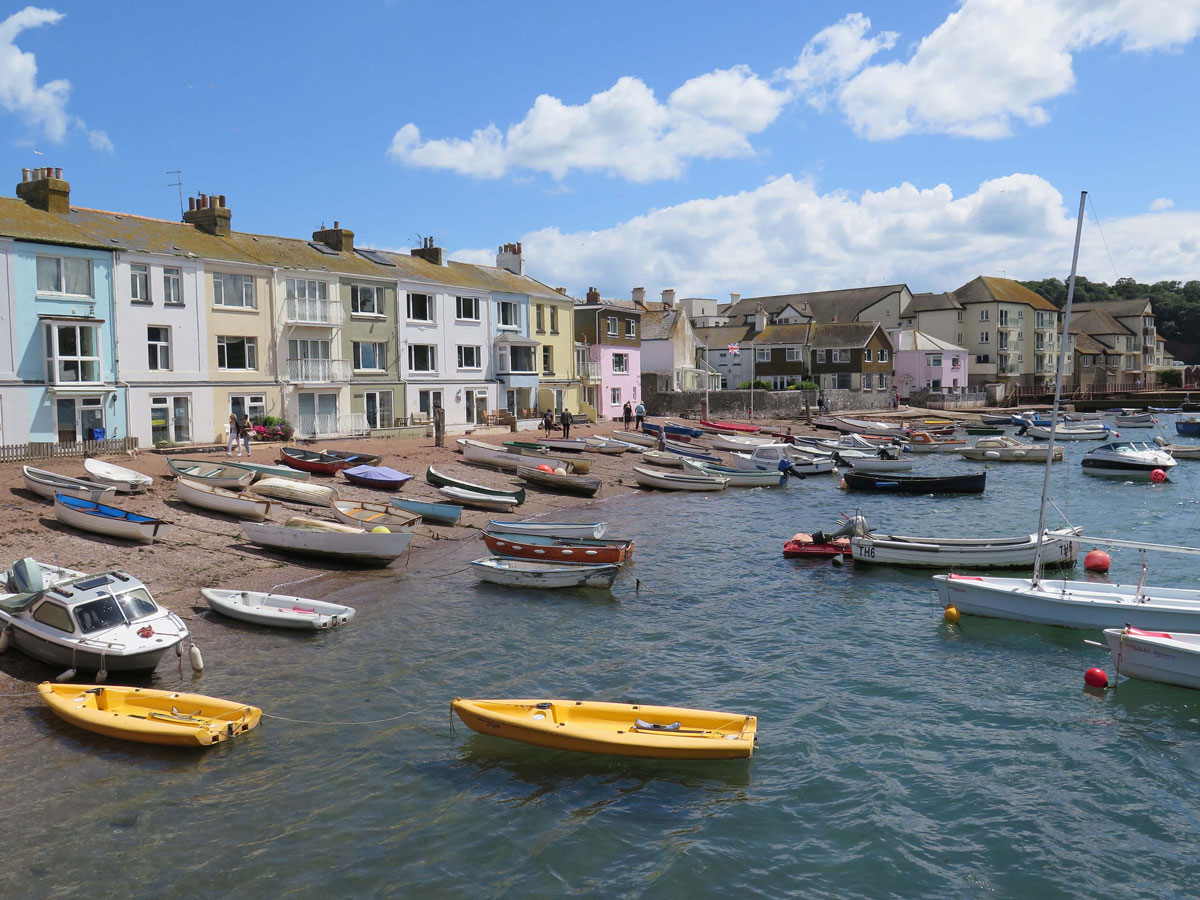
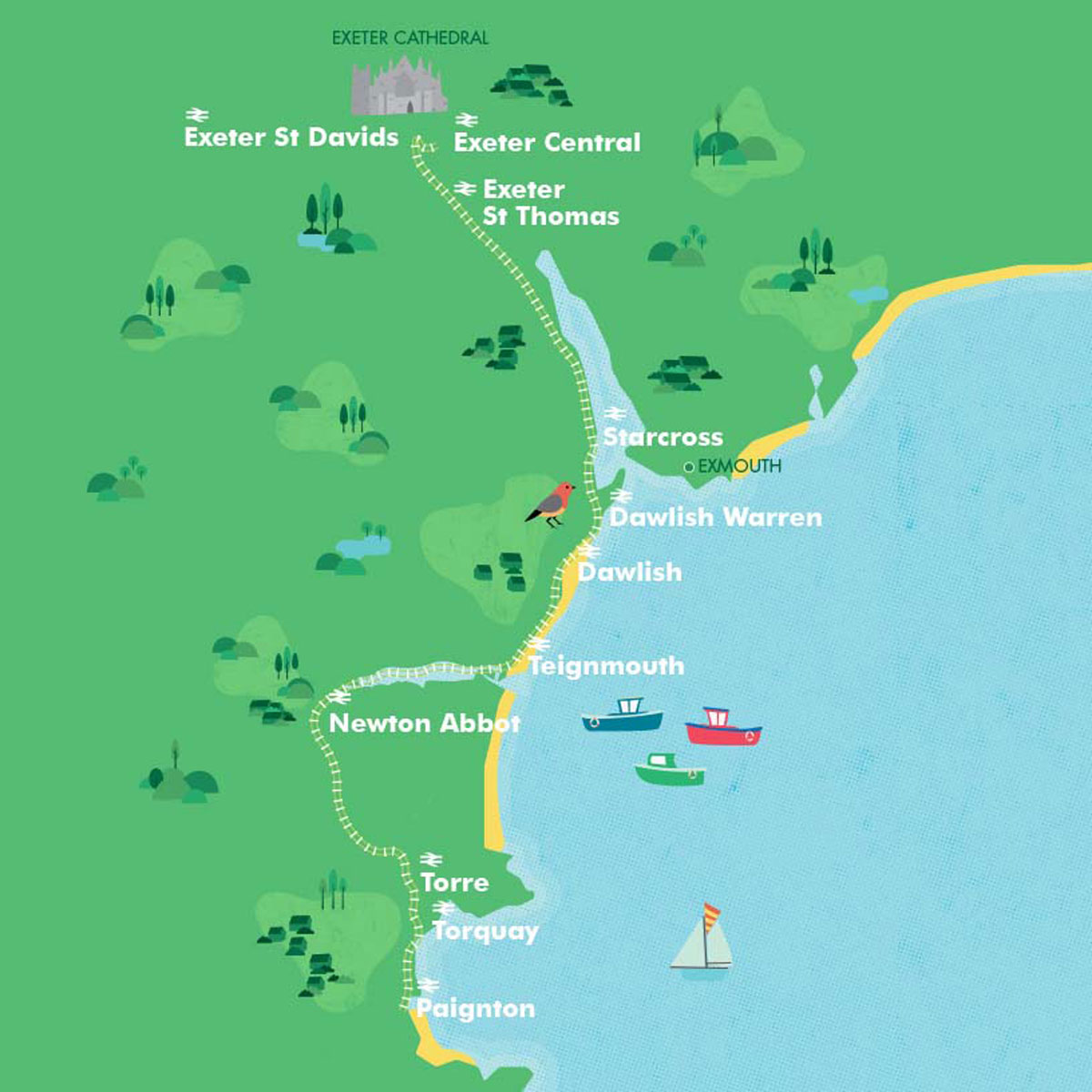
As the train leaves Teignmouth station it goes past a working harbour that exports Ball Clay extracted from local pits, and on the opposite side of the river can be seen Shaldon, the subject of my previous post. It then follows the River Teign upriver towards Newton Abbot, but the Teign isn’t as wide as the Exe, and the birdlife not as interesting. That said, it’s still a pleasant part of the journey. At Newton Abbot, Brunel’s second stage of the Exeter to Plymouth Railway continues on towards Totnes, but another line (the Riviera Line) branches off towards Torquay and Paignton.
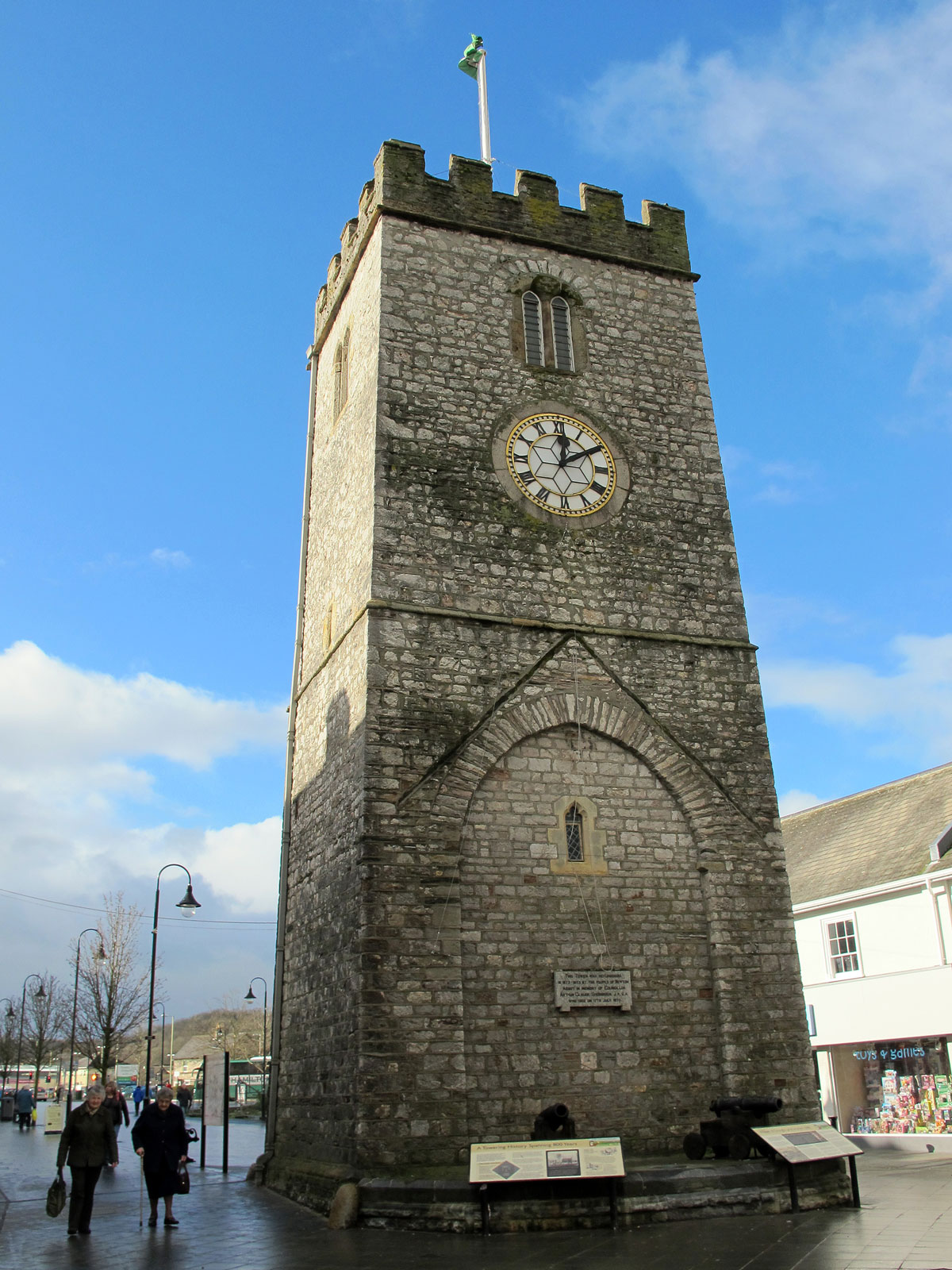
If I’m being totally honest, there’s not a lot to see in Newton Abbot for most people. This New Town of the Abbots was built for the abbots of Torre Abbey and has been a market town since the 13th century. Its most visible historical landmark is St. Leonard’s Tower where William of Orange proclaimed himself king in 1688 after landing in Brixham. The town has grown a lot since then, firstly because of the ball clay industry, and then, thanks to Brunel’s railway, it became a major repair and maintenance depot employing over a thousand people.
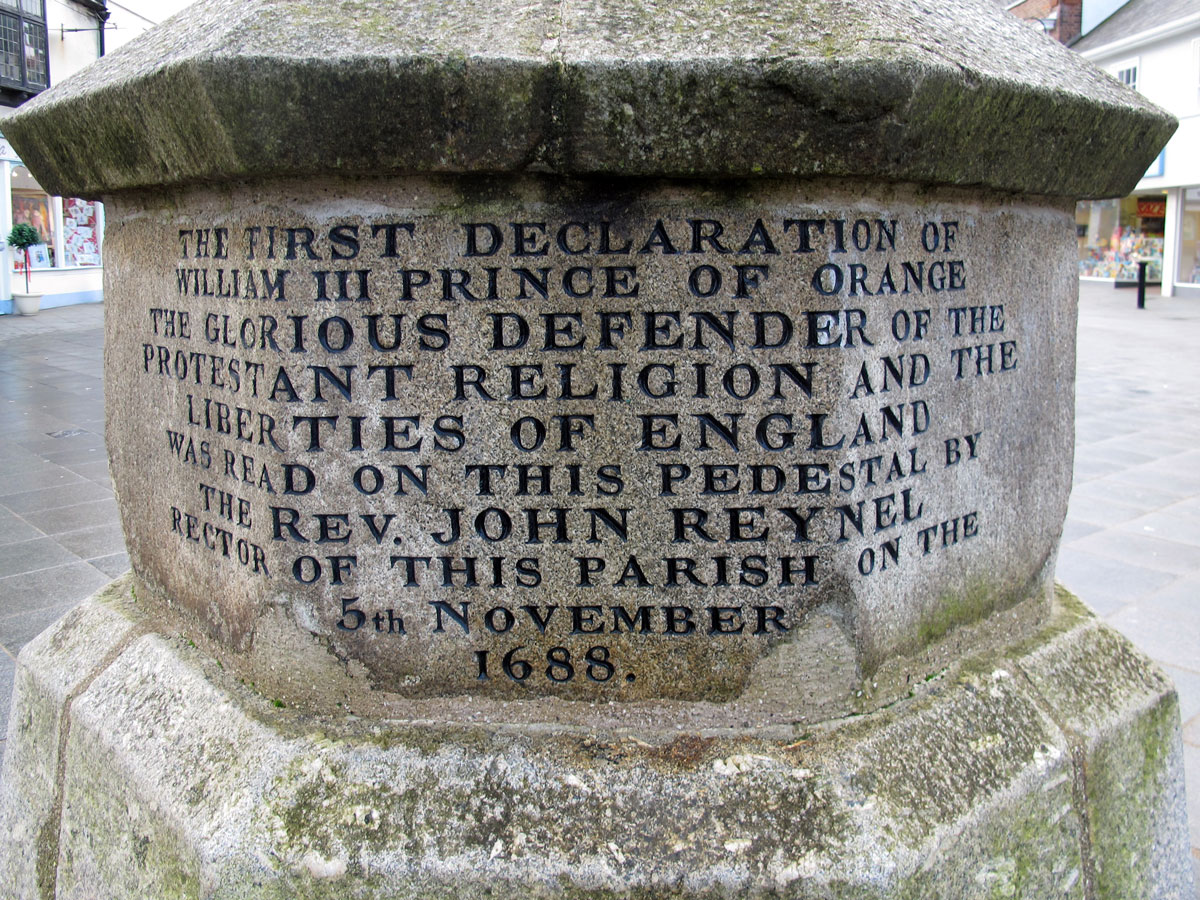
You may be wondering why Brunel built a branch line from Newton Abbot down to Torbay when there didn’t seem to be any real need for one, after all, railways weren’t built to take people on holiday back then, they were built as a means of transporting goods around the country.
I have a theory about this, and it’s perhaps not something everybody realises. The line didn’t end at Paignton as it does now, it ended at Torre, which is the station prior to Torquay. In actual fact, it was originally named Torquay, but was changed to Torre when the line was extended by the Dartmouth and Torbay Railway in 1859.
The reason I think that Brunel built a line to Torquay was because he intended living there. I’m not sure how he would have convinced investors it was a good idea, but it certainly paid off – even if Brunel himself didn’t gain from it.
He discovered the area while he was involved in working for the GWR and spent holidays with his family here. In preparation for his retirement he purchased a plot of land at Watcombe and drew up plans for an Italianate style house and gardens, but he never saw it finished because in 1859, at the age of 53, he suffered a stroke and died. The house was eventually built to a different design on top of the original foundations and is still standing today – and appropriately known as Brunel Manor.
It may have been the end of the line for Isambard Kingdom Brunel, but he left behind a lifeline for the rest of us – at least for now.
POSTED – MAY 2022
Originally posted 2022-05-01 22:44:15.
Well, that was quite a fabulous jounrey today. Thank you for a great post.
I can tell that you enjoy my posts Shey, and I really can’t tell you how much I value your input – honestly. I just hope that I can keep you interested. One volunteer is worth ten pressed men as the saying goes.
As for the rail journey, I use it all the time and never tire of it. Only this last weekend Dawlish (and us in Torbay) experienced awful weather but at least the reinforcements to the railway line and the coastline enabled Dawlish Water to escape freely to the sea (which thankfully wasn’t a high spring tide with an easterly wind)
https://youtu.be/JDTo1DHcJwk?si=3k5FVscr1v3v8hlF
I lived all the history that went with the journey. And the excitement too actually. I felt I was on the train, so there you go. and it is great to read your posts.
Great!
Well, the technology may not have succeeded, but this still looks to be a very ‘atomospheric’ railway journey! Such a lot to see! I have to say, that video of the waves crashing onto the trains made my pulse race – hardly surprising the wall gave out in the end. As you rightly say and history has shown, Brunel was a genius, but in a way it’s good to see an example of something he tried didn’t quite work out as planned – it shows he was a fallible human just like the rest of us, and in many ways that brings his story to life all the more. Shame he never got to complete his grand design at Watcombe though, but it’s nice that the place that was built there still carries his name. Another great post, Malc. 🙂
Thanks Alli. I think the fact that the railway is still here, regardless of what nature has thrown at it, is testament to the man’s engineering ability. I do believe his atmospheric railway would have worked: I think it was probably more to do with the investors wanting a cheaper option. He also backed the wrong horse with using a ‘Broad Gauge’ track. In other words, there wasn’t anything wrong with his engineering skills, it’s just that he didn’t have to pay for them.
I guess you can’t win them all. But as you rightly say, it doesn’t alter his engineering brilliance. From a lay person’s point of view (who admittedly doesn’t know much about him), the funding issue seems to point to all his genius ‘eggs’ being in the engineering basket, with perhaps less nouse in terms of financial considerations. But that was/is quite common in true geniuses, so the episode may still give us an intereting insight into the man himself. Fascinating story, anyway. 🙂
You know enough about him to remember he built the SS Great Britain though don’t you? I will be writing more about him in due course 😊
What a wonderful post. As a boy, I lived in London and my grandparents in Falmouth. In the holidays, my mother would pop me on a train at Paddington and my grandparents would pick me up at Truro. My favourite part of the train journey was this stretch, and I always made sure I was on the seaward side of the train in each direction. Winter storms were so exciting, with sea spray covering the carriages. Thank you for giving me the opportunity to reminisce.
I write these posts for several reasons. Firstly, to remind myself of places I’ve been to before my memory goes altogether, secondly, that it might inspire people to go to some of these places themselves, and thirdly, that it might bring back fond memories for people like you.
Even though I get a bit disheartened at times, when a comment like yours comes along, it puts a spring back in my step again – so the thanks is really all mine Stephen 🙏
That is great to know. I am under pressure at work just now and have less time to read other people’s posts, but I do try to catch up. So pleased to have read this one.
You’re certainly under no pressure to read any of my posts Stephen, but I’m always grateful when you do. I still follow your posts by the way and just put a like to those that stand out.
I had to smile at the Atmospheric Railway! There I was picturing ghost stories and the like. Atmospheric pressure never entered my head. Brunel’s achievements are legendary so it’s no wonder there was a hiccup or two. I would like to walk that stretch beside the railway line- on a flat calm day, of course! Thanks for the entertainment, Malc.
That’s what I’m here for Jo 🙂 Thanks for checking it out
Well, too bad for Isambard Kingdom Brunel…quite a name…that he died so young without seeing the completion, but that’s life. A very interesting post and great pics! Another informative piece so well narrated and explained. Cheers mate and a lovely Monday to you!
Francesc
Thanks Francesc and hope you had a day off work yesterday 🙂
You’re welcome Malc but since I retired I’ve never given myself a day off…
How did we ever find time to go to work?
I really do not know…
I did some consultancy work for Plymouth a few years ago and always enjoyed my train journeys down from London. Your interesting and well-research (as always) post has provided me with lots of background info about the line I used to travel on and reminded me of the wonderful views – although as I was always on a fast intercity train they were rather more blurred for me than your lovely versions!
Thanks Sarah. The Inter-City trains don’t stop at the smaller statios of course, but I’m glad that I’ve managed to add a bit of interest to the scenery for you 🙂
Thank you, Malc, for this wonderful tribute to Brunel! The photographs are excellent as is your sense of humour!
Joanna
Thank you for your lovely comments Joanna. I’m especially pleased that you enjoy my sense of humour 🙂
Another interesting post Malc and some lovely scenery too. I like the pics of Dawlish – I went there for a day while on holiday in Torquay with my parents when I was 14 but I don’t remember much about it. The photo of Back Beach reminds me very much of a little place on the Italian riviera which I went to back in 1998, and the pic of Brunel made me think of the Mad Hatter in Alice In Wonderland 🙂
Glad you enjoyed reading it Eunice. Thanks. I don’t think Dawlish ever changes much, so apart from the new sea wall, it’ll be much the same as you don’t remember it 🙂
Amazing that the trains kept on running (for a while) even with the waves crashing in over the tracks.
Some do and some don’t Don. Strangely enough, the small local trains are more resilient than the Inter City ones
Fascinating stuff, Malc.
Thanks Pat 🙂