
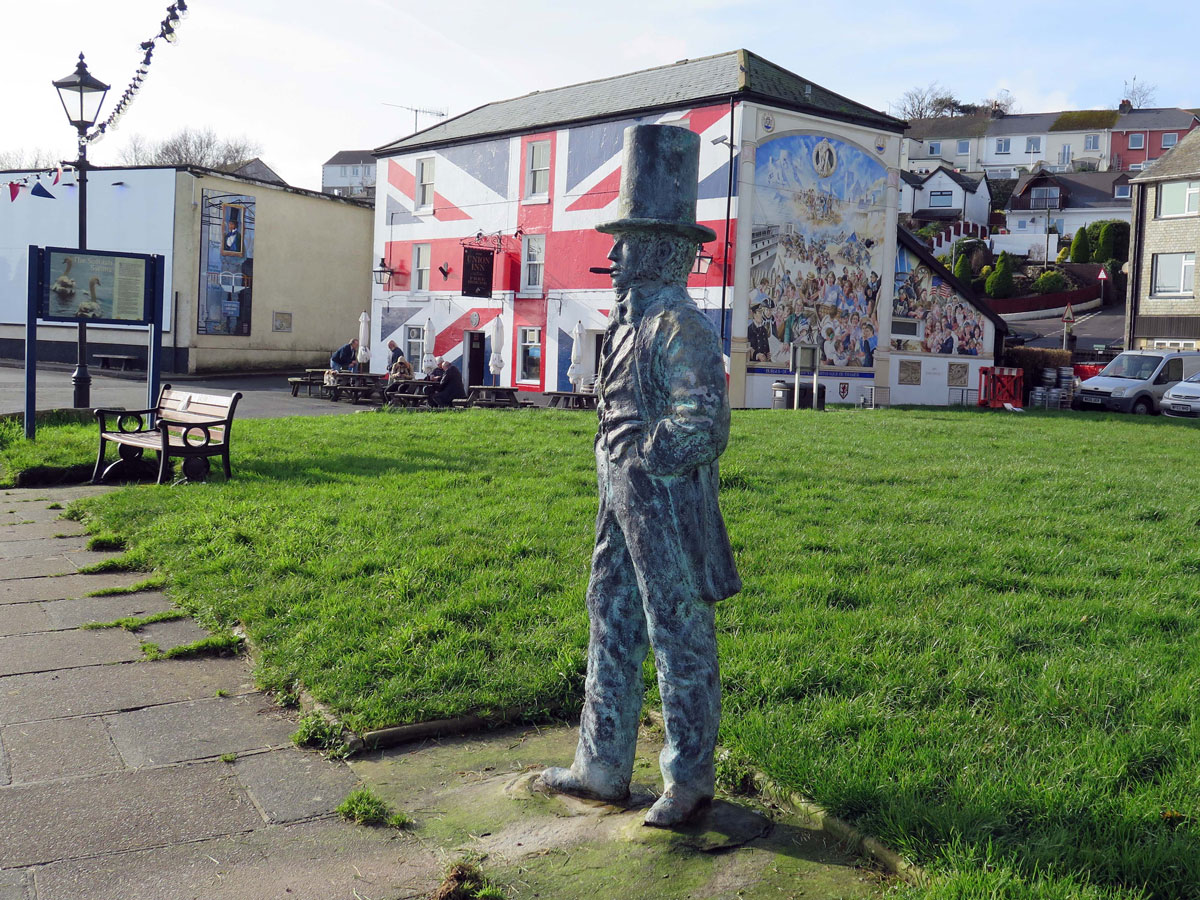
Isambard Kingdom Brunel and the Royal Albert Bridge
The source of the River Tamar lies less than 4 miles from the North Cornish coast, but instead of flowing the short distance into the Celtic Sea it makes a sixty mile journey in the opposite direction across the south-west peninsula towards Plymouth Sound where it enters the English Channel. The river forms most of the Devon/Cornwall border almost making Cornwall an island, and along with its Celtic background, makes the county feel very different from the rest of England.
Travellers to Cornwall still regard it as a long way from anywhere even though communications have improved over the years, but being cut off from the rest of the country may have had some advantages, but there were disadvantages as well. If you look at a topographical map of the region you’ll also notice that Dartmoor is another obstacle that gets in the way of a direct route into Cornwall, and how to get to the other side of Dartmoor and over the Tamar was the dilemma that faced those in the 19th century who needed to improve transport connections to London and the rest of the country.
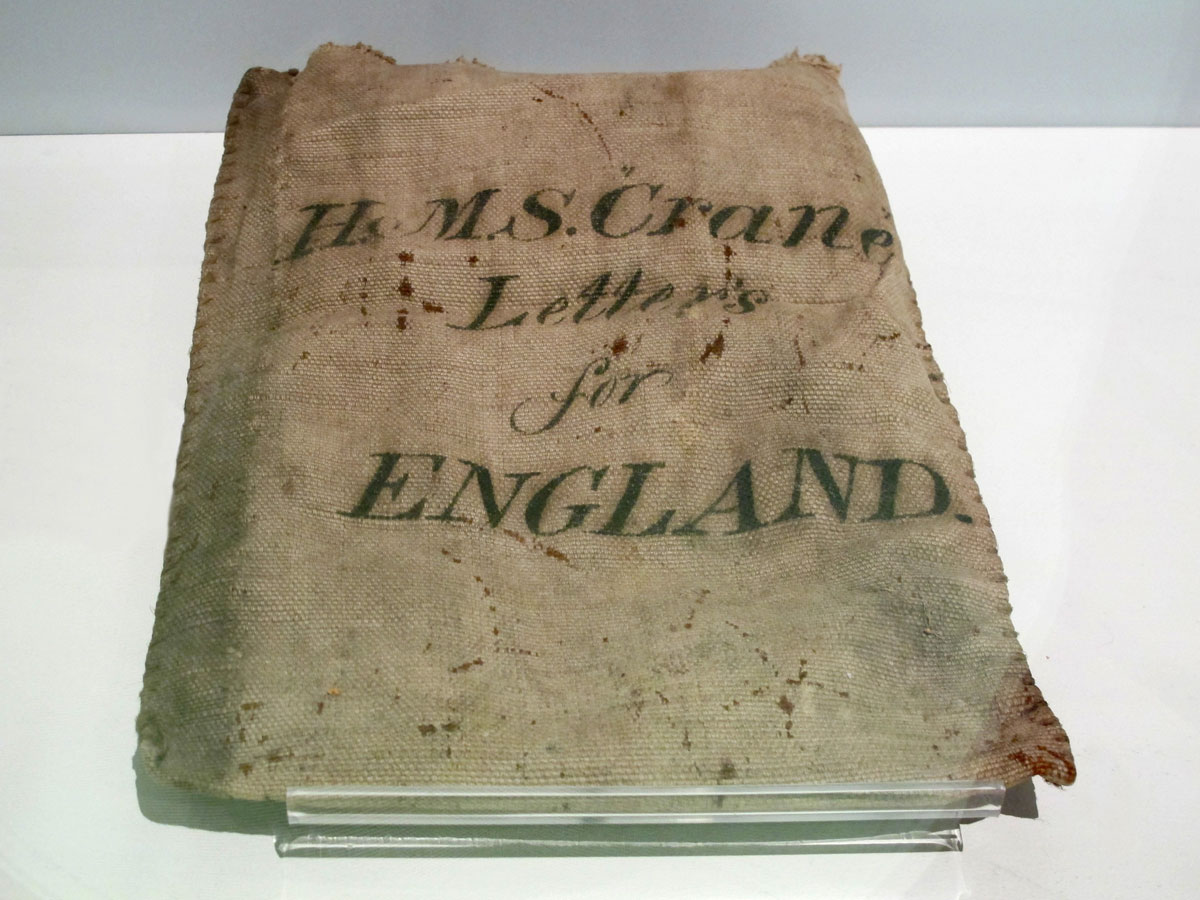
For years, Falmouth had handled most of the international mail from the colonies by using packet ships, but its poor road connections were leaving it vulnerable to other ports which were able to take advantage of an expanding rail network with better access to the capital – and when the government announced proposals to transfer the bulk of the packet service to Southampton, it was time to do something about it, and so plans were put forward to build a railway line that would connect Falmouth to London.
Short distance railways had already started to spring up in Devon and Cornwall, but building a long-distance railway across Dartmoor was not a viable proposition, and so the big question was whether to build one north or south of the moor. At first glance, a route to the north seems to be the logical answer – and that’s the way the main A30 road into Cornwall goes today. It may have seemed more practical, but there were other considerations to take into account, and in the end two rival companies took up the challenge: The London and South-Western Railway opted for the northern route (which became known as the central route) whilst the Cornwall Railway preferred the southern (coastal) route. The main difference between the two schemes was that although the central route was easier to construct it didn’t pass through anywhere of any consequence, whereas the coastal route could serve both the naval dockyard at Devonport and also the China Clay industry around St Austell.
However, before either scheme could get off the ground, Southampton had commandeered the majority of the packet trade after the London and Southampton Railway started operations in 1840. The need for a connection down to Falmouth was therefore effectively killed off, but there was still a glimmer of hope for the Cornwall Railway to build a line into Cornwall – and that was all thanks to Isambard Kingdom Brunel.
Brunel had already been employed by Bristol merchants who, with the financial backing of the Great Western Railway (GWR), was asked to design and build a line between Bristol and London to make sure they weren’t disconnected from the capital in much the same way that was to befall Falmouth. They then employed him again to build another line down to Exeter – but why stop there? – and they didn’t: It was on down to Plymouth next, which turned out to be a bit more of a problem than was anticipated.

The line between Exeter and Plymouth is regarded as one of the most scenic in the country, but when it was conceived, it had to overcome several practical difficulties which Brunel addressed by introducing an atmospheric railway. Unfortunately, the system didn’t work out quite as well as the engineer had hoped, and if you want to find out more about the South Devon Railway you can read my account of it here.

While Brunel was trying to fathom out the best way of getting the railway to Plymouth, the Cornwall Railway company was starting to make plans for when it arrived. Their plan was to carry the trains across the Tamar by way of the Devonport to Torpoint ferry, but when they applied for an Act of Parliament, the less than satisfactory arrangement wasn’t acceptable, and the act was refused. There was only one thing for it; sack the incumbent engineer and bring in the great man himself, who had already proved that he could overcome the most difficult of engineering challenges elsewhere. He suggested building a bridge further upriver at Saltash Passage which seemed the most sensible solution, but which would no doubt cost a good deal of money. Nevertheless, all the parties involved agreed that it was the best option and in 1846 the Act was passed. The South Devon Railway’s terminus at Millbay finally opened in 1849, but financial difficulties and other issues meant that there was a delay before the line could run through Devonport to Saltash Passage.

The river at Saltash Passage is some 1100 ft wide, which didn’t bother Brunel too much because his design for a single span bridge seemed perfectly sensible from an engineering point of view, but the Admiralty didn’t quite see it the same way. They needed the river to be fully operational for the navy at all times and they wanted the deck of the bridge to be at least a hundred feet above high tide level, and so it was back to the drawing board. His second plan was to build a bridge with four spans, but investigation of the river bed found that there was no suitable bedrock for the three piers needed to support it, but his third and final design was found to be acceptable for everyone concerned – but even then it wasn’t going to be that straightforward.
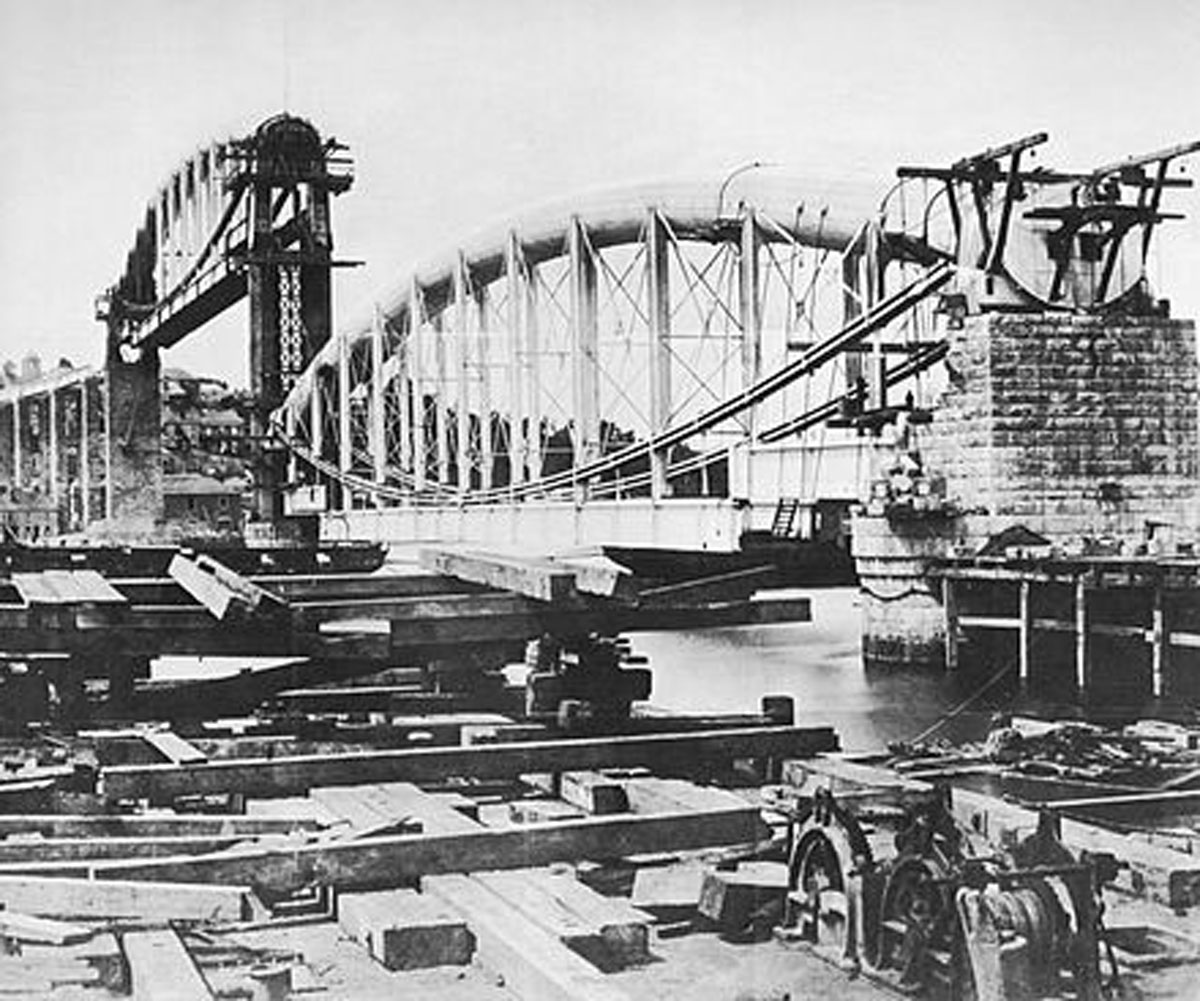
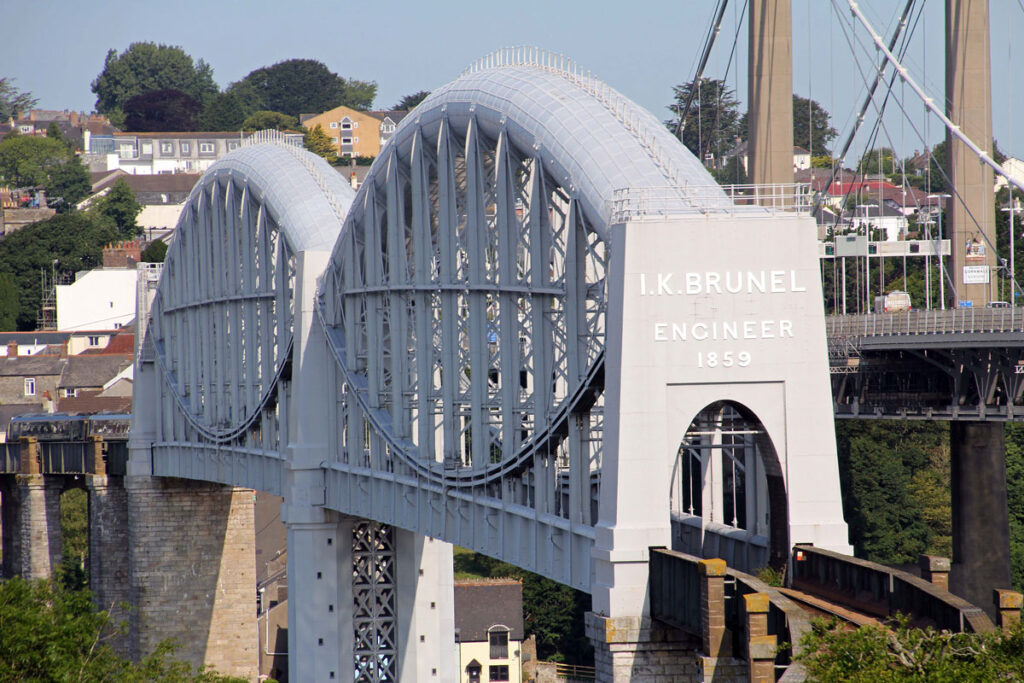
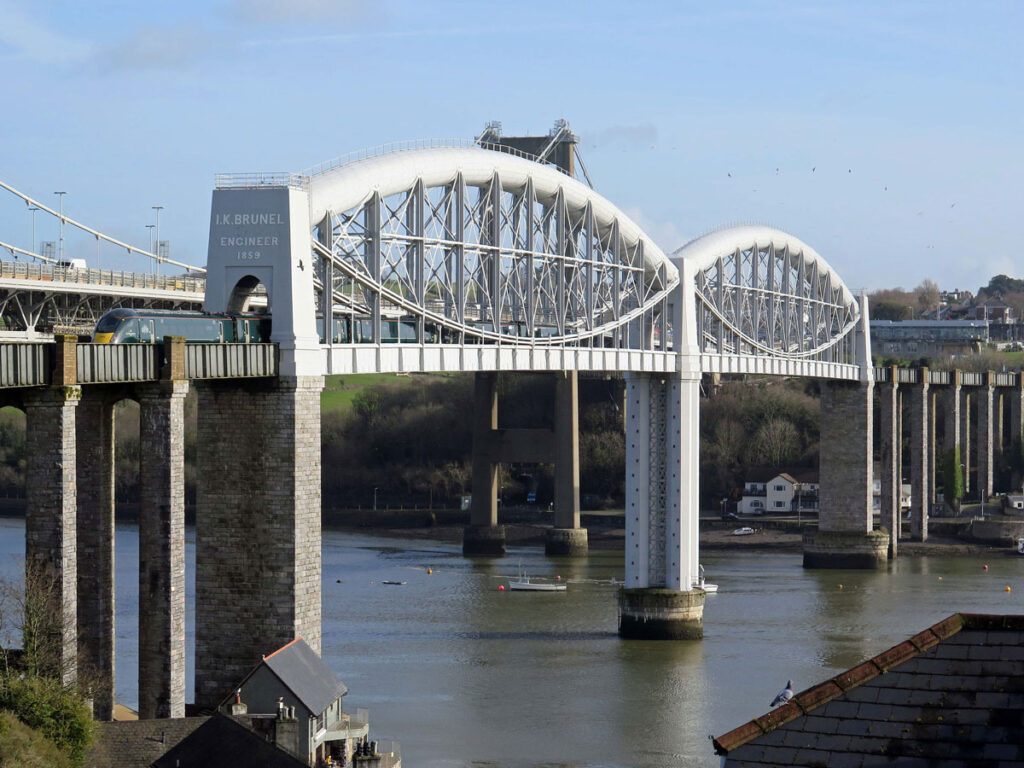
A single pier mid-stream was to support two spans each measuring 455 ft in length: The approaches to the bridge from either side of the river also required a further 17 spans which meant that there was nowhere to secure the required tension chains, and so Brunel adapted the design to include self-supporting trusses, and it’s these oval-shaped trusses which rest on top of the piers that give the bridge its unique design. Chains were to be hung to prevent the piers from being pushed outwards and eleven girders added to connect the trusses to the chains. The final piece of the jigsaw was to suspend the deck from the chains.
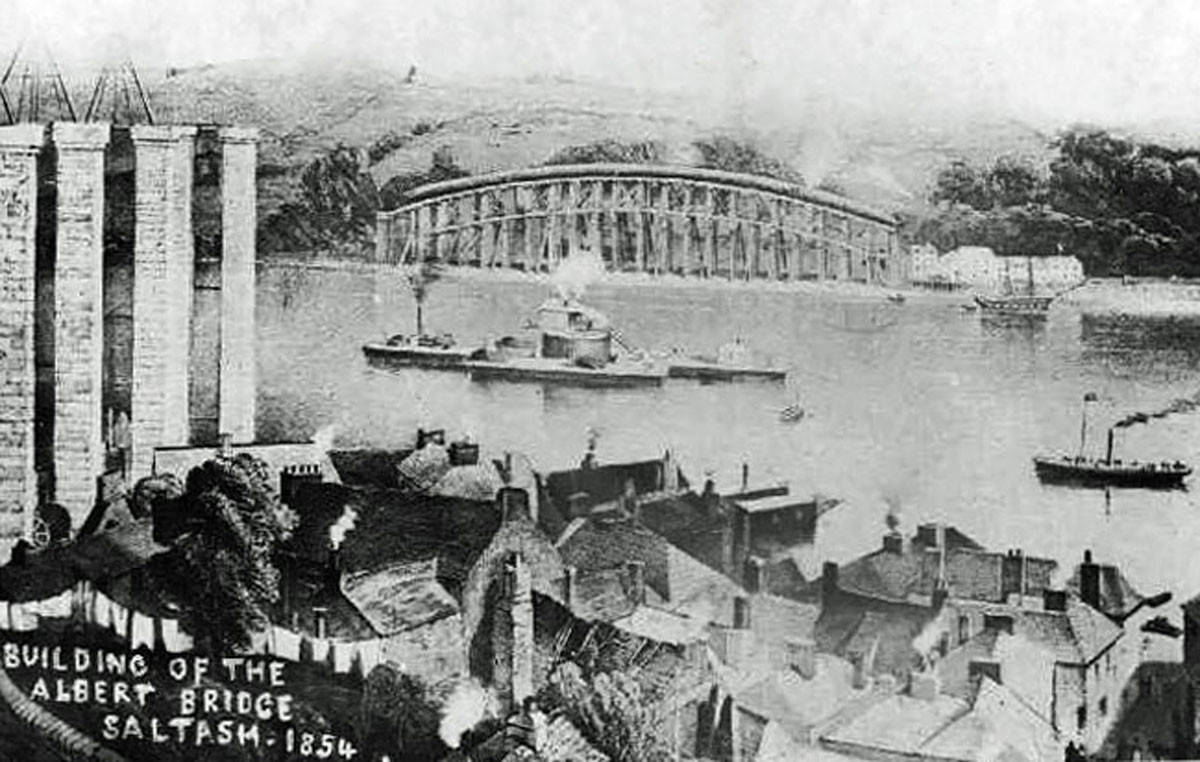
Work started on constructing the central pier in May 1854: For this, Brunel built an iron cylinder which was floated into the middle of the river, sunk, and filled with compressed air to create a coffer dam. This allowed men to excavate the river bed where foundations could be laid for a masonry pier, which when capped in November 1856, rose to a height 12 feet above high water. The rest of the pier was to be built later on top of this submarine section using octagonal cast iron columns.
As work was progressing on the underwater section of the central pier, construction began on the first stages of the other two piers and approach spans: At the same time, work on assembling the trusses was taking place on the Devon side of the river.
The Cornish truss was the first one to be raised but it had to be done in stages. Around 20,000 spectators gathered to watch it being manoeuvred into position by two barges which floated the truss out into the centre of the river, where using the tide, 5 navy vessels and 500 men, it was gently lowered onto the infant piers. In 3 ft stages the truss was then gradually raised up using hydraulic jacks as both the stone Cornwall pier and cast iron central pier were built up beneath it, until on 1st July 1858 it reached its final height 100 feet above the high water mark. On 10th July a similar procedure started for the Devon span, and as word spread, special trains were laid on to bring spectators down from London. On 28th December the Devon truss was lifted into its final position and the first test train crossed the Tamar on 11th April 1859.
Prince Albert officially opened the bridge on 2nd May, but the man who made it all possible was too ill to attend, and he died on 5th September. Later that year the brilliant engineer’s name was placed above either end of his bridge as a memorial, and to this day the remarkable Royal Albert Bridge still carries the main railway line into Cornwall.


POSTED – OCTOBER 2024
Originally posted 2024-10-29 10:14:02.
He was an extraordinarily resourceful man, wasn’t he? I’ve yet to ride that railway line but it does look a beauty.
The Reader never seems to send me your posts, so I just jump on your comment if I see one somewhere… and here I am!
Brunel was a genius in my eyes Jo. As for Reader I assumed that you didn’t want to be tied down with too many commitments on other people’s blogs and I can well understand that as I feel much the same. If you did want to be notified, have you looked at the way you manage my subscription? Just in case you weren’t sure how to do it if you go to my page on Reader, next to where it says ‘subscribed’ there are a couple of arrows that give you 3 options. I really don’t mind if you just want to dip your toe into my stuff every so often. I’m always grateful that anybody does 😊
Well, Malc, it seems every bridge tells a story, and this one certainly does! And, as always, you tell it brilliantly. Brunel was one of those gifted individuals who’ve shown up through history only rarely, and from this story it seems as though he was not only a supremely talented engineer, but he was also the ultimate problem solver! It’s a crying shame, however, that he didn’t make it to the official opening of his great project. That’s not fair. But the memorial was a nice touch, and it’s a testament to his great skills that the Prince Albert Bridge is still going so strong today.
Brunel’s achievements are immeasurable really, and when I think about how many times I’ve travelled on his railways, crossed over his bridges and used his stations to get around, I’ve got a lot to thank him for – and even you have been on one of his ships.
Funnily enough, I thought of our time on the SS Great Britain while I was reading this post! We loved our visit to his awesome ship, and we want to go again one day. 🙂
It’s still there, but they may have to bring it back into service and adapt as a warship if our navy gets depleted any more.⚓
… and HMS Warrior, and even the Victory is still in commission! It’d be all hands on deck, that’s for sure!
That’s true!😊
Wonderful and informative chapter, Malc.
Thank you Pat. I realise that the topics I write about won’t always appeal to everybody but I’m glad when they do.
This definitely did.
Phenomenal bridge! And amazing engineering skills! Enjoyed the details and the narrative, quite an interesting post. All the best Malc!
Thanks once again Francesc. Brunel done so much for the West Country that it’s difficult to overestimate his importance. I’ve written about him before, and I’ll be writing about him again – hopefully.
Thanks a lot for sharing this interesting post, full of information that was new to me 💙
Glad you enjoyed it Luisa 💙
As I told you, I found it very interesting.
Have a lovely afternoon, dear Malc🌹
Thank you my lovely. I believe you do 😊
🙏💐🙏
A very interesting post Malc, and I like the ‘technical’ details of how the bridge was built. Such a shame Brunel didn’t get to see it opened and in use.
Thanks Eunice. Actually, a couple of days after the bridge was officially opened he was hauled across on a specially converted truck so that he could see the end result, but I wonder what else he would have achieved if he had lived longer.
Of all the history which I learned at school, most of which I disliked, Brunel was the person who interested me the most – he was quite a guy.
I don’t know if you saw the BBC series a number of years ago about the ‘Greatest Britons’ but Brunel came second after Winston Churchill.
No I didn’t Malc – I never watch BBC, haven’t done for many years.
Neither do I Eunice anymore but this was back when I did. I’ve just checked it out. It was in 2002.
It’s a very handsome bridge as well as being a clever piece of engineering 🙂
I agree Sarah. Brunel was one of those people who helped make Britain ‘Great’
Such feats of amazing engineering. Oh and a new post. Yes!! Hope you are enjoying your day.
He had a fantastic brain didn’t he? – and so did his father, Marc. Wednesday is the day in question Shey 😊
Got yah. Enjoy. And yes he did have a fatastic brain.