Tag Archives: Fishing Village

Mousehole

Mousehole

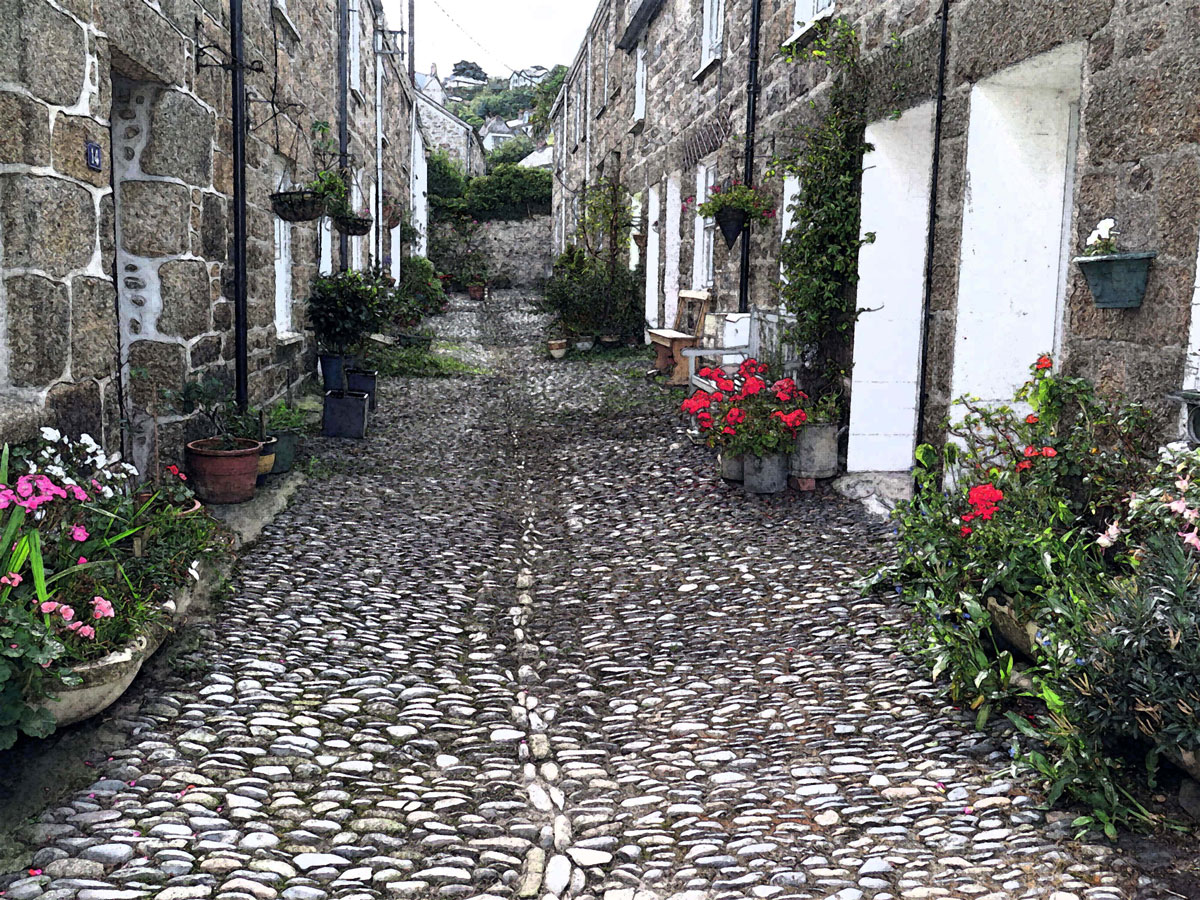
Lying at the far end of Mount’s Bay just three miles or so from Penzance, Mousehole (pronounced Mouzel) has always been one of my favourite villages in Cornwall. The narrow streets and alleyways converge at the picturesque harbour that was once full of fishing boats, but now, in the summer at least, is full of tourists instead.

Come out of season at a time when southerly gales can do their worst, and you’ll see a totally different Mousehole. The harbour and tiny cottages are built out of local granite which is so characteristic of this part of Cornwall, and so necessary to keep out the elements. Mousehole is where the protection of Mounts Bay gives way to the rugged West Penwith peninsula, and for me, Mousehole in wintertime is the best time of all.

Continue reading

Originally posted 2021-10-18 13:15:33.

The Newlyn Artists – Pt 3 Stanhope and Elizabeth Forbes and Other Artists

The Newlyn Artists - Pt 3 Stanhope and Elizabeth Forbes and Other Artists

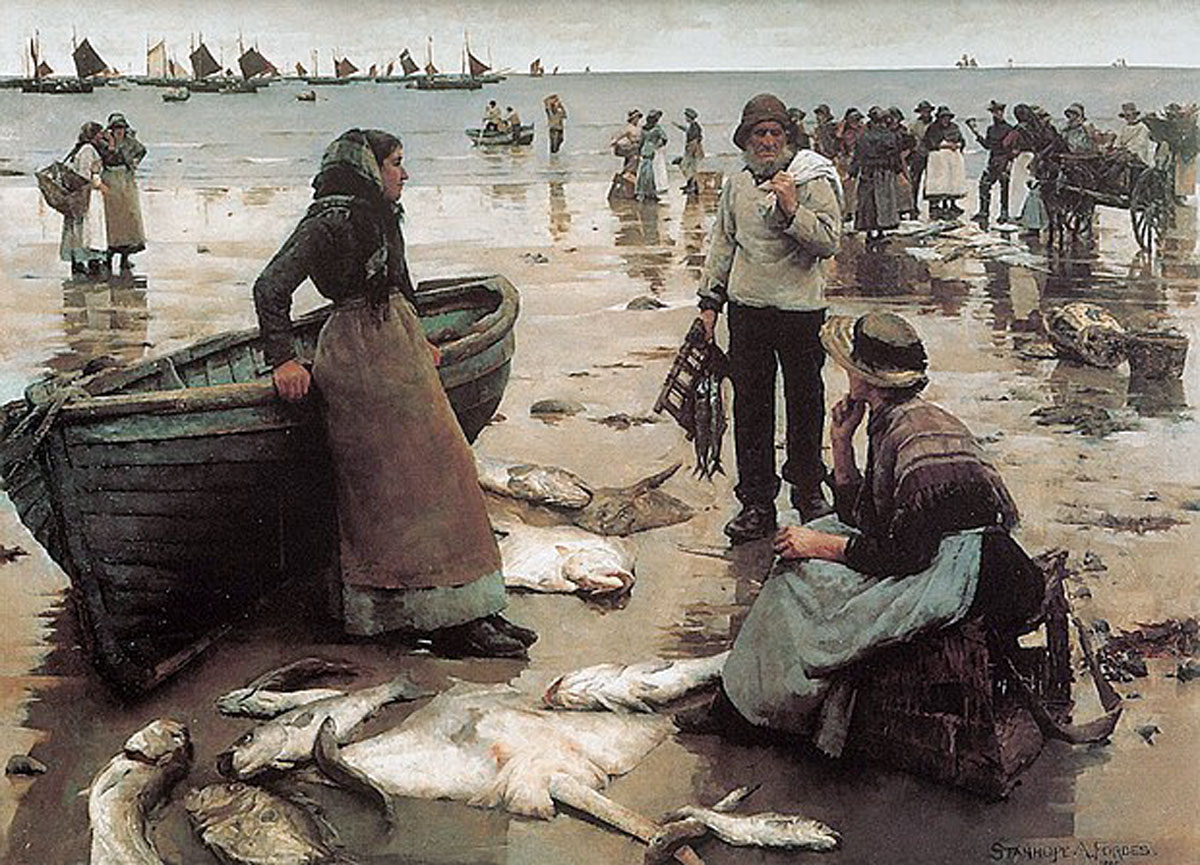
My previous two posts about Walter Langley and Edwin Harris show how the Newlyn art colony began, but from little acorns mighty oak trees grow as they say, and today’s final post on Newlyn is about how a small group of artists blossomed into a highly acclaimed school.

Both artists were influenced by the French en plein air style, and it was on Harris’s second trip to Brittany in 1882 that he first met the Canadian artist, Elizabeth Armstrong in Pont-Aven.

Born in Ontario in 1859, Elizabeth, accompanied by her mother, moved to London to study at the South Kensington Art School, and after completing further studies in New York and Munich, sought inspiration for her work in Brittany and Holland. After returning to England, mother and daughter headed down to Newlyn where Langley and Harris had been joined by Stanhope Forbes, Frank Bramley and others, and it was Edwin Harris who introduced Elizabeth to Stanhope Forbes at Cliff Castle Cottage.

Continue reading

Originally posted 2025-03-02 16:02:03.

The Newlyn Artists – Pt 2 Edwin Harris and the Birmingham Boys

The Newlyn Artists - Pt 2 Edwin Harris and the Birmingham Boys

In Part 1, I described how Birmingham artist Walter Langley adopted Newlyn as his home with the objective of creating everyday scenes similar to the French artists who painted en plein air. Being the first notable artist to settle in the port, he is generally regarded as founder of the art colony known as the Newlyn School – but there was another contender.

Langley’s artistic career began at the Royal Birmingham Society of Artists (RBSA) where he became a close friend of Edwin Harris, who also decided to take his palettes down to Newlyn. Harris was born at Ladywood in 1855 and entered Birmingham School of Art at the age of 14, and apart from Walter Langley, his fellow colleagues included William John Wainright and William Breakspeare: All four of them were involved in forming the Birmingham Art Circle whose objective was to give encouragement to younger artists, but their close association also meant that the ‘Birmingham Boys’ would all end up down at Newlyn.

Continue reading

Originally posted 2025-02-17 15:49:11.

The Newlyn Artists – Pt 1 Walter Langley And The Founding Of The Newlyn School

The Newlyn Artists - Pt 1 Walter Langley And The Founding Of The Newlyn School

Cornish fishing harbours are a magnet for tourists, but Newlyn has never really been one of them. While St Ives on the opposite side of the Penwith Peninsula attracts plenty of visitors (some say too many at times), Newlyn may just get a handful drop in on their way from Penzance to Mousehole.

I don’t think it bothers the good people of Newlyn too much though because they’re more interested in trying to earn a living from the main business of fishing, and which is why you’re more likely to find a down to earth pub full of raucous fishermen drinking copious amounts of ‘Proper Job’ rather than a sophisticated wine bar occupied by ‘ladies who lunch’ sipping the odd glass of Chardonnay.

Newlyn may not have attracted as many tourists as St Ives, but it has attracted as many artists (and I’m not talking about the drinking variety now): In actual fact, artists arrived here to paint en plein air quite a while before the St Ives school was established, and if you’re interested in reading more about the art scene in St Ives you can find it in my post Have you Seen the Light?

Continue reading

Originally posted 2025-02-09 09:37:31.

Newlyn – Pt 2 The Port Survives Stormy Times And They Weren’t All At Sea

Newlyn - Pt 2 The Port Survives Stormy Times And They Weren't All At Sea

In Pt 1, we saw how Newlyn Harbour developed from a small quay in Gwavas Lake during the Middle Ages to how it roughly appears today, but other improvements had been taking place as well. Before the North and South Piers had been completed, a road was built along the Strand that separated the communities of Newlyn Town and Street-an-Towan, and then a timber Trawl Pier was constructed next to the Strand road where fishermen could land their catch directly onto shore.

To assist the fishermen and those organizing the running of the harbour, several buildings were constructed including a covered fish market, ice works, harbour commissioner’s office and fishermen’s mission. Below are some images of the Strand today, but it’s worth noting that the road is primarily taken up with the everyday workings of the fishing business.

Continue reading

Originally posted 2025-01-31 08:10:50.

Newlyn – Pt 1 Pilchards and Piers

Newlyn - Pt 1 Pilchards and Piers

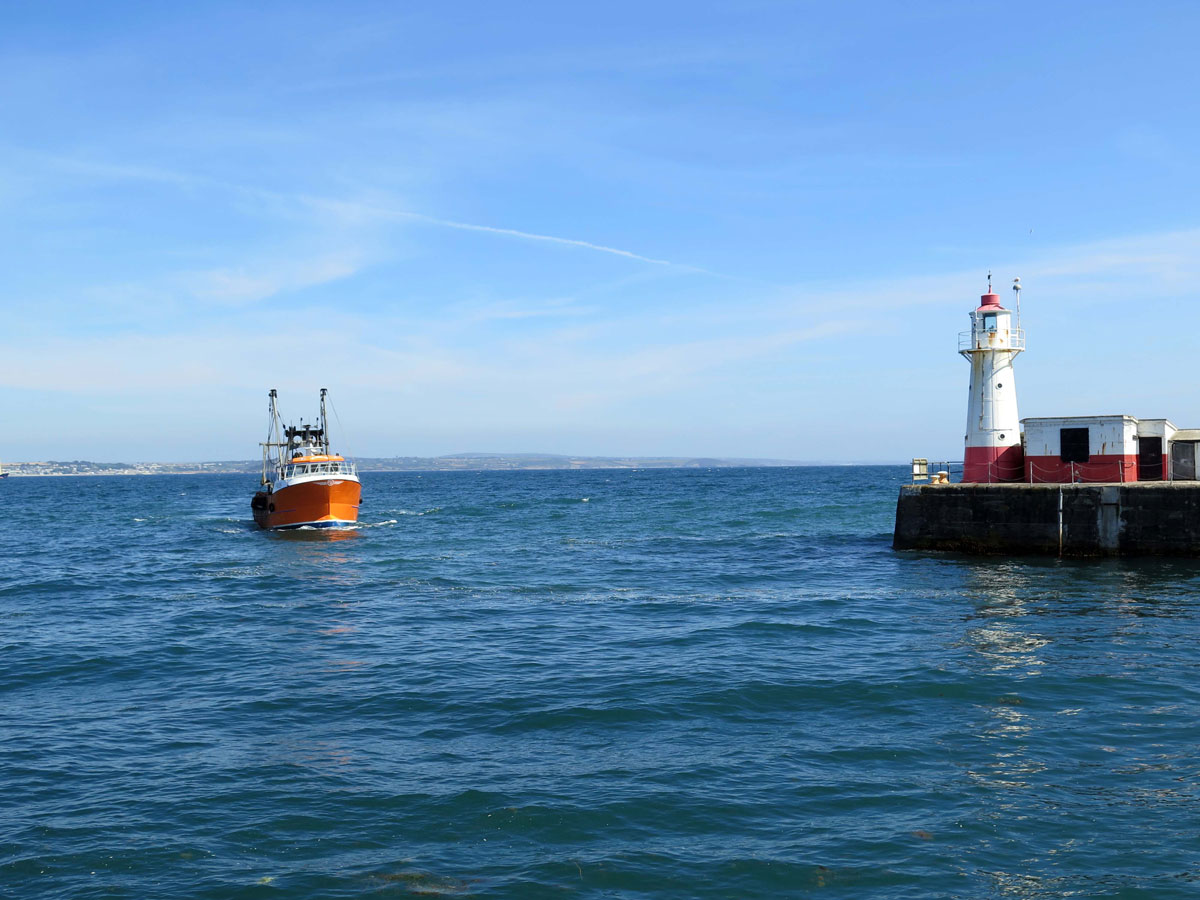
Newlyn lies in Mounts Bay just a thirty minute walk along the Promenade from Penzance Harbour. It belongs to the parish of Penzance and the two towns are often officially referred to as Penzance and Newlyn, but they’re really quite different in character. Whereas Penzance can be regarded as a fairly quiet holiday town, Newlyn is one of the largest fishing ports in England, if not the largest.

Continue reading

Originally posted 2025-01-26 09:21:51.

Clovelly – The Great Debate

Clovelly - The Great Debate

When I started this website I made a conscious decision not to voice my opinion too often because, as someone who doesn’t like being told how to think, I don’t suppose anyone else does either, and so for this article I’m going to do what I normally do, and present the facts as I know them and let you, the readers, decide.

People who are familiar with Clovelly will have already guessed what this post is about. The debate in question is whether it’s right to charge people to visit the village. Most people don’t think it is, but then again, I don’t think most people know all the facts either.

Part of the reason that people cry ‘rip off’ or worse is because when people turn up to Clovelly they don’t expect to pay to walk through a village that appears to be just that – an everyday village. The fact that it’s picturesque has nothing to do with it as far as they’re concerned. The problem though, is that it’s not just another everyday village, and I’ll endeavour to explain why.

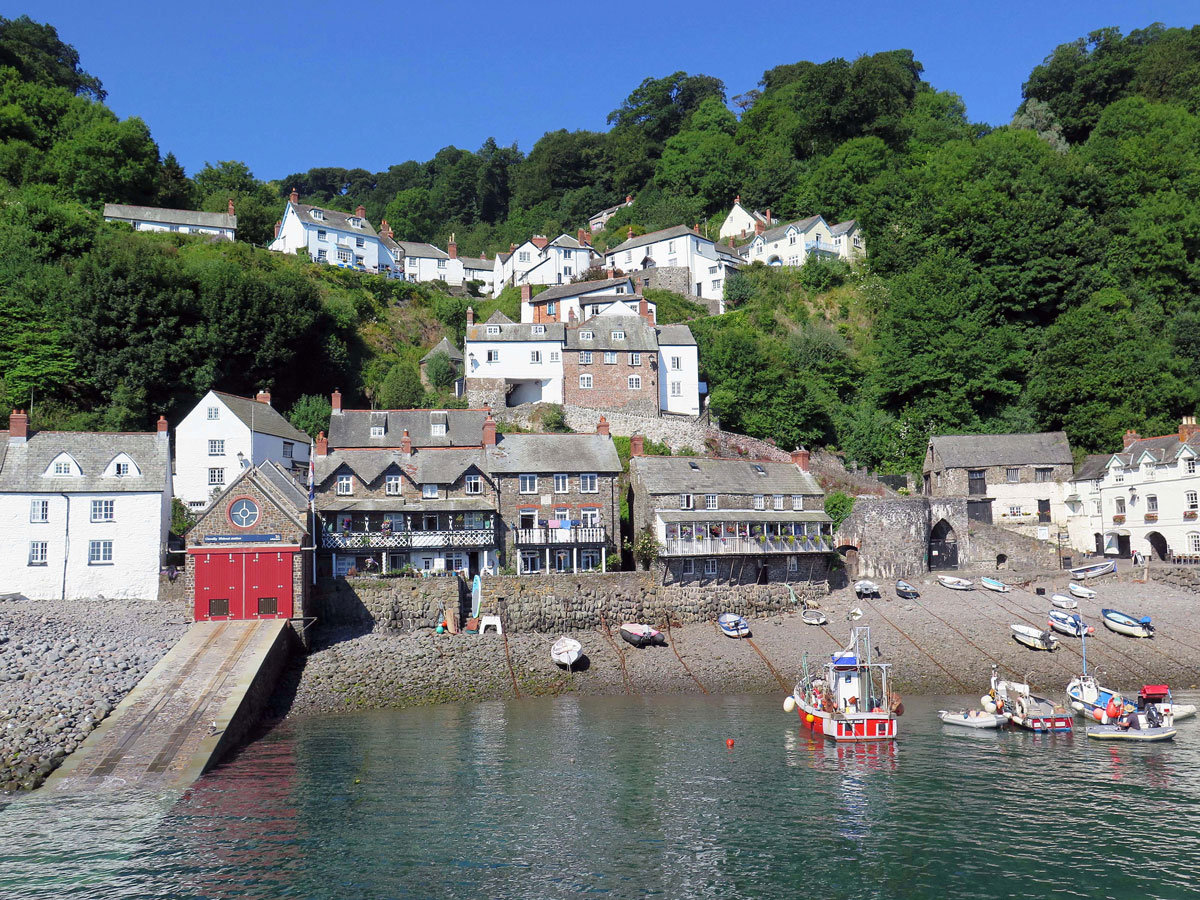
The thing to remember is that it isn’t just a hotch-potch of buildings owned by various individuals, but an ancient manor that has been owned by just a handful of families since it was registered in the Domesday Book. After the Norman Conquest, owners included William I’s wife Matilda and the Giffard family who acquired it in 1242. In 1370 they sold it to Sir William Cary, whose family held it until the Hamlyn family bought it in 1738, and their descendants have been running it ever since. In other words, it has been in the private hands of just two families for the last 650 years. Today the estate comprises of woodlands, 2,000 acres of farmland and the village itself.

George Cary was the man responsible for turning Clovelly into a fishing village when he built a breakwater and fish cellars towards the end of the 16th century, but the person to thank for how the village looks now is Christine Hamlyn who inherited the estate in 1884 and dedicated her life to renovating and preserving the character of Clovelly and its buildings. The village wasn’t known to the outside world until Charles Kingsley wrote about it in his book Westward Ho! He lived in the village for a while and his cottage is now a museum. Maybe this is where Christine Hamlyn got her enthusiasm from to smarten the place up. Who knows?

One of her descendants, John Rous, runs the Clovelly Estate today and explains that the admission costs are needed to maintain Clovelly’s unique character. The estate has been charging an entry fee to the village since 1924 and most of the money goes on maintenance using traditional materials and skilled labour. They must be doing something right because only 7 out of the village’s 71 buildings are not listed.

Cottages are not for sale, but occasionally they come up for rent – but only to people who are prepared to join in the community spirit. In recent times the demographics have changed in many places where locals can’t afford to live in their own communities any longer, so this is an important consideration by the estate. Many families have been here a long time, and village life seems to be how it should be in many ways.

Living in Clovelly has other practical problems though: The steep cobbled High Street is not accessible to motor vehicles, and for many years donkeys were used to carry baskets of fish, goods – and even people up to the top of the village, but the practice stopped in the 1960s. Today, villagers use sledges instead, and donkeys just give kids rides around their meadow near the Visitor Centre.

For visitors, it means that it’s a long hard slog back uphill unless you’re able to use the Land Rover service that charges a small fee. It officially operates Easter-October between 10 and 4.30, but it might be best to check beforehand if it’s essential.

Now for the information you’ve been waiting for – how much is it to visit? Current prices (April 2023) are Adults £8.75, children between 7 and 16 £5.10, Under 7’s Free, and there are concessions for families. Your ticket also includes parking at the Visitor Centre, a 20 minute AV introductory film, entry to the Kingsley Museum and Fisherman’s Cottage and Clovelly Court Gardens (home of John Rous).

Well there you have it. As John Rous is keen to point out, visitors are often happy enough to pay to go to a National Trust property, but what do you think – would you pay to visit Clovelly? If you really don’t want to, there is a public footpath that allows access to the village for nothing, and plenty of people do, and they call those who do pay, ‘muppets’. Who do you think is right? Answers please on a Clovelly postcard to Easymalc’s Wanderings.

Continue reading

Originally posted 2023-04-23 11:45:40.