
Newlyn - Pt 1 Pilchards and Piers
Newlyn lies in Mounts Bay just a thirty minute walk along the Promenade from Penzance Harbour. It belongs to the parish of Penzance and the two towns are often officially referred to as Penzance and Newlyn, but they’re really quite different in character. Whereas Penzance can be regarded as a fairly quiet holiday town, Newlyn is one of the largest fishing ports in England, if not the largest.
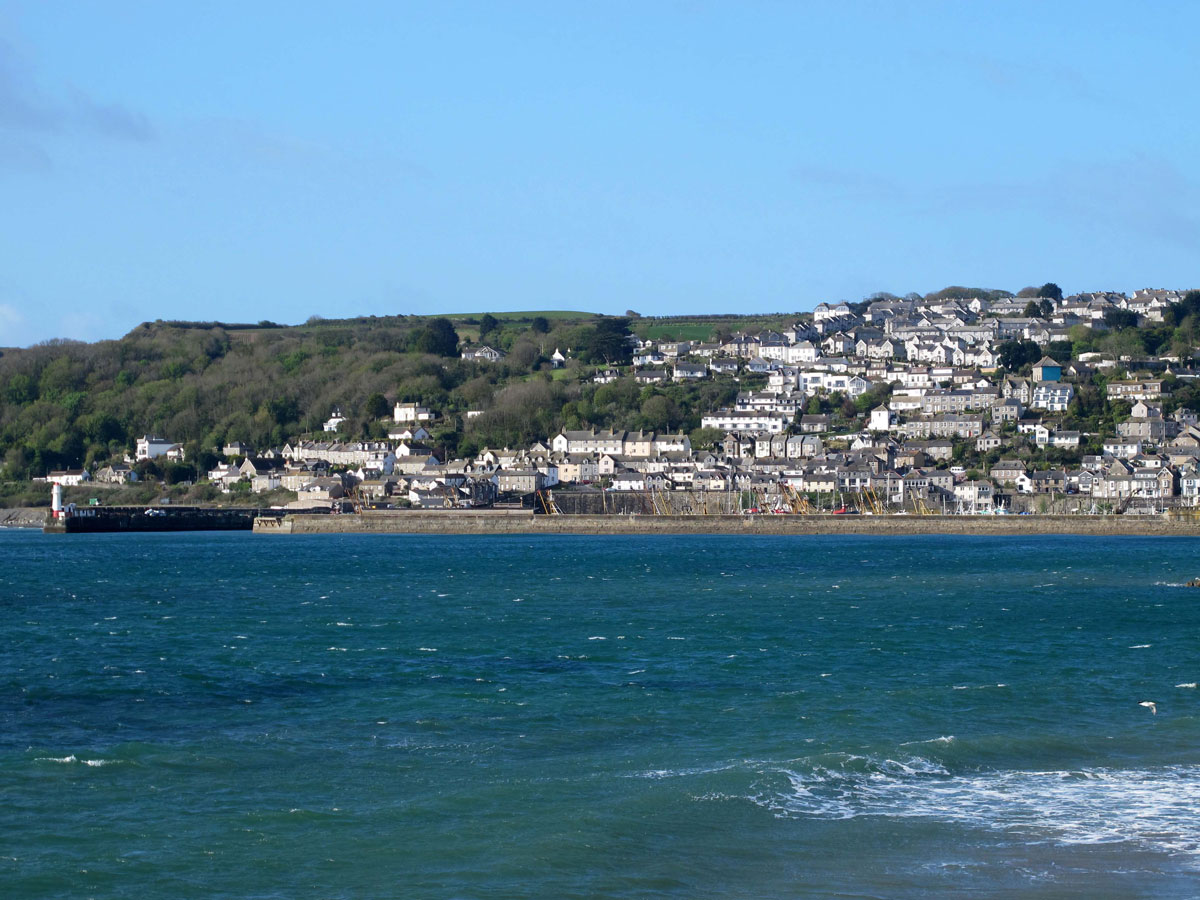
Newlyn was first mentioned in 1279 as Nulyn (and then Lulyn), meaning ‘a pool for a fleet of boats’ which was a reference to Gwavas Lake, an area of seawater in the north-west corner of Mounts Bay that was protected by cliffs from the prevailing westerly winds.
On the cliff overlooking Gwavas Lake was the fishing community of Newlyn Town, one of three separate villages that make up Newlyn today: The other two were Street-an-Nowan (the area now known as The Strand), and Tolcarne; and from what I can gather, there was no love lost between any of them.
The Old Quay in Gwavas Lake has been here since at least 1435 with the present incarnation dating from the 1730s. Made from huge granite blocks without the use of mortar, the quay is now in need of repair, and a restoration programme is under way with a view to bringing it back into use.
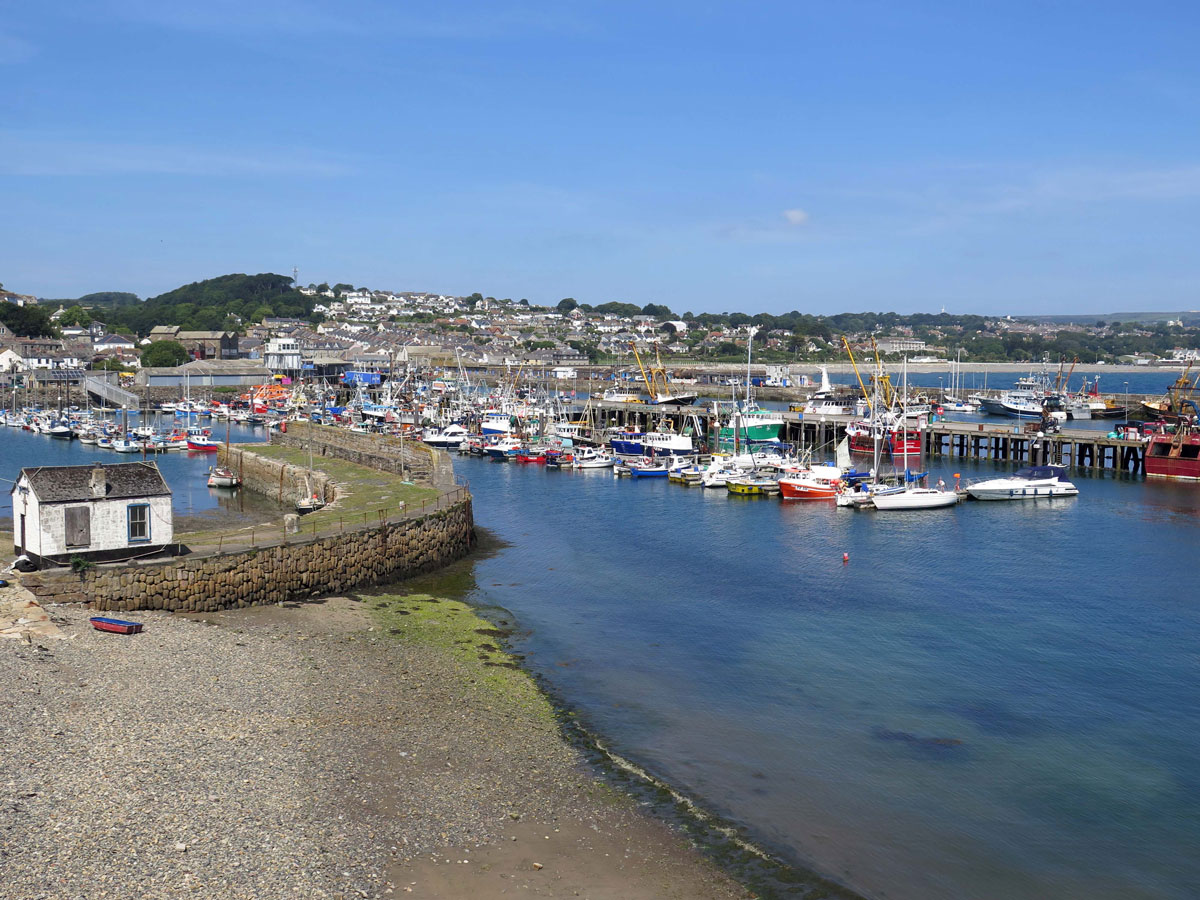
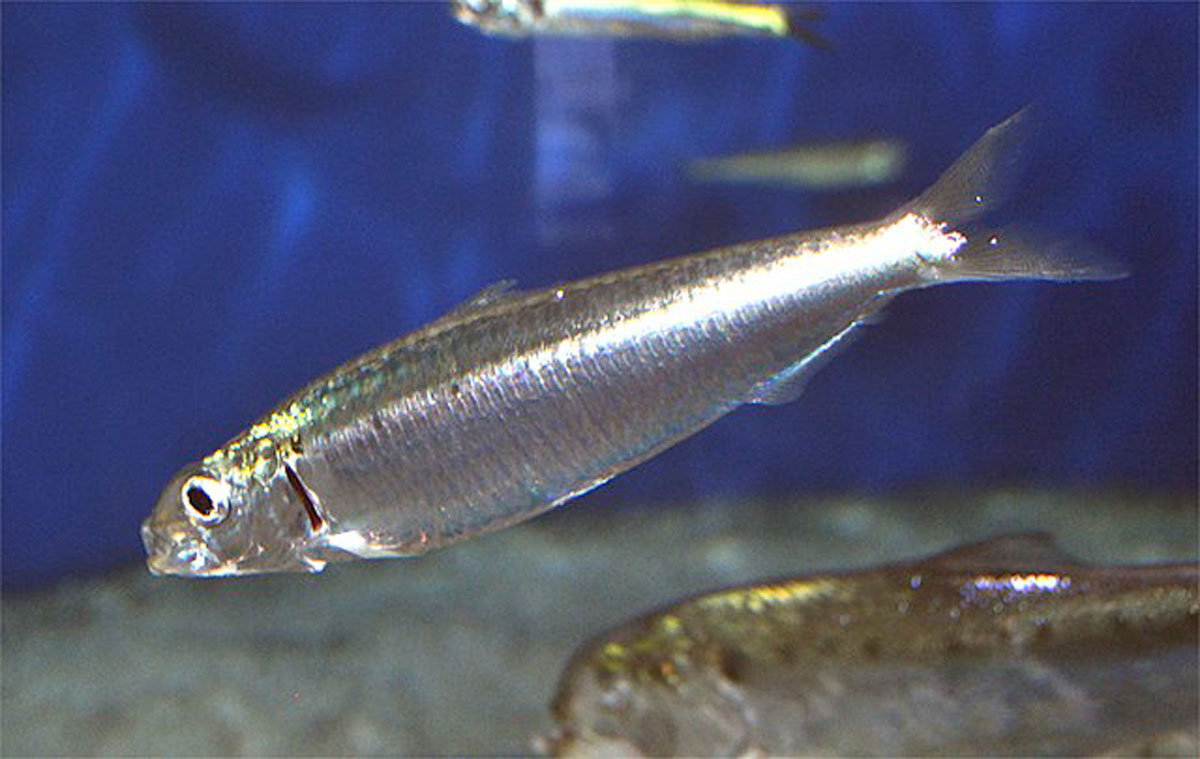
Fishing has always been an important source of income to the people of Cornwall, but it was the humble pilchard that initially brought prosperity to the communities dotted around the coast. In West Cornwall, Penzance was the main fishing port, but by the late 17th century its interests had become more dependent on the tin mining industry, and so the fishermen and merchants moved their boats and businesses to Newlyn. Pilchards incidentally are a member of the herring family, and if you’re wondering what the difference is between a pilchard and a sardine there isn’t any, apart from the fact that a sardine is younger and smaller.
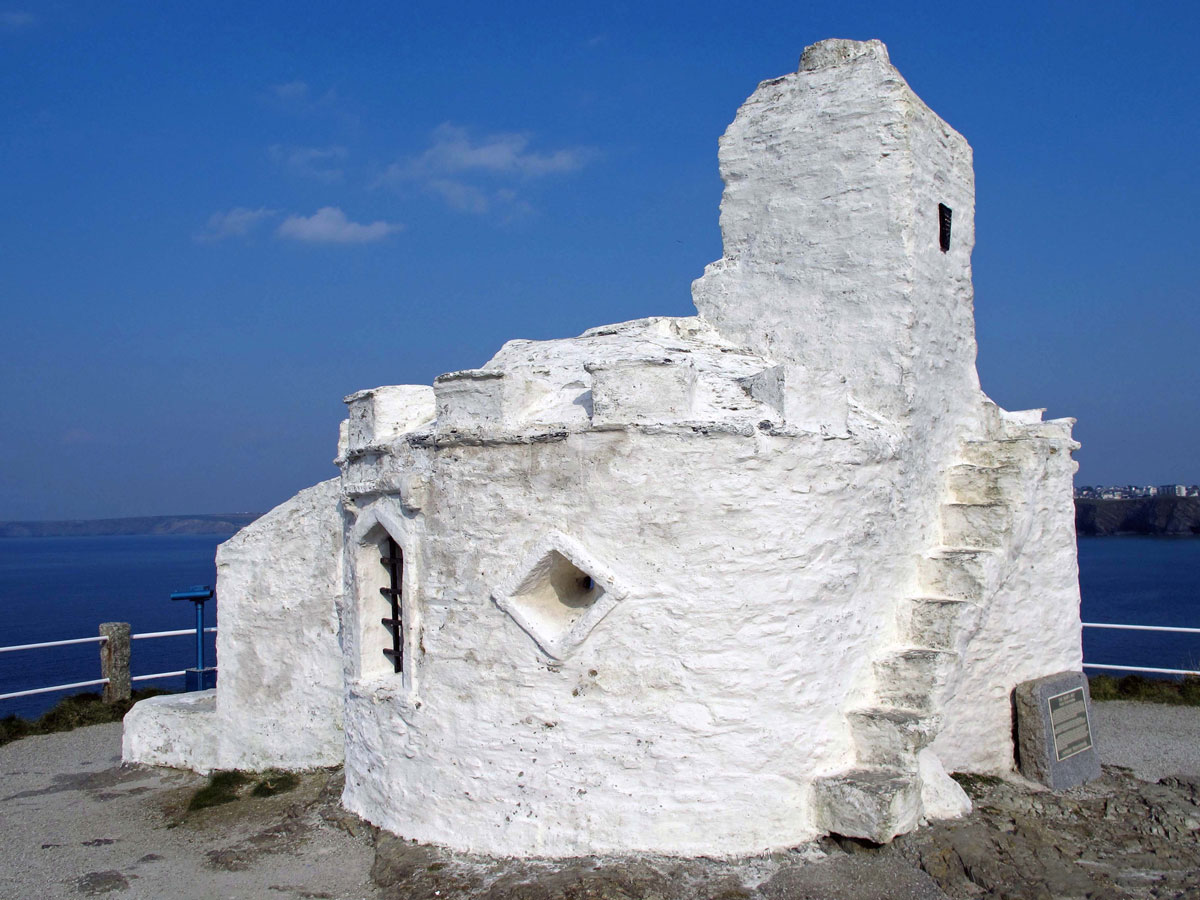
Cornish pilchards spawn in the southern Celtic Sea during the spring and summer months before migrating to their feeding grounds further north. Although there was no certainty where and when the huge shoals of fish would turn up, it was usually sometime between late summer and autumn. Before the days of technology, huers were employed to keep an eye out for when these shoals arrived, and a 14th century huer’s hut can still be seen on Newquay’s Towan Headland.
Large seine nets were used for catching the fish, but the size and weight of the catch required quite a few men to haul the fish up into the boats. After being offloaded at the harbour, the pilchards were then taken to nearby cellars for processing: First, they were pressed to remove the valuable oil, then salted, and finally packed into barrels. It was a very labour-intensive business and required men of means to run it, but they saw good returns on their investment as many of the sardines were packed off for export, mainly to Italy, but also to France and Spain.
The industry was at its height between 1750 and 1880, but it was still an important part of Newlyn’s economy right up until the 1960s. The reason for the decline was not overfishing, but because pilchards fell out of favour. There are still a few boats that work out of Newlyn using ring nets, but these days they’re sold as Cornish Sardines. To be honest, I’ve never quite understood why people fell out of love with them because they’re not only tasty, but also nutritious and cheap. On top of that, they’re probably one of the most sustainable fish that can be found around our coast and I enjoy eating them on a regular basis – and no, I don’t have a connection with the Cornish Sardine Management Association.
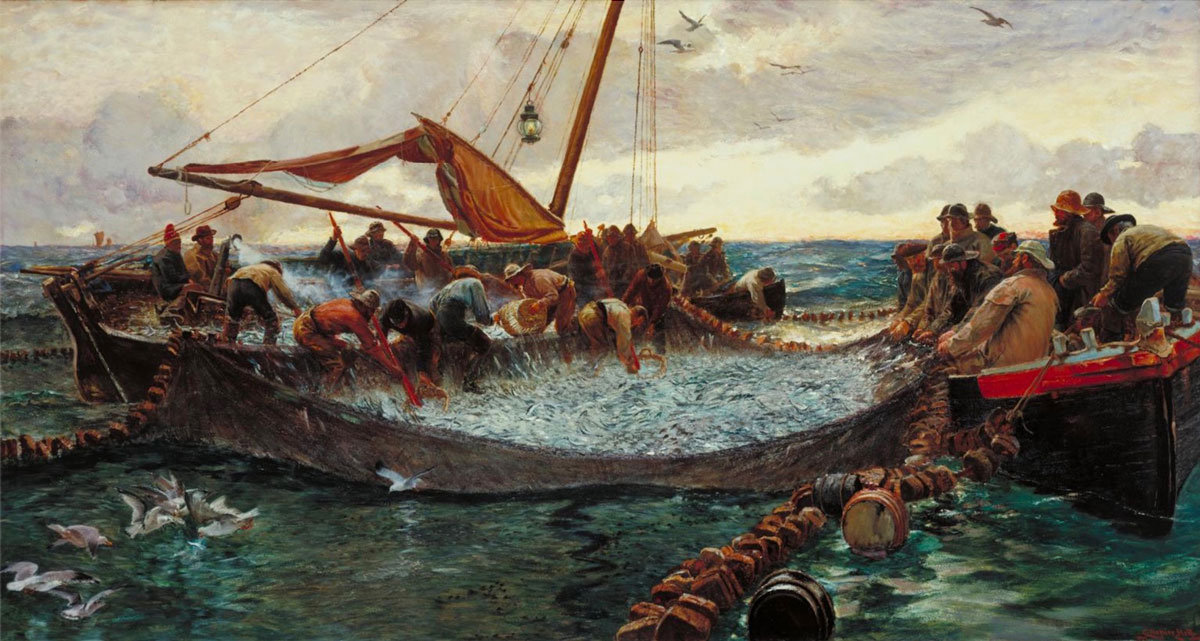
As the demand for pilchards started to wane, fishermen were forced to go further afield looking for mackerel, herring and other white fish. Traditionally, luggers were used for pilchard fishing and Newlyn’s Old Quay was more than adequate to cope with them, but larger boats were now needed and space became limited. It meant that many boats had to moor outside of the harbour in Gwavas Lake and after a couple of accidents there were calls for a new harbour to be built.
The need for a new harbour was brought into sharp focus one night in October 1880, when boats returning from the herring grounds off the north-east coast ran into a storm. On reaching Mounts Bay they were unable to tie-up at Newlyn and were forced to head for the shelter of Penzance. Several boats were sunk, but it was the tragedy of the Mousehole lugger, PZ26 Jane, that had the most impact when the crew of six men and a boy were drowned in full view of their wives and children.
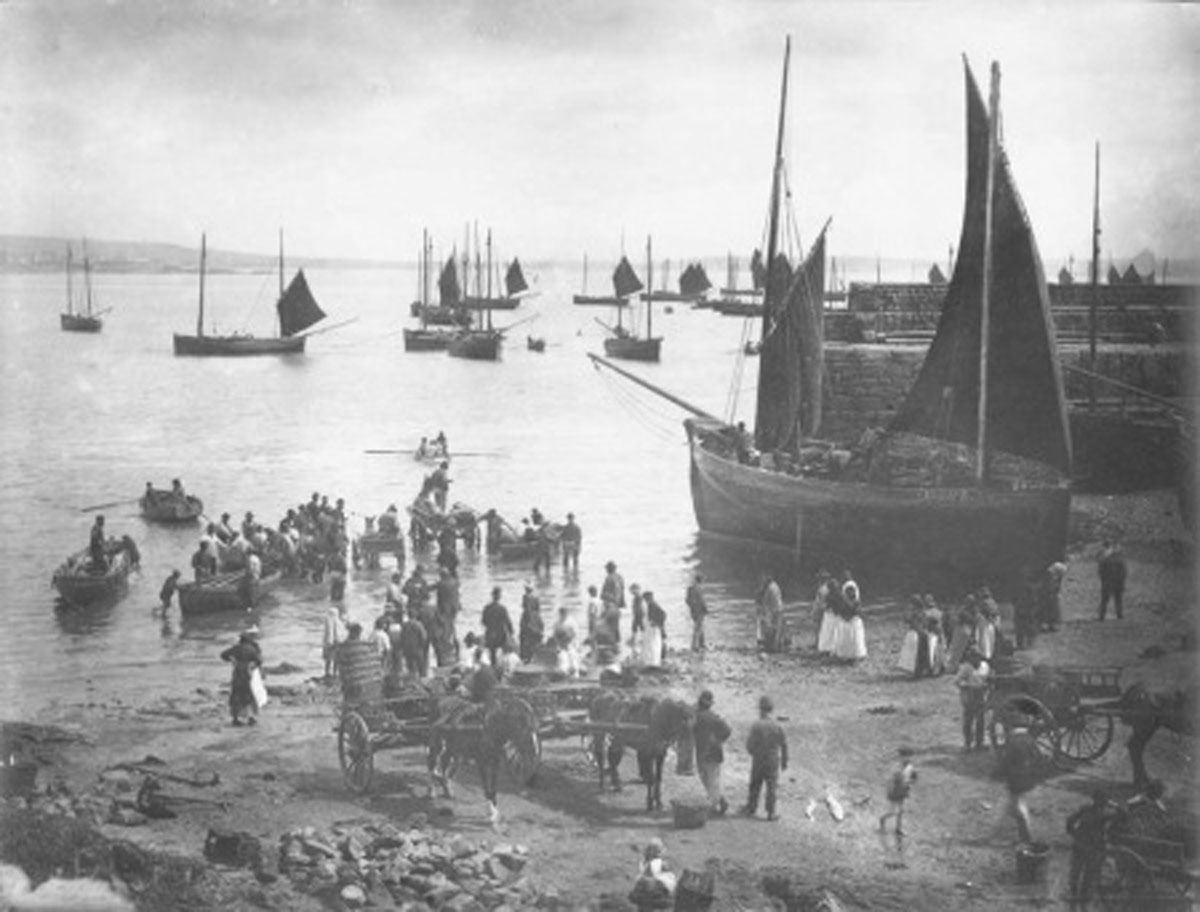
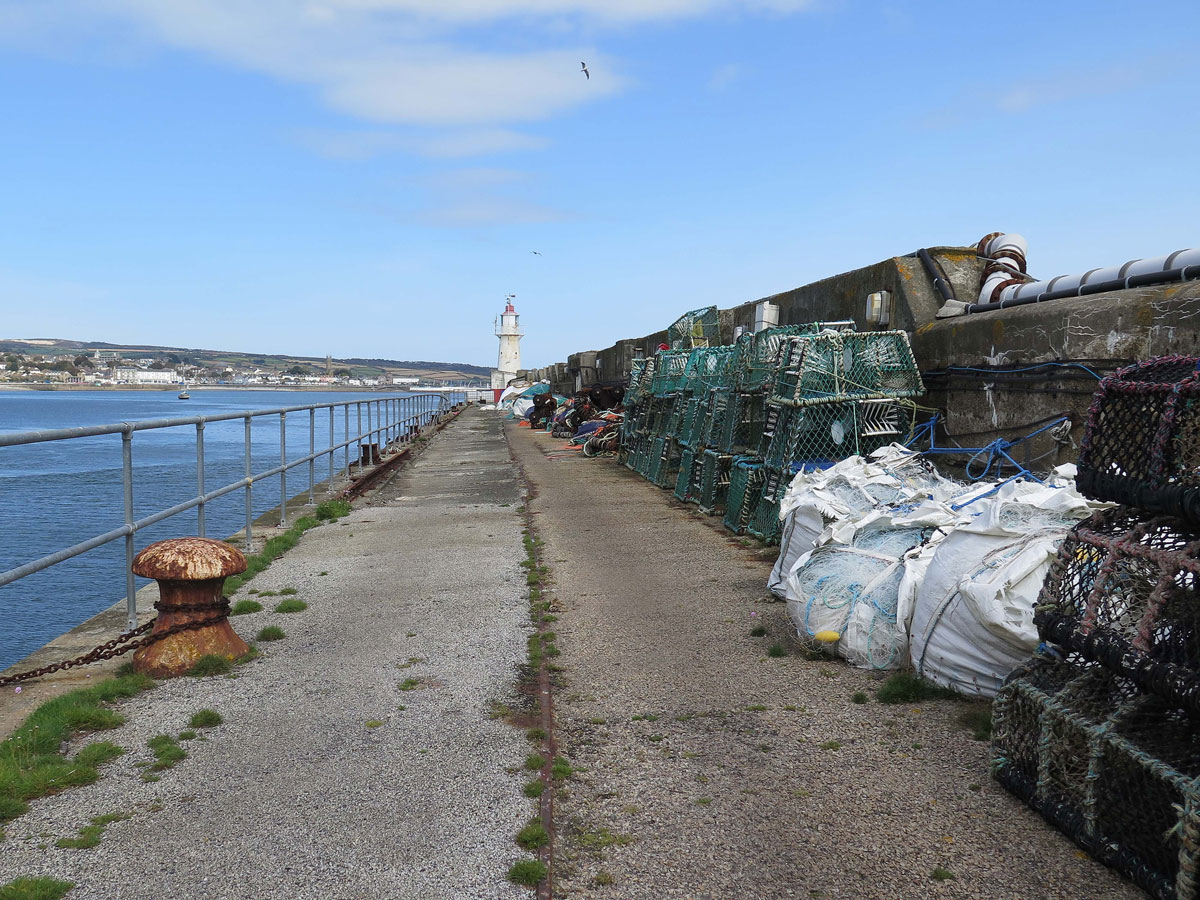
After two years of construction, a South Pier opened in 1887: It was really just a breakwater, but did include a lighthouse and provision for extending it later on. It wasn’t long however before it was realised that another pier would be needed to protect the harbour from storms in Mounts Bay, and so a year later work began on building a North Pier. When finished, it became obvious that the entrance to the harbour between the two piers was too wide, leaving the harbour vulnerable to south-east storms, and so the North Pier was extended. The final piece of the jigsaw came in 1915 when the South Pier was also extended, leaving the harbour’s protection just as we see it today.

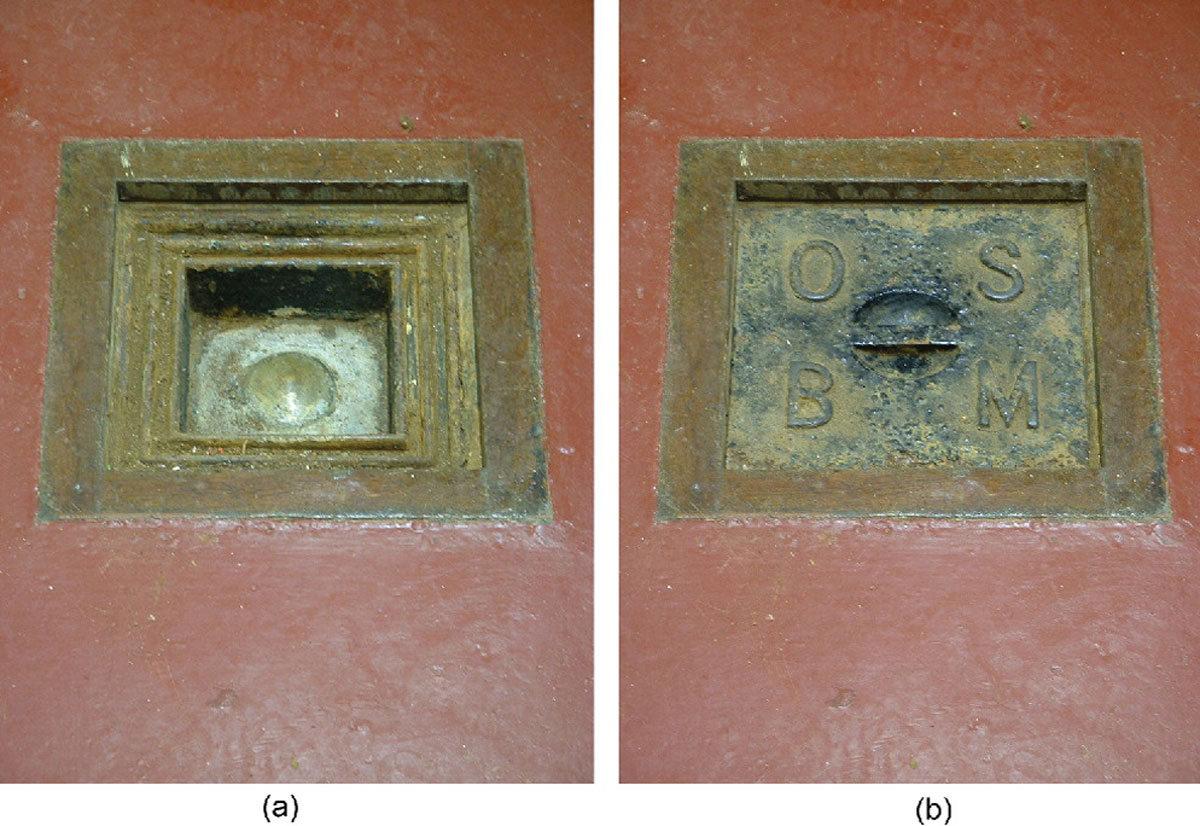
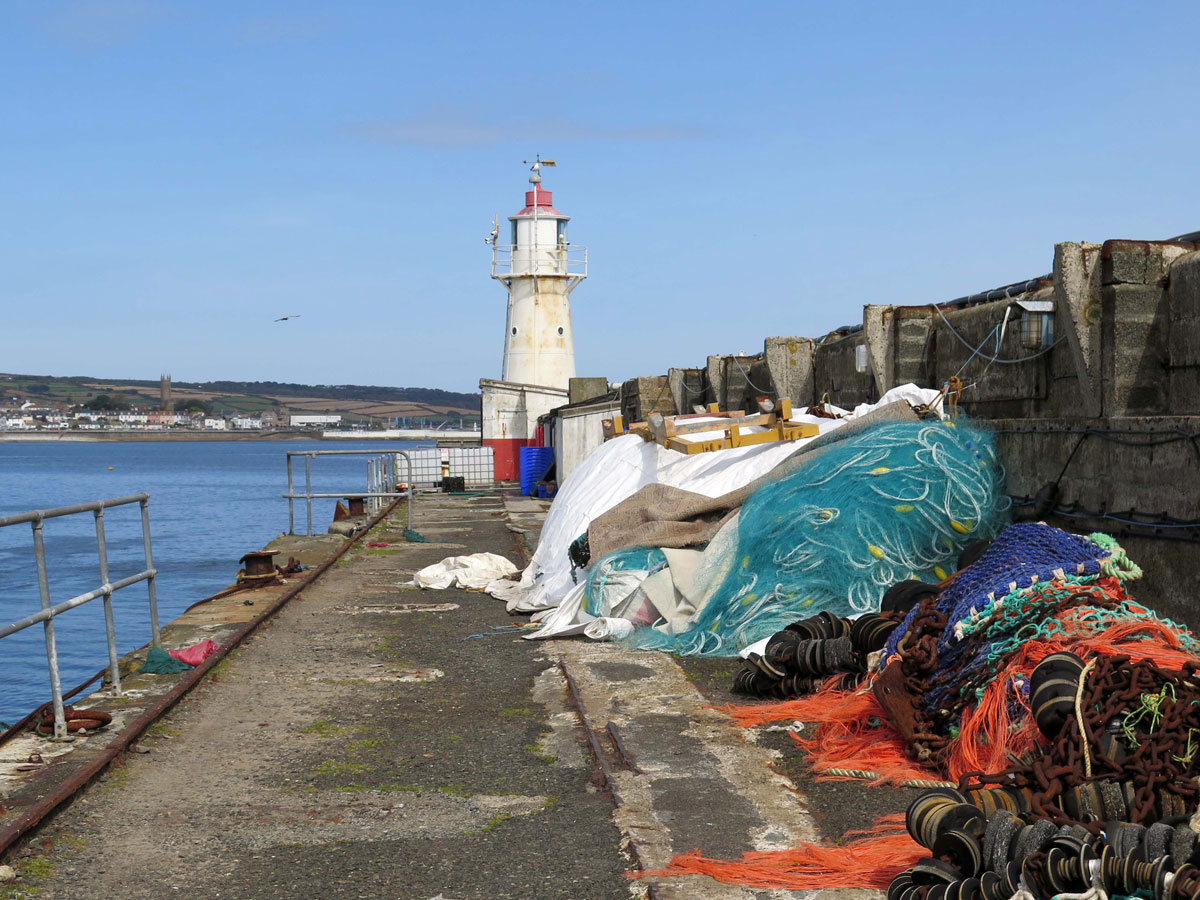
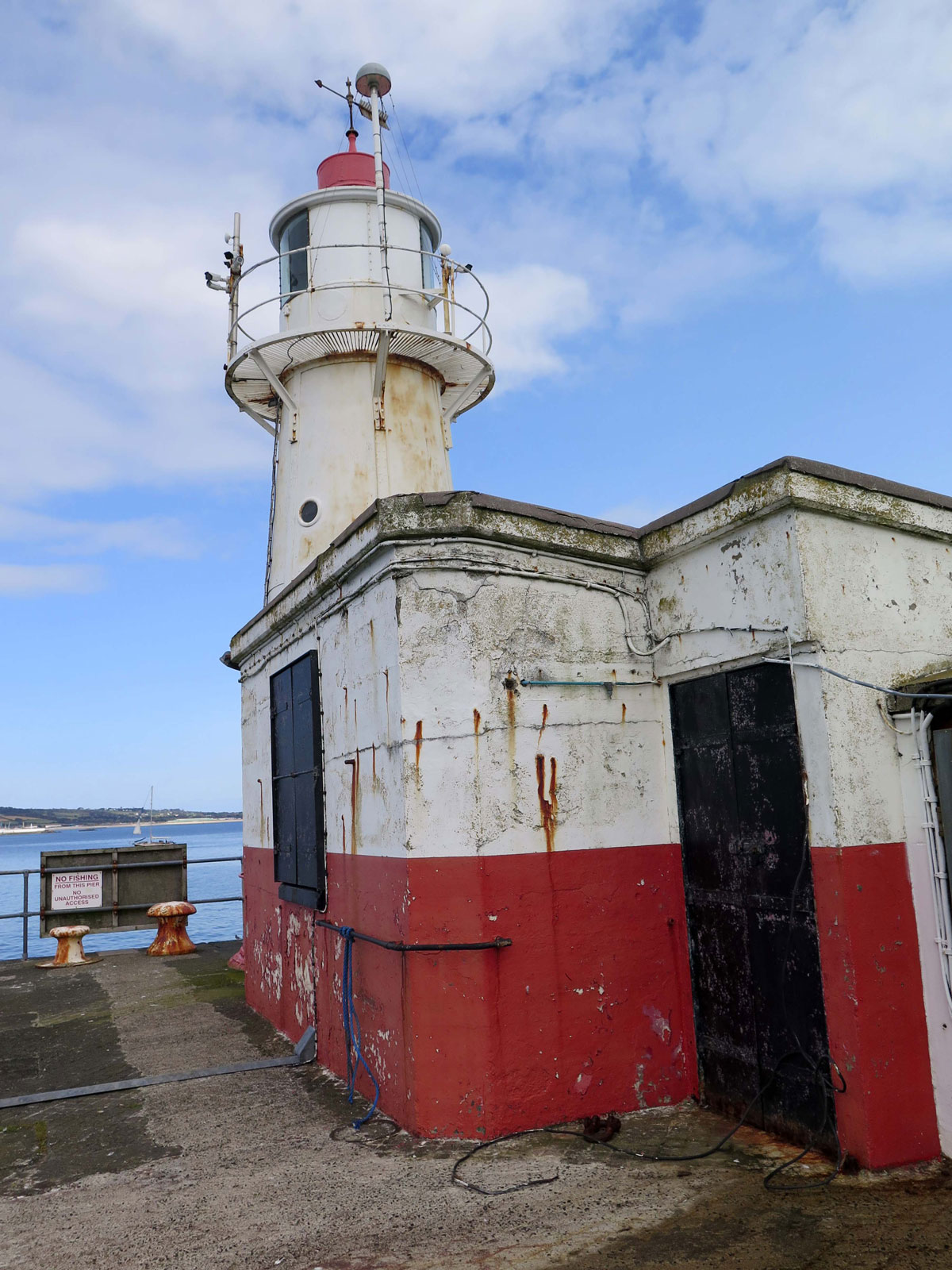
At the end of the South Pier a new lighthouse was erected along with a Tidal Observatory: Established by the Ordnance Survey in 1915, this observatory took measurements of tidal height every 15 minutes for the following six years, with the aim of calculating the mean sea level at Newlyn. I haven’t included this snippet of information for anyone suffering from insomnia, but because from this dilapidated old hut the Ordnance Survey takes all its British altitude measurements. In other words, when Ben Nevis is said to be 4,413 ft above sea level, it means that the peak of Ben Nevis is 4,413 ft above a brass bolt inside the hut on Newlyn South Pier. Consequently, every contour line is also measured in the same way and is known as the Ordnance Datum Newlyn. Not only that, the data that has been collected over the last 110 years has contributed greatly to studies in oceanography, geology and climate change.
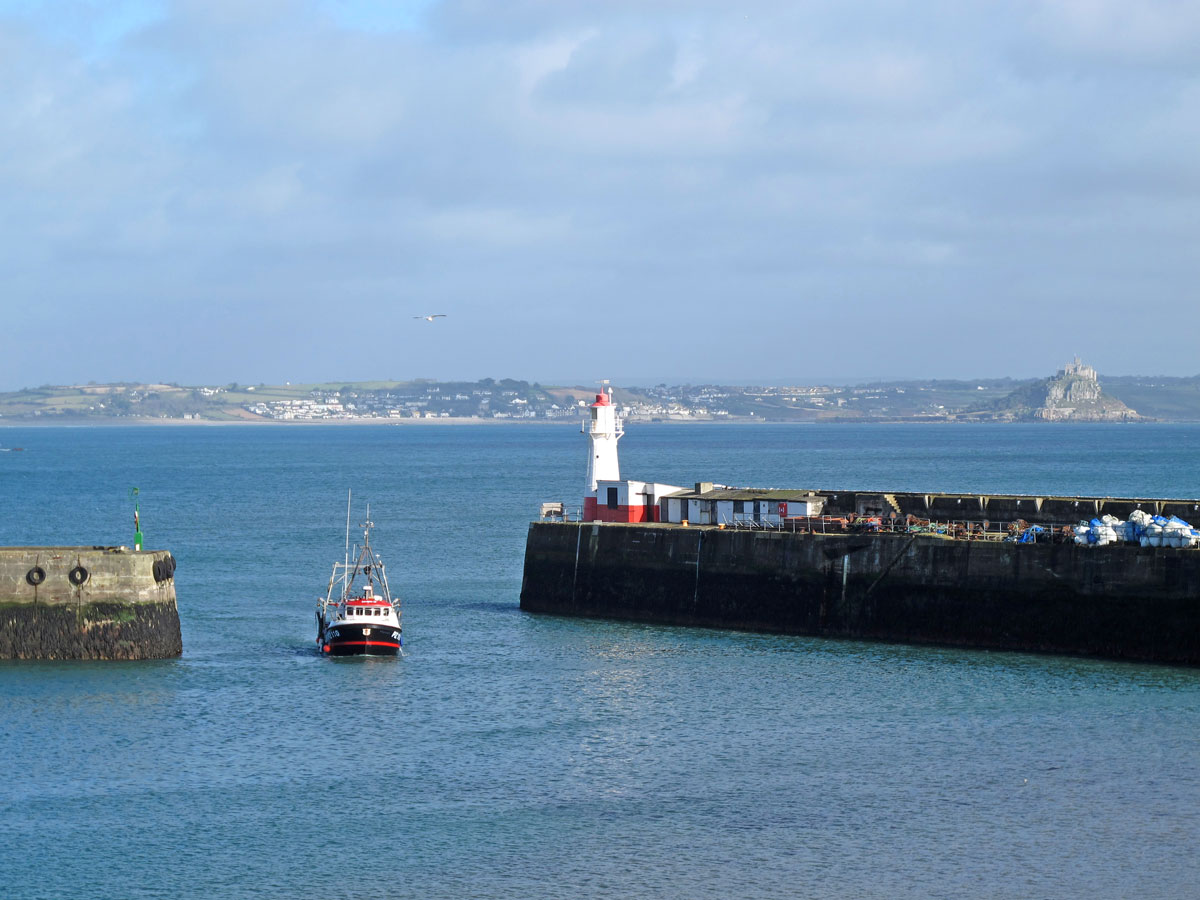
As far as the pier itself is concerned, I’m not sure that it’s ever really been used for fishing as it was mainly used for exporting stone from the nearby Penlee Quarry. During its heyday the quarry used a narrow gauge railway to transport the aggregate down to the pier where it was mainly shipped to ports around the Bristol Channel and South Coast, although later on it did export some of it to places further afield such as Germany. Operations at the quarry came to an end in 1990, with supplies still being delivered up until 1994. Since then, I don’t think I’ve ever seen a boat here except those requiring maintenance on the slipway.
Normally, large gates prevent people walking along the pier, but one day I noticed they were unlocked so I took the opportunity to wander along to the end to get a closer look at the observatory. I can see why it was out of bounds as there was all manner of fishing gear along here, so perhaps fishing boats do use it after all. As I arrived at the observatory I startled a load of pigeons in an old hut next to it. I may have scared them, but not half as much as they scared me. Jesus Christ! I can see why pigeons leave a load of mess behind now and so after gathering my composure I took a few quick snaps and headed back along the pier, where thankfully the gates were still open.
I think somewhere as important as this should be better looked after in a way, but that’s Newlyn for you, and in the next post, I’ll explain how the fishing industry changed and why I like Newlyn just the way it is.
POSTED – JANUARY 2025
Originally posted 2025-01-26 09:21:51.
A fascinating insight into Newlyn, which until now I’ve only ever known of in terms of the school of art named for the place. I was fascinated by the medieval huer’s hut at Newquay, as I hadn’t heard of huers before, although I had a vague notion that people watched for the arrival of fish in the past. Can you go inside the hut? I’d love to know what it’s like.
Lovely story about the pigeons on the pier hut. It reminds me of a very similar experience Stuart and I had on our honeymoon. In Yorkshire we were looking around the ruins of Fountains Abbey on a dark, somewhat drizzly day in November (it sounds awful, but in fact it was incredibly atmospheric, peaceful and beautiful). We went into one building where there was a side room that looked very dark inside, and I got a bit spooked as it was so quiet and still. Stuart stepped inside to assure me it was OK, and I followed, rather gingerly. When he was satisfied all was fine, despite the darkness and the really rather haunting feel to the room, he said ‘It’s fine, nothing to worry about in here…’ but just as he spoke there was a sudden almighty rushing sound of god knew what, which turned out to be a group of disgruntled pigeons we’d disturbed. They flapped angrily out past us and flew off around the outer ruins, startling both of us (to put it mildly!) and leaving us reeling from the shock! Pigeons are good at the element of surprise, aren’t they?
Many thanks for your email too. It’s Nathan’s birthday today, so I’ll reply tomorrow. In the meantime, take care and thanks for broadening my knowledge of Newlyn.
If my memory serves me correctly, I’m sure I’ve been inside the Huer’s Hut before now, but it looks as though gates have been installed since, but I suppose it’s understandable in a way. I can tell you that there’s a fireplace inside.
Give Nathan my best wishes for his birthday. I’m guessing, but he must be about 14 now.
They were pretty good with their fireplaces in the middle ages, and I guess it shows how much they valued their huers!
Yes, indeed, Nathan was 14 yesterday. Thanks for your good wishes, he had a lovely day. 🙂
I’ve never knowingly eaten a pilchard, Malc, but plenty of sardines in my youth. Tinned in tomato sauce. Freshly barbecued ones have too many bones and there are much easier fish to eat. I would give the humble pilchard a shot, if offered. Fortunately, no-one’s offered recently. The pier and lighthouse look distinctly battered, unlike the fish.
Looking forward to part 2.
Thanks Jo. Newlyn is definitely not another St Ives or Polperro.
Hey..glad you never had to climb them gates. . .
Lovely post, I could almost smell the sea on these pld photographs especially. And yeah pigeons are quite disgusting actually in terms of the mess they make.
Thanks Shey – and thanks for the X link by the way, and yes, I was glad the gates were still open too 😊
I dinnae blame you and no rob re a tweet. Great post. I really enjoyed it.
Thanks a lot, Malc, for another of your fascinating posts that gave me detailed information about a village I only visited very quickly
I love all your photos and didn’t know that the altitude measurements were calculated from that simple brass bolt ❣️
It’s always a pleasure to hear that you enjoy these posts Luisa and thank you for your lovely comment as always 😊
Thanks a lot for the nice reply!
You are always very kind, dear Malc! I appreciate both this and your precious friendship
Likewise my lovely!
Excellent and humorous write-up, Malc. From reading lots of British novels, I did know what a pilchard was and it made me wonder how it compared to the Monterey Bay sardine industry. Was very pleased to read that it was changes in taste preferences and not over-fishing that caused the change in what was being fished. Looking forward to the next installment.
Thanks Pat. Glad you enjoyed it. Fishing is vitally important to the Cornish economy but it’s constantly under threat, and not necessarily from a lack of fish.
Hate to hear that, Malc.
I won’t go into the reasons here Pat but it stems from our time in the EU.
Thank you, Malc, for another of your erudite posts that inform your readers about the history of parts of this country that are unknown to many. As always, we learn the important part of the two towns’ history and the development of the fishing industry. I love your pictures, especially Huer’s Hut at Newquay and the Lighthouse. The addition of your humour is greatly appreciated! Thank you!
Joanna
And so are your comments Joanna. As always, thank you for your unwavering encouragement.
You will always have my full support, Malc, because I love your talented writing!
Joanna
Joanna, you’re so kind 💙
Fascinating info about the Tidal Observatory, all new to me 🙂 And I also never realised that a pilchard was just a larger sardine!
If it’s useless information you like Sarah you’ve come to the right place 😊
Loved the history, the pics, the hut and the lighthouse! Fab work Malc! Cheers.
Thank Francesc. I’m always glad to hear that you’ve enjoyed some of these posts.
Enjoyed them all Malc, especially the ones about places in UK.
That’s good to Know Francesc, Thank you so much. 😊
Always a pleasure Malc.
😊
Well you learn something every day as they say. I’ve never been to Cornwall so until your description of Newlyn I’ve always thought of it as being a very small village with a very small harbour. And calculating altitude measurements from a simple brass bolt on a Cornish pier is amazing – not something I would ever have thought about. Thanks for a very interesting and informative post and your photos, as ever, are great, especially the first view😊
Thank you Eunice. I’m glad you found this post interesting and informative. As you know I like to mix things up a bit but my next post will follow on from this one.