The Newlyn Artists - Pt 3 Stanhope and Elizabeth Forbes and Other Artists
My previous two posts about Walter Langley and Edwin Harris show how the Newlyn art colony began, but from little acorns mighty oak trees grow as they say, and today’s final post on Newlyn is about how a small group of artists blossomed into a highly acclaimed school.
Both artists were influenced by the French en plein air style, and it was on Harris’s second trip to Brittany in 1882 that he first met the Canadian artist, Elizabeth Armstrong in Pont-Aven.
Born in Ontario in 1859, Elizabeth, accompanied by her mother, moved to London to study at the South Kensington Art School, and after completing further studies in New York and Munich, sought inspiration for her work in Brittany and Holland. After returning to England, mother and daughter headed down to Newlyn where Langley and Harris had been joined by Stanhope Forbes, Frank Bramley and others, and it was Edwin Harris who introduced Elizabeth to Stanhope Forbes at Cliff Castle Cottage.
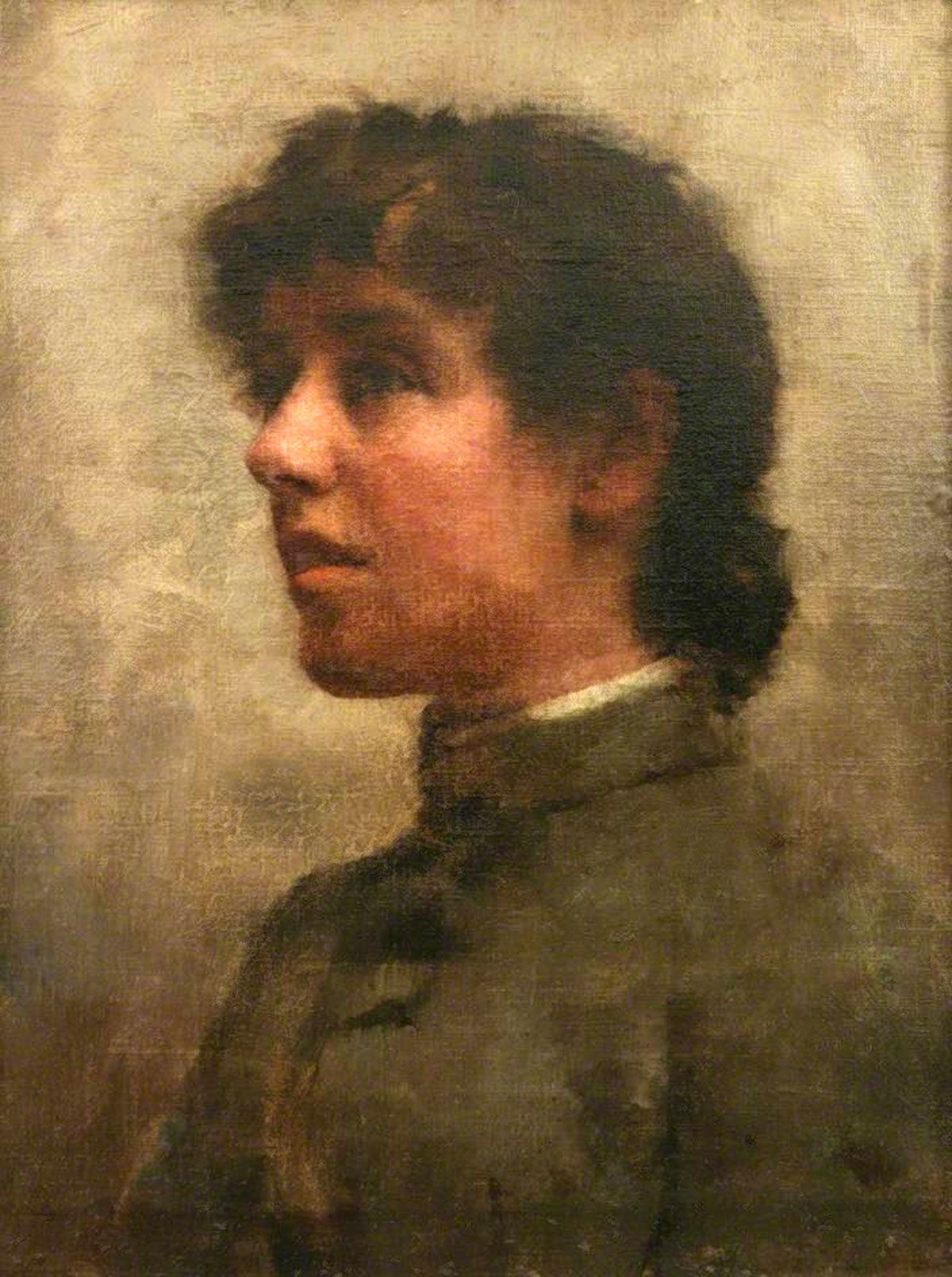
If Walter Langley has been recognised as the founder of the Newlyn School, then Stanhope Alexander Forbes has been afforded the honour of being called its ‘Father’. Born in 1857 to a French mother and English father in Dublin, Forbes came to London with his family and studied art at South Kensington Art School just as Elizabeth Armstrong had, and although he also travelled to Brittany, I don’t think their paths ever crossed until they met in Newlyn.
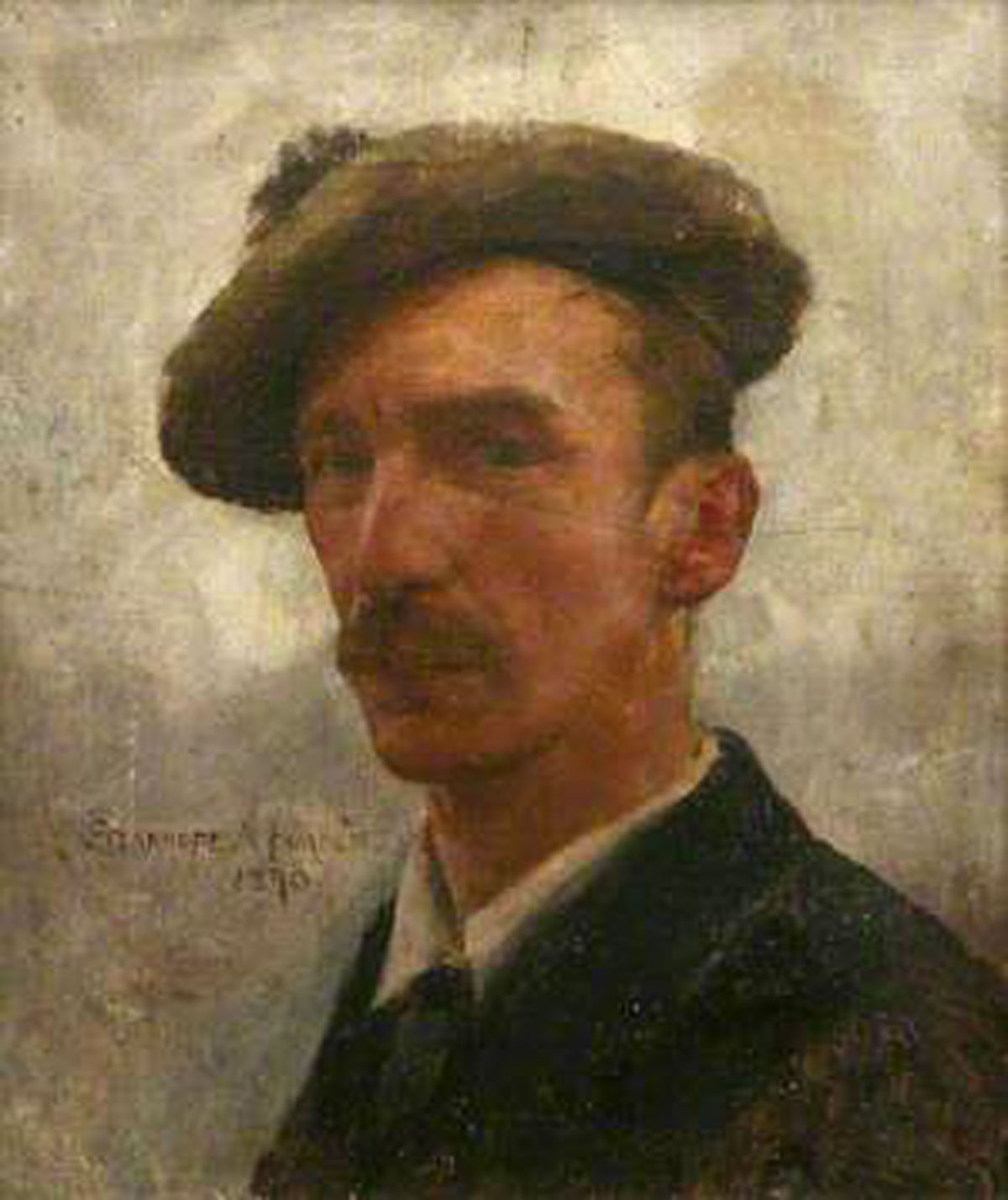
In January 1884, Forbes took the train from London to Falmouth in search of his own British Concarneau, but having already heard of the fledgling artists’ colony in Newlyn, decided to extend his journey to Penzance before wandering around the bay to the fishing harbour. He must have found life here to his liking because this was to be his home for the next 63 years.
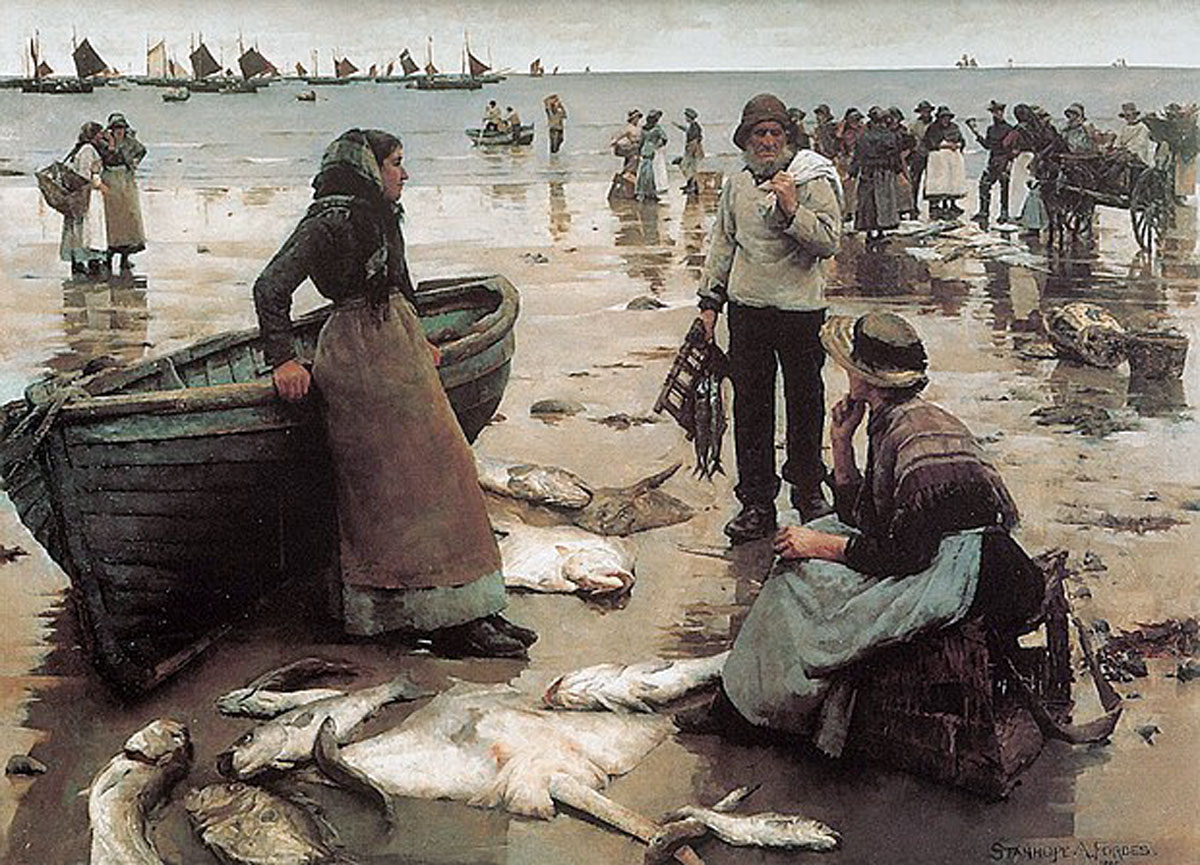
The Slip was the first painting he created in Newlyn, but his recognition as an accomplished artist was confirmed the following year when his work was accepted at the 1885 Royal Academy Summer Exhibition: A Fish Sale on a Cornish Beach was his most critically acclaimed painting at the exhibition, and one that I still regard as one of his finest.
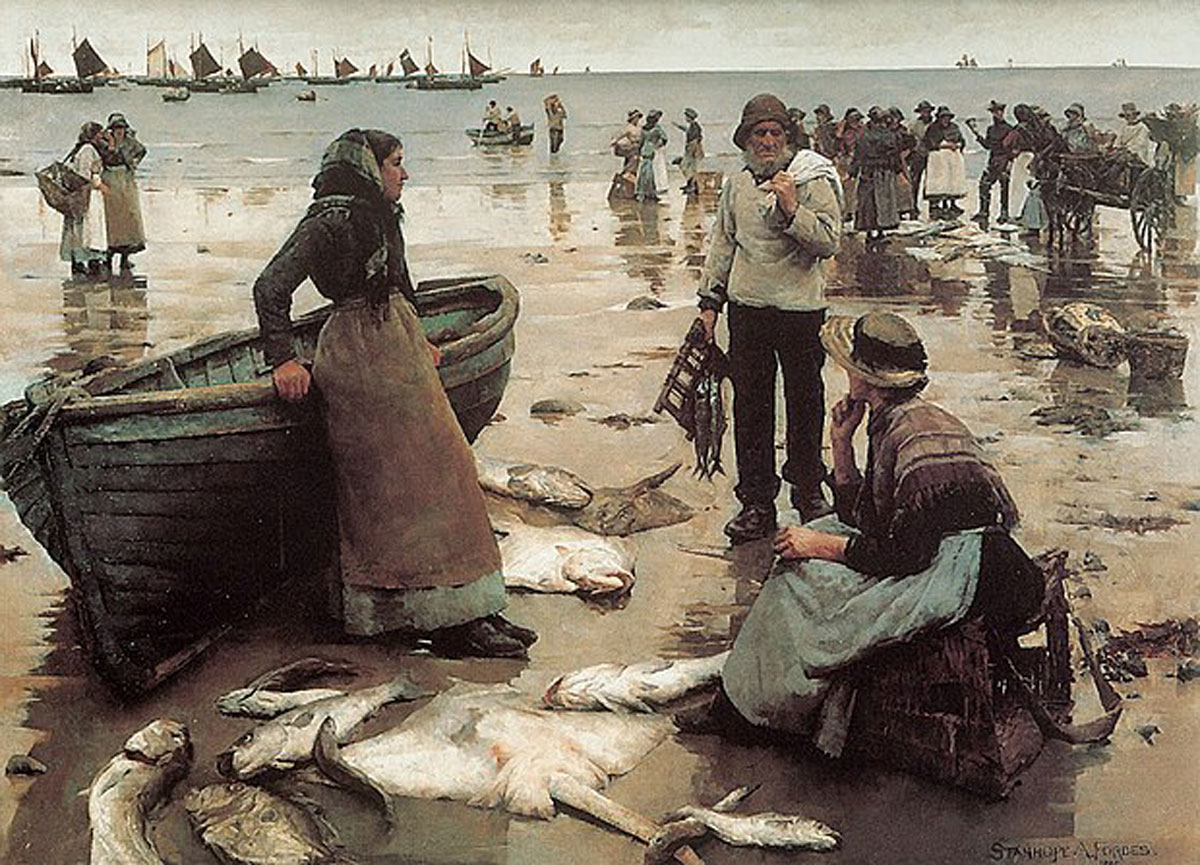
The success at the Royal Academy not only enhanced his own reputation, but also that of the burgeoning Newlyn colony which included Frank Bramley, an artist from Lincolnshire who had become an important member of the group as soon as he arrived shortly after Forbes.
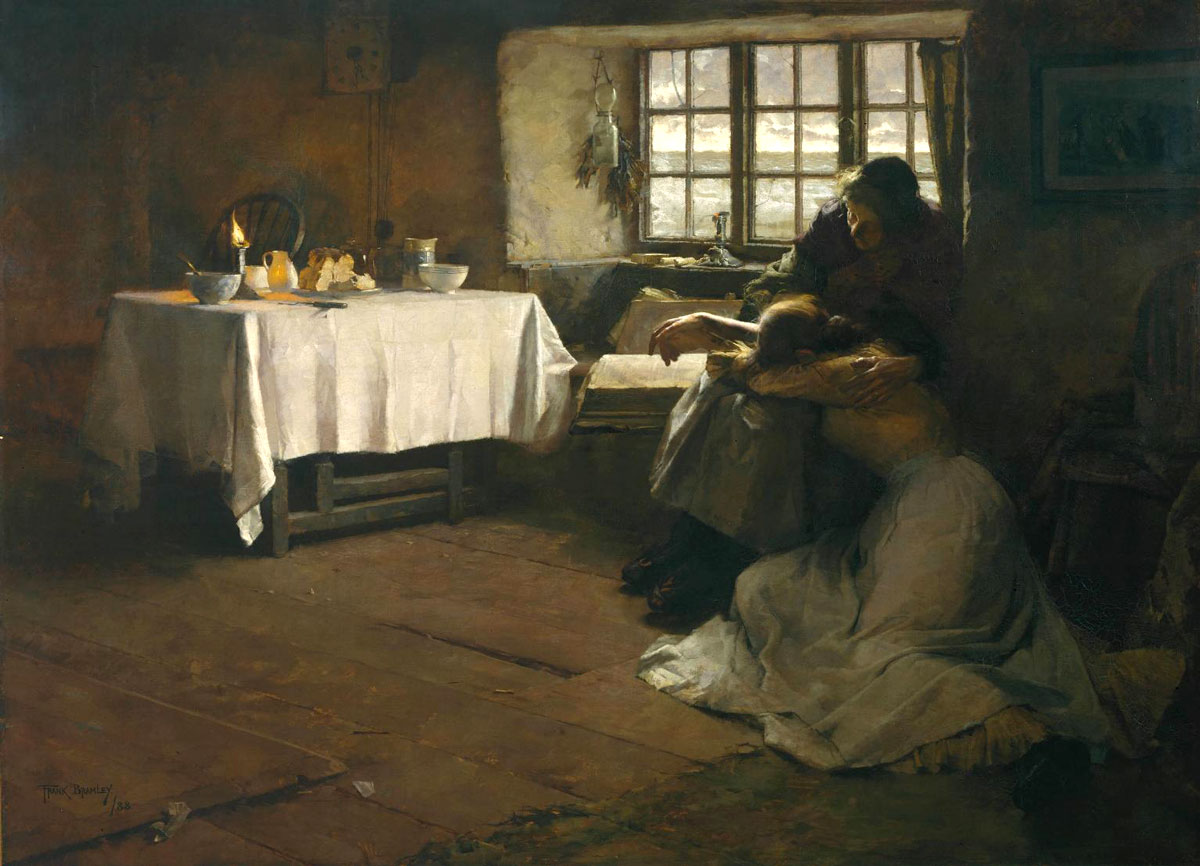
His A Hopeless Dawn was exhibited at the 1888 Royal Academy exhibition and represents a young wife who has been waiting on a stormy night for her husband to return from sea. She is being comforted by her mother, but the candle on the window-sill which had been a beacon of light throughout the night flickers out as dawn arrives.
John Ruskin described the painting in his own inimitable way as “Human effort and sorrow going on perpetually from age to age; waves rolling for ever and winds moaning, and faithful hearts wasting and sickening for ever, and brave lives dashed away about the rattling beach like weeds for ever; and still, at the helm of every lonely boat, through starless night and hopeless dawn, His hand, who spreads the fisher’s net over the dust of the Sidonian palaces, and gave unto the fisher’s hand the keys of the kingdom of heaven.”
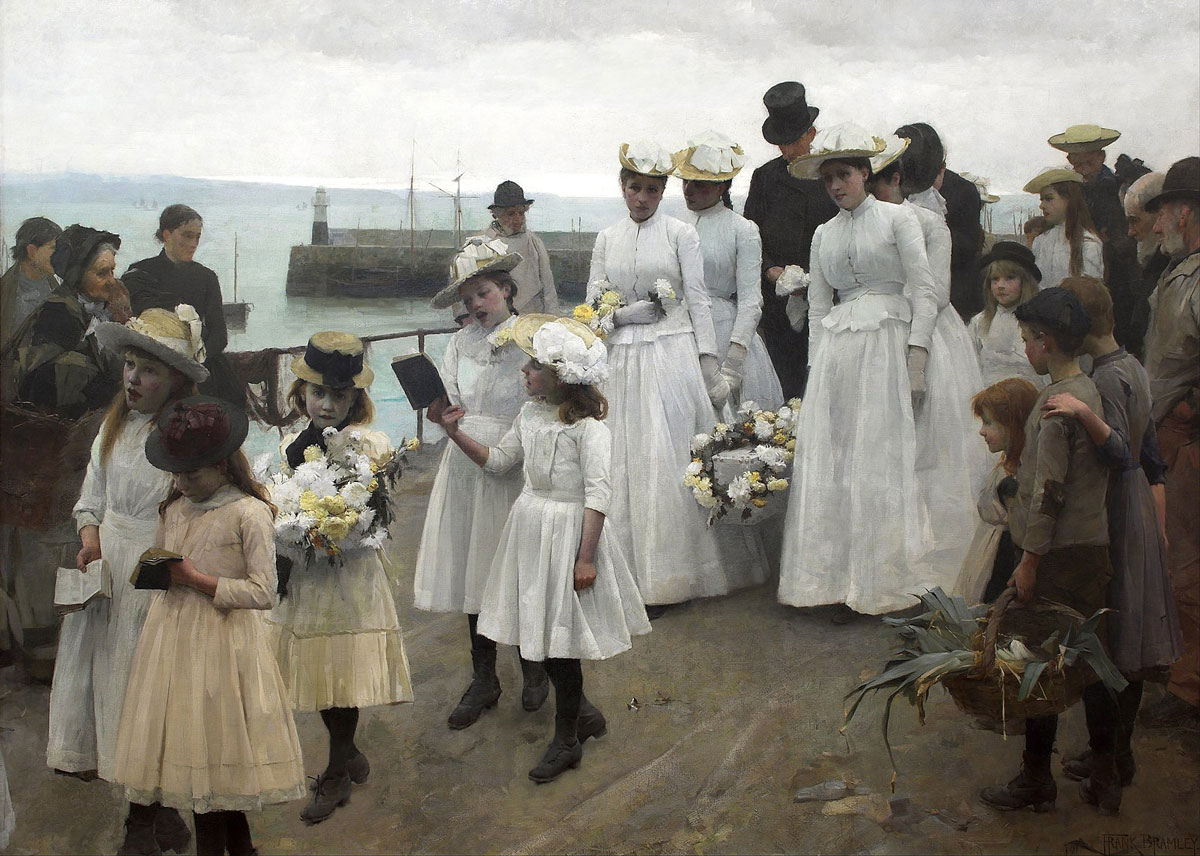
Another painting by Bramley that shows Newlyn life in a poignant way is ‘For of Such is the Kingdom of Heaven’ which shows that it wasn’t just fishermen that died prematurely but also young children.
In 1889 Stanhope Forbes married Elizabeth Armstrong at Newlyn’s St Peter’s Church, and between them they forged a partnership that became the backbone of the colony.
Elizabeth was a successful artist in her own right and was well known for painting pictures of children, and although her style didn’t capture my attention as much as others, she sold more paintings than most of her male contemporaries.
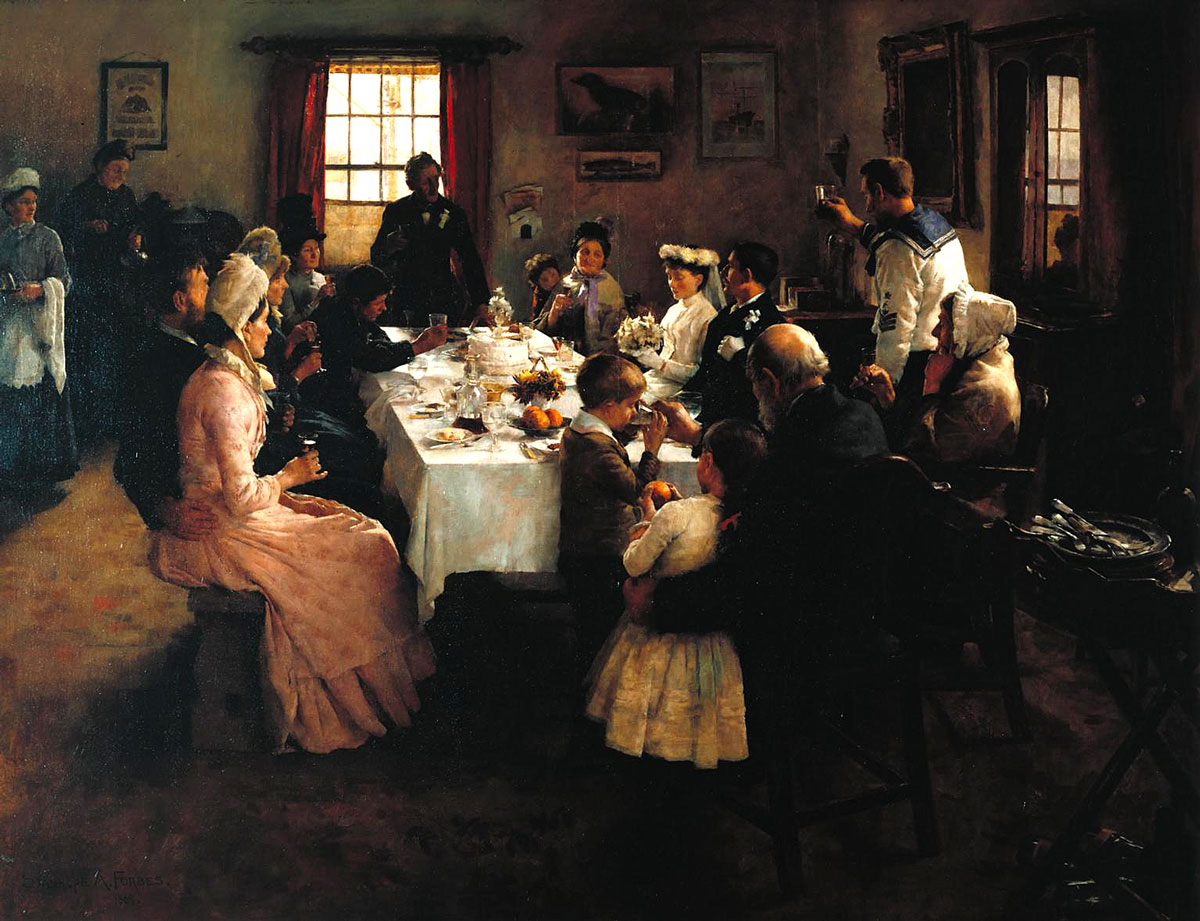
1889 was a good year for Stanhope because not only did he add a wife to his collection, he also sold Health of the Bride to the sugar magnate, philanthropist and art collector Henry Tate – and which still resides in the Tate collection today.
In 1892 Stanhope Forbes became an associate of the Royal Academy, and it’s easy to see why as the two paintings below show only too well.
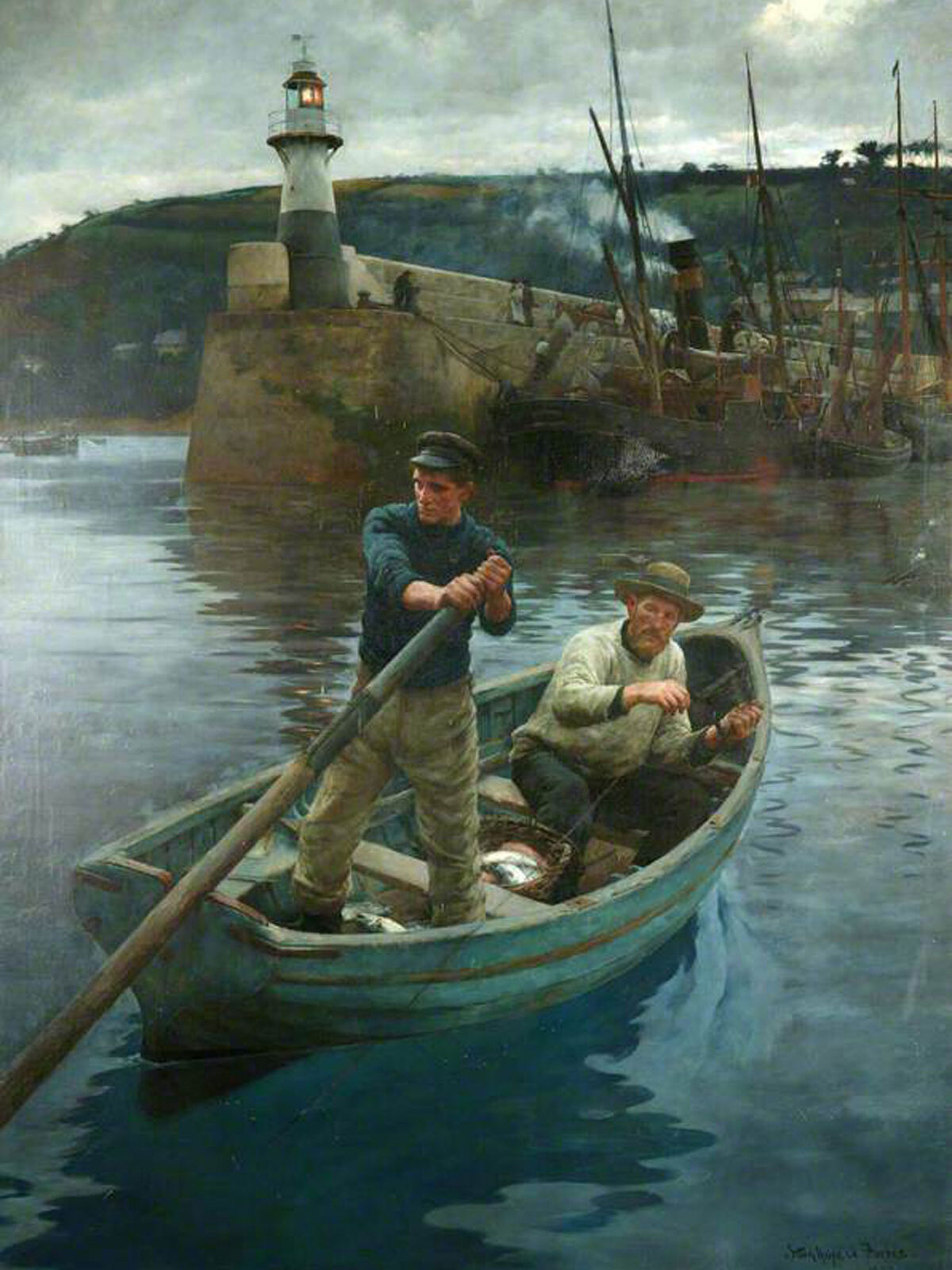
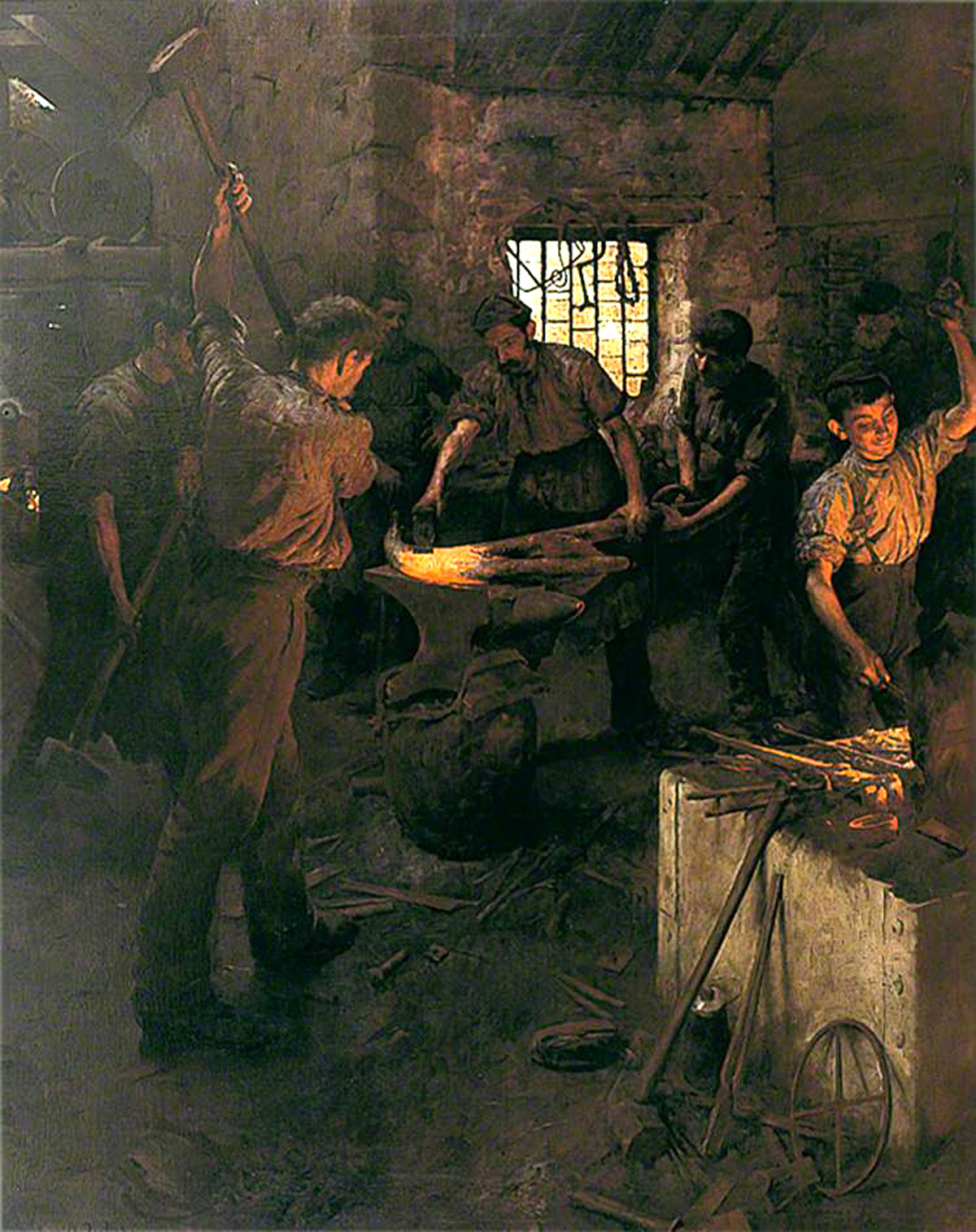
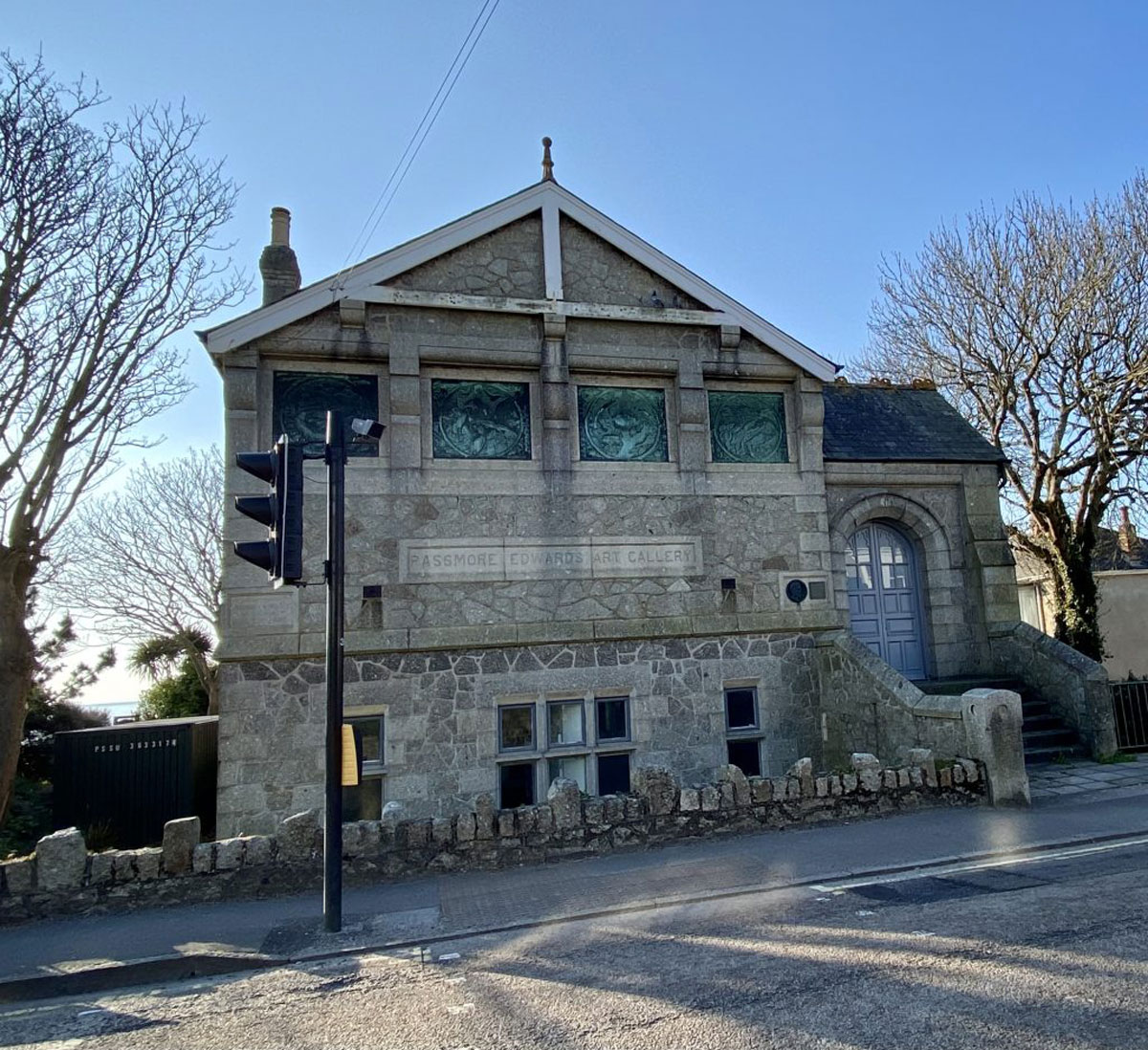
Another philanthropist was the champion of the working classes, John Passmore Edwards. Born in Cornwall, he was responsible for providing many buildings around the country that helped poorer sections of the community, including nine substantial libraries in Cornwall alone. His desire to educate the working classes also extended to art and he was only too happy to finance and help build an art gallery on land donated by the Le Grice family for the Newlyn artists.
Stanhope Forbes was the driving force behind creating this gallery for the Newlyn Society of Artists as the colony was now called, and was its founding chairman and trustee when it opened in 1895, but he couldn’t have done it without the support of his fellow artists, and especially his wife Elizabeth.
The Passmore Edwards building in Newlyn was where I first set eyes on work created by the Newlyn artists and I’ve been captivated by their work ever since. The building is still here and still called the Newlyn Art Gallery, but these days it doesn’t normally include any of the original Newlyn artists’ work as it caters for more contemporary art, no doubt to keep art in Newlyn alive.

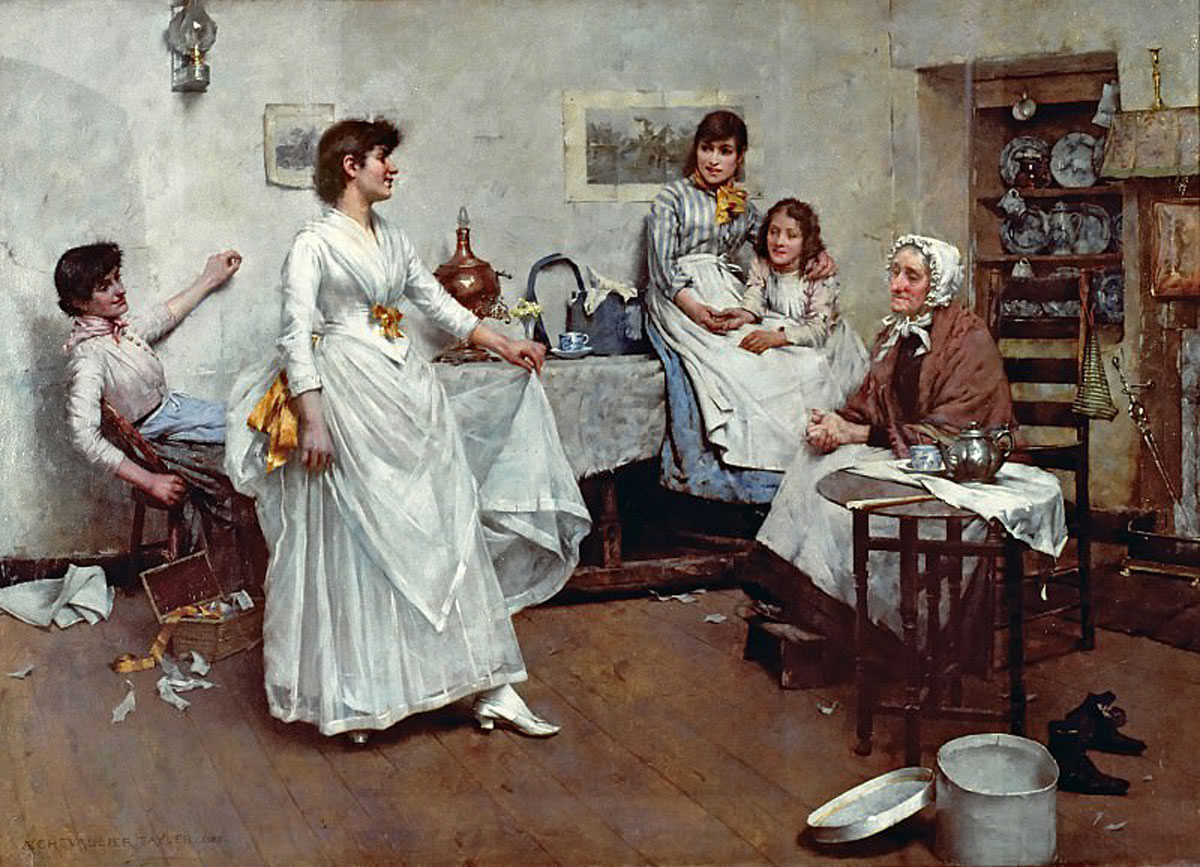
Apart from Stanhope and Elizabeth Forbes, Walter Langley, Edwin Harris and Frank Bramley, there were other notable artists in those early days – people like Albert Chevallier Tayler, Norman Garstin and Thomas Cooper Gotch.
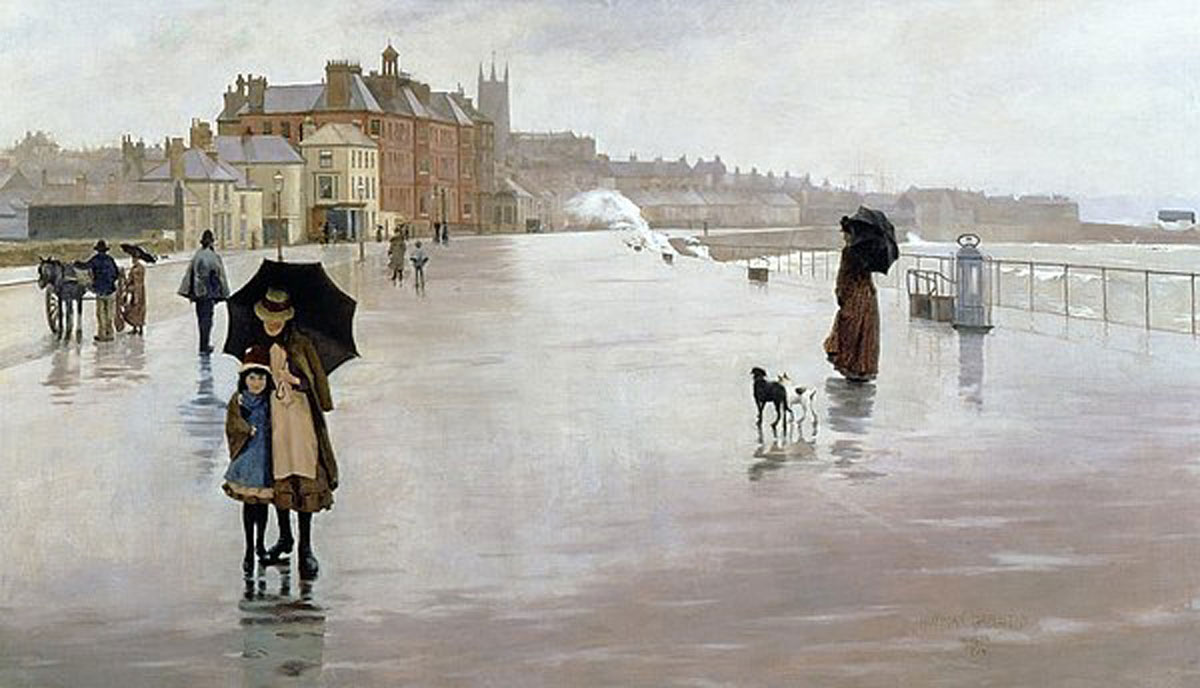
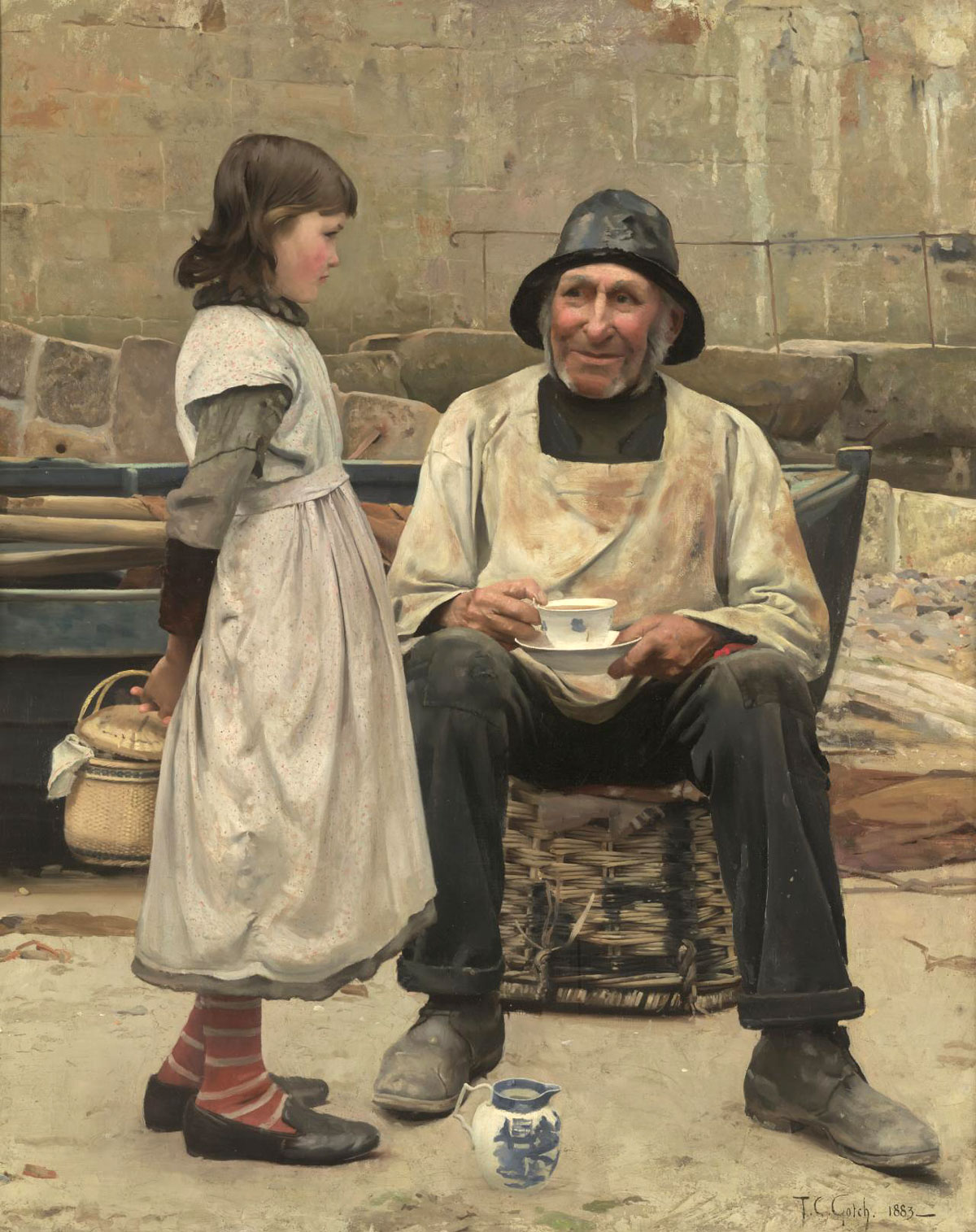
By the end of the century, the number of artists in Newlyn had declined, and so to attract a new generation, Forbes and his wife founded the Newlyn Art School in 1899. Formally known as the Newlyn School of Painting, it promoted the study of figure painting en plein air; and nurtured a number of students who went on to become involved with a separate colony in the Lamorna Valley, four miles from Newlyn. (I’ll be covering the area between Mousehole and Porthcurno in a separate post, and so I think it makes sense to talk about the Lamorna artists there).
In 1904 Stanhope and Elizabeth moved into a house they had designed for themselves at Higher Faugan (now a guest house), but in 1912 the Queen of Newlyn, as Elizabeth became known, died aged just 52 – and by the outbreak of war in 1914, Newlyn’s golden era was virtually over.
In 1915 Forbes married a previous student and close friend of the family, Maudie Palmer, and he carried on painting well into his old age and was often seen around the village with his brushes painting en plein air. He died in 1947 a few months short of his ninetieth birthday and was buried along with Elizabeth in the churchyard of Sancreed Parish Church.
It’s not difficult to see why Stanhope Forbes was regarded as the ‘Father of the Newlyn School’, but it wasn’t a title he was happy with: “Newlyners are followers of no-one – simply a body of artists who paint in the open air.” Even so, without his input, the likes of all the artists that became associated with Newlyn may never have been recognised, and that would have been a great loss, not just to Newlyn, but to all those who appreciate what life must have been like in West Cornwall back then.
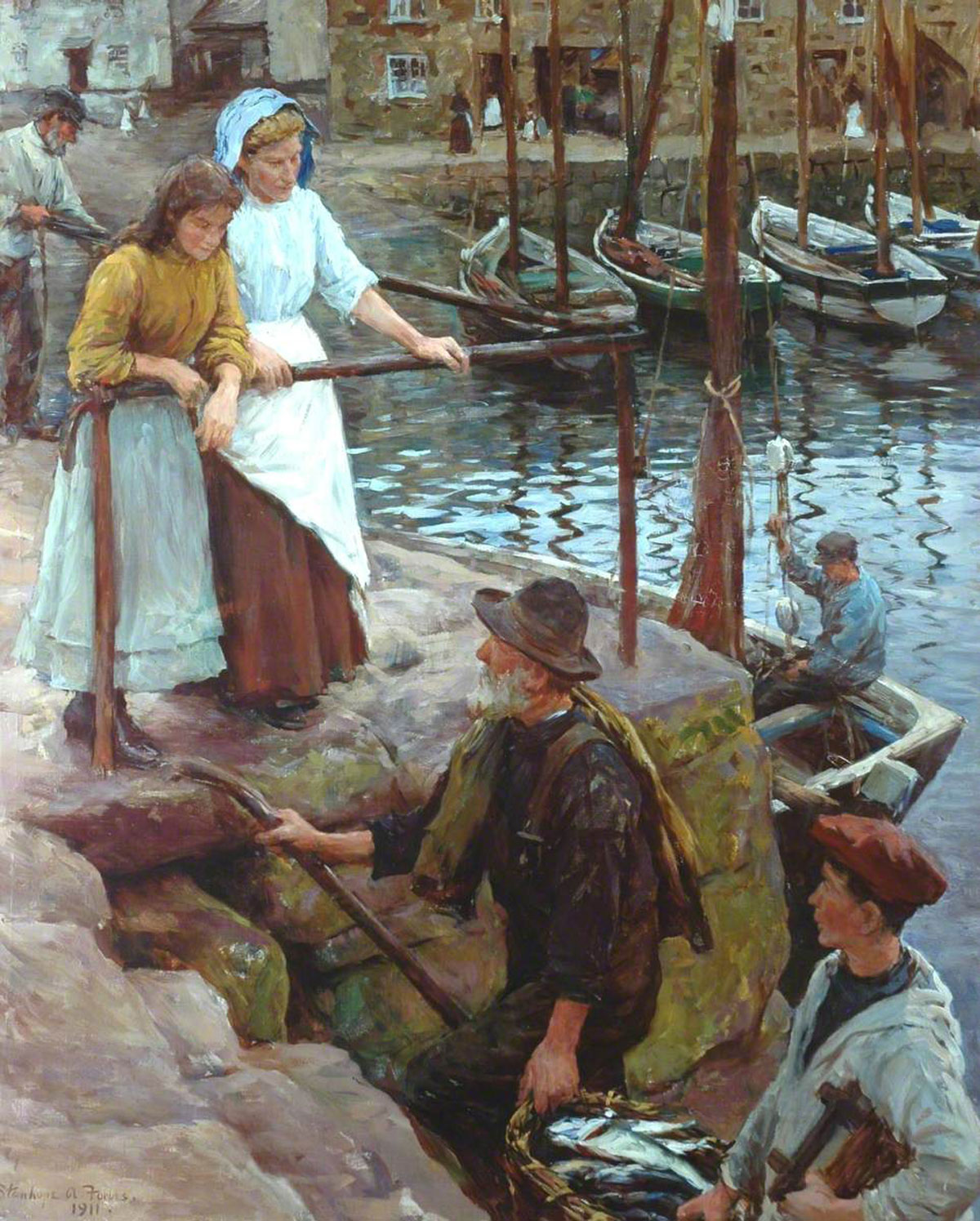
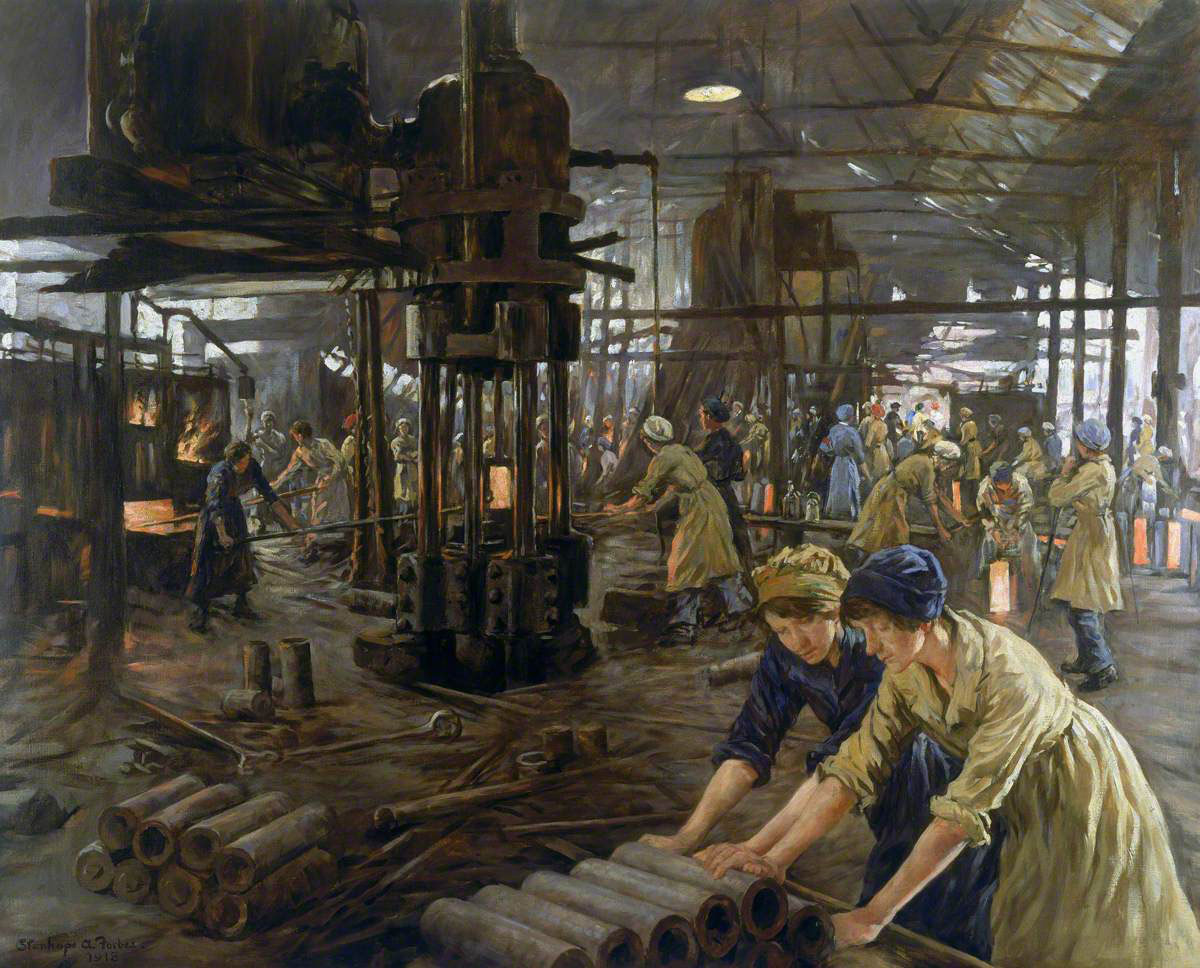
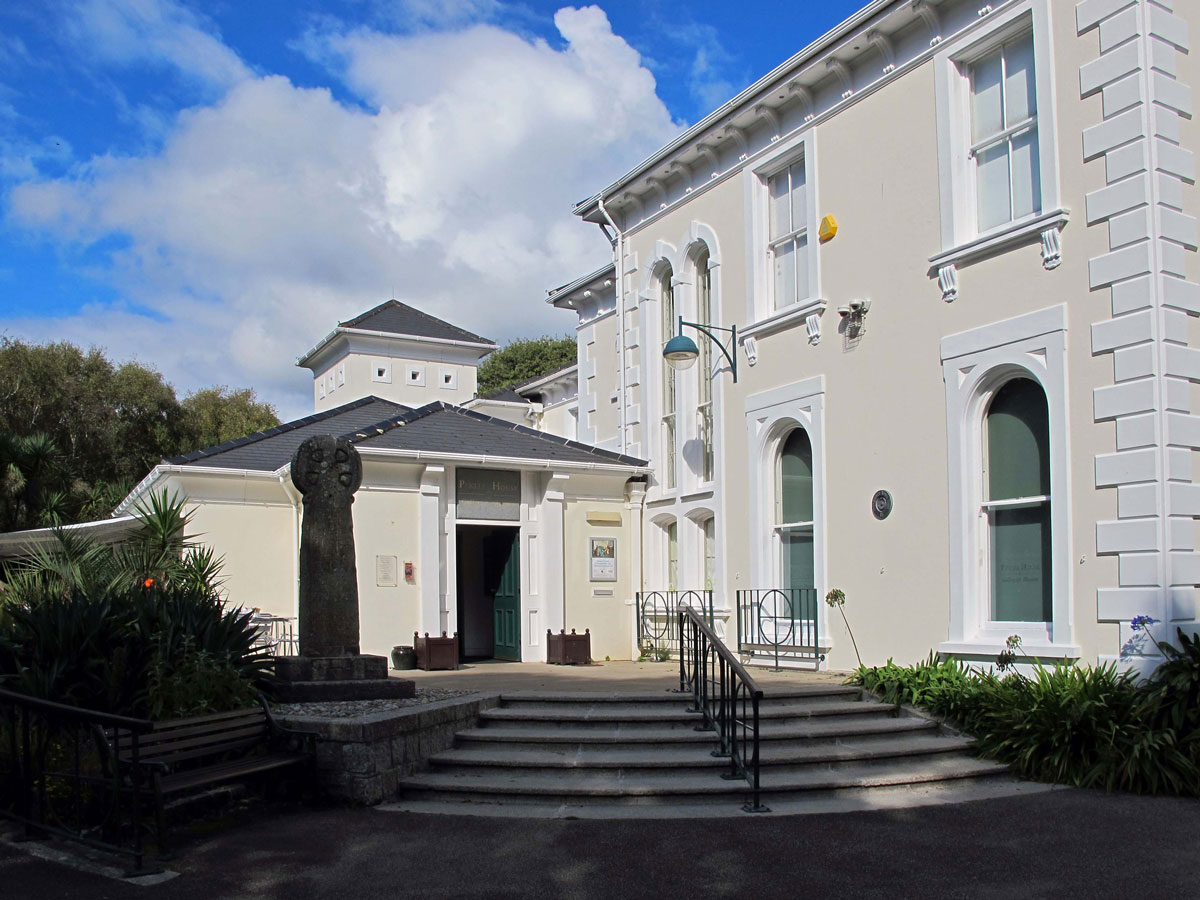
The paintings of the Newlyn artists are scattered far and wide, but if you want to see some of them where they belong, the Penlee House Gallery and Museum in Penzance is the best place to see them. They have exhibitions featuring different aspects of the Newlyn artists and not all of them are on display at the same time. That said, there are always some on display, and although there is an admission fee, it’s not extortionate and worth paying for in my opinion, even though for copyright reasons photography isn’t allowed.
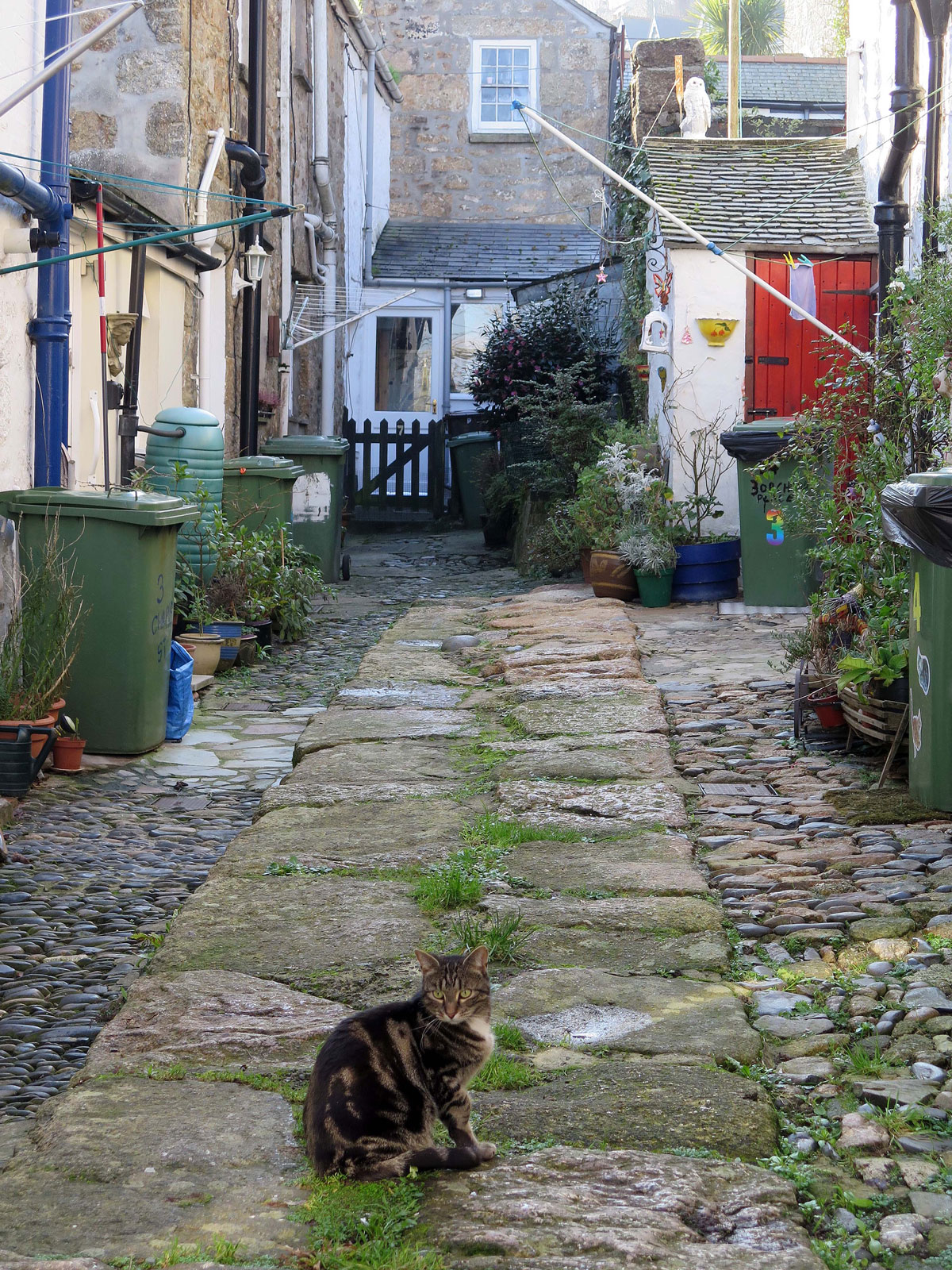
I also need to point out that visitors often only give Newlyn a cursory glance when in this part of Cornwall, but they’re missing out on an authentic living community and it’s worth wandering off into the back streets off of the Strand to see where the artists lived and worked.
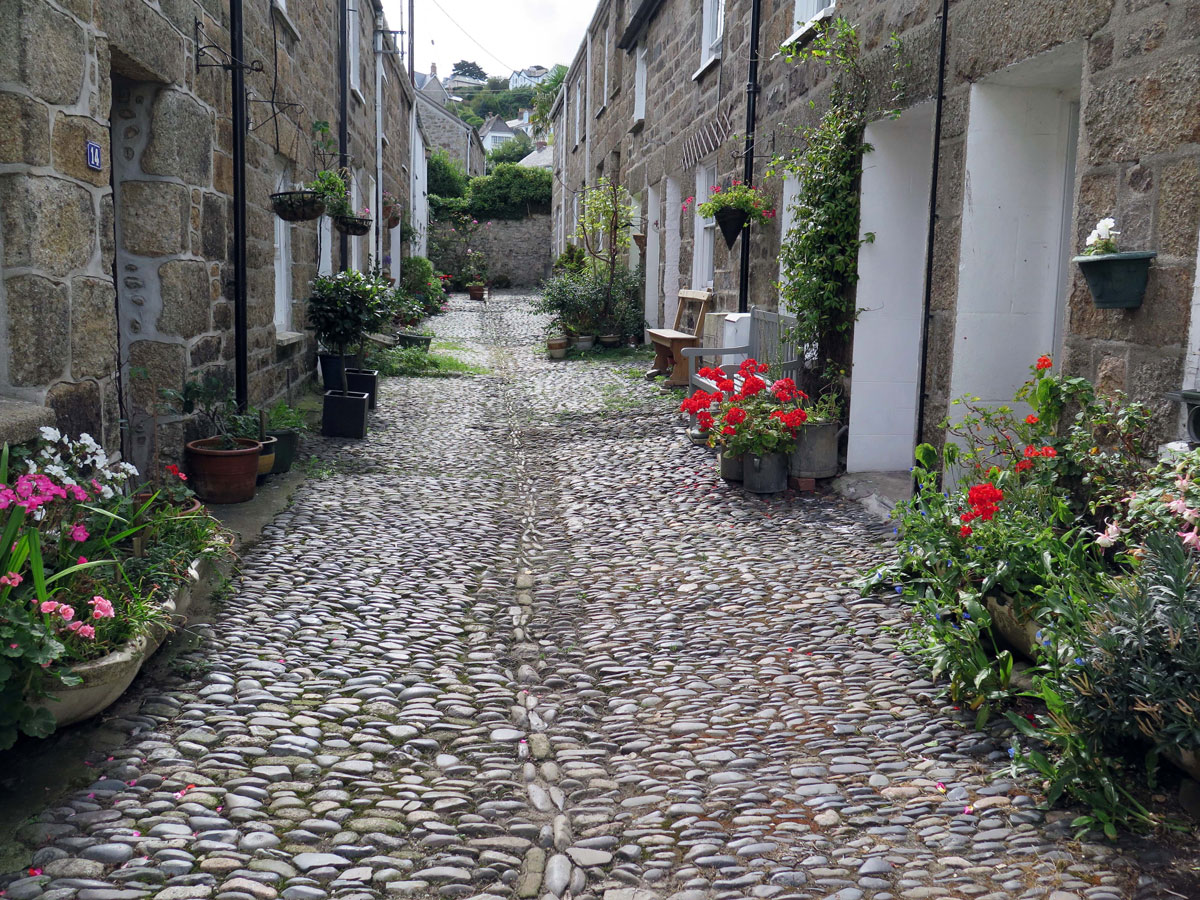
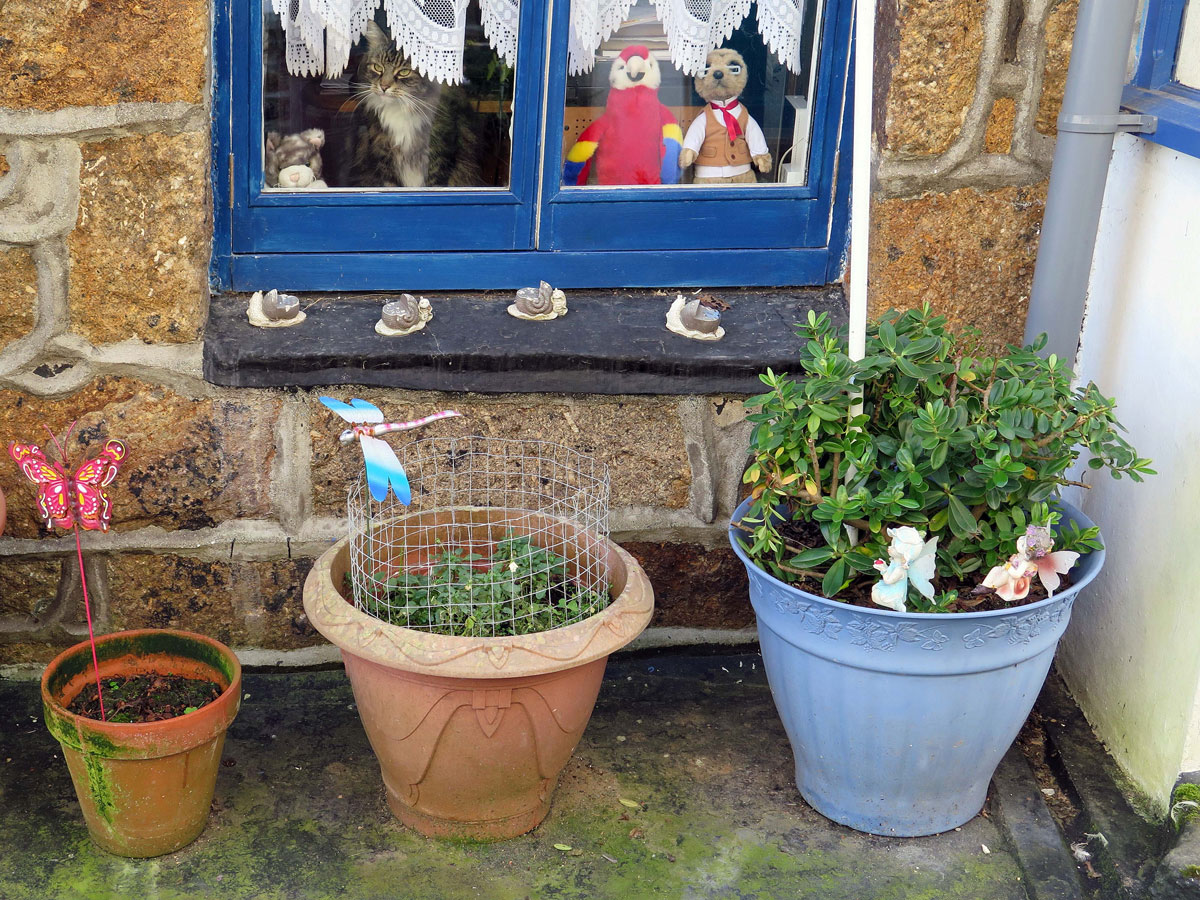
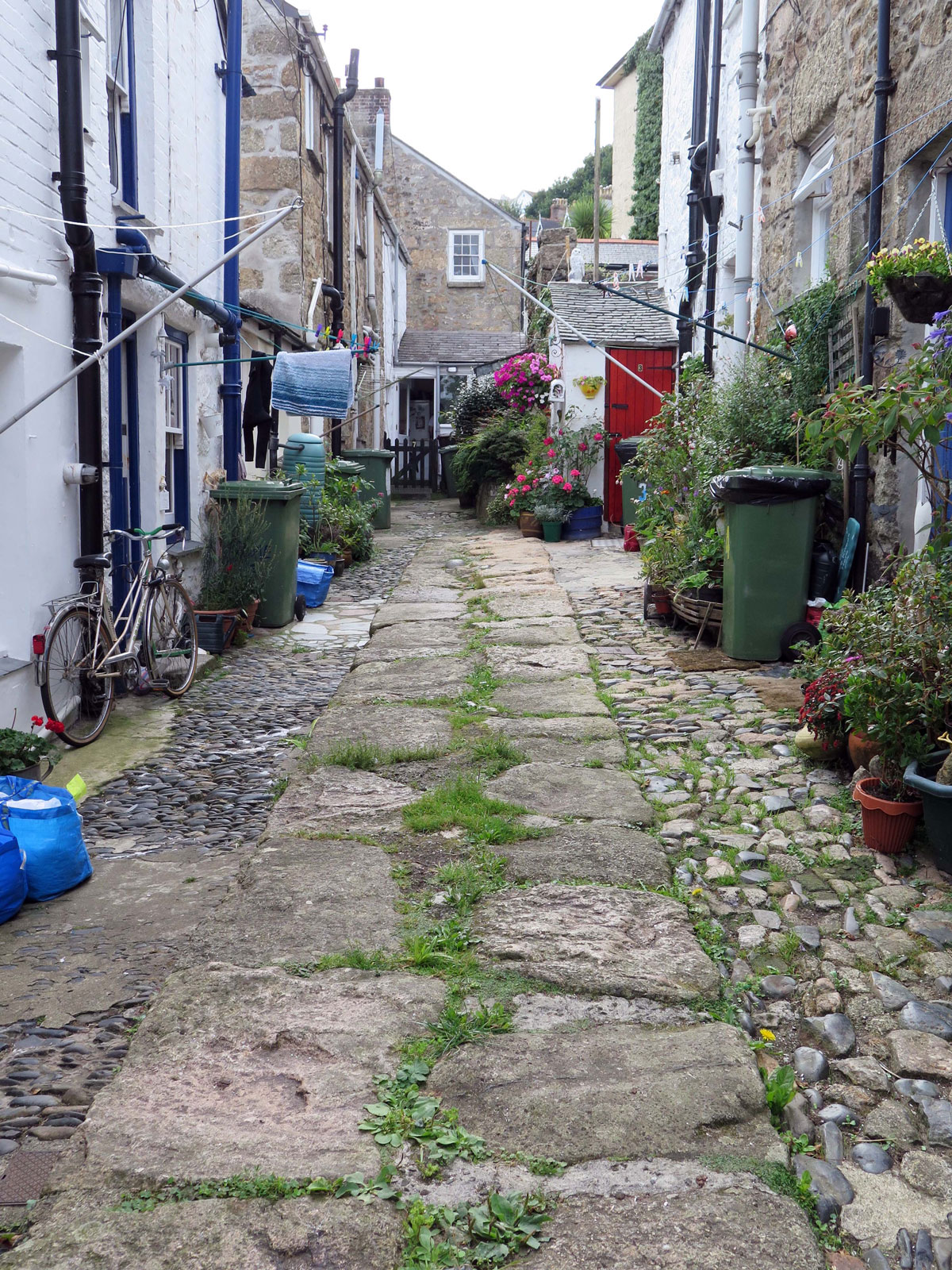
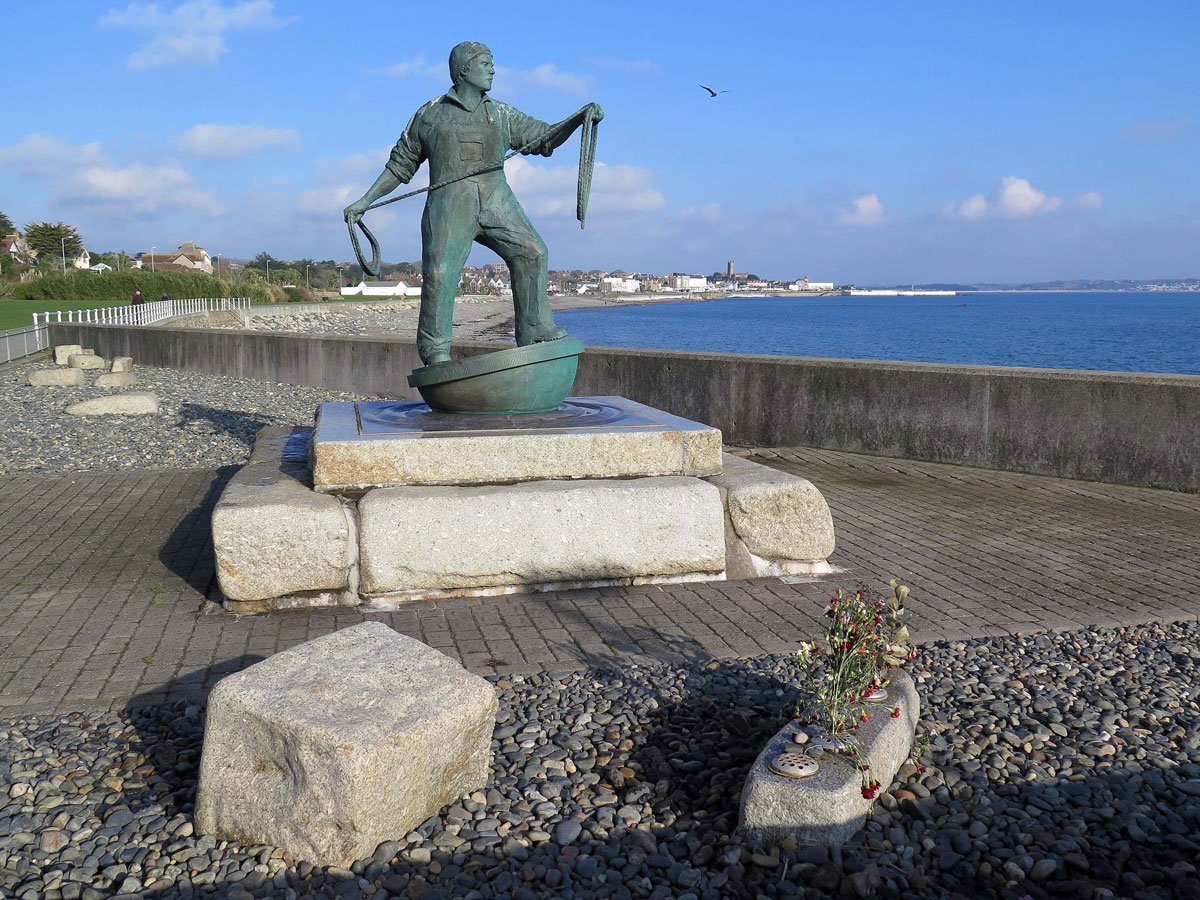
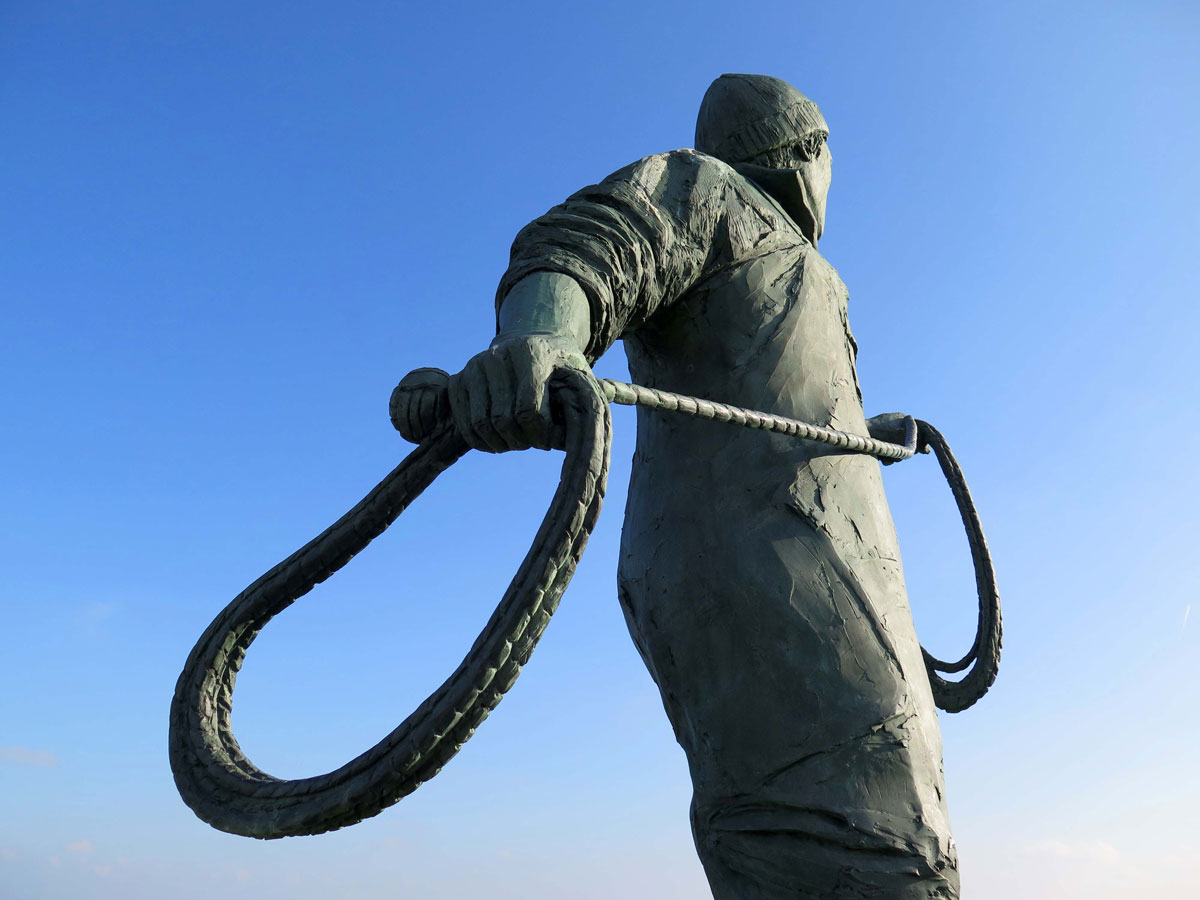
This concludes my posts on Newlyn and I hope you enjoyed reading them, but when all’s said and done, the price paid for fish, as the memorial below shows, extends far beyond the money we hand over – and I believe that the artists of Newlyn painted a picture that spoke more than a thousand words.
POSTED – MARCH 2025
Originally posted 2025-03-02 16:02:03.
Nice addition and pictures to the series.
Thank you Pat. Hope you enjoyed it.
Another great read, Malc. What stands out for me, apart from the wonderful art itself, of course, is how Newlyn seems to have been such a magnet for artists during the 19th and early 20th centuries, and their work all seems to fall into a certain genre. Not only did the place attract artists and dealers, but it even acted as matchmaker within the artistic community! There must have been something in the air down there!
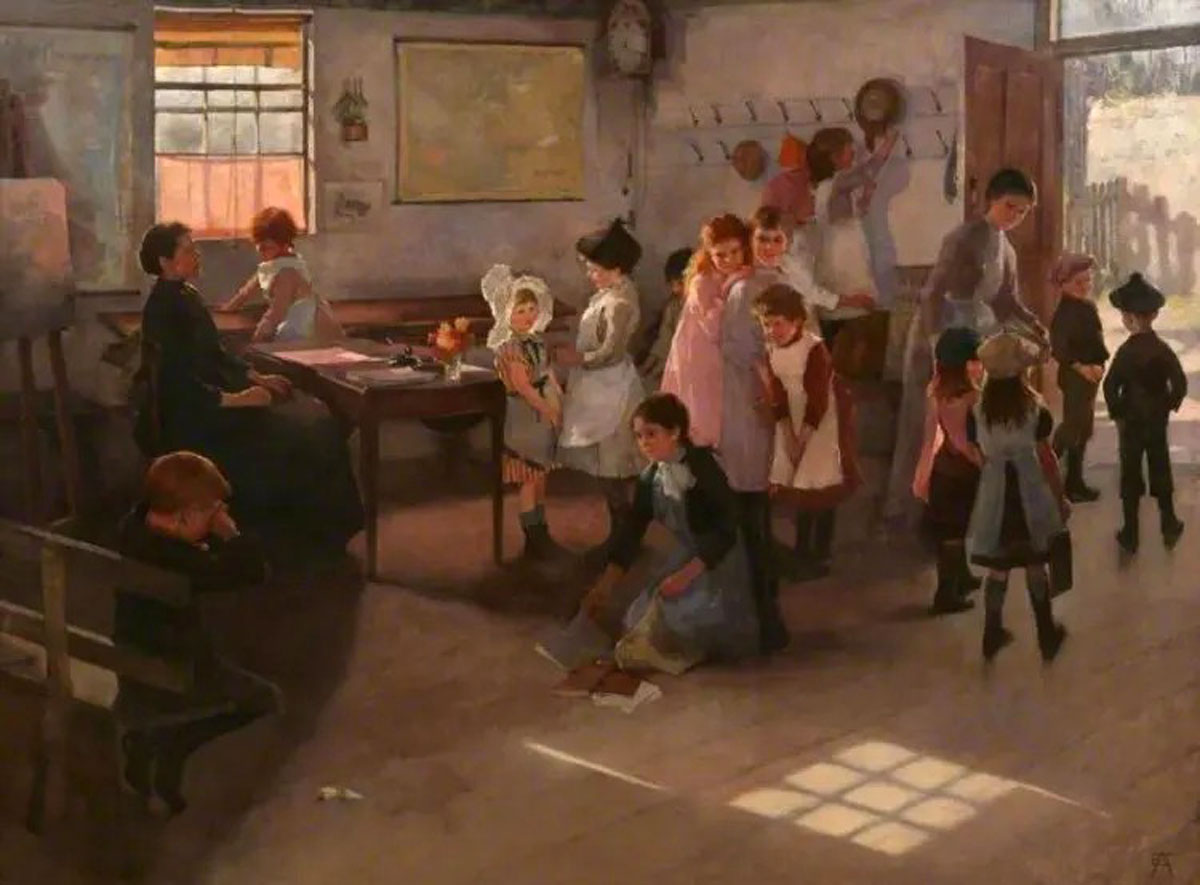
But what superb creations have come out of this ‘body of artists who paint in the open air’, as Forbes put it, rather graciously I thought. I particularly like the way that several of the artists have captured scenes that resemble snapshots in time, either of events or of everyday life, such as School is Out and Health of the Bride. Again, the lighting in these is so beautifully executed that you can almost tell what time of day it is and what the weather conditions were outside. It’s rather sad, though, that these works that are so intimately bound up in Newlyn and it’s history aren’t still in Newlyn, and that the Passmore Edwards gallery has gone in for more contemporary art nowadays. I suppose it’s necessary to move with the times, but surely only to a point in such a unique place like this? Seems to me they’re rather missing the point. At least there are examples still in Cornwall, but somehow it doesn’t seem the same. I wonder what Passmore Edwards would think of his gallery today?
And I just have to say that I found John Ruskin’s description of A Hopeless Dawn really quite sublime. He seems to paint with words just as the artists paint on canvas, and together they’d make the perfect combination. I think I’m going to have to read some of his work! Thank you for a very interesting and enlightening series, Malc. 🙂
P.S. Many thanks for your email. I’ve been most of the time for the past few days, but will get back to you very shortly. 🙂
Thanks for another brilliant response Alli. You certainly know how to lift my spirits, and you’re right about something in the air down in this part of the world – or at least the light, as my post on the St Ives artists mentioned. St Ives became the dominant colony after the Newlyn school faded away, but as I’ve mentioned here, some students of the Newlyn school went on to form a colony at Lamorna and they’ll feature in my next post about the area between Mousehole and Porthcurno.
There’s something about the Penwith peninsula that has a special feel to it – and it’s probably to do with its strong Celtic connection with saints, standing stones and all that sort of thing. The commercialisation of Land’s End apart, it’s my favourite part of Cornwall, which says quite a lot.
It is a shame that the Newlyn artists have their work scattered around, but that applies to most art. I think what disappoints me the most is that when the Tate opened up a gallery in St Ives it didn’t have any real connection with the Cornish artists at Newlyn and St Ives. It was an opportunity wasted in my view, and what made it worse, was that unlike the London galleries, there’s a hefty charge to see what they consider to be ‘art’.
Anyway, I’m glad that you enjoyed the series, and there’s no rush to reply to my email.
I’ll look forward to your posts featuring the Lamorna artists then, which I have to say I hadn’t heard of. Shame on the Tate for not putting the Newlyn and St Ives artists in the spotlight in their St Ives gallery. That’s ridiculous, and it doesn’t make them look good. They should have put them centre stage.
I have been to Mousehole once, a long time ago, and thought it was a charming place. So from what I’ve seen from your posts of the area, and if it has such a strong Celtic connection (which is increasingly appealing to me these days), and such a special vibe, I’m not surprised that the Penwith Peninsula is your favourite place in Cornwall. I’ve a feeling it’d be mine too.
Have a great weekend, Malc, and thanks for your email. 🙂
Thanks Alli and you too of course. Will be in touch again very shortly.
🙂
I am sighing at the sheer beauty of these paintings Malc. I have loved these pos and what apretty place Newlyn is too. Thank you.
I have to agree with you about the paintings Shey and I’m sure that many people don’t realise how interesting Newlyn is. Thanks as always for your input. It’s appreciated more than you might realise.
I think you are doing a wonderful job in terms of highlighting these paintings. If I lived down that way I would be straight in to see them. I drew your Cockington blogs to the attention of a writer pal the other day cos she had sent me pics of walking there and I minded reading the blogs. She lives near ther and goes there all he time and said they were great blogs. And it was a place that she loves cos it is quiet even in the height of the season. Thank YOU again. your blogs are truly appreciated.
So is your friendship Shey. That was really kind of you to send a link of Cockington to your pal. 🙏
Well she’s a great one for the moors and walks and all the off the beaten track places. I thought she’d like it and she loved it. She’s there often.
That’s good to hear. She doesn’t live far from me obviously. Thanks again Shey.
Thank you, Malc, for another outstanding post on The Newlyn Artists! The erudite knowledge of the subject you write about grabs the attention of your readers from the beginning and never vanes leaving the feeling of wanting to know more. The history of the creation of the Artist’s Colony, the philanthropic work that created the libraries for the education of the working classes, the creation of the Newlyn Art Gallery, and the introduction of many highly talented painters, their work, and their benefactors reads as a fascinating story. I loved all the paintings, and the photos of the charming streets and pathways your skill at presenting came here to the fore. Thank you, Malc!
Joanna
And thank you again for another outstanding comment Joanna. It always gives me a lot of pleasure to see people like your good self take the trouble, not just to read these posts, but take to it all in as well. It makes writing them all the more worthwile. 🙏
You are more than welcome, Malc!
Joanna x
🙏
The details in these paintings make them come alive, and you’re right, Malc; they provide insight into life back then. They are truly stunning works of art.
Thanks for commenting Suzanne and I agree with every word you say.
These paintings are incredible!
I think so too GP. Thank you so much for commenting!
Another informative and educational post thanks to your obviously meticulous research – I doubt I would have found it so interesting had it been written by anyone else. So many great paintings here and I love the pretty back alleyways, especially the one with the cat 😊
Ah! thank you Eunice, that means more than you might realise – and if you look closely there’s another cat in the window at Fradgan Place 😺
It’s not a life one would choose unless born into a fishing village, Malc. The characters and personalities are writ so plain on the faces in these paintings. A couple have real impact and I can see why you love them.
Thanks for commenting Jo. For me, it’s not just about the paintings but the way these artists were able to show us the world that existed at the time.
I understand that, Malc. I don’t think too many of us would really want to turn back the clock xx
I hope you’re not wrong Jo! x
Thank you very much for this third article on the Newlyn artists.
I found it fantastic and well documented.
I must confess I only knew a few of the wonderful paintings you shared🤗
Thank you for your kind words Luisa. You don’t know how much tey mean to me 🤗
You’re so very welcome my dear Malc!
May this be a spectacular week for you ! 🙏💙
Thanks Luisa. I hope so 😊and I hope you have one too 💙
You’re most welcome, dear Malc 🩷