
A Tour of Gloucester Cathedral in Pictures
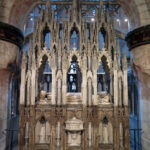
Mention Gloucester Cathedral to anyone and they often think of it as the final resting place of Edward II who was murdered in Berkeley Castle, but there are other reasons to come here, and in this post I’d like to show you what they are.
There has been a House of God on or near this spot since the 7th century when King Osric founded an abbey dedicated to St Peter, but after a major fire in 1088, the present abbey was established by Abbot Serlo. The Dissolution of the Monasteries by Henry VIII (1536-41) saw Gloucester Abbey become a Cathedral, but instead of rambling on about the rest of its history, I’m going to take you on a tour of the Cathedral with a brief explanation of what there is to see along the way.
Looking at the Cathedral from the outside, the Gothic appearance belies its Norman Nave, and that’s because a fire in 1222 damaged the roof, prompting a rebuilding programme that included the Central Tower. The picture gallery below shows the cathedral from the south and includes captions explaining the time-line of the building’s construction.
Enigma – Mea Culpa
-
- The Tower and South Transept

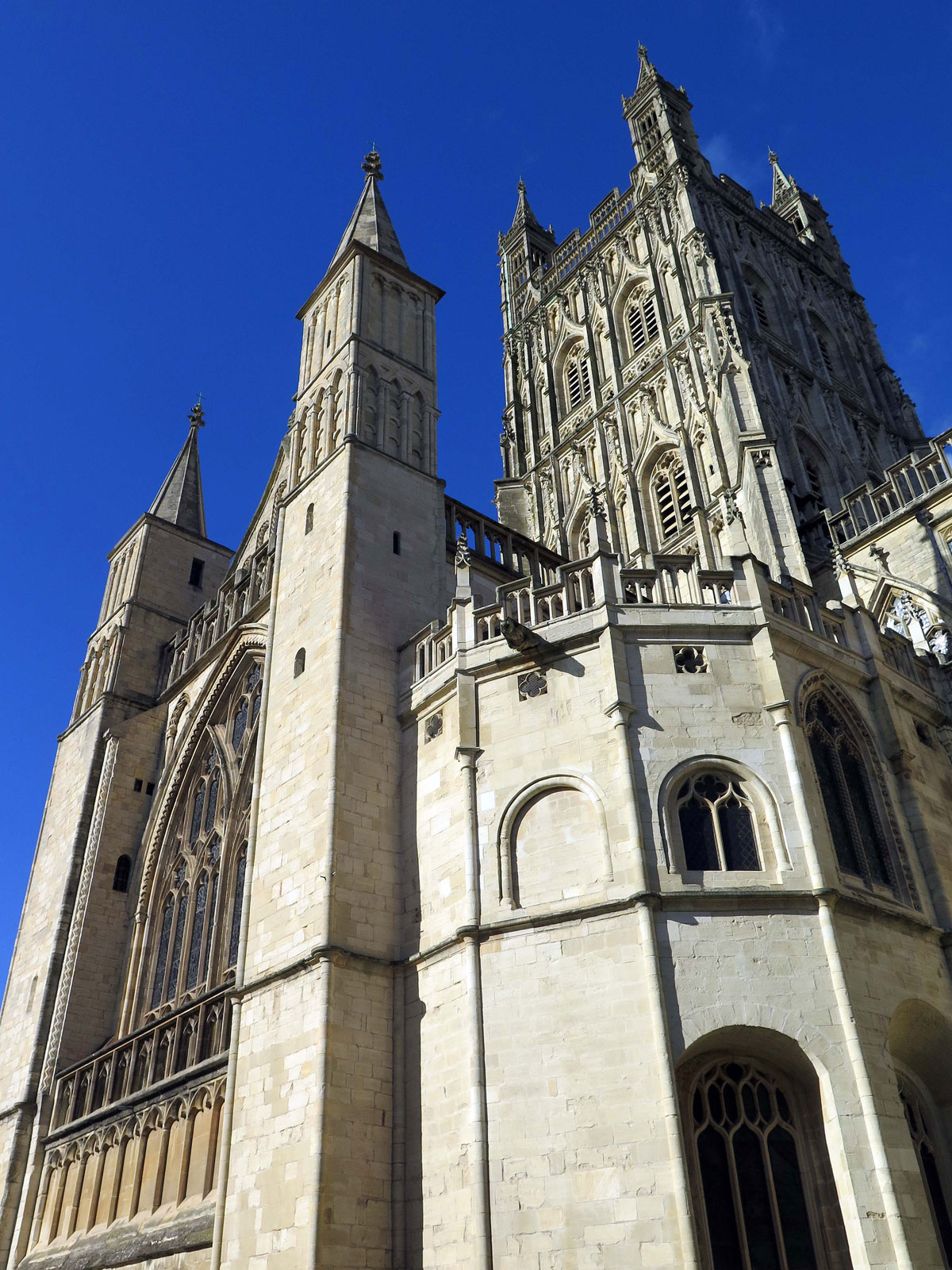
-
- The 15th Century Tower

-
- The 12th Century South Transept with 14th Century Window

-
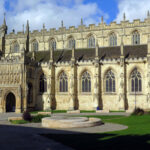
- The 14th Century South Aisle and 15th Century Porch

-
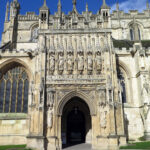
- The South Porch

-
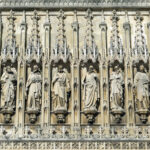
- 19th Century Statues on the South Porch


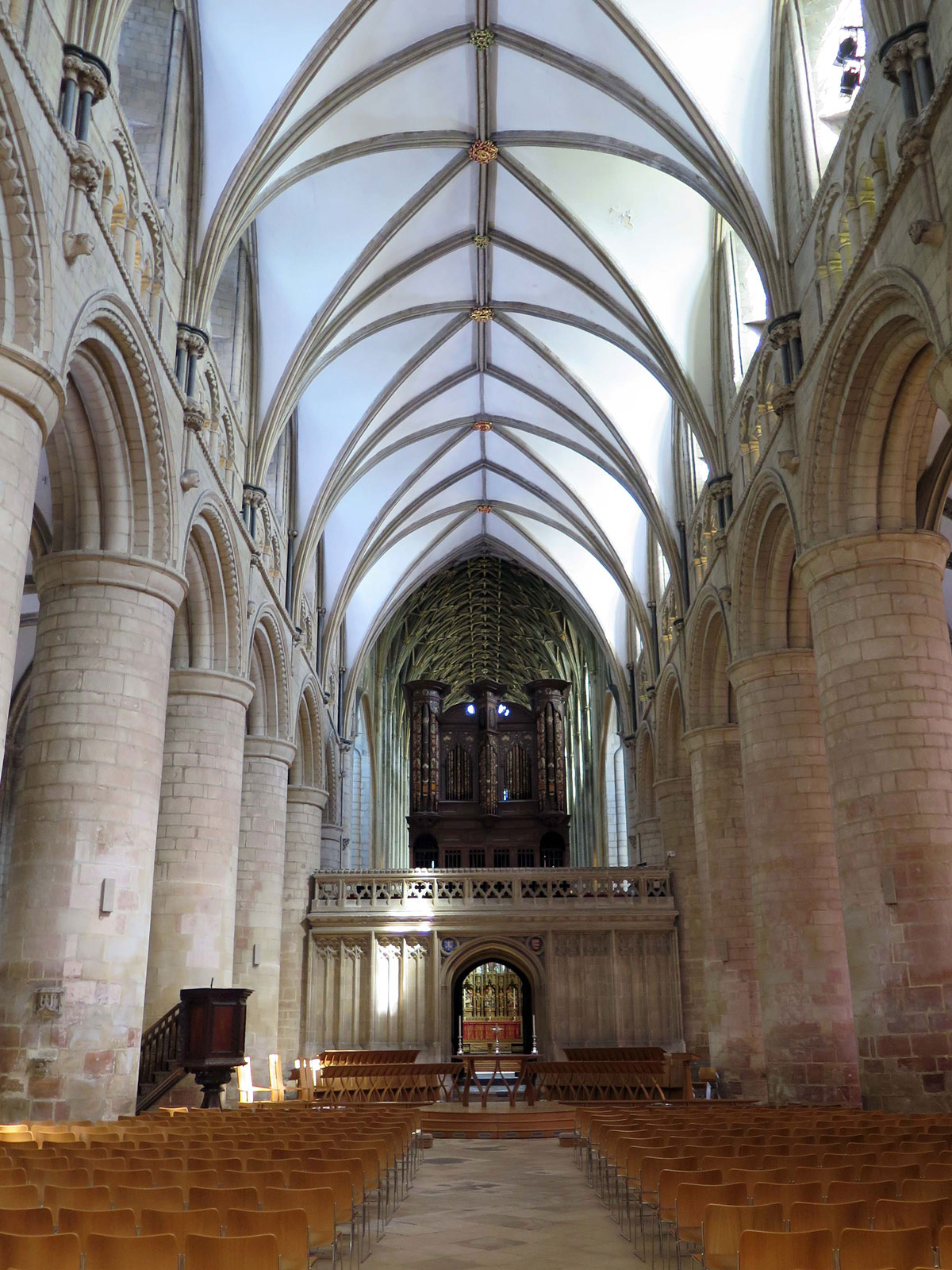
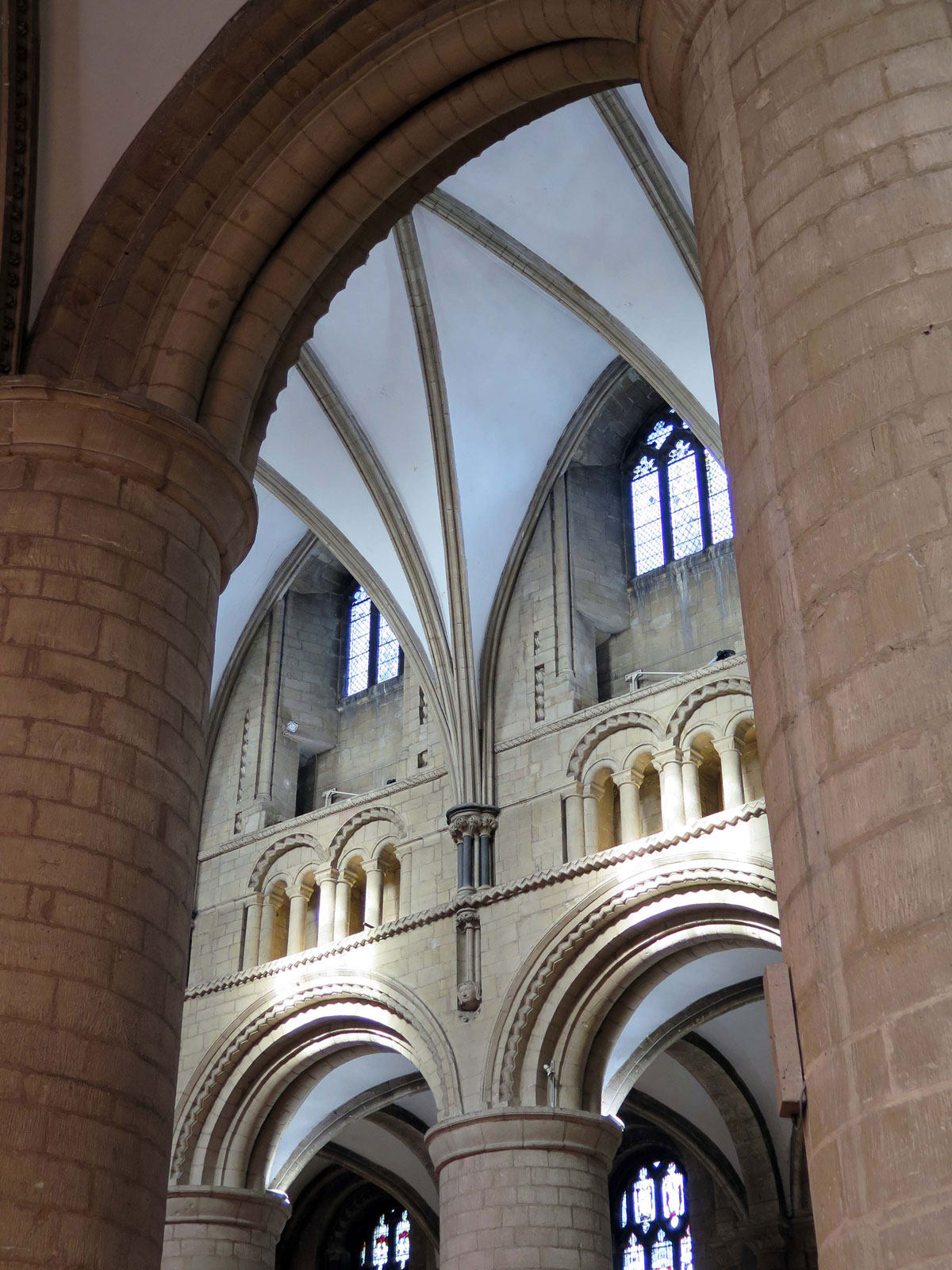
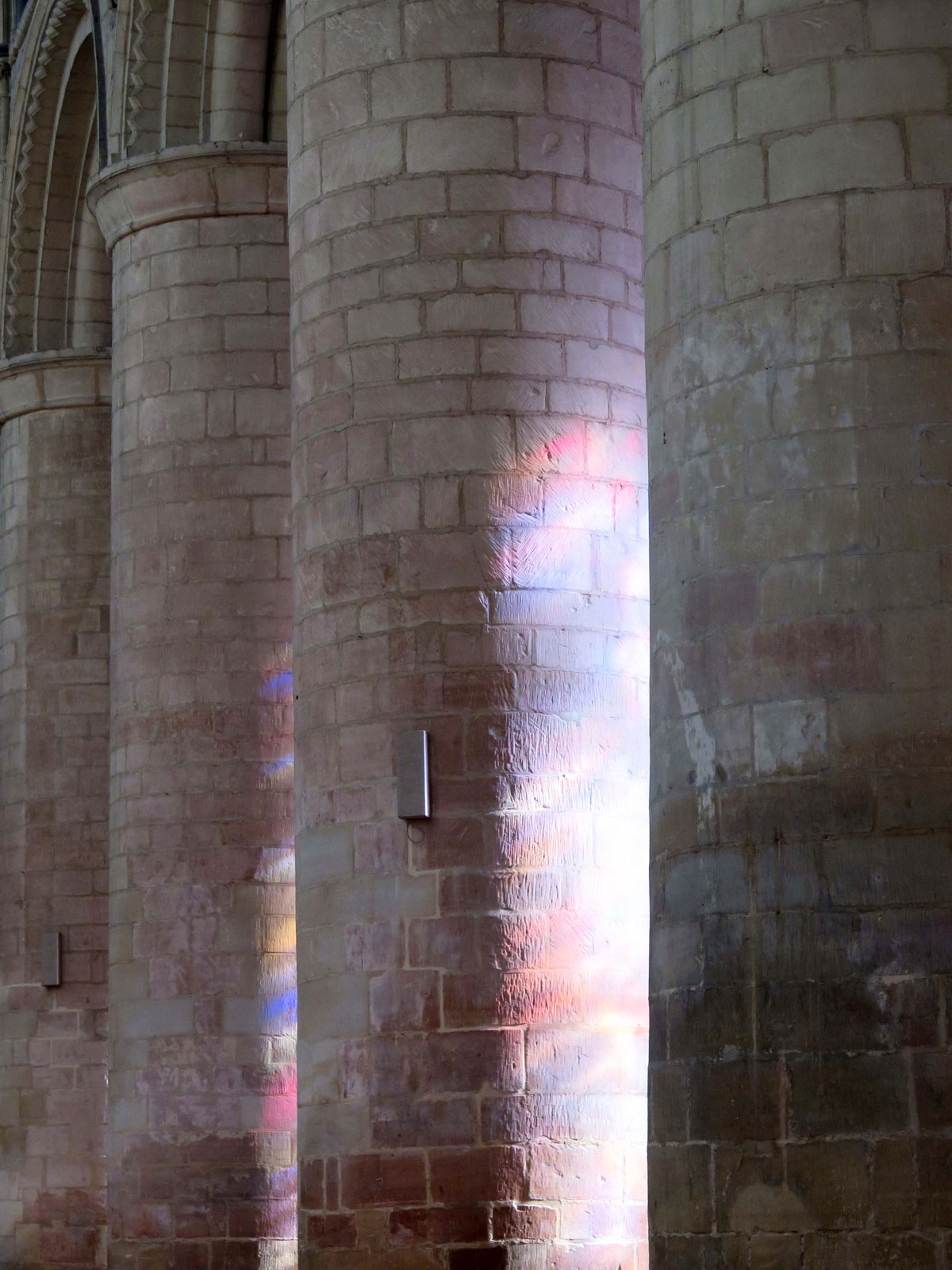
Walking through the South Porch brings us directly into the Nave, and as I’ve already explained, it’s very much Norman in character. Norman is the term given to post-conquest Romanesque architecture in Britain and lasted until the end of the 12th century. Typically, you’ll see that there are massive round pillars, semi circular arches and zig-zag mouldings.
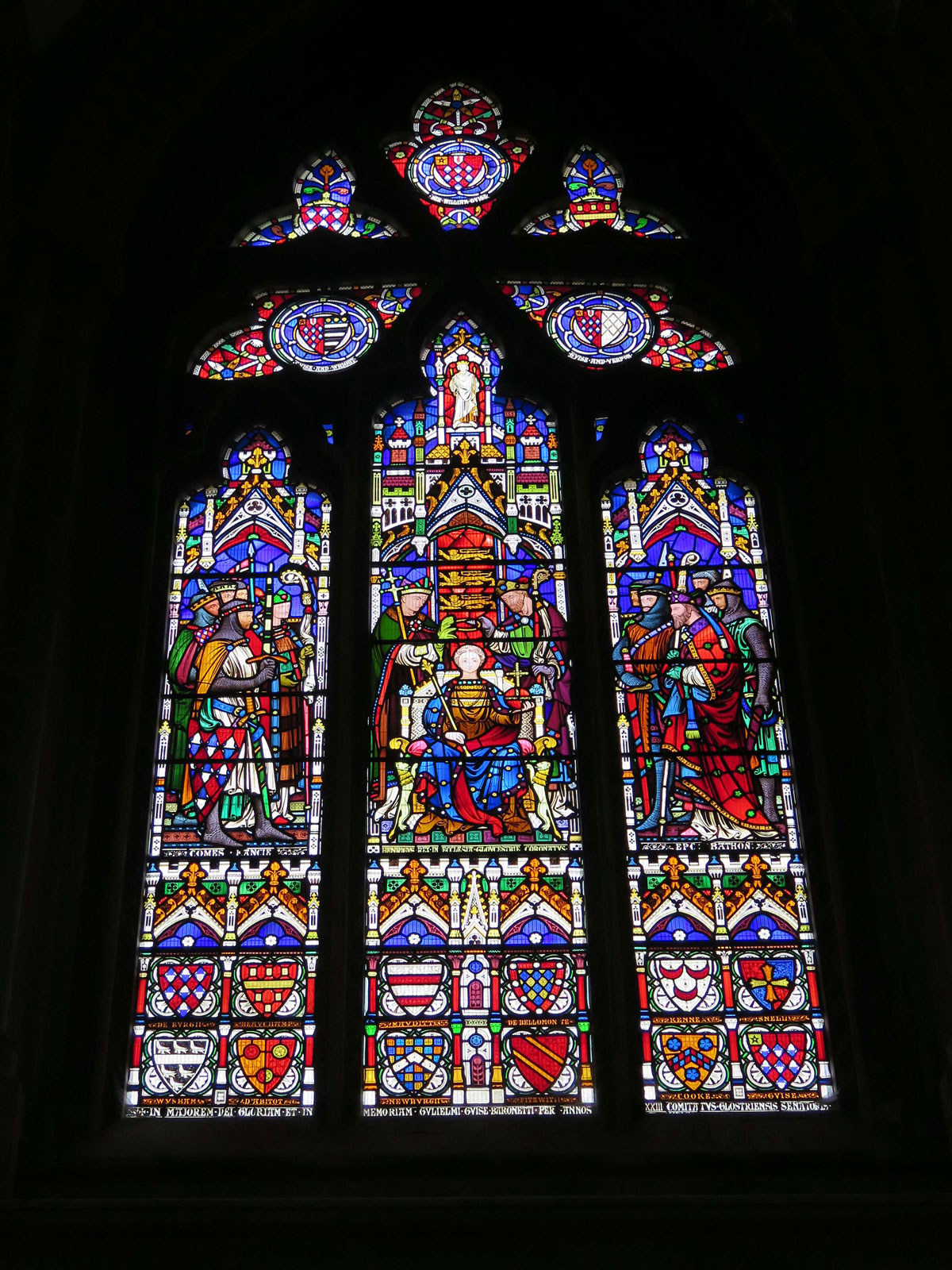
The Cathedral is blessed with some wonderful stained-glass, and although much of it is Victorian, it is still worthy of closer inspection. In the Nave’s South Aisle is a window depicting the coronation of Henry III who was hurriedly crowned here on 28th October 1216 after succeeding King John. He was later crowned for a second time at Westminster Abbey.
-
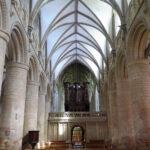
- The Nave
-
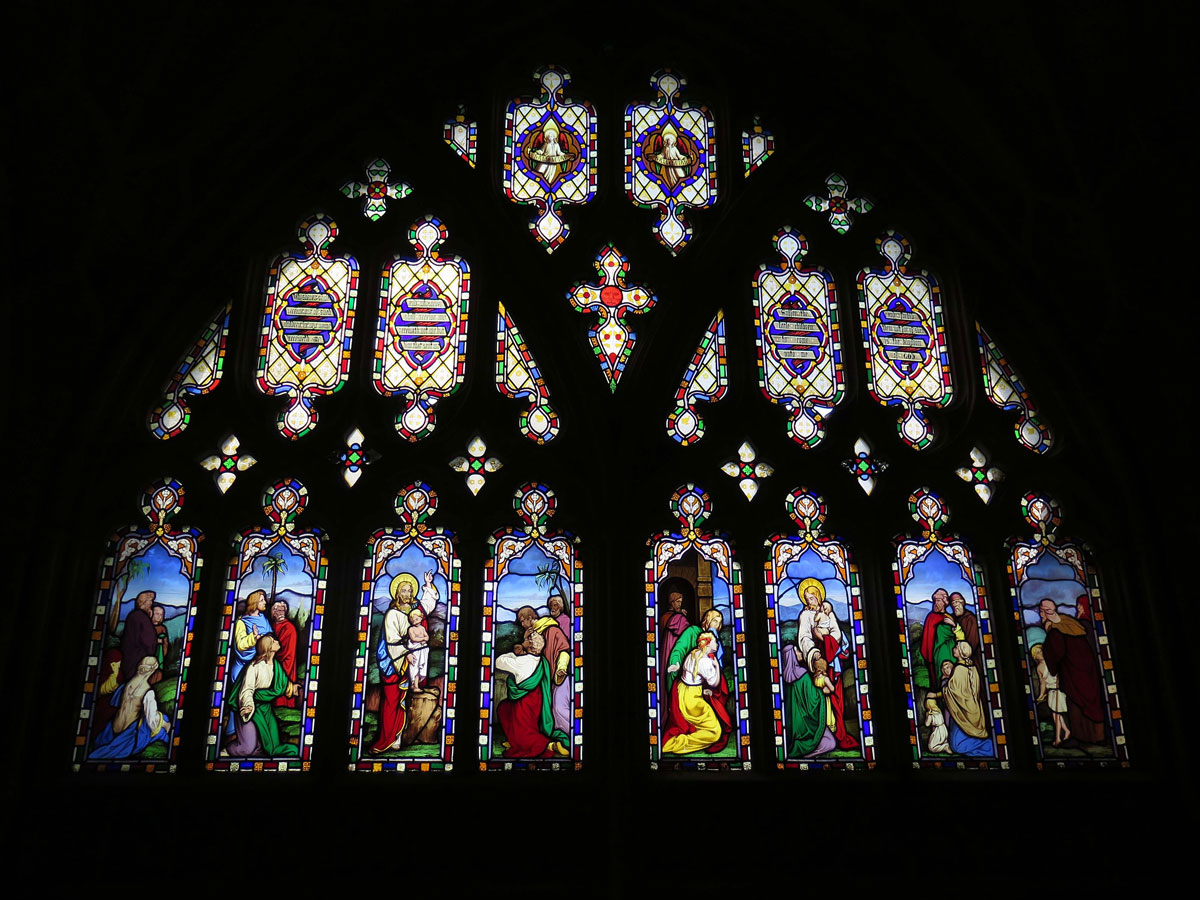
- The West Front Window by William Wailes, 1859


-
- Coronation of Henry III by J.R, Clayton, 1860

-
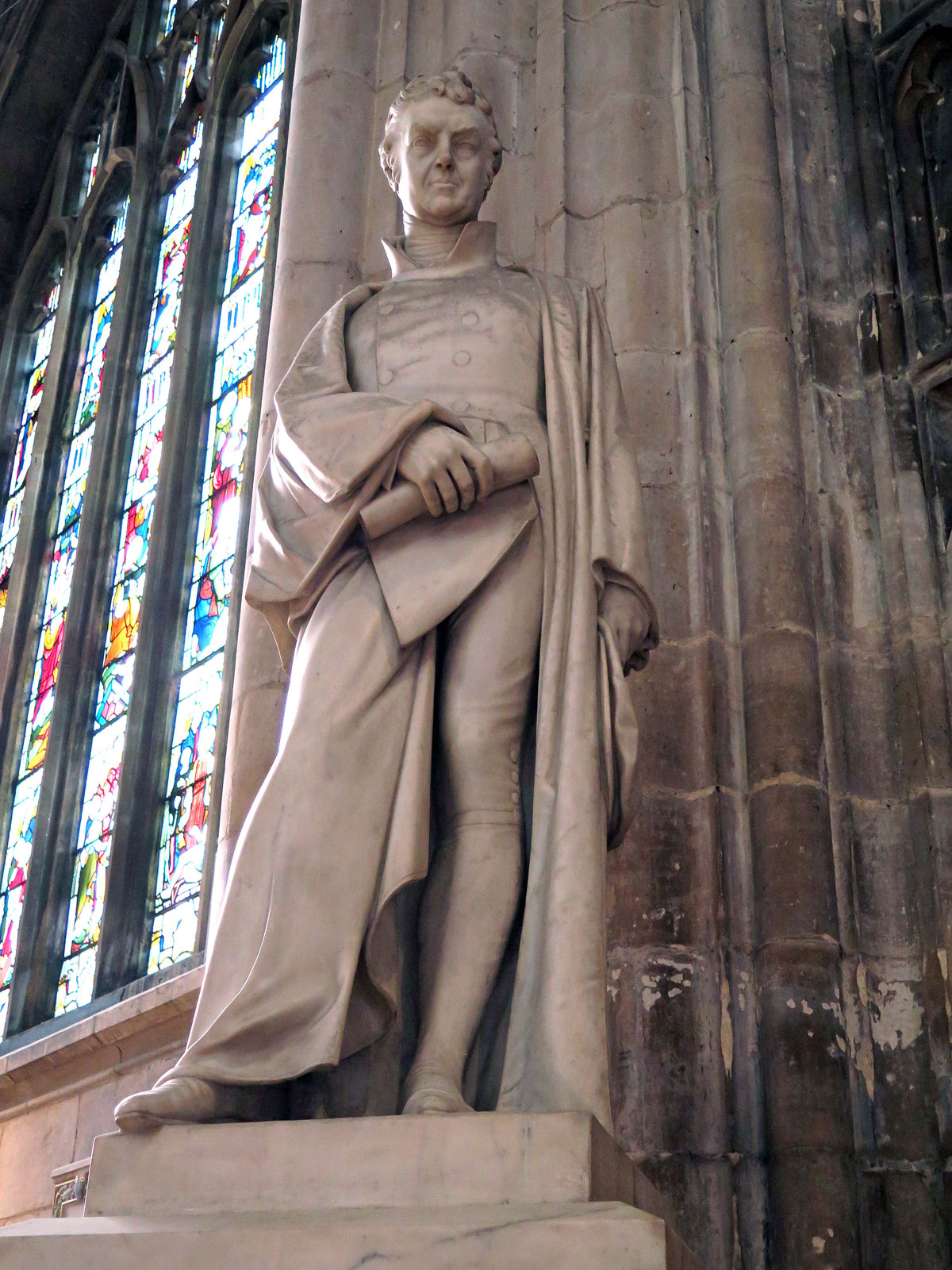
- Memorial to Edward Jenner, Inventor of the World’s First Vaccine (Smallpox) who lived at Berkeley
The death of Edward II, the suspicious manner in which he died, and his subsequent burial here, meant that his tomb became a shrine, and with this extra interest came extra funds to re-build the dark and old-fashioned east end of the Norman church into a more suitable setting.
By this time the architectural style had moved away from the Norman influence to the more flamboyant Perpendicular Gothic style, and this is what we can see in the Quire, Presbytery and adjacent South Transept and Ambulatory.
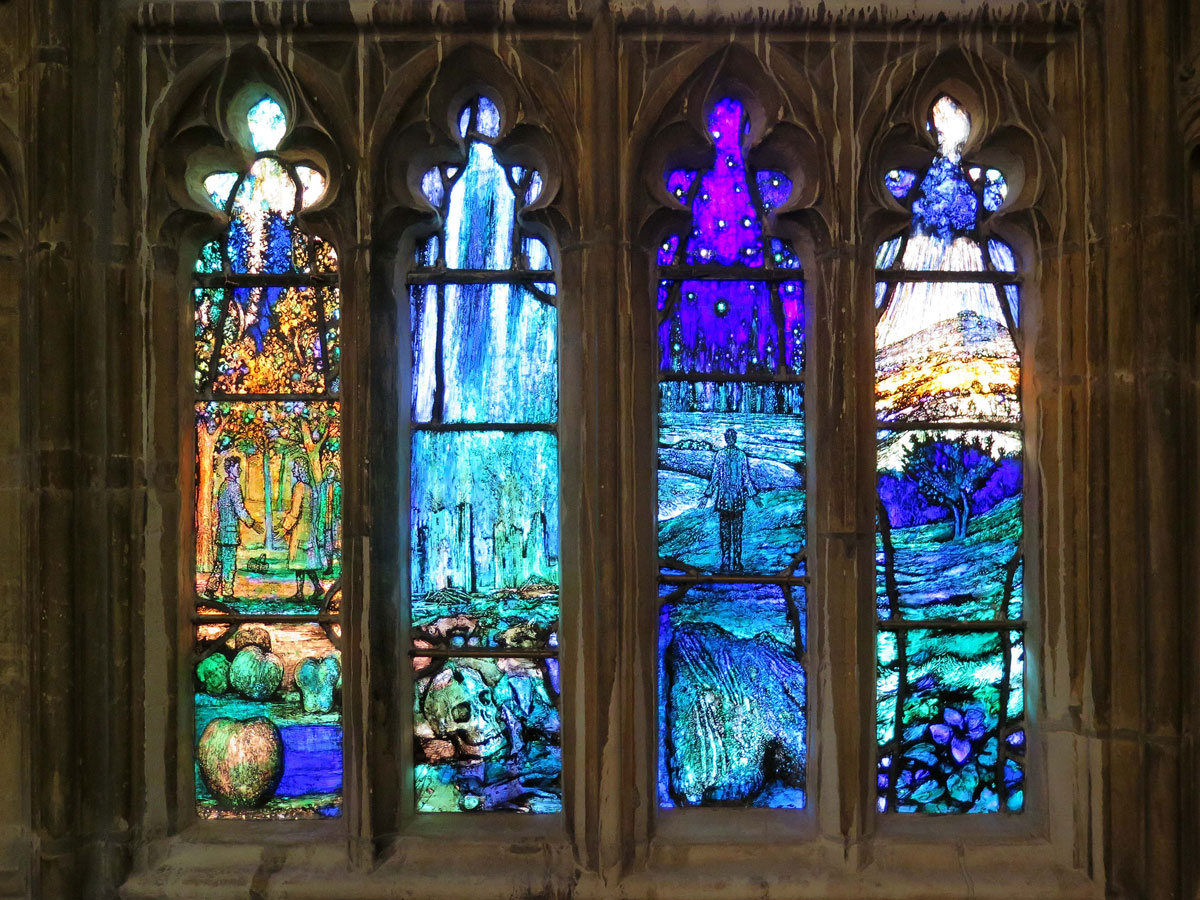
Edward II wasn’t the only person of note to be buried here, and in the South Ambulatory is the unmissable effigy of Robert Curthose, the eldest son of William the Conqueror who should have become king but never did. Another thing you can’t miss is the enormous 14th century Great East Window, and in contrast, make sure that you check out Thomas Denny’s modern stained-glass windows in the nearby Thomas Chapel.
-
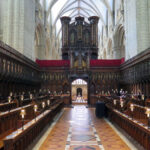
- The Quire and Organ

-
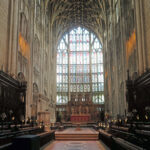
- The Quire and Presbytery

-
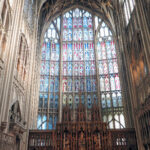
- The Altar and Great East Window

-
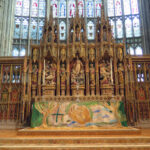
- The High Altar by George Gilbert Scott, 1873

-
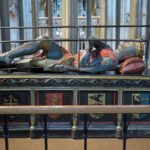
- Robert Curthose

-
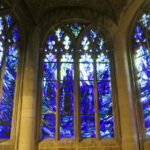
- Thomas Denny’s Stained-Glass Windows in the Thomas Chapel

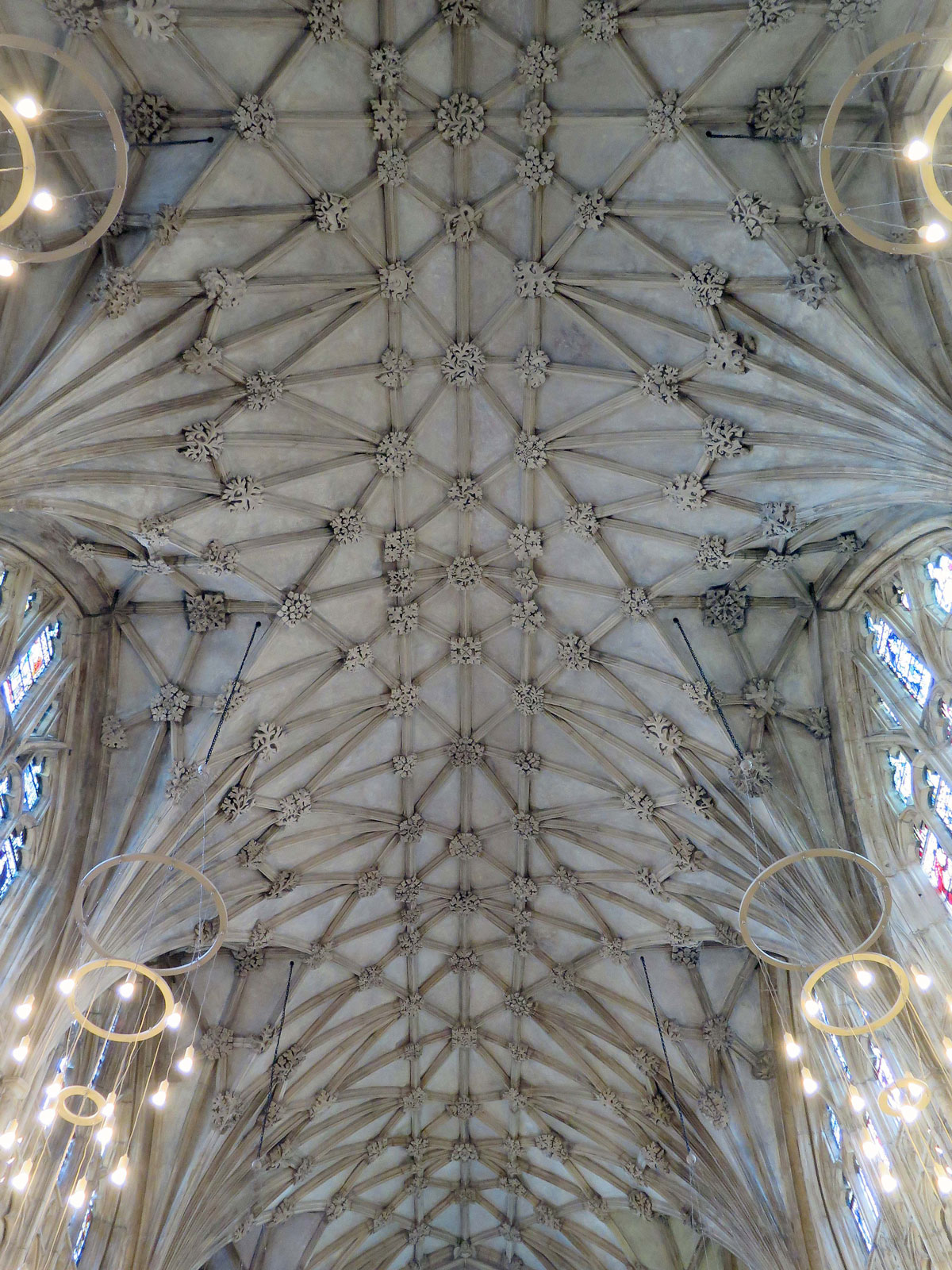
Thomas Denny has some more stunning glass panels in the Lady Chapel which is located behind the Great East Window. Building the Chapel began in 1465 and was completed around 1482. The bare stone walls we see today would have been very different in medieval times when the chapel would have been richly decorated with painted statues, magnificent stained-glass windows, and embroidered altar hangings. Unfortunately, Parliamentarians occupied the Cathedral during the Civil War and vandalized it in their customary manner. The chapel has since been restored, but many of the original decorated niches have been left badly damaged, particularly behind the altar.
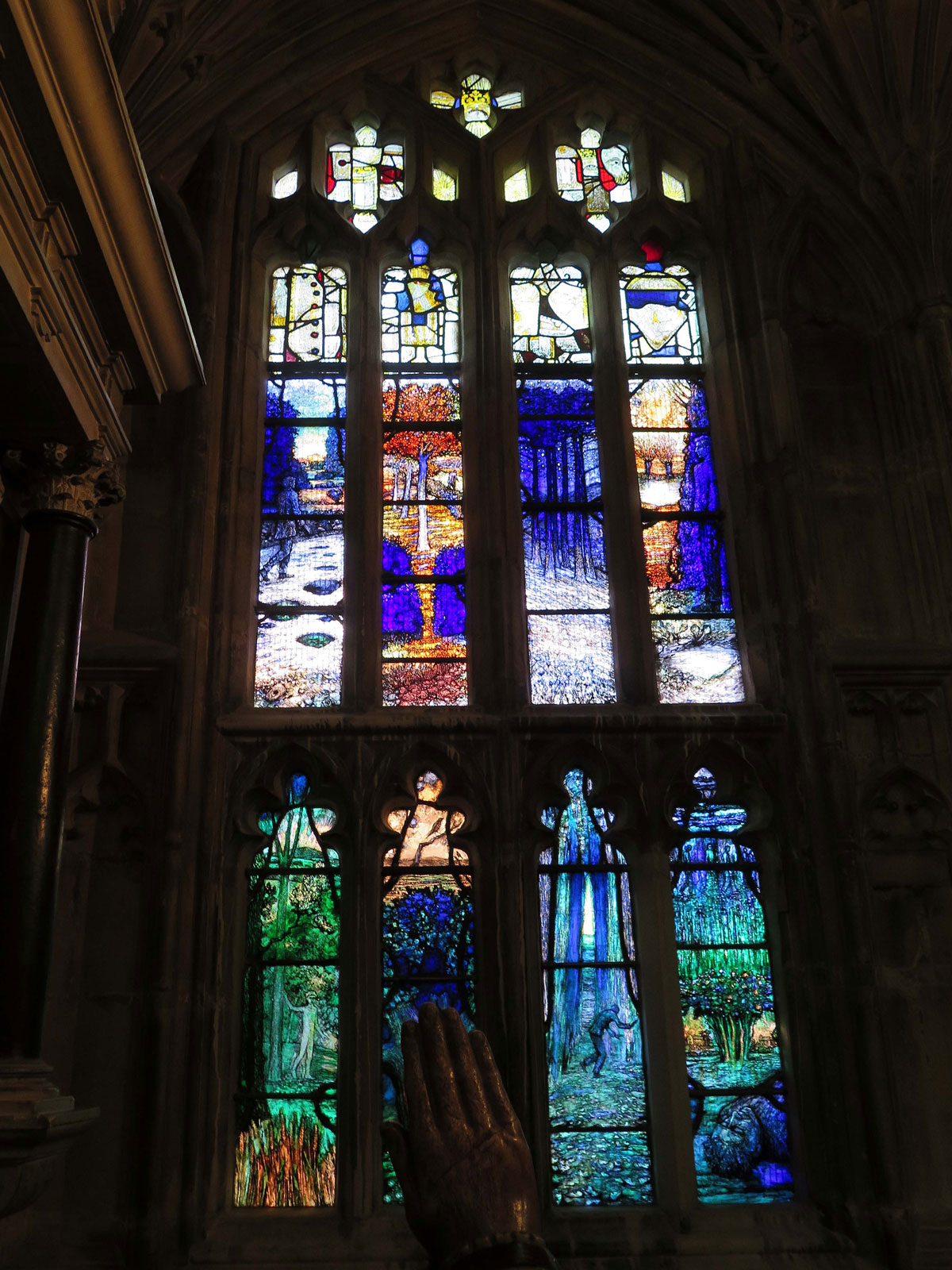
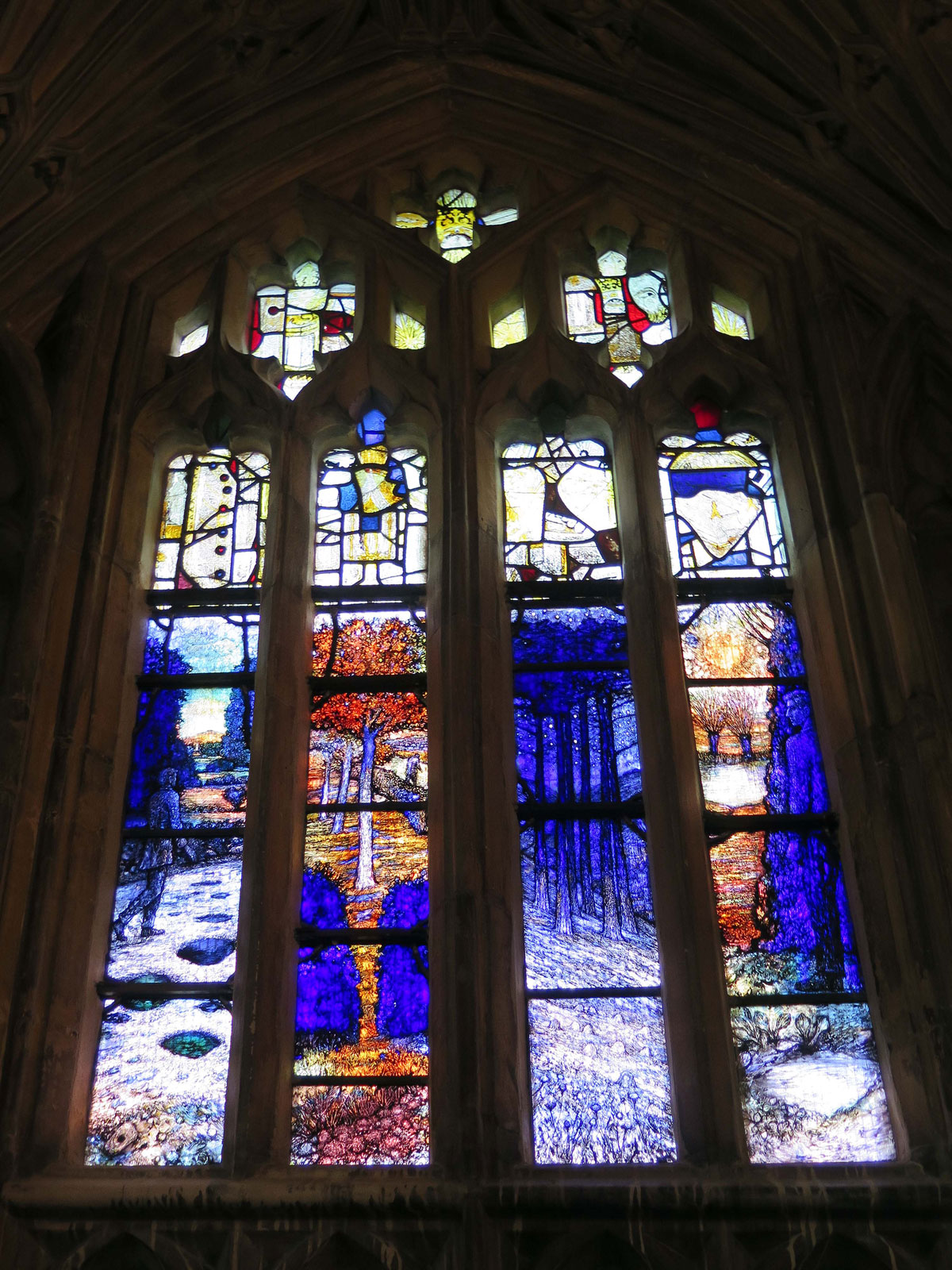
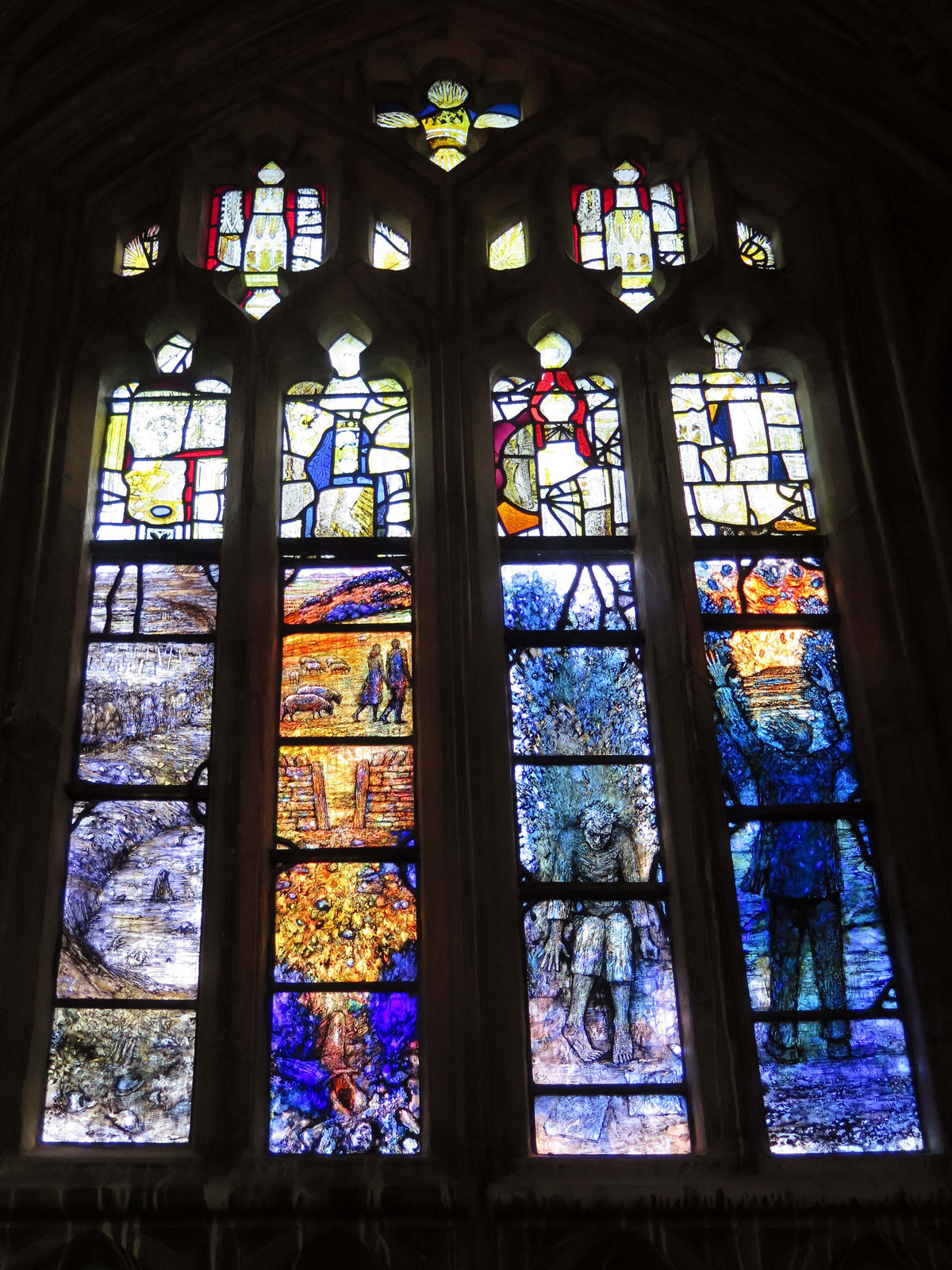
Thomas Denny’s tribute to the Gloucestershire war poet Ivor Gurney can be seen in Bishop Goldsborough’s North Chantry Chapel. Gurney, who was also a chorister at Gloucester Cathedral, had a strong affection for the local countryside, which Denny shows us in his fabulous modern interpretation.
-
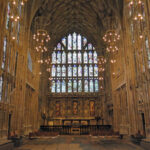
- The Lady Chapel

-
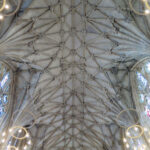
- The Lady Chapel’s Vaulted Ceiling
-
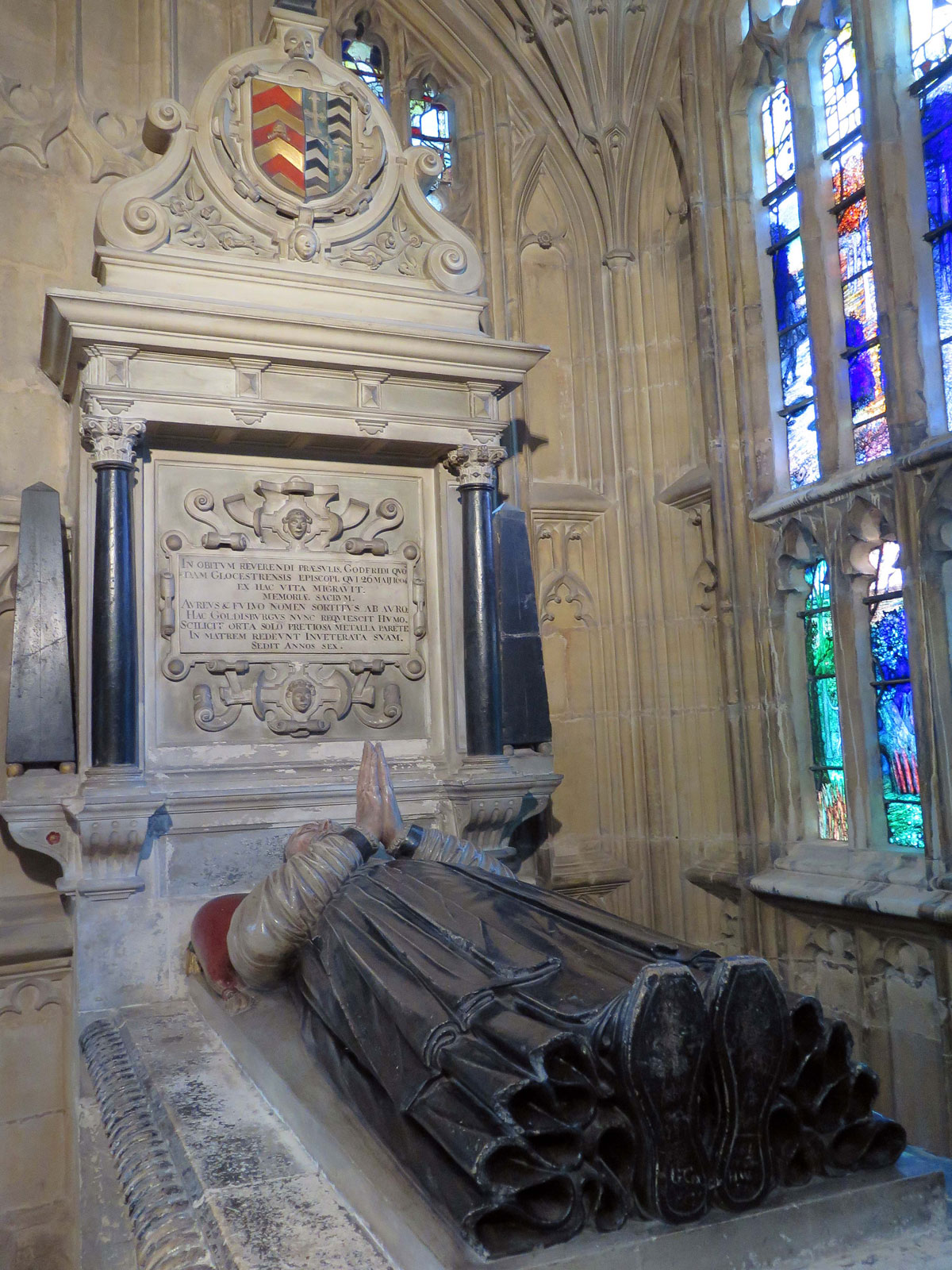
- Bishop Goldsborough’s Tomb in the North Chantry Chapel
-
- Thomas Denny’s Ivor Gurney Windows in the North Chantry Chapel


From the Lady Chapel we now head down the north side of the Nave. If you don’t mind walking up some stairs to the Tribune Gallery (or the Whispering Gallery as it’s also called) you’ll be rewarded with some fine views of the Presbytery and Great East Window, and there’s also a rare remnant from the Anglo-Saxon monastery thrown in for good measure.
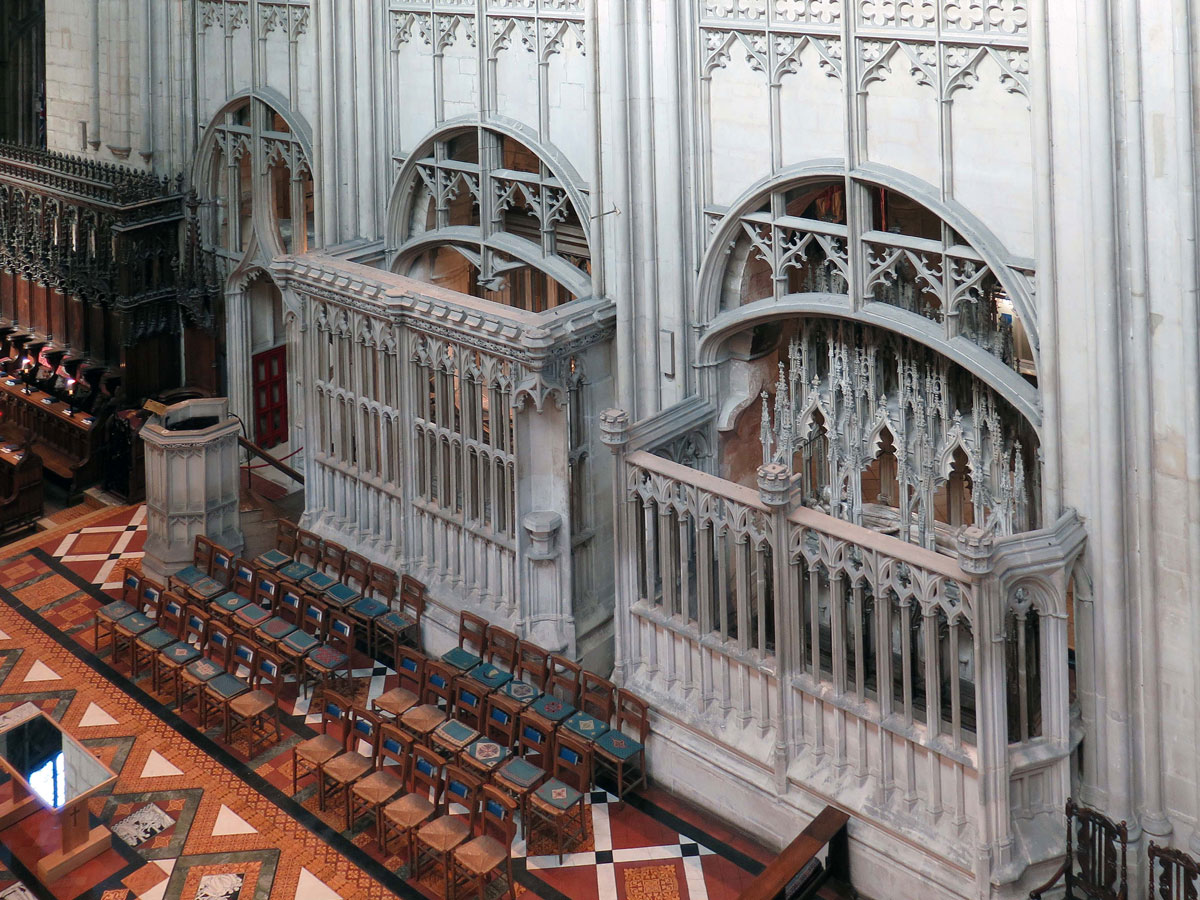
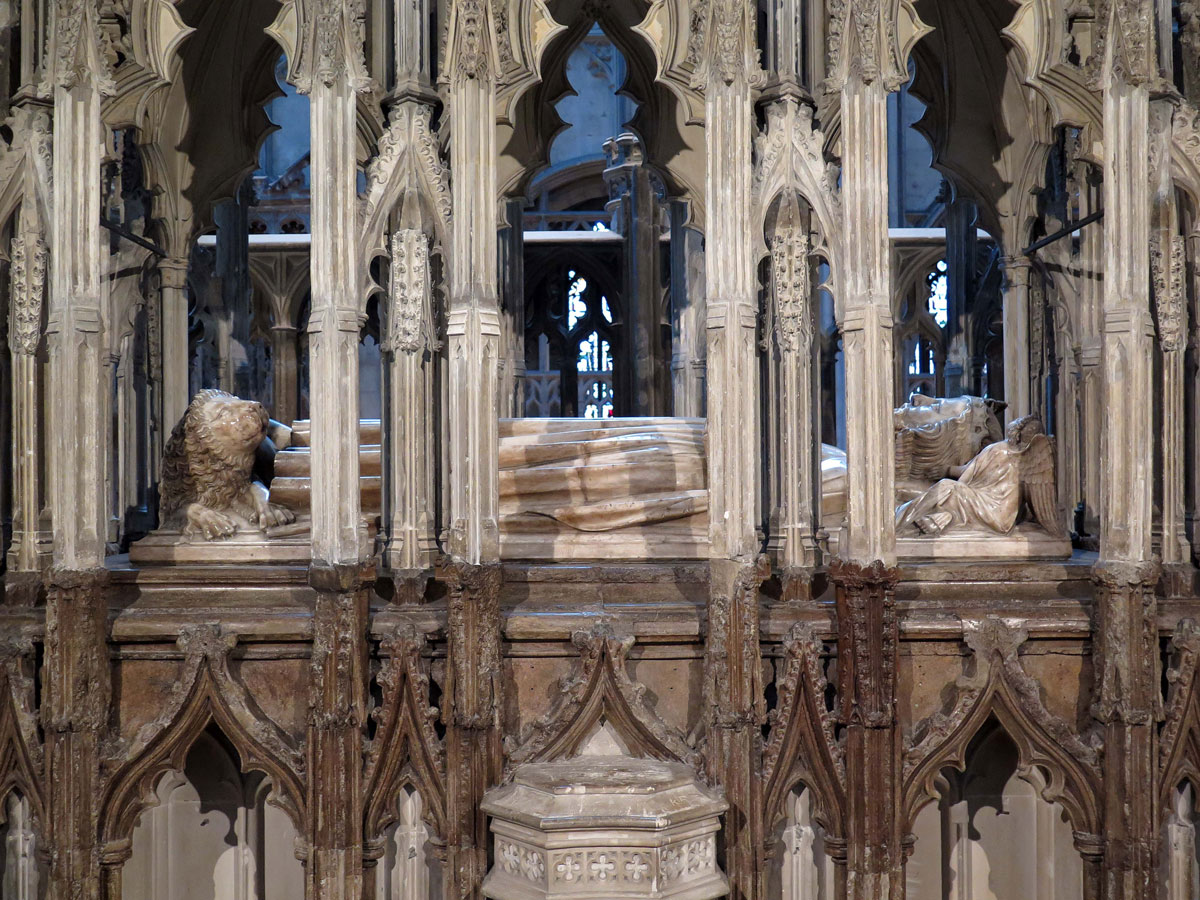
What you’ve really come here to see of course is King Edward II’s tomb which can be found in the North Ambulatory. His life was full of controversy – and so was his death in 1327, and it’s the mystery surrounding his supposedly gruesome ending that has sparked so much debate over the years. I’m hoping to write about Berkeley Castle at some point, and so it’s best if I give you my thoughts there.
Whatever the truth, it prompted his son, Edward III to have this magnificent tomb built in his memory. It’s also the reason that Henry VIII saved the monastery from destruction during the dissolution, as Edward was one of his ancestors.
-
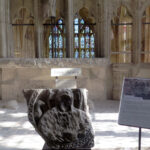
- 9th Century Stone Remnant in the Whispering Gallery

-
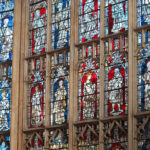
- The Great East Window as seen from the Whispering Gallery

-
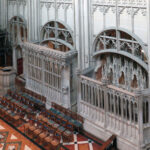
- The Presbytery with King Edward II’s Tomb on the right
-
- King Edward II’s Tomb in the North Ambulatory


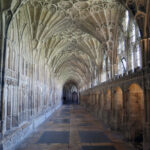
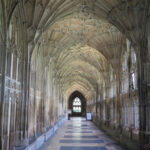
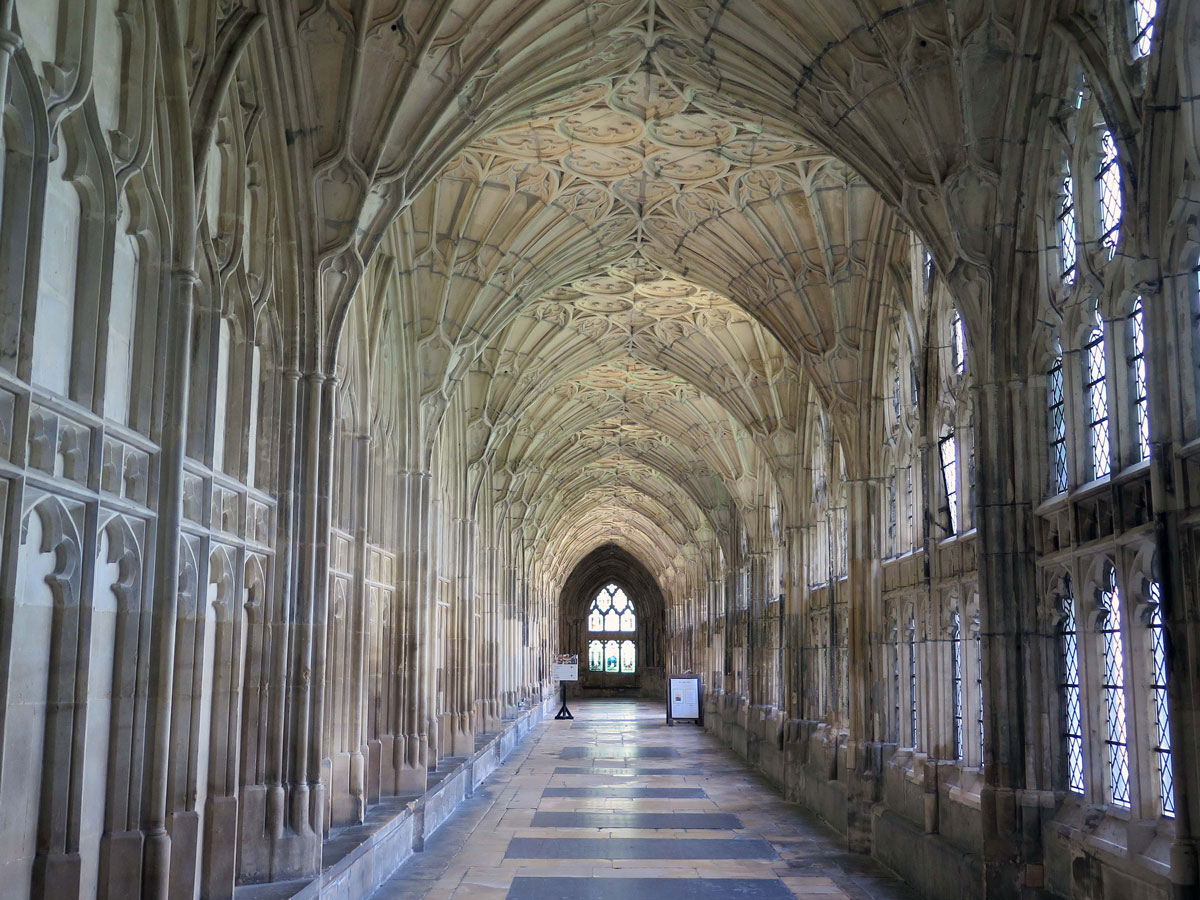
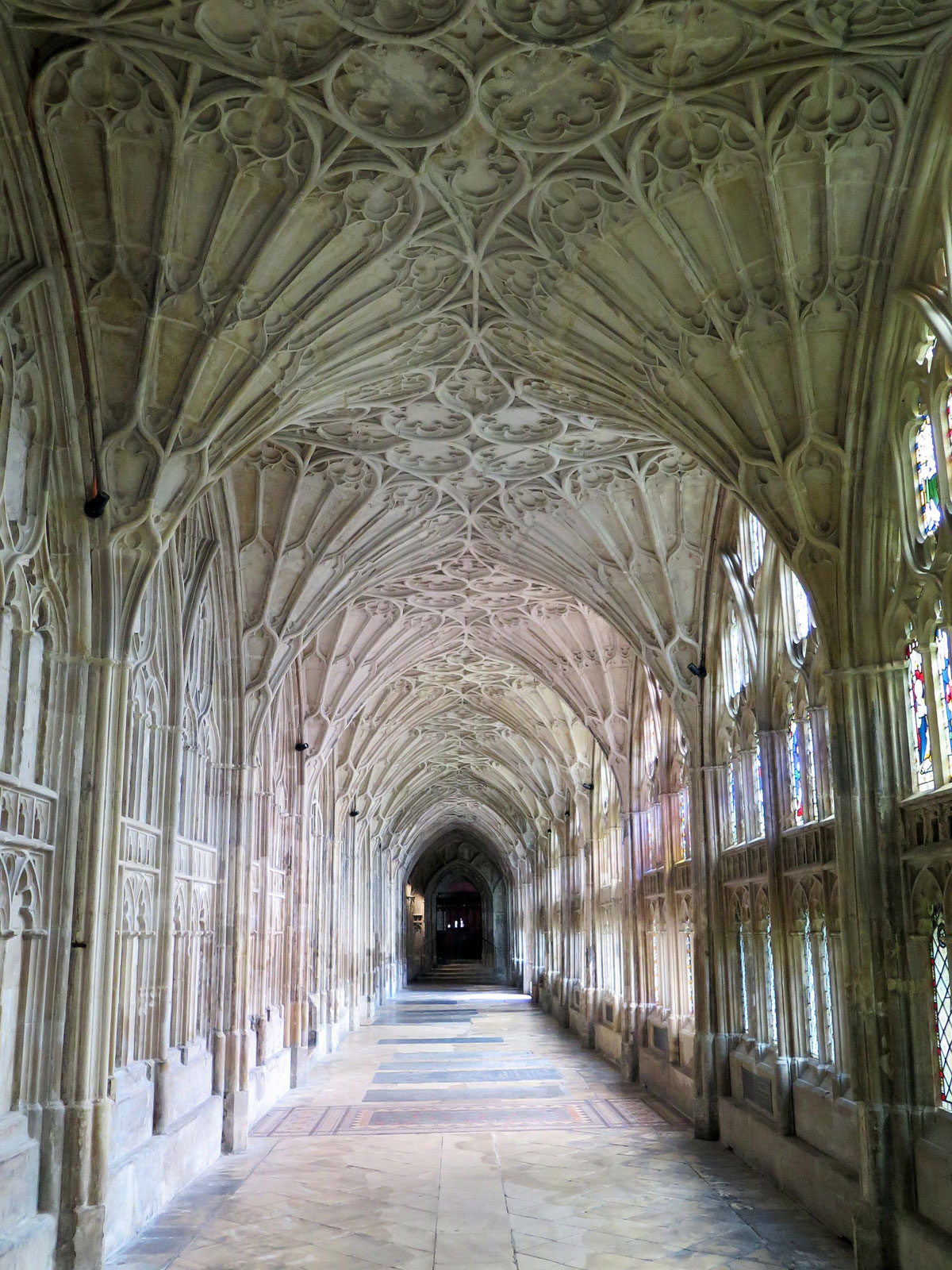
There’s still one more part of the Cathedral that really shouldn’t be missed – the Cloisters. Of all the styles associated with church architecture, Perpendicular is undoubtedly my favourite, and the cloisters here are a great example. After the Norman (or Romanesque) period, church architecture in England gradually morphed into the more elaborate Gothic style. There were three phases associated with it: First came Early English (c1190-1300) which started the transition, then came Decorated Gothic (c1250-1380) and finally Perpendicular (c1350-1550).
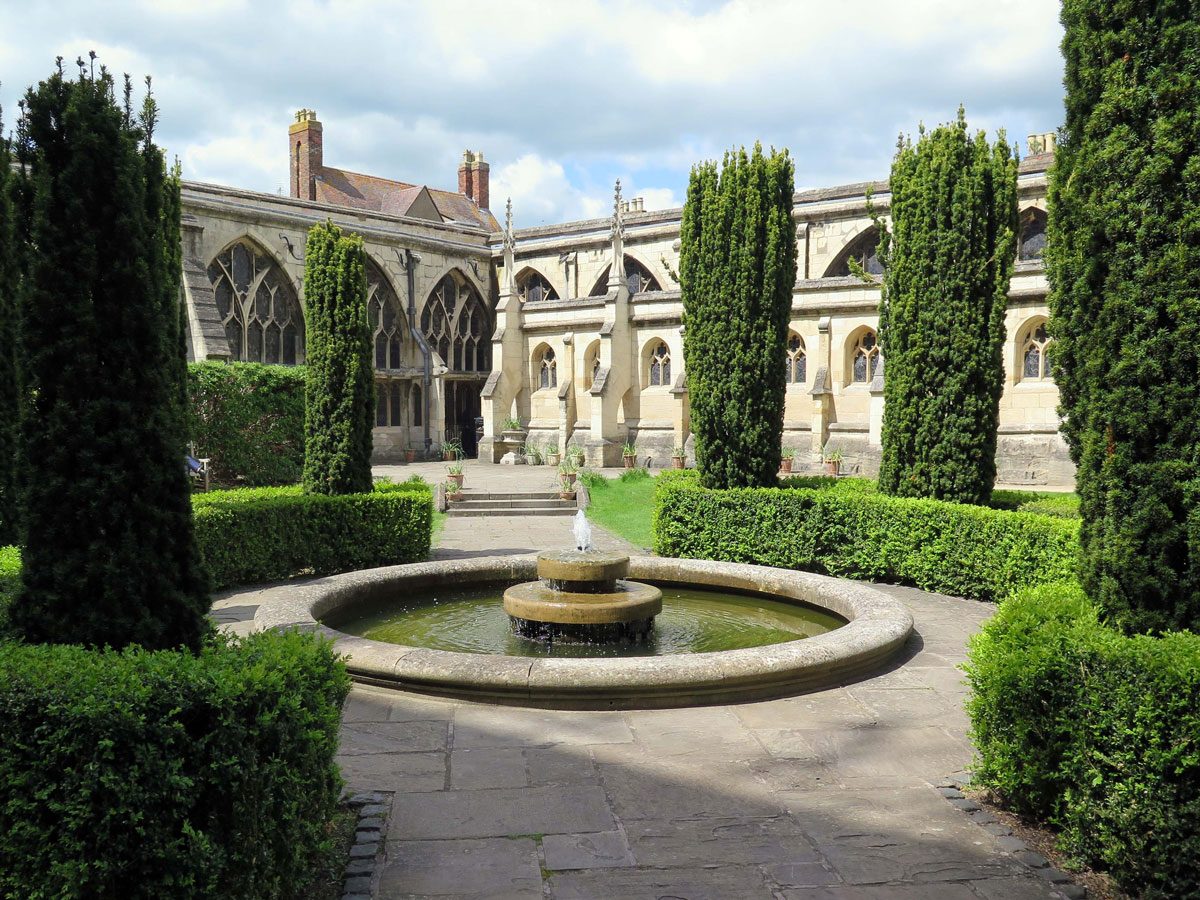
The Cloisters are not only a great place to see this beautiful architecture, it’s also an ideal place to finish a tour of the Cathedral because after following in the abbots’ footsteps, you can wander out into the Cloister Garth, take a well-earned rest and perhaps imagine what it must have been like here back in medieval times, when peace, solitude and prayers were often interspersed with bloodshed, murder and mayhem. Not much different to today then!
-
- The South Cloister with Study Booths

-
- The West Cloister
-
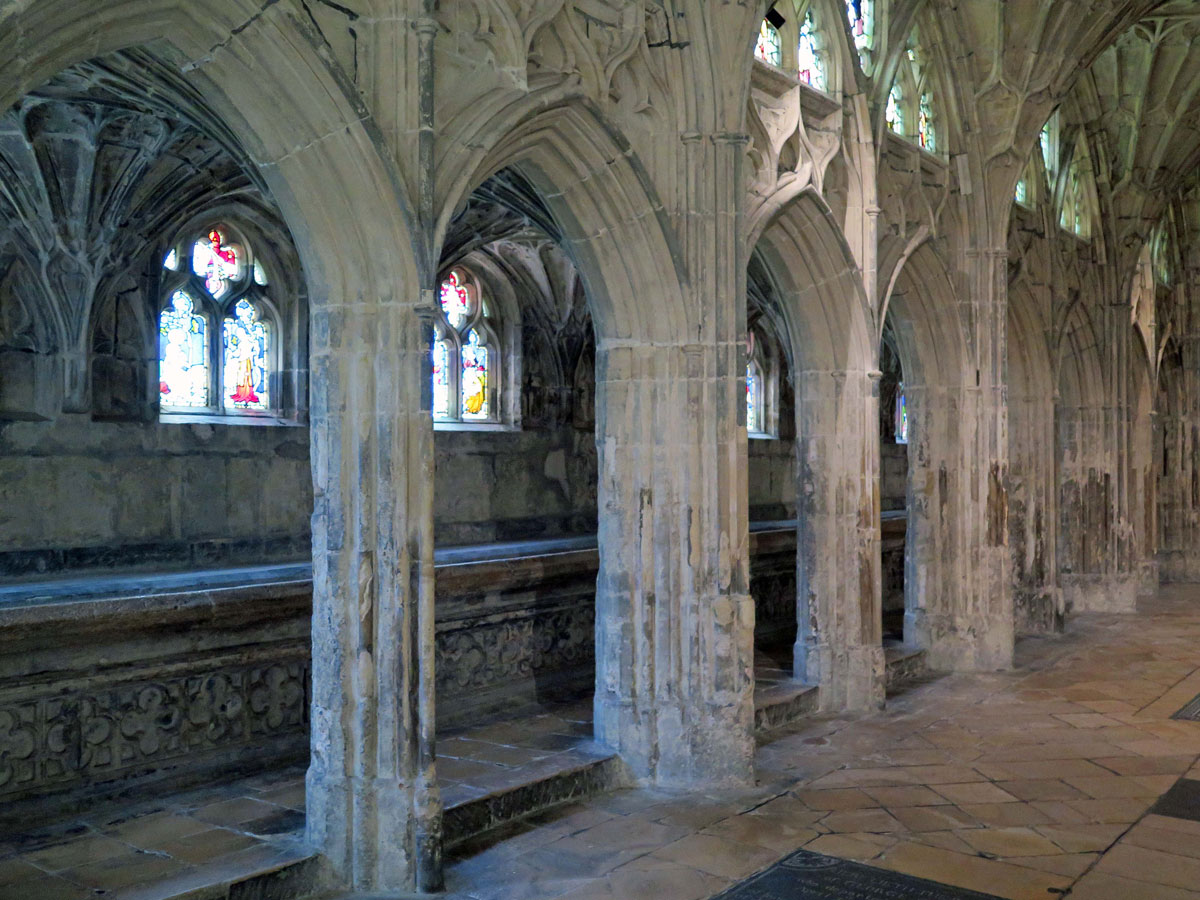
- The North Cloister
-
- The Lavatorium (for washing) in the North Cloister

-
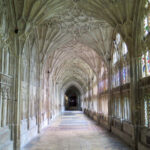
- The East Cloister



-
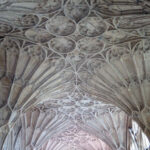
- Fan Vaulting

-
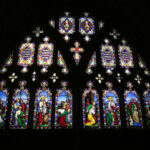
- Stained-Glass in the Cloisters
-
- The Cloister Garth
POSTED – MAY 2023
Originally posted 2023-05-29 16:02:20.
I felt like another visit to a catheral I’ve never been too. And it is lovely.
This was one of my ‘more pictures than words’ posts, but as they say one picture can speak a thousand words sometimes.
Absolutely, and these are stunning pics.
It’s the cathedral that is stunning really.
I’m really enjoying these picture posts, Malc. This one has made me really determined to go back to Gloucester Cathedral, as I can’t remember a lot about our last visit and there’s clearly so much to see of interest. It’s good to see such a good photo of Robert Curthose’s tomb after our conversation about it over my last post. And Edward II’s is fantastic, isn’t it? I don’t know how you manage to get such superb shots of stained glass windows, as I’ve always made a right mess of them. But somehow you manage to show them in all their glory, so big respect for that! 🙂
I’m glad that these picture posts appeal to you Alli, especially as I’m endeavouring to clear some of the backlog I’ve built up, and they help to fill the gap between some of the longer posts I like to do. Some of the stained-glass windows in the cathedral are quite special aren’t they? Funnily enough, only yesterday I got rid of all my DSLR gear, but photography isn’t all about having the most sophisticated equipment.
Oh absolutely not – some of the best photos I’ve seen have used only the very basic equipment, or were taken on fairly basic smart phones. I’m a huge fan of stained glass windows – I find them rather mesmeric in fact. I just wish I could photograph them but I just haven’t got the knack. You, on the other hand, have – in spades! 🙂
Yes, I love the picture posts, so please keep ’em coming. 🙂
Thanks. That are my intentions 🙂
Love the music, Malc. We were only in Gloucester very briefly and I don’t remember the Cathedral, beautiful though it is.
Thanks for checking it out Jo. As a city, rightly or wrongly, I think of Gloucester as the poor cousin to Cheltenham, but Cheltenham doesn’t have a cathedral like Gloucester.
I’ve never been to Cheltenham. What an admission! Not even for the races…
And there’s me thinking that you must have at least gone to Cheltenham Ladies College 🙂
Too far south, me darlin 🤗🩵
😂
Another interesting history lesson accompanied by more of your great photos. I love the high altar and the traditional stained glass windows, the colours are fabulous, and the cloister garth looks like a lovely place to spend some quiet moments.
Thanks Eunice. I wondered if the modern glass might catch your attention, but there’s a lot here to see if you’re interested in history and church architecture.
A beautiful cathedral for sure Malc and very interesting the history that unfolds with it and even before it. And, as we are used to seeing, your pictures are phenomenal! Have a great day my friend and all the best!
Thank you for your kind words Francesc. Have a great week ahead. We’re having a lovely sunny spell here at the moment 😎
You’re very welcome Malc! Enjoy the sun! 🌞
This is another wonderful share, dear Malc
I am grateful for your great posts that help me expand my knowledge, as well as for your kindness and precious support💗
Thank you Luisa. The feeling is completely mutual 🙂
A lovely entry, Malc with pictures to match. I enjoyed the history and the explanations on why certain things happened.
Thank you so much Pat 🙂
Today’s post, Malc, is one of my favorite, since it include the cathedral, the details of the different architecture styles, the relevant history of the kings, and my much loved cloisters. There is something extraordinary happening when I walk in cloisters, as if the stones absorbed the spirit of the time they were build, and now they are softly whispering
to me the sacred words from the long gone past…
I also love the stain glass magnificent windows, and above everything else your passionate devotion, Malc, that we don’t miss one single detail. Thank you! I told you this before but I will go on saying to make sure that you believe me!
Thank you for the excellent photos that are lovely to study
Joanna x
Your words are always far too kind Joanna, and even if I don’t deserve them, I always value them. I’m right with you where cloisters are concerned as they seem to have the ability to transfer us back to a different time and age, and in my opinion, I’ve seen no better cloisters than those at Gloucester. Once again Joanna, thank you so much for your lovely comments and I truly hope that your life is becoming easier to handle 🙂