Tag Archives: Architecture

Trakai – Historic Town Built on Water

Trakai - Historic Town Built on Water

Today was going to be my third and final full day in Lithuania, and it looked as though the good weather was going to desert me. I had it in mind to go to Trakai, which is without doubt, one of Lithuania’s most popular tourist destinations, but I had my doubts as to how successful the day would be, especially as the holiday season was now in full swing.

I’m not one of those people who avoid such places (after all, they’re popular for a reason), but I’ll always try to time my visit accordingly. Today though, even if I could justify the effort in getting from Kaunas to Trakai, I was only ever going to be able to be there when it suited the public transport system, and not when it suited me.

After giving it some thought, I knew I would never have another chance to see the place that is so revered by the Lithuanian people, and so I decided to bite the bullet and catch the early fast train to Vilnius again – the same one as I took yesterday.

Continue reading

Originally posted 2019-09-23 14:24:54.

The Ninth Fort

The Ninth Fort

Today was my last day in Lithuania, and thanks to a late flight home I was able to fulfil one last wish before leaving.

The Ninth Fort might not be on everyone’s list of places to see, but one of my passions, if that’s the right word, is to try and understand what caused the turmoil in Europe during the 20th century. I have always had an interest in the two World Wars as well as the Cold War: The Ninth Fort is one of those places that is uncomfortable to visit, but one that has left a profound effect on me ever since.

I don’t know if things have changed, but at the time I was here there was very little information about the fort and how to get there – certainly not in English.

Even though it’s located on the outskirts of Kaunas at Sargenai, and quite a long bus ride to get there, it wasn’t as difficult to find as I thought it was going to be.

Before the outbreak of the First World War, Lithuania was part of the Russian Empire, and as relations deteriorated with Germany, it was decided to build Kaunas Fortress to protect its western border.

The Ninth Fort was part of this huge complex that surrounded the city covering an area of 25 square miles.

To learn more about the history of the fort there’s a museum housed in a soviet concrete monstrosity, which if they leave it as it is, could become part of the fort’s history itself in years to come.

Continue reading

Originally posted 2019-09-26 16:54:08.

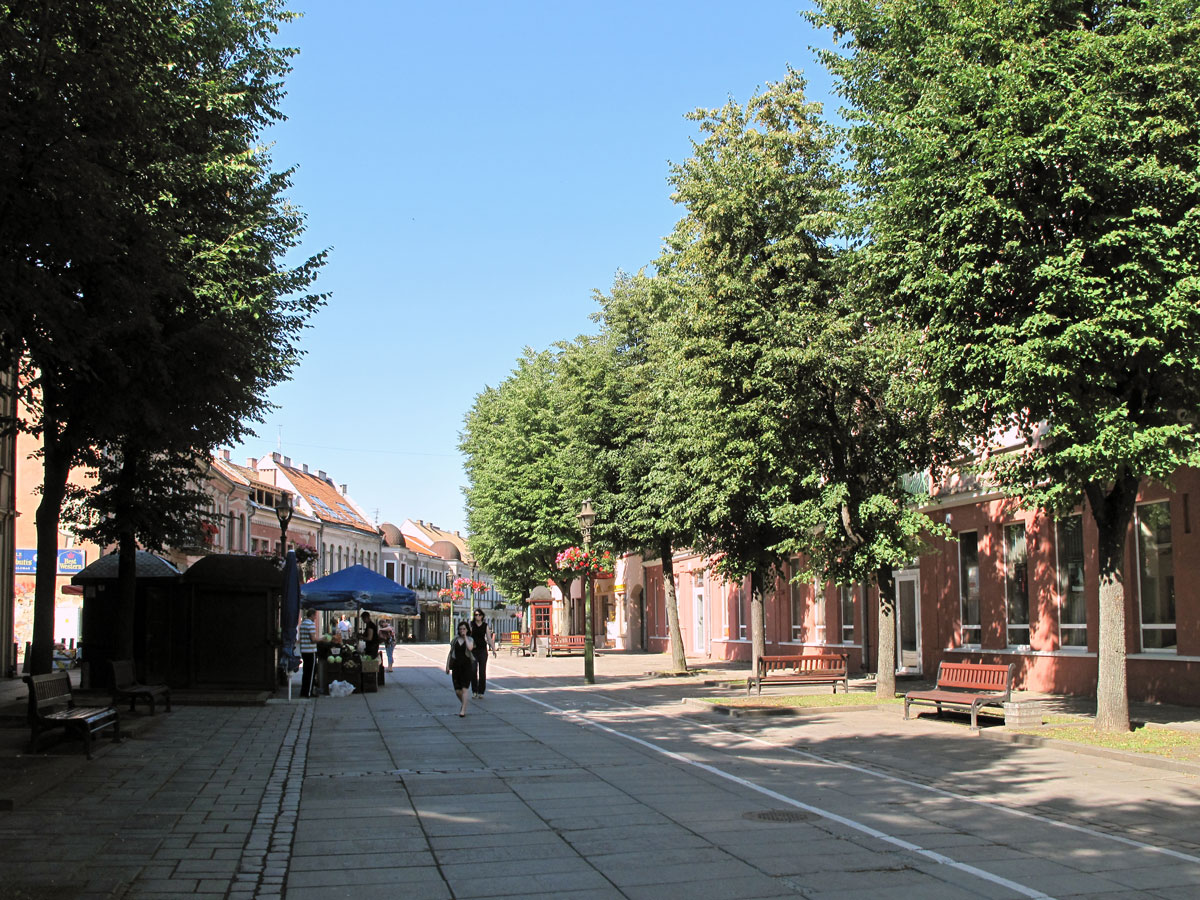
Kaunas – Lithuania’s Second City

Kaunas - Lithuania's Second City

When the low-cost airlines took off (sorry), it gave me the opportunity to visit some places that I’d always wanted to visit – and also some that I hadn’t; places such as Kaunas.

Kaunas was to be my first destination to the Baltic States, simply because it was the only place in that part of the world that I could fly to from my regional airport at the time. So, in the summer of 2012 I took off from Bristol not really knowing what to expect, so before I completely lose my marbles, here is an account of what I remember.

Kaunas is the second largest city in Lithuania with an urban population around the 400,000 mark, so it’s not surprising that we landed in the country’s second largest airport.

What did surprise me though was that it was so warm it was like arriving in Spain – and it was 10 o’clock at night.

I usually try to use public transport where possible, but on this occasion, I just jumped in a cab which took me directly to the hotel, which although it was called the Ibis Kaunas Centre, wasn’t quite in the city centre but convenient all the same.

The following morning, I was pleased to see the sun shining, and so after breakfast I didn’t waste any time in making my way past the Orthodox Church of the Annunciation to Laisves aleja.

Continue reading

Originally posted 2019-09-08 17:02:22.

A Brief Encounter with Lithuania’s Capital City

A Brief Encounter with Vilnius, Lithuania's Capital City

With around 600,000 people, Vilnius demands more than a day of anybody’s time, but I’m afraid that’s all I had.

The train journey from Kaunas can take anything between an hour and an hour and three quarters, and with that in mind I took an early fast train to Lithuania’s capital city.

The journey passed through some pretty flat countryside and quite different to where I come from: There were lots of trees and wooden farmhouses, one of which had a stork’s nest on its rooftop, an unusual sight for anyone from the UK to see.

Apparently, Lithuania has the biggest population of White Storks in the world, which is why it’s the country’s ‘National Bird’: They seem to be revered so much that March 25th is Stork Day when all sorts of rituals take place. Anyway, I digress.

I arrived at Vilnius railway station around 09.30 and made my way towards Ausros Gate, or better known in English as the Gates of Dawn.

The Gate gives entry into the Old Town, which is where most visitors to Vilnius head for, and which was bound to keep me occupied all day. The good thing is, that just a few streets lead straight through the Old Town down to where the Vilnia River meets the Neris near Cathedral Square and the Castle, where according to legend, the city was founded in 1323 by Gediminas, the Grand Duke of Lithuania.

Continue reading

Originally posted 2019-09-16 16:34:26.

Vienna’s Museum of Fine Arts

Vienna's Museum of Fine Arts


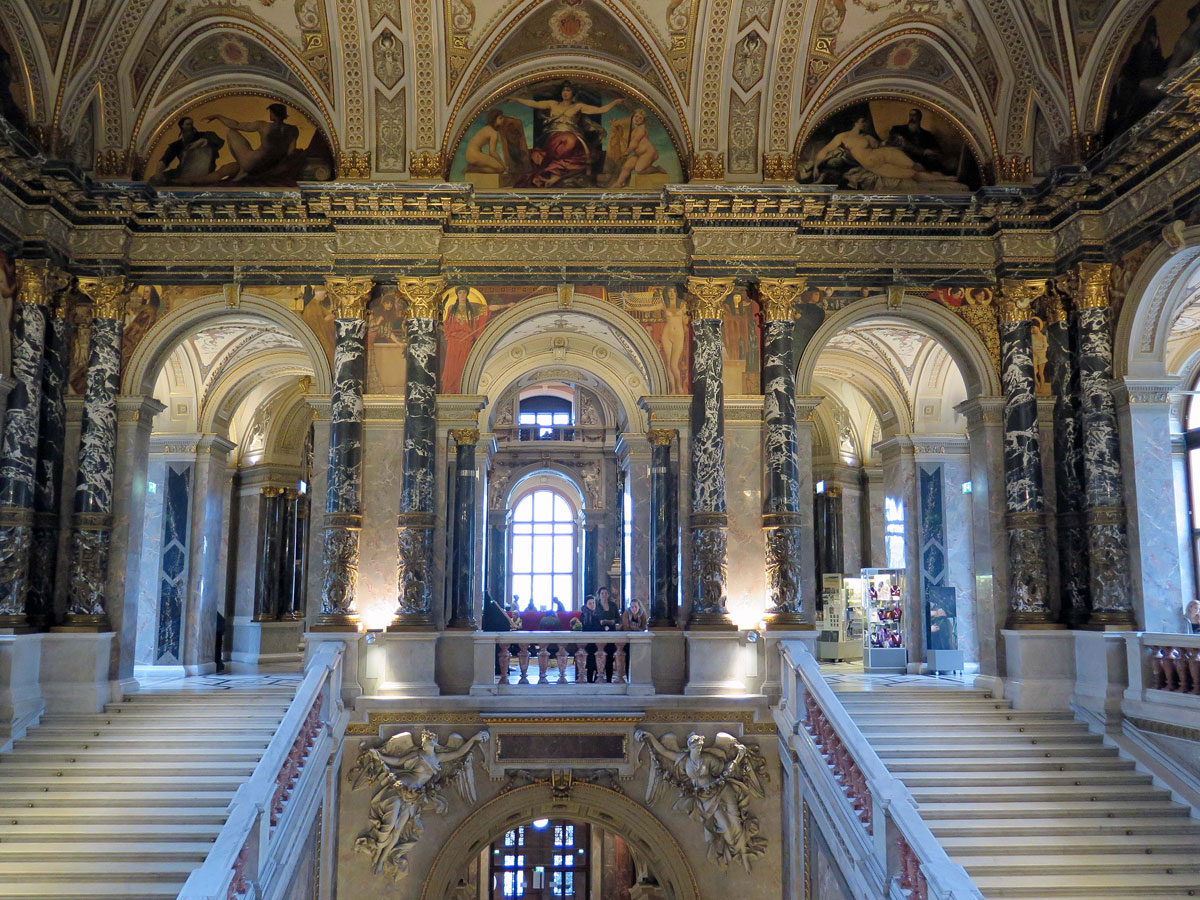
I know that the title of this post doesn’t sound very exciting, but its official name of the Kunsthistorisches Museum wouldn’t have sounded any better would it? Apart from that, in my recent blog about The Ringstrasse I promised to give you a separate post about this magnificent museum, and so not one to let anyone down, here it is.

People’s interest in museums are bound to be subjective, but if there’s one museum in Vienna I really think you shouldn’t miss, then it has to be this one. By their very nature, museums are not necessarily the most exciting things to talk about, but before you walk away, you might be pleased to learn that I’ll be giving you more pictures than text, and you can always find out more on the ‘interweb’ if you want to know about anything specific.

Continue reading

Originally posted 2022-12-14 16:15:50.

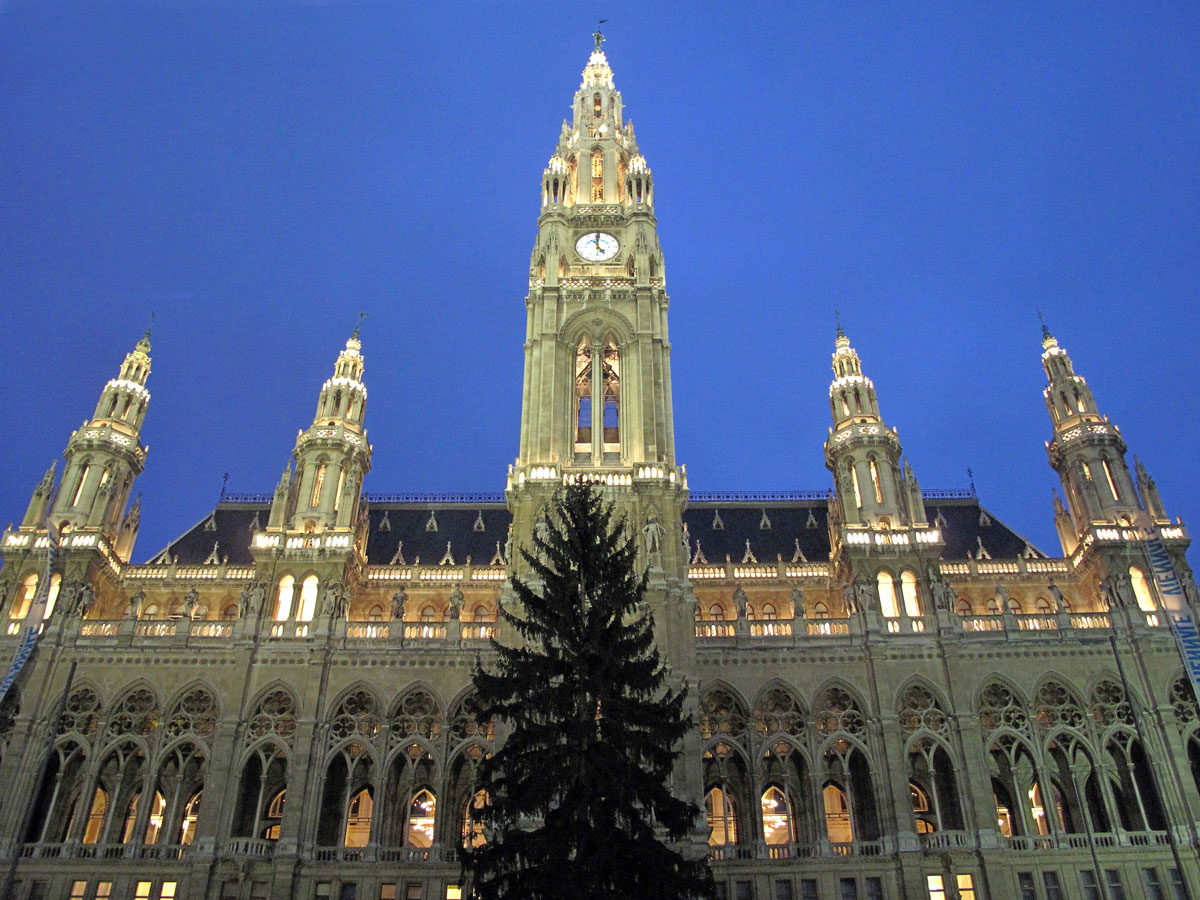
Vienna’s Ringstrasse

Vienna's Ringstrasse

The Ringstrasse is a grand boulevard that encircles Vienna’s Inner Stadt, and if you take a look at a city centre map, it doesn’t take a lot of imagination to work out that this ring-road is on the site of the old city walls.

The Austrians can thank Richard the Lionheart for the original 13th century protective wall. It wasn’t that he had anything physically to do with it, it was just that on his way back from the Third Crusade he was captured and incarcerated at Durnstein Castle, and it was the ransom money that the English had to cough up, that paid for it to be built.

As well as the wall itself, there was a 500 metre wide glacis, which was an artificial slope devoid of any buildings and vegetation that helped to create an extra barrier against any attack. By the 18th century however, the glacis had become obsolete, and Emperor Joseph started to build streets and walkways lined with trees. As the city expanded and traffic increased, then the city walls themselves were in the way, and in 1857 Emperor Franz Joseph I ordered their demolition and embarked on creating a boulevard that would be a showpiece worthy of the Habsburg Empire.

Continue reading

Originally posted 2022-12-06 07:40:11.

Karl Marx Allee

Karl Marx Allee

A walk along Karl Marx Allee may not be everybody’s idea of a morning or afternoon out in Berlin, but if the old communist GDR ideology fascinates you as much as it does me, then try and find a gap in your itinerary to come and take a look at this grand East German boulevard.

Stretching almost 2 kilometres from Alexanderplatz to Frankfurter Tor, Karl Marx Allee is 89m (292ft) wide with 8 storey apartment buildings built in the socialist realist style lining both sides of the avenue: It never took on this appearance of course until the road found itself inside the Soviet sector after the end of World War II.

From the 1780s onwards, the road was called the Große Frankfurter Straße and connected Berlin to Frankfurt on the Oder, but on 3rd February 1945 a heavy Soviet air raid reduced it to rubble.

In December 1949 the road was renamed Stalinallee in honour of the incumbent Soviet leader Joseph Stalin, and two years later a 16ft high bronze statue of him was added to the landscape – but there were bigger plans ahead.

Continue reading

Originally posted 2021-03-28 10:20:10.

The Judisches Museum

The Judisches Museum

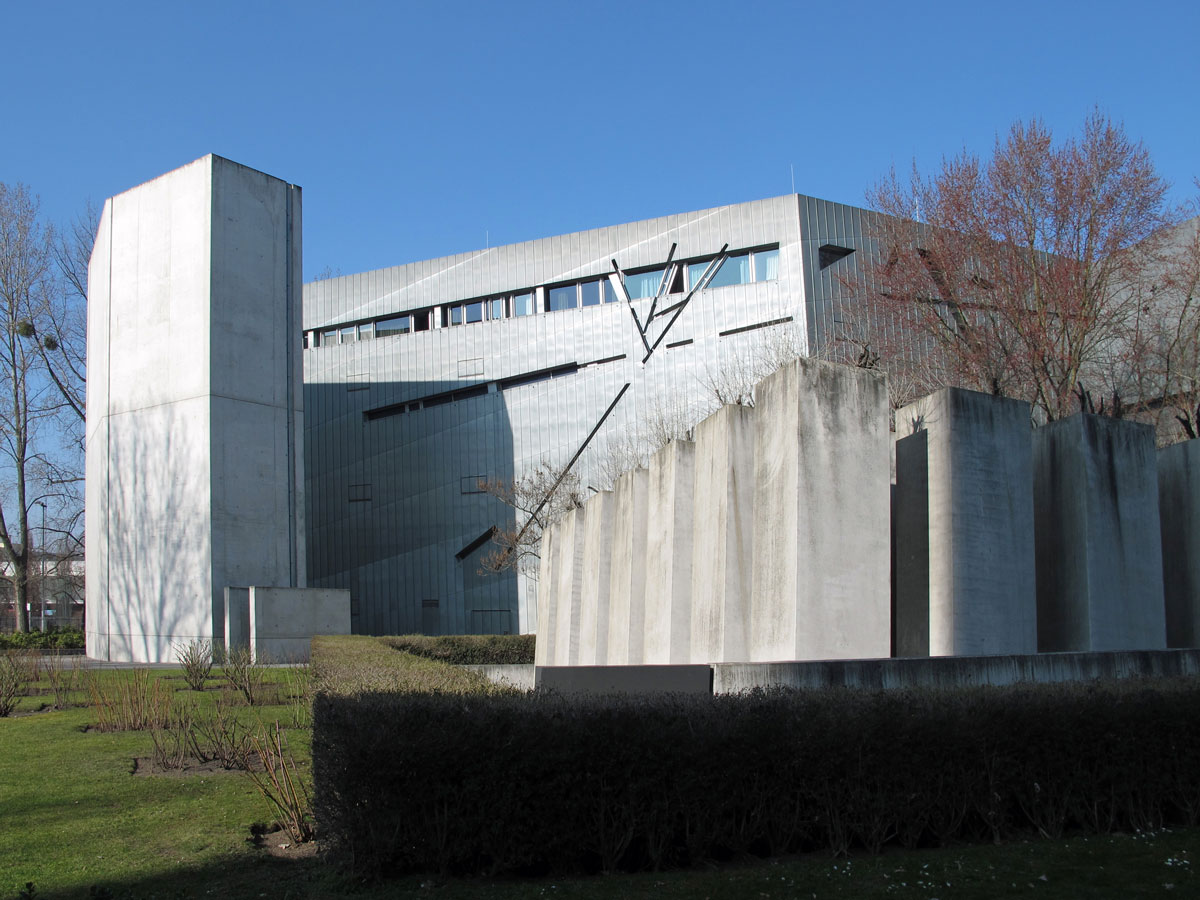
This museum, designed by the world famous Polish-American architect, Daniel Libeskind, is a mixture of both old and new. Entry is through the former Collegienhaus, a fine Baroque building which dates back to 1733-1735, but I suspect most people are anxious to see Libeskind’s modern addition.

Anybody who is familiar with his work won’t be disappointed. He challenges traditional architectural form with titanium-zinc and concrete designs that will also challenge your mind as to whether it fits in with the subject matter of the museum. Whatever you think of his ideas they are undeniably different. Like any so-called great artists of the modern era, his interpretation of what he wanted to portray has been worked out in his own mind and it’s no good me trying to explain it all. Some of his ideas I could understand, but others were pretty well lost on me.

Continue reading

Originally posted 2020-11-20 09:59:45.

Wilhelmstrasse

Wilhelmstrasse - The Former Heart of Nazi Germany

If the outcome of WWII had been different, and London had been beaten into submission instead of Berlin, then imagine if you can, what Whitehall would look like now: Wilhelmstrasse is (or was) Berlin’s ‘Whitehall’.

The road runs for one and a half miles between the Marschallbrucke on the River Spree down to Hallesches Tor in Kreuzberg, but the most interesting part from a historical point of view, is the section between the bridge and Niederkirchnerstrasse where the Berlin Wall split the city into two.

Originating from the time of King Frederick William I, this once wealthy residential thoroughfare, developed into Prussia’s main government district with many of the buildings being taken over by the state, including the Palais Schulenburg for Otto von Bismarck’s Chancellery.

At the end of WWI, the area came under the control of the Weimar Republic, but on 30th January 1933 there was a new Chancellor – Adolf Hitler, who immediately set about building a new chancellery for the Third Reich at the junction of Wilhelmstrasse and Voss Strasse.

After Hitler’s suicide in the Chancellery bunker and the subsequent defeat of Nazi Germany in 1945, the street found itself within the Russian sector as far as Prinz Albrecht Strasse (now Niederkirchnerstrasse). Bomb damage and the Battle for Berlin had left the area in tatters, and as neither the Russians nor East Germans had any reason to save whatever was left, the land where Prussian palaces once stood, was now either part of No-Man’s Land separating East and West Berlin or built upon with Eastern Bloc architecture.

Continue reading

Originally posted 2018-11-16 14:29:13.

The Kollhoff Tower

The Kollhoff Tower

Kollhoff Tower stands at Potsdamer Platz 1, opposite the Sony Center and is named after its architect, Hans Kollhoff.

In contrast to the other glass and steel structures in the square, the building is constructed out of peat-fired bricks with a design more reminiscent of a New York skyscraper. It soars 100 metres up into the Berlin sky and was completed in 1999.

Mainly built with office space in mind, I don’t suppose too many people will be overly enthusiastic about these statistics, but it might interest people more if I say that the fastest elevator in Europe catapults you up to the 24th floor in just 20 seconds where there is an open-air viewing platform with some of the best views in Berlin.

Continue reading

Originally posted 2018-07-12 16:32:03.

The Sony Center

The Sony Center

With the collapse of the Berlin Wall, the redevelopment of Potsdamer Platz must have been an architect’s dream. The square was divided up into four separate areas which were to be redeveloped by four different developers, one of which was the area now occupied by the Sony Center.

During the ‘Golden Twenties’, the site was occupied by ‘The Esplanade’, one of Berlin’s most prestigious hotels. Frequented by film stars such as Charlie Chaplin and Greta Garbo, the hotel was even used by Kaiser Wilhelm II who entertained guests in one of the hotel’s magnificent halls.

90% of the hotel was destroyed by allied bombing raids in the winter of 1944/45, with the Kaisersaal (as the hall became known) and the breakfast room the only rooms to survive. After restoration of what was left, it once again fell into disrepair following the building of the adjacent Berlin Wall.

After the Wall came down, what remained was listed as a historical monument, which created a problem for the architects of the new Sony Center. The outcome was that the Kaisersaal was moved 75 metres and incorporated into the new design behind a glass wall, and the breakfast room was dismantled piece by piece and re-created for the new Café Josty, the original being a popular Potsdamer Platz meeting place for artists in the early 20th century.

Continue reading

Originally posted 2018-07-11 17:30:37.

Potsdamer Platz

Potsdamer Platz

At a point where five roads converged at the old Potsdam Gate, Potsdamer Platz became the busiest and most recognized intersection in Germany – if not Europe. It became so busy that Europe’s first recognised traffic lights were installed in 1924 to help keep things moving.

Its heyday was during the Roaring Twenties, when film stars such as Marlene Dietrich helped catapult Berlin onto the world stage of show business. It was the place to be and be seen. Grand hotels were built to accommodate the rich and famous, as did luxury stores, bars, and restaurants. The inter-war years had been good to Berlin, but it wasn’t to last.

Continue reading

Originally posted 2018-07-10 13:40:59.

Alexanderplatz

Alexanderplatz

Alexanderplatz, or Alex, as it’s known to Berliners is a windswept pedestrianised plaza doubling up as a meeting point and transport hub in what used to be East Berlin.

It was the downtown centre for the locals when it was behind the Iron Curtain, and now one of the main focal points for the united Berlin of today – and no visit to the city would be complete without visiting Alex.

The square was the communist authority’s idea of a modern cityscape, and although it’s had its fair share of critics over the years, it wouldn’t surprise me if there wasn’t a fair number of people who wouldn’t want to see it change too much either.

Continue reading

Originally posted 2018-05-04 21:42:13.

The Fernsehturm

The Fernsehturm

At 368m, Berlin’s TV Tower is the tallest structure in Germany, so there’s no excuse for not seeing it. There’s an enclosed viewing platform at 203 m, and fortunately you don’t have to climb up the 986 steps because one of the two lifts will whisk you up there in just 40 seconds. It’s a good job the lifts are quick because they’re not very big and waiting times can be considerable.

Almost 1.2m visitors a year pay to come for a panoramic view of Berlin and if you don’t mind paying an extra premium you can have a fast track entry. Better still if you can get here for the 09.00 opening you won’t need to pay the extra and you won’t have to wait long either.

The prime reason for building the TV Tower wasn’t to give tourists a grandstand view of Berlin of course, but to provide radio and television transmissions, and also no doubt, to make a political statement that the GDR was capable of building structures every bit as impressive as those across the wall could – and in this instance, in my opinion, they were right.

Construction on the tower started in 1965 and took four years to build with the first broadcasts beginning on 3rd October 1969. There are some old film clips of its construction dotted around the tower which are well worth looking at if you have an interest in this sort of thing.

Most people come up here purely for the views though, and I learnt a long time ago that these high viewpoints are rarely worth the effort, time, and cost, if the conditions aren’t favourable. The trouble is that I don’t always listen to my own advice and came up here regardless.

If on the other hand, you’re luckier with the weather than I was, and the observation deck windows have been cleaned, then you’ll no doubt have some extraordinary views of this extraordinary city.

For all the latest information take a look at the official website.

https://tv-turm.de/en/homepage/

04-View-from-the-Panorama-Deck-of-the-Park-Inn
05-Festival-of-Lights

Originally posted 2018-05-03 16:49:01.

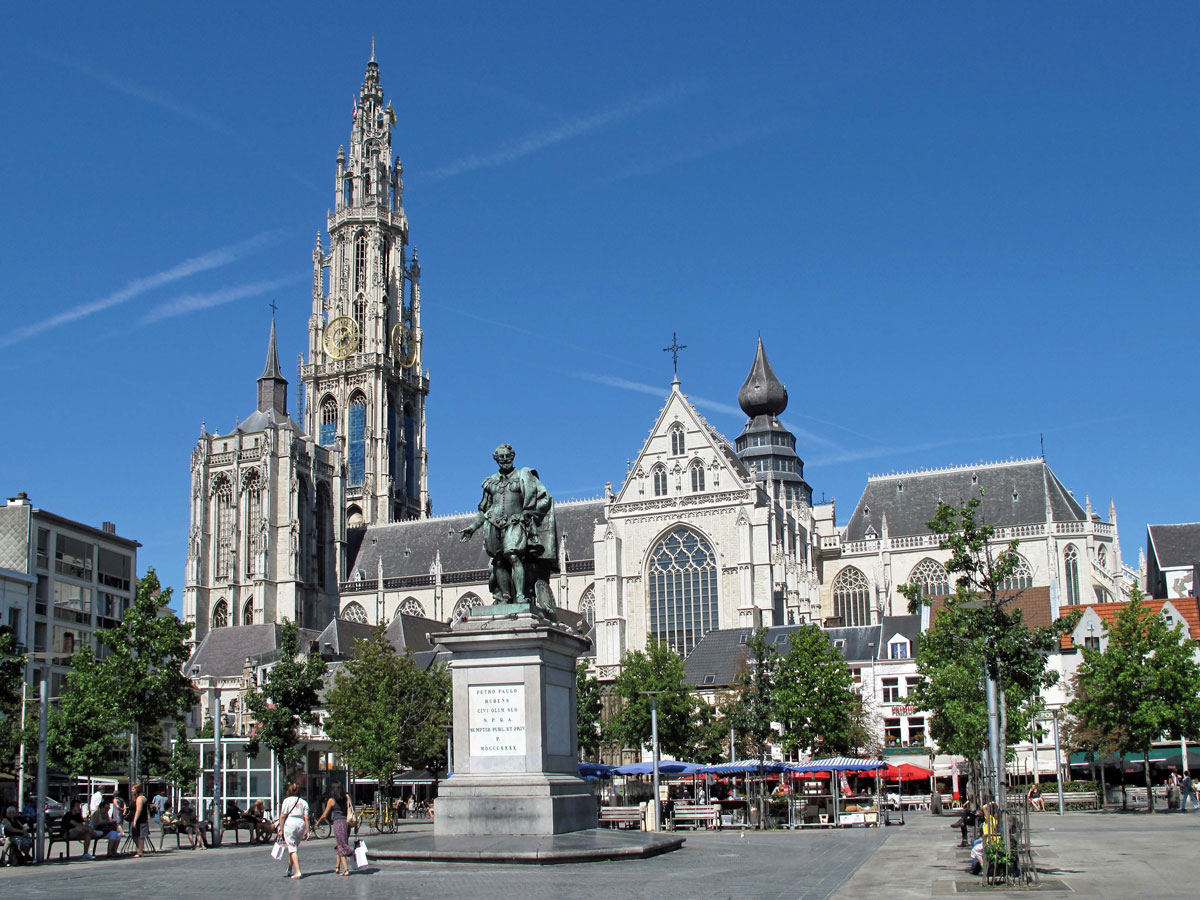
The Grote Markt

The Grote Markt

If someone was to ask me what Belgium is famous for, I would have to include Moules et Frites, beer, and maybe chocolate, but I would also have to add town squares to the list. It may sound a bit odd to lump a town square with food and drink, but they go together like Laurel and Hardy or Starsky and Hutch. In fact, I can’t think of anything better than to sit in a Grand Square with a plate of Moules et Frites and a Belgian beer.

The Grand Place in Brussels is probably the best-known square, but Antwerp has a pretty good one too, but as we’re in Flanders we’d better call it the Grote Markt.

The square is triangular in shape, if that makes any sense, and is dominated by its wonderful 16thc City Hall. In front of it is the Brabo Fountain, a famous Antwerp symbol, which requires further explanation.

Continue reading

Originally posted 2018-04-08 10:02:33.

Antwerp – From the Railway Station to the Grote Markt

Antwerp - From the Railway Station to the Grote Markt

In my previous post about Fawlty Towers and the Gleneagles Hotel I mentioned that I met a couple of friends from Belgium at the Fawlty Towers evening. Kirsty lived, and still does, in Tongeren, and although we had often communicated through the Virtual Tourist (VT) website that we both belonged to, we had never met in real life, not until, that is, we both went to a VT meeting in Belgium’s second city, Antwerp.

As much as I would love to describe this fabulous weekend in detail, this post is about Antwerp, rather than the people I hung out with, many of whom are still very good friends, I’m pleased to say.

I flew from Bristol to Amsterdam and then caught a train across the border into Belgium and arrived at the impressive Antwerp Centraal railway station, which annoyingly, from the point of view of taking pictures, had a Big Wheel stuck right in front of it.

Continue reading

Originally posted 2020-07-09 16:41:14.

Glasgow City Chambers

Glasgow City Chambers

During its Victorian heyday, Glasgow didn’t just build slums for the workers, it also built fine buildings for the city’s powerful elite, and there’s none finer than the Glasgow City Chambers.

As the city grew in size and importance, the original civic offices at the Tolbooth struggled to keep pace, and so a site was found at the east end of George Square to build a new City Hall. Designed by Paisley born architect William Young, this grand building was constructed in the Beaux Art style (a form of French neo-classicism), with an ornate pediment and sculptures being added by James Alexander Ewing.

Ewing’s intention was to symbolise Glasgow’s rise to prominence through its connection with the River Clyde, but in the end the design was amended to celebrate the Queen’s Golden Jubilee instead. Whoever was behind the change of heart I’m not sure, but it had the desired effect because on 22nd August 1888, it was Queen Victoria herself who cut the ribbon to open the new building.

Continue reading

Originally posted 2021-09-10 17:16:54.

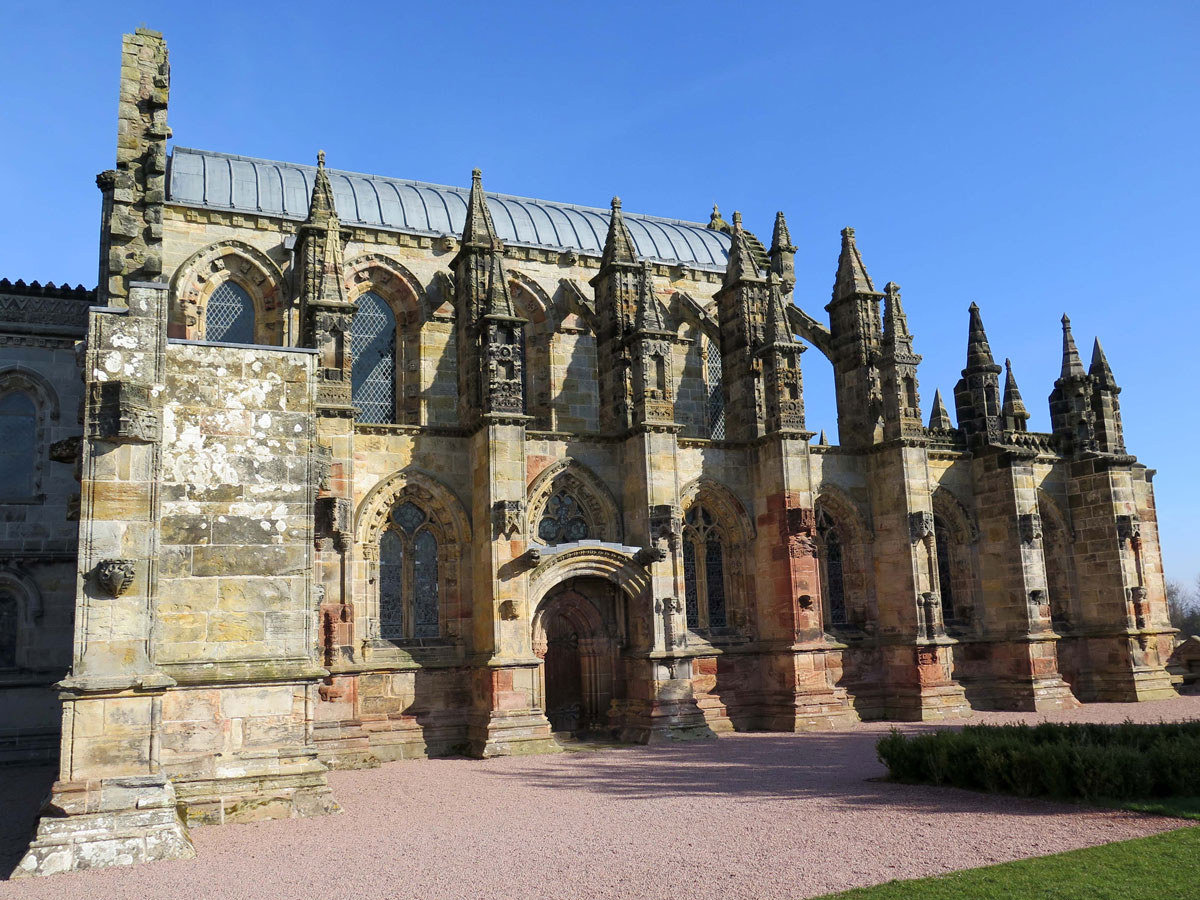
Rosslyn Chapel

Rosslyn Chapel

I’ll be the first to admit that until I’d read Dan Brown’s Da Vinci Code, I’d never heard of Rosslyn Chapel, and although the book had its critics, it obviously captured the imagination of plenty of other people too.

When the book was written in 2003 the chapel was receiving around 45,000 visitors a year, but in 2004 the numbers were nearer to 70,000, and by the time the film had come out the annual figure had shot up to 159,000.

All this extra interest had substantial financial benefits for the chapel and the St. Clair family who own it, but it also had some drawbacks as well, one of which was the banning of photography inside the chapel to prevent inconvenience to others.

To be fair, it is a fairly confined space and the restrictions are understandable in a way, but for somebody like me it’s a big disappointment because I can’t show you the interior of this magnificent building.

“A picture paints a thousand words” as they say, and I could have taken scores of pictures in here, but as I’m someone who need a thousand words to describe something that should be said in just a few, you can see the problem that I have.

Continue reading

Originally posted 2018-12-10 08:40:28.

The Georgian House

The Georgian House

From a sightseeing perspective I think it would be fair to say that Edinburgh’s New Town doesn’t have the same appeal as the Old Town, but the area that (very) roughly extends from Calton Hill to The Haymarket, and from Princes St to Cumberland St is a harmonious blend of classical town planning which, along with the Old Town, constitutes Edinburgh’s World Heritage Site.

The New Town covers about one square mile and has over 11,000 listed properties, one of which is The Georgian House in Charlotte Square.

The square was designed by Robert Adam, whose vision was to make the rows of houses on each side resemble the front of a palace, but in the end only the North side stayed faithful to his original plan.

Continue reading

Originally posted 2018-12-08 08:46:36.

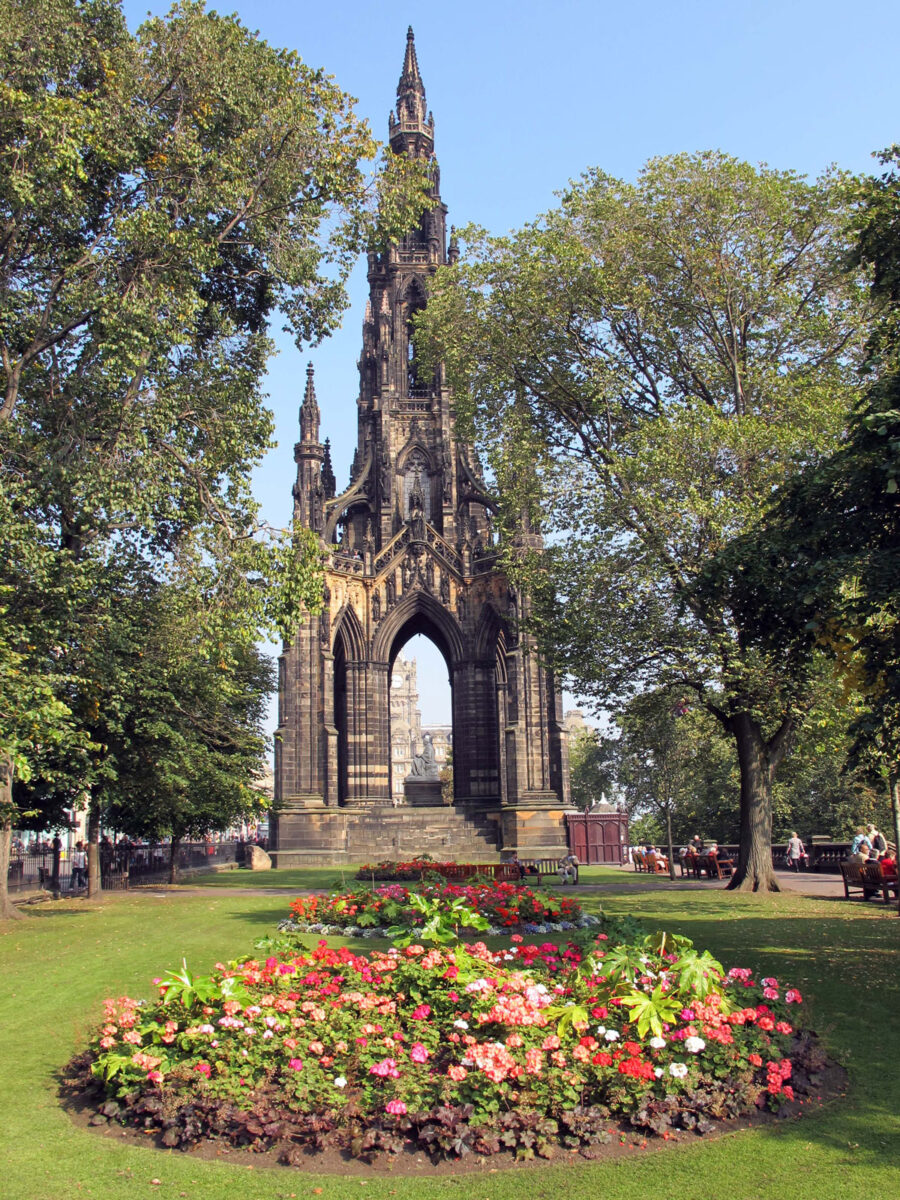
The Scott Monument

The Scott Monument

The high esteem in which Sir Walter Scott is held by the Scottish people is shown by this huge monument to him in East Princes St Gardens.

He is remembered mainly for his historical novels, but was also a prominent member of the Edinburgh establishment.

Born in Edinburgh in 1771, his poems and books brought him worldwide acclaim during his lifetime and when he died in 1832 it wasn’t long before enough money was collected to build this 200ft Gothic tower.

Claimed to be the largest monument to a writer anywhere in the world, the foundation stone was laid in 1840 and completed by 1844. It was built of Binny Sandstone from Linlithgowshire (West Lothian today), but unfortunately Old Reekie has done its worst over the years and by the 1990s the stone was in need of some urgent attention. After close examination, it was felt that cleaning would do more harm than good and so it was decided to just carry out essential repairs with stone from the original quarry. The differences can clearly be seen.

The space rocket-like monument is richly decorated with characters from his novels, and underneath the canopy is a statue of the man himself with his dog Maida.

Continue reading

Originally posted 2018-12-07 06:14:25.