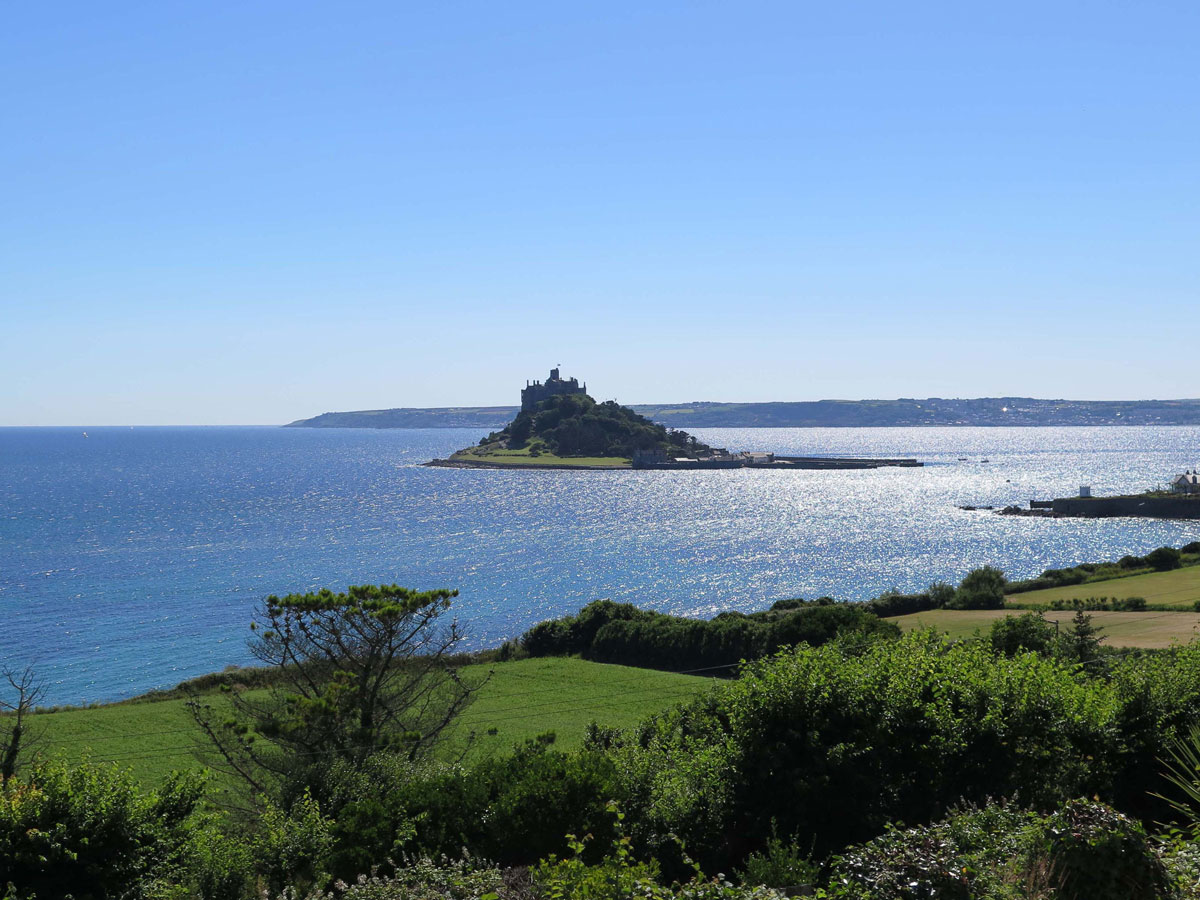
Northumberland, being next to the Scottish border, is castle country. Apparently, it has more castles than any other English county – and I can quite believe it. One of these castles is perched on top of a mound of volcanic rock, known as Beblowe Crag (or Craig), here on Holy Island.
As the Vikings proved, Lindisfarne was vulnerable. The natural harbour provided protection for ships, but the island itself wasn’t safe from invaders: The Vikings may have gone, but there was still a threat from the Scots, and when Henry VIII dissolved the monasteries, including Lindisfarne Priory, an opportunity presented itself to put the priory’s remains to good use.
Initially, the Priory church was used as a naval storehouse, but as the need for reinforcing Beblowe Crag as a defensive fort became more important, then the stone from the Priory was used to build a new fortress.
However, the need for strong defences against the Scots became virtually unnecessary with the accession of James VI of Scotland to the throne of England, and consequently uniting the two kingdoms together:
Apart from the Royalist castle surviving a six-week siege during the Civil War and a short-lived Jacobite takeover in 1715, in truth, the castle didn’t really see that much action.
Continue reading →
Originally posted 2019-08-18 16:46:46.