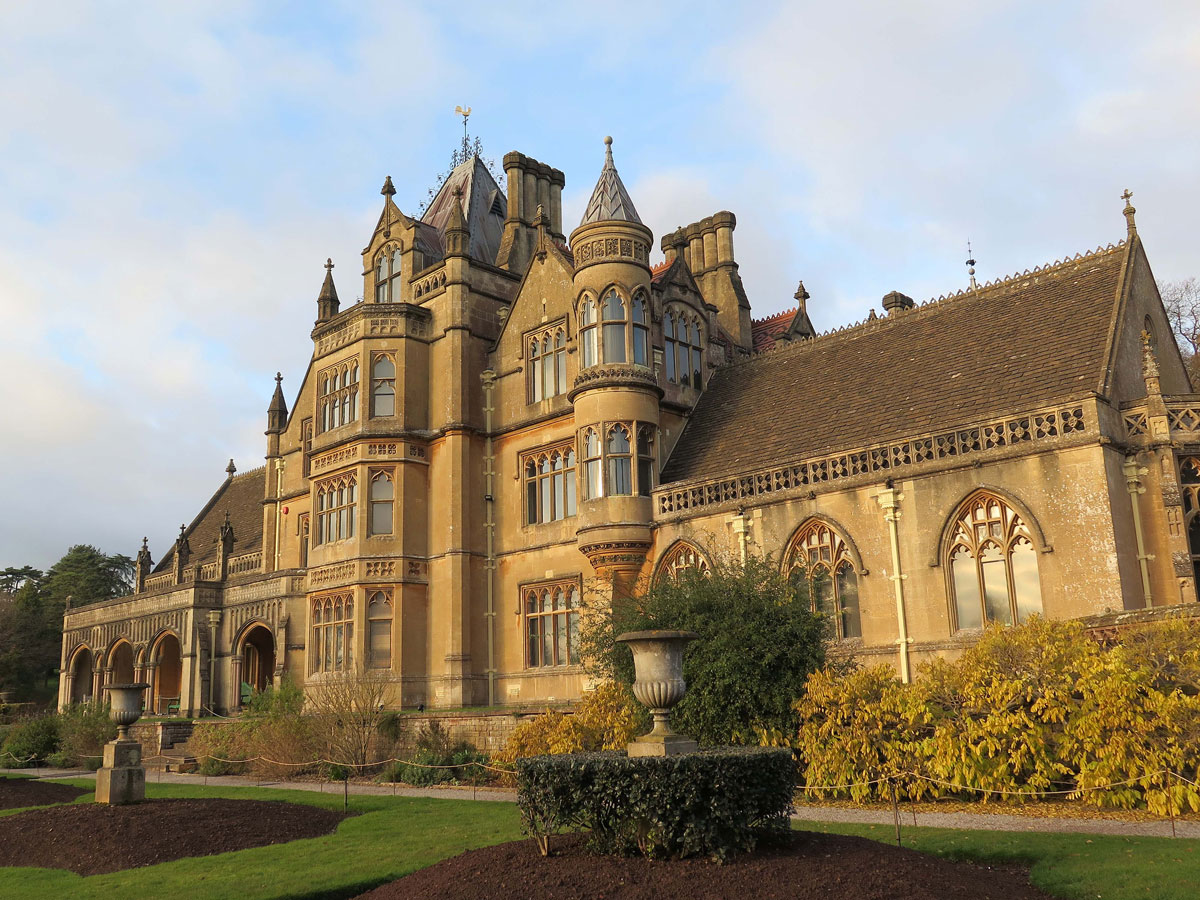
Tyntesfield and the National Trust
Before I go on to talk about Tyntesfield itself, I’d like to say a few words about the National Trust (NT). Some of you will already be familiar with how the NT works, but for those of you who aren’t, this is a good opportunity to describe how it started out to where it is now.
Founded in 1895 by Octavia Hill, Sir Robert Hunter and Hardwicke Rawnsley, its aim was to “promote the permanent preservation for the benefit of the Nation, of lands and tenements (including buildings) of beauty or historic interest”.
Although its core principles still remain the same, the world has changed since then – and so has the National Trust. In the 1930s for example, the Country House Scheme was set up to enable owners of large country estates who could no longer afford their upkeep, a way of continuing to live there by transferring their properties to the NT. In return, the NT would then open up the rest of the property to the wider general public who would pay an entry fee for the privilege to find out about the history of the house and what was inside it.
This successful solution meant that over time, the Trust had managed to accumulate a large number of properties with a variety of unique features that represented their time and location. Some were of historical interest, some were impressive architecturally, and others had valuable collections of all descriptions – and some were all three, but it goes without saying that some of these estates were built on the wealth created by dubious means.