Tag Archives: South Hams

Top 10 Places to visit in the South Hams

Top 10 Places to visit in the South Hams

This post is a list of my recommended places to visit in the South Hams area of Devon. Like any Top 10 list, it’s subjective, and everybody’s list will be different. Having lived here for over eleven years, I’ve covered all these places in my blogs on the South Hams, and have provided links to them for a more in-depth look at what’s on offer at each place.

If there are any places that you think I should have included, and maybe some that you think I shouldn’t have, please let me know. Places are constantly changing for one reason or another, and it’s not easy to keep abreast of everything.

The list that I’ve compiled runs in a descending order that coincides with my preferences, but I wouldn’t take too much notice of that, as everyone’s opinion will vary. Having said that, the places on this list should find favour with most people. I hope you agree, and don’t forget to send me a comment on what you think.

Continue reading

Originally posted 2022-07-06 09:39:59.

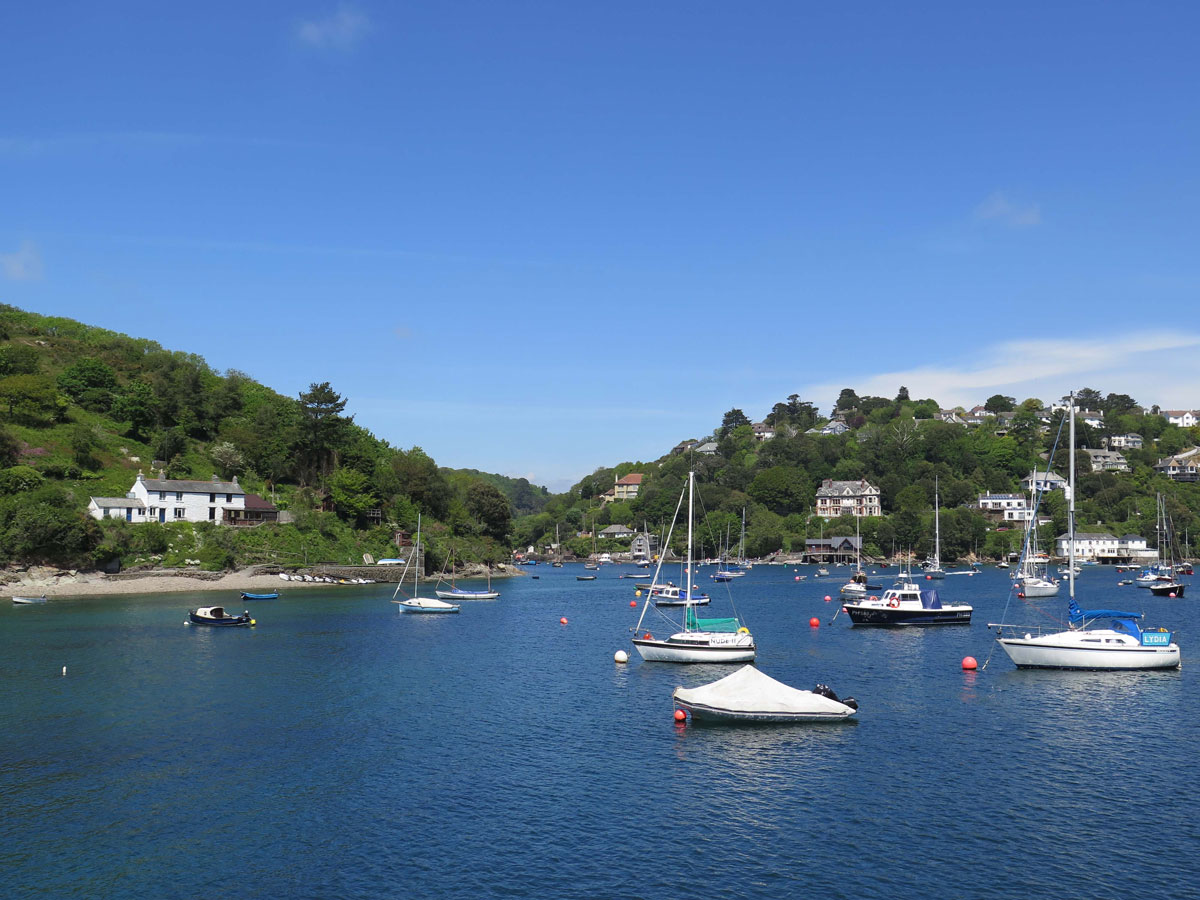
The River Yealm to Bovisand

The River Yealm to Bovisand

In this, my final post about the South Hams area of Devon, I’ll be covering the coastline between Bigbury Bay and the outskirts of Plymouth.

This short stretch of coastline is bisected by the mouth of the Yealm, a river that runs for just 12 miles from the southern part of Dartmoor. If you’re somebody who has a taste for oysters, then you’ve come to the right place because conditions in the estuary are perfect for these edible marine bivalves. The Yealm estuary has just the right mixture of sea and fresh water to aid their growth, but not all South Hams rivers  are the same: The Dart Estuary, for example, has too much fresh water, and the Kingsbridge Estuary at Salcombe doesn’t have enough.

Continue reading

Originally posted 2022-01-27 10:42:47.

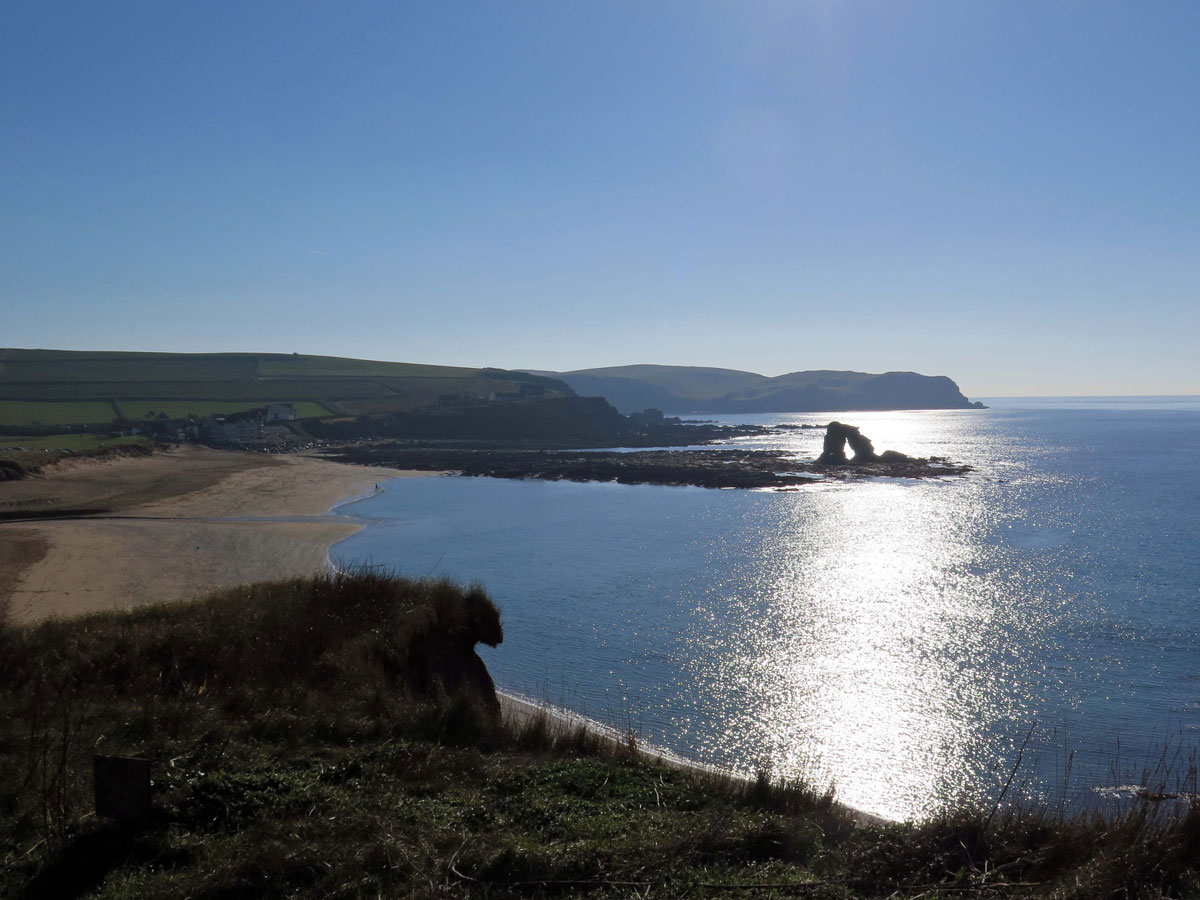
Bigbury Bay

Bigbury Bay

Bigbury Bay is a broad stretch of South Devon coastline between Bolt Tail (not to be confused with Bolt Head near Salcombe) and Stoke Point. Generally speaking, it’s more rugged than Start Bay, but there are still some fine sandy beaches, especially around the mouths of the Rivers Avon and Erme, both of which start out on High Dartmoor.

There are a few small areas of habitation dotted around the bay, but on the whole it’s a very unspoilt part of the coast, with Burgh Island being its most prominent feature. Inland, the scenery is typical of the South Hams countryside with rolling hills interspersed with small villages.

Continue reading

Originally posted 2021-12-10 18:20:03.

Salcombe

Salcombe

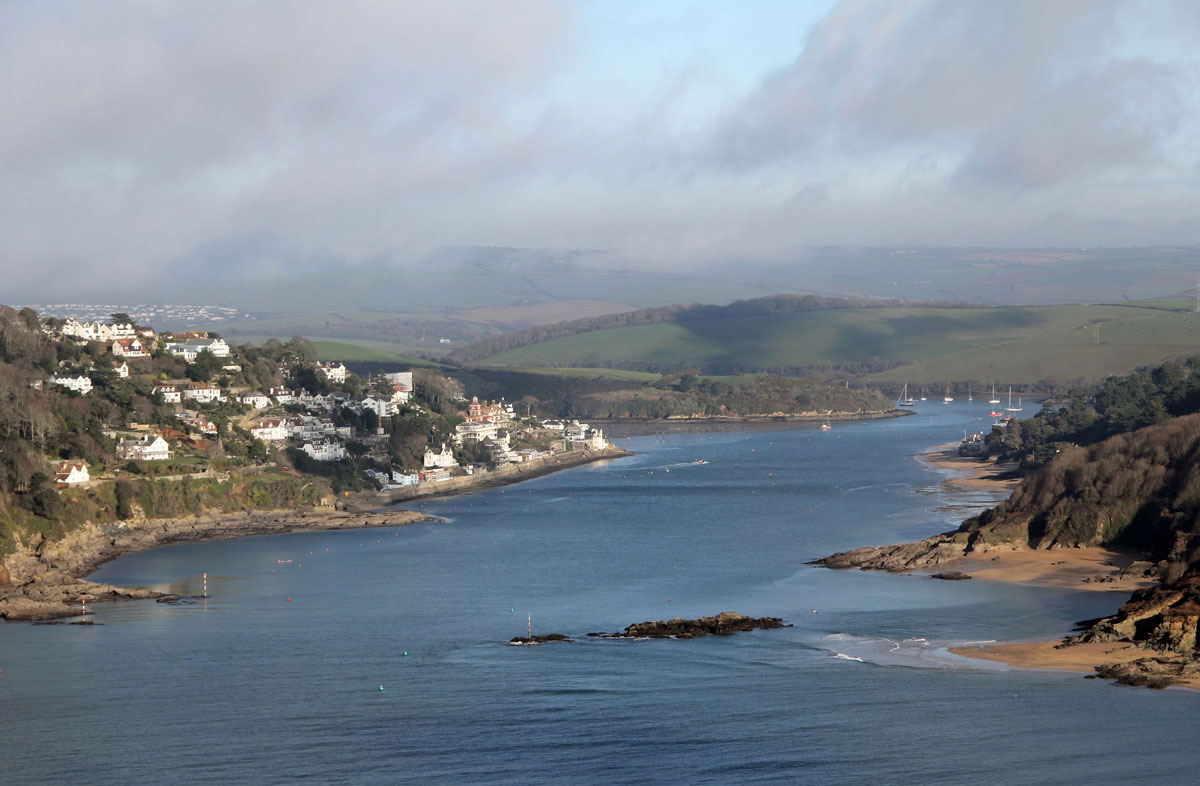
In my opening page on the South Hams, I described the area as one of the most affluent parts of Devon, and there’s nowhere more affluent than the area around Salcombe.

In some ways, Salcombe is like a more upmarket version of Dartmouth, and just like Dartmouth, the town sits alongside a stretch of water just before it reaches the sea. In this instance though, it’s not a river, but a ria, officially known as the Kingsbridge Estuary, but sometimes called the Salcombe Estuary.

Other similarities with Dartmouth include a safe haven for boating enthusiasts, unspoilt countryside and a beautiful coastline. The two pictures below show some of the coastline on either side of the estuary.

Continue reading

Originally posted 2021-11-01 10:15:58.

Wandering Around Kingsbridge

Wandering Around Kingsbridge

For most of the year this small market town of just under 7,000 people caters for the needs of the local rural community, but during the summer months an influx of visitors to the South Hams brings people into the town, not just to stock up on provisions, but also to take a look around this pleasant settlement at the head of the Kingsbridge estuary.

The reason I’ve referred to it as a settlement is because Kingsbridge actually consists of two separate medieval towns – Kingsbridge and Dodbrooke, and even though Dodbrooke was the more influential of the two originally, it was Kingsbridge that swallowed up Dodbrooke rather than the other way around.

Like many other towns in South Devon, Fore Street is the main street and is a fairly steep climb from the town quay to the top of the town, so as I’ve called this post Wandering around Kingsbridge, I’ve decided to start at the top of the hill and wander down, rather than stagger up.

Continue reading

Originally posted 2018-10-28 16:57:26.

Start Bay

Start Bay

A few of days ago I started to piece this blog together, starting with a featured image for the top of the page. Today, I’ve changed the image to feature Stokenham, and in particular, the Tradesman’s Arms and the cottages around it because a couple of nights ago the pub and four cottages adjacent to it were destroyed by fire. It’s a devastating blow to anyone who knows it, but particularly to those who have been directly affected. The good news is that nobody suffered any serious physical harm, but what becomes of this picturesque corner of the South Hams now is anybody’s guess.

Stokenham is one of a handful of villages around Start Bay that lie between Dartmouth and Start Point, and although this drive covers an area largely covered by the South-West Coast Path, not everybody has the ability or inclination to don walking boots to enjoy it.

Continue reading

Originally posted 2021-09-30 15:59:00.

The Britannia Royal Naval College

The Britannia Royal Naval College

If you’ve come to Dartmouth and wondered what the imposing red-brick building overlooking the river is – then wonder no more. The Britannia Royal Naval College is the training establishment for officers of the Royal Navy, and if you’re as inquisitive as me as to know what goes on inside, you’ll be pleased to learn that there are guided tours available for the general public.

Before this building was constructed, officers were trained in a number of different locations. Traditionally, sea-based apprenticeships meant that officers were thrown straight in at the deep end as it were, but in 1733 a Royal Naval Academy was established at Portsmouth. In 1806 its name was changed to the Royal Naval College, but not everyone thought that studying in a classroom was the best way to train sailors, and in 1837 it was closed down.

It must have been recognised that academic knowledge also had a part to play in the training of officers because in 1859 it was decided to convert the ailing hospital ship HMS Britannia into one for training cadets. In 1862 she was moved from her home at Portsmouth to Portland, but a year later was transferred to calmer waters at Dartmouth.

By 1869 the former hospital ship was in intensive care herself and ended up in the breakers yard. She was replaced by HMS Prince of Wales, which changed its name to HMS Britannia, and even though HMS Hindostan had been added in 1865 to help out, overcrowding on the two hulks meant that a shore-based building was becoming a necessity, and in 1898 work started on building the Britannia Royal Naval College.

Continue reading

Originally posted 2021-08-17 16:41:11.
Coleton Fishacre

Coleton Fishacre


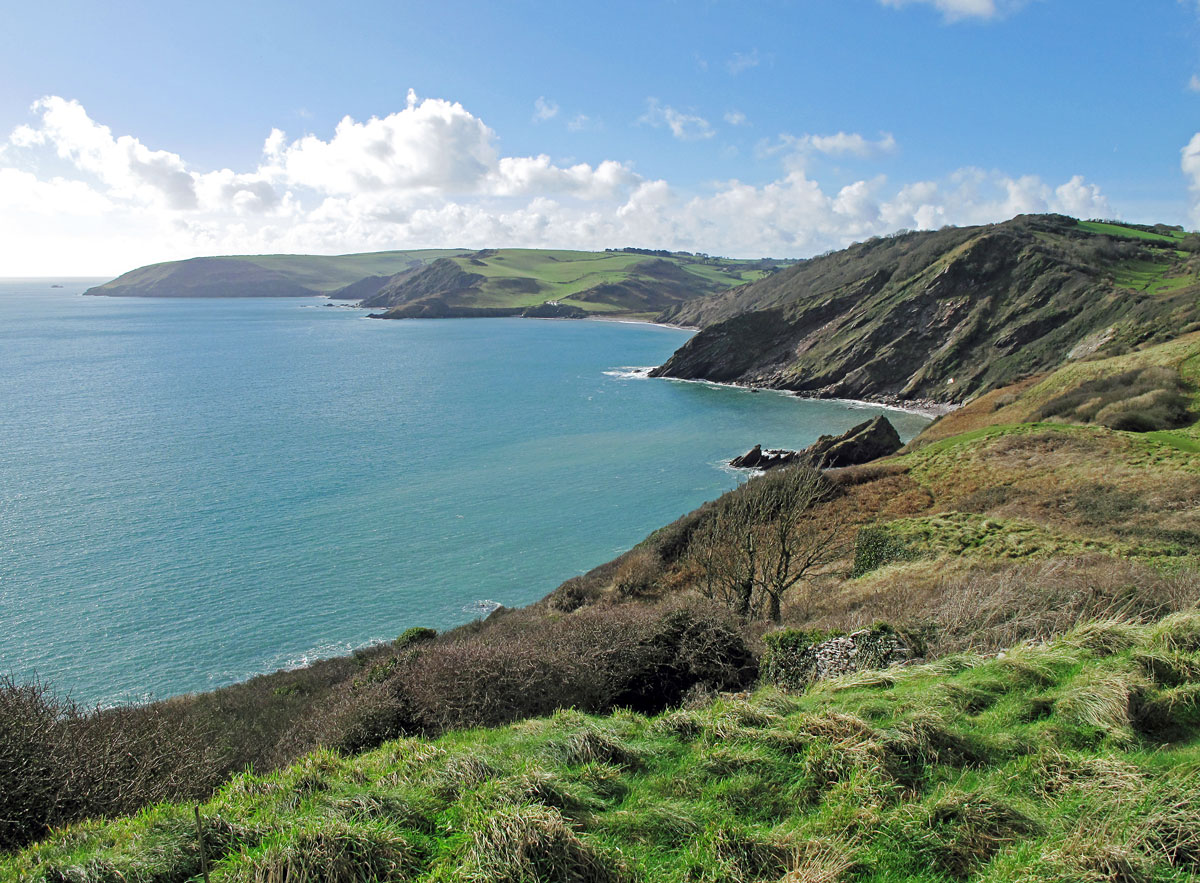
The National Trust owns several properties in South Devon and they all have something to commend them, but I think my favourite has to be Coleton Fishacre.

It’s a bit out of the way, but that’s one of the attractions of this estate that includes a magnificent garden that sweeps down to the sea and a house that evokes the bygone jazz age of the 1920s.

The man behind the creation of Coleton Fishacre was Rupert D’Oyly Carte, whose father, Richard, was the producer of Gilbert & Sullivan’s comic operas. Rupert, who incidentally was also the inspiration for P.G Wodehouse’s Rupert Psmith, inherited the family business including the Savoy Hotel and Claridge’s in London.

It was on a sailing trip between Brixham and Dartmouth with his wife Dorothy, that he saw the potential of the valley above Pudcombe Cove for building a home on the coast. It’s not difficult to see why they chose this spot, and in 1923 he set about building Coleton Fishacre which took three years to finish.

Continue reading

Originally posted 2017-11-30 15:07:21.

Greenway – Home to a Famous Seafarer and an even more Famous Novelist

Greenway - Home to a Famous Seafarer and an even more Famous Novelist

When I first wrote this post, there were a couple of pleasant alternative ways of getting from Torbay to this delightful National Trust (NT) property on the banks of the River Dart. One was by using the Greenway vintage bus that operated from Torquay, and the other was by taking the Paignton to Kingswear Steam Railway and alight at Greenway Halt. Alas, neither option is available now, so it means driving through the village of Galmpton (which lies between Paignton and Brixham) and down the lane to the property’s car park.

If, on the other hand, you’re coming from the Dartmouth side of the river, the Greenway and Dittisham Ferry company operate sailings between Dartmouth, Dittisham and Greenway and is definitely worth considering.

Continue reading

Originally posted 2020-12-13 11:14:07.

Along the Lower Dart

Along the Lower Dart

Of all Devon’s rivers, the Dart has to be my favourite: From source to sea, it’s the most beguiling of rivers, and for this post I’m going to describe its charms between the lowest bridging point at Totnes to the mouth of the river at Dartmouth.

At Totnes the river is still tidal, and until the area around Totnes Bridge was drained, it was wet, marshy ground; and I suppose it must have been around here where Brutus, the first king of Britain landed – that’s if you believe the story of course – but I’ve covered more about the history of Totnes in a separate post.

Totnes Bridge was built between 1826-28 and is the latest in a long line of bridges that has spanned the river here over many centuries. Today a modern road bridge just upstream, called Brutus Bridge, has taken the brunt of the traffic, not just away from this bridge, but from the town centre as well.

Continue reading

Originally posted 2020-11-27 14:50:56.

Compton Castle, Sir Humphrey Gilbert and the Beginnings of the British Empire

Compton Castle, Sir Humphrey Gilbert and the Beginnings of the British Empire

Lying in the South Hams countryside, just 5 miles or so from the centre of Torquay, is Compton Castle. It’s really a fortified manor house rather than a castle, and as impressive as this 14th century National Trust (NT) property is, it’s the association with the Gilbert family that really makes it interesting.

Compton Castle was originally built as a family home by Geoffrey Gilbert, the mayor of Totnes, when he married Joan de Compton in 1329, but the family’s most illustrious owner was the old Elizabethan seadog Sir Humphrey Gilbert.

Humphrey was born sometime around 1539 and was brought up at nearby Greenway on the banks of the River Dart where the Gilberts had another family seat. The original Tudor house that his father built there was replaced in the 18th century, and later used as a holiday home by Agatha Christie. Greenway is now also in the care of the National Trust.

Continue reading

Originally posted 2021-04-10 15:52:43.

Berry Pomeroy Castle – Romantic Ruin, or Just Plain Spooky?

Berry Pomeroy Castle - Romantic Ruin, or Just Plain Spooky?

Lying deep in the countryside just a couple of miles east of Totnes, Berry Pomeroy Castle has been described as one of the most picturesque and romantic ruins in England, but it has also been described as one of the most haunted castles in England as well!

The village and castle’s name comes from the Pomeroy family whose first owner was Ralf de Pomaria, a Norman knight from La Pommeraye near Falaise. He was given the manor by William the Conqueror, but it was another four centuries before the castle was built. Neither the precise date, nor the reason for its construction is really known, but it was most likely at the end of the 15th century, and possibly because of the family’s involvement in the War of the Roses. Whatever the reason, it’s pretty certain that it never saw any real military action.

Continue reading

Originally posted 2021-03-05 16:10:17.

Dartington – A Place of Culture, Learning and Social Thinking

Dartington - A Place of Culture, Learning and Social Thinking

If you’ve come to Totnes and wondered why the town has attracted so many people who prefer to live an unconventional lifestyle, then look no further than Dartington, a village just a couple of miles outside of town.

The village is home to the Dartington Hall Estate which occupies 1200 acres of unspoilt countryside adjacent to the River Dart. The history of the estate goes back a thousand years, but it’s not the past that people come here for, but to seek a better future, and it’s all thanks to Dorothy and Leonard Elmhirst who bought the estate in 1925 and transformed it into a centre for individual thinking and freedom of expression in music, art and all things ethical.

Continue reading

Originally posted 2021-02-18 11:38:08.

Wandering Through Totnes

Wandering Through Totnes

Totnes has a reputation for being one of the country’s quirkiest towns, and even its foundation has a mythical story attatched to it. According to legend, after being defeated in the Trojan War, the Trojans sailed off to find another home, and one of them, a prince by the name of Brutus, landed at Totnes, where he proclaimed “Here I stand and here I rest, and this town shall be called Totnes”.

Thanks largely to Geoffrey of Monmouth’s 12th century account Historia Regum Britanniae, Brutus was regarded as the founder of the Britons and therefore the first King of Britain. If you subscribe to this part of our island’s history, and want to embrace it even more, then there’s a granite slab in Fore Street called the Brutus Stone, which is supposed to be the spot where he came ashore. Seeing that it lies several hundred yards uphill from the river, either the stone or the river has moved since then, but I suppose that wouldn’t bother anyone who has magic mushrooms on toast for breakfast.

Continue reading

Originally posted 2021-01-21 17:00:25.

Totnes – Twinned with Narnia

Totnes - Twinned with Narnia

On the ‘Welcome to Totnes’ sign that greets people to the town somebody added ‘Twinned with Narnia’ below it. It’s been removed since by those who don’t have a sense of humour, but to me it’s a perfect description of Totnes.

The town has been described as ‘New Age’, ‘Alternative’ and even ‘eccentric’ but however you like to describe it, Totnes is different to any other town in the South Hams, or even Devon for that matter.

The alternative lifestyle that many people in and around Totnes have adopted originally stems from the Dartington Hall Estate, and in particular the ideas of Dorothy and Leonard Elmhirst who came here in 1925. Dartington is just a couple of miles outside of Totnes and I’ve given it a separate page, but for now I’ll just say that it’s somewhere that specializes in the ‘arts, social justice and sustainability’.

Continue reading

Originally posted 2019-07-12 09:09:21.

Paignton to Kingswear Steam Railway and the Round Robin

Paignton to Kingswear Steam Railway and the Round Robin

There are any number of things that will make a great day out in South Devon, but in my opinion, one of the best has to be the ‘Round Robin’. It comprises different modes of transport linking Paignton, Dartmouth, and Totnes.

The Round Robin includes a steam train from Paignton to Kingswear, a ferry across the River Dart to Dartmouth, a boat trip up the river to Totnes, and an open-top bus back to Paignton. It can be done the other way round and you can start from Paignton, Dartmouth or Totnes.

Part of the attraction is to be able to explore the towns of Dartmouth and Totnes and so you would need to factor in the tide times of the Dart if you intend to do the whole journey in one day.

For expediency, in this post, I’m just going to describe the train journey between Paignton and Kingswear.

Continue reading

Originally posted 2018-06-20 18:11:43.