Salcombe
In my opening page on the South Hams, I described the area as one of the most affluent parts of Devon, and there’s nowhere more affluent than the area around Salcombe.
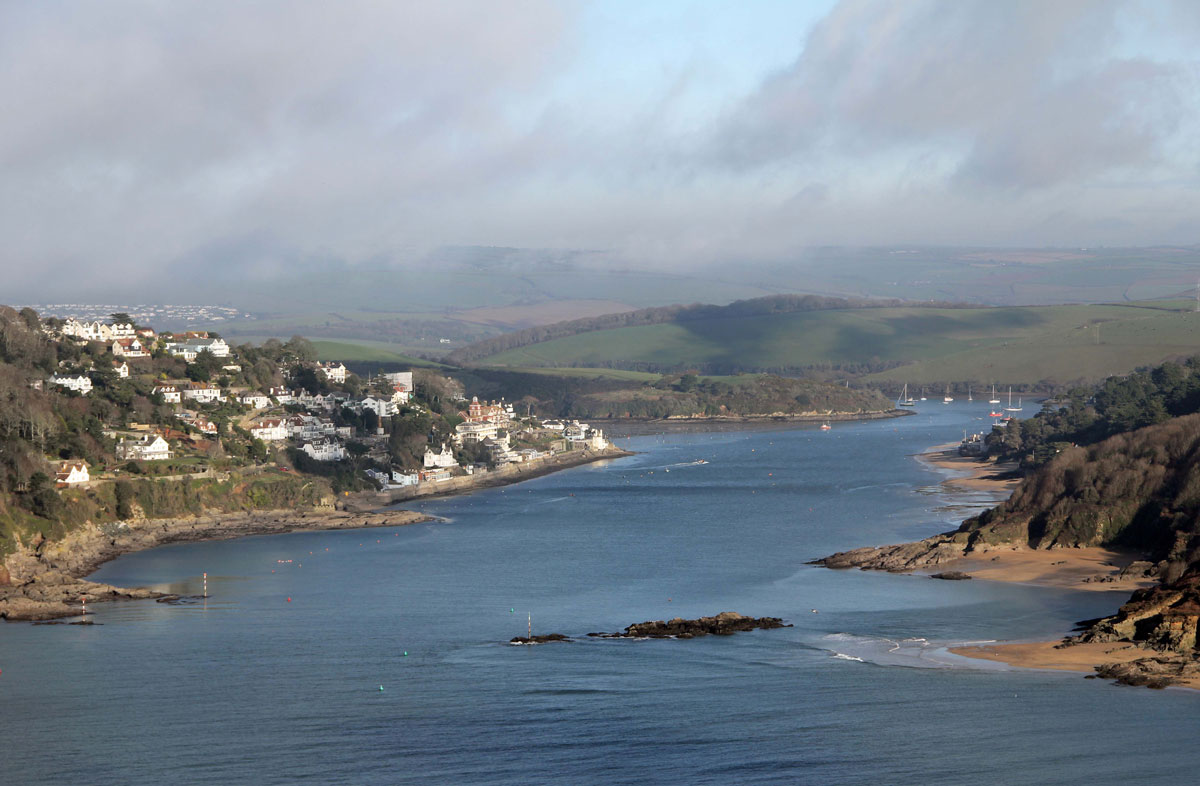
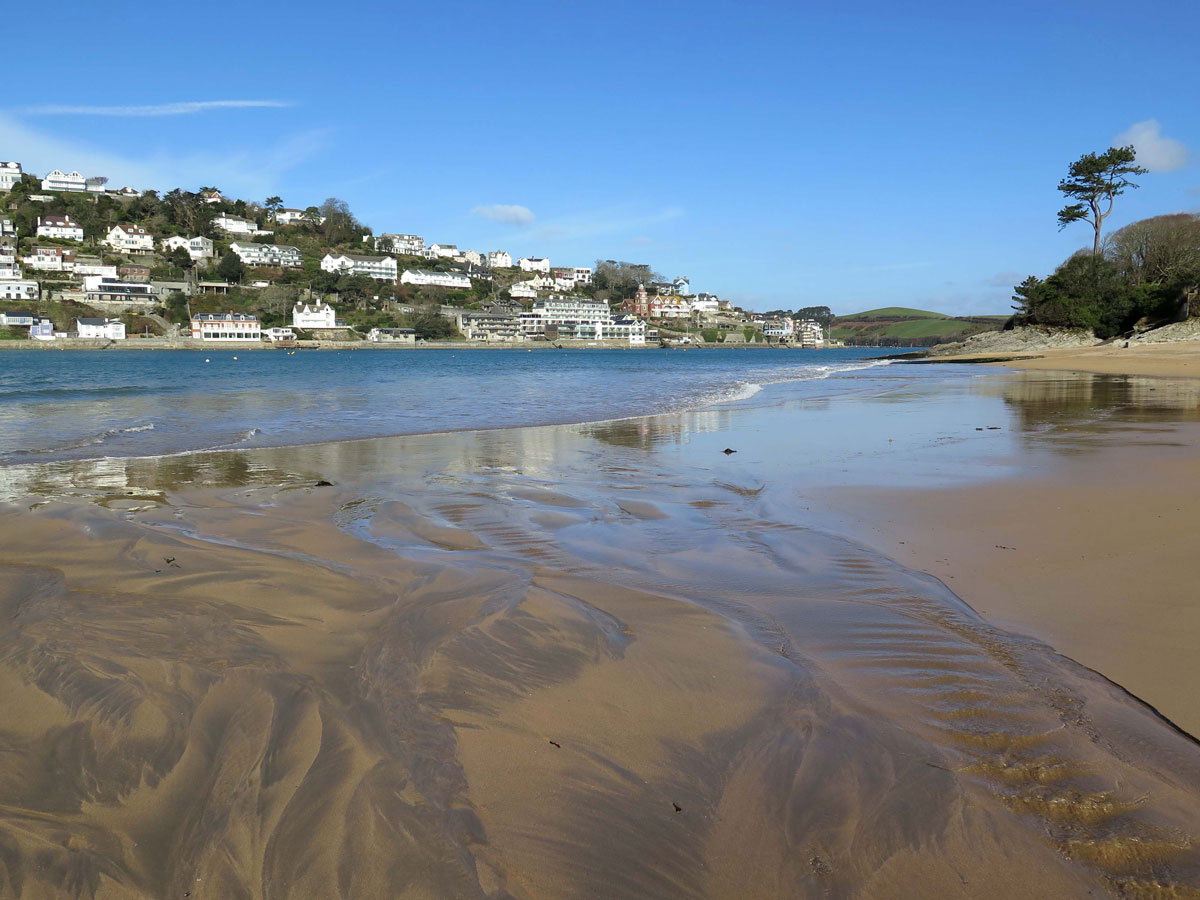
In some ways, Salcombe is like a more upmarket version of Dartmouth, and just like Dartmouth, the town sits alongside a stretch of water just before it reaches the sea. In this instance though, it’s not a river, but a ria, officially known as the Kingsbridge Estuary, but sometimes called the Salcombe Estuary.
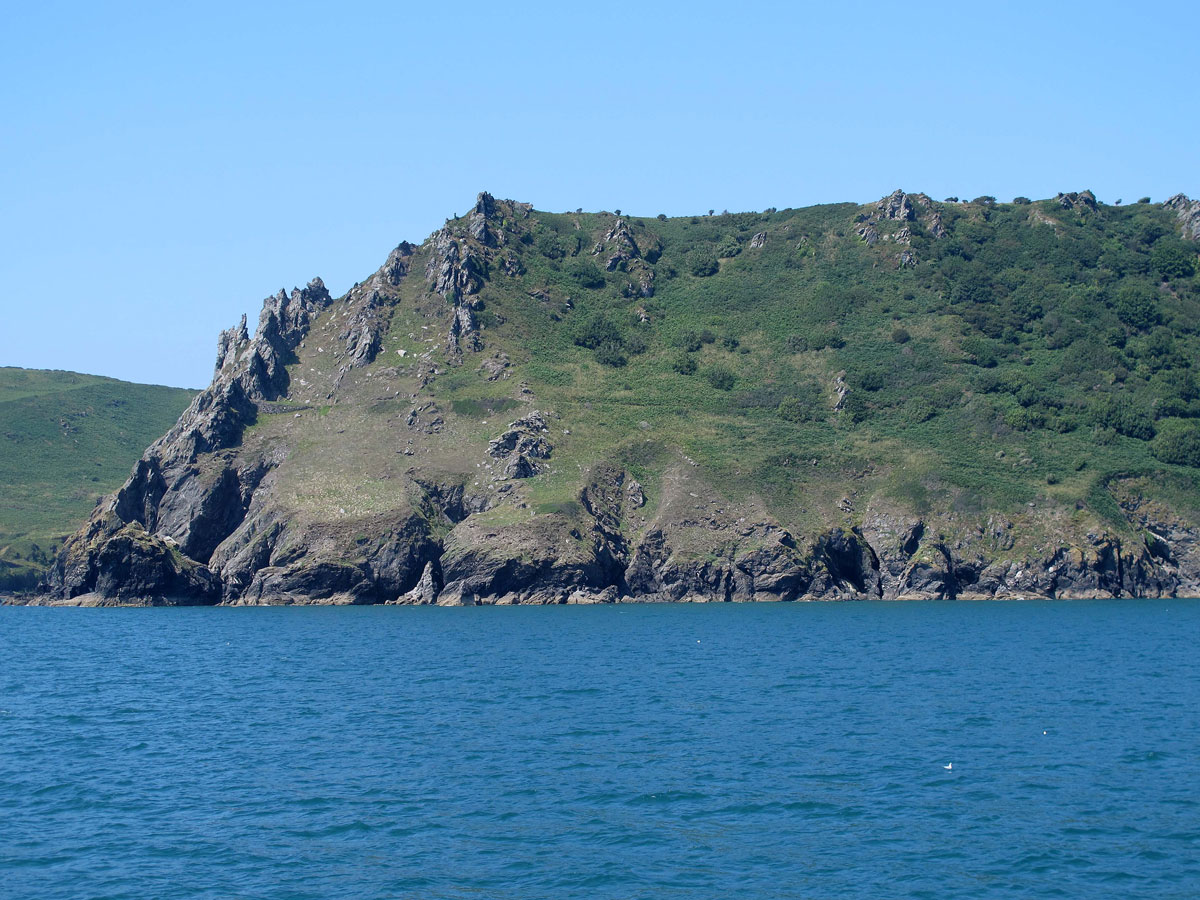
Other similarities with Dartmouth include a safe haven for boating enthusiasts, unspoilt countryside and a beautiful coastline. The two pictures below show some of the coastline on either side of the estuary.


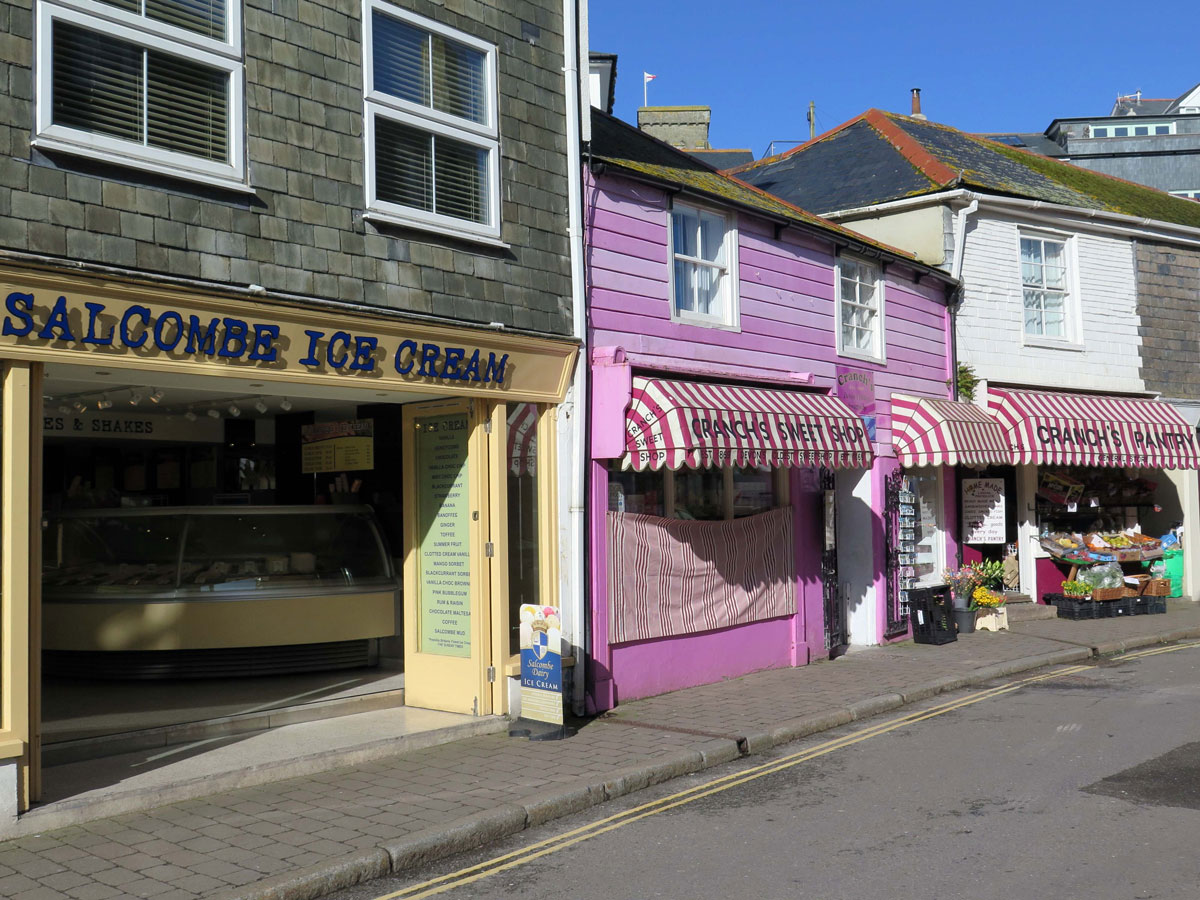
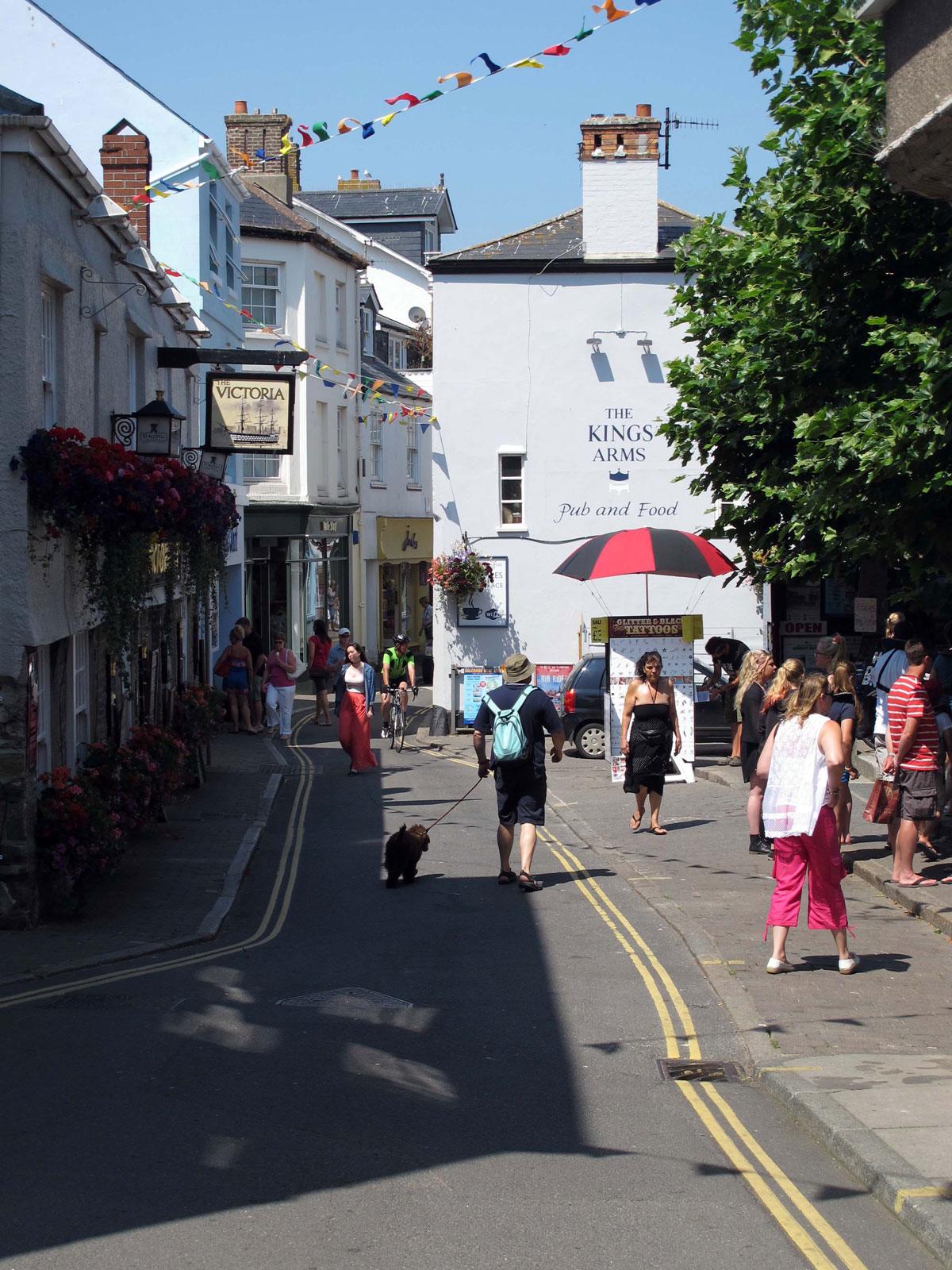
Although the topographical features of the two towns may be similar, they are quite different in character. Dartmouth’s rich maritime history is reflected in its old buildings, and has a fairly down to earth feel about it, whereas Salcombe tends to cater for the yachting fraternity, with chandlers and clothing shops such as Musto and Helly Hansen lining Fore Street, the town’s main thoroughfare.
With a population of only a couple of thousand, Salcombe is smaller than Dartmouth and can still have a village feel about it, but during the summer months narrow Fore Street can become flooded with yachties and landlubbers alike. I use the word ‘flooded’ deliberately because the elements can do exactly the same thing, as they did only last month.
Prior to the influx of the modern mariner, the foreshore was home to several boat yards that were involved in the building of schooners nicknamed Salcombe Fruiterers.
Back in 1497, John Cabot’s discovery of Newfoundland led to the discovery of rich cod banks, and after Sir Humphrey Gilbert of Compton claimed Newfoundland for the crown in 1583, fishing boats from Devon, including Salcombe, became involved in a lucrative triangular trade between Devon, Iberia and Newfoundland.
From Devon, these ships sailed to Newfoundland laden with fishing gear, provisions and clothing, and then took salted cod down to Iberia, before sailing back home with fruit, olive oil and wine. This, of course, led to a hive of activity on Salcombe’s waterside with many involved in the boatbuilding business including shipwrights, carpenters, riggers and sailmakers.
Boatbuilding crafts are still carried out in the town, but the waterside looks very different today. The small, but excellent, Maritime Museum in Market Street can give you a lot more information about the town’s maritime history than I can here.

If I’m being honest, I don’t think people come to Salcombe for its history, but to enjoy the surroundings. The town is pleasant enough, but the water, beaches and coastline are the main attraction, and for this reason I’m going to begin my look at Salcombe from the mouth of the estuary at Bolt Head.
The views from the coast path at Bolt Head get even better at Sharp Tor where you can see Salcombe and the estuary one way (Feature Pic at top of the page) and the coastline towards Prawle Point the other.

The name Sharp Tor comes from its craggy outcrops of rock, and just to confuse the issue, a large house further down the footpath used to be called Sharpitor in reverence to these rocks, but it was changed to Overbeck’s, after the name of its last owner Otto Overbeck.
In 1937 he bequeathed the house and gardens to the National Trust on the understanding that it would be used as a public park, museum and youth hostel, and not as a brothel, like so many places in the area had become.

The National Trust (NT) initially fulfilled the previous owner’s wishes, but disagreement with the Youth Hostel Association in 2014 meant that part of the house became unused. More recently, the museum has also closed “for the foreseeable future” due to the financial repercussions of the pandemic.
That may be the official reason, but the NT has become embroiled in an internal civil war with members who disagree with the way that the organisation is heading. In practical terms this has meant that there are fewer members than there used to be, and a lot fewer volunteers, on who the NT heavily relies.
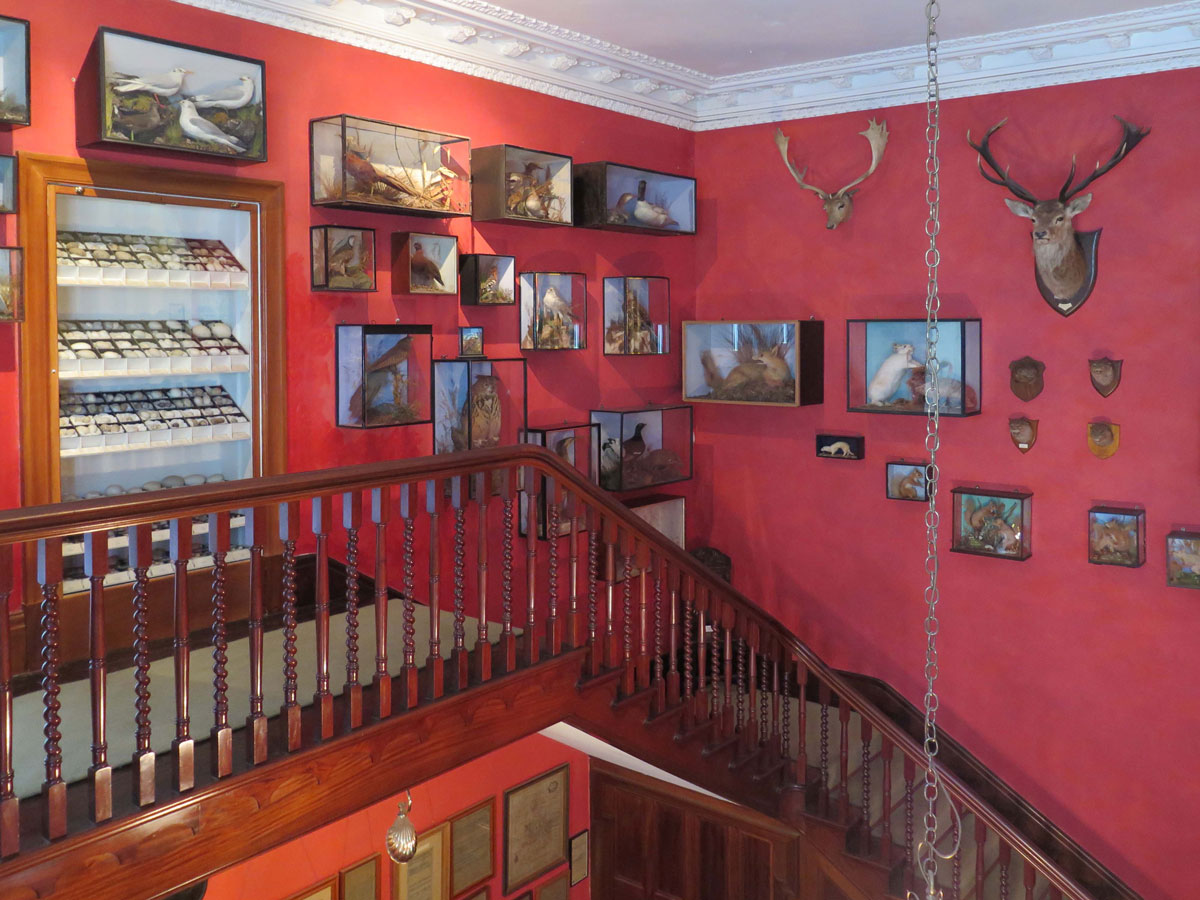
I have my own views on the situation, which I won’t discuss here, but whatever the rights and wrongs are, it’s a shame that the general public are not able to go inside the house because Otto Overbeck was not only a character but also an avid collector.
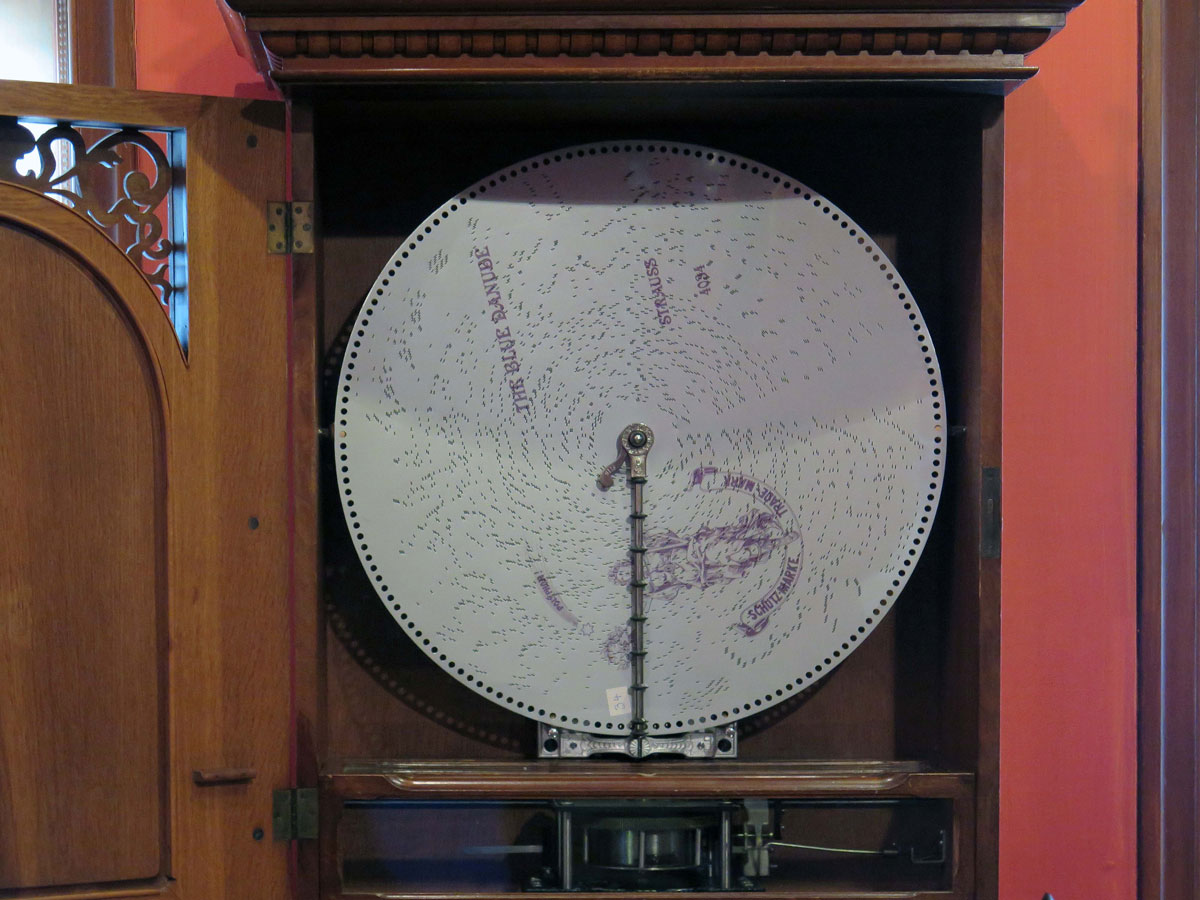
My favourite exhibit was the polyphon which is a music box dating from the 1890s and which Otto bought from a local pub. The machine uses large circular discs with projecting pins that create different notes, and fortunately I was able to listen to what it sounded like thanks to a volunteer who knew how to work it.
It may not be possible to visit the museum now, but the gardens are still open to the public (for a fee) and are worth a look around, even if only for its location. If you are keen on what can be seen in the garden make sure you don’t miss the collection of Magnolia Campbellii ‘Overbeck’s’, of which they are justifiably proud. Obviously, it’s best to come in February when the trees are at their best.

From Overbeck’s, there’s a sharp descent to a couple of beaches at South Sands and North Sands, where at the Winking Prawn you can tuck into the tastiest and freshest crab sandwich you’ll find anywhere. The reason being that there’s still a small fishing fleet at Salcombe that concentrates on catching shellfish, particularly crab and lobster. When you hear people say that Brixham crab is the best you can get, most of it is caught by the fishermen at Salcombe and Dartmouth.
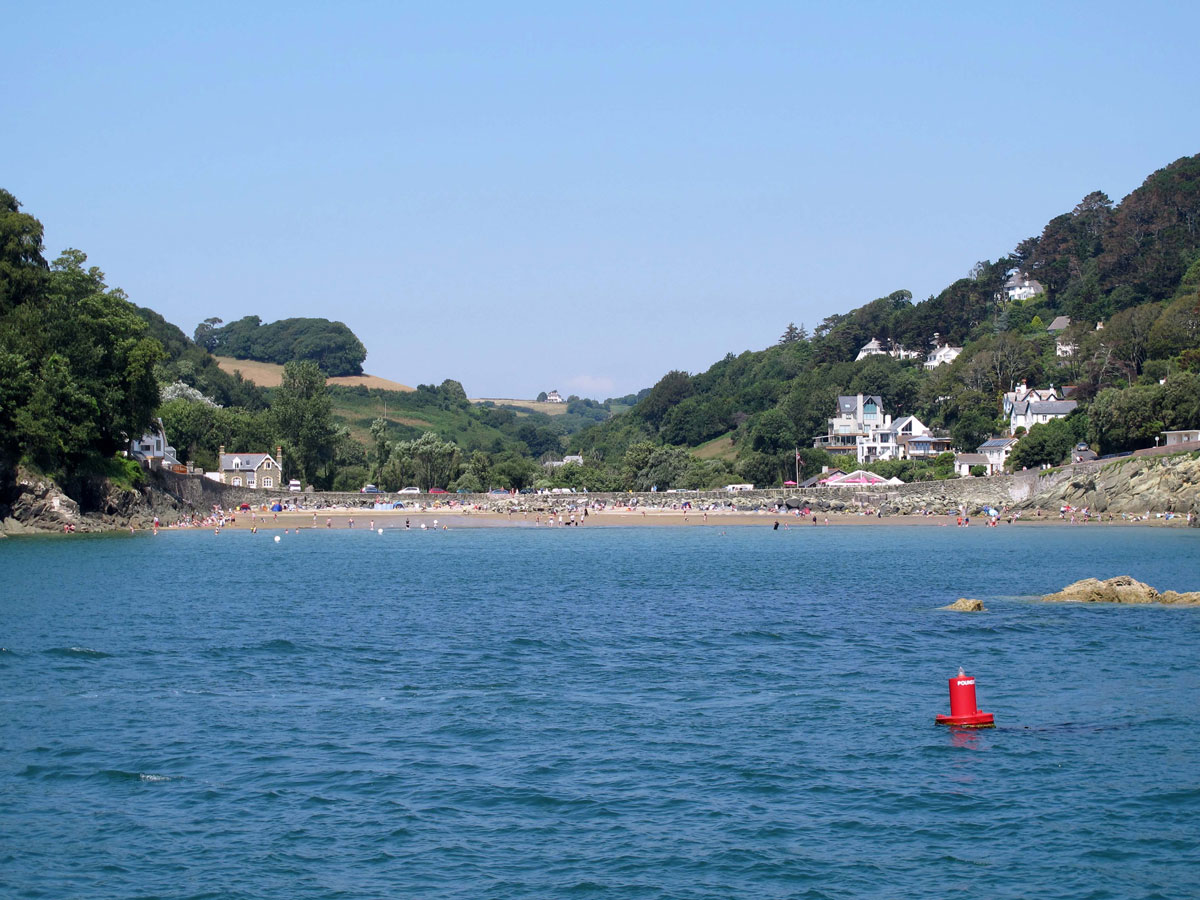

If it’s beaches that you’ve come for, then the best place to go is East Portlemouth on the opposite side of the estuary. A ferry operates from the steps next to the Ferry Boat Inn near the town centre and takes just a few minutes to get across.
The area around Salcombe is pretty unspoilt, but the area around East Portlemouth is even more so. There are very few facilities and that’s what people like about it. It’s just the sand, the sea, and hopefully the sun. It’s no wonder that people with money come and find an exclusive hideaway in these parts – and who can blame them?

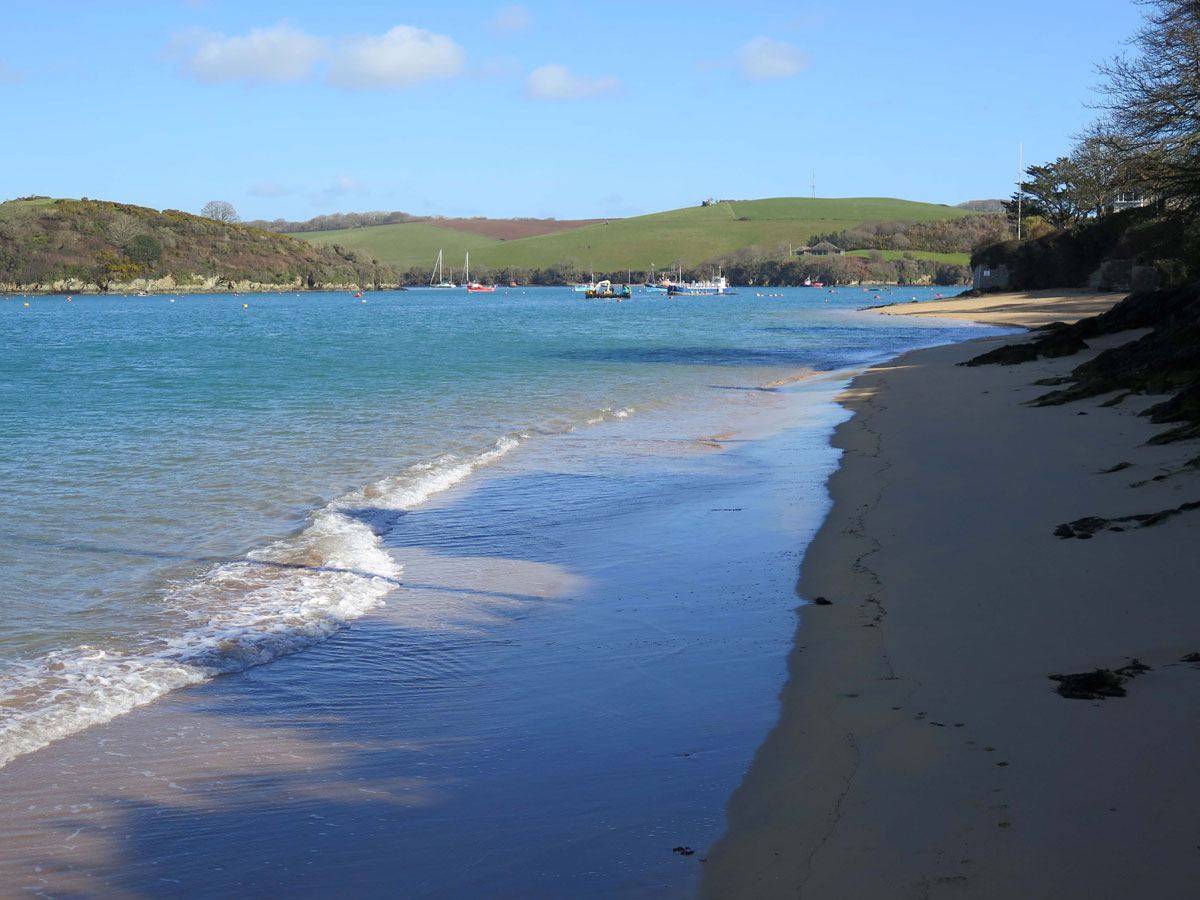
One of those people who have come to live in East Portlemouth is Kate Bush. She’s somebody who likes to keep her life private, so much so, that she even campaigned to have the public footpath that went around her cliff top mansion closed. Her wish came true, not because the authorities agreed with her, but because part of the path fell into the sea, and it’s more than possible that her secluded home could go the same way.
Kate Bush isn’t the only person who can splash out on property around here of course, but at least she lives here, unlike some, who buy up property to use as second homes or holiday lets, resulting in local people being priced out of the property market.
Something needs to change before Salcombe, like other coastal villages in the south-west, ends up being a ghost town in the winter. Not only does this situation rip the soul out of a place, it becomes impractical, because if local people can’t afford to live here, who is going to service the boats, clear the rubbish away and work in the bars and restaurants?

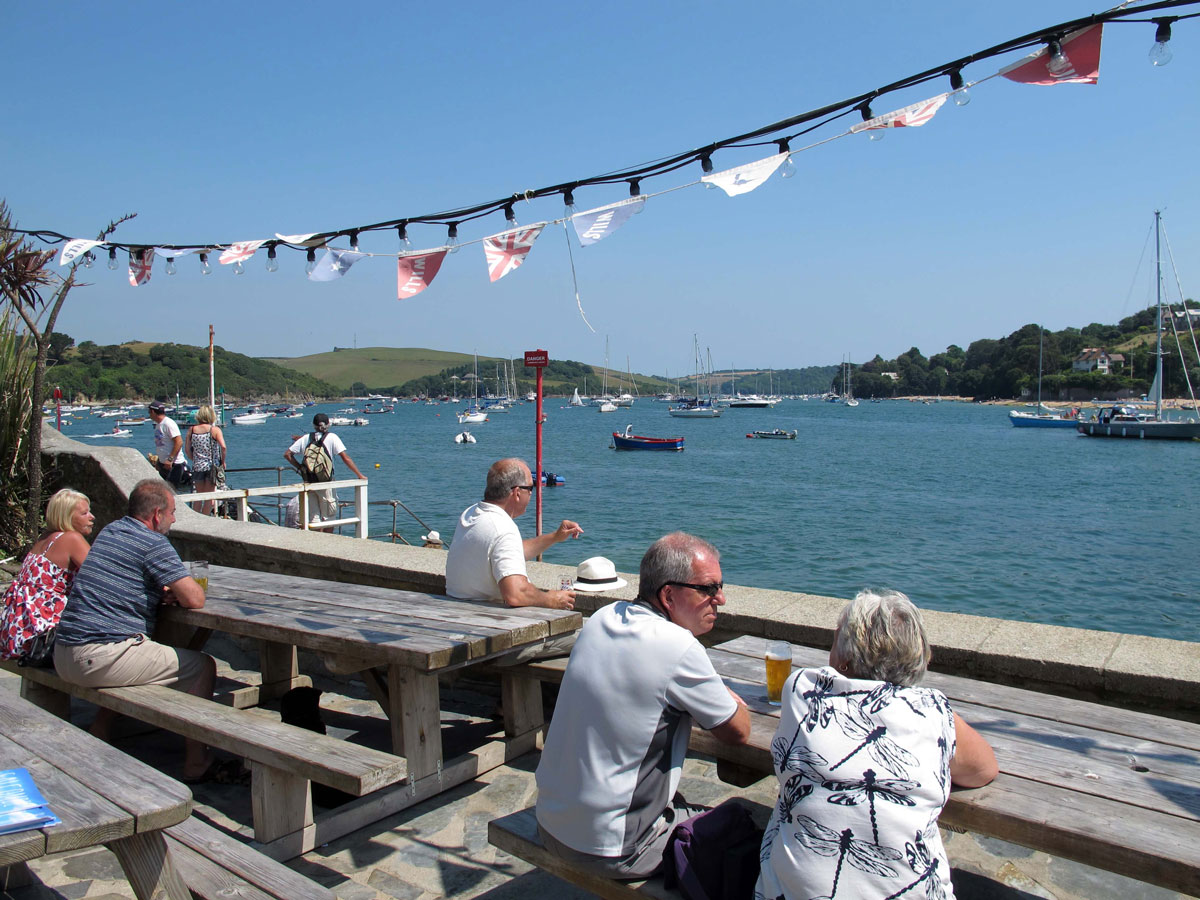
Fortunately, I’m one of those people who is not bothered in the slightest about what other people have, and just grateful for what I’ve got. I don’t need to own a yacht and live in a beautiful house to enjoy life. I’m more than happy to sit outside the Ferry Boat Inn with a pint and watch everyone else enjoy themselves – and wonder just how happy they really are.
POSTED – NOVEMBER 2021
Originally posted 2021-11-01 10:15:58.
Sad when a place prices people out actually. But looks lovely and the pcis are gorgeous.
I did consider living there at one point because it is lovely, and not as expensive as it is now. The other thing, is that these sort of places are not practical if you have to work for a living and I realised that very early on.
yeah I get that, But hey where you live looks good from what you have shared.
It’s not perfect but it is still a good place to live as well as being practical
That is important. I mean we all dream of this and that you have to think of the practicalities.
The reality often doesn’t live up to expectations either.
I know. There’s alot you need to consider when choosing a place.
Mine’s a half of Guinness, please, or a glass of white, if that’s cheaper? Not sure if you saw your link on my post a couple of weeks ago. Pingbacks don’t always work so I probably should have paid you a visit. I’m not following by email because my Inbox overflows but I always return a visit. This looks like a place I’d like.
I didn’t see the link Joe but thanks anyway, and thanks for taking a look at this post as well. For what it’s worth, I don’t think I’m a lot different to you in my approach to checking out other people’s blogs. I have a handful of friends that I like to keep in touch with on a regular basis, and there are others I like to comment on or add a like when I particularly like what they’ve posted. As regards Salcombe, it would be difficult not to like it, especially when there’s a glass of something at the end of it 😊
https://stillrestlessjo.com/2021/11/01/jos-monday-walk-street-art-and-a-little-wine/
I saw the post and liked it, but missed the link duh! 🙂
Fair enough. I just didn’t want you to think I hadn’t remembered as I’m not posting so often on this blog.
Absolutely no problem Jo, but I do hope that you continue blogging in some form because you’ve got some great stuff on here and a lot of friends. Maybe too many? 🙂
That was one of the reasons for starting afresh, Malc. And much appreciated, thanks!
It sounds like you’ve got something else on the go. I’m intrigued.
There really is some truly outstanding coastline around Salcombe, Malc, and it’s good to see traditional boatbuilding skills still thriving. Still, I can see why you’d fear the downturn in activity over winter. It’s hard for these places to survive on a predominantly seasonal basis. It does look a lovely place to hide away though.
By the way, apologies for being out of the blogsphere a fair bit at the moment. We’re up to our ears still decorating the house from top to bottom; it’s going on the market in the new year, so we’re on a fairly tight schedule. Not a vast amount more to do, but it’s all been a bit intense, and I’m shattered! Hope all’s well with you. 🙂
The coastline around Salcombe is indeed fabulous Alli, and so is the countryside. I enjoyed living in the South Hams very much but moved to Torbay for practical reasons. Still, I’m not complaining.
There’s no need to apologise for not being around too much at the moment, even though, as you know, I always enjoy your posts and conversations. With a bit of luck all the hard work getting the home spruced up will pay off and you’ll get the move that you’ve been looking forward to.
As for me, I have to admit that I’ve felt better, but that’s life I suppose. I hope you’re all keeping well up there and looking forward to Christmas and the New Year when your dreams will hopefully become a reality.
Wow Malc! Quite a lovely place! And with an Iberian connection! Loved that musical instrument too but, not to diminish in any manner the craftsmanship of your narration, your art in photography truly captures me! Interesting and very informative. All the best! 😊
I really appreciate your comments Francesc, and I’m humbled by your opinion about my photography. Thank you so much and I’m glad you enjoyed a look around Salcombe with me.
Always a pleasure my friend!
What a wonderful place! Everything is so beautiful up there!
Or maybe it is the eye with which you look at things that is beautiful and knows how to make them amazing
What a lovely comment Luisa. Thank you so much. I try to take photographs in a way that conveys what I think about a place, whatever that may be 🙂
… and you manage to convey it perfectly
Have a nice afternoon ❣️🔥❣️
You’re too kind, but thank you all the same. You have a super afternoon too 🙂
🙏
The German Museum of Mechanical Musical Instruments in Bruchsal has several of those polyphon machines with perforated metal disks, all in good working order. I went there twice, in 2010 and 2019 — both times with groups of VirtualTourist members.
https://operasandcycling.com/look-ma-no-electrons/
This isn’t the first one I’ve seen. In fact I used to go to a pub where we used to play it using old pennies. I loved it, but the volunteer at Overbecks explained how it all worked and showed us the different discs they had. I found it really interesting.
Yes, it was a great technology, and the machines produced a very full sound. In effect, they played live music. The perforated metal disks dominated the market for data storage for about twenty years, following their invention in 1885.
Great that the machine at that pub could still be played using old pennies. We’ve got jars full of old pre-Euro coins from various countries, and no place to spend them.
I’ve also collected old coins Don. They may not be worth very much, but they all tell a story don’t they? 🙂
Gorgeous pictures, Malc. I envy you spring in February–we don’t usually get ours until March-April. Some of those pictures remind me of Newport, Rhode Island which is also quite a yacht/sailing center We have the same problem in many states where the home prices are so high that the people needed to furnish the services (police, teachers, fire fighters etc) can’t afford to live there.
Thank you Pat. The Gulf Stream tends to keep our climate relatively mild and Salcombe doesn’t have the facilities like Newport has for the grand yachts.