Tag Archives: English History

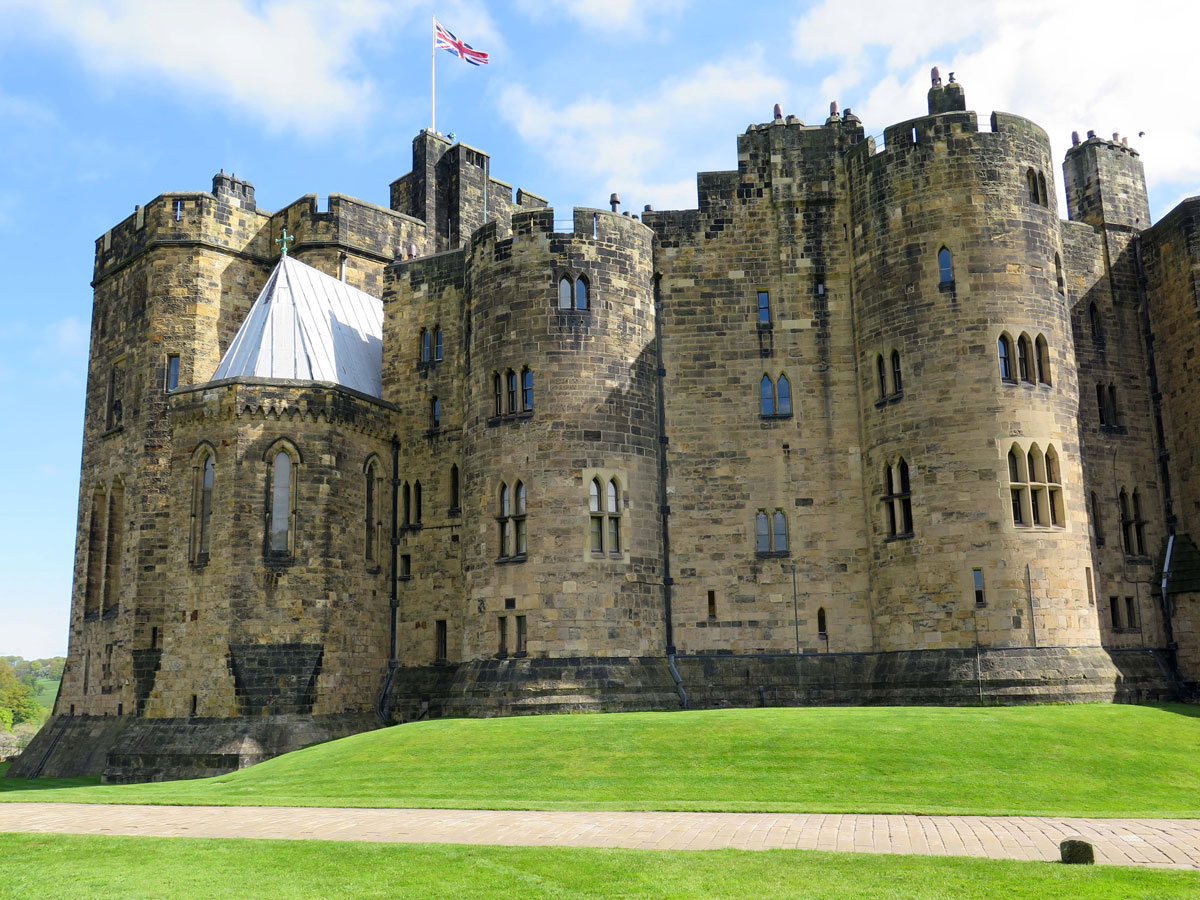
Alnwick – The Windsor of the North

Alnwick - The Windsor of the North

Alnwick has been dubbed the Windsor of the North: I’m not sure who coined the phrase, but it’s obviously to do with the fact that Alnwick has the second largest lived-in castle in England – after Windsor of course, so how does it really compare to Her Majesty’s home down south?

Alnwick (pronounced Annick) is a pleasant market town of around 8,000 inhabitants situated some 5 miles inland from the Northumberland coast, and about half way between Newcastle-upon-Tyne and Berwick-upon-Tweed.

The main attraction is without doubt the magnificent castle, but after arriving in Alnwick, you might want to do the same as we did, and get to know a little bit more about the town which lies next to the River Aln first. It’s not very far to walk, and it will help put everything into perspective, especially where the Percy family are concerned, who are not only inextricably linked with Northumberland, but have lived in the castle for over 700 years.

Continue reading →

Originally posted 2021-05-16 13:30:36.

Is Hull Really a ‘Crap’ Town? – Pt 2 The River Hull and How the Town Began

Is Hull Really a 'Crap' Town? - Pt 2 The River Hull and How the Town Began

Thanks to the person who couldn’t wait to have their Benson & Hedges fix this morning, it meant that the hour I thought I’d gained, had now been lost. Thankfully, other than a bit of stitch, I was none the worse for wear as we stepped out into the bitterly cold, but bright Yorkshire morning air – which this time didn’t include any flashing blue lights to hurry us along.

From the hotel, we walked up the ramp onto the Myton Swing Bridge where there were some great views of the River Hull below, not that I had any chance to take any photos of it, because Kay couldn’t care less how good the views were, she was definitely not hanging around in the cold waiting for me to take pictures. As she marched off without a clue where she was going, I had no option but to put the camera away and just console myself with the fact that the tide was out anyway.

The source of the River Hull is in the Wolds, not far from Driffield: It then weaves its way for around twenty five miles or so down to the Humber, which is where the majority of Yorkshire’s rivers end up. The map below gives a broad outline as to how at least eight of those rivers drain Yorkshire’s higher ground to join the River Ouse. At Trent Falls near Faxfleet, the Ouse is met from the south by the River Trent, and this is where it becomes the Humber. Although the Humber is often referred to as a river, it is in actual fact an estuary, but whatever you want to call it, the Humber has, over the centuries, been both an asset and a barrier to this part of England.

Continue reading →

Originally posted 2023-09-20 11:38:21.

Anarchy and Sieges at Lincoln Castle

Anarchy and Sieges at Lincoln Castle

In Celts, Romans, Vikings and Jews I mentioned that Lincoln was surprisingly hilly and that it was unofficially divided into two areas – Uphill and Downhill.

Downhill, if you remember, was originally a marshy area where the settlement was first established, and where, thanks to a succession of interlopers, it had become a significant inland port by the time the next invaders arrived – the Normans. Uphill though is the most interesting part of the city, and the best place to start exploring it is at the Information Centre, an unmistakeable Tudor building at the bottom of Castle Hill.


Continue reading →

Originally posted 2022-11-14 07:18:27.

Lincoln – A Town of Celts, Romans, Vikings and Jews

Lincoln - A Town of Celts, Romans, Vikings and Jews

Lincoln is not the easiest place to get to from where I live, but on returning from a trip to the North-East we were able to make a detour and spend some time in a city that I’d always wanted to visit, but thought I never would.

The main reason that I was keen on visiting Lincoln was because at one time it was one of the most important towns in the country, and in this introductory post to Lincolnshire’s county town, I’m going to try and unravel its early history to see why – and where better to start than at the location where the Iron Age settlement was established in the 1st century BC.

Today, the River Witham runs through the centre of Lincoln in a much more controlled way than it did 2,000 years ago. Back then, it was a swampy area that included a large natural pool, and it was here that Lindum (meaning ‘place by the pool’) was first settled. These days this area is known as Brayford Pool.

Continue reading →

Originally posted 2022-10-22 16:40:53.

Wolvesey Palace and the Bishops of Winchester

Wolvesey Palace and the Bishops of Winchester

In my recent post about London Bridge City and The Shard, I spoke about the area’s early history and why there were several large houses belonging to important religious figures lining the southern bank of the Thames – and the most imposing of these was Winchester Palace, the remains of which can still be seen in Southwark’s Clink Street.

At the time of the Norman Conquest, Southwark was in the county of Surrey and part of the Diocese of Winchester, one of the most important religious centres in the country, but not only that, Winchester was also the capital of England.

Being an astute and religious man, William the Conqueror not only engaged the services of the bishops to help him keep religious order, he also used their influence and power to advise him on state affairs.

Two of my earlier posts, Winchester – the First Capital of England, and Winchester Cathedral – From the Saxons to the Normans, may help to explain why the city and cathedral of Winchester were so important to the new King of England.

Continue reading →

Originally posted 2020-09-28 13:53:11.

Winchester – The First Capital of England

Winchester - The First Capital of England

If someone were to ask me where to go for that quintessential English experience then Winchester would have to be right up there near the top of my list.

Its location, where the River Itchen flows through the chalk Downs of the Hampshire countryside, helps give this small city of 45,000 people an air of peace and calm that belies its past history and status as Hampshire’s county town.

It was this precise spot, where the river could be forded, that attracted a Celtic tribe from the continent to build a settlement here. The tribe we now call the Belgae arrived around 100BC, but it would appear that their enclosure at Oram’s Arbour and fort at St. Catherine’s Hill had been abandoned by the time the Romans arrived in AD70, who then created a settlement of their own which they called Venta Belgarun (Marketplace of the Belgae).

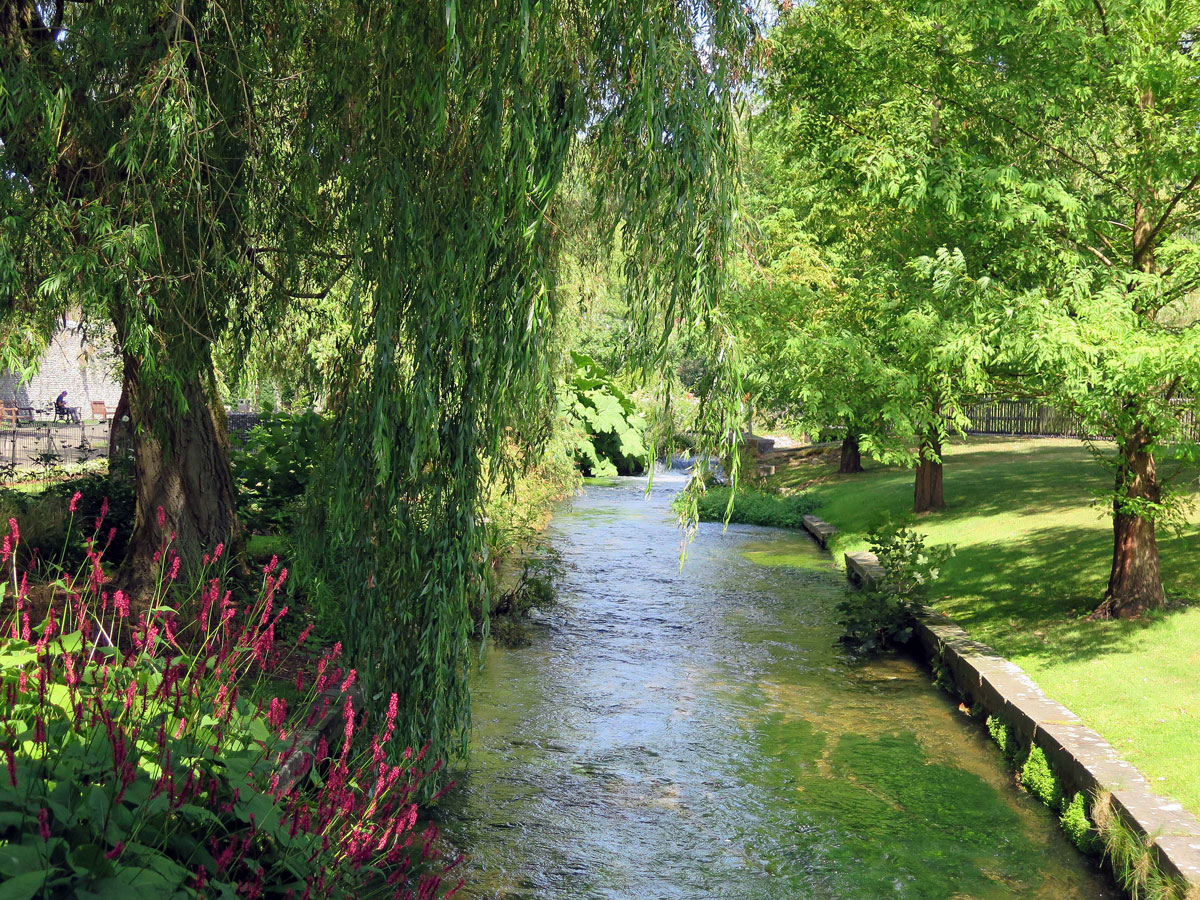
The river at this point split into two around an island, and although it made for a good crossing point, it was also liable to flooding, and so the Romans diverted the river through a single channel, which not only saved their town from flooding but also gave it an extra line of defence on their eastern flank. The river still flows through this channel and can best be seen on the lovely Weirs Walk.

Continue reading →

Originally posted 2018-09-01 15:48:30.

A Wander Around Richmond (On Thames)

A Wander Around Richmond (On Thames)

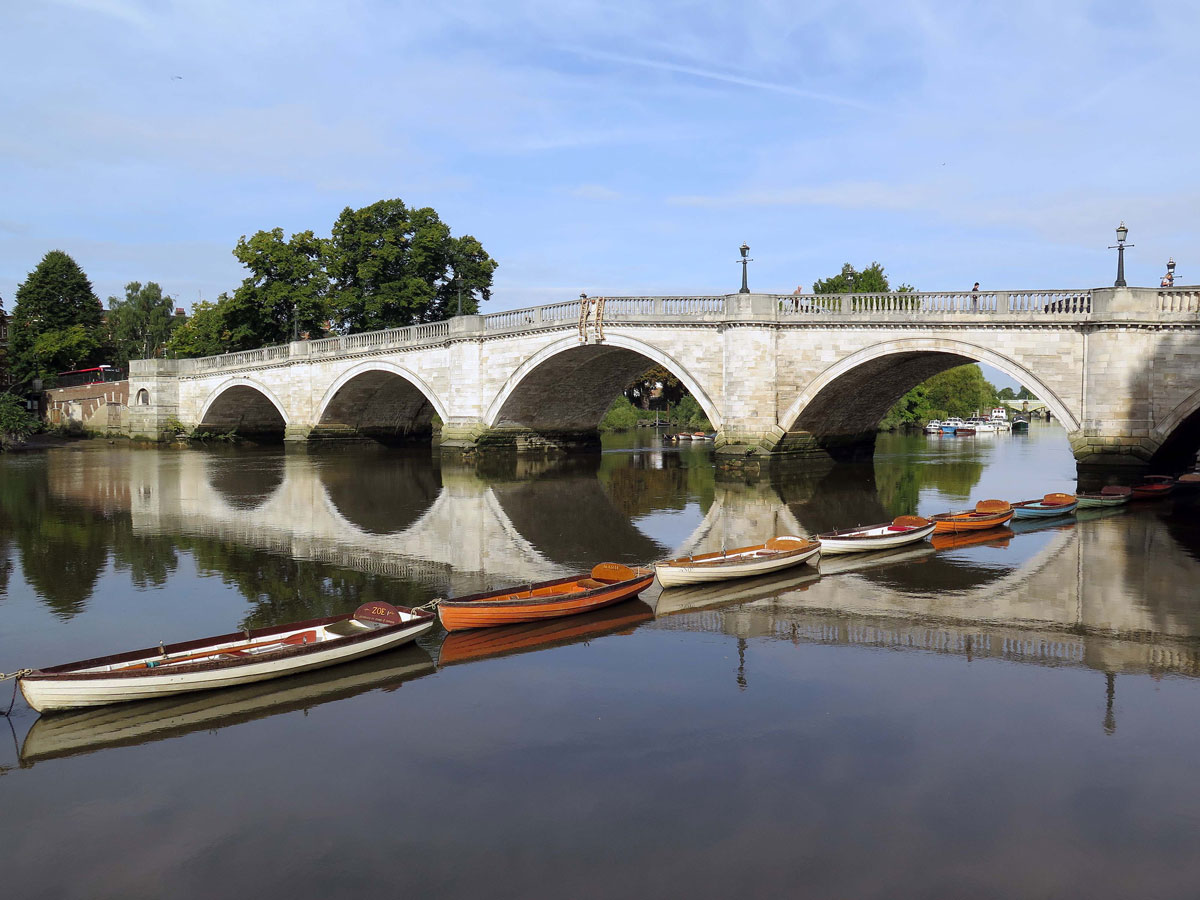
Richmond-upon-Thames is one of the more affluent of London’s 32 boroughs: It includes the suburbs of Kew, which I’ve already written about, and Hampton, Teddington and Twickenham, which I haven’t (yet), but this post is just about the town of Richmond itself.

The name Richmond originates from the French words ‘riche’ (meaning mighty) and ‘mont’ (meaning hill), and was initially associated with Richmond Castle in North Yorkshire, and so it’s not difficult to see why King Henry VII, the former Earl of Richmond, named his home here on the bank of the River Thames Richmond Palace – but don’t run away with the idea that it’s that simple just yet.

The second part of its name – Upon-Thames – was added when the borough was created in 1965, and alludes to the fact that it straddles both sides of the river. The suffix is supposed to distinguish it from, shall we say, Henley-On-Thames which sits on just one side of the river.

If you’re not confused yet, then what about if I tell you that the town of Richmond doesn’t carry the suffix that the borough does because it doesn’t occupy both banks of the river. OK, so why have I called this post Richmond-on-Thames? It’s obvious really isn’t it? I wanted to distinguish it from Richmond in Yorkshire – but it occupies only one side of the river. Got it? No, nor have I. I’m already wondering how many keyboard warriors are going to pull me up about the title without reading what I’ve just said.

Continue reading →

Originally posted 2025-08-26 16:17:22.

Westminster Abbey – Pt 7 Poets, Parliament and a Church for the People

Westminster Abbey - Pt 7 Poets, Parliament and a Church for the People

I get the feeling that my previous post had too much information for some people, and so for this final chapter about Westminster Abbey I’ve cut down on the claptrap and increased the number of pictures. I hope this meets with everyone’s approval.

On leaving Henry VII’s Lady Chapel, head left down the South Ambulatory (which I covered in Part 5) towards the South Transept and Poets Corner. It’s one of the most popular places to visit in the abbey and the numbers are swelled by those who are looking to take the weight off their feet, especially as this is the first place seats are provided since leaving the nave.

There are over a hundred poets and authors buried or commemorated here and the size of the monument doesn’t always reflect on how famous they are, but none of the memorials are as large as those in the Statesmen’s Aisle in the North Transept opposite. It got me wondering though as to who decides whether a person warrants a burial or memorial in the abbey at all, and the answer is quite simple – the Dean. Incidentally, it’s rare for a recently deceased poet to be included in Poets’ Corner, as like anyone else, they can be flavour of the month one minute and the devil reincarnated the next.

The first poet to be buried here was Geoffrey Chaucer in 1400, not because he was the author of the Canterbury Tales, but because he was Clerk of the King’s Works in the Palace of Westminster across the road. His burial place was initially marked by a plain slab, and it wasn’t until 1556 that the present marble monument was erected in his memory.

Continue reading →

Originally posted 2023-04-09 11:50:47.

Westminster Abbey – Pt 6 Henry VII’s Lady Chapel

Westminster Abbey - Pt 6 Henry VII's Lady Chapel

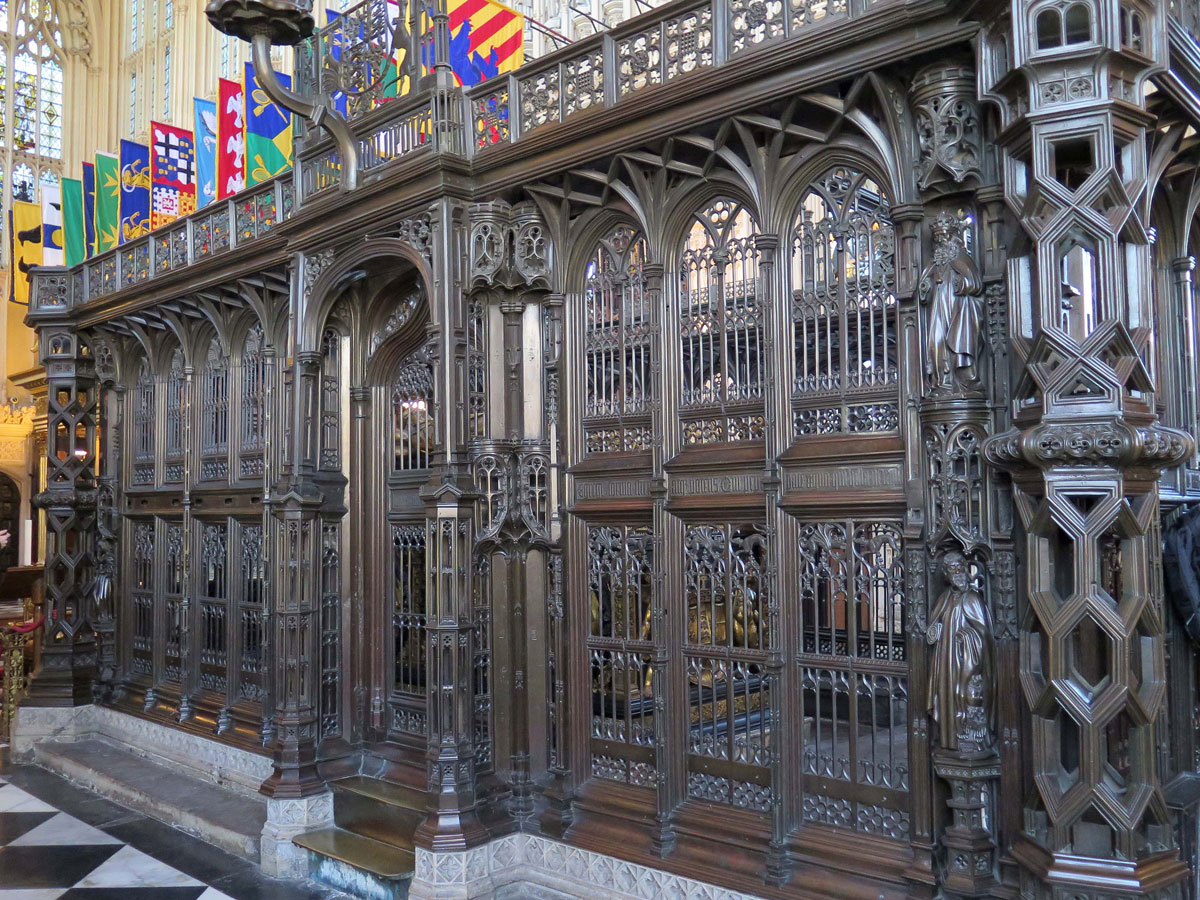
In previous posts we’ve seen how Westminster Abbey started off as a Saxon monastery, then rebuilt by Edward the Confessor in the Norman style, and finally transformed into a Gothic church by Henry III and his successors, but in my view, there was one other architectural development that surpassed them all – Henry VII’s Lady Chapel, and to do it justice, this will be one of my longer posts, so you might want to think of putting the kettle on first if you intend staying with it.

Before describing this breathtaking chapel in more detail, I think it’s worth explaining the reason why Henry VII wanted to pull down Henry III’s perfectly good chapel dedicated to the Blessed Virgin Mary in the first place. The simple answer is that he probably wanted to be buried in a chapel that nobody could forget, but there was a bit more to it than that.

If you remember, in Part 5 we saw how St Edward’s shrine was surrounded by the tombs of another five kings. Apart from Henry III who had the chapel built, we can also find the final resting places of Edward I, Edward III, Richard II and Henry V – all of whom were members of the Plantagenet dynasty. Altogether, there were a total of fourteen Plantagenet kings, including five Henrys (from Henry II to Henry VI), and if you’re still with me, you’ll notice that Henry VII wasn’t one of them, and that’s because he was to become the first Tudor monarch.

Continue reading →

Originally posted 2023-04-02 15:40:05.

Westminster Abbey – Pt 5 St Edward’s Shrine and Medieval Tombs

Westminster Abbey - Pt 5 St Edward's Shrine and Medieval Tombs

Our  tour has now reached the most sacred part of the abbey – St Edward’s Shrine. His body lies in a chapel located behind the High Altar and circumnavigated by the North and South Ambulatories, but before I go any further I have to tell you that access isn’t freely available to the general public. The reason given is that the Cosmati studded shrine is very fragile, and whilst that is undoubtedly true, I suspect it’s also to do with the fact that the abbey would prefer the chapel to be treated with the utmost reverence. There are however, a few ways to gain admittance, and I’ll come to that in due course. Meanwhile, I’ll try and explain who St Edward was, why he was revered by Henry III, and what other tombs you can see here.

Edward was born in Islip, Oxfordshire sometime between 1002 and 1005. His parents were the Saxon king, Ethelred ‘the Unready’ and Emma of Normandy, but his father’s altercations with the Danes ultimately led to the House of Wessex losing control of England to the Vikings, and most of Edward’s early life was spent in Normandy.

While in exile, Edward developed a love for the simple life, and although there would have been doubts as to whether he would get to inherit his father’s kingdom, he pledged to make a pilgrimage to Rome if ever he was. In 1042 the opportunity came when his half-brother King Harthacnut died, and Edward’s claim to be the rightful successor gained general acceptance. He was crowned King of England in Winchester Cathedral on 3rd April 1043.

Continue reading →

Originally posted 2023-03-20 15:25:48.

Westminster Abbey – Pt 4 The Coronation Church

Westminster Abbey - Pt 4 The Coronation Church

Westminster Abbey is known as the Coronation Church, and on 6th May, King Charles III will become the 40th monarch to be crowned here, and at the age of 74, he will also be the oldest. Along with his wife and consort, Queen Camilla, the Gold State Coach will bring the couple from Buckingham Palace to the abbey in what is known as the ‘King’s Procession’.

There won’t be that many people who saw the last coronation, and although this one is bound to include a certain amount of pageantry, there will be some differences. Preparations would have undoubtedly been finalised, but the arrangements and timing have yet to be officially announced, but it seems likely that the ceremony will reflect a mixture of traditional and modern Britain.

I expect the royal couple to enter the abbey through the West Door where the procession will continue up the nave towards the quire screen. An anthem written by Andrew Lloyd Webber is one of twelve new pieces of music commissioned by King Charles for the occasion, and it remains to be seen whether it will have the same impact as Handel’s Zadok the Priest which was written for the coronation of  King George II, Elgar’s Pomp and Circumstance (for Edward VII) or William Walton’s Crown Imperial (George VI).

Continue reading →

Originally posted 2023-03-14 14:54:04.

A Journey Back in Time

A Journey Back in Time

One of the positive things to come out of this pandemic – and there aren’t many – is that people have come to appreciate their own backyard a bit more, and I mean that metaphorically not literally.

Ever since I was let loose on an unsuspecting world I’ve been accused of all sorts of things, but one thing I can’t really be accused of, is being blind to what’s on my own doorstep: I’ve always had an inquisitive mind at what’s around me, and  during the time I was living in North Somerset, I was always exploring the local area – places that people know well, places that people have probably never heard of, and places I probably shouldn’t have gone to at all.

It was quite a long time ago now since I lived there, and although it’s often said that you should never go back, I think it depends on why you want to, and going back down memory lane to re-kindle those salad days is something I really enjoy doing, even if times have changed.

Although Bradford-on-Avon is in Wiltshire, it wasn’t much more than half an hour’s drive away from where I used to live, but it’s much further from where I live now, and last year before Covid arrived, we took the train(s) from Paignton back up to the Avon Valley for a brief visit to see if it had changed very much.

Continue reading →

Originally posted 2020-10-12 16:54:50.

Where Bristol Castle Once Stood Pt 4 – Whatever happened to it?

Where Bristol Castle Once Stood Pt 4 - Whatever Happened to it?

This is the final instalment of my blogs on Bristol Castle and it describes events leading up to its demise. It makes sense therefore, if you haven’t already done so, to read the previous three blogs first, the links to which you can find at the end of this post.

With the death of Edward III, a new era started to emerge, and the importance of Bristol Castle started to decline as the focus of attention shifted north with the onset of the Wars of the Roses.

Edward III outlived his son, the Black Prince, and so it was the prince’s son Richard, who became the next king of England at just ten years old. The guardian of the boy king was Edward III’s oldest surviving son, John of Gaunt, and it was his son, Henry Bolingbroke the Duke of Lancaster, who became king as Henry IV when Richard was forced to give up the throne in 1399.

After the death of Henry IV, his son extended the Lancaster side of the Plantagenet family’s hold on the crown as Henry V. His skill on the battlefield, notably at Agincourt, is well documented, and helped him to gain large chunks of French territory. After his death in 1422 his 9-month-old son became Henry VI, the youngest ever King of England. Unfortunately, he had none of his father’s attributes where fighting was concerned and duly lost all his father’s territorial gains.

It wasn’t just in foreign fields that he was a failure, he wasn’t any better at controlling his feudal barons back home either – and it certainly didn’t help that he also suffered from bouts of madness. Under the circumstances, it’s not surprising therefore that another member of the family, Richard Duke of York, eventually thought it might be as a good a time as any to stake his claim for the throne, and on 22nd May 1455 he defeated the king at the Battle of St Albans – and the Wars of the Roses had begun.

Continue reading →

Originally posted 2021-05-01 10:07:59.
Where Bristol Castle Once Stood Pt 3 – The Three Edwards

Where Bristol Castle Once Stood Pt 3 - The Three Edwards

In the previous article (which you can find here) I recounted how Prince Edward had found himself besieged in Bristol Castle by the local population. You would think therefore that when he became king after his father died in 1272, it would be pay-back time, but fortunately for the citizens of Bristol, Edward I had enough on his plate fighting the Scots and Welsh – and perhaps remembering his own experience there, he found use for the castle as a prison for a few of his enemies. Even so, his attention was mainly drawn elsewhere and he gave the castle to his wife, Eleanor of Castille, who in turn rented it out to the mayor of Bristol.

Edward I was actually a good king for Bristol because trade flourished and the city prospered, but on July 7th 1307, Edward died on his way to yet another showdown with the Scots, and his son became Edward II. Whilst Edward I (known as Longshanks thanks to his height) was a powerful man in more ways than one, his son was anything but. He may have been good looking, brave and intelligent, but he was also lazy, frivolous and arrogant with a tendency to look after his favourites before anyone or anything else.

In 1308 he married Isabella of France, but if you believe some medieval chroniclers, the real love of his life was his favourite, Piers Gaveston. Modern-day historians are divided over the question regarding his sexuality, but whatever the truth, Gaveston’s influence on the king tested the patience of the barons to such an extent that when they got hold of him, they came to the conclusion that it would be best if his head was separated from the rest of his body. Obviously, this displeased His Majesty very much, but it had the opposite effect on Queen Isabella who forgave him, or at least for long enough to produce an heir to the throne.

Continue reading →

Originally posted 2021-03-04 09:04:42.

Where Bristol Castle Once Stood Pt 2 – The First Plantagenets

Where Bristol Castle Once Stood Pt 2 - The First Plantagenets

In this second part of a series of posts about Castle Park, I’m going to try and unravel what happened at Bristol Castle when the first Plantagenets took over from the Normans after the Anarchy.

If you haven’t read the first part yet, or just want to refresh your memory you can read about it here; and if you cast your mind back, the man responsible for providing Bristol with one of the country’s biggest castles at the time was the 1st Earl of Gloucester, and after his death in 1147, his son William Fitz Robert became the 2nd Earl. You may also remember that King Stephen, who was victorious over Matilda in the civil war known as The Anarchy, died in 1154 without an heir and signed an agreement to hand the crown over to his adversary’s son, Henry.

Henry II was the first Plantagenet king, the name deriving from his father, Geoffrey of Anjou who wore a sprig of broom in his hat. Botanists will tell you that the Latin name for this shrub is Planta Genista which in French was known as Genêt, but where the English name Broom came from, I have no idea.

King Henry II spent much of his young life during the Anarchy under the protection and guidance of the 1st Earl of Gloucester at Bristol and even though his 34-year reign started well enough, it didn’t quite end that way, and he’s probably best remembered for the murder of Thomas Becket at Canterbury Cathedral. He died on 6th July 1189 and was buried in France.

Continue reading →

Originally posted 2021-02-12 17:39:00.

Where Bristol Castle Once Stood Pt 1 – The Normans and The Anarchy

Where Bristol Castle Once Stood Pt 1 - The Normans and The Anarchy

You wouldn’t know it, because there’s hardly anything left to see, but Bristol once had an impressive Norman castle. A lot of water has passed under the drawbridge since then, and where the castle once stood, there is now an open recreational green space occupying the land between the River Avon, the Old City and the shopping quarter.

In my post From Brycgstowe to Bristol I briefly explained the city’s origins, and in this first part of a series of posts about the area now called Castle Park, I want to talk about what happened when the Normans arrived after the Conquest of 1066.

Brycgstowe had been built by the Anglo-Saxons on the high ground between the Rivers Avon and Frome, which not only provided them with access to trading routes, but also afforded good protection on three sides. To supplement this natural protection a wooden palisade was also built around the town.

Continue reading →

Originally posted 2021-01-05 16:29:44.

Berry Pomeroy Castle – Romantic Ruin, or Just Plain Spooky?

Berry Pomeroy Castle - Romantic Ruin, or Just Plain Spooky?

Lying deep in the countryside just a couple of miles east of Totnes, Berry Pomeroy Castle has been described as one of the most picturesque and romantic ruins in England, but it has also been described as one of the most haunted castles in England as well!

The village and castle’s name comes from the Pomeroy family whose first owner was Ralf de Pomaria, a Norman knight from La Pommeraye near Falaise. He was given the manor by William the Conqueror, but it was another four centuries before the castle was built. Neither the precise date, nor the reason for its construction is really known, but it was most likely at the end of the 15th century, and possibly because of the family’s involvement in the War of the Roses. Whatever the reason, it’s pretty certain that it never saw any real military action.

Continue reading →

Originally posted 2021-03-05 16:10:17.