Tag Archives: British Royal History

The Royal Yacht Britannia

The Royal Yacht Britannia

I have to confess that I wasn’t sure how much I wanted to see Queen Elizabeth’s former private yacht, but when it was confirmed that the admission fee went towards the upkeep of the boat rather than into the pockets of the Royal family, I decided to travel out to the Ocean Terminal at Leith to take a look at this luxurious floating palace.

Several buses run out to the Ocean Terminal, but you have to negotiate the shopping mall and its escalators to reach the 2nd floor and the entrance to the attraction, but from hereon in it’s plain sailing, so to speak.

I suggest that you allow a couple of hours at least – more if you intend stopping for tea and cake in the Royal Deck Tea Room.

It’s a self-guided tour with the aid of an audio guide which you pick up at the visitor centre before making your way to The Bridge.

This is all very convenient for boarding the ship, but not so convenient if, like me, you would like to take photographs of the vessel itself.

Continue reading

Originally posted 2018-12-11 16:17:44.

The Palace of Holyroodhouse

The Palace of Holyroodhouse

At the opposite end of the Royal Mile to the castle is Holyrood Palace – the British monarch’s official Scottish residence.

Sitting under the extinct volcano of Arthur’s Seat, the Palace of Holyroodhouse has been a Royal residence since 1503 when King James IV decided to convert the Royal Lodgings of Holyrood Abbey into a home fit for his new bride, Margaret Tudor.

The original Augustinian Abbey was founded in 1128 by King David I, supposedly after a hunting trip. Legend has it that he was thrown from his horse after being startled by a deer and was saved thanks to the appearance of a Holy Cross (or rood) that beamed down from the skies above. Whether you believe this miracle or not is up to you, but at least that’s one of the theories as to how Holyrood got its name.

Raids by the English during the mid-16th century destroyed many of the Abbey buildings and by the end of the Reformation all that was left of any consequence was the nave, which required some serious restoration for the Scottish coronation of King Charles I in 1633. The Chapel Royal, as it became known, was used for Catholic worship during the reign of James VII (and II of England), but by the 18th century, for various reasons, had suffered so much damage that it fell into terminal decline.

The remains of the nave can still be seen today as part of the tour of the palace.

Continue reading

Originally posted 2018-12-04 06:09:58.

Edinburgh Castle Pt 4 – The Great Hall

Edinburgh Castle Pt 4 - The Great Hall

After the Royal Palace and the Honours of Scotland, the next must-see part of the castle is the Great Hall which is located next to the Palace in Crown Square.

This grand ceremonial hall was completed in 1512 for James IV and used for entertaining dignitaries with great banquets, but all this fine dining and drinking came to an abrupt end when Oliver Cromwell took over at the helm in 1650 and converted it into barracks.

When the New Barracks were opened in 1799 the hall was converted into a military hospital, and then in 1886 it was restored to something like its former glory.

The one thing that isn’t Victorian though is the hammerbeam roof which has been here from the beginning and one of the most important in Britain. Another original feature is the Laird’s Lug (Lord’s Ear) which is a grilled opening above the right-hand side of the fireplace. It was used for eavesdropping and when Mikhail Gorbachev came to the castle in 1984 his security team insisted that it was bricked up.

Around the perimeter is an impressive collection of weapons and armour on loan from the Royal Armouries.


Continue reading

Originally posted 2018-04-24 13:34:33.

Edinburgh Castle Pt 3 – The Royal Palace and Scottish Crown Jewels

Edinburgh Castle Pt 3 - The Royal Palace and Scottish Crown Jewels

If there’s one part of the castle that shouldn’t be missed it has to be the Royal Palace and the Scottish Crown Jewels.

The Palace was at the heart of the royal castle from the 11th to the early 17th centuries and probably an extension to David’s Tower.

On the ground floor, the most important event to take place at the Palace occurred on 19th June 1566 when Mary, Queen of Scots gave birth to a son who became King James VI of Scotland after her abdication thirteen months later.

Mary and her husband Lord Darnley were living at Holyrood when rumours circulated that the father of her unborn child was David Rizzio, her Private Secretary. Shortly afterwards Rizzio was murdered at Holyrood and Darnley was the chief suspect. To make matters worse Mary was catholic and the country was now protestant and so she came to the safe haven of the castle to give birth to the future King James VI and I of England. The birth took place in a small room next to her own chamber.

James became King of England in 1603 and left Edinburgh for London. The Palace became neglected, but for a solitary return in 1617 to celebrate 50 years on the Scottish throne, the place had a facelift. The birth chamber was re-decorated (which still shows the same decorations today) and new rooms were added including the Laich Hall.

Continue reading

Originally posted 2018-04-24 06:04:39.

Edinburgh Castle Pt 2 – A General Tour

Edinburgh Castle Pt 2 - A General Tour

On entering the castle you’ll be given a map which follows the easiest route up to the top, which is not only wheelchair and pushchair friendly, but also follows a numerical sequence.

Passing through the Castle Gates will bring you to the Argyle Battery where everyone stops for a view out across he city. It’s a natural thing to do, but there are even better views higher up, so it’s not essential to stop here if there are too many people milling around, and you can always stop here on the way back.

Next to it is the One ‘o clock gun and the Redcoat Café which is a convenient place to have a quick coffee and make some plans on what you want to try and see while you’re here, because as I said in my Introduction you may not have time to see everything.

The One ‘o clock gun is fired everyday at one ‘o clock except Sundays, Christmas Day and Good Friday. The spectacle is similar to what happens at Greenwich, but with a twist.

Over on Calton Hill, at the top of Nelson’s Monument, is a time-ball, which just like its London counterpart, was introduced to help ships (in the Firth of Forth) to calibrate the time with the sun in order to aid navigation. This, of course, was when timekeeping wasn’t as sophisticated as it is today. The ball was dropped at precisely 1 o’clock and as long as the weather was clear enough then everything was ok – but the weather in Edinburgh isn’t always clear enough – and so a gun was used to compliment the visual aid.

Apparently, due to the speed of sound, it takes 10 seconds for the signal to reach Leith, and the ships took this into account when setting their timepieces. You may want to do the same because for the gun to be heard out in the Firth of Forth it means that you may not want to stand right next to it. Don’t say I didn’t warn you!

Continue reading

Originally posted 2018-04-23 17:38:47.
Wandering Around Canterbury Cathedral

Wandering Around Canterbury Cathedral

In my previous blog Canterbury Cathedral – A Shortish History, I promised that I would show you around some of the cathedral’s highlights, but before I start, I have to say right from the outset that trying to cover all aspects of a building like this in one visit is nigh on impossible, and not only that, ongoing restoration work always restricts access to somewhere or another, so bearing that in mind, here is a selection of what I saw and worthy of special mention, which of course, is subjective – so here goes.

The main entrance into the cathedral precincts is through Christ Church Gate in the Buttermarket. This Tudor gateway was probably built as a memorial to Arthur Prince of Wales, and according to cathedral records was constructed between 1504 and 1521.

Prince Arthur was Henry VII’s eldest son and destined to become king. In 1501 at the age of fifteen he married Catherine of Aragon but a year later died of an unknown illness. When Henry VIII became king after his father’s death in 1509 he took his brother’s widow as his wife and queen.

Note the Tudor Coats of Arms as you walk under the archway and through the 17th century wooden doors. The original doors and the statue of Christ were destroyed by the Puritans in 1643. The present bronze sculpture of Christ was installed in 1990.

Continue reading

Originally posted 2020-03-19 14:42:40.

A Wander around Winchester Cathedral

A Wander Around Winchester Cathedral

What I like about Winchester Cathedral is not just its wonderful architecture, but also the human stories that have accompanied it throughout the centuries.

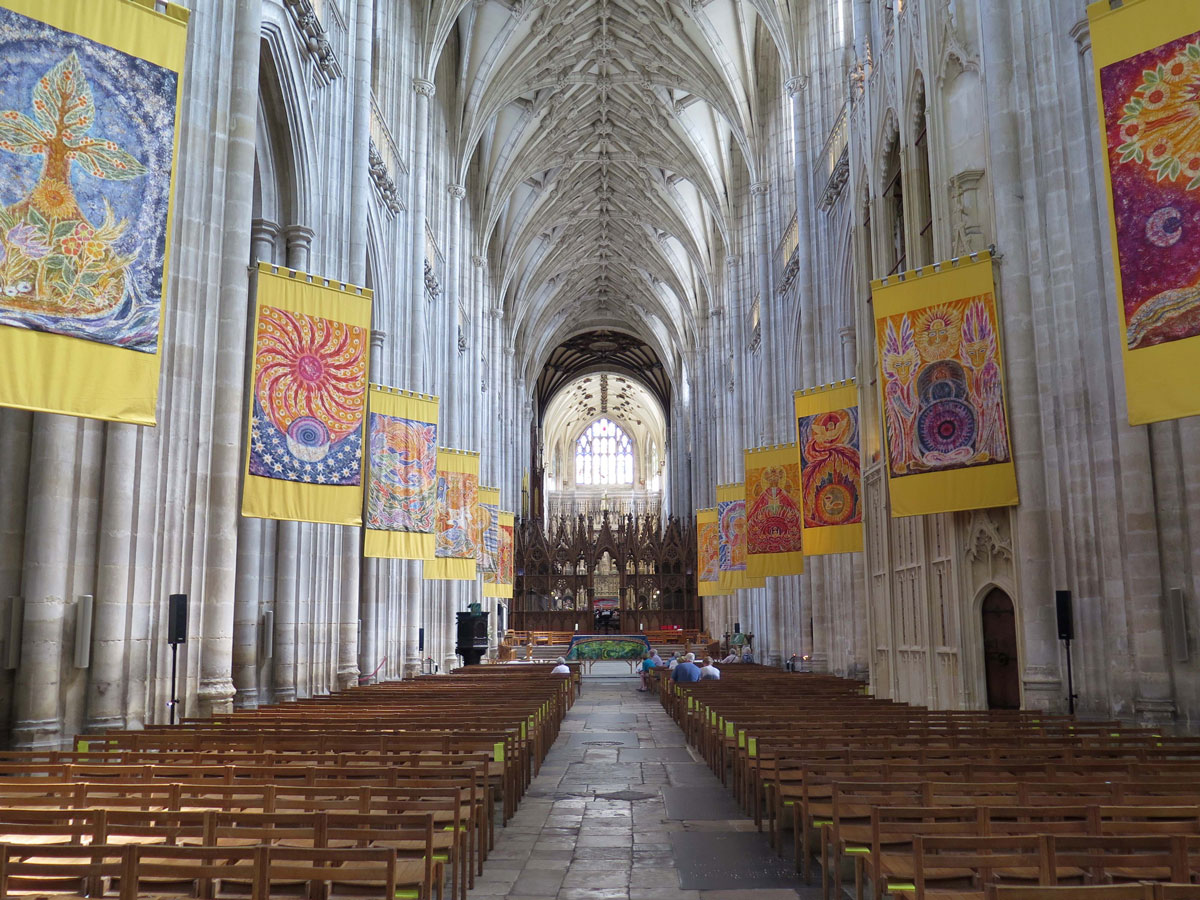
Architecturally, as soon as you set foot inside the West Door the magnificent perpendicular Nave stretches out in front of you right down to George Gilbert Scott’s ornate choir screen.

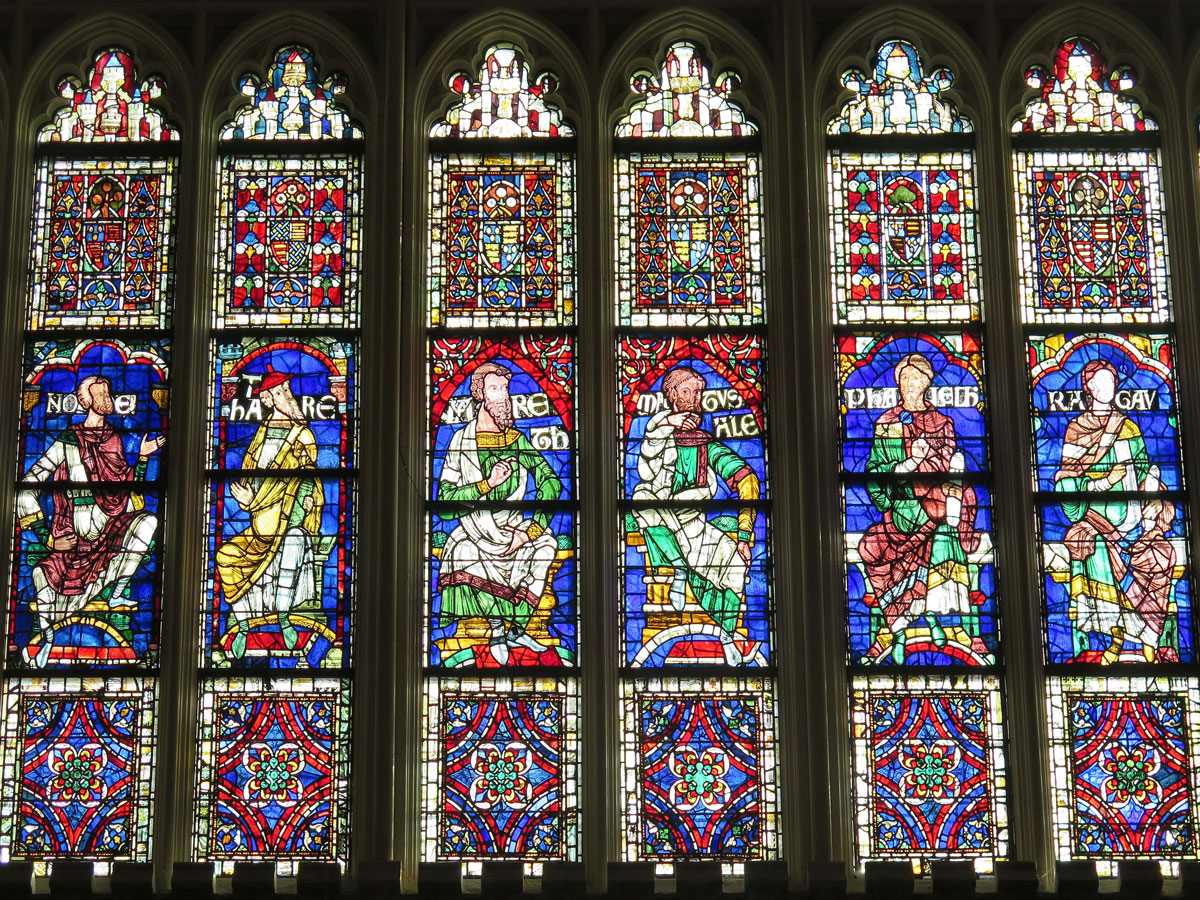
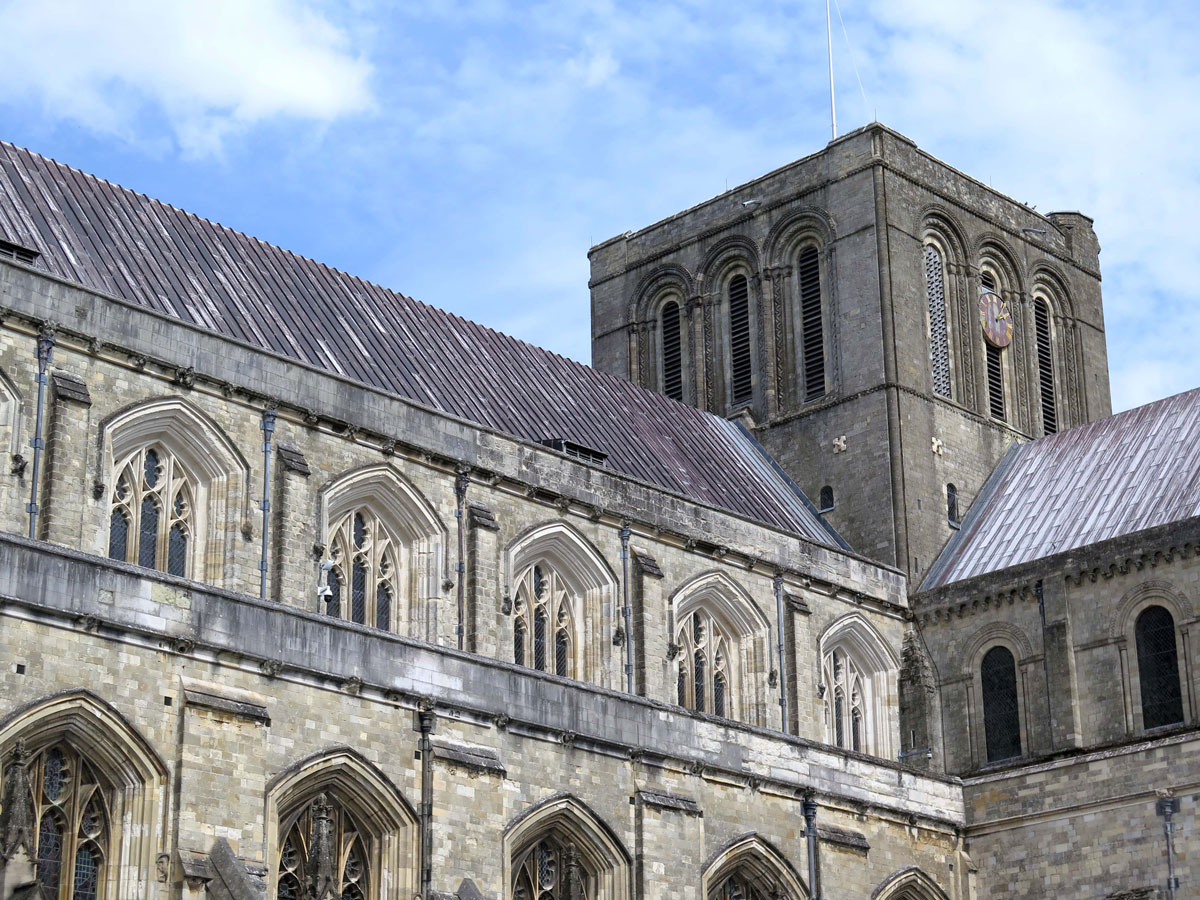
It didn’t always look like this though because the original Romanesque Norman church suffered badly from subsidence, and it took alterations from the 14th century onwards, firstly by Bishop Edington and then William of Wykeham, to produce what is my favourite style of church architecture.

If you can avoid the temptation to continue on down the Nave but walk down the North Aisle instead, you’ll soon come to the grave of Jane Austen, the author famous for writing such classics as Pride and Prejudice, Sense and Sensibility and Northanger Abbey.

It’s not surprising that many people want to see where Jane Austen’s final resting place is, but they would miss a gem if they went straight past the nearby 12th century black Tournai marble Font. It’s not just old, but unusual and interesting as well.

Continue reading

Originally posted 2018-09-13 17:41:25.

Winchester Cathedral – From the Saxons to the Normans

Winchester Cathedral - From the Saxons to the Normans

People who read my pages can be forgiven for thinking that I’m a religious person as I often seem to be writing about cathedrals, abbeys, and churches in general. The truth is that I’m not at all religious, but I am interested in the historical significance and architecture of these fantastic buildings and Winchester Cathedral is a perfect example.

In this article I’m delving into the background of the cathedral from a time when England became Christianized under the Anglo-Saxons to when William the Conqueror needed Winchester to consolidate his hold over the rest of the country.

The Romans initially brought Christianity to these shores, but after their departure in 410 AD the country reverted back to paganism.

In 597 Pope Gregory sent Augustine to England to re-introduce the Roman version of Christianity, but he wasn’t able to convert the whole country on his own of course and it was St Birinus who came to Wessex in 635 and converted Cynegils, King of the West Saxons.

King Cynegils established a cathedral church at Dorchester-on-Thames in Oxfordshire, but soon after his death in 643 his son, Cenwalh, built a minster church in Wintanceaster near the centre of his kingdom.

In the 670s Bishop Haeddi transferred his Cathedra (Bishop’s Throne) from Dorchester-on-Thames making Wintanceaster both the Royal and ecclesiastical centre of Wessex.

Continue reading

Originally posted 2018-09-10 16:34:27.

The Tower of London Pt 4 – The Crown Jewels, Chapel Royal of St Peter ad Vincula and The Scaffold

The Tower of London Pt 4 - The Crown Jewels, The Chapel Royal of St Peter ad Vincula and The Scaffold

The Crown Jewels were originally kept in Westminster Abbey, but after they were stolen in 1303 they were moved to the Tower of London. Although they were recovered, most of them didn’t survive Oliver Cromwell’s Commonwealth. After Charles I’s execution, Cromwell ordered all the treasure to be “totally broken, and that they melt down all the gold and silver, and sell the jewels to the best advantage of the Commonwealth”, and so apart from three swords and the Coronation Spoon, everything on display originates from after the restoration of the monarchy.

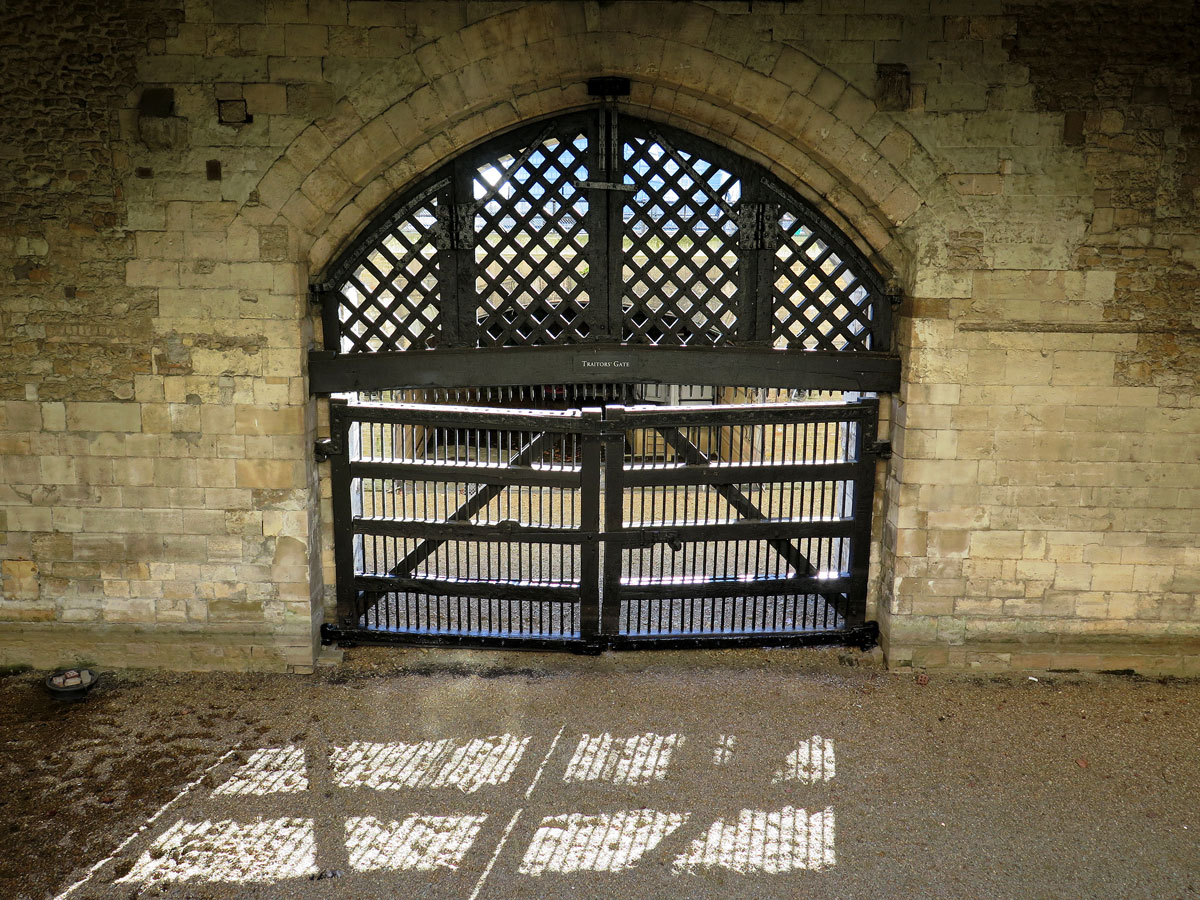
For a while they were kept in the Martin Tower and nearly disappeared again in 1671 after Thomas Blood made off with them but was caught before he got past Tower Wharf.

During the 19th century the Duke of Wellington was Constable of the Tower and the Waterloo Barracks were built to provide accommodation for nearly a thousand soldiers, and this is where the Crown Jewels are now kept.

Continue reading

Originally posted 2019-01-21 22:54:22.

The Tower of London Pt 3 – The Medieval Palace and the Bloody Tower

The Tower of London Pt 3 - The Medieval Palace and the Bloody Tower

When King Stephen died in 1154, King Henry II became the first of the Plantagenet Kings that were to reign until 1485.

During this medieval period, moats, curtain walls and towers were added to bolster up the defences – not to keep out invading foreign armies – but to thwart any attack from the King’s subjects. King John, Henry III and Edward II all had trouble with their Barons and in 1381 the Peasant’s Revolt tested the young Richard II.

Although the Tower was never meant to be used as a palace, there were occasions when the King of the realm found it useful to hole up here for a while.

It was King Henry III and his son Edward I who built what is now called the Medieval Palace. In fact, it’s a combination of three towers – St Thomas’s, Wakefield and Lanthorn – that make up the royal apartments.

Continue reading

Originally posted 2019-01-21 15:24:12.

The Tower of London Pt 2 – The White Tower

The Tower of London Pt 2 - The White Tower

The Keep, known as the White Tower, is the oldest part of the Tower of London and therefore seems as good a starting point as any, both for this review, and for a tour of the Tower.

After William the Conqueror’s successful invasion of England in 1066 he needed to secure its most powerful city, and by building an intimidating fortress in a strategic position next to the River Thames, there was going to be no doubt as to who was the man now in charge.

Work started on the Keep around 1078 and wasn’t completed until 1100, 13 years after William’s death.

It would have been the most formidable stronghold in the land when it was built, and was never intended to be used as a palace.

The White Tower – given its nickname after Henry III had it whitewashed – became more of a place to store arms and munitions than anything else and this is reflected in what there is to see inside.

Continue reading

Originally posted 2019-01-21 09:51:06.

The Tower of London Pt 1 – Planning a Visit

The Tower of London Pt 1 - Planning a Visit

With some 2.8 million visitors in 2017, the Tower of London is the most visited paid for attraction in the UK. It goes without saying therefore that a bit of planning before going there will help the visit go more smoothly.

Timing is always important of course, but with a steep entry price of £26.80 without donation for a full adult fare (Jan 2019), it pays to find out if you can reduce your admission costs. If, like me, you travel to London by train, then you can check out the 2for1 London offers available to passengers here https://www.daysoutguide.co.uk/tower-of-london

The offer, if it’s available, is based solely on the full price adult ticket including donation, which as of January 2019 is £29.50; in other words, a total of £29.50 for two people regardless of whether you qualify for a concession or not.

There are also reductions of 15% on the Tower of London website if you book in advance.

It may be worth considering a membership to the ‘Historic Royal Palaces’ which also covers Hampton Court Palace, Kensington Palace, the Banqueting House and Kew Palace (Kew Gardens are not included). The current individual cost is £52 a year for a Direct Debit membership (Jan 2019).

Continue reading

Originally posted 2019-01-20 09:38:35.

Horse Guards and Horse Guards Parade

Horse Guards and Horse Guards Parade


I tend to regard the southern part of Whitehall as the political end, and the northern part as the military end. I’m not sure if it was meant to be that way, but that’s the way I see it.

From a tourist’s perspective the one thing that shouldn’t be overlooked at the northern end is Horse Guards and its Parade Ground. As you walk up Whitehall past Downing St and the Scotland Office you can’t fail to notice the handsome looking Horse Guards Building with two mounted troopers of the Household Cavalry symbolically protecting the entrance to Horse Guards Parade. This used to be the formal entrance to St. James’s Palace via St. James’s Park and only the monarch is usually allowed to drive through the central archway.

Continue reading

Originally posted 2017-12-20 11:30:48.

The Banqueting House

The Banqueting House


There are so many tourist attractions in Westminster that it’s inevitable that some worthy places to visit often get overlooked, and I reckon that the Banqueting House is one of them.

I’ve read that some people are somewhat underwhelmed when they come here, which is a bit of a shame really because there’s more substance to it than many people realise. I think it’s better to regard it as a Banqueting Hall rather than a house, because it’s just basically one room – but what a room!

Situated opposite The Horse Guards in Whitehall, the Banqueting House is the only complete part of the Palace of Whitehall to survive the devastating fire of 1698.

From 1530 until the fire, the palace was the home of the monarchy, and with more than 1,500 rooms, was also the largest palace in Europe, larger even than The Vatican and Versailles.
It was designed by Inigo Jones in 1622 for King James I in a style that Londoners had never seen before. Built in the classical style, the highlight without any shadow of doubt is the fantastic ceiling painted by Peter Paul Rubens, and the seating arrangements around the room enable visitors to gain the maximum amount of vision to see and understand the paintings.

Continue reading

Originally posted 2017-12-20 05:49:37.

Westminster Abbey – Pt 6 Henry VII’s Lady Chapel

Westminster Abbey - Pt 6 Henry VII's Lady Chapel

In previous posts we’ve seen how Westminster Abbey started off as a Saxon monastery, then rebuilt by Edward the Confessor in the Norman style, and finally transformed into a Gothic church by Henry III and his successors, but in my view, there was one other architectural development that surpassed them all – Henry VII’s Lady Chapel, and to do it justice, this will be one of my longer posts, so you might want to think of putting the kettle on first if you intend staying with it.

Before describing this breathtaking chapel in more detail, I think it’s worth explaining the reason why Henry VII wanted to pull down Henry III’s perfectly good chapel dedicated to the Blessed Virgin Mary in the first place. The simple answer is that he probably wanted to be buried in a chapel that nobody could forget, but there was a bit more to it than that.

If you remember, in Part 5 we saw how St Edward’s shrine was surrounded by the tombs of another five kings. Apart from Henry III who had the chapel built, we can also find the final resting places of Edward I, Edward III, Richard II and Henry V – all of whom were members of the Plantagenet dynasty. Altogether, there were a total of fourteen Plantagenet kings, including five Henrys (from Henry II to Henry VI), and if you’re still with me, you’ll notice that Henry VII wasn’t one of them, and that’s because he was to become the first Tudor monarch.

Continue reading

Originally posted 2023-04-02 15:40:05.

Westminster Abbey – Pt 5 St Edward’s Shrine and Medieval Tombs

Westminster Abbey - Pt 5 St Edward's Shrine and Medieval Tombs

Our  tour has now reached the most sacred part of the abbey – St Edward’s Shrine. His body lies in a chapel located behind the High Altar and circumnavigated by the North and South Ambulatories, but before I go any further I have to tell you that access isn’t freely available to the general public. The reason given is that the Cosmati studded shrine is very fragile, and whilst that is undoubtedly true, I suspect it’s also to do with the fact that the abbey would prefer the chapel to be treated with the utmost reverence. There are however, a few ways to gain admittance, and I’ll come to that in due course. Meanwhile, I’ll try and explain who St Edward was, why he was revered by Henry III, and what other tombs you can see here.

Edward was born in Islip, Oxfordshire sometime between 1002 and 1005. His parents were the Saxon king, Ethelred ‘the Unready’ and Emma of Normandy, but his father’s altercations with the Danes ultimately led to the House of Wessex losing control of England to the Vikings, and most of Edward’s early life was spent in Normandy.

While in exile, Edward developed a love for the simple life, and although there would have been doubts as to whether he would get to inherit his father’s kingdom, he pledged to make a pilgrimage to Rome if ever he was. In 1042 the opportunity came when his half-brother King Harthacnut died, and Edward’s claim to be the rightful successor gained general acceptance. He was crowned King of England in Winchester Cathedral on 3rd April 1043.

Continue reading

Originally posted 2023-03-20 15:25:48.

Westminster Abbey – Pt 4 The Coronation Church

Westminster Abbey - Pt 4 The Coronation Church

Westminster Abbey is known as the Coronation Church, and on 6th May, King Charles III will become the 40th monarch to be crowned here, and at the age of 74, he will also be the oldest. Along with his wife and consort, Queen Camilla, the Gold State Coach will bring the couple from Buckingham Palace to the abbey in what is known as the ‘King’s Procession’.

There won’t be that many people who saw the last coronation, and although this one is bound to include a certain amount of pageantry, there will be some differences. Preparations would have undoubtedly been finalised, but the arrangements and timing have yet to be officially announced, but it seems likely that the ceremony will reflect a mixture of traditional and modern Britain.

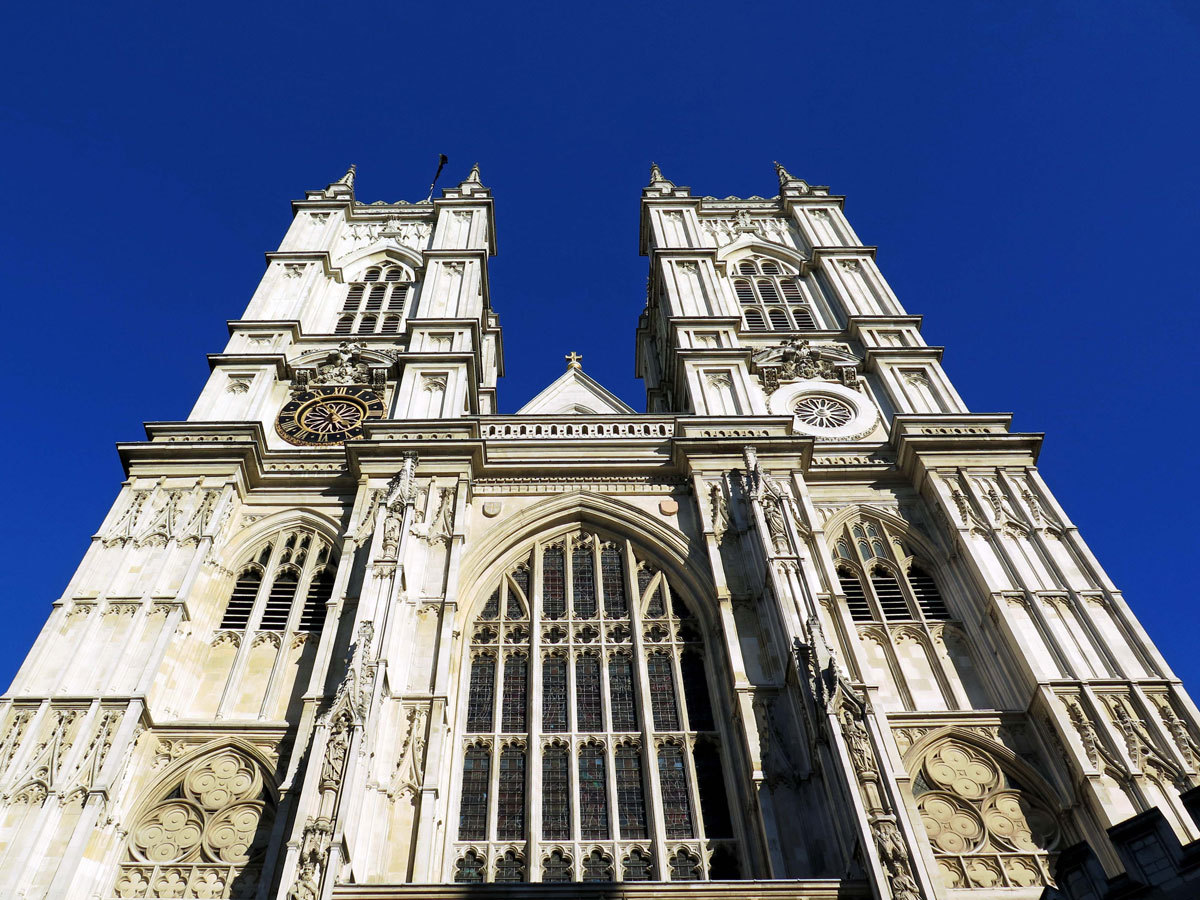
I expect the royal couple to enter the abbey through the West Door where the procession will continue up the nave towards the quire screen. An anthem written by Andrew Lloyd Webber is one of twelve new pieces of music commissioned by King Charles for the occasion, and it remains to be seen whether it will have the same impact as Handel’s Zadok the Priest which was written for the coronation of  King George II, Elgar’s Pomp and Circumstance (for Edward VII) or William Walton’s Crown Imperial (George VI).

Continue reading

Originally posted 2023-03-14 14:54:04.

Westminster Abbey – Pt 2 The Tour Begins

Westminster Abbey - Pt 2 The Tour Begins

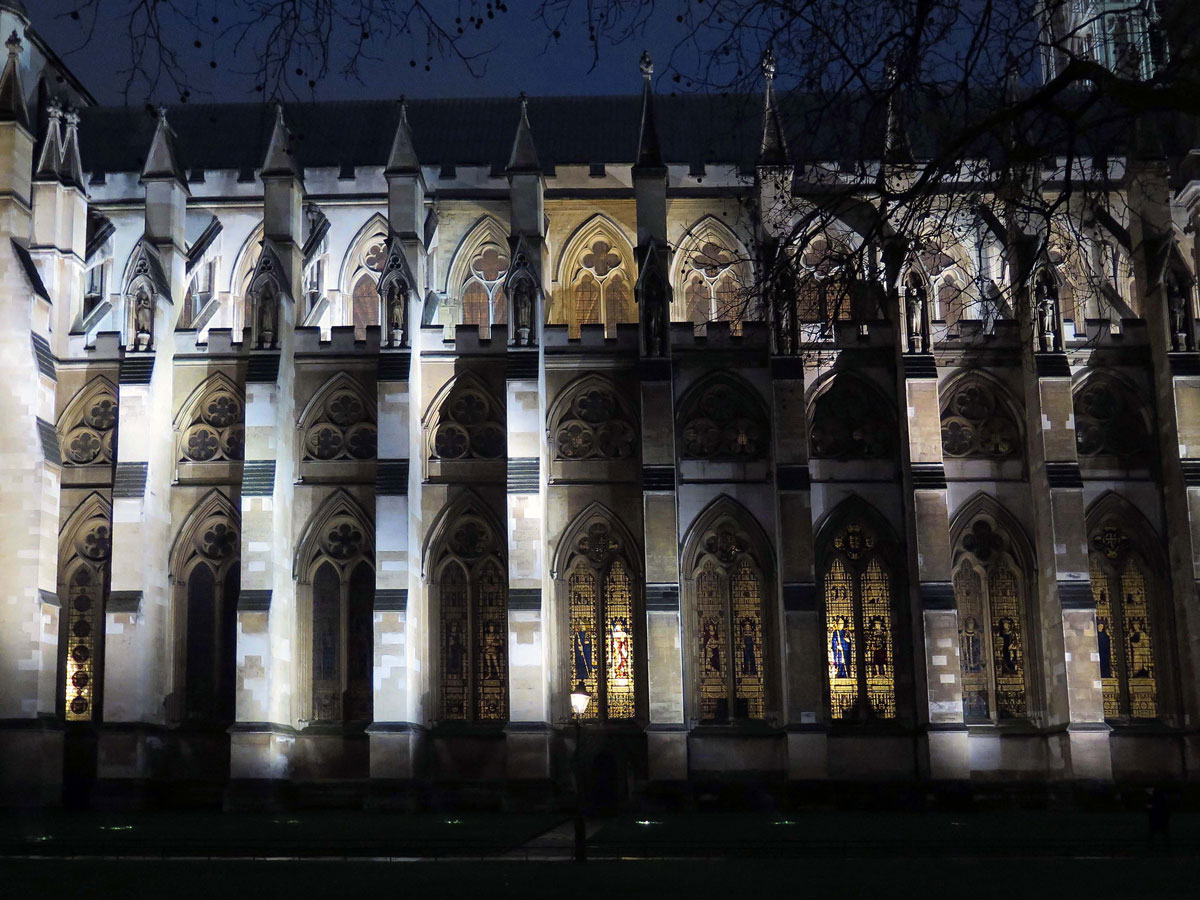
The featured image at the top of the page shows the north side of the abbey at evening time, and this is where the tour begins. After passing through the security checks, we enter the abbey through the medieval North Porch where there are two ticket desks – one on each side of the doors. I believe at busy times those with pre-booked tickets are ushered through on one side, and those without, on the other. I can’t say with certainty, as I’ve never been involved in a queue, but it does seem to make sense.

As you walk into the North Transept, you’ll see a desk in front of you with free audio guides being dished out, and if you haven’t been before, I recommend that you take one. In actual fact, you can download an app to your phone, but the audio guides are better. Over to your right are maps in different languages which are useful, but not detailed.

The North Transept is also known as the Statesmen’s Aisle, which is an apt description given all the statues and monuments to politicians here. The problem with trying to photograph them though is that the benches with the audio guides get in the way somewhat.

Continue reading

Originally posted 2023-03-07 05:58:00.

Westminster Abbey – Pt 1 An Introduction

Westminster Abbey - Pt 1 An Introduction

When I started blogging back in 2017, Westminster Abbey was one of my earliest attempts at connecting with the blogosphere, but things have changed since then. Not only has my style changed, but also the rules regarding photography in the abbey, and rather than update the post again, I thought it made more sense to start afresh with a new approach.

Through a series of posts I want to take you on a virtual tour of this magnificent building, but if you intend coming in person it has to be remembered that Westminster Abbey is primarily a place of worship. I’m a spiritual person rather than a religious one, but whatever your reason for coming is, whether it’s to admire the building, immerse yourself in its history, see where every English monarch has been crowned for the last thousand years, or just to pray, I guarantee that you’ll find it a most welcoming place to come.

Continue reading

Originally posted 2023-03-05 15:42:10.

City and Borough of Westminster

City and Borough of Westminster


London has 31 Boroughs, 1 City (The City of London), and Westminster, which is both a Borough and a City.

Whereas the City of London became the legal and financial powerhouse of London, Westminster became the religious, royal and political centre.

This is the home of Westminster Abbey, Buckingham Palace, and the Houses of Parliament, but it’s also the place to come for entertainment, shopping and culture in places like Piccadilly Circus, Oxford St and Trafalgar Square. I guarantee that you’ll run out of time – or steam – or both, before you’ve even scratched the surface. Continue reading

Originally posted 2017-09-24 10:27:31.