Westminster Abbey - Pt 2 The Tour Begins
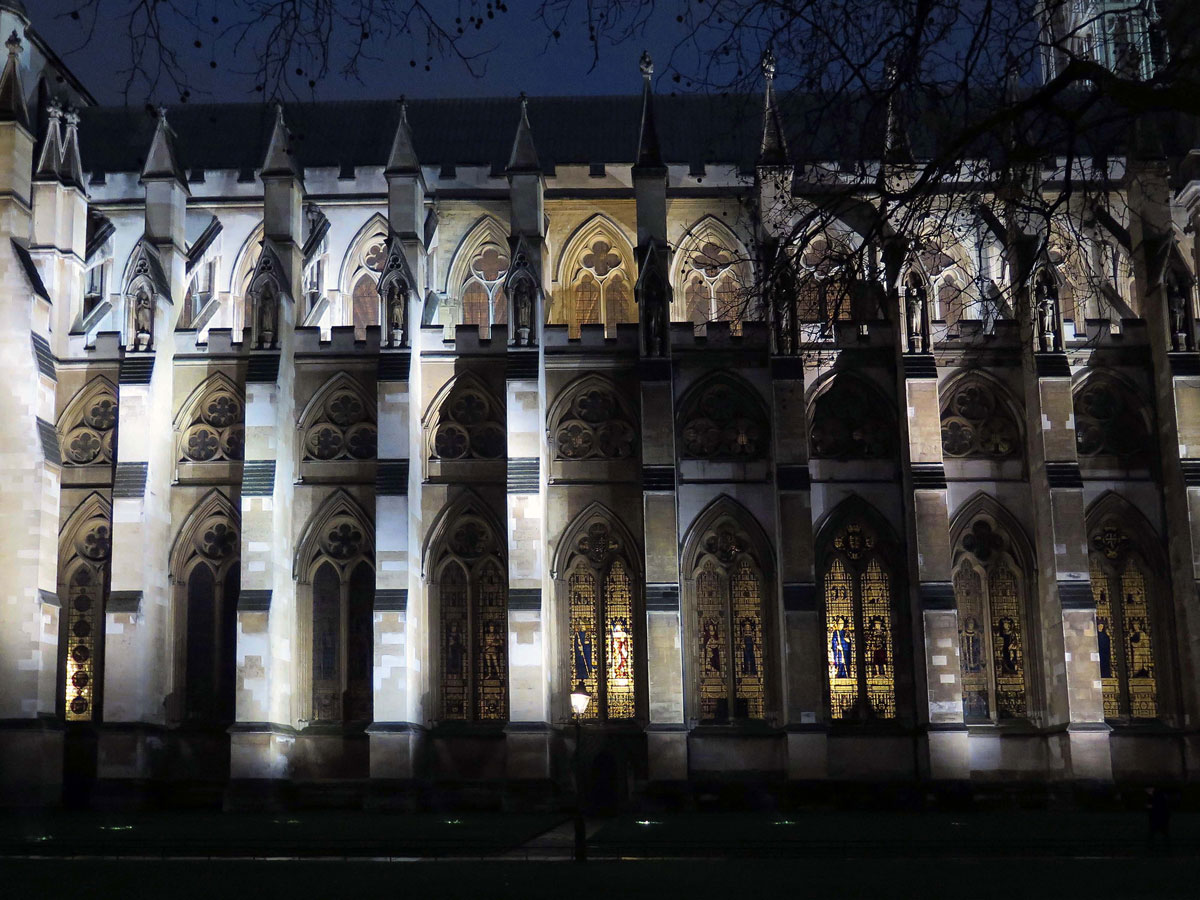
The featured image at the top of the page shows the north side of the abbey at evening time, and this is where the tour begins. After passing through the security checks, we enter the abbey through the medieval North Porch where there are two ticket desks – one on each side of the doors. I believe at busy times those with pre-booked tickets are ushered through on one side, and those without, on the other. I can’t say with certainty, as I’ve never been involved in a queue, but it does seem to make sense.
As you walk into the North Transept, you’ll see a desk in front of you with free audio guides being dished out, and if you haven’t been before, I recommend that you take one. In actual fact, you can download an app to your phone, but the audio guides are better. Over to your right are maps in different languages which are useful, but not detailed.
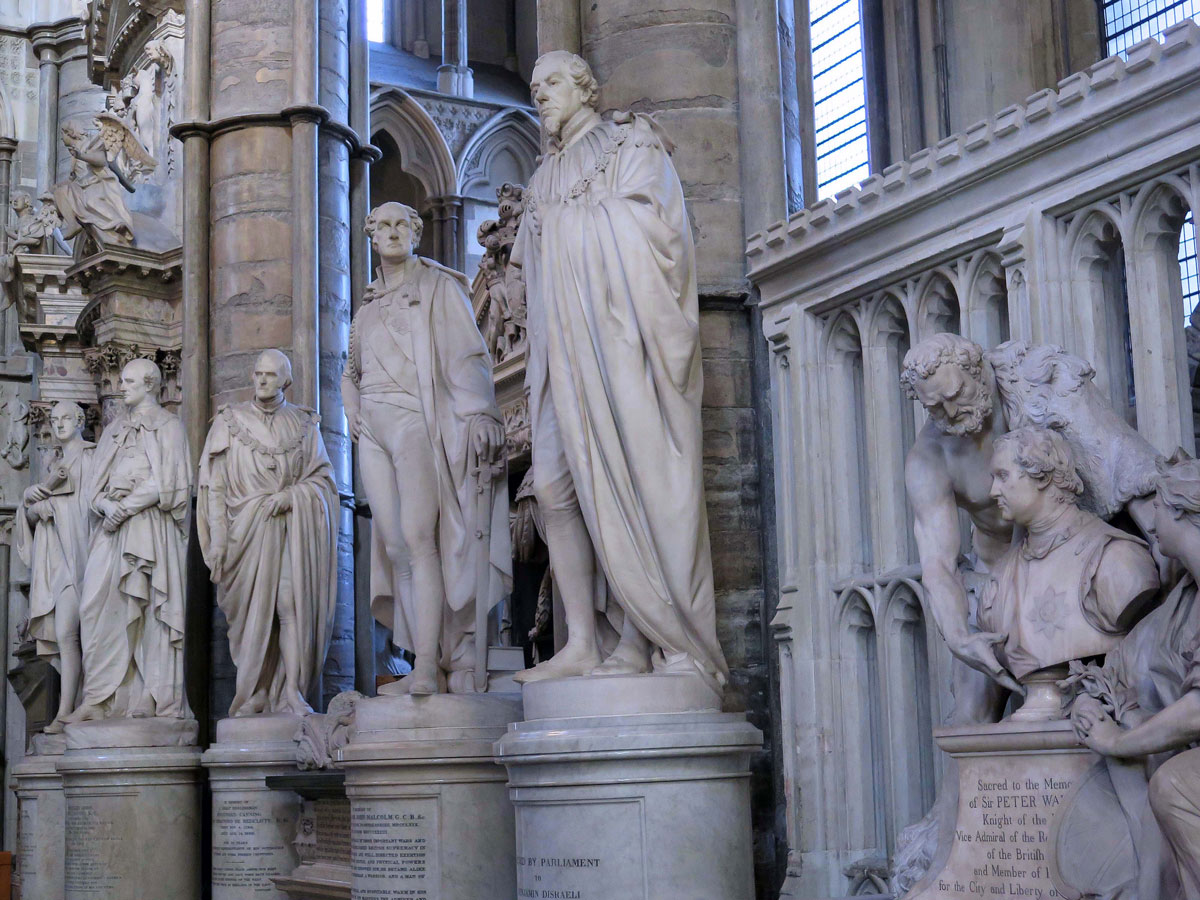
The North Transept is also known as the Statesmen’s Aisle, which is an apt description given all the statues and monuments to politicians here. The problem with trying to photograph them though is that the benches with the audio guides get in the way somewhat.
When I first arrived at the abbey after the photography restrictions were lifted I was like a kid in a sweet shop, but it didn’t take long to realise that you need the patience of a saint to get some decent results. Objects and people are in the way wherever you go, but thinking ahead and being economical with your time will pay dividends; and as we walk around the church I’ll pass on some tips that should help avoid any disappointment.

As far as the North Transept is concerned, you should be able to get some close-ups of the monuments straight away, but for an overall view, the best time to photograph it is after the doors are closed. The doors close at 3.30 pm and you have an hour to get out, but by then you should be on the other side of the Crossing which will give you an unobstructed view when everything’s cleared away and the chairs put in place ready for the evening service.

With more than 3,300 graves and memorials in Westminster Abbey, you wouldn’t thank me for trying to cover more than the most interesting ones, and the first one that I want to point out on the western side of the Statesmen’s Aisle is the monument to William Pitt the Elder who was buried here in the North Transept on 9th June 1778. Also known as the Earl of Chatham, he was Prime Minister twice. Buried with him is his son, William Pitt the Younger who, at 24 years of age, was England’s youngest Prime Minister. There was no room for another monument next to his father, and so you’ll find one of him over the west entrance door.
Another politician who was Prime Minister twice was Henry John Temple, 3rd Viscount Palmerston. An important figure during the height of Britain’s imperial power, he was buried in the North Transept in October 1865, and a statue of him can be found a bit further along from William Pitt the Elder.


Talking of famous Victorian Prime Ministers, there are statues to two adversaries on the eastern side of the aisle. William Ewart Gladstone and Benjamin Disraeli were both extraordinarily gifted politicians, but detested each other, so I suppose it’s not surprising that they weren’t buried in the same place. Gladstone is buried here in the North Transept and Disraeli at his home, Hughenden Manor at High Wycombe.


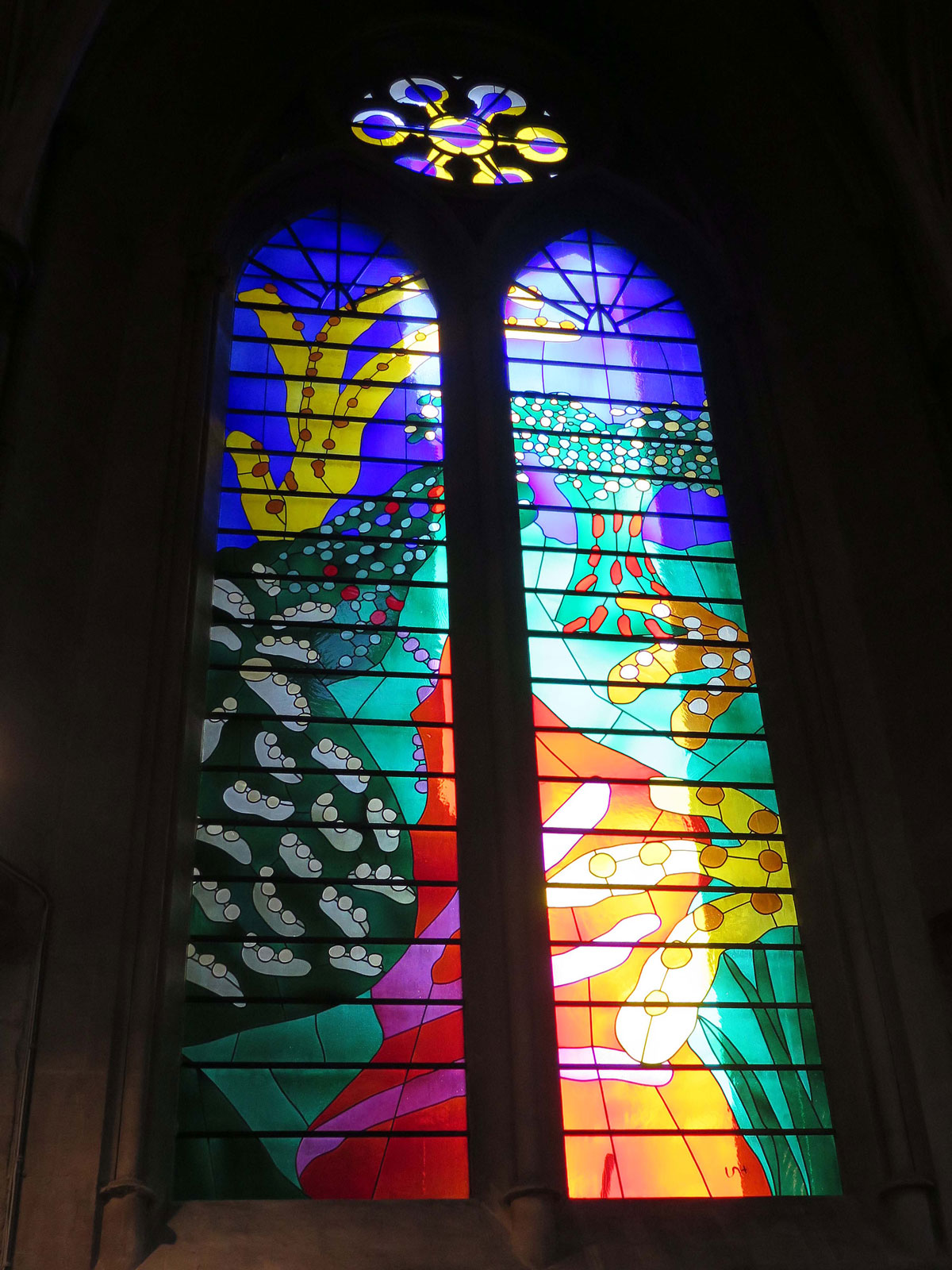
Before leaving the North Transept check out the ‘Queen’s Window’, a modern creation by the celebrated artist, David Hockney. I have to admit that I’m not a huge fan of Hockney’s work, even though his 1853 Gallery in Salts Mill near his native Bradford is worth a visit. However, I do actually like this window that he made to celebrate the reign of Queen Elizabeth II. He’s never worked in stained-glass before and it represents a Yorkshire country scene, something that he thought would also please Her Majesty. I had it explained to me otherwise I wouldn’t have known. It has to be said though, that the light behind the window doesn’t always play ball to capture those vivid colours in a photograph.
A friend of William Pitt the Younger was William Wilberforce, a politician that was responsible for helping to abolish the slave trade. He died in July 1833 and is also buried in the North Transept, but as we follow the route around into the North Quire, you’ll see a monument to him down on the left hand side.

The North Quire Aisle isn’t full of monuments to politicians though, because after the Abbey’s famous organist Henry Purcell was buried here in 1695, others joined him and since then it has become known as the Musician’s Aisle.

The North Quire Aisle leads into the North Aisle of the Nave where monuments and memorials of various people you’ve probably never heard of line the walls. There is one oddity that’s worth noting though – the burial stone of Ben Johnson (or Jonson).
Ben Johnson was a dramatist and poet who included William Shakespeare among his cast and Sir Walter Raleigh’s son as a pupil, but despite being a friend of royalty and becoming Poet Laureate, he died locally in 1637 as a pauper. There is one story which says that he begged “eighteen inches of square ground in Westminster Abbey” from King Charles I, and another that when the Dean of Westminster mentioned to him about having a plot put aside in Poet’s Corner he is said to have replied “I am too poor for that and no one will lay out funeral charges upon me. No, sir, six feet long by two feet wide is too much for me: two feet by two feet will do for all I want”. “You shall have it” said the Dean and so Johnson was buried standing upright in the North Aisle.
The simple burial stone was moved to the wall when the Nave floor was re-laid during the 19th century, with the original grave site being marked with a small lozenge stone. A burial in 1849 disturbed Johnson’s grave site and the clerk of the works saw “two leg bones of Jonson fixed upright in the sand and the skull came rolling down from a position above the leg bones into the newly made grave. There was still some red hair attached to it”.


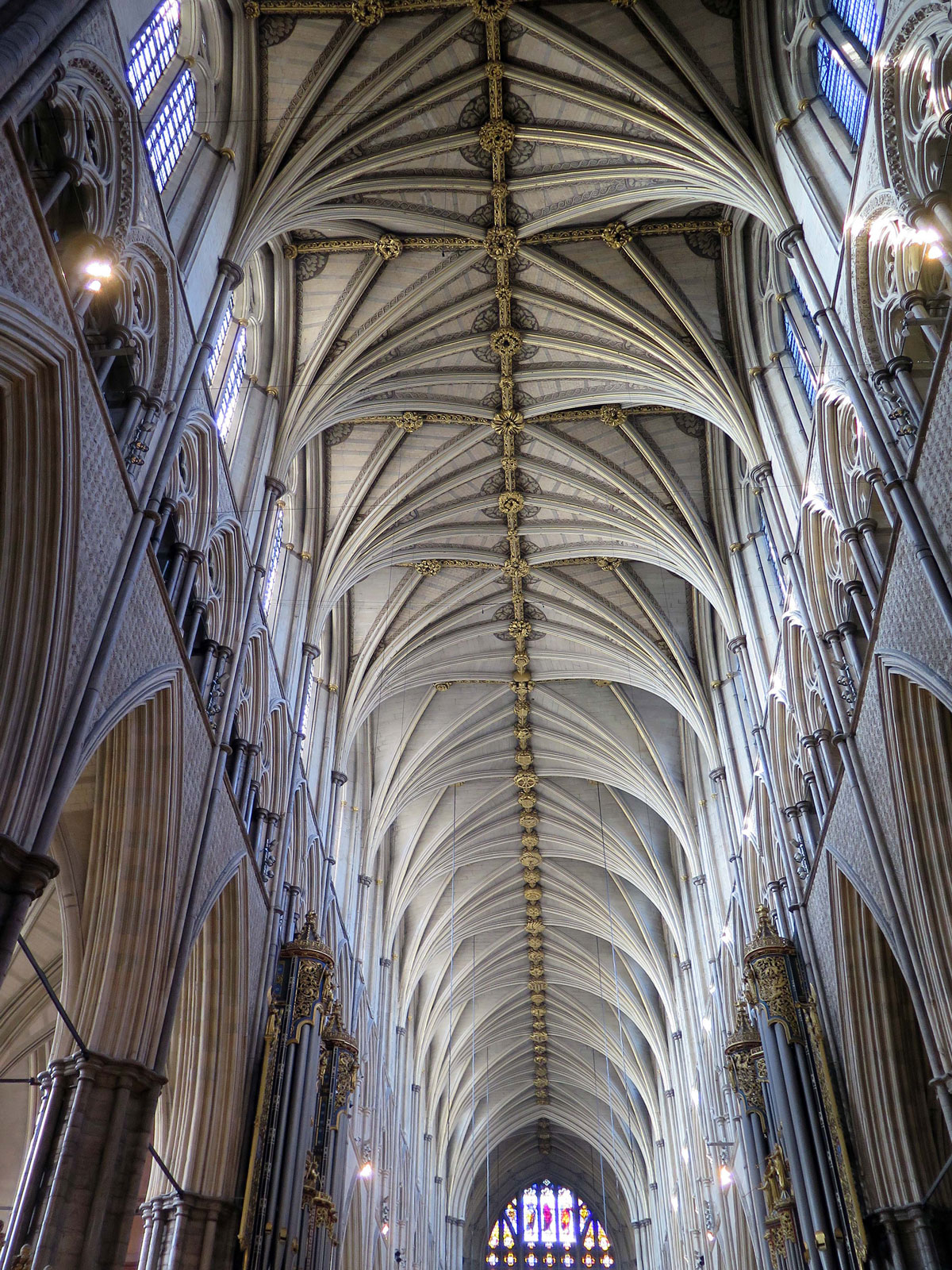
Obviously, this isn’t an exhaustive run-down of what there is to see on the north side of the nave because I’ve tried to keep things simple, and just highlight what I reckon most people would be interested in. Time is precious when coming to a place like Westminster Abbey and I’m sure that most people don’t want to spend time looking at memorials, statues, monuments and graves that are comparatively uninteresting, and so now that we’ve got the tour up and running, I hope that you’ll join me in part 3 as we work our way up through the majestic Nave towards the Quire Screen.
POSTED – MARCH 2023
Originally posted 2023-03-07 05:58:00.
I took you advice. I aye do everything back to front but hey. Especially loved the Ben Johnson stone.
Great! Just follow the arrows ➡️
I will. We are away tomorrow early to Prague till Monday night. I will follow more arrows after that.
Off to your beloved Prague again then. The arrows will still be there when you get back 🛫 😊
I will be looking for them.
I love that Hockney window (I’m a big fan of modern stained glass as well as the traditional). And although I had heard about Ben Jonson being buried upright, I hadn’t heard that anecdote about the grave being uncovered – it sounds most disconcerting!
Not a job for the faint hearted Sarah 🙂
Wow Malc! This was amazing! Loved the photography and the David Hockney window. Fabulous info which I am gathering, from your posts, for my trip. Cheers Malc, and all the best.
Thanks Francis (co?)
I’m very impressed with your guide so far, Malc. Even an Anglophile yank like me knew who you were talking about. 😉
Thanks Pat. It helps if you have some idea who these people are. Obviously I can’t go into detail about them here.
I remember being told the story of Ben Johnson being buried standing upright but didn’t really believe it at the time. I love the vaulted ceiling in the Nave, and that colourful David Hockney window is another ‘wow’ for me, you’ve photographed it well 🙂
I don’t know if Ben Johnson was a great playwright or not, but at least he’ll be remembered for something. As for the David Hockney window, you can now see why I was confused talking aboutt your paintings in the Manchester Catholic church 🙂 Thanks for the compliment by the way. It wasn’t as easy to get a decent picture as you might think.
Well I’m through the door and very much enjoyed the tour so far, Malc. 🙂 I’ve already learned loads, including just how many statesmen, politicians and people of note are remembered and/or buried there. Love the story of Ben Johnson’s burial and it’s later disturbance. It’s stories and little details like this that, ironically, keep the person alive.
Interesting that David Hockney was chosen to create a window for Her Majesty when he was inexperienced in the medium of stained glass. You’d think they might have chosen, oh I don’t know, a stained glass window artist perhaps? Still, I’m sure she appreciated the rural Yorkshire scene, as even I do and I’m not a fan of his either. You’ve captured its vivid colours beautifully in your picture, something I’ve never managed to do when photographing such windows. But then you are somewhat of a master of your art. Your photos, as always, are excellent, and my vicarious tour around the Abbey is much the richer for them, and for your highly engaging commentary. Roll on part 3… 🙂
I wasn’t sure what ‘vicarious’ meant and so have just looked it up. It’s a lovely word to use Alli, so thank you for that. I’m also pleased to hear that you’ve learnt a few things to add to your exceptional knowledge about our past history which the abbey has in abundance.
Once again, you’ve given me far too much credit than I deserve, and if you’re not careful, I’ll have trouble getting my head to fit through the Great West Door 😊 Anyway, thank you so much for the comments Alli. Life always seems so much better when I read them.
Abundance is a good word too, as it accurately describes the breadth and depth of history crammed within the abbey’s walls. I reckon this site must hold one of the greatest concentrations of history in the whole of the UK. And I’m thoroughly enjoying seeing the different aspects of it all through your eyes. So of course you must squeeze your head through the Great West door as we’ve got a lot more exploring to do inside! 😉 😀
It’s my considered opinion that anybody who is remotely interested in British history should visit this place at least once in their life. No matter what I said in th previous comment, there’s nothing to compare to the real thing.
Absolutely right, Malc. However, at least now when I go I can save myself the cost of a guide book! 😀
LOL 🙂
You have crossed, Malc, the borderline into the magnificent with this post! It is full of erudite information, some even macabre, but others inspiring such as that about William Wilberforce and Purcell.
The effort required to produce the excellent photographs could and should win awards for your skill.
I can hardly wait to learn more! Big thank you!
Joanna
Well, what can I say Joanna except a massive thank you for such lovely comments. I won’t deny that with the forthcoming coronation I hope that the info will help people understand more about this magnificent place and perhaps encourage them to want and come and see it for themselves. A big thank you again, and yes, there’s more on the way.
Thank you, Malc, you are worth it!!
Joanna
😇