
Is Hull Really a 'Crap' Town? - Pt 2 The River Hull and How the Town Began
Thanks to the person who couldn’t wait to have their Benson & Hedges fix this morning, it meant that the hour I thought I’d gained, had now been lost. Thankfully, other than a bit of stitch, I was none the worse for wear as we stepped out into the bitterly cold, but bright Yorkshire morning air – which this time didn’t include any flashing blue lights to hurry us along.
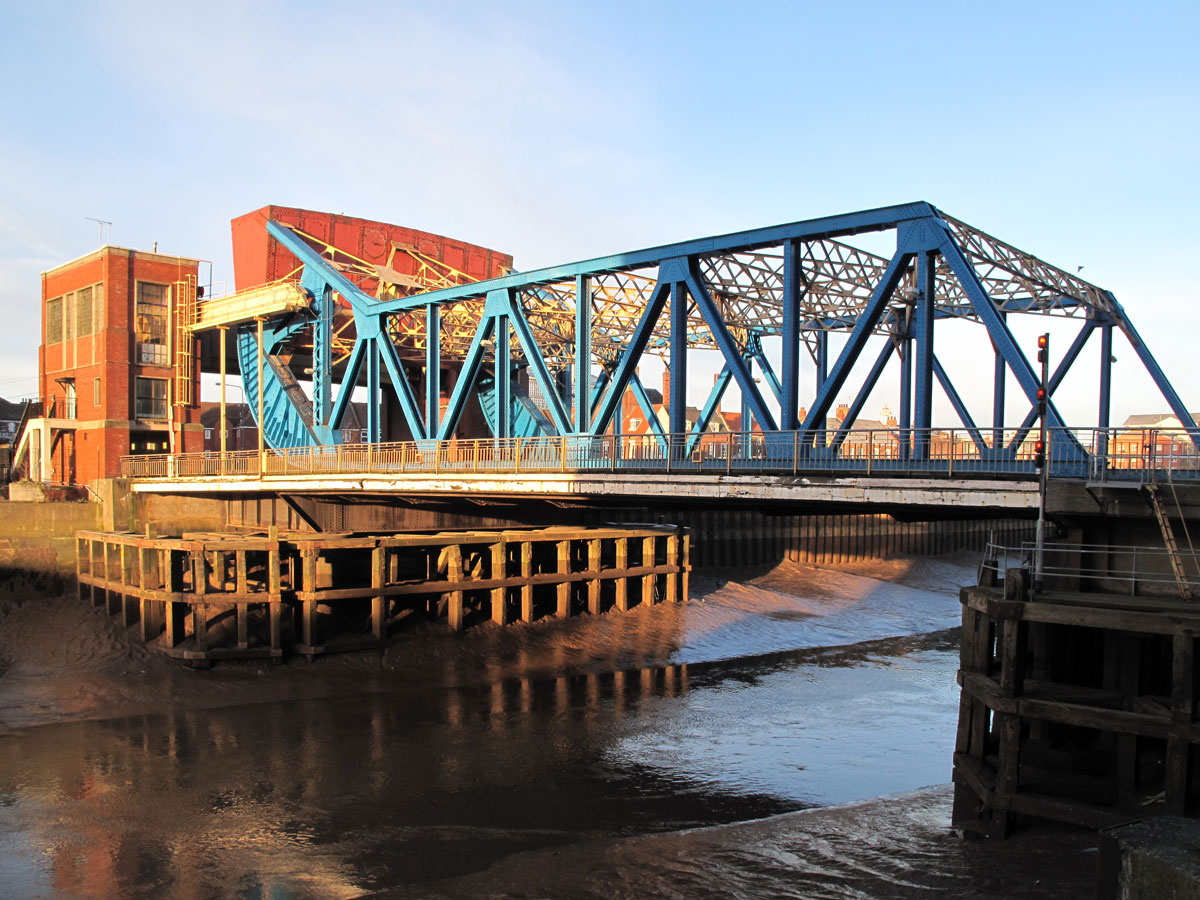
From the hotel, we walked up the ramp onto the Myton Swing Bridge where there were some great views of the River Hull below, not that I had any chance to take any photos of it, because Kay couldn’t care less how good the views were, she was definitely not hanging around in the cold waiting for me to take pictures. As she marched off without a clue where she was going, I had no option but to put the camera away and just console myself with the fact that the tide was out anyway.
The source of the River Hull is in the Wolds, not far from Driffield: It then weaves its way for around twenty five miles or so down to the Humber, which is where the majority of Yorkshire’s rivers end up. The map below gives a broad outline as to how at least eight of those rivers drain Yorkshire’s higher ground to join the River Ouse. At Trent Falls near Faxfleet, the Ouse is met from the south by the River Trent, and this is where it becomes the Humber. Although the Humber is often referred to as a river, it is in actual fact an estuary, but whatever you want to call it, the Humber has, over the centuries, been both an asset and a barrier to this part of England.

The point at which the River Hull meets the Humber was not lost on the Cistercian monks of Meaux Abbey. Located near Beverley, some 10 miles north of modern day Hull, the 12th century abbey owned somewhere in the order of 20,000 acres around the area, much of it used for grazing sheep whose fleeces were exported to the continent by merchants. It was a lucrative business, and if the monks had a port of their own, they could pocket more of the profits for themselves. Fortunately, the manor of Myton which was part of their estate, included the hamlet of Wyke that was conveniently situated on the western side of the River Hull near to where it joined the Humber – and on descending Myton Bridge we found ourselves in the historic core of what was to become known as Wyke-upon-Hull.
Negotiating our way up Market Place and around into Liberty Lane, we were soon in the High Street, or Hull Street, as it was originally called. This is one of the earliest streets that can be identified with the town, but I wouldn’t want you to get carried away with the idea that this is a throwback to the days of ‘Merrie Olde England’ or anything. To begin with, this street was full of converted old warehouses and stuff, and hardly eye candy for the avid historian let alone for someone like Kay who was hoping to see a modern new John Lewis store or something; and it wasn’t long before she was looking for an escape route.
As we walked up High Street we came to what is called the Museums Quarter, but we were here before any of the museums were open. It didn’t matter one iota though, because with the weather being so good I wanted to check out as much of the city as I could on foot this morning before going to the football match this afternoon – and not only that, there was always tomorrow, so we walked up to the Drypool Bascule Bridge, had a quick look around, and then parted company.
Generally speaking, my wife hasn’t got a great sense of direction, but she seems to have an inbuilt radar system that tells her which way to go when it comes to locating an unfamiliar town’s shopping centre, so off she went, leaving me to take as many pictures as I wanted, and one of the first I took was of the imposing Clarence Flour Mill next to the bridge. Since I took that photo though, the mill has been demolished, which some people may say is a good thing, but I’m not sure that I’m one of them, especially when you see what has been achieved at the Baltic Mill in Gateshead. I wouldn’t mind betting that the redevelopment won’t be half as interesting, but only time will tell.
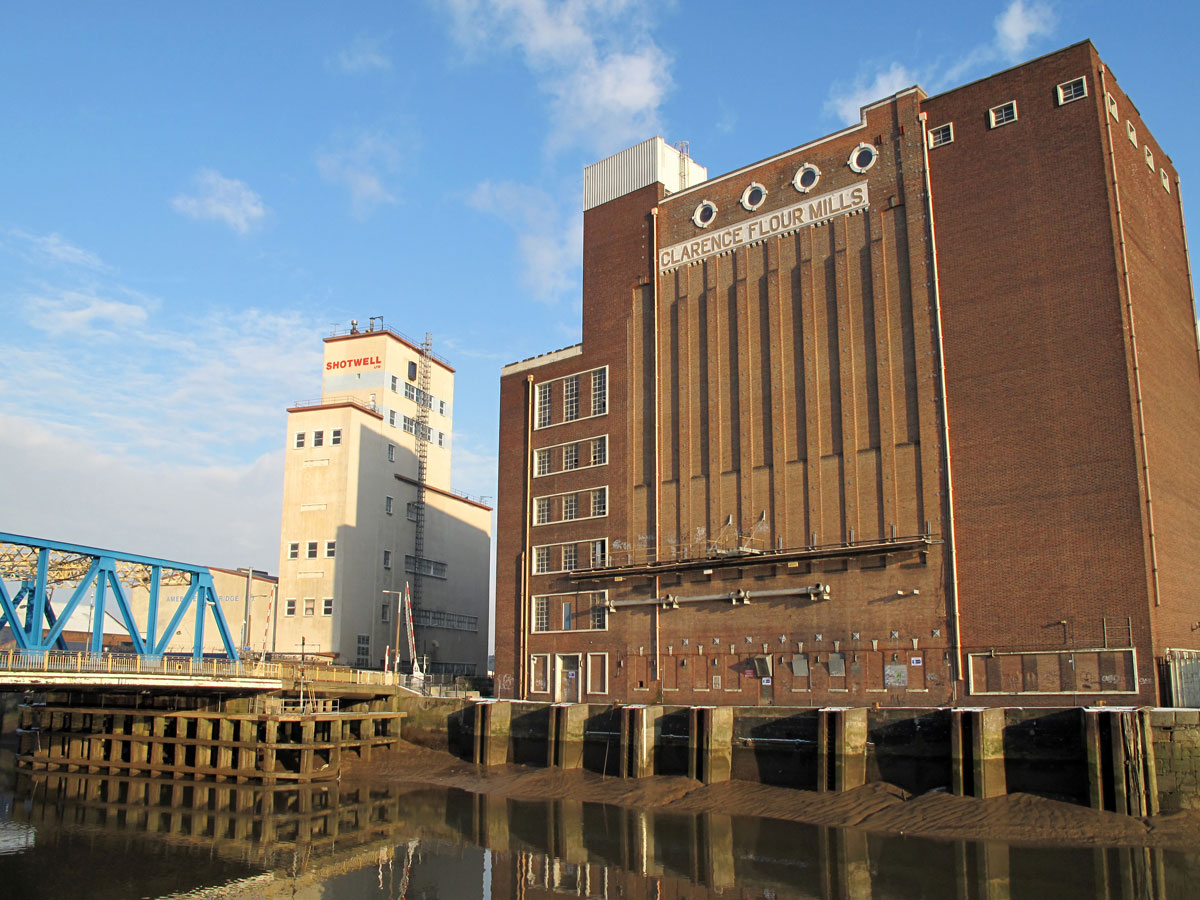
Admittedly, the building that you see in the picture above was only constructed in 1952, but it replaced an older mill that was destroyed in a WWII bombing raid. The mill belonged to the Rank Hovis company, with the original being built for Joseph Rank in 1891. Why I mention this is because Joseph’s son, Joseph Arthur, was born in the family home in Hull’s Holderness Road, and J. Arthur Rank became synonymous with the British film industry, which some of you may remember by the famous introduction to their films.
I may not have been able to take a picture of the River Hull from Myton Bridge, but I was able to take one looking downstream from Drypool. The tide was still out, but at least there was a good view of the old port on the right-hand (western) side of the river.
By the time King Edward I acquired it from the monks in 1293, Wyke-Upon-Hull was one of the busiest ports in England, and it’s not difficult to see why it would be useful to him after he transferred his base to York in order to make life easier for attacking Scotland. In 1299 he granted the town a charter, and it was then that Wyke was renamed King’s Town-Upon-Hull.

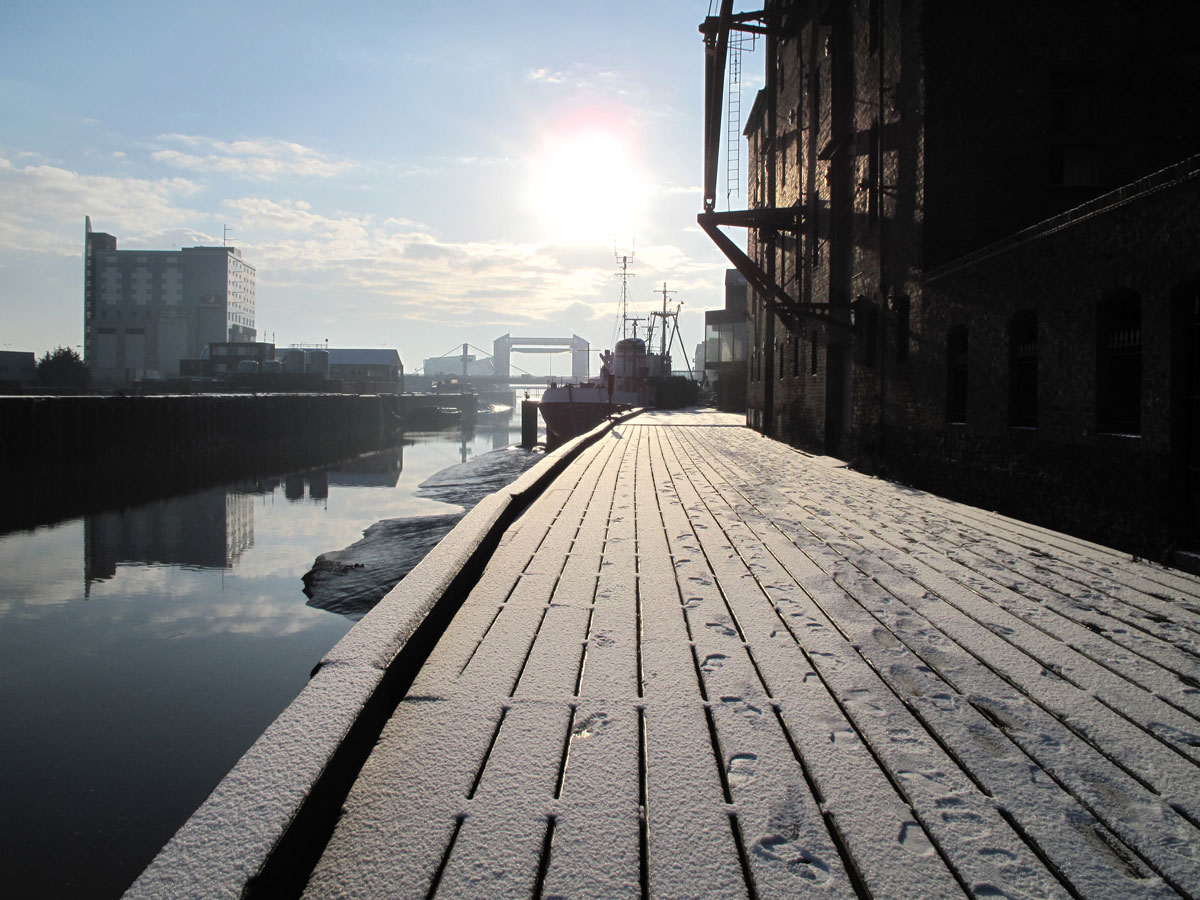
From Drypool Bridge there’s a convenient boardwalk that runs alongside the Museum Quarter down the western side of the river, but there wasn’t much to look at across the water as it appeared to be in need of a fair bit of regeneration.
After Scots marauders reached York, it was decided to bolster Kingston-Upon-Hull’s defences, and the map below, drawn by Wenceslaus Hollar, shows how the town looked sometime before 1640. Note how the eastern side of the river was also included in the town’s defences.

Walking down the boardwalk today would bring me to the Scale Lane Footbridge, which would have been a big asset if it had been open when I was here, as it connected the Premier Inn to the Old Town.
It was a shame that it wasn’t open, not just because of the convenience, but because I’m a secret anorak where bridges are concerned. Some people like collecting stamps, comics or even banana stickers, and in fact there’s one bloke who’s even got a collection of belly button fluff, but I’m happy enough to collect bridges. I don’t mean literally of course, just photographing them – or at least the interesting ones.
As it was, it meant that I had to continue underneath Myton Bridge to what appeared to be yet another bridge, but in actual fact was the Hull Tidal Surge Barrier.
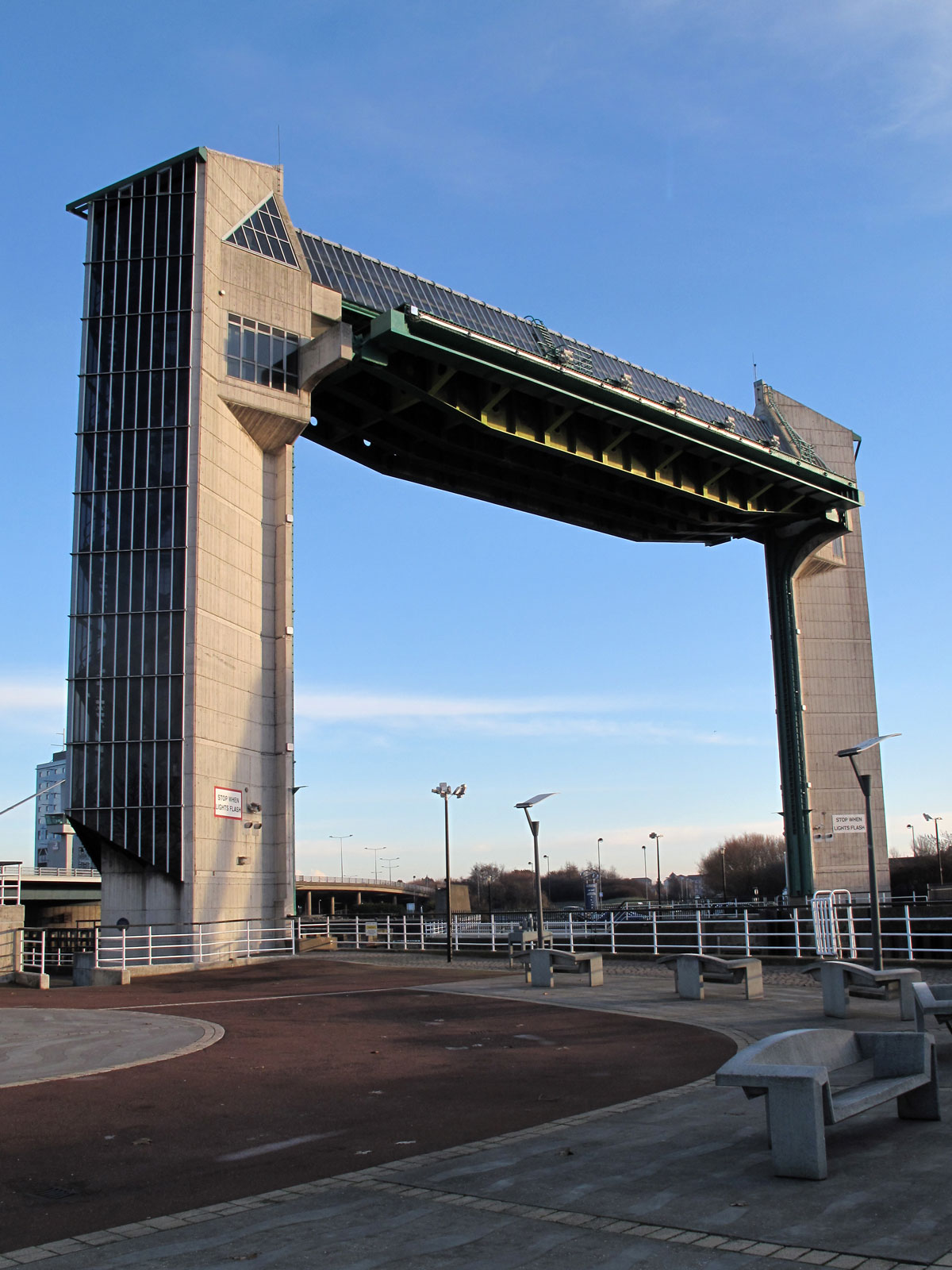
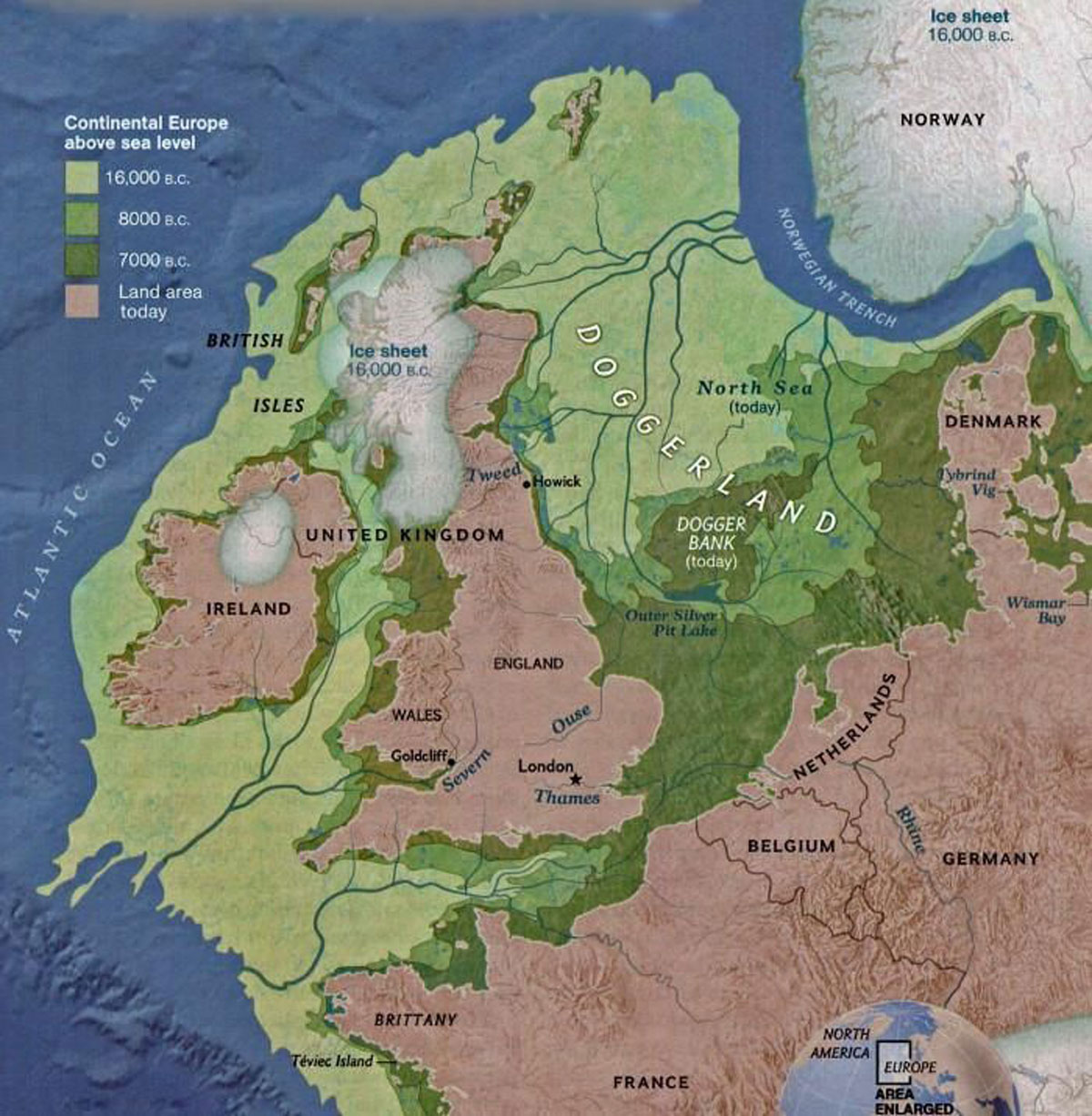
This tidal barrier opened in 1980 to protect the River Hull from tidal surges that frequently occur. Without going into too many details, the North Sea is affected by tidal surges when the conditions are right (or wrong), and the reason is because it’s a shallow sea – so shallow in fact, that until the last ice-age ended 10,000 years ago, Britain was a peninsula at the North-Western tip of Europe. The land that is now under water was known as Doggerland, and the Dogger Bank is just 50 to 120 ft (15-36m) below the North Sea. The Netherlands is the most at risk from these surges, but the coast of Eastern Britain and the Western coasts of Europe bordering the North Sea are all susceptible.
A few yards further on was the Millennium Swing Bridge, a footbridge built in 2001, which allowed me to cross the river without any hassle to The Deep, a modern looking aquarium, or a zoo for fish as I tend to think of them. I had no intention of going inside this morning, but the attraction has at least breathed some life into this prominent location. For me, I was more interested in seeing where the River Hull joined the Humber.

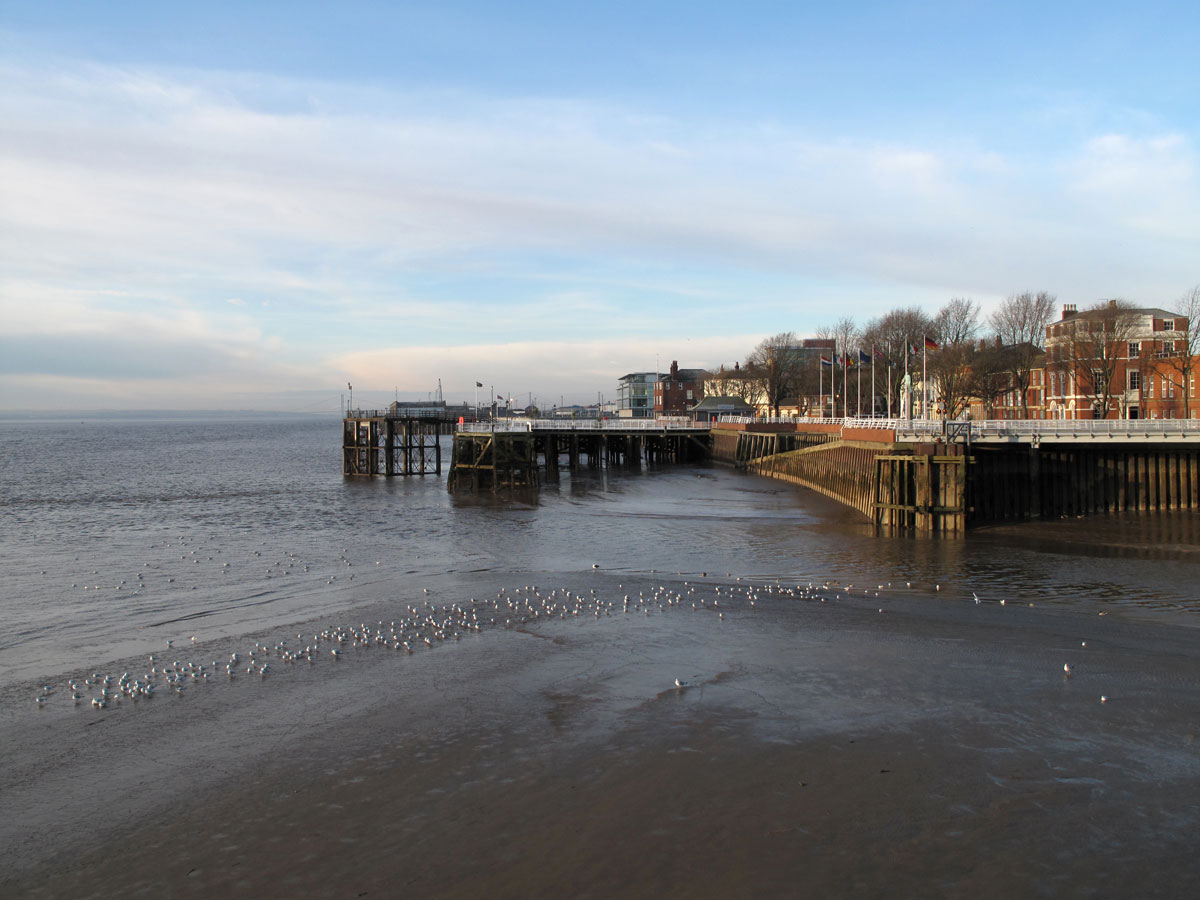
There were some decent views downriver towards the ferry terminal and also across the Humber to North Lincolnshire, but nothing to get too excited about. The tide must have just started to turn because there was a small flock of Common Gulls hanging around on the mudflats waiting for the tide to bring their breakfast in, but after a quick look around, I was ready to cross back over the Millennium Footbridge towards Victoria Pier and the old docks, and in Pt 3 I’ll be discussing how the port developed, prospered – and then declined.
POSTED – SEPTEMBER 2023
Originally posted 2023-09-20 11:38:21.
I’m very late to the party (as per) on this one but enjoying reading about Hull.We used to pass through often when we lived in Germany and Holland as the ferry link was handy. I like the place, rough edges and a lot of history. Great combination!
Not missing much by missing The Deep.
As you say, port cities like Hull invariably have some rough edges, but they often also have character and characters as well. I’m glad you enjoyed the read, and thanks for commenting.
Coming to this a bit late but I’m glad I did 🙂 The morning light is lovely and I can’t understand why anyone (Kay!) would want to shop in preference to a walk by the river. You can shop anywhere but you don’t always have the chance to explore somewhere new! And while you like your bridges, I love pouring over maps, so I always enjoy it when you include some in your posts. I was particularly interested in the one of the rivers, as it includes my favourite Swale 🙂
Thanks Sarah. I’m with you on Swaledale too 🙂
Apologies, Malc, I somehow missed this one. The downside of blogging so infrequently I suppose. I don’t always get, or see the notifications. As I’ve said before, do feel free to give me a poke if I’ve missed a post, it’ll only be because I don’t know about it. Still, better late than never, and it seems things improved for you both somewhat after your initial ordeal in the city. I hope Kay found the shops, although I’d have been more likely to tag along to see the river and the bridges. Interesting story of how Kingston-upon-Hull came upon its name, which I hadn’t known, and I was fascinated by the prehistory of Doggerland. I’d heard of ‘Dogger’ on the Shipping Forecast, but hadn’t realised where it was or the story around it. Great photos, as always, and that lovely light on the boardwalk really shows exactly how cold it was. Brrrrr… 🙂
It seems that lots of bloggers have problems with notifications and is one of the reasons why I’ve adopted a system to make sure I don’t miss those that I definitely want to read. As for our look at Hull, you know that I like to get into the underbelly of somewhere to fully understand it. It all helps to form an informed opinion about a place. Thanks for your lovely comments as always Alli and I hope you get notifications for the other posts I’ll be writing about Hull so that you can let me know whether you think it’s a crap town or not.
I know our blogs don’t always talk to each other as we’d wish, so well done if you’ve found a way to get round that. I’m far too much of a luddite to be able to figure anything as advanced as that out. I’ll be sure, however, to keep an eye out for your final Hull post. I’m looking forward to seeing what your conclusions are about it’s ‘crap’ status. 😀
Believe me when I say my system is simple – it has to be. I hope that you don’t miss the final instalment as you know how much I value your input 🙂
Don’t worry, I’ll be watching out for it. 🙂
🙂
I share your fascination with bridges, Malc, and I’d have been queuing up to ride on that one. Aren’t engineers formidable people? From tidal barriers to floating cities, there’s always a solution, if you’re clever enough. I’m not, but I’m a great admirer of those who are. Places where the tide goes out…and then out some more… are rarely pretty. Shall we call Hull a work in progress?
Beauty is in the eye of the beholder as they say Jo, and as you rightly say a river full of mud and silt is hardly eye candy, but tides bring in nutrients in the form of food for birds and mammals, and they also take out less desireable ingredients. At least a tidal river keeps things moving around, whereas stagnant water becomes lifeless. Probably what Hull needs is a controlled mamagement of the river, but it’s all down to funds these days isn’t it? and places like Hull are (or were) in forgotten corners of our nation. Coming from Hartlepool, I’m sure you know what I mean. Mind you, the Royal Navy Museum there shows what can be done.
You can fix most things if you throw money at them, but someone’s always bottom of the heap. For a lot of years that was Hartlepool, and the reputation sticks. I still wouldn’t mind a ride on that bridge though.
I’ve never been to Hull and doubt I ever will so I enjoyed reading this interesting and informative post. I like the photo of Drypool bridge and Scale Lane bridge looks ace, I’d love to experience that one. Your description of The Deep being ‘a zoo for fish’ made me smile – I’ll never pass an aquarium again without thinking of that terminology 🙂
I’m glad you enjoyed this post Eunice, especially as I know that you like to take a look around the remnants of old industrial Lancashire. Hull has been a forgotten corner of Yorkshire for too long I feel.
A wonderful post. You make it so easy to read and I love all the ‘ asides’. The pics are brilliant. And good on you getting out there and showing what there is to Hull.
Thank you Shey – and there’s still more to come 🙂
Glad to hear it.
Another wonderful chapter about this place, which I didn’t know very well about.
I found it really interesting and liked the explanation of how Great Britain was a peninsula of Europe at that time.
Thank you Luisa. Hull has never featured highly on tourists’ itinerary, but it doesn’t mean to say that it’s uninteresting, and our ancestors could have walked to Italy back then 🙂
Thank you very much for your lovely reply, dear Malc 😘
And thank you Luisa. I’m always pleased to read your comments as you well know 😘
Thank you again, dear Malc 😊💝
😊
Loved the story Malc and truly enjoyed your photography!
Thanks Francesc. Glad you enjoyed it.
Always a pleasure Malc! All the best.
So in 16000 BC the North Sea was just the Norwegian Trench, and Norway itself was one big glacier. I didn’t know that. (Lots of ice in Scotland, too.)
So it would seem Don.
After only reading the two parts you have published, Malc, I can say that anyone writing about Hull in derogatory terms is probably suffering from the beginning of senility. While the part 1, almost killed me, the second one is very informative and the town is treasure throw of interesting things to see and explore, including the glory of the bridges.
I love your professional photography, and the inclusion of the videos was a brilliant idea, Malc, as it gave the voice and eyes to your description. The historical background you have included elevated the town even further up in my opinion. All in all, this is another of your masterly achievements, and greatly appreciated by your readers! Thank you!
Joanna
Thank you so much Joanna for your lovely comments once again. Hull appears to be one of those places that people don’t think very much about, or at least they didn’t. In a way I hope these posts will show that there is more to places like Hull than statistics often portray, and I hope you continue to enjoy reading them. Your comments are always so welcome.
Enjoy, Malc?! I love it! Today, your post saved my sanity as it was a mad day with Ocado delivery not happening and than waiting two hours for the driver appear after I called the office. This is the reason I was late to read your wonderful post. I wish the officialdom of Hull made you the keeper of the key of Hull as you live too far to be elected a mayor! Of course, I will continue to read your posts as long as I am alive!
You do a fantastic job, Malc, and the knighthood should be your award!
Joanna
LOL You do make me laugh Joanna. As for being Mayor of Hull, I’m not even famous in my own front room 🙂
You are far, far too modest, Malc! I wrote once that you are adorable, and your front room is no doubt, witnessing how much you are adore at home!
I am only a small addition to the crowd of your admires, and your fame will spread, mark my words!
Joanna
Crikey Joanna – and you are far too kind. I don’t need lots of admirers, just a few people like you. Thank you. You’re unbelievable.
A splendid addition to the saga. I could even figure out what in the Hull you were talking about. The info of Britain being a peninsula of Europe back in the day was very interesting.
Thanks Pat. In the grand scheme of things, it wasn’t really that long ago when Britain wasn’t an island – but a lot of water has gone under the bridge since then 🙂
Lol.