
Anarchy and Sieges at Lincoln Castle
In Celts, Romans, Vikings and Jews I mentioned that Lincoln was surprisingly hilly and that it was unofficially divided into two areas – Uphill and Downhill.
Downhill, if you remember, was originally a marshy area where the settlement was first established, and where, thanks to a succession of interlopers, it had become a significant inland port by the time the next invaders arrived – the Normans. Uphill though is the most interesting part of the city, and the best place to start exploring it is at the Information Centre, an unmistakeable Tudor building at the bottom of Castle Hill.

The Romans were the first to realise the strategic importance of the hill overlooking Lindum, which is why they built a fortress here in the first place. It’s hardly surprising therefore to find that the Norman replacement is built in exactly the same location, and as it’s just up the road from the Information Centre, is the logical place to visit first.
Whether or not you visit the Information Centre, it’s still worth knowing what to expect. From the outside, the castle’s appearance might suggest an old romantic ruin, but as soon as you walk through the East Gate you’ll see that it’s not, and that’s because it’s been in constant use as a prison and seat of justice for nearly a thousand years, which as you can imagine, have changed with the times.

William the Conqueror’s victory at Hastings was just the beginning of his quest to rule England, and subjugating the area in the north and east of the country which was under Danelaw, was never going to be a five minute job, and so he set about building a number of castles, including one at Lincoln.
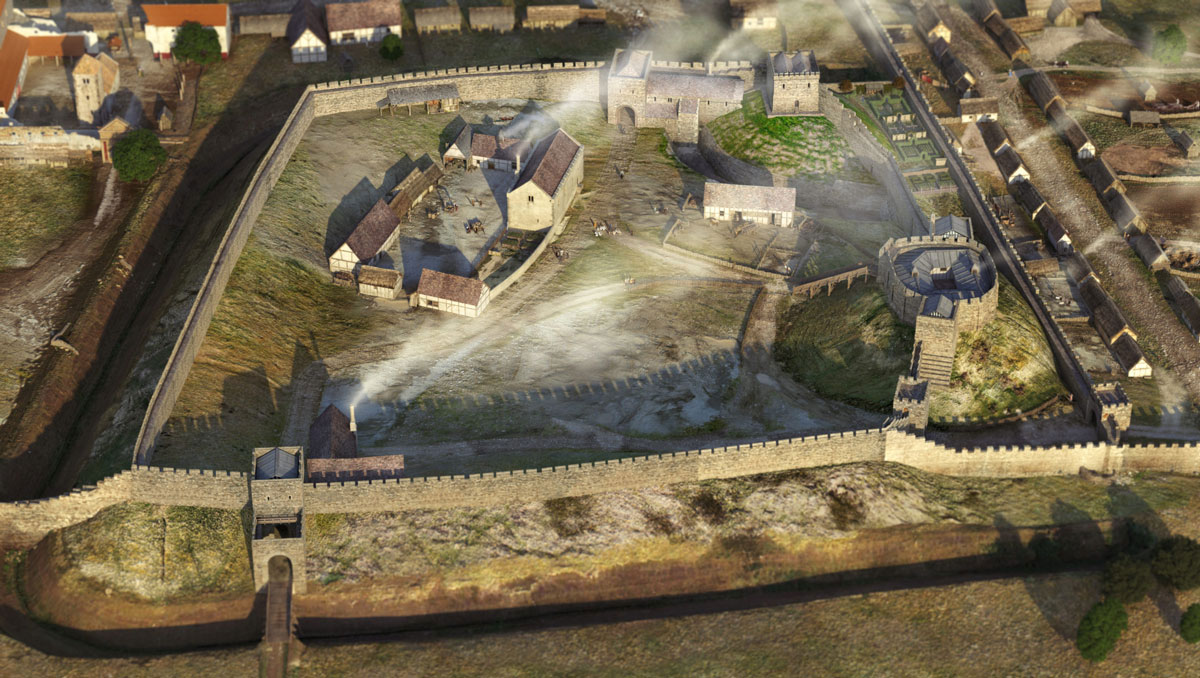
He wasted no time in clearing the site which, according to the Domesday Book meant demolishing 166 “unoccupied residences” before he could start work. Using the old Roman walls as the basis for his outer bailey and building the keep from timber, his castle was ready for use within two years of landing at Pevensey.
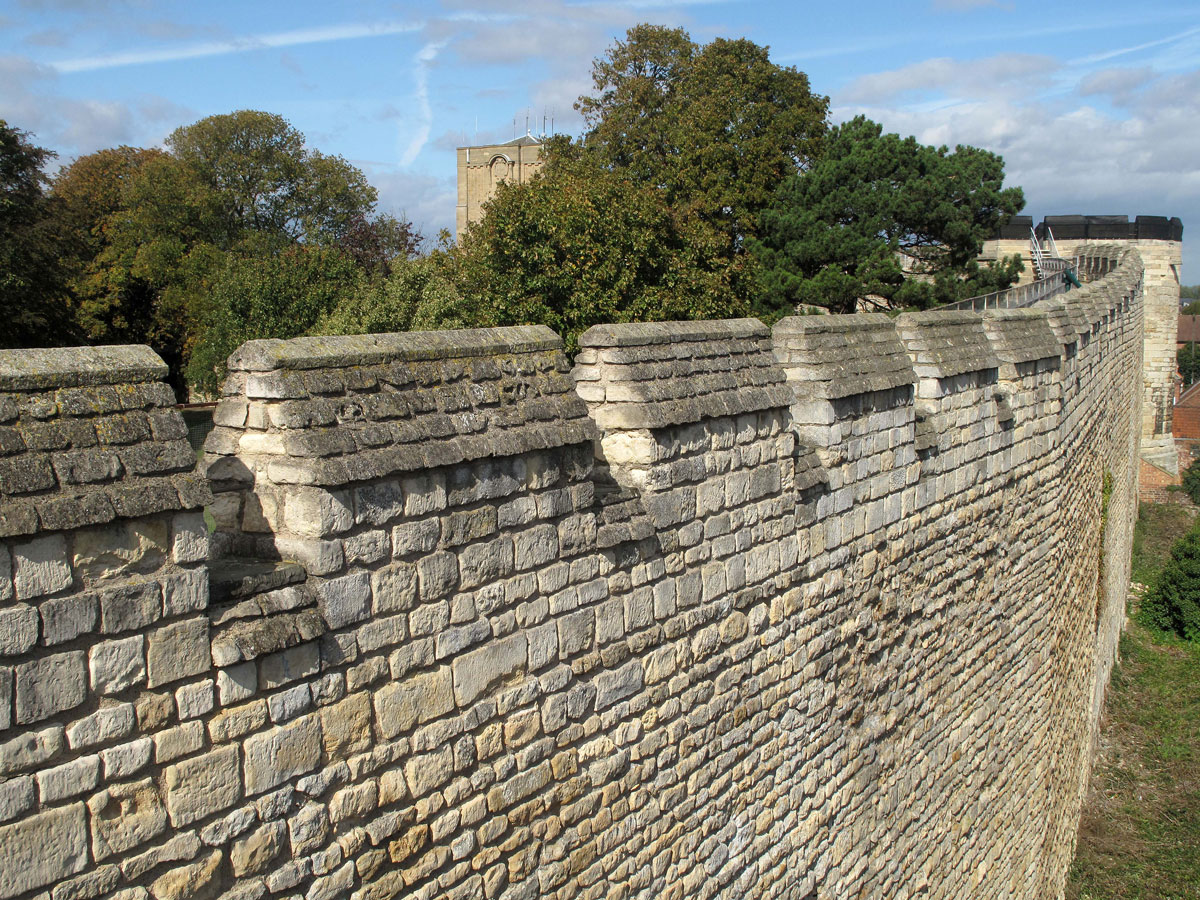
Norman castles were traditionally built using a motte (mound) and bailey arrangement and it was the same here. Unusually though, Lincoln has two mottes and is one of only two in the country that have survived (Lewes in East Sussex is the other). The first of these mottes is topped by the Lucy Tower, named after Lucy of Bolingbroke who had it built in 1110. The second one is occupied by the Observatory Tower which was built by prison governor John Merryweather in 1822, ostensibly to keep a lookout for any improper behaviour in the castle’s prison. It seems more likely though that it was built to satisfy his passion for stargazing, and if you believe what I’ve read, he also had a passion for observing the heavenly bodies in the female section of the prison below as well.

William I wasn’t just King of England, he was also Duke of Normandy, and when he was satisfied that the conquest of his new kingdom was complete, he left his supporters to govern England on his behalf while he sorted out his affairs on the other side of the channel. When he died in 1087, he left behind three sons who were a bit short on brotherly love, due in no small part to who got what after their father’s death: Nothing new there then! Robert Curthose, the eldest, ended up with Normandy, William Rufus, the second eldest, became King of England and Henry, the youngest, got £5,000.
The squabbling continued after William II got killed in a suspicious hunting accident in the New Forest. He never married and had no children, so his elder brother Robert was expecting to be crowned the next King of England. Henry, the youngest brother, (who was on the hunting trip by the way) didn’t see it quite the same way and seized the crown before Robert knew what time of day it was. None of this affected Lincoln too much until Henry died in 1135.
Unlike Rufus, Henry fathered enough children to form an army, and if there were any suspicions about Rufus being a bit light on his feet, then that accusation couldn’t be aimed at Henry. Nobody knows for sure how many children he sired, but estimates range between 21 and 28, but there could well have been more. I’m not sure whether anybody knows who all the mothers were either, as only two of his offspring were legitimate. At least this should have made it easier to know who was going to wear the crown when his time was up, and it would have been, if his only legitimate son, William Adelin, hadn’t drowned in the White Ship tragedy in the English Channel.
This left Henry’s young daughter Matilda the only other legitimate child, and consequently successor to the throne. Although the king’s barons weren’t over-enthusiastic about it, they agreed to support the king’s wishes that Matilda should succeed him as monarch – but that was while he was still alive.
When the barons took their oath, Matilda was married to the Holy Roman Emperor Henry V, but by the time King Henry went to meet his maker in December 1135, things had changed. She had become a widow and married Geoffrey Plantagenet, Count of Anjou. Henry probably wasn’t even cold when the barons reneged on their promise: They switched their support to a more acceptable claimant in Henry’s nephew, Count Stephen of Blois – and by Boxing Day he was in Westminster Abbey trying on his new English crown.
I’ve no doubt that Stephen thought that his new headgear suited him perfectly, but it didn’t fit well from where Matilda was standing, and the Empress and her husband hatched a plan to make sure that it didn’t remain on his head for very long.

In fact it took another three years before Matilda was in a position to do something about it: Trying to juggle the affairs between France and England wasn’t easy for either contestant, and not all of the barons supported Stephen either. One of the most powerful was Matilda’s half-brother, Robert Earl of Gloucester, and it was Gloucester who began the fight in 1138.
The civil war that followed was a contest between those who supported Stephen and those who supported Matilda, but there were also those who saw it as an opportunity to support themselves, and I can see why it became known as The Anarchy. As far as Lincoln was concerned, it fell into the hands of the Earl of Chester, Ranulf de Gernons, who was Lucy of Bolingbroke’s son.
Ranulf had no allegiance to either Stephen or Matilda, and when the people of Lincoln called upon the king to kick Ranulf out, he laid siege to the castle and took back control, but the following February he was under siege himself and was captured by Matilda’s forces, in what was to become the (First) Battle of Lincoln. King Stephen was taken prisoner and confined to the Earl of Gloucester’s castle at Bristol. It was the end of Lincoln’s involvement in the civil war, but it wasn’t the end of The Anarchy, and if you want to know how it all ended up you can read about it in part 1 of Where Bristol Castle Once Stood.
If there was a First Battle of Lincoln, then there must have been a second – and there was. The Second Battle of Lincoln occurred on 20th May 1217 and was fought between King Henry III of England and the future Louis VIII of France.
This war came about during the course of the First Barons’ War, which was the result of a breakdown of the agreement made between King John and the barons at the signing of the Magna Carta. The history of the Great Charter signed at Runnymede on 15th June 1215 deserves a separate post, and so for now I’ll just discuss its relevance to Lincoln.
The charter was drawn up in an attempt to prevent a civil war between those who had nothing but contempt for the unpopular king and those who still remained loyal. The Church also had their disagreements with John, and it was hoped that between them they could come to a satisfactory arrangement.
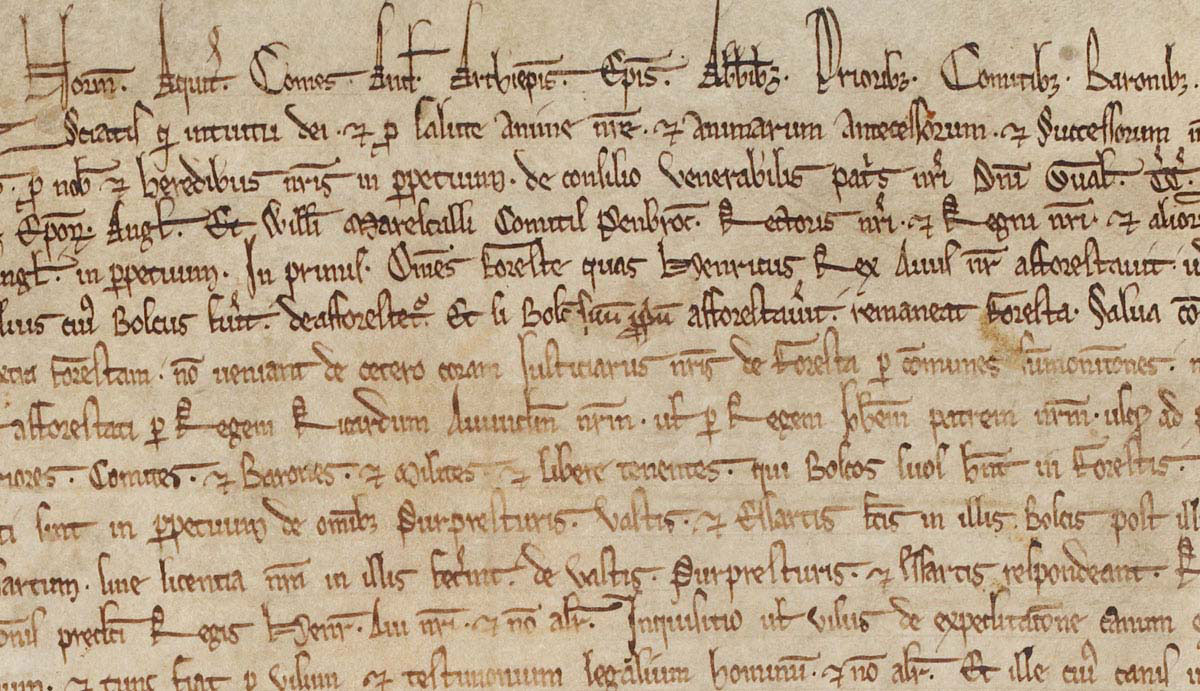
The Bishop of Lincoln, Hugh of Wells, was one of those who helped draft the document, and after King John applied his seal of approval, the royal chancery’s original Magna Carta was sent to the interested parties for copies to be made. It’s not clear how many there were (maybe as many as 43 according to Hansard), but only four have survived: Two are in the British Library, one in Salisbury Cathedral and one in Lincoln. Originally, the Lincoln copy was in the cathedral, but has now been loaned on a permanent basis to the castle.
An amended version of the original 1215 document was produced in 1217 and was called the Charter of the Forest. It was at this point that the original was named Magna Carta in order to make a distinction between the two, and Lincoln Castle is the only place in the world where you can see the two versions together.
The Magna Carta substantially reduced the king’s overall authority by introducing clauses that were ‘the law of the land’ as opposed to allowing the king to do doing whatever he wanted. One of these clauses was the Security Clause (clause 61), which gave authority to 25 barons to override the king, by force if necessary, and it wasn’t long before the clause was invoked.
Giving his approval to the charter didn’t mean to say that King John was happy about it – far from it in fact, and although the ongoing feud between the king and his barons had been halted, it was only temporary, and each side blamed each other for breaking the agreement. By October, the gloves were off and to begin with John held the upper hand (sorry!), but he showed no mercy as he rampaged through the country trying to regain his authority. In retaliation, the barons called upon Prince Louis of France (grandson-in-law of Henry II and heir to the French throne) to help them “prevent the realm being pillaged by aliens”, and in May 1216 Louis arrived on the Kent coast.
The king decided it was time to do a runner and escaped to Winchester, leaving Louis with an easy march into London where he was proclaimed (although not crowned) king. His withdrawal did at least allow him to regroup and continue the rampage against his enemies, but by now even John’s supporters were deserting him, and by July a third of England was under the Frenchman’s control.
It seems that the tide wasn’t just changing for the king metaphorically speaking, but also literally as well, because in October while leading his army in a short cut across The Wash his baggage train got caught by the rising tide, taking with it his precious crown jewels. It was one disaster too far: His mind couldn’t take anymore, and neither could his body. His health had been rapidly deteriorating and he struggled to reach Newark Castle, where during a great storm on the night of the 18th/19th October he took his final breath. His heart was cut out and taken to Croxton Abbey, and his body to Worcester Cathedral.
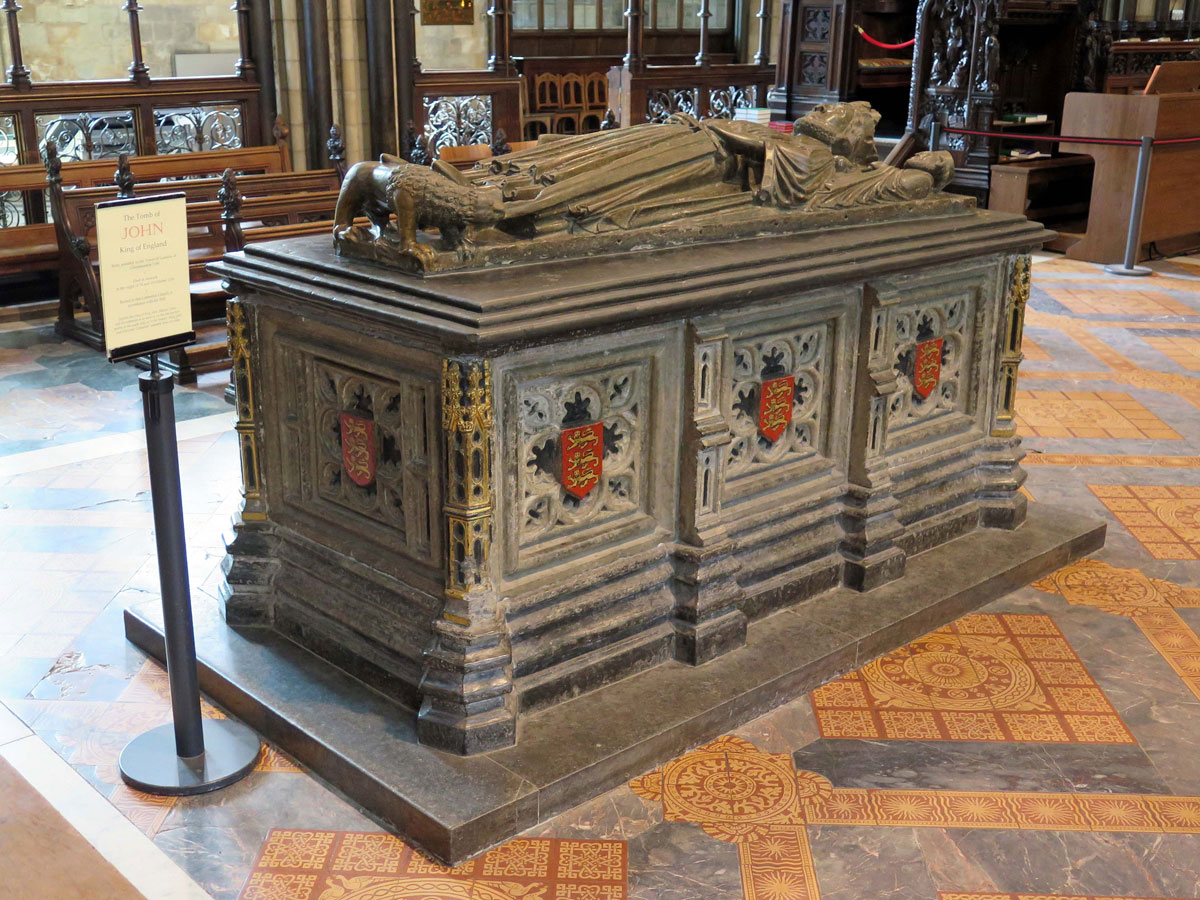
The rightful heir to the throne was John’s son Henry, but as he was only 9 years old, John quickly appointed his loyal supporter, William Marshall, Earl of Pembroke as Henry’s regent. It was a wise choice, because with Prince Louis poised to take over the English crown, it needed someone with enough integrity, power and skill to challenge the Frenchman on the young king’s behalf.
On 28th October, Henry was swiftly sworn in as Henry III at Gloucester Abbey, but for the coronation ceremony, a bracelet belonging to his mother was used instead of the crown, which was still languishing somewhere under The Wash. Now that John was dead, the Marshall was able to persuade the rebel barons to change sides and support the new king. He mustered together an army at Newark Castle in preparation for an attack on Louis’ troops who were laying siege to Lincoln, and on 20th May 1217 the 2nd Battle of Lincoln began.
Louis’ forces, under Thomas, Count of Perche, had managed to take the city of Lincoln, but had failed to break the castle’s resistance whose constable was the indomitable Nicola de la Haye. The French forces totalled around 1600 men compared to Marshall’s 900 or so, but Perche didn’t know that, and after six hours of fighting, Marshall’s battle plan made up for a lack of numbers and inflicted a crushing defeat on the rebels.
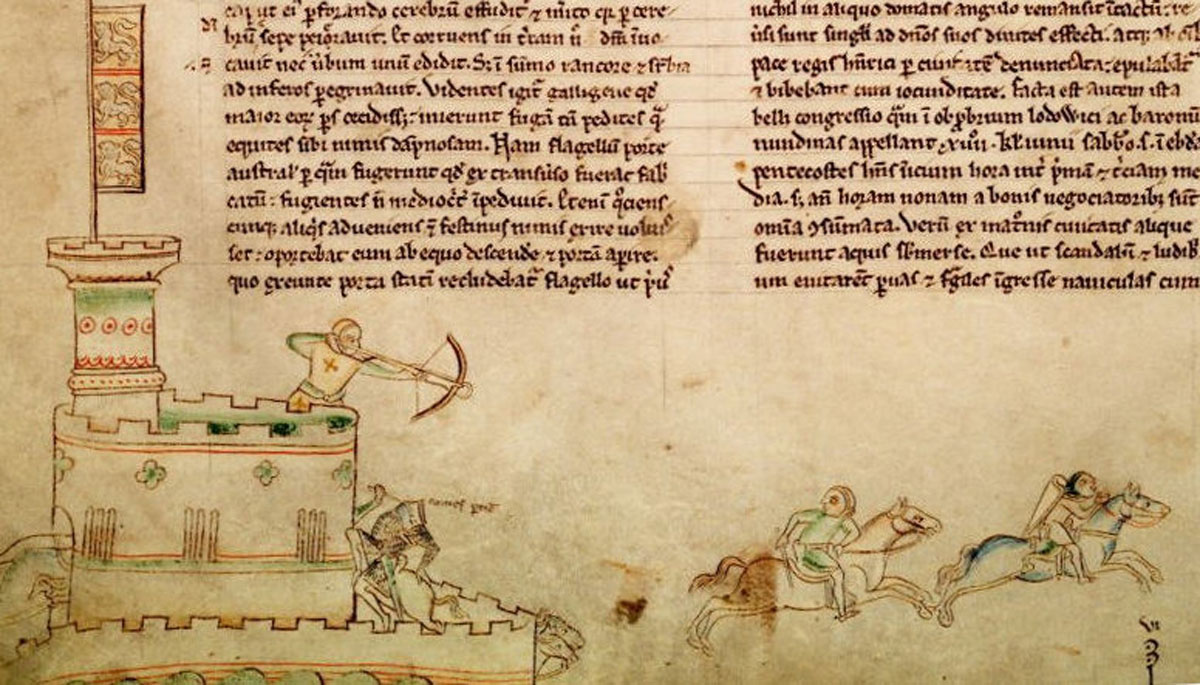
The significance of Marshall’s victory over the rebels can’t be overstated, as it would have meant England coming under French rule if he had lost. As it turned out, Lincoln Castle lived a relatively peaceful life until it was under siege again in 1644 during the English Civil War. This time, the royalist city lost out to the Parliamentarians, but with the restoration of the monarchy in 1660, it was to be the last major conflict that the castle was involved in.
After outliving its usefulness as a fortress, the castle continued to be used as a court and prison, as it had done since Norman times. By the 18th century though conditions were so bad in the dungeons that in 1787 a new gaol was built to replace them. It was extended in 1847 and was in use until 1872 when a new prison was built in Greenwell Road. The present building housing the High Court was completed in 1823 and is still in use.

As can be seen from the picture above, our visit to the castle coincided with a major restoration project which included the prison, the South Curtain Wall and the Lucy Tower. It might not have been good news for me, but now that the project has been completed it should make a much better experience for everyone else. One thing we could do though, was to walk along the rest of the castle walls which offered some far reaching views across the flat Lincolnshire landscape.
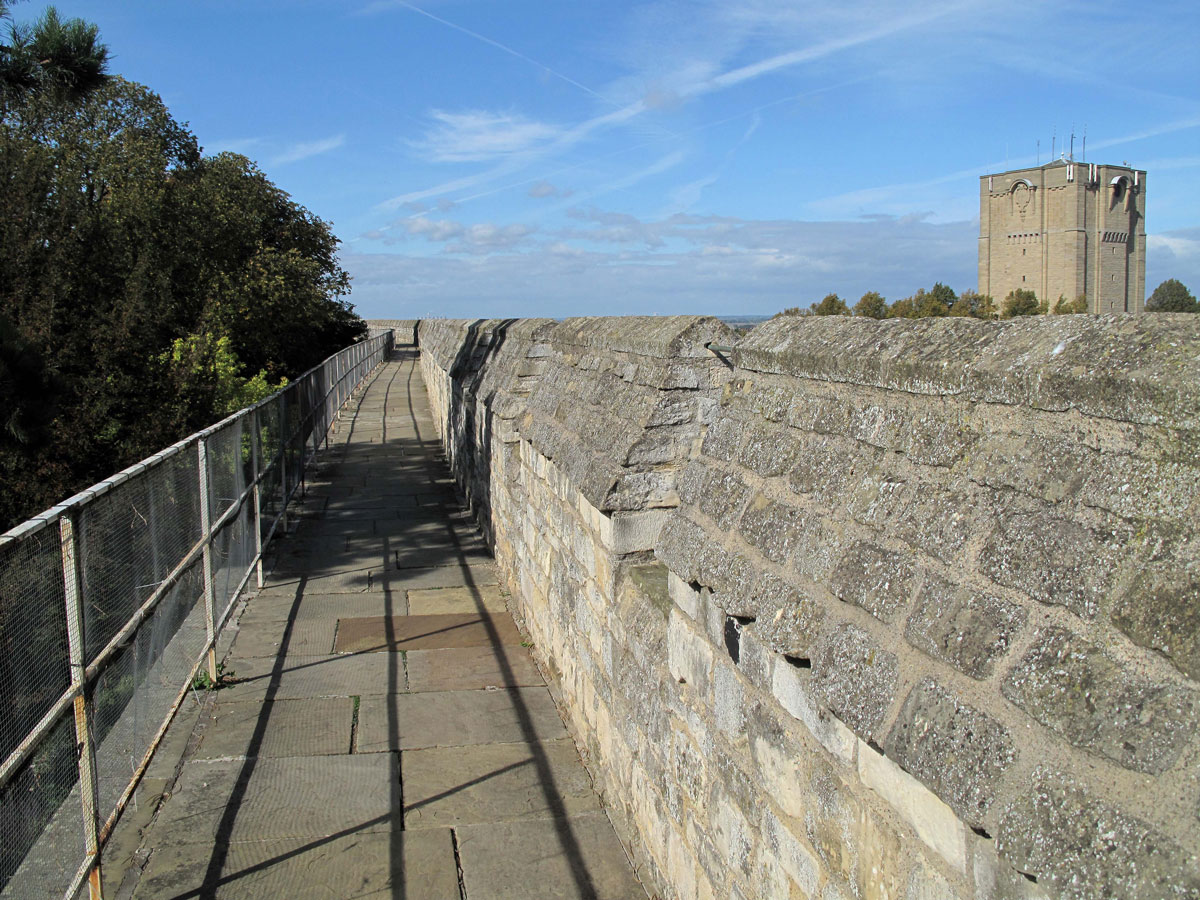
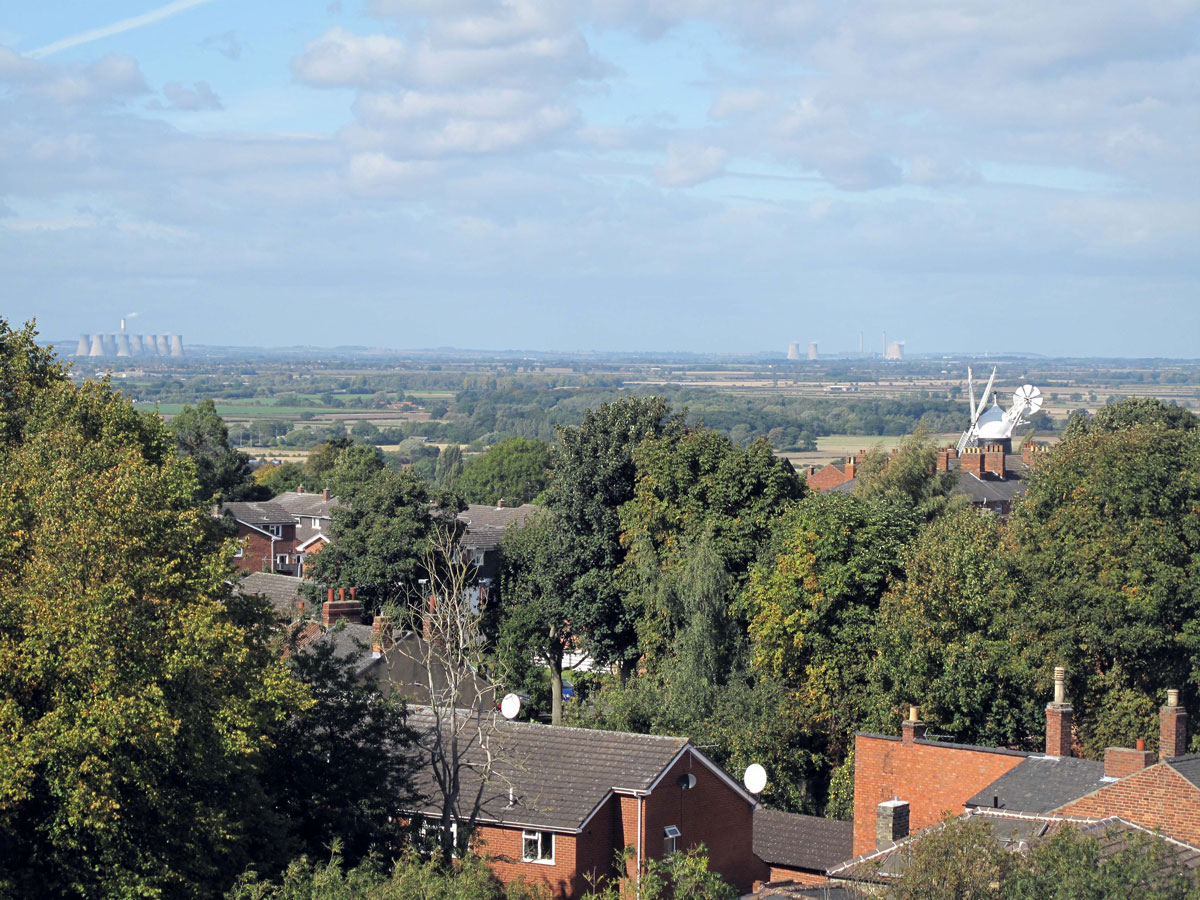
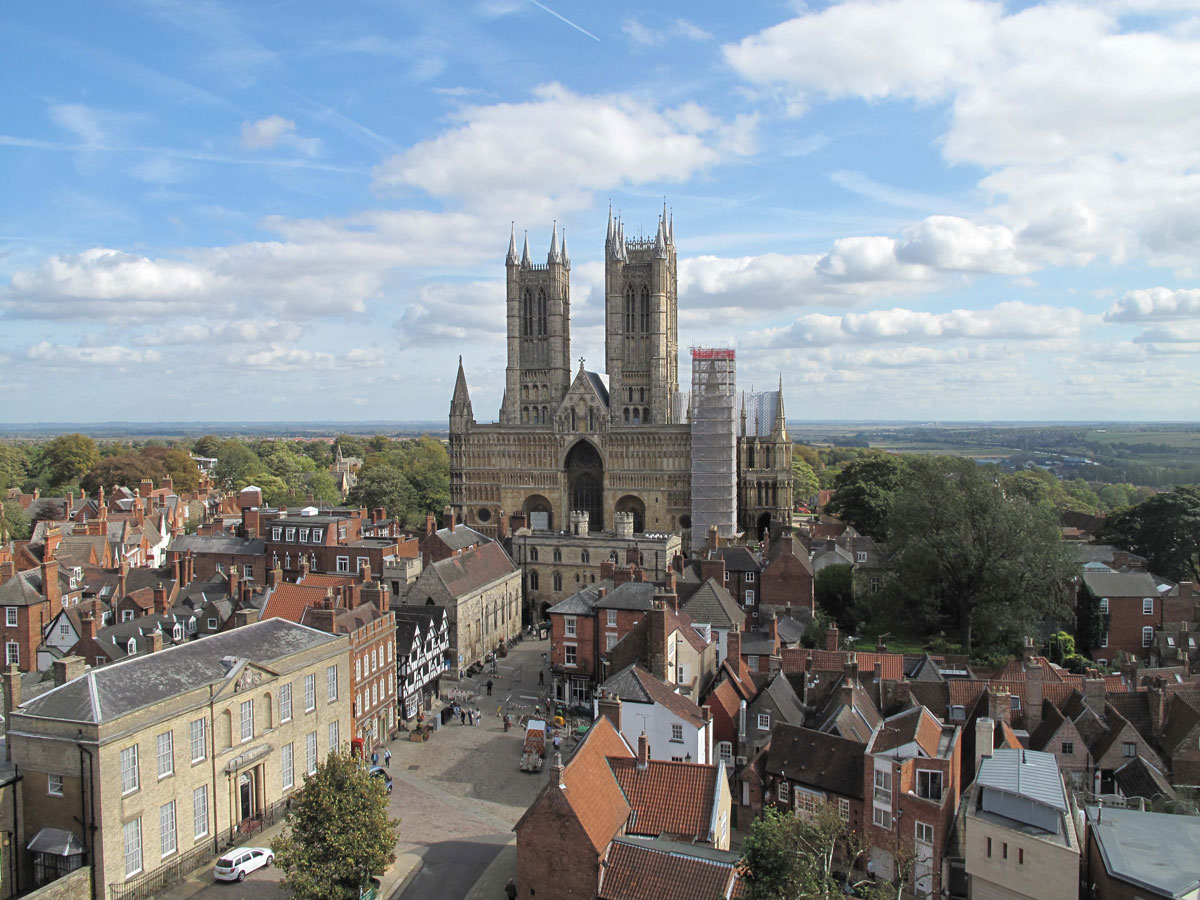
If I’m being totally honest, even allowing for the restoration work, I’ve been to more atmospheric castles, but at least I can now understand the layout of where those sieges took place, and if nothing else, the views proved that I wasn’t wrong when I said that I thought Lincolnshire was flat. Perhaps the best view of all though is the view from the castle down Castle Hill towards the Cathedral which will be the subject of my next Lincoln post.
POSTED – NOVEMBER 2022
Originally posted 2022-11-14 07:18:27.
That was really interesting and again what a lovely looking place.
I’m convinced it would be visited by more people if it was easier to get to. By the way, out of curosity I checked out some stats today, and I see that you’ve commented more than anyone else bar one. I can’t thank you enough Shey.
Wow. Thank you so much for saying. It is a pleasure Malc. I really like your posts. These ones on Lincoln where I’ve never been and the Belfast ones I read recently are great exmples of why.
The pleasure’s all mine Shey. You really are unbelievable 🙂
Lol..if only. As we say here, Yir posts are braw.
A thoroughly enjoyable wander through medieval Lincoln, Malc, and a great look at the castle. I agree that it’s not the most atmospheric of fortresses, probably largely because, as you rightly point out, it’s been much modified since it’s medieval beginnings (love the reconstruction picture – what I wouldn’t do to have seen it back then!). However, those wonderful medieval stories are still locked within its walls and no-one can take that away from it. And in my book, any castle that’s been lucky enough to have an encounter with The Marshal is worth blogging about! A great read, and I’m looking forward to the next Lincoln instalment. 🙂
Thank you Alli. You’re absolutely right when you say about the stories locked behind the castle walls. Even if the appearance behind those walls has changed somewhat, the castle is still in the same place, and seeing where it is, helped me to visualise the historical events that took place hundreds of years ago. Thanks again for your comments which are always welcome as you know 😊
Who knew history could be so interesting? Believe it or not I never knew anything about King Stephen – he must have been overlooked in history lessons at school as I don’t remember any mention of him at all. Great photos as always and I’m looking forward to your post on the cathedral 🙂
Thanks Eunice. That’s the good thing about blogging. We can all learn something new from each other can’t we? Glad you found it interesting 😊
Smashing tale, Malc. I learned so much here and I thought I was reasonably conversant about English history for an American. Photos are great too. A heck of a return to blogging!
Thank you Pat. I’m afraid I’ll need to be driving in the slow lane from now on, but keep looking in the rear view mirror because I’ll still be there. You may have to wait for me every now and again though.
I understand. Is this advice to yourself, from your wife, or a medical professional?
To myself Pat, but it is health related. Thanks for your understanding
A great history lesson as always 🙂 I can’t say Lincoln Castle appeals as a destination but that cathedral looks more promising so I’ll await that post with interest 🙂
Obviously I was thwarted from showing the castle in a good light because of the work that was going on, but you’re right Sarah,, the Cathedral is a better visitor experience for the casual visitor
Turbulent times! I recently visited the Magna Carta memorial at Runnymede. It wasn’t a period of history I knew a great deal about – shameful really, given that I don’t live far from Salisbury Cathedral with its own Magna Carta!- but it’s all very interesting. Makes me look at old places in a new light when I have a bit of context about what’s happened there!
Thanks for checking this one out Helen. I did notice that you wrote a post on Runnymede but I haven’t got around to reading it yet. I’ll need to rectify that soon. Did you realise that it was the American Bar Association that had the memorial erected? The Magna Carta was the basis for their precious Bill of Rights.
Yes, I read about the Bar Association. The American link in that part of Surrey is strong, the JFK memorial is just along the way from there. About a ten-minute walk.
I really enjoyed reading this post, deal Malc. so full of historical facts and interesting details, all told in a fantastic way. The photos are also beautiful💗💗💗
Thank you so much Luisa. You make me sound like the Bard of Torbay. Glad you enjoyed it 🙂
You are very kind and witty, dear Malc🙏
Wishing you a good week and sending you a big hug🤗
Thank you Luisa – and a big hug in return 🤗
Thanks, Malc, for this informative and well-written post. I’m looking forward to your next post about Lincoln Cathedral.
Thanks Don. I’m really pleased that you enjoyed it. I’ve got some way to go though to catch up with the number of posts you’ve done 🙂
Thank you, Malc, for another wonderful lesson in history, especially because you write with unexpected humour and while reading your post, I keep smiling. Thank you again for being brilliant!
Joanna
And thank you for your wonderful comments Joanna. I’m not sure that I deserve such generous comments, but I always value them as you know, especially as they come from such a talented blogger as yourself.
Thank you, Malc, for your kindness, and you deserve even more praise!
Joanna
I meant it Joanna. You’re one of my favourite bloggers 🙂
It is for me always a pleasure to read the posts you write. As a lover of history, I love to read about the intricacies of kings and of succession and the way uou explain it, well it cones to life clearly and easy to read. The information, and references you provide make your articles excellent as tolls to learn more about history. And uour photography, splendid did, round everything off perfectly. Wishing you a great day and week my friend, and all the best to you.
Thanks for your smashing comments Francesc. I appreciate them enormously and I’ll endeavour to keep these posts coming, even if they might not be quite so often. Have a good week ahead.
Always a pleasure Malc, and I look forward to each one of them as they come, no matter when. You too, have a great week and all the best!