A Wander Around Richmond (On Thames)
Richmond-upon-Thames is one of the more affluent of London’s 32 boroughs: It includes the suburbs of Kew, which I’ve already written about, and Hampton, Teddington and Twickenham, which I haven’t (yet), but this post is just about the town of Richmond itself.
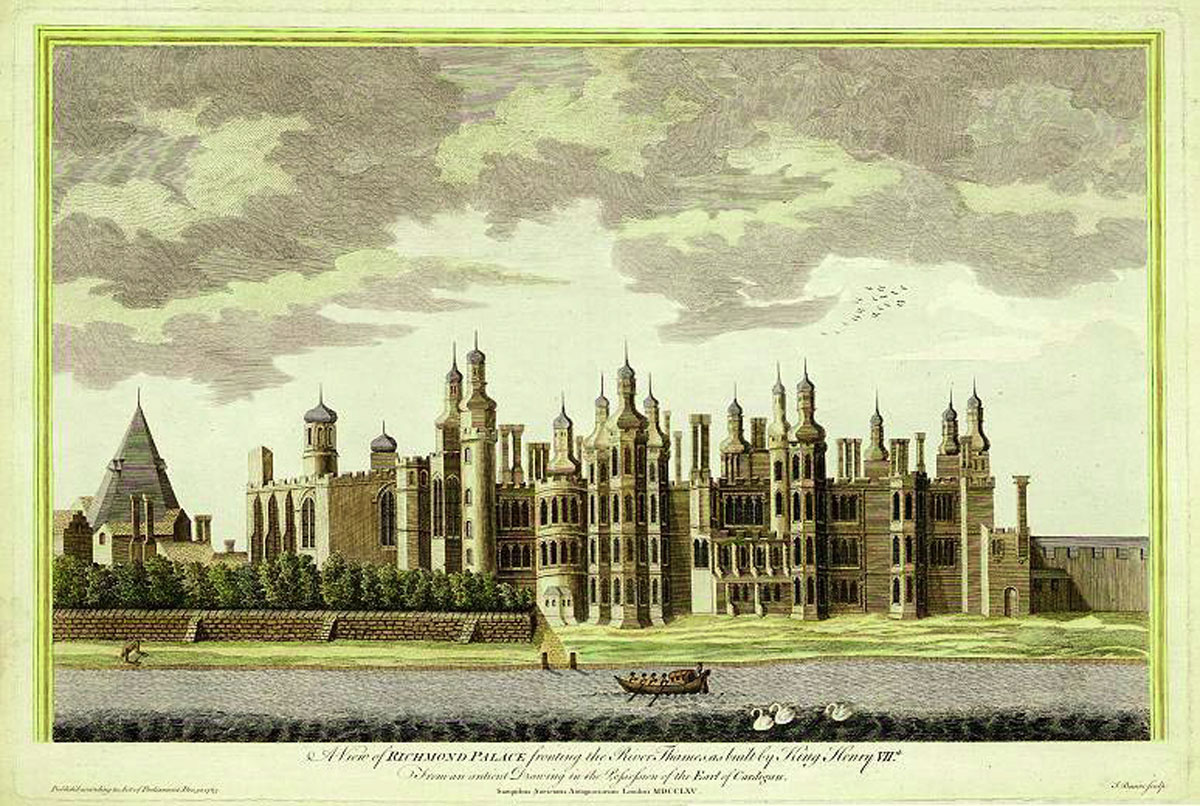
The name Richmond originates from the French words ‘riche’ (meaning mighty) and ‘mont’ (meaning hill), and was initially associated with Richmond Castle in North Yorkshire, and so it’s not difficult to see why King Henry VII, the former Earl of Richmond, named his home here on the bank of the River Thames Richmond Palace – but don’t run away with the idea that it’s that simple just yet.
The second part of its name – Upon-Thames – was added when the borough was created in 1965, and alludes to the fact that it straddles both sides of the river. The suffix is supposed to distinguish it from, shall we say, Henley-On-Thames which sits on just one side of the river.
If you’re not confused yet, then what about if I tell you that the town of Richmond doesn’t carry the suffix that the borough does because it doesn’t occupy both banks of the river. OK, so why have I called this post Richmond-on-Thames? It’s obvious really isn’t it? I wanted to distinguish it from Richmond in Yorkshire – but it occupies only one side of the river. Got it? No, nor have I. I’m already wondering how many keyboard warriors are going to pull me up about the title without reading what I’ve just said.
If you’re wondering why Henry VII built a palace here, then wonder no more: In medieval times, the area was in the manor of Sheen whose manor house became a magnet for several monarchs from Henry I right through to Henry VII.
By the time the seventh Henry came here to live it had become known as Sheen Palace, but during the Christmas festivities of 1497, the King, his mother Margaret Beaufort, and his wife Elizabeth of York narrowly escaped with their lives after a fire engulfed the building – almost burning it to the ground. Undaunted, Henry rebuilt it, naming it Richmond Palace after his former earldom: So now you know – even if you didn’t want to.
Queen Elizabeth I, who followed in her father’s footsteps with his passion for stag hunting, spent much of her time at Richmond Palace where the nearby park offered her an abundance of game in which she could pursue her ‘sport’. Not to be confused with Richmond Park, where those of a less blood-thirsty nature can still observe deer at close quarters, her hunting ground back then was what is now known as Old Deer Park.
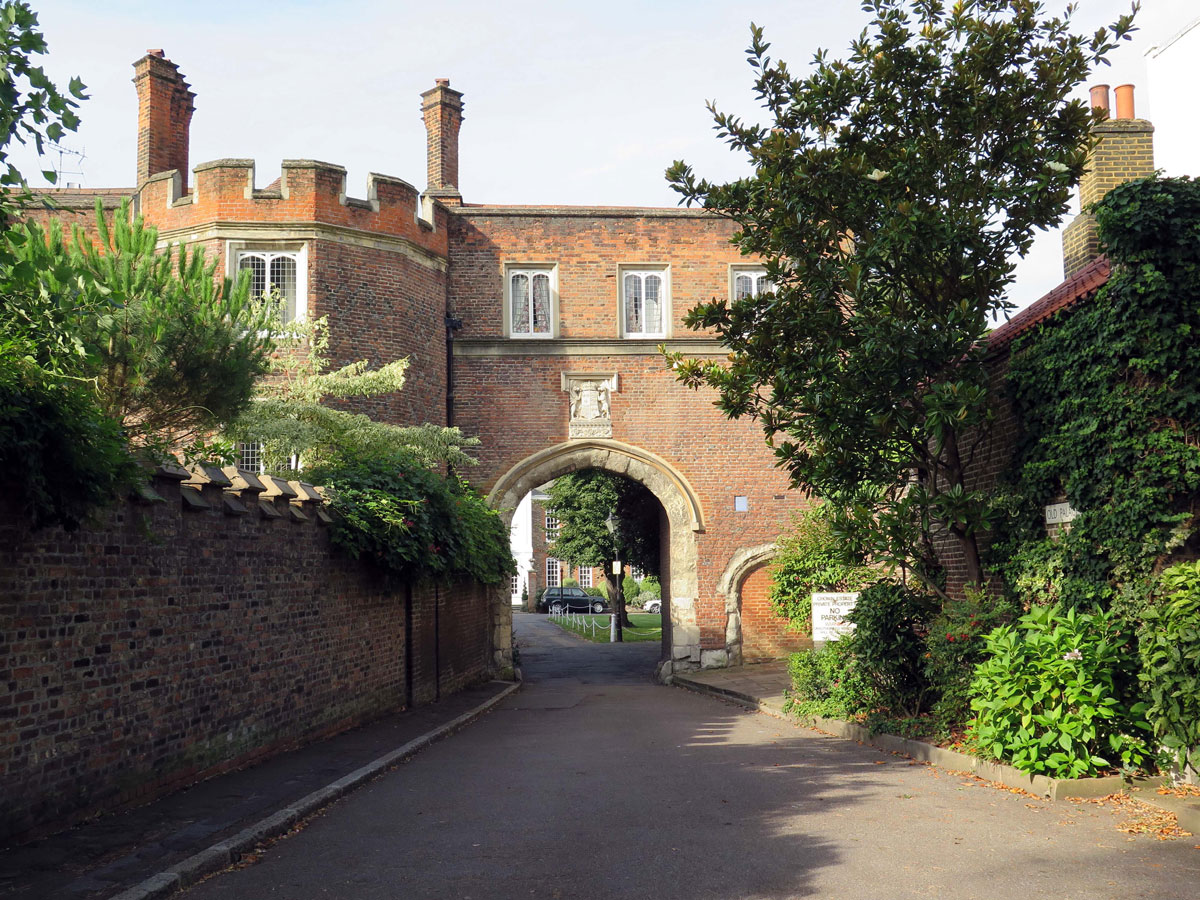
Elizabeth died at Richmond on 24th March 1603 and the palace gradually fell out of favour – and therefore into decay. All that’s left of the palace now is the Wardrobe, Trumpeter’s House, and Gate House. This Gate House, which was built in 1501, was made available to rent by the Crown Estate Commissioners in 1986: If you’re interested, it has a 65 year lease and five bedrooms, but you’ll need to provide your own servants.
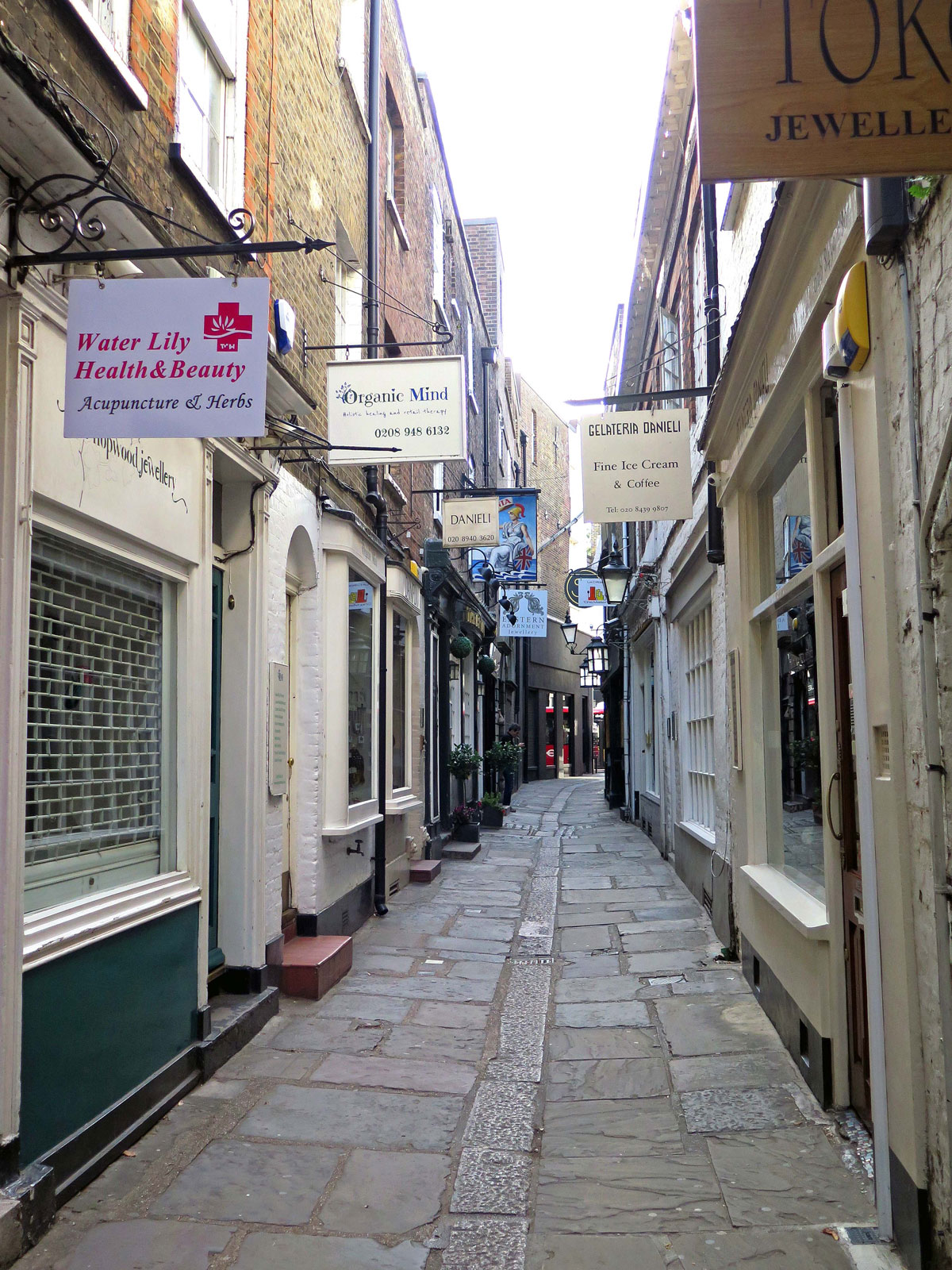
The area around the old palace remained largely rural until it became a fashionable place to live during the 18th century. A number of large houses started to spring up, particularly around Richmond Green and Richmond Hill, which encouraged businesses to move in to cater for their everyday needs. Even though it suffered considerable damage during WWII, Richmond today has a bustling town centre with many fine buildings that have listed status.
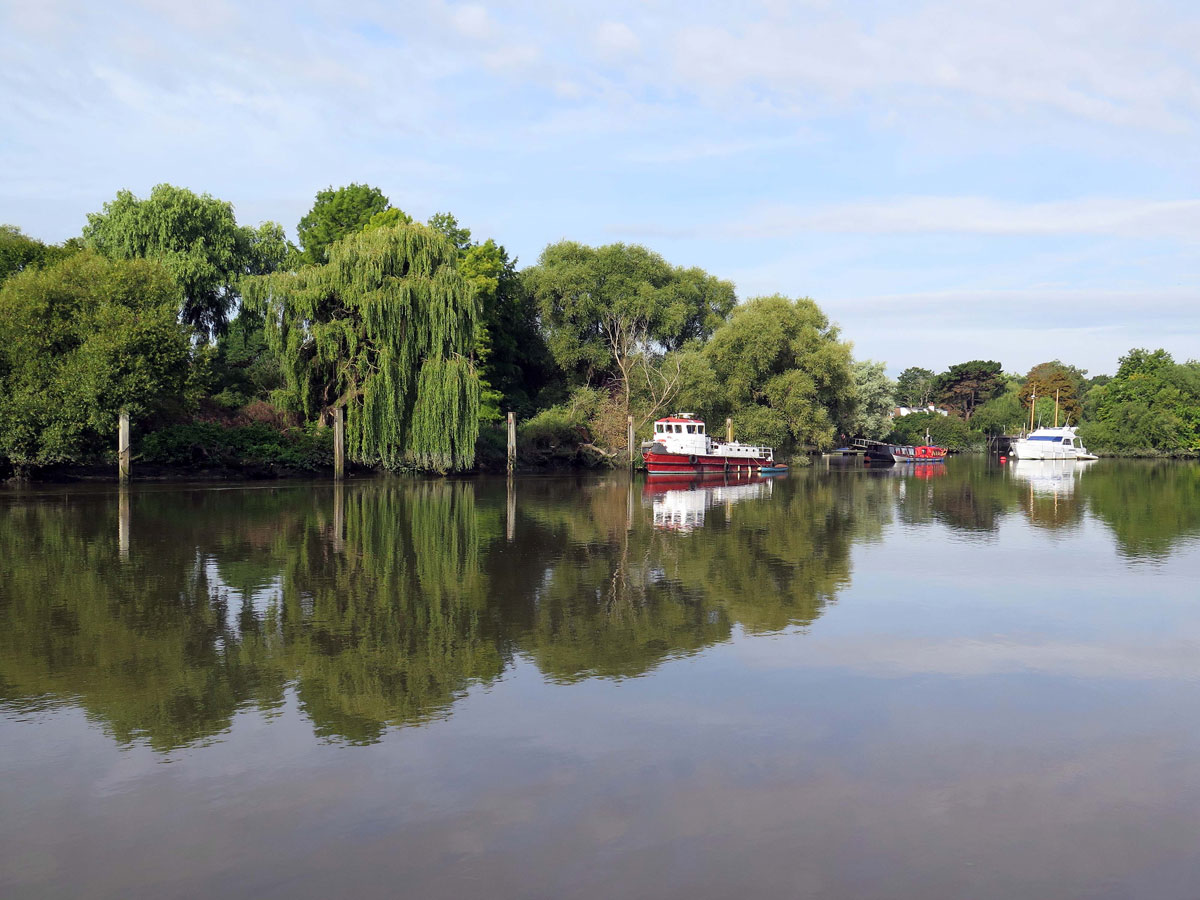
Richmond’s history may have attracted the well-to-do, but it also attracts visitors today as well – and there are two main reasons why: The first is its attractive riverside setting, and the second is its wonderful open spaces – but let’s start with the river first.
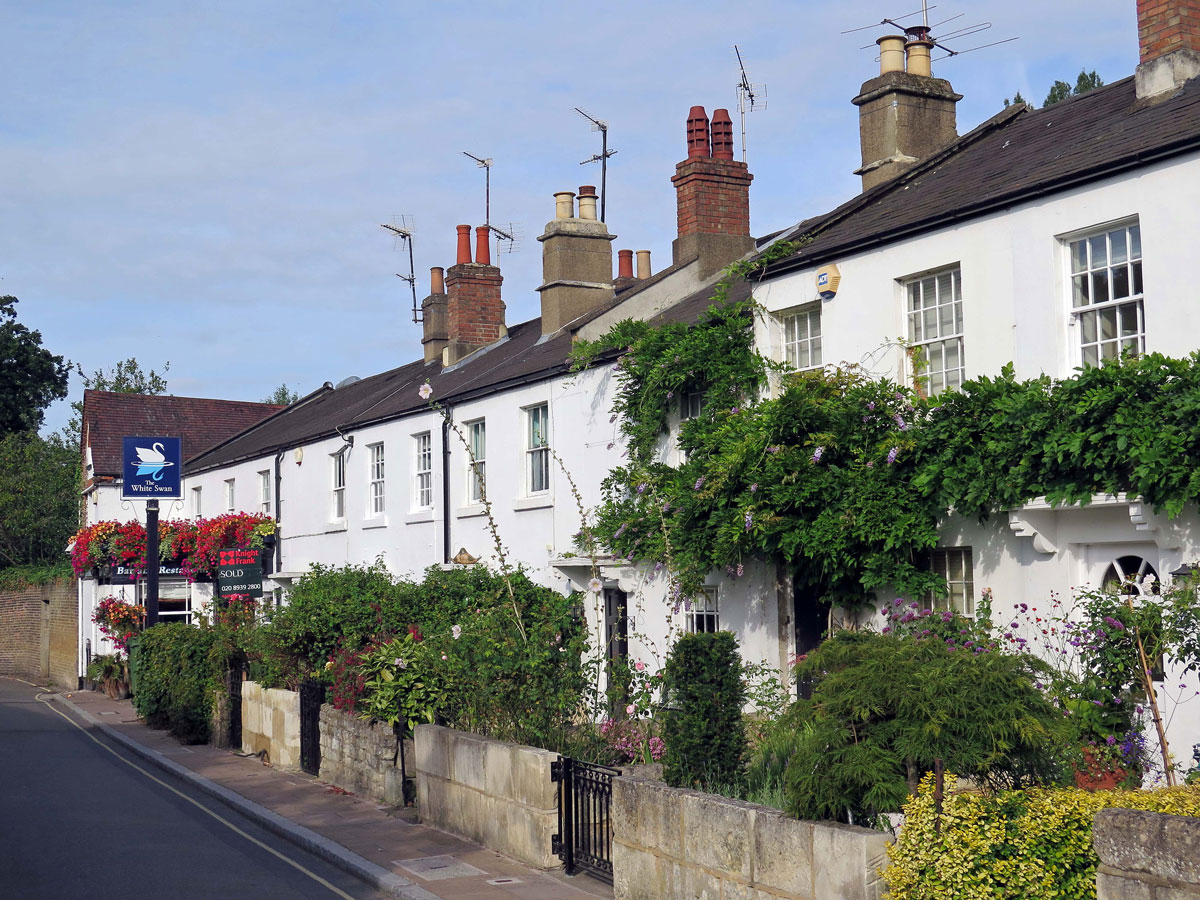
If you’re one of the many people who arrive at Richmond Station, and you would rather visit the Riverside before the town, then I suggest you turn left out of the station, cross over the main road, and then turn right down Duke Street towards Richmond Green. On reaching the Green, cross the road and take the diagonal footpath across the Green to the Palace Gate House, after which, you should turn right and then left down Old Palace Lane past the White Swan to the Riverside. You don’t have to take my suggestion of course, but this way, you’ll see Richmond Green, the Palace Gate House, and arrive at the beginning of the most interesting part of the Riverside footpath.
By walking away from the railway bridge, along what’s known as Cholmondeley Walk, it won’t be long before you reach St Helena Pier. This pier is where boats arrive from Westminster and depart for Hampton Court Palace, but if sailing times don’t coincide with your itinerary, then you can always pop into the White Cross instead.
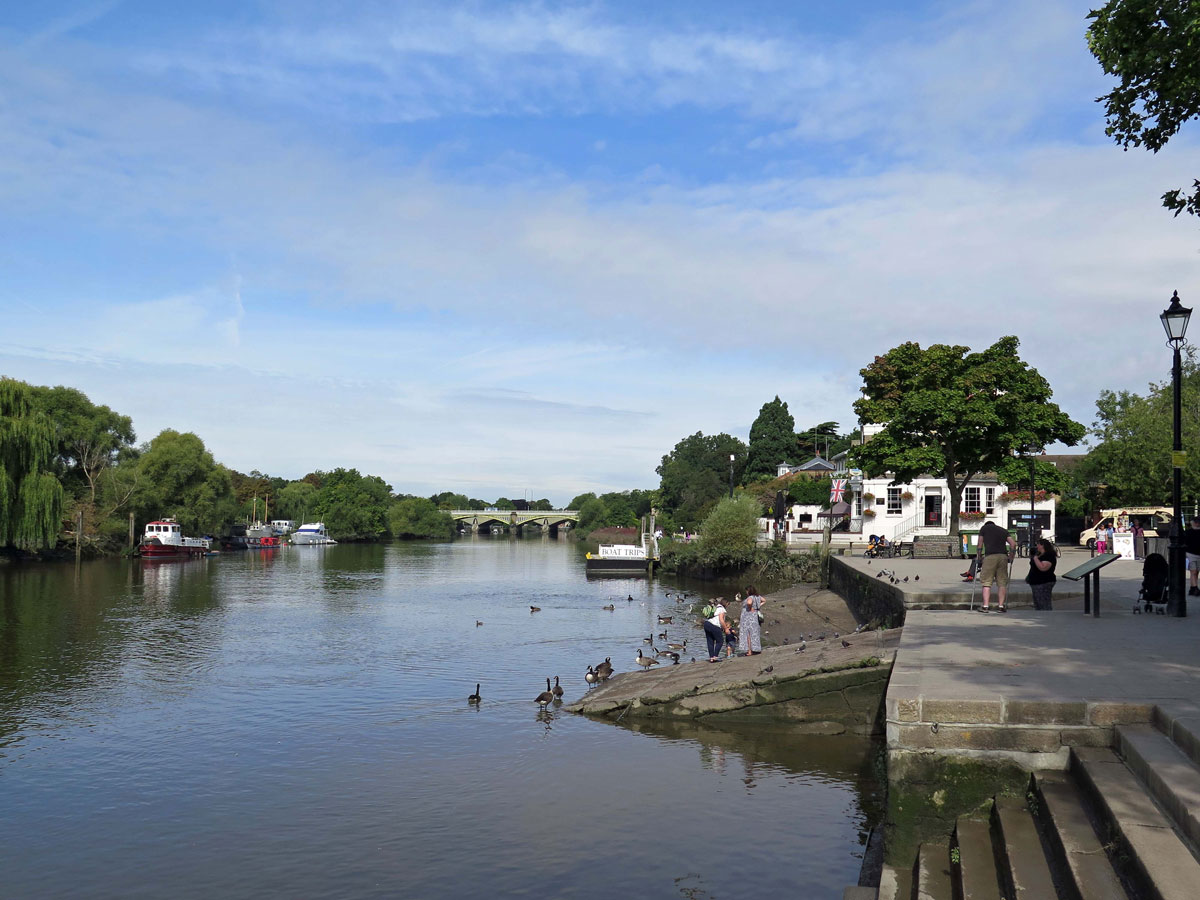
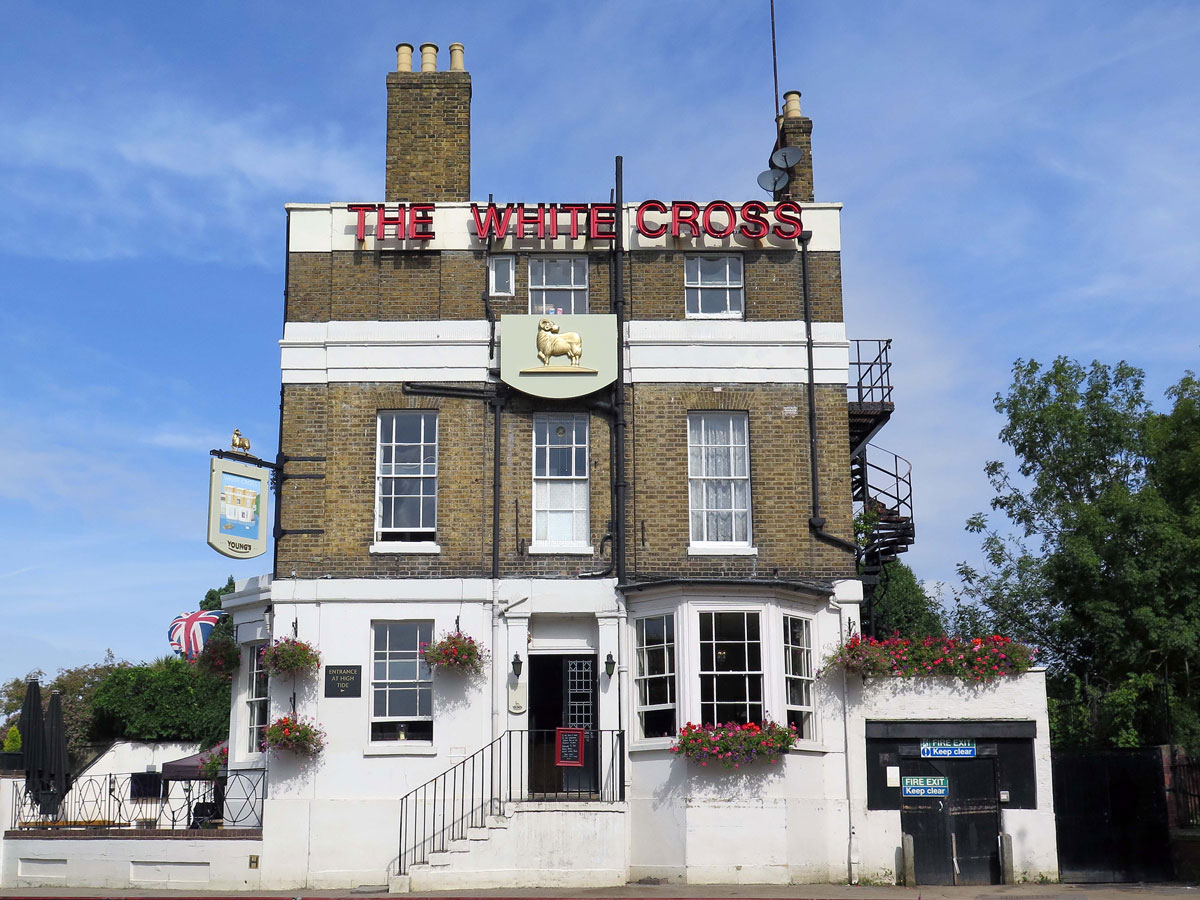
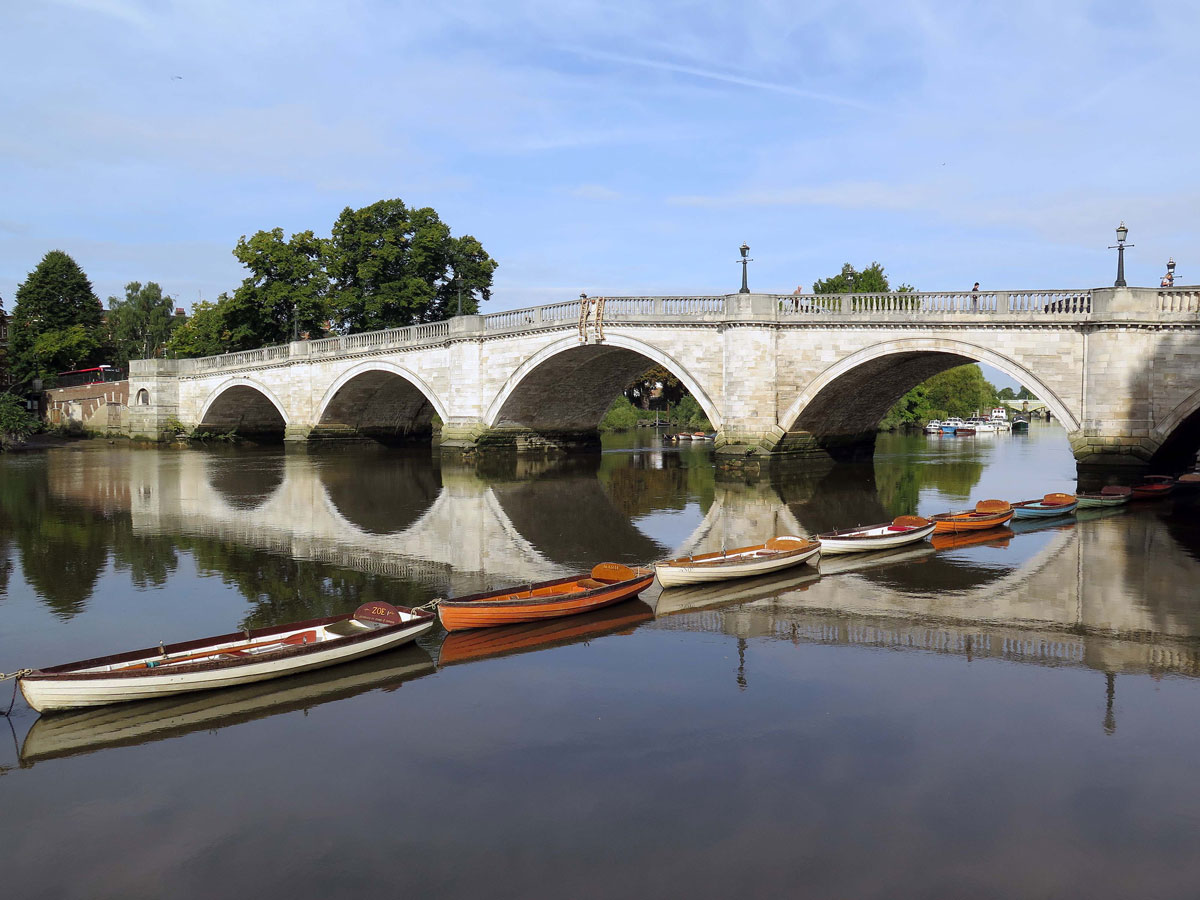
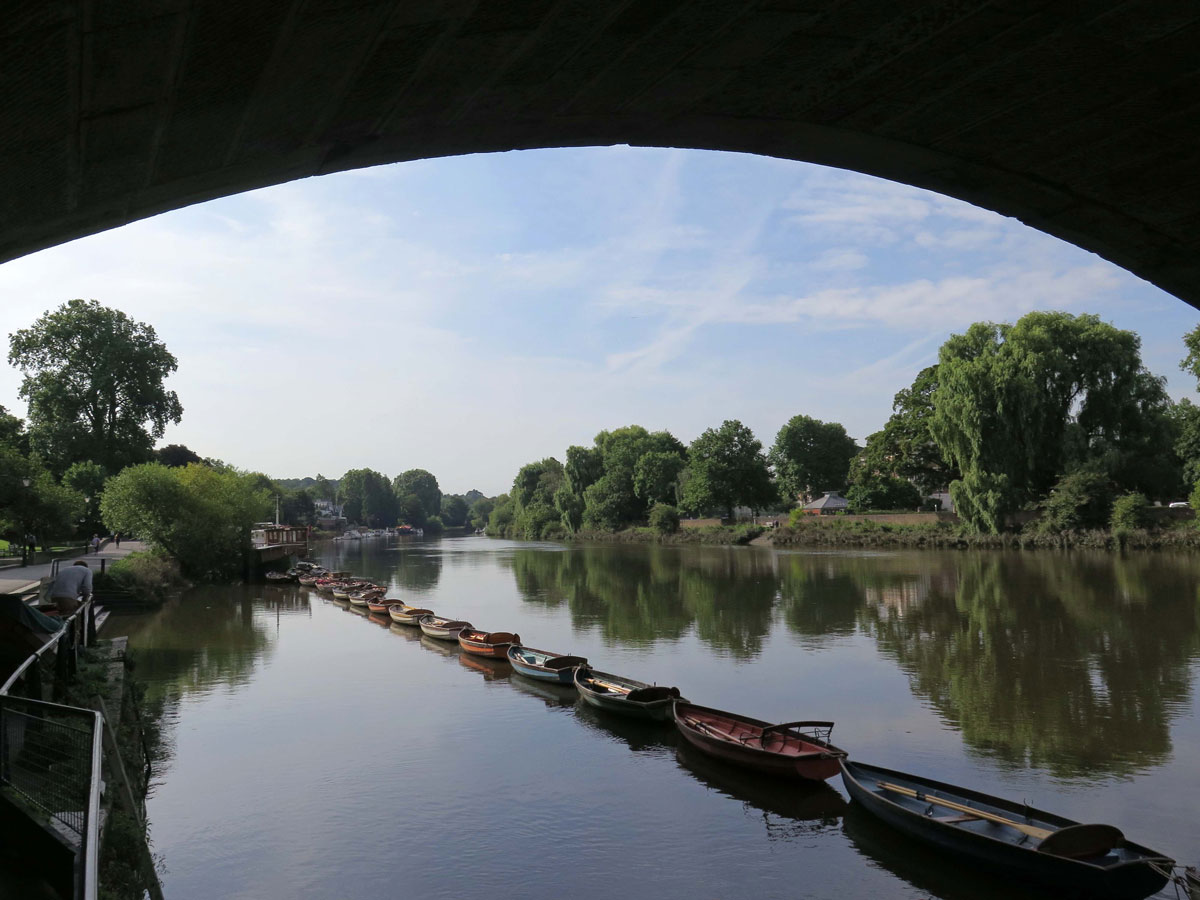
The Thames Path is a 184 mile long-distance trail from its source at Thames Head in Gloucestershire to the Thames Barrier at Woolwich, but the London section begins at Richmond. If you dropped into the White Cross I’m assuming that you’re still in a fit state to continue walking upstream towards Richmond Bridge. The Bridge replaced the East Twickenham ferry in 1777 and is a much photographed feature of the town – deservedly so too in my opinion.
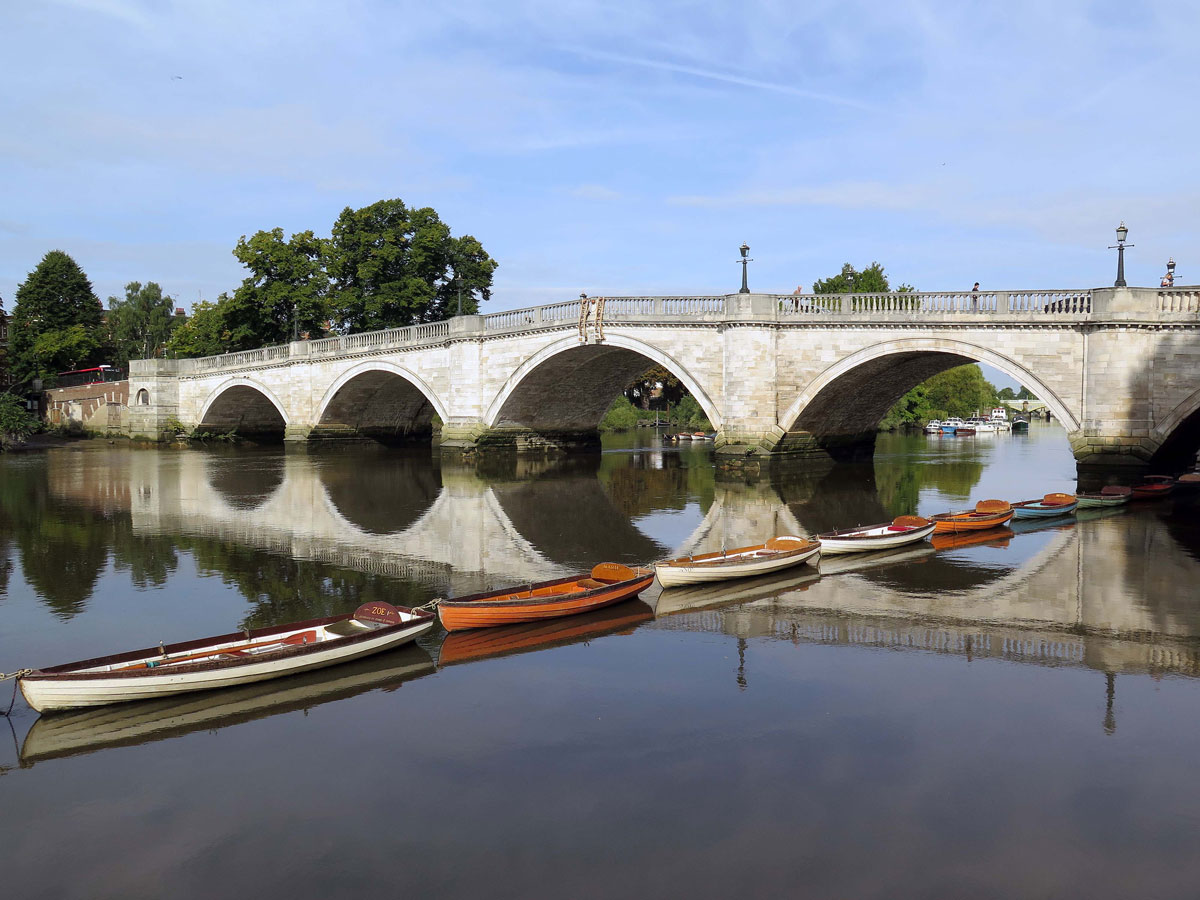
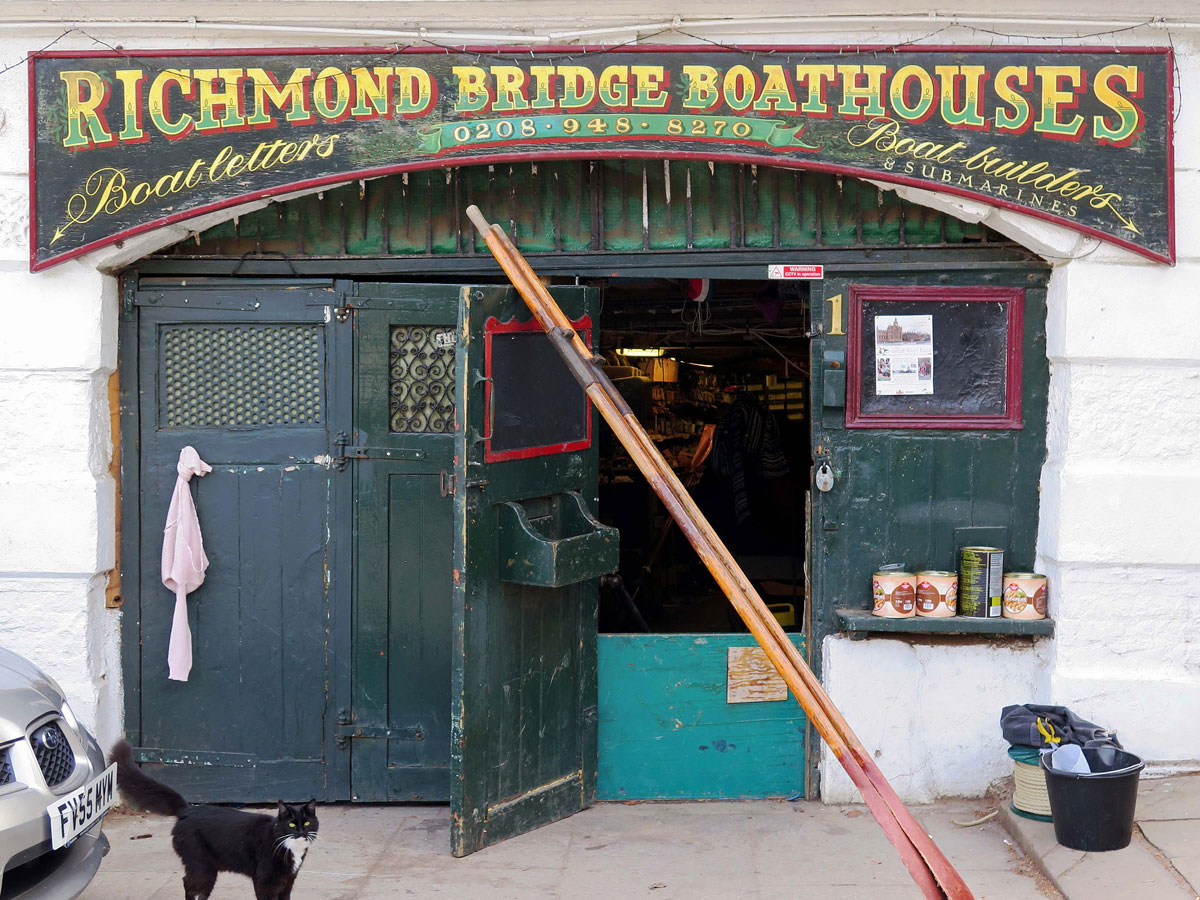
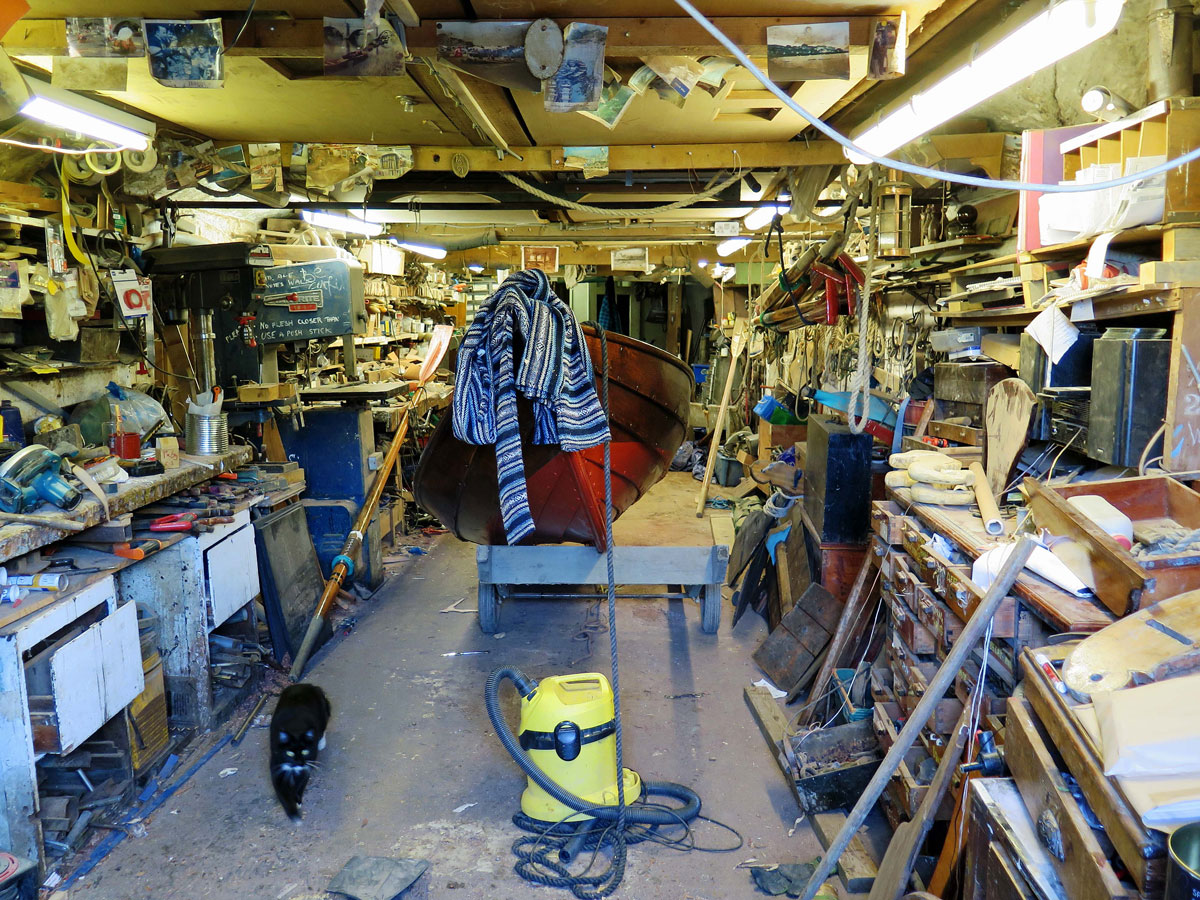
Next to the bridge is a workshop where boats are built and repaired (and submarines too if you can believe the sign above it). Judging from the number of boats that are tied up along here, the owner’s no doubt doing a brisk business, and let’s be honest, it’s not a bad way of earning a living is it? Tiddles seems quite content to parade up and down the catwalk along here too.
Walking under the bridge brings us to Mears Walk where you can find a bench that might tempt you to take a break from exercising your legs for a while, or if you prefer, hire a rowing boat and exercise your arms instead.
When we reach the Richmond Canoe Club it’s time to leave the Riverside behind and head uphill towards Richmond Park – the most well-known of the town’s open spaces. Cross over Petersham Road and walk through the gates into Terrace Gardens which are worth a visit in their own right. By walking uphill past the glasshouse, you’ll see the Hollyhock vegetarian café on the right hand side, but you don’t have to be a vegetarian to enjoy this little gem, believe you me.
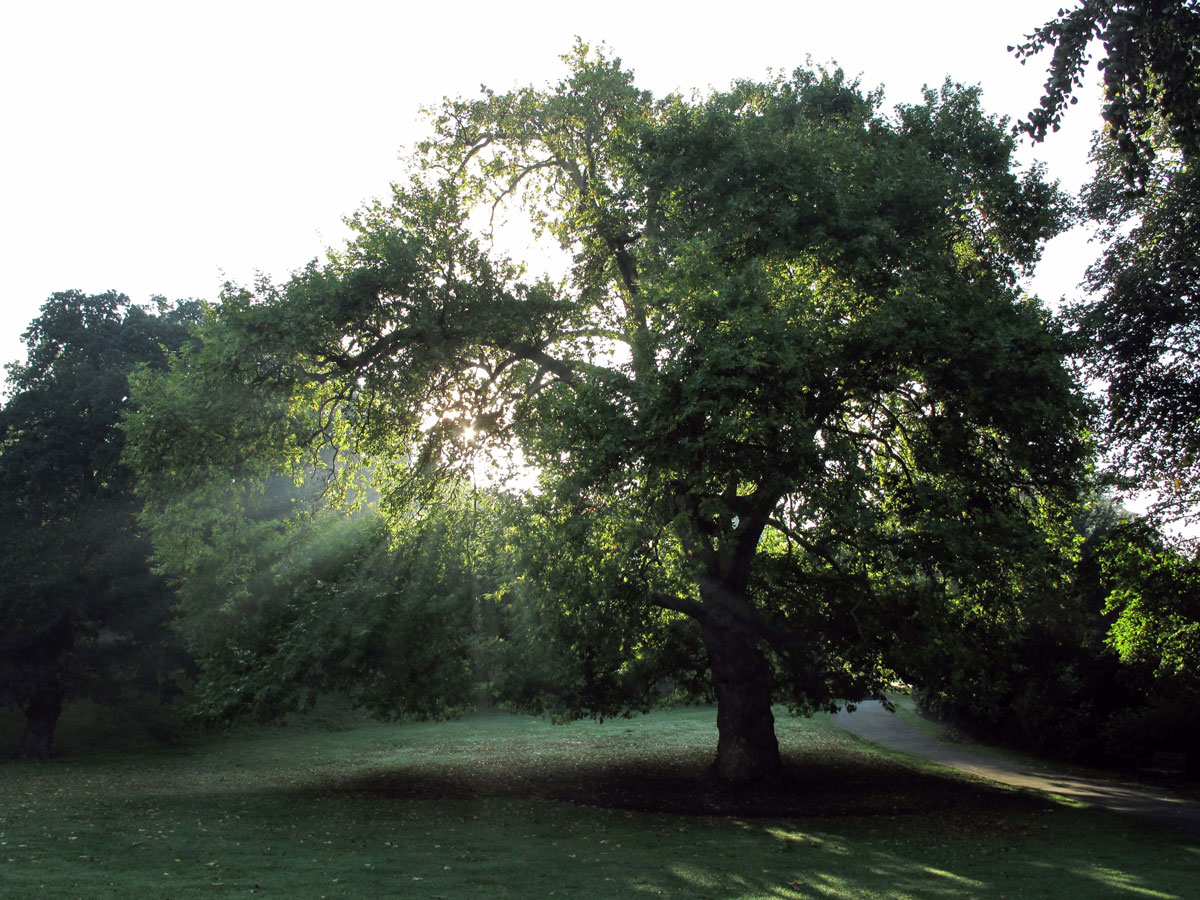

Regardless of whether you take a coffee break at the café or not, continue uphill to a small pond where a sculpture of Aphrodite takes centre stage; but even though I took a photo of her, I threw Aphrodite in the bin because she’s not called ‘Bulbous Betty’ for nothing. On reflection I think I should have kept her because she’s become well-known for all the wrong reasons.
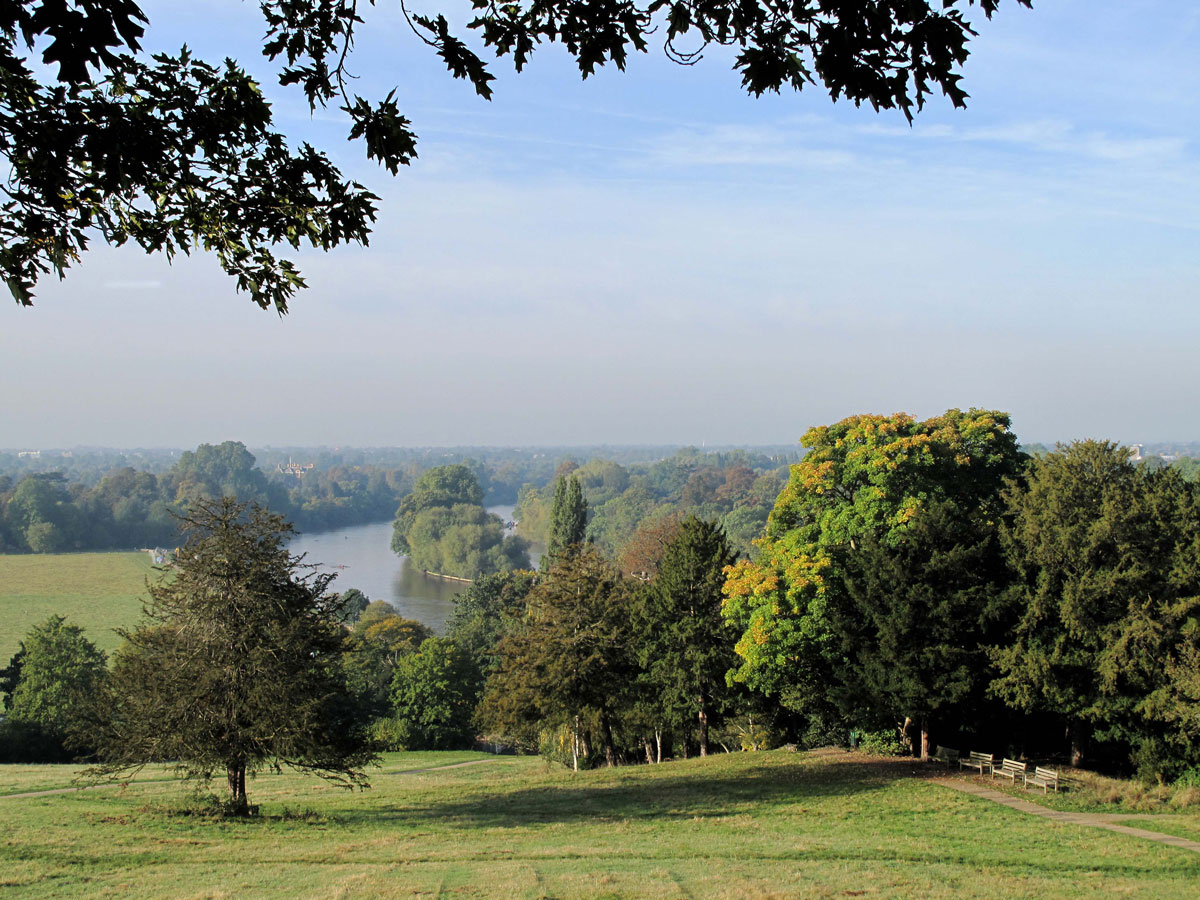
One picture I didn’t throw away though was the one I took from Richmond Hill which you can reach through a gate behind Bulbous Betty and then walking a bit further uphill to the viewpoint. The view over Terrace Gardens and Petersham Meadows is the only view in England protected by an Act of Parliament: Many artists have painted it, including Sir Joshua Reynolds and most famously, JMW Turner.
It is said that William Byrd II, the colonial founder of Richmond Virginia, saw a resemblance from this view to a bend in the James River and named the city after the one here on the Thames. I’ve just had a look at Google Maps, and if the view of the American city was similar back then, it doesn’t appear to be so now. If any Virginians can tell me more please do so as I’ve never been there.
From the viewpoint, continue to walk away from the town, where opposite the former Royal Star and Garter home for injured servicemen is the Richmond Gate entrance to Richmond Park.
How many football pitches or Olympic-size swimming pools the park covers I haven’t a clue, but to give you some idea, it’s almost three times the size of New York’s Central Park – in other words its big – and there’s an 8 mile long 9 ft high brick wall that goes all the way around it.
Created by King Charles I in the 17th century as a deer park, it is now the largest of London’s Royal public parks and Grade I listed to protect its historic and environmental status. Within its grounds is White Lodge, a Grade I listed building (now a part of the Royal Ballet School), but there are ten others which are Grade II listed as well, eleven if you include the boundary wall. Needless to say, you won’t want to try and cover the whole park in one go, but there is plenty to see not far from Richmond Gate.
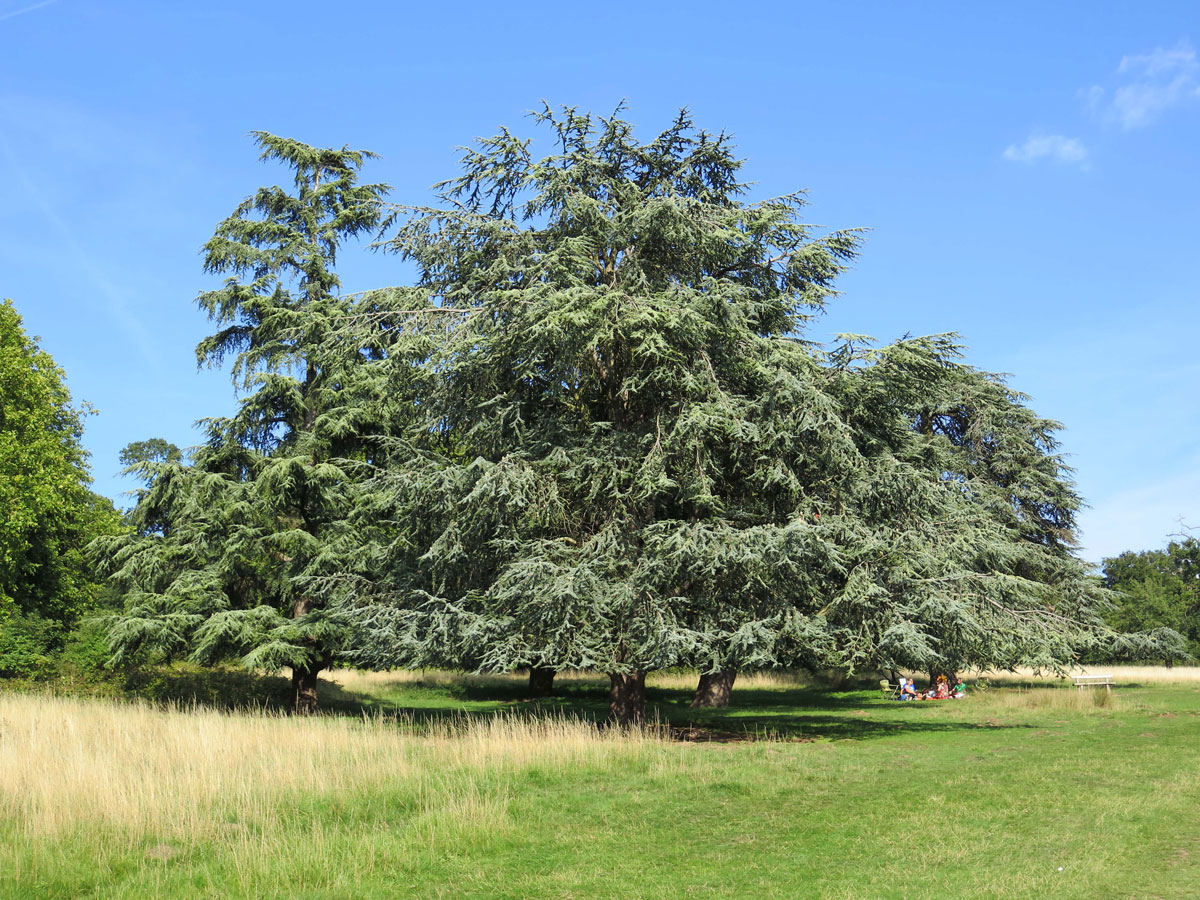
One thing that may surprise some people is that affluent Richmond-upon-Thames has a rich history in pop music. I won’t go into all that now, but you would have already passed Downe House (opposite the viewpoint on Richmond Hill) where Mick Jagger lived with Jerry Hall, and that was because Mick and the Rolling Stones had a close musical connection with Richmond.
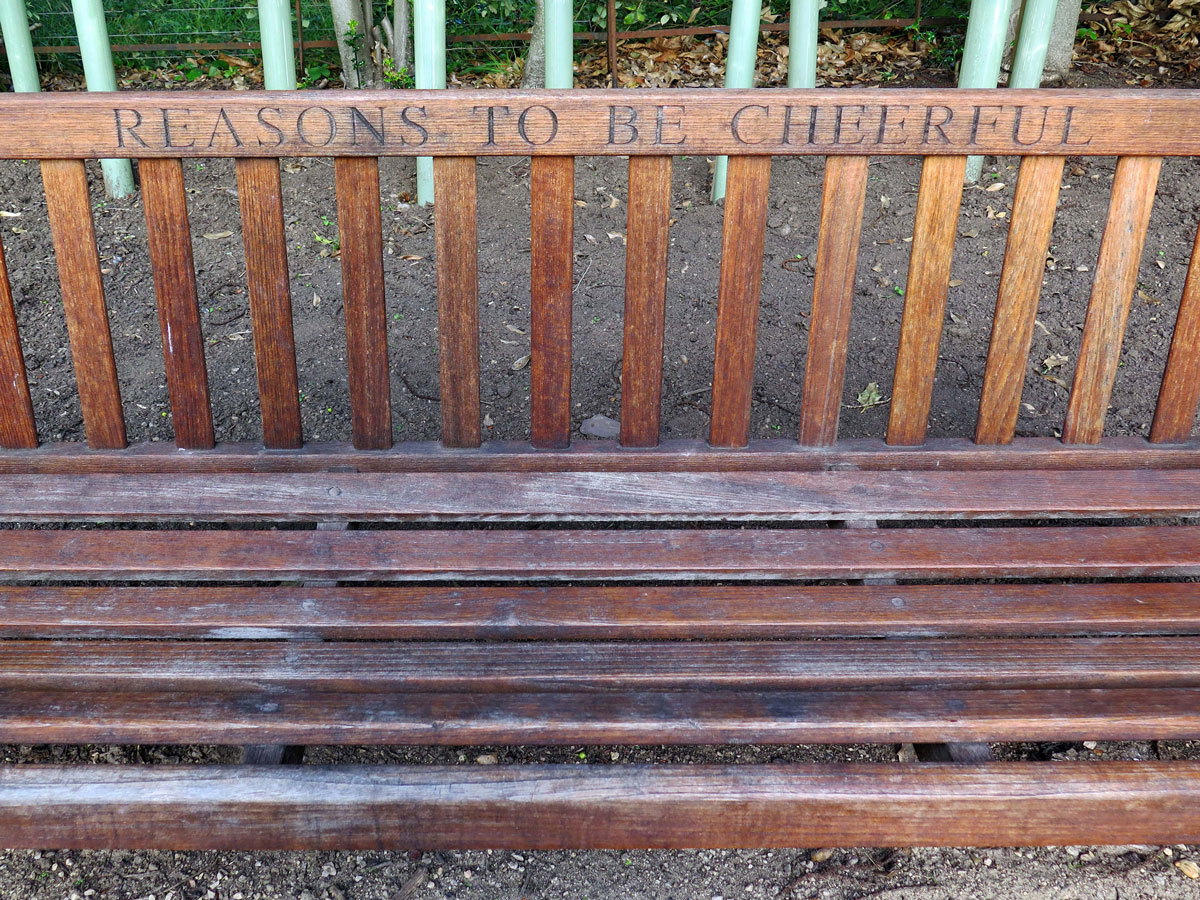
Leaving all that aside for now, after entering the park, turn right along the Queen’s Road footpath and take a break on a bench that caters for Blockheads – or more precisely, fans of Ian Dury and his band. This memorial bench is dedicated to the New Wave artist who rose to fame during the 1970s with songs like Hit me with your Rhythm Stick, What a Waste and Reasons to be Cheerful Part 3.
On a personal level, his style of music wasn’t really quite to my taste, but that says as much about me as anything else. After contracting polio at an early age, he had an uphill struggle through life as it left him paralyzed down one side of his body, but he had a tenacity to fight his disability through words and music – Spasticus Autisticus being a case in point. I did enjoy some of his music and looking back I think he had more talent than I gave him credit for at the time.
His daughter recounts how he used to visit the park regularly, and it seems appropriate somehow that his memorial bench is close to Poets Corner where he often visited, and if you have a smart phone you can use the QR code reader to listen to some of his music. He died in Hampstead in 2007 aged 57.
If you carry on along the footpath and through the John Beer Laburnam walk, a signpost will guide you to the nearby King Henry’s Mound. This was most likely to have been a Neolithic burial chamber to begin with, but it’s main interest lies in the location. The name comes from the legend that King Henry VIII stood here to watch for a sign from St Paul’s Cathedral (10 miles away) that Anne Boleyn had been executed at the tower, and that he was now free to marry Jane Seymour. There’s no evidence to support this claim, but St Paul’s can definitely be seen from this spot, as it has done ever since it was given protected view status when the new cathedral was completed in 1710.
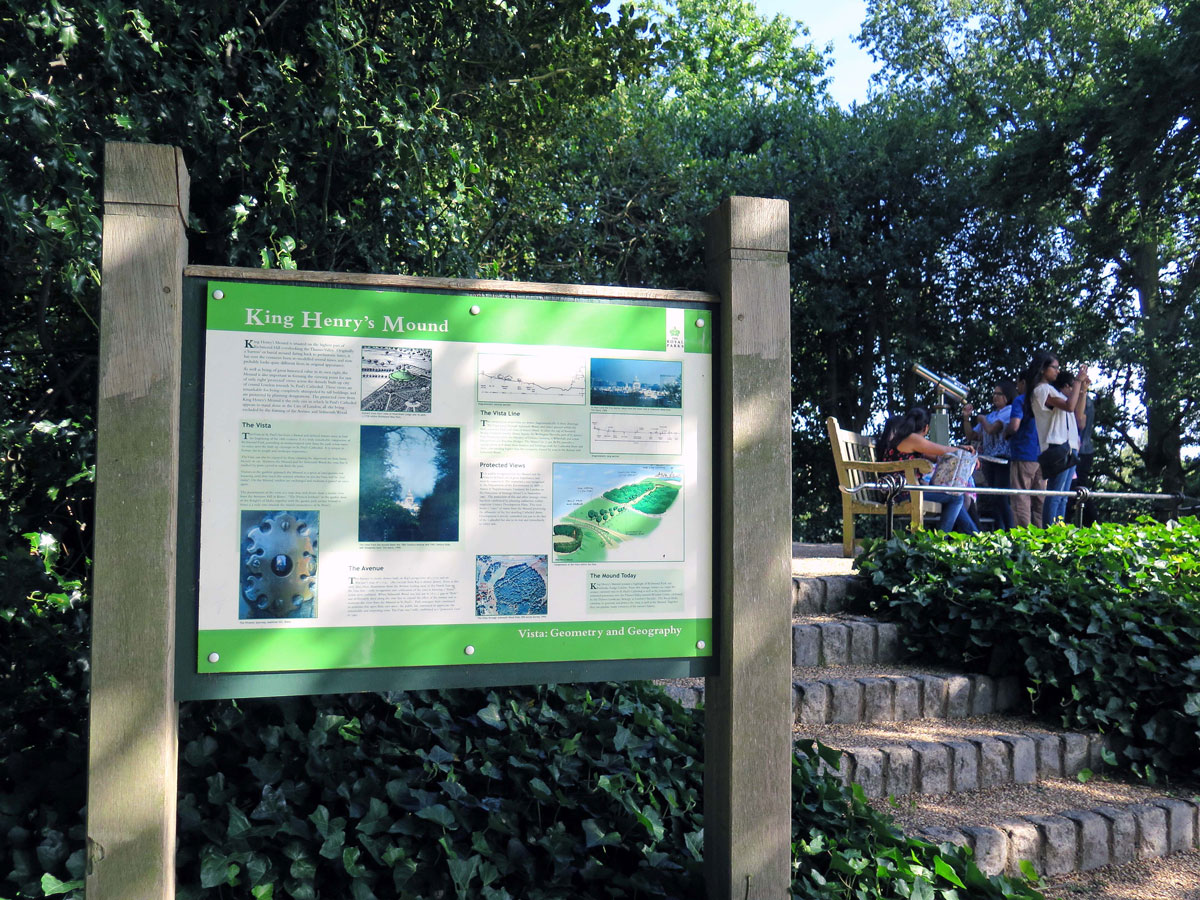
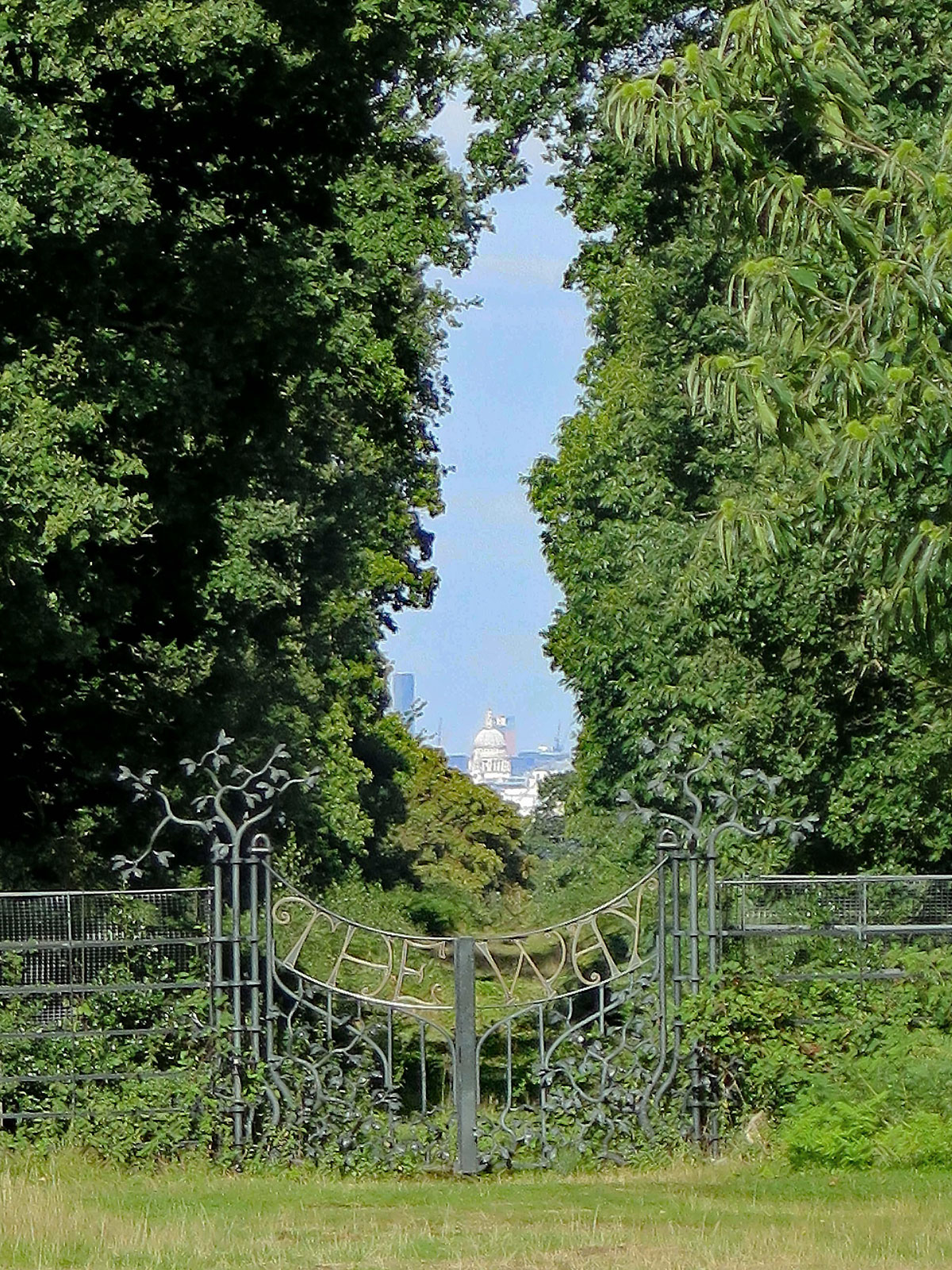
King Henry’s Mound is actually located in the grounds of Pembroke Lodge, one of those Grade II listed buildings I was talking about earlier.
The lodge was first mentioned in 1754 when it was just a tiny one-room cottage occupied by a molecatcher who was employed to destroy any molehills that might have led to any deer hunters coming to grief. From these simple beginnings, it was later enlarged to become part of the hierarchy’s portfolio when it was granted to the Countess of Pembroke and Montgomery by her friend King George III.
In 1847 Queen Victoria granted the lodge to the then Prime Minister, Lord (later Earl) John Russell, where he and his wife were left to bring up their two grandsons Frank and Bertrand, after their parents died when they were young. Bertrand was the thought-provoking philosopher who came out with quotes like “The whole problem with the world is that fools and fanatics are always so certain of themselves, but wiser people so full of doubts”. Another one he is attributed with (although there isn’t any record of it) is “War does not determine who is right. Only who is left”
Another person worthy of a mention is the actor David Niven who was a member of the Liaison or Phantom Regiment, that was based here during WWII. He was later to have said that “these were wonderful days which I would not have missed for anything”. I’m not surprised: It had to be better working here than being dropped on the beaches of Normandy on D-Day.
Today, the lodge is part of the Crown Estate and leased out to a private company who use it as a wedding venue, but the public are invited to use their Butler’s Pantry café for breakfast and lunch.
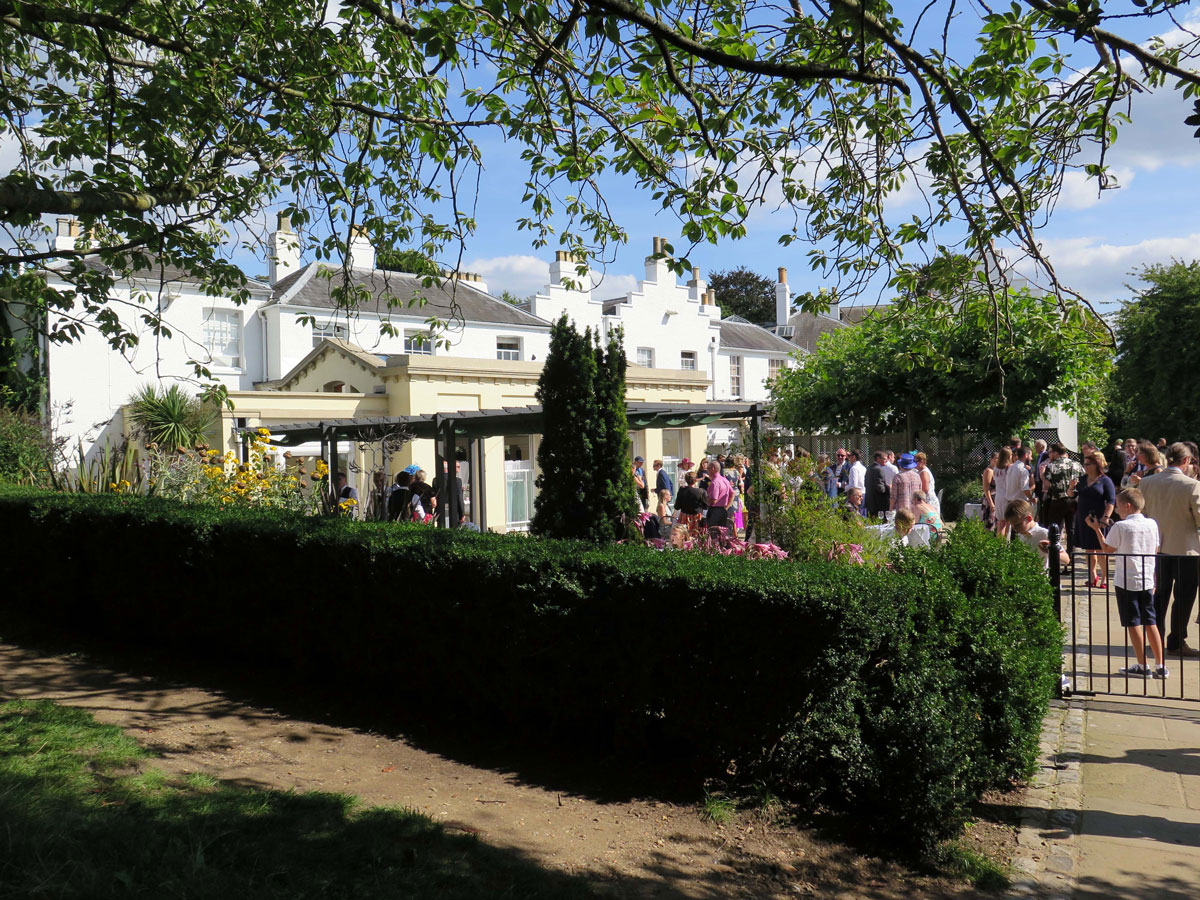
We couldn’t use the Butler’s Pantry the day we were here as there was a wedding taking place, but we were still able to wander around the gardens free of charge, and were well worth checking out.
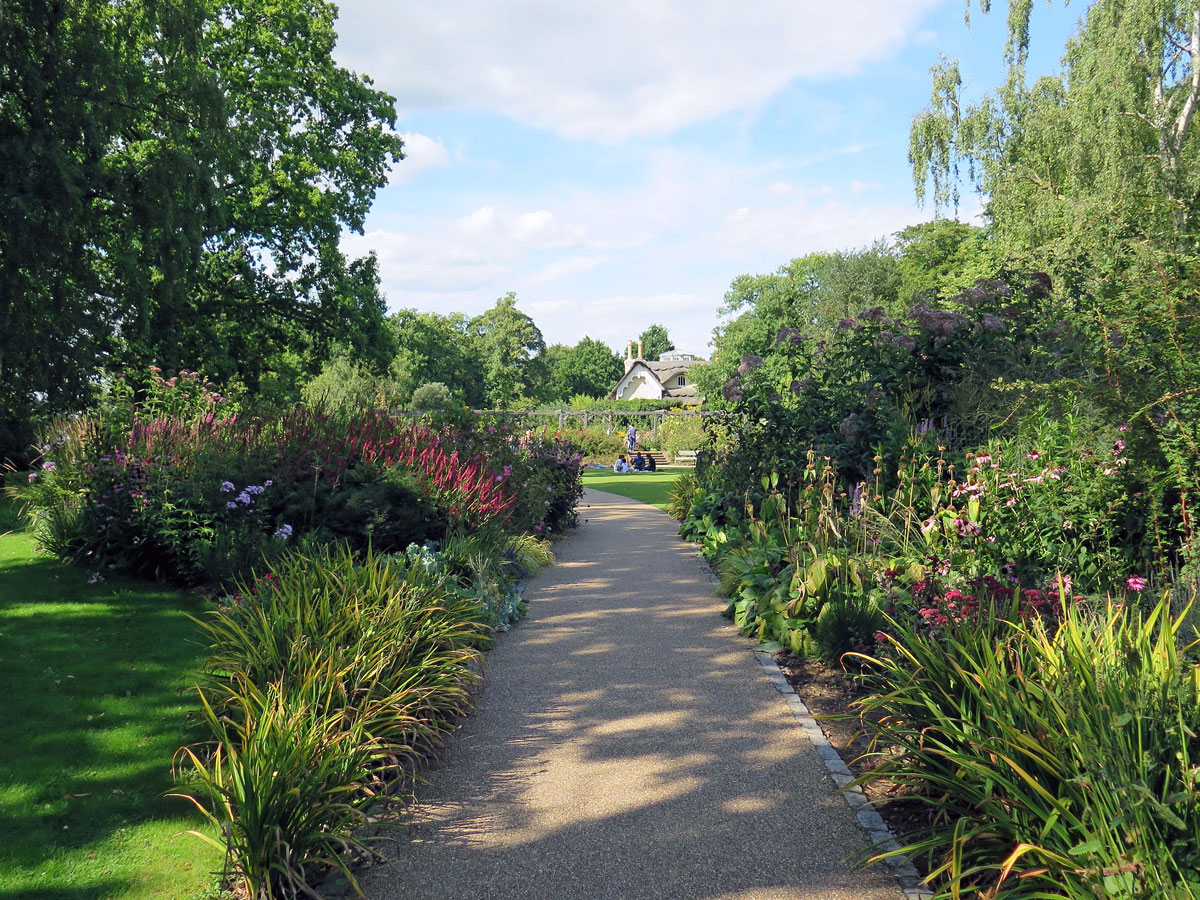
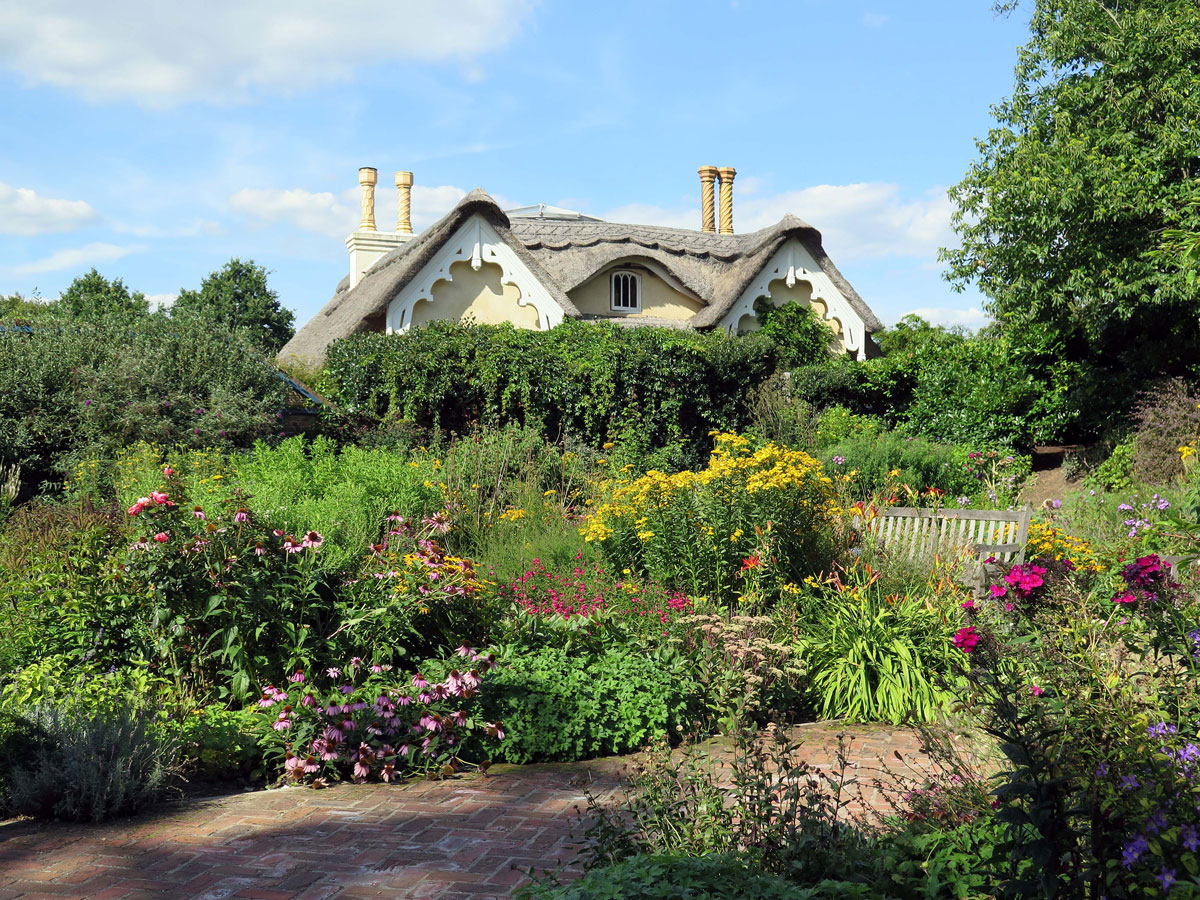
Being such a wide-open space, I’m guessing that most people don’t come here to visit places like Pembroke Lodge. but to wander around the park where they can enjoy the natural environment away from the hustle and bustle of the city streets.
I’m not sure whether the park’s claim to be the most extensive area of dry acid grassland in Greater London would interest the average Joe too much, and not even the fact that its large number of ancient decaying trees attracts a variety of deadwood beetles either, but the park’s large number of deer definitely does.
The deer are free to roam throughout most of the park and although people are told not to feed them, they often do. What happens of course is that the deer see humans as a source of food and they’re not adverse to coming up to you rather than the other way round – especially if you’re enjoying a picnic.
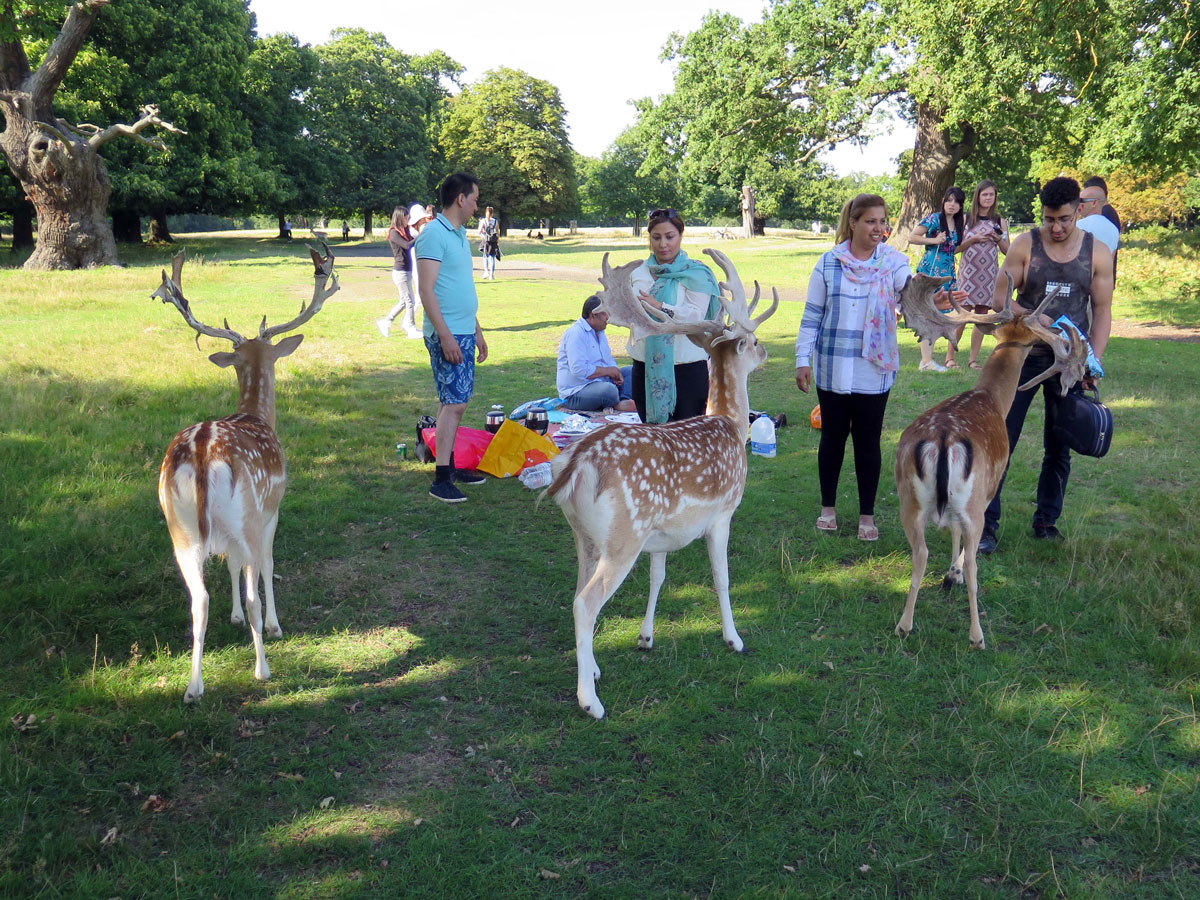
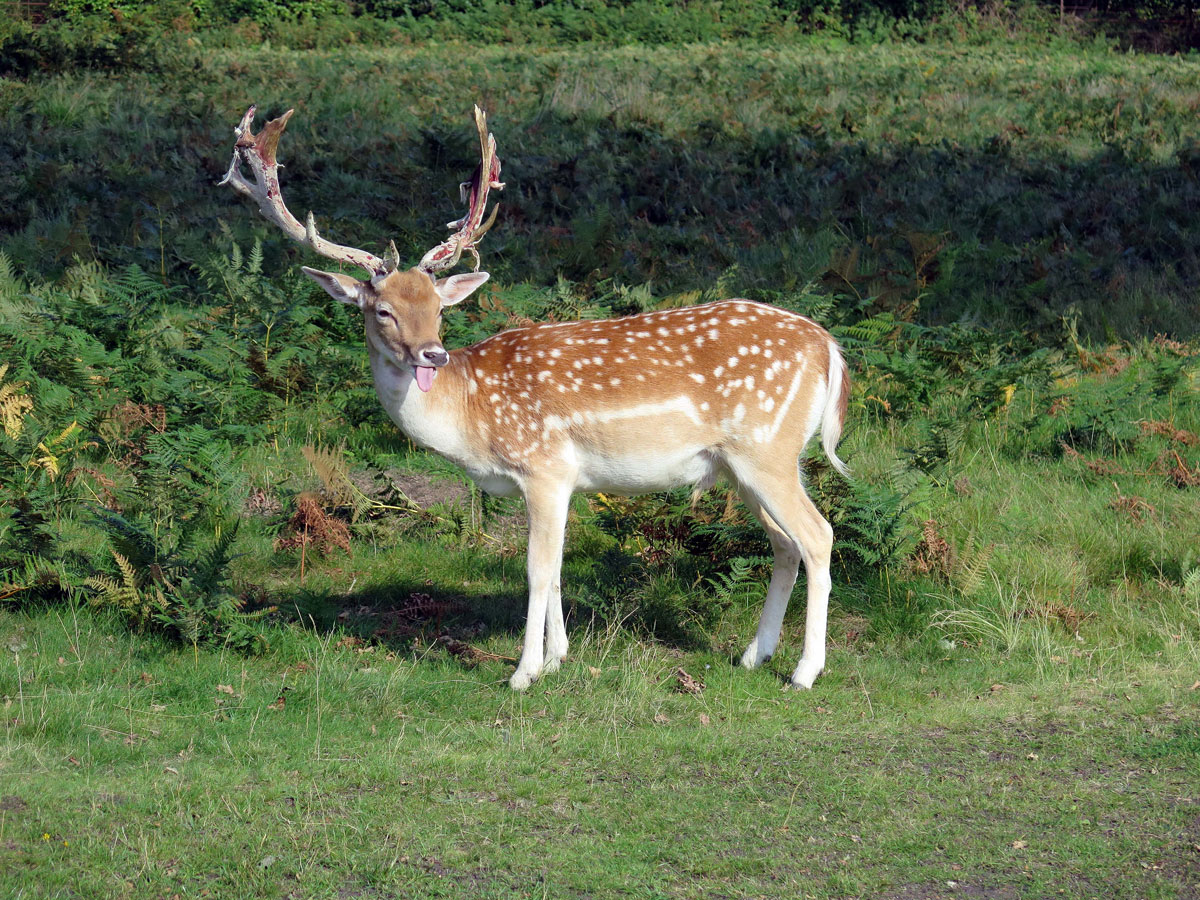
There are in the order of 630 or so Red and Fallow Deer in the park, and to keep the numbers sustainable, around 200 of them are culled each year and the meat sold to licensed game dealers. Even so, I’m sure most people are aware of what they should and shouldn’t do, but it’s easier said than done. We’re told that we should keep a minimum distance of 50 metres from the animals and not to touch, feed or photograph them at close quarters, but try telling that to the deer who keep following you.

One thing that should be easier to control though is your dog. The clip below is more comical than anything else by the way and no deer came to any harm as far as I’m aware.
After exploring Richmond Park, you may well want to call it a day and head back into town before catching your train back into London or wherever, and the easiest way to get there is to walk (or get a bus) back down Richmond Hill to George Street where there are any number of places you can take the weight off your feet and relax with a coffee or something stronger.
There’s no doubt in my mind that Richmond and the wider borough is one of the nicest areas of London to live, but before you start looking in estate agents windows remember that property isn’t cheap here, and there’s another fly in the ointment too: The town is only about 8 miles from Heathrow Airport as the crow flies – or in this case as the planes fly.
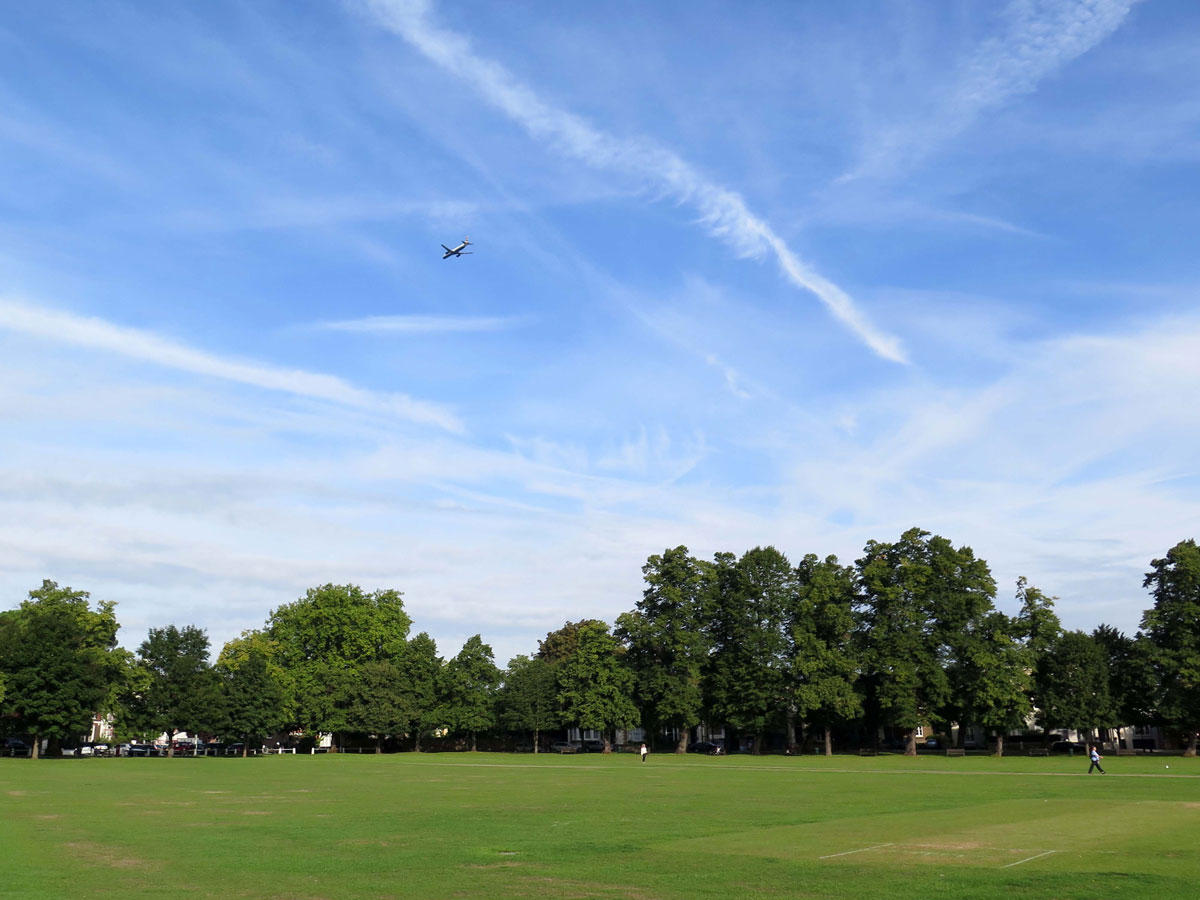
Depending on various factors, what this means in practical terms (and I’ve done the maths for you) is that an average day will see almost 500 incoming flights fly over Richmond Green, and at the busiest times of the day it seems like they’re flying overhead non-stop. People who live here say that you get used to it, but I don’t know about you but I’d be pretty miffed if I spent a fortune on buying a property here to find out that I didn’t. At least Henry VII didn’t have that to worry about when he came here to live.

POSTED – AUGUST 2025
Originally posted 2025-08-26 16:17:22.
A grand post and lovely walk. I’ve been to the other Richmond a few times but never the Thames one. It looks lovely.
The town and borough are some of the nicest parts of London in my opinion Shey
Well, I have been down to London in ,my life more than a few times and reckoned you needed to be a local to find the non touristy parts. And your post made me feel the places I should have been.
There’s so much to see in London, both touristy and non-touristy, but the less touristy places in general aren’t like they used to be. Fortunately that doesn’t include Richmond.
Yeah I have heard that a lot about London. Glad Richmond is still the same.
Thanks a lot, Malc, for another of your fascinating posts that gave me detailed information about a place I visited so many years ago!
Thank you Luisa. I can tell that you have fond memories of London.
Oh you are so very welcome, Malc!
It’s my pleasure!!💓❤️💓
Whenever I write a post that gives somebody some pleasure, it gives me great pleasure too. Have a lovely weekend Luisa 💙
Thanks a lot for this lovely reply, dear Malc!
Happy weekend to you too 🌹🤗
🤗
A wonderful post, so much to see in Richmond. Richmond Park is a National Nature Reserve – one of the best places in England for nature – I currently do a lot of work with National Nature Reserves. The Fenton clip is one of my all-time favourites.
Thanks Stephen. You obviously know the park better than I do and I’d be interested to know what your speciality is. I knew you were involved with marine life but it sounds like you’ve moved on from that.
My work has been involved with fisheries science/policy (freshwater) but for the last 20 years or so in communications for nature. Sadly, I have only been to Richmond Park once, when I was a young man. There are 224 National Nature Reserves in England, and a part of my work is around communicating the declaration of new ones. If you keep your ear to the ground next Thursday, there will be some local/national media coverage about an NNR in Ingleborough (I hope).
Interesting! I assume you’re talking about Ingleborough in the Yorkshire Dales. If so, it’s a fabulous part of the country.
Phenomenal article Malc! Great info, interesting and as usual, fantastic photographs.
Thank you Francesc. You’re far too kind, and it’s good that we’re friends even though we disagree at times. That’s the sign of real friends, virtual or otherwise 🙂
So true Malc, for sure! Always a pleasure and a good read to learn. All the best!
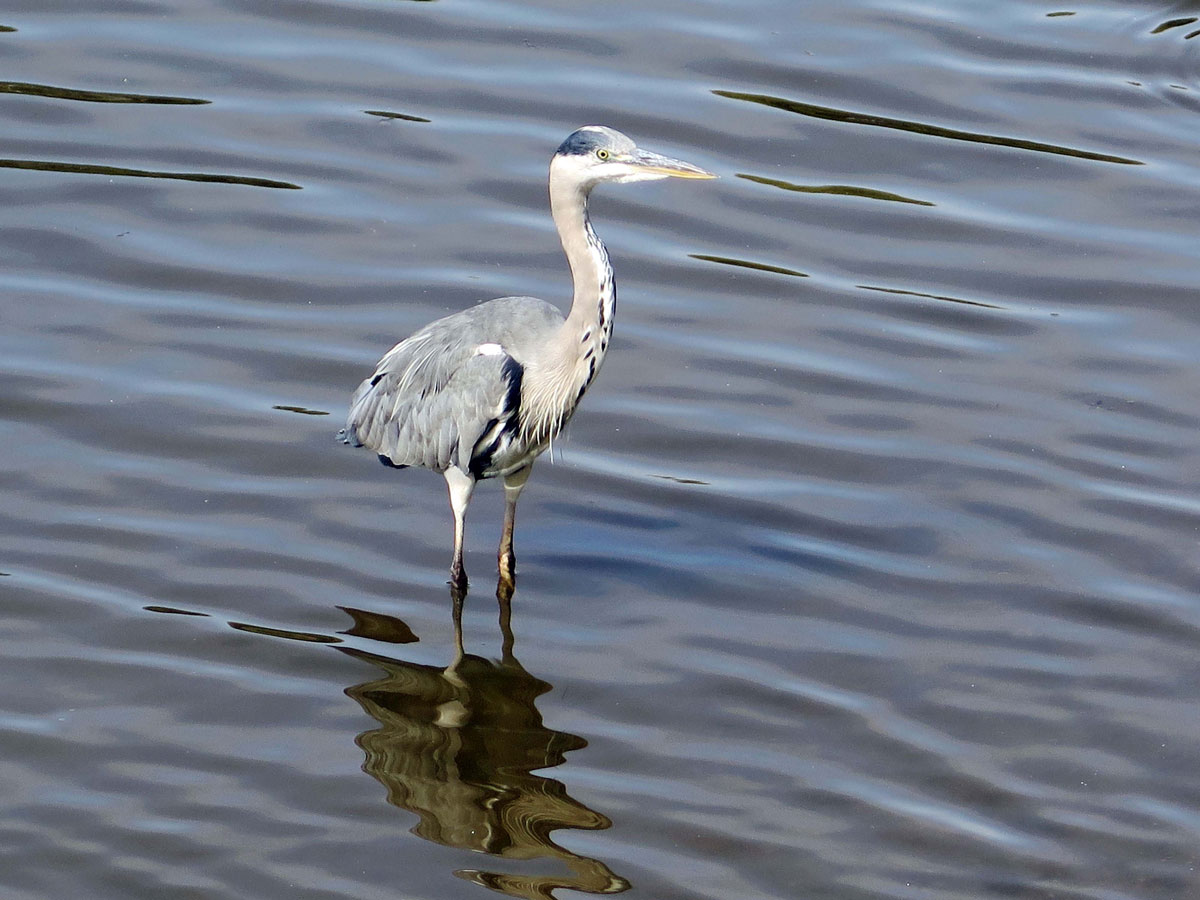
You’re almost on my home turf here and you’ve certainly done Richmond justice! Wonderful photos of the park, deer and heron in particular, and some snippets of history I wasn’t aware of.
Forgot to say how glad I am that you included that iconic video clip of Fenton 😀
Thank you Sarah. You’ve made my day as I realise that Richmond is almost in your backyard, and I wonder if Fenton got any supper when he got home 😊
A walk in the park and viewing old buildings make for a wonderfully enjoyable day. I was so excited to see my first thatched home while housesitting years ago.
From what you say Suzanne I’m assuming there are no thatched buildings to speak of in New Zealand then.
None at all. I obviously knew of their existence via Mrs Google though seeing them in person was a treat.
Great photos and wonderfully comprehensive information
Thanks Adam. Hope you and your wife are keeping well.
An interesting post Malc even if you did confuse me with the names at the beginning 😉 And I never knew there was such a thing as a protected view. A great shot of Richmond Bridge with those reflections and the gardens at Pembroke Lodge look very pretty. Favourite shot? The close-up of the deer of course 😊
Thanks Eunice. How they expect people not to photograph those deer up close when they’re right under your nose I don’t know 😊
A really lovely blog post. I enjoyed reading it. There was one totally new thing to me. I was not aware of these protected views, I didn’t even know that there exists that kind of a thing. And the video clip was fantastic!
Thank you so much for your lovely comments and I’m so pleased that you found it interesting 🙂