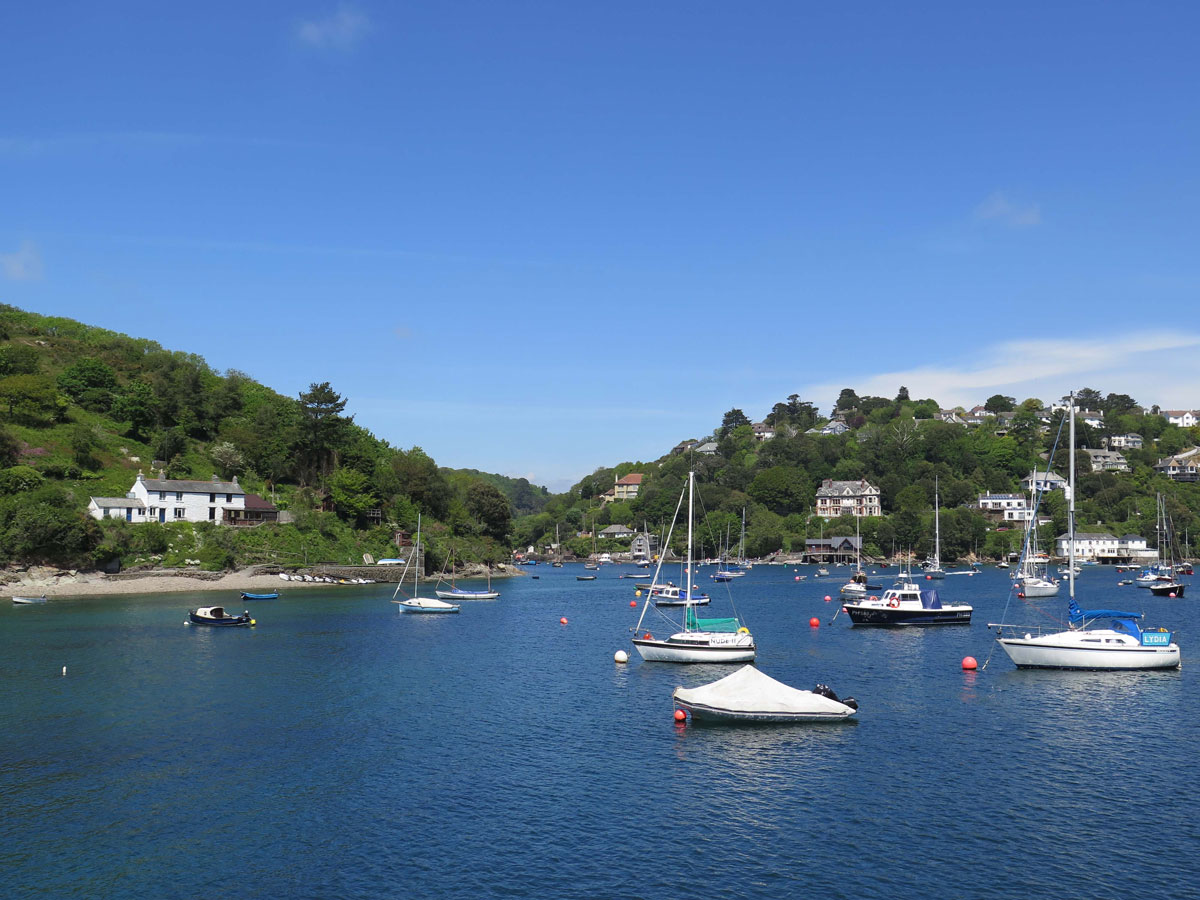
The River Yealm to Bovisand
In this, my final post about the South Hams area of Devon, I’ll be covering the coastline between Bigbury Bay and the outskirts of Plymouth.
This short stretch of coastline is bisected by the mouth of the Yealm, a river that runs for just 12 miles from the southern part of Dartmoor. If you’re somebody who has a taste for oysters, then you’ve come to the right place because conditions in the estuary are perfect for these edible marine bivalves. The Yealm estuary has just the right mixture of sea and fresh water to aid their growth, but not all South Hams rivers are the same: The Dart Estuary, for example, has too much fresh water, and the Kingsbridge Estuary at Salcombe doesn’t have enough.
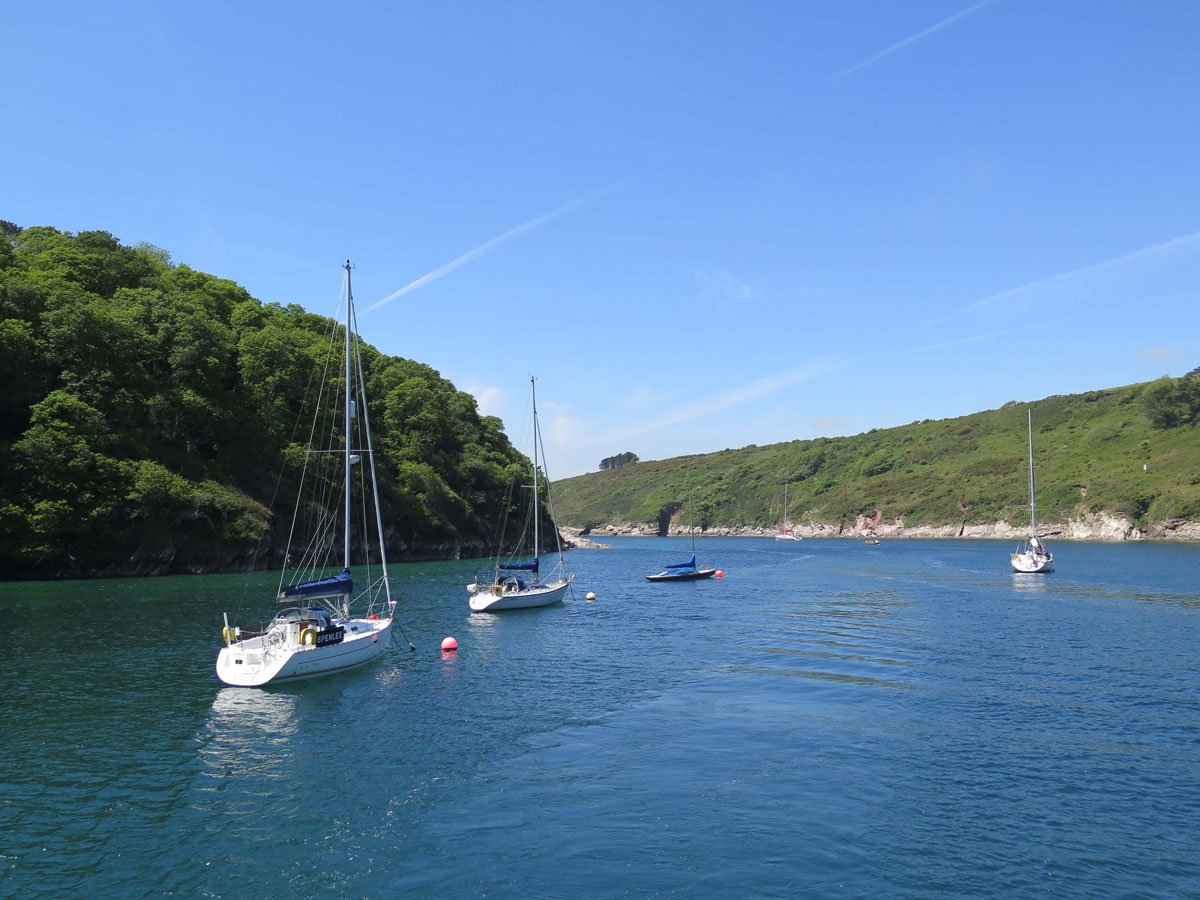
The mouth of the River Yealm doesn’t just provide ideal living conditions for oysters, but also for those who like yachting too. Newton Creek harbours two villages, Newton Ferrers and Noss Mayo, both of which provide the perfect location for those who have pockets deep enough to buy a property here.
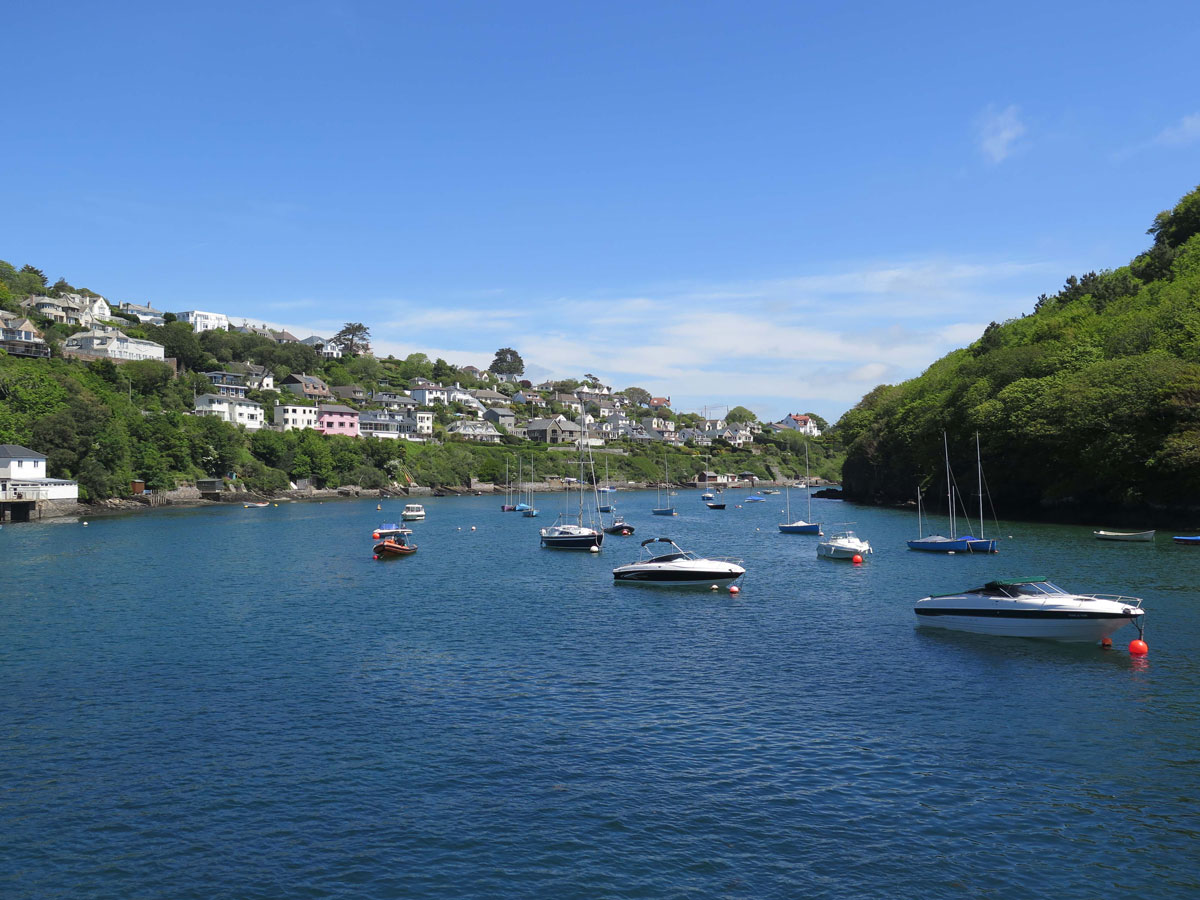
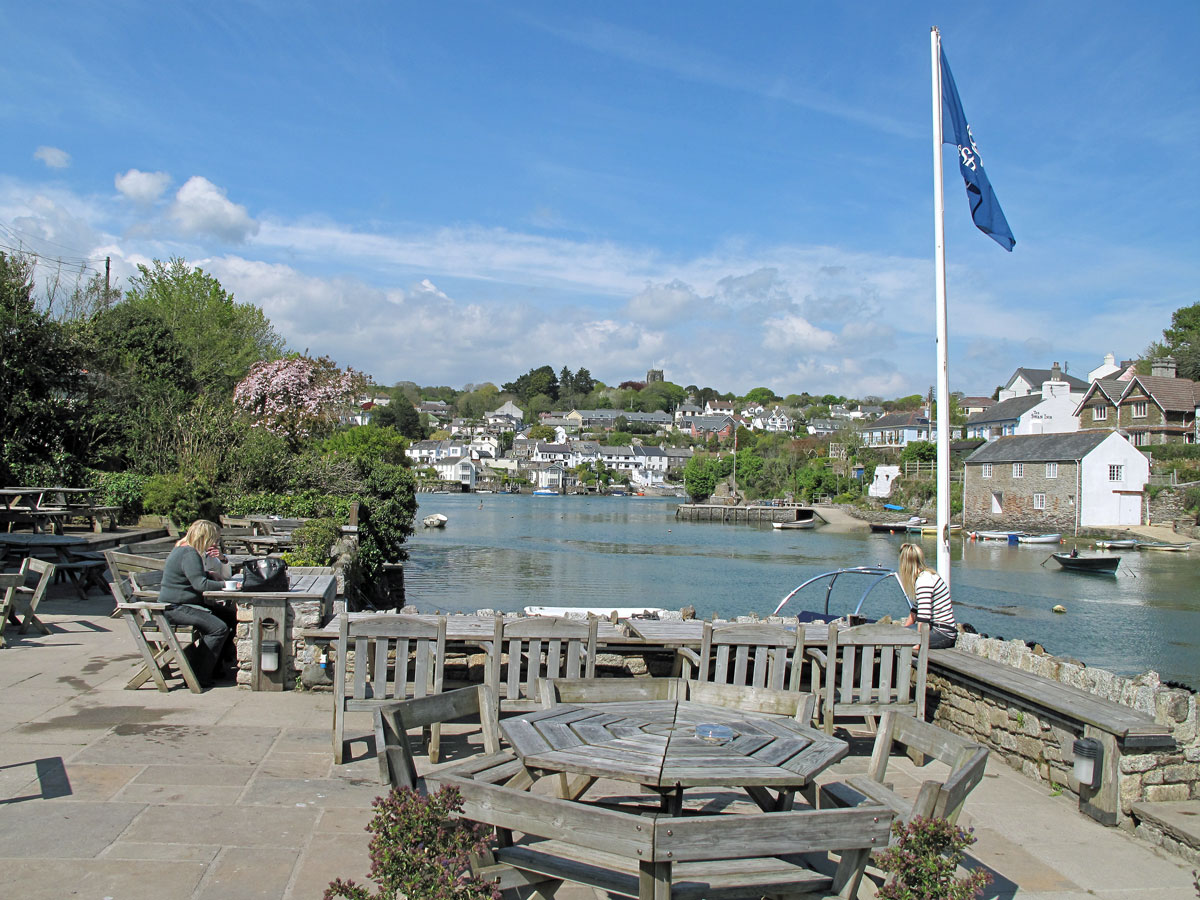
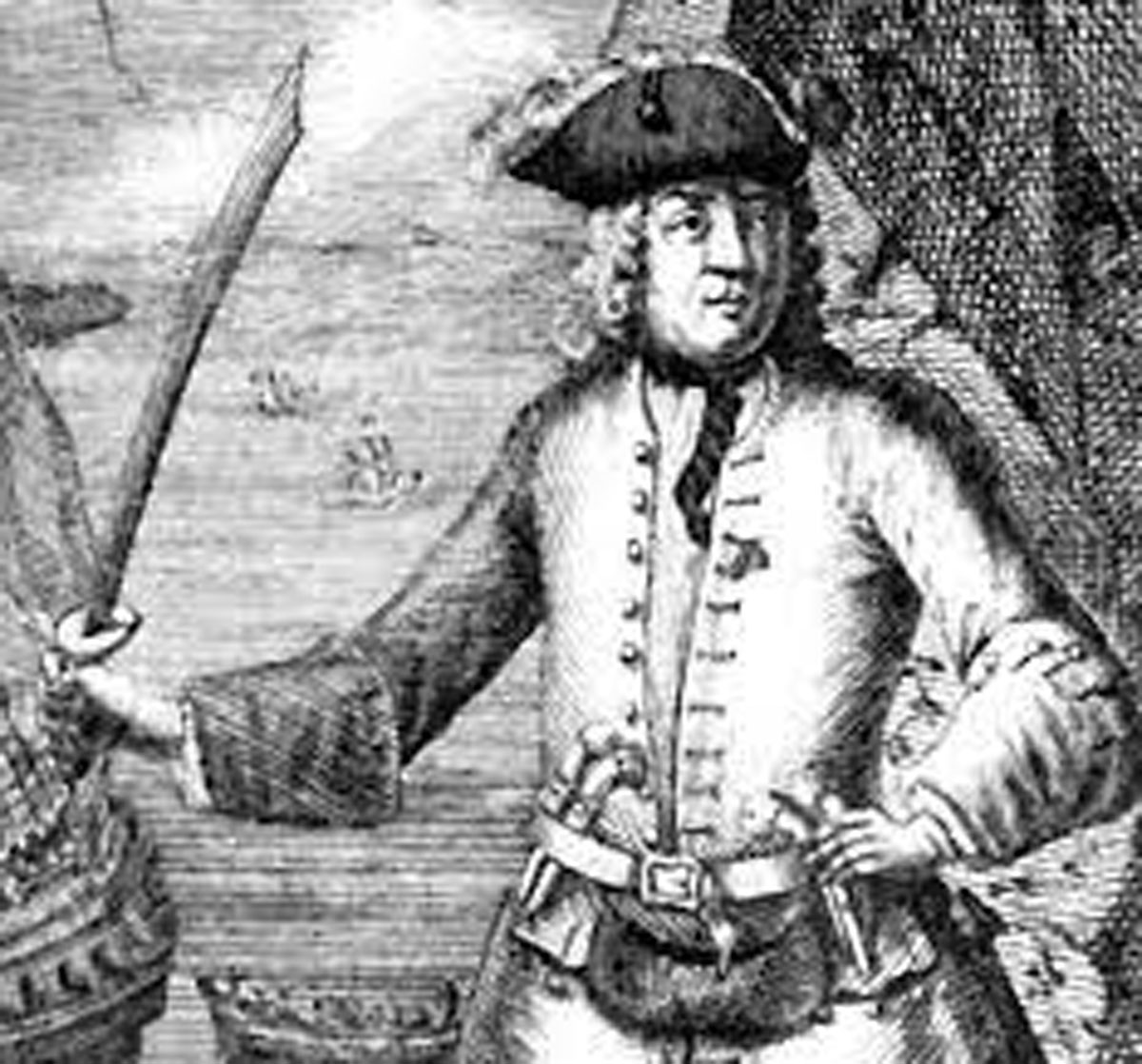
A former resident of Newton Ferrers was Henry Every – or at least that was one of his names: Benjamin Bridgeman (‘Long Ben’) was another one, but perhaps the most appropriate of all was the one given to him by his seafaring companions – King of the Pirates.
Henry Every was born in Newton Ferrers in 1659, but his fortune was made much further away – and at other people’s expense. His career at sea started off harmlessly enough, working his way up through the ranks of the Royal Nay, but things started to change when he was aboard a ship in Spain where the crew mutinied. His contribution to the mutiny elevated him to captain, and for the next couple of years Long Ben and his men changed the course of both their ship and their lives.
It was small time piracy to begin with, but after sailing around the Cape of Good Hope into the Indian Ocean they met up with a 25-ship convoy of Grand Mughal vessels carrying pilgrims to Mecca. More importantly for Every (and his own small flotilla of ships and crew which he had picked up along the way) was the fact that the Indian ships were laden with gold, silver and jewels. Attacking these well protected ships wouldn’t have been without its risks, but it didn’t deter Every and his men, who helped themselves to booty worth around £600,000 – and that was what it was worth in 1695. Today’s value is nearer to £100 million!
Needless to say, there were going to be repercussions and a £1,000 bounty was put on his head, making it the first worldwide manhunt in recorded history. There were many famous privateers, buccaneers and pirates, but how many of them escaped with their lives or being caught, let alone their treasure? – Henry Every (or Avery) managed all three, because nobody really knows when or where he died.
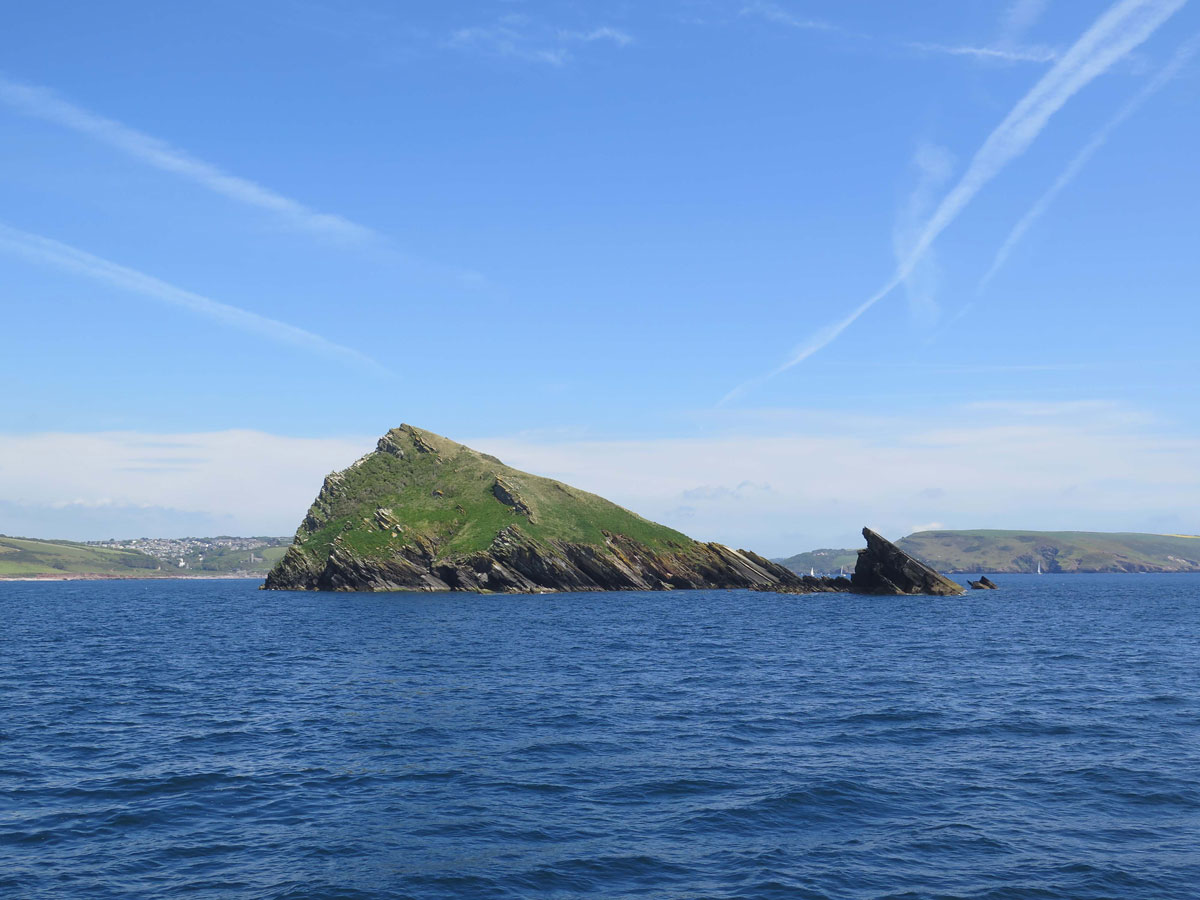
The River Yealm enters the sea at Wembury Bay, where not far off the coast is The Mewstone. Now owned by the National Trust (NT) and run as a nature reserve, this small island has been a place that several people have called home – and they weren’t saints either.
Back in 1744, a local unnamed miscreant was banished to the Mewstone for seven years after committing a minor crime, but according to the NT, he enjoyed living here so much that he never left. How he managed to entice a woman there I don’t know, but apparently he had a daughter called Black Joan who also stayed on the island, got married and had three kids of her own.
The early 1800s saw another felon, Samuel Wakeham, arrive on the island. It seems that Sam preferred the idea of living on a triangular lump of rock off the Devon coast rather than being transported to Australia, and along with his wife Ann they built a cottage, the remains of which can still be seen today. Like Black Joan’s father, Sam seemed quite happy to see his days out on the Mewstone, but he obviously hadn’t learnt his lesson, because in a cruel twist of fate he was kicked off the island for smuggling. How ironical is that?
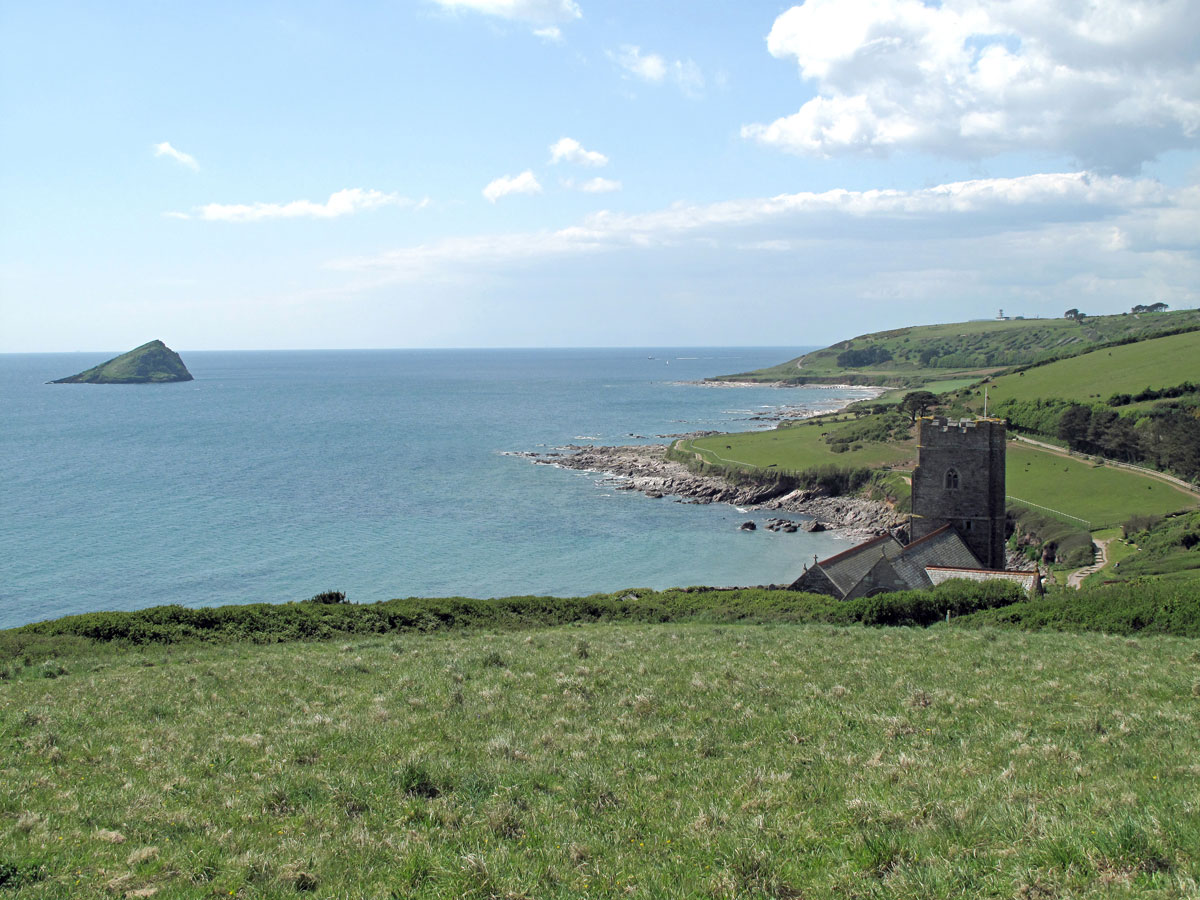
The National Trust also own the land around Wembury Beach, which is no bad thing as far as I’m concerned because it helps to stop the spread of Wembury village down to the shoreline.
Wembury is the largest village on the Wembury Peninsula, and being close to Plymstock (one of Plymouth’s larger suburbs), it wouldn’t take long for developers to take advantage of the prime location given half a chance. Fortunately, not only does the NT own some of the land around here, the area also lies within the South Devon Area of Natural Beauty, as well as coming under the jurisdiction of the South Hams District Council, so it’s difficult to see how things could dramatically change – but who knows?
The coastline is also a Marine Conservation Area, and the Devon Wildlife Trust have a Marine Centre here which helps to educate and promote environmentally friendly tourism. Being so close to Plymouth, the beach at Wembury obviously attracts plenty of families who are drawn to the superb rock-pooling opportunities that always seem to fascinate both kids and parents alike.
At Wembury Point, the bay gives way to Plymouth Sound, the large tidal inlet that helped Plymouth become of the country’s most important naval ports.
Our final destination is Bovisand, where the boundary lines on the map show that we’re still in the South Hams, but in reality it feels like we’ve arrived at Plymouth. For a start, the Breakwater lies opposite, a structure which should be included with my other Plymouth posts, but basically it was built to protect shipping in the Sound: Local weather reports usually include a description of conditions inside the Breakwater.
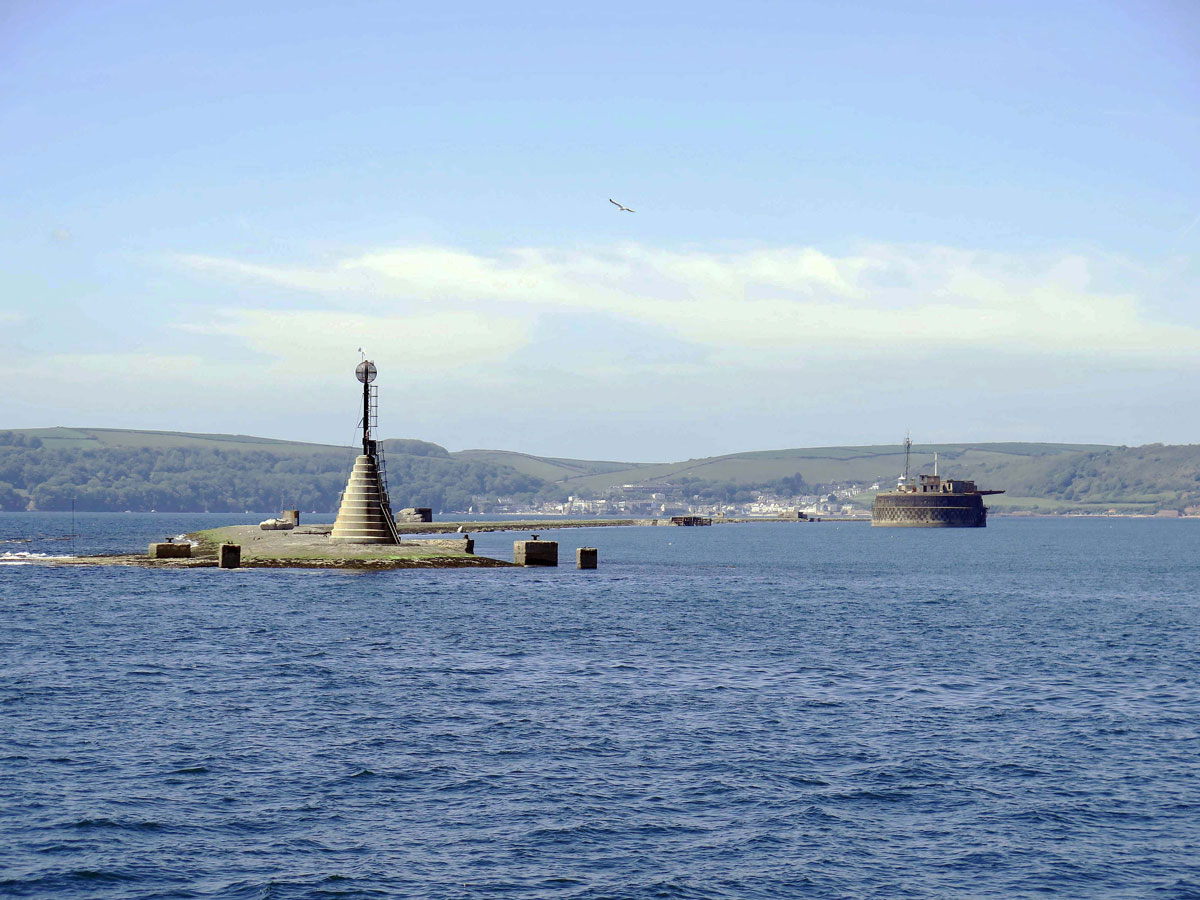
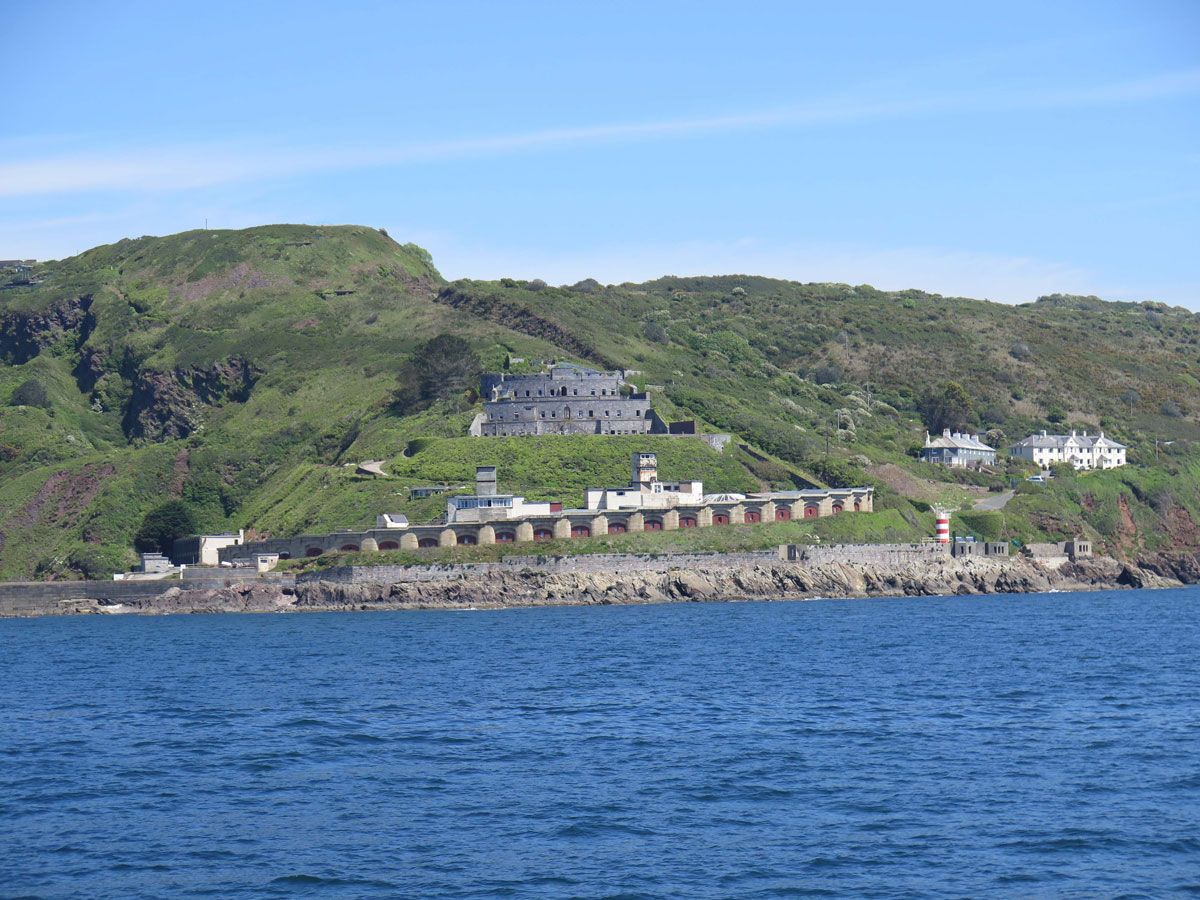
According to the website Castles and Fortifications of England and Wales, 70 batteries and forts have been built around Plymouth, many of which are still standing. It shouldn’t come as any great surprise therefore to find one here at Bovisand guarding the entrance to the Sound inside the Breakwater.
Fort Bovisand was built between 1861and 1869, and was one of Palmerston’s Forts that were built to defend Britain from the threat of Napoleon’s navy. Working in conjunction with the nearby Staddon Point Battery, the fort was used by the military until it was decommissioned in 1956, after which it became a diving school.
The diving school is still here, but the fort was also where the Diving Diseases Research Centre began helping divers recover from Decompression Illness or The Bends as it’s more commonly known. The volunteer members outgrew their humble origins and have since relocated to a purpose built unit near to Derriford Hospital, taking their original decompression chambers with them.
Diving has been an integral part of Bovisand for a good number of years and I hope it continues because redevelopment plans are taking place as we speak. The owner of the site is none other than Greg Dyke, the former BBC chief and chairman of the Football Association. Work has already started on the £35m redevelopment which will include the usual combination of apartments, business and leisure facilities.
Sometimes schemes like these can send a shudder down my spine, but the fort and its surroundings were in desperate need of attention and is on Historic England’s ‘at risk’ register. From what I’ve read, it seems like Greg Dyke has an interest in protecting the fort as much as making money. It’s been successfully done elsewhere around the Sound, so let’s hope that it’s the same here.

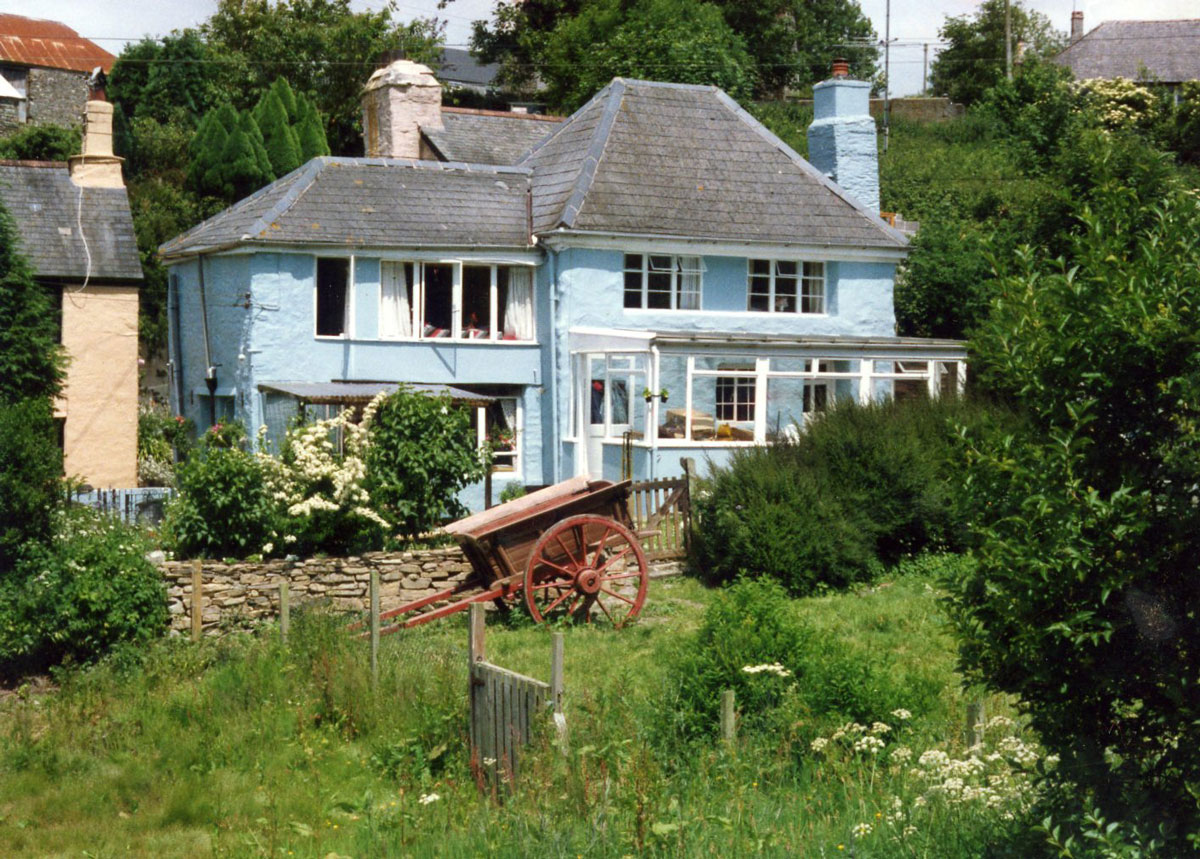
This is the point at which my journey around the South Hams ends, and I hope that you’ve enjoyed exploring it with me. I’ve covered the main points of interest, but there are plenty of ‘off-the beaten path’ places to explore as well. I spent eleven years living in the South Hams and got to know it well. Most of that time was spent in Gate Cottage in the hamlet of Brownston (see pic below).They were happy days, but there were some sad ones as well, as there always is, but for the most part, I have really fond memories of this beautiful part of South Devon. Thank you for joining me on this part of my journey, but there comes a time in everyone’s life when you just have to move on.
POSTED – JANUARY 2022
Originally posted 2022-01-27 10:42:47.
Fab post. Loved all the personal histories mentioned here and what apretty place.
We had some great times while living there.
I can beleive it. It looks wonderful
A thoroughly enjoyable read to end your journey through South Hams, an area I’ve learned about only from your posts. Again, it looks beautiful, and it seems rich in history. I loved reading about the local ne’er-do-wells, especially, of course, Henry Avery, who Maddie knows about, but me less so. Good to know he’s one pirate that escaped the grizzly fate of many of his contemporaries, being strung up and left to rot for all to see. Great post, as always, Malc, and thanks for opening my eyes a little more to this corner of your colourful world. 🙂
It goes without saying Alli that I’ve enjoyed your virtual company around this part of South Devon which I have to say, I was reluctant to leave. I get the feeling that Maddie also occasionally enjoyed the tour around the area as well – at least I hope so 😊
I’m coming to the end of my blogging hiatus now and will be back very shortly with another instalment about The Beatles, but there’s a whole new area on the other side of Torbay that I haven’t written about yet, so whether it’s Devon, Liverpool, Vienna or wherever I write about next, I hope you’ll continue to follow me there. I always appreciate your lovely comments – and thanks 😊
I think you’re right – that orange punch sounds way too tempting! 😀
Maddie has very much enjoyed your South Devon tour, and we always love your photos which make the whole place come alive. Of course I’ll keep following you, wherever your wanderings take you. 🙂
It’s good to know that somebody’s following me around. It’ll help me keep on the straight and narrow – and maybe even get on the right train 😊
I’ll pass on the oysters thank you (I don’t dislike them but on past evidence they clearly dislike me!) Apart from that though this was a beautiful virtual visit with lots of summer sunshine and your usual interestingly told tales of the past 🙂
I’m not a great fan of oysters either Sarah, but I am a big fan of the South Hams coastline, and I’m pleased of course that you’ve enjoyed the journey with me.
Now that I’ve reached the end of my tour of the South Hams I think it’s as good a time as any to take a break from blogging. I’m not sure how long it will be for, but it goes without saying that people like you, who have supported me along the way, won’t be forgotten and I’ll be keeping an eye on what you’re up to on a regular basis. Hopefully, I’ll get my mojo back because I’ve got so many places I want to talk about.
Don’t disappear totally Malcolm, especially as you’re not around on FB much these days either. And I’ll look forward to the return of your mojo in due course 🙂
I won’t 🙂
Beautiful area, Malc. You got my attention at oysters and kept it with your (not surprising) affinity for rascals. In Virginia, we have a lot of different oyster regions in our tidewater area. One of our previous governors has paired the oysters with local wines. You, Francisco and I might enjoy trying them if all ever get together in the US. PS Just read your and Eunice’s comments–love your blue cottage.
Why am I not surprised that you like oysters with your wine Pat? Sounds like a great idea though 🙂
Oysters and a sauv Blanc are two of life’s pleasured.
Both could make me throw up if I had too much of either 🙂
A very interesting post Malc, the story of Samuel Wakeham being kicked off the Mewstone made me laugh but with the shape of it I can’t for the life of me see how anyone could build a cottage on there. Great photos as usual, the cart outside the blue house just ‘makes’ that shot though my favourite just has to be the first one, it looks gorgeous there 🙂
Thanks for your smashing comments Eunice and I’m glad that you found the post interesting. As for living on the Mewstone, I’m not averse to some peace and quiet myself, but that’s taking things a bit too far I reckon. I’m also pleased that you liked the picture of the blue cottage because that’s where I lived 😊