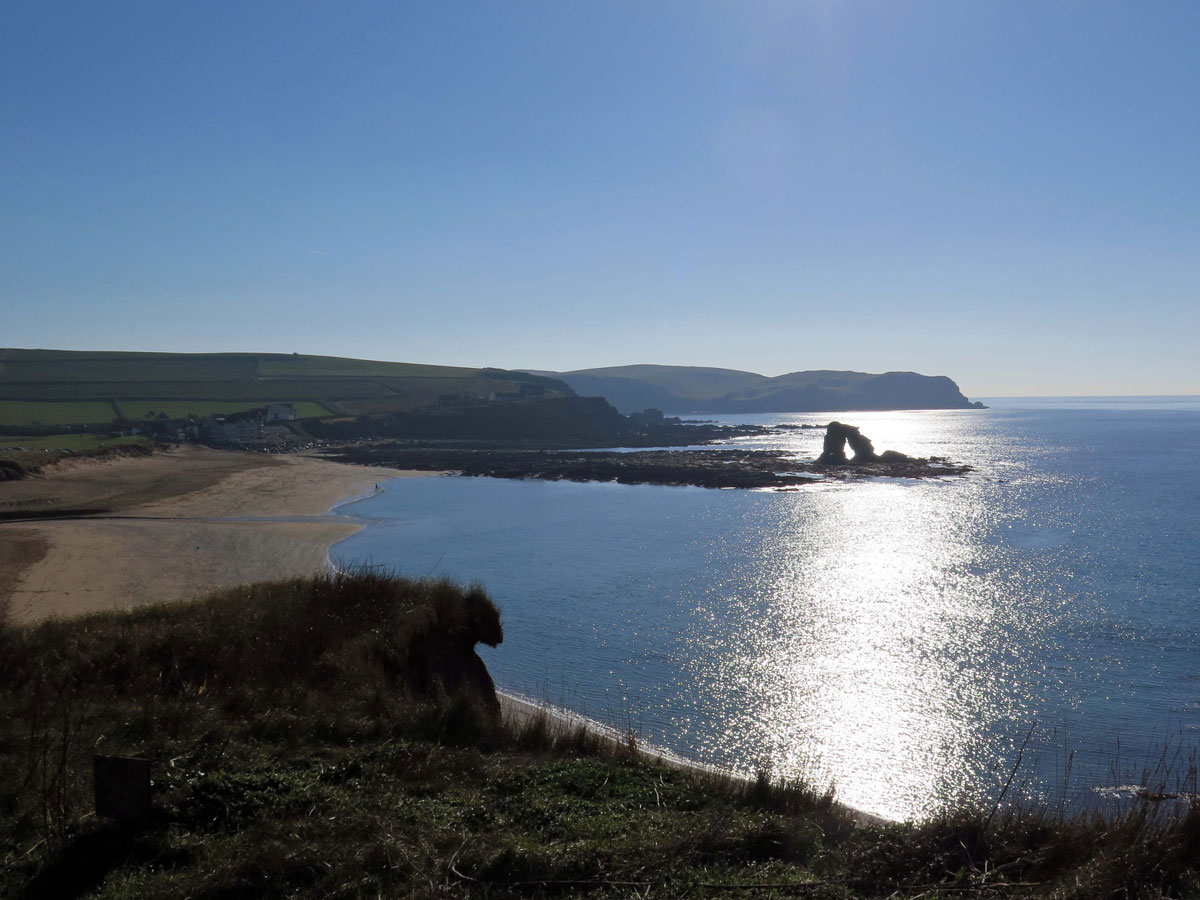
Bigbury Bay
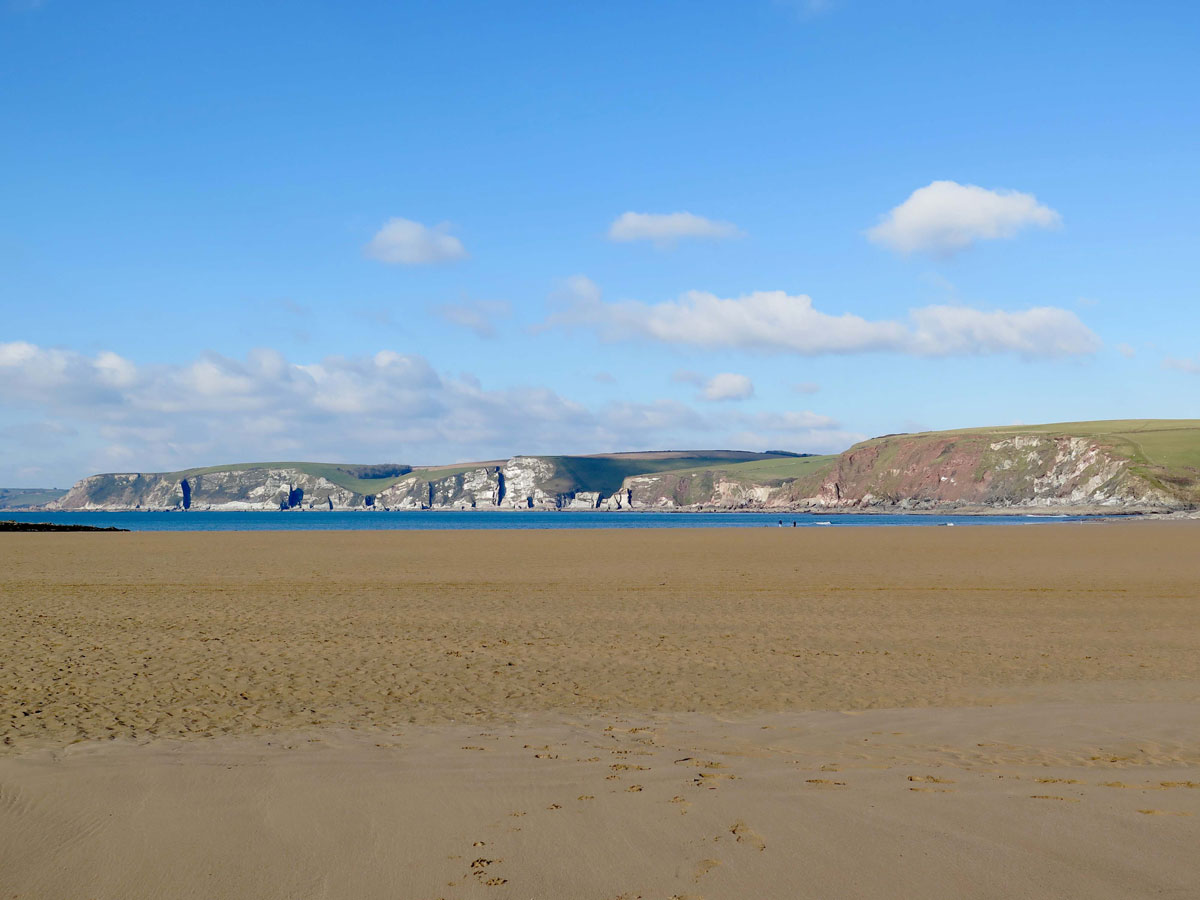
Bigbury Bay is a broad stretch of South Devon coastline between Bolt Tail (not to be confused with Bolt Head near Salcombe) and Stoke Point. Generally speaking, it’s more rugged than Start Bay, but there are still some fine sandy beaches, especially around the mouths of the Rivers Avon and Erme, both of which start out on High Dartmoor.
There are a few small areas of habitation dotted around the bay, but on the whole it’s a very unspoilt part of the coast, with Burgh Island being its most prominent feature. Inland, the scenery is typical of the South Hams countryside with rolling hills interspersed with small villages.
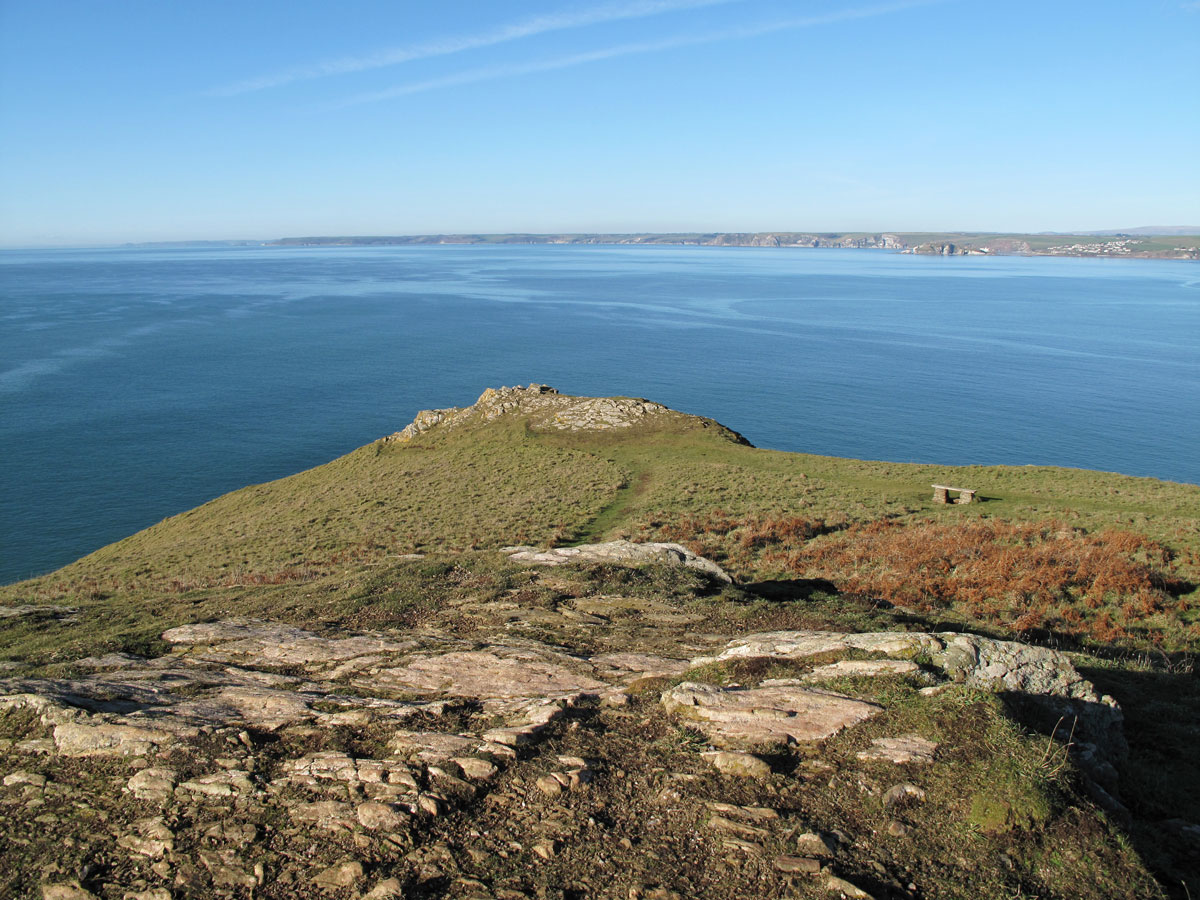
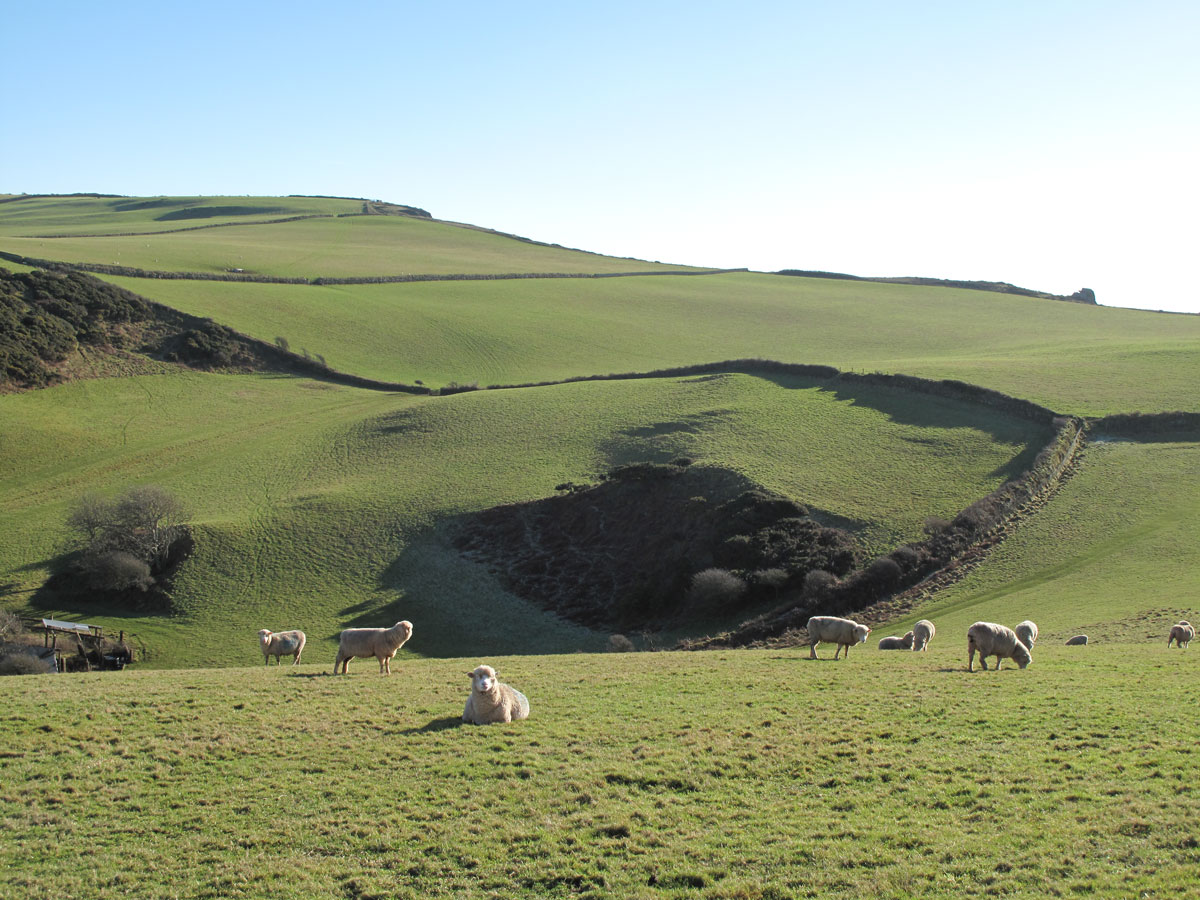
Tucked in snugly under Bolt Tail is Hope Cove. It’s usually protected from the elements, but the first time I came here it was blowing an absolute hoolie, and the wind wouldn’t let me get out of the car; so, I turned around and went back home.
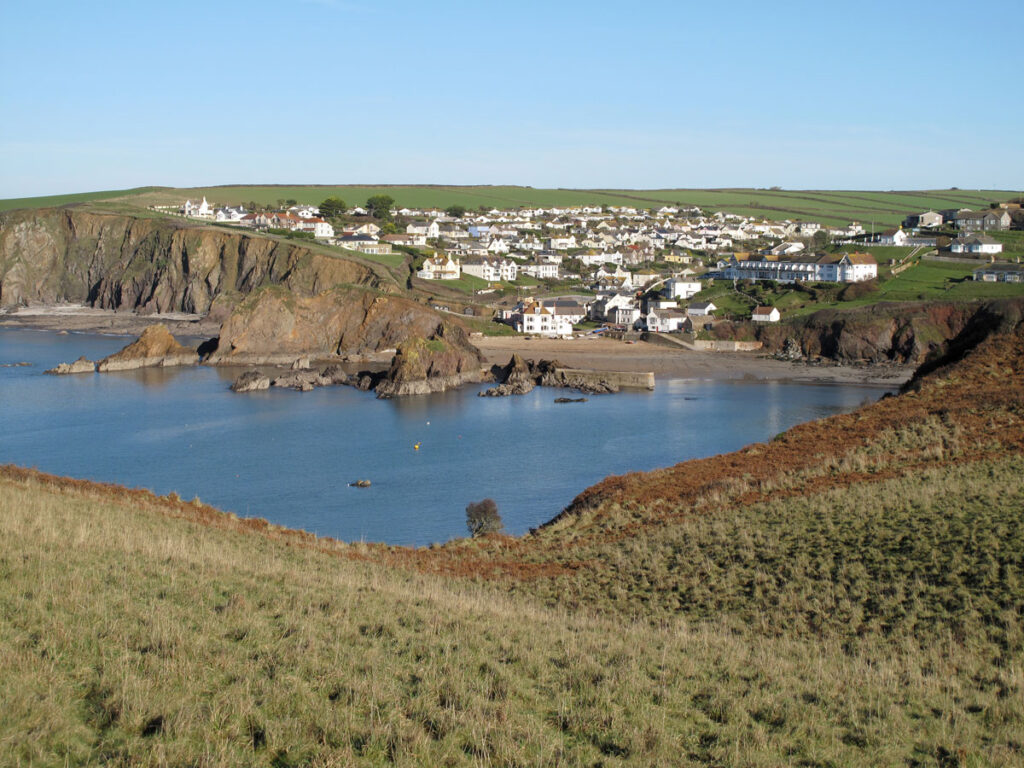
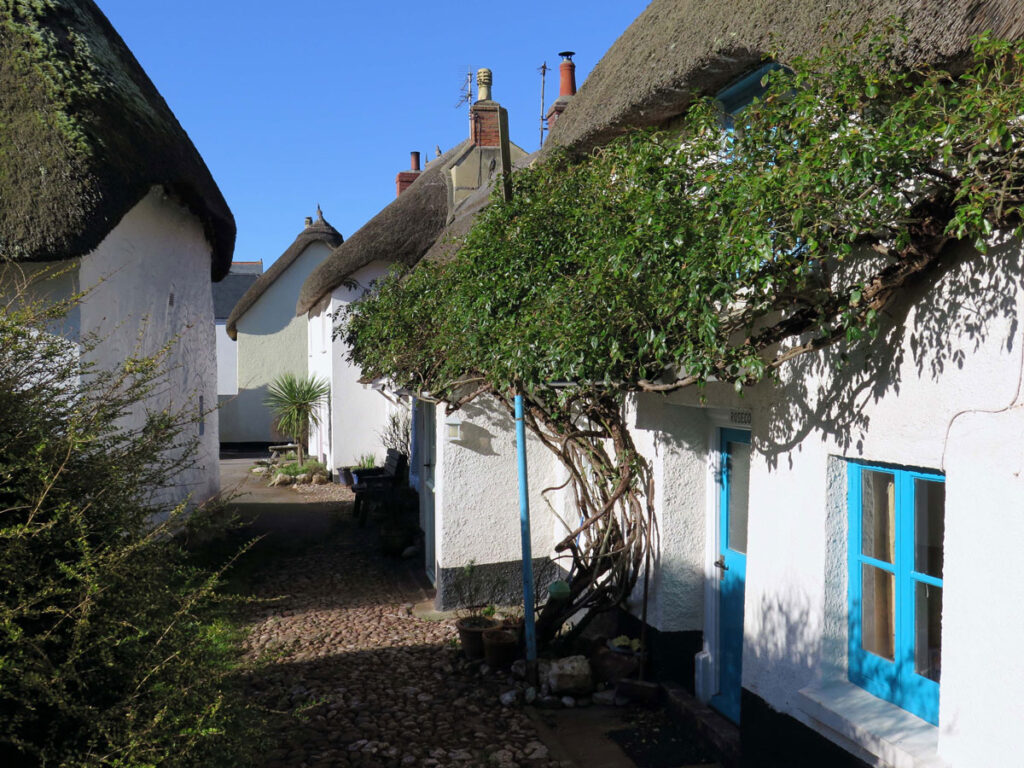
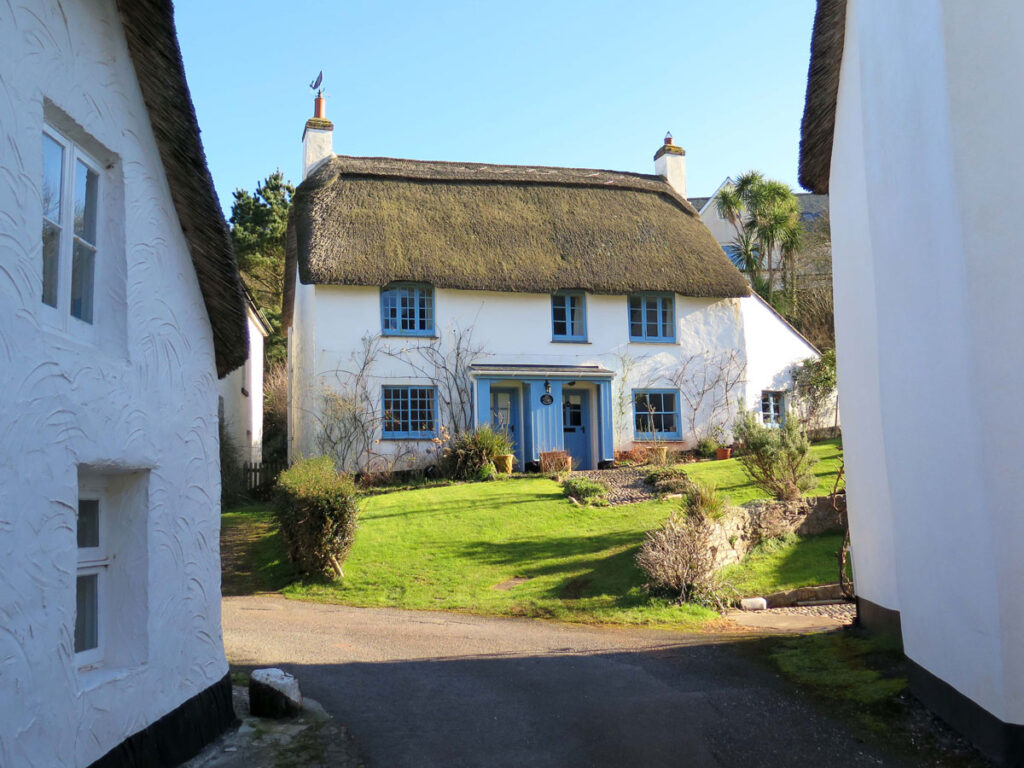
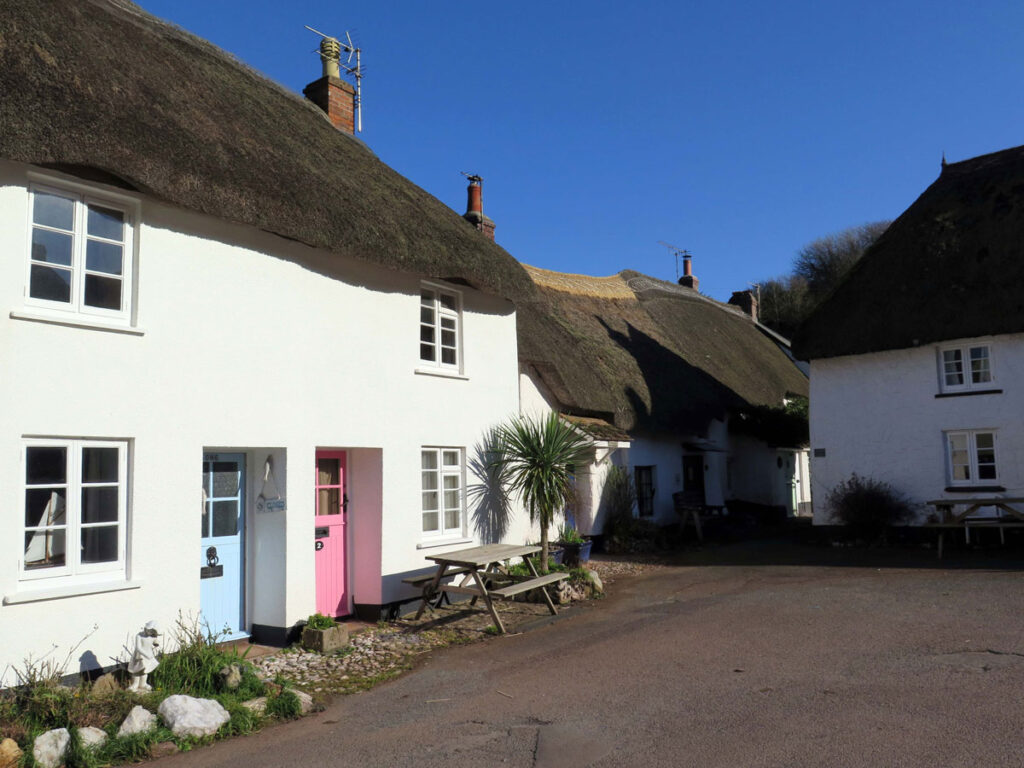
There are two parts to the village in Hope Cove – Outer Hope, and Inner Hope. For visitors, Inner Hope is the most appealing: A small beach is protected by a stone pier, and the quaint village is full of thatched cottages. It’s quintessential South Devon – or at least, how most people like to think of it.
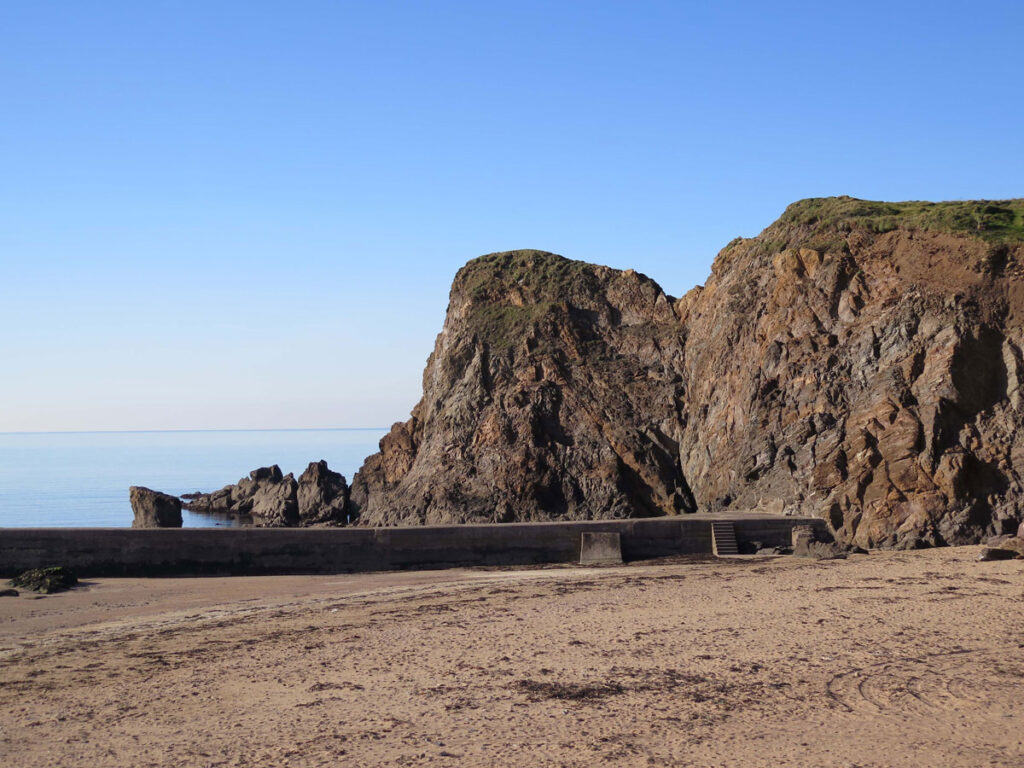
Below are some pictures of Hope Cove. The first one is the view from Bolt Tail towards Outer Hope, the second is the beach and pier, and the rest are of Inner Hope.
It’s not far to walk along the coast path from Hope Cove to Thurlestone, but if you’re driving, you’ll have to negotiate the narrow country lanes to get to the village. Having lived in the South Hams for a number of years I got used to driving through these lanes, but as one Canadian visitor I was speaking to one day said “It’s like driving through a rabbit warren around here” – and that’s a good description, because, not only are the lanes narrow, they also have high hedges.
I’ve witnessed any number of drivers getting in a right pickle, and one of the best was right outside my own front door when the driver of a massive double-headed juggernaut got completely lost – and completely wedged. He was stuck outside our cottage for hours, until locals with machinery that only farmers can get hold of, managed to get him free – but he left a trail of damage that went on for miles. I felt so sorry for the European driver that I couldn’t even bring myself to take a picture of the occasion.
Anyway, if you’re walking the coast path (which is by far the best way), you’ll find some good beaches between Hope Cove and Thurlestone, particularly at the National Trust run South Milton Sands. If, like me, you prefer not to have grains of sand taking the skin off the inside of your toes, then there’s a footbridge that crosses over Thurlestone Marsh that will take you into the village.
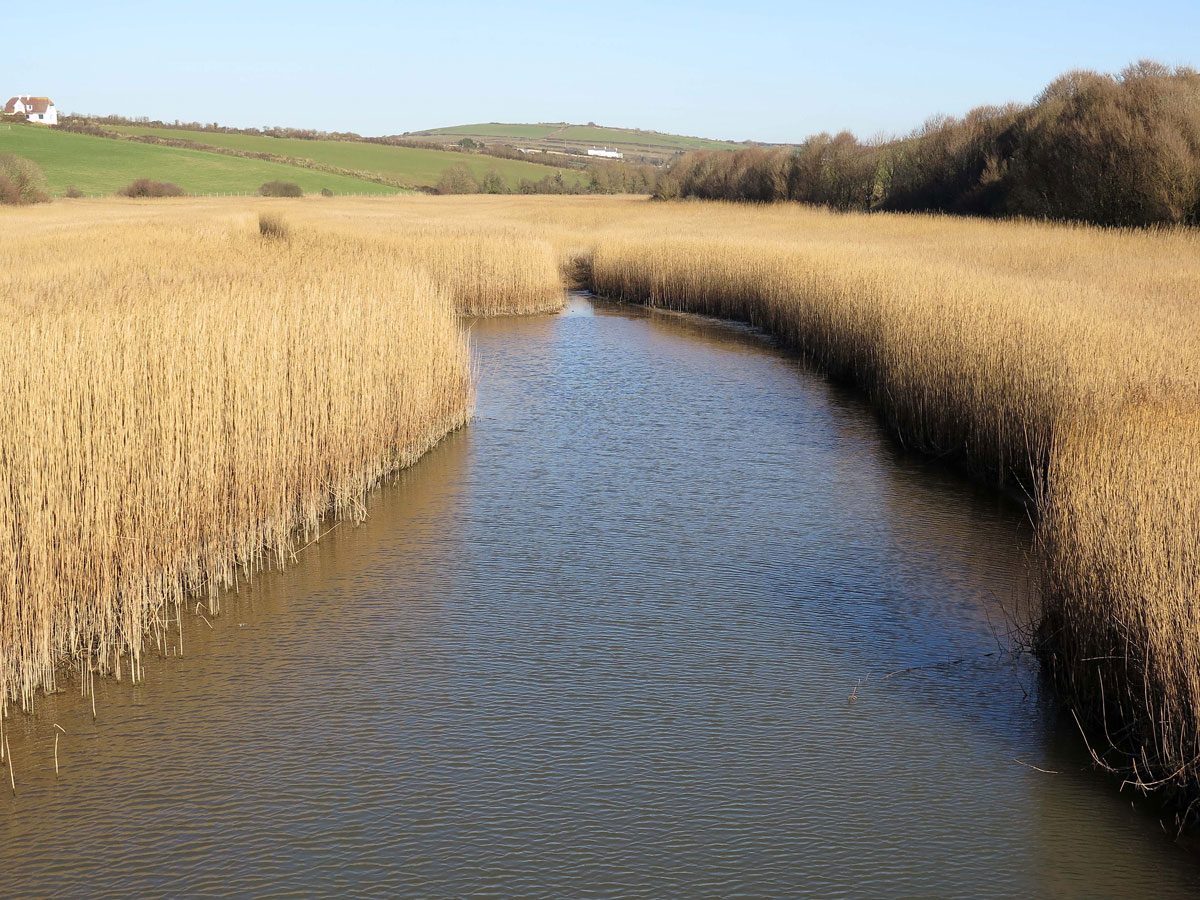
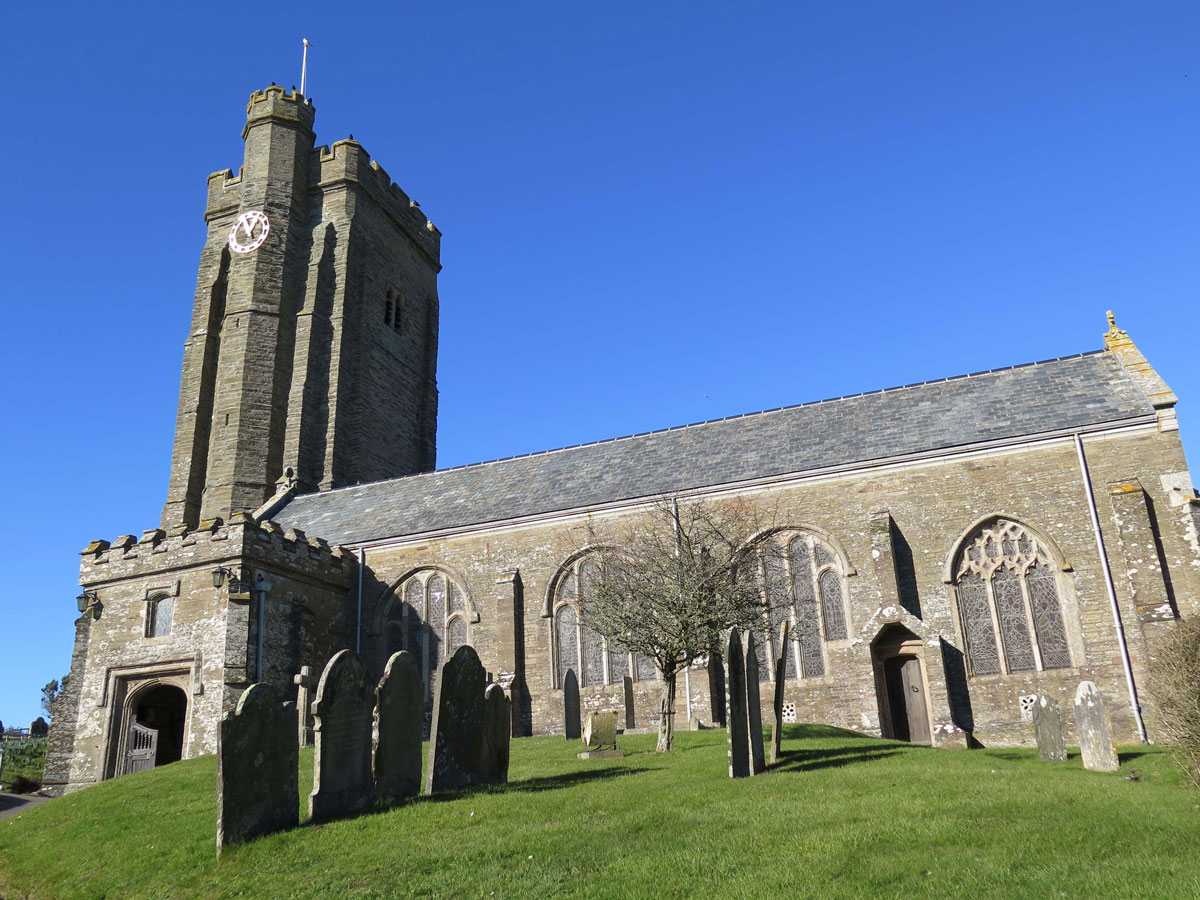
Thurlestone gets its name from the arched Thirled Stone rock that can be seen in the featured image at the top of the page, but I’ll openly admit that it’s not one of my favourite South Hams villages. On the surface, it looks like just another lovely coastal village (which it is), but it has attracted people here with money who don’t just stay temporarily, but also permanently as well. There’s nothing wrong with that of course – and why shouldn’t they? It’s a beautiful part of Devon, and I’m certainly not envious – but it’s just not somewhere I would come on a regular basis. There’s a smart hotel, golf course and a Grade II listed church – oh! And the Village Inn as well., but I’m not going to show you a picture of it because I‘ve got some better ones coming up
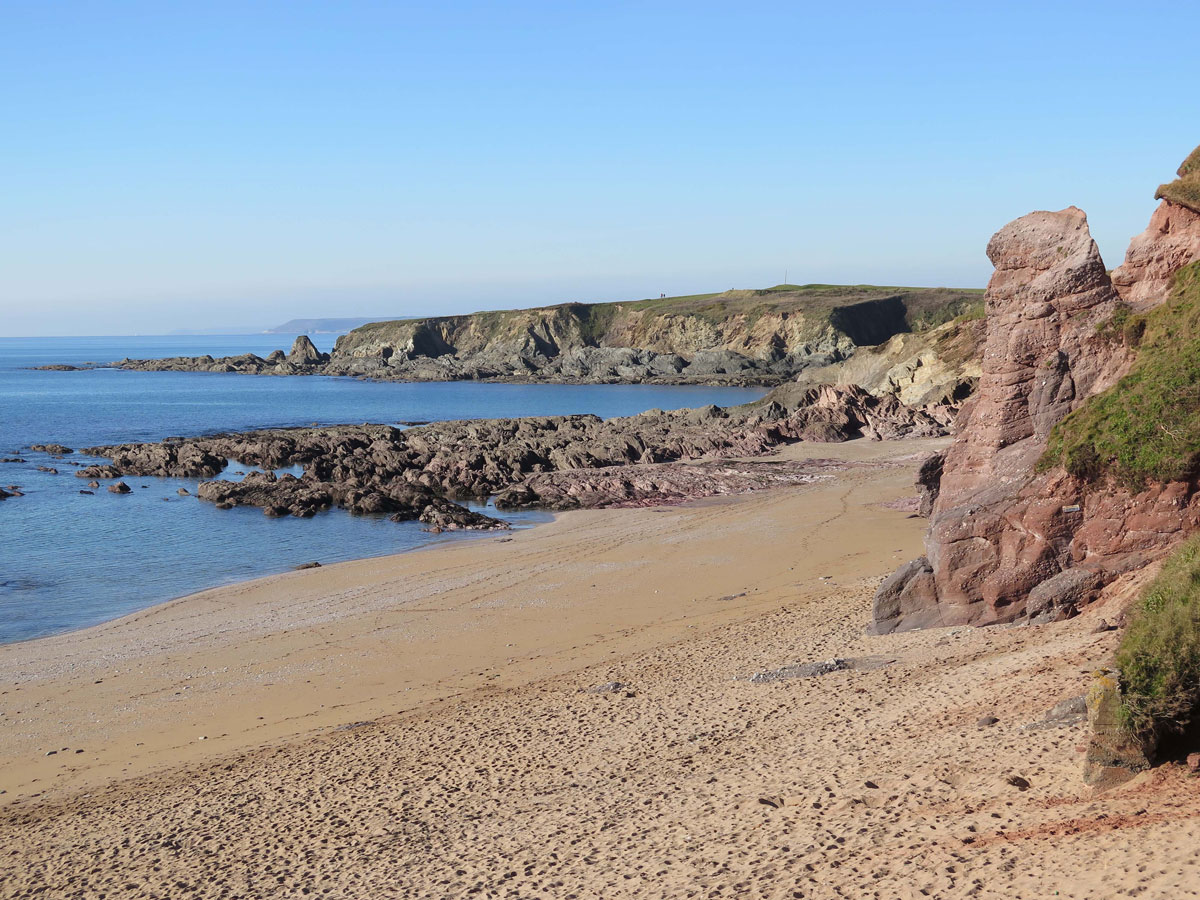
Continuing west, the next place we come to is Bantham, an altogether different sort of place to Thurlestone. It lies on the eastern side of the mouth of the River Avon and has a large sandy beach that is popular with surfers.
After the end of WWI, Lt Cdr Charles Evans loved it here so much he bought up everything, including 40 homes, a pub, a shop and 750 acres of land. The family, through its PLC called Evans Estates, kept rents low, refused to let people use cottages as second homes and generally ran the estate in a way that very few landowners manage to achieve. The environment was well looked after and most people who came here responded by treating it accordingly. It was the perfect example of how private land can be used for the benefit of everybody.
In 2013 the family put the estate up for sale and the National Trust put in a bid – but it wasn’t enough, and another private buyer came up with the money instead. The reasons why the family put the estate up for sale and didn’t sell it to the National Trust was a concern for most people who know Bantham, and early indications as to how the new owners were going to operate the estate weren’t encouraging, but as far as I know, Bantham village, beach, estuary and surrounding farm and woodland still look to be in a safe pair of hands, but only time will tell.
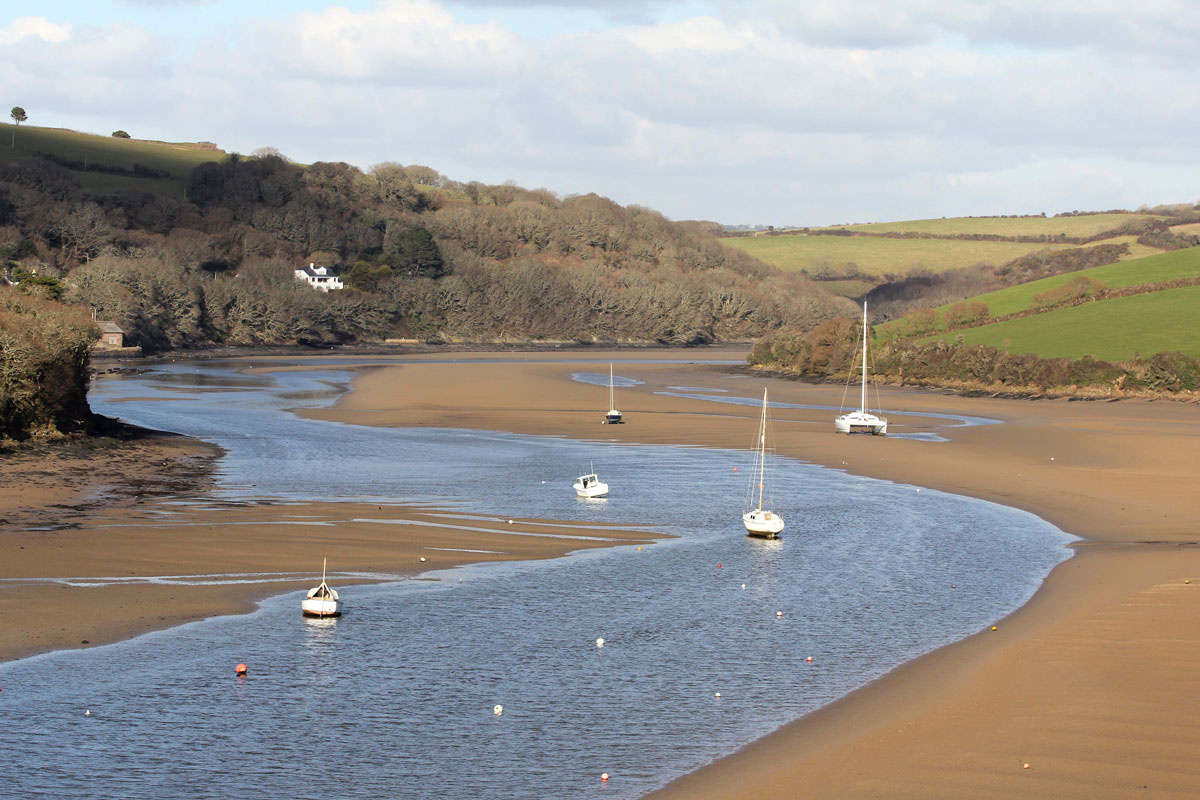
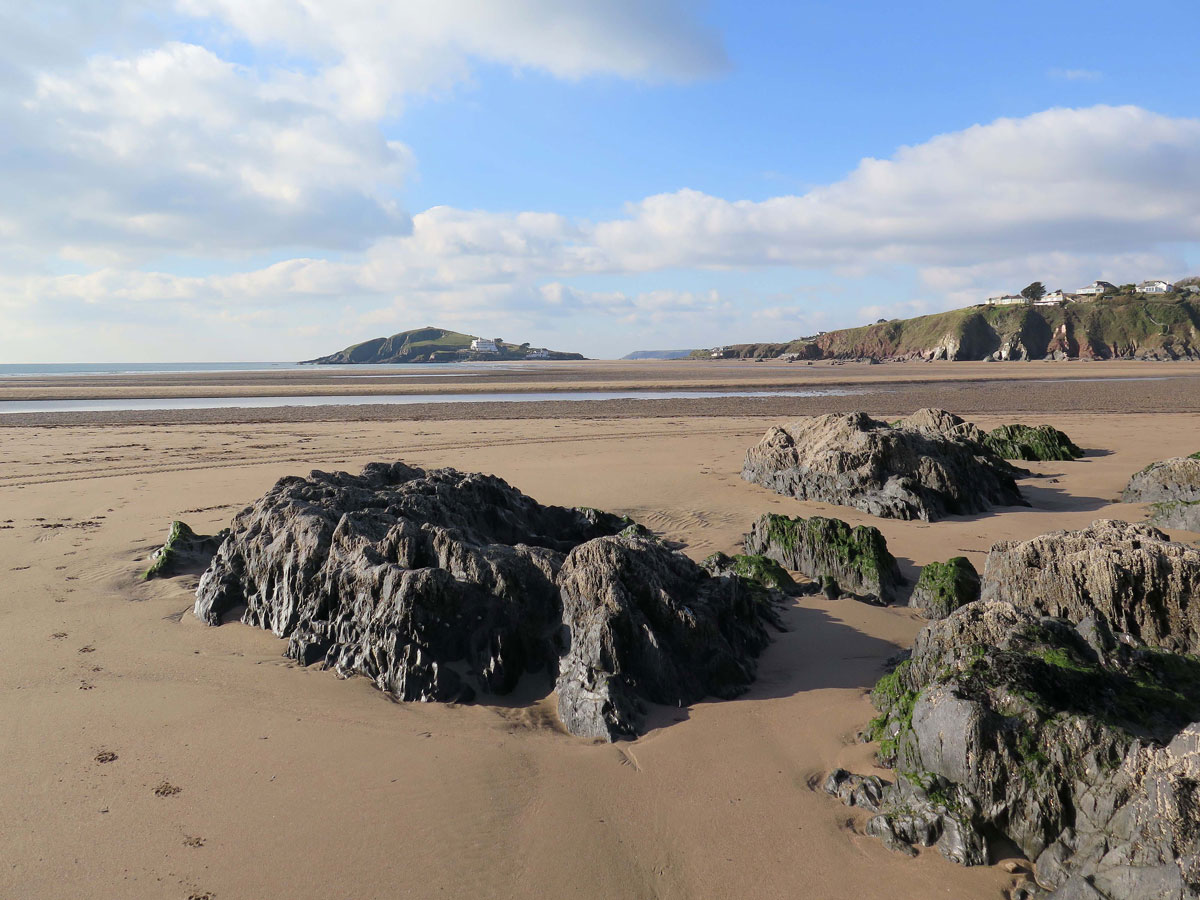
During the summer, when the tide permits, there’s a passenger ferry that will take coast path walkers across to Bigbury-on-Sea, but driving involves taking the car up and around the river via Aveton Gifford. Most traffic will take the easiest route along the B3392 through St Ann’s Chapel and Bigbury village, but if you know the tide times there’s a tidal road that is quicker. Only last week a white van got caught out, so you need to know what you’re doing.
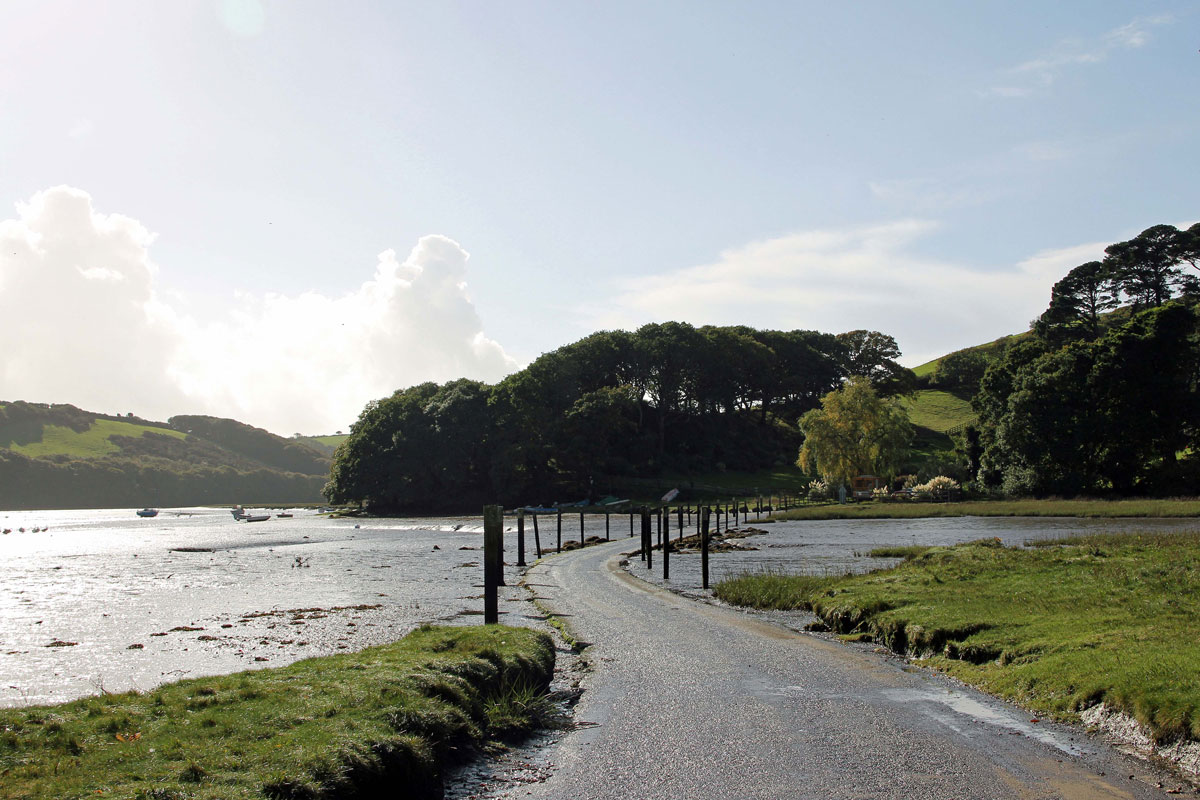
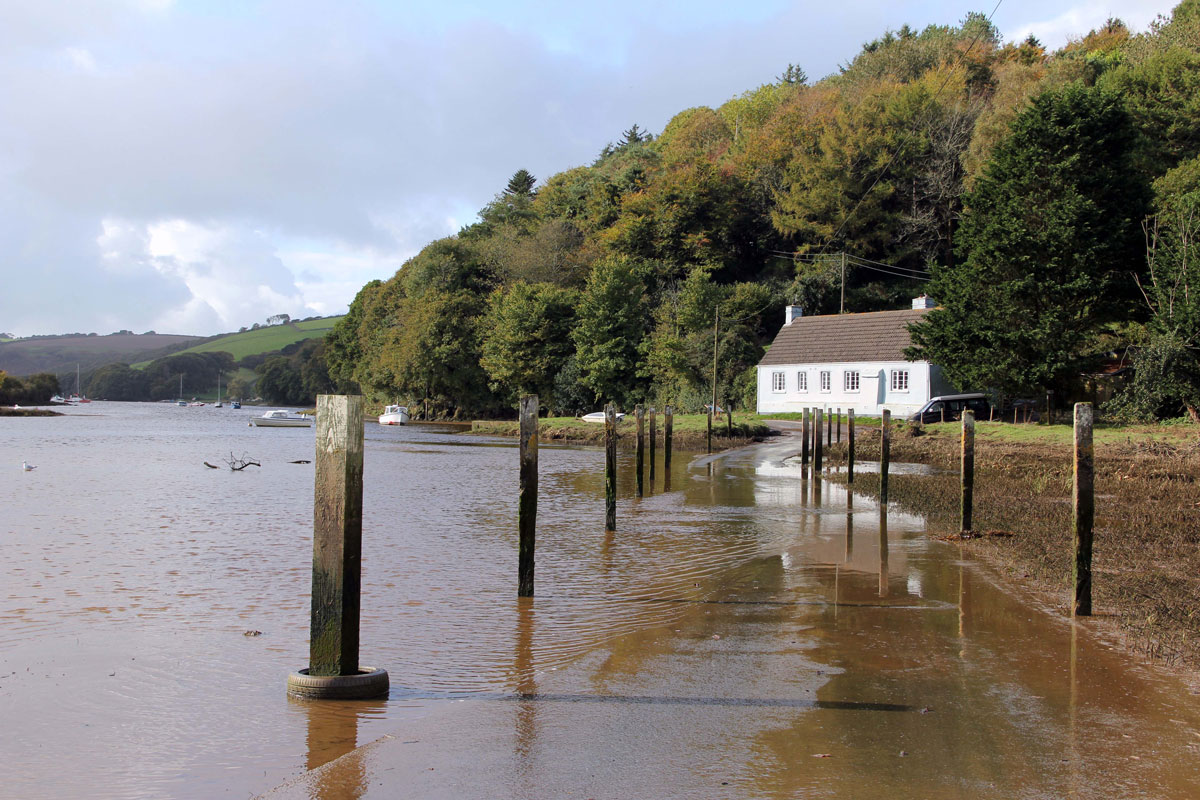
There’s nothing special about the village of Bigbury-on-Sea, but the location is. In a way, it’s a bit like Devon’s equivalent of Cornwall’s Marazion, where a tombolo separates the mainland from St Michael’s Mount. Burgh Island may not have a castle on top of it, but it does have a famous hotel, and it did have a monastery as well at one point.
The large sandy beach is enough to attract most people, but Burgh Island (pronounced Burr) is really the main attraction.
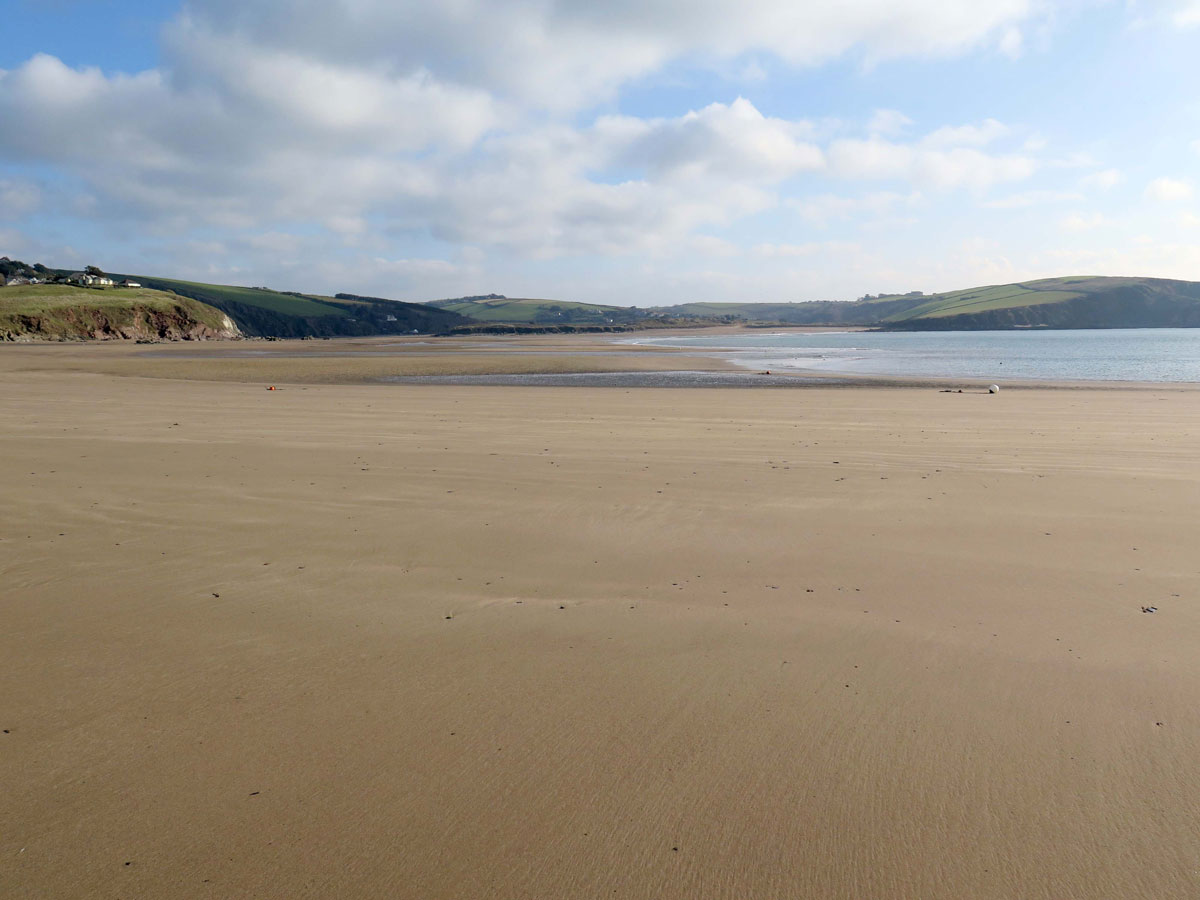
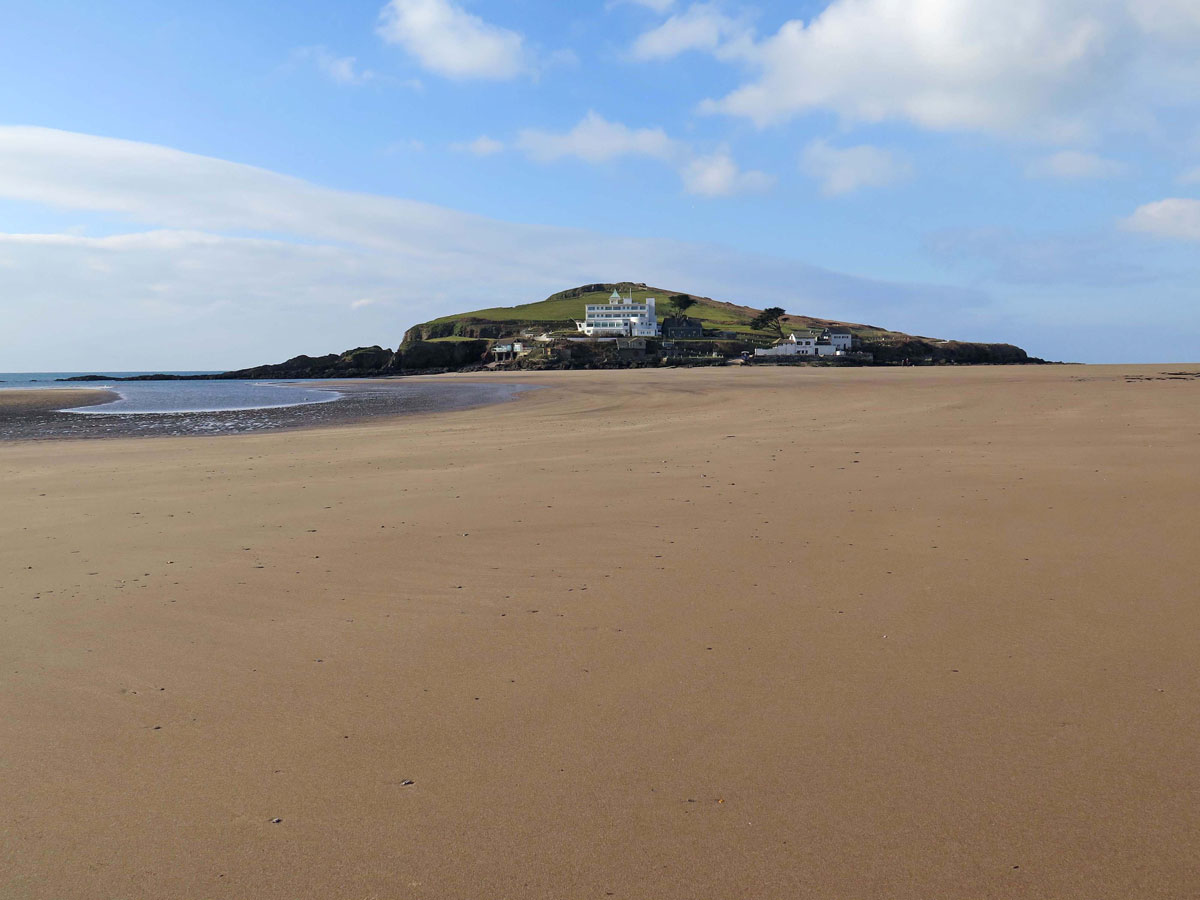
It’s easy enough to walk over to the island when the tide is out, but there’s no causeway like there is at Marazion, and when the tide is in, the hydraulic sea-tractor is brought into action.

In 1895 the island was bought by a music hall star called G.H. Chirgwin, who built a wooden house for his weekend party guests, and then in 1927 the island was taken over by filmmaker Archibald Nettlefold who built a hotel in the art deco style.
Since then, the hotel has attracted many famous guests including Noel Coward, Josephine Baker, Prince Edward and Wallis Simpson, Winston Churchill and even The Beatles – but not me. That’s not quite true actually, because I did have a nose around once.
The guest who has made the most impact here though is Agatha Christie. In the 1930s a beach house was built as a retreat for the famous crime writer, and it was where she wrote And Then There Were None and Evil Under the Sun. The hotel still attracts plenty of her fans who might not be able to afford to stay here, but at least can enjoy an afternoon tea in the Palm Court Lounge. In the picture below the Beach House is on the left, and available to rent.
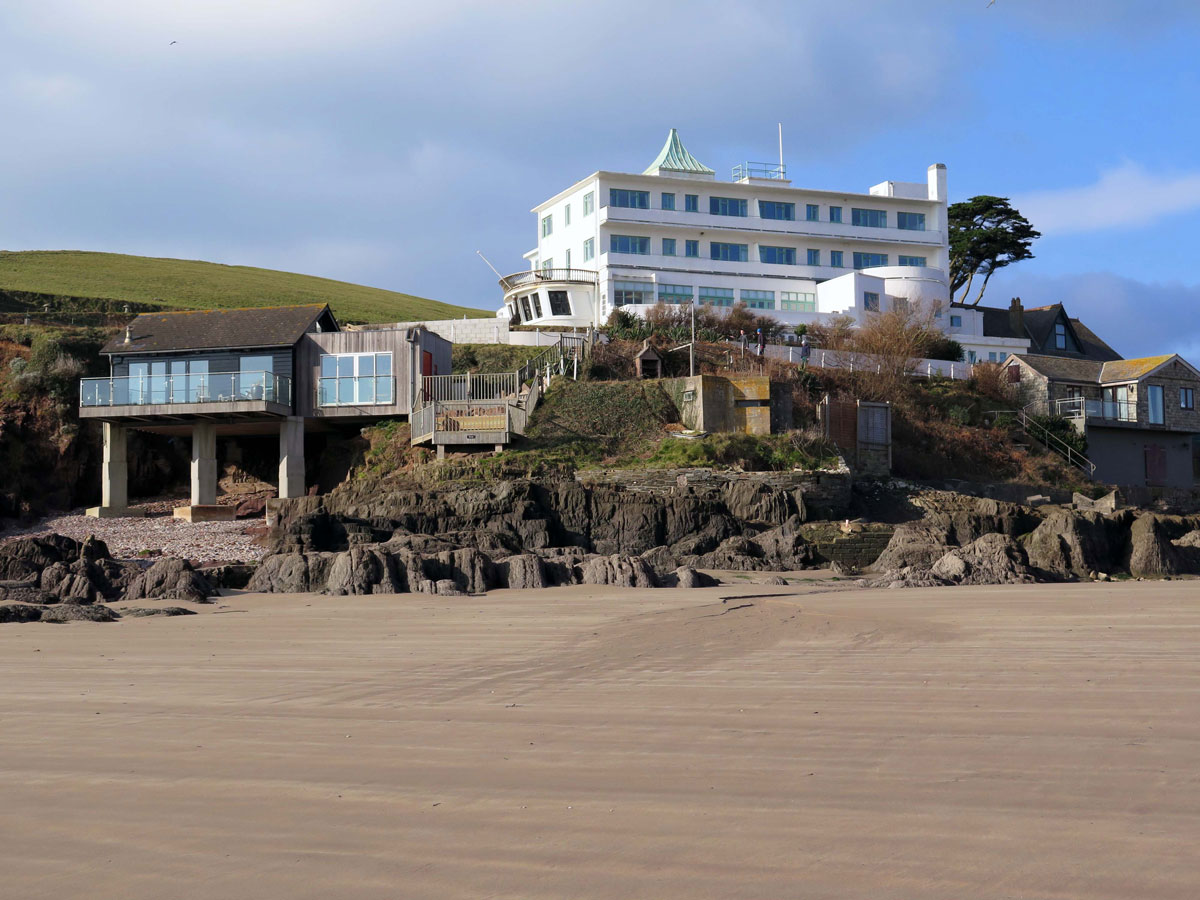
In WWII the island was fortified, and the hotel commandeered for use as an RAF convalescent home. Even so, the hotel still suffered bomb damage, and although it was repaired, it never regained its former prestigious status until it started to be restored by Tony and Beatrice Porter who took it over in 1985.
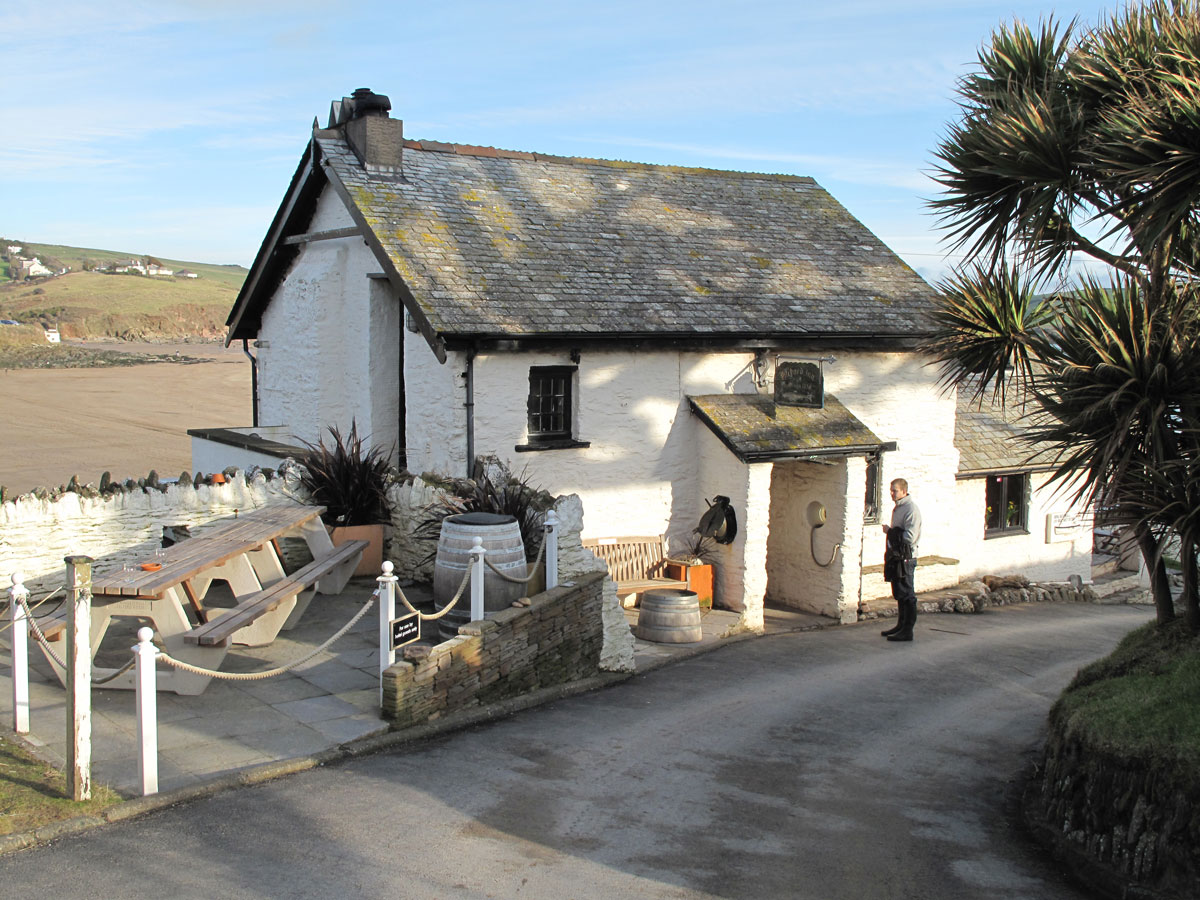
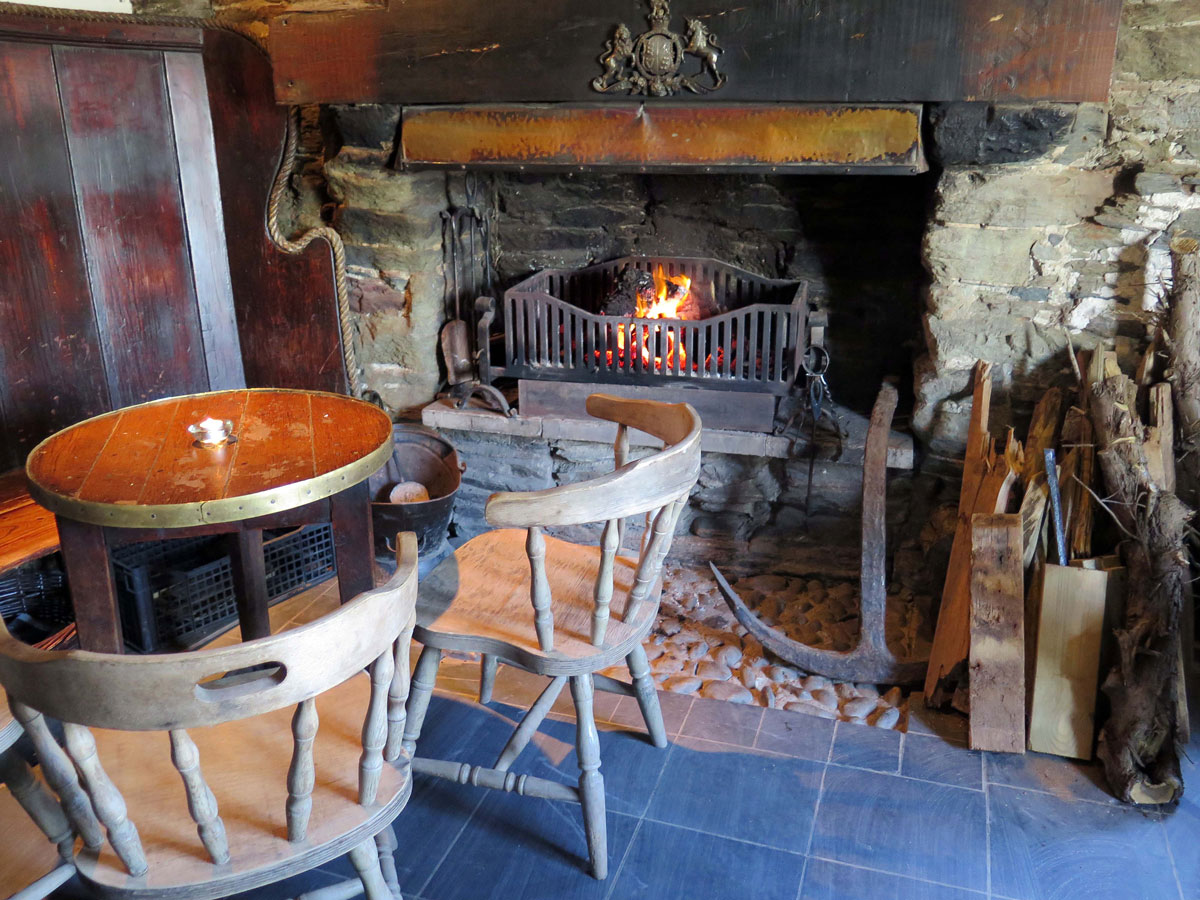
Next to the hotel is the 14th century Pilchard Inn. It’s a real gem, but for a while it became off limits to anyone who wasn’t a hotel guest. It upset a fair number of people (including me), but I’m pleased to say that the current owners see it the same way as the rest of us, and is open to everyone.
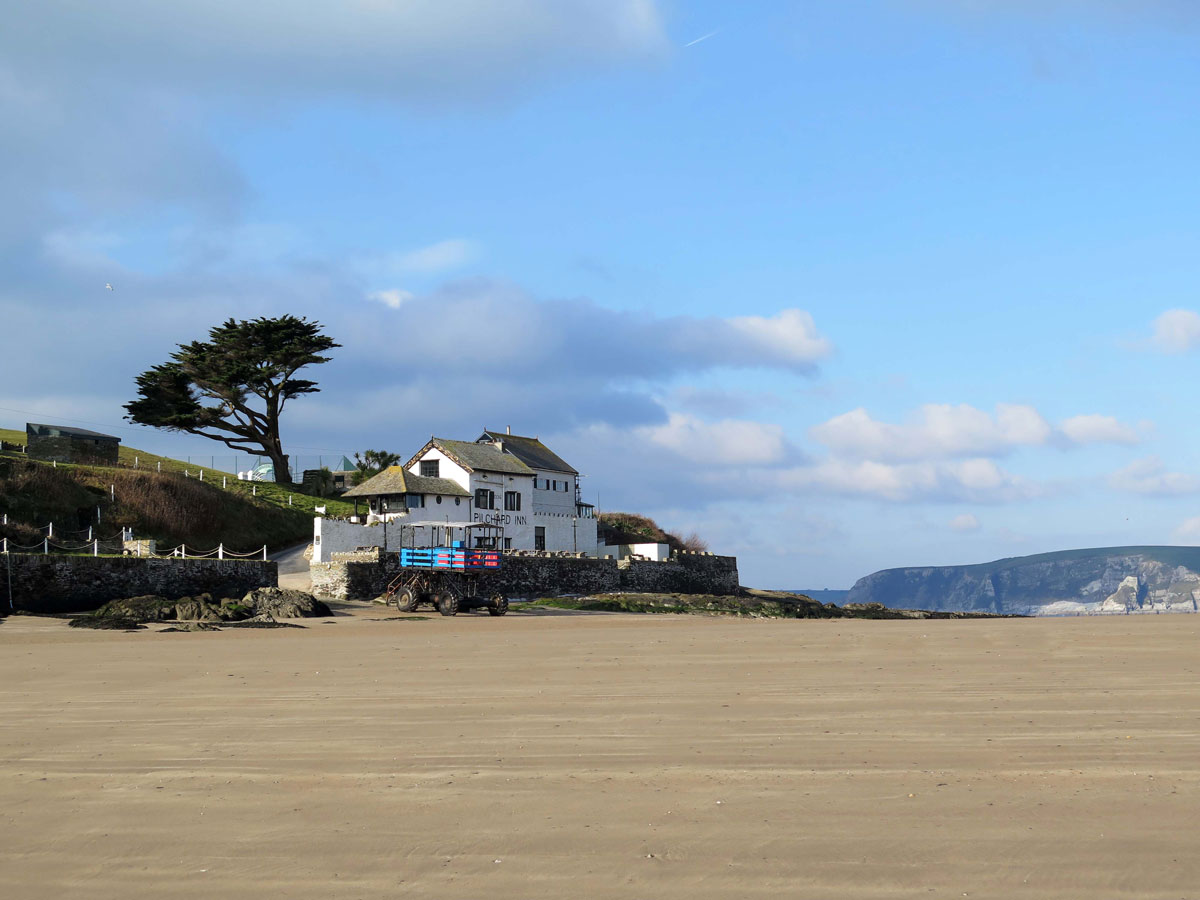
Legend has it that The Pilchard was the headquarters of an 18th century smuggler called Tom Crocker who used a tunnel between the pub and a cave on the other side of the island to evade the customs men. Unfortunately for Tom, they eventually caught up with him and he was shot dead in the pub porch.
I’ve not been able to find out what year this was supposed to have happened, but he seems to have died on August 14th, a day when the ghost of Tom searching for his booty on the island can be heard.
To embrace the history of Burgh Island and raise funds for the RNLI, the hotel now hosts a Tom Crocker Festival on August 14th which includes everyone who wants to join in. Kids and adults alike are encouraged to dress up as sailors and pirates and go hunting across the island for Tom’s treasure. I’ve not been, but it sounds a fun family day out. An eye patch, crutch and parrot are optional.
There have never been any restrictions about walking over the island (WWII excepted, I would imagine), and at the highest point is the shell of a building which was originally a chapel built by the monks. It subsequently became a huer’s hut where shoals of pilchards could be spotted and a signal passed on by the huer to the local fishermen with a ‘hue and cry’.
If you haven’t been lucky enough to get trapped in the Pilchard by the tide when the Sea-tractor has broken down, then it’s time to head back over to the mainland. The coastline between here and Stoke Point has fewer areas that are easily accessible. The Erme estuary is a bit of an obstacle to overcome, but if you can find a way down through Kingston to Wonwell then you’ll be rewarded with a beach that will have very few people there – if any. On the other side of the estuary is Mothecombe, a lovely spot, and more accessible. It’s used more by locals who know it, than visitors who don’t.
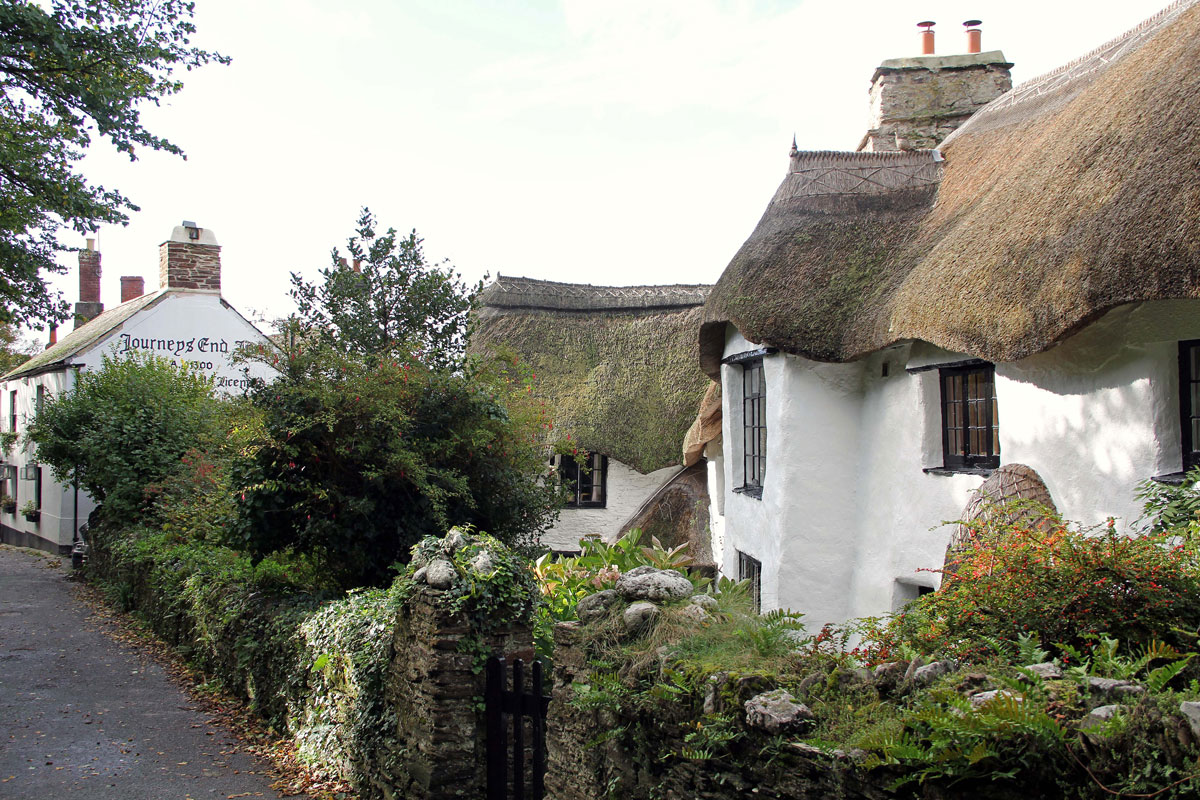
People who know me, will also know that I usually like to finish wandering around by ending up in a pub somewhere, and today I’m ending up at one of my favourite pubs of all time. I have absolutely no idea how many pubs I’ve been in, but it must be in the hundreds (at least), and to say that the Journey’s End at Ringmore is right up near the top my list says it all.
Many of my favourite pubs have either been demolished or changed, but the last time I was here it was still the same, even though many of the people I knew are no longer around. When the time comes though, I really can’t think of a better pub than the Journey’s End to have my last pint.
ORIGINAL POST – DECEMBER 2021
LATEST UPDATE – JUNE 2022
Originally posted 2021-12-10 18:20:03.
My goodness, this is a place to let time drip by in.
I often did 😃
It looks like a delightful place!
I wish I could start traveling again, without fear of the pandemic ❣️❣️❣️
I’m sure you would like it here. This pandemic is causing havoc everywhere. Let’s hope next year is better for all of us. Take care Luisa 💙
I too hope so with all my heart!!!❣️❤️❣️
It all looks so beautiful. Another place I need to get myself to.
Not so good for Thursday Doors though
Everywhere is good for Thursday doors!
A great insight into the area, Malc, illustrated as always by stunning photos. I love the idea of those little windy lanes although I would be a bit nervous of driving round them, even in Ratty!. The Pilchard looks a superb hostelry, even more so with the great story of Tom Crocker and his ghost to embellish any visit there. A bit rough that he was shot dead in the porch, but nevertheless I wonder if I’d feel a sudden chill when entering the pub! 🙂 And I’m sure I’ve seen that hotel and the sea tractor on a Poirot before. I thought it looked a fascinating place when the detective went across the water to the hotel, and now I know where it is and that it’s all real. Great stuff. 😀
Thanks again Alli. You’re always so generous with your comments 😊 The coastline around here is quite lovely, even without any historical or maritime connections. As for the lanes, well, it’s just something you get used to like anywhere, but it makes the countryside beautiful as well – if only you could see it when you’re driving 😊
There are some areas a bit like that around here too, and we have to pull over if we want to see the view. But I doubt our vistas are anywhere near as imposing as they are down your way. 🙂
Wow Malc, another smashing good post! Great photography and quite an interesting narrative, loved it. The more I read your posts…articles really…I feel I need to take a little trip. All the best my friend and a happy weekend to you. It’s Saturday night and “WINE TIME”!!! Cheers!
Thanks Francesc. I don’t know if you’ve been to our shores before, but despite the reputation of our weather, there is plenty to see and do – once this pandemic dies down. I always appreciate your comments as you know, and I hope you have a super Sunday.
You’re welcome Malc, I haven’t visited but it is definitely within my plans, and thank you, a super Sunday to you too! All the best.
Oh, wow, Malc! This was tremendous – wonderful photographs and introduction to what is, obviously, one of the loveliest parts of Britain. It is not, I’m ashamed to say, an area I know at all – though I have heard about Burgh Island and Agatha’s connection – so it was doubly interesting reading about it and seeing those cracking shots. Beautiful!
High praise indeed. Thank you Mike. Perhaps in 2022 you might be able to rectify the situation 🙂
Love your write-up, Malc. If I ever have the funds, my bucket list will include a pub crawl with you and a bar crawl with Francisco. Cheers! 🍻🥂🍾🍷🍸🥃
The three of us together in New England wouldn’t be a bad idea either 🙂 🍾
Sounds like a plan–I used to live in Newport and would be happy to see you there, but not in the winter. 😉 I was too young to go bar hopping but I think that they should several good one along Thames St. Boston is a wonderful town too.
Great photos and an interesting post Malc, especially about Burgh Island. I’ve been a fan of Agatha Christie ever since my mum bought me Ten Little Niggers in 1971 and I’d love to go to the island if only for a ride on the sea tractor 🙂
Thanks Eunice. It’s fun getting the tractor over to the island, but even more fun trying to get back when the tractor isn’t running 🙂