Tag Archives: Glasgow

Glasgow’s East End

Glasgow's East End

In recent posts I’ve tried to show that there’s another side to Glasgow than its tough reputation normally suggests, but in this final post I would like you to follow me into the East End to get an insight into how the people of Glasgow have made the city what it is.

We leave the flashy restaurants and cultural attractions of the city centre behind and walk past the Tollbooth into Gallowgate, but before I talk about what there is to see here, I want to try and explain the city’s background in a bit more detail.

The East End is as a good a place as any to get deep into Glasgow’s underbelly because two major factors – religion and football – come together here. Even if these two topics don’t normally interest you that much, at least you’ll begin to understand why these issues are so important to Glaswegians. Let me explain.

During the Reformation, Scotland broke away from the Catholic Church and became, generally speaking at least, a protestant country. If we fast forward to the 19th century, the Industrial Revolution had catapulted Glasgow into one of the British Empire’s major cities, but at the same time, on the other side of the Irish Sea, people were suffering severe hardship, especially during the famine that occurred during the middle of the century.

The famine forced many Irish people to emigrate, some of whom landed on the West Coast of Scotland. With so many people employed in the shipyards and associated industries, it’s not surprising that many of these immigrants found themselves in Glasgow looking for work.

In order to drag themselves out of poverty, migrants are often prepared to work harder, longer hours and for less money than the established workforce, and although this might provide a good relationship with their employers, it doesn’t necessarily endear them to their work colleagues: After all, it takes years to fight for better wages and conditions, only to see them disappear when newcomers undercut them.

It was no different in Glasgow, and as if that wasn’t enough to cause resentment, the fact that many of the Irish immigrants were also Catholics coming into a largely Protestant community, it’s not difficult to see why they weren’t exactly welcomed with open arms.

Not all Irish immigrants were Catholic, and those from a Protestant background applying for jobs in the Govan shipyard were never confronted with messages like “Catholics need not Apply”, and it was at Govan that Rangers Football Club built their stadium at Ibrox Park.

Back over on the other side of the river in the East End, the Catholic community formed a football club of their own – Celtic (pronounced Seltic). Their first game at Parkhead was, believe it or not, a friendly against Rangers, which Celtic won 5-2. I’m not sure that there has ever been a real friendly between the two clubs because the rivalry between them is legendary. Efforts have occasionally been made to lower the temperature, but these aren’t just football matches, they’re sectarian battles on a plot of grass, the terraces, and anywhere else the blue and white of Rangers meets the Green and White of Celtic.

Continue reading →

Originally posted 2021-12-03 17:20:05.
The Kelvingrove, The Glasgow Boys and Charles Rennie Mackintosh

The Kelvingrove, The Glasgow Boys and Charles Rennie Mackintosh

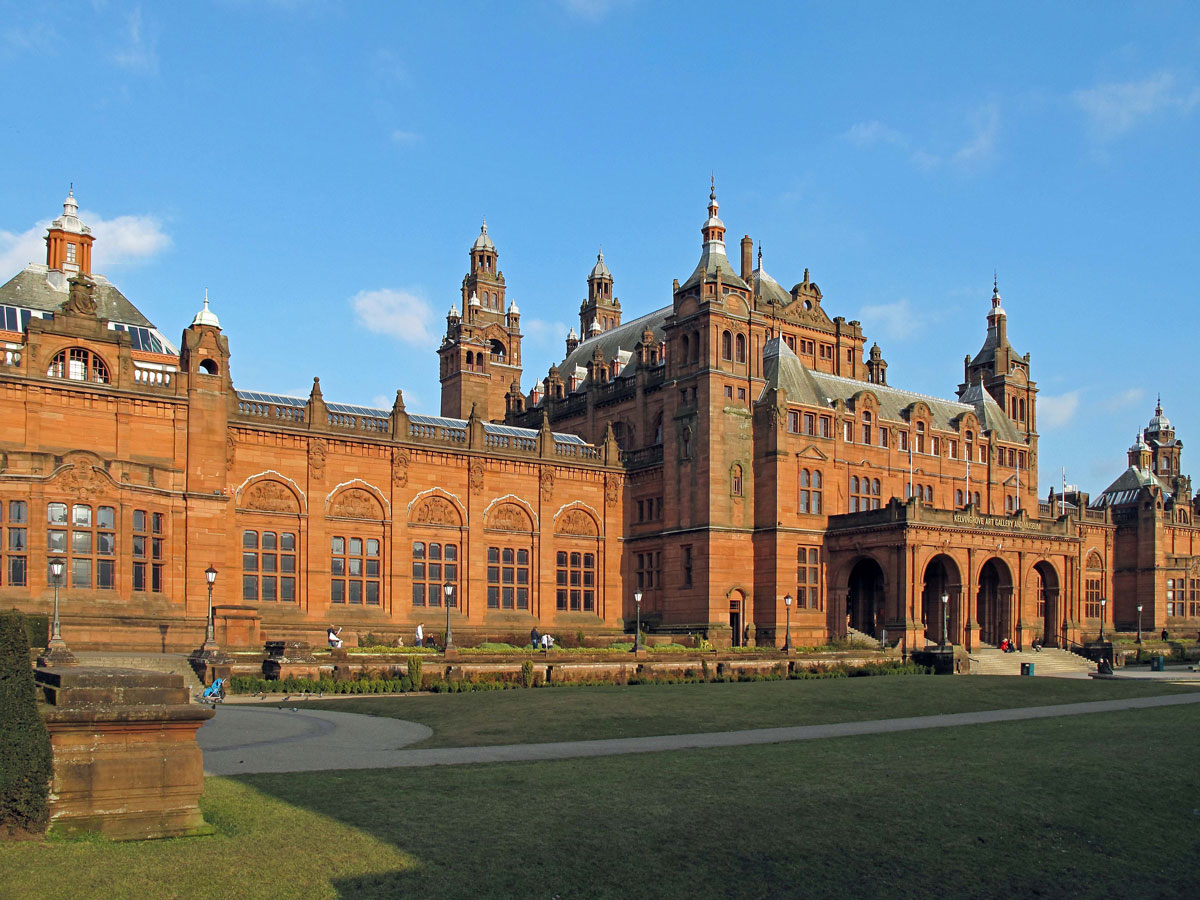
Scotland’s two largest cities are as different as chalk and cheese. Edinburgh is the country’s cultural and political hub, and Glasgow is the industrial powerhouse with rough and ready areas of the city that are out of bounds for tourists – or at least that’s the image most people have, but things are not always as they seem. Edinburgh has rough areas too, and Glasgow has its own fair share of cultural institutions – and there are none better than the Kelvingrove Art Gallery and Museum.

This fabulous Victorian building was constructed, like many of Glasgow’s buildings, out of red sandstone from Locharbriggs Quarry near Dumfries. Edinburgh may have the National Museums, but I don’t think any of them are as handsome as the Kelvingrove.

Continue reading →

Originally posted 2021-10-24 12:20:01.

Glasgow City Chambers

Glasgow City Chambers

During its Victorian heyday, Glasgow didn’t just build slums for the workers, it also built fine buildings for the city’s powerful elite, and there’s none finer than the Glasgow City Chambers.

As the city grew in size and importance, the original civic offices at the Tolbooth struggled to keep pace, and so a site was found at the east end of George Square to build a new City Hall. Designed by Paisley born architect William Young, this grand building was constructed in the Beaux Art style (a form of French neo-classicism), with an ornate pediment and sculptures being added by James Alexander Ewing.

Ewing’s intention was to symbolise Glasgow’s rise to prominence through its connection with the River Clyde, but in the end the design was amended to celebrate the Queen’s Golden Jubilee instead. Whoever was behind the change of heart I’m not sure, but it had the desired effect because on 22nd August 1888, it was Queen Victoria herself who cut the ribbon to open the new building.

Continue reading →

Originally posted 2021-09-10 17:16:54.

St Mungo and Glasgow Cathedral

St. Mungo and Glasgow Cathedral

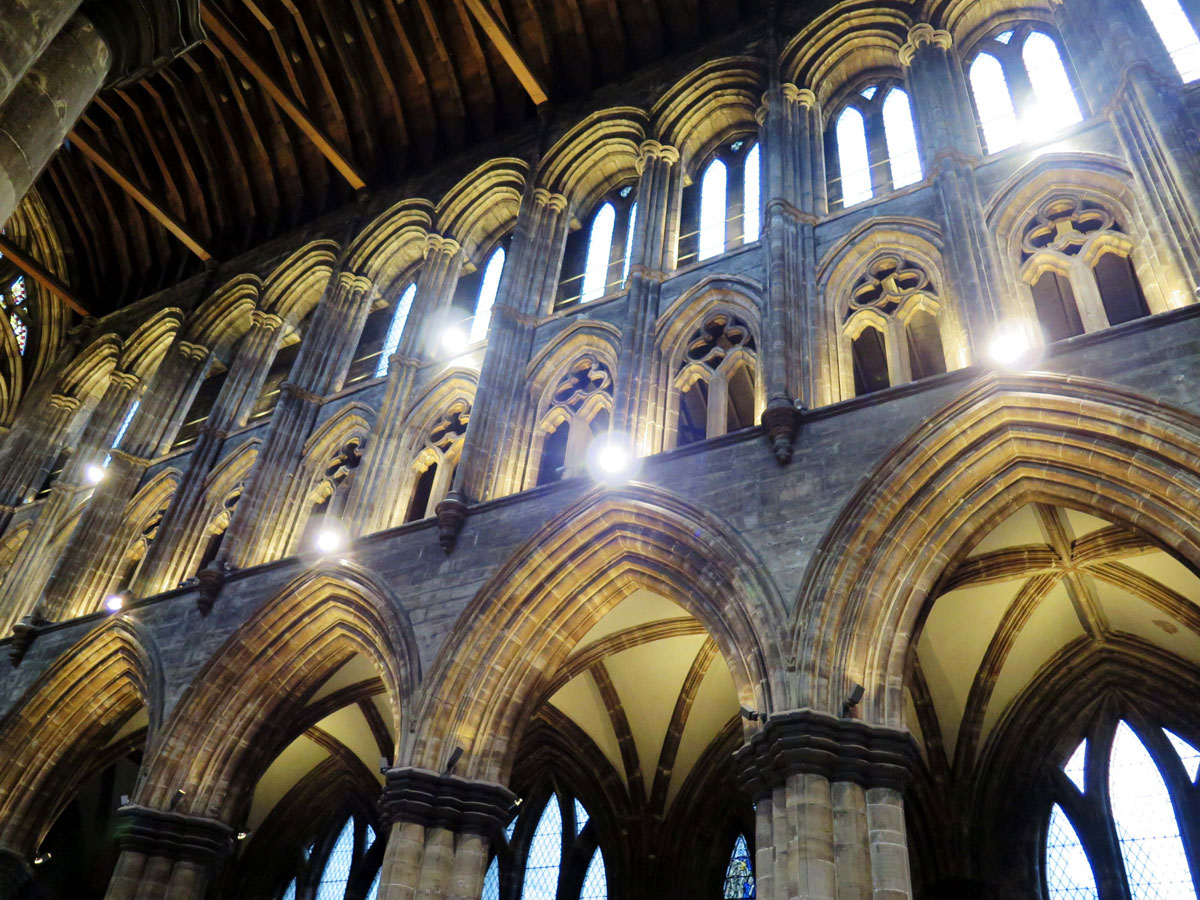
Glasgow didn’t have any history before the Industrial Revolution – or at least I wouldn’t be surprised if that’s what many people thought. It’s true of course that it developed into a major city during the Victorian era, but it might surprise some people to learn that it was founded way back in the 6th century when a missionary called St. Mungo built a church at a place called Glas Gu (meaning ‘Green Place’).

If you haven’t heard of St. Mungo then perhaps you’ve heard of St. Kentigern, who just happens to be the same man. The difference in name is down to which branch of the Celtic language you believe the name originates from, but as we’re in Scotland I think we should call him Mungo. It seems that he was born in Culross, Fife, but the date of his birth isn’t quite so clear.

Talking about dates from this period is notoriously unreliable, but most accounts suggest that Mungo was around 25 years of age when he established his mission at the spot where Glasgow Cathedral now stands.

Continue reading →

Originally posted 2021-07-28 15:27:20.

The Clyde – A River that Gives with One Hand and Takes Away with the Other

The Clyde - A River that Gives with One Hand and Takes Away with the Other

The Song of the Clyde, made famous by Paisley born Kenneth McKellar, waxes lyrical about the “Wonderful Clyde”, but to an outsider like me, ‘wonderful’ wasn’t the first adjective that sprang to mind in describing the ribbon of water that flows through the centre of Glasgow: All I knew was that it was full of shipyards and lined with heavy industry. It certainly held a fascination for me, but I couldn’t believe that it was wonderful, or at least not in the way I understood the meaning of the word – but that was before I’d even set eyes on the river, but what do I think now that I have?

Continue reading →

Originally posted 2021-06-02 17:16:53.

Glasgow – No Mean City

Glasgow - No Mean City

No Mean City is a novel written by Alexander McArthur and H. Kingsley Long and is about the razor gangs of the Gorbals, a notorious working-class district on the south side of the River Clyde. It was set in the inter-war years and did nothing to change people’s perception of Glasgow’s tough reputation, one in which the stereotype is likely to be a heavy drinking sectarian football fanatic who might well have worked as a welder in a Govan shipyard and spent his Saturday nights trying to drink Sauchiehall Street dry.

Glasgow’s tough reputation stems from the days when it was the ‘Second City of the Empire’. The industrialization of Glasgow produced shipyards, factories and slums, and although there are plenty of examples of some fine Victorian classical architecture, I don’t think that even the staunchest Glaswegian would say that they live in a beautiful city – but beauty is only skin deep. Scratch below the surface and you’ll find that there’s a lot more to Glasgow than you might have realised.

Continue reading →

Originally posted 2021-04-17 08:51:42.