
Glasgow's East End
In recent posts I’ve tried to show that there’s another side to Glasgow than its tough reputation normally suggests, but in this final post I would like you to follow me into the East End to get an insight into how the people of Glasgow have made the city what it is.
We leave the flashy restaurants and cultural attractions of the city centre behind and walk past the Tollbooth into Gallowgate, but before I talk about what there is to see here, I want to try and explain the city’s background in a bit more detail.
The East End is as a good a place as any to get deep into Glasgow’s underbelly because two major factors – religion and football – come together here. Even if these two topics don’t normally interest you that much, at least you’ll begin to understand why these issues are so important to Glaswegians. Let me explain.
During the Reformation, Scotland broke away from the Catholic Church and became, generally speaking at least, a protestant country. If we fast forward to the 19th century, the Industrial Revolution had catapulted Glasgow into one of the British Empire’s major cities, but at the same time, on the other side of the Irish Sea, people were suffering severe hardship, especially during the famine that occurred during the middle of the century.
The famine forced many Irish people to emigrate, some of whom landed on the West Coast of Scotland. With so many people employed in the shipyards and associated industries, it’s not surprising that many of these immigrants found themselves in Glasgow looking for work.
In order to drag themselves out of poverty, migrants are often prepared to work harder, longer hours and for less money than the established workforce, and although this might provide a good relationship with their employers, it doesn’t necessarily endear them to their work colleagues: After all, it takes years to fight for better wages and conditions, only to see them disappear when newcomers undercut them.
It was no different in Glasgow, and as if that wasn’t enough to cause resentment, the fact that many of the Irish immigrants were also Catholics coming into a largely Protestant community, it’s not difficult to see why they weren’t exactly welcomed with open arms.
Not all Irish immigrants were Catholic, and those from a Protestant background applying for jobs in the Govan shipyard were never confronted with messages like “Catholics need not Apply”, and it was at Govan that Rangers Football Club built their stadium at Ibrox Park.
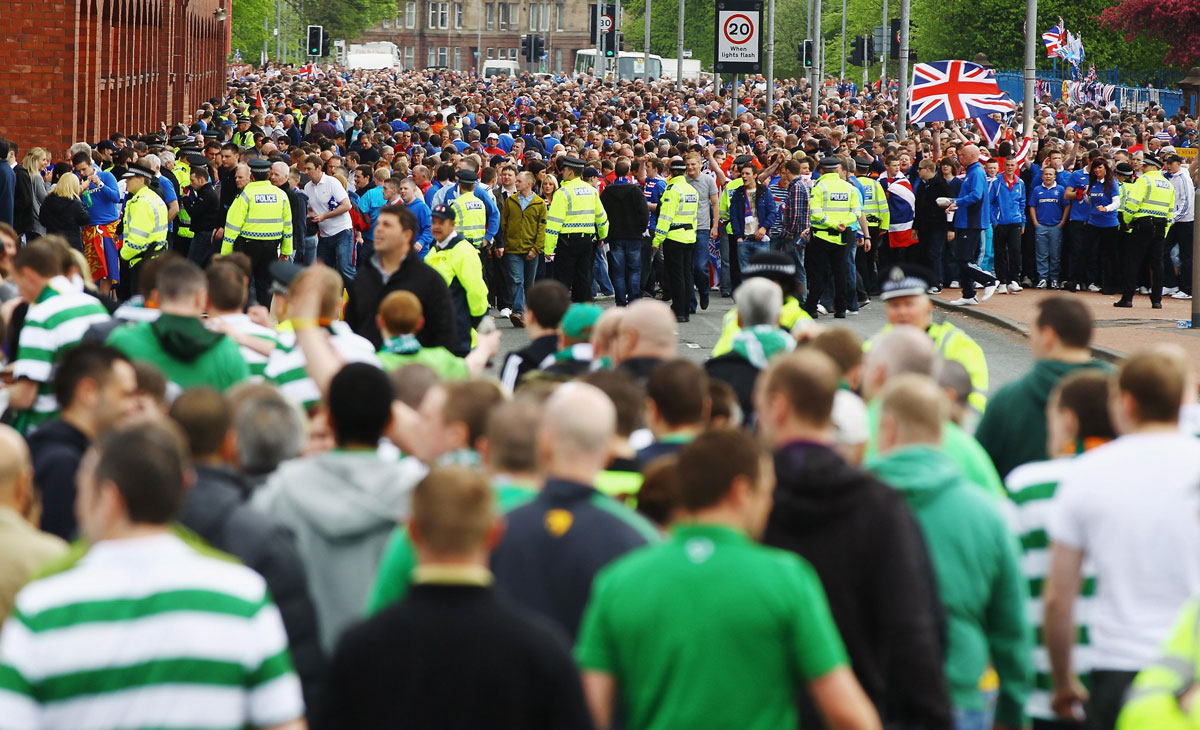
Back over on the other side of the river in the East End, the Catholic community formed a football club of their own – Celtic (pronounced Seltic). Their first game at Parkhead was, believe it or not, a friendly against Rangers, which Celtic won 5-2. I’m not sure that there has ever been a real friendly between the two clubs because the rivalry between them is legendary. Efforts have occasionally been made to lower the temperature, but these aren’t just football matches, they’re sectarian battles on a plot of grass, the terraces, and anywhere else the blue and white of Rangers meets the Green and White of Celtic.
Armed with this background information, I wasn’t expecting my walk along Gallowgate to be an avenue of trees lined with tea shops dripping with hanging baskets, but I wasn’t expecting to be confronted by Partick Thistle fans celebrating their football team’s mediocre successes plastered across the walls here either.
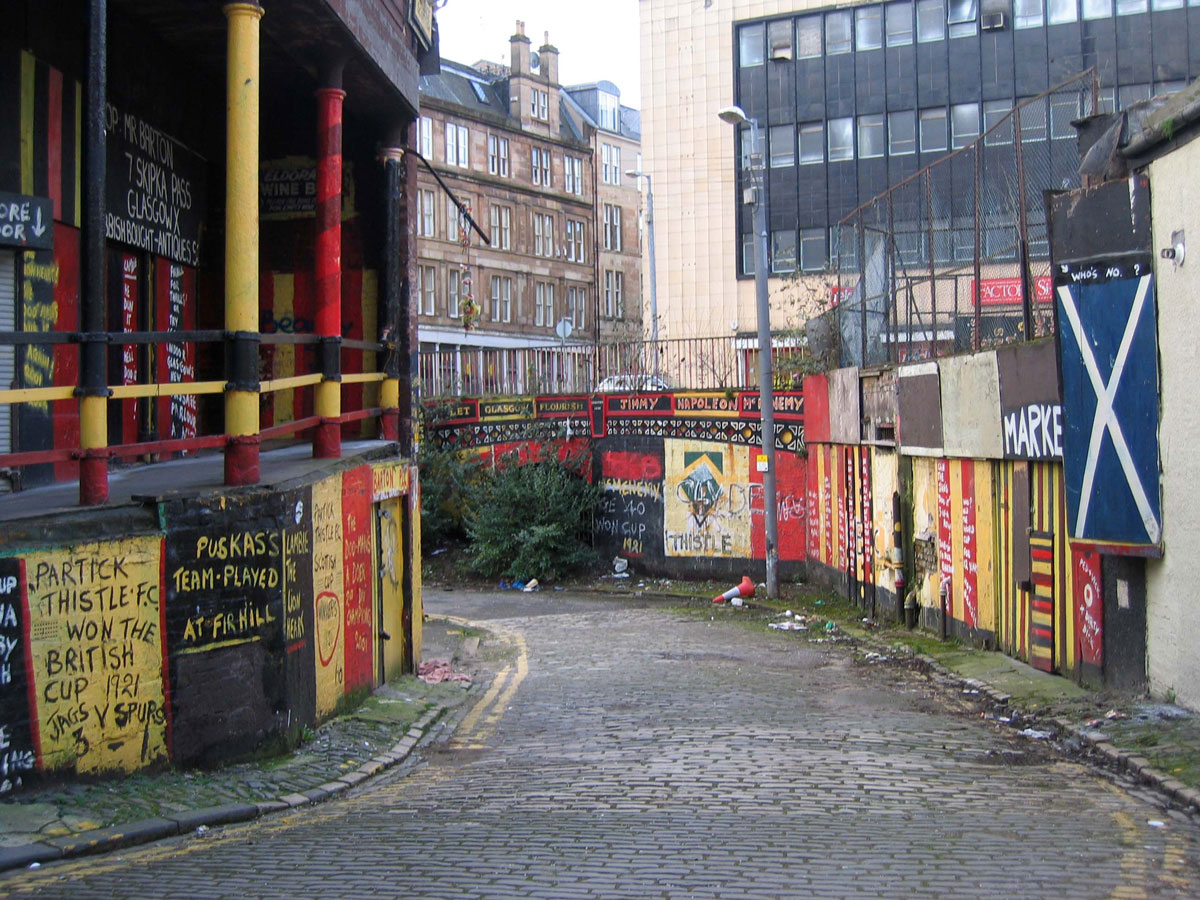
I was curious to know why this small lane under a railway bridge called Schipka Pass was covered with hand painted references to a small non-sectarian club that play over in Maryhill. After digging around a bit, it seems that Shipka Pass and the half-derelict buildings were owned by a fanatic Partick Thistle fan called Dick Barton. This well-known character died in 2004, and since I was here, Schipka Pass has been demolished and now part of Barrowland Park.
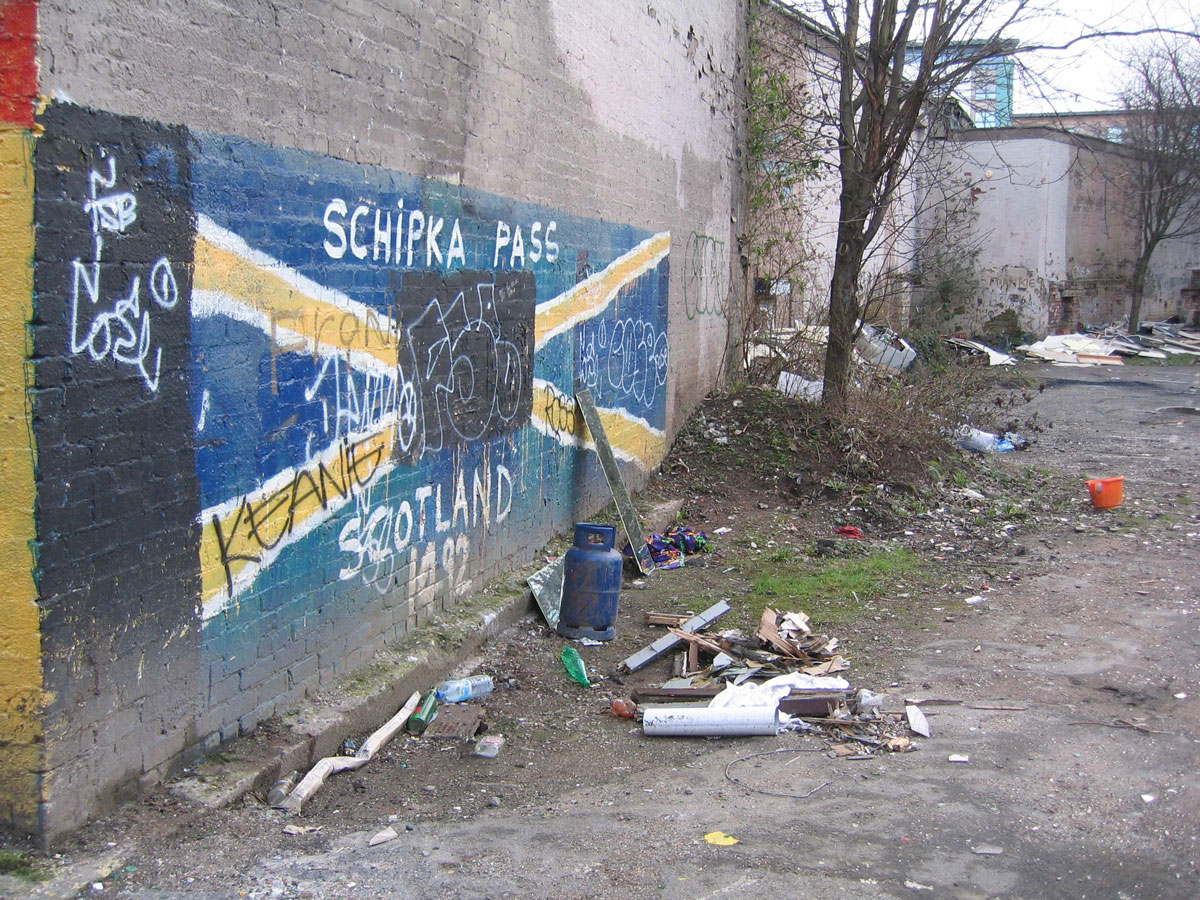
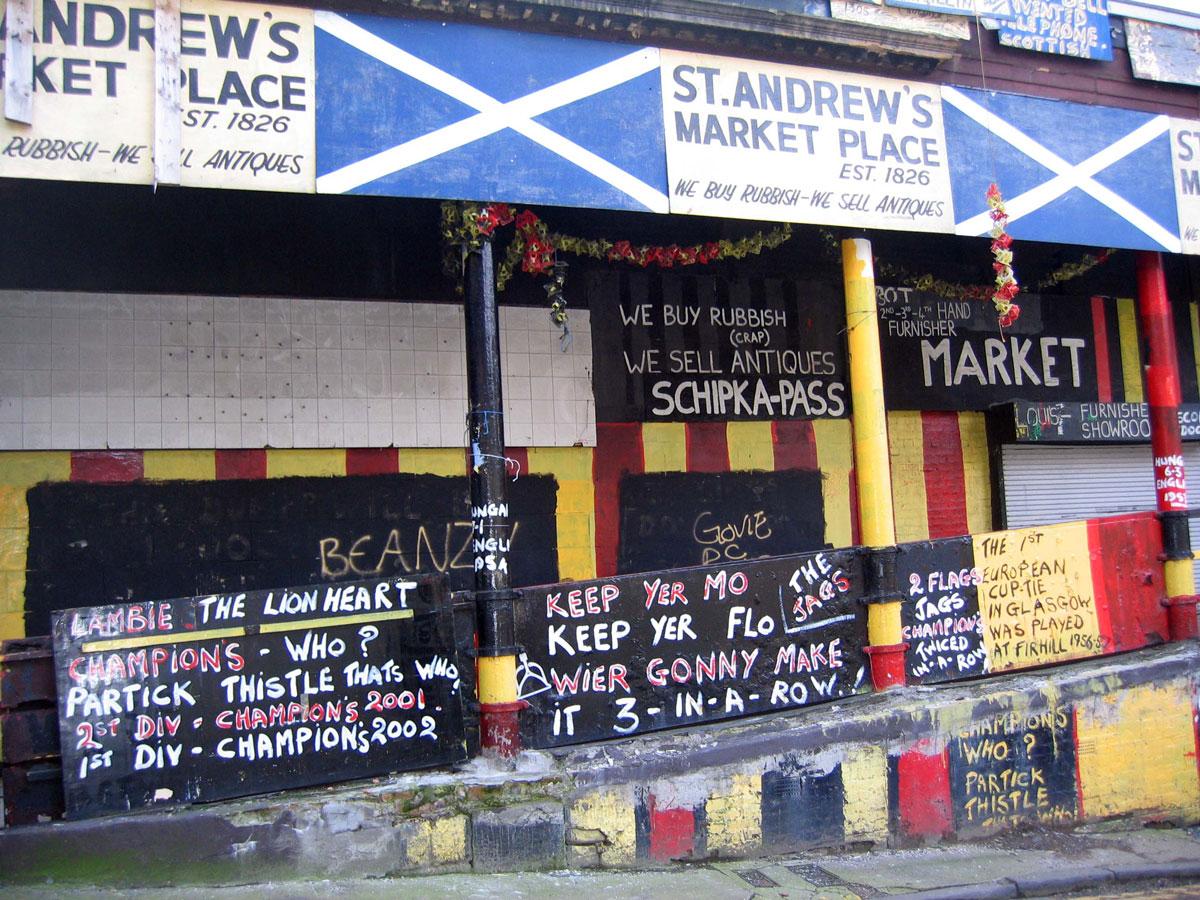
Barrowland Park gets its name from the nearby Barrowland Market, better known as The Barras, and a veritable Glasgow institution.

The Barras originally started out as a street market during the inter-war years, and run by Maggie McIver who hired out hand-barrows to those who couldn’t afford one of their own. To protect clothing stalls from the elements, The Barras Queen as she became known, started covering the market over, and even though she died back in 1958 her name can still be seen advertised on some of the market halls.
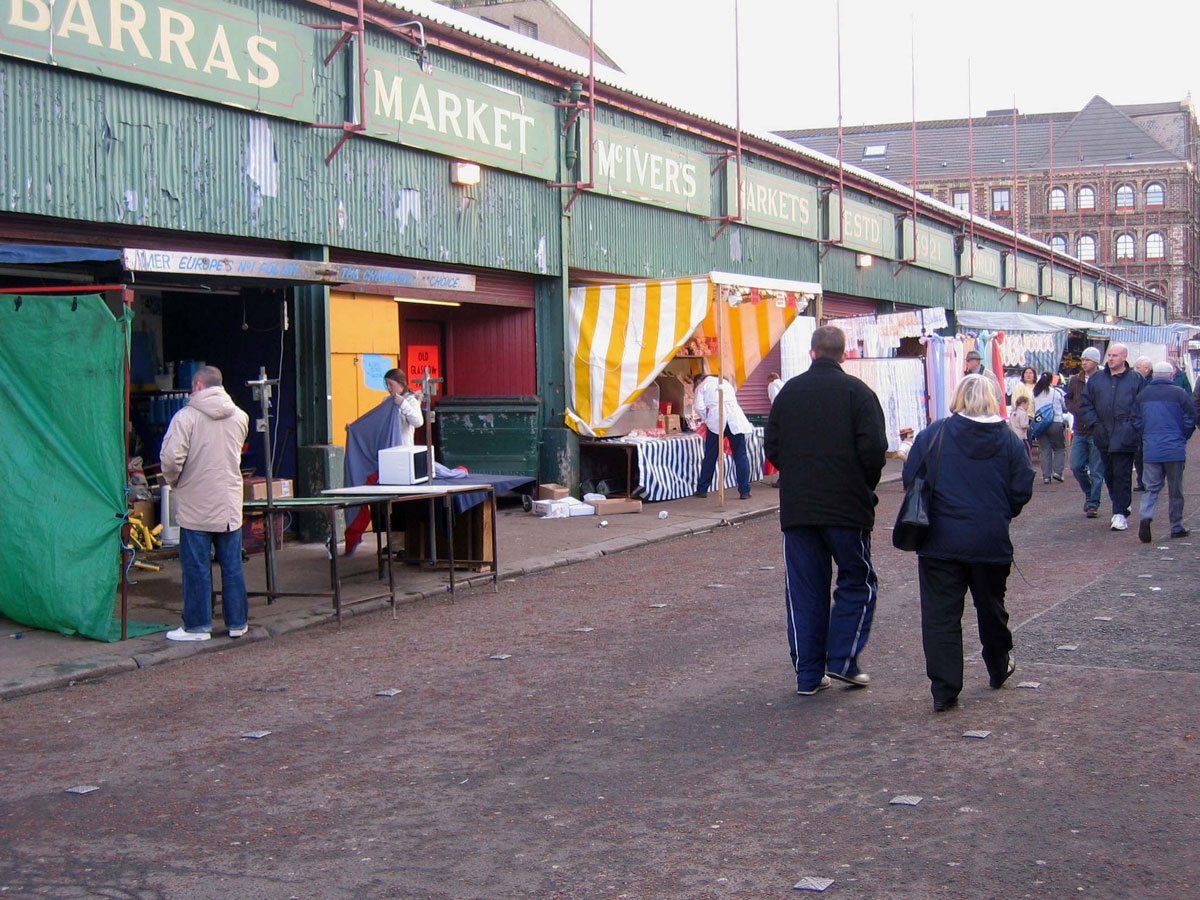
There are all different kinds of markets aren’t there? There are food markets, antiques markets, clothes markets – and then there’s the Barras Market. It may have changed since I was here last, but I doubt it somehow: In one way I hope it has, but in another, I hope it hasn’t.
The items that were for sale took me back to my childhood days – hand me down clothes, lino, and all sorts of stuff that you couldn’t get rid of at a car boot sale. It spoke volumes to me. These items were being sold here because people were still buying them!
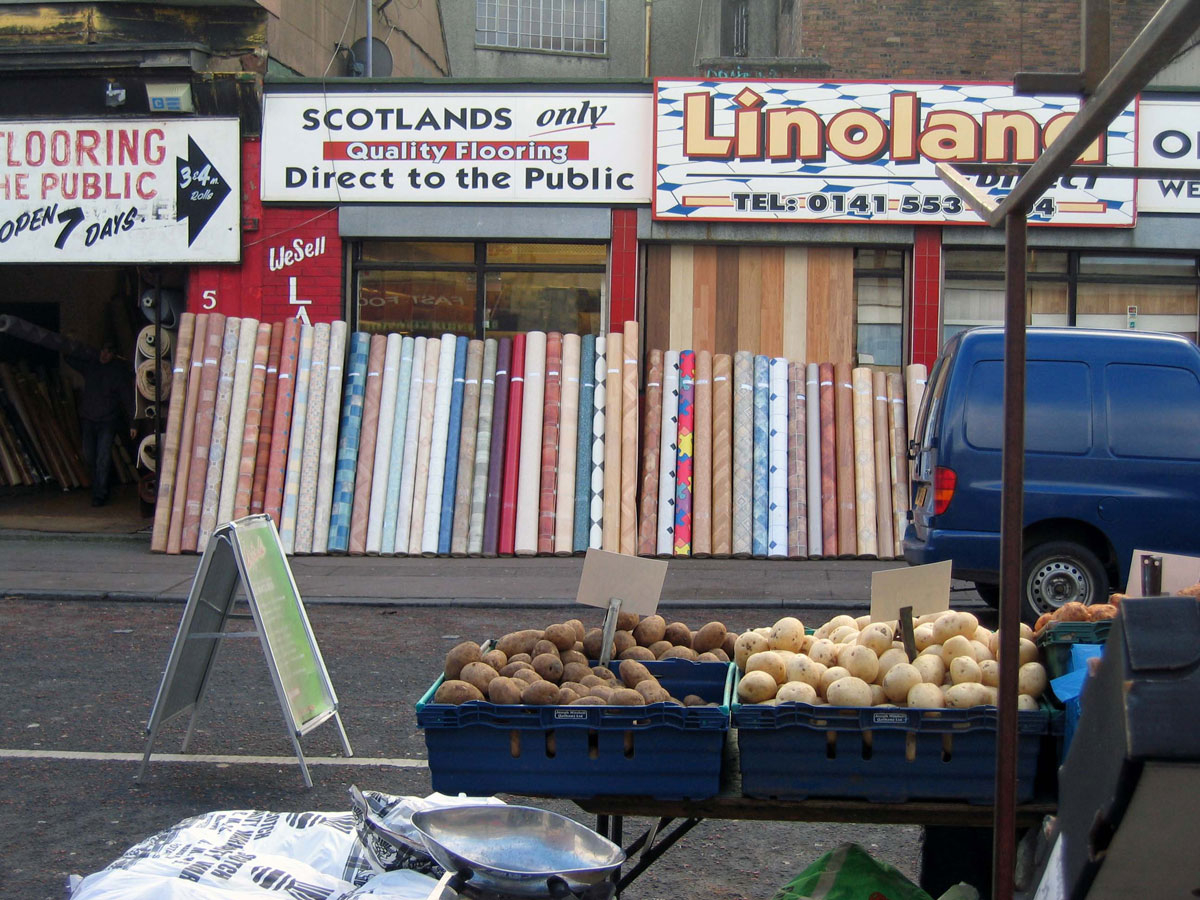
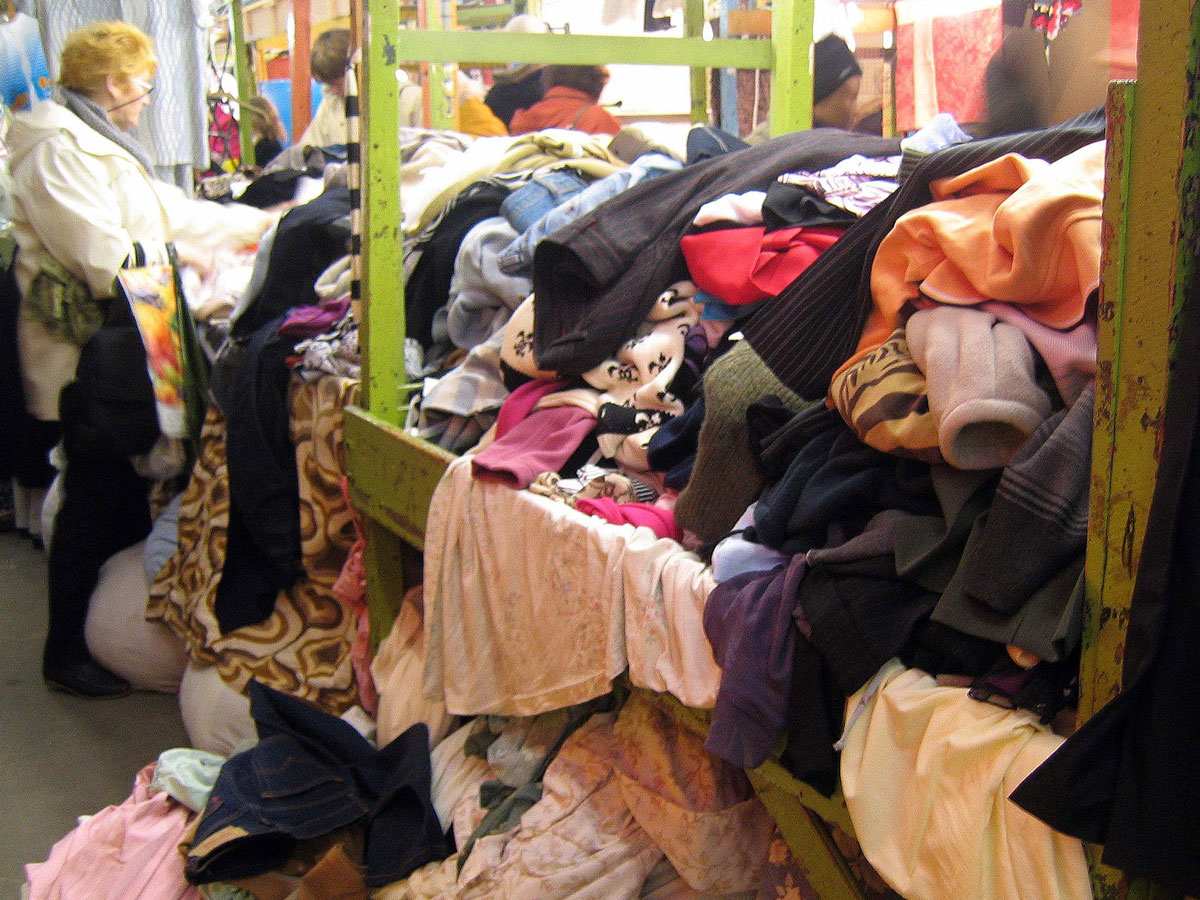
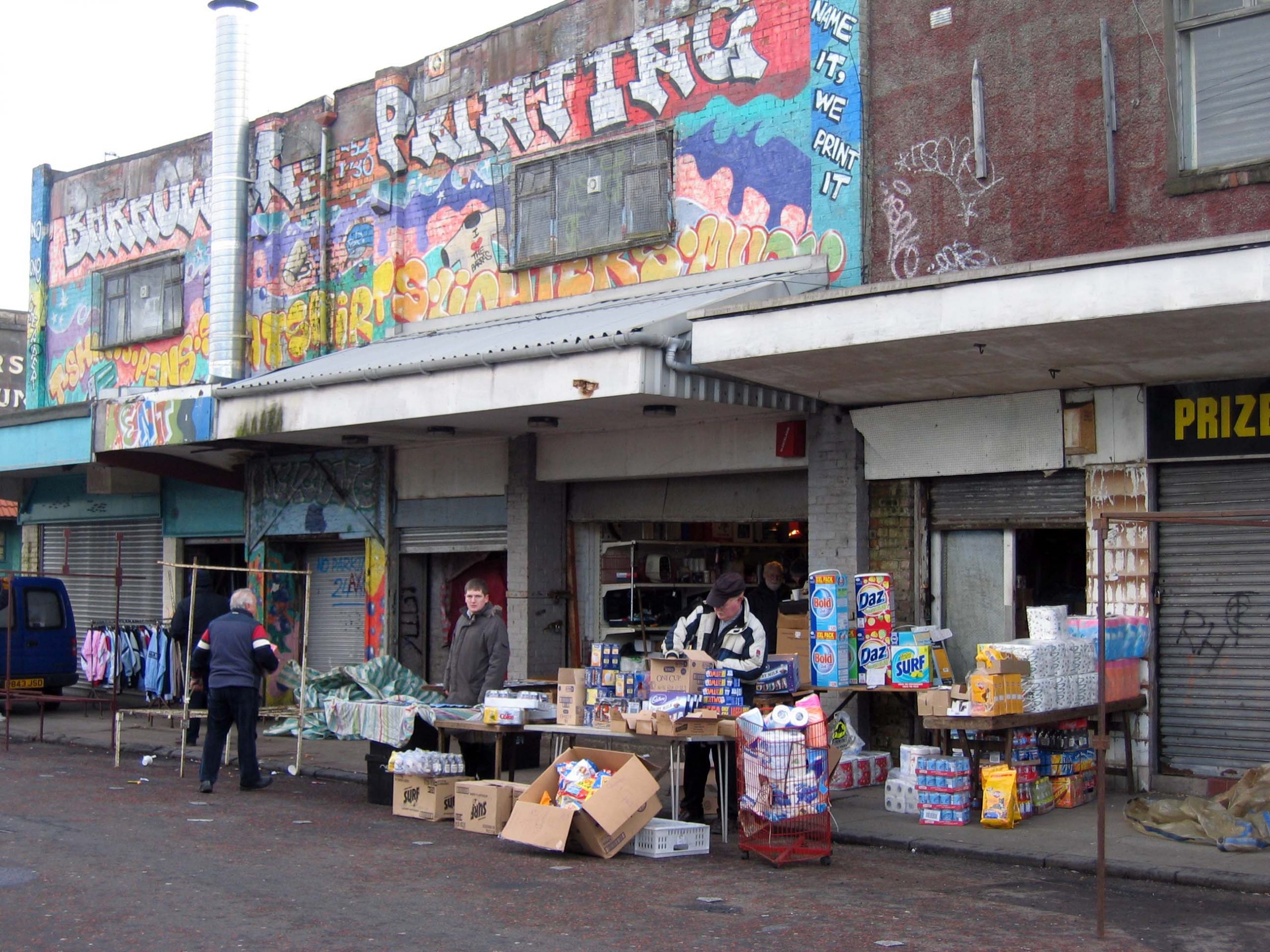
Not all the stuff that was being sold here looked as though they were left-overs from Maggie McIver’s era. There was some modern stuff too, but in most instances the goods on offer wouldn’t have looked out of place in Arthur Daley’s lock-up. This must be a Trading Standard’ dream, not to mention an easy way for the local police to reach their crime targets. Contraband cigarettes and tobacco were openly being touted for sale, and as tempted as I might have been to take some photographs of the dodgy retail opportunities, I thought it would be better not to if I wanted to keep my camera – and my face – looking the same as they did when I came in.
Just past the Kent Street entrance to the market is the Barrowland Ballroom, or The Barrowlands as it’s sometimes called. Another of Maggie McIver’s creations, it was built to host Christmas parties for the market traders and opened in 1934, but was rebuilt in 1958 after a devastating fire.
These days, it’s a popular venue for music, and rock music in particular, but between 1968 and 1969 it gained notoriety for another reason, and not a particularly pleasant one. It was the hunting ground for a predator who became known as Bible John. On separate occasions, three young women were murdered after visiting the nightspot. I don’t intend discussing the details here, but suffice it to say, the perpetrator was an outwardly respectable man who is said to have recited passages from the bible after killing his victim. There have been suspects, but no one has ever been charged.
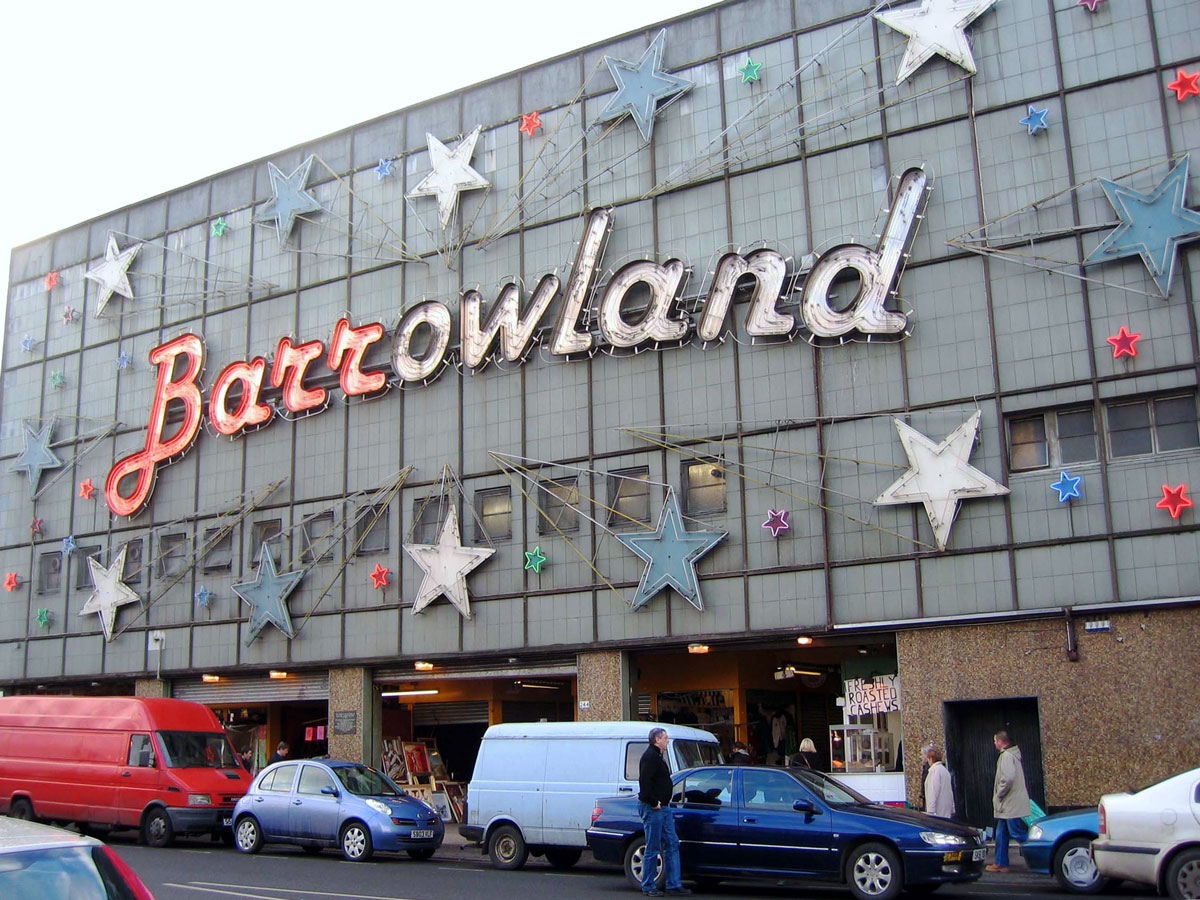
Earlier, I said that religion and football are two of the main ingredients that make up the character of the East End – but there’s a third, and you don’t have to be a mathematician to work out that Football + Markets + Music = Bars. Notice that I didn’t say pubs. Pubs are where you drink in the South of England; bars are where you drink in the East End of Glasgow – and as I’ve had previous experiences of getting caught up in these types of places before, and still had places to go, I resisted the temptation to imbibe, and walked through Kent Street to London Road instead, not that I needed too much persuading.

Officially, the district is known as Calton (or The Calton as locals prefer to call it) and has suffered more than its fair share of social problems. Poverty, sub-standard living conditions and a poor diet has led to a life of crime, alcohol and drug abuse, which has inevitably resulted in a much lower than average life expectancy. In 2008, the World Health Organization reported that the average life of a male living in Calton was 54, lower than some areas of Iraq or the Gaza Strip.
As I wandered along London Road towards Glasgow Green, I could sense that things were changing. The slums had obviously been bulldozed and replaced with modern housing, but I wasn’t quite so pleased to learn that the majority of these properties were owned by housing associations with most of the tenants on housing benefit. Politics aside, at least it was a step in the right direction.
On reaching Glasgow Green I headed straight towards the People’s Palace, where I was hoping to find out what life was like for ordinary people in times gone by.
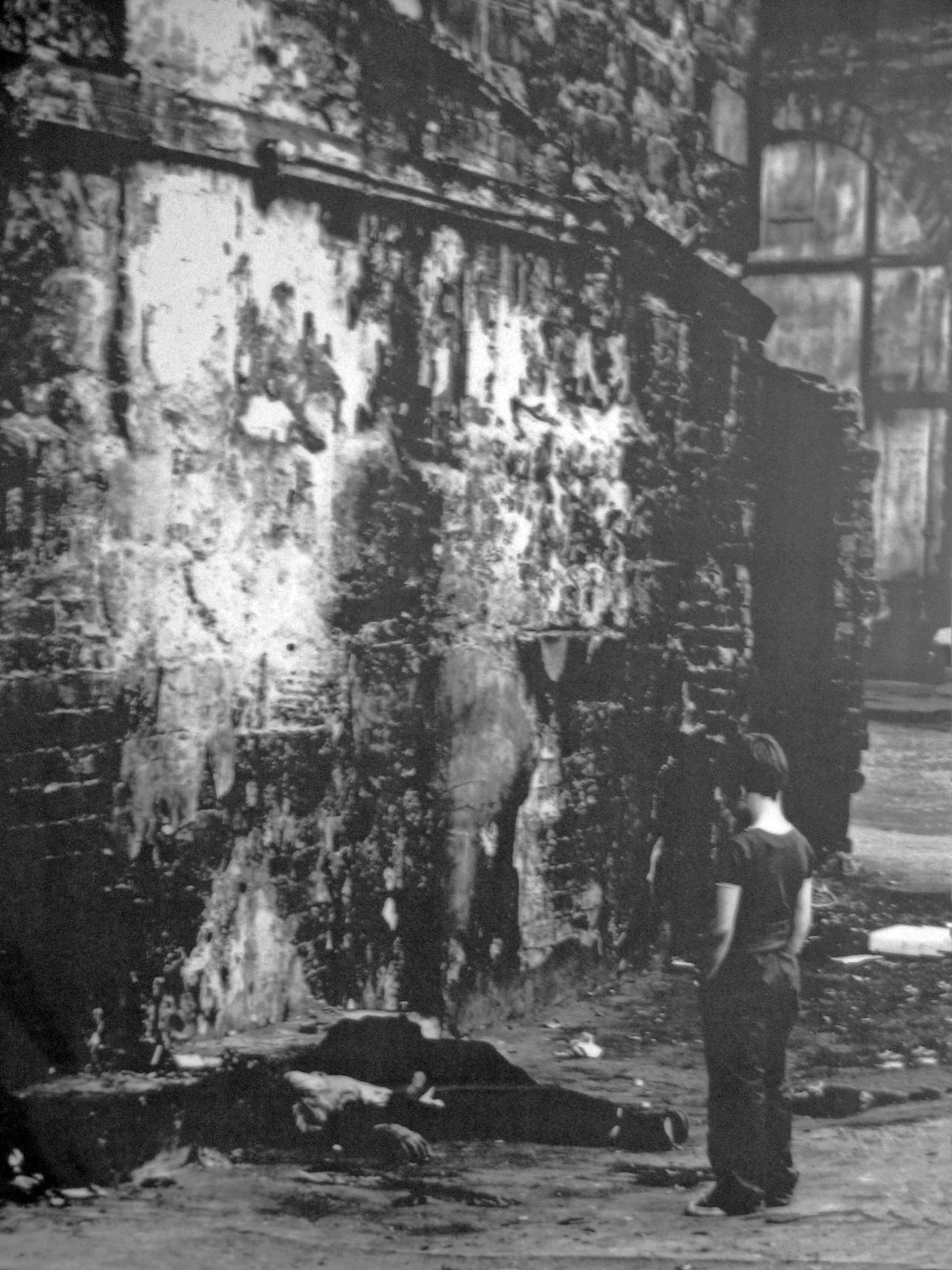
The People’s Palace was originally built for the people of Glasgow, but is now a museum about the people of Glasgow. Along with the Winter Gardens, it opened in 1898 with the intention of providing a cultural centre for the people of the East End. It can now best be described as a social history museum, and covers the years from 1750 up to the present day.
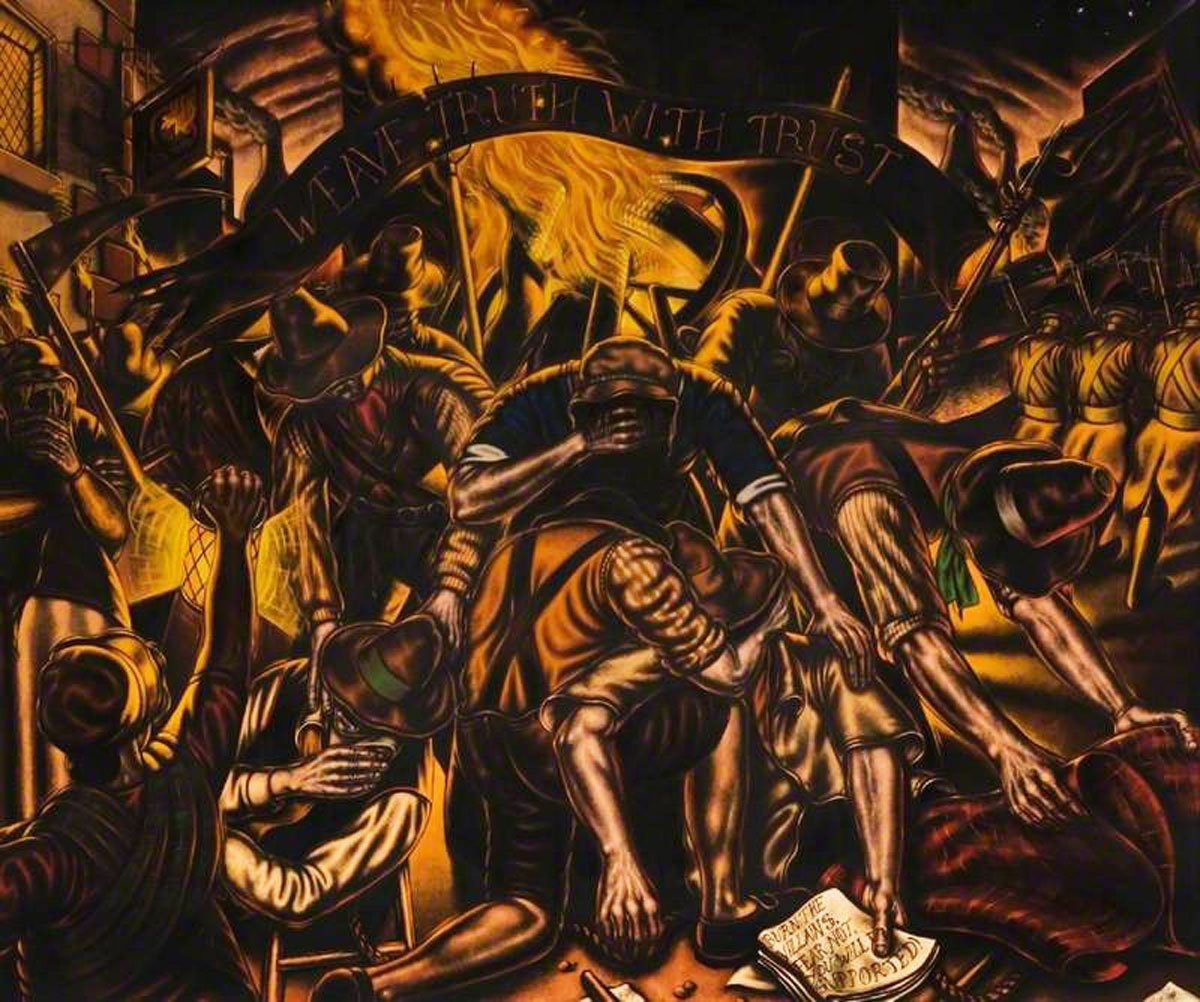
One of the exhibits in the museum is a painting on the ceiling by Ken Currie called the Calton Weavers’ Massacre. It depicts an event which occurred in 1787 and was commissioned to mark its 200th anniversary.
At the time, Calton was just a small weavers’ village in Lanarkshire. The craftmanship of the weavers was highly acclaimed, but their skill and wages were being diminished by technical advancements and foreign competition. On 30th June they held a meeting on Glasgow Green and voted for strike action.
Not everyone complied, and things came to a head on 3rd September when violence erupted in Duke Street. Those who had carried on working were attacked, and the military were called in to restore order. They opened fire on the striking weavers killing three instantly and leaving another three to die from their wounds. The six who died became known as the Calton Martyrs.
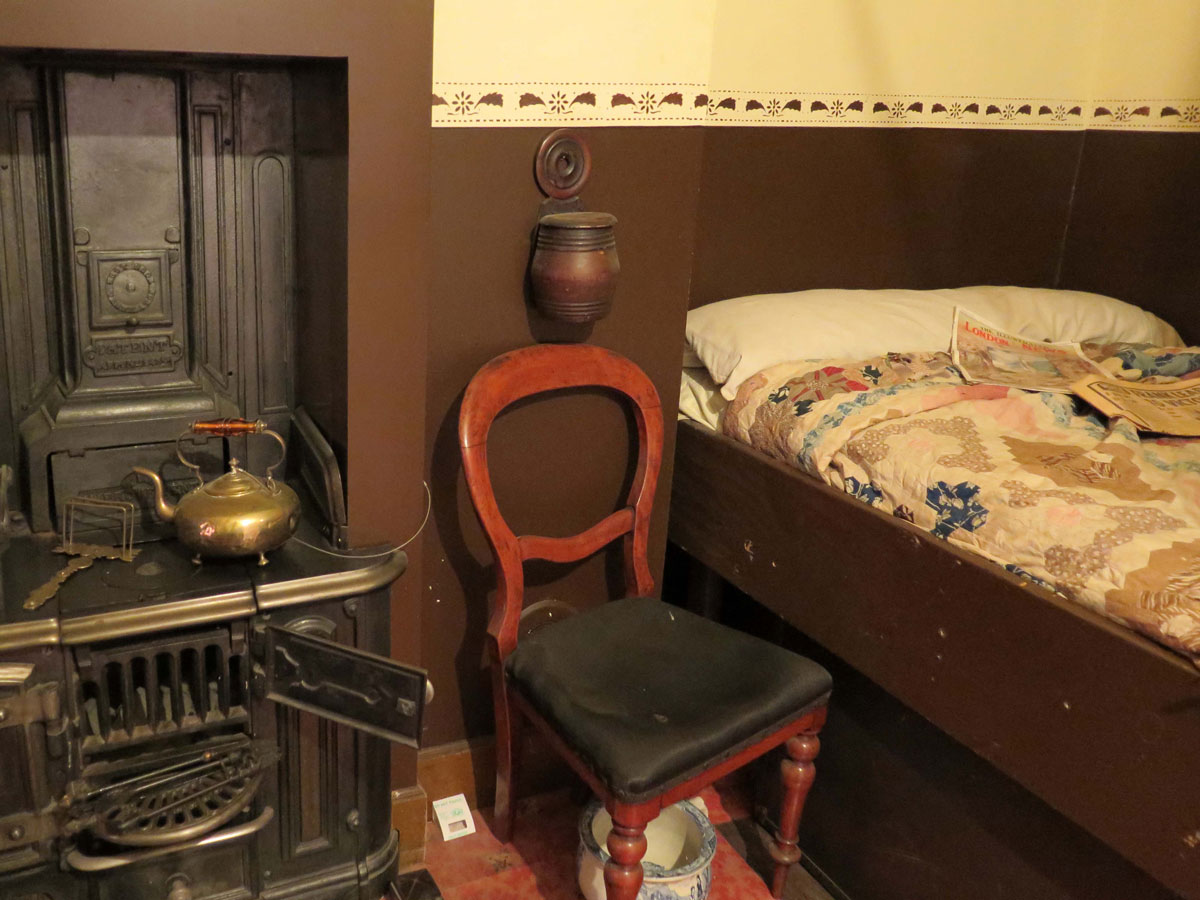
It wasn’t just weavers who had to fight hard for a better life, and Glasgow Green became a focus for political rallies, particularly during the Scottish Insurrection of 1820. Poor wages led to poor living conditions, and there’s a mock-up of a 1930s Single End (a one room tenement) in the museum.
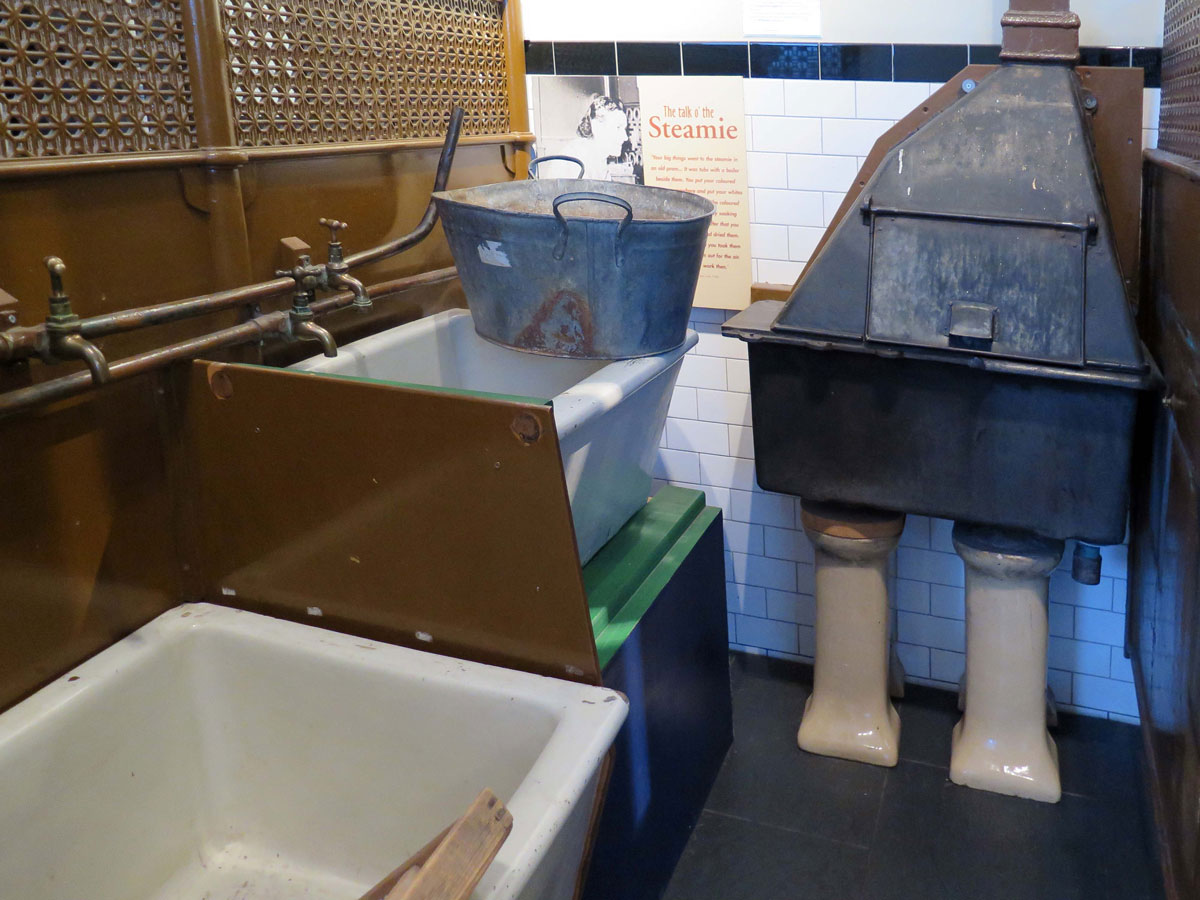
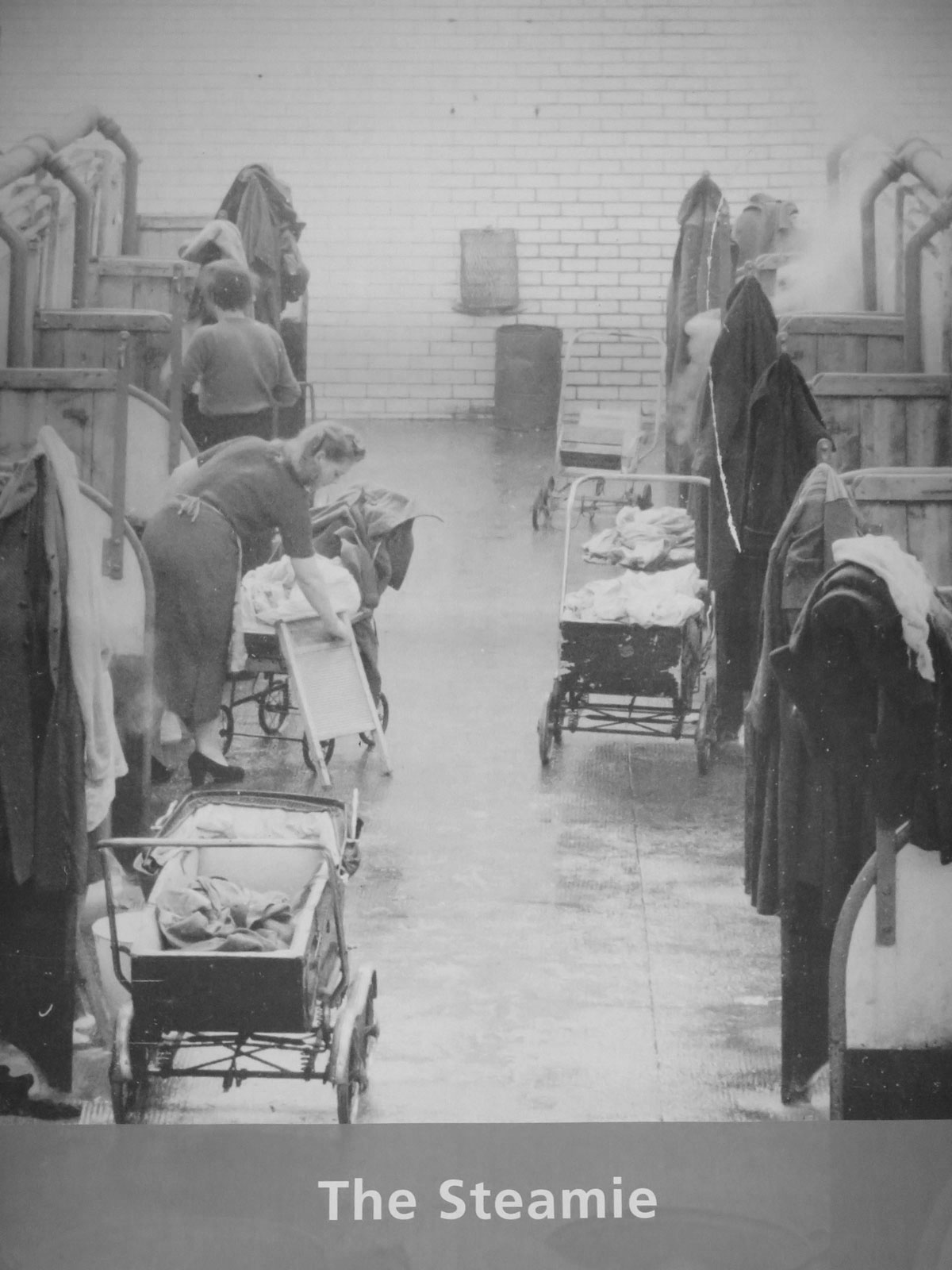
The struggles of life didn’t just fall on those who worked in the mines, factories and shipyards, but women who had to endure hardships at home too, and one of the most fascinating features of the People’s Palace has to be The Steamie.
Before Glasgow Green was improved during the 19th century, it was an uneven, swampy area made up of 4 separate greens separated by the Camlachie and Molendinar Burns. These burns were used by people for washing themselves and their clothes, and as the threat of disease increased, then a call for better conditions was called for, and in 1876 Glasgow’s first steamie, called the Wash House opened on the banks of the Camlachie Burn.
These Steamies became a part of Glasgow life, and although they were places where women came to do their washing chores, they were also places where they could get out and meet people away from their tenements. In fact, when washing machines started to encroach on the role of the steamie during the 1980s there was an outcry when they started closing them down.
The People’s Palace isn’t all about the hard times, there are exhibits about sailing ‘Doon the Waater’, dancing in the Barrowland Ballroom and there was even a Billy Connolly exhibition while I was here complete with his Banana Boots, but there’s no escaping the fact that life has definitely not been a bed of roses for the people of Glasgow.
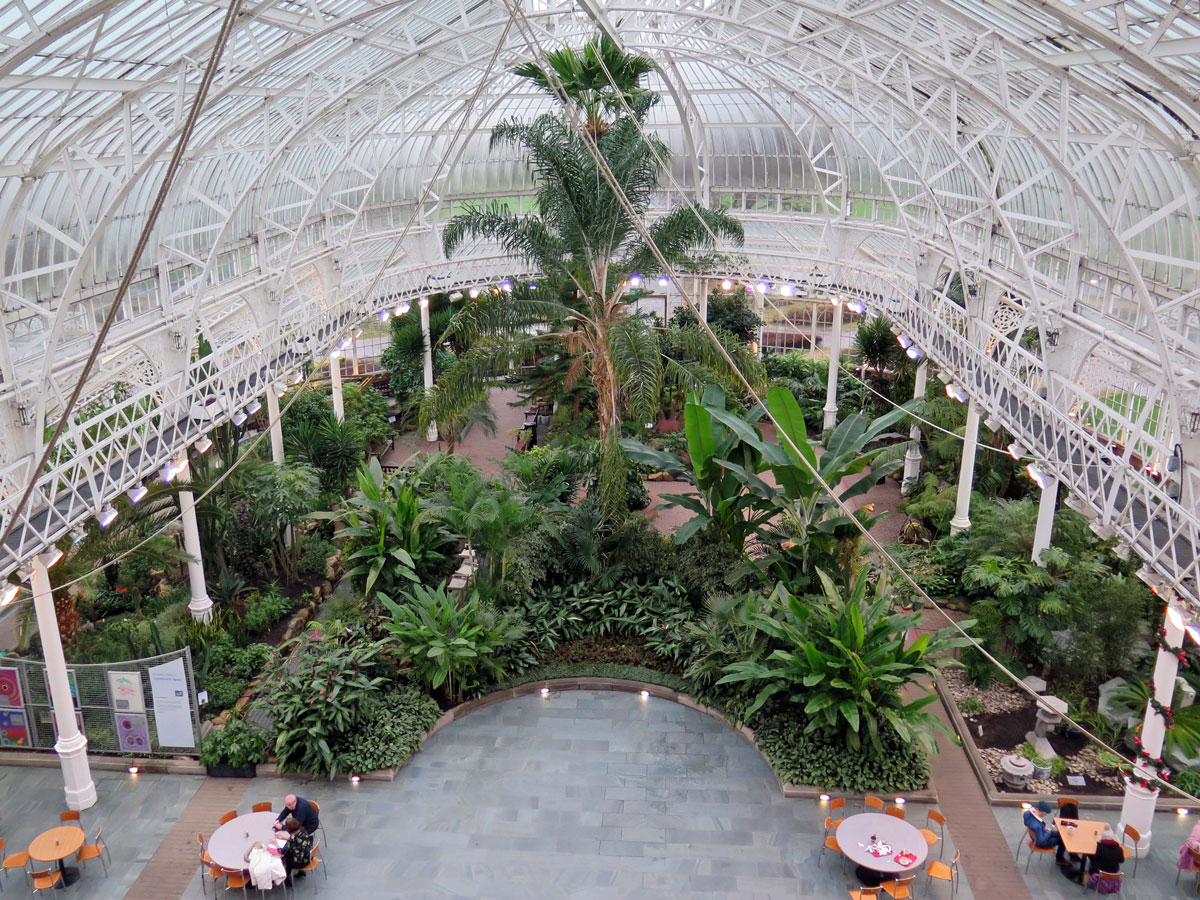
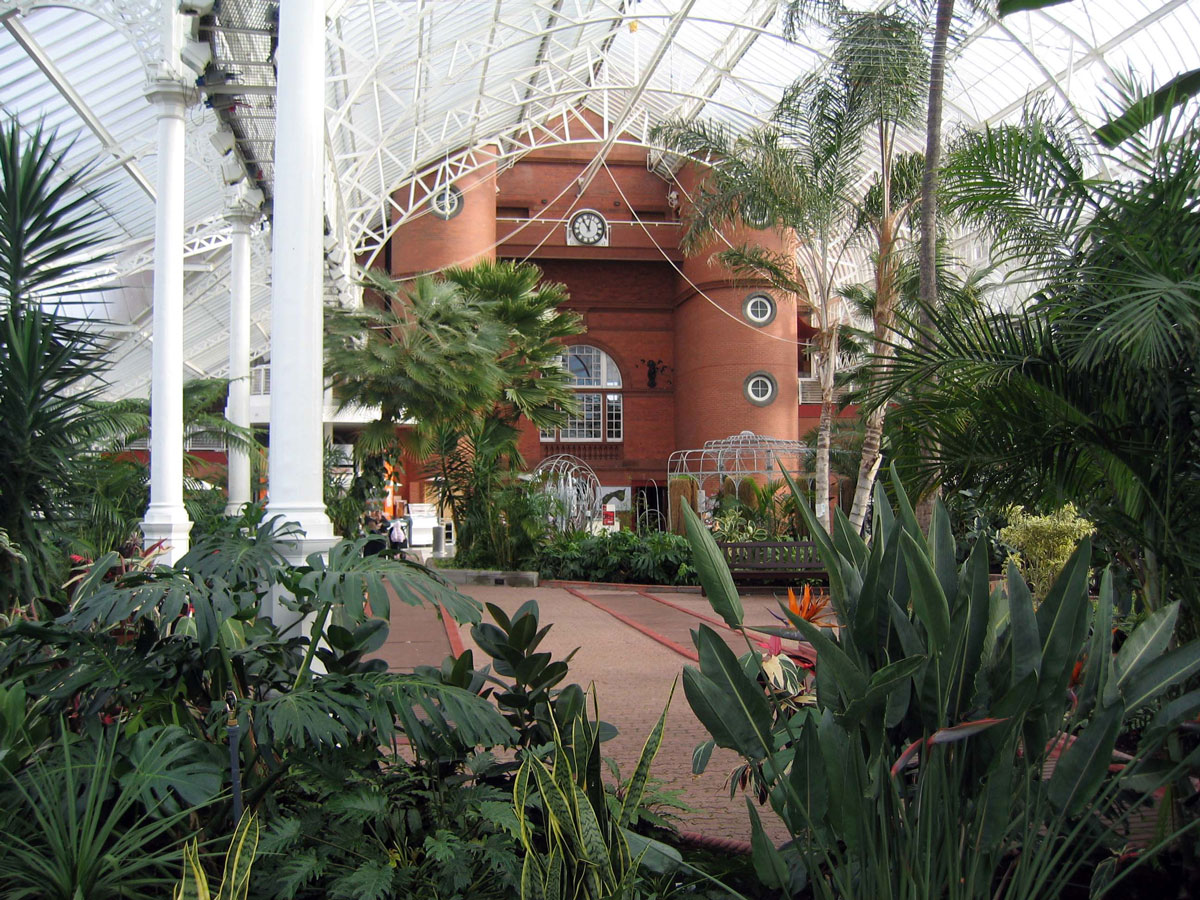
The adjoining Winter Gardens are – or were – a breath of fresh air. It was a great place to finish off a look around Glasgow’s East End with a coffee and a slice of cake. Sadly, whilst I’ve been catching up with how things are now to when I came in 2016 it seems that the Winter Gardens have fallen into decay. To me it’s almost sacrilege to let this happen. Not only that, the People’s Palace has been closed for the foreseeable future, and there are doubts that it will ever open again. When Lord Roseberry opened the building in 1898, he declared it “Open to the people for ever and ever”. It sounds to me that another protest is called for on Glasgow Green.
I refuse to let the demise of the People’s Palace allow me to end this final post about Glasgow on a sour note. Looking across the Green is a reminder of the weaving industry in the remarkable Templeton Carpet Factory building. It was built in the style of the Doges Palace in Venice for James Templeton and Son at the end of the 19th century. The factory has seen its own fair share of tragedy and has not been used as a factory for some time. Even so, its redevelopment into mixed use has retained its original appearance, which has to be good news, whichever way you look at it – but there’s more.
Outside the People’s Palace is a wonderful landmark – the Doulton Fountain, which has been described as the largest terracotta fountain in the world. Statistics like these don’t always mean that much, but I just think it’s fabulous. I could go on about its history and all the rest of it (as I’ve been known to do), but do you know what? I’m going to leave it there, because I’m going to hold it up as a candle in the dark for the people of Glasgow’s East End. I reckon they still need one.

POSTED – DECEMBER 2021
Originally posted 2021-12-03 17:20:05.
Malc, I know you have pc probs. Even when they are fixed don’t worry about replying to this in the backlog of no pc. Just know I enjoyed it and you did a good job here.
Interesting & informative read!
Thank you for not only reading, but commenting as well 🙂
As interesting and informative as ever Malcolm! I never knew Celtic’s first game was against Rangers – like you I can’t imagine it being very friendly 😆 I was going to say that I would be fascinated to visit The People’s Palace, which sounds like just my sort of museum, and then I came to the part where you say it has closed – what a shame!
It would be an absolute crime if it was never to re-open Sarah. I can’t imagine it somehow. Thanks for your comments as always, and let’s hope everyone can start getting around a bit more in 2022 🙂
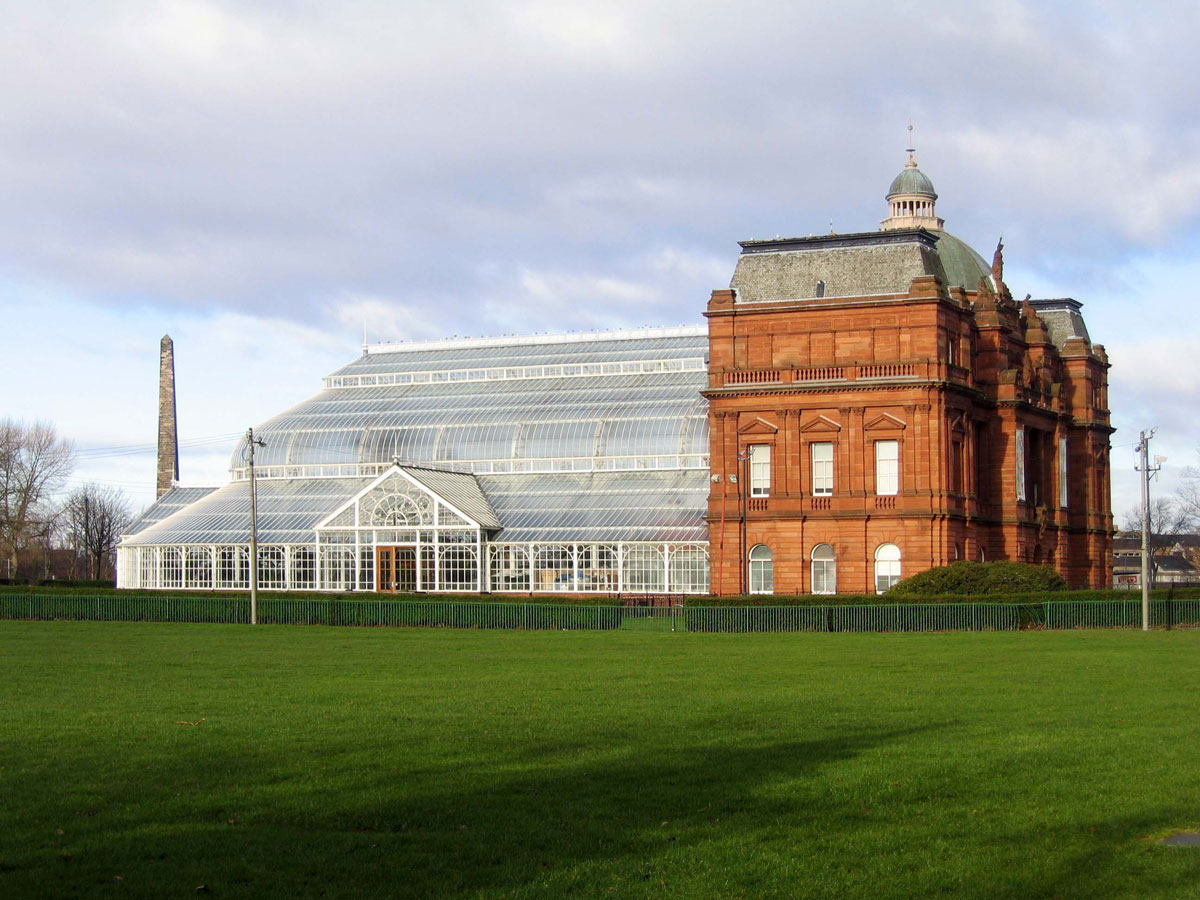
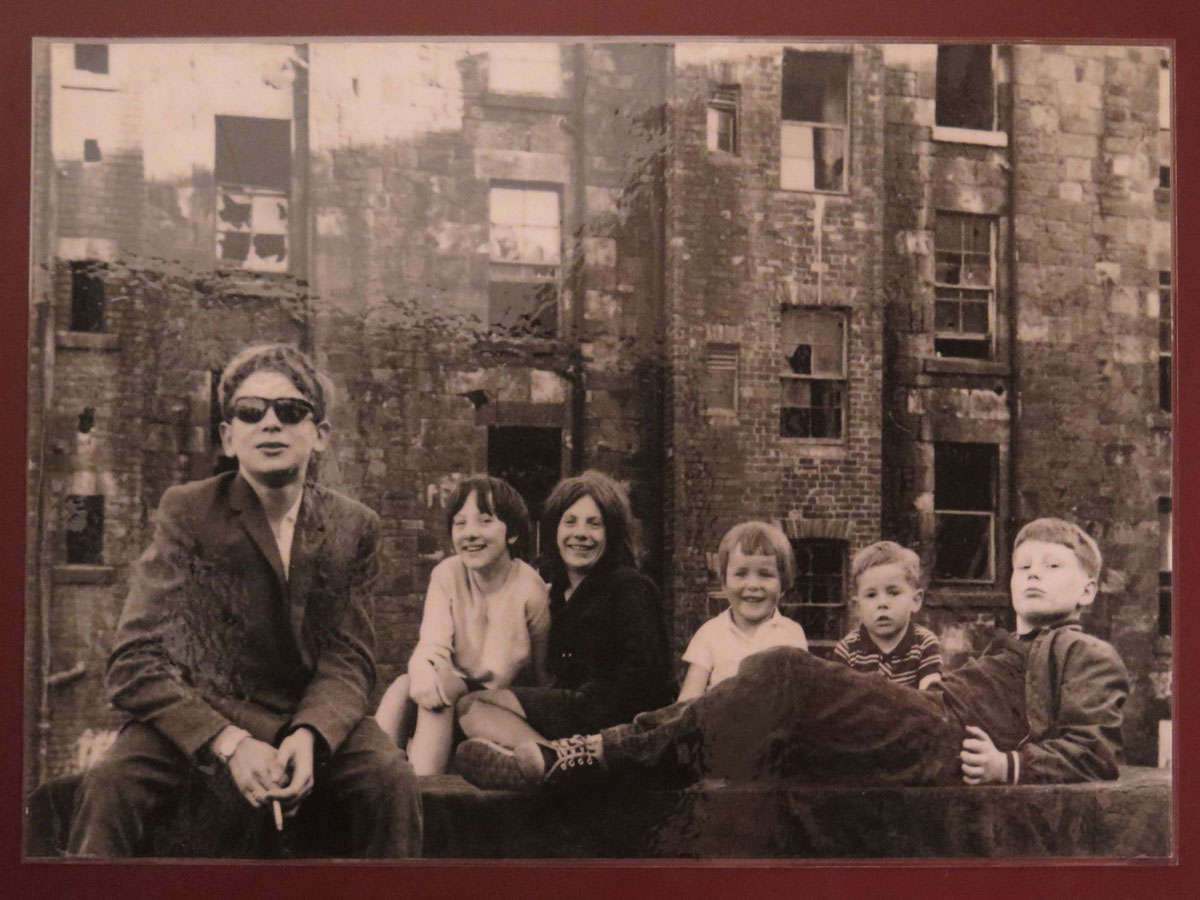
Apologies Malc, this one must have slipped past me during my frantic painting rush earlier this month! Still, a fascinating glimpse into this area of Glasgow, with some revealing insights into it’s dark past. Who knew Glasgow had it’s own (albeit later) version of Jack the Ripper? Another east end big city murderer of women who was never caught. And the Calton Weavers massacre beggars belief. That’s also a sobering picture in the People’s Palace of the young boy in the street, which is more than can be said for the unconscious man he’s looking at. An eye-opening post indeed.
For all the negative aspects of Glasgow that this post portrays Alli I’ve always found the people here really welcoming. As you know you can only say so much about a place in a few words, but I’ve tried to show both sides of the city as I’ve seen it, but only those that have lived there can really know what it is – and was – like.
I’m always pleased that you take the trouble to read some of my posts that wouldn’t automatically catch your eye because as you know by now, I always like to see life from both sides before coming to a conclusion about things. It’s something I’ve always done.
On a lighter note, Glaswegians have a great sense of humour, if only you can understand what they’re saying 😊 By the way, that Templeton Factory is really quite some building. Thanks as always for your support and encouragement. I really do value your comments, not just because they’re always complimentary, but because you always take the trouble to read my posts thoroughly. Have a lovely week 😊
Annoyingly, I was interrupted whilst typing my comments yesterday and as I posted I thought I’d mentioned my namesake’s factory, which is – as you say – quite some building! It’s got to be one of the most glamorous factories I’ve ever seen. No relation to James that I know of (meant to say that too!), but then again it’s quite a rare surname, so maybe there is a link there.
One of the things I like about your blog is that you do look at both sides – especially this kind of place. So many people wouldn’t. And as for reading posts that wouldn’t normally capture my interest – well, that’s the magic of Malc! 🙂
I wondered why you didn’t mention the factory in your reply, especially as you say, it’s not a common name.
As for looking at both sides of a topic, it usually gets more complicated the deeper I delve, which is why I say that people can have opposite points of view about a subject and still both be right. I hope that makes sense. As an example, your phrase the “Magic of Malc” is one that I’m going to cherish Alli because I think you mean it in the nicest possible way. Other people might take it to mean that when something needs to be done, I turn into a magician and disappear into the woodwork. I’ll take your version every time 😊
Yes, sorry about that. It’s what comes of being interrupted whilst I’m writing, being dragged off by Nathan and subsequently by Maddie as I’d just returned, and pressing ‘send’ without having had the chance to read my comments through. Thought I’d mentioned the factory but I’d remembered wrong. My brain is clearly frazzled. I’m trying to write my Christmas post now, so I hope it isn’t complete twaddle.
Believe me, you’ve got the interpretation of your ‘magic’ right. Absolutely. Anyone thinking otherwise is wrong this time. 🙂
LOL. I wouldn’t mind a pound for every time I pressed the button at the wrong time Alli, or wished I hadn’t pressed it at all.
Enjoy the build-up to Christmas, and I’m looking forward to your next post already 😊
I hope you enjoy my Christmas offering – that’s if I don’t accidentally press ‘publish’ before I’ve finished writing it – the way I am at the moment, I wouldn’t put it past me! 😀
🙂 I won’t distract you anymore in that case. Have a good week, and thanks for all your encouragement 🙂
A very interesting and informative post Malc but to be quite honest, apart from the Peoples’ Palace and Winter Gardens I wouldn’t want to got there, it looks like a dreadful area. Your mention of the Calton weavers did rather send me down a rabbit hole though. Years ago the Houghton Weavers, a folk group local to me, sang a song called The Calton Weaver (it’s been done by other singers too) so to refresh my memory I had a look on Youtube and spent a good hour having a sing-song along with the Houghton Weavers 🙂
You never know what you get from my posts Eunice I’m afraid, but if you’ve had a good sing-along tonight then you’ve made me happy too. Thank you for continuing to look at my posts from within the Mousehole 🙂
Fascinating look at a city with a rough past. You do it justice and your pictures are very illuminating. I love the honesty of your portrayals “warts and all”.
Thanks Pat. You know me well enough now to realise that I like to be honest without being offensive in any way.. Glasgow definitely still has some rough edges to it , but I’ve always found the people to be friendly, and much more so than those I’ve met in Edinburgh.
An absolutely wonderful post. I love the linos, and of course the People’s Palace and Winter Gardens. More great reasons to visit Glasgow.
There is some decent wall art as well!
I noticed 😁
Very interesting, full of historical and social information. The photos are beautiful, including those depicting scenes of poverty
Thank you for sharing it
Your kind words are always really welcome Luisa. I’ve never pretended that my travels have just been picture postcard locations. In fact, I’ve learnt more from those places that aren’t, and Glasgow’s East End is one of them. That said, have a lovely weekend in your lovely part of the world 😊
I also really appreciated the less tourist parts of what I visited, because they made me feel the real life of the place.
Absolutely 🙂
🙏🙏🙏
🙂
Must say Malc, another very informative and quite interesting account of the history and the development of this part of Glasgow. Have been wanting to go there, but…
And great photography, as in all your posts, that truly illuminates the narrative and brings the points home easily.
Thanks for taking a look Francesc. Glasgow is trying hard to claw itself out of its past, but it still struggles even though on the surface it may be succeeding
It’s always a pleasure my friend! Have a great weekend!
Another informative and thought-provoking post.
My daughter went to Glasgow recently for the Climate Change Conference, but ended up spending ten days in quarantine in a hotel room, so she didn’t see much of the city or the conference.
Thanks Don. Obviously I hope that she’s recovering ok