
Exeter Cathedral
Built on the hill where the original Roman camp was established, the Cathedral Church of St. Peter is without doubt Exeter’s crowning glory.
The church in its present form was conceived in 1114, but a Benedictine monastery and Minster was set up here in Saxon times around 670 AD. One of its pupils was Winfrith who was born in Crediton (c675), some 8 miles north-west of Exeter and where the See of Devon and Cornwall was based.
Winfrith later became known as St. Boniface, and his missionary work took him from Exeter across to Frisia and Germania, where he became venerated to such an extent that he eventually became the patron saint of Germany.
In 1050 Bishop Leofric transferred the See to the Minster at Exeter.
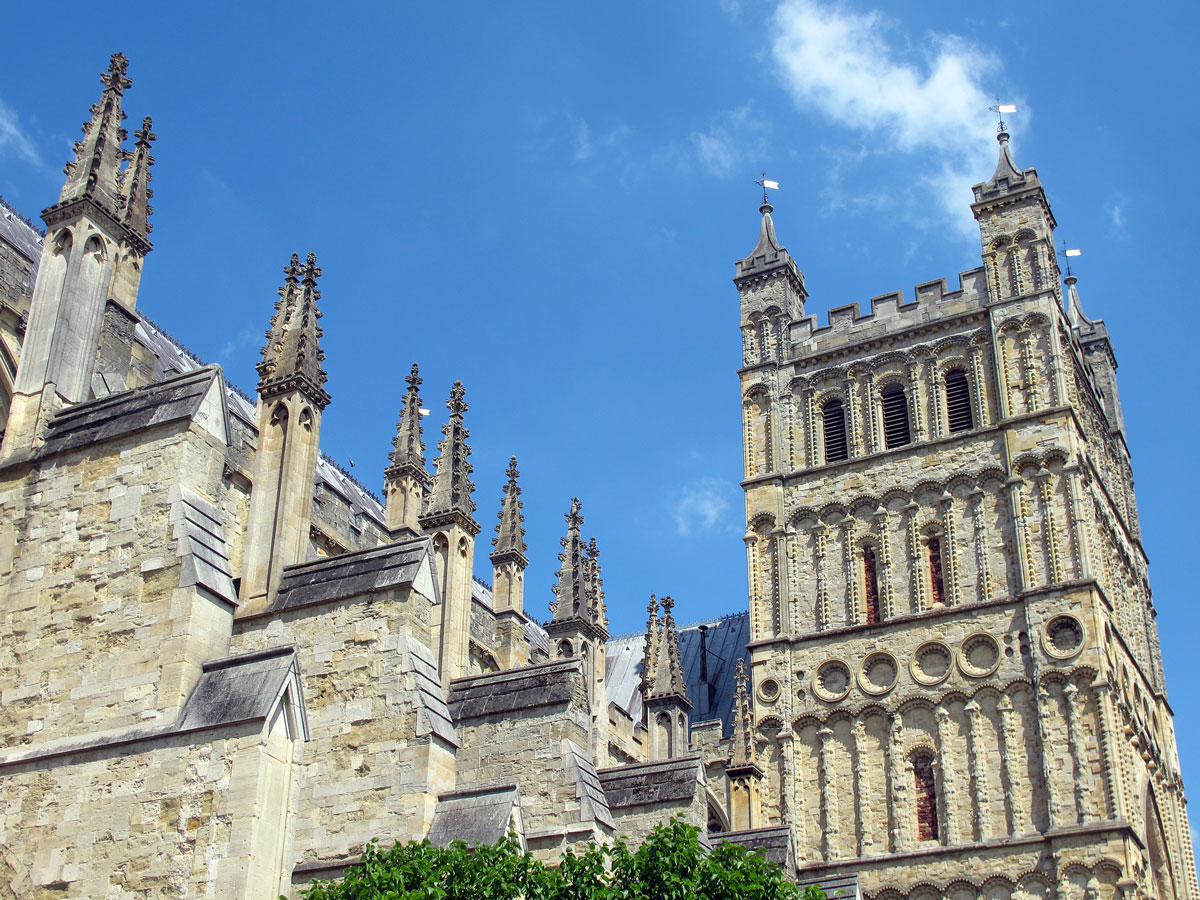
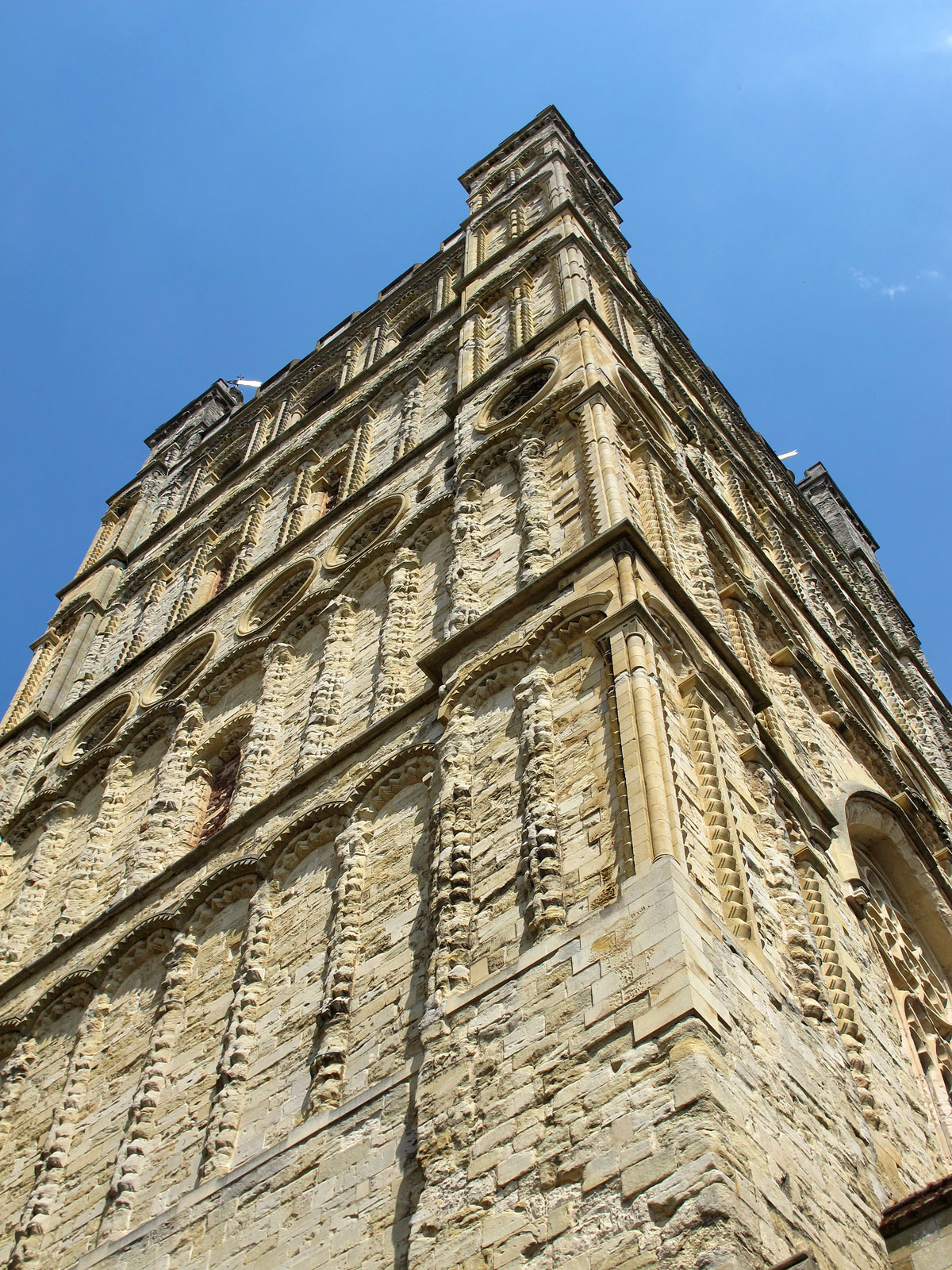

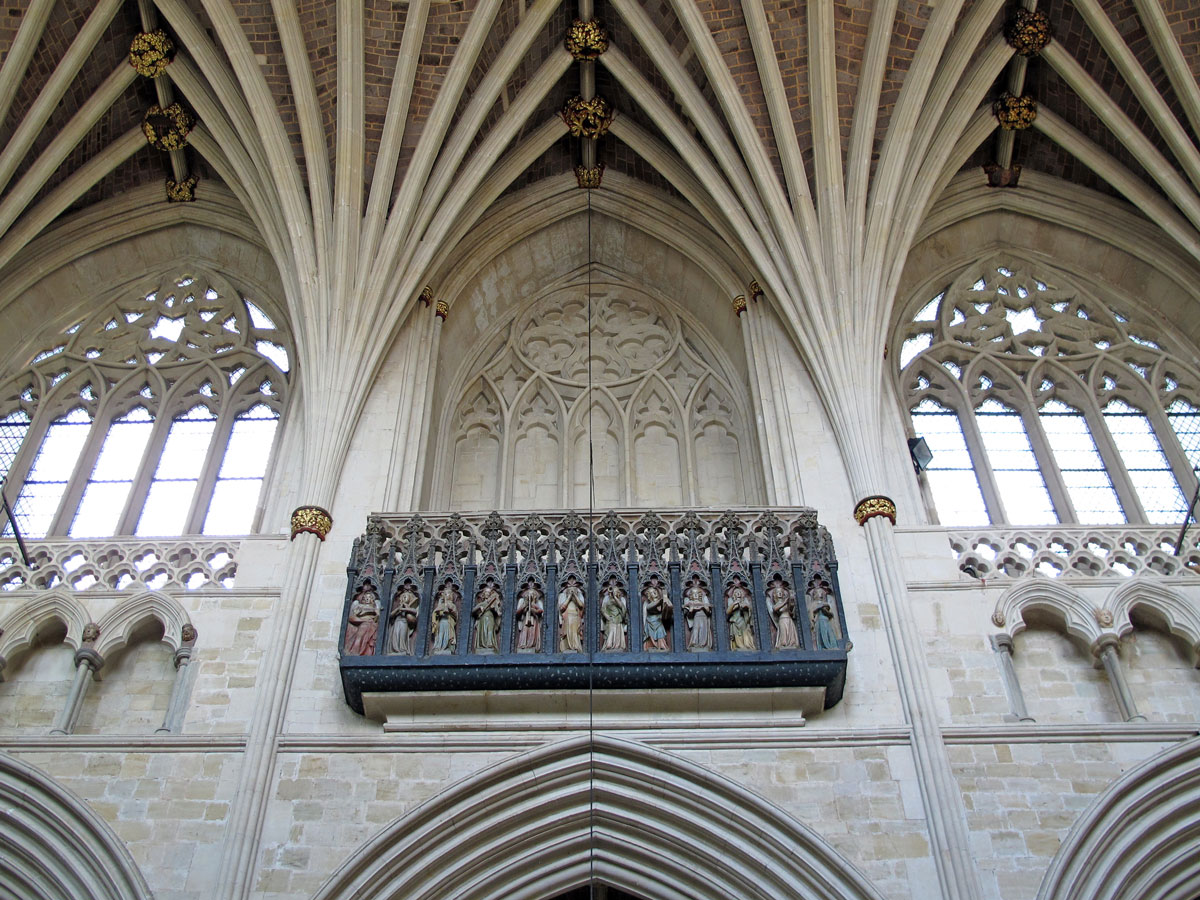
Although it’s situated on a hill, the Cathedral doesn’t dominate the skyline as much as you think it would. Instead of a spire, it has two square Norman towers which give it a somewhat squat appearance, but what it lacks in height it more than makes up for in length, because at 300 feet, it has the longest uninterrupted gothic vaulted ceiling in the world. This gothic amendment to the original Norman church was instigated by Bishop John Grandisson in the 14th century, but he never saw his dream finished as it took over a hundred years to complete.


There’s no doubt in my mind that Exeter Cathedral’s biggest attraction is its Gothic architecture, and apart from the vaulting, it also has a wonderful West Front.


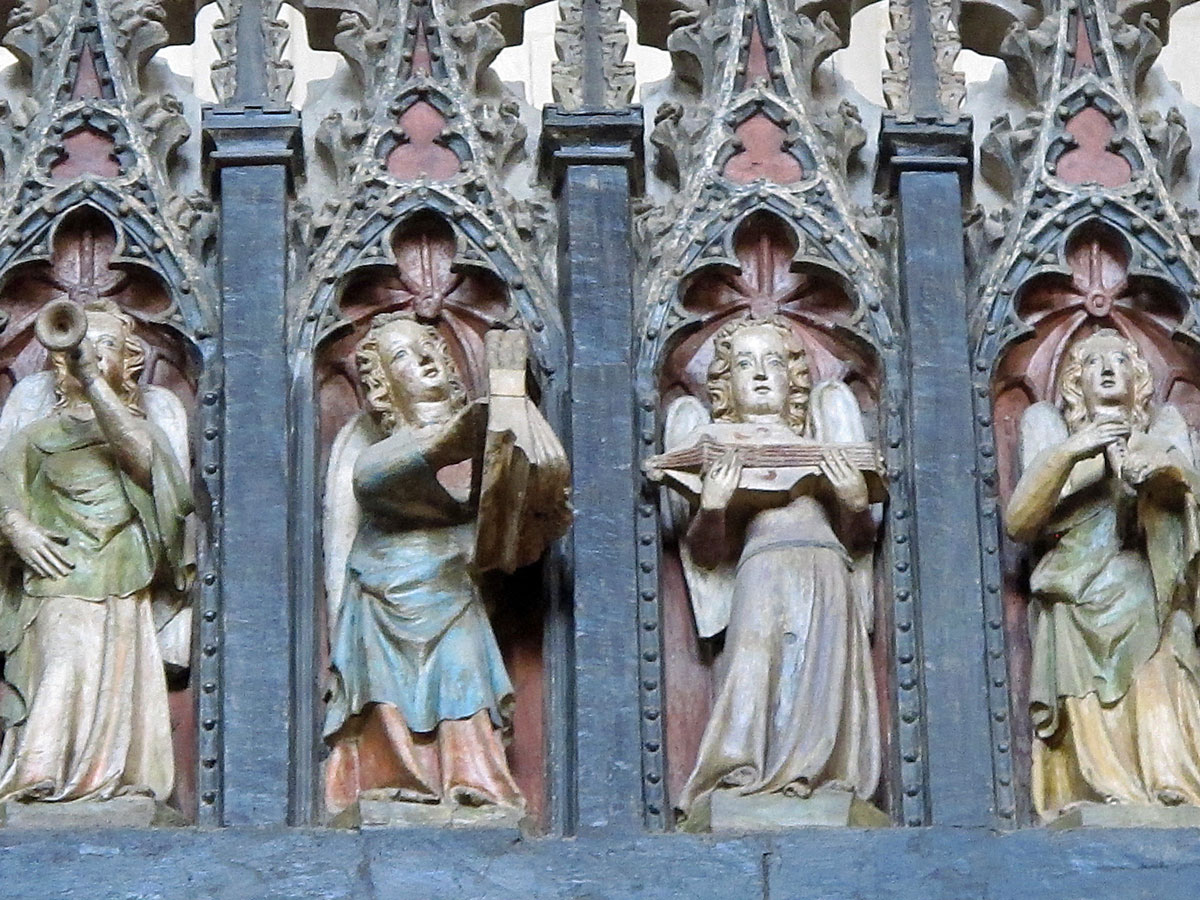
Other features worth looking out for are the Pulpitum, East Window, Astronomical Clock, and the Minstrel’s Gallery


All these gems were nearly destroyed when the cathedral took a direct hit in an air raid by the Luftwaffe in May 1942. The raid was part of the Baedeker Blitz which got its name from the Baedeker German guide books which included detailed maps of popular tourist locations.
These attacks were in retaliation for an increase in the RAF’s ability to bomb targets in Germany: The Hanseatic city of Lubeck was the first German city to be badly hit by the RAF and the Luftwaffe was ordered to return the favour with bombing raids on prime tourist cities in Britain, starting with Exeter.
Whether Goering and Hitler realised it or not, there seems to be a certain irony in the fact that the Germans began the attacks on the city where their patron saint began his work.
Updated June 2020

ORIGINAL POST – SEPT 2017
LATEST UPDATE – JULY 2020
Originally posted 2017-09-07 08:34:34.
Hello! I am so sorry but I have just used your picture of the astronomical clock on our (we are a tiny charity that supports the mental health and wellbeing of the clergy) latest social media post. I have credited you but couldn’t find a tag for you. I appreciate I am putting the cart before the horse here but I hope you are OK with this. I’ve had a little nose around your site and the pictures are lovely. I found out about the the clock on the Cathedral’s website but their picture was a bit rubbish – yours was ace. I also like your musical references! Thanks loads – Lucy
Firstly Lucy, you’re more than welcome to use any of my images and thanks for letting me know. If you want to add a link to my website, it’s Easymalc.co.uk. From there you can navigate to the various different pages that might or might not interst you. Regardless, good luck with your charity and Exeter Cathedral is definitely an amazing part of our heritage.
It is beautiful.
I have a fascination for church architecture Shey, and Exeter Cathedral is an example why I have. Thanks for your comment.
Oh I can see why looking at these pictures. The work that went into the gallery for a start is beyond belief.
I’ve thought of compiling a list of special architectural features in a range of different cathedrals – but I still need to sort out photos of those I haven’t done yet.
That would be an excelent post.
Thank you very much! I’ve visited the UK several times; I’ve been to London, Berkshire, Cumbria, Birmingham, Devon, and Scottland. Your website will be a great inspiration and informative source for more extended and depth visits in the future.
Your welcome Saud, and it’s good to hear that you’ve already explored some parts of the UK. I hope that my website comes in useful again sometime, and it goes without saying that if I can help in any way, then please don’t hesitate to contact me
Good morning, I’m currently working on an essay about the architecture history of Exeter Cathedral, and I came across your photos; I’m impressed with the quality of your work.
Would it be possible to use some of them for my essay? I would, of course, give you full credit for your work and include a link to your website.
Thank you,
Saud
Good morning Saud. Thank you for the courtesy in asking permission to use my photos of Exeter Cathedral. You are more than welcome to use them and I’m honoured that you thought they were worthy of your essay. I’ll confirm this in an email for you, and good luck with your essay.