
Hundertwasser in Vienna
Vienna is renowned for its classical architecture, but there’s more to the city than palaces, theatres and churches – and there’s no better exponent of a completely different type of architecture than Friedensreich Hundertwasser.
Born Friedrich Stowasser in Vienna in 1928, he changed his name (for reasons best known to himself) to Friedensreich Regentag Dunkelbunt Hundertwasser which translated into English means ‘Peace Realm Rainy Day Darkly Multi-Coloured Hundred Water’ – so now you know. From now on though I’m just going to refer to him as Hundertwasser which sounds more appropriate somehow.
Hundertwasser was an artist and keen environmentalist who used the natural forms of nature as a basis for his art. He was inspired by the likes of Antoni Gaudi and Gustav Klimt, and really disliked the use of straight lines.
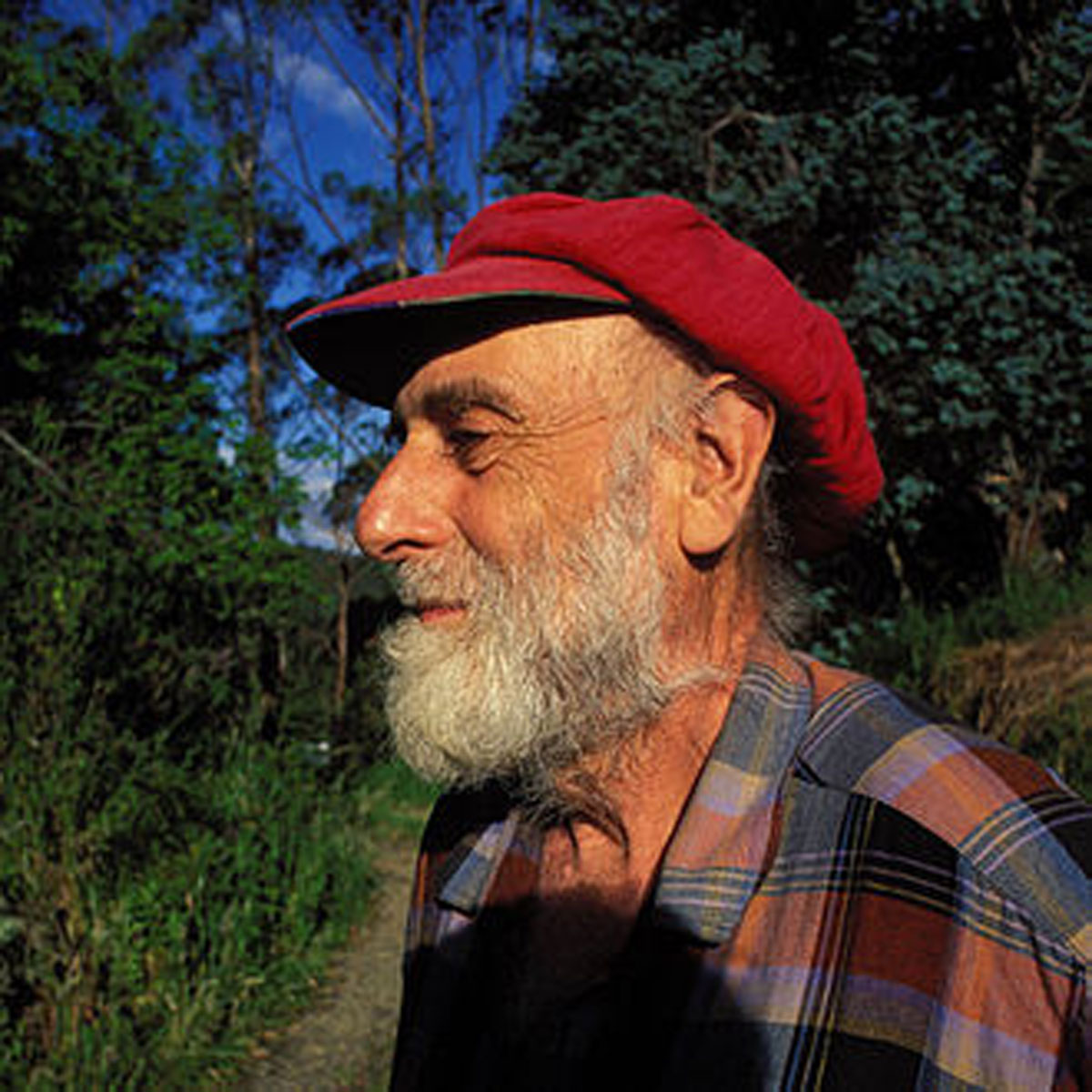
When Hundertwasser turned his attention away from painting to architecture in the 1950s, he saw the use of straight lines as an “enslavement of humans by the sterile grid system of conventional architecture and by the output of mechanised industrial production”.
Using natural features of the landscape as a framework for his unconventional designs, the artist/architect therefore embarked on projects that would fulfil his ambition of creating a new style of architecture, and in the Landstrasse district of Vienna he created the most famous building of them all – the Hundertwasserhaus.
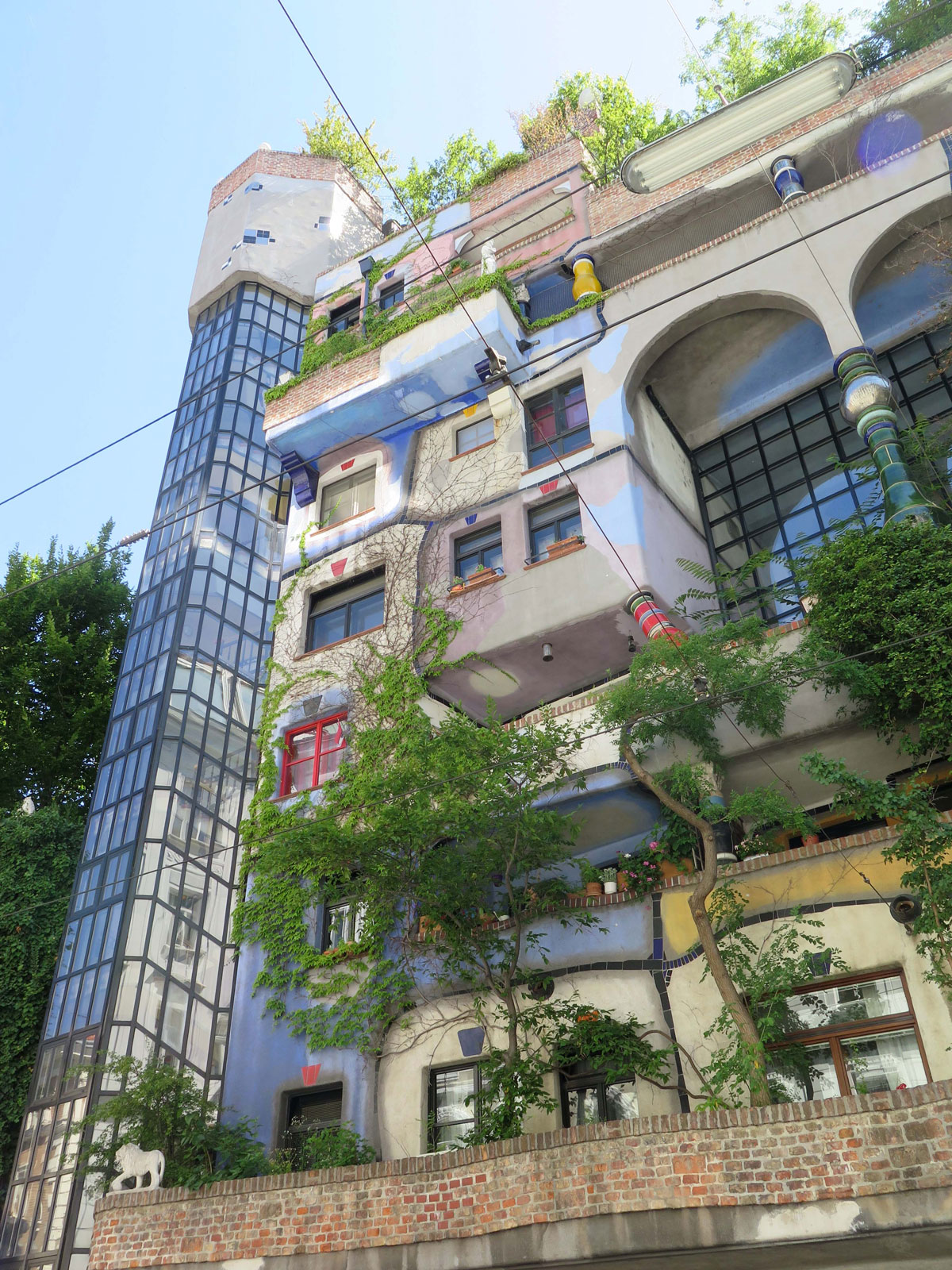
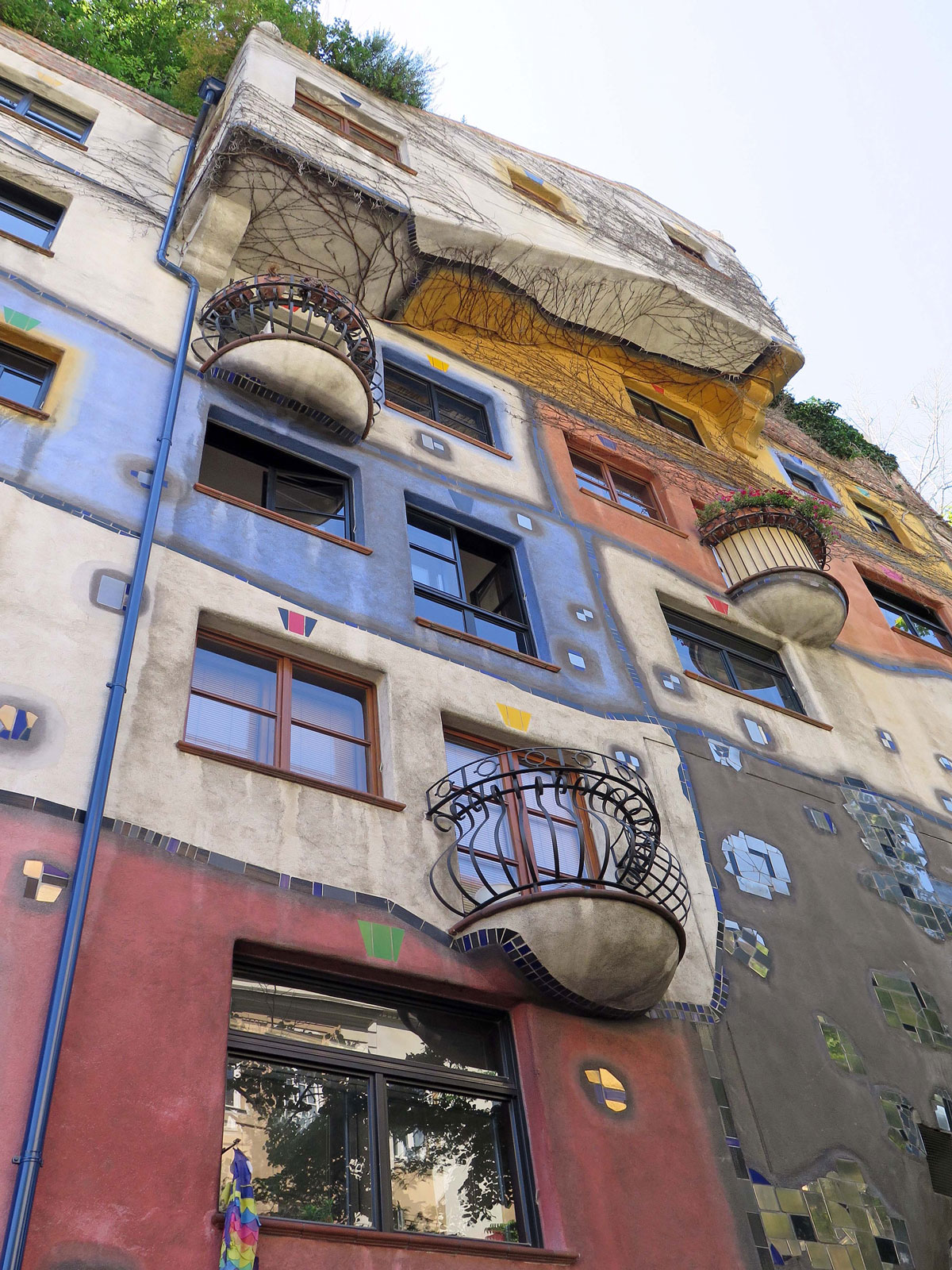
After being commissioned by the Mayor of Vienna to design a new housing project at the junction of Lowengasse and Kegelgasse, he enlisted the help of another architect, Josef Krawina, to implement the scheme. The building, which consists of 53 apartments, 4 offices, 16 private terraces and 3 communal terraces was completed in 1986. The eccentric design has all manner of shapes incorporated into it, and if it wasn’t for practical requirements, there wouldn’t be a straight line in sight. It also features some 250 trees and bushes which seem to be growing in the most awkward of places. To be honest, it’s easier to show you what the building looks like rather than trying to describe it.
-
- The Hundertwasser-Krawina House
-
- The Forecourt
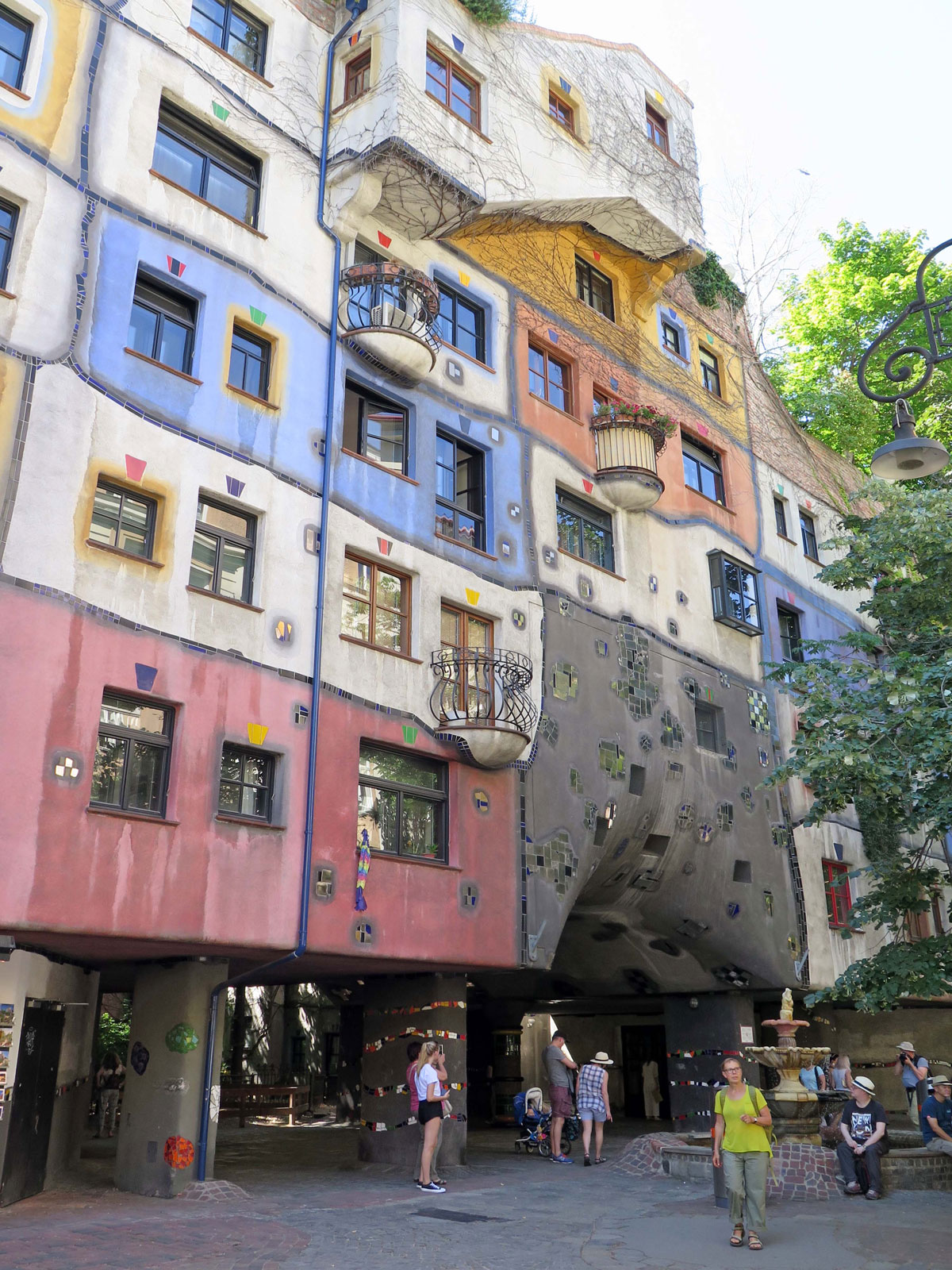
-
- The Facade
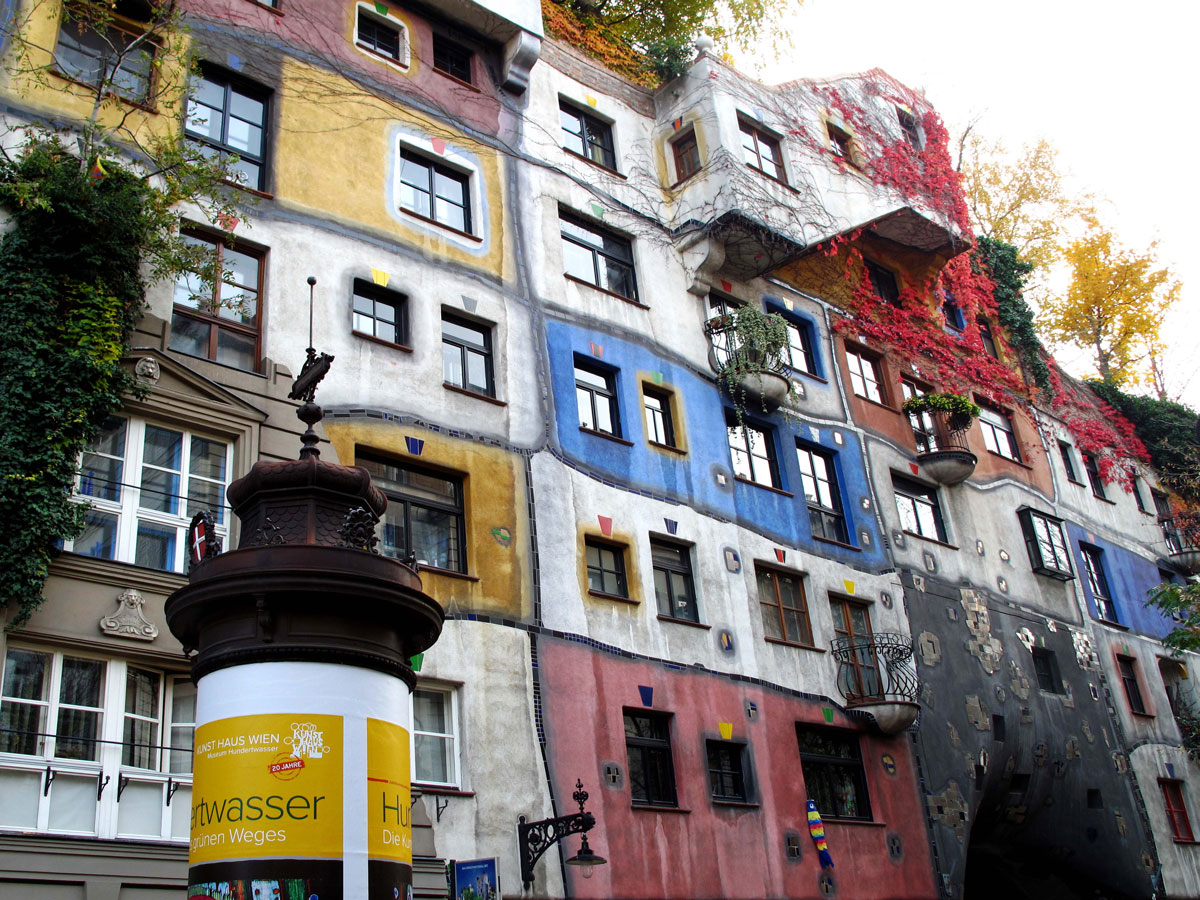


On the opposite side of the street to the Hundertwasserhaus is a former tyre factory that has been transformed into Hundertwasser Village.
The architect’s famous building across the road had started to attract large numbers of people, and was becoming a hindrance for the factory owner, Klaus Kalke. At the same time, Hundertwasser would have liked to have shown visitors what the inside of the apartment building was like, and so the two men got together and agreed to turn the factory into a ‘village’.
The village opened in 1991 with Hundertwasser himself describing it as “something like a romantic narrow oriental bazar”. I’m not sure I would go that far as it was a bit too touristy for me. Having said that, it’s free to go in and does have all of Hundertwasser’s madcap designs everywhere.
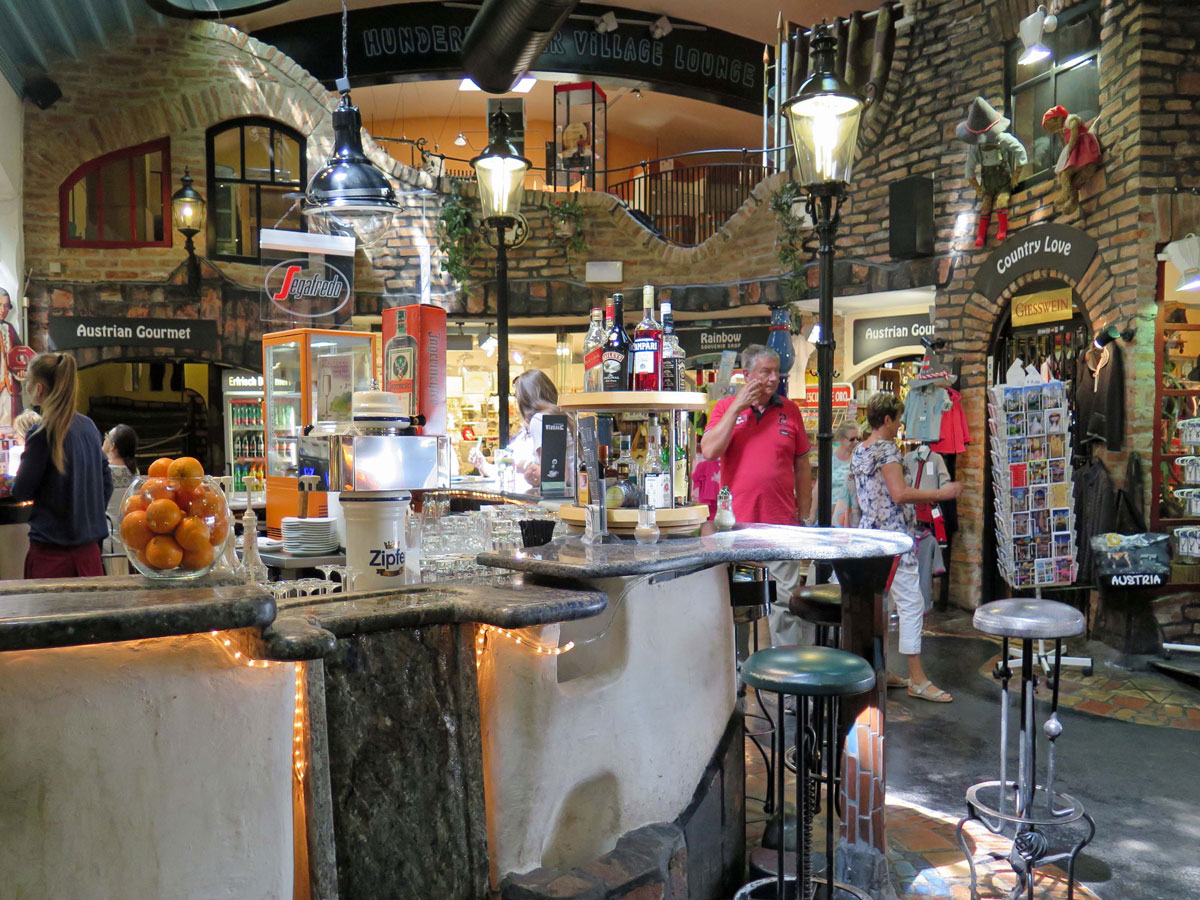
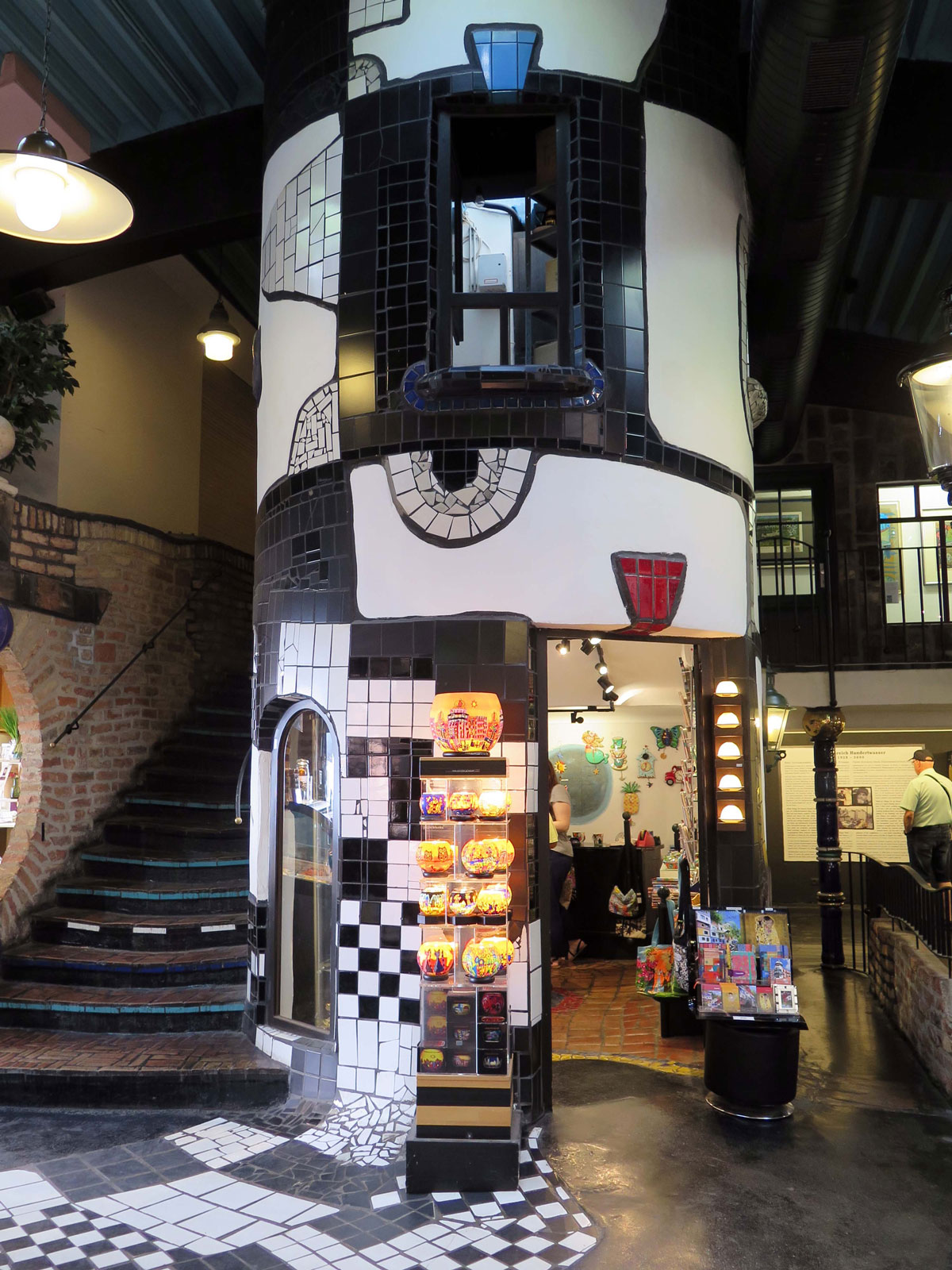
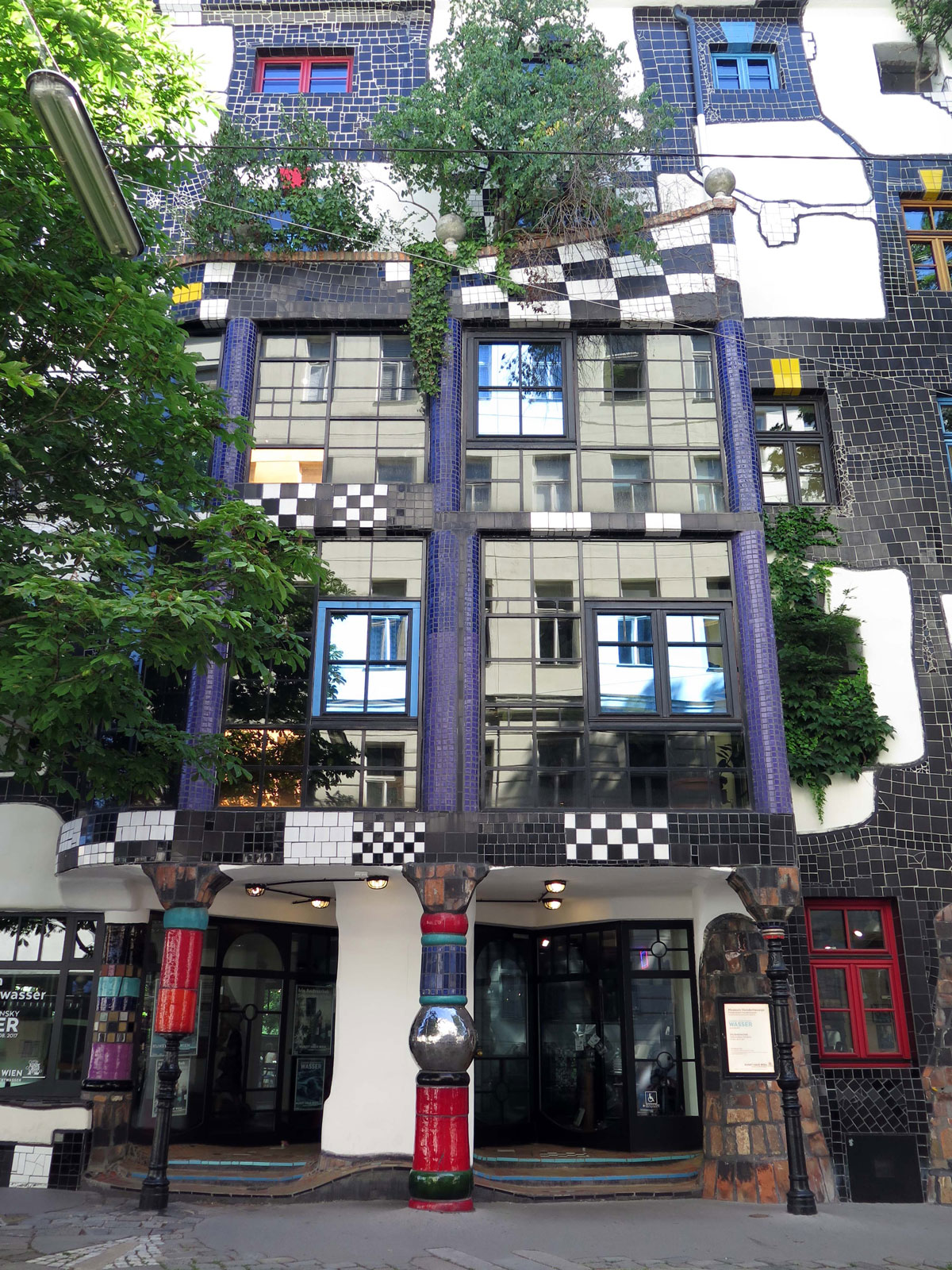
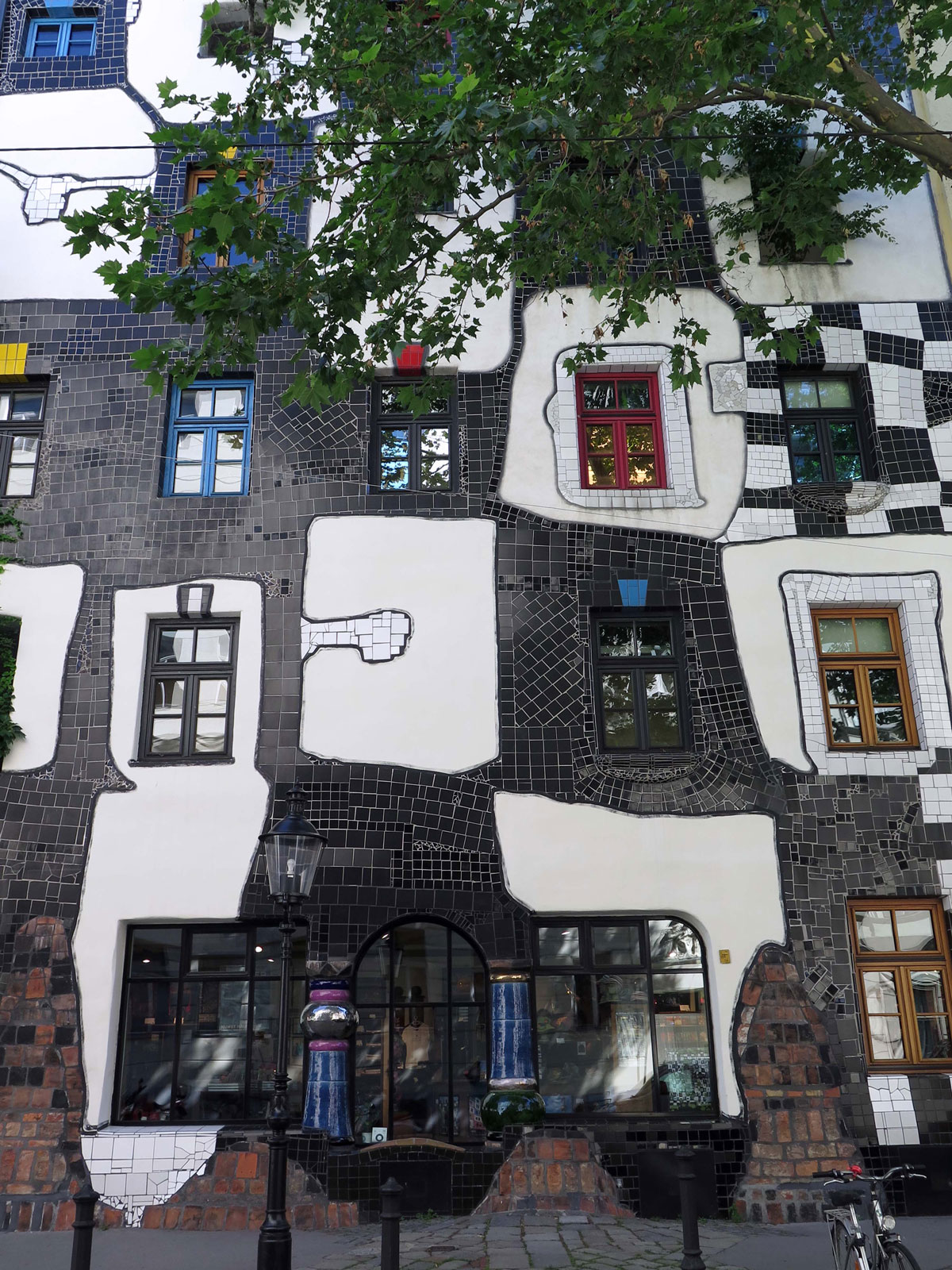
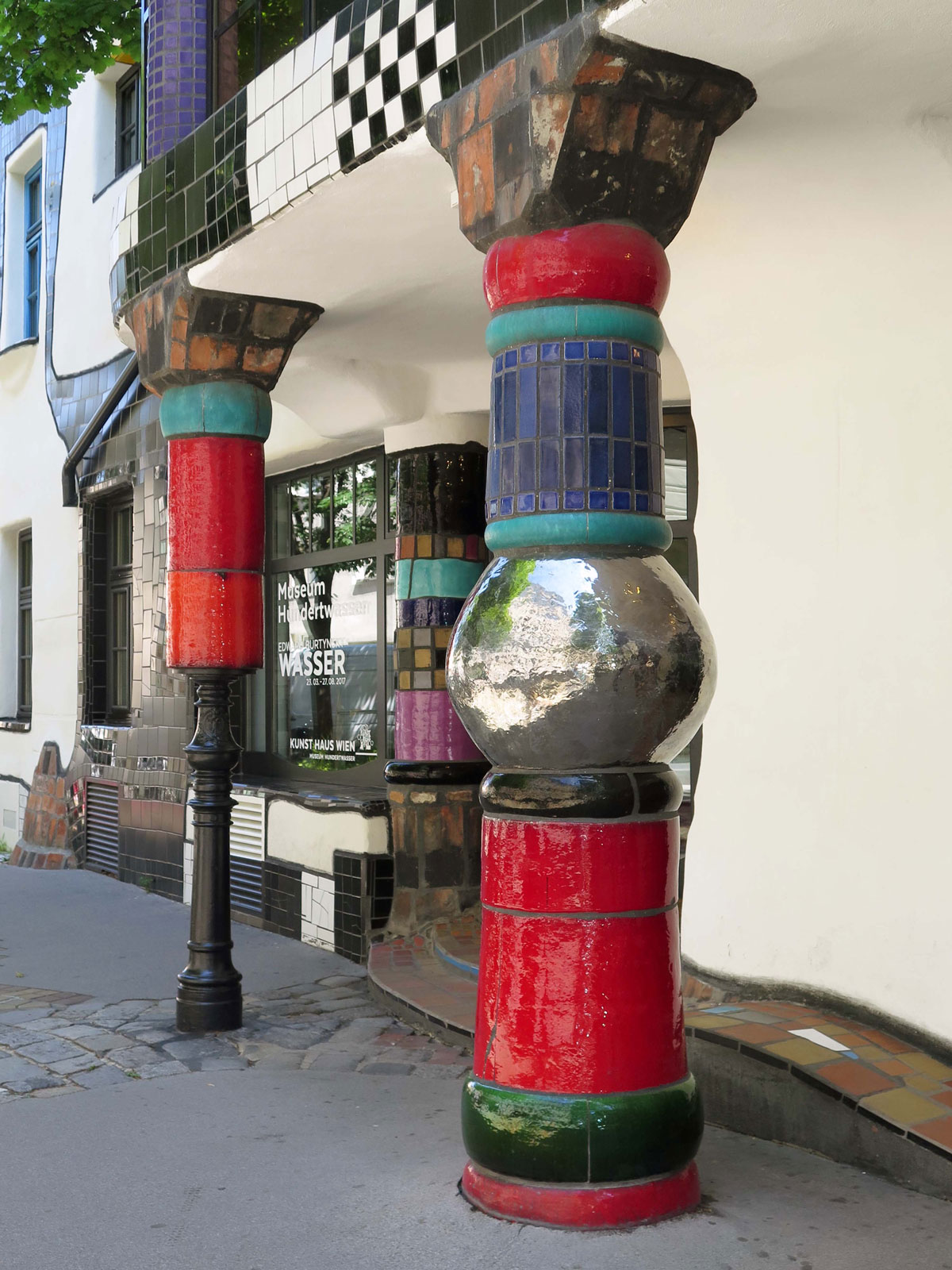
Far more interesting in my view is the Kunsthaus, a five minute walk away in Untere Weissgerberstrasse. Another former factory, this time for making furniture, it is the only museum housing a permanent exhibition of Hundertwasser’s works. The conversion was also designed by the flamboyant architect himself and carried out between 1989 and 1991.
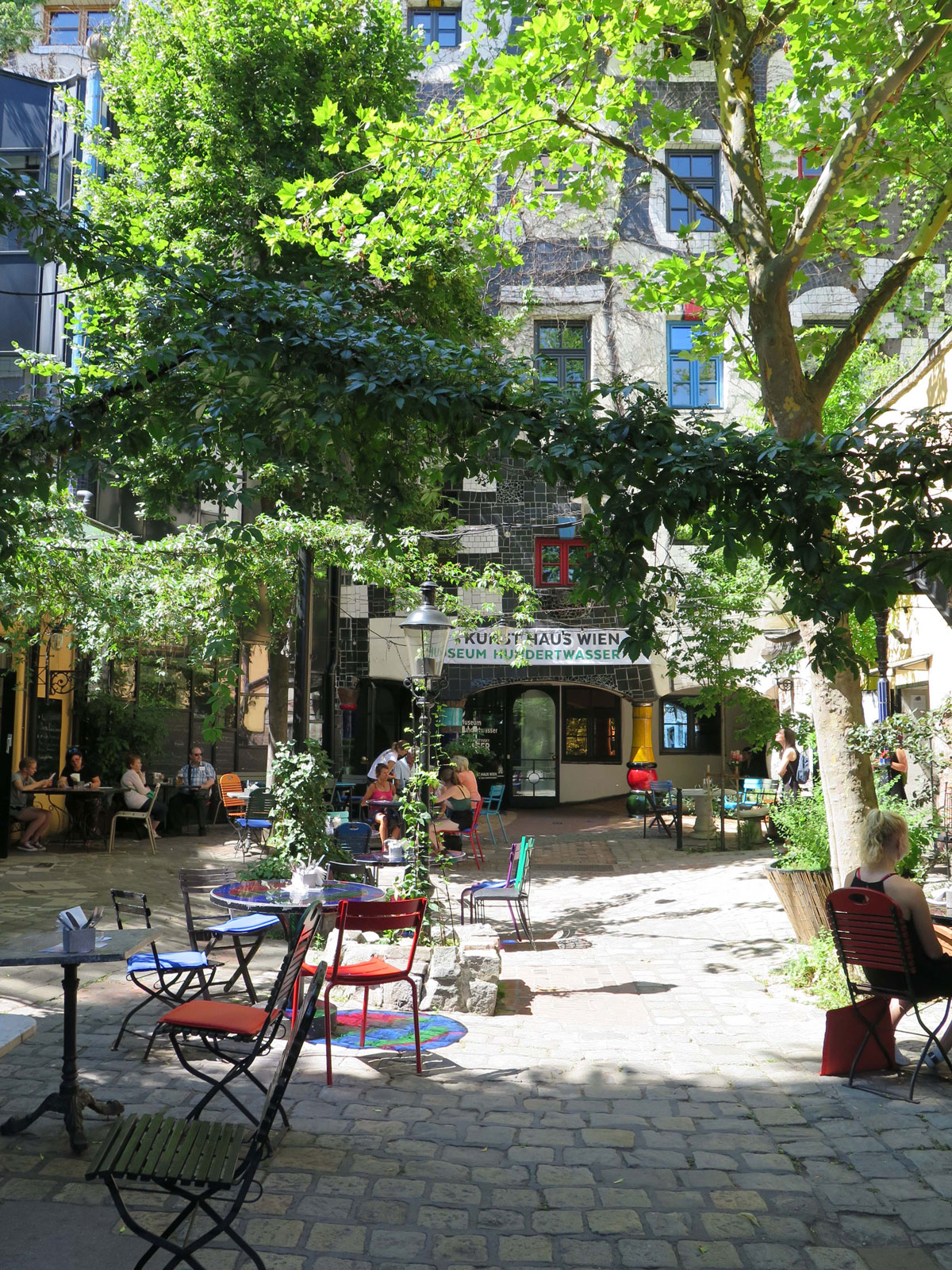
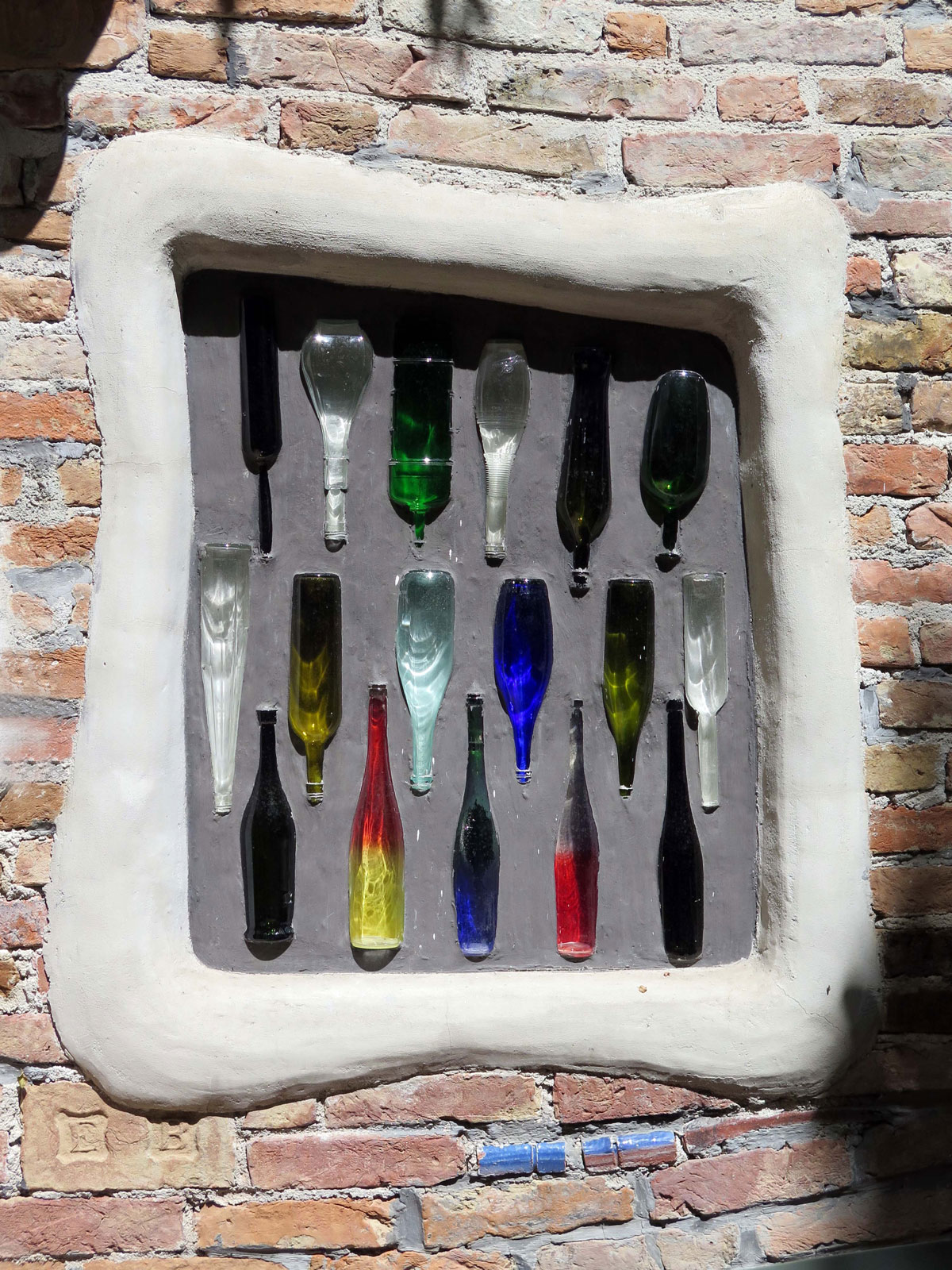
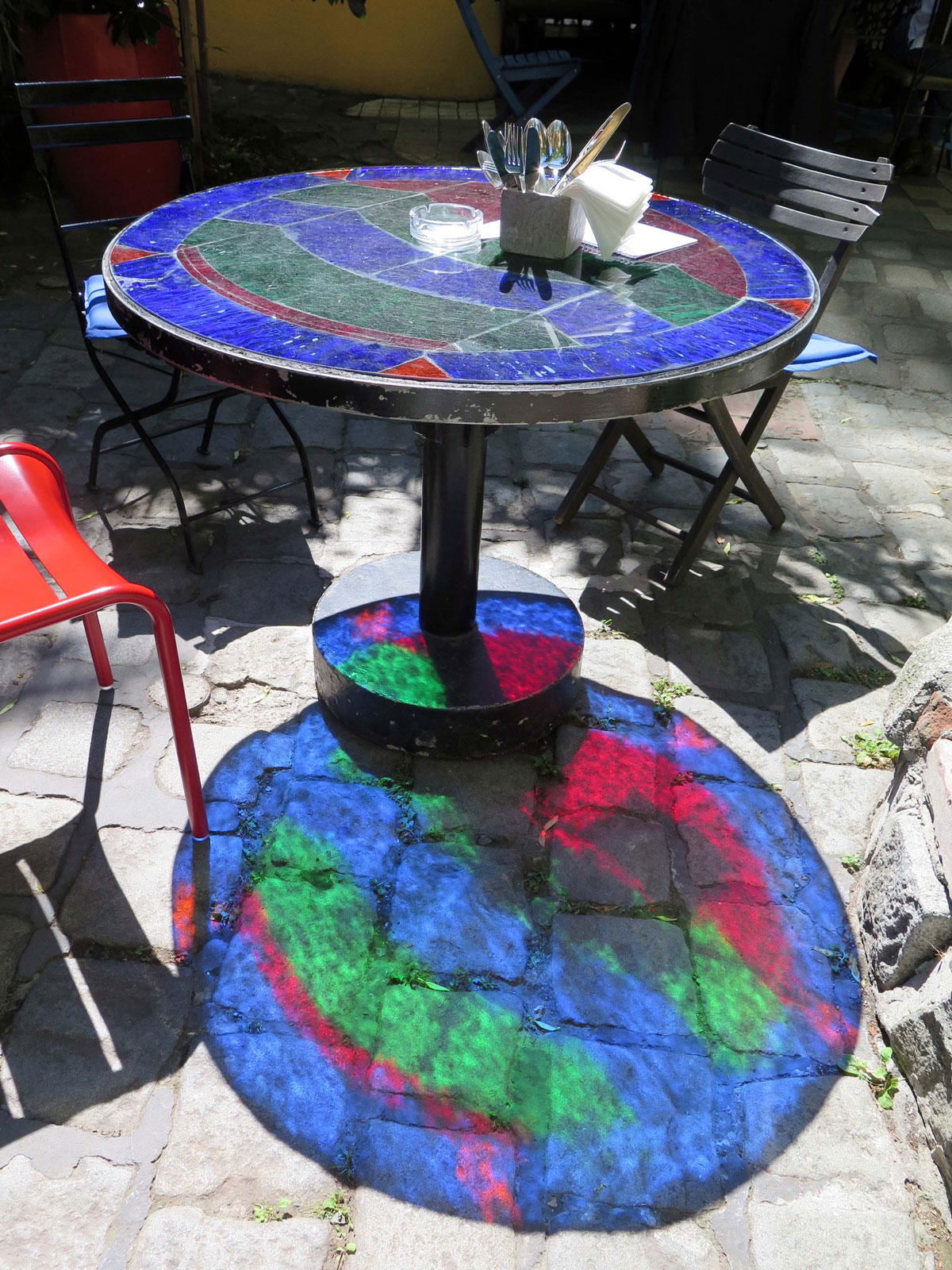
The usual wavy lines and bold colours are complemented by lots of chequered mosaics and coloured glass, and after you’ve finished looking around, you could do worse than have a relaxing drink in the sunny courtyard.
The museum is a private enterprise and consequently there is an admission charge, but if you’re a fan of Hundertwasser’s quirky designs, then it’s money well spent in my opinion.
-
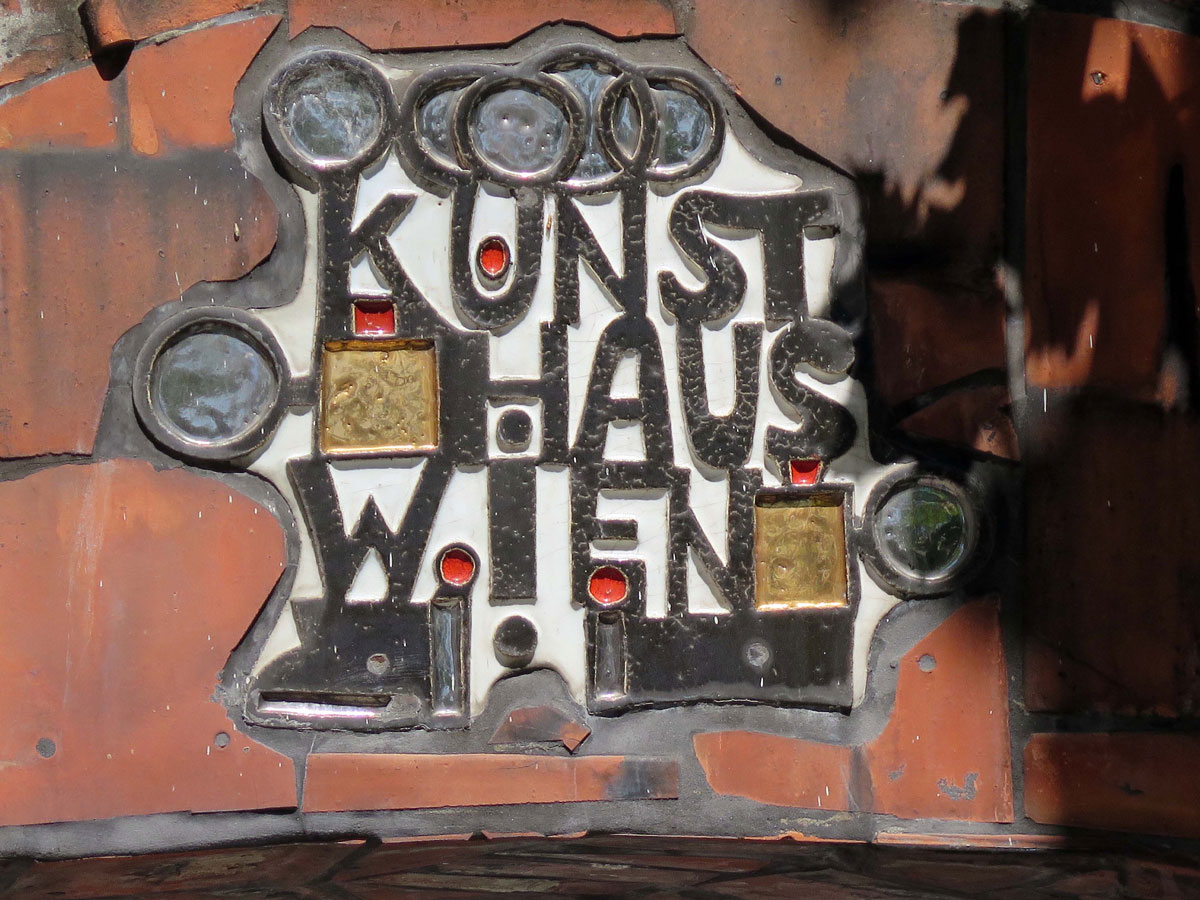
- The Kunst Haus
-
- The Front Entrance
-

- The Cafe
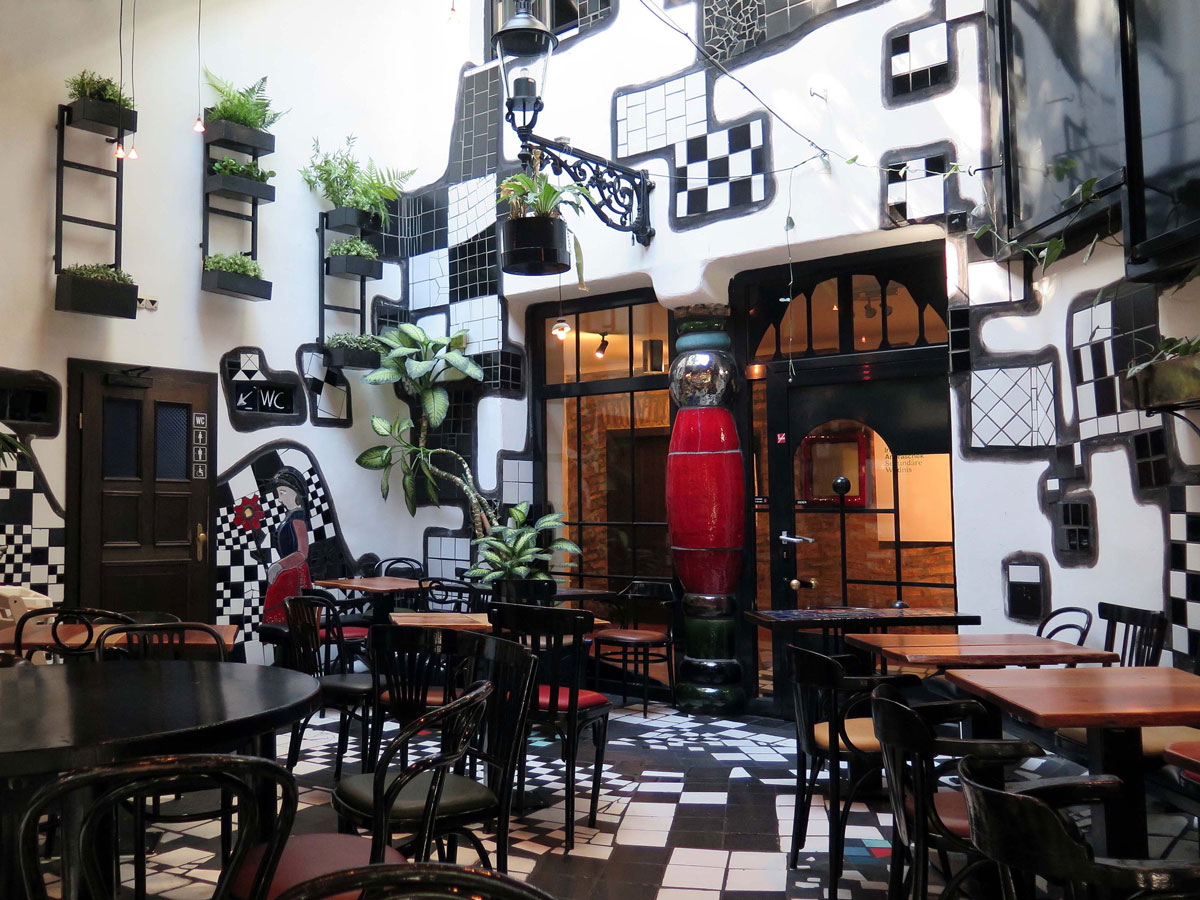
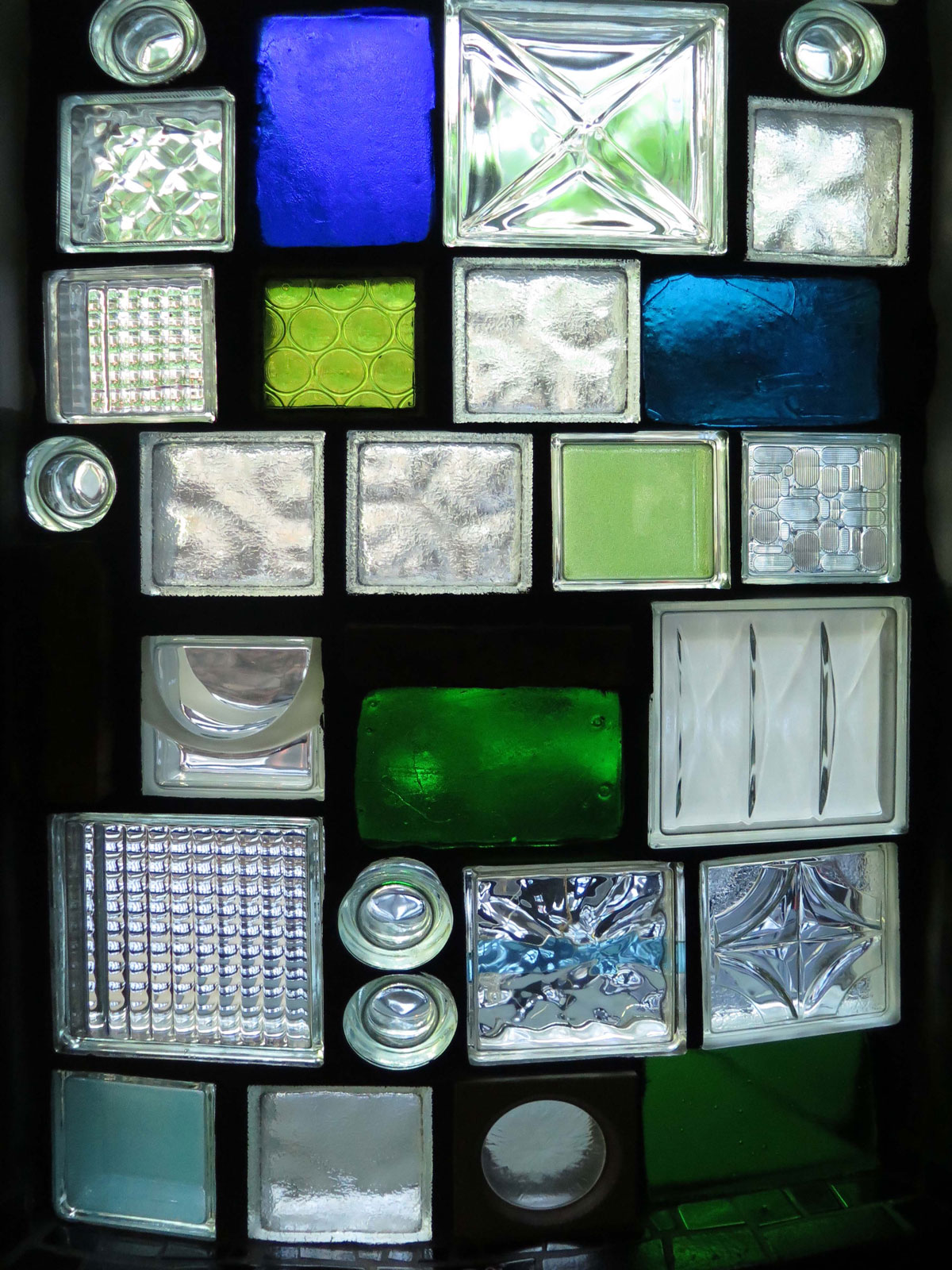
-
- The Cafe Courtyard
POSTED – MAY 2023
Originally posted 2023-05-18 15:48:19.
Well, that was certainly very different but in the middle of so much classical architecture there’s always room for the quirky
The complete opposite to classical Vienna, but it’s another reason I got to like the city very much
The Village backdrop one, not the counter bits but the buildings, minded me of my Nannie’s house…long gone now… but I always felt it was one ‘clearance’ here that should never have happened. It was this old cottage/what we call/ land rather, that had been home to bakery girls way back in the 1800s. The bakery was out the back of it and there is still a bakery there to this day but all modern, where the cottage was is now just a carpark. Anyway by the time she married my grandad, it had been turned into four little flats, round which occupants worked their way till they got to the 2 bedroomed one, with an indoor loo–lol. But there were little shops and booths beside it. Anyway the image reminded me of it all.
I’m glad it’s brought back memories for you Shey. Good memories are priceless aren’t they?
Indeed they are.
Wow, this guy was a real visionary wasn’t he? Quirky is the word, but I can see why it appeals. Again, it’s so good to have these slide shows we can look through to get a really good feel of Hundertwasser’s work and style. In my view, straight lines are overrated! 🙂
I like buildings that are different, but not all of them are practical from a living or working perspective if I’m honest. Mind you, it certainly helps to break up the mundane and dreary architecture that we see everywhere else.
Don’t they just? Have you ever seen the house in the outskirts of Oxford with the shark sticking out of the roof? I used to take all my visitors to see that many moons ago, and they all reacted in the same way – an amusing mix of astonishment and bemusement along with a huge smile! 🙂
I’ve seen pictures of it, but never in real life. It certainly stops people in their tracks doesn’t it?
I love the creativity of Hundertwasser although I’m not sure I’d want to live here – too much of an assault on the eyes to want to face constantly I suspect 🙂
Not to mention the hoards of visitors 🙂
Oh yes, that too!
Great post Malc! Did not know this artist/architect but I’ve learned something new. Cheers Malc. All the best.
You may like his bold colours Francesc but I’m not so sure you would agree with him about straight lines, but perhaps he was thinking architectually when he said that.
Possibly Malc…
I liked the Hundertwasser houses at first, but I’m glad I don’t have to live in or near one, as I think they would be tiresome after the novelty wears off. Also, his buildings are said to be expensive to heat, and in constant need of repair.
Living somewhere like this isn’t necessarily the same as visiting it that’s for sure Don, and I’m not surprised that he chose to live somewhere completely different.
There’s interesting toilets in Kawakawa all due to Hundertwasser wonderfully artistic flair. We need more creative quirkiness in our world. https://en.wikipedia.org/wiki/Hundertwasser_Toilets
Thanks Suzanne. I knew he went to live in New Zealand and also died there I believe. There are similar toilets (though not the same of course) in the Hundertwasser Village in Vienna, but it’s more than possible that those in Kawakawa were there first.
Yes, he died in 2000. I would certainly enjoy seeing his work in Vienna, so thanks for sharing it.
I’m glad you enjoyed reading it 🙂
This is a whole new level of ‘street art’ Malc and I love it. I love quirky things and bright colours and these buildings are amazing – I particularly like the black and white cafe. I’ve never heard of the artist and I’m never likely to see the buildings for myself so thank you for a fascinating post 🙂
I knew that if anybody would appreciate this post Eunice, it would be you 🙂
Could do with him coming over here and brightening up some of the buildings in Manchester 🙂
He’d have areal job on his hands Eunice because he’s dead 🙂
I like the Hundertwasserhaus, it’s just so imagination brought to life. Not so sure about the village. I guess where ever people are drawn, something will pop up for them and their tourist spends. Slightly cynical of me,perhaps?
It’s the commercial world that we live in I suppose, but I’m as guilty as everyone else when I’m looking through a shop to take a book home about somewhere I want to read more about.
How about you, Malc?
Well, I’ve never taken all my clothes off and ran around naked when it’s a full moon, but I’ve seen people who have if that’s what you mean. If you’re asking which side of the genius/mad fence I’m on, then if say that I’m certainly no genius, then I think that answers your question 🙂
A wonderful post, as always.
I didn’t know this artist and architect nor the part of the city that celebrates him💝
That’s made my day in that case Luisa. Thank you so much for continuing to follow my ramblings 🙂
I always learn fascinating things wandering around with you 💗
You really are so kind Luisa, and by the way, the floods in Emilia-Romagna are not looking good are they? 💙
They are real tragedies: the fault lies with the climate and also, at times, with man’s carelessness. 💔
I’m no tree hugger Luisa, but I agree that unless we start to live WITH nature rather than AGAINST it, then I guarantee that nature will win.
So true…🌪
It’s always good to have a conversation with you Luisa. Have a lovely weekend 💙
Wishing you the same 🤗
Well written and fascinating. The line dividing genius and madness is thin. 😉🤓🤔
And which side of the line are you on Pat? 🙂
Depends on the moon, Malc.🌜🌛
Ha1Ha! Don’t tell me, I don’t want to know 🙂