Warning: Creating default object from empty value in /home/sites/30b/a/a8be13db6d/public_html/wp-content/plugins/zanmb/reduxframework/ReduxCore/inc/class.redux_filesystem.php on line 29

Warning: Cannot modify header information - headers already sent by (output started at /home/sites/30b/a/a8be13db6d/public_html/wp-content/plugins/zanmb/reduxframework/ReduxCore/inc/class.redux_filesystem.php:29) in /usr/share/php/wp-stack-cache.php on line 1971

Warning: Cannot modify header information - headers already sent by (output started at /home/sites/30b/a/a8be13db6d/public_html/wp-content/plugins/zanmb/reduxframework/ReduxCore/inc/class.redux_filesystem.php:29) in /usr/share/php/wp-stack-cache.php on line 1972

Warning: Cannot modify header information - headers already sent by (output started at /home/sites/30b/a/a8be13db6d/public_html/wp-content/plugins/zanmb/reduxframework/ReduxCore/inc/class.redux_filesystem.php:29) in /usr/share/php/wp-stack-cache.php on line 1973

Warning: Cannot modify header information - headers already sent by (output started at /home/sites/30b/a/a8be13db6d/public_html/wp-content/plugins/zanmb/reduxframework/ReduxCore/inc/class.redux_filesystem.php:29) in /usr/share/php/wp-stack-cache.php on line 1971

Warning: Cannot modify header information - headers already sent by (output started at /home/sites/30b/a/a8be13db6d/public_html/wp-content/plugins/zanmb/reduxframework/ReduxCore/inc/class.redux_filesystem.php:29) in /usr/share/php/wp-stack-cache.php on line 1972

Warning: Cannot modify header information - headers already sent by (output started at /home/sites/30b/a/a8be13db6d/public_html/wp-content/plugins/zanmb/reduxframework/ReduxCore/inc/class.redux_filesystem.php:29) in /usr/share/php/wp-stack-cache.php on line 1973

Warning: Cannot modify header information - headers already sent by (output started at /home/sites/30b/a/a8be13db6d/public_html/wp-content/plugins/zanmb/reduxframework/ReduxCore/inc/class.redux_filesystem.php:29) in /home/sites/30b/a/a8be13db6d/public_html/wp-includes/feed-rss2.php on line 8
Yorkshire – Easymalc's Wanderings https://www.easymalc.co.uk I’d be unstoppable if only I could get started Sun, 24 May 2026 13:59:20 +0000 en-GB hourly 1 https://wordpress.org/?v=7.0.4 https://www.easymalc.co.uk/wp-content/uploads/2019/09/cropped-easy-malc-logo-32x32.jpg Yorkshire – Easymalc's Wanderings https://www.easymalc.co.uk 32 32 140253175 Is Hull Really a ‘Crap’ Town? – Pt 4 Minsters, Museums and Mayhem https://www.easymalc.co.uk/is-hull-really-a-crap-town-pt-4-minsters-museums-and-mayhem/ https://www.easymalc.co.uk/is-hull-really-a-crap-town-pt-4-minsters-museums-and-mayhem/#comments Fri, 07 Nov 2025 16:42:51 +0000 https://www.easymalc.co.uk/?p=19644 Originally posted 2023-10-22 09:35:56.

The post Is Hull Really a ‘Crap’ Town? – Pt 4 Minsters, Museums and Mayhem appeared first on Easymalc's Wanderings.

]]>

Is Hull Really a 'Crap' Town? - Pt 4 Minsters, Museums and Mayhem

Christmas came early for the Tigers yesterday because the Robins didn’t turn up until the match was all but lost. Fans who travel a long way to see their team play at least deserve to see the players try their best even if it’s not good enough, especially when the weather makes it difficult for travelling. There were quite a number of fans from Bristol who didn’t make it in time for the start of the match, and some didn’t make it at all – but at least they didn’t miss much.

I hope those who did make it got home ok because it was snowing when we went to bed last night, and the forecast wasn’t looking that great for our final day here either. As it was the week leading up to Christmas, I thought we could try and get into the Christmas spirit and take the short train ride to the historic market town of Beverley which has always appealed to me, and I probably won’t get another chance.

The good news was that we didn’t have much more snow after we went to bed, but the not so good news was that the temperatures had plummeted again, and it was decidedly dodgy underfoot as we clambered into the taxi that took us to Paragon station. It was the same when we arrived at Beverley, but it was a bit warmer as there was a lot more cloud around.

At the station there was a machine that sold maps for a pound, a practice that had been introduced in lots of places, but it’s like putting your money into an amusement arcade slot machine. Sometimes you win but most of the time you lose, and after trying my luck, we headed off towards Wednesday Market a quid lighter – and no map.

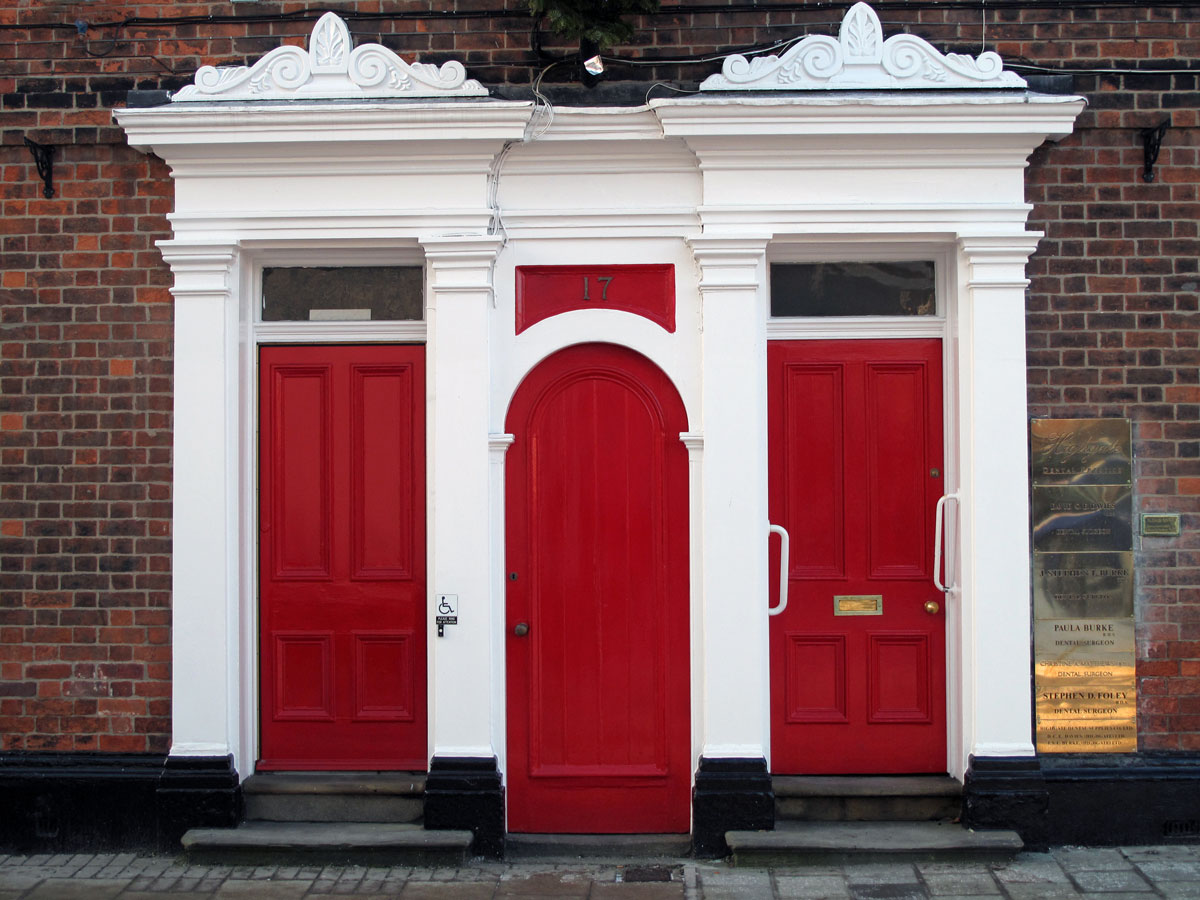
Eye-Catching Doorways in Wednesday Market

Hull is by far the biggest town in the East Riding of Yorkshire, but Beverley is the county town, which shows how significant it was in the past. Lying around 10 miles north-west of Hull, its history goes back beyond the Norman Conquest to the 7th century when it was part of the Anglian Kingdom of Northumbria. Without doubt, it’s a town that I would have liked to have got to know more intimately if circumstances had allowed, but that wasn’t going to be the case today.

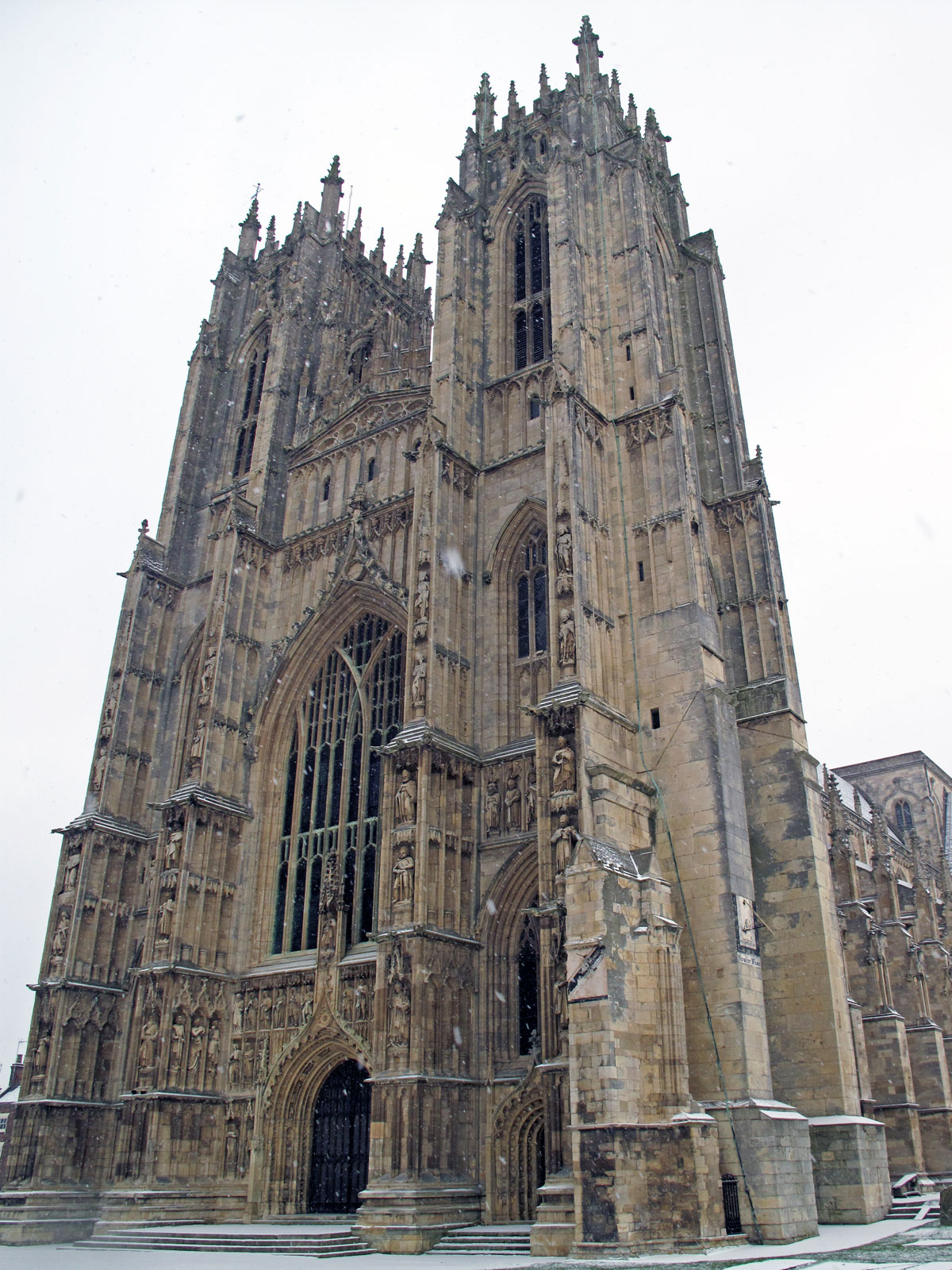
Beverley appears to get its name from the proliferation of beavers that were common in the area when John, the Bishop of York, retired to his monastery here in the early 8th century. This monastery was the forerunner of the magnificent Beverley Minster that stands majestically over the town today, and although technically it’s only a parish church, some people think of it as a rival to York Minster – at least architecturally.

It’s understandable in some ways, because it was built around the same time (13th-15th centuries) and in the same stone, – but why was such a grand church built here in the first place? Beverley may have been an important town, but it was nowhere near as important as York. The simple answer is that the site became a shrine to Bishop John who was one of the leaders of the early Northumbrian church. He was idolised within his own lifetime for performing miracles, but he was also responsible for ordaining the father of English history – the Venerable Bede. Bede later wrote an account of some of the miracles that John was said to have performed, and in 1037, after becoming canonised, he became known as St John.

Beverley Minster

As you can imagine, Beverley Minster was the one place that I really wanted to visit, but it didn’t quite work out the way I’d hoped. Firstly, being a Sunday morning, there was a service in progress (which I knew there would be), and so we headed back into the historic town centre with the idea of coming back when the service was over. It had already started to snow even before we left the Minster, but by the time we got to Butcher Row it was snowing quite heavily.

Butcher Row

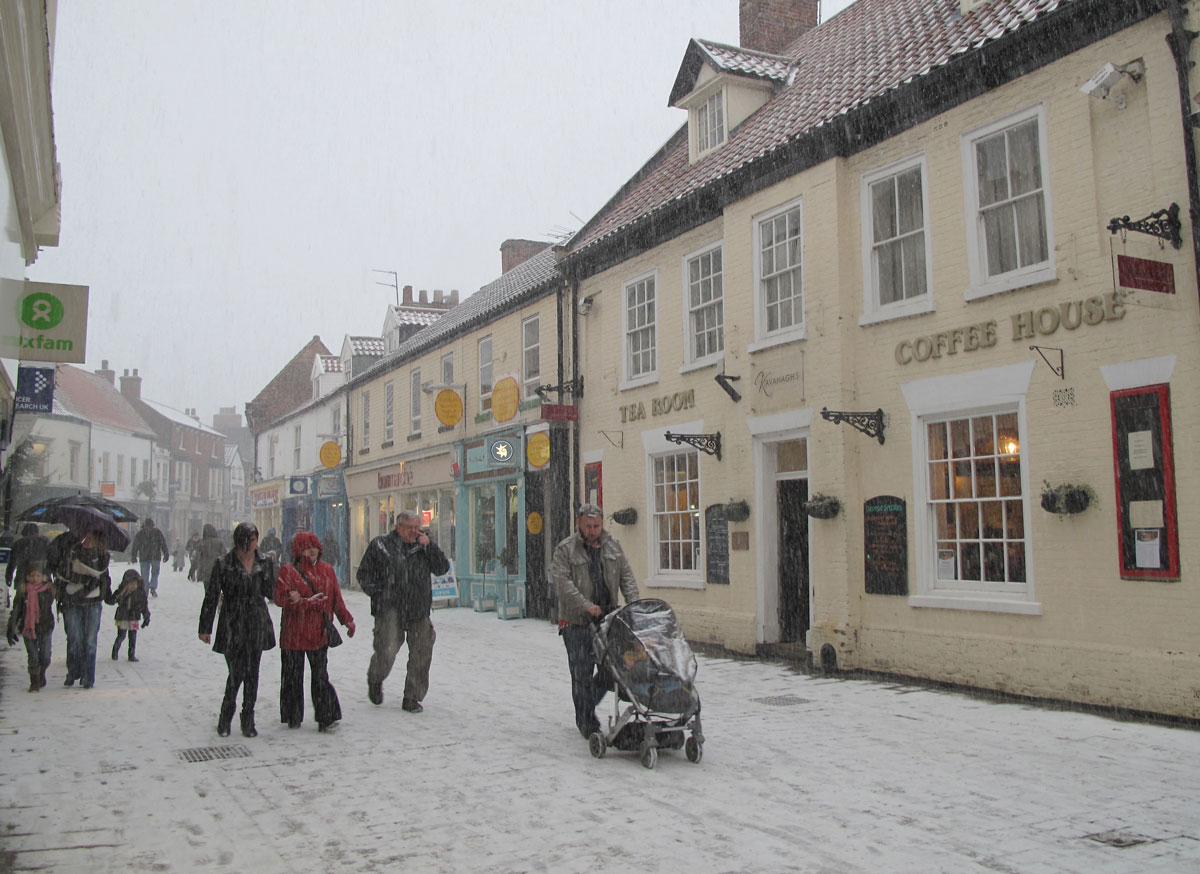
It wasn’t really sightseeing weather to be honest, and the most sensible thing to do was to take respite in the Kavanagh Tea Rooms and watch shoppers struggling with their last minute Christmas shopping.

Kavanagh's Tea Rooms and Coffee House in Toll Gavel

After warming up with some hot drinks and bacon paninis, we wrapped up and headed back towards the Minster where the service was just ending. I’d like to show you some pictures of the inside, but I haven’t got any, and that’s because, as the trains on the Hull to Scarborough branch line only run once an hour, we felt that discretion was the better part of valour, and just have a quick look around the church before opting to take the next available train back to Hull.

Our trip out to Beverley wasn’t a resounding success where sightseeing was concerned I have to admit, but I always say that it’s better to see somewhere that you want to see for a short while, rather than not see it at all – and if nothing else, it did get us into the Christmas spirit.

The train was just coming in as we arrived, and we were back in Hull in no time. I think we made the right decision because there was still some sightseeing I wanted to do in the Museums Quarter, and although it wasn’t snowing, it was bitterly cold, and Kay left me to it while she went back to the hotel to thaw out. To be honest, if she’d had her way, we would have been on the next train back home.

The Museums Quarter consists of four museums located behind locked gates in High Street. They are, the Hull and East Riding Museum, the Arctic Corsair (a former deep-sea fishing trawler), Streetlife, and the one I wanted to see the most – the Wilberforce Museum.

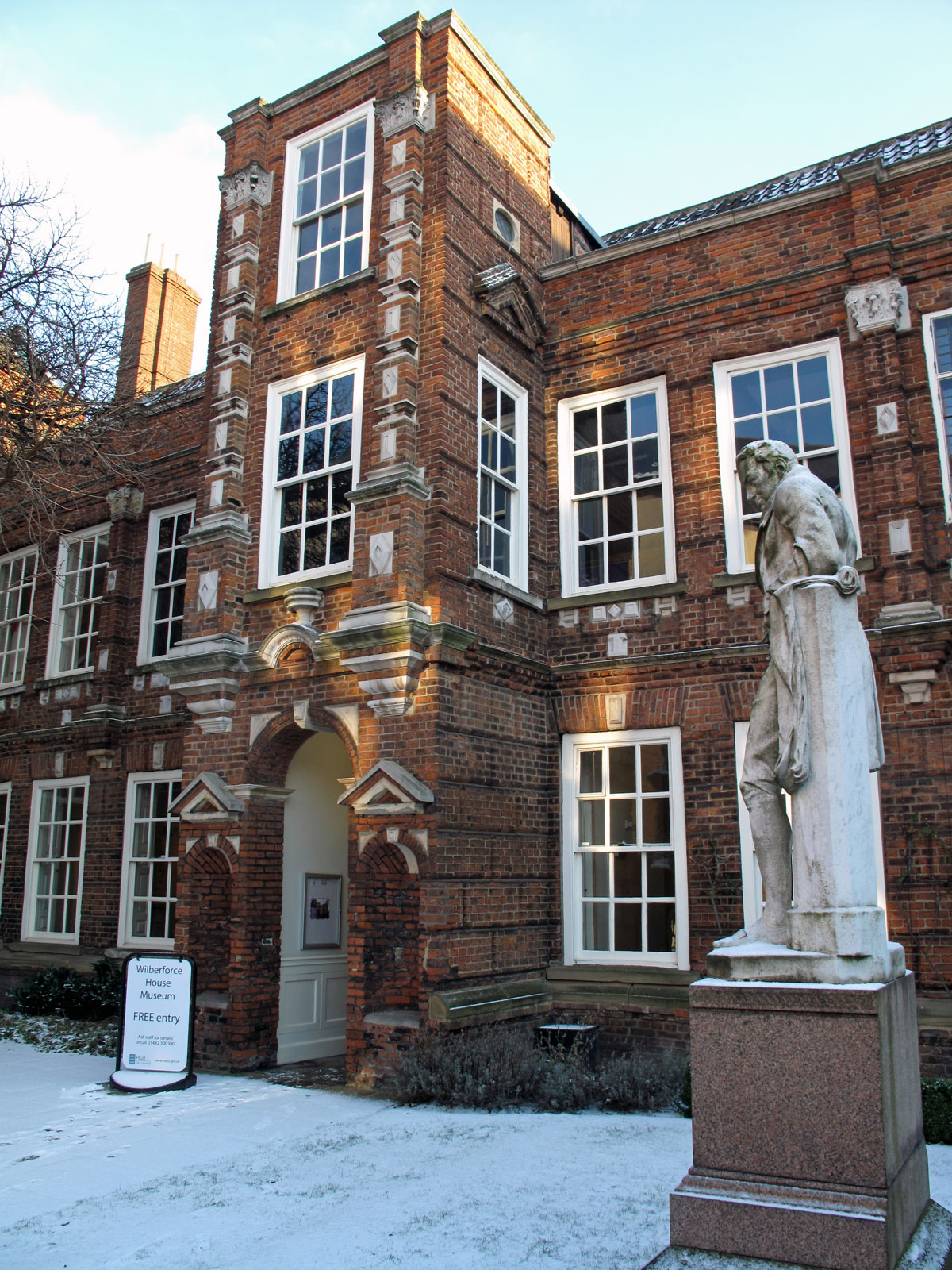
The Wilberforce Museum

The Wilberforce Museum is the birthplace of William Wilberforce, the man who is most associated with the abolition of slavery in the British Empire. Built around 1660, it is one of the oldest buildings in the city and backs on to the River Hull. It was occupied by various wealthy merchants, including William’s father, Robert, whose only son was born in an upstairs room on 24th August 1759.

There is no evidence to suggest that Hull merchants were ever involved in the slave trade, and it was his education, both at Hull Grammar School and Cambridge University, that brought him into contact with people who influenced him in religion and politics, and at the age of just 21 he became MP for Hull.

His first abolition speech was made in 1789, but it took numerous attempts and a further 18 years before his bill to abolish the slave trade was passed, but there was still a need to abolish slavery altogether. Due to ill health, it was left to others to continue the fight, and it wasn’t until 22nd July 1833, a few days before he died, that the Slavery Abolition Act was finally passed.

The story about William Wilberforce and the abolition of the Slave Trade demands more space than I can give it here, but you can see what the museum is like by taking a look at the video clip with Aled Jones below. Although Wilberforce, through his spiritual mentor, John Newton, is more associated with the hymn Amazing Grace, the clip ends with Laura Mvula singing a rendition of We Shall Overcome supported by Britain’s favourite choirmaster, Gareth Malone.

Even though slavery isn’t perhaps as inhumane as it once was, it still prevails now, and this gospel song, made famous by the American Civil Rights movement is as relevant today as it’s ever been.

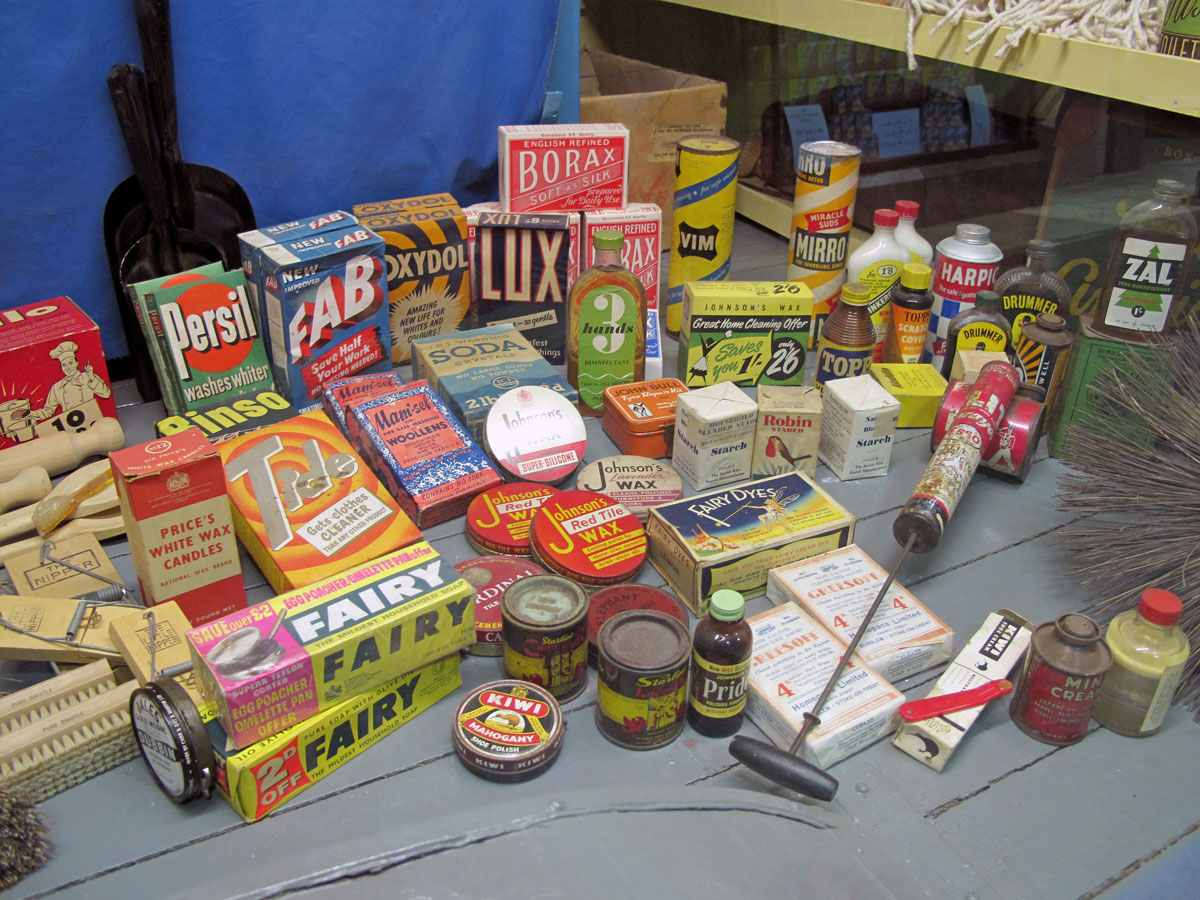
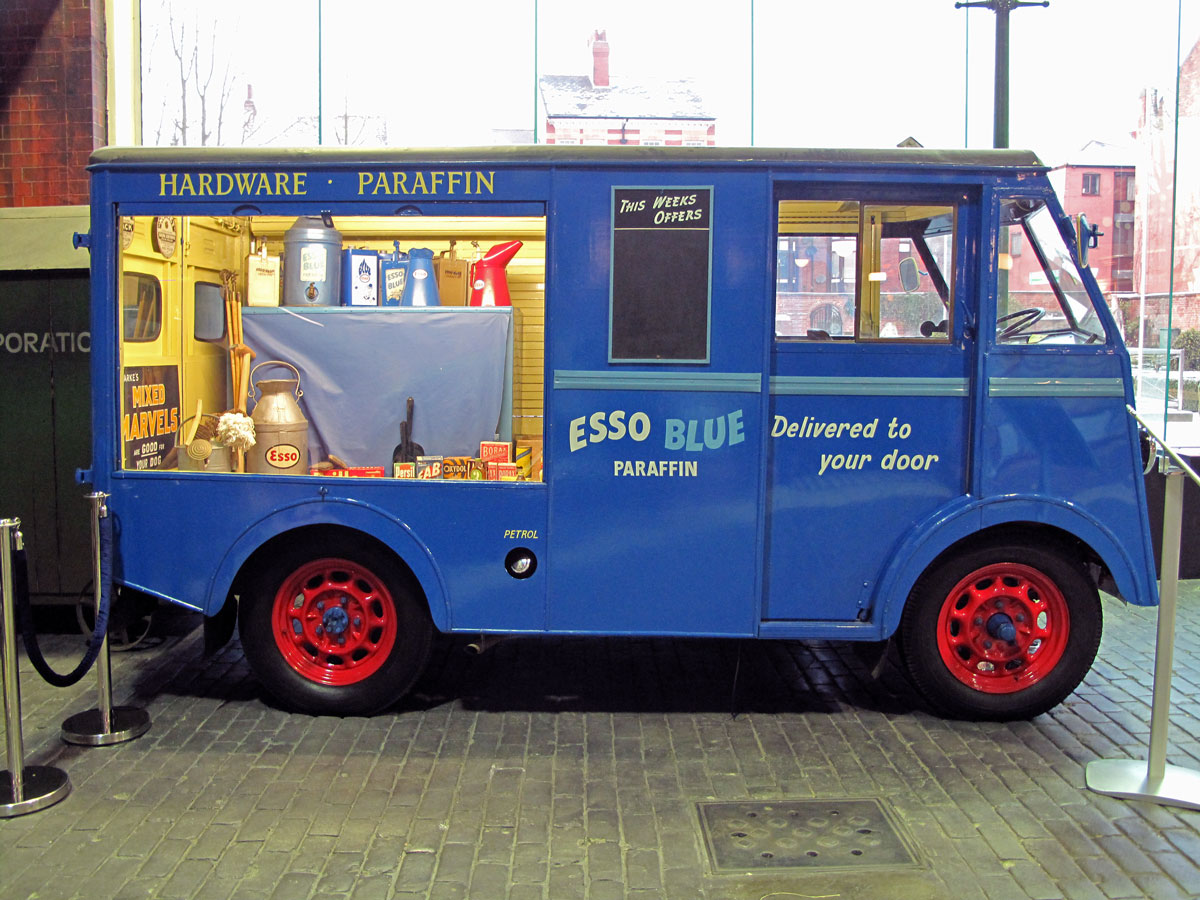
Entry to the Wilberforce Museum is free, as are all the others here, and virtually next door is Street Life, a museum, which as its name suggests, is all about everyday life in the past. It’s not unique, as I’ve visited quite a few places like this before, but the older I get, the more nostalgic I become, and it wasn’t difficult to spend a good 1½ hours in here. There were the usual different forms of transport on display including veteran cars, trams, and even the bike I had as a kid – or it looked very much like it. You can even walk down a 1940’s street and remember the time that Izal toilet paper, Robin Starch and Fairy Soap were everyday items, and it looks as though the good people of Hull were more fortunate than us because they had a van that came to their door with Esso Blue and other necessities.

One of my regular errands was to traipse up to the ironmongers for a gallon of Esso Blue for the paraffin heater. Global warming wasn’t talked about back then when the inside of the windows were often iced up – and if the coalman didn’t come, we had to rely on paraffin heaters which hardly supplied enough warmth to keep a mouse alive (of which we had plenty who made their home in our terraced house), and not only that, they smelt and were dangerous, believe you me – the paraffin heaters I mean, not the mice.

Streetlife Museum
Paraffin Delivery Van

Stationed outside the Street Life Museum in the river is the Arctic Corsair, but it’s not open to the public at this time of the year, so I shuffled off next door to the Hull and East Riding Museum. I can’t tell you whether it was any good or not because for the 20 minutes or so that was left before they shut up shop I spent talking to a chap who was looking after the place. I don’t think he’d seen anybody all afternoon, and come to think of it, neither had I. Needless to say, he was a Tigers fan and was glad to have somebody to chat to. The conversation started off with football but digressed to all manner of things, and in fact we got so engrossed in our conversation that he forgot to close the museum up, not that it really mattered because nobody was coming in.

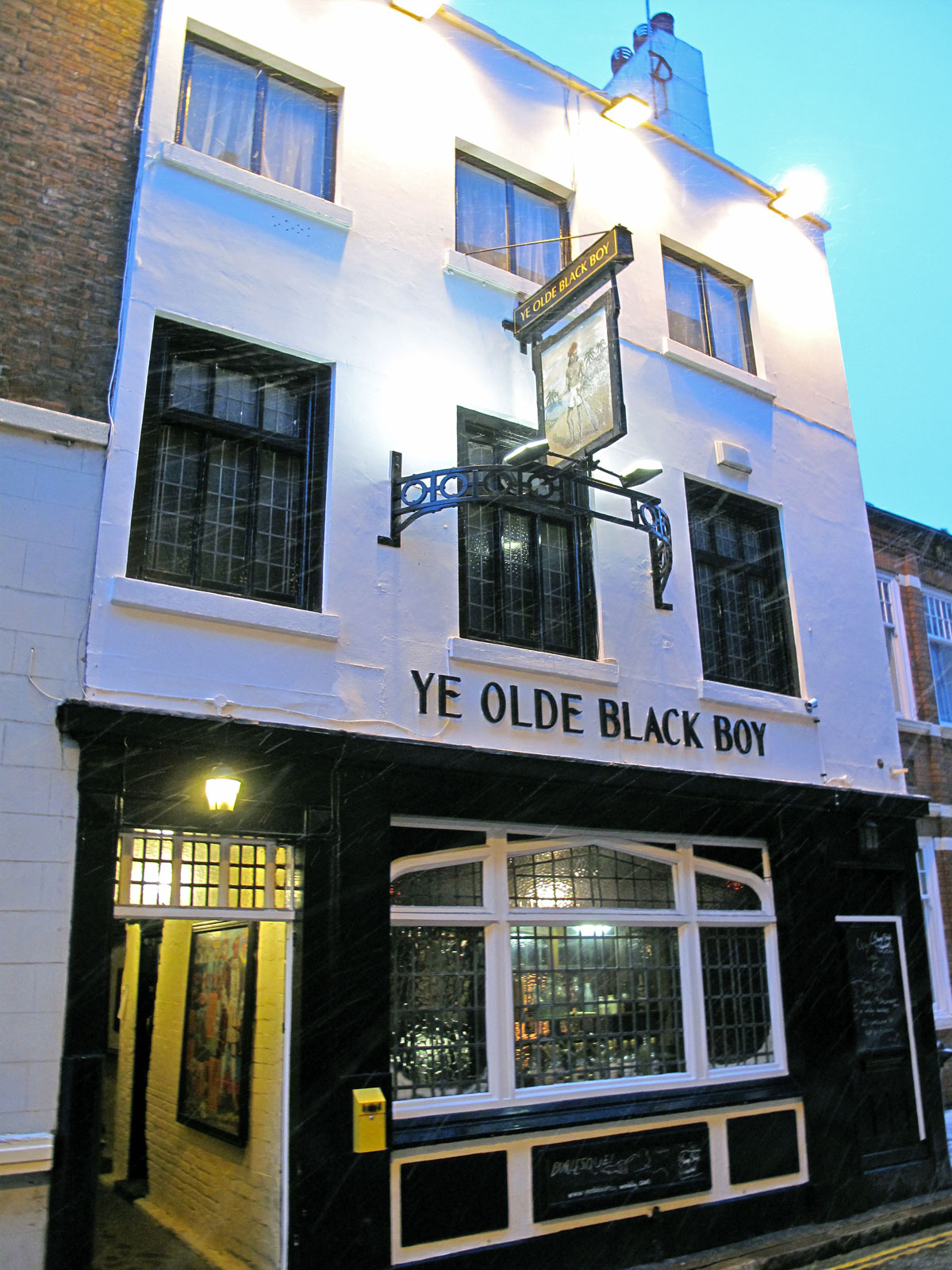
When I emerged back out into High Street – guess what? Yep! It was snowing, so there was only one thing to do, and that was to cross the threshold into Ye Olde Black Boy inn, located a few yards down the road. Licensed since 1729, it’s reputed to be the oldest pub in Hull, and whether it had the same name when William Wilberforce was alive I’m not sure, but no doubt he would have been happy to learn that its name has never had any real racial connotations as far as I’m aware.

The pub had a convivial atmosphere, but apart from the barman, I was the only one in here, and like the chap in the museum, he was only too happy to have someone to chat to. I asked him about the selection of Lindisfarne wines that were on offer which I hadn’t come across in a pub before. They came in different flavours, and being a wintry day, I thought I’d try a glass of the Black Beer and Raisin, which lets put it this way, isn’t a choice I would make again.

Ye Olde Black Boy Inn

Any sensible person would have made tracks back to the hotel by now, but I wanted to make sure I hadn’t missed anywhere that I shouldn’t have done before I did (that’s a Malcism by the way), and one of those places was the area around Trinity Church.

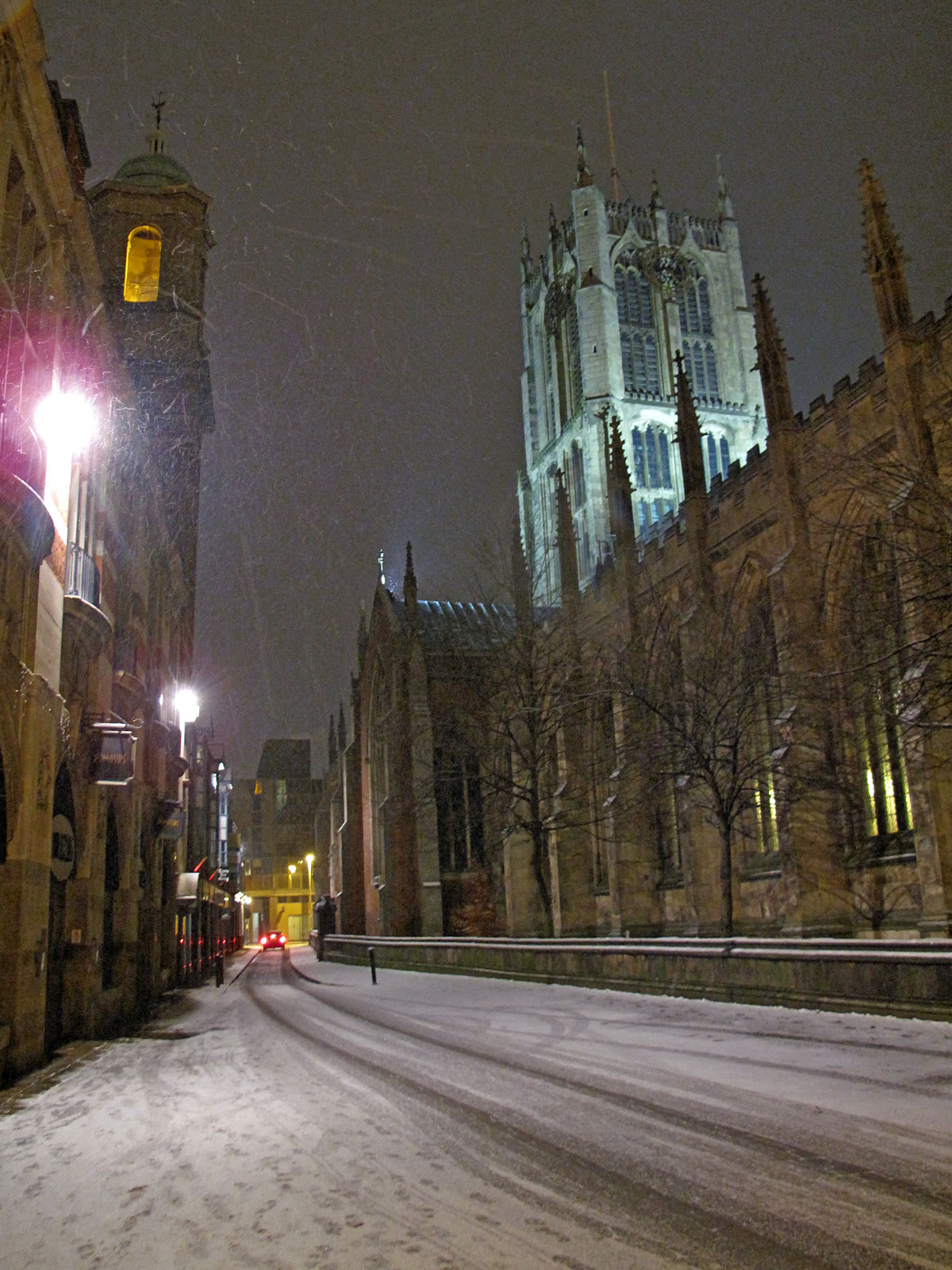
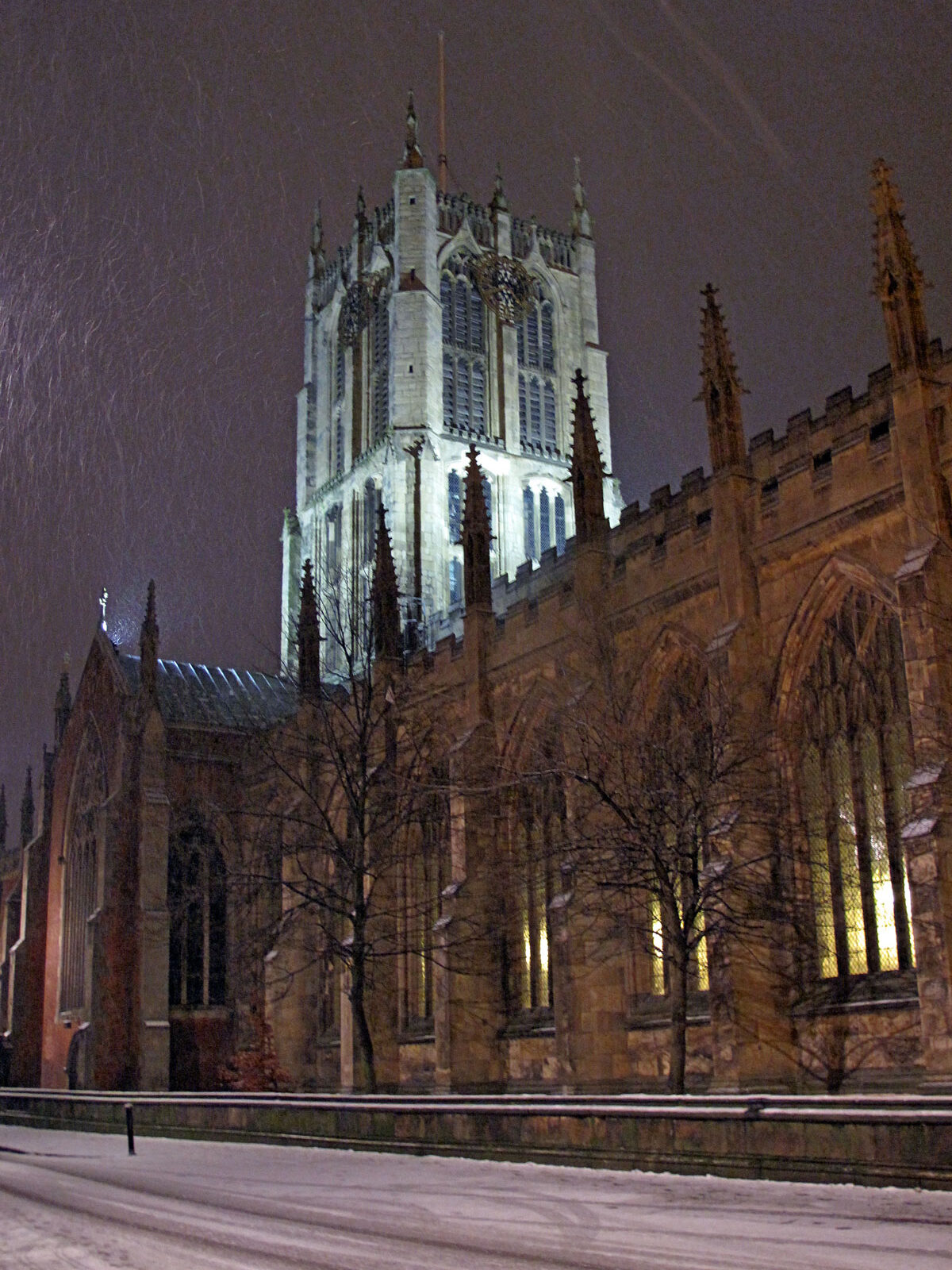
This was the church where William Wilberforce was baptised in 1759 and is no ordinary church. According to Wikipedia, it’s the largest parish church in England by floor area, and I know what you’re thinking, what about Beverley Minster? I couldn’t possibly argue over the statistics, but being built mainly from the 14th century onwards it’s not only large, but has a long history as well, so much so, that the Archbishop of York renamed it Hull Minster in 2017 when the city became the UK City of Culture.

Trinity Church
Trinity Church
Now Hull Minster
Now Hull Minster

Under different circumstances, I would have no doubt ventured into the Minster, but with the snow starting to make life increasingly difficult underfoot (and I have an unenviable record of ending up on my back in these sort of situations), I did what I should have already done – and head back to the comfort of the hotel and get ready for our journey home tomorrow.

When we got up the following morning I was relieved to find that we hadn’t had any significant snowfall overnight: However, South-West England had, and transport had been seriously affected. After getting earache from you know who with comments like “I told you we should have gone home yesterday”, I offered her the chance to stay another night, which never got the reaction I was hoping for, and we were soon in a taxi driving towards Paragon station – and hopefully, home for Christmas.

In Pt 1, I described the traumatic train journey up to Hull, and now we were having to face another one in the opposite direction. Being well aware that we needed every bit of help we could get today, I checked out my new National Rail app, and found that we could catch an earlier train from Hull to Sheffield than we had originally intended, but on the downside, it was also telling me that the next connecting train from Sheffield to Penzance was cancelled.

Regardless of how things were likely to turn out, we clambered aboard and settled down for the first part of our journey to Sheffield, which was unexpectedly picturesque as we travelled alongside the Humber Estuary and under the Humber Bridge. A sharp overnight hoar frost had left the trees glistening in the early morning sun like Christmas trees without the baubles, and a layer of fog which cloaked the river gave the bridge a ghostly appearance that made it look as though it was hovering in mid-air.

Unfortunately, this fantasy world wasn’t to last, because at Sheffield we were brought back down to earth with the news that there were no trains running down to Penzance. We weren’t the only people wondering what to do for the best, and one young chap in particular, who I got to know as Scott, was in a right two and eight. He was travelling from his home in Barton-upon-Humber down to Torbay to spend Christmas with his parents, and when I told him that was where we were going, he asked if it was ok if he could latch onto us, and so I now had two headless chickens to look after. After what seemed like ages, there was an announcement advising those of us going down to the south-west to catch the next train to Reading and get off at Birmingham New Street. New Street has had a multi-million pound makeover since, but at the time, it was a station I really disliked, but there was no other option.

On arrival at Birmingham it was announced that the train was terminating here, which meant that those going on towards Reading also had to get off, and now there were hundreds of headless chickens running around. Scott and Kay were stressed right out, and I couldn’t resist telling my wife that we should have spent another night in Hull. I know we were going home for Christmas and not Thanksgiving, but it was all starting to remind me of the film Trains, Planes and Automobiles. There were so many conflicting messages here, both verbally and on-screen. The next train to Plymouth at first was on time, then it was delayed, but my app was saying it was cancelled – and it was. Although they were extremely reluctant at first, I eventually convinced the other two that if we got our finger out we could get a train from another platform that was going to Bristol and we could take it from there.

For the sake of expediency, I’m glossing over some of the details, but suffice it to say, my next fear was also to come true. The weather that had hit the south-west was spreading north and by the time we got to Cheltenham there was literally a blizzard raging. Thankfully, we made it to Bristol Temple Meads where the train terminated, but at least I was proved right about not waiting for the Plymouth train at Birmingham because there weren’t any for the rest of the day, and at least we were in the West Country now.

Of course, this meant that there weren’t any trains running from Bristol to Plymouth either. There was only one thing for it. Me and Kay went for a drink in the bar and Scott, who had stuck to me like glue all day, went for a smoke. In the bar was a couple who had spent their day trying to get to Bath from Taunton, but after 5 hours and only getting as far as Bristol (which is normally only 1 stop) decided to call it a day and go back home – but the big question was how? Meanwhile, Scott was having hallucinations. He thought he saw a train going to Paignton on the departures board, but when he went back to double check he had to admit it was a mirage.

It seemed that if we could get to Taunton, then there was a chance we could get a train to Newton Abbot from there. What it meant though was that we needed to travel in the opposite direction from Bristol to Portsmouth and then get off at Westbury in Wiltshire where we could then get the Paddington to Penzance train which was now running. Are you still with me? There were no guarantees that it was going to work, but it was our best option if we didn’t want to spend the night in Bristol.

We  didn’t have any time to waste if we were to get the Westbury train and not miss the Paddington-Penzance connection, and so I left my pint and dashed over to platform 10. I could go on about conflicting messages, delayed trains and all the rest of it but eventually we managed to catch the late running Penzance train at Westbury and were now going in the right direction towards Taunton –  and eventually on to Newton Abbot.

At Newton Abbot we were within touching distance of Torbay: Scott was being picked up here by some members of his family who were having a party somewhere, and he felt really guilty when he could see that our train to Paignton had just left without us. I’ve never seen anybody so grateful as Scott for helping him to get home to see his family and he gave us both a hug as he left – and that was more than enough for me.

We had to wait another 40 minutes for the next train to Paignton, but when Kay saw the delayed message come up on the screen she flipped, and went scampering off to see if there were any taxis hanging around, and sure enough, there was one taxi driver outside still trying to make a living, and before I could ask how much it would cost, she was in the cab like a rat up a drainpipe no matter how much it was.

What should have been a 7½ hour journey turned out to be double that, but at least we were home in one piece. It may have been a crap journey, but was Hull a ‘Crap Town’? Port towns are rarely lovely to look at and the city had obviously seen more prosperous days, but some of the places I’ve enjoyed visiting the most over the years have been those that, on the surface, don’t appear to have much going for them. Having said that, almost all are welcoming – and this was just the same with Hull: The people were fantastic. What’s more, it isn’t the forgotten corner of Yorkshire that it once was and many of the old docks have now been replaced with leisure facilities fit for the 21st century. Some are new, but some of the old buildings are being restored. When I was here, there was still plenty of work to be done, but being awarded the status of UK Capital of Culture in 2017 seems to have given it a big boost.

I couldn’t possibly have seen everything in the time we had here, and I’m sure there must be places that tourists wouldn’t want to visit, but I learnt enough about the city to say that it’s definitely not a ‘Crap Town’ as far as I’m concerned, but what is crap is the football team I support, and it might not surprise you to learn – and this is no reflection on Hull – that my wife has never put a red and white scarf around her neck and come with me to an away match since.
POSTED – OCTOBER 2023

Originally posted 2023-10-22 09:35:56.

The post Is Hull Really a ‘Crap’ Town? – Pt 4 Minsters, Museums and Mayhem appeared first on Easymalc's Wanderings.

]]>
https://www.easymalc.co.uk/is-hull-really-a-crap-town-pt-4-minsters-museums-and-mayhem/feed/ 29 19644
Is Hull Really a ‘Crap’ Town? – Pt 3 Getting to Grips with Hull’s Maritime History https://www.easymalc.co.uk/is-hull-really-a-crap-town-pt-3-getting-to-grips-with-hulls-maritime-history/ https://www.easymalc.co.uk/is-hull-really-a-crap-town-pt-3-getting-to-grips-with-hulls-maritime-history/#comments Sun, 24 May 2026 13:59:20 +0000 https://www.easymalc.co.uk/?p=19599 Originally posted 2023-10-11 15:34:07.

The post Is Hull Really a ‘Crap’ Town? – Pt 3 Getting to Grips with Hull’s Maritime History appeared first on Easymalc's Wanderings.

]]>

Is Hull Really a 'Crap' Town? - Pt 3 Getting to Grips with Hull's Maritime History

In Pt 2, we saw how the monks of Meaux Abbey created a port on the River Hull enabling them to export their wool to places like Belgium and The Netherlands, and even though King Edward I later acquired it for military purposes, the port of Kingston-upon-Hull also benefitted from the improved transport connections that were needed for his campaigns against the Scots. Since those early beginnings, Hull’s fortunes became inextricably linked to those of the port, and in this post I want to show how important the maritime trade was to this enigmatic city.

The late Middle Ages saw Hull’s trade expand beyond the Low Countries as cloth took over from wool as the main export. In return, fish was brought in from Iceland and Scandinavia, and materials needed for the local shipbuilding industry, such as flax, hemp, timber and pitch, were imported from the Baltic. What all this meant, was that by the late 17th century, Hull had become the third busiest port in the country after London and Bristol.

The 18th century saw the town grow rapidly as the Industrial Revolution created a surge in exports: The steelworks of South Yorkshire were providing the raw ingredients for production of high quality cutlery in Sheffield, and the increased output from the woollen mills of Yorkshire and cotton mills of Lancashire meant that the wharves on the River Hull were being stretched to their limit. Something needed to be done, and the answer came in the form of a series of docks that became known as the Town Docks.

Below is a map showing the city before the building of the Town Docks. On the western side of the River Hull is the medieval wall protecting the city, and on the eastern side is the castle and curtain wall protecting the port.

Map of Hull c1600

By 1773, The Haven, as the port on the River Hull was known, had become unfit for purpose: The river was narrow, tidal and muddy, but not only that, it was becoming so overcrowded that ships were getting damaged, and so a consortium of interested parties formed the Hull Dock Company with the purpose of constructing a new dock.

After being granted permission to use the old city walls as part of the construction, the Dock Company eventually decided to build the new dock along the path of the north wall as far as Beverley Gate. Starting work in 1775 it took three years to build, with its entrance via the River Hull just south of the North Bridge, which seemed a bit short-sighted if you ask me, because it meant that ships still needed to gain access via the Haven.
The map below (drawn in 1786) shows how The Dock, as it was simply called, replaced the north city wall. Note also how the castle had been replaced by a citadel.

A Suevey Map of 1786

With trade still growing, it was inevitable that the Dock Company needed to put their thinking caps on again, and the plan they came up with was to build a Humber Dock at the southern end of the city walls which would give direct access, via an outer basin, to and from the Humber. Construction started in 1803, and after encountering a few technical problems, the new Humber Dock was officially opened on 30th June 1809, with the first dock now being renamed the Old Dock.

One of the stipulations of building the Humber Dock was that once trade had reached a certain level, then a third dock should be built connecting it with The Old Dock and this condition was met in 1825. Continuing to follow the line of the old City Walls, Junction Dock was completed in 1829.

The map below shows how the city looked in 1866. By now the three Town Docks have virtually made the old part of the city an island, and those of you who have looked at the map closely, will notice that the Old Dock and Junction Dock have been renamed Queen’s Dock and Prince’s Dock respectively. This was in honour of a visit made by Queen Victoria and Prince Albert in 1854.

Map showing how the Docks replaced the Town Walls

As trade continued to increase, then so did the number of docks, and by the time the map above had been drawn up, you can see that Victoria Dock and its associated facilities had taken over the citadel on the eastern side of the river and a new ‘West Dock’ (later re-named Albert Dock) had been constructed along the banks of the Humber on the western side. As time progressed, more were to follow, and a lot of this growth was down to the needs of an increasing population that was required to work in Britain’s ever expanding industries.

The Industrial Revolution rapidly changed Britain’s green and pleasant land into one of towns with smoking chimneys and rows of terraced houses – but that didn’t happen in Hull, or at least not to the same degree. The areas where coal and minerals could be mined were not found in any great quantities around this low-lying part of Yorkshire, and the city’s fortunes lay with its status as a port and the trades associated with it.

Many of these local trades were connected with the traditional business of whaling, and I think it’s fair to say that Hull’s reputation as a major whaling port is not something that the city is particularly proud of – and not something that I want to dwell on for too long either. For people living in the Arctic back then, whale meat was a source of food that was necessary to survive and the mammals were caught in small numbers, but Hull whalers caught them for other reasons and in larger numbers. The blubber was used for heating and lighting (and of course this was before alternative ways were found for providing it), and whalebone (better described as baleen as it’s not really bone at all) was used for manufacturing all manner of stuff from umbrellas, fishing rods and female undergarments. How many whales were killed by Hull whalers I wouldn’t know, but it’s also worth pointing out that a good number of those involved also lost their lives in what was an extremely dangerous business.

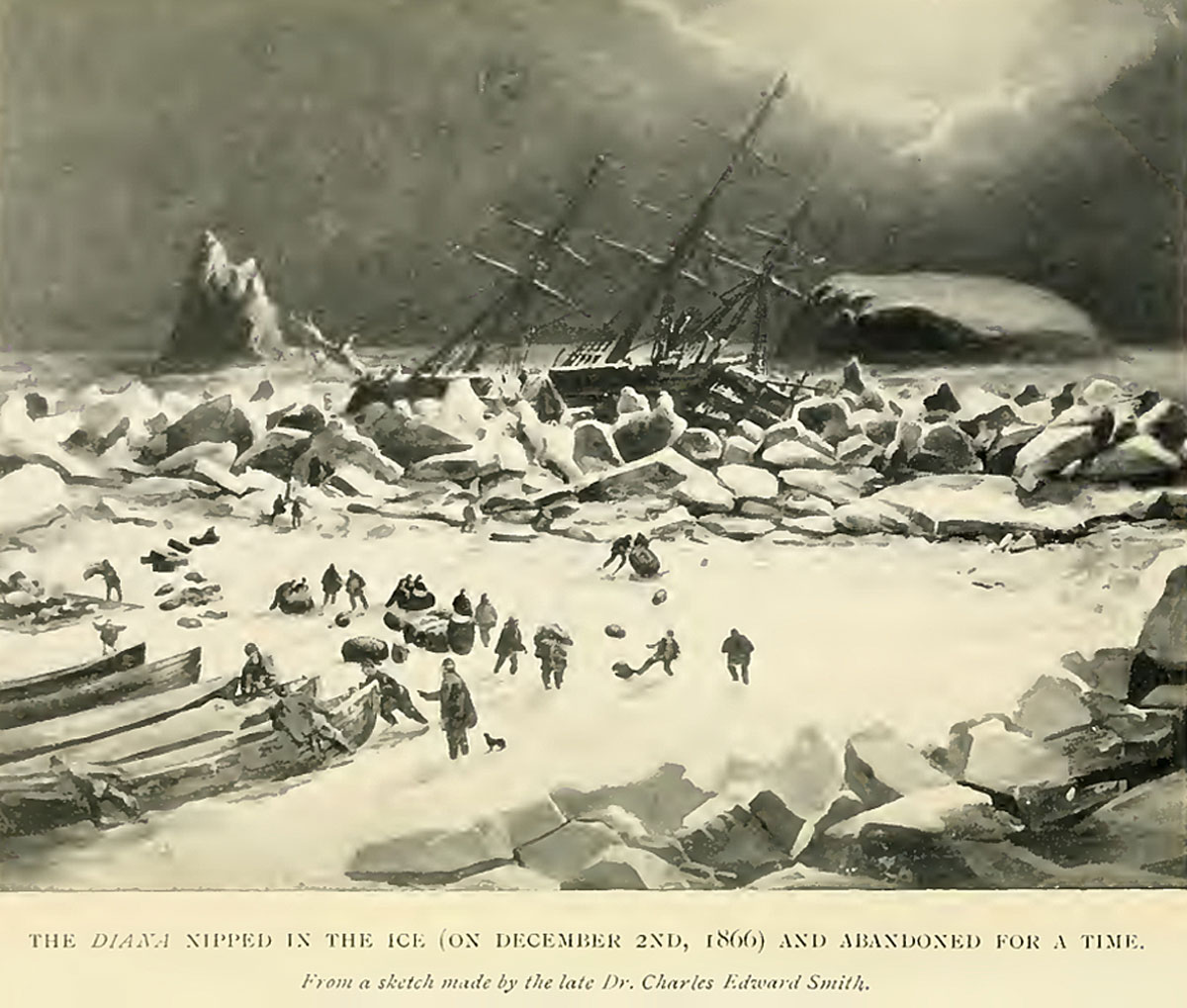
The pic below shows the Hull whaler Diana trapped in ice for over six months (1866/67) in Baffin Bay. The disaster claimed the lives of 13 crew, and when the ship ran aground off the Lincolnshire coast in 1869, she became the last ship of the once large and lucrative Hull whaling fleet.

The Diana stuck in Ice

The second half of the 19th century also saw a different kind of activity at the port when over 2 million migrants disembarked at Riverside Quay on their way to a new life. They came from places all over Northern Europe, including Denmark, Finland, Germany, Norway, Russia and Sweden. After some obligatory form-filling, trains then took them to ports such as London, Southampton and Liverpool where they boarded liners that took them to the New World.

There’s a sculpture by Neil Hadlock, unveiled in 2001, that remembers these events and is located on reclaimed land at the Bullnose where ships waited for high tide before entering Humber Dock.

'The Crossing' Sculpture at the Bullnose

In 1897, Hull was granted city status, and although prosperity had reached its peak by the time WWI broke out, it was still a major target for the Luftwaffe in WWII. Many British cities were heavily bombed during the Blitz, but Hull doesn’t often get mentioned as a city that was badly hit, and yet much of the city centre was destroyed and 95% of the city’s houses damaged, resulting in half the 320,000 population being made homeless: Around 1,200 people were killed and 3,000 injured during those air raids, but the port did manage to keep functioning. With all this going on, the people still never lost their sense of humour: The Hull comedian, Norman Collier tells of how his family were filing into an air raid shelter one night when his ‘Mam’ dashed back towards the house “Where are you going, Mary,” said Dad. “Back for my false teeth,” she replied. “Come back here, the Germans are dropping bombs not meat pies,”.

Meat pies are a staple food in Northern England – and so is Fish n’ Chips, so much so, that during the First and Second World Wars, it was one of the few foods that wasn’t rationed in Britain, as it was a firm favourite with the working classes and helped to keep up morale.

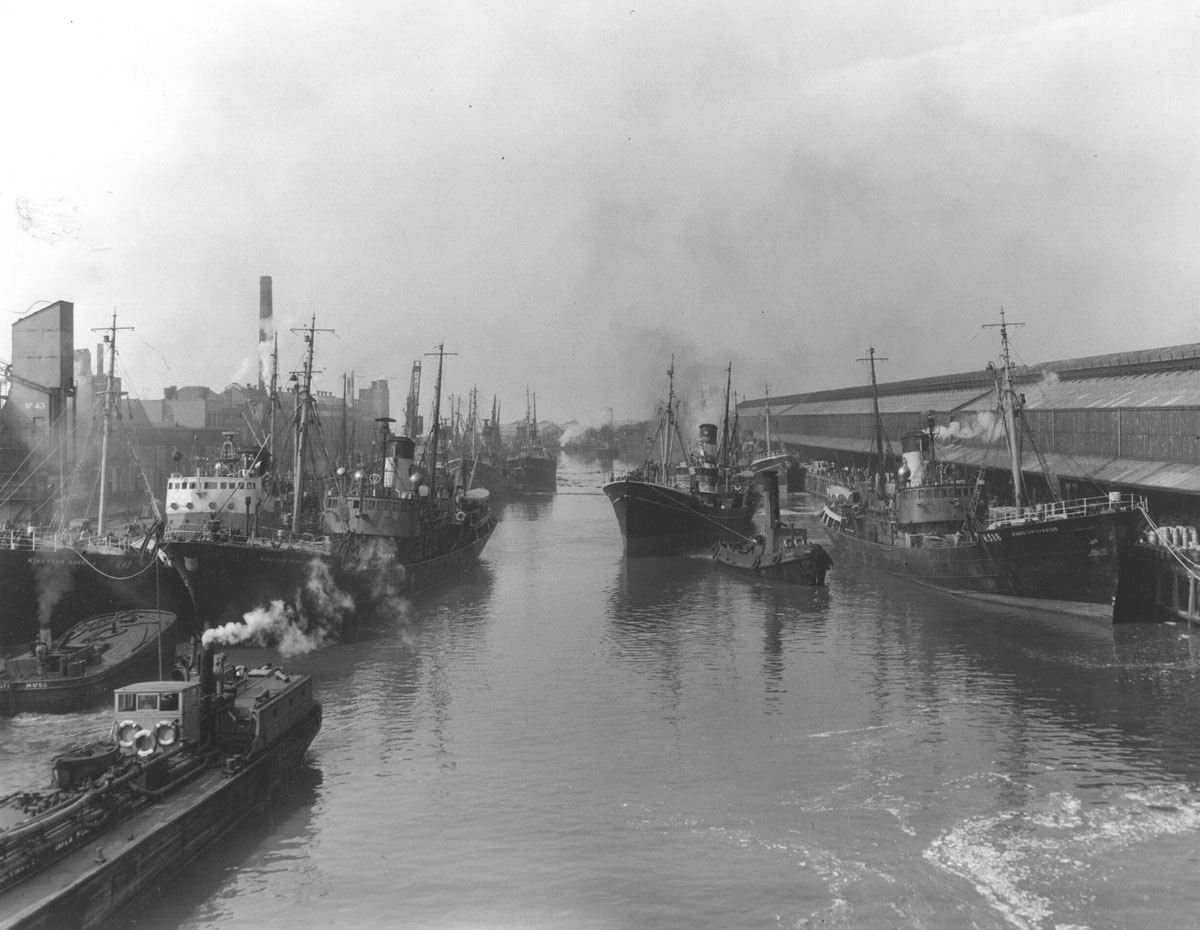
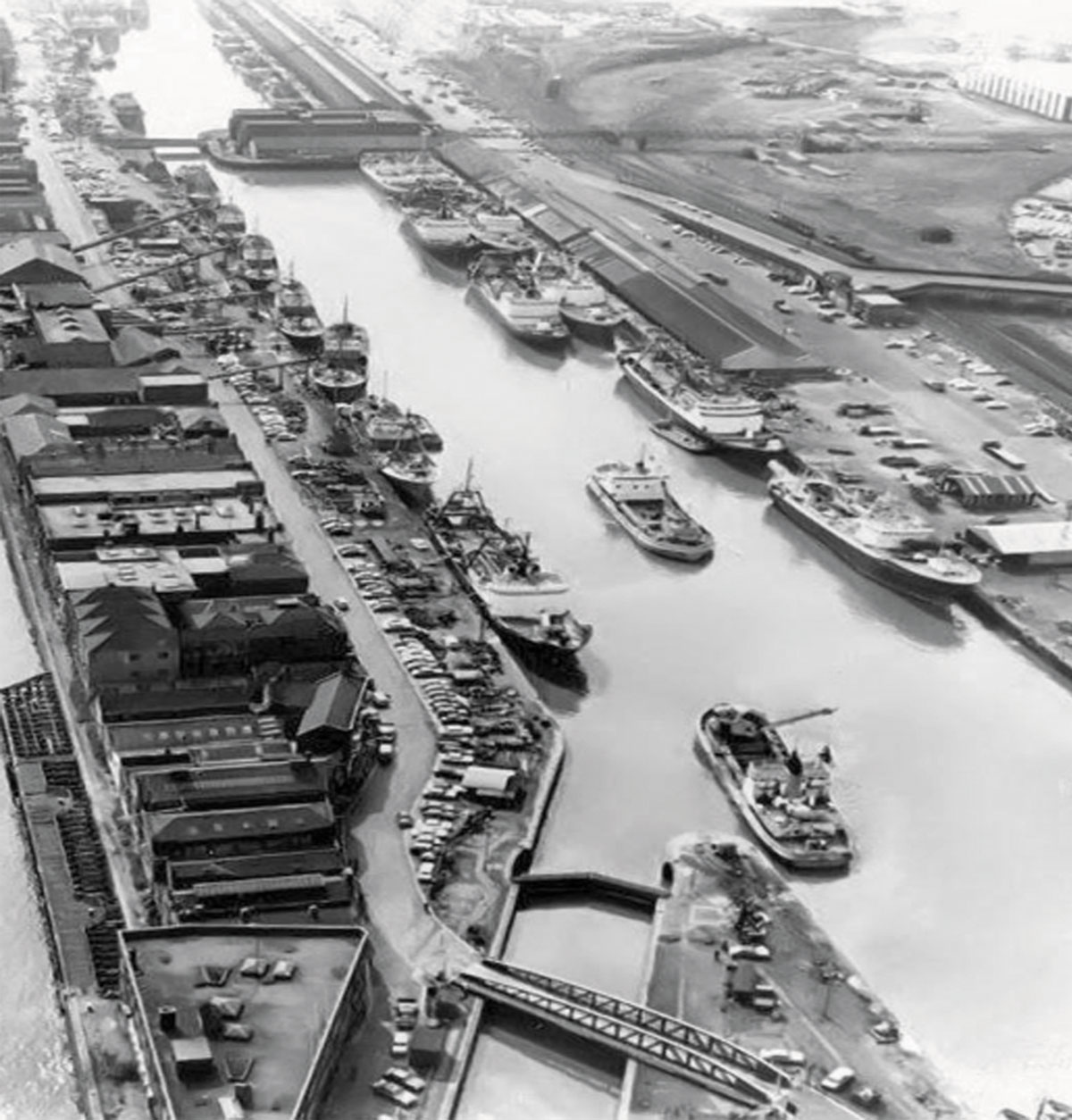
Coastal communities everywhere have always been involved in catching fish, but Hull’s rise as a major fishing port began with the discovery of large shoals of cod (and herring) on the Dogger Bank in the mid-1800s. As steam replaced sail, ships started to venture further afield to places like Iceland and the Barents Sea where there were plentiful supplies of cod and haddock which were the British public’s preferred choice of fish to go with their chips (and still is). With an ever-increasing amount of fish being offloaded, it was decided to build a dedicated dock on the Humber, west of the Albert and William Wright Docks. Named after the patron saint of fishermen, St. Andrew’s Dock opened in September 1883 and naturally spawned a host of shore-based jobs to service the 350 or so trawlers. Fish factories and fish merchants worked alongside engineers, shipwrights, net makers and riggers, many of whom lived along the Hessle Road.

St Andrew's Dock (The Hull Bullnose Heritage Group)
A Later View of St Andrew's Dock (St Andrew's Dock Heritage Park Action Group)

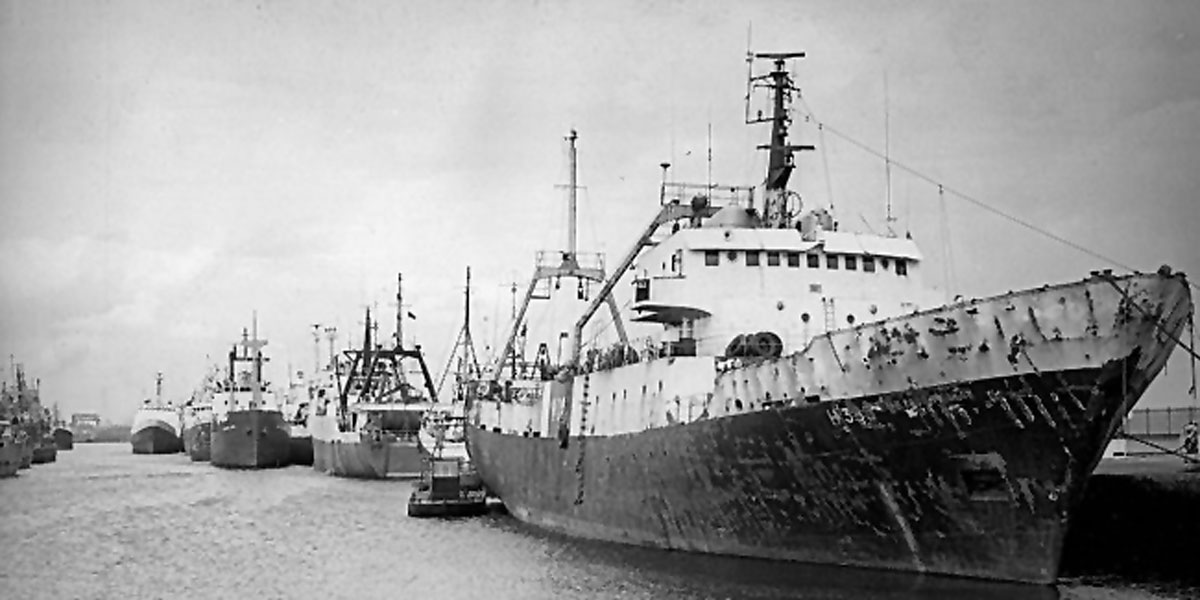
The 20th century saw Hull become one of the world’s largest fishing ports. Thanks to a suspension of fishing during the Second World War, stocks had greatly increased, and the introduction of freezer trawlers meant that Hull fishing boats could be found in places like Iceland, Norway, Bear Island (Svalbard), Greenland and Labrador. The men from Hull didn’t have it all their own way though because they had stiff competition from their neighbours across the Humber at Grimsby, who had a fleet of freezer trawlers of their own.

These freezer vessels were too big for the Fish Dock (as St Andrew’s Dock was commonly known) and so operations were transferred to the William Wright Dock in 1975. This dock, which had opened in 1873, was joined up with the adjacent Albert Dock in 1910, and redeveloped in the 1950s.

Freezer Trawlers in the William Wright Dock in 1981 (Fishing News)

Of course, hauling in large catches of fish on an industrial scale was never going to be sustainable, and the Humber ports of Hull and Grimsby were hit hard when territorial limits were imposed around the coasts of their main fishing grounds.

The biggest altercation came with Iceland where boats from Hull had fished since the 15th century. There had been many disagreements over the years, but in 1958 several countries held a meeting at the United Nations in which they were seeking an extension of their territorial limits to 12 nautical miles. No agreement was forthcoming, but Iceland unilaterally imposed it anyway. Needless to say, Britain (and other nations) refused to accept Iceland’s decision and British fishing boats were escorted to the Icelandic fishing grounds by the Royal Navy. Confrontation was inevitable, and although there were no serious deliberate incidents regarding casualties, both sides suffered damage to boats and equipment.

In total, there were three Cod Wars as they became known: The first was from 1958-1961, the second, 1972-73 and the third from 1975-76. You might not think that Iceland was in a position to take on the Royal Navy, but it held a trump card: It lies in the centre of the GIUK Gap, a strategic and important location for NATO. GIUK stands for Greenland, Iceland and the UK, who between them control access between the Norwegian Sea and Atlantic Ocean. When Iceland threatened to pull out of NATO, other members had to sit up and take note, and a NATO brokered agreement in 1976 gave Iceland pretty well much what they wanted – an exclusive 12 mile zone where only Icelandic boats could fish and a 200 mile fishery zone where other nations could only fish with Iceland’s permission. The UK responded by abandoning its ‘open seas’ fishing policy and introduced a 200 mile exclusion zone of its own, and since 1982, a 200 nautical mile zone has been the international standard under the UN Convention on the Law of the Sea. The Cod Wars had come to an end, but so had Hull’s prosperity.

It appears that there was no long term fallout from the affair as far as relations with Iceland were concerned because Hull is twinned with Iceland’s capital, Reykjavik, and ironically, Icelandic companies have set up fish processing plants in Hull, which at least has provided much needed employment for the locals.

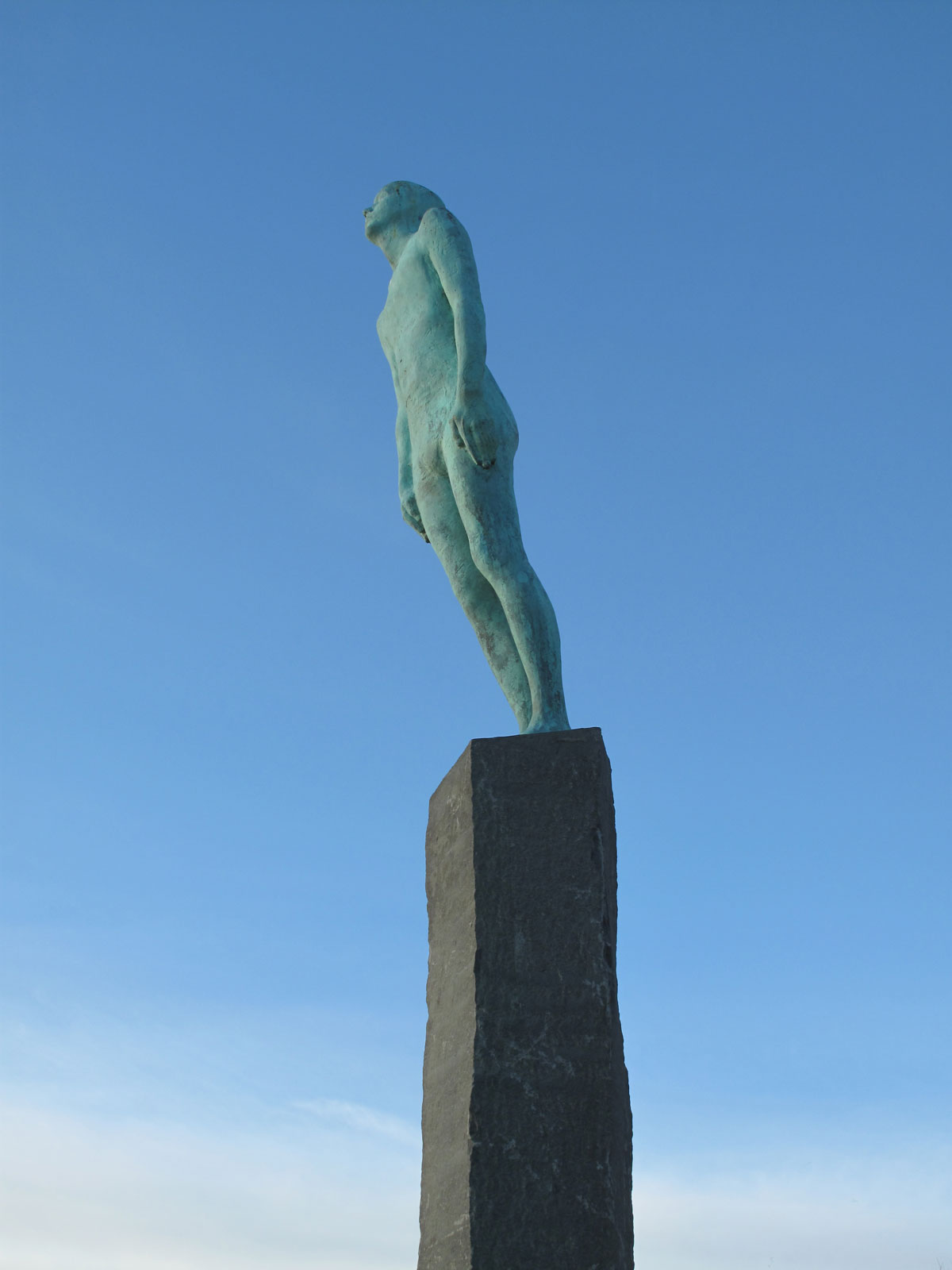
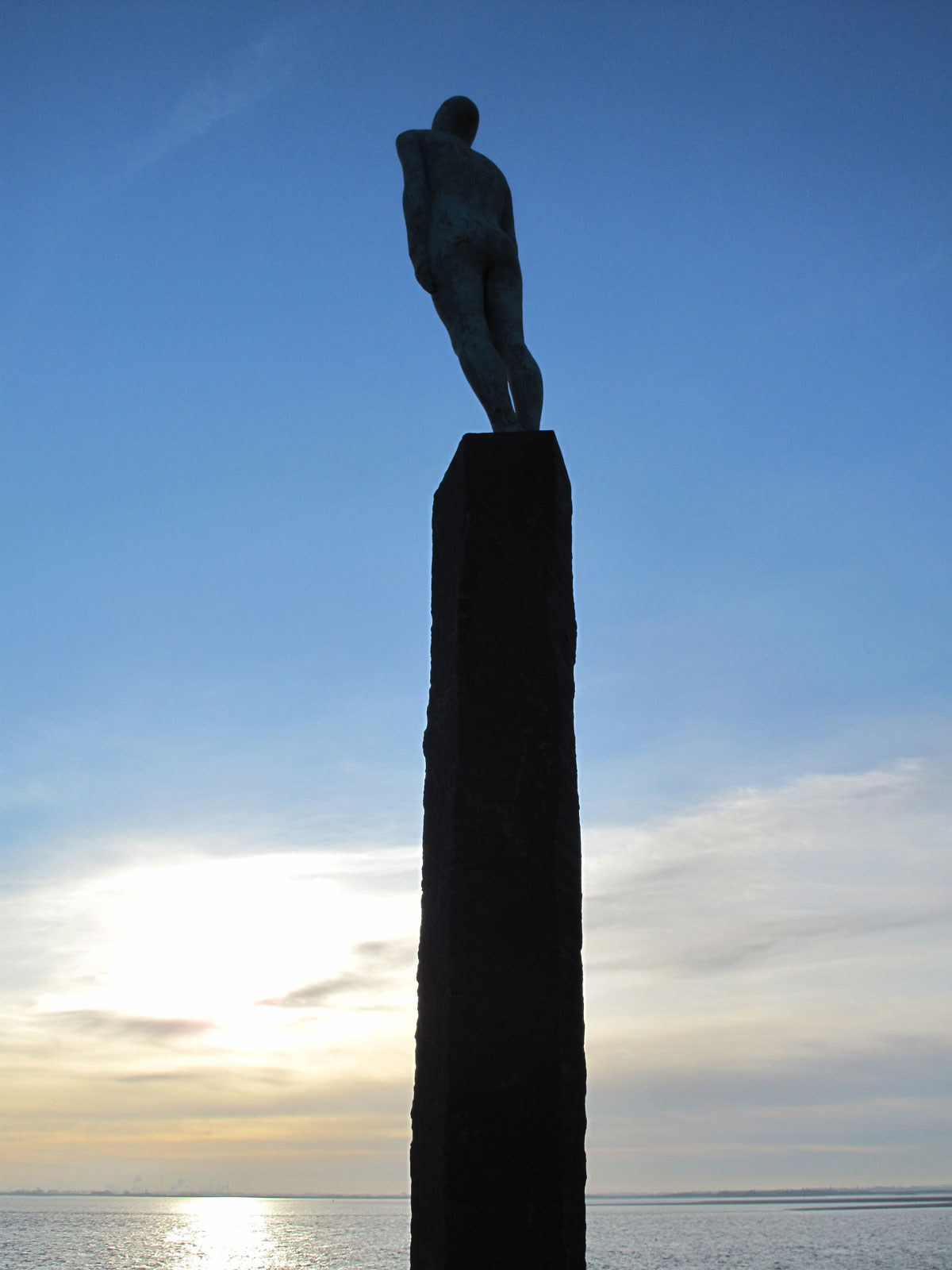
As if to cement this strange love affair, there’s a statue where the River Hull meets the Humber called ‘Voyage’ which was presented to the city by its Icelandic creator, Steinunn Thorarinsdottir in 2006. It looks out over the Humber towards the North Sea and in the direction that fishermen would have taken on their journey north towards the Icelandic fishing grounds. There’s a twin statue in the small village of Vik in Iceland, where Hull fishermen were looked after when any of their ships came to grief. As far as I know, the one in Vik is still standing, but the one in Hull was stolen by some toerag in 2011, but the council dipped into their reserves and asked the artist to make another one. I took the pictures below when the original was still there

'The Voyage' Statue near Victoria Pier

The creation of the 200 mile limit around the traditional fishing grounds for Hull trawlers meant that the boats had nowhere to go. Not only was it bad news for the fishermen, but it was also bad news for Hull in general as many people were employed in the business. As with other towns in post-industrial Britain, recovery from such a fatal blow was going to take some time, and the area around the docks must have left the city looking a very forlorn place indeed. So what’s happened since? Many of the old docks have been covered over and turned into shopping centres and such like – but not all. On the eastern side of the river, Alexandra Dock, which was opened in 1885 by the Hull and Barnsley Railway to facilitate the export of coal from the South Yorkshire collieries, is being transformed into Green Port Hull, a development which includes renewable energy projects and  the construction of blades for offshore wind turbines.

On the other side of the Holderness Drain from Alexandra Dock is the King George Dock (built in 1914) and the Queen Elizabeth Dock extension (1969). Since 1965 it’s been used as the departure point for ferries to The Netherlands, and today is used by P&O ferries for its service to Rotterdam. Beyond the ferry port is Salt End Oil Jetties, which service a large chemical plant and power station, so the port still seems to have some future – and so it should.

Alexandra Dock (Humber Estuary Services)
King George Dock (Humber Estuary Services)

I ended my previous post by looking across the River Hull to Victoria Pier from The Deep aquarium, and now that I’ve explained how important the maritime trade has been to the city, it’s time to walk over the Millennium Bridge to see how the Town Docks look today.

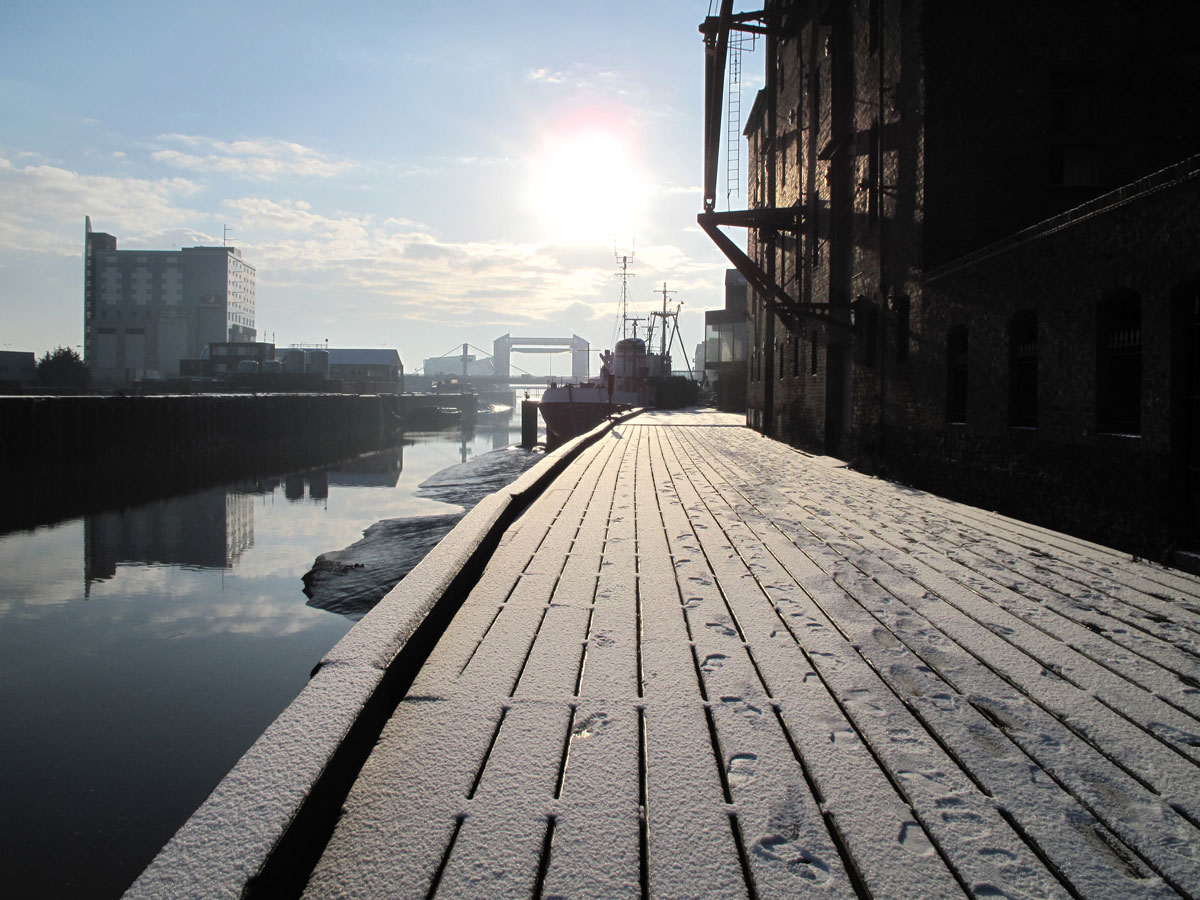
My first impression of the western side of the river was not that great to be honest as much of it seemed to be in need of some urgent regeneration, but it seems as though since I was here, that’s exactly what has happened, or at least to some degree. I walked down to the Voyage statue and along to Victoria Pier, which although it was a Saturday morning, was still eerily quiet. I was the only one around as I walked across the frosty wooden boards to gaze out over the Humber estuary. It was quite a sublime moment, and not one that I expected (see featured image at the top of the page).

Continuing around past the Minerva, a pub that I wouldn’t have been able to resist had it been open, I then crossed over the Humber Dock Basin via the lock gates. This was where ships waited to enter the Humber Dock, the second of the Town Docks to be built if you remember.

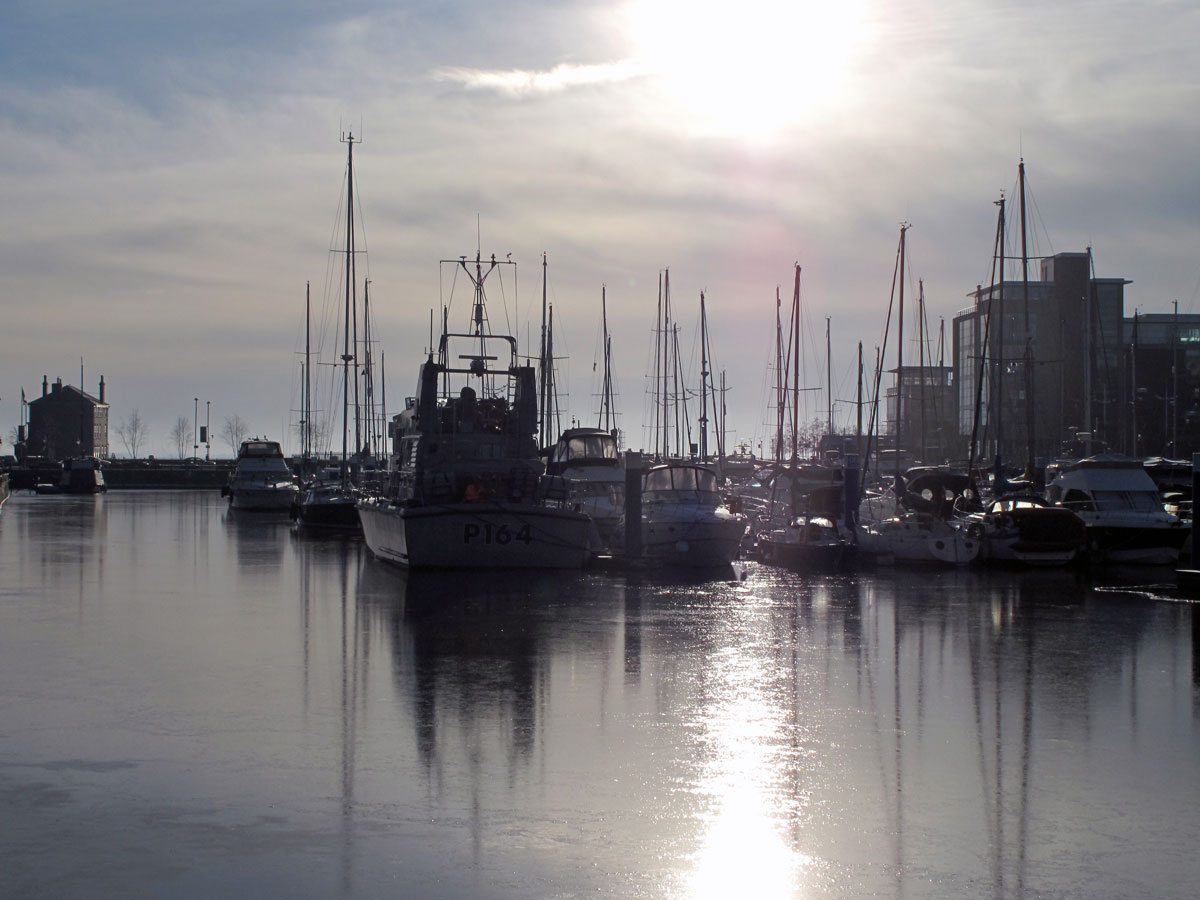
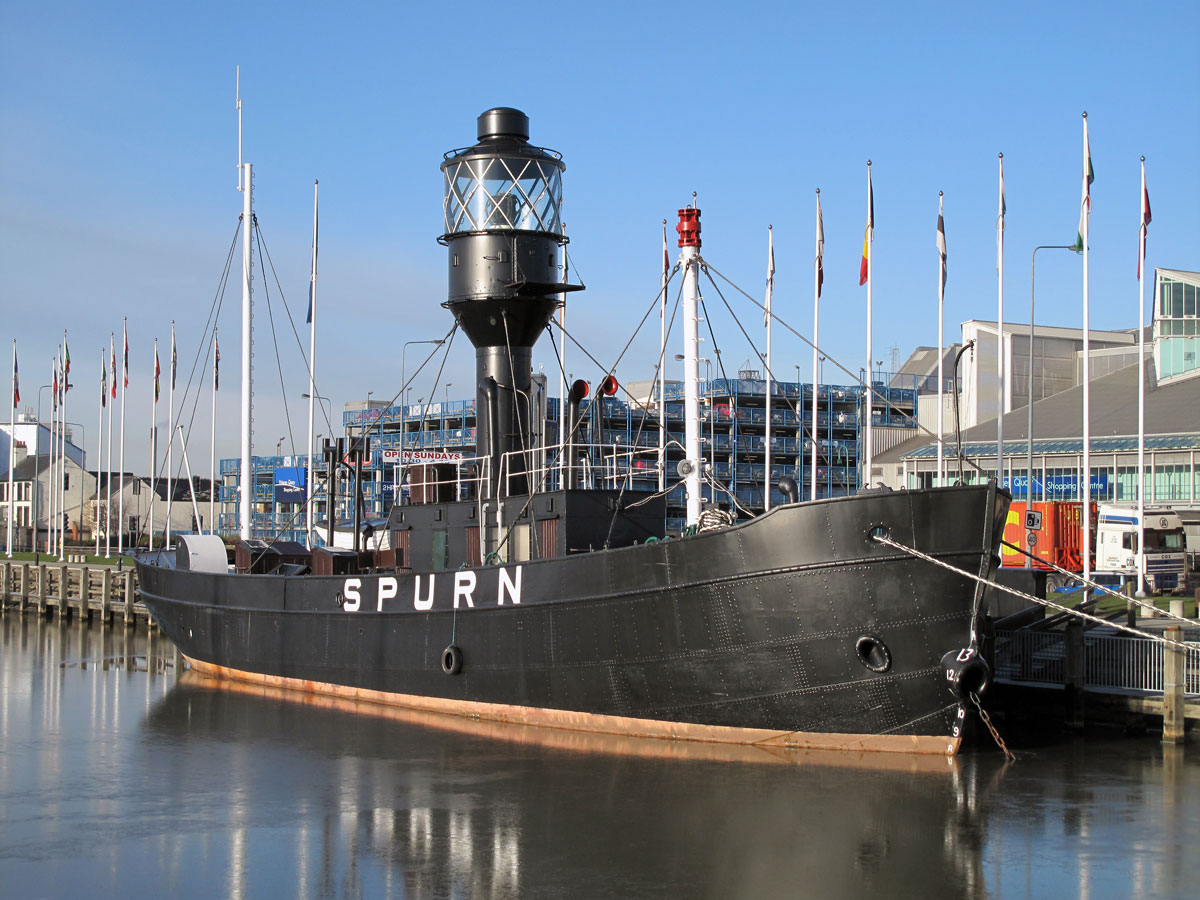
The dock closed to shipping in August 1967 and permanently in 1969, but it’s now, believe it or not, a marina. It came as a complete surprise to me as I never thought of Hull having a marina somehow, but I don’t know why not come to think of it. Another surprise was seeing the Spurn Lightship moored up here.

The Humber Dock Marina
The Spurn Lightship in Humber Dock Marina

Walking up the western side of the dock, I needed to cross the Railway Dock Swing Bridge in order to get to Castle Street. The Railway Dock incidentally, was opened in 1846 to serve the Hull and Selby Railway and is now part of the marina. Castle Street forms part of the busy main A63/M62 connection to Leeds and the subject of road improvement schemes for years. Since I was here, an impressive looking new bridge called Murdoch’s Connection has been installed to give pedestrians a safer link to the town centre whilst allowing traffic to flow more freely underneath.

The video below is by the ALW Research team.

Having negotiated Castle Street without the help of a £22m bridge, I came to what was the former Prince’s Dock (originally Junction Dock) which closed in 1968 and redeveloped as a shopping centre called Prince’s Quay in 1991. Needless to say, I didn’t stop to find out what was inside as I don’t do shopping – unless it’s for books.

Princes Quay Shopping Centre

Instead I focused on reaching the first dock Hull had – The Dock/Queen’s Dock – except that it wasn’t there – and that’s because in the 1930s they filled it in after there was no more use for it.

The first pic below is how the dock looked before it was transformed into Queen’s Gardens, and the second one is a view of how it looks now thanks to the Grey Arrows Drone Club.

Queen's Dock in the 1920s (Pinterest)
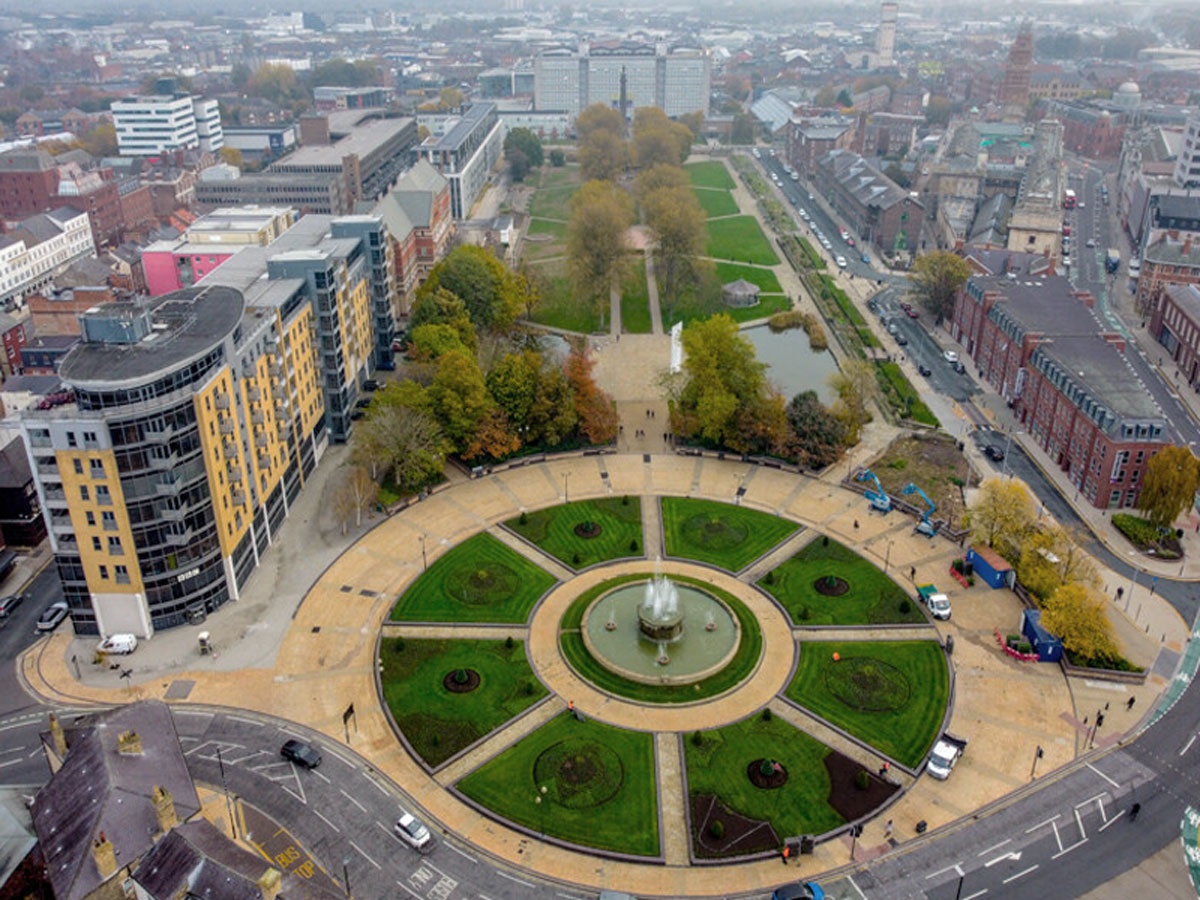
Queen's Gardens (Grey Arrows Drone Club)

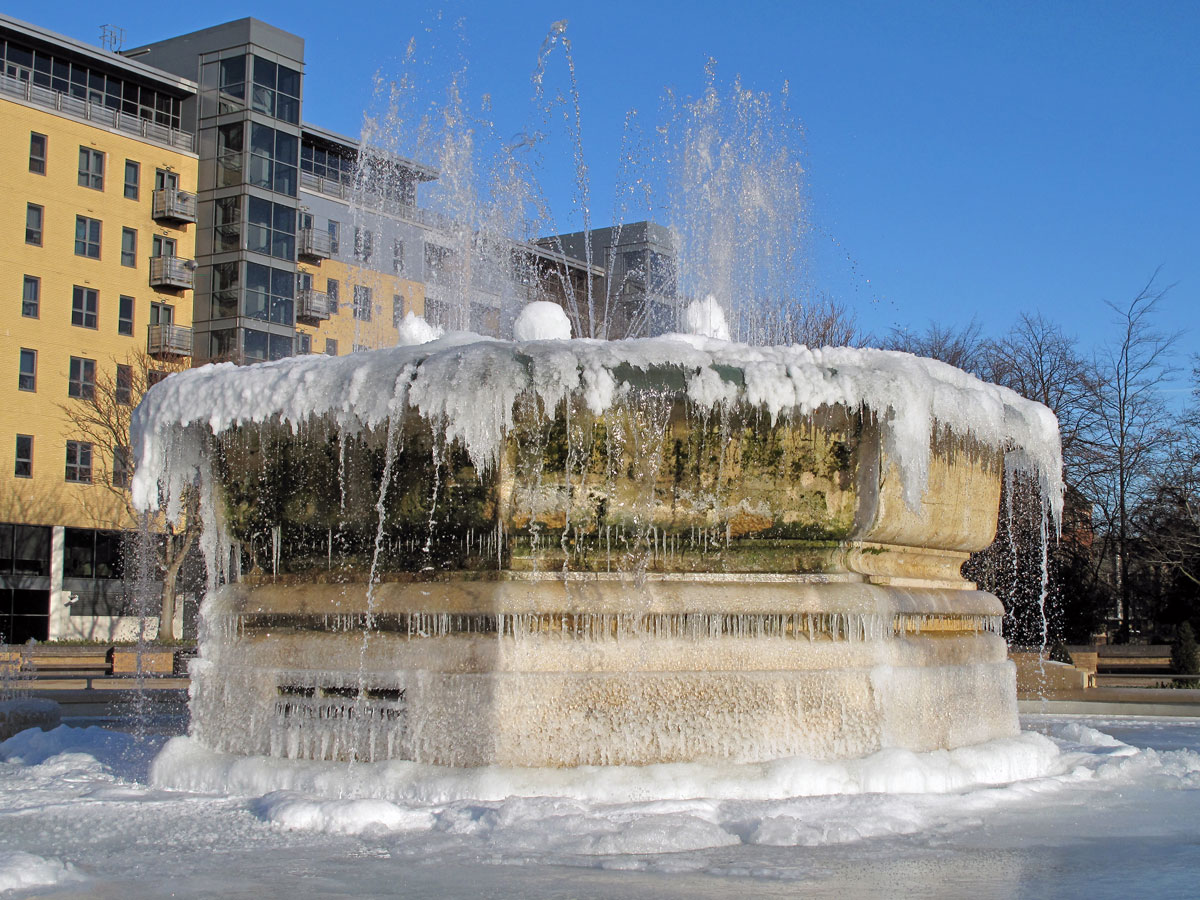
I can well understand why people love to use drones, but I’ve never got into it, and the best I can show you is how cold it was the day I was here.

The Rose Bowl in Queen's Gardens

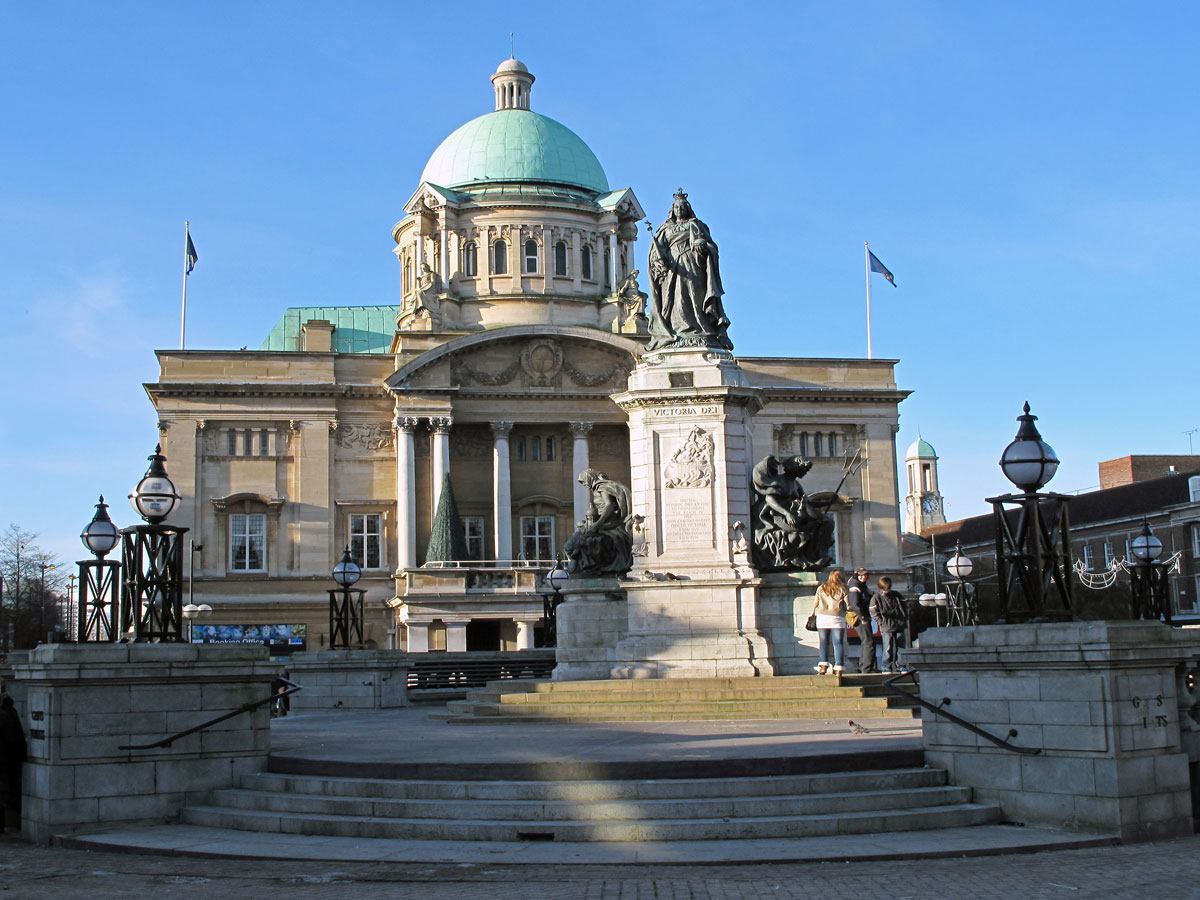
Across the road from the Rose Bowl Fountain are the former Hull Dock Company’s headquarters in Queen Victoria Square, an impressive building now housing the city’s Maritime Museum. I’d run out of time to visit it because I’d arranged to meet Kay in the square where there’s another impressive building – namely  the City Hall.

Queen Victoria and the City Hall

You may have forgotten by now, but we had a football match to attend this afternoon, and after some excellent fish n’ chips (what else?) in the historically interesting and haunted Ye Olde White Harte we headed over to the KC Stadium.

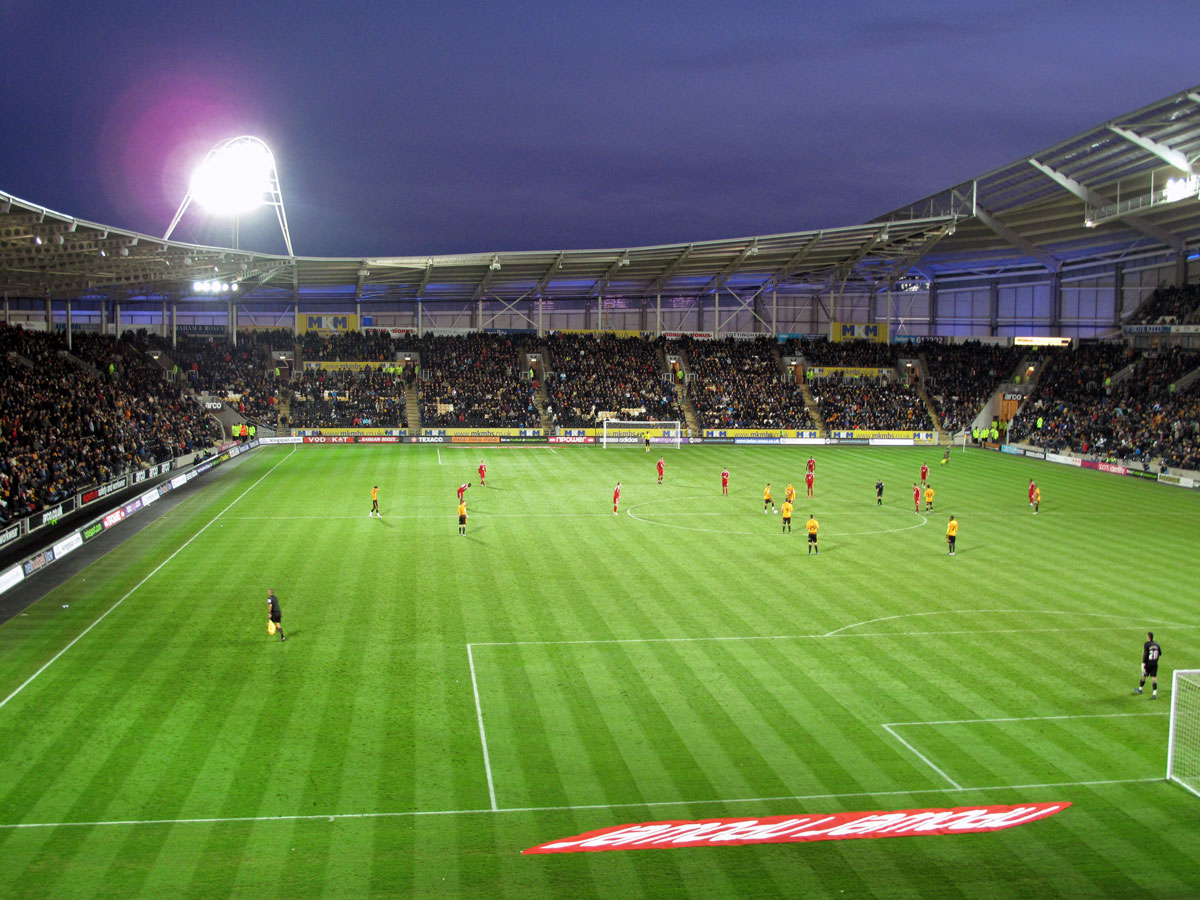
Donning our red & white scarves, we were approached by a Hull supporter as we walked towards the stadium. Unlike some of the altercations I’ve been involved in at football matches, this chap held out his hand and thanked us for making the journey up here in such icy conditions. After quite a long chat he took us to the visitors entrance and wished us good luck. I’m not used to this sort of welcome at an away football ground and it was no different inside the stadium where a female steward looked after my wife like an old mother hen. Kay was impressed with the Hull fans, but less so with ours. She’s not been to very many football matches, and she felt embarrassed with what was coming out of the mouths of our fans. Singing (to the tune of Sloop John B) “Hull is a s***hole I wanna go home” was one of the more acceptable chants they blasted out.

Even after the game, we met some more friendly Hull fans who helped us find our way back to the city centre, but the most important question is ‘did we get revenge for that Wembley defeat? Unfortunately not, the result was Hull City 2 Bristol City 0, and for those going back to Bristol tonight it was going to be a long journey home as the weather forecast was looking grim, but for us we had another day here tomorrow to make up our minds about whether Hull really is a ‘crap’ town.

Hull C 2-0 Bristol City

POSTED – OCTOBER 2023

Originally posted 2023-10-11 15:34:07.

The post Is Hull Really a ‘Crap’ Town? – Pt 3 Getting to Grips with Hull’s Maritime History appeared first on Easymalc's Wanderings.

]]>
https://www.easymalc.co.uk/is-hull-really-a-crap-town-pt-3-getting-to-grips-with-hulls-maritime-history/feed/ 46 19599
Is Hull Really a ‘Crap’ Town? – Pt 2 The River Hull and How the Town Began https://www.easymalc.co.uk/is-hull-really-a-crap-town-pt-2-the-river-hull-and-how-the-town-began/ https://www.easymalc.co.uk/is-hull-really-a-crap-town-pt-2-the-river-hull-and-how-the-town-began/#comments Sun, 24 May 2026 13:59:20 +0000 https://www.easymalc.co.uk/?p=19536 Originally posted 2023-09-20 11:38:21.

The post Is Hull Really a ‘Crap’ Town? – Pt 2 The River Hull and How the Town Began appeared first on Easymalc's Wanderings.

]]>

Is Hull Really a 'Crap' Town? - Pt 2 The River Hull and How the Town Began

Thanks to the person who couldn’t wait to have their Benson & Hedges fix this morning, it meant that the hour I thought I’d gained, had now been lost. Thankfully, other than a bit of stitch, I was none the worse for wear as we stepped out into the bitterly cold, but bright Yorkshire morning air – which this time didn’t include any flashing blue lights to hurry us along.

From the hotel, we walked up the ramp onto the Myton Swing Bridge where there were some great views of the River Hull below, not that I had any chance to take any photos of it, because Kay couldn’t care less how good the views were, she was definitely not hanging around in the cold waiting for me to take pictures. As she marched off without a clue where she was going, I had no option but to put the camera away and just console myself with the fact that the tide was out anyway.

The source of the River Hull is in the Wolds, not far from Driffield: It then weaves its way for around twenty five miles or so down to the Humber, which is where the majority of Yorkshire’s rivers end up. The map below gives a broad outline as to how at least eight of those rivers drain Yorkshire’s higher ground to join the River Ouse. At Trent Falls near Faxfleet, the Ouse is met from the south by the River Trent, and this is where it becomes the Humber. Although the Humber is often referred to as a river, it is in actual fact an estuary, but whatever you want to call it, the Humber has, over the centuries, been both an asset and a barrier to this part of England.

Map showing how the Rivers of Yorkshire empty into the Humber Estuary

The point at which the River Hull meets the Humber was not lost on the Cistercian monks of Meaux Abbey. Located near Beverley, some 10 miles north of modern day Hull, the 12th century abbey owned somewhere in the order of 20,000 acres around the area, much of it used for grazing sheep whose fleeces were exported to the continent by merchants. It was a lucrative business, and if the monks had a port of their own, they could pocket more of the profits for themselves. Fortunately, the manor of Myton which was part of their estate, included the hamlet of Wyke that was conveniently situated on the western side of the River Hull near to where it joined the Humber – and on descending Myton Bridge we found ourselves in the historic core of what was to become known as Wyke-upon-Hull.

Negotiating our way up Market Place and around into Liberty Lane, we were soon in the High Street, or Hull Street, as it was originally called. This is one of the earliest streets that can be identified with the town, but I wouldn’t want you to get carried away with the idea that this is a throwback to the days of ‘Merrie Olde England’ or anything. To begin with, this street was full of  converted old warehouses and stuff, and hardly eye candy for the avid historian let alone for someone like Kay who was hoping to see a modern new John Lewis store or something; and it wasn’t long before she was looking for an escape route.

As we walked up High Street we came to what is called the Museums Quarter, but we were here before any of the museums were open. It didn’t matter one iota though, because with the weather being so good I wanted to check out as much of the city as I could on foot this morning before going to the football match this afternoon – and not only that, there was always tomorrow, so we walked up to the Drypool Bascule Bridge, had a quick look around, and then parted company.

Drypool Bridge

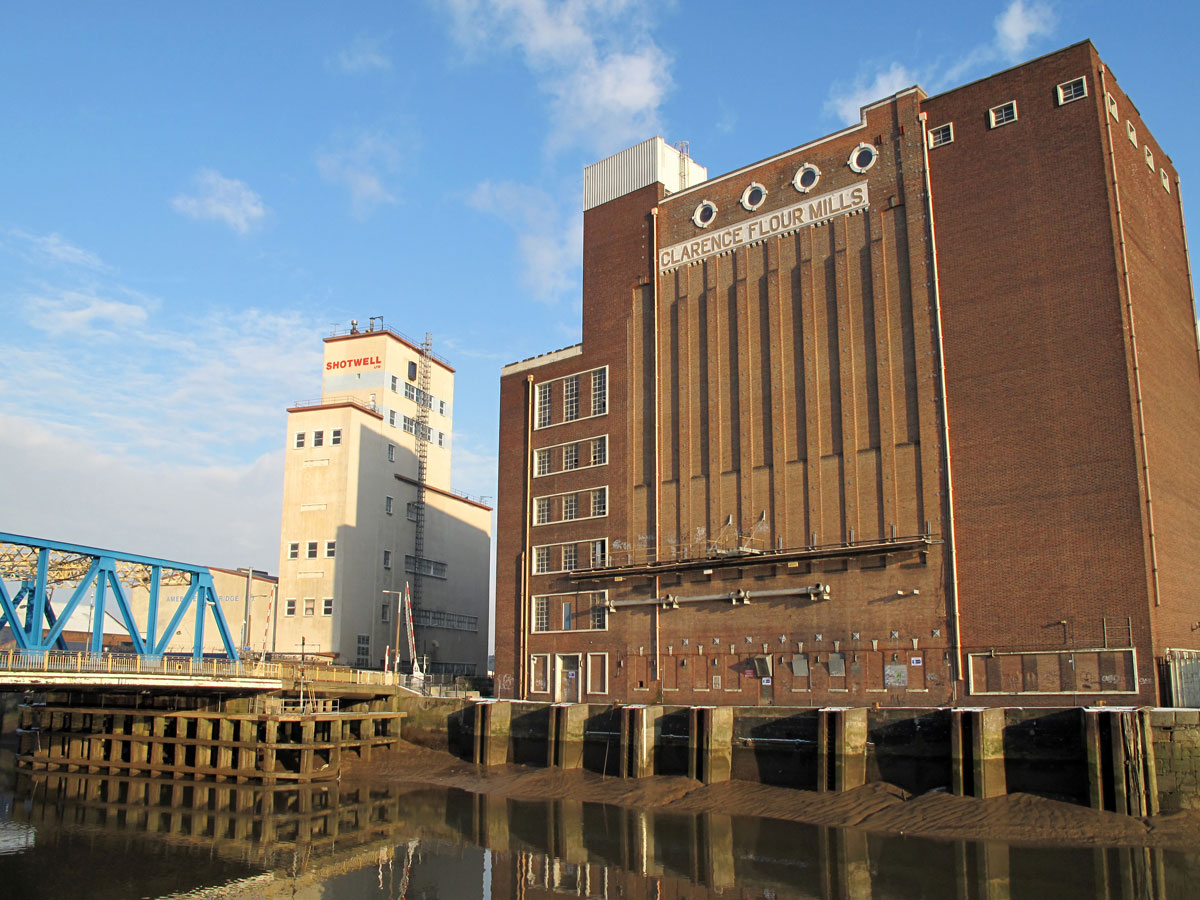
Generally speaking, my wife hasn’t got a great sense of direction, but she seems to have an inbuilt radar system that tells her which way to go when it comes to locating an unfamiliar town’s shopping centre, so off she went, leaving me to take as many pictures as I wanted, and one of the first I took was of the imposing Clarence Flour Mill next to the bridge. Since I took that photo though, the mill has been demolished, which some people may say is a good thing, but I’m not sure that I’m one of them, especially when you see what has been achieved at the Baltic Mill in Gateshead. I wouldn’t mind betting that the redevelopment won’t be half as interesting, but only time will tell.

The Clarence Flour Mills

Admittedly, the building that you see in the picture above was only constructed in 1952, but it replaced an older mill that was destroyed in a WWII bombing raid. The mill belonged to the Rank Hovis company, with the original being built for Joseph Rank in 1891. Why I mention this is because Joseph’s son, Joseph Arthur, was born in the family home in Hull’s Holderness Road, and J. Arthur Rank became synonymous with the British film industry, which some of you may remember by the famous introduction to their films.

I may not have been able to take a picture of the River Hull from Myton Bridge, but I was able to take one looking downstream from Drypool. The tide was still out, but at least there was a good view of the old port on the right-hand (western) side of the river.

By the time King Edward I acquired it from the monks in 1293, Wyke-Upon-Hull was one of the busiest ports in England, and it’s not difficult to see why it would be useful to him after he transferred his base to York in order to make life easier for attacking Scotland. In 1299 he granted the town a charter, and it was then that Wyke was renamed King’s Town-Upon-Hull.

The River Hull

From Drypool Bridge there’s a convenient boardwalk that runs alongside the Museum Quarter down the western side of the river, but there wasn’t much to look at across the water as it appeared to be in need of a fair bit of regeneration.

The Boardwalk

After Scots marauders reached York, it was decided to bolster Kingston-Upon-Hull’s defences, and the map below, drawn by Wenceslaus Hollar, shows how the town looked sometime before 1640. Note how the eastern side of the river was also included in the town’s defences.

Map of Hull by Wenceslaus Hollar (ResearchGate)

Walking down the boardwalk today would bring me to the Scale Lane Footbridge, which would have been a big asset if it had been open when I was here, as it connected the Premier Inn to the Old Town.

It was a shame that it wasn’t open, not just because of the convenience, but because I’m a secret anorak where bridges are concerned. Some people like collecting stamps, comics or even banana stickers, and in fact there’s one bloke who’s even got a collection of belly button fluff, but I’m happy enough to collect bridges. I don’t mean literally of course, just photographing them – or at least the interesting ones.

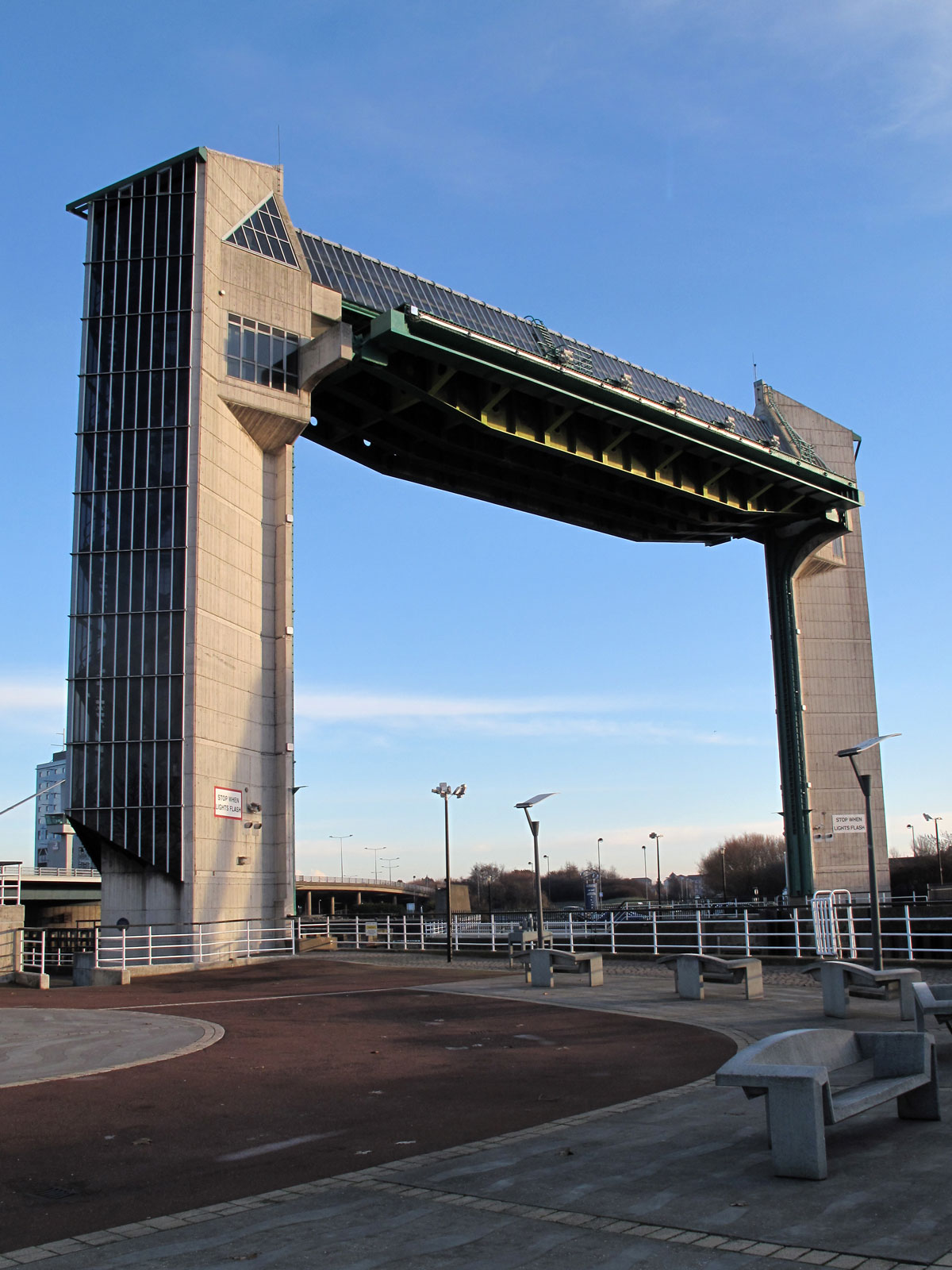
As it was, it meant that I had to continue underneath Myton Bridge to what appeared to be yet another bridge, but in actual fact was the Hull Tidal Surge Barrier.

The Hull Tidal Surge Barrier

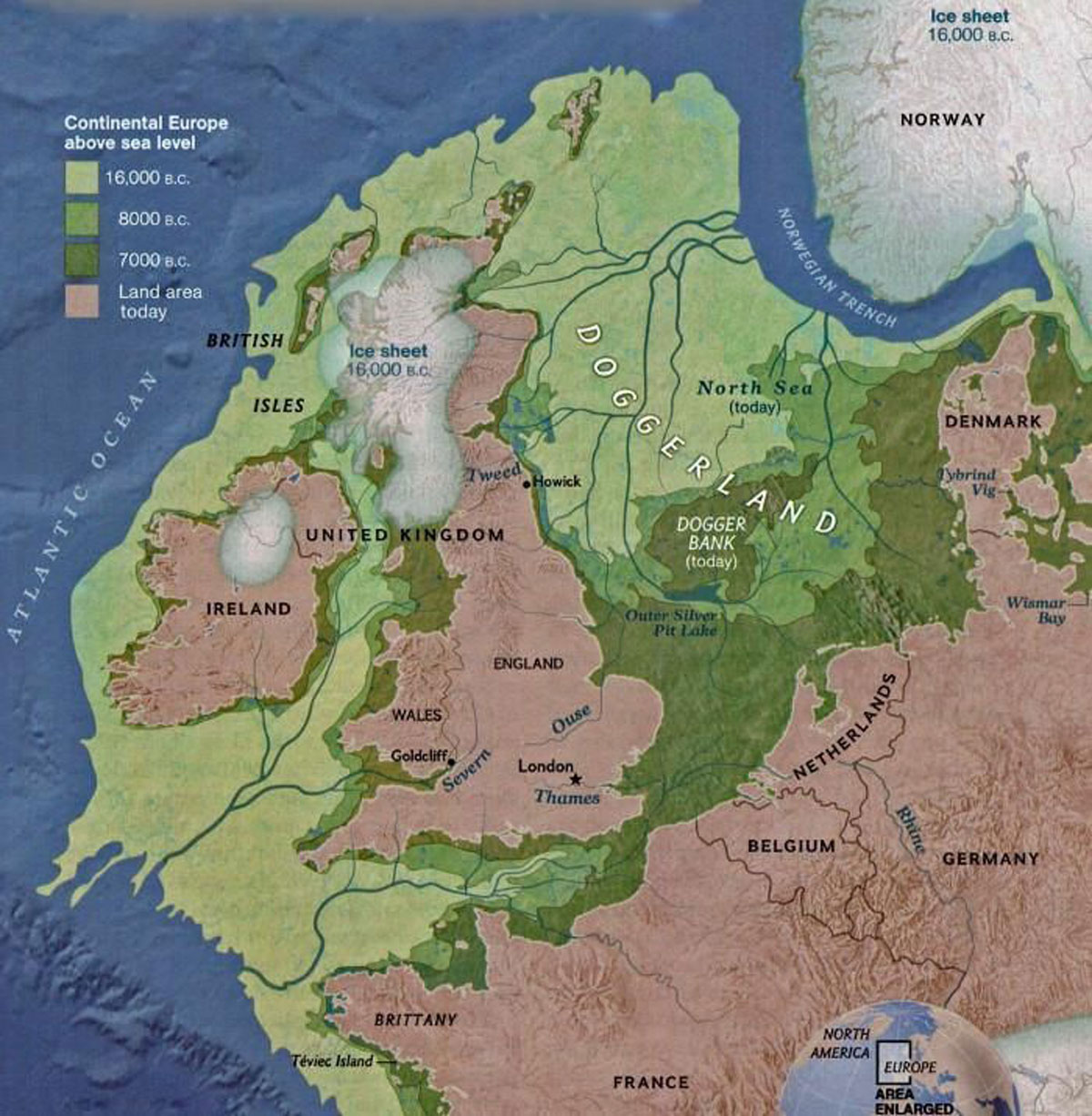
This tidal barrier opened in 1980 to protect the River Hull from tidal surges that frequently occur. Without going into too many details, the North Sea is affected by tidal surges when the conditions are right (or wrong), and the reason is because it’s a shallow sea – so shallow in fact, that until the last ice-age ended 10,000 years ago, Britain was a peninsula at the North-Western tip of Europe. The land that is now under water was known as Doggerland, and the Dogger Bank is just 50 to 120 ft (15-36m) below the North Sea. The Netherlands is the most at risk from these surges, but the coast of Eastern Britain and the Western coasts of Europe bordering the North Sea are all susceptible.

The North Sea Before and After the last Ice Age

A few yards further on was the Millennium Swing Bridge, a footbridge built in 2001, which allowed me to cross the river without any hassle to The Deep, a modern looking aquarium, or a zoo for fish as I tend to think of them. I had no intention of going inside this morning, but the attraction has at least breathed some life into this prominent location. For me, I was more interested in seeing where the River Hull joined the Humber.

Where the River Hull meets the Humber, with 'The Deep' Aquarium on the left

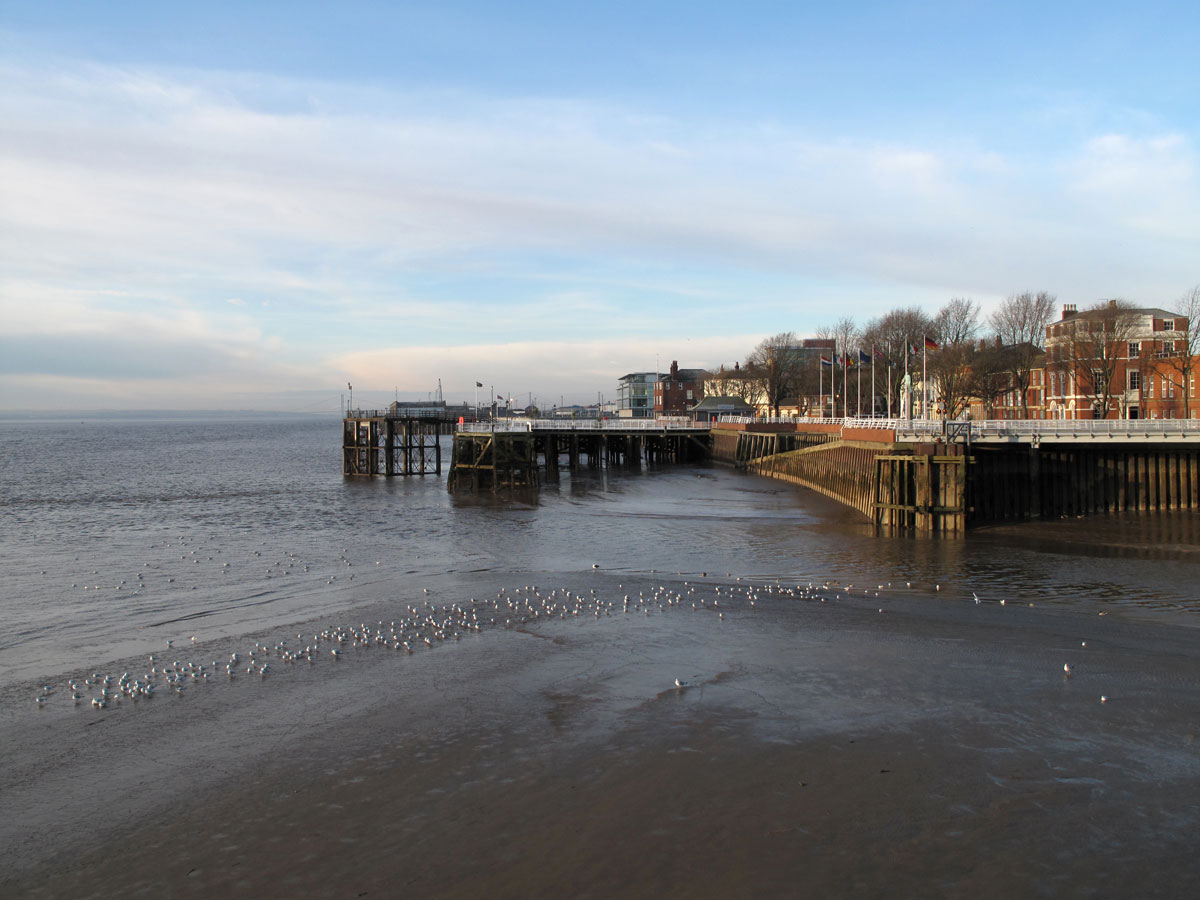
There were some decent views downriver towards the ferry terminal and also across the Humber to North Lincolnshire, but nothing to get too excited about. The tide must have just started to turn because there was a small flock of Common Gulls hanging around on the mudflats waiting  for the tide to bring their breakfast in, but after a quick look around, I was ready to cross back over the Millennium Footbridge towards Victoria Pier and the old docks, and in Pt 3 I’ll be discussing how the port developed, prospered – and then declined.

The View from The Deep across the Mouth of the River Hull to Victoria Pier

POSTED – SEPTEMBER 2023

Originally posted 2023-09-20 11:38:21.

The post Is Hull Really a ‘Crap’ Town? – Pt 2 The River Hull and How the Town Began appeared first on Easymalc's Wanderings.

]]>
https://www.easymalc.co.uk/is-hull-really-a-crap-town-pt-2-the-river-hull-and-how-the-town-began/feed/ 38 19536
Is Hull Really a ‘Crap’ Town? – Pt 1 The Ride to Hell https://www.easymalc.co.uk/is-hull-really-a-crap-town-pt-1-the-ride-to-hell/ https://www.easymalc.co.uk/is-hull-really-a-crap-town-pt-1-the-ride-to-hell/#comments Sun, 24 May 2026 13:59:20 +0000 https://www.easymalc.co.uk/?p=19500 Originally posted 2023-09-10 08:33:43.

The post Is Hull Really a ‘Crap’ Town? – Pt 1 The Ride to Hell appeared first on Easymalc's Wanderings.

]]>

Is Hull Really a 'Crap' Town? - Pt 1 The Ride to Hell

In 2003, a book was published called Crap Towns: The 50 Worst Places To Live In The UK. It wasn’t meant to be taken seriously, just a tongue-in-cheek look at some of the places that people regarded as dire. They weren’t all depressing run-down places that were still recovering from industrial decline either, because alongside them were boring Middle-England towns that had been in a state of slumber for so many years that they weren’t even considered for filming Midsomer Murders. It goes without saying that this book was right up my street, and it doesn’t take somebody with the brains of Stephen Hawking to work out that the town at the top the book’s list was Hull – or to give the town its correct name, Kingston-Upon-Hull.

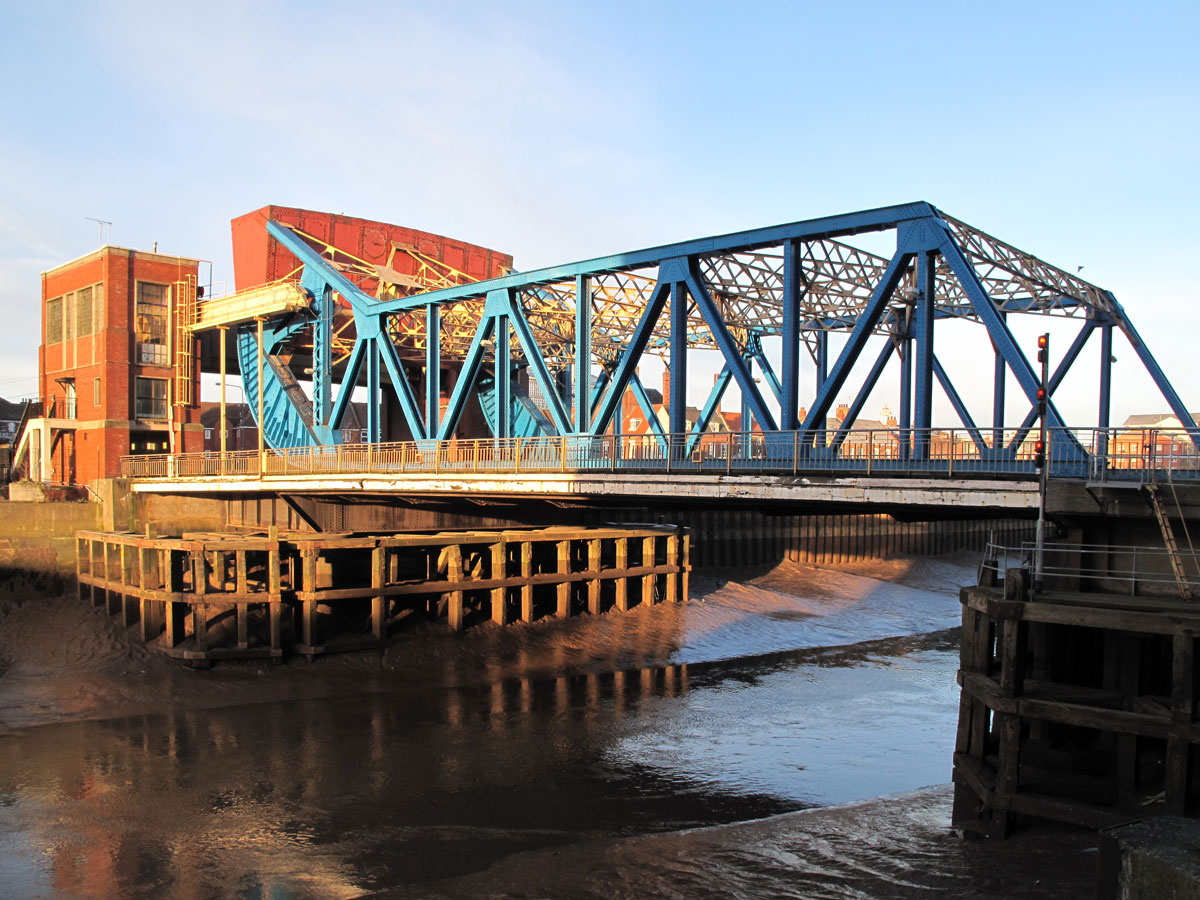
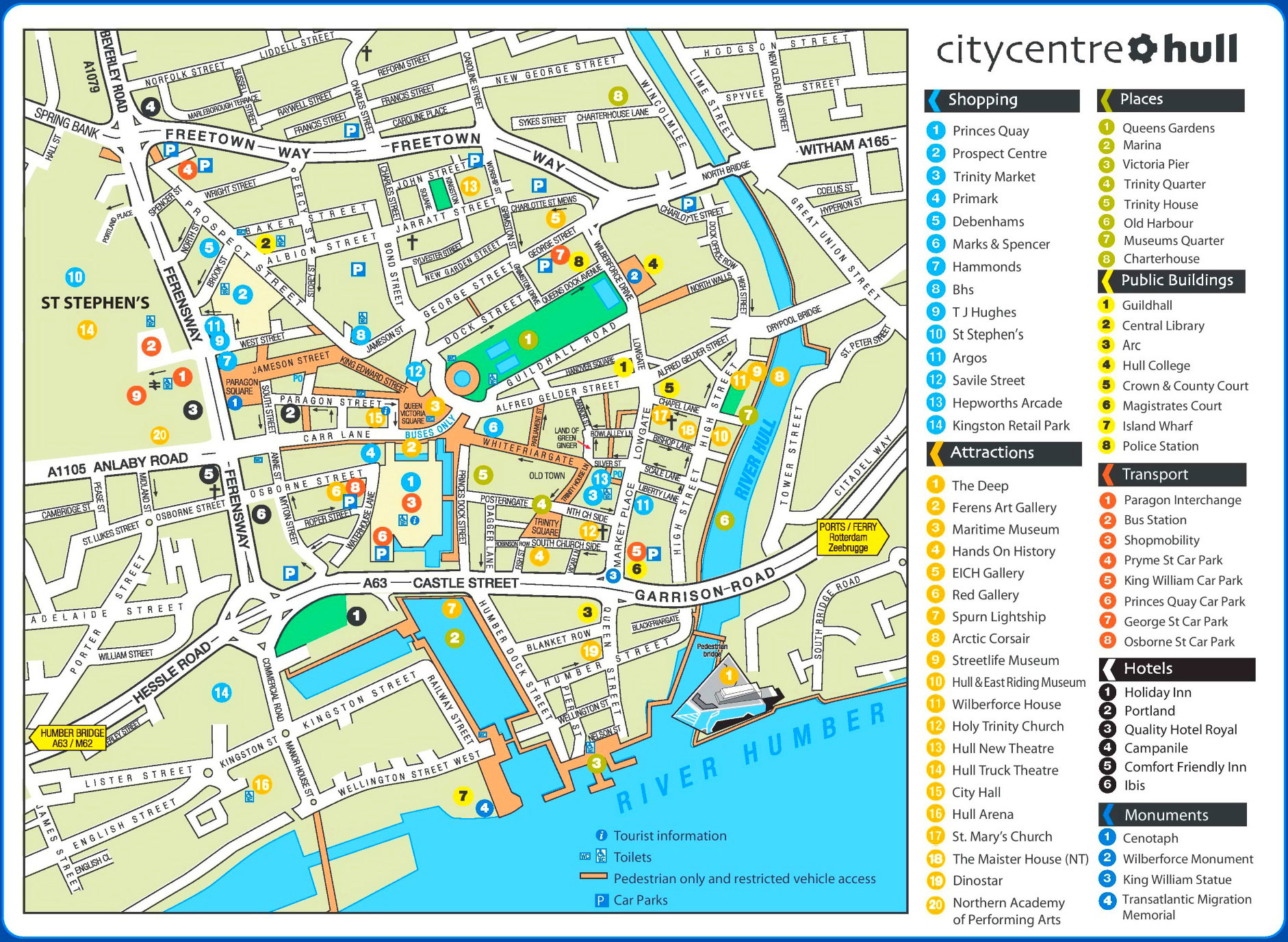
So why isn’t it called Kingston-Upon-Humber? After all, it sits on the River Humber doesn’t it? Well, yes it does, but the settlement started out on the banks of the River Hull which flows into the Humber, and in the map below you can see the proximity of the city centre to the Rivers Hull and Humber. The featured image at the top of the page shows the River Hull just before it discharges into the Humber.

Map of Hull City Centre showing the Rivers Hull and Humber

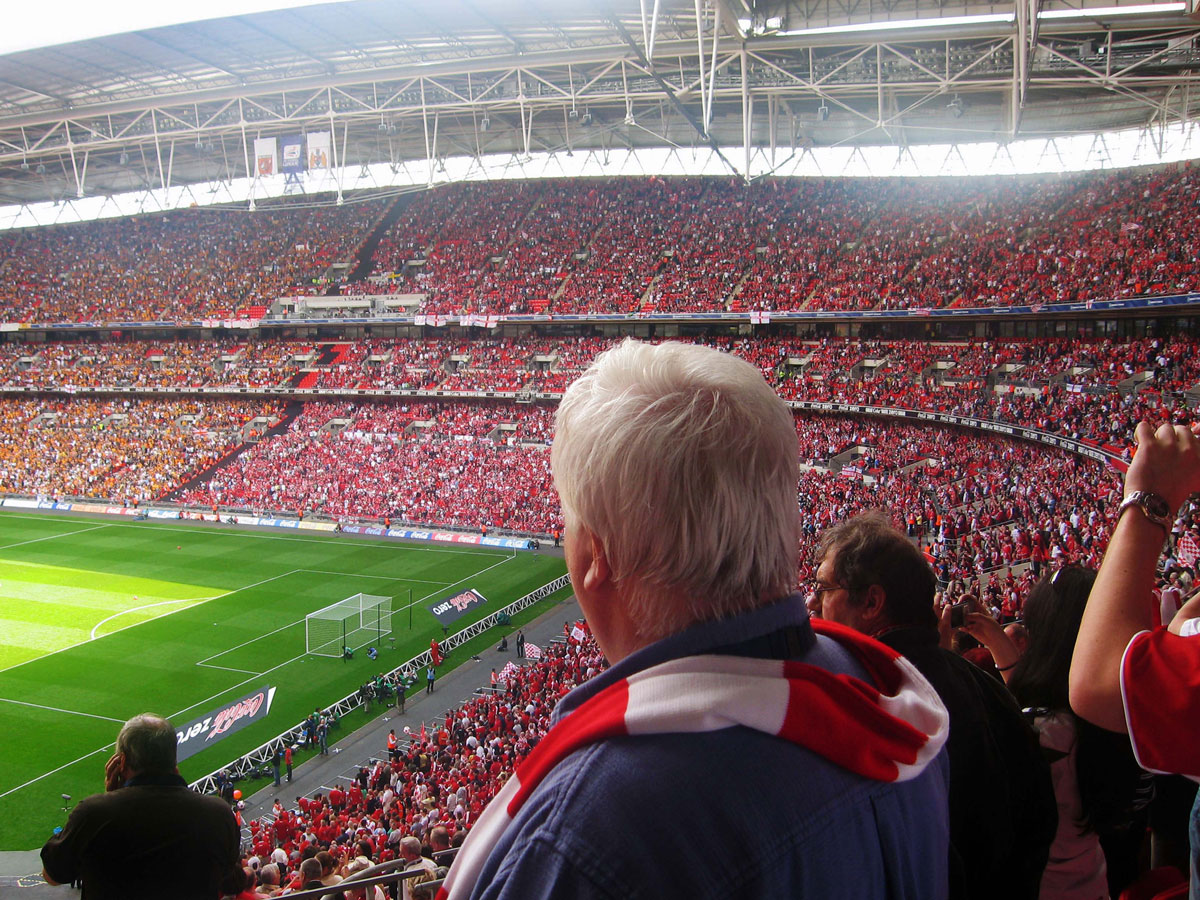
Up until I read the book, Hull hadn’t really registered much in my psyche, but five years later, the name cropped up again, but this time I had a vested interest, as the football team I support (Bristol City) were playing Hull at Wembley in a play-off final to decide who was to be promoted to the Premier League. I can’t tell you how much was at stake here, because the trophy cabinets of both clubs were practically empty – and whoever won, would not only get the reward of playing in the top tier of English football, but also a huge financial reward as well. It was a fantastic occasion – or it would have been if Hull hadn’t have won.

One of Hull’s top players was a man with the unfortunate name of Dean Windass, and as you can imagine he received plenty of stick from our fans, but he had the last laugh when he scored the only goal of the game – and Hull were promoted to the top flight of English football for the first time in their 104 year history.

Waiting for Kick-Off at Wembley

Their euphoria was short-lived however, because although they managed to escape relegation by the skin of their teeth in the first season, they didn’t survive the second, and were back down in the championship playing us again. With the prospect of gaining some revenge, I bought a couple of tickets for me and the wife to travel up to Hull, not just to see the match, but to see if Hull really was a ‘crap’ town.

It was the week before Christmas and the train journey was supposed to take us 7 hours, but those of you who remember Chris Rea’s song The Road to Hell, might understand where I’m coming from when I say that The Ride to Hull wasn’t much different. As Chris comes from the North-East himself (Middlesbrough), it gives me an excuse to play this great song.

The journey looked ominous right from the start when it started snowing even before we left Paignton. An over-zealous ticket inspector that would have put a babushka in the KGB to shame didn’t help either when she started dishing out fines like confetti for absolutely no reason at all. If I had any doubts about making this journey in the first place, then they were confirmed when we were held up for over an hour near Weston-Super-Mare when a car was left dangling over the railway line after being involved in an accident.

Just as things were settling down, we were informed over the tannoy that the train was terminating at Birmingham New Street instead of travelling up to Edinburgh. As requested, we got off the train at New Street, only to find that it was continuing to Edinburgh after all, but by the time we got back on, somebody had grabbed our (reserved) seats and they weren’t budging either. To be fair, I think they had been shoved around too, but it meant that we were stuck in the doorway at the end of the train where there was another woman with the biggest suitcase I’ve ever seen. Like the gentleman I am, I located a couple of seats for my wife and this other woman and looked after the luggage, but at Derby I got reprimanded by the train manager for taking up too much space in the doorway, and was told in no uncertain terms to shift my carcass and the luggage with it. Apparently, there was plenty of room in coach B at the other end of the train, so I told my wife and her new friend what was happening. Somehow, I had this ridiculous notion that they would follow me up through the carriages – and perhaps, even give me a hand, but they were too busy nattering to worry about trivial things like that, and so I struggled up to coach B while they were chewing the fat down the other end of the train. By the time I got there, it was almost time to get off because we had to change at Sheffield. I then had to go back and get the pair of them because they would have still been chinwagging if I hadn’t: Apparently, this woman knew Kay’s sister, so I didn’t stand a chance really did I?

Of course, with all this malarky going on, we had missed our connection at Sheffield, but as it happened, we didn’t have too long to wait for another one. The bad news though was the heating wasn’t working, and when we arrived at Hull, it felt like we had just spent the last 1¼ hours on the Trans-Siberian Express, and I couldn’t help muttering to myself that “the City had better win tomorrow.”

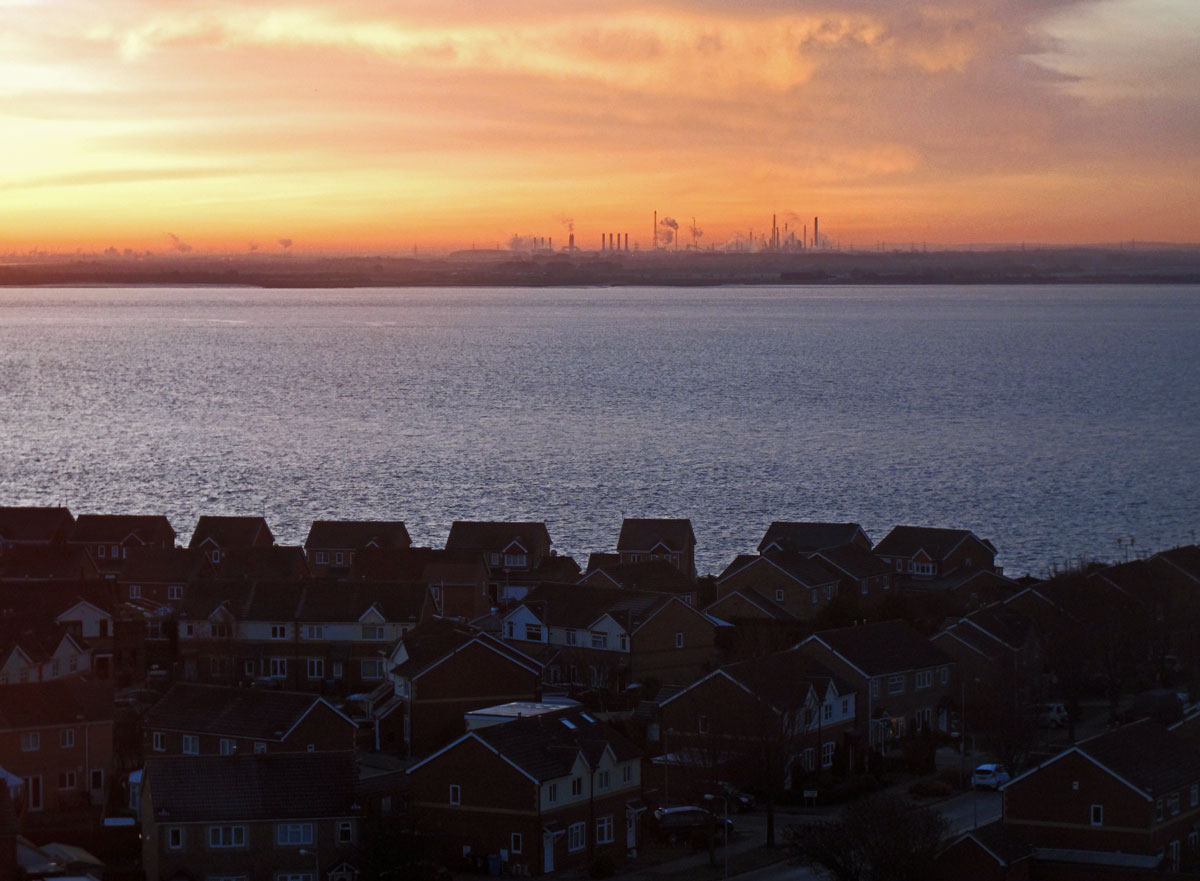
At Hull Paragon station we were transported to our hotel by a cab driver who was a staunch Tigers (Hull) fan, and a composer of a multitude of songs which he insisted on singing. To be honest, it was the best part of the journey and it was all good fun. He dropped us off at the new Premier Inn where the reception, believe it or not, was on the 7th floor. Although I don’t think we asked for it, we had been allocated a room right at the top on the 11th floor which gave us a good view of the Humber, but which also had its drawbacks as well.

View from the hotel across the Humber

When I woke up the following morning, my travel alarm clock told me that it was 6.45, and even though I wasn’t quite ready to get up, I knew I should, because there was a lot to cram in today. I put the kettle on and tried to sort out some of the debris I’d left behind from the previous evening, and then I noticed that my watch was telling me that it was only 5.55, and the clock was an hour fast. I was a bit annoyed with myself to start with, but at least I now had a leisurely start to the day – or so I thought. Within a few minutes the fire alarm was going off and the next thing I remember was that I was rushing around like Basil Fawlty.

Kay, who was still fast asleep, was out the door before me, and after rushing down 11 flights of stairs, we made it to the fire assembly point safe from harm – but with our heads absolutely spinning: To make matters worse, the temperature outside was -8° C, and we all had hardly any clothes on. Fortunately, the fire brigade were quick off the mark, but even so, it took them a fair while before they were satisfied that it was safe to go back in. We then had to walk back up 11 flights of stairs as we weren’t allowed to use the lifts. By the time we got back to our room I was suffering from frostbite and ready to jump back into bed, but that wasn’t going to happen, because the fire alarm only immediately went off again.

As much as we wanted it to be another false alarm, we couldn’t take the chance, and so off we went down 11 flights of stairs once again. Apparently, the alarm going off was down to somebody sneaking out for a fag in the corridor. As I pointed out to the night manager, there may not have been a fire, but the stairs nearly bloody killed me. I swear, that if the fire alarm had gone off again and there was a real fire, I would have been quite happy to let the smoke and flames take me down to meet the devil in hell itself.

I haven’t covered everything that happened to us on the journey north, but I think that’s enough for now, and in Pt 2 we get down to the serious business of exploring Hull to find out what the city is really like – and of course, there’s also a football match to go to.

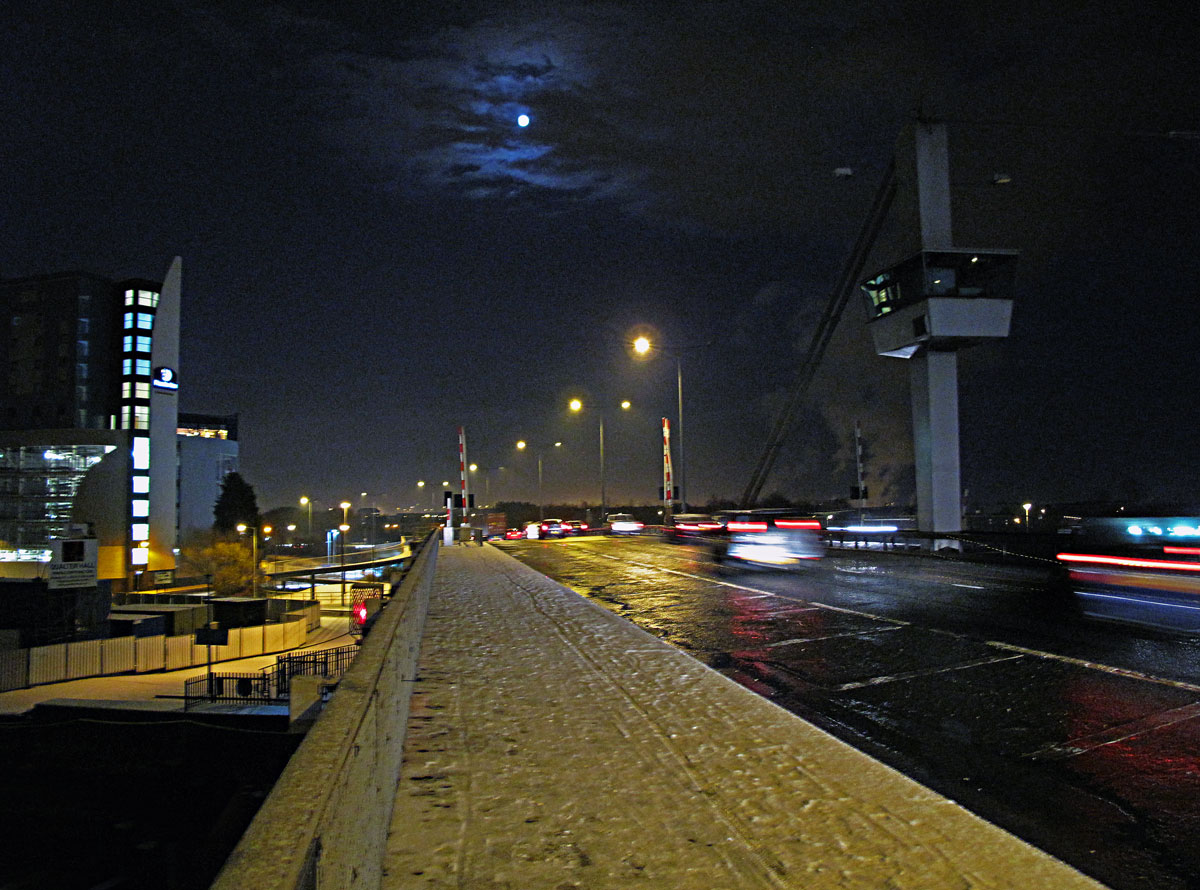
The Premier Inn on the left, next to the Myton Bridge

POSTED – SEPTEMBER 2023

Originally posted 2023-09-10 08:33:43.

The post Is Hull Really a ‘Crap’ Town? – Pt 1 The Ride to Hell appeared first on Easymalc's Wanderings.

]]>
https://www.easymalc.co.uk/is-hull-really-a-crap-town-pt-1-the-ride-to-hell/feed/ 34 19500