Is Hull Really a 'Crap' Town? - Pt 3 Getting to Grips with Hull's Maritime History
In Pt 2, we saw how the monks of Meaux Abbey created a port on the River Hull enabling them to export their wool to places like Belgium and The Netherlands, and even though King Edward I later acquired it for military purposes, the port of Kingston-upon-Hull also benefitted from the improved transport connections that were needed for his campaigns against the Scots. Since those early beginnings, Hull’s fortunes became inextricably linked to those of the port, and in this post I want to show how important the maritime trade was to this enigmatic city.
The late Middle Ages saw Hull’s trade expand beyond the Low Countries as cloth took over from wool as the main export. In return, fish was brought in from Iceland and Scandinavia, and materials needed for the local shipbuilding industry, such as flax, hemp, timber and pitch, were imported from the Baltic. What all this meant, was that by the late 17th century, Hull had become the third busiest port in the country after London and Bristol.
The 18th century saw the town grow rapidly as the Industrial Revolution created a surge in exports: The steelworks of South Yorkshire were providing the raw ingredients for production of high quality cutlery in Sheffield, and the increased output from the woollen mills of Yorkshire and cotton mills of Lancashire meant that the wharves on the River Hull were being stretched to their limit. Something needed to be done, and the answer came in the form of a series of docks that became known as the Town Docks.
Below is a map showing the city before the building of the Town Docks. On the western side of the River Hull is the medieval wall protecting the city, and on the eastern side is the castle and curtain wall protecting the port.

By 1773, The Haven, as the port on the River Hull was known, had become unfit for purpose: The river was narrow, tidal and muddy, but not only that, it was becoming so overcrowded that ships were getting damaged, and so a consortium of interested parties formed the Hull Dock Company with the purpose of constructing a new dock.
After being granted permission to use the old city walls as part of the construction, the Dock Company eventually decided to build the new dock along the path of the north wall as far as Beverley Gate. Starting work in 1775 it took three years to build, with its entrance via the River Hull just south of the North Bridge, which seemed a bit short-sighted if you ask me, because it meant that ships still needed to gain access via the Haven.
The map below (drawn in 1786) shows how The Dock, as it was simply called, replaced the north city wall. Note also how the castle had been replaced by a citadel.

With trade still growing, it was inevitable that the Dock Company needed to put their thinking caps on again, and the plan they came up with was to build a Humber Dock at the southern end of the city walls which would give direct access, via an outer basin, to and from the Humber. Construction started in 1803, and after encountering a few technical problems, the new Humber Dock was officially opened on 30th June 1809, with the first dock now being renamed the Old Dock.
One of the stipulations of building the Humber Dock was that once trade had reached a certain level, then a third dock should be built connecting it with The Old Dock and this condition was met in 1825. Continuing to follow the line of the old City Walls, Junction Dock was completed in 1829.
The map below shows how the city looked in 1866. By now the three Town Docks have virtually made the old part of the city an island, and those of you who have looked at the map closely, will notice that the Old Dock and Junction Dock have been renamed Queen’s Dock and Prince’s Dock respectively. This was in honour of a visit made by Queen Victoria and Prince Albert in 1854.

As trade continued to increase, then so did the number of docks, and by the time the map above had been drawn up, you can see that Victoria Dock and its associated facilities had taken over the citadel on the eastern side of the river and a new ‘West Dock’ (later re-named Albert Dock) had been constructed along the banks of the Humber on the western side. As time progressed, more were to follow, and a lot of this growth was down to the needs of an increasing population that was required to work in Britain’s ever expanding industries.
The Industrial Revolution rapidly changed Britain’s green and pleasant land into one of towns with smoking chimneys and rows of terraced houses – but that didn’t happen in Hull, or at least not to the same degree. The areas where coal and minerals could be mined were not found in any great quantities around this low-lying part of Yorkshire, and the city’s fortunes lay with its status as a port and the trades associated with it.
Many of these local trades were connected with the traditional business of whaling, and I think it’s fair to say that Hull’s reputation as a major whaling port is not something that the city is particularly proud of – and not something that I want to dwell on for too long either. For people living in the Arctic back then, whale meat was a source of food that was necessary to survive and the mammals were caught in small numbers, but Hull whalers caught them for other reasons and in larger numbers. The blubber was used for heating and lighting (and of course this was before alternative ways were found for providing it), and whalebone (better described as baleen as it’s not really bone at all) was used for manufacturing all manner of stuff from umbrellas, fishing rods and female undergarments. How many whales were killed by Hull whalers I wouldn’t know, but it’s also worth pointing out that a good number of those involved also lost their lives in what was an extremely dangerous business.
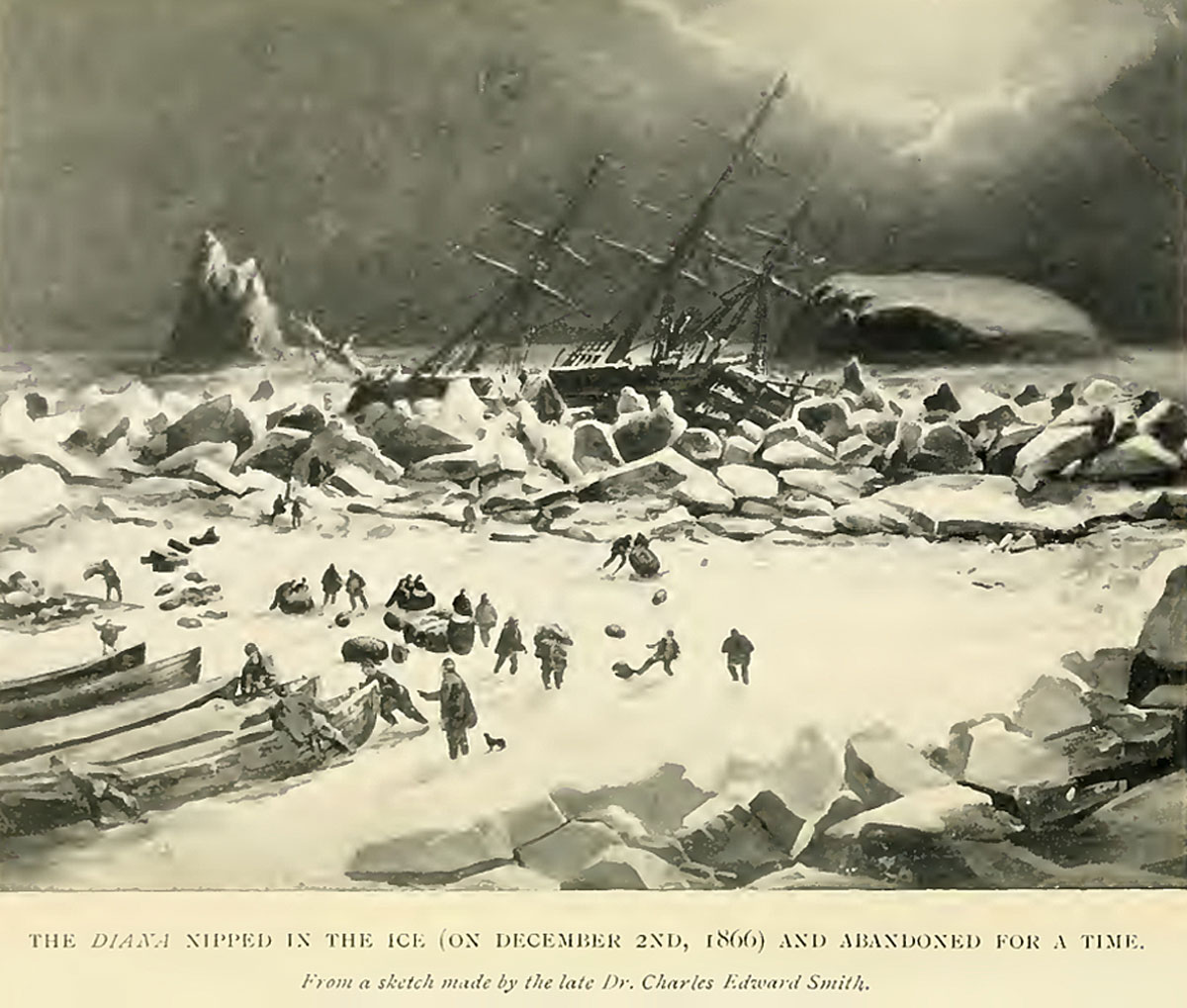
The pic below shows the Hull whaler Diana trapped in ice for over six months (1866/67) in Baffin Bay. The disaster claimed the lives of 13 crew, and when the ship ran aground off the Lincolnshire coast in 1869, she became the last ship of the once large and lucrative Hull whaling fleet.
The second half of the 19th century also saw a different kind of activity at the port when over 2 million migrants disembarked at Riverside Quay on their way to a new life. They came from places all over Northern Europe, including Denmark, Finland, Germany, Norway, Russia and Sweden. After some obligatory form-filling, trains then took them to ports such as London, Southampton and Liverpool where they boarded liners that took them to the New World.
There’s a sculpture by Neil Hadlock, unveiled in 2001, that remembers these events and is located on reclaimed land at the Bullnose where ships waited for high tide before entering Humber Dock.

In 1897, Hull was granted city status, and although prosperity had reached its peak by the time WWI broke out, it was still a major target for the Luftwaffe in WWII. Many British cities were heavily bombed during the Blitz, but Hull doesn’t often get mentioned as a city that was badly hit, and yet much of the city centre was destroyed and 95% of the city’s houses damaged, resulting in half the 320,000 population being made homeless: Around 1,200 people were killed and 3,000 injured during those air raids, but the port did manage to keep functioning. With all this going on, the people still never lost their sense of humour: The Hull comedian, Norman Collier tells of how his family were filing into an air raid shelter one night when his ‘Mam’ dashed back towards the house “Where are you going, Mary,” said Dad. “Back for my false teeth,” she replied. “Come back here, the Germans are dropping bombs not meat pies,”.
Meat pies are a staple food in Northern England – and so is Fish n’ Chips, so much so, that during the First and Second World Wars, it was one of the few foods that wasn’t rationed in Britain, as it was a firm favourite with the working classes and helped to keep up morale.
Coastal communities everywhere have always been involved in catching fish, but Hull’s rise as a major fishing port began with the discovery of large shoals of cod (and herring) on the Dogger Bank in the mid-1800s. As steam replaced sail, ships started to venture further afield to places like Iceland and the Barents Sea where there were plentiful supplies of cod and haddock which were the British public’s preferred choice of fish to go with their chips (and still is). With an ever-increasing amount of fish being offloaded, it was decided to build a dedicated dock on the Humber, west of the Albert and William Wright Docks. Named after the patron saint of fishermen, St. Andrew’s Dock opened in September 1883 and naturally spawned a host of shore-based jobs to service the 350 or so trawlers. Fish factories and fish merchants worked alongside engineers, shipwrights, net makers and riggers, many of whom lived along the Hessle Road.
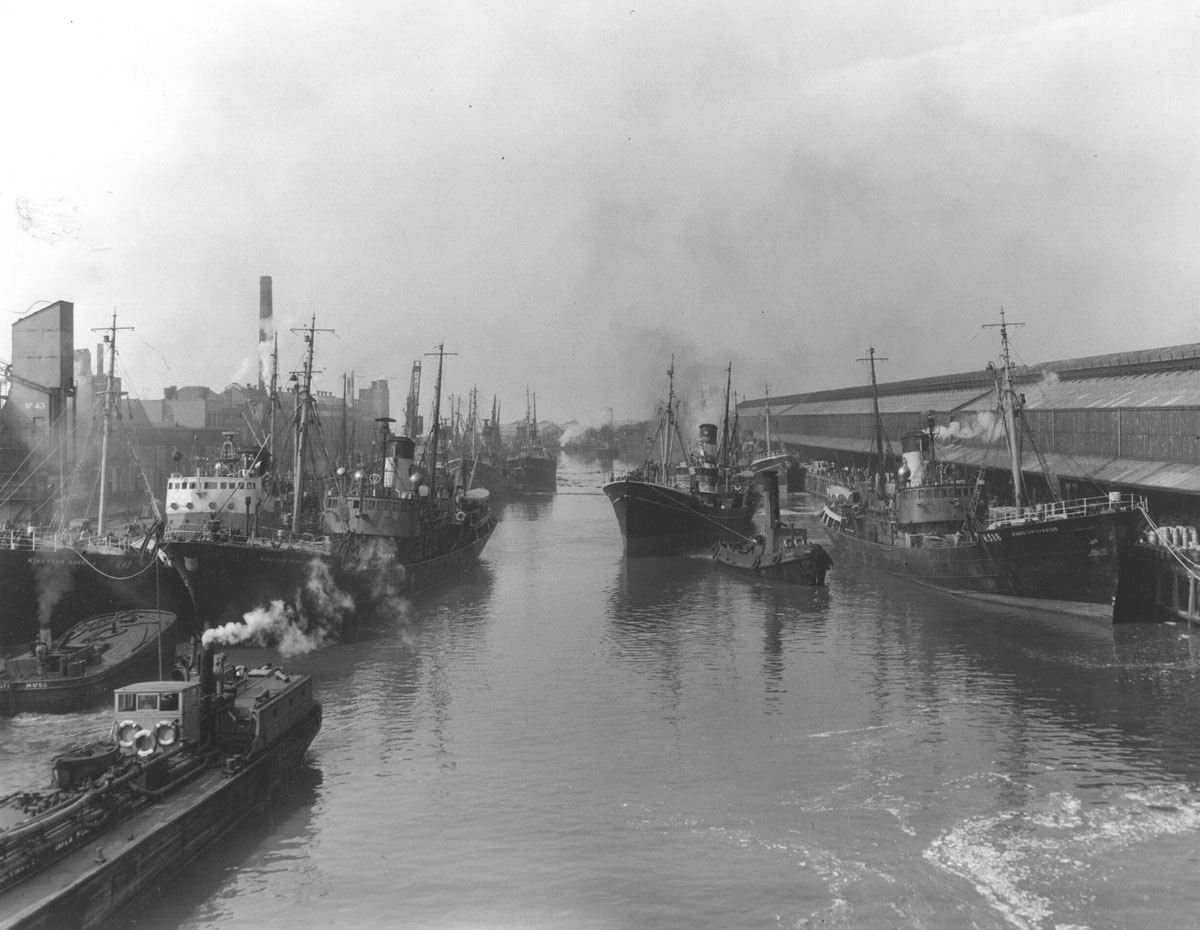
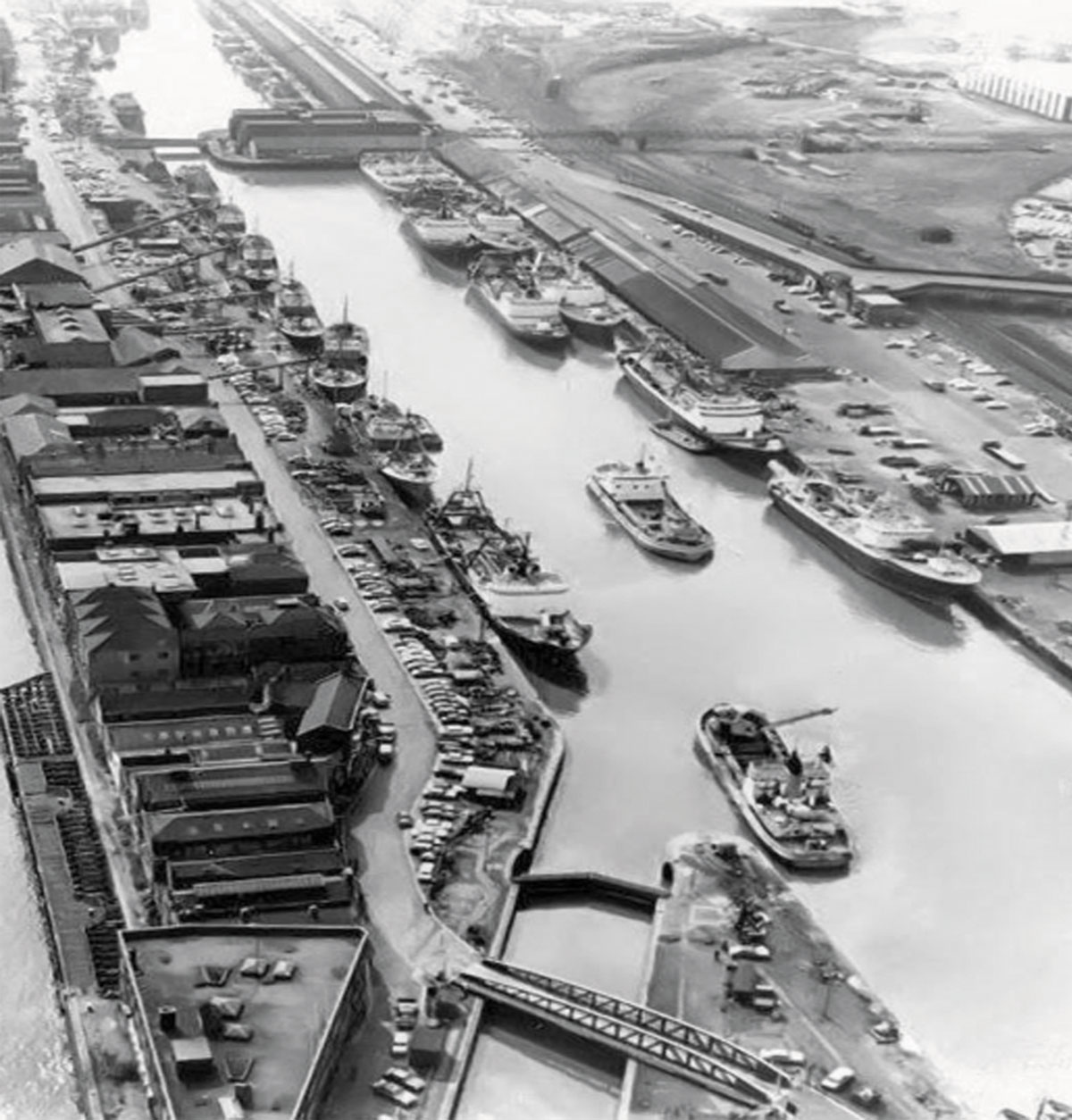
The 20th century saw Hull become one of the world’s largest fishing ports. Thanks to a suspension of fishing during the Second World War, stocks had greatly increased, and the introduction of freezer trawlers meant that Hull fishing boats could be found in places like Iceland, Norway, Bear Island (Svalbard), Greenland and Labrador. The men from Hull didn’t have it all their own way though because they had stiff competition from their neighbours across the Humber at Grimsby, who had a fleet of freezer trawlers of their own.
These freezer vessels were too big for the Fish Dock (as St Andrew’s Dock was commonly known) and so operations were transferred to the William Wright Dock in 1975. This dock, which had opened in 1873, was joined up with the adjacent Albert Dock in 1910, and redeveloped in the 1950s.
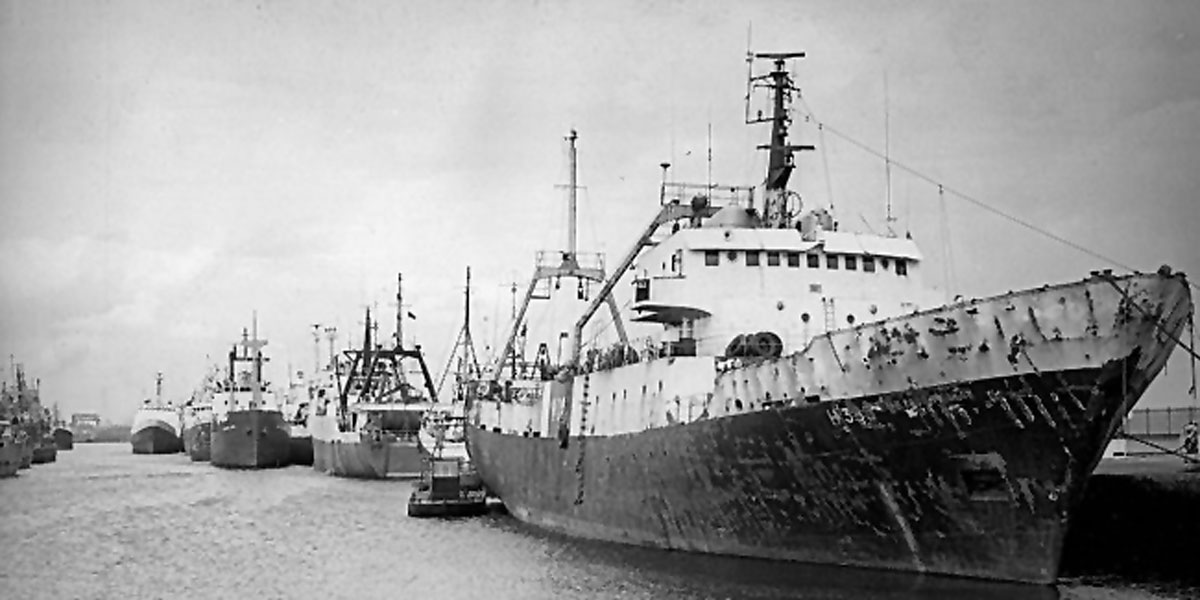
Of course, hauling in large catches of fish on an industrial scale was never going to be sustainable, and the Humber ports of Hull and Grimsby were hit hard when territorial limits were imposed around the coasts of their main fishing grounds.
The biggest altercation came with Iceland where boats from Hull had fished since the 15th century. There had been many disagreements over the years, but in 1958 several countries held a meeting at the United Nations in which they were seeking an extension of their territorial limits to 12 nautical miles. No agreement was forthcoming, but Iceland unilaterally imposed it anyway. Needless to say, Britain (and other nations) refused to accept Iceland’s decision and British fishing boats were escorted to the Icelandic fishing grounds by the Royal Navy. Confrontation was inevitable, and although there were no serious deliberate incidents regarding casualties, both sides suffered damage to boats and equipment.
In total, there were three Cod Wars as they became known: The first was from 1958-1961, the second, 1972-73 and the third from 1975-76. You might not think that Iceland was in a position to take on the Royal Navy, but it held a trump card: It lies in the centre of the GIUK Gap, a strategic and important location for NATO. GIUK stands for Greenland, Iceland and the UK, who between them control access between the Norwegian Sea and Atlantic Ocean. When Iceland threatened to pull out of NATO, other members had to sit up and take note, and a NATO brokered agreement in 1976 gave Iceland pretty well much what they wanted – an exclusive 12 mile zone where only Icelandic boats could fish and a 200 mile fishery zone where other nations could only fish with Iceland’s permission. The UK responded by abandoning its ‘open seas’ fishing policy and introduced a 200 mile exclusion zone of its own, and since 1982, a 200 nautical mile zone has been the international standard under the UN Convention on the Law of the Sea. The Cod Wars had come to an end, but so had Hull’s prosperity.
It appears that there was no long term fallout from the affair as far as relations with Iceland were concerned because Hull is twinned with Iceland’s capital, Reykjavik, and ironically, Icelandic companies have set up fish processing plants in Hull, which at least has provided much needed employment for the locals.
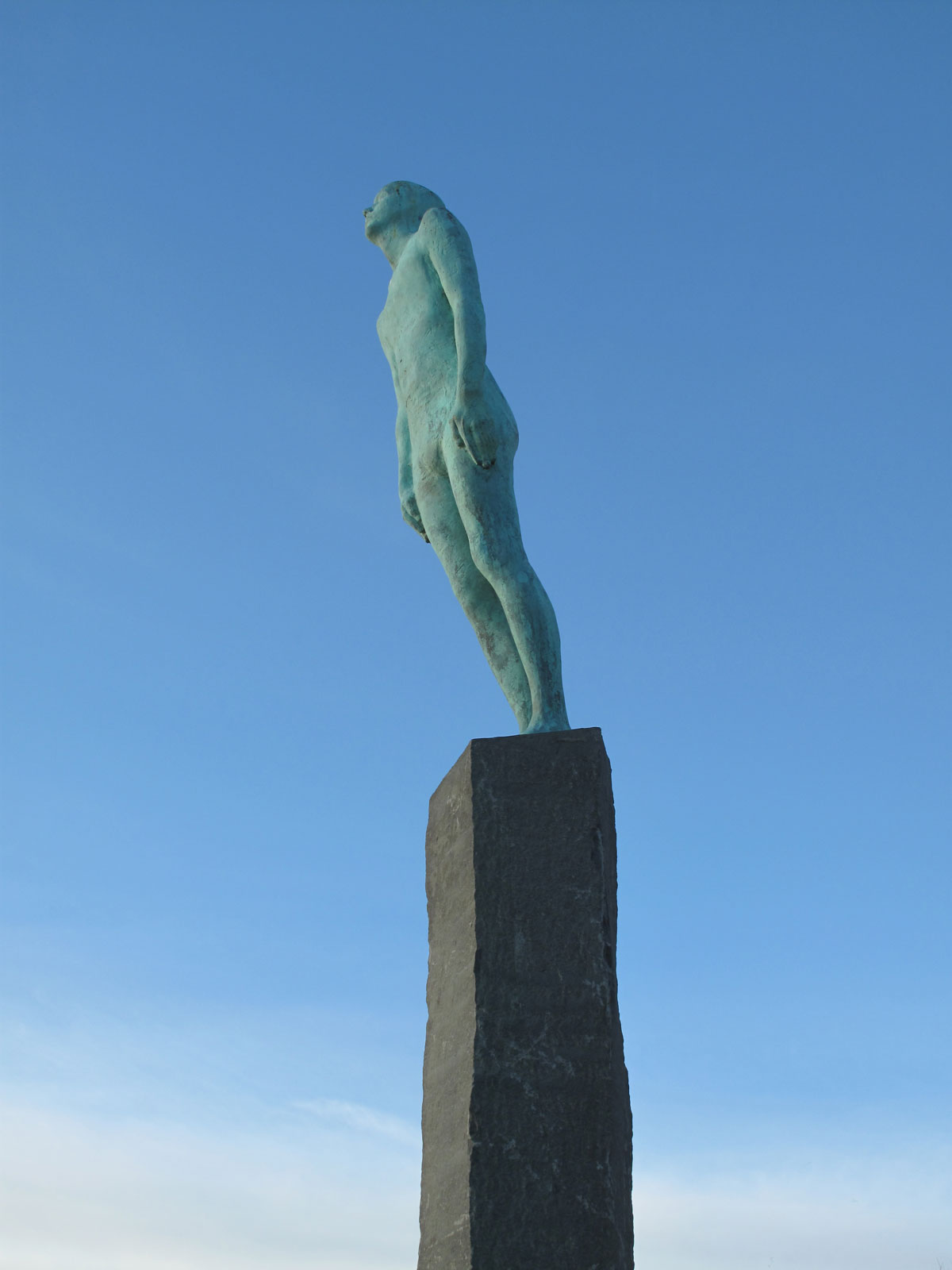
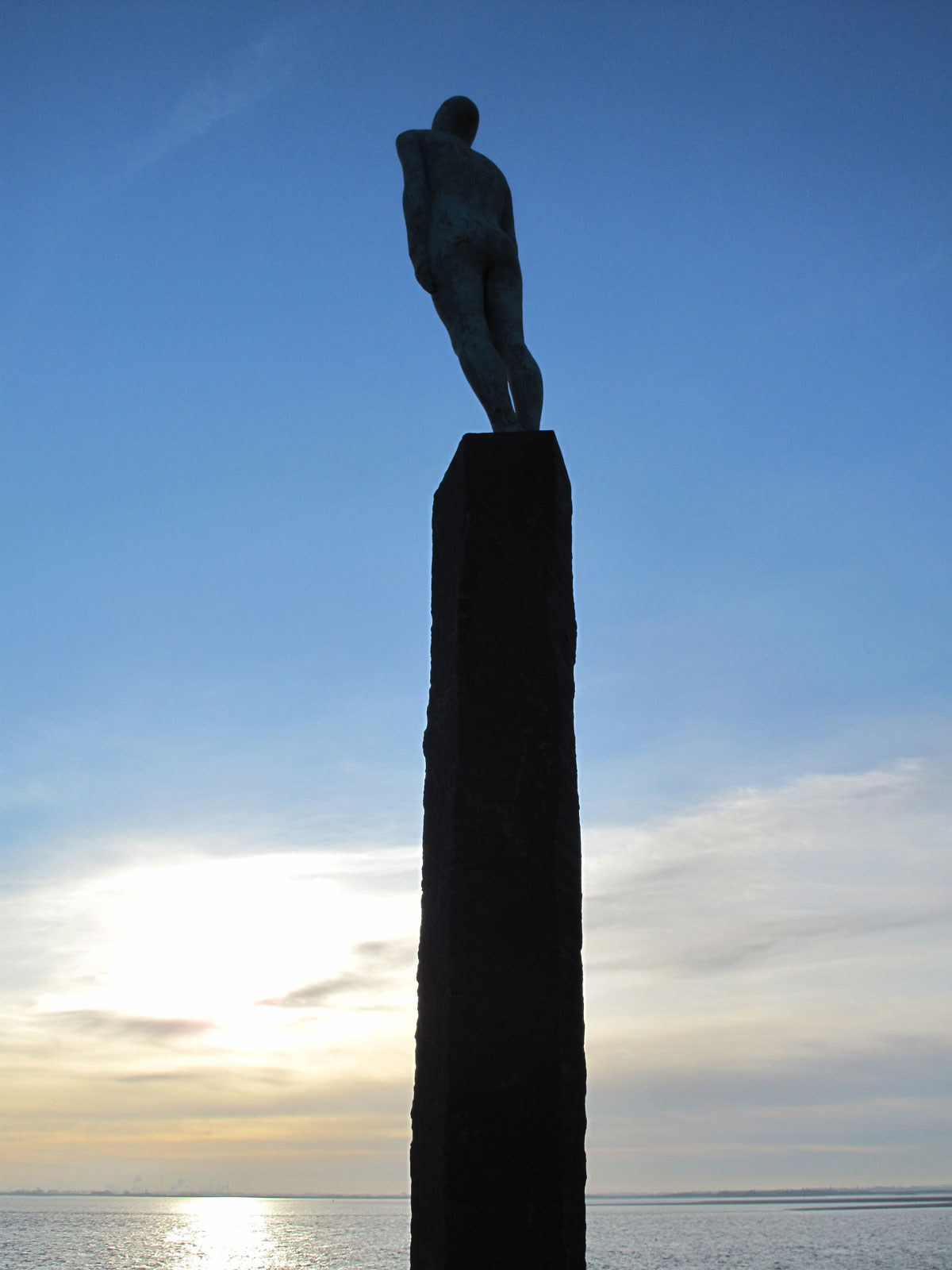
As if to cement this strange love affair, there’s a statue where the River Hull meets the Humber called ‘Voyage’ which was presented to the city by its Icelandic creator, Steinunn Thorarinsdottir in 2006. It looks out over the Humber towards the North Sea and in the direction that fishermen would have taken on their journey north towards the Icelandic fishing grounds. There’s a twin statue in the small village of Vik in Iceland, where Hull fishermen were looked after when any of their ships came to grief. As far as I know, the one in Vik is still standing, but the one in Hull was stolen by some toerag in 2011, but the council dipped into their reserves and asked the artist to make another one. I took the pictures below when the original was still there
The creation of the 200 mile limit around the traditional fishing grounds for Hull trawlers meant that the boats had nowhere to go. Not only was it bad news for the fishermen, but it was also bad news for Hull in general as many people were employed in the business. As with other towns in post-industrial Britain, recovery from such a fatal blow was going to take some time, and the area around the docks must have left the city looking a very forlorn place indeed. So what’s happened since? Many of the old docks have been covered over and turned into shopping centres and such like – but not all. On the eastern side of the river, Alexandra Dock, which was opened in 1885 by the Hull and Barnsley Railway to facilitate the export of coal from the South Yorkshire collieries, is being transformed into Green Port Hull, a development which includes renewable energy projects and the construction of blades for offshore wind turbines.
On the other side of the Holderness Drain from Alexandra Dock is the King George Dock (built in 1914) and the Queen Elizabeth Dock extension (1969). Since 1965 it’s been used as the departure point for ferries to The Netherlands, and today is used by P&O ferries for its service to Rotterdam. Beyond the ferry port is Salt End Oil Jetties, which service a large chemical plant and power station, so the port still seems to have some future – and so it should.


I ended my previous post by looking across the River Hull to Victoria Pier from The Deep aquarium, and now that I’ve explained how important the maritime trade has been to the city, it’s time to walk over the Millennium Bridge to see how the Town Docks look today.
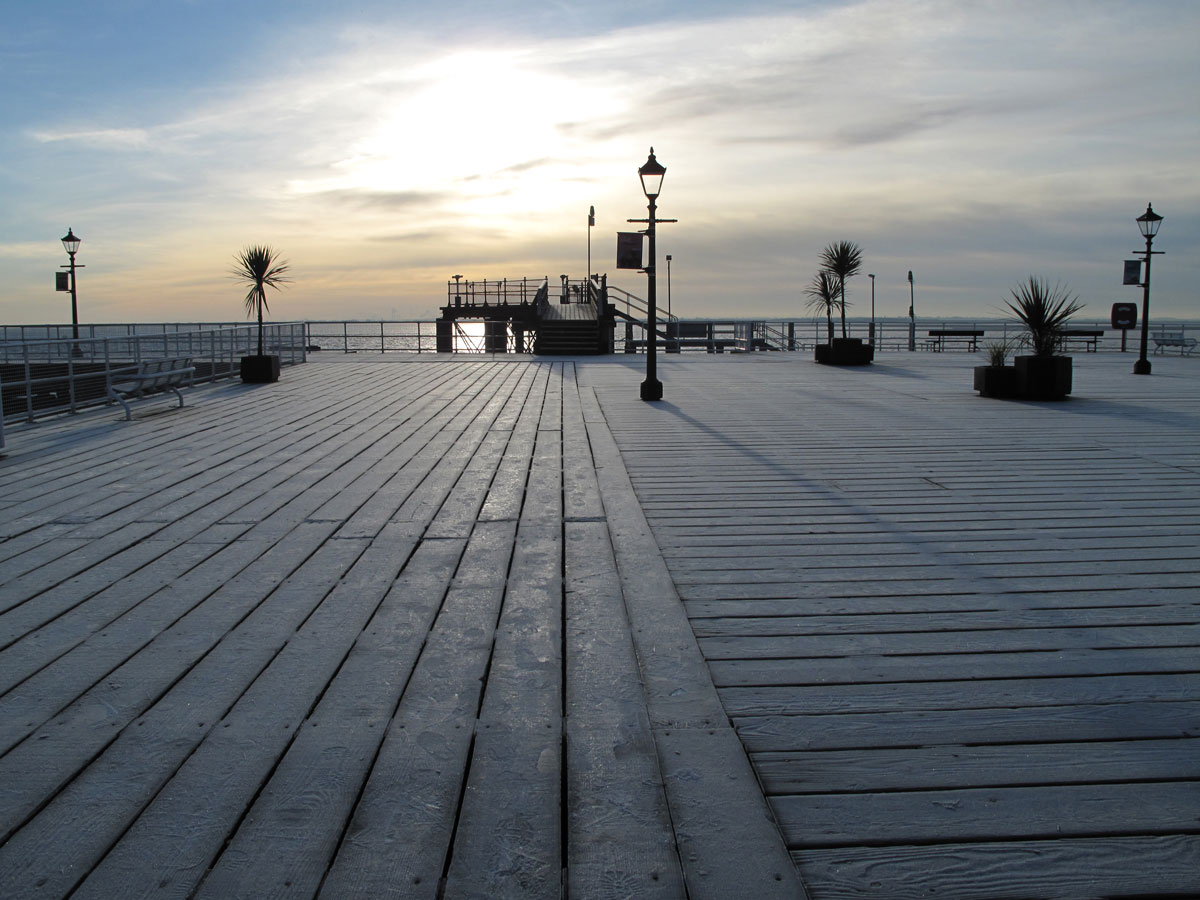
My first impression of the western side of the river was not that great to be honest as much of it seemed to be in need of some urgent regeneration, but it seems as though since I was here, that’s exactly what has happened, or at least to some degree. I walked down to the Voyage statue and along to Victoria Pier, which although it was a Saturday morning, was still eerily quiet. I was the only one around as I walked across the frosty wooden boards to gaze out over the Humber estuary. It was quite a sublime moment, and not one that I expected (see featured image at the top of the page).
Continuing around past the Minerva, a pub that I wouldn’t have been able to resist had it been open, I then crossed over the Humber Dock Basin via the lock gates. This was where ships waited to enter the Humber Dock, the second of the Town Docks to be built if you remember.
The dock closed to shipping in August 1967 and permanently in 1969, but it’s now, believe it or not, a marina. It came as a complete surprise to me as I never thought of Hull having a marina somehow, but I don’t know why not come to think of it. Another surprise was seeing the Spurn Lightship moored up here.
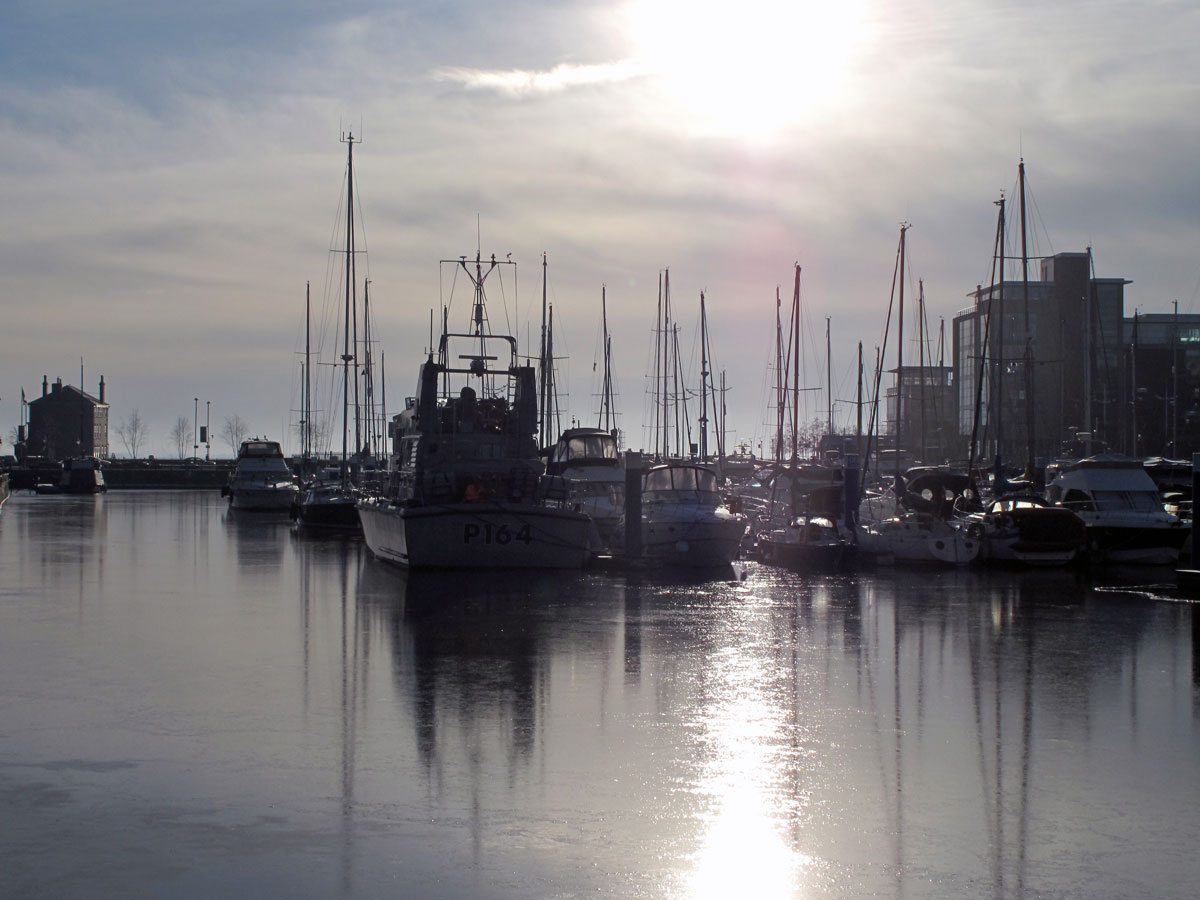
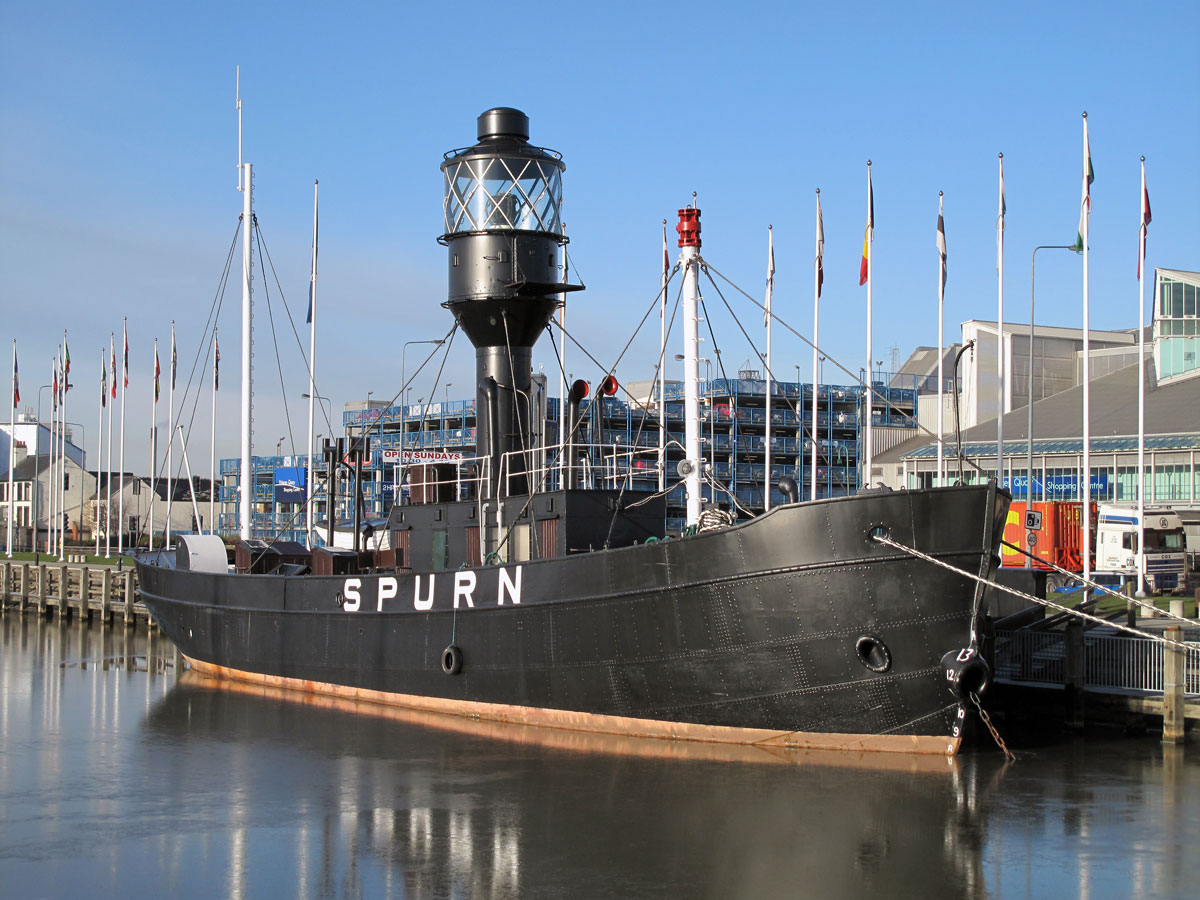
Walking up the western side of the dock, I needed to cross the Railway Dock Swing Bridge in order to get to Castle Street. The Railway Dock incidentally, was opened in 1846 to serve the Hull and Selby Railway and is now part of the marina. Castle Street forms part of the busy main A63/M62 connection to Leeds and the subject of road improvement schemes for years. Since I was here, an impressive looking new bridge called Murdoch’s Connection has been installed to give pedestrians a safer link to the town centre whilst allowing traffic to flow more freely underneath.
The video below is by the ALW Research team.
Having negotiated Castle Street without the help of a £22m bridge, I came to what was the former Prince’s Dock (originally Junction Dock) which closed in 1968 and redeveloped as a shopping centre called Prince’s Quay in 1991. Needless to say, I didn’t stop to find out what was inside as I don’t do shopping – unless it’s for books.

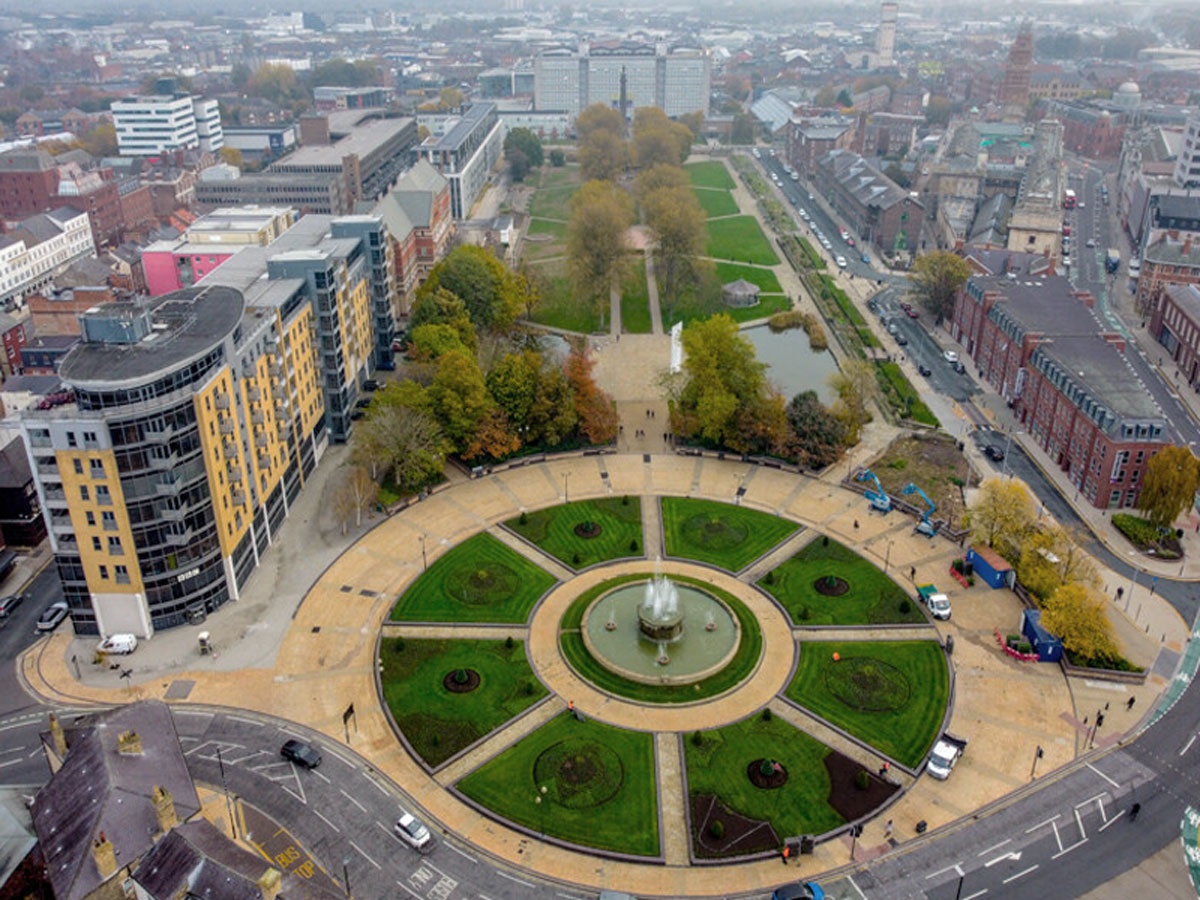
Instead I focused on reaching the first dock Hull had – The Dock/Queen’s Dock – except that it wasn’t there – and that’s because in the 1930s they filled it in after there was no more use for it.
The first pic below is how the dock looked before it was transformed into Queen’s Gardens, and the second one is a view of how it looks now thanks to the Grey Arrows Drone Club.

I can well understand why people love to use drones, but I’ve never got into it, and the best I can show you is how cold it was the day I was here.
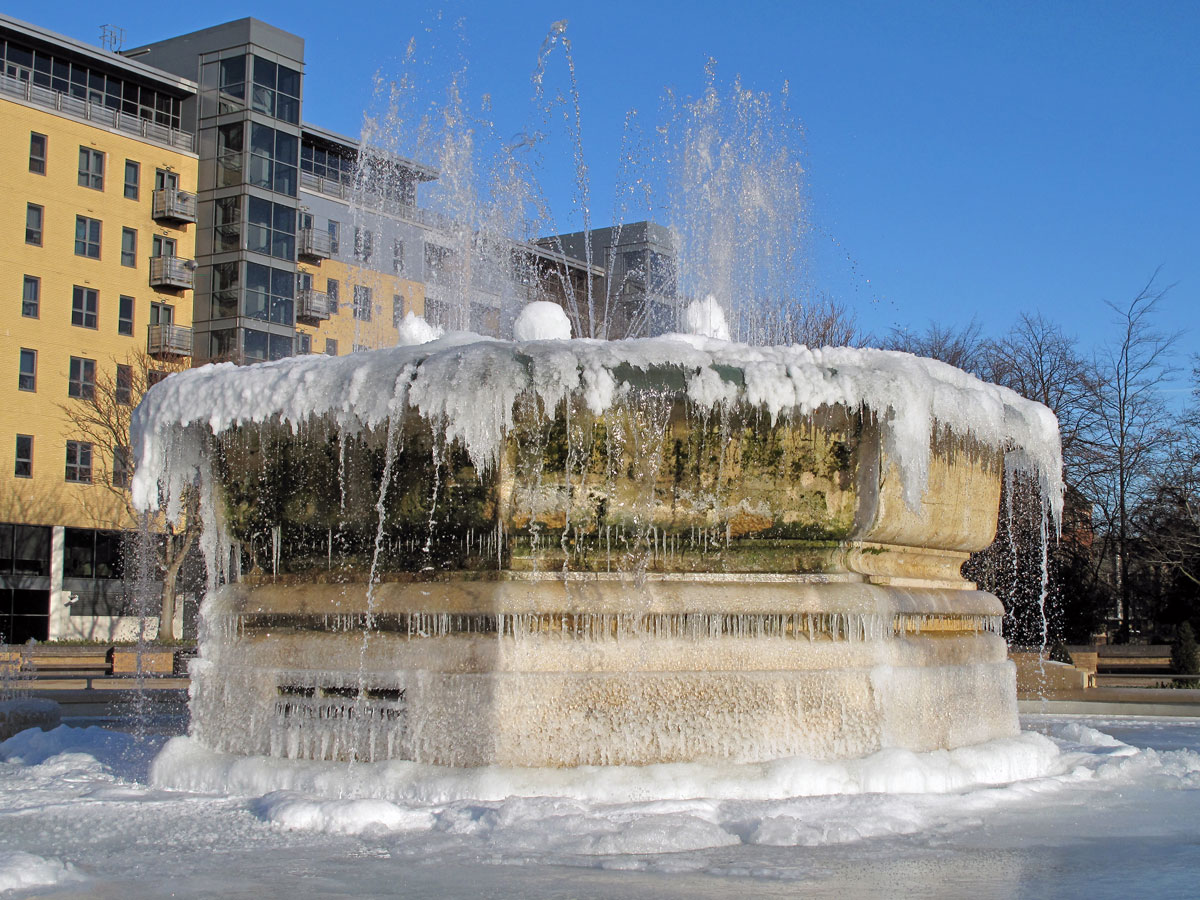
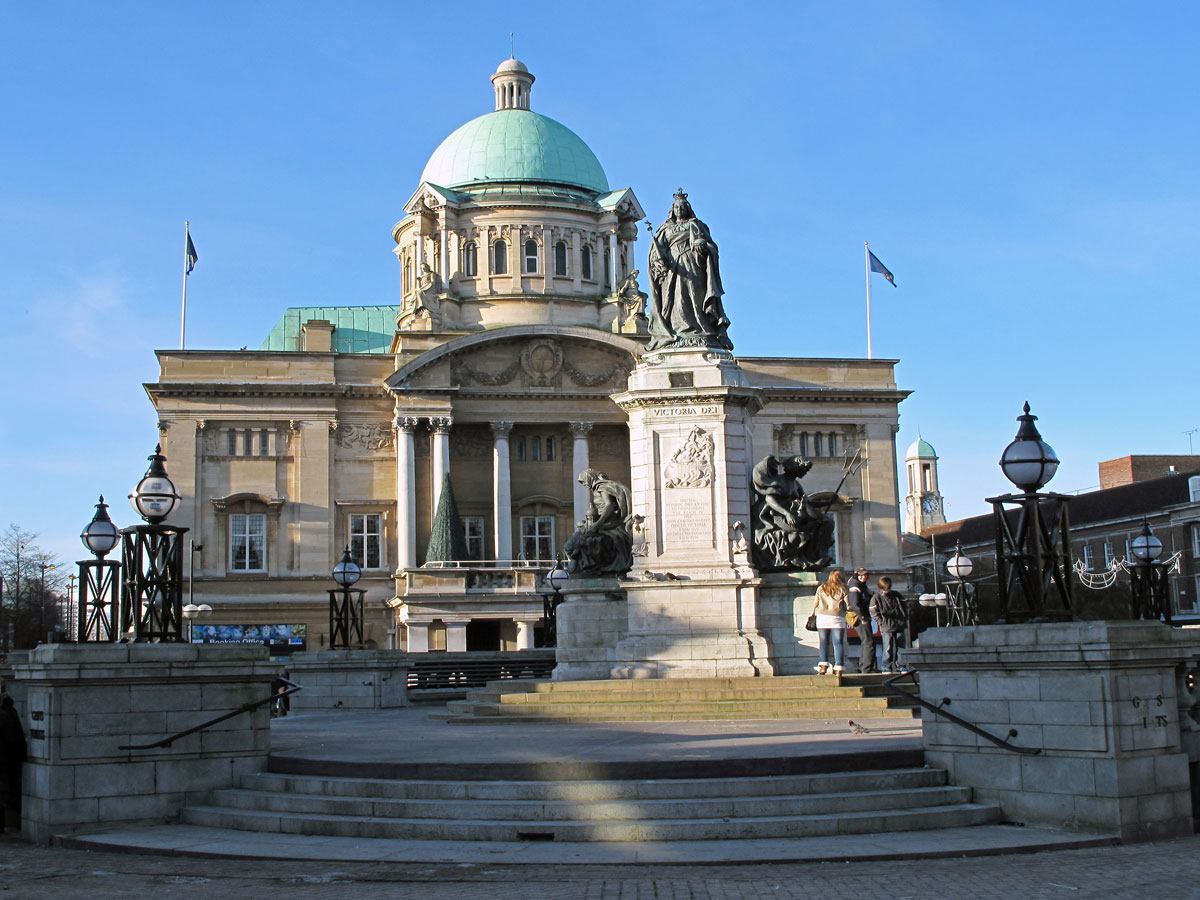
Across the road from the Rose Bowl Fountain are the former Hull Dock Company’s headquarters in Queen Victoria Square, an impressive building now housing the city’s Maritime Museum. I’d run out of time to visit it because I’d arranged to meet Kay in the square where there’s another impressive building – namely the City Hall.
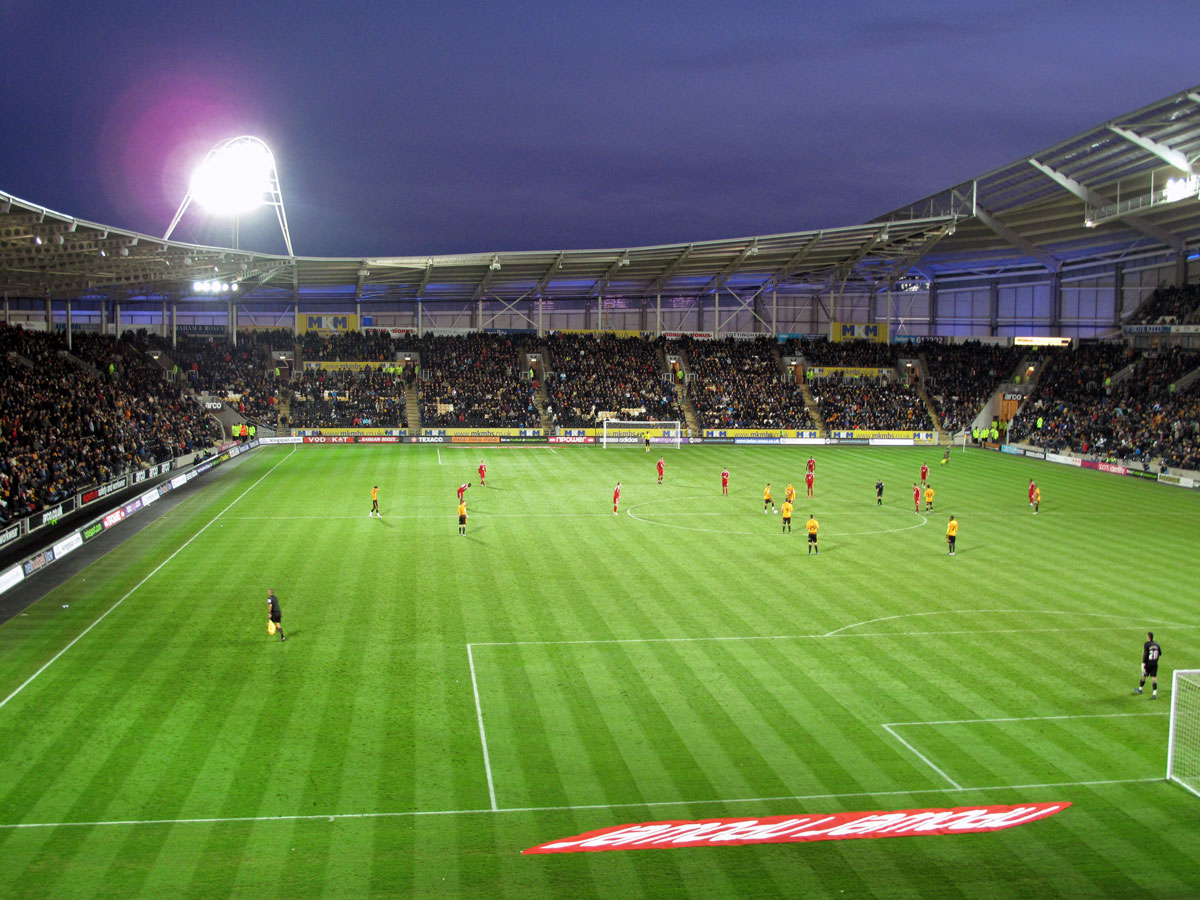
You may have forgotten by now, but we had a football match to attend this afternoon, and after some excellent fish n’ chips (what else?) in the historically interesting and haunted Ye Olde White Harte we headed over to the KC Stadium.
Donning our red & white scarves, we were approached by a Hull supporter as we walked towards the stadium. Unlike some of the altercations I’ve been involved in at football matches, this chap held out his hand and thanked us for making the journey up here in such icy conditions. After quite a long chat he took us to the visitors entrance and wished us good luck. I’m not used to this sort of welcome at an away football ground and it was no different inside the stadium where a female steward looked after my wife like an old mother hen. Kay was impressed with the Hull fans, but less so with ours. She’s not been to very many football matches, and she felt embarrassed with what was coming out of the mouths of our fans. Singing (to the tune of Sloop John B) “Hull is a s***hole I wanna go home” was one of the more acceptable chants they blasted out.
Even after the game, we met some more friendly Hull fans who helped us find our way back to the city centre, but the most important question is ‘did we get revenge for that Wembley defeat? Unfortunately not, the result was Hull City 2 Bristol City 0, and for those going back to Bristol tonight it was going to be a long journey home as the weather forecast was looking grim, but for us we had another day here tomorrow to make up our minds about whether Hull really is a ‘crap’ town.
POSTED – OCTOBER 2023
Originally posted 2023-10-11 15:34:07.
My respect for Hull increases. It’s certainly trying to find itself a niche in the modern world. That’s a very swish bridge in the video. Not cheap, but what is these days? Very informative and well researched, Malc.
Thank you so much Jo. I hope you’re on the mend
Very impressive story telling, Malc. I loved the Cod Wars. I worked with Art Walker. He and his brother Johnnie, supposedly the Russians about the SOSUS devices in the GIUK. They both died in prison.
I hadn’t heard of SOSUS before and it’s all valuable information, but the story behind it with your colleague, Art Walker, and his brother goes beyond that. Thank you Pat.
An excellent and thorough history lesson, and eminently readable. as always! The ‘Voyage’ sculpture looks great, I’m glad they replaced it. A shame about the football result but great that you encountered some friendly opposition fans. To be honest, many fans are just like that, including most Newcastle ones, if you meet them outside the ground, but inside it’s another matter as Kay discovered!
Thanks again Sarah. Glad you enjoyed the history lesson 🙂 As regards the football, Kay was impressed with everything about the KC stadium and not just the fans. She couldn’t help but compare it to Selhurst Park where we’d been not long before and was the complete opposite. I hope it’s got better since then.
No Selhurst Park is still pretty much a dump but it has more character than many modern stadiums!
Another wonderful in-depth review. I like how you show how things have changed over time. The frosty fountain pic made me shiver.
Thanks Albert. I don’t suppose you get too many icy days. Has Spring sprung down there yet?
Yep.it has Malc the weather is very mixed at present with a very hot long summer predicted.
Let’s hope that you don’t get too mamy wildfires this summer then.
I am annoyed, Malc, because I wrote a large comment, and it isn’t here!
I have to write again tomorrow as it is late tonight.
Joanna
I’m sorry to hear that Joanna. I share your frustration.
You know how much I love your posts, Malc, so writing again is no problem.
Joanna
After reading your post, Malc, the first thing I have to say again is that you are the best history teacher
I have ever met. Yesterday, I also wrote that reading your words that seemingly flow from each sentence painting the pictures of places you describe, that you are a born writer. I know that writing books is not on your agender, and so I have to change my assertion, you can write anything but have you been a born writer your need of writing would be overwhelming, and nothing would prevent your life path.
In previous parts, you have provided all the important facts of Hull history, today is time for maritime past. The ancient maps are excellent in including the visual details of your narrative; the farmers working, the several mills, and the ships bringing the fish from Iceland, and many other interesting details. I loved Norman Collier tale, and your references to the wonderful Fish & Chips resonated with me because when I arrived here, and discovered this delicacy, I thought I died and was in heaven!
Your visit to a football match up the north, did surprise me, as indeed your devotion to your club, but what if they were to play one day on the moon?!
I loved your excellent photography, especially of stature “The Voyage” and the sculpture, the videos and the bridge, the Queen’s Gardens, the Docks, and the magnificent City Hall building.
All in all, Malc, another of your riveting masterpieces. Thank you.
Joanna
You have a way with words yourself Joanna. You are a blogger’s dream and I can never thank you enough for your wonderful support. I’m always pleased to hear you say that you enjoy my posts, even if there are bits to them are somewhat unpalatable such as the whaling episode, but it wouldn’t be right for me to leave things like that out because it was a big part of the city’s history. On a lighter note, I’m pleased to hear that you fell in love with Fish & Chips straight away. Fortunately we got plenty of options here in Torbay such as Paignton Plaice (remember Peyton Place on the tely?) and the Frying Scotsman 🙂 Thanks again Joanna for your lovely words which, to do twice is quite unbelievable 🙂
Thank you, Malc, just remember that you are worth it! Two or even three times, if necessary!
As to whaling horror, I loved it when you added that many perpetrators met the same end!I wrote about it the first time but run out of space today, and didn’t want to outstay my welcome.
Joanna
You couldn’t possibly outstay your welcome Joanna 🙂
Thank you, Malc! You are kindness personified!
Joanna
🙂
Another great post, Malc
You outdid yourself once again with so much history and information and all these wonderful pictures
Thank you so much Luisa. You’re far too kind, and I’m glad that you’re finding these posts interesting 🙂
I’m finding them really interesting, dear Malc
It’s as if you took me there on a visit with you ❤️
That’s good to know Luisa 🙂
🙏😉🌹
A shame your team didn’t get their revenge but to be honest anything to do with football – or any sport come to that – goes right over my head. With your words and photos Hull is turning out to be not such a ‘crap’ town after all – I like The Crossing sculpture and the Spurn light ship, Queen’s Gardens look really attractive but my favourite is the frozen fountain, it looks stunning 🙂
I’m pleased that you’re finding Hull isn’t such a bad place after all because as you can tell, that’s what I thought Eunice. I take it that you didn’t fancy a dip in that fountain then?
In your hands it is a very interesting town actually. And so many towns suffered when they lost their way of life and re-invention was necessary. Further back Dundee was also a whaling port..
I may have mentioned to you before Shey that I love places which other people don’t think of visiting. Locals are usually more genuine in their welcome – and yes, I did realise that Dundee was involved in whaling. What did surprise me though was that we went on a whale-watching trip in Iceland once at the same time as the country started to hunt whales again. I thought they’d finished with all that.
Well I once read an article on the Faroe Islands and it was disgusting actually. So given it goes on there, I am not surprised re Iceland. We also love places people don’t usually dream of going to and when we do do a biggie our best bits are always behind the scenes, so we spend a lot of time behind the scenes.You ahve a sereis of great posts on Hull. I also think it is so easy to knock a place, but all places have their people and their pride and their good and bad times.
I used to fancy going to the Faroes until I saw their cruelty – and it’s not as though it’s necessary these days.
Your last sentence is spot on – and thanks for your lovely comments again Shey.
Thank YOU for yours. Honestly. There’s no need for what the Faorese do. And what I read and saw, it was like something bred in the bones and continuing to be bred in the bones. If there’s a need for anything there’s a humane way of doing it.
You’re absolutely right. I couldn’t agree more
Sorry missed out on their victory, but interesting that the Hull side were so friendly. Maybe it’s that northern charm. Interesting history about how the three docks developed, almost cordoning off the old town like an island. The maps are a great way to illustrate how the city and docks developed, and it’s interesting to see how much it’s changed over the time. So, I’m looking forward to finding out what the conclusions you came to after your last day in Hull. One thing that isn’t crap though – that amazing photo of the frozen Rose Bowl! It really was cold, wasn’t it? 🙂
Not many people would say that Yorkshire people are noted for their charm Alli, but the East Riding is different to West Yorkshire and South Yorkshire, and I found Hull people really friendly. In my next, and probably what will be my final post on Hull, you’ll see how cold it was again – and we still had another train journey home to look forward to. Thanks, as always, for your lovely input.
Perhaps then, you found Hull a cold place with a warm heart. It can’t be all crap then. 🙂
You’ve already worked out what I thought of Hull without reading Pt 4 🙂
Yay! Great minds, eh? 🙂
I should say so. Going back to your love of the Sycamore Tree and trees in general, you might want to take a look at Joanna’s latest offering that she’s posted today
https://wordpress.com/read/feeds/91471066/posts/4939296271
Thanks for the link, Malc, I’ll certainly take a look. On Anglesey at the moment watching the ref squirrels, surrounded by trees, funnily enough. 😊
Great! I hope you’ve had a smashing day and the weather’s been kind. I’ve never been on Anglesey so I hope you can tell me all about it sometime 🙂
Well, first thing is I am sorry your team did not get revenge and were beaten 2-0… but the post was excellent! And phenomenal pics. All the best my friend!
A big thank you as always F. Has your exhibition started yet?
You’re very welcome Malc. Exhibition opens today at 1900 hours…
Great! Good luck with it 🤞
Thank you Malc!