
Drottningholm
I don’t suppose there are many people in the free world who aren’t thinking of the Ukrainian people at the moment: There are really no words to describe what they must be going through, and it’s heart wrenching to see such carnage inflicted on a country that, in many ways, has the same ethnic background as the aggressor. For those of us who aren’t directly involved, we feel sad, worried, and even guilty that there isn’t much we can do about it, but at the same time we need to look after our own sanity as well.
Fortunately, us bloggers have our hobby to take us away to a happier place – even if only for a short while, and although it might seem frivolous to be talking about a Swedish royal palace at a time like this, I hope you can see that it’s my way of escaping from a world that one man doesn’t care if it even exists or not.

Sweden has had its own altercations with Russia in the past, but since 1814 the country has enjoyed a period of stability after the constitutional monarchy adopted a non-aligned foreign policy in peacetime – and neutrality in wartime.
The current head of state, King Carl XVI Gustaf, conducts his official business at the Royal Palace on Gamla Stan, but since 1981 his family home has been at Drottningholm on the island of Lovon, which is where I’m taking you today.
Usually the palace interior is open to the general public, but our visit coincided with a royal christening, which meant that it was going to be out of bounds: As strange as it may sound, this didn’t bother me too much: Firstly, the palace didn’t hold any special significance for me, and secondly, it was a beautiful day weatherwise, and there was plenty to see and do wandering around the estate – but we had to get there first, and the nicest way of doing it is by boat from Stadshusbron which is near the City Hall.

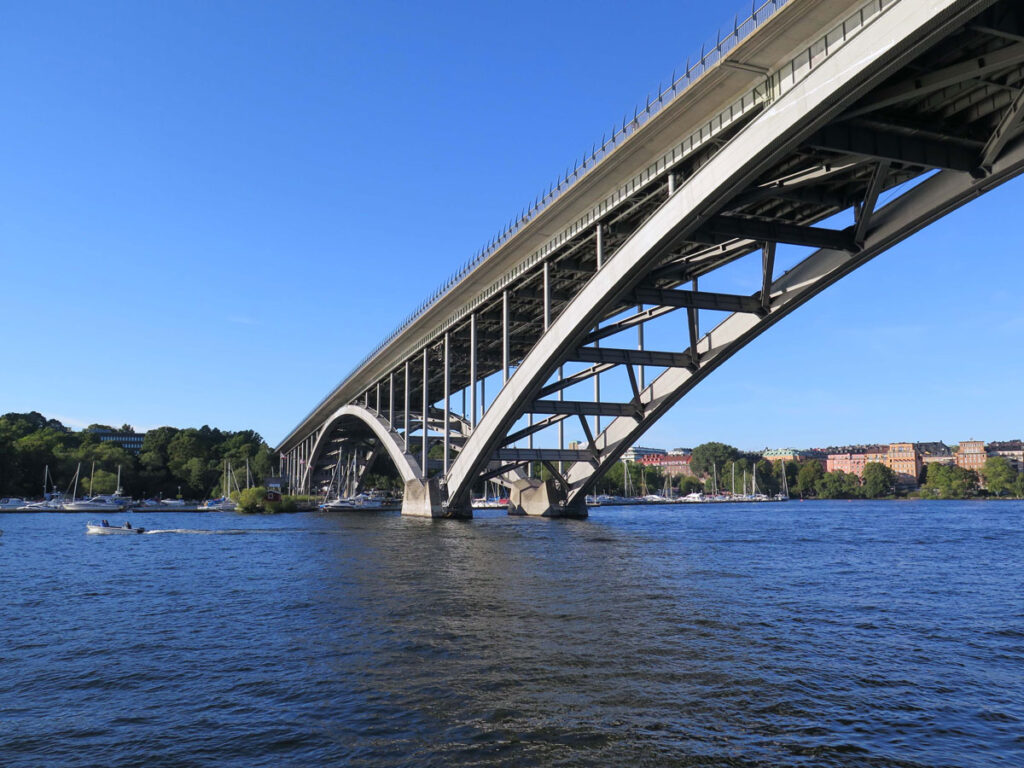
Stromma operate frequent sailings to the palace which will take around 45 minutes each way. The heritage boats cruise past the City Hall (Pic 1 in the gallery below), Norr Malarstrand (2), under the Vasterbron (3), and towards the islands of Lake Malaren (the Island of Kungshatt 4).



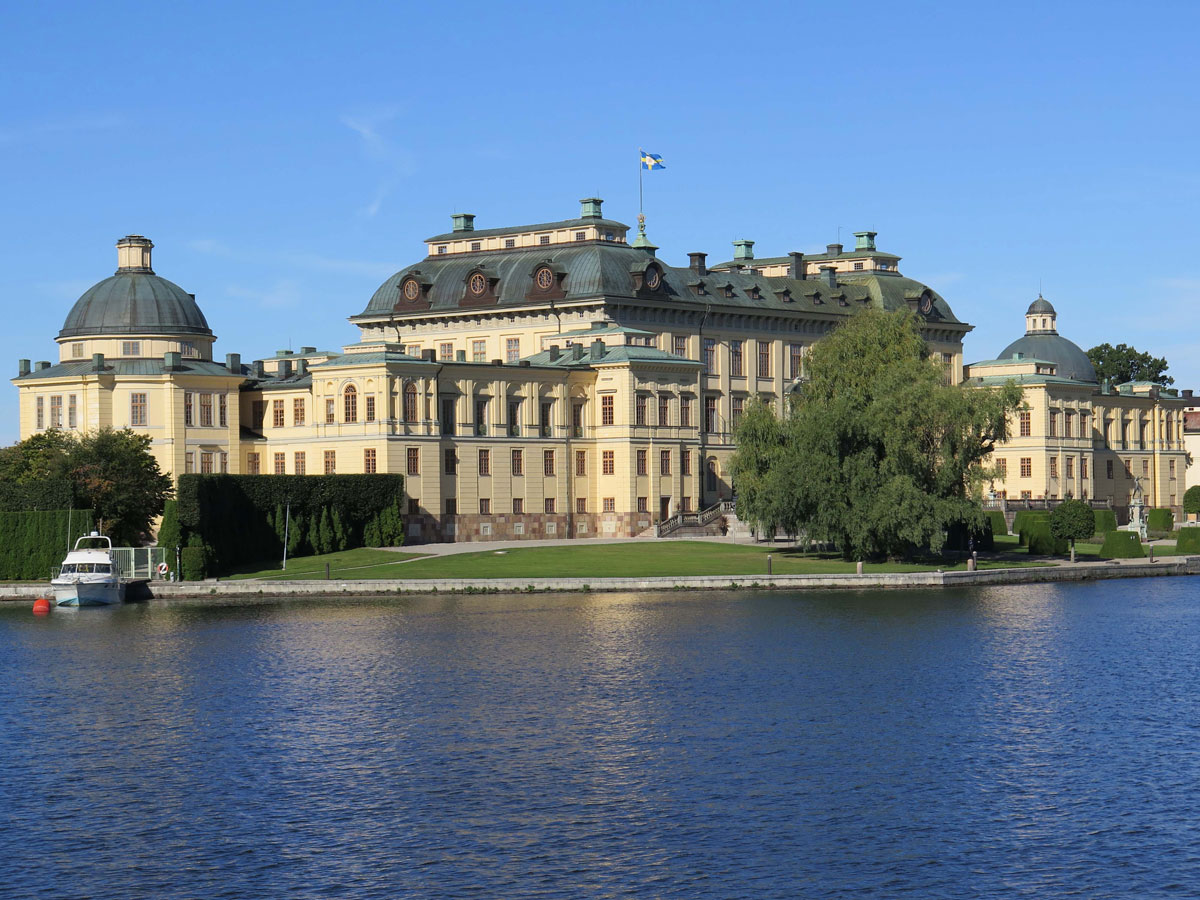
As we approached Lovon, it was easy to see why the island was chosen as the location for a palace, the first of which was built at the end of the 16th century by King Johann III for his Queen Consort, Katarina Jagellonika. From then on it was always called ‘Queen’s Island’, or in Swedish – Drottningholm.
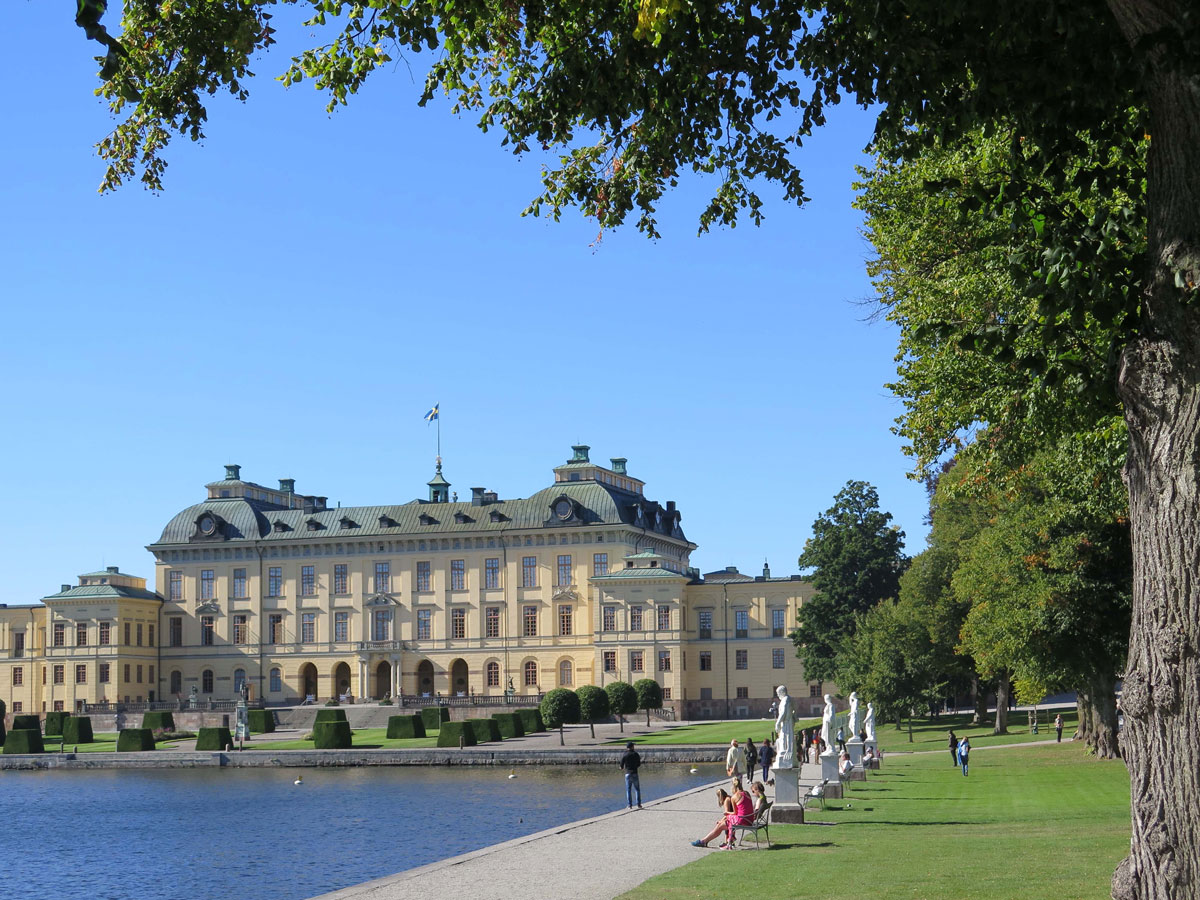
The original palace was still standing when Hedwig Eleonora, the Queen Dowager (widow of King Charles X Gustav) moved into the palace in 1661, only to see it burn down a few months later. Undeterred, she commissioned Nikodemus Tessin the Elder to build a new palace and work started the following year. He designed the interior rooms in the Baroque style but unfortunately didn’t live long enough to see it finished. His son, Nikodemus Tessin the Younger completed the job and left us with the building that we basically see today.
In 1744 the palace was given to Queen Lovisa Ulrika of Prussia as a wedding present when she married the heir apparent, Adolf Frederick of Sweden. Her name will crop again shortly, but in 1777 she sold it to the state, although her son Gustav III was able to continue living here until he was assassinated.
By the first half of the 19th century the building had deteriorated to such an extent that it was virtually left abandoned. Later attempts at restoration weren’t what you would call successful, and when Gustav V became king in 1907 he ripped the lot out and spent the next four years returning the palace to its former glory.
It’s been a royal residence ever since and the present King, Carl XVI Gustaf and his wife Queen Silvia, have lived in the south wing since 1981, leaving the rest of the palace for the general public to visit – except for today.
Although the palace was closed, the adjacent Court Theatre wasn’t. Throughout the summer months performances are held at this 18th century opera house, but if you’re happy to pay a fee for the privilege (which I was), then guided tours are also available.
Most opera houses I’ve seen are architecturally quite impressive, but this one is different. I would call it quirky more than anything else. Queen Lovisa Ulrika, who I mentioned earlier, was responsible for building this one after the first theatre was destroyed by fire. It opened in 1766, but it was her son who brought it to life. Gustav III was an avid lover of the arts, but he was also a controversial king, and it was while he was attending a masked ball at the Royal Opera House in Stockholm that he was shot. He lived for another thirteen days but died on 29th March 1792.

His death also meant the death knell for the Drottningholm Court Theatre, and the building ended up just being used for storage space. In 1921 Agne Beijer, a literary historian, discovered the slumbering theatre in a virtual time warp and subsequently set about bringing it back to life.
There are no marble columns, gold leaf or plush boxes here. Instead, it’s all stucco plaster, papier mâché and trompe l’oeil; and although we weren’t able to see it, the original wooden mechanical stage machinery is still used in much the same way as it was back in the 18th century.


The Court Theatre is one of the reasons that Drottningholm was awarded World Heritage Status in 1991, and although I’m glad I didn’t miss it, I was itching to get outside in the fine weather to wander around the Palace Park and Gardens – which are free for everybody to use.
There are three distinct areas to the park. The oldest and most elaborate are the Baroque Gardens conceived by Queen Hedvig Eleonora in the late 17th century, but by the time Queen Lovisa Ulrika arrived, this formality had fallen out of favour and so she set about creating a more natural park. The third and final phase is attributed to Gustav III who, with a penchant for the English natural garden, created his own little bit of England here.
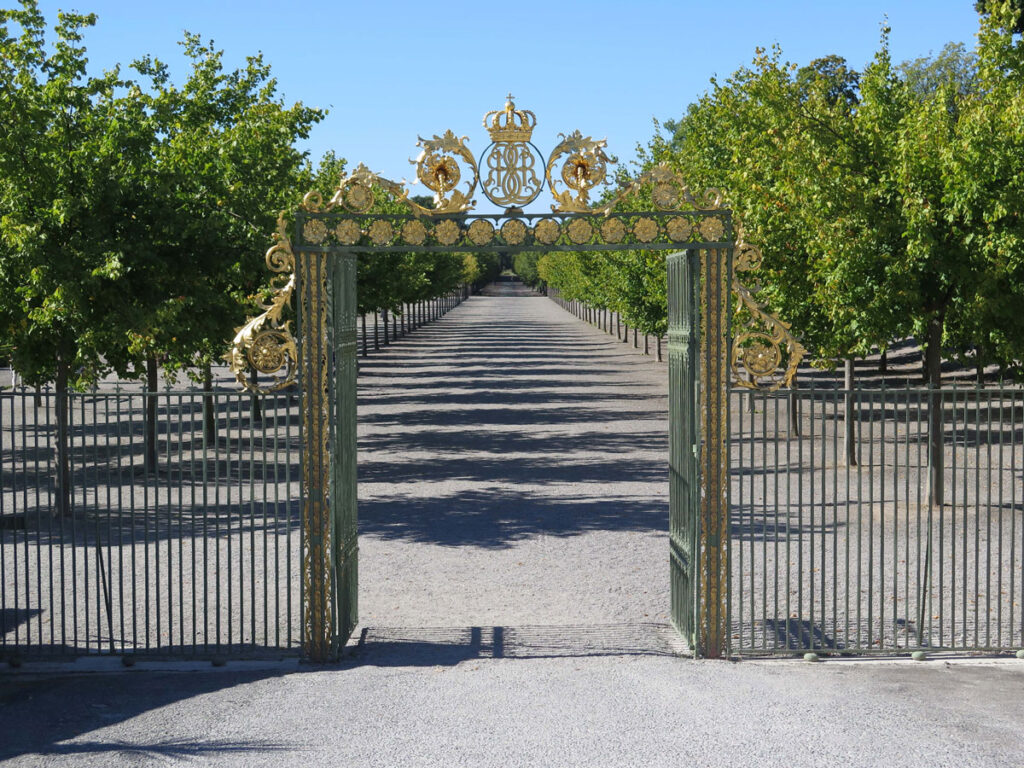
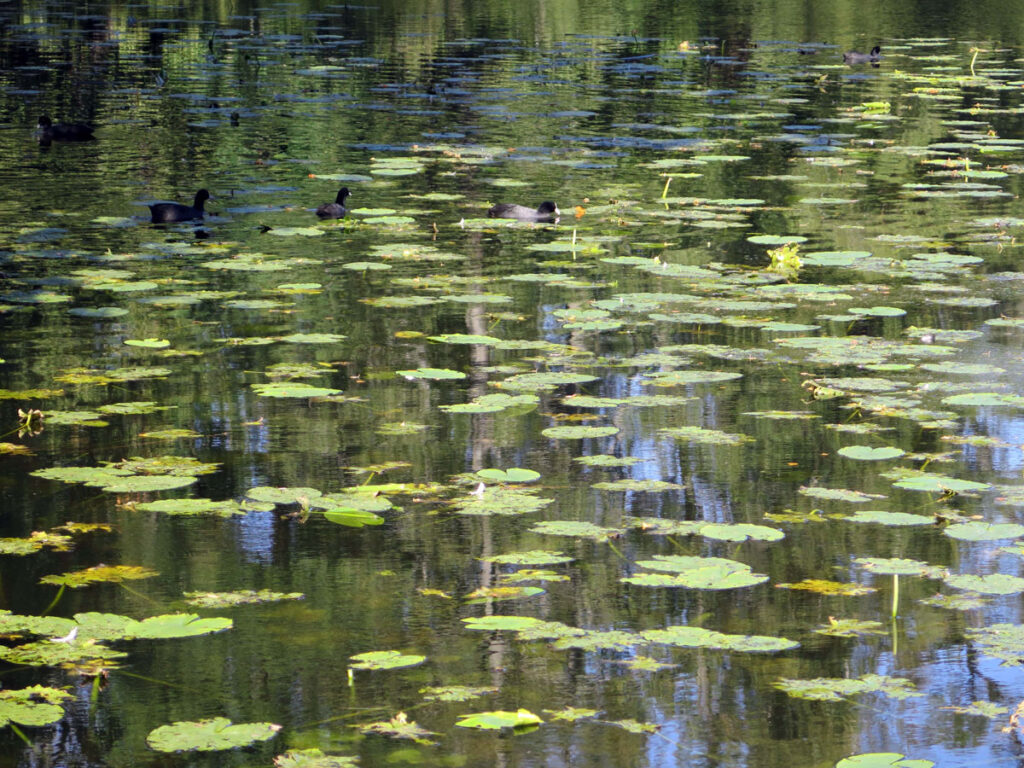
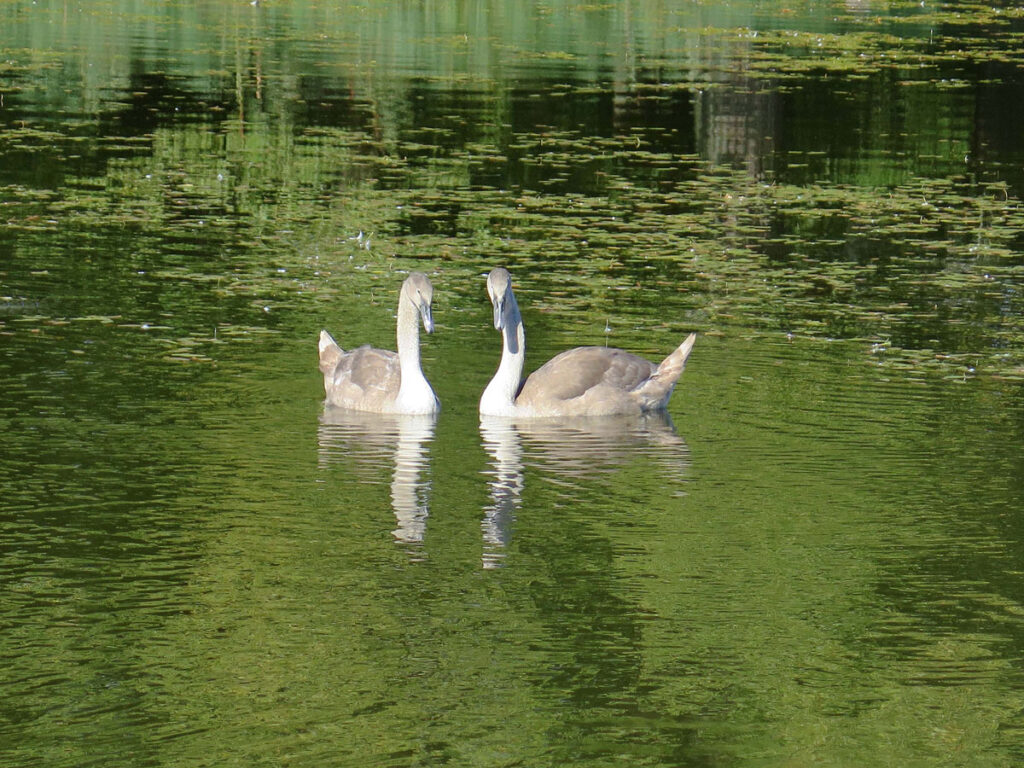
Like most palatial parks, it can take quite a while to see everything, but as it was late September with all the summer plants gone to bed, we just wandered around without following any specific trail. Below is a snapshot of the way it was looking when we were here.

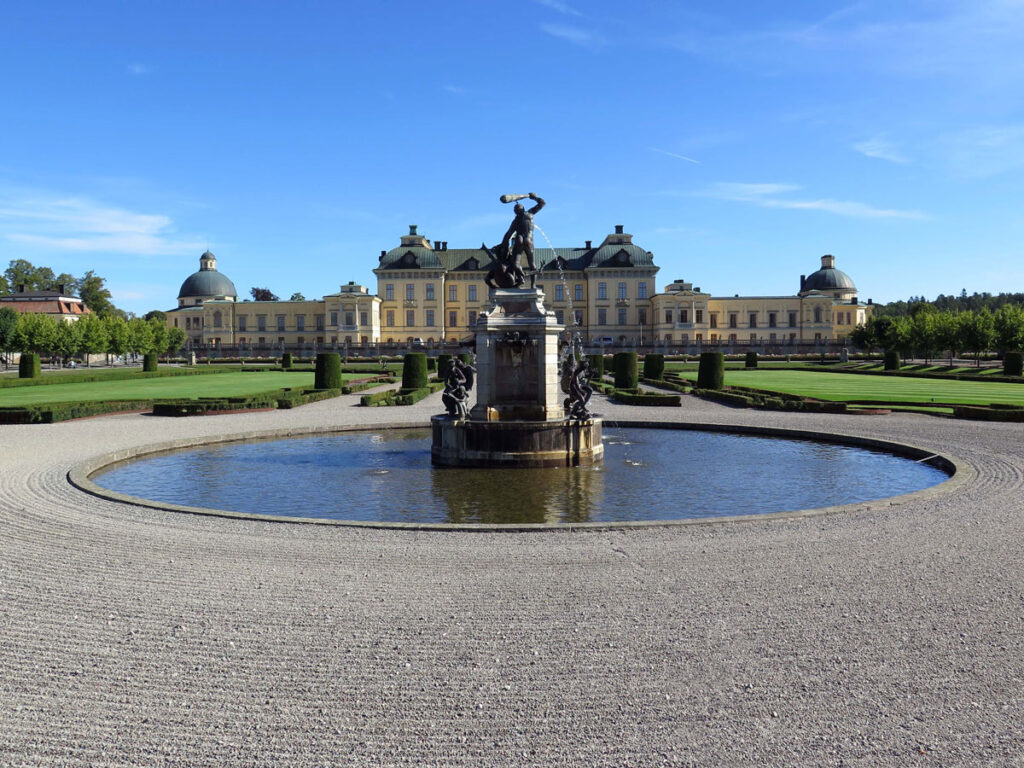
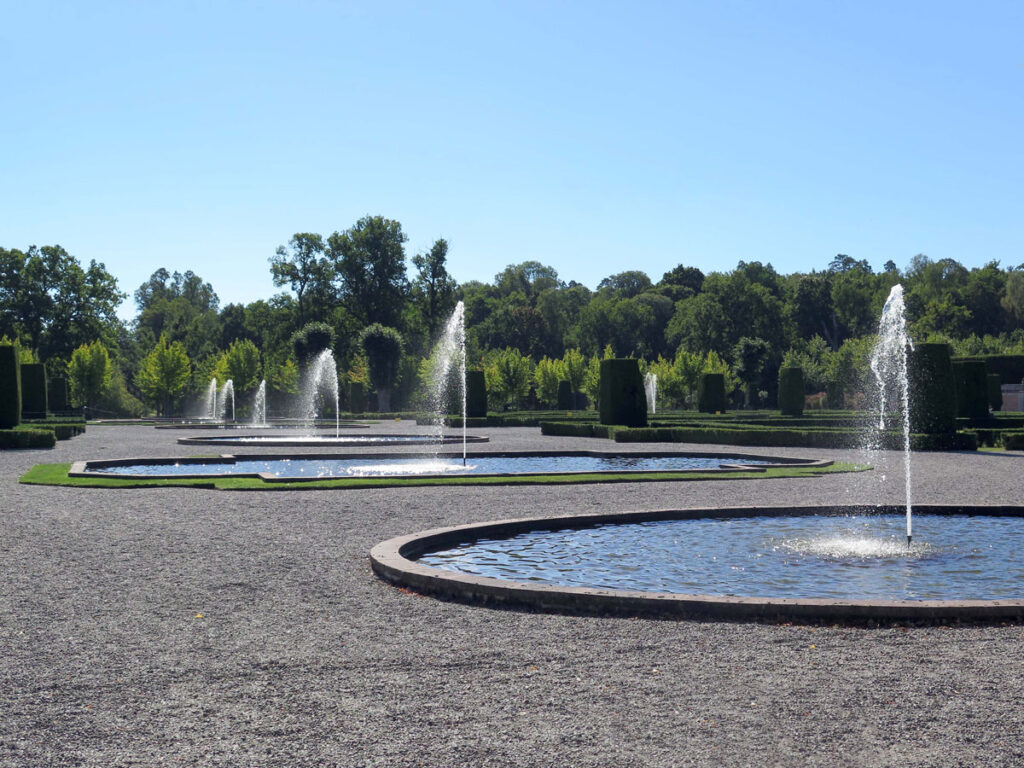
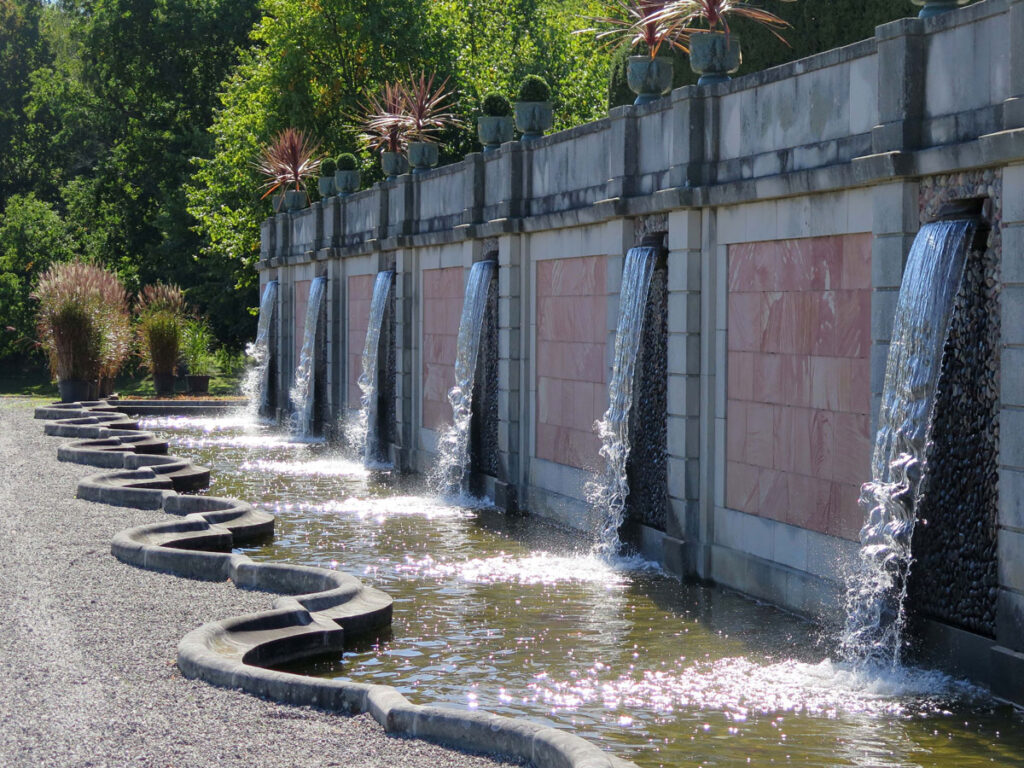
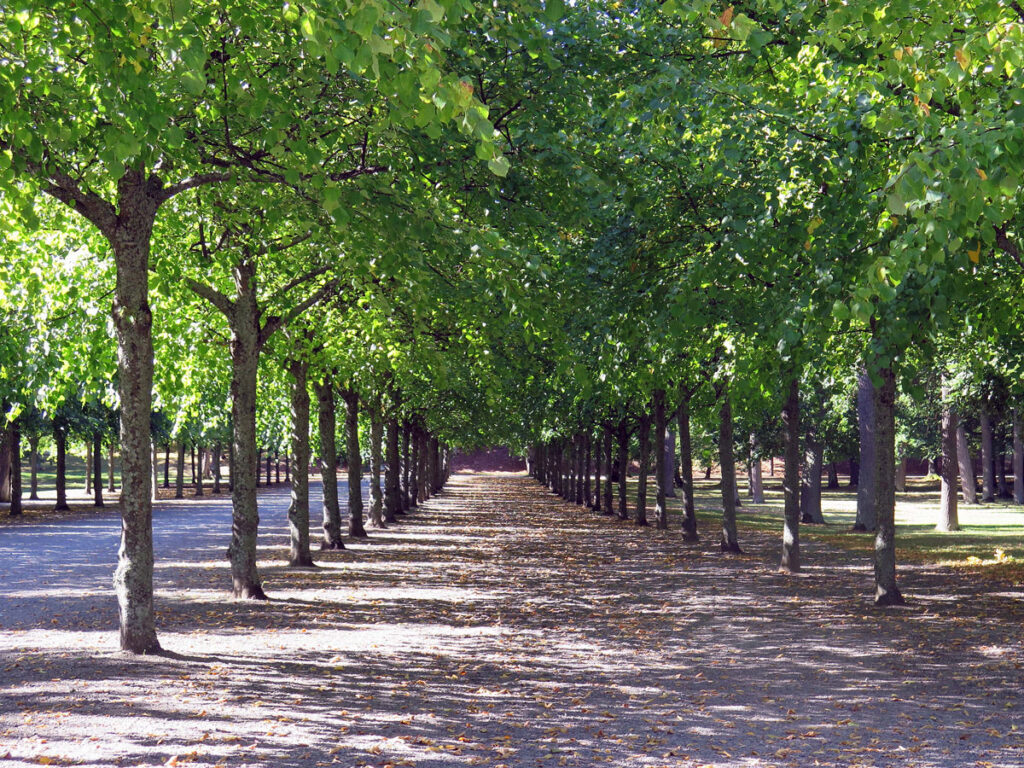

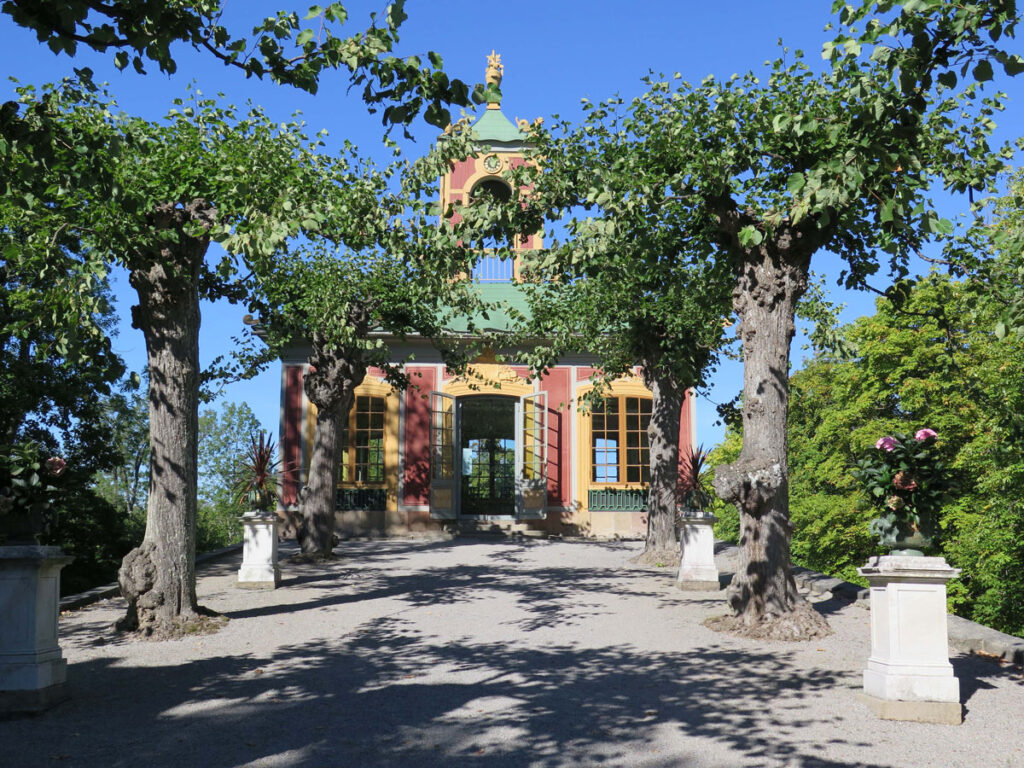
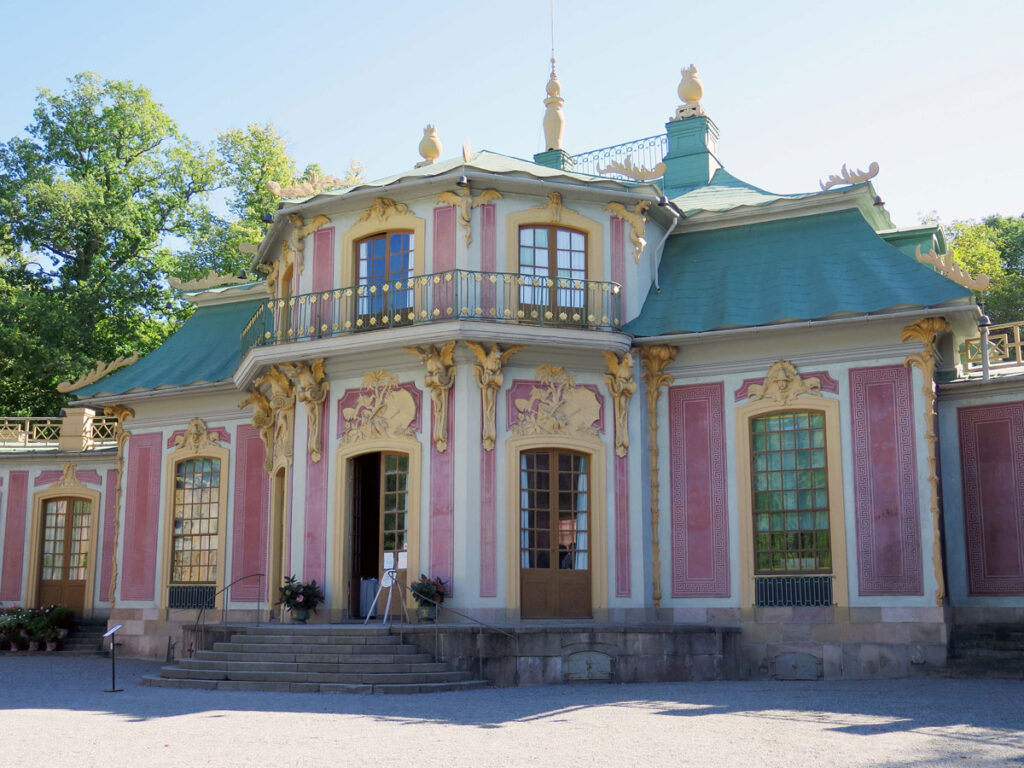
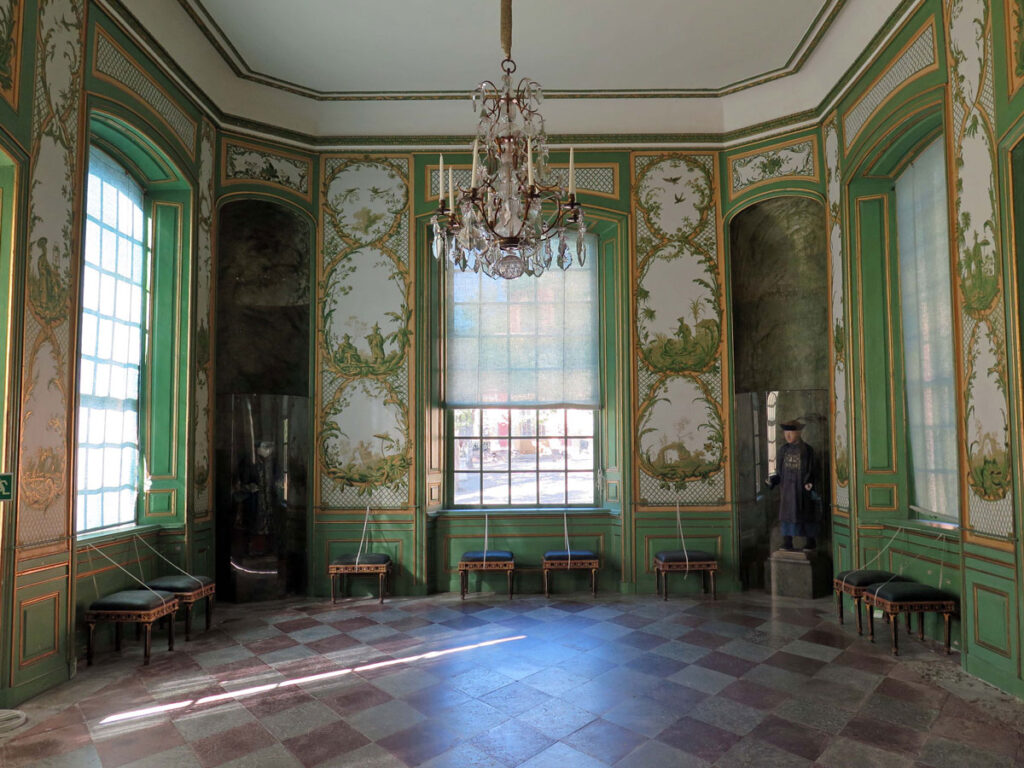
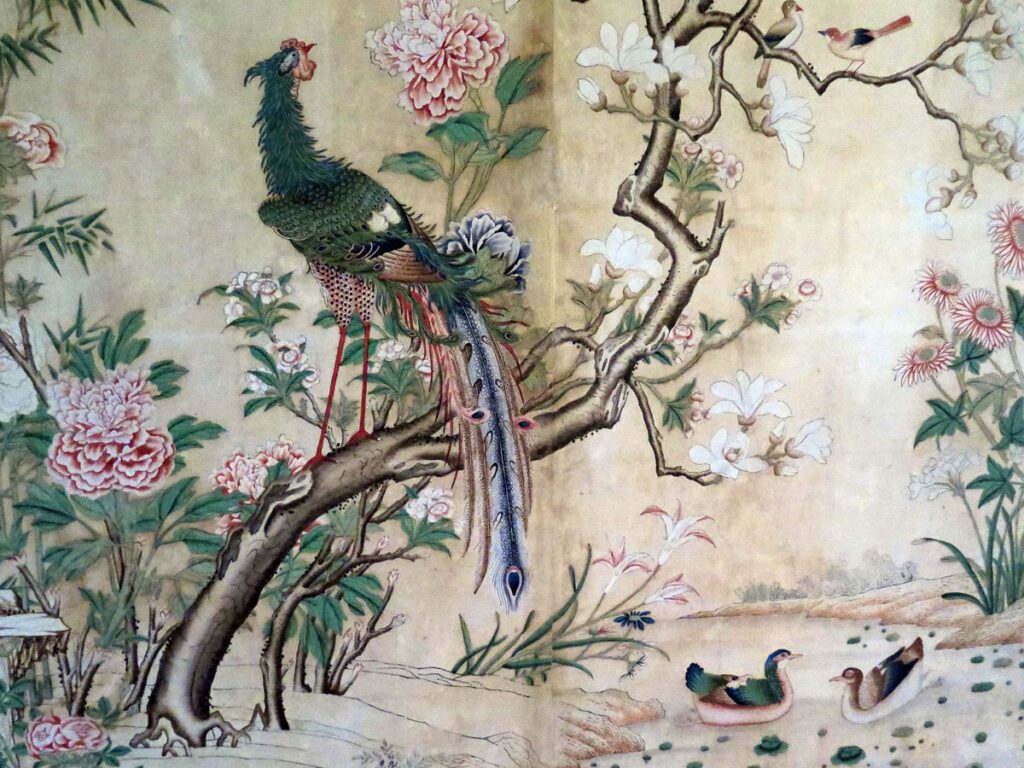
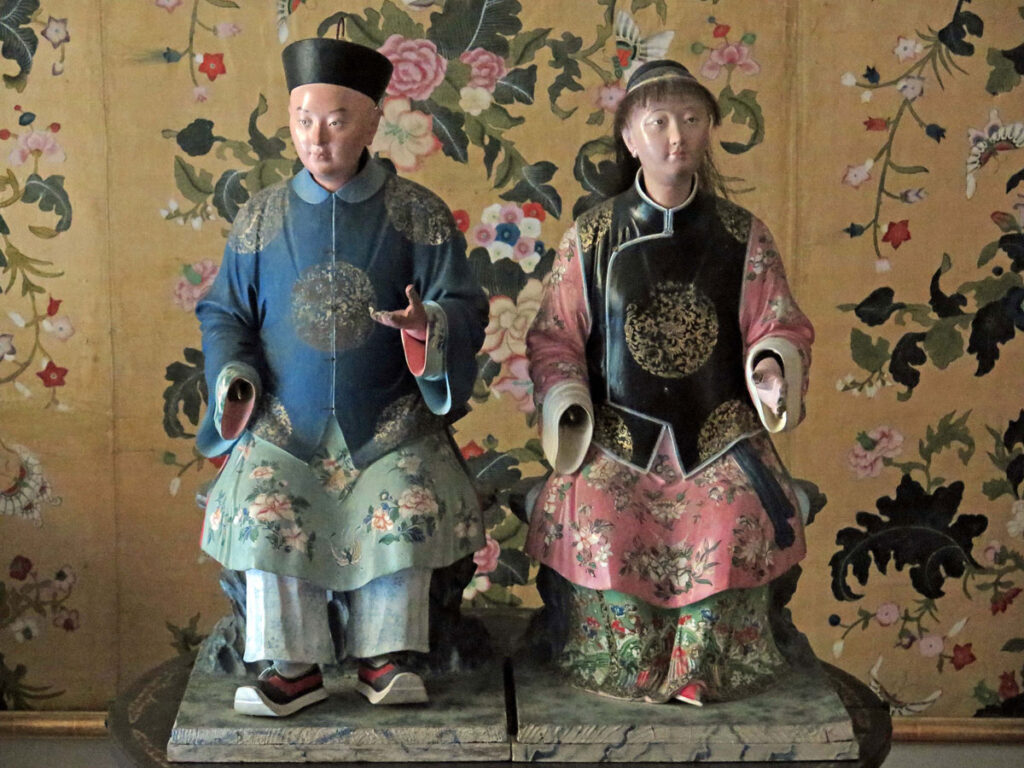
In amongst the trees of Queen Lovisa Ulrika’s informal park is another building which helped Drottningholm gain World Heritage Status – the Chinese Pavilion.
The original Pavilion was given to Lovisa Ulrika as a birthday present from her husband King Adolf Fredrik in 1753, and as wonderful a present as it obviously was, it was a simple rustic affair made of timber and logs, and it wasn’t long before the Swedish climate took its toll. Ten years later it was decided to replace it with a more substantial one and is the one that we see here now.
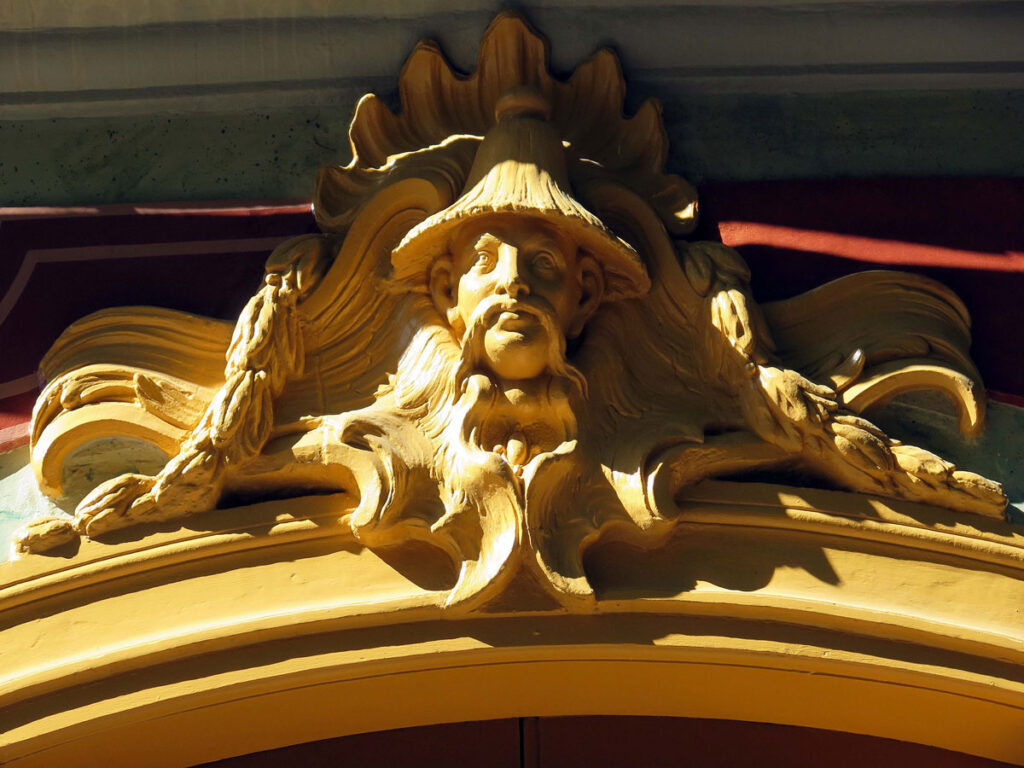
Whether you want to pay to go inside depends on how much you enjoy looking at Chinese decoration and artifacts. There are still some things here from Queen Lovisa’s time, but some also went missing during a burglary in 2010.

With the weather being so kind to us, I didn’t feel cheated about not being able to visit the palace today, but it’s now time to leave my fantasy island behind and return to the real world. Unfortunately, nothing’s changed, and neither has the Russian leader’s views. The reason he gave for the invasion of Ukraine was that the expansion of NATO was a threat to his country, but because of his actions, Sweden and other Scandinavian countries are now considering the idea of joining the NATO alliance.
The devastation in Ukraine is turning into a human tragedy of massive proportions and it’s only natural for us to concentrate our thoughts on the innocent Ukrainian civilian victims and the brave people who are standing up to the Russian aggression, but there’s also a knock-on side effect which could easily be overlooked.
I don’t believe the so-called Russian president is acting on behalf of the majority of Russian people – just his own beliefs. Russians don’t have free elections in the same way as true democratic countries have, and thousands of people who have protested at the attack on Ukraine have been arrested. Is it any wonder then that there are now also Russian refugees crossing over into Finland even though most of the population have the truth hidden from them? I’m going to leave you with this great song by Sting which he first recorded in 1985, and which he resurrected a couple of days ago. The words were written at the time of the Cold War, but they are just as relevant now as they were then. Let’s hope, for everybody’s sake, that this madness ends soon.
POSTED – MARCH 2022
Originally posted 2022-03-08 11:08:32.
That theatre is beautiful. Thank you for letting me know re this post.
I’m pretty sure you haven’t seen the one about Canary Wharf and I think it might appeal to you
https://www.easymalc.co.uk/canary-wharf/
Another excellent and sensitively written post, Malc. It’s unnervingly true how things come round again and again, and I’ve had the same thought about Sting’s poignant song. There’s not much to add to your assertion of the situation in Ukraine, save for adding that you speak for all of us and echo all our thoughts and feelings.
It’s a tough world to live in just now, and that’s precisely why we need some diversion. Even if it is temporary, we all need an escape if we’re not to run mad, and that’s why I enjoy catching up with some blogging when I can. Drottningholm looks a wonderful place for a wander around, and it struck me that you could probably easily fill a day exploring the grounds without going inside the palace anyway! The court theatre looks fascinating. I’ve always been intrigued by trompe l’oeil decoration and the effects here look extremely impressive. Quirky, but clever. Wonderful pictures, as always, and it’s been good to escape with you in such a peaceful haven, so thanks for giving us a portal into a different world. 🙂
It’s lovely that you still keep in touch Alli with all what’s going on in your life at the moment. As you say, we need some form of escape from the mad world we’re living in.
Do you know what I hate the most though? And this must sound really conceited, but there are so many things that I could see coming that I’m beginning to hate myself for getting so many things right.
From now on, I’m going to keep my bad thoughts to myself and concentrate on places like Drottningholm, where people can still enjoy themselves, unlike the subjects of Putin’s desire for complete subjugation. We still live in a free world, and it’s an absolutely beautiful world – if only we allow it to be.
It’s always a treat to catch up on your posts, Malc. It gives me an excuse to sit down with a cuppa and enjoy another taste of your world. I know what you mean about seeing things coming, though, and it doesn’t sound conceited, just wise to the world and the sinister side of humanity. I’m sure you won’t be the only one who wishes they weren’t right either.
So, to use one of my favourite phrases, any distraction from the ‘madness of modernity’ is a welcome break, and even though I don’t get round to reading them as quickly as I’d like at the moment, your posts are always a tonic for the weary. 🙂
Thank you Alli. If I supply the tonic, would it be too much to ask if you supply the gin? 😊
You can count on it! 😀
Hic!
😁🍷
Sobering stuff, Malc, though I enjoyed our bit of escapism too. I have to say that at Versailles I chose not to visit the palace because the queues were most unappealing and I was very happy in the grounds. You had the bonus of the Chinese Pavilion and the theatre. We’d put our trust in Sting, wouldn’t we? Anything but a politician!
Thanks Jo. I’m glad you enjoyed the escapism interlude. We complain about our politicians in the West but I think the Russian people got more to complain about than we have.
That’s for sure!
A brilliant post and a few moments of escapism. That palace looks utterly awesome, such opulence and wealth, even just from the outside. It is a pity you didn’t get into the main palace building, but the theatre and gardens look to be stunning too. Thank you for articulating so clearly the worries we all have during this period of war and our sense of helplessness. Nice to hear the Sting song, but so awful that it rings true today.
Thank you for your flattering comment Stephen. I really do appreciate it. It’s a shame that we couldn’t visit the inside of the palace, but if we had, we wouldn’t have been able to cover some of the other things we saw. As for the Ukraine situation, there are far more knowledgeable people than me who are unsure about how to deal with it, so I won’t pretend to know the answer, but like everyone else, I wish it would all end tomorrow.
This looks such a beautiful and peaceful spot – it’s good to be reminded of such places right now. You write very well about the dreadful situation in Ukraine but also about the probable views of many Russians. Sting’s song is so appropriate, I’ve been glad to see it surfacing again.
Thanks for your supportive words Sarah. I couldn’t write a post without mentioning the Ukraine situation somehow.
Thank you for taking us away to a happier place: I enjoyed the trip💕
… and thank you for Sting’s song 🎶💙🎶
Thank you so much Luisa. Those of us who have a heart and soul will always appreciate songs like this. I did then – and I still do now.
Me too 😘
Great job, Malc. You were clearly heard today. 👍👍😉😉
I was always told as a kid to be seen and not heard 🙂 Thanks though Pat. I always value your super comments as you well know 🙂
A very interesting and informative post with great photos Malc, the whole place looks fabulous and I’d love to see the Chinese pavilion 🙂
Thanks Eunice. I think that Chinese Pavilion would be right up your street. I’m just nipping over to Colwyn Bay to see what you got up to there 🙂
I’ve heard good things about that opera house, from people who have sung there, but I never knew what it looks like. The assassination of Gustav III was the subject of a major opera, ‘The Masked Ball’ by Giuseppe Verdi, but to get it past the censors he had to move it from Stockholm to Boston, Massachusetts, (!) and change the king into a colonial administrator.
Firstly Don, I did wonder whether you had been there and secondly, what a great snippet of information you’ve provided. Thanks 🙂
This is one bang fantastic article Malc! And your pics are grand! Wonderful history and information. Must be quite a place to visit and I hope to see it one day. Reference what you said of Putin’s murderous invasion, I quite agree. We are frustrated, saddened, and wishing that Putin’s end comes ipso facto, the sooner the better. We don’t need tyrants like that breathing the same air we all breathe. My city has already begun to accept Ukrainian refugees and you’re right, it’s going to be Russians also fleeing. This decade started off on the wrong foot I tell you. God save us. Thanks my friend for an interesting treat. All the best.
Thank you so much for your smashing comments Francesc. You know how much I value them. As for the thug in a suit, there’s nothing more I can add really.
You’re very welcome Malc, and I agree. The thug in the suit has now practically threatened the whole world…
Hopefully the world as we know it will still be here after he’s gone – and the quicker he’s gone, the better. We need some wise heads and strong nerves though to see it through. As you’re no doubt aware, China is waiting in the wings to see what happens and I’m sure both of us could write a book about why this is happening.
You’re absolutely right, and not just China, there’s India over there that no one has paid attention to, and they sided with Putin. And you’re also right, we could write a book, but let’s hope we never have to do so.
Thank you for your thoughts Francesc. They invariably coincide with mine and we need friends more than ever. Enjoy your evening my friend
You are right. You too Malc, a lovely evening to you.
Thank you for the wonderful and interesting post, Malc, just what we need today! Somehow, I didn’t know much about Sweden …
Joanna
Thank you Joanna. Your lovely comments are just what I need today too 🙂